Tracking Pleiades Node Performance from Harpertown to Sandy Bridge! - What is an SBU and why should I care?!
←
→
Page content transcription
If your browser does not render page correctly, please read the page content below

National Aeronautics and Space Administration

                      Tracking Pleiades Node Performance
                        from Harpertown to Sandy Bridge!

                       What is an SBU and why should I care?!
                                                !

www.nasa.gov
Pleiades Installation History!
• 2008: 5888 nodes of Harpertown,
                   512 nodes of Clovertown!
    - Clovertowns isolated as separate
        machine soon after!
• 2010: added 1280 nodes of Nehalem!

• 2010-11: added 4672 nodes of Westmere!

    - 64 nodes of Harpertown removed!
• 2012: added 1728 nodes of Sandy Bridge!

    - 1728 nodes of Harpertown removed!
!

How to get users to send jobs to “best” node type for their app? !
NASA High End Computing Capability!   Question? Use the Webex chat facility to ask the Host!   2
Standard Billing Unit (SBU)!

• Charge for resource usage to reflect “computational power” of node
   types being used!
   - e.g. faster, more recent machines have higher charging rates!
• Establishing the charging rates:!
   1. Define a representative suite of apps to reflect overall system workload!
        •     Including dataset, number of ranks, iteration count, etc.!
   2. Run each of the apps on each of the node types!
   3. Determine how many runs of each app can be made on a fixed amount of each
      node type—fractions OK!
   4. For each node type, determine relative number of runs made compared to the
      baseline (Westmere node)!
   5. For each node type, compute the weighted average across all apps of the
            relative number of runs!
            • This is the SBU charging rate for that node type!
            • Note: baseline node has rate of 1.0 (i.e. 1 SBU = 1 Westmere node-hour)!

NASA High End Computing Capability!       Question? Use the Webex chat facility to ask the Host!   3
SBU Rate Example!

• Two applications: A1, A2!
• Two node types: N1, N2                                              (say N1 is baseline)!
• Run times: !                             # nodes           N1            N2
                                      A1      64            1000         1500
                                      A2     128            500          1000

                                                                                N1            N2
• Relative number of runs:!
                                                                      A1        1.0          0.67
                                                                      A2        1.0          0.50

• Weighted average:!                                                       weight          N1        N2
                                                       A1                   30%           0.3        0.20
                                                       A2                   70%           0.7        0.35
                                                       SBU rate                           1.0        0.55

NASA High End Computing Capability!         Question? Use the Webex chat facility to ask the Host!          4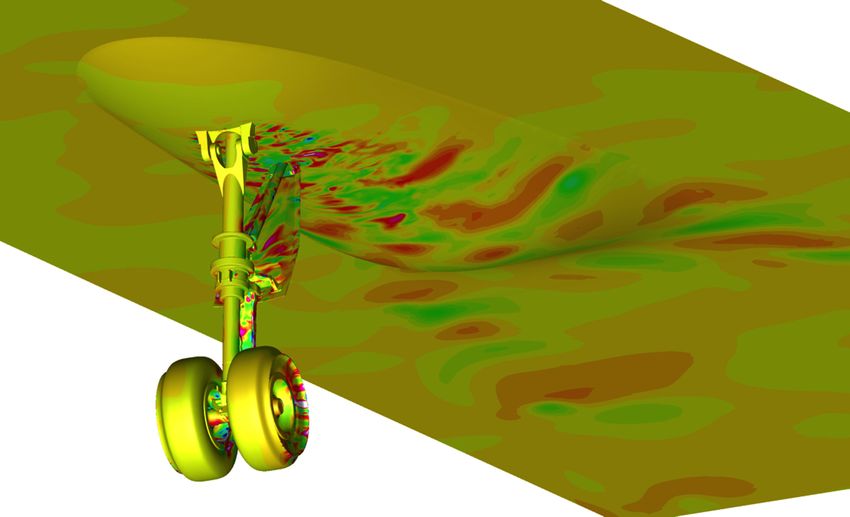
Suite to Represent Pleiades’ Workload!
         Application                  # cores          Weight           NASA Mission Directorates
         FUN3D                         960                10%           Aeronautics; Human Exploration
         OVERFLOW                      480                20%           Aeronautics; Human Exploration
         USM3D                         480                20%           Aeronautics; Human Exploration
         Enzo                          240                20%           Science (non-Earth Science)
         GEOS-5                        1176               15%           Earth Science
         WRF                           384                15%           Earth Science

• Codes and weights chosen to represent the workload on Pleiades!
• Core counts determined by finding “sweet spot” of scaling behavior!
   - also, divisible by both 8 and 12!
• Iteration counts adjusted so runs are ~1800 seconds using baseline
   (Westmere) nodes!

NASA High End Computing Capability!    Question? Use the Webex chat facility to ask the Host!            5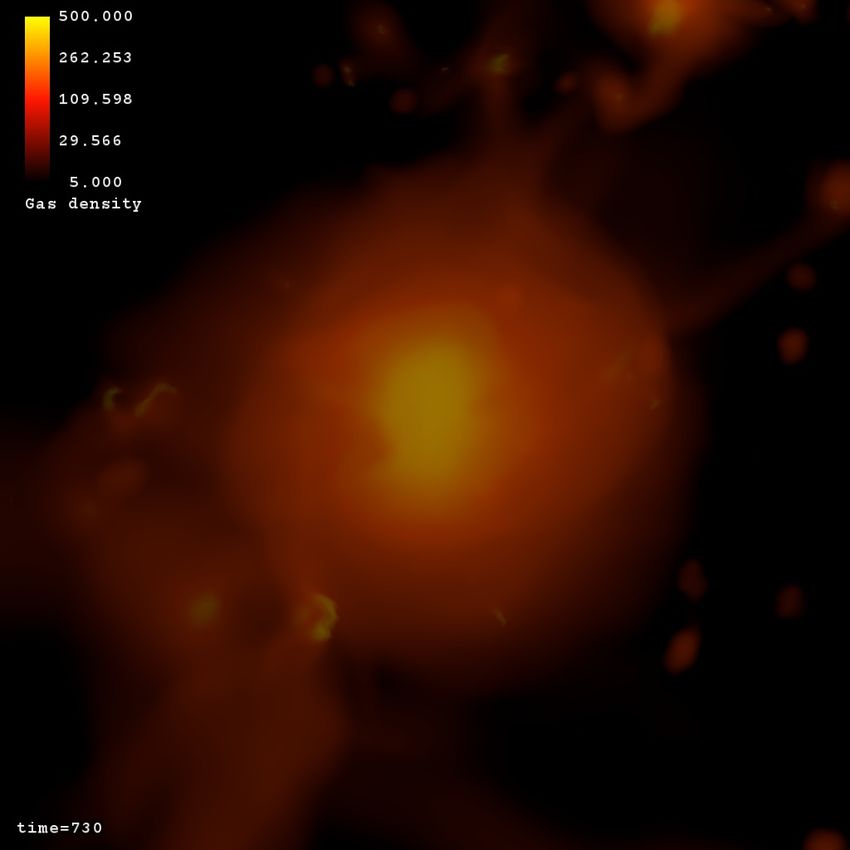
FUN3D (v11.3)!

• Unstructured CFD
   code from NASA
   Langley!
   - Adjoint-based error
     estimation!
   - Mesh adaptation!
   - Aerospace design optimization
     extending into hypersonic!
• Dataset: wing-body geometry
   with transonic wing!
   - Developed as a Common Research Model for
     validation studies of CFD codes!
   - 3-D unstructured tetrahedra with 100M nodes!

NASA High End Computing Capability!   Question? Use the Webex chat facility to ask the Host!   6
OVERFLOW (v2.1ae)!

• Overset grid CFD program from
   NASA Langley!
   - Launch and re-entry vehicles!
   - Rotorcraft!
   - Ships!
   - Commercial aircraft!
• Dataset: “nasrotor” benchmark
   geometry!
   - 3-blade generic rotor system similar to
     UH-60 system!
   - Constant NACA0010 airfoil section,
     rectangular planform!
   - ~99M grid points!

NASA High End Computing Capability!   Question? Use the Webex chat facility to ask the Host!   7
USM3D (v20100611)!
• Unstructured mesh CFD
code from NASA Langley!
- Calculate flows over complex
geometries!
- Aerodynamic flow of aerospace
vehicle design!
• Dataset: wing-body
geometry with transonic wing!
- (same as in FUN3D)!
- Geometry used in a workshop in
August 2008 to compare several
state-of-the-art CFD codes!
NASA High End Computing Capability! Question? Use the Webex chat facility to ask the Host! 8Enzo (v2.0)!
• Used to simulate
cosmological structure
formation!
- Grid-based with adaptive
mesh refinement!
• Dataset: !
- HDF5-format files represent
initial cosmological conditions!
- Simulation then evolves from
the initial conditions!
NASA High End Computing Capability! Question? Use the Webex chat facility to ask the Host! 9GEOS-5!
• Goddard Earth Observing System Model (v5)!
- Atmospheric general
circulation model
from NASA Goddard!
- Basic research!
- Data analysis!
- Climate and weather prediction!
- Observing system model and design!
• Dataset: benchmark case 4 of the GEOS-5 model!
- Initial data generated by code itself!
- Resolution of 7km!
- Physical problem solves Jablonowski & Williamson Baroclinic Test
Case!
NASA High End Computing Capability! Question? Use the Webex chat facility to ask the Host! 10WRF (v3.1)!
• Weather Research and
Forcasting Model!
- Next-generation mesoscale
numerical weather prediction
from National Center for
Atmospheric Research!
- Operational forecasting !
- Atmospheric research!
• Dataset: Typhoon Morakot
(SE Asia), August 2009!
- Generated from a previous
calculation of WRF!
- Resolution of 2km!
NASA High End Computing Capability! Question? Use the Webex chat facility to ask the Host! 11Timings!
Sandy Bridge*
Application Harpertown Nehalem Westmere
w/ TB* w/o TB
FUN3D 3270 1616 1734 1405 1502
OVERFLOW 2931 1364 1786 1154 1253
USM3D 3954 1596 1802 1499 1670
Enzo 2128 1525 1925 1637 1839
GEOS-5 2815 1636 2096 1219 1361
WRF 3404 1775 2036 1499 1663
*TB=Turbo Boost!
• Keep in mind: Westmere nodes have 12 cores instead of 8!
- Thus Westmere runs use only 2/3 of the nodes of a Harpertown or Nehalem run!
- The Harpertown or Nehalem time must be less than 2/3 of the Westmere time to
be more efficient in resource utilization (none are)!
• Similarly, the Sandy Bridge nodes have 16 cores!
To compare node efficiencies, use the relative number of runs metric!
NASA High End Computing Capability! Question? Use the Webex chat facility to ask the Host! 12Relative Run Numbers! Application Harpertown Nehalem Westmere Sandy Bridge FUN3D 0.35 0.71 1.0 1.65 1.54 OVERFLOW 0.41 0.87 1.0 2.06 1.90 USM3D 0.30 0.75 1.0 1.60 1.44 Enzo 0.60 0.68 1.0 1.57 1.40 GEOS-5 0.50 0.85 1.0 2.29 2.05 WRF 0.40 0.76 1.0 1.81 1.63 Weighed averages of the run numbers lead to these SBU rates:! Application Harpertown Nehalem Westmere Sandy Bridge SBU rate 0.43 0.77 1.0 1.83 1.65 • Enzo does very well on Harpertown; !GEOS-5 does not! • OVERFLOW does well on Nehalem; !Enzo does not! • GEOS-5, OVERFLOW love Sandy Bridge; !Enzo, USM3D not so much! (So far) WRF is a great predictor for overall SBU rates NASA High End Computing Capability! Question? Use the Webex chat facility to ask the Host! 13
Performance Relative to Westmere!
                                         SPECfp looks like a great
                         2.00                                                                                        Enzo
                                         predictor for total SBU                                                     FUN3D
  Relative to Westmere

                                                                                                                     GEOS-5
                                                                                                    Sandy Bridge**
                                                                                                                     OVERFLOW
                         1.00
                                             Nehalem                         Westmere                                USM3D
                                                                                                                     WRF
                                                                                                                     Moore's Law
                         0.50   Harpertown
                                                                 Nehalem-based ICE was                               SPECfp®
                                                                                                                     Clovertown*
                                                                 really ahead of the curve                           Harpertown
                                         Clovertown*                                                                 Nehalem
                         0.25
                                                                                                                     Westmere
                             1/07           1/08        1/09         1/10        1/11                     1/12
                                                                                                                     Sandy Bridge**
                                    Date of Introduction of Altix ICE Platform using Xeon

• Performance numbers plotted against date of first availability of SGI ICE
  product with that Xeon node type!
• Notes: !
            - *Clovertown SBU point derived from a different SBU app suite, and is a high-bin part rather
                         than the mid-bin used in Pleiades!
            - **Sandy Bridge numbers are preliminary and subject to revision!

NASA High End Computing Capability!                    Question? Use the Webex chat facility to ask the Host!                         14
Which is Best Platform for an Application?!
• Experiment! Run on each Xeon type:!
- Use as many cores per node as you can!
http://www.nas.nasa.gov/hecc/support/kb/Resources-Request-Examples_188.html
- If there is enough memory, you can even try Hyper-Threading!
http://www.nas.nasa.gov/hecc/support/kb/Nehalem-EP-Processors_79.html
• Do the math—choose platform that minimizes SBUs:!
(Nodes used * runtime * charging factor)!
• For example, OVERFLOW (480 ranks) as used in SBU determination:!
Harpertown Nehalem Westmere Sandy Bridge
# ranks/node 8 8 12 16
Number of nodes 60 60 40 30
Runtime (hr) 0.81 0.38 0.5 0.32 0.35
SBU rate 0.4 0.8 1.0 1.82 1.65
Total SBU cost 19.54 18.19 19.84 17.50 17.23
NASA High End Computing Capability! Question? Use the Webex chat facility to ask the Host! 15You can also read


