Transport at a crossroads - TERM 2008: indicators tracking transport and environment in the European Union - European Environment Agency
←
→
Page content transcription
If your browser does not render page correctly, please read the page content below
EEA Report     No 3/2009

                                         Transport at a crossroads
TERM 2008: indicators tracking transport and environment in the European Union

                                                                       ISSN 1725-9177
X
EEA Report   No 3/2009

                                         Transport at a crossroads
TERM 2008: indicators tracking transport and environment in the European Union
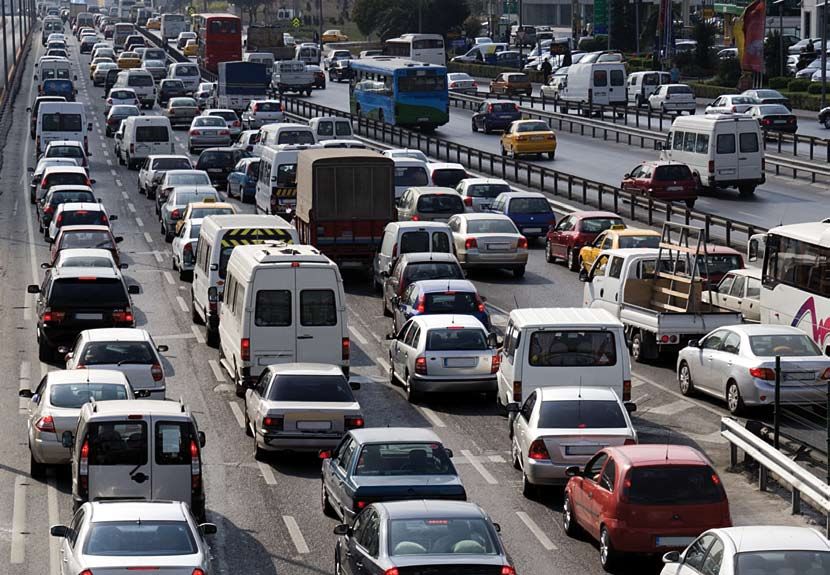
Cover design: EEA Cover photo © Stockxpert Left photo © Flo Holzinger Right photo © Flo Holzinger Layout: EEA/Pia Schmidt Legal notice The contents of this publication do not necessarily reflect the official opinions of the European Commission or other institutions of the European Communities. Neither the European Environment Agency nor any person or company acting on behalf of the Agency is responsible for the use that may be made of the information contained in this report. Copyright notice © EEA, Copenhagen, 2009 Reproduction is authorised, provided the source is acknowledged, save where otherwise stated. Information about the European Union is available on the Internet. It can be accessed through the Europa server (www.europa.eu). Luxembourg: Office for Official Publications of the European Communities, 2009 ISBN 978-92-9167-991-1 ISSN 1725-9177 DOI 10.2800/18545 © EEA, Copenhagen, 2009 REG.NO. DK- 000244 European Environment Agency Kongens Nytorv 6 1050 Copenhagen K Denmark Tel.: +45 33 36 71 00 Fax: +45 33 36 71 99 Web: eea.europa.eu Enquiries: eea.europa.eu/enquiries
Contents

Contents

Foreword — Professor Jacqueline McGlade................................................................. 4

1 Transport in perspective........................................................................................ 6

2 Freight transport and modal split ........................................................................ 12

3 Passenger transport and modal split ................................................................... 14

4 Greenhouse gas emissions from the transport sector .......................................... 16

5 Local emissions and air quality ............................................................................ 18

6 Transport fuel developments ............................................................................... 20

7 Transport noise ................................................................................................... 22

8 The need for demand management ..................................................................... 28

References ............................................................................................................... 32

Annex 1 Metadata and supplementary information .................................................. 36

Annex 2 Overview of TERM fact sheets..................................................................... 39

Annex 3 Data ........................................................................................................... 40

Annex 4 Background information on the 2008 TERM report ..................................... 51

                                                                                               Transport at a crossroads        3
Foreword — Professor Jacqueline McGlade
Foreword — Professor Jacqueline McGlade
The current economic turmoil may lessen the demand are pointing in the wrong direction. We know that
for transport but the transport sector still contributes the technology exists to tackle the transport sector's
significantly to rising emissions of greenhouse gases, impacts on Europe's environment. However, many
noise exposure, air pollution, fragmentation of vehicles rolling off production lines still have high
habitats and impacts on wildlife. emissions, the freight sector still favours the least
efficient transport modes and railways across the EU
The Transport and Environment Reporting have yet to be a unified system.
Mechanism (TERM) report for 2008 highlights this
trend. Although there is growing awareness of the In 2008 severe consumer reactions to volatile fuel
transport sector's disproportionate impact on the prices — apparent in falling car sales for example —
environment, the report shows that there is little suggest that there is a limit to what consumers are
evidence of improved performance or a shift to prepared to pay for transport. Although this problem
sustainable transport across Europe. In particular: has for now receded, it demonstrated that the price
mechanism can be an effective policy tool to influence
1. freight transport has continued to grow; transport demand. Data indicate that a 10 % rise in
fuel prices will produce a 21 % increase in demand
2. passenger travel by road and air has continued for urban bus services and almost 18 % more demand
to increase; for inter-urban rail services.
3. greenhouse gas emissions increased between From the EEA's perspective, clear, measurable,
1990 and 2006; realistic and time-bound targets are essential
for reducing emissions of greenhouse gases and
4. air quality is still a problem across Europe air pollutants, and transport noise. TERM 2008
despite continued reductions in air pollutant highlights that little change has taken place in the
emissions from vehicles; and transport sector and that 'decoupling' transport
impacts from economic activity is still in its infancy.
5. transport noise levels are affecting the quality of
life and health of EU citizens.
Key messages
Transport has played a significant role in Europe's
economic growth during the recent boom years; 1. Freight transport continues to grow, with the
more construction, shopping and tourism have all largest increases occurring in the least energy
ultimately relied on more transport. In recent months efficient transport modes — road and air freight.
governments across the EU have reacted to the The total volume measured in tonne-kilometres
economic crisis with stimulus packages. Some of the for EU Member States increased by 35 %
measures proposed are likely to perpetuate the link between 1996 and 2006. Rail and inland
between transport and the wider economy, whereas waterway freight recorded increases of 11 % and
well designed schemes can reduce transport volumes 17 % respectively but saw their market share
and realise a shift to less polluting modes of transport decline.
without changing the underlying economic activity.
They could improve the transport efficiency of the 2. Passenger transport. Travel by road and air
economy, effectively decoupling transport growth has continued to increase throughout the
from economic expansion. EEA member countries. Between 1995 and 2006
car ownership levels in the EU-27 increased
Unfortunately, at a time when we need to tackle our by 22 % (equivalent to 52 million cars), and
economic and environmental problems through passenger car use increased by 18 %. The
sustainable and green solutions, trends in transport number of kilometres travelled by passengers in
4 Transport at a crossroadsForeword — Professor Jacqueline McGlade
EEA member countries grew by 1 % (equivalent road transport exhaust emissions across Europe,
to 65 million kilometres) in 2006. there have been no significant improvements
in concentrations of fine particulates (PM10)
3. Greenhouse gases. The EU Energy and Climate and nitrogen oxides (NOX), which have a major
Package targets a 20 % overall reduction in impact on air quality and human health.
greenhouse gases by 2020 and highlights the need
for the transport sector to contribute actively. In 5. Noise. Many people are exposed to transport
the EU, growing transport volumes have driven noise levels that affect their quality of life
emissions up by 27 % between 1990 and 2006 and health, notably in large agglomerations.
(excluding the international aviation and marine Road traffic is by far the main source
sectors). of exposure to transport noise. Almost
67 million people (i.e. 55 % of the population
4. Air pollution. Emissions of regulated air living in agglomerations with more than
pollutants from vehicles continue to fall across 250 000 inhabitants) are exposed to daily road
EEA member countries but concentrations remain noise levels exceeding 55 Lden (an EU benchmark
high in some urban areas. Despite a reduction in for excessive noise).
Transport at a crossroads 5Transport in perspective
1 Transport in perspective
Creating an environmentally sustainable transport system requires a package of policies. Historically, transport
policy discussions have tended to deal only with transport supply. But growing transport demand is undermining
efforts to solve many of the most pressing environmental problems. Addressing the most important environmental
aspects simultaneously will be the most cost-effective approach.
Defining a pathway towards sustainable transport requires a long-term vision to guide the process as well as
strong leadership. It is therefore important to identify and highlight the opportunities and challenges along the
way. While changes will involve costs in the short term, it should be recognised that Europe may be able to secure
'first-mover-advantage' in the medium to long term, providing many opportunities for the continent to influence
global development and secure a return on its investments.
Transport policy: balancing climate Adopting such an approach would be unfortunate,
change and other environmental however, because some greenhouse gas mitigation
priorities options could have negative environmental
impacts elsewhere. On the other hand, with proper
Over the past decade, climate change has moved planning, actions to combat greenhouse gas
from being just one among many important emission can be designed to deliver environmental
environmental issues to being a key driver of global benefits in other areas.
policy-making. Scientifically, there is no longer any
doubt that mankind is having a discernible impact Rather than engaging in a zero-sum game, where
on the global climate. Likewise, it is generally agreed solutions solving one problem create another one
that transport is one of the major contributors to elsewhere, policymakers must clearly strive to
carbon dioxide concentrations in the atmosphere. identify win-win solutions. In some cases such
solutions are not just sensible politically but may
In Europe transport contributes approximately also offer sustainable business opportunities for
one quarter of all greenhouse gas output and its European companies. Certain energy efficiency
emissions are growing. National and international technologies, for example, reduce emissions of
authorities are therefore devoting much attention both greenhouse gases and of other pollutants;
to identifying ways to reduce the transport sector's European firms that take the lead in developing
greenhouse gas emissions. such technologies could be well positioned to take
advantage of rapidly expanding global markets for
In December 2009, at the United Nations Climate them in the years to come.
Change Conference (COP15) in Copenhagen,
a large number of countries and international The integration of environmental policies into the
organizations will be pressing hard to reach a transport sector needs to address several issues,
worldwide agreement on climate change. This even if climate change is seen as the overriding
agreement should not just halt the growth in concern.
global greenhouse gas emissions but rather realize
a significant global reduction within the next few In 1998 EU leaders convened in Cardiff and agreed
decades. For developed economies that means an environmental integration policy. It provides
reductions from 1990 levels of 25–40 % by 2020 that sectors such as transport are responsible
and of up to 80 % by 2050. As a consequence, all for their effects on the environment and that
sectors of economic activity must contribute to the Governments should develop policies so that
reductions. each sector gradually mitigates its unacceptable
environmental impacts. The Transport and
Against this backdrop, transport policy could easily Environment Reporting Mechanism (TERM) was
focus solely on reducing greenhouse gas emissions. created to monitor and support this process and
6 Transport at a crossroadsTransport in perspective
has done so for 10 years now. Recent findings gas emissions from new vehicles — an area
include the following: where European automakers have a large lead
over their US counterparts. Investments already
• Transport is a key sector for the EU as it strives made may now provide export opportunities
to meet its future climate change targets. But either as licences, joint ventures, sales via
transport plays a role in other environmental US-owned subsidiaries or as direct exports.
problems too — sometimes as the main Being a 'first mover' often implies taking on costs
contributor. and risk but can confer commensurate rewards,
including allowing Europe to define or inspire the
• Regulatory measures have been and still are international standards for a greener economy.
successful in addressing some environmental
issues, such as emissions of pollutants, but Biofuels illustrate the possibilities for Europe to
other responses are also needed. take the lead. As noted in Chapter 6 of this report
many countries are, as Europe, setting biofuels
• Sector-specific environmental targets would targets. In order to manage the potentially negative
help improve monitoring and benchmarking impacts of expanding biofuels production on
and assist in progressing towards an biodiversity and land use, the EU is pioneering
environmentally sustainable transport system the development of sustainability standards
that addresses all important environmental for biofuels. Including sustainability criteria in
issues. the EU's Energy and Climate Change Package
agreed in December 2008 does not yet completely
• Transport demand is a key issue that must guarantee against negative impacts and there are
be prioritised because it influences several still gaps to fill concerning methodologies for
environmental issues. Transport demand assessing indirect land-use changes. Nevertheless,
originates outside the transport sector itself the EU has a clear opportunity to impact global
and should be addressed there. In the field of development of the biomass-for-energy market and
transport policy, more research should go into thereby win influence and business opportunities
the use of pricing to address demand. as well.
The transport sector has in some cases integrated
environmental concerns into its policy decisions. Noise — now firmly on the EU agenda
But other sectors have an important influence
on the development of the transport sector. EU Member States reported standardised noise
Governments therefore need to ensure that the data in a structured way for the first time in 2007,
policy frameworks of such sectors reflect their following the adoption of the Environmental Noise
impact on transport and the environment. Directive in 2002. As a result, it is now possible to
start looking at noise exposure across Europe.
Economic challenges provide transport In the 1970s it was established that many Europeans
policy opportunities suffered ill health due to high noise levels, especially
around roads and airports but also near railways
The international economic outlook has altered and other local sources not necessarily related
significantly in the past year. Whereas 2008 to transport. A number of local and national
commenced with projections of sustained growth, investigations were carried out and most of them
it closed with fears of an extended worldwide showed that it would be quite a challenge, not
recession. Addressing the environmental least economically, to achieve the noise limits
challenges will not be easy and is likely to require recommended by the WHO to protect human health.
considerable investment.
Since then some emissions reduction measures
It is important to recognise, however, that the have been implemented, including building noise
environmental problems confronting Europe are barriers and improving window insulation. It is
also being faced by other world regions. And the obvious, however, that increasing transport activities
fact that responses designed in one region may be have exacerbated noise problems. One contributing
relevant elsewhere potentially creates economic reason is that during the late 1970s and 1980s public
and business opportunities. Shortly after taking focus shifted towards the air pollution produced
office at the start of 2009, President Barack Obama by transport, while noise more or less disappeared
declared the intention of reducing greenhouse from the agenda.
Transport at a crossroads 7Transport in perspective
Transport noise mitigation can follow a number of perspective, however, the positive impact is smaller
different but complementary strategies: because the noise of each additional car makes a
diminishing contribution to overall sound levels.
• technical improvements to vehicles and In general terms, it takes an eight-fold increase in
infrastructure to reduce noise generation; traffic to double perceived noise levels. Similarly it
takes an eight-fold reduction to halve the noise.
• separating heavily used transport links from
densely populated areas; Dealing with transport noise is thus not a straight
forward task but it is possible to use packages of
• using barriers and improved sound insulation measures tailored to address several local problems
of dwellings to reduce the impact on those at once. Chapter 7 of this report provides a more
living in exposed areas; detailed discussion of this issue.
• reducing traffic levels, banning especially noisy
categories of vehicles, imposing restrictions Addressing transport impacts: the need
during night-time or changing driving patterns for measures that address multiple
to reduce noise. problems
Improving vehicles and infrastructure using, Efforts to improve transport's environmental
for example, better silencers, low noise tires impact have traditionally focused on technological
and noise absorbing road surfacing, has been measures. Although such measures are far from
shown to be a successful strategy. Enhancing uncontroversial, they are the least complicated
vehicle aerodynamics to reduce wind noise to analyse. They are often designed to address
may also reduce energy consumption and thus only one problem — for instance abating exhaust
emission of greenhouse gases. Largely, however, emissions with catalysts reduces 'regulated' air
technology-oriented measures tend to target pollutants and installing barriers around roads
specific problems; as such, they may be costly and railways reduces noise in surrounding
solutions because their benefits do little to reduce areas. Viewed in isolation, such measures may
other environmental impacts or even increase appear a cost-effective way to achieve a certain
them. Catalytic converters, for example, strongly environmental target. Seen in the context of
reduce emissions of regulated pollutants but society's many other environmental goals,
increase emissions of greenhouse gases because however, they may look less good value. From
of a small increase in energy consumption and do that perspective, the most cost-effective measures
little to reduce noise emissions. are those that simultaneously address several
problems, thereby reducing the aggregate expense.
Using planning measures to separate traffic
and people can be very effective in preventing Table 1.1 indicates the impact of different types
noise exposure. It is possible that such planning of measure on issues such as greenhouse gases
will lengthen journeys and therefore increase emissions and noise. It does not, however, specify
overall emissions of air pollutants and energy the strength of the effect, which will often depend
consumption, as well as the total area exposed on the concrete form of implementation. For
to noise. On the other hand living in quiet areas example, promoting public transport in some
with little traffic can encourage people to walk or cases attracts more people to shift from walking or
cycle for short trips. The net effect on emission cycling than to stop driving their own car. Clearly,
of greenhouse gas and air pollutants is therefore in this case the efficacy of the policy measure will
unclear. be enhanced if the promotion of public transport
is accompanied by activities and incentives to
Sound insulation via sound barriers and better encourage motorists to change their behaviour.
windows and facades are used on a large scale
across Europe to reduce noise exposure. It can be Complexities also exist because of the challenges of
an effective measure but provides little in terms of gathering data on policy effectiveness. With respect
ancillary benefits. to the example above, data on numbers travelling
on public transport are commonly used to measure
Reducing traffic levels is the measure that provides the success of policies encouraging a shift to public
the clearest ancillary benefits because emissions transport use, partly because it is easy to assess
of air pollutants and greenhouse gases decline and verify. Evidently, however, the focus should
in proportion to the fall in traffic. From a noise not simply be on public transport users but on
8 Transport at a crossroadsTransport in perspective
Table 1.1 Impacts of alternative environmental policy measures
Long-range air pollution
ecosystem damage)
Emissions of GHGs
Local air pollution
(human health)
(human health,
Fragmentation
(biodiversity)
Barrier
effects
Noise
Exhaust emission abatement and cleaner fuel. + + +/– +/– 0 0
Quieter vehicles, trains, aircraft and ships 0 0 + +/– 0 0
Improving energy efficiency of a mode of transport + + +/– + 0 0
Shift from individual to public transport + + +/– + 0 +/–
Renewable fuels +/– +/– 0 + +/– 0
Improved physical planning + +/– + +/– + +
Speed reduction + + + + 0 +
Demand management and decreased traffic growth + + + + + +
Note: + = positive effect; 0 = in principle no effect; +/– = effect uncertain/depends on implementation.
the extent to which people are shifting from more determining transport demand. The globalisation
polluting modes to less polluting modes or vice of the economy and the expanding European
versa. Unfortunately, data on car occupancy and market has greatly increased consumer choice.
on non-motorized transport are generally poor This has placed an upward pressure on transport
and surveys seldom provide much information demand for each part of the logistical chain: from
on the real modal shift occurring. As such, farm to processing centre, then to the storage or
the environmental value of a measure may be wholesale centre, the retail outlet and finally to
impossible (or at least very costly) to assess. the consumer's home. Farming inputs, such as
fertiliser, and by-products also create additional
To achieve ancillary benefits, packages of transport demand.
mitigation measures need to be carefully
designed. Establishing clear reduction targets for The desire for more diverse diets sourced from
different environmental impacts would make it further afield can imply greater transport demand
easier for both public authorities and the private even if food consumption is not increasing.
sector to choose the most cost-effective means of Policies on production, trade and consumption
achieving them. have a strong influence on transport demand, with
outsourcing of production and lower trade barriers
implying more transportation.
Mitigating transport demand is a
complex challenge Striking the right balance between environmental
protection and satisfying demand for a broad
As Table 1.1 suggests, transport demand variety of food throughout the year does not,
management is clearly an attractive strategy for however, necessarily imply a shift to trade
reducing environmental impacts because it can barriers and local production. The greenhouse
potentially address multiple impacts concurrently. gas emissions resulting from transporting a tonne
Demand management is far from simple, however, of goods from Shanghai to Rotterdam by ship
because transport demand derives from a very is roughly equal to the emissions to transport
broad range of sources, most of which lie outside that tonne by truck from Rotterdam to Berlin.
the scope of transport policy. It is therefore as much a matter of how we
transport the goods as how far. In addition the
Food production and consumption demonstrate environmental impacts of production may differ
the role of external factors and sectors in depending on where the food is produced.
Transport at a crossroads 9Transport in perspective
Delivering an optimal solution can only be uncertainty is needed. Planners and policymakers
achieved if the issue is addressed in a cross–sectoral must essentially decide how they want cities to
fashion. Planning and policy development outside look and how they want people and goods to be
the transport sector must take transport generation transported in the future.
into account and provide the information necessary
to find an optimal solution. Internalising the full Scenario techniques are now being employed
social and environmental costs of transport so that by the European Commission to support the
they are reflected in food prices is one important development of the next EU Common Transport
mechanism to achieve the best possible solutions. Policy. In this context it is important to decide
which aims — environmental as well as economic
Providing consumers and transporters the data and social — should guide scenario development
they need to make informed choices is also and which policies and measures are politically
important. In the United Kingdom, for example, feasible to use consistently over a longer time scale.
the Carbon Trust has developed product labelling Land-use planning can be an effective means of
detailing the amount of carbon produced per defining suitable goals but to be successful requires
serving. The use of the labels on fresh juice consistent implementation over many years.
cartons sold by supermarket chain Tesco helped
the firm's supply chain partners to identify new There are many complex relationships between
carbon saving opportunities, such as changes in transport and land use but effective planning
production, storage and transportation. While can help ensure that development encourages
certainly offering useful opportunities, it should sustainable travel behaviour. Using land-use
be recognised that introducing carbon labels could planning successfully as an instrument to
lead to a focus solely on the climate impacts of influence transport activities requires long-term
production to the exclusion of other environmental thinking (25–30 years). Establishing targets
effects. on environmental impacts is one way to start
formulating a long-term vision.
Integrating land-use planning and
transport policy It is time to go from talk to action
Transport shapes land-use patterns, as new It is clear from the foregoing discussion that we have
transport infrastructure affects demand for travel to apply a methodology that cost-effectively delivers
and development. Investment in transport networks an environmentally sustainable transport system
around cities encourages the decentralisation of within a reasonable time horizon. The following
facilities and services, impacting significantly on elements will be needed:
suburban land use and increasing pressure for
development on 'greenfield sites' outside the city. • Vision: identifying the relevant environmental
That leads to urban sprawl, which is typically issues to be addressed if the transport system
unplanned and low density. European cities have is to be considered sustainable and formulating
sprawled significantly since the 1950s, with built up 'targets' for those issues as a basis for further
land expanding faster than population growth. analysis.
Increasing the density of inner city areas and • Pathway: identifying possible measures to
encouraging mixed-use developments reduce address the environmental issues as well as
both the need to travel and the average length of non-environmental issues and possible policy
trips. This can also have a marked impact on travel instruments to implement such measures. This
behaviour, as walking and cycling become more includes both a short-term and a long-term
attractive as trip lengths decrease. Fifty per cent of analysis and should start with an examination
all trips are shorter than 5 km and, particularly in ways to mitigate 'transport demand' because a
urban areas, can often be made by public transport, decrease in transport or slower growth implies
walking or cycling. fewer environmental problems to address using
other measures and policy instruments.
Planning appropriate changes requires a long-term
vision for more 'liveable cities'. The time perspective • Prioritisation: analysing the cost-effectiveness
for planning such changes is long (20+ years). of alternative packages of measures that will
Therefore a forward-looking approach that lead to an environmentally sustainable transport
deals both with diverse aims and high levels of system and build a political consensus strong
10 Transport at a crossroadsTransport in perspective
enough for a longer term plan to survive first step that can guide both governments and
changes of government. industry. Governments are responsible for the
adoption of appropriate legislation to tackle the
• Implementation: putting the agreed measures challenge and enterprise and business have a vital
into action. role to play as suppliers of cleaner technology. It
is a challenging task and the process has to start
Creating a coherent picture of a world with a without delay.
little less transport and much less pollution is a
Transport at a crossroads 11Freight transport and modal split
2 Freight transport and modal split
Freight transport volumes continue to grow, with the largest increases occurring in the least energy efficient
means of transport — road and air freight. A shift towards less energy intensive modes, notably rail and maritime
transport, is desirable. There is also a potential for energy savings via better use of the road transport fleet.
Freight transport volumes continue to grow at In July 2008, the EU outlined a package of 'Greening
approximately the same pace as the economy. The total Transport' measures to make the freight transport
volume measured in tonne-kilometres for EU Member sector more sustainable. The package contains a
States (excluding Cyprus and Malta) increased by proposal to reform the EU's Eurovignette Directive
35 % between 1996 and 2006. Over the same period (1999/63/EC). The suggested reform would enable
road and air freight volumes increased faster (45 % Member States to use revenue generated by the
and 43 % respectively), therefore increasing their road freight toll to reduce the negative impacts of
market share. Maritime transport volume grew by freight transport, such as emissions of nitrogen
33 %, thus almost maintaining its market share. oxide (NOX) and fine particulates (PM10), noise and
Volumes transported by rail freight, on the other hand, congestion. It is estimated that the strategy could
increased only 11 % and those on inland waterways reduce the fuel consumption of lorries by 8 % (EC,
rose 17 %; both therefore lost market shares. More 2008b). The continued growth of road and air freight
recent incomplete data indicate, however, that rail has casts doubts on whether the impact of 'Greening
stopped conceding market share. Transport' measures will be sufficient to offset
increased emissions from the sector.
Average CO2 emissions in grams per tonne-km (g/tkm)
are significantly lower for rail (18–35 g/tkm), sea The impact that freight can have upon urban areas
transport (2–7 g/tkm) and inland water ways has also led to its inclusion in the EC's 2007 Green
(30–49 g/tkm) than they are for road (62–110 g/tkm) Paper on Urban Mobility (EC, 2007c). The Paper
and air transport (665 + g/tkm) (Ifeu, 2005). Real calls for more efficient interfaces between long-haul
world emissions depend on a variety of factors, freight transport and short distance deliveries. It
however, including the weight and volume of goods, suggests that planning and technical measures be
vehicle type, mode choice and logistic efficiency. implemented to reduce the negative impacts of
The relatively faster growth in air and road freight freight transport passing through urban areas and
therefore means that CO2 intensity in freight transport to reduce incidences of 'empty running', i.e. empty
continues to increase even if vehicles improve. return trips from deliveries. Proposals to lift
restrictions on cabotage (see Box 2.1) should also
Research indicates that the volume of goods reduce empty running.
transported grows faster in terms of cubic meters
than in tonnes. Thus the density of goods is The continued dominance of road freight over
decreasing, meaning that more trucks are needed to rail can be attributed in part to concerns over the
transport the same number of tonnes than ten years reliability, capacity, speed and flexibility of the rail
ago. Although the loaded vehicles may be slightly network (EC, 2007b). It is therefore important that
lighter the net result is an increase in emissions. infrastructure is in place to support an increased
These emissions are not just greenhouse gases but rail modal share. Twenty of the 30 Trans-European
also noise and air pollutants, which can have strong Transport Network priority projects are rail projects
impacts in particular around ports, airports and rail (EC, 2005a). However, overall levels of investment
terminals, and within and around urban areas. The in Europe do not reflect a prioritisation of rail
environmental impact of freight is thus likely to infrastructure. In 2005 a total of EUR 17 billion was
increase owing to the decreasing density of goods invested in rail infrastructure in Europe, compared
transported and the generally increasing frequency to almost EUR 45 billion in road infrastructure
and length of journeys (McKinnon, 1999). (OECD, 2007).
12 Transport at a crossroadsFreight transport and modal split
Volume and GDP (index 2000 = 100) Decoupling (%)
Figure 2.1 Freight transport volumes grow
120 10
alongside GDP
8
Freight transport activity has grown faster than the 6
110
economy during most years of the last decade. Freight 4
transport growth can be attributed to improved transport
2
efficiency, enabled in part by the removal of intra-EU
transport barriers, which has encouraged investment and 100 0
stimulated trade. However, other factors such as rising –2
fuel prices and slowing economic growth may have a
–4
significant impact on freight transport development in 90
the future. A more detailed breakdown is available in –6
Table A.1 of Annex 3 on data. –8
80 – 10
95
96
97
98
99
00
01
02
03
04
05
06
19
19
19
20
20
20
20
20
19
19
20
20
Decoupling tkm GDP
Note: The two curves show the development in GDP and
freight transport volumes, while the columns show
the level of annual decoupling. Green indicates faster
growth in GDP than in transport while purple indicates
stronger growth in transport than in GDP. The large
change in 2004 appears to be tied to a change in
methodology but no correction figure exists. See
Annex 1 on metadata for details.
Source: Eurostat, 2008.
Modal share in %
Figure 2.2 Road transport's market share
90
increases strongly in EU-10
80
70
The figure compares rail and road transport trends
60
(shares of transport volume in tkm) in two regions over
50
the last decade. In the EU-15 the modal shares of road
and rail freight stayed almost constant. At the same time, 40
the modal share of rail and road in the EU-10 diverged as 30
the removal of trade barriers and liberalisation of markets 20
led to a decline in heavy industry, which prompted 10
increased demand for road transport. A change in the
0
geographic orientation of trade (from east to west) has
96
97
98
99
00
01
02
03
04
05
06
also contributed to the shift because the new markets
19
19
20
20
20
20
20
19
19
20
20
are not connected by rail links and offer much more
flexible road transport connections as an alternative. At EU-15 — Road EU-10 — Road
the present rate of change, the balance of rail and road EU-15 — Rail EU-10 — Rail
freight transport in the EU-10 will be similar to the EU-15
within a decade. A more detailed breakdown is available Source: Eurostat, 2008.
in Table A.2 of Annex 3 on data.
Box 2.1 Reforming cabotage regulations for better efficiency
The liberalisation of the internal EU market has led to complex freight transport movements. One impact of this has
been the practice of cabotage, whereby hauliers from one country pick up and deliver goods within another country.
Cabotage is used to reduce 'empty runs', which account for 10 % of long distance and 19 % of local and regional
operations in Germany (BDI, 2007). Experience has shown that reducing barriers to the movement and activities of
freight can lead to increased efficiency and reduced incidences of empty running.
Cabotage, which constitutes approximately 1 % of national road transport demand within the EU (EC, 2006b), is
currently only legal if hauliers conduct no more than three cabotage operations in the country of destination within
seven days of completing a delivery. The European Parliament has called for the lifting of all limits on cabotage by
2014.
Transport at a crossroads 13Passenger transport and modal split
3 Passenger transport and modal split
Passenger travel by road and air has continued to increase throughout the EEA member countries. Levels of
growth have been particularly pronounced in eastern Europe where increases in air travel have been fuelled by the
expansion of low-cost carriers and car ownership levels are converging with those of western Europe.
The number of kilometres travelled by passengers Europe, where they have almost tripled since 1990,
in EEA member countries grew by 1 % in 2006. albeit from a lower base than in Western Europe
This is a little below the annual average of 1.3 % (CfIT, 2006). Experience in Germany illustrates the
over the past decade. Intra-EU air passenger travel potential effect of good access to public transport.
remained the fastest growing area, accelerating to Research there has shown that car ownership in
4.6 % growth in 2006 and 8 % in 2007. Intra-EU sea some cities is up to 42 % higher in households
travel, on the other hand declined by 9 % in the 600 m or more from stations (Hass-Klau et al.,
period 1996–2006 (EU-27) bringing its modal share 2007). High levels of car ownership and the
to below 1 %. relatively low modal share of public transport are
continuing to have a negative environmental, social
Bus and coach travel has decreased from a share and economic impact, with congestion in urban
of 9 % of intra-EU travel in 1996 to 8 % in 2006. areas being a problem across Europe.
Powered two-wheelers have expanded their
market share slightly to just above 2 %. Railways, A key aim of the European Commission's Green
tramways and metro systems now account for 7 % Paper on Urban Transport (EC, 2007c) is to
of passenger transport, while the cars remain the support policies that encourage greater use of
dominating mode with a share of 73 % (DG TREN, public transport. The Paper includes policies to
2008). introduce more bus priority measures; to improve
the coverage, reliability and frequency of bus and
For comparison it would be useful to include data rail services; and to introduce new rail links. The
on non-motorised transport, in particular bicycle Paper supports using charging to make better use
traffic in urban areas. Unfortunately, no unified of existing infrastructure and to influence demand.
European data set exists in this field. Figure 8.3 in Fuel price increases experienced over the last year
Chapter 8 does, however, provide some indication (see Box 3.1) indicate that increasing the cost of
of bike traffic growth in London as a result of the private transport relative to public services can
congestion charging scheme there. influence decisions on how and whether to travel.
Chapter 6 includes further discussion on the role of
The high modal share of private car and air fuel prices in determining demand.
travel has negative environmental impacts at
all geographical levels. Passenger transport An Urban Mobility Action Plan, which would
contributes strongly to air and noise pollution, develop the measures detailed in the Green Paper,
habitat fragmentation and greenhouse gas has been anticipated since the end of 2007 but not
emissions. The latter could compromise Europe's yet produced. It is therefore difficult to assess the
ability to meet stringent greenhouse gas emission impact that the Green Paper will have. It is evident,
targets currently under negotiation. however, that continuing delays in implementing
the Paper's proposals will only exacerbate carbon
Public transport improvements could influence emissions and environmental damage.
traveller behaviour and reduce the growth in car
ownership, which rose by 22 % between 1995 and
2006 in the EU-27. Car ownership growth rates
have been particularly high in eastern and central
14 Transport at a crossroadsPassenger transport and modal split
Figure 3.1 Trends in passenger transport Box 3.1 The impact of fuel prices on travel
demand and GDP demand and traveller behaviour
Passenger transport volumes continue to grow slower Fuel prices represent a considerable proportion of the
than the economy. In addition, the growth rate has total cost of transport. Recent increases in fuel prices
decreased and even become negative in some countries (until July 2008) are therefore likely to have had
in recent years. This is probably a reaction to increasing an impact on total transport volumes and traveller
congestion, which lowers the desire for additional behaviour. The extent of the impact has not yet
transport. A more detailed breakdown is available in been formally quantified but research indicates that
Table A.3 of Annex 3 on data. for every 10 % increase in fuel prices, demand will
increase by 21 % for urban bus services, by almost
Volume and GDP (index 2000 = 100) Decoupling (%) 18 % for inter-urban rail services, by 10 % for urban
115
8 rail services, and by 4 % for inter-urban coach
services (Balcombe et al., 2004).
6
110 The International Air Transport Association has
4 calculated that if the price of flying increased by 1 %
105
then demand for short-haul intra-European flights
2 and demand for long-haul flights would decrease by
almost 1 % each (IATA, 2008).
100 0
New car sales contracted for six consecutive months
–2 in 2008 and were more than 5.4 % lower in the
95
10 months from January to October than during
–4 the same period of 2007. The number of new cars
90
–6 registered in October 2008 was 14.5 % lower than in
October 2007 (ACEA, 2008). The larger decrease in
85 –8 the October figure is explained by the added effect of
the economic slow down.
80 – 10
95
97
99
01
03
04
05
06
96
98
00
02
19
19
19
20
20
20
20
20
19
19
20
20
Decoupling pkm GDP (2000 base year)
Note: The two curves show the development in GDP and
passenger transport volumes, while the columns show
the level of annual decoupling. Green indicates faster
growth in GDP than in transport while purple indicates
stronger growth in transport than in GDP. A number
of countries have changed accounting methodology or
have incomplete time series but no correction factor
exist. See Annex 1 on metadata for details.
Source: Eurostat, 2008.
Figure 3.2 Passenger transport modal split in 2006 (without aviation)
The modal split for passenger transport was dominated by the private car in all EEA member countries. Bus travel had the
second largest modal share in all but five European countries. Between 1996 and 2006 passenger demand for rail remained
stable or grew in all EU-15 member States except in Austria. In contrast, rail transport in all EU-12 Member States
countries experienced a major slump, falling to a record low in Lithuania (7 % of the 1990 level) and in Estonia (17 %) due
to market reorientation and low investment. A more detailed breakdown is available in Table A.4 of Annex 3 on data.
%
100
90
80
Bus
70
60
Rail
50
40 Car
30
20
10
0
te No ia
ng y
m
rla d
s
Lu ov y
m ia
Fr rg
Fi ce
Sw nd
Po en
Sp l
n
itz and
nd
Be aly
Au m
en ria
La rk
G ia
Ir ce
ec Es d
Re ia
Ro blic
Sl nia
Bu kia
un a
Tu y
ey
a
G nd
a
Sl an
r
H ari
n
an
ai
n
xe en
ug
tv
h ton
do
iu
a
ga
u
an
e
rk
rw
ed
la
a
la
t
It
a
ua
a
m
bo
pu
s
re
m
nl
Sw Pol
el
lg
lg
ov
m
N ce
rt
er
th
er
he
I
Ki
Li
D
et
d
Cz
ni
U
Note: The Switzerland data are for 2005.
Source: Eurostat, 2008.
Transport at a crossroads 15Greenhouse gas emissions from the transport sector
4 Greenhouse gas emissions from the
transport sector
Greenhouse gas emissions from transport have risen considerably since 1990 and are projected to continue
increasing. This contrasts with other sectors of the economy and highlights the challenges for transport. The EU's
'20-20-20 by 2020' Energy and Climate Package sets overall reduction targets for greenhouse gases and highlights
the need for the transport sector to contribute actively to achieving them. There are no sector-specific goals in
the Package, however, and the transport sector's contribution has not yet been defined. Positive steps have been
taken, such as the recent inclusion of aviation in the European Union Emissions Trading Scheme, but it is still not
clear how all other necessary reductions are to be achieved.
Greenhouse gas emissions from the transport on the progress at COP15 in Copenhagen. The
sector continue to grow, in contrast to other sectors IMO Marine Environmental Protection Committee
such as industry, housing and energy production adopted an 'interim CO2 operational index' in July
(see Figures 4.1 and 4.2). While there is anecdotal 2005. This has, on a voluntary basis, been used
evidence that high crude oil prices in much of 2008 by a number of States and industry organisations
affected demand for various modes of transport, it to determine the fuel efficiency of their shipping
is not clear whether this will continue if prices rise operations. It is also being used to establish a
once more, or if transport users will simply adapt common approach for trials on voluntary CO2
to higher prices. The production and consumption emissions indexing. In the field of international
sectors, which are large consumers of transport aviation, the EU's decision in 2008 to include
services, will be negatively affected by higher fuel aviation under the Emission Trading Scheme from
prices because technological innovation and the 2012 can be seen as a first step towards limiting
development of cheaper and more energy efficient greenhouse gas emissions from the aviation sector.
infrastructure, such as rail, are lagging.
The proposed EU legislation '20-20-20 by 2020'
Aviation, particularly international aviation (EC, 2008a; EP, 2008) calls for a reduction of
(including within the EU), is projected to increase greenhouse gas emissions of at least 20 % by
at a rapid pace, although growth in all transport 2020 compared to 1990 across all sectors. For
sectors might slow down because of the economic the sectors outside the EU-ETS, a reduction of
slowdown and recent high fuel prices. Road 10 % between 2005 and 2020 is proposed. The
transport continues to be the dominant source of European Commission's communication notes that
greenhouse gas emissions for both freight and 'A specific effort is needed to achieve greenhouse
passenger transport. Although measures have been gas emissions reductions and improved security of
implemented to improve the energy efficiency of energy supply in the transport sector'. It is worth
passenger and freight road transport, gains have noting that efforts to design interventions to reduce
been far outpaced by increasing transport demand. overall greenhouse gas emissions might be more
effective if targets were defined for individual
Relative to other transport modes, international transport sectors.
aviation and maritime transport have shown the
highest growth of greenhouse gas emissions over
the last decade. Those emissions are not regulated
by the Kyoto Protocol and to date no mandatory
emissions reductions have been set for them. The
International Maritime Organisation (IMO) and the
International Civil Aviation Organisation (ICAO)
are investigating different options to reduce
emissions of greenhouse gases in their respective
sectors and have announced that they will report
16 Transport at a crossroadsGreenhouse gas emissions from the transport sector
Index (1990 = 100)
Figure 4.1 Transport sector greenhouse gas 180
emissions 1990–2006
170
Transport sector greenhouse gas emissions increased by 160
28 % over the period 1990–2006. This compares with 150
a reduction of 3 % in emissions across all sectors. The 140
increase has occurred even though fleets have generally
130
improved their energy efficiency and therefore reflects
increased transport volume. 120
110
100
90
80
19 1
19 3
19 5
19 7
20 9
20 1
20 3
04
20 5
06
19 0
92
94
96
98
02
00
9
9
9
9
9
0
0
0
9
19
19
19
19
20
20
20
19
EU-15 EU-12 EEA-32 Turkey EFTA-4
Source: European Topic Centre for Air and Climate Change,
2008.
Figure 4.2 Trends in transport sector
greenhouse gas emissions by
country 1990–2006
The majority of EEA member countries saw an increase in
transport emissions principally due to increased transport
movements. Austria, Malta and Slovakia were the only
states that showed decreases in transport greenhouse
gas emission compared between 2005 and 2006.
Estonia – 28
Lithuania – 22
Bulgaria – 21
Germany –1
Liechtenstein 8
Switzerland 8
Sweden 9 Box 4.1 Addressing greenhouse gas emissions
Finland 12 in the transport sector
United Kingdom 15
France 17 Although climate change will be the main
Latvia 17 environmental challenge in the years to come, it
Slovakia 19 is important to note that interventions designed to
Belgium 27 reduce greenhouse gas emissions may adversely
Denmark 27 impact on other areas, such as air quality or
Italy 28 biodiversity. These issues have to be taken into
EEA-32 28 account when developing future sustainable transport
Norway 32 policies. It is also obvious from previous experience
Netherlands 37 that transport demand has to be tackled at the
Hungary 50 same time as promoting more technology-oriented
Malta 51 supply-side measures.
Poland 52
One interesting possibility is the use of emissions
Romania 61
trading in the transport sector. So far no part of the
Iceland 61
transport sector is covered directly by the EU-ETS.
Greece 65
Some activities linked to the transport sector are
Turkey 69
covered, however, for example electricity produced to
Slovenia 75
power rail travel and fuel production in refineries.
Austria 82
Spain 89 A key development is the inclusion of intra-EU
Portugal 100 aviation emissions in the EU-ETS from 2012. This will
Cyprus 114 make it necessary for the aviation sector to realise
Czech Republic 144 greenhouse gas emissions reductions, by either
Luxembourg 162 decreasing their own emissions or buying allowances
Ireland 165 on the market. For 2012 that cap is set to 97 % of
average emissions during the years 2004–2006.
– 75 – 25 25 75 125 175
% change 1990–2006 Inclusion of other modes of transport has also been
mentioned but so far there are no firm proposals.
Source: European Topic Centre for Air and Climate Change,
2008.
Transport at a crossroads 17Local emissions and air quality
5 Local emissions and air quality
Emissions of regulated air pollutants from vehicles continue to fall across EEA member countries but
concentrations remain high in some urban areas. High levels of pollutants continue to compromise human health.
In response, integrated approaches including low emission zones are being introduced.
Road transport emissions of air pollutants continue into force in October 2008 and a future Euro VI
to decline in EEA member countries. Nonetheless, standard is planned for 2014.
a recent report has shown that they remain the
primary source of nitrogen oxides and the second The new EU Air Quality Directive (2008/50/EC)
most important source of fine particulates (EEA, replaces all previous directives except the 4th
2008a). Despite reduced road transport exhaust Daughter Directive (2004/107/EC) and provides
emissions across Europe, there have been no a common approach to air quality assessment
significant improvements in concentrations of PM10 (EU, 2008). In accordance with the instrument's
and nitrogen dioxide (NO2). aims, many cities have introduced measures to
control activities that contribute to breaching air
As exhaust emissions decline, tyre and brake quality objectives. For example, Utrecht is planning
wear are making a growing contribution to total to construct a tunnel to filter exhaust fumes away
road transport emissions of air pollutants. For from residential areas, replace the city's fleet of cars
example in the United Kingdom this contribution with clean vehicles and introduce park-and-ride
has increased from 15 % in 1990 to 42 % in schemes. Some London boroughs have developed
2006 (NAEI, 2009). Although NOX emissions car sharing schemes and set differential parking
are declining due to reduced exhaust emission charges based on emissions.
limits, nitrogen dioxide (NO2) concentrations are
relatively stable. This may be due to an increase There are low emission zones (LEZs) operating
in the proportion of NOX emitted as NO2 by in 70 cities across eight countries (see Box 5.1).
vehicles (primary NO2 emissions), the result of Although these schemes can act as an effective
increased sales of Euro 3 diesel vehicles fitted with driver to accelerate fleet renewal and encourage
oxidation catalysts and the fitting of catalytically new cleaner technologies, there is a strong need to
regenerative particle traps to heavy goods vehicles harmonise standards across Europe. That includes
(AQEG, 2007). These technologies can produce standardising the vehicles permitted to enter LEZs,
excess NO2 as a by-product. unification of LEZ signing across Europe and
regulations on how to deal with foreign vehicles.
In addition to measures that reduce road transport The standards need to be communicated clearly to
demand in particularly sensitive areas, the 'Euro' the public.
exhaust emission standards for all new vehicles
are the main tool to reduce vehicle emissions of Maritime emissions of SOX and NOX are expected
regulated air pollutants. The Euro 5 standard to be larger than land-based emission in the near
for light duty vehicles has now been agreed for future (ASTA/NCM, 2004). Methods to assign
September 2009 and Euro 6 for January 2014. marine emissions to countries must be developed
Euro 5 is expected to reduce particulate emissions and agreed. A benchmarking approach could be
from diesel cars by 80 % compared to Euro 4 useful to reduce the emissions from this sector.
(EC, 2007d). The Euro 6 standard should include a
method for regulating particle number and should
significantly reduce NOX from diesel cars. For
heavy duty vehicles, the Euro V standard came
18 Transport at a crossroadsLocal emissions and air quality
Index (1990 = 100)
Figure 5.1 Transport emissions of regulated
105
air pollutants in EEA member
100
countries
95
Total transport emissions of particulates, acidifying 90
substances and ozone precursors decreased by 31 %, 85
34 % and 47 % respectively between 1990 and 2006. 80
The continued tightening of 'Euro' emissions standards 75
for road transport and improvements to fuel quality are 70
the main reasons for these reductions.
65
60
55
50
20 5
06
19 0
19 1
92
19 3
94
19 5
19 6
19 7
98
20 9
00
20 1
20 2
20 3
04
0
9
9
9
9
9
0
0
9
9
0
20
19
19
19
20
19
Particulate matter (PM10) Acidifying substances
Ozone precursors
Source: European Topic Centre for Air and Climate Change,
2008.
μg/m3
Figure 5.2 Exceedances of annual average air
quality objectives caused by traffic 120
Data from selected air quality monitoring stations close 100
to roadsides in urban agglomerations indicate that PM10
concentrations are close to the 2005 limit value shown 80
in green. NO2 concentrations are stable for the period
1999–2006 and significantly exceed the limit value shown 60
in green. The limit value for NO2 applies from 2010.
40
20
0
1999 2000 2001 2002 2003 2004 2005 2006
NO2 PM10
Note: Columns indicate mean values while error bars indicate
maximum values.
Source: European Topic Centre for Air and Climate Change,
2008.
Box 5.1 Selected examples of Low Emission Zones in Europe
Austria: A permanent 'motorway LEZ' in Tyrol applies to heavy goods vehicles with trailers and tractor-trailers
over 7.5 tonnes and has a current emission standard of Euro II.
Czech Republic: The environmental zone in Prague has a weight restriction in place, which prevents vehicles
weighing more than 3 500 kg from entering the city centre. The measure has encouraged heavy vehicles to use
alternative routes and a shift towards more environmentally friendly vehicles.
Germany: A national framework currently operating in 12 cities sets out emissions classes for different vehicles.
Petrol vehicles that meet Euro 1 standard with a catalytic converter fitted and diesel vehicles that meet Euro 4 or
Euro 3 for PM10 can enter cities unrestricted.
Greece: Cars may only access the inner traffic ring of Athens on alternate days. Those with number plates ending
in even numbers may access on even days and vise versa.
Sweden: LEZs are in operation in Stockholm, Malmo, Lund and Gothenburg. Heavy goods vehicles must be a
minimum of Euro II standard or less than six years old to enter unrestricted.
Transport at a crossroads 19You can also read


