Trump And The Post-American World Order - sisec
←
→
Page content transcription
If your browser does not render page correctly, please read the page content below
Call for book reviews
                                                              For the Special Issue

                                                      Trump And The Post-
                                                     American World Order
                                           Inter-disciplinary Political Studies
                                                                 Vol.4 Issue 1
                                        Declaration of interest for reviewers by: 30th January 2018
                                                             First submission due: 30th March 2018
                                                                   Final version due: 15th May 2018

                                                        Length of reviews: 500-750 words per book
                                                                  Contact: editors.idps@gmail.com

Inter-disciplinary Political Studies (IdPS) is a peer-reviewed, Open Access, online journal
publishing in the fields of Comparative Politics and International Relations. This Special Issue of
IdPS aims at exploring whether the US is still willing and able to play a leadership role in
upholding and consolidating the current international order, considering both the discontinuities
within US foreign policy that the Trump administration has hitherto represented, as well as the
reaction of international actors. To address these themes, the book review editors are looking for
original and insightful reviews of newly published academic books dealing with the debate on the
US global role, the emergence of a post-American international order and changing White House
foreign policy agendas over recent decades worldwide.

IdPS has selected a list of recommended books for review, but it also welcomes other suggestions
from reviewers within the topic of the upcoming special issue. Book reviewers are free to choose
their book(s) but we cannot guarantee that we can get hold of all of them. Potential reviewers might
choose to review two books (1000-1250 words) if they think that is of added value.

If you are interested in writing a review, please send an e-mail with your name and institutional
affiliation, preferred book, short bio and postal address. We will announce the outcome of our
selection on February 5th 2018.

For further details, please contact Giulia Cimini and Gergana Tzvetkova, the book reviews
editors, at the address above.

                                                 1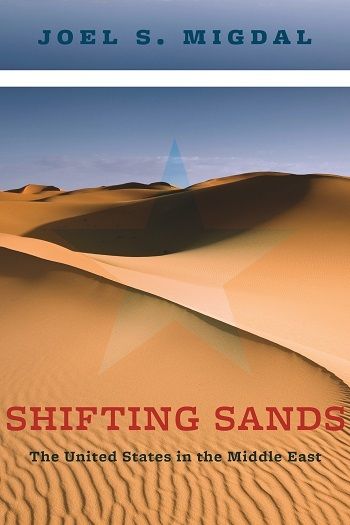
List of recommended books:

Biegon, Rubrick. US Power in Latin America: Renewing Hegemony (Abingdon;
New York: Routledge, 2017).
Description and picture from: https://www.routledge.com/US-Power-in-Latin-America-Renewing-
Hegemony/Biegon/p/book/9781138185418
                                  An original account of contemporary US-Latin American relations,
                                  this book utilises neo-Gramscian and historical materialist approaches
                                  to build a novel conceptual framework for analysing US hegemony,
                                  extending critical theory in new and exciting directions. It
                                  disaggregates US power into distinct forms (structural, coercive,
                                  institutional and ideological) to convincingly argue that the United
                                  States is remaking its hegemony in the Western hemisphere.
                              The first decade of the new century saw the ascendancy of leftist and
                              centre-left forces in Latin America. The emergence and consolidation
                              of the ‘New Latin Left’ signalled a profound challenge to the long-
                              standing hegemony of the United States in the region. This book
                              details the ways in which US foreign policy responded: defining
                              hegemony as a dialectical relationship patterned by multiple and
                              overlapping forms of power, it situates US policy in the context of the
Post-Washington Consensus. Making considerable use of confidential diplomatic cables published
by Wikileaks, it examines the interplay of different facets of US hegemony, which are inextricably
bound up in the neoliberalisation of the region’s political economy.

Del Pero, Mario. Era Obama. Dalla Speranza Del Cambiamento All’elezione Di
Trump (Feltrinelli Editore, 2017)

Description and picture from: https://www.lafeltrinelli.it/ebook/mario-pero/era-obama/9788858827987

“4 novembre 2008: Barack Hussein Obama viene eletto presidente
degli Stati Uniti d’America. Difficile immaginare un cammino più
improbabile verso la Casa Bianca. Difficile pensare a uno spot
migliore per una democrazia statunitense da anni in crisi di sostanza e
d’immagine. “Difficile, infine, trovare icona politica più globale del
neopresidente, nato quarantasette anni prima alle Hawaii – crocevia
storico di meticciamenti e ibridazioni transpacifici – da una madre
bianca, originaria del Kansas, e un padre nero e africano. Un padre
giunto con il primo contingente di studenti universitari inviati dal
Kenya indipendente negli Stati Uniti per formarsi, consolidare i
rapporti con il gigante americano e costruire l’élite postcoloniale del
nuovo stato.” Da subito, l’elezione di Obama è apparsa come uno dei
grandi eventi del nuovo millennio e il racconto è immediatamente
diventato leggenda, l’uomo un’icona globale. A febbraio del 2017,
Obama sarà un ex presidente: è giunto il momento di guardare alla sua

                                                         2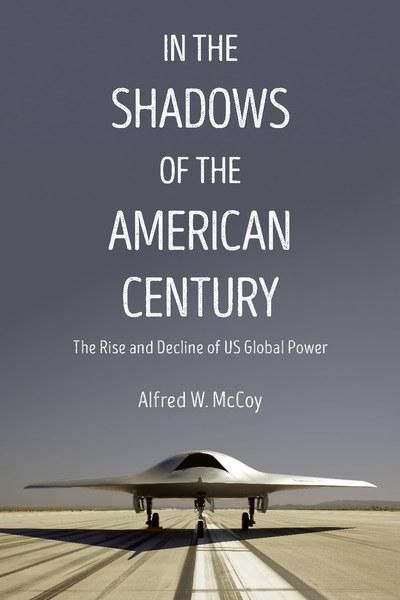
figura e al suo operato al di fuori del clamore e della superficialità del news cycle 24/7. E,
soprattutto, valutare l’intero arco della presidenza a partire dalla sua conclusione: il clamoroso
passaggio di consegne con Donald Trump. Mario Del Pero, americanista di vaglia, ci guida alla
scoperta di un’amministrazione di cui crediamo di sapere tutto, ma che in realtà resta tutta da
studiare e da interpretare.

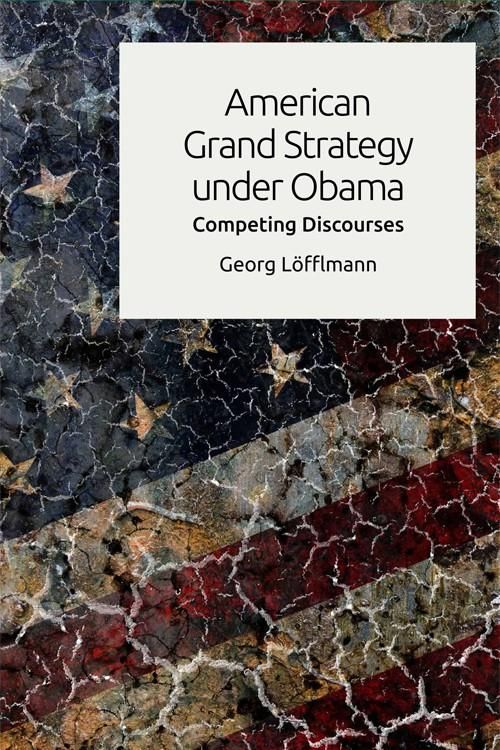
Löfflmann, Georg. American Grand Strategy under Obama. Competing
Discourses. (Edinburgh: Edinburgh University Press,
2017).
Description and picture from: https://edinburghuniversitypress.com/book-
american-grand-strategy-under-obama.html

A revisionary account of the challenges posed to America’s global
primacy by competing visions of grand strategy
This book explores how rivalling discourses of American grand
strategy reveal a fractured consensus of geopolitical identity and
national security under President Obama. This conflict manifested in
divergent elite visions of liberal hegemony, cooperative engagement
and unilateral restraint.
Georg Löfflmann examines the identity conflict within the
Washington foreign policy establishment, between elite insiders and
outsiders, and how the ‘Obama Doctrine’ both confirmed a
geopolitical vision of American exceptionalism and challenged established notions of US hegemony
and world leadership.

McCoy, Alfred W. In the Shadows of the American Century: The Rise and Decline
of US Global Power (Chicago: Haymarket Books, 2017).
Description and picture from: https://www.haymarketbooks.org/books/1068-in-the-
shadows-of-the-american-century

Explores the distinctive instruments of American ascent to global
domination and hegemony--including covert intervention, client
elites, psychological torture, and surveillance.
In a completely original analysis, prize-winning historian Alfred W.
McCoy explores America’s rise as a world power—from the 1890s
through the Cold War—and its bid to extend its hegemony deep into
the twenty-first century through a fusion of cyberwar, space warfare,
trade pacts, and military alliances. McCoy then analyzes the marquee
instruments of US hegemony—covert intervention, client elites,
psychological torture, and worldwide surveillance.
Peeling back layers of secrecy, McCoy exposes a military and
economic battle for global domination fought in the shadows, largely
unknown to those outside the highest rungs of power. Can the United States extend the “American
Century” or will China guide the globe for the next hundred years? McCoy devotes his final chapter

                                                        3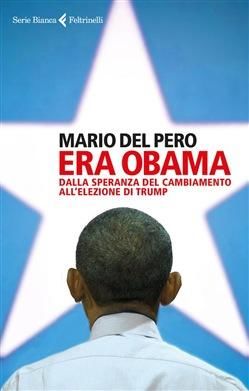
to these questions, boldly laying out a series of scenarios that could lead to the end of Washington’s
world domination by 2030.

                                Migdal, Joel S. Shifting Sands: The United States in the
                                Middle East (New York: Columbia University Press,
                                2014)
                                Description   and   picture   from:    https://cup.columbia.edu/book/shifting-
                                sands/9780231166720

                               Joel S. Migdal revisits the approach U.S. officials have adopted toward
                               the Middle East since World War II, which paid scant attention to
                               tectonic shifts in the region. After the war, the United States did not
                               restrict its strategic model to the Middle East. Beginning with Harry S.
                               Truman, American presidents applied a uniform strategy rooted in the
                               country's Cold War experience in Europe to regions across the globe,
                               designed to project America into nearly every corner of the world
while                   limiting                    costs                and                 overreach.

The approach was simple: find a local power that could play Great Britain's role in Europe after the
war, sharing the burden of exercising power, and establish a security alliance along the lines of
NATO. Yet regional changes following the creation of Israel, the Free Officers Coup in Egypt, the
rise of Arab nationalism from 1948 to 1952, and, later, the Iranian Revolution and the Egypt-Israel
peace treaty in 1979 complicated this project. Migdal shows how insufficient attention to these key
transformations led to a series of missteps and misconceptions in the twentieth century. With the
Arab uprisings of 2009 through 2011 prompting another major shift, Migdal sees an opportunity for
the United States to deploy a new, more workable strategy, and he concludes with a plan for gaining
a stable foothold in the region.

Mills, Daniel Q. and Steven Rosefielde. The Trump
Phenomenon and the Future of US Foreign Policy
(Hackensack: London World Scientific Publishing,
2016).
Description                   and                 picture             from:
http://www.worldscientific.com/worldscibooks/10.1142/10304

Donald Trump has called for a turnaround in the foreign policy of the
United States (US). A key reason is that US foreign engagements have
in recent decades proved of little benefit to the US middle and working
classes. Trump's opponents have challenged him to prove that he can
offer a better alternative to the foreign policy which has been pursued
by the US since the Second World War.
This volume shows that a sane US foreign policy that adjusts US postwar trajectory can be
accomplished if leaders have the courage and integrity to do so. The principles and many details of

                                                       4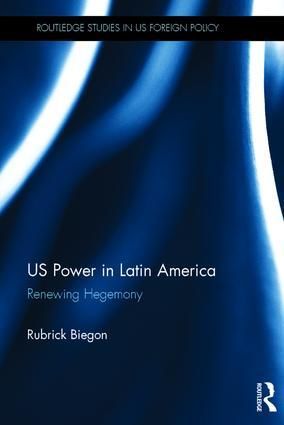
an alternative policy based on democratic nationalism are described in this book. Democratic
nationalism presumes that the US is a large family in which the needs of members of the family
have a certain legitimate priority over those of people abroad. While Donald Trump has raised the
level of discussion of these ideas in US public life, he does not have a monopoly on them. The
shifts in the US foreign policy which are envisioned in this book can be made by any president and
any political party. The shifts and the considerations which motivate them are deserving of careful
attention by any US chief executive. This is not a Republican agenda, nor a Democratic one. We
believe that it is a US agenda.

Posen, Barry R. Restraint: A New Foundation for U.S. Grand Strategy (Ithaca:
Cornell University Press, 2015).
Description and picture from: http://www.cornellpress.cornell.edu/book/?GCOI=80140100743820

                                 The United States, Barry R. Posen argues in Restraint, has grown
                                 incapable of moderating its ambitions in international politics. Since
                                 the collapse of Soviet power, it has pursued a grand strategy that he
                                 calls "liberal hegemony," one that Posen sees as unnecessary,
                                 counterproductive, costly, and wasteful. Written for policymakers and
                                 observers alike, Restraint explains precisely why this grand strategy
                                 works poorly and then provides a carefully designed alternative grand
                                 strategy and an associated military strategy and force structure. In
                                 contrast to the failures and unexpected problems that have stemmed
                                 from America's consistent overreaching, Posen makes an urgent
                                 argument for restraint in the future use of U.S. military strength.
                              After setting out the political implications of restraint as a guiding
                              principle, Posen sketches the appropriate military forces and posture
                              that would support such a strategy. He works with a deliberately
                              constrained notion of grand strategy and, even more important, of
national security (which he defines as including sovereignty, territorial integrity, power position,
and safety). His alternative for military strategy, which Posen calls "command of the commons,"
focuses on protecting U.S. global access through naval, air, and space power, while freeing the
United States from most of the relationships that require the permanent stationing of U.S. forces
overseas.

                                                      5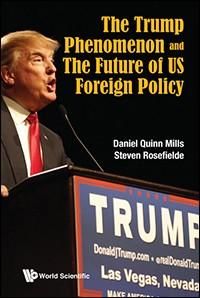
You can also read


