UK-India Energy Opportunities - APRIL 2021
←
→
Page content transcription
If your browser does not render page correctly, please read the page content below
UK-India
Energy
Opportunities
APRIL 2021

Leading the
   India Story
     in the UK
  and Europe

  Bridge India is a think tank
   and platform helping the
diaspora and India-watchers
   better engage with India.
      Become a Member at:
    www.bridgeindia.org.uk
Table of Contents

Acknowledgements									                  iii

Foreword										                         iv

Introduction										                      1

State of Play in Both Countries							      3

   Key areas of existing collaboration		    7

A Sector Approach									                  9

   Zero-Emission Transport							          10

   Energy Storage								                  11

   Hydrogen Economy								                12

   Wind		       								                   13

   Green Financing								                 14

Risks											                           15

Next Steps and Recommendations						       16

                                                 i
About Bridge India
     Bridge India is a progressive non-profit think tank dedicated
     to discourse on public policy. But the ‘India Story’ abroad is
     often presented through a narrow lens, be it focusing only on
     business and the economy, society or policy landscape. Given
     its diversity, everything about India, and its polar opposite, is
     true in unison. Bridge India seeks to highlight and celebrate
     this nuance, to help India-watchers understand India better. It
     is registered with the Charity Commission of England & Wales,
     number 1183696. Find out more at www.bridgeindia.org.uk.

     About Howard Kennedy LLP
     Howard Kennedy is a London based, full-service law
     firm specialising in providing straightforward advice to
     entrepreneurial businesses and individuals on domestic and
     international matters. The firm has an extensive clean energy
     practice which touches on every part of the sector, advising
     on high profile clean technology projects including wind, solar
     PV, combined heat & power, energy storage, district heating
     and cooling, electric vehicles, geothermal and wave and tidal.
     When advising Indian clients with interests in the UK energy
     market or vice versa, the collaborative working relationship
     with firm’s India team provide multi-lingual assistance and a
     wealth of experience in supporting bilateral trade between the
     UK and India. Find out more at www.howardkennedy.com/
     Expertise/Sectors/Energy.

     About Mercia Asset Management
     Mercia is a proactive specialist asset manager with a focus on
     regional businesses seeking venture, private equity or debt
     finance to scale their businesses. Mercia aims to be the first-
     choice provider of capital across our specialist private capital
     classes for businesses that typically seek less than £10million.
     They are exclusively a UK domestic investor, with focus on the
     UK regions. Find out more at www.mercia.co.uk.

ii
Acknowledgements

This report has been produced by Bridge India, with partner Howard Kennedy LLP,
and supporting partner Mercia Asset Management. Without their support, this
publication would not have been possible.
Thank you to Sanjoy Sen for his expert inputs on                 Micropore, McDermott, Will & Emery LLP, Ministry of
UK energy policy, Dr A Didar Singh for his support               Science and Technology, NITI Aayog, Nova Pangea
in pursuing an active research agenda, and to Raqib              Technologies, Suvarna Capital and others.
Islam, trustee, for his review of this report. Thanks also
to those who have provided quotes for the report or              Thanks also to the British High Commissioner to India,
additional comments. Their insights have strengthened            Alex Ellis CMG, and the Indian High Commissioner to
the report.                                                      the UK, Gayatri Kumar, IFS, for their Forewords. Given
                                                                 their unique experiences of both the UK and India, their
Bridge India conducted a series of interviews in 2020.           contributions have added weight to the findings.
We spoke to engineers, scientists, businessmen and
lawyers – not just in energy but also in key related             We look forward to advancing this agenda onward
sectors, including automotive. We’re grateful for inputs         with government representatives as well as other
from Ashok Leyland, AssetCool, Essential Minerals,               stakeholders in India and the UK to see what we can
Exide Industries, Faradion, Hero Electric, Howard                achieve together, in an important year for the climate
Kennedy LLP, IIT Madras, Mercia Asset Management,                agenda globally.

About the authors
                                   Pratik Dattani is Managing Director for        Chairman for a community non-profit
                                   boutique consulting firm EPG, with a           with several thousand members for
                                   focus on market entry assistance and           three years. Previously he worked
                                   strategic communications and offices           in Economic Consulting at FTI
                                   in London, Bengaluru and East Africa.          Consulting and Deloitte in London
                                   He is on the Advisory Board of Bridge          and Abu Dhabi, with a focus on public
                                   India.                                         policy and international arbitration.
                                                                                  He has published academic research
                                   He was additionally UK Director for            on behavioural economics and
                                   the Federation of Indian Chambers              social impact, and is a regular media
                                   of Commerce and Industry (FICCI)               commentator on public policy.
                                   for several years. He has earlier led
                                   several charitable initiatives and was

                                   Saanya Gulati is a communication               corporations on their public policy
                                   consultant with expertise in policy.           and government engagement
                                   She started her career as a Legislative        programmes.
                                   Assistant to a Member of Parliament
                                   (LAMP) Fellow in India, where she              She attained a distinction in
                                   was instrumental in drafting policy            her Masters in Politics and
                                   interventions to address issues in             Communications and holds a post-
                                   energy and environmental sectors. She          graduate degree in media law.
                                   has also worked with FTI Consulting
                                   and APCO Worldwide in Dubai and
                                   London, where she advised global
                                                                                                                          iii
Foreword

Alex Ellis, CMG
British High Commissioner to India

This report comes at a critical moment, as countries decide how they power their economies.
Decisions today will have impacts for many years to come. Developing cleaner energy and
reducing emissions is an essential part of any smart economic growth and business strategy.

India and the UK are at the forefront of this clean   But we both need to do more, at home and
energy revolution. We are committed to climate        globally. The UN COP26 Climate Conference,
action under the 2015 Paris Agreement, and            which the UK will host in November this year,
both have to ensure we can develop sustainably.       must be a moment when the UK, India and the
That India and the UK start from different places     world demonstrate ambitious action to keep the
in terms of development, and have a shared            Paris process on track and work towards a Net
ambition, makes us natural partners.                  Zero emission world.

Under Prime Minister Modi’s leadership, India has     This report highlights useful areas of UK-India
made remarkable progress in improving energy          collaboration on this journey. Our partnership
efficiency and developing new renewables.             on energy already includes joint investments,
India now produces some of the cheapest solar         research and innovation, and collaboration on
energy in the world. The scale and speed of this      policy and technical issues. Through initiatives
transformation is astonishing.                        like the International Solar Alliance we are also
                                                      mobilising the global transition to clean energy.
The UK is also showing leadership; we have
nearly halved our emissions in less than 20 years     Our businesses and innovators are an actual
whilst growing the economy by 75%. We sent a          and potential force to, for example, develop
clear policy and market signal by enshrining a        smart tech and energy systems, increase
Net Zero emissions target in law. And we have         manufacturing for the renewable and storage
turned laws and aims into outcomes, reducing          industries, and prepare for new electric mobility.
coal’s share of electricity generation from 40%
to 2% in less than a decade; developing the           There’s a lot to do. By working together, we can
largest offshore wind capacity in the world;          get the UK, India and the world on the track to
and creating one of the world’s leading green         clean, affordable energy.
finance markets.

iv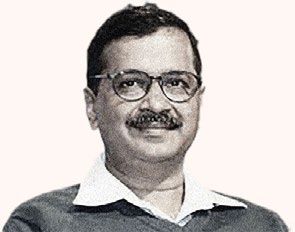
Gaitri Issar Kumar, IFS
High Commissioner of India to the UK

I congratulate Bridge India for their initiative in bringing out this Report on the potential
of India-UK collaboration in the energy sector. It is a timely and welcome addition to the
relevant information base.

UK-India collaboration in this core area of our      The shared commitment of both governments,
respective economies spans more than three           the United Nations Framework Convention on
decades and includes investment, research,           Climate Change and its Paris Agreement are the
policy, technical and commercial partnerships        beacons showing the way to business houses
in the power, renewables, energy efficiency, civil   wishing to partner in further strengthening the
nuclear and oil and gas sectors.                     energy sector in both countries. The successful
                                                     India-UK Green Growth Equity Fund is an
India has embarked on the world’s largest            example of such collaboration.
expansion plan in renewable energy – and is
set to be the foremost global contributor to         With the UK hosting COP26 this year and India
renewable electricity generation in 2021 - when      assuming the Presidency of G20 in 2023, both
her annual addition will have nearly doubled         countries are well placed to provide leadership
from the 2020 level.                                 and direction to the effort of the international
                                                     community towards the objectives of UNFCCC.
Our nation’s guiding principle of ‘Aatmanirbhar
Bharat’ will, among other things , boost India’s     I offer Bridge India my best wishes for the
Photo Voltaic cells manufacturing capacity and       success of this publication.
ensure their quality and competitiveness.

In 2019, India was ranked the fourth most
attractive renewable energy market in the world.
Up to 100% FDI is presently allowed under
the automatic route for renewable energy
generation and distribution projects - subject to
provisions of The Electricity Act, 2003.

                                                                                                        v
Introduction

Energy in many ways is, and will remain, the key to the future. It not only stands at the core of
our economies but is a sector that requires constant innovation and strategy in order to respond
to the monumental challenge of global warming. Leading economies like the US, China and
Europe are all working on innovative ideas from mini nuclear plants to tapping the heat from the
earth’s core. Both UK and India have an immense opportunity to collaborate in this area.

Bridge India is proud to introduce this review of      Likewise, India, which has a vast population, a fast-
UK-India energy opportunities. Its launch is timely,   growing economy and is the world’s third-largest
as the UK will be hosting the COP-26 meeting in        energy consumer,1 is in the middle of the world’s
Glasgow in November 2021. Across the world,            largest expansion of renewable energy,2 with
governments face a litany of issues to resolve,        strong impetus from the Modi administration. The
including the twin challenge of tackling climate       International Energy Agency (IEA) expects India to
change and re-starting the economy following the       be the largest contributor to the global upswing in
disruption of COVID-19.                                renewable energy in 2021, with solar photovoltaic
                                                       panels (PV) and wind energy playing a key role in
The UK’s ambitions on energy transition are world-     this transition.3
leading. In 2019, it became the first G7 country to
legislate for net-zero emissions, with a more than     Climate change is especially important for India’s
40% cut to emissions since 1990, the fastest rate      clean energy ambitions, where rapid urbanisation
in the G7. This has been followed up with a ten-       and industrialisation are being accompanied by
point plan for a green industrial revolution and       increasing carbon emissions. Six of the world’s
a policy white paper. Key commitments include          ten most polluted cities are in India. Four of
a hydrogen strategy, £1 billion investment in          these – Delhi, Noida, Gurugram, Greater Noida
carbon capture & storage, a target of producing        and Ghaziabad – are in the Delhi NCR cluster.
enough offshore wind to power every home, and          According to the World Health Organisation, one
the creation of a revenue mechanism for private        out of every four people killed by air pollution
sector green investment.                               globally each year is in India.4

        The biggest challenge of our time is climate change and we
        need to work together to deliver a cleaner, greener world and
        build back better for present and future generations.”
        Alok Sharma MP, President, COP26

1
Bridge India engaged with key stakeholders in               a first-mover advantage. As such, there is immense
energy related sectors in both countries. One               scope for knowledge and capital transfer to India
conclusion from our conversations is that the               as it looks to deliver affordable and sustainable
energy transition challenges facing India are even          energy to all.
more daunting – and the opportunities no less
exciting. Whether supporting the UK’s ambitions             There is great potential for the UK to leverage
or driving India’s own green agenda, the potential          India’s strong manufacturing base and engineering
mutual benefit is immense. Key areas of interest            skills into a competitive advantage, especially
identified so far include the hydrogen economy,             in areas like battery technology, where India is
battery technology, electric vehicles, power                looking to achieve greater self-reliance. UK-based
grid development and project financing, where               companies like Faradion and AMTE Power, which
collaboration between the two economies can set             have significant expansion plans in India, have
a global standard.                                          already recognised this potential.

We found that while India’s desire to transition            This report is all about sharing these highlights
to renewable energy is relatively new when                  of our engagement with key stakeholders in the
compared to the UK, it has enormous ambition to             industry. We hope it will provide a stimulus to
rapidly scale up capacity and infrastructure over           further UK-India collaboration, at a time when
the next decade and has quickly emerged as an               collaboration will be the key to shared prosperity.
attractive energy investment destination. In areas          We hope you share our excitement at these
like offshore wind technology or development of             possibilities.
robust electric vehicle (EV) ecosystems, the UK has

    Literally trillions of dollars globally are being invested in
    hydrogen, in electric vehicles, in carbon capture, in battery
    storage, in zero emission plants, in new forms of energy —
    some we don’t even know about today.”
    John Kerry, President Joe Biden’s Special Presidential Envoy
    for Climate

    CASE
    STUDY
    Tata Chemicals Europe: Capturing carbon dioxide
    from power generation, low carbon hydrogen
    production and industrial processes

    Tata Chemicals Europe (TCE) is a subsidiary of the giant Indian Tata conglomerate and one of the UK’s
    few manufacturers of soda ash and high purity sodium bicarbonate. In 2019, it received a £4.2 million
    grant from the UK’s Department of Business Energy and Industrial Strategy (BEIS) to construct the
    country’s first industrial-scale CCU demonstration plant.

    The plant will be commissioned in 2021 at TCE’s Norwich industrial site and is capable of capturing up
    to 40,000 tons of carbon dioxide per year. Carbon emissions at the plant are expected to reduce by 11%.
    The project is also expected to help TCE tap into new export markets for sodium bicarbonate.

                                                                                                                  2
State of Play in Both Countries

Both the UK and Indian governments have ambitious plans to create sustainable and cleaner
energy systems. The UK has invested US$122 billion in the renewable energy sector between
2010 and 2019,6 while the sector in India has seen more than $42 billion of investment
between 2010 and 2018.

Both markets represent strong growth potential          anticipated from the private sector. Key areas
for the future. India will need to double its           identified by the UK of particular interest to India
electricity output by 2030 to meet its growing          include low-carbon hydrogen, low-emission
energy demand, with 50 percent of that output           vehicles, CCUS (carbon capture, usage and
likely to be generated by renewable sources.            storage) and green finance.9

This expansion offers investment opportunities          FICCI’s Economic Survey in January 2021 said
worth $30 billion per year over the next                that the government’s Atmanirbhar Bharat
decade.6 The Centre for Energy Finance (CEEF)           Abhiyaan (the Self-Reliant India Campaign) will
has estimated that India’s EV market alone              bear fruit in the coming years – particularly the
could be worth $206 billion by 2030, with               announcement of production-linked incentive
investment opportunities worth $12.3 billion in         schemes and the government’s keenness on
battery manufacturing, and $2.9 billion in the          improving national infrastructure.
deployment of charging infrastructure.7
                                                        We think future collaboration could have a
Similarly, the UK, as part of its Ten-Point Plan,       recurring theme of ‘Innovate in Britain’, as also
is set to invest £5 billion to support a green          for the ‘Make in India’ initiative.
recovery (including £256m to develop its energy
storage market8), with several times more

    The UK is leading the way in the transition to a net zero economy.
    As well as implementing legally binding climate change mitigation
    targets, the UK Government recently announced its Ten Point Plan
    for a Green Industrial Revolution that will seek to make the UK a
    global leader in green technologies, such as offshore wind, low carbon
    hydrogen and green transport as well as innovative green finance
    mechanisms.With India’s vast population, fast-growing economy
    and rapid urbanisation and industrialisation, there are clearly
    many areas of mutual interest, knowledge sharing and collaboration
    between the two nations. This is a very exciting time for the UK-
    India relationship.”

    Jonathan Cohen, Head of Energy, Howard Kennedy LLP

3
UK: 2020 was the
greenest year ever
The energy sector in the UK has transformed over the last decade. 2020 was a record-
breaking year, with wind generation, solar, and coal-free records helping to make it the
greenest year ever for its electricity network, as Britain ran for nearly 68 days without fossil
fuel between 10 April and 16 June 2020.
This trend is set to continue as the UK pushes on towards 40 GW of offshore wind capacity by 2030.
Low-carbon hydrogen in combination with CCUS is the next big opportunity, de-carbonising both the
power sector and heavy industry.
On 18 December, Coal now contributes just
wind generated 1.6% of the electricity
a record mix, compared with almost
17.2GW 25% in 2015
The UK’s low-
carbon industries Over 20% of
already support over electricity is now
obtained from wind12
460,000 jobs11
£256m of $122bn
government funding invested in UK
to develop the energy renewable energy
storage market generation projects
between 2010 and 201913
In 2020 Q1 , Solar generation
renewable’s share of set a new record
generation exceeded of 9.7GW
40% for the first time10
4India: Leading the pack
in solar and e-mobility
In 2014, the government of India introduced its ambitious Solar Park Scheme, which has
exponentially increased India’s solar energy capacity over the last decade. Furthermore, it has
led to the creation of ultra-mega power plants across the country.14 These utility-scale solar
installations, based on a plug-and-play model, have attracted significant global capital into
India’s renewable energy sector, reducing solar power tariffs by more than 75%.15
The Indian government has also initiated the These efforts, alongside investments in thermal
creation of the International Solar Alliance to power capacity, have helped India resolve its
encourage greater cooperation among 122 solar- longstanding power deficit and become a net
rich countries by facilitating the exchange of exporter of electricity. While transmission and
ideas, mobilising new investments and identifying distribution losses still occur,18 there are various
synergistic opportunities.16 different methods under consideration to ensure
the supply of reliable and quality power, with the
Electric mobility is another area that has received power supply deficit down to 0.5% in 2020.19 India
considerable policy attention in recent years. The has also strengthened its position as a net exporter
Faster Adoption and Manufacturing of Hybrid & of electricity since 2017 and continued to trade
Electric Vehicles (FAME) incentives were a work- power with its regional neighbours.20 India’s rapid
in-progress, but FAME2 has been more successful improvement in the World Bank’s Ease of Doing
in promoting the sector, albeit with a bias towards Business (EODB) rankings in Getting Electricity to
lithium-ion batteries from the government and 22nd best in the world, is evidence of the success
NITI Aayog. of its energy policy – although it continues to face
the challenge of ensuring the financial health of
In order to facilitate this transition at a larger scale, its power sector, especially its state government-
there is an equal push to develop the required owned power distribution companies, called
infrastructure, with plans to extend capital grants DISCOMS.
to organisations that promote the use of electric
vehicles and/or install EV charging points across
petrol stations in the nation.17
CASE Nova Pangea Technologies:
STUDY Technology for a low carbon world
Nova Pangaea Technologies’ world-first, patented process, REFNOVA, sustainably
converts forestry and agricultural residues into sustainable biochemicals and
biopolymers and drop-in products for advanced biofuels.
Nova Pangaea, based at Wilton International in Redcar, is part of a consortium that
won a three-year grant commencing in 2018 from the Newton Fund via InnovateUK.
The support is for valorising waste from sugar cane industries utilising their
innovations in pre-treatment, bioproduction and process intensification. The
Vasantdada Sugar Institute is the India lead for the consortium.
According to Simon Crabtree, Investment Manager at Mercia, “Nova Pangaea Technologies will make a
significant impact on both a national and international scale. A truly circular business, it is working towards
breaking our reliance on oil, while meeting the world’s energy needs”.
55th global position Solar power capacity
for overall installed has increased by more
renewable energy than 14 times from
capacity 26 to 34 GW between
2014 and 201921
In 2018, India’s
investment in solar PV $7 billion of FDI
was greater than all equity inflow into India’s
fossil fuel sources of renewable energy sector
energy combined22 between 2000-201825
$9.6 billion: $80 billion
cumulative FDI equity worth of investments
inflow in the non- in renewable plants
conventional energy until 2022
industry between
April 2000 to
September 202023 $250 billion worth of
planned investments in renewable
plants between 2023-2030
$1.2 billion: As of November
highest annual FDI inflow 2019, a total of
into India’s renewable
energy sector between
280,994
electric vehicles
2017-201824
have been sold
$7 billion
estimated cost savings $42 billion
as a result of energy of renewable energy
efficiency programs in investment in India
2017-1826 since 2014
6Key areas of existing
collaboration
At a macro level, the UK is now the second largest investor in India; India is the second largest
job creator in the UK over the last 15 years. Despite economic disruptions caused by the
pandemic, annual bilateral trade was up by nearly 12% in 2020.27
In the energy sector, the existing story is one that The UK’s aim is to be a global leader in the
relates close collaboration and a strong foundation technologies needed to decarbonise its economy
for further opportunity. At the first bilateral ‘Energy and transition to net zero. The UK government
for Growth’ Dialogue in 2017 - which, in part, was will launch a £1 billion Net Zero Innovation
facilitated by members of the Bridge India Board Portfolio and has committed to raising total R&D
- India’s Power and Renewable Energy Minister, investment to 2.4% of GDP by 2027. Furthermore,
Piyush Goyal and the UK’s Secretary of State for it aims to launch its first Sovereign Green Bond in
Business, Energy and Industrial Strategy, Greg and use its world-leading London financial sector
Clark, provided momentum for collaboration on to encourage private investment in innovation.
priority areas in the energy sector.
Green finance remains another area of active
Energy Efficiency Services Ltd (EESL), the fastest- bilateral collaboration, especially following a series
growing Indian company in Grant Thornton’s of Green Bond issuances by India’s Axis Bank
India Tracker 2020, was formally launched during and the National Thermal Power Corporation
this meeting. EESL was set up by the Indian (NTPC) on the London Stock Exchange in 2016.
Government’s Ministry of Power to create and These landmark listings open up a new channel
sustain markets for energy efficiency in India. They of finance for India’s renewable energy projects,
have committed to investing £100 million in the and signal growing investor confidence in India’s
UK over three years to promote and implement aspirations. Unfortunately, it is uncertain whether
low-carbon, energy-efficient, renewable energy investor appetite will remain if London’s financial
solutions via its Joint Venture EESL EnergyPro muscle diminishes after Brexit, and pandemic
Assets Ltd, which made several acquisitions in response efforts reallocate the remaining capital
2019. elsewhere.
On the private sector front, the two countries have Beyond these flagship projects, there are a variety
launched a $700m Green Growth Equity Fund, of bilateral collaborations occurring which involve
which was structured as a joint venture between path-breaking SMEs. Sodium-ion battery producer
the UK-based Lightsource and Indian private Faradion is in advanced discussions for several
equity firm, Everstone Capital, in 2018. Backed by orders for its batteries from India and is due to start
BP, India’s National Investment and Infrastructure manufacturing its batteries there shortly, a leading
Fund (NIIF), and the UK’s Department for innovator in the transmission sector, AssetCool,
International Development (DFID), the fund has has ambitious India plans, and Nova Pangea
supported the growth of India’s renewable energy Technologies has been working with sugar cane
sector, through investments in Ayana Renewable factories in India to help produce bioethanol.
Power, Radiance Renewables, GreenCell Mobility,
and EverEnviro.
7The UK’s
Ten Point Plan
The Ten Point Plan was published in November
2020 and sets out the government aims for
creating green growth, jobs, and accelerating
the country’s path to net zero by 2050.
Overlaying the UK’s Plan with the perspectives from our
interviews demonstrates a high level of mutual interest.
Some opportunities are ready now with others set to
generate significant value in future.
Key features of the Ten Point Plan
Offshore wind: by 2030, the UK aims to produce 40 GW of offshore
wind. By 2030, this could support up to 60,000 jobs and help deliver
around £20 billion of private investment.
Low-carbon hydrogen and CCUS: the UK is aiming for 5 GW of
low-carbon hydrogen capacity by 2030. This is to be co-located with
renewable energy and CCUS in industrial ‘SuperPlaces’ (North East,
the Humber, North West, Scotland, Wales), creating up to 100,000
jobs by 2050. Two CCUS industrial clusters should be in place by the
mid-2020s, rising to four by 2030, capturing up to 10 Mt of carbon
dioxide per year. The UK will publish its Hydrogen Strategy in 2021
and finalise its preferred business models by 2022.
Zero-emission vehicles: the UK has brought forward its ban on sales
of new petrol and diesel cars and vans to 2030, five years earlier than
previously planned and in a similar timeframe to India. Home to several
key motor manufacturers, and supporting key technology providers
and a supply chain, the UK anticipates that the switch to zero-emission
vehicles could support around 40,000 new jobs in 2030.
Green finance and innovation: The UK government will launch a
£1 billion Net Zero Innovation Portfolio. It aims to launch its first
Sovereign Green Bond in 2021. There is commitment to raising total
R&D investment to 2.4% of GDP by 2027 (it currently stands at 1.7%28).
8A Sector Approach
This section focuses on the key areas of potential collaboration that arose from our
interviews.
The two countries have very different energy needs British companies that are keen to licence their products
and sources. According to think tank Ember, the UK’s in the biomass, renewables and other sectors of the
renewable electricity generation outpaced its fossil energy market in India. One of the key issues they raised
fuel generation for the first time in 2020. It said that concerned their inability to find the right counterparties
renewable energy generated 42% of the UK’s electricity to collaborate with in India. One solution to this problem
in 2020 compared with 41% generated from fossil fuels. would be to host UK/India trade delegations specifically
India’s energy consumption is 45% coal and about a focused on SMEs in this sector. Similar initiatives already
quarter from petroleum and other liquids.29 exist, such as ACT4Green (Accelerating Clean-tech for
Green), an initiative by the Foreign Commonwealth and
British company Cairn Energy transformed India’s oil Development Office (FCDO), aimed at supporting the
and gas sector after assuming control of the Ravva oil clean-tech start-ups in the two countries. Whilst such
and gas field in the 1990s and discovering the Mangala initiatives can be very effective, some of our interviewees
field in Rajasthan. Cairn’s discoveries have generated highlighted the fact that such schemes tend to favour
revenues of more than US$20 billion for the state and “well-networked” rather than meritorious startups.
national government.30
Taking into account the different energy consumption
A company like NPT, which focuses on the development patterns in the two countries, we focus the rest of section
of biomass and waste, is a good example of British on the highest-value collaboration opportunities that
innovation finding a ready application in India. As part of were evident in our research.
our wider interview process, we spoke to several young
Our experience with Indian partners has been direct, hands-on and
productive. A strong prevalence of Indian engineering excellence
and favourable attitude towards innovative products leads offers
great potential for closer UK-India collaborations.”
Niall Coogan, CEO, AssetCool
9Zero-Emission Transport
The shift from fossil fuels to zero-emission transportation has two key objectives in India:
reduction in emissions (greenhouse gases and pollutants) and reduction in dependence
on imported crude oil. Although transport accounts for a low share of India’s total energy
demand, it has effectively doubled in the last ten years.31
The UK is a leading manufacturer of electric of the London based Hinduja Group).
vehicles, as demonstrated by the success of the The government is also pushing the EV agenda
Nissan Leaf factory in Sunderland. Other UK zero- and has recently ramped up its FAME2 incentives
emission manufacturers include LEVC (London to boost the market, just as China phases down
taxi), Wrightbus and JCB (construction equipment). its subsidies. While this is expanding the breadth
Jaguar-Land Rover (owned by Tata) are set to of India’s EV landscape, the need for a radical
launch a range of EVs and are also researching overhaul in transport is more urgent in certain parts
hydrogen fuel-cells. of the country. For instance, Delhi NCR’s pollution
problems are caused by particulate pollution from
According to the Grant Thornton India Tracker its sclerotic traffic. This is further exacerbated by
2020, Indian automotive companies Tata Motors, diesel generators, crop-burning in nearby farmlands
TVS and Rico Auto Industries are amongst the and the use of fossil fuels in stove cooking. Hence,
fastest growing Indian companies in the UK. TVS is it is unsurprising that the Delhi government is the
actively looking at alternatives to lithium-ion battery most advanced in developing plans for expanding
technology in its vehicles, as is Ashok Leyland (part the use of electric vehicles.
We want to ensure that Delhi has at least 25% electric vehicles
by 2024 … I also want to appeal to the youth to buy an electric
vehicle as their first vehicle.”
Arvind Kejriwal, Chief Minister of Delhi, India
EV adoption in India is expected to grow Another potential area for bilateral collaboration is
significantly in the next decade, especially with the the opportunity for India to transfer its perspective
government’s National Electric Mobility Mission Plan in last-mile connectivity solutions to the UK. As
(NEMMP), which is targeting 30% EV penetration in the single-biggest global market for two-wheelers,
India by 2030. To facilitate this transition, massive India has enjoyed success in this field with the
infrastructure upgrades will be required, especially development of e-rickshaws and light-weight
the deployment of EV charging points as well as battery-powered three-wheelers which transport
robust grid capacity. The UK, which has been rapidly commuters from residential areas to the nearest
rolling out EV charging points of its 2030 phase-out metro stations.
of diesel and petrol cars and now has over 20,000
chargers available for public use across the country, While India’s EV growth has been driven largely by
is well-positioned to offer technical expertise and two-wheelers and three-wheelers up until now,
experience here. This could range from date-driven, this market is expected to grow. Similar solutions
optimised location of charging stations through to could be deployed in the UK in conjunction with
developing smart, robust grid capacity, which also autonomous technology as lightweight, last mile
intersects with the generation of renewable power urban solutions.
generation, especially solar.
10Energy Storage
For renewables to become a major part of India’s energy mix over the next decade, energy
storage will be critical. This is especially significant for India, where much of its installed energy
capacity is expected to come from solar power, an energy source with a clear split in day-night
output. According to government estimates, the country will require 27 GW of grid connected
battery storage by 2030.32
Increasing storage capacity would allow India At present, India is heavily dependent on lithium
to store any excess power generated by its fuel battery imports from China. As sodium is relatively
sources, which can then be returned to the grid easier to source then lithium, leading companies in
to meet peak demand – thus minimising power the UK and India consider it a viable alternative for
waste. Whilst electric vehicles can act as a giant, energy storage. Globally, there is only one sodium-
single battery via G2V (grid-to-vehicle) technology, ion battery energy storage power station (100
dedicated batteries for storage will also be a key kWh, in China). British companies Faradion and
new sector. Battery research is also taking in place AMTE Power are seeking to change that. The next
in both countries, which can present opportunities sodium-ion battery plant may well be in India.
to collaborate on R&D.
CASE
STUDY
Innovating in Sheffield, investing in India: Faradion
Sheffield-based Faradion is the world leader in non-aqueous sodium-ion cell technology. Dr Chris Wright,
who was one of the pioneers of commercialising lithium-ion technology, saw potential in sodium-ion in
2011, and co-founded Faradion to develop sodium-ion technology and bring it to market. He teamed up
with world-renowned battery scientist Dr Jerry Barker and investor Ashwin Kumarawamy. Today, its IP
portfolio comprises 21 current patent families, focussing on cell materials, cell infrastructure, and safety and
transportation.
The company started commercialising the product in There are simply not enough raw materials for
2019, with Bridge India supporting them with their today’s lithium-ion batteries to be a safe, viable
first India market visit. Since then, it has announced solution in the medium-term. They are exclusively
its first major orders from industrial conglomerate reliant on finite metals that are difficult to extract
ICM Australia, a licensing deal with listed energy from the Earth’s crust. This is dangerous for a
company AMTE Power, a technical collaboration on country’s energy independence, as China owns 75%
the development of new anode materials with Texan of the global supply chain.
company Phillips 66 and several orders from India in
the pipeline. Faradion’s technology works better because it is
able to match lead-acid lifetime cost of ownership,
It will soon be manufacturing its batteries in with performance at least as good as lithium-ion;
India with a joint venture partner, in a big win for second, it enables India to invest in its own supply
Atmanirbhar Bharat. chain, moving away from Chinese dependency;
third, sodium is the sixth most abundant element in
The main batteries used in the electric vehicle the earth’s crust so there is no scarcity; and fourth,
and energy storage market, lithium-ion, are still sodium-ion batteries can be discharged to 0 V (zero
expensive and have major sustainability issues. energy), so are safer than lithium-ion.
11Hydrogen Economy
Hydrogen is the lightest, simplest and most abundant chemical element in the universe. It could
provide a clean source of fuel and heat for our homes, transport and industry.
Hydrogen is a flexible means of storing and
transporting energy. It can be deployed as India imports 80% of its crude oil requirements,
an alternative or a complement to battery- and a move towards a carbon-free fuel must
based solutions. This fact, alongside the fact include hydrogen as part of the mix. Hydrogen can
that hydrogen can operate across the three be generated from a range of zero-carbon power
major energy vectors of electricity, heat and sources, from solar to nuclear. Reliance Industries
transportation is why hydrogen is considered an sees hydrogen as key to its effort to making itself
attractive option for a fuel source. a net carbon-zero firm by 2035, whilst Mahindra
& Mahindra has been involved in major R&D work
As governments around the world develop new with the MNRE.33
hydrogen policy, the UK and India, for differing
reasons, are well placed to benefit. In the UK, Although the exploration of hydrogen is in its
‘blue’ hydrogen is set to be produced from natural infancy in India, it is expected to constitute a
gas by means of carbon capture and storage growing part of the national energy mix. According
technologies, which will minimise emissions. to some estimates, nearly 80% of India’s hydrogen
The UK is also making strong progress in ‘green’ is projected to be green, driven by cost declines
hydrogen – a good example being the European and new production technologies.35 India is
Marine Energy Centre on the Orkney islands, expected to roll out its first national hydrogen
where renewable electricity is used to feed the project later this year, which will lay out a blueprint
electrolysis process. The UK government is for capitalising on this energy source.36 British
currently exploring a switch to hydrogen (or a technical expertise, alongside joint funding
natural gas – hydrogen blend, as piloted at Keele opportunities through Innovate UK and the
University) for domestic heating, which is currently Newton-Bhabha Fund could accelerate bilateral
through natural gas. ITM Power is an early leader cooperation in this area.
in hydrogen fuel-cells and will open the world’s
largest electrolyser manufacturing plant (1GW) in One of the investors we interviewed for this report
Sheffield. The UK is already exploring hydrogen pointed out that governments often like the idea
opportunities and is set to launch an overall of exploring new technologies such as hydrogen,
hydrogen strategy as per Japan, Germany and the but are unwilling to put the substantial risk capital
EU. behind it that is required.
I am sure more companies will start to look at hydrogen in India
as big companies like Reliance are making their intentions clear
… policy makers should do a systematic analysis on whether
EVs or hydrogen-based fuel cells will be better,”
Ravinder Kumar Malhotra, President, Hydrogen Association
of India34
12Wind
The UK has one of the best natural locations for wind power and has embraced this opportunity,
ensuring that 20% of electricity is now obtained from wind. Having developed capacity to provide
10.4 GW37, it is the largest global player in offshore wind power. India, the world’s fourth-largest
wind power market, has just started to explore its wind power capability, with a particular
interest in offshore wind, which presents significant opportunities for bilateral engagement.38
India has already recognised the UK as a preferred Joint manufacturing and R&D opportunities like
partner to collaborate and develop its offshore these are critical to helping India There could be
wind potential.39 Entities like the UK Science & similar opportunities for UK companies to adapt
Innovation Network have been in active dialogue their technologies for the Indian market.
with the state governments of Tamil Nadu and
Gujarat,40 which are located along India’s coastline The integration of wind energy is also a
and have the best offshore wind resources. key consideration for India, as this requires
transmission and balancing capacity to keep up
A key area for collaboration is the design and with the seasonal variation of the wind power
development of offshore turbines, especially generation.41 This is a promising avenue for
those that are optimised for operation in India’s collaboration, as the UK is innovating rapidly in
low-wind conditions. International companies this space to reduce the effect of wind variability
like Siemens Gamesa and Vestas, which have is having on the power grid.42 The UK’s Offshore
manufacturing facilities in India, have already Transmission Network Review, which is currently
captured this market and received large contracts underway,43 could be a valuable source of
from independent power producers like Adani information to India as it looks to sustainably
Green Energy and MSPL. Another area where joint integrate offshore wind with other clean
R&D opportunities lie is in assessing India’s largely technologies.
unexploited offshore wind capacity, including
meteorological and data science expertise to
consistently evaluate wind patterns and energy
production potential.
CASE
STUDY
Micropore Technologies: Leader in membrane emulsification technology
The Redcar-based company specialises in creating stable emulsions that can be used in a range of sectors,
such as pharmaceuticals, agrochemicals, personal care, food and drink, and even rocket fuel.
Developments in our fundamental understanding to Telangana in September 2019, as Hyderabad
of membrane emulsification technology from accounts for 35% of national pharma production.
Loughborough University and Micropore have
resulted in equipment that enables a seamless In January 2020, the company was awarded first
transition from lab, through development and into prize in both the Pharma and Innovative Product
manufacturing. categories of the The IChemE Global Awards, widely
recognised as the world’s most prestigious chemical
It opened an India office following a trade delegation engineering awards.
13Green Financing
Project financing is a critical consideration for the viability of renewable energy projects, which
often require large volumes of capital investment. This is especially important for India, where
solar projects are predominantly financed by debt, and credit market options for long-term
infrastructure financing are limited.44 Hence, International finance will be a key component to
scaling up the country’s climate action plans, whether it is in the form of developmental finance
or traditional capital markets.
The UK understands the need to grow global governance and ESG disclosures, especially
markets for clean technologies, and has therefore the guidelines set out by the Task Force on
pledged to mobilise $100 billion per year in Climate-Related Financial Disclosures (TCFD),
climate finance to developing countries.45 will play an important role in driving forward
Development institutions like the CDC Group have the sustainable finance agenda. Although the
been instrumental in driving this commitment Securities and Exchange Board of India (SEBI)
in India, with priority given to renewable energy, issued its guidelines on green bond listings,47
demonstrated through their investments in and has mandated business responsibility reports
platforms like Ayana.46 from the top 100 listed entities, it has not made
concrete progress toward implementing the
The UK and Indian governments have collaborated TCFD recommendations.48 On issues like this,
to create a bilateral Sustainable Finance Forum there is scope for borrowing the best practices
in order to mobilise private capital and technical from the UK, which is set to become the first
expertise to help both countries achieve their country to make the TCFD aligned disclosures fully
sustainability goals. mandatory across its economy by 2025.49
Green bonds are another area where greater In 2021, the UK is set to bring forward details for
collaboration can open-up new financing a revenue mechanism to bring private sector
options for renewable energy projects in both investment into key projects including hydrogen
countries. While India is the second-largest and CCUS. These innovative business models
emerging green bond market, its issuances only provide opportunities for globally minded
constitute a fraction of the country’s green finance companies in India to invest in the UK and to
requirement. Greater emphasis on corporate finance its own ambitions plans for clean growth.
CASE AssetCool: A unique solution for
STUDY overhead transmission line conductors
Sheffield-based AssetCool is a company dedicated to the development of novel
materials for electricity transmission. They have developed a photonic coating for
overhead transmission line conductors which increases current carrying capacity or
reduces transmission losses. The coating provides these benefits via a passive cooling
mechanism which reduces a conductor’s temperature at a given current and particular
conductor size. This passive cooling mechanism involves simultaneously reflecting solar
radiation and increasing the rate at which heat energy is emitted from the conductor.
This results in more efficient conductors, which means lower capital requirements when
designing lines and an opex saving over time due to reduced power losses.
According to the CEO Niall Coogan, India is a target market for them because energy requirements scale with
economic growth. Improved transmission capacity and efficiency (i.e. reduced power losses) will be critical to
fuelling India’s economic potential over the coming years, particularly when budgets are squeezed in the wake of the
pandemic. Given this macroeconomic picture, transmission line development is a very attractive market in the region.
14Risks
Despite India’s rise in the World Bank Ease of Doing Business rankings, foreign investors remain
concerned on contract enforcement in a flawed legal system, IP protection and certainty over
taxation. India ranks 163rd in the world in Enforcing Contracts.
The UK India Business Council (UKIBC) has been than five percent. That David Cameron’s largest-
vocal in its demand to remove the retrospective ever trade delegation was to India, Theresa May’s
taxation provision. Long-running disputes with first non-EU trip as Prime Minister was to India,
Cairn Energy, Vodafone and Devas have hurt and Boris Johnson’s likewise had planned one for
investor sentiment towards India. January 2021, indicates the importance of a move
towards India to increase this bilateral trade that
Two important geopolitical factors are likely to augurs well for the relationship.
benefit bilateral collaboration in the energy sector.
First is Brexit. The EU counted for around half of The second is China. Sentiment in the UK, as
the UK’s total trade, and India counted for less elsewhere, has soured on China, particularly in the
From 2012 onwards, the policy of retrospective taxation has
surely proven to be a dampener in the inflow of foreign capital
from the UK and elsewhere into India.”
Jayant Krishna, Group CEO, UK India Business Council
last year. India benefits from being an important government investment, and “potentially” three
democratic counterweight to China. Furthermore, times as much from the private sector. India’s
the Indian government is keen to proactively assist emerging green economy requires additional
in creating manufacturing opportunities for foreign investments of around $80 billion until 2022,
companies. A prosperous India is important to the and up to $250 billion between 2023-30.51 The
UK’s economic, geopolitical and maritime interests pandemic has pushed the UK’s debt-to-GDP ratio
in the Asia Pacific especially the Indo-Pacific. to its highest since World War II, while India’s
finances to support its economic recovery are
A significant concern to both countries ambitious likewise stretched when off-book non-performing
plans for energy reform is affordability. The UK’s assets from the banking sector are taken into
Ten Point Plan aims to “mobilise” £12 billion of account.
Our economy will grow at 10% in 2021-22 in real terms.
By the end of next year, we will reach pre-COVID level.”
Rajiv Kumar, Vice Chairman, NITI Aayog 50
15Next Steps and Recommendations
UK-India collaboration already strengthens ties and delivers mutual benefits.
Bridge India hopes that this report will act as a stimulus to further action.
Our recommendations are framed as ones which could, if implemented within a
five-year timeframe, propel bilateral collaboration in the energy sector. They are
ambitious but achievable. Brexit, the post-pandemic global recovery and COP26 all
combine to make 2021 the ideal year to strengthen such ties.
Innovate in the UK, grow in India
The market opportunity in India for British SMEs is immense and
largely untapped. UK policymakers should work more closely with
British venture capital and other investors, to directly assist their
investee cleantech and energy companies secure pilot projects and
joint venture opportunities in India. State governments in India should
explore more trade delegations to the UK.
UK-based SMEs can bring their innovation to the energy transition
by innovating in small-scale solar power generation (and associated
battery storage) and in ‘last mile’ urban transport connectivity solutions.
Make in India, finance in London
London’s position as the go-to venue of choice for raising green bonds
was further underscored by the Chancellor announcement in November
2020 that the UK Government will issue its first Sovereign green bond
in 2021. There are now more than 240 active bonds from over 60
issuers admitted to the LSE’s Sustainable Bond Market. India should
take advantage of market appetite further finance its ambitious climate
agenda.
At the same time, India should encourage the growth in Environmental,
Society and Governance (ESG) practises in corporate India.
16The EV revolution hitting the road
There are numerous examples of innovation and risk capital in both
countries flowing into the EV sector. Sales of two-wheelers and
three-wheelers continue to grow strongly in India. With some notable
exceptions (Tata / Jaguar Land Rover and Ashok Leyland / Optare),
the potential for shared development and roll-out of zero-emission
vehicles, from private cars to trucks and buses, is not close to be
realised. Both countries have the opportunity to work together to build
international champions. In part, this is important to act as a bulwark
against China’s dominance of the market.
Stepping together towards a hydrogen economy
Hydrogen (in partnership with CCUS) will be a key to unlocking low-carbon
growth across the power, heating and transportation sectors. While both
markets are taking their first steps towards a hydrogen economy, there is
considerable scope for technology sharing as the UK’s CCUS market grows,
which could support India’s production of hydrogen from natural gas.
Advancements in the performance of electrolysers, another area where the
UK is rapidly innovating, could also enable the small and medium-scale
production of green hydrogen in India from solar and wind.
Bridge India remains committed to supporting stakeholders in both
countries achieve greater collaborations, through research, private briefing
sessions, contributions from our Members and trade delegations.
17References
1
US Energy Information Administration, India.
2
Invest India website, accessed 06 February 2021.
3
Renewables 2020: Analysis and forecast to 2025, International Energy Agency, November 2020.
4
6 of the world’s 10 most polluted cities are in India, World Economic Forum, Douglas Broom, 5 March 2020.
5
Department for International Trade (DIT) website, accessed 06 February 2021.
6
Why India is the new hotspot for renewable energy investors, 14 January 2020, Sumant Sinha, World Economic Forum.
7
Financing India’s Transition to Electric Vehicles, Centre for Energy Finance, December 2020.
8
DIT website, accessed 06 February 2021.
9
The Ten Point Plan for a Green Industrial Revolution, November 2020, HM Government.
10
Energy Trends, December 2020, Department for Business Energy & Industrial Strategy.
11
Ibid.
12
Digest of UK Energy Statistics, July 2020, Department for Business Energy & Industrial Strategy.
13
Department for International Trade website, accessed 06 February 2021.
14
India’s Utility-Scale Solar Parks a Global Success Story, Institute for Energy Economics and Financial Analysis, May 2020.
15
Ministry of New and Renewable Energy (MNRE) website, accessed 06 February 2021.
16
International Solar Alliance website, accessed 06 February 2021.
17
Mobilising Finance for EVs in India, Niti Ayog and Rocky Mountain Institute, January 2021.
18
India 2020 Energy Policy Review, International Energy Agency, January 2020.
19
Growth of Electricity Sector in India from 1947-2020, October 2020, Central Electricity Authority.
20
India 2020 Energy Policy Review, International Energy Agency, January 2020.
21
MNRE website, accessed 06 February 2021.
22
Ibid.
23
Make in India website, accessed 06 February 2021.
24
Why India is the new hotspot for renewable energy investors, 14 January 2020, Sumant Sinha, World Economic Forum.
25
Ibid.
26
Economic Survey 2019-2020, January 2020, Government of India.
27
Sterling Access 2020 Review Report, CBI and EY, November 2020.
28
Research Briefing: Research and Development Spending, 17 June, 2020, House of Commons Library.
29
International Energy Agency, World Energy Outlook 2019.
30
Cairn Energy website, accessed 06 February 2021.
31
India 2020: Energy Policy Review, January 2020, International Energy Agency.
32
India Energy Outlook 2021, International Energy Agency, February 2021
33
MNRE website, accessed 06 February 2021.
1834
From IOC to Reliance: India’s hydrogen ambitions get stronger by the day, S&P Global Platts, July 2020
35
The Potential Role of Hydrogen in India, The Energy Resources Institute (TERI), December 2020
36
India Budget website, accessed 06 February 2021.
37
Energy Trends, December 2020, Department for Business Energy & Industrial Strategy.
38
Global Wind Energy Council website, accessed 06 February 2021.
39
Making Renewable Energy Markets Work, Climate and Development Knowledge Network, July 2017.
40
Proceedings of the UK-India Workshops on Offshore Wind Energy, February 2014, UK Science and Innovation Network
41
India 2020 Energy Policy Review, International Energy Agency, January 2020.
42
Energy Innovation Needs Assessment, October 2019, Department for Business Energy & Industrial STrategy
43
The Ten Point Plan for a Green Industrial Revolution, November 2020, HM Government.
44
India 2020 Energy Policy Review, International Energy Agency, January 2020.
45
UK Government website, accessed 06 February 2021.
46
CDC Group website, accessed 06 February 2021.
47
India Budget website, accessed 06 February 2021.
48
Sailing from Different Harbours: G20 approaches to implementing the recommendations of the Task Force on Climate-related
Financial Disclosures, Centre for Sustainable Finance, May 2018.
49
Chancellor sets out ambition for future of UK financial services, 9 November 2020, HM Treasury.
50
Quoted by Asian News International (@ANI), Twitter, 31 December 2020.
51
Volume 2: Economic Survey 2020-2021, January 2021, Government of India
19You can also read


