Using AI to protect baby turtles from feral pigs - Northern ...
←
→
Page content transcription
If your browser does not render page correctly, please read the page content below
nespnorthern.edu.au
                                                                                        nesp.northern@cdu.edu.au
                                                                                        /NESPNorthern
                                                                                        @NESPNorthern

                                                              Anders Zimny

A turtle hatchling heads to the sea, and a brighter future.

IMPACT STORY       2020

Using AI to
protect baby
turtles from
feral pigs

Indigenous knowledge and artificial
intelligence are helping protect baby
turtles from predators on Cape York. A
partnership between CSIRO, Aak Puul
Ngantam Cape York and Microsoft has
given Indigenous rangers a helping
hand in analysing tens of thousands of
images of Cape York coastline. What
used to take one month of difficult on-
ground work can now be achieved in
hours. This is increasing the chances
of survival for these threatened and
culturally important species.

    Find out more about this project
                                                                                                         APN Cape York archive

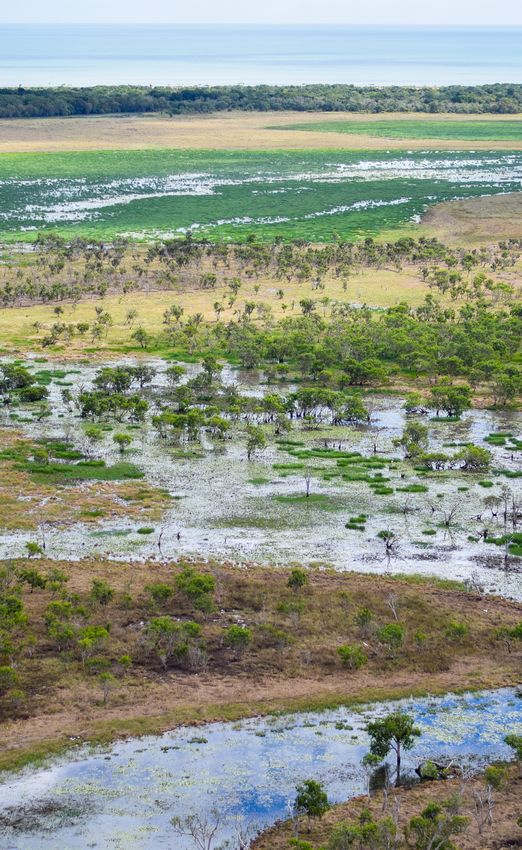
                                                                Large wet seasons can inundate the landscape and make
                                                                large sections of coastline inaccessible to rangers.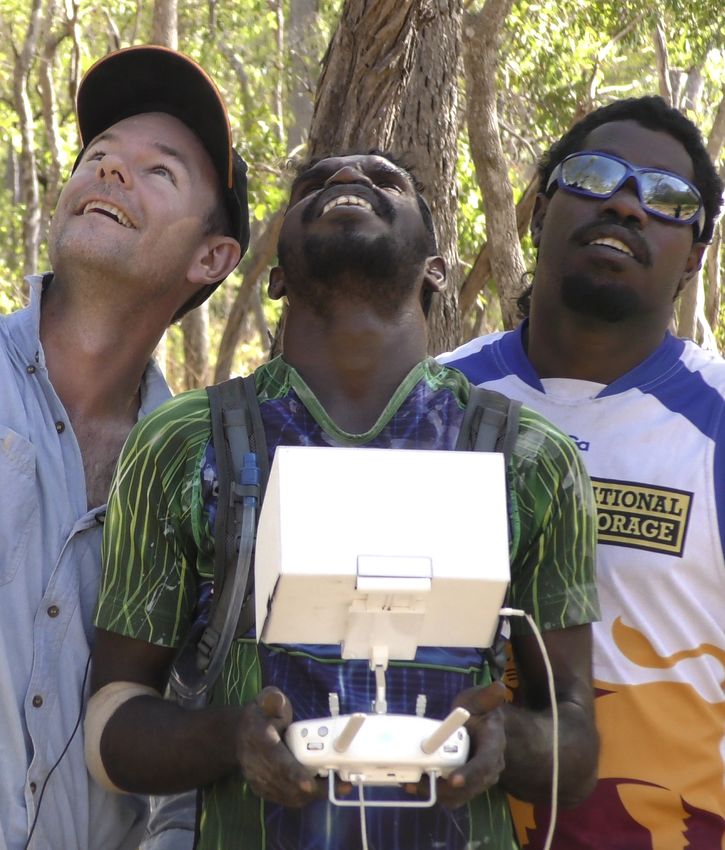
Hub research has built upon existing partnerships                          all the nests. By the time we get down there,
  between Indigenous rangers and CSIRO researchers by                        there’s not many eggs in a nest.”
  utilising artificial intelligence (AI) and cloud computing                – Mr Dion Koomeeta, APN Cape York ranger
  to automatically analyse tens of thousands of aerial
                                                                          Kerri Woodcock from Cape York Natural Resource
  images. Previously, this analysis had been done
                                                                          Management coordinates the Western Cape Turtle
  through a lengthy ‘send and receive’ process between
                                                                          Threat Abatement Alliance. The alliance works with
  researchers and rangers. With the help of Microsoft AI,
                                                                          Indigenous ranger groups all across Cape York to
  this feedback loop is shrinking so that rangers get the
                                                                          help protect baby turtles.
  information they need in almost real-time.
                                                                            “The most important immediate threat to turtle
  Sea turtle hatchlings already face a dangerous
                                                                             populations on the western Cape is predation
  journey from nest to ocean, and feral pigs on Cape
                                                                             of their nests by feral pigs. The pigs dig up
  York make these journeys even more hazardous – the
                                                                             their nests and eat the turtle eggs. Without
  pigs dig up freshly laid turtle nests and can eat every
                                                                             intervention, there can be zero survival of the
  egg in a nest. Three types of turtles nest on Cape
                                                                             baby turtles.”
  York beaches: Hawksbills, Olive Ridleys and Flatback
                                                                            – Ms Kerri Woodcock, Cape York Natural
  turtles. Olive Ridleys are the biggest concern. Their
                                                                             Resource Management
  nests are shallow and are generally laid on the
  beach rather than in the dune. This leaves the nest                     Protecting turtles on Cape York has the added
  vulnerable to predators, particularly pigs.                             complication of dealing with monsoonal weather and
                                                                          the complications this weather brings – waist-deep
  Project leader, CSIRO’s Dr Justin Perry, has been                       and boggy floodplains that are often frequented
  working with rangers from Aak Puul Ngantam (APN)                        by crocodiles, and impassable roads or tracks that
  Cape York for the last 10 years and recently, they’ve                   prevent beach access.
  turned their attention to protecting turtles from feral pig
  predation. The project team worked together for eight                   Control methods have previously been able to
  years before beginning to consider technical solutions.                 reduce feral pig predation of nests by up to 90%, but
                                                                          monitoring the effectiveness of management actions
  It was important to Traditional Owners and APN                          is hampered by accessibility, distance, and road and
  Cape York rangers to protect turtles. APN Cape York                     weather conditions.
  ranger Dion Koomeeta emphasised the importance
  of using Indigenous knowledge and science to                            Turtles begin nesting in June, but rangers often
  protect baby turtles.                                                   can’t get to the nesting beaches until later in July or
                                                                          August, particularly after big wet seasons.
    “We use science to protect the turtles so our
     next generation can know what the turtles                            Aerial images from helicopters have been collected
     look like. It’s a good thing for the kids to learn                   in the past, but required hours of detailed scrutiny to
     the ranger stuff so when they grow up they                           provide any useful information.
     can protect the land for the next generation
     to come. Most of the pigs are destroying our                           “The feedback – very clear feedback – from the
     beaches. Normally they go round digging up                              rangers was, ‘Wouldn’t it be great if we could
                                                                             get this [nest and pig track information] in real-
                                                                             time so we can make decisions on the beach?’ ”
                                                                            – Dr Justin Perry, Project Leader, CSIRO

                                                                          Steve van Bodegraven, a machine learning engineer
                                                                          with Microsoft, explains that simply uploading the
                                                                          photos from a drone or helicopter-mounted camera
                                                                          begins the analysis process with this new approach.

                                                                            “When the rangers get back in from the land and
                                                                             back onto Wi-Fi with their surveys, the images are
                                                                             uploaded to the cloud, where they’re automatically
                                                                             analysed. The models sort the landscape photos
                                                                             and find turtle nests, turtle tracks and pig tracks,
                                                                             which are surfaced in a dashboard.”
                                      Phisch Creative – Phil Schouteten
                                                                            – Mr Steve van Bodegraven, Machine Learning
  APN ranger Dion Koomeeta values working on the ground                      Engineer, Microsoft
  to share knowledge about turtles with future generations.

IMPACT STORY                                                                                                   nespnorthern.edu.au   2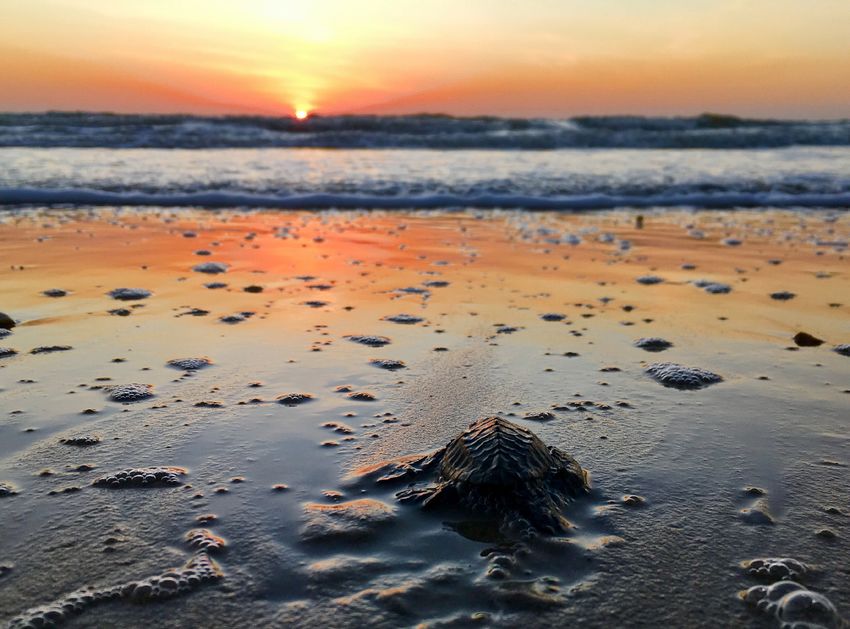
Lee Hickin, Microsoft Australia’s chief technology
  officer, emphasised that the more images it analyses,
  the better the AI becomes at identifying the different
  tracks and indicators in different contexts – machine
  learning at its best.

    “Together the teams are using machine learning
     to train and refine the models.”
    – Lee Hickin, Chief Technology Officer,
     Microsoft Australia

  Using cloud computing and AI is accelerating the
  process of identifying the sections of coastline that
  will benefit most from management actions. Putting
  this information at rangers’ fingertips allows them to
  make much faster and more efficient interventions to
  protect turtle nests and baby turtles.

    “We can now monitor twice the length of the
     coastline in two hours instead of a month.
     The more we can automate that monitoring
     process, the more the rangers can focus on
     actual management work. Monitoring exists
     to inform adaptive management. That’s the
                                                                                                                    Brian Ross
     actual critical step in closing the adaptive
     management loop – not just having the                      Modern technology and Indigenous knowledge combine
     information – but having it when you need it.”             to protect the environment.
    – Dr Justin Perry
                                                                The insights from the AI analysis are then shared
    “The project is just one example of how the                 with rangers using a Power BI (business intelligence)
     Australian Government is tackling our big                  dashboard, which displays the classified tracks,
     environmental challenges with scientific                   predation incidents and nests in formats that are
     research that delivers practical tools to support          immediately useful to the rangers.
     effective, real-time, on-ground actions.”
    – The Hon Sussan Ley, Minister for                          Incorporating AI is providing a huge benefit to rangers
     the Environment                                            working on the ground, but continued collaboration
                                                                between all stakeholders is needed for a long-term
                                                                solution to the threats faced by baby turtles.

                                                                  “This research showcases how the National
                                                                   Environmental Science Program is forging
                                                                   partnerships that bring together Indigenous
                                                                   knowledge and western science to achieve a
                                                                   better environmental and community outcome.”
                                                                  – The Hon Sussan Ley, Minister for
                                                                   the Environment

                                                                  “It’s going to take all of us to solve this problem
                                                                  – Indigenous rangers, science and technology
                                                                   all have a role to play. But working with CSIRO
                                                                   and Microsoft is a perfect example of how we
                                                                   can use science and technology to achieve
                                                                   positive management outcomes on-ground.”
                                                                  – Ms Kerri Woodcock

                                                                This project also highlights the value of strong
                                                                collaborative partnerships, not only for applied
                                                                management solutions on the ground, but for sharing
                                                                these lessons and methods more broadly.
  Power BI dashboard showing analysis of Cape York coastline.

IMPACT STORY                                                                                         nespnorthern.edu.au    3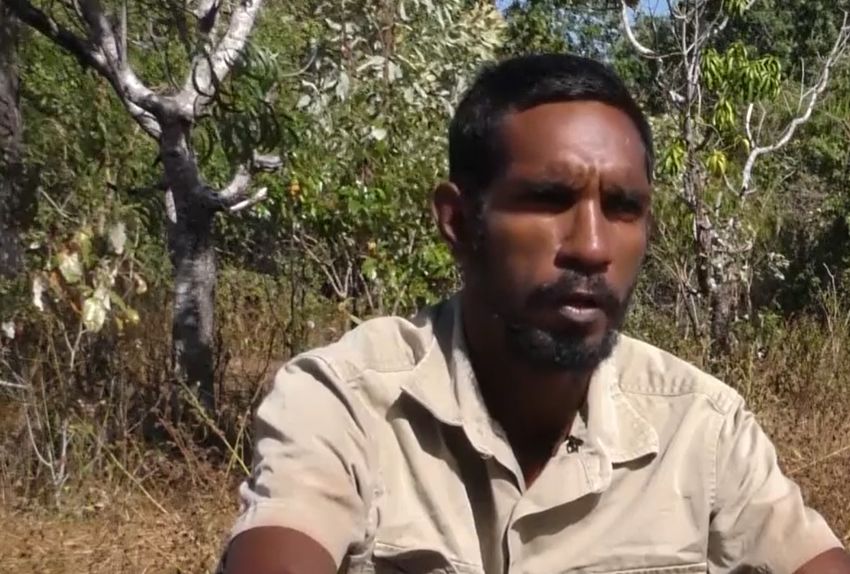
The success of partnering with Microsoft’s AI for Earth          • Teaming up for turtles (Feb 2021)
  program meant that Microsoft lent its full weight to             • Feral pigs on Cape York (Science Week video,
  sharing the stories of the environmental benefits of this          Aug 2020)
  research. Microsoft’s creative and communications               Impact stories
  teams – in Australia and North America – amplified these
                                                                   • Managing feral pigs on Cape York (Jun 2020)
  success stories through a campaign that multiplied
                                                                   • Reconnecting with Country through collaborative
  many times the communications capacity that was
                                                                     research (Jun 2019)
  already involved in the project through the Hub, CSIRO
  and APN Cape York. Brad Smith, President of Microsoft,          Media (selection)
  even shared the story on LinkedIn. Microsoft’s social            • Microsoft Facebook post (Feb 2021)
  media campaign has been shortlisted for a Mumbrella              • Microsoft Twitter campaign (Feb 2021)
  CommsCon Award for Best Use of Owned Media.                      • Artificial intelligence helps save sea turtle eggs
                                                                     from predatory pigs (Sydney Morning Herald and
  The fruits of this research are also being disseminated
                                                                     Fairfax papers, Feb 2021)
  globally. Although this technology and approach were
                                                                   • ‘Back from the brink of extinction’: Killer pig
  developed specifically for Cape York, the analysis code
                                                                     problem being solved (News.com.au and News
  is available for anyone to download and could help
                                                                     Corp Australia papers, Feb 2021)
  protect turtles and their nesting sites all around the world.
                                                                   • ABC News Radio AM program (February 2021)
                                                                   • ABC News Breakfast (Feb 2021)
                                                                   • AI technology helps protect sea turtle nests from
  Research outputs                                                   feral pigs in north Queensland (ABC Online, Feb
  Scientific papers                                                  2021)
   • Epigeic invertebrates of pig-damaged, exposed                 • Indigenous knowledge and AI help protect baby
     wetland sediments are rooted: An ecological                     turtles from predators on Australia’s remote Cape
     response to feral pigs (Sus scrofa) (Oct 2020)                  York (Microsoft global feature, Feb 2021)
   • An evaluation of nest predator impacts and the                • AI and cloud combine to help protect vulnerable
     efficacy of plastic meshing on marine turtle nests              marine turtle populations in northern Australia
     on the western Cape York Peninsula, Australia                   and Cape York (Microsoft local feature, Feb 2021)
     (Aug 2019)                                                    • Indigenous knowledge and AI help save baby
   • No sitting on the fence: protecting wetlands from               turtles (CSIRO blog, Feb 2021)
     feral pig damage by exclusion fences requires                 • Sharing knowledge, and partnering on innovation,
     effective fence maintenance (Jun 2019)                          is only going to lead to a better future for our
   • Thermal and asphyxia exposure risk to                           planet (LinkedIn post, Microsoft President)
     freshwater fish in feral-pig-damaged tropical                 • Technology can play a huge role in conservation
     wetlands (Nov 2018)                                             (LinkedIn post, Microsoft Executive Vice President)

  Factsheets                                                      Project webpage

   • Defining metrics of success for feral animal                  • Defining metrics of success for feral animal
     management in northern Australia (project                       management in northern Australia
     update, Oct 2018)
   • Defining metrics of success for feral animal                 Attributions
     management in northern Australia (start-up                   We acknowledge Aboriginal and Torres Strait Islander
     factsheet, Nov 2016)                                         Peoples as the traditional custodians of the lands on
  Videos                                                          which we work. We pay our respects to Elders of the
                                                                  past and present, and acknowledge their spiritual
   • AI technology boosting fledgling turtle survival on
                                                                  connection to Country. In particular we would like to
     Cape York (Feb 2021)
                                                                  acknowledge the Wik and Kugu people of the region
                                                                  where this project took place.
                                                                   • Project leader: Justin Perry (CSIRO)
                                                                   • Dion Koomeeta and the ranger team (APN Cape
                                                                     York), Kerri Woodcock (Cape York NRM/Western
                                                                     Cape Turtle Threat Abatement Alliance)
                                                                   • Lee Hickin and Steve van Bodegraven (Microsoft)
                                                                   • The Hon Sussan Ley, Australian Minister for the
                                                                     Environment
                                                                   • Phil Schouteten (Phisch Creative)

IMPACT STORY                                                                                         nespnorthern.edu.au   4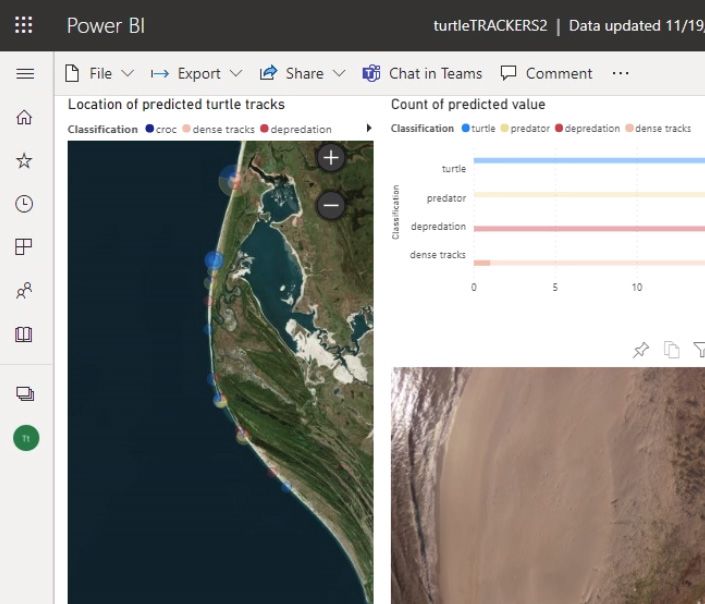
You can also read


