Vertebrate pests in macadamia: rats - NSW Department of ...
←
→
Page content transcription
If your browser does not render page correctly, please read the page content below
primefact
Vertebrate pests in macadamia: rats
March 2020, Primefact 1768, First edition
David Elmouttie, Business Manager, BASF Professional and Specialty Solutions
Jeremy Bright, Development Officer – Macadamia

Background                                         White et al. 1998). Further studies show that
Rodents are a significant concern for the          rodents use resources based on availability,
Australian macadamia industry, accounting for      feeding within the trees while macadamia is
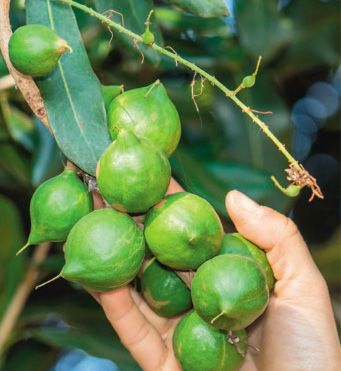
up to 30% of crop losses (Figure 1) in high-       present (Figure 1) and feeding and harbouring
pressure years and additional losses from          in non-crop habitats at other times (White et
orchard floor nut removal (White et al. 1997;      al. 1997; Horskins et al. 1998; White et al. 1998;
Elmouttie and Wilson 2005). During the past 20     Elmouttie and Wilson 2005). Rodents also
years, significant research has been conducted     use on-ground resources by moving the nuts
within Australian orchards to identify the         to non-crop habitats and burrows during
species responsible and to determine how the       May–September, i.e. the nut fall cycle when
populations interact with the broader orchard      macadamia become plentiful on the ground
system to achieve high population numbers.         (Elmouttie and Wilson 2005). This behaviour
                                                   ensures the rodents maintain a stable food
                                                   supply throughout the year and are feeding
                                                   and residing in dense protected environments,
                                                   thus reducing the risk of predation from birds
                                                   (Elmouttie et al. 2009). Rodents never solely
                                                   consume nor depend on macadamia resources,
                                                   they supplement their diet with alternative non-
                                                   crop resources throughout the year.

Figure 1. A macadamia branch damaged by rats.
                                                   Figure 2. The common black rat (Rattus rattus).
                                                   Photo: The Queensland Museum.
Rodents in orchards
Early studies identified a single rodent           In recent years, rodent population dynamics
species, the common black rat (Rattus rattus;      within orchard systems have changed. Rodents
Figure 2), as being responsible for >95%           are now nesting in trees, rather than foraging in
of damage across the macadamia growing             non-crop habitats abutting the orchard edges.
region (White et al. 1997; Horskins et al. 1998;   Changes in structure and resource availability are

                                                                             www.dpi.nsw.gov.au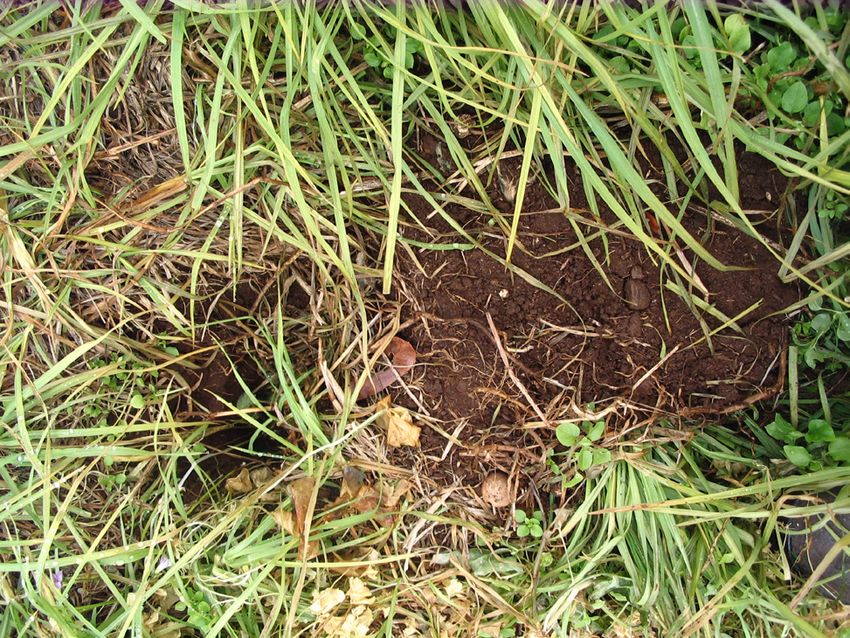
Vertebrate pests in macadamia: rats

 suspected as the causes, which have primarily        to monitor for signs of rodent activity so they
 been driven by introducing new cultivars that        can quickly respond to outbreaks and manage
 maintain nuts longer within the trees (Eldridge et   the populations before extensive damage
 al. 2012; Whitehouse et al. 2012) and modifying      occurs. The recommendations below might
 cultural practices to influence non-crop             not be viable for all orchard systems or every
 resources within the orchard.                        year, however, they are presented as a guide
                                                      for growers as strategies to implement for
 Managing rodents                                     maximum success and minimal crop loss.
 Managing rodents in macadamia orchards
 has relied on mortality based approaches (e.g.       Season-long strategy
 baiting, burrow fumigation and trapping).            It is imperative that adjacent non-crop habitats
 Although these tools are effective at killing        are effectively managed and maintained.
 the rodents, used alone they do little to            Riparian zones, headlands, property boundaries
 suppress populations and ultimately do not           and windrows must be kept void of weedy
 reduce crop losses.                                  non-crop vegetation (e.g. grasses, lantana and
                                                      wild tobacco) which provide essential food and
 To effectively manage rodents you must
                                                      nesting resources for the rodents. These areas
 consider the complex crop–pest interactions
                                                      can be maintained by slashing or revegetated
 throughout the orchard and act to reduce
                                                      to a forest type known not to support rodents.
 the populations before significant crop losses
 occur. This comprehensive approach needs to          The orchard system itself, e.g. inter-rows,
 incorporate monitoring, habitat modification,        must also be effectively maintained to reduce
 resource (crop and non-crop) management              cover and alternative food resources and to
 and mortality tools. When combined, the result       encourage natural predators (e.g. owls). This
 should be cost-effective rodent management.          can be achieved by slashing or applying a
                                                      suitable herbicide (e.g. glufosinate-ammonium).
 Managing rodents within orchard systems
 must be a season-long strategy that aims             Cultural practices such as insect refuge
 to reduce alternative food resources and             strips (i.e. mohawks, Figure 4) can be
 nesting sites. Growers are also encouraged           established to encourage beneficial insects
                                                      and are compatible with rodent management
                                                      strategies, although they should be
                                                      maintained and limited to the areas required.
                                                      If rodent activity is observed, baiting or
                                                      trapping programs should be undertaken
                                                      within these refuges. Once pollination is over,
                                                      refuges can be slashed and only re-established
                                                      once required (prior to flowering).
                                                      Skirting trees to open up the orchard system to
                                                      natural predators and reducing canopy access
                                                      for foraging rodents is also recommended.

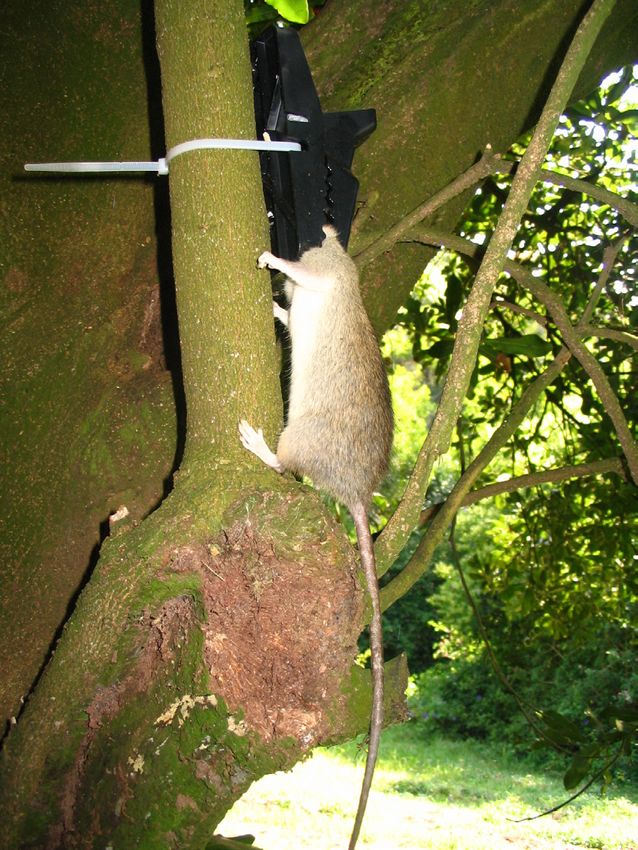
 Figure 3. A rat caught foraging within the tree
 canopy early in the season.                          Figure 4. An insect refuge strip (i.e. mohawk).

2 | NSW Department of Primary Industries March 2020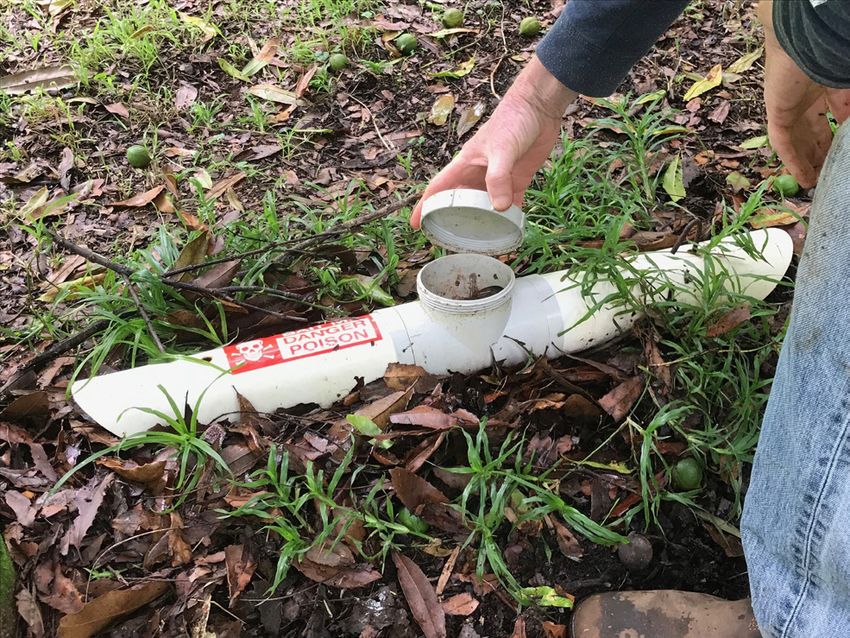
Vertebrate pests in macadamia: rats

 Harvest                                               made available to non-target species. Using
 Harvest should be conducted regularly to              appropriately registered dust or grain baits is
 minimise the number of nuts on the ground.            considered the most suitable approach.
 This is particularly important from May to
 September when rodents will remove nuts from
 the orchard floor. At the end of each harvest
 season, any remaining nuts on the ground
 should be mulched as soon as practical to
 ensure the nuts are not left for the rodents.
 New plantings
 When establishing new plantings, consider the
 possible effects of rodents. Certain tree varieties
 exhibit traits which make them more susceptible
 to rodent damage, such as thinner shells
 and having sticktights (Eldridge et al. 2012).
 Although using these varieties is not being
 discouraged, consider where these higher risk
 varieties will be planted and how rodents can be      Figure 5. A rodent burrow in headlands adjacent to
                                                       orchard blocks.
 managed within those orchard blocks.
 Block design                                          Other methods
 Block design should also be contemplated,             There are potentially other methods for rodent
 as the inability to harvest and manage blocks         control and while perhaps not considered
 resulting from poor weather is often a precursor      conventional, one grower in Queensland is
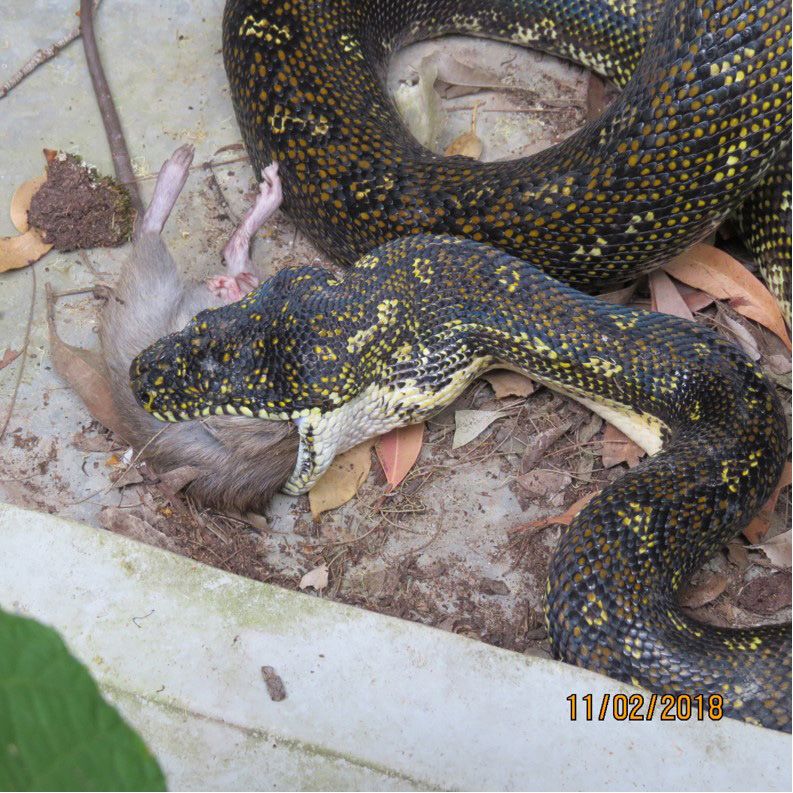
 to high rodent damage.                                using snakes to help (Figure 6).
 Baiting and burrow management
 Baiting should be undertaken strategically,
 targeting known areas of rodent activity within
 orchards. Rather than spreading limited baiting
 resources around the entire orchard system,
 growers are encouraged to focus on key blocks
 which have suffered rodent activity previously.
 Early in the season, when rodents are known to
 be feeding in the trees (January–May), baiting
 programs should focus on the tree, then as the
 nuts become more abundant on the ground
 (May through to final harvest), baiting programs
 should target that area.
 Using bait stations is imperative; they are a
 legal requirement of registered bait products
 and are essential to increase bait take and
 maintain bait freshness. Baits should be
 secured within bait stations ensuring they
 are kept off the base using the securing rods         Figure 6. Every little bit counts; snakes might
 provided. In stations where securing rods are         contribute to rat control programs in a limited way.
                                                       Photo: Paul Trollis.
 not provided, a wire tie should be used.
 Where burrows are observed (Figure 5), rodents
                                                       Case study
 should be eradicated before the burrows
 are disturbed or ripped. Burrow fumigation            Phil Bevan – Dalwood, NSW
 (e.g. carbon dioxide) and baiting can be              We have always had a rat control program but
 effective. When baiting, use baits that will not      two years ago, a favourable season for rats
 fill the burrow entrances as the block baits          caught us by surprise and caused significant
 will be expelled from the burrows and thus            crop loss. You could say that year opened

3 | NSW Department of Primary Industries March 2020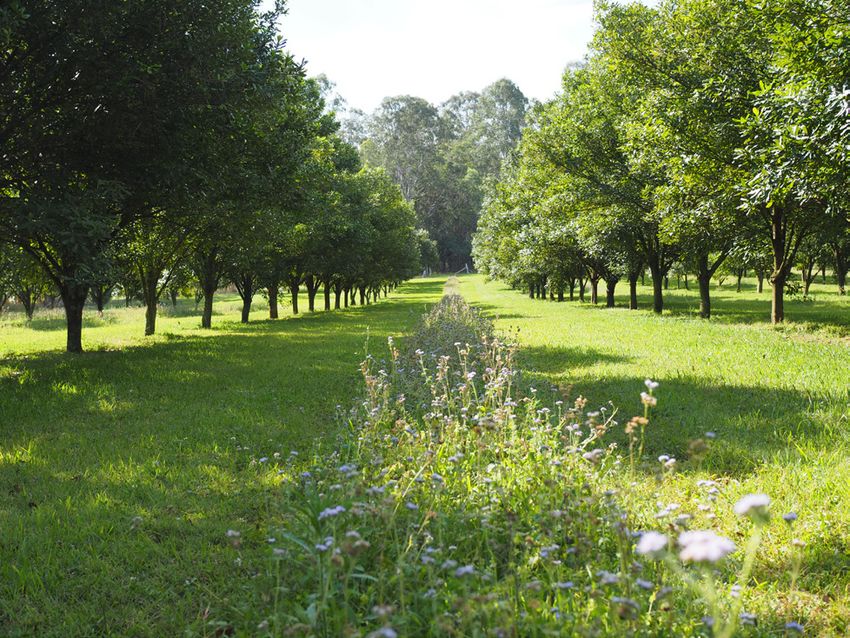
Vertebrate pests in macadamia: rats

 our eyes to the potential damage from rats             machine for a bit over five minutes. We monitor
 and the effort required to bring down a large          the sites for a few days afterwards and rarely
 population; we have been more vigilant with            find subsequent rat activity. For the odd cases
 our program since.                                     where we do, we re-treat the burrow.
 A key part of our management program is                We also harvest frequently to keep the food
 regularly monitoring our orchard for rat activity      source low for rats.
 using an electronic mapping system on our              We have become vigilant against rats, as we
 phones. This allows us to add points where we          know changes in weather conditions can
 find nests so we can come back later and deal          bring on a significant increase in rats. This
 with them.                                             combination of activities has managed to keep
 We aim to keep the grass down in the orchard           rat activity to a minimum in our orchard – and
 and along headlands. This removes habitat              has kept crop loss to rats down.
 for rats to hide in and makes spotting activity
 easier. It also gives predatory owls a better
 chance to catch prey.
 We also have about 50 rat bait stations (Figure 7)
 on our 30-hectare orchard that we locate in
 potential problem areas. We move them to
 areas of high activity based on monitoring
 results to focus more on potential hotspots than
 spreading stations over the orchard. We use
 only an approved rodenticide for the orchard,
 which is currently racumin. We mix the racumin
 and macadamia kernel, mindful to use stations
 that are inaccessible to pets and other animals,
 and only use baits that do not translocate. The
 baiting program is mainly useful in the period
 when nuts are not developed, mostly in the             Figure 8. A device used to fumigate a rat nest.
 spring and early summer.
                                                        References
                                                        Eldridge JV, Whitehouse M, Elmouttie D and
                                                           Hamilton G (2012) Effects of cultivar on rodent
                                                           damage in Australian macadamia orchards.
                                                           Australian Journal of Crop Science, 6 (6): 1110–
                                                           1115.
                                                        Elmouttie D, Horskins K and Wilson J (2009) The
                                                           foraging behaviour of the Black rat (Rattus rattus)
                                                           within Australian macadamia orchards. Australian
                                                           Journal of Crop Science, 3 (6): 361–366.
                                                        Elmouttie D and Wilson J (2005) The potential
                                                           importance of nut removal by rodents from
                                                           Australian macadamia orchards. Journal of
                                                           Environmental Management, 77 (1): 79–83.
                                                        Horskins K, White J and Wilson J (1998) Habitat
 Figure 7. A rat bait station that is inaccessible to      usage of Rattus rattus in Australian macadamia
 non-target species such as birds and uses baits that      orchard systems: implications for management.
 do not translocate.                                       Crop Protection, 17: 359–364.
                                                        Whitehouse M, Eldridge JV, Elmouttie D and
 Based on our monitoring, we return to                     Hamilton G (2012) The spatial distribution
 eradicate ground nests (burrows) with a small             of rodent damage in Australian macadamia
 engine device (Cheetah) that produces carbon              (Macadamia integrifolia) orchards. Australian
 monoxide and blows it into the rat hole                   Journal of Crop Science, 6 (10): 1423-1427.
 (Figure 8). This system humanely euthanases the        White J, Horskins K and Wilson J (1998) The control
 rats. We use newspaper and a bit of dirt to plug          of rodent damage in Australian macadamia
 up the other holes in the same nest and run the           orchards by manipulation of adjacent non‐crop
                                                           habitats. Crop Protection, 17: 353–357.

4 | NSW Department of Primary Industries March 2020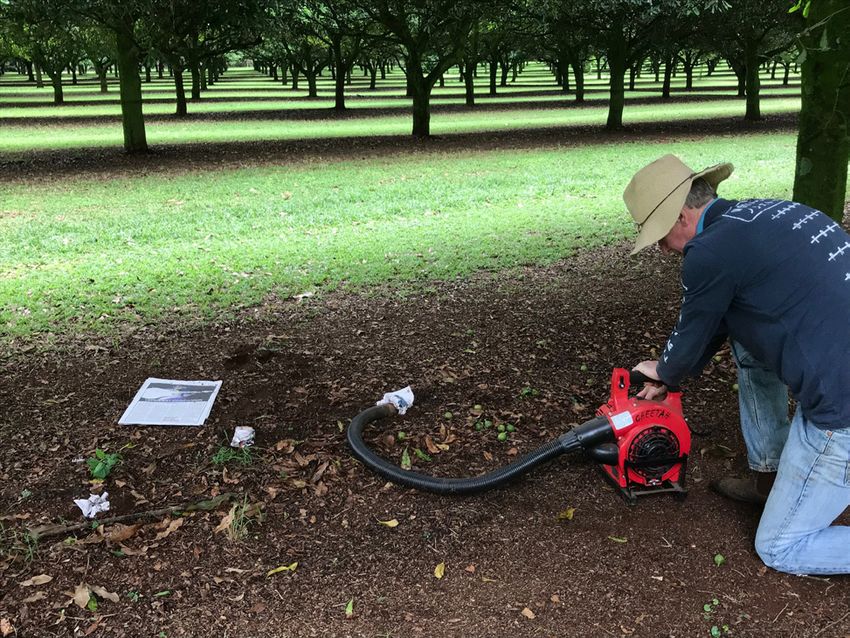
Vertebrate pests in macadamia: rats

 White J, Wilson J and Horskins K (1997) The role    Reference number: PUB19/106.
   of adjacent habitats in rodent damage levels in
                                                     © State of New South Wales through the
   Australian macadamia orchard systems. Crop
                                                     Department of Primary Industries 2020. You may
   Protection, 16: 727–732.
                                                     copy, distribute and otherwise freely deal with this
 Further information                                 publication for any purpose, provided that you
 For further information please contact:             attribute the Department of Primary Industries as
                                                     the owner.
 Mr Mark Wilson
 Technical Services Manager, BASF Professional       The information contained in this publication is
 and Specialty Solutions                             based on knowledge and understanding at the
 Email: mark.wilson@basf.com                         time of writing (March 2020). However, because of
 Phone: 0408 826 845                                 advances in knowledge, users are reminded of the
                                                     need to ensure that the information upon which
 Dr David Elmouttie                                  they rely is up to date and to check the currency
 Business Manager, BASF Professional and             of the information with the appropriate officer of
 Specialty Solutions                                 the Department of Primary Industries or the user’s
 Email: david.elmouttie@basf.com                     independent advisor.
 Phone: 0428 826 382

5 | NSW Department of Primary Industries March 2020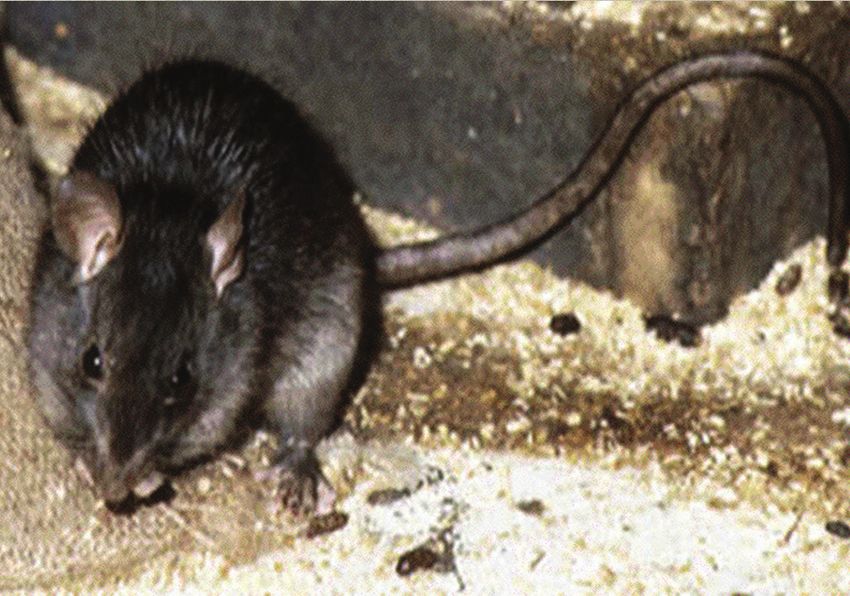
You can also read


