NRF 2020 Top takeaways from the Retail's Big Show - SIS Global
←
→
Page content transcription
If your browser does not render page correctly, please read the page content below
NRF 2020
Top takeaways from
the Retail’s Big Show
Future retail success will depend on your ability to develop a “human-first digital
strategy,” said Kevin Johnson, CEO of Starbucks, while speaking on the main stage at NRF
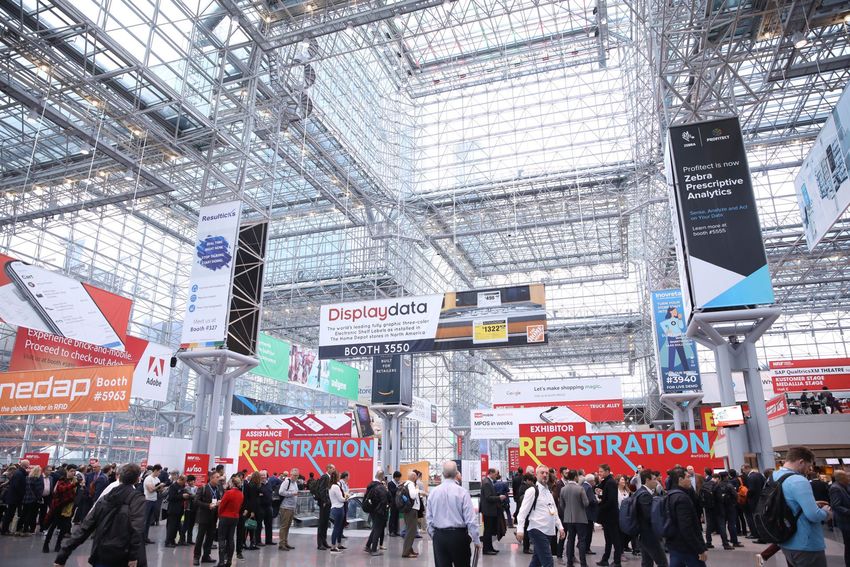
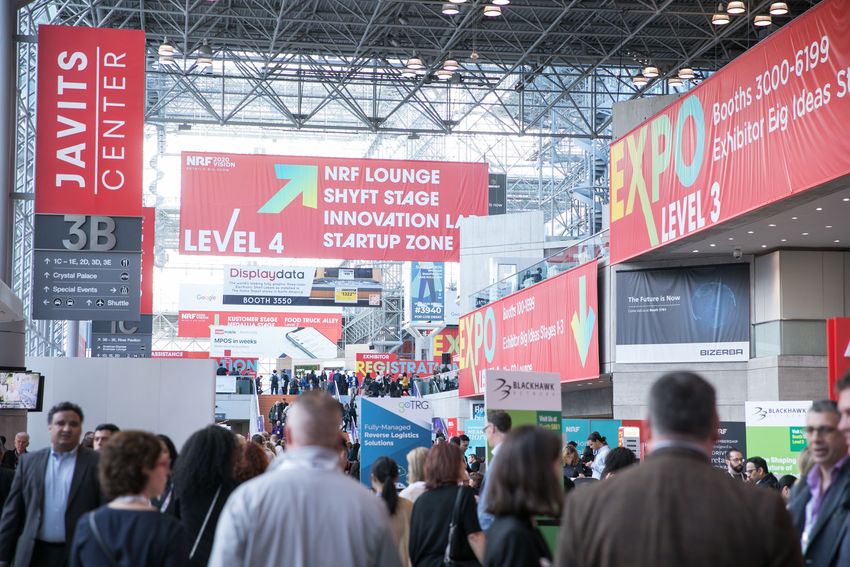
Retail’s BIG Show 2020. Over 40,000 retail operators and experts from 99 nations
attended the conference and expo in New York City on January 12-14.

NRF 2020 introduced a major shift from the old adage that “every retail company is a tech
company” towards a more human-centric vision of retail, where high tech helps become
high touch.

Customers are still in control, and they are more demanding than ever. They expect
brands to offer simple, convenient solutions to complicated lives; to help solve, rather
than worsen, global pollution and environmental degradation. All with a human touch.
Thankfully, technology can help. Tech such as artificial intelligence (AI), cloud, and tools
that make employees mobile can support brands to create deeper, more meaningful
connections while still delivering seamless, convenient experiences.

Looking for simplicity and convenience                                              p. 3
Accounting for sustainability and meaning                                           p. 6
What the future holds: words of advice                                              p. 10

                                                                                               2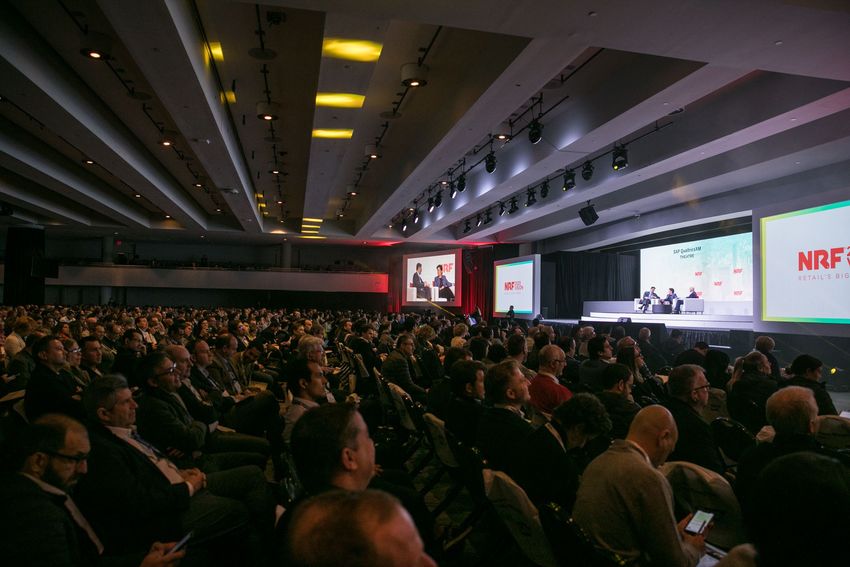
NRF
                                                                                                              2020

Looking for simplicity
and convenience                                                               “Consumers don’t want to
We live in complex times. We fear for the environment and our
                                                                              give up the convenience and
children’s future. We are afraid of the next financial crisis. In a digital
world with flexible working hours, we feel disconnected from our fami-
                                                                              simplicity of a disposable
lies and peers, and are at constant risk of burnout. With all these stress-
ors, what consumers really do not need is to spend 10 minutes in front
                                                                              world, even if they aspire to
of the toothbrush aisle at the supermarket, trying to understand which
product is better – the soft toothbrush, gentle on the gums? The
                                                                              live in a sustainable one.”
pro-environmental one with the bamboo handle? Or perhaps the one              Tom Szaky, CEO, Terracycle
with the silver bristles that eliminate 99% of bacteria?

3
NRF    When it comes to stock, less can be more                                     The mainstream of voice
2020   Enter brands that make lives simpler. Walmart is one of the retailers        Voice-based queries are becoming mainstream - and voice shopping
       who have decided to reduce the number of SKUs in an attempt to               will be next. 20% of US consumers are likely to make a purchase using
       simplify decisions and decrease consumer fatigue. Reducing the               voice in the next three years, Patrick Gauthier, Vice President of
       product line also means you can offer a more curated selection, and          Amazon Pay, announced. Why the success? Voice shopping removes
       better underline your brand’s core offer – with the added bonus of a         friction. It’s natural. It’s faster than typing. It doesn’t require
       more streamlined inventory.                                                  consumers to learn how to use any device. For retailers, this new way
                                                                                    of browsing and buying goods will require changing the structure of
                                                                                    their e-commerce sites. Voice is contextual: when speaking, people
       Brands joining forces                                                        tend to skip some information, and to ask follow-up questions.
       What’s more convenient than getting all your shopping done at once,          Retailers will have to consider a new way of navigating the catalog.
       without having to go to different stores? Forward-thinking retailers         They will also have to move from keywords to context, and from
       are joining forces with competitors to provide consumers with the            shopping journeys to micro-moments, Gauthier advised.
       quick, convenient shopping experiences they demand.

       Beauty products subscription service Birchbox teamed up with                 Stores as a human experience
       established pharmacy retail chain Walgreens. In the shops-in-the-shop        As online gains ground (this holiday season was the first when most of
       customers can test the Birchbox products and get exclusive samples.          Crate & Barrel’s sales happened online), physical stores are changing.
       The cooperation came as a surprise to many, but not to Birchbox: after       They used to be places where you entered, purchased, and left. In an
       all, “our customers already shopped there,” explained Pooja Agarwal,         increasingly lonely and isolated society, Starbucks’ CEO noted,
       Chief Operating Officer at Birchbox.                                         brick-and-mortar locations can gain an important new role as that
                                                                                    “third place” (after your home and workplace) where engagement,
       Home furnishing retailer Crate & Barrel joined forces with Zola, a           and true human connections, are forged. And technology will help
       one-stop website for couples getting married, for a wedding registry         bring forth the change. Starbucks’ very own AI project Deep Brew was
       collaboration. The unlikely partnership (the two brands sell comparable      developed with the goal of freeing staff members so they can spend
       items) was prompted by data: for a long time, Crate & Barrel had been        more time in meaningful customer interactions instead of wasting it
       the top external brand consumers added to their Zola registries.             on inventory forecasting and staff scheduling.
       “Control is in the consumers’ hands,” said Neela Montgomery, CEO at
       Crate & Barrel, underlining the importance for retailers to accept the       And when you create human connections, your business benefits. In
       story that data tells, and that customers write. “If you try to resist it,   his opening keynote, Microsoft CEO Satya Nadella underlined how
       you’ll lose,” she warned.                                                    important it is to hand transformational technology to store
                                                                                    employees. “Giving data to employees is probably the single most
                                                                                    ROI-intensive thing you can do,” he said. “It increases your conversion
                                                                                    rate by 15 percent and your satisfaction rate by 10 percent.”

                                                                                                                                                         4
“Our colleagues in stores are probably                                                                             NRF
                                                   HOW WILL AI FOSTER HUMAN CONNECTIONS?                           2020
the most important people in the                   Starbucks’ goal is to “make a positive contribution to
                                                   humanity” – and AI will play a key role. “If a customer comes
company, because from an                           up to our point of sale to place an order and they’re placing
engagement perspective they touch                  their order, right now the barista is heads down and typing
                                                   in that order,” Kevin Johnson, CEO of Starbucks, explained.
our customers the most. It’s also about            “We’re doing some research that says, ‘what if that barista
                                                   had a microphone with some AI Deep Brew natural language
them having the right technology, so               behind it, and they’re having a conversation with the
that if one of their customers is coming           customer’. […] Neuroscience will tell you that that eye
                                                   contact and conversation is a much better connection with
in, they can connect with that                     another human being than sitting there typing on a Point of
                                                   Sale. So we're trying to invest in those things that we know
customer’s online shopping [history].              can enable our Starbucks partners to spend more time
                                                   connecting with one another, and connecting with
Equipping associates with knowledge                customers,” he concluded.
of their customers is increasingly
important, because the time people
spend in-store is shrinking.”
Parinda Muley, VP Innovation and
Business Development, Macy’s

                    I have data, what now?
               Discover what technology you need
               to make sense of the business and
                   consumer data you harness.
                           Read more

5                                                                                                                     4
NRF
2020

       Accounting           85% of the apparel that is produced is landfilled. One third of the food we
                            produce is wasted. These are just some the alarming numbers that were
                            mentioned during the show. As people are increasingly aware of the

       for sustainability
                            needless waste and environmental and social dangers caused by
                            unrestrained consumption, consumers are torn between these worries and
                            the deeply human desire to buy and use products as a means of

       and meaning
                            self-expression.

                            For businesses, the question for the future is: how can you give
                            consumers the variety of products they desire without causing more
                            waste and pollution? The answer, some suggest, may lie in transforming
                            the concept of retail.

                                                                                                     6
Digital before physical                                                   NRF
What if you could produce items that have no environmental                2020
footprint, don’t produce carbon emission, and create zero waste?
Digitally generated clothes tick all these boxes – and more. Norwegian
company Carlings has launched a digital-only fashion collection. You
purchase an outfit, get it digitally fitted onto your photo by the
company’s 3D designers, and voilà – you can post it on Instagram, or
your favorite social page. The overwhelmingly positive response has
led some companies to go even further, linking social channels with
their supply chains. New designs are tested as digital-only items
first, and only the top downloaded pieces are put into production,
reducing both risk and waste.

Replacing ownership with use
Rental has been around for a while, but on the fringe of consumption.
Recently it has gone mainstream; renting clothes, in particular, has
gone from cheap to chic thanks to services like Rent the Runway, an
online rental for clothes and accessories that includes luxury items.
80% of the clothes in the average American’s closet are worn three
times or less, Jennifer Hyman, CEO and co-founder of Rent the Runway,
explained during her keynote. Rental enables consumers to reconcile
their desire for new styles and environmental concerns. “Fast and
sustainable don’t have to be in conflict,” she said, and consumers
seem to agree: in 2019, Rent the Runway was valued over $1 billion.
Evolving technology is behind the success of this kind of service, with
Rent the Runway describing itself as a “fashion company with a
technology soul.” “Rent the Runway has had to pioneer 100% reverse
logistics of physical goods,” Hyman explained, hinting at the tech
power and innovation that are needed to deliver what the company
defines a “closet in the cloud.”

“The pride of ownerships is getting
replaced by the pride of access.”
Jennifer Hyman, CEO and Co-founder, Rent the Runway

7                                                                            4

NRF
2020

                                                                               Recommerce
       HOW DOES RENTAL DIFFER FROM TRADITIONAL RETAIL?                         You may know recommerce by its old name - “buying
       The transaction is at the heart of retail: once a customer has bought   second-hand”. But while “second-hand” evokes images of
       an item, the goal is to ensure that the customer will return and buy    dusty thrift stores and charity auctions, recommerce smells of
       again. Not in rental. When you rent products, your relationship is      sustainability, and has the allure of cool. In the past three
       built not just on the quality of the product, but on your overall       years, the overall resale market has grown 21 times faster
       process, from your quality control, to support, to the speed and        than the retail apparel market, according to a report by
       simplicity of delivery and returns. If you want consumers to choose     thredUP, the largest online thrift store. This year, 33% of
       you again and again, you must create a simple, straightforward way      Generation Z-ers (teens to twenty-somethings) and 25% of
       to return items. You must ensure that products are checked before       luxury customers will buy used products.
       they recirculate, so they are always in top shape. You must keep a
       large enough variety of products on hand. And you must have the         Why the sudden interest? Sustainability plays a role: buying
       technology to track everything –what’s out or coming back, what         used enables consumers to get a variety of items without the
       are the specific conditions of each single item, what is popular, and   environmental impact. The price-quality ratio matters, too.
       which kind of consumers like this kind of item.                         “It’s the democratization of luxury,” proclaimed Charles Gorra,
                                                                               CEO and founder of Rebag, a second-hand marketplace for
       These new challenges represent a great opportunity to gain              designer handbags.
       valuable information on consumers’ preferences and tastes. Rent
       the Runway has been using the feedback that customer send every
       time they return an item to optimize the selection, even expanding
       to new product lines. “Create a customer feedback loop,” Jennifer
       Hyman suggests retailers.

                                                                                                                                            8
Leading with values NRF
Brands have been talking about values, transparency, authenticity for a “Recommerce is on the same trajectory 2020
long time. The time for talking is over. As consumption intertwines with that e-commerce was in the 90s.”
politics, identity and sustainability, brands that take a clear position
and drive real change are the ones that are winning consumer loyalty. Andy Ruben, CEO, Yerdle
During his keynote, Starbucks’ CEO Kevin Johnson described how the
company achieves its purpose of bringing positive change in the “In a few years, resale and rental will be
world. They have been employing veterans and army wives,
empowering employees with tech so they can spend more time chatting how everyone shops.”
with customers who need a friendly smile, and even building fairer Jennifer Hyman, CEO and Co-founder, Rent the Runway
supply chains. Starbuck’s “From bean to cup” traceability program,
built on Microsoft technology, enables customers to see in which farm
the coffee in their cup was grown and roasted. The program has been
delivering unexpected social returns: being a certified Starbucks
supplier has enabled farmers to obtain better financing conditions, and SHOULD YOU ENTER THE RESALE MARKET?
a brighter future. As the recommerce market booms, traditional retail brands
must take a bet, or leave their items, and brand control, in
Phil Graves, Head of Corporate Development at Patagonia, described someone else’s hands. “[With third-party marketplaces] there
how the outdoors clothing brand has been repairing clothes to keep is no longer brand control of how the products are showing up
them in use since the 1970s, even if that may have led to lost sales. The in the world,” warned Andy Ruben, CEO at resale platform
company, whose advertisement slogans include “The best jacket you Yerdle. His advice is that “brands and retailers must own
can buy for the planet is the one that already exists,” now runs over 70 their re-commerce.” When brands manage first-hand their
repair centers. second-hand resales, they get the chance to control and
curate the whole experience. They can deliver authenticated
A focus on ethics has transformed outdoors gear brand Cotopaxi from a items that are in optimal conditions, and they can ensure that
start-up to a success story in just few years. The brand aims to “create each product reaches consumers with the correct branding.
innovative outdoor products and experiences that fund sustainable It’s also an effective way to maintain relevance with old and
poverty relief, move people to do good, and inspire adventure.” On the new customer segments. Since launching an official website to
Cotopaxi website, shoppers can learn where the materials for each sell and buy branded used gear, outdoor clothing brand
garment come from, including origin of the textiles, details of the Patagonia has managed to attract customers that are on
factory where the items were (sustainably) produced, and the average 10 years younger than their usual customer. The
company’s giving-back model. The strength and authenticity of the assurance that the items are authentic and brand-approved
Cotopaxi brand story has helped build a community of faithful may have contributed to the success of the initiative.
customers/fans who share the same values, and want to do good. “30% “Whenever our customers buy on wornwear.com, they receive
of our customers tag on a donation when they make a purchase,” said authentic and certified pre-owned items that have been
Annie Agle, Director of Impact and Brand. inspected multiple times for quality,” said Phil Graves, Head of
Corporate Development at Patagonia. “And as a brand, we
love that we get to control the entire customer experience and
ensure it’s top-notch,” he added.
9NRF
2020
What the future holds: words of advice
So what will the retail of tomorrow look like? What should you, as a Here is the best advice from the retailers, tech experts, professionals
retailer, do to stay on top, keep your customers happy, and stop and gurus who shared their knowledge at NRF 2020.
worrying for a moment about all the new trends, technology, and
consumer demands waiting behind the corner?
Develop your own Have a strategy –
tech to achieve and be ready to
your own goals rethink it, constantly
"If you think about the needs for the 2020s, every retailer will “One thing you never want to do in retail, and I want to be
need to build their own tech intensity. It's not about taking really careful of this, is you never say, ‘We have the answer.
away the art of retail. If anything, it's about reinforcing that We’ve figured it out.’ Because our customers are always
core art of retail, the core operational excellence of retail with changing. Regardless of how well you think you’re doing, a
tech intensity." Satya Nadella, CEO at Microsoft. week from now, a month from now, there will be much more
to do.” John Furner, CEO at Walmart U.S.
10NRF
Rethink the Consider the growing 2020
physical store role of sustainable
as a digital space modes of consumption
"What if you took the entire store and effectively thought of it “In the future of retail, the brands that win are the ones that offer
as a computer? You kind of do that with your website. You do repair, they offer resell and they offer recommerce programs. […]
that with your mobile app. What if the physical space itself had These circular supply chains and circular business models used to
all of the computing signal, all of the analytical signal, that you be a competitive edge for brands like Patagonia. But going
now have on your website?" Satya Nadella, CEO at Microsoft. forward, I firmly believe that they are going to be the means for
companies, brands and retailers to survive.” Phil Graves, Head of
Corporate Development at Patagonia.
Build trust for
long-lasting Your physical stores
customer-brand are still important –
relationships but they might play a different role tomorrow. “The future of
retail is digital, but the future of brand is physical.” Russ Kahn, Sr.
“If there is no trust [in your brand], you are a commodity – and you Vice President of Retail at Puma North America.
can be replaced.” Patrick Gauthier, Vice President at Amazon Pay.
If you use data the
You need data to
right way, nothing
understand your
can stop you in your
customers –
path to success
but in order to use the data, you need it in an unsiloed, meaningful
format. “People overstate the analysis element with data and “As retailers you have the most valuable asset – commercial scale
underestimate the plumbing. The data plumbing is just as consumer behavioral data. You have the power to shape your
important. Connecting the pipes can be harder than writing the business models, to transform your business, and build your own
algorithms.” Jeff Weiser, CMO at Shopify. future.” Satya Nadella, CEO at Microsoft.
11There’s more to learn.
It can be tough to keep up with quick-moving
technology and ever-new consumer trends.
That’s why we organize conneXion.
conneXion is the official LS Retail and Hospitality
conference dedicated to LS Retail partners and
retail, foodservice and hospitality operators. You
can get the latest on the industry, dive into the LS
Retail products, and ask questions to peers,
decision-makers, and LS Retail key staff. See the
trends, share your challenges, and find solutions.
Join us on May 18-19, 2020
in Reykjavik, Iceland.
Learn more and book your ticketLS Retail is a world-leading provider of business management software solutions for retail, hospitality and forecourt businesses of all sizes. Our all-in-one management systems power tens of thousands of stores and restaurants worldwide, within such diverse industries as fashion, electronics, furniture, duty free, restaurants, coffee shops, forecourt, c-stores and more. LS Retail products and solutions are sold through a global network of partners. For further information on the company and the products, visit www.LSRetail.com
You can also read


