WA Railcar Program Perth's next generation of trains - Expanding public transport rail capacity for METRONET and beyond
←
→
Page content transcription
If your browser does not render page correctly, please read the page content below
WA Railcar Program
Perth’s next generation of trains

PROJECT DEFINITION PLAN - SUMMARY DECEMBER 2018

Expanding public transport rail capacity
for METRONET and beyond
Contents

     EXECUTIVE SUMMARY                                     2

     METRONET OVERVIEW                                    4

     NEED FOR CHANGE                                      6

       A growing city                                      6

       Supporting a growing transport network              6

       Supporting local employment                         6

       Supporting economic growth                          8

       The need in numbers                                10

     RAILCAR STRATEGY                                     12

       Next generation of railcars                        12

       The C-series railcar features                      14

       Supporting the investment                          15

     DELIVERING THE PROJECT                               16

       Project benefits                                   16

       Budget and cashflow                                18

       Timeline                                           18

       Governance                                         20

     METRONET                          Public Transport
     partner agency                    Authority

ii                                                             1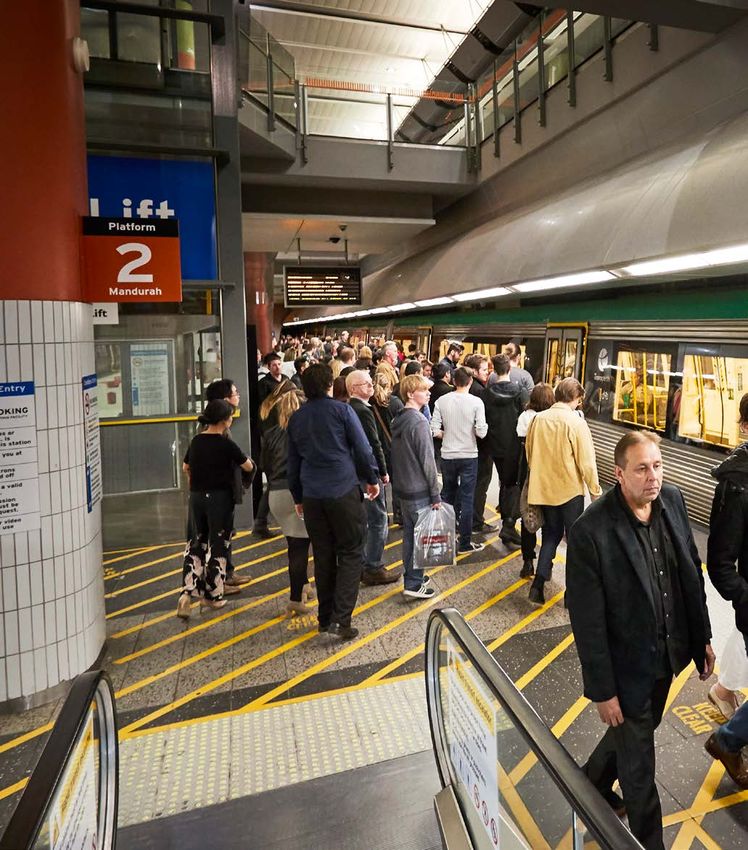
Executive Summary
                                                                                                    A growing public
                                                                                                   transport network
    Perth’s population is expected to grow from 2.02 million in 2017 to 3.5 million
                                                                                                  requires more
    by 2050 (Perth and Peel @3.5 million). The METRONET program is integral to
    managing this growth and meeting the city’s future needs. The first stage will add
                                                                                                 trains to
    approximately 72km of passenger rail and up to 18 new stations with extensions to           service it.
    Yanchep, Byford and Bellevue and new lines to Forrestfield, Ellenbrook and linking
    Thornlie and Cockburn.

    Delivering the passenger rail extensions before major urban growth provides an
    important framework around which bus, cycle and pedestrian links can be developed.
    The new stations will provide residents with high-quality public transport access
    to other parts of the city, while creating the focus for progressive mixed-use
    development that will provide amenity, services and employment for growing local
    communities.

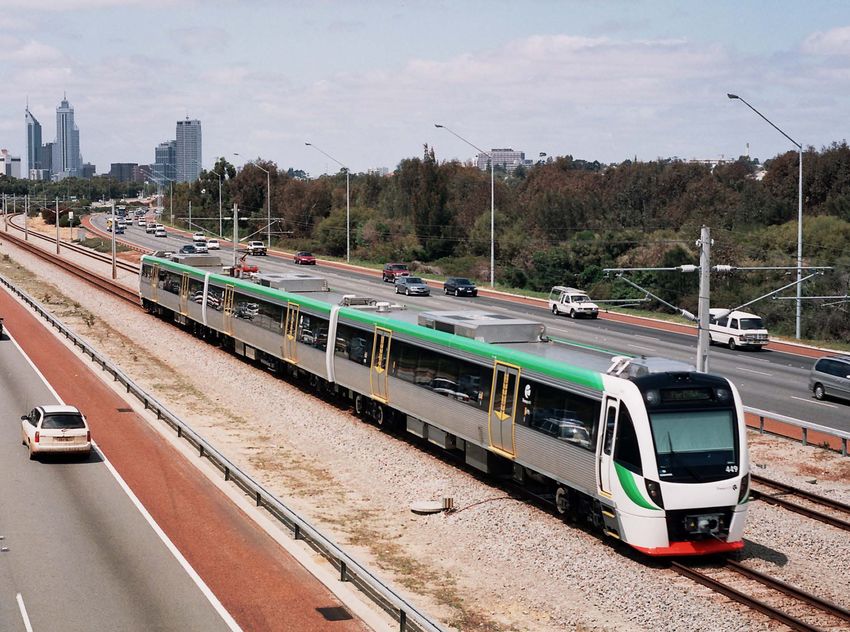
    A growing public transport network requires more trains to service it.

    The $1.6 billion Railcar Program (including supporting infrastructure) will deliver 102
    new railcars (17 six-car sets) needed for METRONET projects and 144 railcars (24
    six-car sets) to replace the ageing A-series trains, which were the first electric trains
    on the Transperth network. It will also seek to replace the five diesel railcars that
    operate the twice-daily Australind service between Perth and Bunbury.

    Delivery of the first 17 METRONET trains, known as the C-series, is due to begin in
    2021, with the remaining 24 trains expected to enter service between 2023 and 2028.

    Not only will this project allow increased capacity on the rail network to cater for
    boosted passenger numbers, it will improve service efficiency and reliability, as the
    older A-series trains are retired.

    The State Government is committed to creating ongoing local jobs and this project
    plays a key role in meeting that objective. With a target of 50 per cent local content
    for the manufacturing of the new railcars, this project will stimulate development of
    a local railcar assembly facility and associated infrastructure, thereby bolstering our
    local manufacturing industry and maximising WA jobs.

2                                                                                                                      3
METRONET Overview Yanchep
Eglinton
El
le
n
Alkimos
br
oo
k
Butler
METRONET is the State Government’s vision to integrate transport and land use
planning and provide a framework to support sustainable growth in Perth over the next
n
50 to 100 years.
so
rk
ne
a
bi
Cl
am
More than just a rail infrastructure program of works, METRONET planning goes
rr
p
lu
Cu
da
Station locations
beyond the station forecourts to shape and support development of communities
on
r
te
to be confirmed
Jo
wa
within the surrounding walkable catchments.
ge
ds
Ed
or
tf
od
hi
Stage One of METRONET is proposed to deliver approximately 72km of new passenger
o
W
nw
ee
rail and up to 18 new stations which represents the single largest investment in public
Gr
k
ic
w
rd
ar
oo dfo
ge
ll
transport in Perth’s history. The Railcar Program will deliver 246 C-series railcars
an
Hi
W
g
id
d
de
il
in
gh
ld
s
r
Gu
r
nd
e
fo
es
en
db
irl
fie
vu
ou
(41 six-car trains) to cater for the expanded rail network and retirement of the aging
ild
la
cc
St
st
ss
sh
lle
al
id
Gu
Su
Ea
Ba
W
A
Be
d
M
lle
en
A-series trains.
vi
Gl
er
ed
Le
METRONET will create the opportunity to transform Perth through an expanded rail
Ba
ys
M
wa
k
network that will see urban intensification in more than 5,000 hectares of land within
el
oo
te
th
lle
fe
M
br
r
am
r
t
lif
vi
ay
ve
es
se
h
Su
walking distance of the stations, supporting delivery of the State’s metropolitan growth
er
dc
ed t
rt
la
Le es
W
Da
cI
ai
M
bi
Sh
Pe
nd
Re
M
Cl
tL
W
ld
ty
gl
l
ac
ra
en
s
fie
is
Ci
aw
strategy Perth and Peel @3.5 million:
o
t
Ea
h
en
to
st
le
n
re
st
tC
y
Ka
Pa
r
Pe
Fo
or
r
r
ra
k
rt
irp
• Forrestfield-Airport Link;
Lo
h
ka
A
Perth
c
tt
h
a
Underground
• Yanchep Rail Extension;
St
Sh
re
iu th
ow
m
et
ad er
gr
• Thornlie-Cockburn Link;
St P
ou
Elizabeth Quay
od
Cl
nd
ar
o
• Morley-Ellenbrook Line;
Sw
s
w
em
rs
an
rk
on
Bu
bo
Pa
Gr
• Byford Rail Extension;
t
ur
an
ia
e
ne
sl
or
tS
rli
• Karnup Station;
ct
tr
Ca
et
Vi
ee
Co
re
t
tt
• Midland Station relocation and Bellevue extension;
St
es
ol
ts
po
lo
Oa
e
sh
• Level crossing removal on the Armadale and Midland lines;
rk
el
Pa
Mosman Park
W
• Automatic Train Control and Railcar procurement.
s
Canning Bridge
k
en
ic
n
nw
ue
to
Victoria Street
g
Q
Ke
in
nn
m
The Forrestfield-Airport Link is well into construction and scheduled for completion in
ha
Ca
en
North Fremantle
late 2020. The Yanchep Rail Extension and Thornlie-Cockburn Link projects are in the
ck
Maddington
Be
Bull Creek
procurement phase and the remaining projects are in early planning.
Gosnells
Fremantle Thornlie
This Project Definition Plan has been prepared to document the scope and parameters Murdoch Seaforth
of the Railcar Program. It has been prepared in consultation with the Department of
Treasury and the Department of Jobs, Tourism, Science and Innovation to ensure Ranford Road Nicholson Road Kelmscott
cross-agency input and coordination. Cockburn Central Challis
Aubin Grove Sherwood
Armadale
Kwinana
Byford
Wellard
Legend
Rockingham
Stage One of METRONET Armadale, Fremantle & Midland lines METRONET Extensions
is proposed to deliver Warnbro Perth to Joondalup (1993)
Train Transfer
approximately 72km of
Clarkson Extension (2004)
Karnup Greenwood Station / Thornlie Line (2005) Bus and train transfer
new passenger rail and Perth to Mandurah (2007)
Butler Extension (2014)
Special event station
up to 18 new stations
Mandurah Train Station
which represents the
single largest investment Fig 1: Existing Transperth Train Network and proposed Stage 1 METRONET Initiatives
in public transport in
Perth’s history.
4 5
Need For Change

    Good cities grow with effective public transport. It     This strategy is a decision-making framework
    plays a vital role in creating competitive economies,    that identifies the steps needed in network
    liveable, inclusive and connected communities and        improvements and assists investment prioritisation
    reducing reliance on fossil fuels.                       by considering the implications of, and required
                                                             changes to, an holistic range of network operations,
    Perth has a modern and effective public transport
                                                             systems and infrastructure, including:
    system, however with METRONET expanding the
    network, in addition to the A-series trains reaching     •   service characteristics, including train
    their operational life of 30 years, a significant            frequencies, stopping patterns and timetables;
    increase in and modernisation of the metropolitan        •   stations and platforms, including platform
    railcar fleet is required.                                   lengths to potentially accommodate longer train
                                                                 sets on the Midland, Fremantle and Armadale/
    A growing city                                               Thornlie lines, multi-model access requirements
                                                                 including feeder buses, walking, cycling and park
    Perth’s population has seen unprecedented growth             and ride, ticketing equipment, and the availability
    over the past 20 years. At a time when the economy           and capacity of lifts, escalators, and stairs at key
    has experienced several transformations, the city’s          stations; and
    population has continued to grow. In fact, even          •   potential changes required to traction power and
    in the period between 2013 and 2016, Perth’s rate            capacity, overhead line equipment, signalling and
    of population growth (approximately 0.9 per cent             train control systems.
    per year) is high when compared to the rate of
    population growth across other major OECD cities.
                                                             Supporting local employment
    This population growth is anticipated to continue
                                                             METRONET will create significant job opportunities
    into the future. The State Government’s growth
                                                             in planning, designing and building new transport
    strategy, Perth and Peel @3.5 million, considers
                                                             infrastructure and ongoing development around each
    what the city will look like in the future and how
                                                             new station.
    to maintain and protect the unique lifestyle and
    environment while accommodating projected                A key objective of the Railcar Program is to maximise
    growth. It estimates that the greater metropolitan       opportunities for WA jobs, apprenticeships and small
    population will increase from approximately 2            to medium enterprise participation. The project has
    million in 2017 to 2.9 million by 2031 and 3.5 million   been identified as a “project of strategic importance
    by 2050.                                                 to the State” under the WA Jobs Act 2017, invoking
                                                             additional requirements in relation to local job
    The METRONET program aligns with the strategic
                                                             creation.
    objectives of Perth and Peel @3.5 million and its
    supporting transport strategy. Each METRONET             As such, a key consideration of the tender process
    project supports the shaping of Perth into a             will be the supplier’s commitment to meet the target
    more compact urban form while accommodating              of 50 per cent local content for the manufacturing
    projected population growth.                             of new railcars in WA and maximise the involvement
                                                             of local small to medium businesses in both the
    Supporting a growing transport                           railcars’ manufacture and maintenance.
    network                                                  METRONET is also an opportunity to achieve
                                                             greater decentralisation of employment in Perth
    Procuring the new C-series railcars is the first of
                                                             by supporting Strategic Employment Centres
    a series of network development and expansion
                                                             throughout the metropolitan region. This is
    elements necessary to meet anticipated growth
    in public transport demand. It is part of a new
                                                             aimed at allowing residents to live closer to                Perth’s population
    framework for railway planning adopted by the
                                                             work, encourage new and growing industries,
                                                             all the while enjoying the same coastal
                                                                                                                         has seen
                                                                                                                         unprecedented
    Public Transport Authority (PTA), called the Route
                                                             lifestyle.
    Utilisation Strategy (RUS).
                                                                                                                        growth over the
                                                                                                                        past 20 years.
6                                                                                                                                              7
Supporting economic growth
                                                                                                                                                                      Perth is
    Perth is strategically located as a key international gateway between Australia, Asia and the Indian Ocean
    rim. Sharing the same time zone with major international cities, including Shanghai, Singapore and Hong
                                                                                                                                                                     strategically
    Kong, gives Perth a distinct advantage over Australia’s other capital cities, making it an attractive option for
    foreign investors.
                                                                                                                                                                    located as a key
    Perth contributed approximately $150 billion to the national economy in 2015/16 corresponding to an
                                                                                                                                                                   international
    average GDP per capita of approximately $72,000, roughly four per cent above the Australian average.
    Between 1991 and 2016, Western Australia increased its Gross State Product, outperforming Australia as a
                                                                                                                                                                  gateway
    whole in 20 out of these 26 years.

    During the mining investment boom from 2002 to 2012, the economy grew significantly through investment
    activity flowing from outside the State and has seen a corresponding peak in population growth and demand
    for housing. At the same time there was significant investment in promoting the city’s profile for retaining a
    globally qualified workforce, highlighted by significant investment in the city centre.

    3500000
    3250000
                                                                                Mining Production                          Forecast
    3000000                                                                                                               (2017-2036)
                                                                                 Phase (2013-2016)
    2750000                                                                                                              CAGR: 1.8%
                                                                                      CAGR: 0.9%
    2500000                                                Mining Investment
    2250000                                                 Phase (2002-2012)
    2000000
                    Pre Mining Investment
                                                                CAGR: 2.6%
                       Phase (1991-2001)
    1750000
                            CAGR: 1.5%
    1500000
    1250000
    1000000
     750000
     500000
     250000
            0
                 1988
                 1989
                 1990
                 1991
                 1992
                 1993
                 1994
                 1995
                 1996
                 1997
                 1998

                 2000
                 1999

                 2001
                 2002
                 2003
                 2004
                 2005
                 2006

                2020*
                2021*
                2022*
                2023*
                2024*
                2025*
                2026*
                2027*
                2028*
                2029*
                2030*
                2031*
                2032*
                2033*
                2034*
                2035*
                 2007
                 2008
                 2009
                 2010
                 2011
                 2012
                 2013
                 2014
                 2015
                 2016
                2017*
                2018*
                2019*

                2036*
    Fig 2: Perth’s Population and forecasted population, 1988-2026
    Source: Historical data (1988-2016) Australian Bureau of Statistics (2017) Cat No 3218.0 – Regional Population Growth, Australia, 2016, accessed 1/12/2017;
    Forecasts*: Based on the assumption that Perth will reach 3.5 million people by 2050 as outlined in Perth and Peel@3.5million

    To remain one of Australia’s leading capital cities and a key international gateway, Perth must continue to
    invest in essential infrastructure that supports continued economic productivity and attracts international
    investment.

8                                                                                                                                                                                      9
The need in numbers
                                                                                                                       A growing
     METRONET will increase rail patronage through extensions to Yanchep, Byford and Bellevue and                      public transport
                                                                                                                      network requires
     new lines to Forrestfield, Ellenbrook and linking Thornlie and Cockburn.

     In addition, Perth’s passenger rail network experienced significant patronage growth between
     2004 and 2012 from around 19.5 million to 40.5 million initial boardings per year1. This was                     more trains to
     generally achieved on the back of strong economic growth and activity, and the Mandurah Line
     opening in December 2007. Since 2012 this growth has flattened somewhat due to a number                         service it.
     of factors, not least of which relates to a general slowdown in population and economic growth.
     However, it is anticipated that local economic activity will return to trend in the medium-term
     and associated patronage demand return to pre-2012 trend growth.

     Public transport rail patronage forecasting is derived from the Department of Transport’s STEM,
     which models demand based on forecast assumptions for population, population distribution,
     land use, employment distribution and self-sufficiency, and the existing and planned transport
     network, including the rail network.

     The PTA supplements STEM data with further analysis involving SmartRider origin-destination
     data to establish the peak travel demand forecasts necessary to inform decisions on planned
     operational capacity.

     The PTA continually monitors patronage levels and reviews forecast demand. Using this data the
     PTA plans train timetable frequency to meet passenger numbers, focussing on the peak periods.
     These peak period frequency numbers helped inform the required railcar investment program.

                                                                         Peak train frequency on busiest
                                                                            sections of the network

                                                                       current        proposed          proposed
      Line Group
                                                                        2017            2021              2031

      Yanchep/Butler – Mandurah                                          6                 6                 6

      Whitfords – Cockburn                                               6                 6                 6

      Clarkson – Rockingham                                               -                -                 6

      Mandurah / Joondalup total trains per hour                         12                12                18

      Armadale                                                           8                 8                 8

      Thornlie                                                           4                 4                 4

      Armadale / Thornlie total trains per hour                          12                12                12

      Midland – Fremantle                                                6                 6                 6

      Forrestfield                                                        -                6                 6

      Midland group total trains per hour                                6                 12                18

     Note: Annual frequencies will be subject to a number of key factors, including availability of railcars and
     staging of platform extensions.
     Operations on the proposed Morley-Ellenbrook Line are subject to ongoing planning investigations and will
     not be finalised until the business case and Project Definition Plan are completed. This may influence future
     operational outcomes for the Midland Line group.
     In addition to train frequency, further capacity improvements are intended on the Joondalup/Mandurah
     lines with the introduction of the higher capacity six-car C-series trains, and on the Midland/Fremantle and
     Armadale/Thornlie lines through the future progressive introduction of six-car operations using three-car
     B-series trains.

     Table 1: Forecast peak period frequency 2021 and 2031

10      1
            Initial boardings do not include line-to-line transfers.                                                                      11
Railcar Strategy
                                                                                                                       More doors per railcar
                                                                                                                      combined with a more
     In order to service an expanded rail network,           c) Time taken to load and unload passengers at          efficient interior layout
     maintain a reliable, frequent and high-capacity
     service on all lines and ensure alignment with
                                                                stations (known as “dwell time”) through the
                                                                two doors has implications on operational
                                                                                                                     will reduce dwell times
     longer-term requirements for operating the rail            planning.                                           and increase capacity.
     network, priority and investment must be given to:
                                                             Increasing operational capacity on the Mandurah
     1.   Procuring new generation six-car trains in         and Joondalup lines means more frequent
          line with current international design trends      railcars carrying more people during peak times.
          capable of meeting projected demand growth         Current frequencies on these lines are five-minute
          and METRONET projects; and                         intervals, or 12 trains per hour. This needs to be
     2.   Transition the Armadale, Fremantle and             improved to around three-minute intervals, or
          Midland lines to three and six-car operation       18 trains per hour, to meet forecast demand out
          using the existing B-series fleet (currently       to 2031 and beyond. To help achieve this, dwell
          operating on the Joondalup and Mandurah            time needs to be reduced. More doors per railcar,
          lines) to meet projected demand growth and         combined with a more efficient interior layout, will
          METRONET projects on these lines.                  reduce dwell times and increase capacity.

     This will provide the opportunity to maintain           The C-series railcar will be a modern design with
     efficient operations and transition the broader         higher passenger capacity than both the A-series
     rail network to a higher-frequency and higher-          and B-series trains. Each set will be six cars long
     capacity railway over time and optimise                 with a driver cab at either end and additional
     investment.                                             doors on each side of the railcar to improve
                                                             passenger flow and reduce station dwell times.
     Next generation of railcars                             The new C-series trains will also provide an
     The $1.6 billion Railcar Program will deliver 41        opportunity to cascade existing B-series sets
     six-car trains over an eight-year period from 2021.     onto the Armadale, Fremantle and Midland
     This new generation of trains will support the rail     lines, modernising operations on these lines and
     network’s expansion through METRONET.                   enabling future transition to a six-car railway
                                                             to meet with projected operational demands.
     Railcar availability and capacity is intrinsic to the   Making optimum use of the B-series trains
     capacity of public transport services, particularly     will ensure the effective ongoing use of these
     during peak periods.                                    strategic assets, while significantly increasing the
     The design of the current B-series three-car            long-term capacity of these lines.
     sets, which introduced a 60 per cent increase
     in planned capacity over the A-series trains, is a
     generation old. The original A-series two-car sets
     are two generations old. With only two doors per
     railcar per side, and space at either end of the
     two and three-car sets taken up by driver cabs
     in the A and B-series’ design, both have inherent
     constraints that limit capacity for demand growth,
     such as:

     a) Overall passenger capacity of a four or six-car
        set is reduced by the two cabs where the two
        shorter sets are coupled;
     b) Passengers congregate and crowd at the two
        doors, not always moving along the carriage,
        making for less efficient loading and reduced
        capacity; and

12                                                                                                                                               13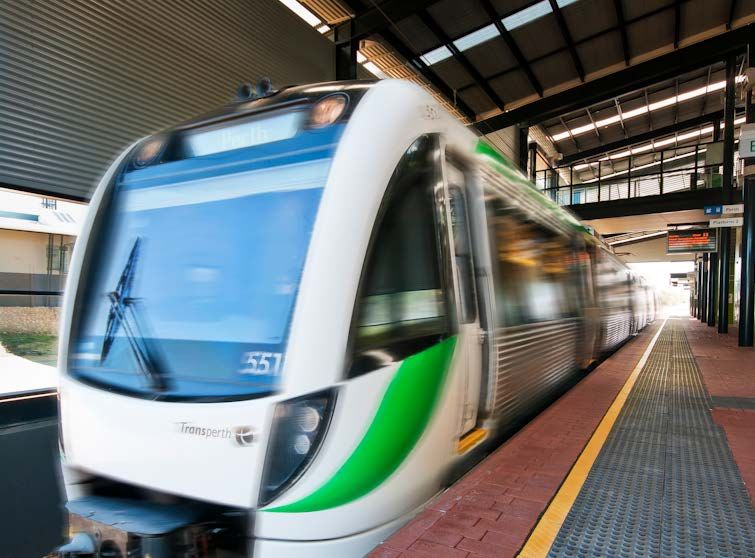
The C-series railcar features Supporting the investment Maintenance activities for the new railcars will
consist of:
Procuring a new generation of railcar and
supporting local industry requires consideration a) routine preventative maintenance and inspection;
of the availability of local manufacturing and b) fault finding and rectification;
commissioning facilities as well as a review of c) component overhaul and replacement;
existing maintenance and stabling facilities d) provision and stocking of replacement parts;
– the infrastructure required to support the e) cleaning of railcars and maintenance of cleaning
manufacture and whole-of-life maintenance of equipment; and
the new railcars. f) maintenance of repair depot buildings and
facilities.
Should the preferred supplier not have facilities
within WA to assemble the new railcars, an Minor upgrade works will be required at
assembly and commissioning facility will be the Nowergup train maintenance facility to
Beaconsfield Ave
built at Bellevue which will subsequently be accommodate maintenance on the new six-car
Mathoura St
Ferguson St
The C-series trains. In addition, a train maintenance facility will
Cope St
Bushby St
used for maintenance and overhaul of the PTA’s
trains. be built at Bellevue to maintain the B-series trains
Six railcar set cascaded from the Joondalup and Mandurah lines
The maintenance of the new railcars will form onto the Fremantle, Armadale and Midland lines (and
Around 144 metres long part of the C-series contract. currently maintained at Nowergup).
Additional doors on each railcar
Regenerative braking
Fig 4: Railcar Program - Proposed Assembly Facility, Bellevue
Additional doors on 35-year service life
each railcar
Victoria Pde
Fig 3: C-series railcar Great
Easter
n Hwy
Ave
ens
Loton
r Gard
y Ave
The C-series will be a modern electric multiple unit The new railcar’s general specification includes:
N
(EMU) train configured with six railcars as a fixed
Lefro
Lando
• improved energy efficiency, and greater reliability
set. Its primary advantages over the A and B-series
rdens
than the existing A and B-series;
Ave
design are:
• contemporary appearance to differentiate them
ns
irn Ga
y St
Railcar
Moore
Elgee
Garde
a) Additional doors on each side and improved from the existing trains; Rd Commissioning
Bushb
interior layout to: • preferred body construction in stainless steel; Facility
Robinson Rd
Fairba
i. improve passenger flow; • additional doors per railcar per side for easy access, Cow Futu
ie Ct re Be
Cowan
ii. increase passenger distribution across the shorter passenger loading and unloading times, and llevu
t e De
pot
Lloyd S
railcars; and better passenger distribution along the train;
iii. minimise dwell time at stations. • maintaining as a minimum the current levels of
b) It will provide for a higher passenger capacity safety and security;
• universal access to meet Disability Standards for Railcar
with a planned 25 per cent increase on a
Accessible Public Transport; Assembly
B-series six-car set and a 100 per cent increase Facility
on a A-series four-car set. • air-conditioning and ventilation for passenger Bellevue
comfort;
At 144 metres long with AC traction motors, the • modern passenger information (audio, visual, and
C-series will be the same length as two coupled digital) and counting systems to provide passenger
wy
B-series sets, making the new railcars compatible loading data; Raso
eH
n Pd
e
with the PTA infrastructure while incorporating • regenerative braking to reduce energy
Ro
Midland Station
Midland
the latest international performance standards consumption; and
Victoria St Clay
Midvale Hele
expected of modern rail services. • designed to accommodate future upgrades to
toGnreat Eastern H n St
the network, signalling, train control, and radio St ighway
St
It is expected the railcars will travel approximately
Lloyd
communication systems.
t
St
220,000 kilometres a year, have the ability to travel
C
Bellevue
Kep
The railcars will be procured through a design/build/
ard
at speeds of at least 130kph and have a service life
of 35 years. maintain form of contract agreement.
Edw
Midland Station - Assembly Facility: 2.5km
14 15
Delivering The Project                                                                                                    YEARS         RAILCARS             TYPE      QUANTITY

                                                                                                                             1990 - 1992     43 X 2 CAR          A-SERIES     86
     The Railcar Project will help meet demand as                Without this project, there will not be enough
     METRONET expands the rail network and Perth grows           trains to maintain the current level of peak and
     towards a population of 2.7 million in 2031, providing a    off peak services on the future network expanded
     solid foundation for further system improvement and         by METRONET projects. This means without
     expansion beyond.                                           additional trains, passenger rail services across

     The project’s objectives are to:
                                                                 the network would be required to be pared back
                                                                                                                                1999          5 X 2 CAR          A-SERIES     10
                                                                 either through a reduction in service frequency or
     a) maintain an efficient and effective public transport     a reduction in train capacity (ie. using three-car
        service that ensures access to and connectivity          trains instead of six).
        between, key activity, education and employment
        centres;
                                                                 Project benefits
     b) maintain a safe, reliable, accessible and modern
        train service that meets public expectations;            The key anticipated benefits of this project are:          2004 - 2006      31 X 3 CAR          B-SERIES     93
     c) enable increased use of trains to reduce road
                                                                 a) meeting new passenger demand due to
        congestion and environmental impacts;
                                                                    METRONET extensions;
     d) maximise opportunities for WA jobs, apprenticeships
                                                                 b) replacing the existing A-series train which
        and small/medium enterprise (SME) participation;
     e) optimise the State’s investment in public transport         are coming close to – and in many cases,
        and future-proof the network for future transport           exceeding – their operational life of 30 years
        demands; and                                                with new higher-capacity trains;
                                                                                                                            2009 - 2010      15 X 3 CAR          B-SERIES     45
     f) deliver value for money for Western Australia.           c) meeting the forecast growth in passenger
                                                                    demand; and in doing so
     The project scope and delivery will include:                d) reducing the number of passengers unable to
                                                                    board trains during peak periods;
     1.   design, manufacture and commissioning of 246 new
                                                                 e) achieving a higher passenger loading capacity
          C-series railcars (or 41 six-car trains);
     2.   maintenance of the 246 railcars for a 30-year term;       on the new C-series railcars, as compared to
     3.   design and manufacture of diesel railcars to replace      the existing A-series and B-series railcars; and         2013 - 2016     22 X 3 CAR          B-SERIES     66
          the existing “Australind” fleet which provides the     f) achieving target levels of satisfaction with
          Perth-Bunbury service;                                    passenger rail services as an efficient, effective,
     4.   maintenance support for the new diesel railcars;          and timely alternative to private vehicle travel.
     5.   construction of a railcar assembly and
          commissioning facility, if required;                   The PTA uses key performance indicators to
     6.   construction of a maintenance and stabling facility    monitor its achievement against the Government’s
          in Bellevue;                                           strategic goal of results based service delivery. The       2018 - 2019     10 X 3 CAR          B-SERIES     30
     7.   modifications to the existing Nowergup train           KPIs relevant to the anticipated benefits of this
          maintenance facility to accommodate the new            Project are passenger numbers and satisfaction.
          C-series trains;                                       These KPIs are monitored and reported on a daily
     8.   operation and maintenance of the railcar               basis and will be used to monitor the realisation of
          maintenance facilities for this fleet; and             these benefits, primarily through data generated
     9.   options to allow for additional new railcars if and    by the Transperth ticketing system and annual
          when required, beyond the current scope.               Passenger Satisfaction Monitor.
                                                                                                                             2021 - 2023     17 X 6 CAR          C-SERIES     102

                                                                                                                            2023 - 2028      24 X 6 CAR          C-SERIES    144

                                                                                                                          Fig 5: Railcar investment since 1990

16                                                                                                                                                                                     17
Budget and cashflow
The approved
The approved budget for the project is $1.6 billion.
The preferred railcar procurement option is for State-funded procurement, with payment made
budget for
when each railcar set is accepted by the PTA as ready for passenger train operations. the project is
Period 18/19 19/20 20/21 21/22 Outyears
$1.6 billion.
Railcars $28.9 $30.5 $71.4 $195.4 $1,239.9
Table 2: Capital budget cashflow ($million)
Timeline
Lead time for procurement of new railcars is significant.
The PTA’s previous experience in railcar procurement has resulted in a plan being prepared to
identify key milestones with respect to this railcar program.
The timeline below is based on the following lead time factors:
1. Procurement to secure a suitable delivery contract;
2. Design, manufacture, static commissioning, and delivery;
3. Testing/commissioning and driver training; and
4. Staged delivery to suit METRONET extension requirements and A-series retirement.
First set
First set
commences
Procurement arrives for
passenger
testing
service
MAY 2018 – MID 2019 – MID 2021 – 2021 -
MID 2021 LATE 2021
MID 2019 LATE 2028 LATE 2021 2028
Staged
Manufacture Driver delivery
and training (average 5 sets
delivery per year)
Fig 6: Key Project Stage Timeline
18 19Governance
The Railcar Program will be delivered by
the PTA.
The PTA has appropriate and relevant experience
in the procurement and delivery of new trains,
particularly and most recently with the current
order of B-series railcars.
The form of procurement proposed for the
project is similar to that used successfully for the
B-series railcar procurement. The finance and
cost provisions of the contract will differ to reflect
the preferred payment model which incentivises
on-time delivery to a budget cost by linking
payment to key delivery milestones. Structured
appropriately, this payment method has the
potential to enhance the risk allocation, improve
price certainty, and introduce added financial
rigour to the procurement.
Governance of the project will follow State
Government and PTA procurement and strategic
project management framework guidelines.
20 21MORE INFORMATION info@metronet.wa.gov.au 9326 3666 metronet.wa.gov.au
You can also read


