What's next for the commodities stories? - First State Investments
←
→
Page content transcription
If your browser does not render page correctly, please read the page content below
What’s next for the commodities stories?

                        Joanne Warner     Head of Global Resources
                        Renzo Casarotto   Senior Portfolio Manager
What’s happened in resources
Is it over for resources?

Source: http://www.theaustralian.com.au/business/markets/stocks-down-as-resources-companies-tumble/story-e6frg916-1226623371985
http://money.msn.com/investing/commodities-crash-recession-looms
http://finance.ninemsn.com.au/newsbusiness/motley/8644071/asx-climbs-but-leaves-resources-behind
http://www.news.com.au/business/markets/resources-companies-to-weigh-on-asx/story-e6frfm30-1226620458088
http://economictimes.indiatimes.com/markets/commodities/copper-weakens-in-futures-trade-global-cues-subdued-demand/articleshow/19675158.cms   3

Is this the GFC - Mark II?

MSCI sector performance YTD (Rebased to 100)

  120

  110

  100

    90

    80

    70
     Dec 12        Jan 13         Jan 13    Feb 13      Feb 13     Mar 13   Mar 13     Apr 13       Apr 13      May 13   May 13
                         MSCI World Index                                    MSCI World Energy Sector Index
                         MSCI World Metals & Mining Index                    MSCI World Health Care Index
                         MSCI World Financials Index                         MSCI World Information Technology Index
                         MSCI World Consumer Discretionary Index             MSCI World Consumer Staples Index
                         MSCI World Telecom Service Sector Index

Source: Bloomberg. 31 May 2013.                                                                                                   4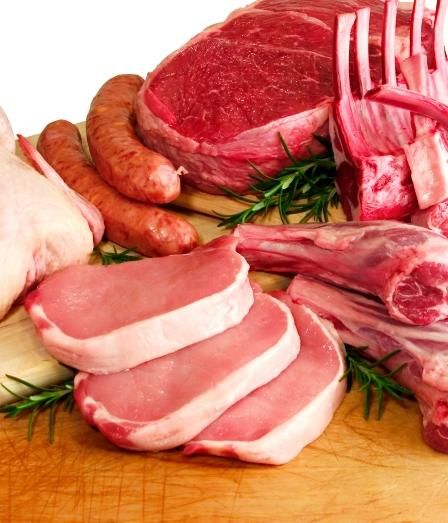
Chinese GDP - it’s the absolute numbers that count

   GDP growth year              on year
              13.0%
              12.0%
              11.0%
              10.0%
               9.0%
               8.0%
               7.0%
               6.0%
               5.0%
                      1998 1999 2000 2001 2002 2003 2004 2005 2006 2007 2008 2009 2010 2011 2012

   GDP ($US              bn)
              9,000
              8,000
              7,000
              6,000
      $Usbn

              5,000
              4,000
              3,000
              2,000
              1,000
                  -
                        1998 1999 2000 2001 2002 2003 2004 2005 2006 2007 2008 2009 2010 2011 2012

Source: Bloomberg , May 2013 & CLSA April 2013.                                                      5
It’s the absolute numbers that count

              Chinese oil consumption (million bbls/d)
                           12.0
                           11.0
                           10.0
                            9.0
                            8.0
                            7.0
                            6.0
                              Jan-07   Jan-08    Jan-09       Jan-10         Jan-11     Jan-12     Jan-13

              Crude oil processed + net product imports
                              m bpd
                           11.0
                           10.0                                                                                Note the continual
                            9.0                                                                                increase y-y,
                            8.0                                                                                despite a notional
                            7.0                                                                                slow down in
                            6.0                                                                                growth rates
                            5.0
                                Jan Feb    Mar   Apr    May   Jun      Jul    Aug     Sep   Oct    Nov   Dec
                                          2009         2010     2011            2012        2013

Source: CLSA April 2013.                                                                                                            6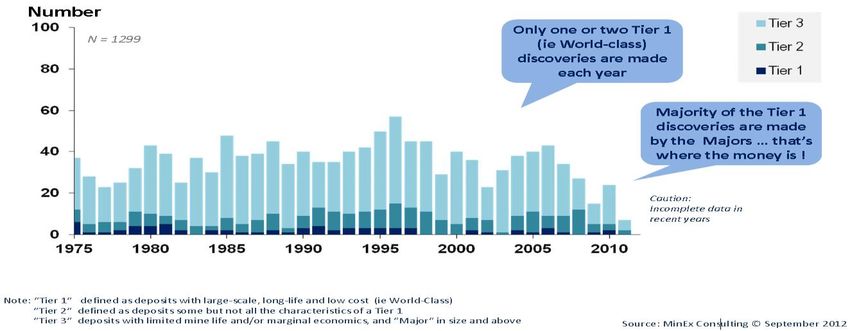
China’s current five year plan requires more infrastructure

    80

    70

    60

    50

    40

    30

    20

    10

      0
                      Railway                             Highway               Oil/Gas Pipe          Airports
                  (thousand km)                     (ten of thousand km)       (thousand km)        (number of)
                                               Previous five year plan     Current five year plan

Source: Standard Chartered Resources, April 2013.                                                                 7
US Housing construction ‘upside’

                                                                                                    Listed for sale homes per house hold
 • Housing inventories at long term lows
 • Vacancy rates nearing 2003 levels
 • Construction jobs steady but hours up

          Homeowner vacancy rate (%)                                                                US rental vacancy rate (%)

Source: Bloomberg; US Census Bureau; Stifel Nicolaus report, financial institutions, housing economics
market commentary. As at December 19, 2012.                                                                                                8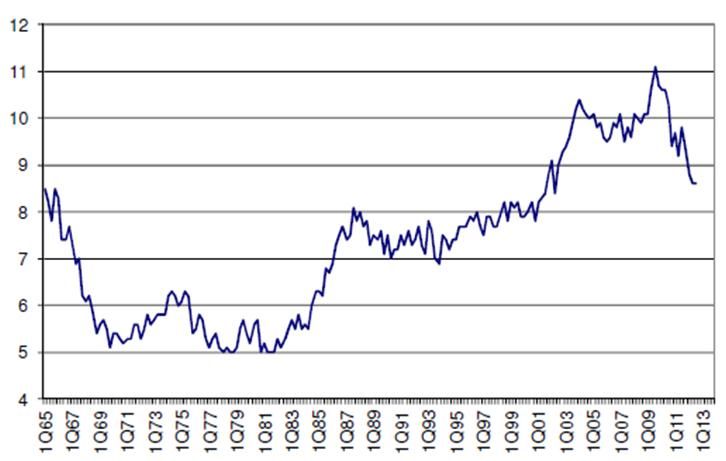
A progressive dividend policy, scope to increase
BHP - Annual dividend (1990-2012), 11.4% CAGR BHP - Dividend Payout Ratio (1990-2012)
1.4
3.0
1.2
2.5
1.0
2.0
0.8
0.6 1.5
0.4 1.0
0.2 0.5
0.0 0.0
Jan-90
Jan-92
Jan-94
Jan-96
Jan-98
Jan-00
Jan-02
Jan-04
Jan-06
Jan-08
Jan-10
Jan-12
Jan-90
Jan-92
Jan-94
Jan-96
Jan-98
Jan-00
Jan-02
Jan-04
Jan-06
Jan-08
Jan-10
Jan-12
DPS average payout
RIO - Annual dividend (1996-2012), 7.4% CAGR RIO - Dividend Payout Ratio (1996-2012)
2.5 0.7
2.0 0.6
0.5
1.5 0.4
1.0 0.3
0.2
0.5 0.1
0.0 0
Apr-00
Apr-05
Apr-10
Oct-97
Feb-01
Oct-02
Feb-06
Oct-07
Feb-11
Oct-12
Dec-96
Aug-98
Dec-01
Aug-03
Dec-06
Aug-08
Dec-11
Jun-99
Jun-04
Jun-09
Oct-98
Apr-04
Oct-09
May-03
Jul-01
Mar-05
Feb-06
Jul-12
Dec-96
Nov-97
Sep-99
Aug-00
Dec-07
Nov-08
Sep-10
Aug-11
Jun-02
Jan-07
ave payout payout
DPS
Prior to 1995, Rio was operating as two independent businesses CRA and RTZ.
In 2005 a $1.45ps ($1.15ps adjusted) special dividend was declared.
In 2009 no interim dividend was declared.
Source; Goldman Sachs. 9
Where to from here?
Iron ore – is the world too bearish?

                                                                             China's Iron Ore Imports vs Spot Iron Ore Price

                                                                        80                                                        250
                                                                        70
                                                                                                                                  200
                                                                        60

                                                       Million tonnes

                                                                                                                                        US$/tonne
                                                                        50                                                        150
                                                                        40
                                                                        30                                                        100

                                                                        20
                                                                                                                                  50
                                                                        10
                                                                         0                                        0
                                                                          2006 2007 2008 2009 2010 2011 2012 2013
                                                                             China's Iron Ore Imports, Mt      Spot Iron Ore, US$/t (RHS)

Source: Morgan Stanley Research, CRU. February 2013.                    Source: Source: Bloomberg. May 2013.                                        11
Iron ore – why would BHP and RIO talk the price down?
140
120
cash cost of production (US$/t fob)
100
China
80
Australia
Brazil
60
40
20
0
0 300 600 900 1,200 1,500 1,800
cumulative production (Mt)
2013 cash cost curve 50th centile 75th centile
90th centile spot (fines) 3-Jun-13 LT (incentive) price
Source: Metalytics. June 2013. 12So where’s the supply?
Exploration spend by commodity: 1998-2012 Number of deposits found – by quality
Copper: most of the metal in a handful of deposits
• Exploration spend has increased dramatically
• But why do we keep looking for gold??
• Success rates have declined
• More than half of deposits are being found in high-
political risk locations
• On average it takes 12-18 years from discovery to
first production
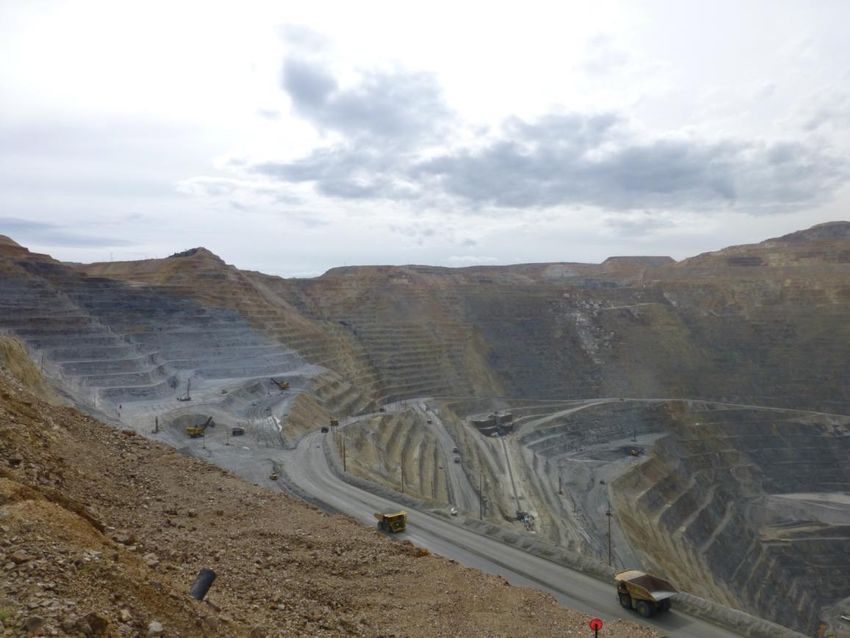
Source: MinEx Consulting – presentation to BBY Resources Conference, November 2012. 13Copper: Bingham Canyon – before the pit-wall failure… Source: First State Investment, as at September 2012. 14
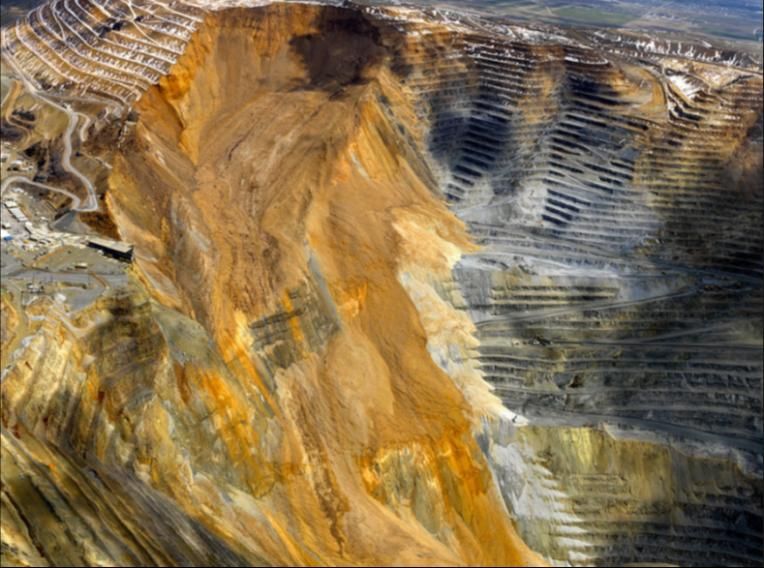
And after the pit wall failure April 10, 2013

 • Still unknown how much production will be
   lost, but early estimates are 100-150kt Cu
     • NB: pre-incident estimates were for an
       over-supply in the Cu market of ~150kt
       this year

 • Cost? Equipment alone could be $100m

Source: First State Investments. Rio Tinto May 2013.   15
Valuations – but is it cheap?
Mining vs MSCI World (P/E 2013 F1)
P/E FY1
30.0
HSBC Mining MSCI World (MXWO Index)
25.0
20.0
15.0
10.0
5.0
0.0
Jun-02 Jun-03 Jun-04 Jun-05 Jun-06 Jun-07 Jun-08 Jun-09 Jun-10 Jun-11 Jun-12
Historical and Mean P/E FY1 Ratio (Index 1/Index 2) Relative Valuation
1.80 Mean +/- 1.96 Standard Deviations
1.60
1.40
1.20
1.00
0.80
0.60
0.40
0.20
0.00
Jun-02 Jun-03 Jun-04 Jun-05 Jun-06 Jun-07 Jun-08 Jun-09 Jun-10 Jun-11 Jun-12
Source: Nomura Custom Products Group – data to 31 May 2013. 16Valuations – but is it cheap?
Energy vs MSCI World (P/E 2013 F1)
P/E FY1
25.0
MSCI Energy (MXWO0EN Index) MSCI World (MXWO Index)
20.0
15.0
10.0
5.0
0.0
Jun-02 Jun-03 Jun-04 Jun-05 Jun-06 Jun-07 Jun-08 Jun-09 Jun-10 Jun-11 Jun-12
Historical and Mean P/E FY1 Ratio (Index 1/Index 2) Relative Valuation
Mean +/- 1.96 Standard Deviations
1.20
1.00
0.80
0.60
0.40
0.20
0.00
Jun-02 Jun-03 Jun-04 Jun-05 Jun-06 Jun-07 Jun-08 Jun-09 Jun-10 Jun-11 Jun-12
Source: Nomura Custom Products Group – data to 31 May 2013. 17The resources cycle
Phase 1
Demand rises
Inventories decline
Supply response lags = higher prices
Governments attempt to raise taxes
Phase 2
Phase 3 High prices encourage new projects
Supply response = demand
Supply is curtailed
Inventories rise = prices fall
Demand normalises
Capital expenditure is reduced
Producers benefit from recovery
18What about agribusiness?
Agriculture: hitting the headlines

http://news.nationalgeographic.com/news/2013/13/130412-drought-great-plains-weather-environment/
http://www.reuters.com/article/2012/11/29/usa-drought-idUSL1E8MT5H220121129
http://www.merredinmercury.com.au/story/1433588/hundreds-of-people-gather-for-agriculture-crisis-meeting-in-merredin/?cs=1478
http://www.treehugger.com/climate-change/us-drought-going-get-worse.html
http://www.agriculture.com/news/crops/wld-crop-wear-wries-abound_2-ar31103                                                      20
Strong EM wages growth to drive consumption

                                    China wages growth                                                                   Brazil wages growth

                                                                                     Brazil average monthly wage (BRL)
                           45,000

                           40,000
China average wage (RMB)

                           35,000

                           30,000

                           25,000

                           20,000

                           15,000

                           10,000

                            5,000

                               0

Source: Ministry of Human Resources and Social Security, Nomura, data to Dec 2011.
Bloomberg, CEIC, Nomura, data to 31 May 2012.                                                                                                  21
Growing demand for soft commodities
GROWING POPULATION & CONVERGING DIETS INCREASED MEAT
URBANISATION
6.5bn to 9bn by 2050
+ 40kg to 52kg by 2050
= CONSUMPTION
260mt to 470mt by 2050
70% urbanised by 2050
Source: FAO How to feed the world in 2050 report, UN World Urbanization Prospects 2009 revision. 22What does this mean for grain demand?
In 2050 Mt meat required Conversion ratio Mt grain required
Chicken 274 2 549
Beef 70 7 487
Pork 101 4 402
Sheep 25 4 102
TOTAL 470 1,540
mt
+85%
Source: OECD-FAO Agricultural Outlook 2012-2021, FAO how to feed the world in 2050
report. Consumption split is 58% chicken, 15% beef, 22% pork, 5% sheep. 23Middle East, Africa, and Asia consumption rising rapidly World’s Food Surpluses and Deficits Net trade (Million tonnes) Source: The Economist, * Cereals, rice, meals, oils and fed equivalent of meat. 24
The global food challenge…

The task:
 • Increase global food production by 70%
 • Which requires $US80 billion per annum of investment

The challenges:
 • Resource constraints (land/water)
 • Environmental pressures
 • Natural disasters
 • Productivity growth declining

Source: FAO, How to feed the world 2050 Report.           25
How can investors participate in the solution?

The solution:                           Better agronomic practises
• Increased yields                      Balanced fertilizer application
• Increased crop intensity              Improvements in innovation (i.e. seeds)
• Increased animal intensity            Infrastructure investment
• Added acreage                         Farm economies of scale

                                                                              26
Agricultural value chain
Inputs Farming/ Handling/ Food Supermarkets/
Processors
plantation traders companies consumers
• seed • farm • storage • oilseed • Nestle • Tesco
• crushing • Kellogg’s • Walmart
• fertiliser • forestry/pulp handling
• • biofuels • Kraft • Sainsbury
• machinery • palm oil trading
• marketing • livestock • Waitrose
• paper
Upstream Midstream Downstream
• We invest in the upstream and midstream portion of the agricultural value chain
• Upstream resource owners tend to make the highest margins
Reference to specific securities (if any) is included for the purpose of illustration only and should not be
construed as a recommendation to buy or sell the same. 27Agricultural equity returns versus
agricultural commodity price returns
300
250
+125%
200
150
100
-18%
50
0
DAXglobal Agribusiness Index Rogers International Commodity Agriculture Index
Source: First State Investments, Bloomberg, USD from June 2005 to 30 April 2013;
standardised as at 30 June 2005. 28Valuations – agriculture Agriculture vs MSCI World (P/E 2013 F1) Source: Nomura Custom Products Group – data to 30 April 2013. 29
Valuations – forestry
Forestry vs MSCI World (P/E 2013 F1)

  40.0

  35.0

  30.0

  25.0

  20.0

  15.0

  10.0
                            S&P Timber                MSCI World (MXWO Index)
   5.0

   0.0
     Jun-02        Jun-03       Jun-04       Jun-05           Jun-06   Jun-07   Jun-08   Jun-09   Jun-10   Jun-11   Jun-12

 2.50

 2.00

 1.50

 1.00

 0.50

 0.00
    Jun-02        Jun-03       Jun-04        Jun-05       Jun-06       Jun-07   Jun-08   Jun-09   Jun-10   Jun-11   Jun-12

Source: Nomura Custom Products Group – data to 31 May 2013.                                                                  30
Returns and volatility by equity sector
18.0%
16.0%
14.0% China
Soft Commodity Equities
12.0%
Consumer Staples Emerging Markets
10.0% Global Mining
Return
8.0% Health Care Materials
Consumer Discr
Energy
6.0% Industrials
Utilities Telecom Svc
4.0% Global Bond Information Tech
2.0% Global Equities
0.0% Financials
-2.0%
5.0% 10.0% 15.0% 20.0% 25.0% 30.0% 35.0%
Risk
Global Mining Soft Commodity Equities Global Equities Energy
Materials Industrials Consumer Discr Consumer Staples
Health Care Financials Information Tech Telecom Svc
Utilities Emerging Markets China Global Bond
Source: Data used from 01 January 2005 to 31 March 2013 in USD. Rimes; First State Investments; Global Mining: HSBC Global Mining Accumulation Index; Energy: MSCI
AC World Energy Index; Materials: MSCI AC World Materials Index; Global Equities: MSCI AC World Index; Global Agribusiness: 75% DAX Global Agribusiness Index & 25%
S&P Global Forestry & Timber Index; Emerging Markets: MSCI Emerging Markets Index. Past performance is no indication of future performance.
31Look beyond the headlines Source: http://www.theaustralian.com.au/business/markets/stocks-down-as-resources-companies-tumble/story-e6frg916-1226623371985 http://money.msn.com/investing/commodities-crash-recession-looms http://finance.ninemsn.com.au/newsbusiness/motley/8644071/asx-climbs-but-leaves-resources-behind http://www.news.com.au/business/markets/resources-companies-to-weigh-on-asx/story-e6frfm30-1226620458088 32 http://economictimes.indiatimes.com/markets/commodities/copper-weakens-in-futures-trade-global-cues-subdued-demand/articleshow/19675158.cms
Disclaimer

Before making any investment decision based upon the information contained in this presentation, you should assess your own
position, and if appropriate, seek the assistance of a financial adviser.
The information contained within this presentation has been obtained from sources that First State Investments (“FSI”) believes to
be reliable and accurate at the time of issue but no representation or warranty, expressed or implied, is made as to the fairness,
accuracy, completeness or correctness of the information. Neither FSI, nor any of its associates, nor any director, officer or
employee accepts any liability whatsoever for any loss arising directly or indirectly from any use of this. It does not constitute
investment advice and should not be used as the basis of any investment decision, nor should it be treated as a recommendation for
any investment. The information in this presentation may not be reproduced in whole or in part without the prior consent of FSI.
This document shall only be used and/or received in accordance with the applicable laws in the relevant jurisdiction.
Please remember that the value of investments and the income from them may go down as well as up and that you may not get
back your original investment. Investment involves risks, past performance is not necessarily a guide to future performance. Due to
the nature of the funds, short-term volatility is expected and your investment should be viewed as long-term. Please refer to the
offering documents for details, including the risk factors.
Reference to specific securities (if any) is included for the purpose of illustration only and should not be construed as a
recommendation to buy or sell the same. All securities mentioned herein may or may not form part of the holdings of First State
Investments’ portfolios at a certain point in time, and the holdings may change over time.
This presentation is issued by First State Investments (Hong Kong) Limited and has not been reviewed by the Securities and
Futures Commission in Hong Kong.

                                                                                                                                  33
You can also read


