WHIRDEC Budapest - December 2018 - Universal Equine Life Number
←
→
Page content transcription
If your browser does not render page correctly, please read the page content below
WHIRDEC
Budapest – December 2018
AGENDA

1 - 2016/679 GENERAL DATA PROTECTION REGULATION
    •    Breeders and owners information

2 - ZOOTECHNICAL REGULATION
    •    Zootechnical certificates
    •    Expansion of activities of a stud book
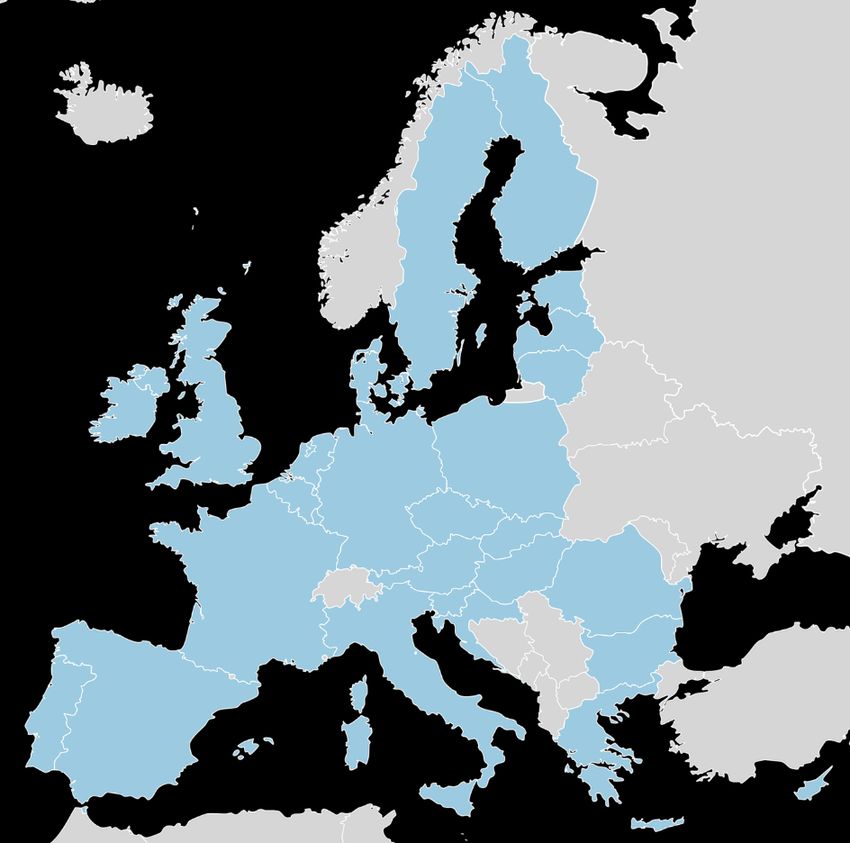
    •    List of Non-EU countries

3 - ANIMAL HEALTH LAW - UPDATES
    •    Identification rules and passports (UELN, microchip, description of markings)
    •    Passport Issuing Bodies
    •    Movements, Establishments where horses are habitually kept
    •    Human consumption status

4 – BREXIT
5 - CENTRAL DATABASES DATA EXCHANGES
    •    Pilot project – Horselink

6 – COVERING CERTIFICATES AND ADVANCES IN BREEDING TECHNOLOGY

7 - @SIRE : IFCE MOBILE TOOL TO DESCRIBE MARKINGS                              2
2016/679 GENERAL DATA PROTECTION REGULATION

Main Principles                                       Purpose
                                                      - Explicit
                                                     - Legitimate

                    Rights of the
                    data subject                                                   Transparency
                       - Access                                                    - Information
                    -Rectification                                               - Communication
                   - Data portability
                                                  High protection
                                                  of personal data

                                     Consent
                                                                        Security
                                        - Free
                                                                     - Confidential
                                     - Specific
                                                                     - Responsibility
                                     - Informed

Personnal data : « Any information relating to an identified or identifiable natural
                 person » Art 4
Processing : « Any operation which is performed on personal data »                                 3
2016/679 GENERAL DATA PROTECTION REGULATION

Lawfulness of processing

                          Legal purpose :
                          •   Management of the sanitary and zootechnic central database of Equidae
                          •   Material holding of the genealogical books
                          •   Passport issuing

                          Data dissemination                               Data display

                    Data for other purpose
 Data for legal purpose                                                    Consent necessary
                              Consent necessary

                                                                           •   Breeders information
                                                                           •   Owners information?

      Allowed partners*                           Not allowed people

                                                                                                      4
     * : Breed societies, French State, Socio professional bodies
2016/679 GENERAL DATA PROTECTION REGULATION
Results of the Survey

15 answers (Belgian Sport Horse and Federal Public Service - Belgium, American
Warmblood Registry and US National Federation USA, Oldenburger Pferdezuchtverband
e.V. - Germany, LGANCEE- Spain, Lithuanian Horse Breed. Asso. - Lithuania, Agriculture
department of Agriculture Data centre - Lettonia, MIPAAF - Italy, Polish Horse Breeders
Association - Polland, Ifce - France, Norvegian Horse Society - Norway, DANSK VARMBLOD
- Denmark, Swiss Animal Tracing Database - Switzerland, NRPS - Netherlands)

Breeders information
• 14/15 record breeders information
• 7/15 display breeders information on their website
• 6/15 on other documents
• 3/15 breeders information are available for everybody and 4/15 only for allowed
   people (Breed society, vets, federal authority…)
• 3/15 take into account the breeder’s consent

Owners information
• 14/15 record owners information
• 8/15 display owners information on their website
• 3/15 on other documents
• 4/15 owners information are available for everybody and 4/15 only
for allowed people (Breed society, vets, federal authority…)
• 2/15 take into account the owner’s consent                                    5
2016/679 GENERAL DATA PROTECTION REGULATION

Results of the Survey

Focus on central databases ‘ answers (Federal Public Service - Belgium, Agriculture
department of Agriculture Data centre - Lettonia, MIPAAF - Italy,, Ifce SIRE - France, Swiss
Animal Tracing Database - Switzerland)

Breeders information
• Switerland doesn’t record breeders information
• Italy and Belgium don’t display breeders information on their website
• Lettonia displays breeders information only for allowed people
• France displays breeders information to everybody (except no consent)

Owners information
• Belgium doesn’t record owners information
• France, Lettonia and Swizterland diplay this information on their website
• Swizterland to everybody that have an account, Lettonia and France only to allowed
  people.

                                                                                     6
ZOOTECHNICAL REGULATION (N°2016/1012)

Apply since 1st november 2018

Topics : Zootechnical and genealogical rules for trade of breeding animals and
their germinal products, and for their entry into the Union ; Rules for the
recognition of breed organisations ; Rules for the performance of official
controls…

2 delegated acts in application of this Regulation and Animal Health Law

    • N°2017/716 : the model forms to be used for the information to be
      included in the lists of recognised breed societies and breeding
      operations
    • N°2017/1940 : the content and format of zootechnical certificates
      issued for purebred breeding animals of the equine species contained
      in a single lifetime identification document for equidae

                                                                           7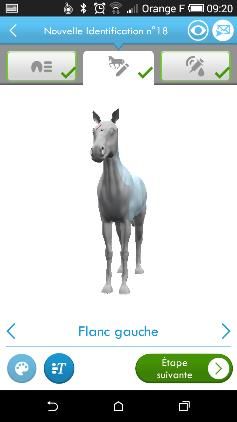
ZOOTECHNICAL REGULATION

Zootechnical certificates

Questions - Polish Horse Breeders Association
1. Are MS going to include zootechnical cerificates into passport? If yes: How they are
going to deal with horses with old passports? Will it be printed in every passport? When
will it be filled in?
2. Is zootechnical certificate needed for horse (with old passport) not entered to any
studbook yet?
3. Are MS going to charge a fee for issuing a zootechnical certificate? How much?
4. When will zootechnical certificate be issued? Only for owner request? Or maybe for
every horse after entering to studbook?
5. Is there any possibility that other breeders association than original can issue a
zootechnical certificate?
6. Who should issue a zootechnical certificate for semen of imported stallion?
7. How long is zootechnical certificate valid? How and when will it be updated?
8. Is it obligatory to mention a list of approved zootechnical certificate issuing body in a
breeding program?

                                                                                     8
ZOOTECHNICAL REGULATION (N°2016/1012)
Zootechnical certificates
1) Breeding Animals
- Parts I and II contained in the single lifetime identification document :
- Part I contains information from the Section I and V of the identification
document
- Part II shall refer to the results of performance testing or genetic evaluation
France uses the derogation :
The results of performance testing or genetic evaluation are publicly available on Ifce's
website. The identification document of equine animals refers to the website where
those results can be accessed.
2) Germinal products
France will start by using different existing documents, and will consider to create a
specific document :
• A copy of te donnor’s identification document
• The health certificate
9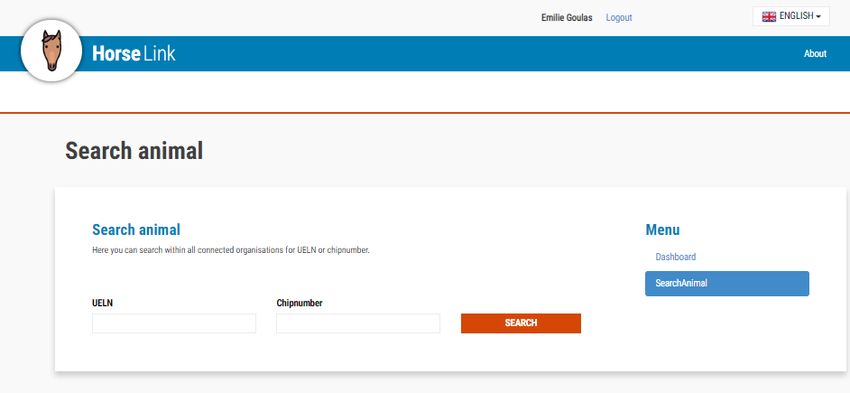
ZOOTECHNICAL REGULATION (N°2016/1012) - EXPANSION OF ACTIVITIES

Procedure to issue identification documents for equidaes born in other Member
State

                          Breed organisation

                      Request            Notification

                         Competent authority

                    Notification   Explicit or tacit approval
                                      Motivated refusal

                          Competent authority
                            (other Member State)

                                                                         10
ZOOTECHNICAL REGULATION (N°2016/1012) – LIST OF NON EU COUNTRIES
Aims : To register a breeding animal that have entered the EU - or the
offspring produced from germinal products that have entered the EU - into
the main section of a breeding book or breeding register, the breeding
body of the third country should be listed on the specific EU website.
A breeding body may only be included in the list upon the request of an
official service of the third country, and if documentation received
demonstrates that the breeding body meets the requirements (breeding
programm, controlled by an official service, no discrimination…)
Issues :
• Official services of some countries are not well known
• The request has to be done for one country and one breed. What about
international studbooks like Thoroughbreds and Arabs?
• What are the controls made by the Commission?
• For the moment, only a few breeding bodies are on this list, how do we
manage if it’s not ?
11ANIMAL HEALTH LAW (n°2016/429)
Presentation of K. Kroon
12ANIMAL HEALTH LAW (n°2016/429)- IDENTIFICATION
Issues :
• Identification requirements and information in the identification document
Registered Narrative description Microchip (or alternative method) Name
equidae and outline diagram Unique code Colour
Non Narrative description Microchip Name
registred and outline diagram Unique code Colour
equidae
Narrative description Alternative method Name
and outline diagram Unique code Colour
• A single conventional ear tag in case of meat production animals (definition ?)
• New Model of identification document unknown for the moment ; minimal changes
requested by SB
• Time limit for identification ? Rules for the exclusion from the food chain ?
• No mention of UELN ; confusion between Unique code and Identification code
• New obligation to register in the central database the establishments where equine
animals are habitually kept = for more than 30 days, with exceptions
13ANIMAL HEALTH LAW (n°2016/429)- PIO
Passport Issuing Body
• The identification document shall be issued by the competent
authority, or a passport issuing body to which this responsibility has
been delegated
• The competent authority shall issue for each animal of the equine
species born on an establishment situated in its territory of
competence an identification document
• If the horse is registred in a studbook, the breeding society is in charge
of issuing zootechnical certificates, that should be part of the
identification document
Issues
• How will breeding society work with competent authorities to isssue a
single identification document with the zootechnical certificate ?
• Will an issuing body in one Member State still be allowed to issue an
identification document for an equine animal which is born in another
Member State (but in the area which is covered by the geographical
extension of a breeding program) ?
14ANIMAL HEALTH LAW (n°2016/429)- PIO
Questions – Hannoveraner Verband
The Hannoveraner Verband has expanded its services to many other
European countries and there are many open questions f.i. about the status
of the horses born outside of Germany – are they German or French,
Swedish etc. – and the registration process – which transponders to use,
registration with the National databases, fees, etc.
15ANIMAL HEALTH LAW (n°2016/429)- MOVEMENTS
Delegated regulation - Movements
• Possibility for Member States to conclude agreements on the
equidae’s movement without health certificate :
Maintenance of the specific situation for competitive equine
animals (racing & sport)
• Health certificate for 30 days instead of 10 days in some cases
16VETERINARY MEDICINES REGULATION
Regulation on veterinary medicinal products (under discussion)
The regulation applies from 21/04/2021
• An equine animal is declared as not being intended for slaughter for
human consumption in the single lifetime identification document.
• Necessary delegated acts on format and content of informations
contained in the identification document when the animal is not
intended for slaughter for human consumption
• Implemented act to come with the list of essential substance
• Vigilance on :
• Regulation on veterinary medicinal products + delegated acts
• Delegated regulation in application of the Animal Health Law and
Animal Breeding Regulation
17BREXIT
Before march 2019
• Movement of horses mostly detailed in Council Directive 2009/156/EC and
Commission Implementing Regulation (EU) 2015/262
• 2 Documents required :
• ID document
• Intra Community Trade Animal Health Certificate (ITAHC) or veterinary
attestation
• Tripartite Agreement (TPA) certain types of horse
• UK and Ireland, only an ID document
• UK and France, an ID document and commercial document (DOCOM),
along with an entry on the TRACES system
After march 2019 if no deal
• UK treated as a ‘third country’
• ID document and Export Health Certificate (EHC) with a vet inspection
• Border Inspection Post (BIP)
• Tripartite agreement no longer valid
Questions – 826 Group of Passport Issuers (GB)
How to assist the UK Passport Issuers in a smooth Brexit?
18CENTRAL DATABASES DATA EXCHANGES
The example of SIRE
Passport
Passport
19CENTRAL DATABASES DATA EXCHANGES
Pilot Project developed by Delta Horses
Organisations who initiated the project
- Netherlands, Studbooks working with Delta Horses
- Luxembourg Government and Luxembourg Studbooks
- France, Ifce
Spain would like to join the project
Context
• Replace the Hub project, web based tool developed by Delta Horse pilot
project
• Data exchanges between central databases and studbooks NO DATA STORED
• Access rights by organism and type of data
• Access to horse data with a microchip number or a UELN
→ If the horse is registred in many databases, the information from each database is
displayed
20CENTRAL DATABASES DATA EXCHANGES
Pilot Project developed by Delta Horses
4 Features
- Search for a horse
- Get data from a horse
- Dashboard of incoming and outgoing requests
- Management of access rights (Outcoming and incoming Organisations)
Available horse’s information
• Name, Sex
• Date of birth, Date of death
• Human consumption status
• Passport issuing body : Y/N
• Pedigree
Demo
21CENTRAL DATABASES DATA EXCHANGES
Pilot Project developed by Delta Horses
Organism A
How It works?
Organism A API
Organism B
Organism B API
Horselink API
Organism C
Organism B API
22CENTRAL DATABASES DATA EXCHANGES
Pilot Project developed by Delta Horses
Perspectives
• Pilot project until Whirdec meeting 2019
• Anyone who wants to join the project only need to develop webservices to
plug on Horselink Interface
• Primarily used for data exchange between National Data Bases and for I&R
issues
• First phase of the pilot -> only providing data on the interface
• Real data exchange can be done in a later phase
• Proposed yearly costs for using HL after the pilot period : € 2.750 per annum
23CENTRAL DATABASES DATA EXCHANGES
Pilot Project developed by Delta Horses
If you want to join the project, contact us :
whirdec@ifce.fr or Emilie.goulas@ifce.fr
max.becherer@hetnet.nl
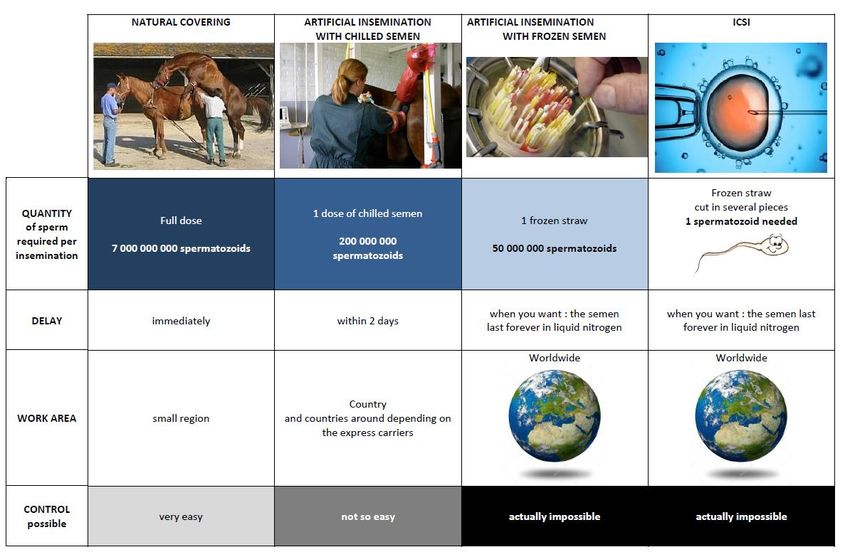
24COVERING CERTIFICATES AND ADVANCES IN BREEDING TECHNOLOGY
• A single dose of frozen multiple pregnancies.
• Difficulties to trace foals registered and whether coverings have been paid for
25COVERING CERTIFICATES AND ADVANCES IN BREEDING TECHNOLOGY
WBFSH working group – First meeting June 2018
4 main aspects :
• Harmonised sales contracts
• Central database (covering, dose sold, newly registered foals…)
• A universal WBFSH covering certificate
• Mandatory DNA testing by all WBFSH Studbooks
Meeting EU Commission August 2018
• EU legislation designed to ensure semen traded free of disease not for reproductive
techniques
• EU legislation requires that foals have a verified pedigree at registration (DNA
verification or by covering certificate not mandatory anymore).
Conclusion : Work on contract between the seller and the buyer, stipulating strict
conditions of use of the semen sold.
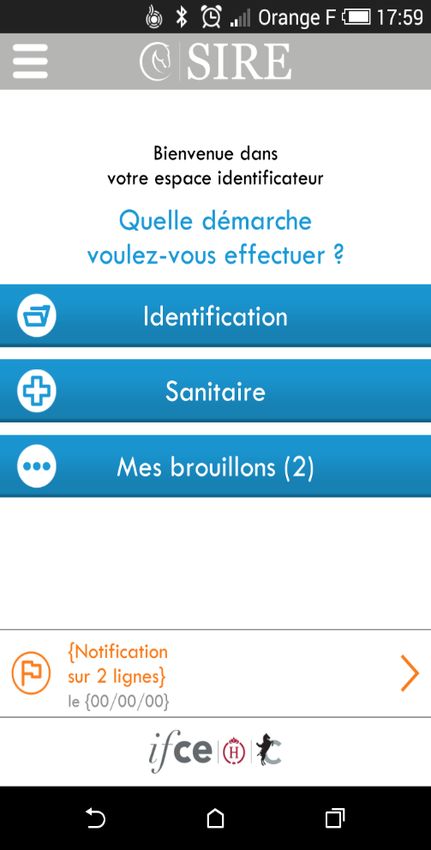
26@SIRE : IFCE MOBILE TOOL TO DESCRIBE MARKINGS
Used by vets and civil servant agent of IFCE
In production
Only for foals at the beginning since nov 2018
• on line / off line mode • Horse 3D
• Bluetooth connected to microchip reader • Improved drawing features
• Bar code reader • Dictation of narrative description 27
• Samples needed for filiation analysisSUMMARY - MINUTES OF THE WHIRDEC MEETING
Theme Action
Zootechnical Request the Commission to have the minutes of the meeting of the 30th November and ask the
regulation headquater of Animal Breeding regulation to have more information on the zootechnical
certificate for semen (model and who is allowed to issue it).
Model of SLID (Single Member states wish no change in the model of document from 2016
Lifetime
Identification
Document)
List of non EU Request the commission to have more information on the procedures for the listing of non EU
Countries Countries
AHL issues • No narrative description and outline diagram in the SLID for non registered equidae
identified by a microchip
• Less mandatory information in the SLID
• Time limit for identification and rules for the exclusion from the food chain
• No mention of UELN
• The identification document shall be issued by the competent authority (or a passport issuing
body to which this responsibility has been delegated) of the country of birth, the
zootechnical certificate by the breeding society
Next Whirdec The whirdec meeting will probably take place in Paris mid 2019 as the 2019 WBFSH General
meeting Assembly will be held in Tryon (USA).
28You can also read


