Updates from the CNPD - How COVID-19 shaped our work in 2020 Data Privacy Day 2021
←
→
Page content transcription
If your browser does not render page correctly, please read the page content below

Updates from the CNPD
How COVID-19 shaped our work in 2020

Data Privacy Day 2021
                                       Marc Lemmer, Commissoner
Luxembourg
28 janvier 2021
GDPR: a question of
(legally enforced) change management

      self-confidence                      sustainable change

    initial                doubting and
    excitement             tiredness

             2018:                          ?
2016:
             GDPR came     2019     ?     2021
GDPR vote
             into effect          2020                          2
Agenda

 1. The CNPD: a new set-up
 2. COVID-19 crisis: main issues observed, main activites deployed
 3. CNPD’s contributions at national, European and International
    level
 4. Conclusion
The CNPD

           4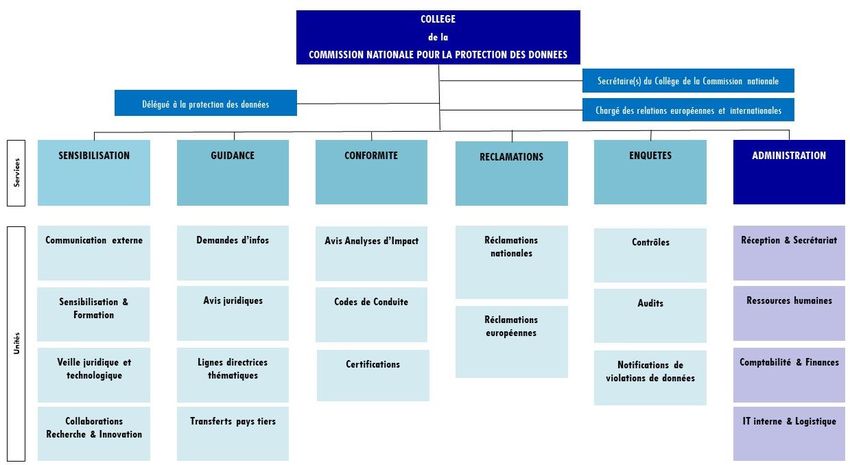
CNPD’s missions and activities:
informing-guiding-controling-enforcing
Legal missions (EU law, LU law)
European cooperation (one-stop-shop mechanism)
Interrelated
Feedback loops
Knowledge value chain
Continuous improvement
Awareness Voluntary
rising Guidance conformity Complaints Inspections Sanctions
tools
5
A new organisational set up since 01/2020

                                            6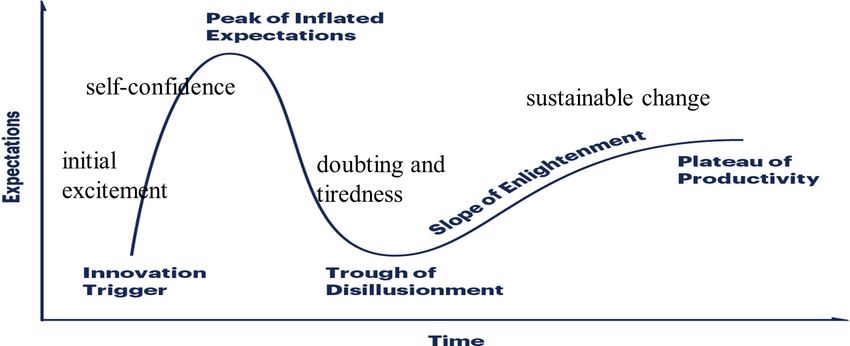
New internal regulations
Adopted in 2020
– Internal rules of procedure (ROI)
– Investigation procedure
– Complaint filing procedure
– Modalities and fees for authorizations
(accreditation of certification bodies,…)
7
Guidance, Awareness rising, Technology &
Legal watch
National and European thematic Training workshops (Data Protection
guidance Laboratory, « DaPro Lab »)
– International data transfers in the context – Data transfer between health professionals
of Brexit – Data protection impact assessments (DPIA)
– Electoral campaigns – Data processing for scientific, historical and
– Mobile video surveillance cameras statistical research
("dashcams") – Data processing in the finance and
– PSD2 and GDPR insurance sector
– Connected vehicles Technology and legal watch on
– Certification innovation topics
– Data Protection by Design and by – Fintech, blockchain, COVID-19,
Default homeworking, biometrics
– Targeting of social media users
8
New developments:
voluntary GDPR conformity tools
Certification
– GDPR-CARPA certification scheme (GDPR-Certified
Assurance Report based on Processing Activities)
– Criteria for the accreditation of Certification bodies
– CNPD is lead-rapporteur at the EDPB
• Development of procedures for the adoption of accreditations
criteria of certification bodies
• Adoption of certification criteria
• Adoption of EU-level data protection seals
Codes of conduct
Preliminary consultations on DPIA 9
An increased activity (2018-2020)
Information requests Complaints
700
1200
600
1000
500
800
400
600
300
400
200
200
0 100
0
2007 2008 2009 2010 2011 2012 2013 2014 2015 2016 2017 2018 2019 2020
Databreach notifications Databreach notifications
905 notifications (since 25 May 2018)
– 379 in 2020 (against 354 in 2019)
– 29 notifications per month
– Main cause: human error (65% of cases)
10Resources
2014 1 665 000€
Budget
2015 1 714 000€
2016 2 050 922€
2017 2 386 729€
2018 4 415 419€
2019 5 442 416€
2020 6 691 563€
0.00 1 000 000.00 2 000 000.00 3 000 000.00 4 000 000.00 5 000 000.00 6 000 000.00 7 000 000.00
Human resources
2016 19
2017 25
2018 38
2019 43
2020 48
0 10 20 30 40 50 60
11CNPD work programme 2020/2022
Selected Priorities
– Targeted communication and awareness raising
– “DaProLab” workshops
– Development of an internal technology and legal watch
– Continued development of legal opinions and thematic guidelines
– Management of information requests
– International data transfer
– Promotion of voluntary GDPR conformity tools (certification, codes of conducts, data
protection impact assessments)
– Improvement of complaint management at national and European level
– Conducting Europe-wide investigations
– Planning and conducting of audit and inspection campaigns
– Handling of data breach notifications
– Launching the activities of the “Formation restreinte” taking sanction decisions
12Agenda
1. The CNPD: a new set-up
2. COVID-19 crisis: main issues observed, main activities deployed
3. CNPD’s contributions at national, European and International
level
4. Conclusion2. COVID-19: Main issues observed
Challenges in internal CNPD organisation:
– Business continuity:
• quick switch into 100% homeworking (March 15)
• 50/50 A&B groups (July-Aug)
• Back to 100% office work (Sept-Oct)
• 50/50 A&B groups (Nov-Dec)
• 100% homework (Dec)
• 50/50 A&B groups (Nov-Dec)
New offices
– Installation project on hold (March-April)
– Moving in (July1)
Team
– Recruiting, welcoming and integration of new collaborators
142. COVID-19: Main issues observed
Requests of information related to processing of sensitive personal data
– Travel histories
– Passenger lists
– Attendance lists
– Body temperature checks
– Face mask pictures
– People counting
– COVID-19 testing results
– Contact tracing
– Quarantine tracking
– Vaccination campaign tracing
152. COVID-19: Main activities deployed
Answering information requests collected through CNPD hotline
– Body T° checks, vidéo conferencing platforms, home working, home
schooling, …
Guidance given
– Recommendations issued
– Opinions on successive Covid-19 laws
Awareness rising and communication
– Frequent updates of website
On site inspection campaign
European cooperation and international collaboration (EDPB, GPA)
16Agenda
1. The CNPD: a new set-up
2. COVID-19 crisis: main issues observed, main activites deployed
3. CNPD’s contributions at national, European and International
level
4. Conclusion3.1. Contact Tracing App
CNPD contributions
– EDPB task force, EU toolbox, EC recommendation
– Research Luxembourg TF, governmental expert group
183.2. Opinions on “COVID laws”
Avis de la CNPD relatif au projet de loi n°7738 modifiant la loi modifiée du 17 juillet 2020 portant introduction d'une
série de mesures de lutte contre la pandémie Covid-19 du 22 décembre 2020
Avis de la CNPD relatif au projet de loi n°7635 portant introduction d'une série de mesures temporaires en matière de
sécurité et santé au travail dans le cadre de la lutte contre le COVID-19 du 30 octobre 2020
Avis de CNPD relatif aux amendements gouvernementaux au projet de loi n° 7683 modifiant la loi modifiée du 17
juillet 2020 portant introduction d’une série de mesures de lutte contre la pandémie Covid-19 du 27 octobre 2020
Avis de la CNPD relatif au projet de loi n° 7645 modifiant la loi modifiée du 17 juillet 2020 portant introduction d'une
série de mesures de lutte contre la pandémie Covid-19 du 10 septembre 2020
Avis de la CNPD relatif au projet de loi n° 7634 modifiant la loi du 17 juillet 2020 portant introduction d'une série de
mesures de lutte contre la pandémie Covid-19 du 21 juillet 2020
Avis de la CNPD relatif au projet de loi n° 7622 portant introduction d'une série de mesures de lutte contre la
pandémie Covid-19 du 08 juillet 2020
Avis complémentaire concernant le projet de loi n° 7606 portant introduction d'une série de mesures concernant les
personnes physiques dans le cadre de la lutte contre le virus SARS-CoV-2 (COVID-19) du 16 juin 2020
Avis de la CNPD relatif au projet de loi n° 7606 portant introduction d'une série de mesures concernant les personnes
physiques dans le cadre de la lutte contre le virus SARS-CoV-2 (COVID-19) du 08 juin 2020
193.3. Recommendations on personal data
processing in the context of a pandemic (1)
Context
– According to the COVID law of 17.07.2020 the Health Inspectorate is qualified to adopt
appropriate measures within the limits of its mandates and may collect data related to the
health of individuals
– Contact tracing is reserved to the Health Inspectorate
CNPD recommendations (latest update: 22 December 2020)
– Legal obligation of Employers
– can only process personal data strictly necessary for compliance with their legal obligations (labor
law, Health & Safety)
– Legal obligation of employee/civil servants
– Must ensure all that is needed to maintain the health and safety of him/herself and colleagues
– Shall not communicate other information as doctor certificate to employer without indication of
nature of illness / infection / Covid 19 symptoms.
203.3. Recommendations on personal data
processing in the context of a pandemic (2)
CNPD recommendations (latest update: 22 December 2020)
– Processing of personal data by employers
– only processing of personal data which are strictly necessary for compliance with labor law
obligations
– only processing elements linked to a medical doctor certificate.
– no compilation of files or processing related to health data linked to COVID-19 even if
– an employee informs his/her employer voluntarily that he
– has been tested positive for coronavirus
– thinks he may present symptoms of the disease
– No collection of files or body temperature data of employees or info on other diseases (comorbidity
risk)
– No carrying out of investigations or “contact tracing”
– Body T° checks at office entrance: OK if not automated and without any recording allowing
identification of an individual
– Testing and health questionnaires: OK only for health professionals within their competences
213.4. Data Protection and privacy
implications working at home office
Context
– Information flow vs. measures to ensure
confidentiality and security of processing of data
– Only process the personal data, which are strictly
necessary for compliance with legal obligations
• necessary to implement organizational measures (e.g. remote
working)
• training and information measures
• prevent professional risks.
Numerous request of information received
regarding
– Videoconferencing in the context of remote work
– Surveillance of employees at home office
223.5. Onsite inspections
Focus
– Investigation campaign on how organisations are processing personal data specifically for
COVID surveillance
• Collection of personnel data via questionnaires
• Body temperature checks
– Data subjects: employees, clients, providers, participants in events
Objective
– Check how organisations are implementing COVID recommendations and information
actions from CNPD
Methodology
– Sample of 20 organisations based in Luxembourg
– Across socioeconomic sectors,
– Small, medium large organisations
– According to internal investigation procedure
233.6. EDPB guidelines
243.7. Global Privacy Assembly
GPA Statements and Meeting Summaries on the Coronavirus Pandemic
(18/03/2020)
Compendium on best practices across GPA members countries (10/2020)
Webinar 1, July 6 2020 – “Contact Tracing & the Apple & Google solution. In
conversation with the technical specialists”
Webinar 2, July 23 2020 – “Enablers and Protectors: The Role of DPAs
Confronting COVID-19 – Contact Tracing and the Recovery Response”
GPA and CIPL Joint Webinar – ‘Data Protection Reimagined: Digital
Acceleration, New Emerging Issues and the Role of Privacy Regulators in the
COVID-19 Era.’
GPA COVID-19 Taskforce and IAPP Web Conference – ‘New Normal: Data
protection: Security, Privacy and Safety in the Workplace.’
OECD/GPA Virtual Workshop (COVID-19 series) – ‘The road to recovery:
Lessons learned and challenges ahead; Addressing the data protection and
privacy challenges raised by COVID-19’ 25Agenda
1. The CNPD: a new set-up
2. COVID-19 crisis: main issues observed, main activites deployed
3. CNPD’s contributions at national, European and International
level
4. ConclusionConclusions?
3 years after GDPR came into
force and “after” the • GDPR is not an obstacle in the fight against a pandemic
pandemic: and the development/ application of new technologies
• GDPR proved to be a guarantee for safeguarding human
– At which stage of the journey
rights in democratic states
are organisations today?
• The public and individuals have even higher expectations
– What’s their level of maturity regarding the protection of their personal data
today ? • Organisations which implemented GDPR thoroughly before
– Are there any “COVID” effects? the pandemic were able to manage data protection
Positive, negative, sustainable challenges during the crisis substantially better compared to
ones? organisations with only few effort done before
• Supervisory Authorities (SAs) were able to work in agile
and collaborative mode but need to continue to adapt and
foster collaboration at European level (guidelines, cross
border inspections, enforcement, …)
2021 ? 27Thanky you for your attention!
28You can also read


