Workforce Insights Aerospace - Training and Skills Commission - the Department for Innovation and Skills
←
→
Page content transcription
If your browser does not render page correctly, please read the page content below

Training and Skills Commission

Aerospace
Workforce
Insights
www.tasc.sa.gov.au
   @TSCommission
Workforce Insights
       has been developed to
       inform government skills
       planning and to support
       employers and individuals
       to make informed
       workforce and skill
       development decisions.

2 Training and Skills Commission
Contents

2    About Workforce Insights                        17   Skilled migration
3    Aerospace                                       18   Plans and major projects
3    Key findings                                    20     Moon to Mars - closed cycle agriculture
4    Industry outlook                                20     Capitalise on new space
4      Aerospace                                     20     Launch to accessible lower Earth orbits
4      Space sector                                  20     Machine learning and Artificial Intelligence
                                                            (AI) to exploit space derived data
7      Impact of COVID-19 on the aviation industry
                                                     20     Nova Systems establishment of a ground
8      Impact of COVID-19 on the space sector
                                                            station-as-a-service network
9    Priority qualifications
                                                     20     $2 million Earth observation satellite
10     Air and space transport
                                                     21     Solid-state ion propulsion thruster
10     Aviation technology
                                                     21     Build upon the increased connectivity of
11   Critical occupations                                   Internet of Things (IoT) devices
12     Aerospace                                     21     Defence Innovation Hub funding grants
12     Space                                         21     International Space Investment (ISI) initiative
14   Future skills needs                             21     Unmanned Aerial Systems
14     Aviation                                      21     Gulfstream G550
15     Defence aerospace industrial capabilities     22   Current workforce initiatives
                                                     25   ISC priorities

                                                                              Defence and Aerospace Industry Skills Council 1
About Workforce Insights
                           At the beginning of 2019, the South Australian government established
                           eight Industry Skills Councils (ISCs) to strengthen industry’s voice in skills
                           and workforce development, and to ensure that funding for skills and training
                           is directly aligned to industry priorities.

                           Workforce Insights brings together advice from       The information in this Workforce Insights has
                           ISCs and their networks, labour market and           been provided by ISC members who represent
                           training data and industry research to explore the   the aerospace, defence and space sectors in
                           latest trends in skills and workforce development.   particular.
                           In developing these reports, the Training and
                           Skills Commission (the Commission) has adopted       Thank you to all those who supported the
                           an industry centred approach, so you can be          development of these industry-led, sector-driven
                           sure the insights have been endorsed by industry     documents. Individually and collectively your
                           leaders.                                             contribution to the skilling and development of
                                                                                South Australia’s current and future workforce has
                           Workforce Insights has been developed to             been immense.
                           inform government skills planning and to support
                           employers and individuals to make informed           For further information,
                           workforce and skill development decisions.           tasc.sa.gov.au/workforce-insights
                           Workforce Insights will continue to evolve and be
                           updated as additional research is undertaken and
                           new information becomes available.

2 Training and Skills Commission
Aerospace
The aerospace industry can be broken down into three sub-sectors:
• Aircraft and aircraft parts manufacturing
• Civilian aircraft and component repair and maintenance
• Military aircraft repair and maintenance

The aviation industry includes aircraft manufacturing and repair services, as well as a range of
professional, scientific, and technical services for the aviation, defence and space industries. In 2019,
the aircraft manufacturing and repair services sector employed around 4000 people in South Australia.

Until recently, most of the historical growth in the space sector could be attributed to government
requirements and traditional space services such as satellite television, broadband, and
communications, with smaller contributions accruing from New Space - the high-tech equipment
manufacturing and start-up business sector.

Space is now attracting the attention of market-leading venture capital firms and start-up funds,
signifying a fundamental shift in how space is funded. With the global space economy’s present upward
growth trend now being led by the private sector, increased visibility of the potential space market will
unlock new clients for South Australian Small and Medium Enterprises (SMEs) and start-ups and activate
investment in these companies’ unique capabilities.1

Key findings
• Data analytics, Artificial Intelligence (AI)                  • There is an emerging demand for skills in:
  and machine learning skills will be needed                        – networks air and ground integration
  to support the growing space industry in
                                                                    – the use of drone technology for
  South Australia.
                                                                      professional imagery capture and
• There is a growing gap between the skills of                        exploitation
  experienced Licensed Aircraft Maintenance
                                                                    – low observable air frames
  Engineers (LAMEs) and those of newly
  qualified entrants.                                               – drone technology and digital
                                                                      transformation of aviation in response
• Two thirds of aviation employers had
                                                                      to COVID-19
  experienced skills shortages in the previous
  12 months.                                                        – engineering and advanced technologies
                                                                      for space roles and defence aerospace
                                                                    – cybersecurity.

1 | South Australia Growth State: Space Sector Strategy, South Australian Space Industry Centre, November 2020

                                                                                                          Defence and Aerospace Industry Skills Council 3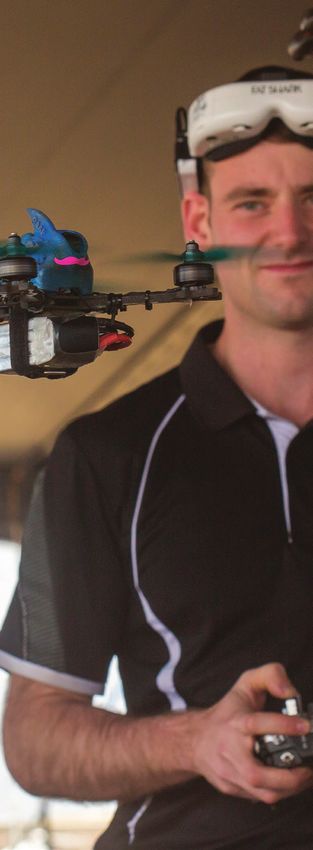
Industry outlook
                           Aerospace                                                               in the industry and recovery will be slow and
                                                                                                   dependent on an effective vaccination program.
                           IBSA Manufacturing’s Aerospace Industry Skills                          The vaccination program is underway and once
                           Forecast (2018-2022) suggests that meeting                              the aviation industry returns to normal, it will face
                           the aerospace industry’s skills requirements will                       the challenge of addressing skills shortages.
                           be challenging, as there is a need to provide                           Maintenance of skills remains a high priority for
                           maintenance services to both ageing and state-                          the industry as some current licence holders
                           of-the-art aircraft, with different technologies                        require ongoing professional training.4
                           required for each.
                                                                                                   Space sector
                           The global aviation industry is also expected
                           to grow during the coming decade, with                                  The Australian Space Agency has set an
                           pilots, maintenance staff, air traffic controllers,                     ambitious goal to triple the size of Australia’s
                           operations managers and trainers expected to be                         domestic space industry to $12 billion by 2030.
                           in high demand.2                                                        South Australia is consolidating and refining
                                                                                                   its activities to best support the state’s space
                           The Commission predicts there will be some                              industry, in collaboration with the Australian
                           160 job openings between 2018 and 2023 for                              Space Agency.
                           Aircraft Maintenance Engineers (AMEs), with
                           approximately half arising due to increased                             The establishment of the Australian Space
                           demand.3 The Commission’s projections also                              Agency in Adelaide places South Australia at
                           estimate around 180 job openings for air                                the centre of what is expected to be a growing
                           transport professionals, including pilots and air                       industry. New technologies - such as high
                           traffic controllers, between 2018 and 2023. This                        performance computing, additive manufacturing,
                           modelling was undertaken prior to COVID-19, and                         miniaturisation and AI - are creating new
                           therefore it does not account for recent changes                        opportunities in the space industry.5 Students
                           to the aviation industry, which has experienced                         learning data analytics, AI and machine learning
                           devastating impacts due to the grounding of                             skills will be needed to support the industry
                           aircraft fleets worldwide.                                              - which all points to the need for students to
                                                                                                   complete Science, Technology, Engineering and
                           The slump in airline activities from COVID-19                           Mathematics (STEM) subjects at school.
                           poses a serious safety risk as it impacts aircrew
                           recency and currency requirements. Pilots need                          The capabilities of South Australia’s space sector
                           to maintain their skills and knowledge during the                       span small satellite design and manufacture,
                           downturn. There have been extensive job losses                          including components and sensors, launch

                           2   |   The Australian Aviation Associations’ Forum, A new partnership for the aviation industry (2016), 1
                           3   |   Training and Skills Commission modelling
                           4   |   Australian Industry Standards, Aviation Industry Outlook, 2021
                           5   |   CSIRO Futures, Space: A Roadmap for unlocking future growth (2018), 5

4 Training and Skills Commission
operations, mission control and ground stations,     space value chain and enable the design, launch,
connectivity and bespoke applications, and data      and mission control of New Space capabilities.
analysis and processing.
                                                     Supporting this activity, SASIC provides a whole
Within the broader space sector - as defined         of state government focal point for local industry
by the Australian Space Agency - there are           and international companies and organisations.
numerous and diverse space focused companies         With a joint staff derived from Defence SA, the
located in South Australia, comprising:              Department for Trade and Investment, and the
                                                     Department for Innovation and Skills, SASIC
• large multinationals                               coordinates and implements industry and
• SMEs                                               workforce development through initiatives,
• an ever-growing number of start-ups that are       events, scholarships, and an incubator program.
  establishing themselves in South Australia to      Until recently, the majority of historical growth
  capitalise on the growing network of space         in space could be attributed to government
  professionals and industry initiatives             requirements, and traditional space services
• more than 10 research organisations                such as satellite television, broadband and
• industry associations                              communications, with smaller contributions
• consultancies                                      accruing from New Space - the hi-tech equipment
                                                     manufacturing and start-up business sectors.
• world class educational institutions with a
                                                     Space is now attracting the attention of market
  diverse array of departments engaged in the
                                                     leading venture capital firms and start-up funds,
  space sector.
                                                     signifying a fundamental shift in how space is
South Australia has received significant             funded. With the global space economy’s present
investment for Australia’s space industry, putting   upward growth trend now being led by the private
the state at the centre of the nation’s space        sector, increased visibility of the potential space
endeavours. The Australian Space Agency, the         market will unlock new clients for South Australian
SmartSat Cooperative Research Centre, and            SMEs and start-ups and activate investment in
the South Australian Space Industry Centre           these companies’ unique capabilities.
(SASIC) together form the centrepiece of a
vibrant, entrepreneurial ecosystem contributing
to South Australia’s thriving space economy. The
Government of South Australia is also building
a world class entrepreneurial community and
supporting infrastructure at Lot Fourteen in
Adelaide’s central business district, supporting
innovators to collaborate and grow their ideas.
Ultimately, this community will deliver the entire

                                                                                        Defence and Aerospace Industry Skills Council 5
SASIC, a cross-government group working                             Lot Fourteen supports a strong, emerging
                           with key stakeholders to grow the state’s                           ecosystem with a blend of start-up and early
                           space economy, complements numerous                                 stage companies, academia, and space orientated
                           innovative initiatives, including a space incubator                 government and defence agencies. It is home to
                           program and scholarship, internship and work                        the Australian Space Agency, the SmartSat CRC,
                           experience programs. Three South Australian                         key space organisations, and the future Mission
                           major innovation precincts facilitate dynamic                       Control and Space Discovery Centres. The
                           collaboration and new ideas, and these will                         precinct enables unprecedented opportunities for
                           be shaped to include the space sector.                              collaboration and innovation across the space and
                           The precincts include:                                              defence industries.9

                           • Technology Park Adelaide - an established and
                             thriving business hub with a broad portfolio of
                             technology, defence and training businesses
                             that are growing larger every year.6
                           • Tonsley - which brings together leading-
                             edge research and education institutions,
                             businesses and start-ups, business incubators
                             and accelerators, plus government and the
                             wider community to connect and collaborate.7
                           • Lot Fourteen - the creation of an innovation
                             precinct at Lot Fourteen is the most recent
                             initiative.8 Lot Fourteen is backed by the South
                             Australian and Australian governments and is
                             a key focus of the $551 million Adelaide City
                             Deal, providing a springboard for innovation
                             and bringing together the state’s leading
                             abilities in the space, defence, hi-tech and
                             creative industries.

                           6   |   https://techpark.sa.gov.au/
                           7   |   https://tonsley.com.au/
                           8   |   https://lotfourteen.com.au/
                           9   |   South Australia Growth State: Space Sector Strategy, South Australian Space Industry Centre, November 2020

6 Training and Skills Commission
Impact of COVID-19 on                                             Digital transformation has resulted in important
                                                                  technological advances in air traffic control
aviation industry
                                                                  operations, which will help industry to
COVID-19 has caused substantial disruption to                     safely integrate drone operations with more
the aviation industry, with significant reductions in             conventional flight operations. Control towers are
domestic and international airline operations and                 rapidly becoming more digitalised to enhance
services. The recovery path will take time, with                  service delivery and improve safety outcomes.
the international border restrictions still in place,             Air traffic controllers will need to be upskilled in
however the recovery in domestic airline activities               the operation of these new technologies.
will be faster.
                                                                  The COVID-19 pandemic has also increased the
The long term sustainability and growth of the                    demand for automation, including autonomous
aviation industry is important to the Australian                  vehicles, in the aviation sector. The use of drones
economy and the Federal Government has                            and unmanned aerial taxis for delivering products
provided some support to enable the industry to                   such as food or medical supplies will be more
maintain operations during this difficult period.                 prevalent in the future.10

One area of growth for the industry during
the COVID-19 pandemic is drone technology.
In response, the Aviation Industry Reference
Committee has proposed to develop a new
qualification to address skills and knowledge
requirements for operators across multiple
industries, including agriculture, public safety
and transport.

10 | Australian Industry Standards, Aviation Industry Outlook, 2021

                                                                                                      Defence and Aerospace Industry Skills Council 7
Impact of COVID-19 on the                                           New Space is heavily reliant on venture capital,
                                                                                               which is now focused on the survival and
                           space sector
                                                                                               success of existing investments, rather than new
                           Despite projections of positive growth, the                         investment opportunities. Those that are funded
                           COVID-19 pandemic has significantly impacted                        are faced with longer runways, reduced cashflow,
                           many large global aerospace manufacturers,                          and delayed opportunities. This may mean that
                           resulting in revenue loss, prime companies                          New Space companies that had viable business
                           reducing their exposure through redundancies                        offerings prior to COVID-19 are unable to survive
                           and curtailed production, and greater fragility                     the market downturn.
                           in the global supply chain. In the short term,
                           traditional space activities - particularly launch                  These global impacts are likely to have a
                           to geosynchronous orbit and manufacturing - is                      disproportionate impact on the growing Australian
                           likely to suffer more than New Space.                               space ecosystem and its emerging new entrants,
                                                                                               with most of the industry in this area being early
                                                                                               stage. Nevertheless, their relatively small size
                                                                                               may translate to an agility that provides greater
                                                                                               recovery options and the opportunity to re-focus
                                                                                               and adapt, the very essence of anti-fragility.11

                           11 | ‘Anti-fragility’ as coined by Nicholas Taleb is an idealised condition whereby a system not only withstands shocks but returns
                               stronger. Antifragile: Things That Gain from Disorder

8 Training and Skills Commission
Priority qualifications
Course code Qualification Industry
Certificate III in Aviation (Ground Operations and
AVI30319 Aviation
Service)
AVI30119 Certificate III in Aviation (Aerodrome Operations) Aviation
Certificate III in Aviation (Flight Operations Cargo
AVI20119 Aviation
Services)
Certificate III in Engineering - Production Systems -
MEM30119 Aerospace
System Engineer
Diploma of Instrumentation and Control
UEE51020 Engineering - Instrument Landing System (ILS) Aerospace
Engineers
MEM30505 Certificate III in Engineering - Technical (Release 2) Aerospace
Diploma of Engineering Technology - Refrigeration
UEE51120 Aerospace
and Air Conditioning
*Diploma of Aviation Maintenance Management
MEA50318 Aerospace
(Avionics)
MEA60418 *Advanced Diploma of Aeronautical Engineering Aerospace
MEA60518 *Advanced Diploma of Avionic Engineering Aerospace
22460VIC *Diploma of Applied Technologies Aerospace
*Pending MEA Aeroskills Training Package review - alignment of Vocational Education and
Training (VET) qualifications with aerospace licensing regulations.
Defence and Aerospace Industry Skills Council 9Air and space transport Aviation technology
IBSA Manufacturing’s Aerospace Industry Skills In the field of aircraft manufacturing and
Forecast (2018-2022) finds there is a growing engineering, Australia is considered a leader in
gap between the skills of experienced LAMEs the provision of through-life services, particularly
and those of newly qualified entrants. This gap is applied to military aircraft. In addition, there
further compounded by an ageing workforce and are several engineering training areas in which
very few new entrants to the industry.12 Australia possesses significant, internationally
recognised expertise that holds sizeable
In a survey conducted by Australian Industry potential for international growth. These
Standards to inform its Aviation Industry Skills include advanced fibre composites, integrated
Forecast, two thirds of aviation employers had componentry, advanced avionics diagnostics
experienced skills shortages in the previous 12 systems, prefabricated materials and offsite
months.13 The occupations reported as being in manufacture, steel framed multi-storey buildings,
shortage included: and unmanned aerial systems. The need to
include and readily update new technologies
• flight instructors and flight examiners for both
in the aeroskills training package is of strategic
aeroplanes and helicopters
importance to the aerospace industry.14
• aircraft maintenance engineers
• aerodrome personnel: reporting officer, work The effective integration of drones into traditional
safety officer, WHS co-ordinators/managers. airspace and flight operations is also a challenge.
There is a pilot program to assess unmanned
traffic management systems and identify options
for integration of unmanned systems with
conventional airspace users while maintaining air
safety and security.
A new air traffic management system, known as
OneSky, will replace the current system and is
expected to roll out by 2023 to harmonise civil
and military air operation.15
12 | IBSA Manufacturing, Aerospace Industry Reference Committee: Skills Forecast and Proposed Schedule of Work
2018-2022 (2018), 24
13 | Australian Industry Standards, Aviation Industry Reference Committee: Skills Forecast (2018), 22
14 | IBSA Manufacturing, Aerospace Industry Reference Committee: Skills Forecast and Proposed Schedule of Work
2018-2022 (2018), 34
15 | Australian Industry Standards, Aviation Industry Outlook, 2021
10 Training and Skills CommissionCritical occupations
Critical occupations for industry growth during the next five years include:
Occupation Industry Type
Aircraft Baggage Handler Air and Space Transport Occupation
Airline Ground Crew Air and Space Transport Occupation
Airports Works Safety Officers Air and Space Transport Occupation
Airworthiness and Safety Inspector Air and Space Transport Occupation
Licensed Aircraft Maintenance Engineer Air and Space Transport Occupation
Flight Examiner Air and Space Transport Occupation
Flight Instructor Air and Space Transport Occupation
Load controller Air and Space Transport Occupation
Project Manager Air and Space Transport Occupation
System Engineer Space Occupation
Aviation Avionics Engineer Air and Space Transport Occupation
Project Scheduler (Engineer) Space Occupation
Aviation Supervisor and Manager Air and Space Transport Occupation
Software Engineer Space and Defence Occupation
Drone operator Aviation and Aerospace Occupation
Data analysis Air and Space Transport Skill
Leadership Air and Space Transport Skill
Science, Technology, Engineering and
Aviation, Space and Defence Skill
Mathematics (STEM)
Hi-tech (e.g. robotics, additive manufacturing,
miniaturisation, Artificial Intelligence (AI),
machine learning, Augmented Reality/Virtual Space and Defence Skill
Reality (AR/VR), Industry 4.0, Internet of Things
(IoT), quantum computing etc)
Big data/data analytics Space and Defence Skill
Design mindset/thinking, critical/systems
Aerospace Skill
thinking/solving problems
Communication/collaboration, including virtual
Aerospace Skill
collaboration/social intelligence
Entrepreneurialism Space Skill
Defence and Aerospace Industry Skills Council 11Aerospace The Australian Industry Standards’ Aviation
Industry Skills Forecast found the following to
A survey conducted by IBSA Manufacturing to be in demand, prior to COVID-19:
inform its Aerospace Industry Skills Forecast
(2018-2022)16 found the aviation industry was • aircraft baggage handlers
developing skills for new job roles such as:
• airline ground crew
• licensing and regulation - licensed aircraft • load controllers
maintenance engineers, B1 licence holders, • airports works safety officers.
airworthiness and safety inspectors
• managerial and leadership roles, including
Space
aviation, people and project management and “South Australia’s space industry is vibrant, but
supervisory roles the civil sector is dominated by start-up
• positions related to new technologies - such companies with the challenges this brings in
as avionics, digital systems integration, new achieving scale-up and critical mass.”
aircraft types and composite structures
“The current education offerings are all
• engineering positions covering cross-trade university-based courses. To continue to develop
mechanical skills, fibre optics and technical the South Australian space workforce, the state
research. will need to expand the education and training
offerings to include the vocational sector. Building
In a survey conducted by the Australian
a highly skilled and diverse workforce is essential
Government’s Department of Defence (Defence),
for innovation, business creation and growth.”17
new skills were required for:
• networks air and ground integration
• the use of drone technology for professional
imagery capture and exploitation
• low observable air frames
• cybersecurity.
16 | IBSA Manufacturing, Aerospace Industry Reference Committee: Skills Forecast and Proposed Schedule of Work
2018-2022 (2018), 27
17 | South Australia Growth State: Space Sector Strategy, South Australian Space Industry Centre, November 2020
12 Training and Skills CommissionDefence and Aerospace Industry Skills Council 13
Future skills needs
                           Critical skills or occupations for next five to 10 years include:
                            Occupation                                                                Industry                      Type
                            Science and technology, particularly for automation and                   Defence, Aerospace
                                                                                                                                    Skill
                            digital transformation of air traffic control operations                  and Aviation
                            Artificial Intelligence (AI) and machine learning                         Space                         Skill
                            Advanced technologies (remote operations aircraft and
                                                                                                      Space and Defence             Skill
                            unmanned aerial vehicles)
                            Science, Technology, Engineering and Mathematics (STEM)                   Space                         Skill
                            Licensed Aircraft Maintenance Engineer (LAME)                             Aviation                      Occupation

                           Aviation
                           Replacement demand for occupations with a                      The lack of career pathways has seen
                           relatively older workforce is high. An example of              experienced, trained people start their careers
                           this is AMEs, where there are training implications            in aviation and move to other industries. More
                           with less experienced workers training and                     recently, there has been a shift of people joining
                           supervising apprentices and the training lag                   the industry as unlicensed aircraft maintenance
                           time not always factored in to avoid future skills             engineers, with new entrants joining from other
                           shortages. With increased competition from                     sectors, such as mining. One solution proposed
                           emerging markets and an ageing workforce, the                  by industry may be for larger airlines (commercial
                           industry needs to consider how to attract new                  aviation) to investigate partnerships with the
                           entrants to the industry. The aviation industry has            general aviation sector to create career pathways
                           well-defined career pathways for pilots but does               for people.18
                           not offer similar channels for AMEs.

                           18 | IBSA Manufacturing, Aerospace Industry Reference Committee: Skills Forecast and Proposed Schedule of Work
                                2018-2022 (2018),27

14 Training and Skills Commission
Defence aerospace In a bid to ensure that Australia retains the
identified critical industrial capabilities, Defence
industrial capabilities
aims to build the following capabilities during
In November 2020, the Australian Government
19
the next decade:
released its Sovereign Industrial Capability
Priority Implementation Plan: Aerospace platform • access to design, engineering, and
deeper maintenance and structural integrity. The maintenance-related intellectual property
plan outlines key priorities for the maintenance technical data and operational performance
and sustainment of Australia’s aerospace condition data supporting aerospace platform
platforms, defined as three critical industrial and component deeper maintenance
capabilities, which Defence seeks to gain access • national multipurpose and cross-platform
to or control over. These include: infrastructure development for the conduct of
aerospace platform deeper maintenance and
• execution of maintenance, repair, overhaul,
structural integrity management
and upgrade activities
• innovative, flexible contracting that promotes
• aerospace platform structural integrity
and enables contracts across multiple
• the exploitation of data and emerging platforms and encourages the realisation of
technologies to optimise aerospace platform economies of scale for management facilities
deeper maintenance. established within Australia
• sustainment focus through the smart buyer
approach in the early stages of the capability
life cycle to ensure critical elements are
established under commercial, cooperative,
and foreign military sales programs
• cooperation with partner nations to establish
shared management capability
• enhanced collaboration between educational
institutions and industry to enhance skills
transfer that develops areas of critical need
• enhanced collaboration between the
Australian Government’s Defence Science and
Technology Group and academia to support
relevant research and development.
19 | Australian Government, Department of Defence, Sovereign Industrial Capability Priority Implementation Plan:
Aerospace platform deeper maintenance and structural integrity, November 2020
Defence and Aerospace Industry Skills Council 15To implement the plan, Defence has delegated The program will also include a late 2021 RAAF
specific responsibilities to stakeholders across review of deeper maintenance requirements
the industry, including the Capability Acquisition for Boeing 737 derivative aerospace platforms,
and Sustainment Group, the Royal Australian E-7 Wedgetail and P-8A Poseidon.
Air Force (RAAF) and the Defence Science and
Technology Group. The RAAF review is designed to determine
whether there are advantages to co-locating
These actions will begin with a Capability deeper maintenance of the platforms, including
Acquisition and Sustainment Group review of whether there are related advantages for
intellectual property guidelines underpinning Australian industry.20
deeper maintenance management requirements
across the capability life cycle - commencing in
mid-2021.
20 | Defence Connect website, https://www.defenceconnect.com.au/key-enablers/7182-defence-publishes
sovereign-capability-roadmap-for-aerospace-industry, November 2020
16 Training and Skills CommissionSkilled migration
*Roles currently on the Designated Area Migration Agreement (DAMA) skilled
migration occupations list relevant to the space industry include:
Occupation Industry
Design, engineering, science and transport professionals Space
Electrical engineer Space
Electronics engineer Space
Engineering manager Space
Engineering technologist Space
ICT professionals Space
*Current as at November 2020
ANZSCO Code Occupation Industry
271311 Solicitor/lawyer (space focused) Space
261313 Software engineer Space
Defence and Aerospace Industry Skills Council 17Plans and major projects
Project Status Industry
Moon to Mars - closed cycle agriculture In progress Space
Capitalise on new space In progress Space
Launch to accessible lower Earth orbits In progress Space
Machine learning and Artificial Intelligence (AI) to exploit
In progress Space
space derived data
Nova Systems establishment of a ground
In progress Space
station-as-a-service network
$2 million Earth observation satellite In progress Space
Solid-state ion propulsion thruster In progress Space
Build upon the increased connectivity of Internet of Things
In progress Space
(IoT) devices
Defence Innovation Hub funding grants In progress Defence and Space
International Space Investment (ISI) initiative In progress Defence and Space
Unmanned Aerial Systems In progress Aerospace
Gulfstream G550 In progress Aerospace
18 Training and Skills CommissionDefence and Aerospace Industry Skills Council 19
Moon to Mars - closed cycle                         Machine learning and Artificial
                           agriculture                                         Intelligence (AI) to exploit space
                           Leveraging South Australia’s long history of        derived data
                           academic and industrial innovation in arid          The Australian Institute for Machine Learning’s
                           environment agriculture/horticulture, plant         Department for Machine Learning for Space will
                           sciences and greenhouse technology to become        use a $20 million investment to develop next
                           the Australian centre of expertise in space-based   generation space technologies to boost the
                           farming and food production.                        productivity of the state’s economy.

                           Capitalise on new space                             Nova Systems establishment of
                           Support the development of many small,              a ground station-as-a-service
                           connected satellites with disruptive approaches     network
                           to design and technology.
                                                                               Located at Peterborough, the ground station
                                                                               delivers connectivity to subscribed satellite
                           Launch to accessible lower
                                                                               operators and also offers a ground station service
                           Earth orbits                                        for use as a research and development test bed
                           In a first for Australia, Southern Launch is        for organisations needing to test concepts and
                           developing a dedicated commercial rocket launch     ideas in a real environment.
                           site at Whaler’s Way on the Eyre Peninsula for
                           polar launch of small satellites into low Earth     $2 million Earth observation
                           orbit. Southern Launch has also established a       satellite
                           sub-orbital test range at Koonibba near Ceduna
                                                                               A $2 million Earth observation satellite for
                           to facilitate the development and testing of new
                                                                               the Australian Government’s Commonwealth
                           rocket and space technologies.
                                                                               Scientific and Industrial Research Organisation
                                                                               (CSIRO) - the CSIRO-at-1 nanosatellite - will be
                                                                               delivered by South Australian small satellite
                                                                               manufacturer, Inovor Technologies. The project
                                                                               will be funded by a grant from the CSIRO’s
                                                                               Science and Industry Endowment Fund.

20 Training and Skills Commission
Solid-state ion propulsion thruster International Space Investment
Developed by South Australian company, (ISI) initiative
Neumann Space, the solid-state ion propulsion The International Space Investment (ISI) initiative
thruster has been tested on the International helps to unlock international space opportunities
Space Station for satellite propulsion and for Australia. Funding has been provided via the
manoeuvring. Australian Space Agency’s ISI grants to:
Build upon the increased • XTEK - working on a lightweight carbon fibre
connectivity of Internet of launch structure
Things (IoT) devices • A consortium (SITAEL, Neumann Space, Inovor
Fleet Space has partnered with SA Water to Technologies and Nova Systems) developing
produce an Internet of Things (IoT) application of a small satellite for thermal management,
its services that map critical water infrastructure in real time communications and on-board
Adelaide’s metropolitan area. autonomous decision capabilities
• Silentium Defence and its partners for
Fleet Space was the only space orientated the development of a multi-sensor space
company to receive a share of the $2.9 million observatory.
grant funding awarded by the Government of
South Australia’s Accelerated Discovery Initiative. Unmanned Aerial Systems
Defence Innovation Hub funding • Ground control station for Trion and Sky
grants Guardian unmanned aerial systems being
introduced into service in early to mid-2020s
Funding grants are provided to improve space as part of the Intelligence Surveillance
domain awareness capabilities for the defence Reconnaissance hub at the Edinburgh
industry. South Australian companies granted Defence precinct.
funding include Silentium Defence, Inovor
Technologies and DEWC Systems. Gulfstream G550
• Four Gulfstream G550 aircraft to be based at
RAAF Base Edinburgh, a $2.46 billion program
for sustainment of aircraft over its lifespan.
First aircraft due to fly out from 2023.
Defence and Aerospace Industry Skills Council 21Current workforce initiatives
Project Purpose Partners Outcome
Centre for Bring together the University of University Address the challenges
Sustainable Adelaide’s collective exploration, of Adelaide, faced by long term
Planetary mining, manufacturing and industry and planetary exploration,
and Space engineering research strengths. researchers while ensuring the near-
Resources term application on Earth.
Southern Provide $50,000 in scholarship International Develop a skilled
Hemisphere funding for South Australian Space workforce for the space
Space Studies residents. University and sector.
Program - University of
annual South Australia
Space Provide up to $100,000 in scholarship South Australian Awards successful
scholarship funding each year to assist South Space Industry applicants with funding of
program Australian entrepreneurs and Centre (SASIC)/ up to $20,000 to assist
innovators to study, intern or attend Government of in developing leadership
world-leading conferences South Australia skills, experience and
knowledge in the space
sector.
Space Career education for school students Managed Provides students from
industry work through SASIC’s Years 10-12 with the
experience Advanced opportunity to undertake
program Technology short term placements
Program at selected local space
companies.
Hamilton One of only two schools in South Hamilton Inspiring and shaping
Secondary Australia with a designated facility Secondary our future workforce.
College Space and specialist curriculum to deliver College and
School space education Victorian
Space Science
Education
Centre
Flinders Dedicated to applied research Flinders Improved application
University on space politics and policy to University, of space politics and
consortium understand and analyse space industry and policy for defence,
politics, space policy, and the academia economic development,
importance of space assets. international relations and
decision making.
22 Training and Skills CommissionProject Purpose Partners Outcome
Venture The program includes a series Delivered through the The program is
catalyst space of workshops, mentoring from University of South designed as a precursor
expert advisors, and funding of Australia's to the space accelerator
up to $10,000 per company - Innovation and program.
plus the opportunity to pitch for Collaboration Centre
a sponsored tour to the United
States or Europe to network with
relevant space investors and
companies.
Expanding Develop a comprehensive space Department for Industry can access
space education program that leads Innovation and Skills, the skills and workforce
workforce to a sizeable interdisciplinary industry and academia it needs.
space workforce with depth that
supports the healthy exchange
of professionals between
industry and/or academia.
Defence Attract, educate and qualify new Department of Build a collaborative
aerospace talent to the defence aerospace Defence will facilitate approach to the
workforce industry to provide stability in relationships and join attraction and training of
skilling the future workforce pipeline, investments between new talent and ongoing
develop expert and specialist industry, aerospace professionalisation of
skills aligned to critical industrial education and training existing workers in the
capabilities, and align academia providers, academia aerospace sector.
to areas of research and and Australian Defence
development to enhance critical Force technical trade
industrial capabilities. training establishments
Find Your The aim of the Find Your Place Defence SA, The campaign aims to
Place campaign is to build awareness Department for encourage businesses
campaign of the rewarding, long term Innovation and Skills to invest in new
careers that are available in and Department for apprentices and training
the Defence industry and the Education staff to build an industry-
education and training pathways ready workforce
to get there. and prepare for the
workforce demand of
upcoming projects.Project Purpose Partners Outcome
Industry Apprentices will develop Ai Group, Combining VET and
4.0 higher advanced technical skills Defence industry, higher education to
apprenticeship* for defence manufacturing, Skills Lab create 100 engineering
graduating with a Diploma in technician apprenticeships
Applied Technologies. over four years.
Existing mechanical engineering
trade units are combined with the
study of robotic systems, cloud-
based data and CAD tools.
Defence Industry Professional development Department for Defence industry
Leadership program that provides Innovation and accelerates the expansion
Program* employees from a wide range of Skills, Defence and potential of its
sectors in the Defence industry Teaming Centre workforce for the rapid
with personal and professional and TAFE SA growth of the defence
leadership skills. sector over the coming
decade.
Professional Defence industry specific Defence Teaming Defence industry
Certificate of leadership program that covers Centre and accelerates the expansion
Defence Industry key areas such as self-leadership, University of and potential of its
Leadership ethics, networks, collaboration, Adelaide workforce for the rapid
dealing with complexity and growth of the defence
managing change. sector over the coming
decade.
Premier’s 40 STEM scholarships for high Government of Develop workplace skills
Defence Industry calibre students, delivered over South Australia, of students in final year
Scholarship three years Ai Group and of a STEM degree or
Program local Defence business degree (majoring
industry in project management
or logistics) for a defence
career.
Employee Attract skilled, qualified and Defence Fill gaps in priority jobs,
attraction experienced workers to South SA, Naval as identified by Naval
campaign (Make Australia - currently targeting Shipbuilding Shipbuilding College
Your Move) Victoria. College, Primes workforce data
*Skilling South Australia project
24 Training and Skills CommissionISC priorities
ISC priority Status Responsibility Industry
New Space (VET jobs In progress Industry, Australian Space
definition and gap analysis) Space Agency and
Government
STEM (particularly In progress Industry and Defence and Space
engineering) skills for space Government
Advanced manufacturing In progress Government and Defence and Space
(Industry 4.0) industry
COVID-19 response and In progress Industry Aviation
recovery
Micro-credentials, skill sets In progress Industry and Defence and
and skill clusters Government Aerospace
Higher level apprenticeships In progress Industry, Space, Energy and
(e.g. Digital Engineering Government, Skills Defence
Apprenticeships) Lab
Defence and Aerospace Industry Skills Council 25Better Skills
Better Work
Better State
Disclaimer: The material contained in this
document has been developed by the Training and
Skills Commission with support and data provided
by the Department for Innovation and Skills and
others. The views and recommendations do not
necessarily reflect the views of the Government of
South Australia or the Department for Innovation
and Skills, or indicate any commitment to a
particular course of action.
The information contained in this document is
provided in good faith and all reasonable care has
been taken in its preparation. The Training and Skills
Commission recommends users exercise care in
interpreting this document and carefully evaluate
the relevance of the material for their purpose and
where necessary obtain appropriate advice specific
to their particular circumstances.
This document can be accessed electronically at:
www.tasc.sa.gov.au
26 Training and Skills CommissionYou can also read


