Your Guide to Understanding Cannabis - DX CONSULTING PROPRIETARY AND CONFIDENTIAL - Association of ...
←
→
Page content transcription
If your browser does not render page correctly, please read the page content below

Your Guide to Understanding Cannabis

          DX CONSULTING PROPRIETARY AND CONFIDENTIAL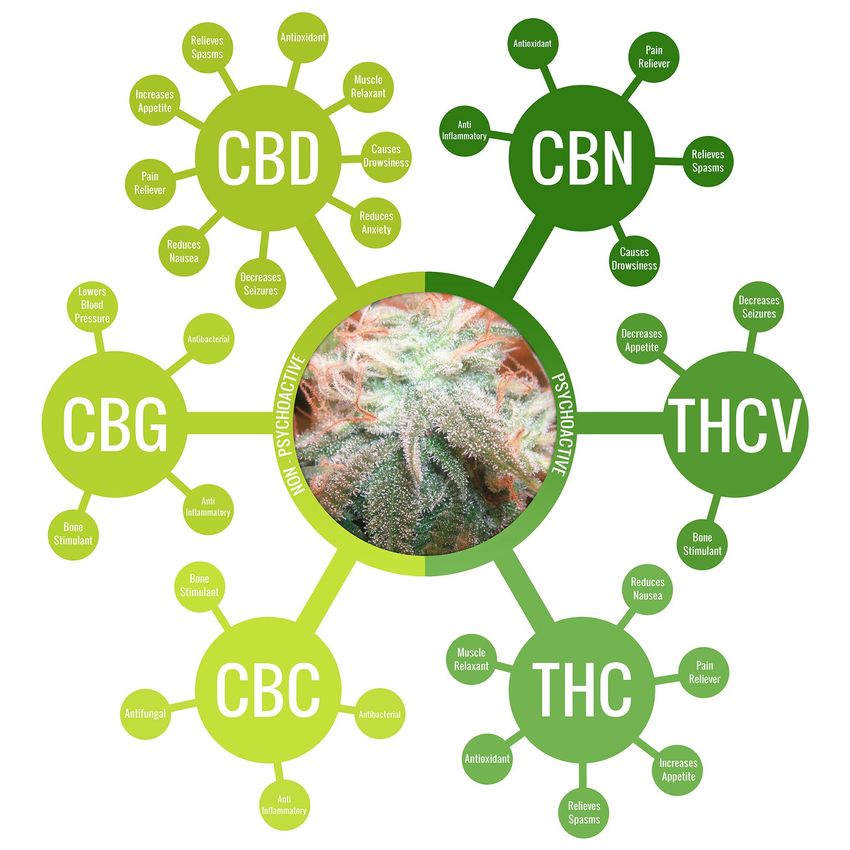
Disclaimer: Please note that this presentation is for informational purposes only.
Any comments or statements made herein do not necessarily reflect the views of DX
Consulting or any sources cited. The information is intended for the recipient's use
only and should not be cited, reproduced or distributed to any third party without
the prior consent of the authors. Although great care is taken to ensure accuracy of
information neither the author, nor DX Consulting can be held responsible for any
decision made on the basis of the information cited.

                               DX CONSULTING PROPRIETARY AND CONFIDENTIAL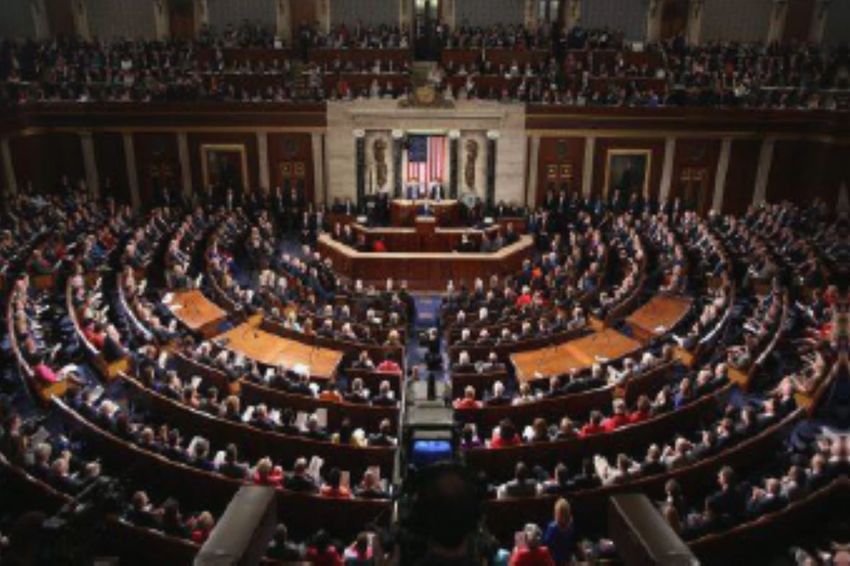
Deirdra O’Gorman has 25 years of experience as a senior financial services
executive. She has held numerous leadership positions, including CEO of a de
novo financial institution and Market President for a nationally chartered bank, with
$17 billion in assets. With her extensive banking experience, Ms. O'Gorman
founded a successful consulting firm, DX Consulting, in 2014. Since 2015, along
with her consulting practice, Ms. O’Gorman has served as the CEO of The Fourth
Corner Credit Union (4CCU). 4CCU is first credit union chartered in over 10 years
in the state of Colorado. Most recently, Deirdra and her business partners founded
Empyreal Logistics, a logistics company that provides transit, cash processing and
onsite audit solutions for financial institutions and businesses.

In 2016, Deirdra was named one of 20 “People to Watch” in the cannabis financial
services industry and has been featured in articles by the New York Times, the
Wall Street Journal, CNN and more. She is considered one of the foremost experts
on banking and compliance for highly regulated industries. Through her work, she
has become a nationally known speaker and can be found working with financial
institutions, regulators, government agencies, entrepreneurs, and attorneys who
are looking to gain a better understanding of emerging markets.

                        DX CONSULTING PROPRIETARY AND CONFIDENTIAL
The Plant Overview

        Photo credit: Chicago Tribune

                                        DX CONSULTING PROPRIETARY AND CONFIDENTIAL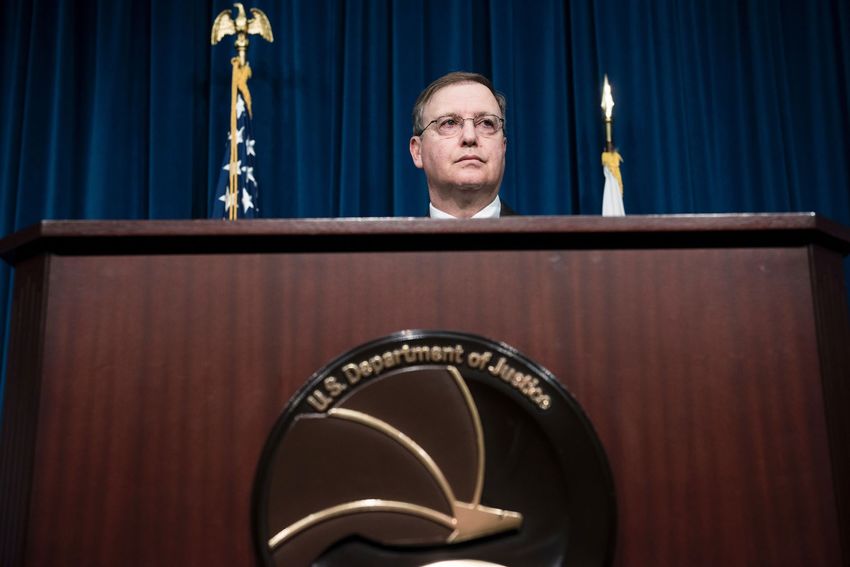
The Plant Overview – Types of Cannabis

                       DX CONSULTING PROPRIETARY AND CONFIDENTIAL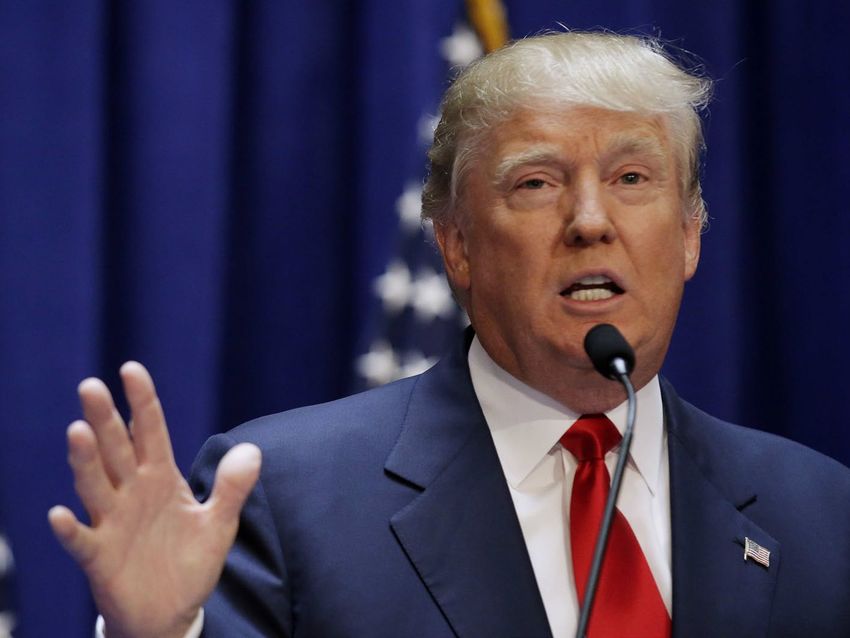
The Plant Overview – Cannabinoids

          What are Cannabinoids?

          Cannabinoids are chemical
          compounds that act on
          cannabinoid receptors in the
          body.

https://potent.media/understanding-cannabinoids
                                                  DX CONSULTING PROPRIETARY AND CONFIDENTIAL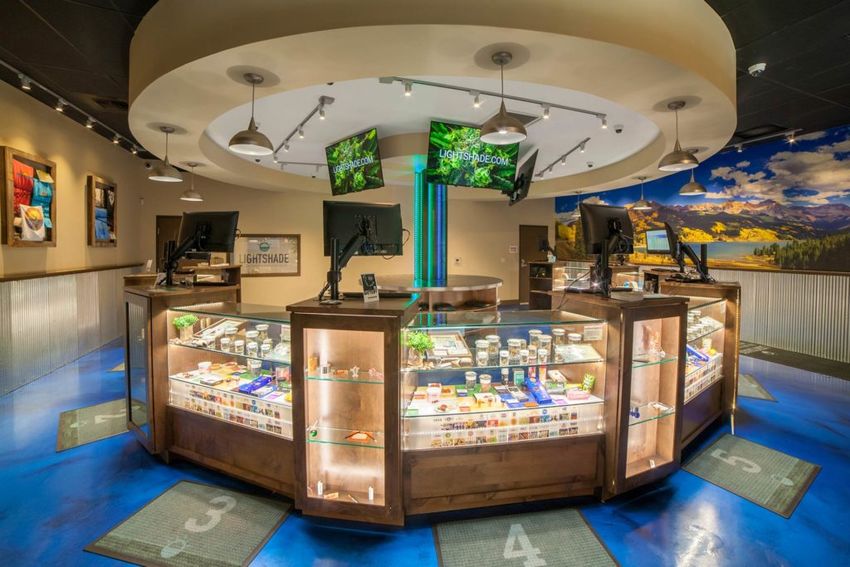
The Plant Overview – Plant Phases

   Mother   Clone   Vegetative   Flower             Harvest                  Dry   Trim   Cure   Package

                                                                                                      Photo credits: Leaafly

                                    DX CONSULTING PROPRIETARY AND CONFIDENTIAL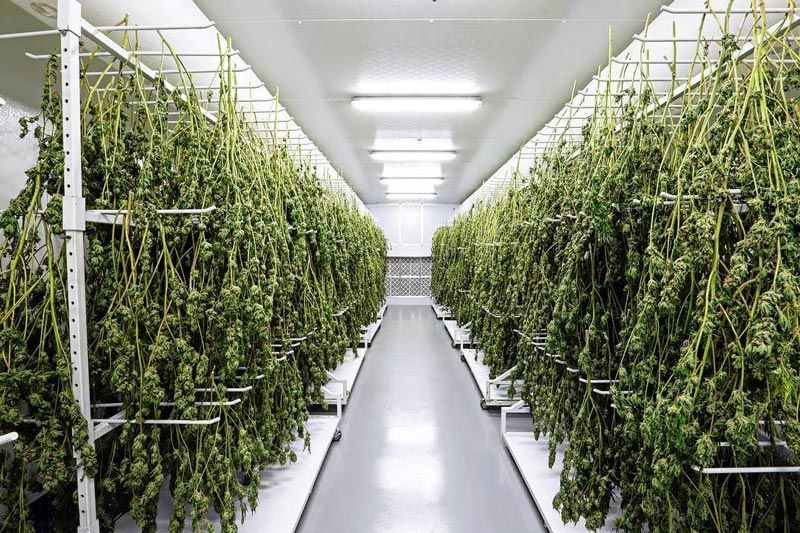
The Plant Overview – Types of Products

                                                                    Photo credits: Leafly

                       DX CONSULTING PROPRIETARY AND CONFIDENTIAL
Regulatory Overview

                                                                   Graphic by: http://advisoranalyst.advisoranalystgr.netdna-
                                                                   cdn.com/wp-content/uploads/2015/06/bank-regulation.jpg

                      DX CONSULTING PROPRIETARY AND CONFIDENTIAL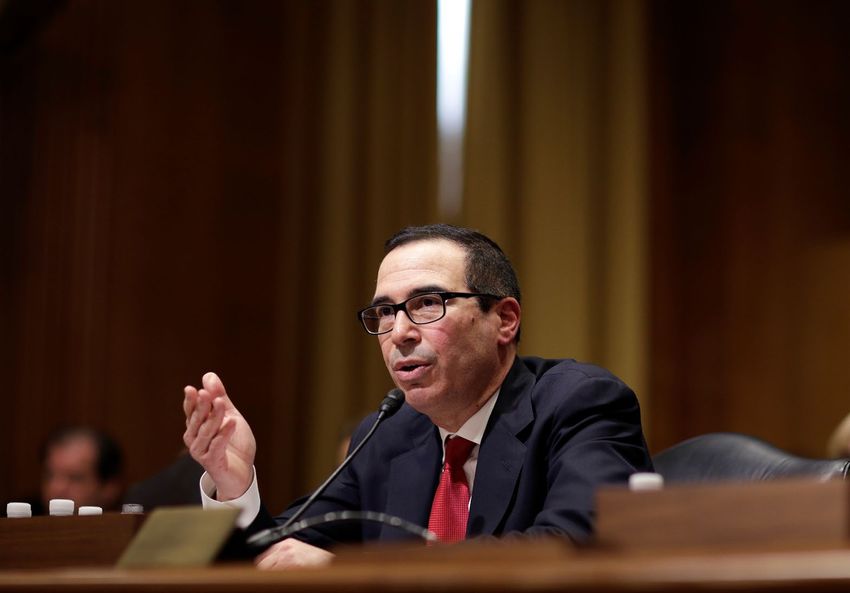
Regulatory Overview – History

    Brief History: Cannabis was widely used as a medicine in the United States until the states and the
    federal government ended that practice with state-level bans and the Federal Marijuana Tax Act of
    1937.

                                          DX CONSULTING PROPRIETARY AND CONFIDENTIAL
Regulatory Overview – Controlled Substances Act (CSA)
In 1970, Cannabis was rendered federally illegal under the
Controlled Substances Act and categorized as a Schedule I Drug.
Since then the CSA has been amended numerous times:
1. 1976 Medical Device Regulation Act
2. 1978 Psychotropic Substances Act
3. 1984 Controlled Substances Penalties Amendments Act
4. 1986 Federal Analog Act
5. 1988 Chemical Diversion and Trafficking Act
6. 1990 Anabolic Steroids Act
7. 1993 Domestic Chemical Diversion and Control Act
(methamphetamine trafficking)
8. 2008 Ryan Haight Online Pharmacy Consumer Protection
Act
9. 2010 Electronic Prescriptions for Controlled Substances Act
10. 2010 Secure and Responsible Drug Disposal Act (in
response to the US opioid epidemic)
11. 2017 Protecting Patient Access to Emergency Medications
Act
12. 2018 Farm Bill, which descheduled Hemp, but not Marijuana
Source: Drug Enforcement Administration
DX CONSULTING PROPRIETARY AND CONFIDENTIALRegulatory Overview – The Cannabis Experiment
What started the recent cannabis revolution?
2012
Graphic by: http://www.rebrandingcannabis.com/wp-content/uploads/2015/02/state-flag-colorado-1.jpg
- Colorado and Washington made history by legalizing recreational cannabis in their states. These
states started the first FOR PROFIT model for cannabis distribution.
- Coloradans passed Amendment 64 amending the state constitution by legalizing (medical and
recreational/adult use) cannabis and mandating regulatory oversight in the state. In Washington,
with the passage of Initiative 502, the state was tasked with creating a regulatory structure and
oversight for the program.
These states, as with most that have followed in their footsteps, require both state and local
licensing for all stores, cultivations, infused manufacturers, and testing facilities.
Information Provided by the Colorado Marijuana Enforcement Division (“MED”)
DX CONSULTING PROPRIETARY AND CONFIDENTIALRegulatory Overview – S2S, Closed Loop System
Seed-to-Sale (S2S, A Closed-Loop System) - no plant can be added or subtracted from the system without
documentation and oversight.
DX CONSULTING PROPRIETARY AND CONFIDENTIALRegulatory Overview – S2S, Closed Loop System
BioTracTHC has deployed in the State of Massachusetts to provide bar tracking. Other S2S tracking
solutions include bar codes, NFC, QR codes, and more.
DX CONSULTING PROPRIETARY AND CONFIDENTIALRegulatory Overview – Tracking
Tagged Seedlings In Propagation Room. Tags enable inspectors to quickly count plants in a room
using a scanner. The scanned tabulation is expected to match the S2S system plant count.
Plant tags inserted in growing medium Scanning a cultivation operation with a retail and
medical scanners
DX CONSULTING PROPRIETARY AND CONFIDENTIALRegulatory Overview – Typical Cultivation
DX CONSULTING PROPRIETARY AND CONFIDENTIALRegulatory Overview – Typical Dispensary
DX CONSULTING PROPRIETARY AND CONFIDENTIALRegulatory Overview – Typical Manufacturing Facility (MIP,
Processor)
Extraction Kitchen
DX CONSULTING PROPRIETARY AND CONFIDENTIALRegulatory Overview – Typical Extraction Methods
Extraction methods remove undesirable compounds, preserving the active
terpenes and cannabinoids of the original plant.
Solvent-Based Solventless
• Alcohol • Water
• CO2 • Heat
• Butane (PHO) • Pressure
• Propane (BHO)
DX CONSULTING PROPRIETARY AND CONFIDENTIALRegulatory Overview – Typical Testing Facility
(Safety Compliance)
THC Potency
Cannabinoid Potency
Microbials
Chemical Residue
- Pesticides
- Fungicides
- Insecticides
Residual Solvent Levels
Mycotoxin
Moisture Content
DX CONSULTING PROPRIETARY AND CONFIDENTIALGuidance
Pic by: http://media.bizj.us/view/img/1668591/7abankingmarijuana*304.jpg
DX CONSULTING PROPRIETARY AND CONFIDENTIALGuidance – Department of Justice
Pic and article by: http://www.weednews.co/jeff-sessions-provides-written-responses-to-marijuana-questions-from-senators William Barr, Pic by US DOJ
In January 2018, former Attorney General Jeff Sessions rescinded the DOJ Cole Memorandum. Published on August 29, 2013, the memo provided guidance to federal
prosecutors outlining marijuana enforcement as low priority in light of state laws legalizing marijuana. Session’s update left the discretion of marijuana prosecution priority to
the AG’s in those states.
In January of 2019, Attorney General William Barr testified before Congress that he does not plan to “go after” [marijuana] companies complying with state law. However, Barr
is on record that he does not support changing the Controlled Substances Act.
In April of 2019, Barr further clarified in a hearing before Congress, “Personally, I would still favor one uniform federal rule against marijuana.” “But if there’s not sufficient
consensus to obtain that, then I think the way to go is to permit a more federal approach so states can make their own decisions within the framework of a federal law so we’re
not just ignoring the enforcement of federal law.” Later, Barr said he would prefer that approach “than where we are now,” which he characterized as an “intolerable” situation
because of the conflict between federal and state marijuana laws.
https://www.forbes.com/sites/julieweed/2019/02/15/optimism-mixes-with-distrust-cannabis-industry-reacts-to-trumps-new-attorney-general/#269583442496
https://mjbizdaily.com/attorney-general-william-barr-federal-law-protecting-state-legal-marijuana-trumps-current-situation
DX CONSULTING PROPRIETARY AND CONFIDENTIALGuidance – The Drug Enforcement Administration (DEA)
August 2019 - the DEA plans to unveil a proposed
regulation to govern applications to grow cannabis for
scientific and medical research.
For half a century, only one grow was legally approved for
such purposes — a University of Mississippi facility
contracted by the National Institute on Drug Abuse
(NIDA). This change could pave the way for the robust
clinical trials cannabis experts believe could lead to the
downgrade of Marijuana on the Controlled Substances
Act.
Critics say this is just another stall tactic by the DEA, who
has not been friendly to legalization efforts.
https://thinkprogress.org/dea-concedes-that-marijuana-research-monopoly-must-end-opening-door-to-sweeping-change-2d60015acd1d/
GETTY IMAGES
DX CONSULTING PROPRIETARY AND CONFIDENTIALGuidance – Department of Justice
In reaction to Session’s actions, AG’s and Legislators responded
in support of state legal marijuana laws:
After Session’s action, a bipartisan coalition of 19 state attorneys
general sent a letter to Congress requesting the advancement of
legislation already presented to “provide a safe harbor” for banks
that provide services to cannabis business.
“I am prepared to take all steps necessary, including holding DOJ
nominees, until the Attorney General lives up to the commitment
he made to me prior to his confirmation.”
-- Colorado Senator, Cory Gardner (R)
Cory Gardner, Jeff Sessions. (Photos: Alex Wong/Getty Images, Joshua Robert/Reuters)
In a statement, California Attorney General Xavier Becerra stated, “Congress has the power to protect a growing $6.7 billion
industry and the public safety of our communities.” Becerra concludes, “My team at the Department of Justice is committed to
implementing and enforcing the law in California in a way that most effectively protects the health and safety of our people.”
“This is about public health. You can join me in fighting back by calling for support for my bill, the CARERS Act, which keeps the
federal government out of the way when doctors and patients decide that medical marijuana is the best treatment for them.”
-- New York Senator, Kristen Gillibrand (D)
https://www.cnn.com/2018/01/04/us/states-react-to-jeff-sessions-memo-marijuana/index.html
https://techcrunch.com/2018/01/16/marijuana-banking-attorneys-general-letter/
https://www.thecannabist.co/2018/01/16/marijuana-banking-bill-perlmutter-state-attorney-general/96870/ DX CONSULTING PROPRIETARY AND CONFIDENTIAL
https://twitter.com/SenGillibrandGuidance – President Trump’s Stance on Cannabis
June 2018 - After withholding support for Trump’s DOJ
nominees, U.S. Sen. Cory Gardner, co-chair of the
Congressional Cannabis Caucus, and President Donald Trump
met on the issue of Session’s Cole Memo withdraw. After the
meeting, the president stated, “I support Sen. Gardner,” when
asked about the bill. “I know exactly what he’s doing. We’re
looking at it. But I probably will end up supporting that, yes.”
http://www.latimes.com/politics/la-na-pol-trump-marijuana-20180608-story.htm l
On September 2019 - When asked about e-cigarette use,
President Trump said, “It’s very new and potentially very bad.
There have been deaths and there have been a lot of other
problems. People think it’s an easy solution to cigarettes but turns
out that it has its own difficulties. Not only is it a problem overall,
but really specifically with respect to children.”
https://www.greenentrepreneur.com/article/339396
February 2021 – In his federal budget proposal, the president has called for ending existing federal protections that limit
the federal government from interfering in the state-sanctioned regulation of medical cannabis. Doing so would place
thousands of medical cannabis providers and the millions of patients who rely on them at risk for criminal prosecution.
https://thehill.com/opinion/civil-rights/484540-congress-should-halt-trumps-plan-to-upend-states-medical-marijuana-laws
DX CONSULTING PROPRIETARY AND CONFIDENTIALGuidance – Department of Treasury
The Department of Treasury, through it’s Financial Crimes
Enforcement Network (“FinCEN”), issued guidance on February
14, 2014, outlining rigorous oversite and enhanced due diligence
expectations should a financial institution provide banking
services to cannabis businesses. Steven Mnuchin, on February 6,
2018, testified before the House Financial Services Committee, "I
assure you that we don't want bags of cash," "We want to make
sure that we can collect our necessary taxes and other things.“ In
February of 2019, he stated banking concerns for marijuana
businesses was at the “top of the list” of his department’s
concerns.
At an April 9, 2019 House appropriations subcommittee hearing,
“There is not a Treasury solution to this,” Mnuchin said. “There is --Secretary of Treasury, Steven Mnuchin
Pic by: www.pbs.org/newshour/show/treasury-nominee-mnuchin-defends-record-perry-says-attitude-energy-changed
not a regulator solution to this.
If this is something that Congress wants to look at on a bipartisan basis, I’d encourage you to do this. This is something
where there is a conflict between federal and state law that we and the regulators have no way of dealing with.”
Rather than getting into the question of federal legalization or rescheduling of cannabis via the Controlled Substances Act,
Mnuchin pointed to the SAFE Banking Act, that he believed would prevent federal regulators from punishing financial
institutions for providing services to cannabis businesses operating in compliance with state laws.
https://www.fincen.gov/resources/statutes-regulations/guidance/bsa-expectations-regarding-marijuana-related-businesses
https://www.forbes.com/sites/tomangell/2018/02/06/trump-treasury-secretary-wants-marijuana-money-in-banks/#3011cd143a53
https://www.cannabisbusinesstimes.com/article/steve-mnuchin-treasury-secretary-cannabis-banking/ DX CONSULTING PROPRIETARY AND CONFIDENTIALGuidance – Congress, the Joyce Amendment
( Previously the Rohrabacher-Blumenauer Amendment)
First introduced in 2001 under the Rohrabacher-
Farr Amendment, and ultimately adopted in 2014.
Rider in an omnibus appropriations bill funding
the federal government
Prohibits DOJ from spending funds “to prevent
[the listed] States from implementing their own
State laws that authorize the use, distribution,
possession, or cultivation of marijuana.”
Requires regular renewal/continuation each
budget cycle
As of June 18, 2019, this Amendment looked to
add protections for recreational cannabis
programs, but the change has not yet been
implemented.
DX CONSULTING PROPRIETARY AND CONFIDENTIALGuidance – Congress, The STATES Act
On April 13, 2018, Sen. Gardner (R-CO) released his holds on 4 key Department of Justice
nominees in exchange for President Trump publicly supporting a state’s rights solution to the
application of the CSA in legal marijuana states.
On June 7, 2018, Sen. Gardner (R-CO) and Sen. Warren (D-MA) introduced the STATES Act,
which stands for “Strengthening the Tenth Amendment Through Entrusting States.”
The bill prevents DOJ from enforcing the Controlled Substances Act for lawful conduct in states
where marijuana is legal but does not change anything in states where it remains illegal under
state law.
Bipartisan co-sponsors include: Sen. Rand Paul (R-KY), Sen. Catherine Cortez Masto (D-NV),
Sen. Lisa Murkowski (R-AK), Sen. Cory Booker (D-NJ), Sen. Dan Sullivan (R-AK), Sen.
Michael Bennet (D-CO), Sen. Jeff Flake (R-AZ), Sen. Amy Klobuchar (D-MN).
In December 2018, Gardner tried to add the STATES Act as an amendment to a criminal reform
bill but was denied.
2020 - Insiders speculate key aspects of the STATES Act might make there way into the Safe
Banking Act.
DX CONSULTING PROPRIETARY AND CONFIDENTIALGuidance – Congress, The SAFE Banking Act
2013 - H.R. 1595, the Secure and Fair Enforcement Banking Act (SAFE Banking Act), the banking bill that
attempts to provide a “Safe Harbor” financial institutions to serve marijuana-related businesses without the fear
of reprisal from the federal government. Under the bill, federal banking regulators would not be able to threaten
or limit a bank or credit union’s deposit insurance if they provide services to a marijuana business. This year's
version of the SAFE Banking Act will also include some revisions, summed up by the National Cannabis Industry
Association: "It adds protections for ancillary businesses providing products or services to a cannabis-related
legitimate business; specifies how businesses on tribal land could qualify; and requires the Federal Financial
Institution Examination Council to develop guidance to help financial institutions lawfully serve cannabis-related
legitimate businesses.“
50 state banking associations, the National Association of State Treasurers, the top financial regulators of 25
states, a majority of state attorneys general and bipartisan governors of 20 states have also voiced support for
the SAFE Banking Act.
The bill passed the House of Representatives on September 26, 2019
After holding public hearings, Senate Banking Committee Chairman Mike Crapo (R-Idaho) invited public
feedback on ways to address public health and money laundering concerns with cannabis banking. Input is also
requested on “Operation Choke Point,” an Obama-era initiative in which federal agencies devised and relied
upon a list of politically disfavored merchant categories (e.g., firearm manufacturers, payday lenders, etc.) with
the intent of “choking off” these merchants’ access to payment systems and banking services.
March 2020 - In a recent press conference, Senator Gardner optimistically states a vote on this bill is “months
away.”
https://www.washingtonpost.com/business/2019/02/13/banks-want-hit-marijuana-business-will-they-get-partake/?noredirect=on&utm_term=.4c86b72b526a https://www.bankingdive.com/news/vote-pot-banking-bill-months-away-sen-gardner/573118/
https://www.marijuanamoment.net/marijuana-banking-bill-will-get-a-full-house-floor-vote-this-month-sources-say/
DX CONSULTING PROPRIETARY AND CONFIDENTIAL https://www.banking.senate.gov/newsroom/majority/chairman-crapo-outlines-concerns-with-cannabis-
banking-legislationGuidance – Congress, The Marijuana Justice Act
Introduced by Senator Cory Booker (D-NJ), along with Representatives Barbara Lee (D-CA) and Ro Khanna (D-
CA),The Marijuana Justice Act of 2019 would:
Remove marijuana from the list of controlled substances making it legal at the federal level;
Incentivize states through federal funds to change their marijuana laws if marijuana in the state is illegal and it
disproportionately arrests or incarcerates minority and poor people for marijuana-related offenses;
Automatically expunge federal marijuana use and possession records;
Allow individuals currently serving time in federal prison to petition a court for a resentencing;
Create a community reinvestment fund to invest in communities most impacted by the failed War on Drugs and
allow the money to go towards the following programs:
Provide Job training and Re-entry services;
Aid with Expenses related to the expungement of convictions;
Fund: Public libraries; Community centers; Programs and opportunities dedicated to youth; and Health
education programs.
https://blog.norml.org/2019/02/ DX CONSULTING PROPRIETARY AND CONFIDENTIALGuidance – Congress, The 2018 Farm Bill
In December 2018, The Farm Bill and was signed into law. Championed by Senate Majority Leader Senator Mitch McConnell (R-KY) with strong
bi-partisan support, the Bill:
Defines hemp as the plant Cannabis sativa L. and any part of the plant with a delta-9 THC concentration of not more than 0.3 percent by dry
weight. Any cannabis plant that contains more than 0.3 percent THC would be considered non-hemp cannabis—or marijuana—under federal
law and would thus face no legal protection under this new legislation.
Removes hemp from the Controlled Substances Act
Delegates to states and Indian tribes the broad authority to regulate and limit the production and sale of hemp and hemp products within their
borders. States and Indian tribes cannot, however, limit the transportation or shipment of hemp and hemp products through their respective
jurisdictions. State departments of agriculture must consult with the state’s governor and chief law enforcement officer to devise a plan that
must be submitted to the Secretary of USDA. A state’s plan to license and regulate hemp can only commence once the Secretary of USDA
approves that state’s plan. In states opting not to devise a hemp regulatory program, USDA will construct a regulatory program under which
hemp cultivators in those states must apply for licenses and comply with a federally-run program.
Outlines actions that are considered violations
The new law allows interstate commercial transfers and sales of hemp and hemp-derived products, but clashes with the U.S. Food and Drug
Administration (FDA), which has flatly rejected the notion that hemp-derived CBD products are legal. "Selling unapproved products with
unsubstantiated therapeutic claims is not only a violation of the law, but also can put patients at risk, as these products have not been proven to
be safe or effective," Former FDA Commissioner Scott Gottlieb wrote shortly after the 2018 Farm Bill was approved by Congress.
Ultimately, the Farm Bill legalizes hemp, but regulation additional clarification from the USDA. The FDA
has yet to published any regulation.
https://www.brookings.edu/blog/fixgov/2018/12/14/the-farm-bill-hemp-and-cbd-explainer/
https://www.perkinscoie.com/en/news-insights/what-does-the-2018-farm-bill-mean-for-the-hemp-and-cbd-businesses.html DX CONSULTING PROPRIETARY AND CONFIDENTIALGuidance – The NCUA
Picture Credit: CU Journal
In August of 2019 the NCUA’s Chairman, Rodney Hood explained that Credit Unions in states where marijuana is legal won’t be sanctioned for
providing services to cannabis-related businesses as long as they follow money laundering, Bank Secrecy Act, safety and soundness and other
rules.
“It’s a business decision for the credit unions if they want to take the deposits,” Hood told CU Times, in a wide-ranging interview at NCUA
headquarters in Alexandria, Va. He added, “We don’t get involved with micro-managing credit unions.”
He said that credit unions that provide services to cannabis-related businesses must comply with FinCEN rules, file Suspicious Activity Report
and must strictly adhere to other rules. Then, they will not be cited for merely doing business with cannabis firms, Hood said.
https://www.cutimes.com/2019/08/05/cus-wont-be-sanctioned-for-providing-marijuana-banking-ncua-chairman-hood/?slreturn=20190813191028
DX CONSULTING PROPRIETARY AND CONFIDENTIALGuidance – The Federal Reserve Bank
Twelve Federal Reserve Districts of the Federal Reserve
Bank operate in district boundaries which are based on
economic considerations; the districts operate
independently but under the supervision of the Federal
Reserve Board of Governors.
This structure allows for each Reserve Bank President to
determine policy, within guidelines, for their regional bank.
Relying on the FinCEN guidelines from the Department of
Treasury and their state Attorney General’s stance on
cannabis policy, some Reserve President’s have opted,
discreetly, to accept cannabis-related funds.
Ultimately, the financial institution must work with their local
Reserve Bank to determine whether or not it will accept
cannabis funds. However, we have found states that
mandate secured transport for cannabis funds have
greater efficacy swaying local decision-makers on this
issue.
Map by Federal Reserve Bank of San Francisco
DX CONSULTING PROPRIETARY AND CONFIDENTIALGuidance – Department of Treasury, SARs
Marijuana limited SAR- a FI files a marijuana limited SAR to report the transactions and activity of the business but
reaffirms that the activity is consistent with state law and does not violate any of the eight federal priorities, such as sales
to minors. However, this expectation reverses the normal approach to suspicious activity and imposes a new level of
obligation. When it comes to marijuana-related businesses, the FinCEN guidance implies that it is the FI’s responsibility
for ensuring marijuana is not distributed to minors, a subtle but highly critical distinction that places a new level of
regulatory oversight. If the FI opens an account for a marijuana-related business and does file an initial marijuana limited
SAR to alert FinCEN and law enforcement that it is serving the business, the FI will have to continue to report as long as
the account stays open because each transaction is possible money laundering.
Marijuana priority SAR - If the FI decides that one of the federal priorities has been violated, or that the business is not
in full compliance with state law requirements, then it files a SAR that identifies the wrongful activity.
Marijuana termination SAR - Even though the business may be operating in compliance with state law and satisfying all
eight priorities set forth by FinCEN, an FI might not feel comfortable maintaining a relationship. Or, as FinCEN puts it in
the guidance, the FI might decide to terminate a relationship “in order to maintain an effective anti-money laundering
program.” (This might be the only situation where FinCEN acknowledges de-risking as acceptable for managing AML
risk.) If the bank does end its relationships with the business, then it reports that to FinCEN using the marijuana
termination SAR. If the FI knows that the company has moved its accounts elsewhere, FinCEN also encourages the FI to
take advantage of the 314(b)-information sharing process to notify the successor bank that it terminated its relationship
with the business.
DX CONSULTING PROPRIETARY AND CONFIDENTIALGuidance – Department of Treasury
The Financial Crimes Enforcement Network (FinCEN)
reported that SARs for marijuana businesses declined from
747 as of November 2019 to 739 by the end of the following
month. Short-term declines maybe explained by the recent
clarification on SAR Hemp filings.
Of the total amount of SARs filed, 114,859, 85,193
contained the phrase “marijuana limited,” indicating that
none of the eight Cole Memo priorities were involved;
whereas, 8795 SARs filed contained the phrase “marijuana
priority,” indicating that one of the eight Cole Memo priorities
were implicated. The remaining SARs filed contained the
phrase “marijuana terminated” with 28,025 termination
SARs filed.
Between 2014 and 2019, “marijuana limited” SAR filings saw
the largest increase. This data illustrates that the majority of
SARs filed do not implicate the Cole Memo enforcement
priorities.
https://www.fincen.gov/sites/default/files/shared/287473_3Q_FY2019_Marijuana_Banking_Update_Public.pdf
DX CONSULTING PROPRIETARY AND CONFIDENTIALCannabis Banking Compliance – Focus on AML
“Identification as a marijuana-related business does not imply that a customer relationship should not
be extended or terminated. The decision to open or retain a relationship with a marijuana-related
business should be defined in policy and by the risk tolerances established by the financial institution's
senior management and board of directors, including the existing conflicts between state and federal
law. Opening or maintaining the relationship simply means that due diligence for the customer and that
the customer’s transactions should be subject to heightened scrutiny.” --- Protiviti, Guide to U.S. AML
Requirements
Money laundering statute requires proof of specific intent to conceal or
disguise the nature, location, source, ownership, or control of property
believed to be the proceeds of unlawful activity.
Looks to see if the financial transaction designed in whole or in part to
conceal or disguise the source, ownership or control of those proceeds.
Identifies if the specific intent is to promote, further or facilitate an illegal
purpose.
Reviews if the transaction involves the transmission of funds that are Graphic by: https://s-media-cache-ak0.pinimg.com/736x/16/f4/1f/16f41f9a77da2129a029c2609fc839a2.jpg
known to have been derived from a criminal offense or are intended to be
used to promote or support unlawful activity
https://www.protiviti.com/CA-en/insights/servicing-legalized-marijuana-businesses-weighing-risks-light-fincen-guidance
DX CONSULTING PROPRIETARY AND CONFIDENTIALCannabis Banking Compliance – Considerations
There are many compelling reasons to offer financial services to the industry, but these are
some items for consideration:
Insurance – FI’s should review their Directors & Officers Policy’s to ensure coverage for
providing services to MRBs. Does the deposit insurance cover MRB Deposits?
Board Members – has the board been duly advised of the risks involved?
FI Staff – HIPAA and privacy issues related to medical cannabis patients; exposure to the plant
(workforce impairment); drug policy issues; employer liability.
Vendors – will current vendors work with the FI to provide MRB banking? Will the vendor’s
products require customization?
Industry – understanding the nuisances; issues of privacy/trade secretes; evaporating product –
how to track? Knowing good vs. bad industry vendors/systems.
Branches – with cash-intensive businesses such as MRBs, is there a risk to existing
customers/membership or employees at the branch?
Lending – are there impermissible direct financial interests; challenges for bankruptcy; no RMA
data; collateral issues; can FIs legally take over entity due to default(?).
DX CONSULTING PROPRIETARY AND CONFIDENTIALMarket Opportunities
Graphic by: http://1ev1it27w95q1s9gn1crubsn.wpengine.netdna-cdn.com/wp-content/uploads/2013/02/opportunity-magnet.jpg
DX CONSULTING PROPRIETARY AND CONFIDENTIALMarket Opportunity – States With Cannabis/Hemp Laws
The Marijuana Domino Effect
Totals:
Medical - 34 States and the
District of Columbia (D.C.)
Hemp - 50 States*
Low THC Concentration or
CBD – 14 States
Allow Adult/Rec Use – 11 States
plus D.C.
More to come: Eight states have cannabis-related initiatives on the ballot including: New Mexico, New Jersey,
and Delaware.
*Regulations and rule making still in flux.
DX CONSULTING PROPRIETARY AND CONFIDENTIALMarket Opportunity – Green Gold Rush
DX CONSULTING PROPRIETARY AND CONFIDENTIALMarket Opportunity – Green Gold Rush
In recent history, most cannabis or hemp businesses found investment funds through friends, family, or hard
money lenders. With the rapid growth of the industry, the profile of potential investors is rapidly changing as well:
Nasdaq - even though most of the stocks are not covered by broker
dealers, there are a handful of hemp-related companies listed on Nasdaq,
such as GW Pharmaceuticals (GWPH).
Toronto Stock Exchange (TSX) or the Canadian Securities Exchange
(CSE) - There are over 400 publicly traded cannabis companies listed.
Private equity, hemp-focused investment funds, and specialized
brokers - with groups such as Privateer (which received an infusion of
capital from Founders Fund), Chardon Capital, ArcView, Canopy, Viridian,
etc., many cannabis and hemp businesses now have an expanding
network where they can shop their deal.
Loans - not yet, but it is only a matter of time. Until then, family and friends
(and hard money lenders) will remain the primary source of loans to the
industry.
Information provided by The Street, https://www.thestreet.com/story/13537433/1/how-to-invest-in-nasdaq-traded-marijuana-stocks-and-private-pot-companies.html
Graphic by: http://images.clipartpanda.com/money-tree-clipart-yioeBr5RT.jpeg
DX CONSULTING PROPRIETARY AND CONFIDENTIALMarket Opportunity – Celebrity Green Gold Rush
Joe Montana’s venture capital firm, Liquid
Martha Stewart joined the Canadian 2 Ventures, was a part of a group that
marijuana company, Canopy Growth, invested $4.1 million into the cannabis-
as an adviser to help them develop focused media outlet Herb.
cannabis products for people and
their pets, according to a news “Legalization is picking up steam on a
release. Stewart claims she doesn’t global level, and I feel like now is the time
consume cannabis, though that to spread information about the curing
doesn’t mean she has never felt its capabilities of this plant.
https://www.denverpost.com/2019/03/02/martha-stewart-
effects: She says she has gotten a canadian-canopy-growth/
As with any medicine, increased accessibility comes with the need for education.
contact high from being around Cannabis eased my pain. It also put me in a state of healing and relief.”
Snoop.
Created in conjunction with 10-time High
Times Cannabis Cup winner Maya Elisabeth,
Whoopi & Maya’s female-focused products
are designed specifically for relief from
menstrual discomfort.
“It’s not so much the laws that have to change
but the attitudes. When you think of penicillin
and all the things, we discovered penicillin
could take care of, I feel that’s what marijuana
Sir Richard Branson’s ride service and marijuana delivery
is.”
company, Sidecar, didn’t last long in the competitive San
Francisco market, but Branson’s commitment to cannabis has
been well-documented.
DX CONSULTING PROPRIETARY AND CONFIDENTIALCurrent State of Cannabis
Graphic by: http://mediad.publicbroadcasting.net/p/wkar/files/201301/currentstate-logo-stacked.png
DX CONSULTING PROPRIETARY AND CONFIDENTIALCurrent State of Cannabis
ArcView Research estimates legal retail sales of cannabis in North American
totaled $12 billion in 2019; up 23% YOY.
There are now over 10,000 licensed “plant-touching” businesses in the United
States, and at least as many ancillary businesses (e.g. providers of goods,
services, technology).
According to Leafly, the cannabis industry supports 243,700 employees
nationwide, with over 33,000 jobs added in the last year.
Arcview Research estimates the industry will experience a compound annual
growth rate of 27 percent over the next three years.
According to Cowen & Co., North American cannabis sales will reach ~$75 billion
by 2030.
Cannabis businesses' say the biggest challenges for the industry’s continued
growth are Banking and the IRS rule 280E.
DX CONSULTING PROPRIETARY AND CONFIDENTIALCurrent State – Cannabis Goes International
The following countries have cannabis-friendly laws in place (adult use, medical, and/or CBD/hemp oil): Argentina, Australia,
Bangladesh, Cambodia, Canada, Chile, Columbia, Czech Republic, France, Germany, India, Jamaica, Jordan, Mexico, Netherlands,
Portugal, Romania, Spain, United States, and Uruguay. With more considering legalization such as: Ireland, Switzerland.
DX CONSULTING PROPRIETARY AND CONFIDENTIALCurrent State – Canada
Delivering on a campaign promise, Canadian Prime
Minister Justin Trudeau legalized the production,
distribution, and possession of marijuana for recreational
purposes in October 2018.
“Legalization wouldn't just be an important milestone for Image https://www.oneyoungworld.com/sites/oneyoungworld.com/files/images/JustinDrapeauCanadien-1080x628.jpg
Canada and the world; it could also send ripples across
the international system of drug policy. That's because
drug policy is tied not just to each country's individual
laws, but to a network of treaties that effectively make
the war on drugs a global effort. Marijuana legalization in
Canada would act as the most high-profile rejection of
these treaties, sending an important signal of the
changing times as the international agreements come
under a critical review.”
http://www.vox.com/2015/10/20/9573497/canada-marijuana-legalization-justin-trudeau
Image: Offbeat News; Article :http://reason.com/blog/2016/07/05/task-force-offers-hints-of-what-legal-po
DX CONSULTING PROPRIETARY AND CONFIDENTIALCurrent State – Former Speaker of the House,
John A. Boehner
Formerly one of its biggest critics, Former Speaker of the House John A. Boehner said his thinking on cannabis
"like that of millions of other Americans, has evolved as I've learned more about the issue…I decided to get
involved because of the struggles of our country's veterans and the opioid epidemic, after learning how
descheduling the drug can potentially help with both crises," he said. On the topic of descheduling he stated,
"Descheduling will reduce the conflict between federal policy and state programs" which have pursued more
lenient policies on marijuana under the 10th Amendment to the U.S. constitution.”
https://www.cnbc.com/2018/04/11/john-boehner-joins-marijuana-company-view-on-cannabis-has-evovled.html
DX CONSULTING PROPRIETARY AND CONFIDENTIALCurrent State - What do Americans think about Marijuana?
Edibles are the most popular product by far, with 34% of Americans
saying they are at least somewhat interested in using marijuana
through food products.
Why smoke? Among users, 71% say they use marijuana to relax –the
most popular reason. 46% say they use marijuana to sleep.
If marijuana was legally available to purchase online, 36% of
millennials say they would be interested in taking advantage(notably
more than older generations).
While about half of Americans don’t have opinions on CBD, the
majority would be open to trying it if they were told it could help with a
medical issue.
Morning Consult conducted this poll online from July 17-18, 2018, among a national sample of 2,201 adults (21+)
DX CONSULTING PROPRIETARY AND CONFIDENTIALCurrent State - Support for Continued Growth A Sept 2019 Pew Poll shows the majority of Americans support marijuana being legal in the United States. https://news.gallup.com/poll/243908/two-three-americans-support-legalizing-marijuana.aspx DX CONSULTING PROPRIETARY AND CONFIDENTIAL
Questions?
                                              Thank you

Deirdra A. O’Gorman
Founder + Principal
DX Consulting
Ph. 720-261-5359
dogorman@dxconsulting.co
https://www.linkedin.com/in/deirdraogorman/

                                              DX CONSULTING PROPRIETARY AND CONFIDENTIAL
You can also read


