Organized by: Technically Sponsored by: ICSET
←
→
Page content transcription
If your browser does not render page correctly, please read the page content below
Organized by: Technically Sponsored by: Supported by:

1st IEEE International Conference on
        Sustainable Energy Technologies and Systems
                     IEEE-ICSETS 2019

        Conference Programme

                     26 February – 1 March 2019
Kalinga Institute of Industrial Technology, Bhubaneswar, Odisha, India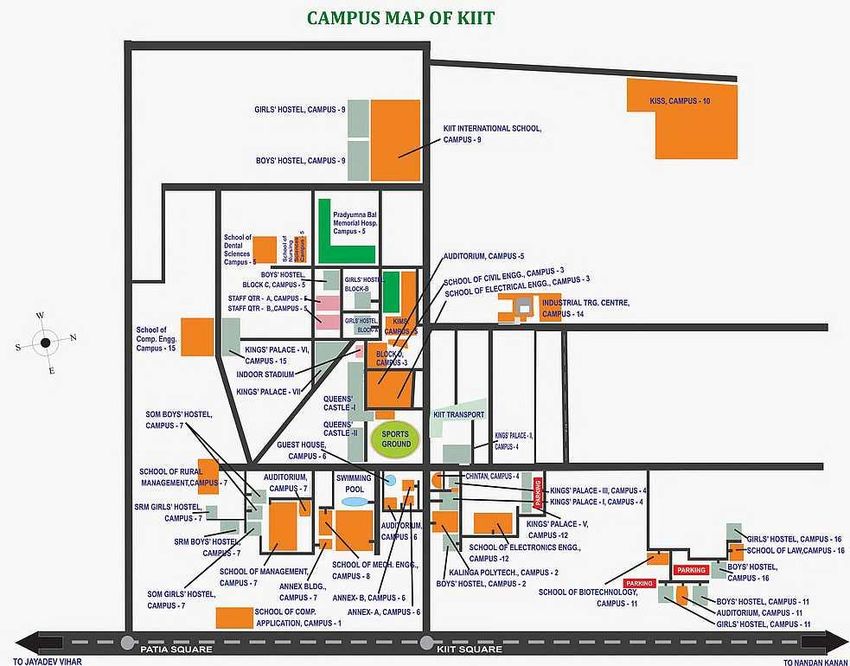
Welcome Message

Welcome to Bhubaneswar, Odisha, India and the 1st IEEE International Conference on Sustainable
Energy Technologies and Systems (ICSETS), 2019. We hope that this international conference
provides a platform for all the Indian PELS/PES/IAS members to attend and have the opportunity to
interact with the other international PELS/PES/IAS members.

The IEEE International Conference on Sustainable Energy Technologies and Systems is a new
international conference which is planned to bring together professionals and executives in the energy
sector, electrical power companies, manufacturing industries, research institutes and educational
bodies to share and exchange ideas and information pertaining to sustainable energy technologies and
systems.

Bhubaneswar, the ancient city of Odisha, is a melting pot of culture that attracts people from all of
the world. Together with Puri and Konark, it forms the ‘Swarna Tribhuja’(Golden Triangle) of Odisha.
Bhubaneswar has also acquired immense fame in recent years due to the boom of technological
development happening in the city with hundreds of MNCs, indigenous companies and start-ups
selecting this city to be their flame-bearer.

The conference this year will include 10 technical sessions and the scope covering a wide range of
sustainable energy technologies and systems, e.g. photovoltaic and thermal energy, wind energy, fuel
cells, energy storage systems, energy efficiency in utilisation, energy harvesting, power electronics
and energy conversion, intelligent energy transmission and distribution, smart grid, demand response,
power management for smart home, electric vehicle integration and environmental issues etc.

The keynote speech will be delivered by Professor Frede Blaabjerg (Alborg University, Denmark)
and Professor Mahinda Vilathgamuwa (Queensland University of Technology, Brisbane, Australia).
The organising committee believe that ICSETS will provide you interesting talks and sessions and it
will be a rewarding and fulfilling experience!

As always, a conference is a great opportunity to exchange research ideas, discuss exciting challenges
and interacting with our peers. We invite everyone to make use of this opportunity and enjoy the
delicious Indian cuisine and the beauty of their rich culture. We wish the best to all of you and hope
you have an enjoyable and fruitful conference.

 Sanjib Kumar Panda                                      C. K. Panigrahi
 General Chair                                           Organising Chair
 National University of Singapore,                       Kalinga Institute of Industrial Technology,
 Singapore                                               Bhubaneswar, Odisha, India

IEEE ICSETS 2019 Conference Programme                                                               2
Content

Welcome Message                          2
Content                                  3
Conference Committee                     4
Organizing Committee:                    4
Technical Programme Committee Members    5
Schedule                                 7
Conference Venue                         9
Keynote Speeches                        11
Tutorial Speeches                       13
Technical Programme                     17
Abstracts                               30

IEEE ICSETS 2019 Conference Programme    3
Conference Committee
General/Organizing Chair:
Dr. Sanjib Kumar Panda, National University of Singapore, Singapore
General/Organizing Co-Chair:
Dr. C.K.Panigrahi, Kalinga Institute of Industrial Technology, India
Technical Programme Chair:
Dr. Sanjib Kumar Sahoo, National University of Singapore
Dr. Thillainathan Logenthiran, Newcastle University, Singapore
Dr. M.K. Maharana, Kalinga Institute of Industrial Technology, India
Finance Chair:
Dr. Hoang Duc Chinh, National University of Singapore, Singapore
Publication Chair:
Dr. Jayantika Soni, National University of Singapore, Singapore
Dr. Arun Kumar, National Institute of Technology, Rourkela, India
Dr. B.Panda, Kalinga Institute of Industrial Technology, India
Local Arrangement Chair:
Dr. Joymala Moirangthem, National University of Singapore, Singapore
Dr. S.C.Swain, Kalinga Institute of Industrial Technology, India

Organizing Committee:
Binita Sen, National University of Singapore, Singapore
Lan Dongdong, National University of Singapore, Singapore
Jaydeep Saha, National University of Singapore, Singapore
Rohit Chandra, National University of Singapore, Singapore
Siu Jun Yen, National University of Singapore, Singapore
Dr. Joymala Moirangthem, National University of Singapore, Singapore
Dr. Hoang Duc Chinh, National University of Singapore, Singapore

IEEE ICSETS 2019 Conference Programme                                  4
Technical Programme Committee Members

Fathy Aboshady                          Sandeep Kolluri
Vivek Agarwal                           Kundan Kumar
Md. Waseem Ahmad                        Shubhasri Kundu
Kawsar Ali                              Tek Tjing Lie
Gorbunov Andrey                         Sobrayen Lingeshwaren
Nguyen Xuan Bac                         Waikuan Loh
Satarupa Bal                            Manoj Kumar Maharana
Sujit K. Biswas                         Dipten Maiti
Gorla Naga Brahmendra Yadav             Sai Srinivas Manohar
Sarat Ch.Swain                          Gokhan Mert Yagli
Merlin Chai                             Anshul Kumar Mishra
Debjani Chakraborty                     Mahesh Kumar Mishra
Subash Chandar Ahtikessavan             Joydeep Mitra
Rohit Chandra                           Alivarani Mohaopatra
Debashis Chatterjee                     Joymala Moirangthem
Rui Chibante                            Pritam Mukherjee
Abhijit Choudhury                       Shiva Muthuraj
Louelson Costa                          Manjula Nair
Abhijit Dasgupta                        Tran Huynh Ngoc
Dipankar De                             Hung Dinh Nguyen
Prathamesh Deshpande                    Narayana Padhy
Lan Dongdong                            Balakrishna Pamulaparthy
Eugene Fernandez                        Babita Panda
Narayanan G                             Sidhartha Panda
Oktoviano Gandhi                        Ramaprasad Panda
Akansha Garg                            Chinmoy Kumar Panigrahi
Chandra Prakash Gupta                   Rajesh Pindoriya
Manish Gupta                            Josephine R.L.
Raman Gurupraanesh                      Bhujade Rahul Sadanand
Raman Gururaghav                        Prabir Ranjan Kasari
El Fadil Hassan                         Carlos Rodriguez
Palak Jain                              Mariacristina Roscia
Santhosh Janaki Raman                   Arun Rahul S
Chitralekha Jena                        Jaydeep Saha
Premalata Jena                          Pradeep Kumar Sahu
Satyaranjan Jena                        Maharjan Salish
Elango Jeyasankar                       Padarbinda Samal
Nirmal K. Deb                           Dhivya Sampath
Krishnanand Kaippilly Radhakrishnan     Sindhu Santosh Shetty
Srinivas Rao Kamala                     Rajesh Sapkota

IEEE ICSETS 2019 Conference Programme                              5
Saravanan
Binita Sen
Tomonobu Senjyu
Monika Sharma
Renu Sharma
Anshuman Shukla
Amit Kumar Singh
Pampa Sinha
Jayantika Soni
Mahesh Soni
Aravinth Subram
Subham Swaroop Sahoo
Gowri Manohar T.
A. V. Ravi Teja
Thirumurugan
Anupam Trivedi
Koh Tsyr Harn
Adil Usman
Kumar Utkarsh
Kanakesh V K
Mahinda Vilathgamuwa
Zhang Wenjie
Neelesh Yadav
Cikai Ye

IEEE ICSETS 2019 Conference Programme   6
Schedule
                                      Programme Schedule
     Time      Day1 (26-Feb-19)        Day2 (27-Feb-19)        Day3 (28-Feb-19)     Day4 (01-Mar-19)
 09:00 – 10:20     Tutorial 1          Opening Ceremony     Technical Technical        Technical Tour
      AM       (Conference Hall/       (KIMS Auditorium)   Oral Session Oral Session (Solar PV Station,
               KIMS Auditorium)                              5 (PS2)      6 (PE2)        Trishulia,
                                                              (A-104       (A-106      Bhubaneswar)
                                                            Campus 3 Campus 3
                                                             Block A)     Block A)
 10:20 – 10:40    Tea Break                Tea Break               Tea Break
      AM
  10:40 AM –      Tutorial 1           Keynote Speeches     Technical Technical
  12:00 noon (Conference Hall/         (KIMS Auditorium)   Oral Session Oral Session
               KIMS Auditorium)                              7 (SE3)      8 (PE3)
                                                              (A-104       (A-106
                                                            Campus 3 Campus 3
                                                             Block A)     Block A)
 12:00 – 01:00       Break                  Lunch                    Lunch                   -
      PM
    01:00 –        Tutorial 2    Technical Technical Technical Technical
   02:20 PM    (Conference Hall/    Oral         Oral   Oral Session Oral Session
               KIMS Auditorium)   Session      Session     9 (PE4)     10 (PS3)
                                  1 (SE1)      2 (PS1)     (A-106       (A-104
                                   (A-104       (A-106   Campus 3 Campus 3
                                 Campus 3 Campus 3 Block A)            Block A)
                                  Block A)     Block A)
 02:20 – 2:40      Tea Break            Tea Break              Social Visit
      PM                                                  (Konark Sun Temple)
 02:40 – 4:00      Tutorial 2    Technical Technical                +
      PM       (Conference Hall/    Oral         Oral        Banquet Dinner
               KIMS Auditorium) Session        Session
                                  3 (SE2)      4 (PE1)
                                   (A-104       (A-106
                                 Campus 3 Campus 3
                                  Block A)     Block A)
4:00 – 5:00 PM       Break           Industry Panel
                                       Discussions
   5:30 PM Welcome Reception Cultural Function
   onwards       (Rose Garden)     (KIMS Auditorium)
                                    Founder’s Dinner
                                     (Rose Garden)

IEEE ICSETS 2019 Conference Program                                                              7
Oral Presentation Schedule

 Session      Session
                                                            Paper ID
 Number        Name
    1           SE1            6           7          8         88     142        137             -
    2           PS1           22          31         35         36      46        122             -
    3           SE2          110         154        133        101      65         70             -
    4           PE1          141         155        145        156     148        150            61
    5           PS2           77          85         92         98     118        120           139
    6           PE2          116         114        111        105     104        102            89
    7           SE3          117          16         28         47      51         59             -
    8           PE3           76          69         64         63     134        123             -
    9           PE4           62          57         56         54      41         23             -
   10           PS3          121         157        125        151     124        158             -

                                        Technical Session Chair
 Session     Session        Session
                                                  Session Chair 1             Session Chair 2
 Number       Name           Focus
                          Sustainable
     1         SE1          Energy          Dr. Sarat Chandra Swain    Dr Prafulla Chandra Panda
                            Power
     2         PS1         Systems          Dr. Sriparna Roy Ghatak          Dr. Pampa Sinha
                          Sustainable
     3         SE2          Energy          Dr. Alivarani Mohapatra          Dr. Babita Panda
                            Power
     4         PE1        Electronics          Dr. Byomakesh Nayak      Dr. Subrat Kumar Barik
                            Power
     5         PS2         Systems         Dr. Deepak Kumar Gupta        Dr. Chitralekha Jena
                            Power
     6         PE2        Electronics       Dr. Pradeep Kumar Sahu       Dr. Banishree Mishra
                          Sustainable
     7         SE3          Energy             Dr. Satyaranjan Jena      Dr. Shubhasri Kundu
                            Power
     8         PE3        Electronics     Dr. Tanmoy Roy Choudhury           Dr. Kundan Kumar
                            Power
     9         PE4        Electronics            Dr. Ranjita Patel      Dr. Rudranarayan Dash
                            Power
    10         PS3         Systems        Dr. Manoj Kumar Maharana       Dr. Padarbinda Samal

IEEE ICSETS 2019 Conference Program                                                                   8
Conference Venue Kalinga Institute of Industrial Technology, India, 751024 IEEE ICSETS 2019 Conference Program 9
Campus Map of KIIT

Events                                Venue Location
Registration                          Conference Hall/ KIMS Auditorium – Campus 5
Opening Ceremony                      Conference Hall/ KIMS Auditorium – Campus 5
Tutorials                             Conference Hall/ KIMS Auditorium – Campus 5
Keynote Speeches                      Conference Hall/ KIMS Auditorium – Campus 5

Technical Sessions                    A-104 and A-106 - Campus 3, Block A

IEEE ICSETS 2019 Conference Program                                                 10
Keynote Speeches
                                  Prof Frede Blaabjerg
                                  Alborg University, Denmark

 Title: Power Electronics: The Key Technology for Renewable Energy System Integration

 Abstract: The energy paradigms are changing from fossil-based to clean renewables in many
 countries. To realize the transition smoothly energy conversion systems based on power electronics
 technology will play a key role. Highly efficient power electronics together with advanced control
 solutions, pave the way for renewable energies. Some of the most emerging renewable energies
 wind energy and photovoltaic are discussed in this presentation. Technology development, power
 converter technologies, control, and synchronization are addressed. Also future trends in power
 electronics like how to lower the cost of energy, use of emerging power devices and enable better
 reliability tool for system assessment.

 Biography: Frede Blaabjerg (S’86–M’88–SM’97–F’03) was with ABB-Scandia, Randers,
 Denmark, from 1987 to 1988. From 1988 to 1992, he was a Ph.D. Student with Aalborg University,
 Aalborg, Denmark. He became an Assistant Professor in 1992, an Associate Professor in 1996, and
 a Full Professor of power electronics and drives in 1998. His current research interests include
 power electronics and its applications such as in wind turbines, PV systems, reliability, harmonics
 and adjustable speed drives. He has published more than 300 journal papers in the fields of power
 electronics and its applications. He has received 17 IEEE Prize Paper Awards, the IEEE PELS
 Distinguished Service Award in 2009, the EPE-PEMC Council Award in 2010, the IEEE William
 E. Newell Power Electronics Award 2014 and the Villum Kann Rasmussen Research Award 2014.
 He was the Editor-in-Chief of the IEEE TRANSACTIONS ON POWER ELECTRONICS from
 2006 to 2012. He has been Distinguished Lecturer for the IEEE Power Electronics Society from
 2005 to 2007 and for the IEEE Industry Applications Society from 2010 to 2011. He is nominated
 in 2014 and 2015 by Thomson Reuters to be between the most 250 cited researchers in Engineering
 in the world.

IEEE ICSETS 2019 Conference Program                                                                11
Prof Mahinda Vilathgamuwa
Queensland University of Technology, Brisbane, Australia
Title: Degradation Conscious Li-ion Battery Modelling and Management
Abstract: Renewable power sources have been recently widely deployed worldwide in the pursuit
of low-carbon electricity generation. In Australia, the number of households equipped with rooftop
PV systems has reached 1.74 million in 2017, about 1/5 of all residences. However, with increasing
distributed generation penetration, the intermittent nature of these sources poses significant
technical challenges to the distribution network, such as voltage fluctuations and unbalance, which
is hampering further take-up. Fortunately, the growing adoption of distributed energy storage,
mostly using lithium-ion (Li-ion) batteries, can alleviate and even completely overcome these
challenges. However, the modelling and production of Li-ion batteries is not yet mature. High
prices coupled with uncertain calendar and cycle lifetime is holding back widespread adoption by
the general public. In this talk, I will discuss how Li-ion battery electrochemical models
incorporating battery degradation phenomena can be used in the management of modern
distribution systems. Systematic approaches to predict the degradation of grid-connected lithium-
ion batteries based on high-performance physics-based mathematical models will be presented.
Such first-principle models clearly explain the major degradation mechanisms of lithium batteries
from the perspective of electrochemistry and thermodynamics. The state-of-the-art design of
advanced battery management systems (ABMSs) aiming to achieve overall technical and economic
benefits for the renewable-storage systems will be discussed.
Biography: Mahinda Vilathgamuwa completed his PhD in the University of Cambridge, UK before
joining the faculty of Nanyang Technological University, Singapore in 1993. In 2014 he joined
Queensland University of Technology, Australia as the professor of power engineering. He has
been conducting a number of academic and industry projects in Li-ion battery modelling and
control and wireless power transfer during the last decade.
IEEE ICSETS 2019 Conference Program 12Tutorial Speeches
Dr Amit Kumar Singh
Adjunct Asst. Prof., National University of Singapore,
Singapore
Electrical Engineer III, Advanced Energy, Singapore
Title: Topology and Modulation for High Power Density Power Electronic Converters
Abstract: Power density is an important design aspect of the power supply used for aircraft,
satellites and even, for the electric vehicle. Moreover, the increased penetration of renewables into
the electric grid makes it necessary to have high power density, high-efficiency power electronic
converter for integrating grid with energy storage systems.
In this Tutorial, first the concept and philosophy of a More Electric Aircraft (MEA) are explained.
The electrical architecture of the MEA is discussed and the required power electronic conversion
units are identified. Subsequently, topologies and modulations for isolated and non-isolated AC-
DC conversion are discussed in detail. The digital implementation of the modulation scheme is
explained for generating high-frequency high-resolution Space Vector Modulated (SVM)
switching signals. The matrix-based AC-DC converters have an intrinsic advantage over the
conventional AC-DC converters in terms of power density. In this tutorial, primarily the matrix-
based AC-DC converters are discussed. Furthermore, the advantages and limitations of matrix-
based converters over the state-of-art AC-DC converter is explained. A bidirectional matrix-based
AC-DC converter is presented for integrating energy storage systems with the utility grid. The
topology and modulation for a bidirectional isolated matrix-based AC-DC converters are
explained. Moreover, the power factor control approach is discussed in theory and the practical
implementation is explained. Finally, the topics of future research in the area of high-power density
converters are summarized.
Biography: Amit Kumar Singh received Bachelor of Technology Degree with 1st Class Honours
from the Indian Institute of Technology, Banaras Hindu University, Varanasi, India, in 2009. He
also earned a Ph.D. Degree from the National University of Singapore, Singapore in 2017. Prior to
his Ph.D., he served as a Scientist for the Defence Research and Development Organization
(DRDO), Ministry of Defence, India for almost 4 years (2009-2013). He joined as a Research
Fellow at the National University of Singapore after finishing his Ph.D. Currently, He is working
as a Senior Electrical Engineer (R & D) at the Advanced Energy, Singapore. He is also serving as
an adjunct lecturer for the Department of Electrical and Computer Engineering at the National
University of Singapore.
Dr. Singh has received several awards during his career. The most notable awards are Springer
Thesis Award for his outstanding Ph.D. work and Technology Group Award from the DRDO. He
has published several research papers in high impact factor journals and international conferences.
His Ph.D. work has been published as a book by Springer publication.
His research interests are high power density converters for More Electric Aircraft (MEA),
bidirectional isolated AC-DC rectifiers for renewable energy integration and high-frequency high-
power converters for Remote Plasma Source (RPS). Dr. Singh is an active member of IEEE. He is
a reviewer of Transaction on Power Electronics (TPEL) and Transaction on Industrial Electronics
(TIE).
IEEE ICSETS 2019 Conference Program 13Shri A. K. Tripathy
Former Director General, Central Power Research Institute,
India
Title: Topology and Modulation for High Power Density Power Electronic Converters
Abstract: A grid is called smart if it is reliable, secured, has built in intelligence to protect itself,
communicates with the system operator, maintains power quality and meets the expectation of the
utility and the consumer. The three important steps taken to make a grid smart are smart metering,
smart automation and communication and smart protection. It is operator friendly and flexible. On
the Grid management, the objective is to utilize the energy sources that minimize use of oil, gas
and coal based power, meaning there by, using sustainable energy sources like the solar and wind.
Smart grid prevents congestion, believes in providing level playing field to power producers and
consumers, brings discipline in power drawl and injection. Wide area network information is
necessary to take grid related decision, because local information based control and information
has its limitation. Till about 10 years back phasor measurement was no possible. Today Synchro
phasor units called PMUs are available that use satellite-based time stamping to event information
in the Network that helps far better estimation of state. The information from PMUs are processed
on real time and it is possible to take advanced action to ensure safe working of the Grid. The
Tutorial will focus on smart mix of energy sources for sustainability, smart metering, first level
automation i.e. SCADA , development of PMU, Smart grid concepts , Wide Area Monitoring
(WAM) and present status of Smart Grid implementation in India. It will also briefly cover the
micro grids.
Biography: Mr A.K.Tripathy graduated from NIT Rourkela in 1969 in Electrical Engineering and
did his post-graduation from I.I.Sc Bangalore in Power System in 1971. He holds additional
degrees in Mechanical Engg from Institution of Engineers India and a degree in Industrial
Engineering from NITIE Mumbai. He was awarded S.P.Hatte gold medal for standing first at all
India level in the Examination of Indian Institute of Industrial Engineering in 1975. He served Steel
Authority of India between 1972 to 1976 and BHEL from 1976 to 2004. He was Chief of
Transmission and Distribution of BHEL when he left BHEL to join Central Power Research
Institute as its Director General. He was awarded BHEL’s Anusandhan award and CBIP’s
P.M.Ahluwalia award for outstanding contribution to Power Sector in India in 2003 and 2005.He
was the recipient of Visveswaraya award of Engineers forum Odisha in 2016. Between 2004 and
2008 Mr. Tripathy was Board member of KPCL, member (part time) CEA, and member in the
Governing body of BEE and NPTI. He is a Fellow of Indian National Academy of Engineering, a
fellow of Institution of Engineers India, and a senior member of IEEE. He was president of
Bangalore section of IEEE from 2006 to2008. At present he is chairman of Bhubaneswar
subsection IEEE. He worked as Professor and Advisor Research at the Silicon Institute of
Technology Bhubaneswar between 2008 and 2016. He is a member of State Advisory Council of
Orissa Regulatory Commission and a Board member of CESU. He is an INAE-AICTE
distinguished professor and a member of INAE committee of POWER. His special area of interest
includes Power system analysis, HVDC, UHV, FACTS and Power Electronics applications.
IEEE ICSETS 2019 Conference Program 14Shri Ananta Rao Mangalagiri
Ex-Chief General Manager (Inf. Technology), O.P.T.C.L.,
India
Title: Smart Grids – Industry Perspective
Abstract: It has been endeavor of the Power sector at large in India to control the alarming levels
of T&D losses and ATC losses of the sector. There are various initiatives taken up by Ministry of
Power, Government of India particularly in Power Distribution area, which include R-APDRP,
IPDS etc. In addition National Smart Grid Mission is also established to plan and monitor
implementation of policies and programs of smart grid initiatives in Indian Power sector, in order
make Power Infrastructure cost effective, reliable and responsive. Most of the Smart Grid projects
continue to focus on controlling ATC losses to start with. Although there are various ways the
Smart Grids can contribute to the benefit of power sector, focus on ATC losses is a primary area
which is expected to generate increased revenue to the distribution utilities, which can be further
ploughed back into strengthening the ailing utilities. Smart grids by simple definition apply
Information and Communication Technologies (ICT) interventions on to conventional electrical
grids to achieve the said objectives. Thus the classical electrical grids can be turned into responsive
grids. Electricity Regulatory authorities in India also have taken cognizance of the need for making
the grids smart and have since issued tariff orders to cover expenditure on smart grids. The smart
grid is like a journey. The smart girds are capital intensive and are expected to take considerable
time before all the expected results are derived for the power utilities. This workshop-cum-
presentation is an endeavor to sensitize Academics about developments in Power Sector. Further
the technical/engineering institutions may explore the smart grid opportunities to carve out
individual smart grid projects. The presentation covers characteristics, components and
Applications in the said area to set the foundation for further deliberations. Various bodies relevant
in this regard are also detailed herewith. Power Distribution area in particular is focused in this
presentation by covering different smart grid building blocks. Specific focus on Demand Response,
Loss Reduction, and Renewable Energy Integration from Industry perspective is made to draw
attention of the Academics for furtherance.
Biography: Presently I.T.Advisor to Odisha Hydropower Corporation Limited, Bhubaneswar and
I.T. Consultant to Distribution Monitoring Unit, GRIDCO Limited, Bhubaneswar. Also
independent director of Odisha Road Transport Corportion, Bhubaneswar. Was member secretary
of Odisha Smart Grid Steering Committee. Initiated Smart grid initiatives for smart city Rourkela.
Retired in May 2017 from Service. At the time of retirement was heading Information Technology
function of Odisha Power Transmission Corporation Limited, Grid Corporation Limited and State
Load Dispatch Centre. Enterprise Resource Planning (ERP) Systems have since been implemented
by me in the three entities mentioned above covering Financials, Human Resource, Procurement,
Inventory, Operation & Maintenance, Projects and Energy areas comprehensively. Also
established 150+ network reach points based Wide Area Network (OGS-WAN) for the three
organizations for rolling out Business Application Systems apart from messaging systems.
Implemented Geographic Information Systems (GIS) for power network pan Odisha to develop
Power Atlas of the State. On the Energy domain, a smart grid initiative viz., Advanced Metering
Infrastructure (AMI) is implemented to address energy accounting and audit. Also drafted road
map to implement Integrated Asset Management System which is a core component of Smart Grid.
IEEE ICSETS 2019 Conference Program 15Er Prasanta Kumar Pattanaik
Dy. General Manager (Elect) in E & MR Division, O.P.T.C.L.,
Bhubaneswar, Odisha, India
Title: Utility’s Experience And Perspective
Abstract: The ultimate objective of the power transmission system is to deliver electric power reliably
and economically from generators to loads. Power systems are large, highly complex, ever-changing
structures that must respond continuously in real time. Electricity must be produced and delivered
instantaneously when it is demanded by a load. Another distinctive feature of the electricity system is
its inherent dynamic effects, which must be considered at all times even though they are difficult to
explain and fully anticipate. Power outages are not acceptable, so the system must also tolerate sudden
disruptions caused by equipment failure or weather. Further, the system must perform as economically
as possible, with outages and restorations monitored accurately. The problem of restoring power
systems after a complete or partial blackout is as old as the power industry itself. In recent years,
due to economic competition and deregulation, power systems are operated closer and closer to
their limits. At the same time, power systems have increased in size and complexity. Both factors
increase the risk of major power outages. After a blackout, power needs to be restored as quickly
and reliably as possible, and consequently, detailed restoration plans are necessary. In recent years,
there has also been an increasing demand in the power industry for the automation and integration
of tools for power system planning and operation. This is particularly true for studies in power
system restoration where a great number of simulations, taking into account different power system
configuration have been carried out. In the past, these simulations were mostly performed using
power-flow analysis, in order to find a suitable restoration sequence. However, several problems
encountered during practical restoration procedures were found to be related to dynamic effects.
On the one hand, simple rules that help to quickly assess these problems are needed. On the other
hand, accurate modelling techniques are necessary in order to carry out time-domain simulations
of restoration studies configurations. Our article shall add the value for the development of an
electrical system, the network with monitoring, supervising of the electrical parameters that can
control for maximum availability of electrical power to our consumers. The concept and the
methodology as selected for this is of the use of digital relays with special application on the
available features on it.
Biography: He is presently working with OPTCL as Dy. General Manager (Elect) in E & MR
Division, Bhubaneswar, Odisha and associated with the Protection and Control schemes of
Electrical systems.
He is having 28 years of technical experience in Designing, Testing and Commissioning of
Protection Control and Operational Schemes, Project Implementation, Co-ordination, Operations
& Maintenance of Electrical Equipment at various LT/ HT/ EHT level Grid Sub- Stations. He has
published around 80 technical papers in different National/International conferences /journals. He
is also the author of many Technical books on electrical technology particularly meant for practice
Engineers. He has also been awarded in many national and international forums.
IEEE ICSETS 2019 Conference Program 16Technical Programme
Conference Venue: Kalinga Institute of Industrial Technology (KIIT), Bhubaneswar, Odisha 751024
Tuesday, 26 February 2019
08:00 – 08:45 Registration
Venue Conference Hall/ KIMS Auditorium
Session Tutorial
Date/Time Tuesday, 26 February 2019 / 09:00 – 16:00
Venue Conference Hall/ KIMS Auditorium
09:00 – 12:00 Tutorial 1: Topology and Modulation for High Power Density Power
Electronic Converters (Dr. Amit Kumar Singh)
13:00 – 16:00 Tutorial 2: Topology and Modulation for High Power Density Power
Electronic Converters (Shri A. K. Tripathy)
Smart Grids – Industry Perspective (Shri Ananta Rao Mangalagiri)
Utility’s Experience And Perspective (Er Prasanta Kumar Pattanaik)
17:30 onwards Welcome Reception
Venue Rose Garden
IEEE ICSETS 2019 Conference Program 17Wednesday, 27 February 2019
08:00 – 08:45 Registration
Venue KIMS Auditorium
09:00 – 10:20 Opening Ceremony
Venue KIMS Auditorium
10:20 – 10:40 Tea Break
Session Keynote Speeches
Date/Time Wednesday, 27 February 2019 / 10:40 – 12:00
Venue KIMS Auditorium
10:40 – 11:20 Keynote Speech 1: Power Electronics: The Key Technology for
Renewable Energy System Integration (Prof Frede Blaabjerg)
11:20 – 12:00 Keynote Speech 2: Degradation Conscious Li-ion Battery Modelling and
Management (Prof Mahinda Vilathgamuwa)
12:00 – 01:00 Lunch
IEEE ICSETS 2019 Conference Program 18Session Technical Session - 1 – Sustainable Energy 1
Date/Time Tuesday, 27 February 2019 / 13:00 – 14:20
Venue A-104, Campus 3, Block A
1 [6] Comparision of Controller in a Three Phase CHB Inverter
Gayatri Mohapatra, Asim Dey and Renu Sharma
Department of Electrical Engineering, Siksha 'O' Anusandhan
University, Bhubaneswar, India
2 [7] Novel Non-isolated Positive Output TA Converter
Tapas Mohapatra, Asim Dey and Krushna Kesaba Mohapatra
Department of Electrical Engineering, Siksha 'O' Anusandhan
University, Bhubaneswar, India
3 [8] Modified Venturini PWM scheme for Matrix converters
Asim Ku Dey, Gayatri Mohapatra, Tapas Ku Mohapatra
Department of Electrical Engineering, Siksha 'O' Anusandhan
University, Bhubaneswar, India
4 [88] An IOT Based Air Pollution Monitoring System for Smart
Cities
Harsh Gupta1, Dhananjay Bhardwaj1, Vinay Anand Tikkiwal1, Arun
Kumar2 and Himanshu Agrawal1
1
Department of Electronics and, Communication Engineering Jaypee,
Institute of Information Technology, Noida, India
2
Department of Computer Science & Engineering National Institute of
Technology Rourkela, India
5 [142] Estimation of stability regions of fractional PI controller for
LFC of power system
Rahul Kumar3, Idamakanti Kasireddy1, Abhishek Kumar2 and Arun
Kumar Singh3
1
Department of Electrical and Electronics Engineering, Vaagdevi
college of engineering, Warangal Andhra pradesh, India
2
Department of Electrical and Electronics Engineering, National
University of Singapore, Singapore
3
Department of Electrical and Electronics Engineering National
Institute of Technology Jamshedpur, Jharkhand, India
6 [137] A Complete Hardware Setup for Smart Lighting System
Arun Kumar1, Arish Shareef2, Koh Tsyr Harn3, Pushpendu Kar4 and
Sanjib Kumar Panda3
1
Department of Computer Science & Engineering National Institute of
Technology Rourkela, India
2
SmartClean Technologies, Singapore
3
Department of Electrical and Computer Engineering, National
University of Singapore, Singapore
4
Department of ICT and Natural Sciences, Norwegian University of
Science and Technology, Ålesund, Norway
IEEE ICSETS 2019 Conference Program 19Session Technical Session - 2 – Power System 1
Date/Time Tuesday, 27 February 2019 / 13:00 – 14:20
Venue A-106, Campus 3, Block A
1 [22] Economic Power Management With Battery Energy Storage
Systems
Alekhya Muvvala, Srikanth Kotra and Mahesh Kumar Mishra
Department of Electrical Engineering, Indian Institute of Technology
Madras
2 [31] Risk based Optimal Bidding Strategy for Suppliers and Buyers
in a Day-Ahead Electricity Market
Rajesh Panda and Prashant Kumar Tiwari
Electrical Engineering Department, NIT Silchar, Silchar, India
3 [35] An Effective Method of Optimal DG Location, Type, Size to
Deal with Power System Constraints.
Ashutosh Barik, Srinivasulu Gumpu and Balakrishna Pamulaparthy
School of Electrical Sciences, Indian Institute of Technology,
Bhubaneswar, India
4 [36] An Effective Home Energy Management System Considering
Solar PV Generation
Jeswanth Yadagani, Balakrishna Pamulaparthy and Srinivasulu G
School of Electrical Sciences, Indian Institute of Technology,
Bhubaneswar, India
5 [46] Fault Tolerant Control of Hybrid Wind-Solar Generation
System
Apurva Verma1, Ujwal Kumar2, Arindam Das2, Abanishwar
Chakrabarti2, Bikram Das2 and Prabir Ranjan Kasari2
1
Department of Electrical Engineering Indian Institute of Technology,
Delhi New Delhi, India
2
Department of Electrical Engineering National Institute of Technology,
Agartala, Agartala, India
6 [122] Platform Software Development for Battery Management
System in Electric Vehicle
Saurabh Shah, Meera Murali, Priyanka Gandhi
Department of Electrical Engineering, College of Engineering Pune,
Pune, India
14:20 – 14:40 Tea Break
IEEE ICSETS 2019 Conference Program 20Session Technical Session - 3 – Sustainable Energy 2
Date/Time Tuesday, 27 February 2019 / 14:40 – 16:00
Venue A-104, Campus 3, Block A
1 [110] Optimized Grid-Connected Hybrid Energy System
Configurations for Telecom Applications in Arid Conditions of Thar
Desert
Tanmay Mathur1, Vinay Anand Tikkiwal1, Tanya Gupta1, Shreya Gupta1
and Arun Kumar2
1
Department of Electronics and Communication Engineering, Jaypee
Institute of Information Technology, Noida, India
2
Department of Computer Science & Engineering, National Institute of
Technology, Rourkela, Odisha, India
2 [154] Power Quality Improvement With In-built DFIG Converters
In PV/Wind/Battery based Microgrid
Parth Patel and Nilay Shah
Sardar Vallabhbhai Patel Institute of Technology (SVIT), Electrical
Engineering Department, Vasad, Gujarat, India
3 [133] Experimental study about effect of temperature on
performance parameters of Valve Regulated Lead Acid (VRLA)
battery
Jaydeep M. Bhatt
Mechanical Engineering Department, Government Polytechnic -
Junagadh, Gujrat
4 [101] Design and Implementation of a Multi Input Single-Output
DC-DC Converter
Mudadla Dhananjaya and Swapnajit Pattnaik
Department of Electrical Engineering, National Institute of Technology,
Raipur, India
5 [65] The Differential Induction Motor as a Proposed Direct Drive
for Electric Vehicles
Sumita Sinha1, Susovan Mukhopadhyay2, Dipten Maiti3, Nirmal K. Deb3
and Sujit K. Biswas3
1
Dept. of Electrical Engineering Central Calcutta Polytechnic Kolkata,
India
2
Dept. of Electrical Engineering Netaji Subhash Engg. College Kolkata,
India
3
Dept. of Electrical Engineering Jadavpur University Kolkata, India
6 [70] Enhancement of dynamic stability of wind energy integrated
power system by UPFC based cascaded PI with dual controller
Narayan Nahak, Ranjan Mallick, Md. Mumtazun Nabi, Rajan Kumar
Pandey, Dibyasha Panigrahi and Arup Samal
Department of Electrical Engineering, Siksha ‘O’Anusandhan deemed
to be University, Bhubaneswar, India
IEEE ICSETS 2019 Conference Program 21Session Technical Session - 4 – Power Electronics 1
Date/Time Tuesday, 27 February 2019 / 14:40 – 16:00
Venue A-106, Campus 3, Block A
1 [141] Design and Analysis of MLI with reduced number of switches
and PV panel as a source
Vishawdeep Anand, Varsha Singh and Vishal Anand
Dept. of Electrical Engineering National Institute of Technology Raipur,
India
2 [155] Analysis and Design of Sixth Order Quasi-Z-Source DC-DC
Boost Converter
Mummadi Veerachary and Punit Kumar
Dept. of Electrical Engineering, Indian Institute of Technology, New
Delhi
3 [145] Space vector modulated matrix type rectifier
Dongdong Lan, Sahoo Sanjib Kumar
Department of Electrical and Computer Engineering, National
University of Singapore, Singapore
4 [156] A Novel Boost Converter Based High-Voltage Pulsed-Power
Supply
Mummadi Veerachary and Devesh Malviya
Dept. of Electrical Engineering, Indian Institute of Technology, New
Delhi
5 [148] A Modified Cascaded Inverter for PV integration into grid
without transformer
Kajal K. Shetty, Prabir Ranjan Kasari, Bikram Das and Abanishwar
Chakrabarti
Department of Electrical Engineering, NIT Agartala Agartala, India
6 [150] Design and Implementation of Space Vector Modulated Three
Phase Voltage Source Inverter
Dongdong Lan, Tan Zhenyan, Sahoo Sanjib Kumar
Department of Electrical and Computer Engineering, National
University of Singapore, Singapore
7 [61] Research on Efficiency of the RB-IGBT Three-level Inverter
Applied to Intelligent Micro-grid
Jinyuan Li1, Xinyu Huang2, Meiting Cui1, Chenjun Sun3, Xianjin
Huang2
1
Global Energy Interconnection Research Institute Co.,Ltd Beijing,
China
2
Beijing jiaotong University Beijing, China
3
State Grid Hebei Electric Power Supply Co.,Ltd Hebei, China
16:00 – 17:00 Panel Discussion
17:30 onwards Cultural Function
Venue KIMS Auditorium
Founder’s Dinner
Venue Rose Garden
IEEE ICSETS 2019 Conference Program 22Thursday, 28 February 2019
Session Technical Session - 5 – Power Systems 2
Date/Time Thursday, 28 February 2019 / 09:00 – 10:20
Venue A-104, Campus 3, Block A
1 [77] Real-time Simulation of IEEE 10-Generator 39-Bus System
with Power System Stabilizers on Miniature Full Spectrum
Simulator
Siri Subrahmanyam Vadlamani, Shashank K Jain and Narayanan G
Dept of Electrical Engg., Indian Institute of Science, Bangalore, India
2 [85] A Novel Fault Detection Technique using wavelet transform
During Power swing
Debdyuti Paul1, Subodh Kumar Mohanty1, Chinmoy Kumar Panigrahi1
and Paresh Kumar Nayak2
1
School of Electrical Engineering, KIIT Deemed to be University,
Bhubaneswar, India
2
Department of Electrical Engineering, Indian Institute of Technology,
Dhanbad, India
3 [92] Energy Integration in South Asia: A Status Review
Tulika Bhattacharjee, Rajendra Ananth Deshpande and Arka
Chakraborty
R&D Management Division, Central Power Research Institute
Bangalore, India
4 [98] Optimal Placement of PMUs for Power System State
Estimation
Biswaranjan Mishra1, S.S. Thakur1, Sourav Mallick2 and C.K.
Panigrahi3
1
Department of Electrical Engg, National Institute of Technology
Durgapur, Durgapur, India
2
Department of Electrical & Electronics Engg, National Institute of
Technology, Sikkim, Ravangla India
3
School of Electrical Engg, Kalinga Institute of Industrial Technology,
Bhubaneswar, India
5 [118] Performance Improvment Of Power System Using
STATCOM By Considering Weak Zone Of The Network
Shalini Dey, Kanchan, Sriparna Ray Ghatak
School of Electrical Engg, Kalinga Institute of Industrial Technology,
Bhubaneswar, India
6 [120] Robust PID Controllers for Automatic Generation in Power
System with Parametric Uncertainties
Shashwati Ray1 and Abhishek Kumar Tripathi2
1
Department of Electrical Engineering, Bhilai Institute of Technology,
Durg, India
2
Department of Mining Engineering, Godavari Institute of Engineering
and Technology Rajahmundry (A.P.), India
7 [139] Reduction of NRPG System with Preservation of Dominant
Inter-Area Mode for Its Easy Control
Lalit Kumar, Nand Kishor
Electrical Engineering Department, Motilal Nehru National Institute of
Technology, Allahabad, India
IEEE ICSETS 2019 Conference Program 23Session Technical Session - 6 – Power Electronics 3
Date/Time Thursday, 28 February 2019 / 09:00 –10:20
Venue A-106, Campus 3, Block A
1 [116] Performance Investigation of Transformer less DVR Based on
T-type Multilevel inverter with Reduced Switch Count
Kodari Rajkumar
NITK, Surathkal, Mangalore, India
2 [114] Symmetrical And Asymmetrical Topology of Cascaded
Multilevel Inverter With Reduced Number of Switches And DC
Sources
Lipika Nanda, Prof A Das Gupta and Priyesh Bharti
School of Electrical Engineering, KIIT University, Bhubaneswar, India
3 [111] Multistep Cascaded Model Predictive Control of 3L-NPC
PMSG Wind Turbines
Ferdinand Grimm1,2 and Zhenbin Zhang1
1
Institute for Sustainable Energy and Smart Grids, Shandong University,
Jinan, China 2Institute for Flight System Dynamics, Technical
University of Munich, Munich, Germany
4 [105] Harmonic Elimination in Three Phase Cascaded Multilevel
Inverter using Genetic Algorithm
Akhilesh Sharma, Deepak Singh and Sarsing Gao
Electrical Engineering Dept. NERIST Nirjuli, India
5 [104] Efficient Interleaved Buck Converter Driver for LED
Applications
Sangani Prashanth, Udaya Bhasker Manthati, Vishnu Sidharthan P and
Shrinivas Punna
Electrical Engineering Department NIT-Warangal, Telangana.
6 [102] ANN Based MPPT Applied To Solar Powered Water Pumping
System Using BLDC Motor
Priyatosh Jena1, Rajen Pudur1, Prakash Kumar Ray2 and Asit Mohanty2
1
Department of Electrical Engineering, National Institute of
Technology, Arunachal Pradesh, India
2
Department of Electrical Engineering, College of Engineering &
Technology Bhubaneswar, Odisha, India
7 [89] Voltage-mode Digital Controller for a Fifth-Order Zero-
Voltage Transition Boost Converter
Anandh N, Jayalakshmi N.S, S. Julius Fusic
1
Department of Electrical and Electronics Engineering Manipal
Institute of Technology Manipal Academy of Higher Education Manipal,
India
2
Department of Mechatronics Engineering Thiagarajar College of
Engineering Madurai, India
10:20 – 10:40 Tea Break
IEEE ICSETS 2019 Conference Program 24Session Technical Session - 7 – Sustainable Energy 3
Date/Time Thursday, 28 February 2019 / 10:40 – 12:00
Venue A-104, Campus 3, Block A
1 [117] Sustainable Energy Recovery from Municipal Solid Waste
(MSW) using Bio-reactor Landfills for Smart City Development
Anaya Ghosh, Jyoti Prakas Sarkar and Bimal Das
Department of Chemical Engineering, National Institute of Technology,
Durgapur, India
2 [16] Sustainable energy recovery from recycling and incineration of
waste absorbent hygiene products
Soutrik Bose, Aman Kumar Verma, Vaibhav Mishra, Shubham Ranjan
and Ipsita Ghosal
Department of Mechanical Engineering, MCKV Institute of
Engineering, Howrah, India
3 [28] Steady state analysis of solar energy transmitted to the solar
panel in hot weather environment and various wind speed
Youssef Hassan1,2, Abdulaziz Alshreef2, Mohammed Orabi1,
Mohammed Ismeil1,3 and Omar Al-Rabghi4
1
APEARC, Aswan University, Aswan, Egypt
2
Electrical and Computer Eng. Dept., King Abdulaziz University,
Jeddah, Saudi Arabia
3
Electrical Engineering Department, Faculty of Engineering, South
Valley University, Egypt
4
Mechanical Engineering Department, King Abdulaziz University,
Jeddah, Saudi Arabia
4 [47] Solar Thermal/Electricity Paint Curing Oven
Ajah Victor and Ejiogu Emenike
Department of Electrical Engineering, University of Nigeria Nsukk
5 [51] An analysis of Industry’s perspective and determinants
influencing elasticity of electricity demand in context of cross
subsidy: Taking case of Rajasthan and Haryana states
Naveen Agarwal1 and Naqui Anwer2
1
Research Fellow at Great Lakes Institue of Management, Reseacrh
Scholar at TERI School of Advanced Studies, Delhi, India
2
Associate Professor (Energy & Environment), TERI School of
Advanced Studies, Delhi, India
6 [59] A Novel Islanding Detection Method Based on Transfer
Learning Technique Using VGG16 Network
Santhosh K G Manikonda and Dattatraya N Gaonkar
Department of Electrical and Electronics Engineering, National
Institute of Technology Karnataka Surathkal, India
IEEE ICSETS 2019 Conference Program 25Session Technical Session - 8 – Power Electronics 3
Date/Time Thursday, 28 February 2019 / 10:40 – 12:00
Venue A-106, Campus 3, Block A
1 [76] Control of Dual Inverter Based PV System through Double-
Band Adaptive SMC
Nayan Kumar1, Tapas Kumar Saha2 and Jayati Dey2
1
Department of Electrical Engineering, MIT Muzaffarpur, India
2
Department of Electrical Engineering, NIT Durgapur, India
2 [69] Study of Dual Active Bridge with Modified Modulation
Techniques for Harmonic Reduction in AC Link Current
Srija Mukherjee1, Abinash Dash1, Dipankar De1 and Alberto Castellazzi2
1
School of Electrical Sciences, Indian Institute of Technology
Bhubaneswar, Bhubaneswar, India
2
Dept. of Electrical and Electronics Engineering, University of
Nottingham, Nottingham, UK
3 [64] Control of Double Input Single Output Converter for
Integration of PV Source
Dibyendu Sen, Tapas Kumar Saha and Jayati Dey
Department of electrical engineering NIT Durgapur Durgapur, India
4 [63] Evaluation of Modulation Methods on Switching Loss,
Common Mode Voltage and Current ripple for an Open End
Winding Induction Motor Drive
Greeshma Nadh, Durga Nair S and Arun Rahul S
Electrical Engineering Indian Institute of Technology Palakkad Kerala,
India
5 [134] Impact of Gallium Nitride Semiconductor Devices in Tri-state
Boost Converter
Kundan Kumar1, Mrityunjoy Bhattacharya1, Syamnaresh Garlapati2 and
Subrata Banerjee3
1
School of Electrical Engg. Kalinga Institute of Industrial Technology,
Bhubaneswar, India 2Department of Electrical and Electronics Engg.,
Vishnu Institute of Technology, Bhimavaram, India 3Department of
Electrical Engineering, National Institute of Technology, Durgapur,
India
6 [123] Design of Passive Harmonic Tuned Filter for Uninterruptible
Power Supply
Grishma Tathe, Meera Murali and Rajendrakumar Sharma
Department of Electrical Engineering College of Engineering, Pune,
India
12:00 – 13:00 Lunch
IEEE ICSETS 2019 Conference Program 26Session Technical Session - 9 – Power Electronics 4
Date/Time Thursday, 28 February 2019 / 13:00 – 14:20
Venue A-106, Campus 3, Block A
1 [62] A Robust Voltage Control Method for Universal EV Battery
Charger LLC Resonant Converters
Yılmaz Daş1, Ahmet Tekin2, Mutlu Boztepe2 and Cengiz Tarhan1
1
VESTEL Electronics R&D Power Lab, Manisa, Turkey
2
Dept. of Electrical and Electronics, Engineering, Özyeğin University,
Istanbul, Turkey
2 [57] Modeling and analyzing an Optimal Control Method for
Parallel Multi-matrix Converter Systems in Intelligent Micro-grid
Jinyuan Li1, Meiting Cui1, Tianqian Du2, Xianjin Huang2 and Chenjun
Sun3
1
Global Energy Interconnection Research Institute co.,Ltd, Beijing,
China
2
Beijing Jiaotong University Beijing, China
3
State Grid Hebei Electric Power Supply Co.,Ltd Hebei, China
3 [56] A Novel Step-Up Multilevel Inverter Based On Switched-
Capacitor Technique For Renewable Energy Conversion System
Tapas Roy, Satyabati Majhee, Anantika Chakraborty and Abhijit
Dasgupta
School of Electrical Engineering KIIT University Bhubaneswar, India
4 [54] Fractional order based controller for frequency control of
hybrid power system
Debidasi Mohanty and Dr.Sidhartha Panda
Department of electrical engineering, VSSUT, Burla, India
5 [41] Review of three phase transformer-less PV Converters
Ibhanchand Rath and Anshuman Shukla
Electrical Engineering Indian Institute of Technology Bombay Mumbai,
India
6 [23] Comparative Experimental Study of Predictive and Resonant
Controllers of Grid-Tied Inverter under Unbalanced Grid
Conditions
Soumya Ranjan Mohapatra and Vivek Agarwal
Department of Electrical Engineering IIT Bombay, Mumbai, India
IEEE ICSETS 2019 Conference Program 27Session Technical Session - 10 – Power Systems 3
Date/Time Thursday, 28 February 2019 / 13:00 – 14:20
Venue A-104, Campus 3, Block A
1 [121] Adaptive Perturb & Observe MPPT for PV System with
Experimental Validation
Alivarani Mohaopatra, Byamakesh Nayak and Chidurala Saiprakash
School of Electrical Engineering, KIIT Deemed to be University,
Bhubaneswar, India
2 [157] Simulation of a Standalone Microgrid with Hybrid Energy
Sources
Aarthi Srinivasan, Joymala Moirangthem, Krishnanand Kaippilly
Radhakrishnan and Sanjib Panda
National University of Singapore, Singapore
3 [125] Optimal PMU Placement and State Estimation in Indian
Practical Systems Considering Multiple Bad data and Sudden
change of load
Shubhrajyoti Kundu and Siddhartha Sankar Thakur
Electrical Engg. Dept, NIT Durgapur Durgapur, India
4 [151] Loss Minimization in a Radial Distribution System with DG
Placement Using Jaya Optimization Technique
Aliva Routray, Khyati D. Mistry and Sabharaj Arya
Department of Electrical Engineering S.V. National Institute of
Technology Surat, India
5 [124] Demand Response Supported Optimal Load-Frequency
Regulation of Sustainable Energy based Four-Interconnected
Unequal Hybrid Microgrids
Amar Kumar Barik, Dulal Chandra Das and Rasananda Muduli
Department of Electrical Engineering, NIT Silchar, Silchar, Assam,
India
6 [158] Hardware-in-loop Control of a Standalone Microgrid
Aarthi Srinivasan, Joymala Moirangthem, Krishnanand Kaippilly
Radhakrishnan and Sanjib Panda
National University of Singapore, Singapore
14:20 onwards Social Visit + Banquet Dinner
Venue Konark Sun Temple
IEEE ICSETS 2019 Conference Program 28Friday, 1 March 2019 09:00 – 12:00 Technical Tour – Site Visit Venue Solar PV Station, Trishulia, Bhubaneswar IEEE ICSETS 2019 Conference Program 29
Abstracts
 Wednesday, 27 February 2019

 Session                      Technical Session - 1 – Sustainable Energy 1
 Date/Time                    Wednesday, 27 February 2019 / 13:00 – 14:20
 Venue                        A-104, Campus 3, Block A

[6] Comparision of Controller in a Three Phase CHB Inverter
Gayatri Mohapatra, Asim Dey and Renu Sharma
Department of Electrical Engineering, Siksha 'O' Anusandhan University, Bhubaneswar, India

The multilevel inverter (MLI) used in VSI has acquired wide utilization in industries in the context
of obtaining higher output voltage with lower frequencies of switching. MLIs are known for less THD
with increased number of level. Since the inception of the Multilevel converter concept its complexity
incorporates the development of proper modulation techniques, control strategy and optimized
converter resources. An optimized delay angle is calculated using DEA for the inverter and IGBT is
modeled using curve flitting equations. Proper current control is desirable in case of any disturbance
observed when connected to a system. This paper deals in designing a Proportional Resonant
controller (PR) and an Adaptive fuzzy controller for controlling the current of a three phase CHB
inverter fed by PV cell, loaded with a resistive load and the result is compared with the PID . The
work is simulated in MATLAB Simulink and it is found that the fuzzy is giving better response as
compared to PR regulator.

[7] A Novel Non-isolated Positive Output TA Converter
Tapas Mohapatra, Asim Dey and Krushna Kesaba Mohapatra
Department of Electrical Engineering, Siksha 'O' Anusandhan University, Bhubaneswar, India

A two switches non-isolated DC-DC novel buck-boost converter for charging the Battery from a
Photo Voltaic (PV) panel is projected in this article. The performance of the converter is compared
with conventional buck-boost and transformer less P/O buck-boost converter by Shan and Faqiang.
The detail operation and performance analysis of the TA converter is described both in continuous
conduction mode (CCM) and discontinuous conduction mode (DCM). A state space model and
simulation model developed in MATLAB. The PID controller parameters are also tuned using
optimization algorithm using MATLAB. The controller is implemented using DSP board. The
hardware and simulation result are projected in the article for both resistive and battery Load. A
comparison analysis is projected among TA, conventional and Shan & Faqiang converter.

[8] Modified Venturini PWM scheme for Matrix converters
Asim Ku Dey, Gayatri Mohapatra, Tapas Ku Mohapatra
Department of Electrical Engineering, Siksha 'O' Anusandhan University, Bhubaneswar, India

Matrix converters have been a research based topic for a long period of time. This converter receives
much attention in the industry due to the lack of dc link capacitors over the conventional VSIs. Since
from the generation of this converter concept its complexity incorporates the development of proper
modulation techniques, control strategy and optimized converter resources. Here a new modulation
technique is proposed to enhance the amplitude of the output voltage by a change in the offset duty
ratio with, in build input power factor correction. The optimization of filter parameters as compared
to the Venturini method is also justified.

IEEE ICSETS 2019 Conference Program                                                                30
[88] An IOT Based Air Pollution Monitoring System for Smart Cities
Harsh Gupta1, Dhananjay Bhardwaj1, Vinay Anand Tikkiwal1, Arun Kumar2 and Himanshu Agrawal1
1
  Department of Electronics and, Communication Engineering Jaypee, Institute of Information
Technology, Noida, India
2
  Department of Computer Science & Engineering National Institute of Technology Rourkela, India

As the world’s population is becoming increasingly urban, the cities are under pressure to remain
livable. In recent years, the air quality of the cities has become one of the major cause of concern
around the world. Thus, it is necessary to constantly monitor the air quality index of a city to make it
smart and livable. In this paper, we propose and develop an IoT based Air Quality Monitoring System
for Smart Cities. The real-time data of the air quality is accessed through the smart devices and
analyzed to measure the impact on city dwellers. The smart devices are capable of measuring the
Temperature, Humidity, Carbon Monoxide, LPG, Smoke and other hazardous particulate matters like
PM2.5 and PM10 levels in the atmosphere. The gathered data is accessible globally through an
Android Application.

[142] Estimation of stability regions of fractional PI controller for LFC of power system
Rahul Kumar3, Idamakanti Kasireddy1, Abhishek Kumar2 and Arun Kumar Singh3
1
  Department of Electrical and Electronics Engineering, Vaagdevi college of engineering, Warangal
Andhra pradesh, India
2
  Department of Electrical and Electronics Engineering, National University of Singapore, Singapore
3
  Department of Electrical and Electronics Engineering National Institute of Technology Jamshedpur,
Jharkhand, India

The prime objective of this paper is to determine the stabilizing regions of fractional order
proportional integral (FOPI) controller parameters for load frequency control (LFC) of a power
system having communication delay. It is a simple logical and graphical technique which is based on
the approach of the locus of fractional controller parameters in the plane of Kp & Ki. Dynamic
response analysis is carried out in MATLAB environment in order to investigate the performance of
the proposed controller. The proposed method is compared with available conventional PI controller
and is found to be more flexible.

[137] A Complete Hardware Setup for Smart Lighting System
Arun Kumar1, Arish Shareef2, Koh Tsyr Harn3, Pushpendu Kar4 and Sanjib Kumar Panda3
1
  Department of Computer Science & Engineering National Institute of Technology Rourkela, India
2
  SmartClean Technologies, Singapore
3
  Department of Electrical and Computer Engineering, National University of Singapore, Singapore
4
  Department of ICT and Natural Sciences, Norwegian University of Science and Technology, Ålesund,
Norway

Nowadays, smart lighting systems are gaining popularity and are successful due to their ease of use
through automatic control, visual comfort, low carbon footprints and low energy consumption. In the
first look, these lighting systems seem to be fairly simple to develop as they employ modern
communication technologies and smart sensors. But they are not easy to develop as the integration of
sensors, calibration and development of sensor nodes are always challenging. In this paper, we present
a complete hardware setup for the smart lighting system. The paper presents the hardware components
used and their integration with communication technologies and Android App. The developed
hardware platform is capable of varying the light intensities through an Android App which in turns
provide a better visual comfort for users. It has been observed that there is 60-70% reduction in energy
consumption as compared to the sophisticated system available in the market.

IEEE ICSETS 2019 Conference Program                                                                  31
Session                      Technical Session - 2 – Power Systems 1
 Date/Time                    Wednesday, 27 February 2019 / 13:00 – 14:20
 Venue                        A-106, Campus 3, Block A

[22] Economic Power Management with Battery Energy Storage Systems
Alekhya Muvvala, Srikanth Kotra and Mahesh Kumar Mishra
Department of Electrical Engineering, Indian Institute of Technology Madras

This paper mainly focuses on economic power management of a grid interactive microgrid with BESS.
The declining battery price at a rapid rate has laid a milestone for this paper. The collocating solar
generation with BESS is a concept garnering much attention lately. This paper highlights how
batteries can be cast-off for demand–charge management thereby contributing to savings in electricity
bills. In this context, a generalized rule-based EPMA is proposed, which is capable of making
decisions considering all the conditions that prevail throughout the year. For instance, at the time of
nonconventional load hours like peak load hours, monsoons, power blackouts. Furthermore, the
algorithm ensures sustained power supply for the critical industrial load by retaining battery SOC’s
within limits. Hence, we can extract maximum advantages from BESS, which in turn helps power
customers to reduce their electricity bills and increase their incentives.

[31] Risk based Optimal Bidding Strategy for Suppliers and Buyers in a Day-Ahead Electricity
Market
Rajesh Panda and Prashant Kumar Tiwari
Electrical Engineering Department, NIT Silchar, Silchar, India

The deregulated market comprises of different participants such as suppliers/generation companies
(GENCOs), buyers/distribution companies (DISCOs) faces many uncertainties which affect their
transaction process. The GENCOs and DISCOs should bid with their appropriate bidding strategy to
deal with the uncertainties. The deregulated electricity market consists of pay-as-bid and uniform
pricing auction process. In this paper, appropriate bidding strategy is proposed for GENCOs and
DISCOs to maximize their profit under uncertainties. The uncertainties considered are generator
outages, lines outages, load variations and market prices volatility. Risks created due to the
uncertainties has been analysed and a statistical parameter i.e. the confidence interval is used for the
same. The GENCOs and DISCOs employ certain bidding strategy under the uncertainties. Risk is
minimized by optimal placement of wind power producer (WPP) by accessing the confidence
interval. The effects of WPP on the GENCOs and DISCOs in the auction process are also studied.
The proposed methodology considers the modified IEEE 30 bus system to verify the effectiveness.

[35] An Effective Method of Optimal DG Location, Type, Size to Deal with Power System
Constraints.
Ashutosh Barik, Srinivasulu Gumpu and Balakrishna Pamulaparthy
School of Electrical Sciences, Indian Institute of Technology, Bhubaneswar, India

Power system is facing tremendous changes due to increasing load demand in the presence of limited
generation capacity as well as constrained transmission infrastructure. This is leading to several
consequences like voltage instability and congestion. Advancements in harnessing energy from
renewable energy sources and deregulated power market scenario has made distribution generation
(DG) to emerge as a key player in modern power system. Strategic placement of DG in power system
network can increase the efficiency, reliability and security by reducing system loss, improving
voltage profile. This paper intends to find optimal bus using voltage sensitivity index for DG
placement and a novel method is attempted for optimal DG size and type. The proposed method is
demonstrated on a standard IEEE-14 bus system and the simulation results obtained are discussed
briefly.

IEEE ICSETS 2019 Conference Program                                                                  32
You can also read


