2018 REPORT ON PROGRESS - A paper prepared for the Sustainable Stock Exchanges 2018 Global Dialogue
←
→
Page content transcription
If your browser does not render page correctly, please read the page content below

The SSE is a UN Partnership Program of:

2018 REPORT
ON PROGRESS
A paper prepared for the
Sustainable Stock Exchanges
2018 Global Dialogue


2018 REPORT
                                                                                                                    ON PROGRESS

NOTE                                                               Additional substantive contributions were received
                                                                   from Richard Bolwijn (UNCTAD), Danielle Chesebrough
The designations employed and the presentation of                  (PRI & UN Global Compact), Elodie Feller (UNEP FI)
the material in this paper do not imply the expression of          and Will Martindale (PRI).
any opinion whatsoever on the part of the Secretariat
of the United Nations concerning the legal status of               This paper is presented as an informal contribution
any country, territory, city or area, or of its authorities,       to the discussions at the SSE Global Dialogue on 23
or concerning the delimitation of its frontiers or                 October 2018, which takes place within the UNCTAD
boundaries.                                                        World Investment Forum in Geneva, Switzerland. The
                                                                   views expressed in this paper are those of UNCTAD,
This paper is intended for learning purposes. The                  the UN Global Compact, UN Environment and the PRI
inclusion of company names and examples does not                   unless otherwise stated.
constitute an endorsement of the individual exchanges
or organisations by the United Nations Conference on               The manuscript was edited by Mark Nicholls. The
Trade and Development (UNCTAD), the UN Global                      report was typeset and the charts and infographics
Compact, UN Environment or the Principles for                      designed by Pablo Cortizo.
Responsible Investment (PRI).

Material in this paper may be freely quoted or reprinted,          ABOUT THE SSE
but acknowledgement is requested. A copy of the
publication containing the quotation or reprint should             The SSE initiative is a UN Partnership Programme
be sent to info@SSEinitiative.org.                                 organised by UNCTAD, the UN Global Compact, UNEP
                                                                   FI and the PRI. Launched in 2009 by the UN Secretary
                                                                   General, the SSE’s mission is to provide a global
ACKNOWLEDGEMENTS                                                   platform for exploring how exchanges, in collaboration
                                                                   with investors, companies (issuers), regulators,
This paper was prepared in the context of the United               policymakers and relevant international organizations,
Nations Sustainable Stock Exchanges (SSE) initiative,              can enhance performance on ESG (environmental,
a UN Partnership Programme organised by UNCTAD,                    social and corporate governance) issues and
UN Global Compact, UN Environment Programme                        encourage sustainable investment, including the
Finance Initiative (UNEP FI) and the UN-supported PRI.             financing of the UN Sustainable Development Goals.
The paper was prepared by Anthony Miller (UNCTAD)                  The SSE seeks to achieve this mission through an
and Tiffany Grabski (UNCTAD) under the overall                     integrated programme of conducting evidence-based
supervision of James Zhan, Director of Investment                  policy analysis, facilitating a network and forum for
and Enterprise (UNCTAD) and Chair of the Governing                 multi-stakeholder consensus-building, and providing
Board of the SSE.                                                  technical assistance and advisory services.

Data collection, analysis and drafting support for Part
I of this report was provided by Sylvie Somerville (PRI),
Tudor Mihailescu (UNCTAD), Francesca Jaworska
(SSE research assistant) and Catherine McDonald
(SSE research assistant).

Analysis and drafting support for Part II of this report
was provided by Toby Heaps (Corporate Knights) and
Michael Yow (Corporate Knights). FTSE Russell, a
global index provider, provided data for Part II of this
report. Part II of this report also benefited from financial
support provided by Aviva, a multinational insurance
company and asset manager.

                                                     www.SSEinitiative.org
                                                               3
2018 REPORT
ON PROGRESS

      MESSAGE FROM AVIVA INVESTORS
      Aviva Investors is a member of the SSE Investor Working Group

      At Aviva, we’ve been thinking long-term for over 300          Clearly, encouraging more firms to disclose still needs
      years. We can trace our history back to 1696 and we           more work. Stock exchanges around the world should
      aim to leave a positive legacy for those who come             promote higher disclosure standards from companies
      after us.                                                     who wish to list, and encourage their regulators and
                                                                    standard-setters to introduce requirements in this
      The world has a clear set of targets for a sustainable        area.
      future that works for everyone: the UN Sustainable
      Development Goals (SDGs). Delivering these goals              But improving disclosure by itself doesn’t fully address
      is everyone’s responsibility – including the world’s          the challenge of meeting the SDGs. Companies
      companies, and finance firms like Aviva – but without         need to be publicly held to account over their impact
      shifting private finance flows, we simply won’t achieve       on the planet. That’s why we launched the World
      them.                                                         Benchmarking Alliance (WBA) with the Index Initiative
                                                                    and the governments of Denmark, The Netherlands
      This is a complex problem, so clear information on            and the United Kingdom earlier this year. The WBA
      how companies perform on sustainability issues is             is a global institution that will rank the world’s largest
      invaluable. That is why Aviva supports this United            companies on their performance against the SDGs.
      Nations Sustainable Stock Exchanges work to rank              By introducing an element of competition and creating
      stock exchanges on how their issuers disclose                 a race to the top for businesses, we can help deliver a
      sustainability data. This important study puts a              better future for everyone.
      spotlight on the performance of stock exchanges and
      the companies they list.                                      I would like to commend the UN SSE for this report.
                                                                    We can only change the world if businesses are
      Building on earlier independent studies by Aviva and          acting; businesses will only act if what they are doing
      Corporate Knights, this 2018 ranking shows signs of           is measured.
      progress, with improvements in the disclosure of key
      sustainability indicators. It’s also encouraging to see
      two emerging economy exchanges in the top ten. But
      there’s still a great deal of improvement needed. The
      trends shown in Part I of this report are also welcome,
      showing that the urgency of addressing sustainability
      issues is increasingly being recognized by some stock
      exchanges.

                                                                                                             Euan Munro
                                                                                                       Chief Executive Officer
                                                                                                              Aviva Investors

                                                       www.SSEinitiative.org
                                                                4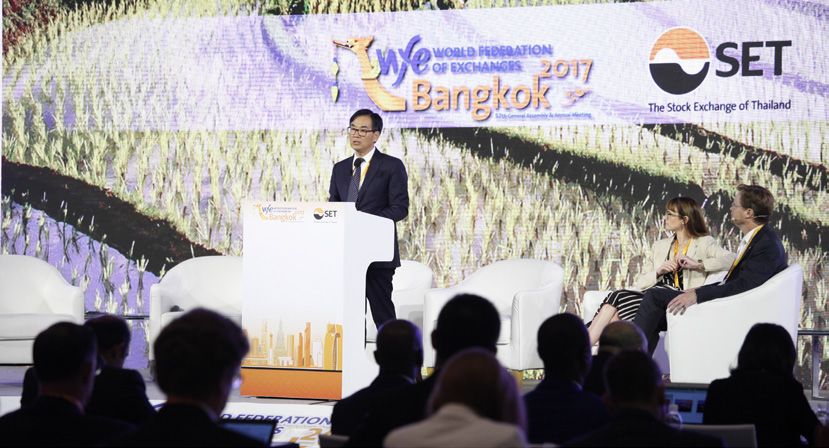
2018 REPORT
                                                                                                                  ON PROGRESS

MESSAGE FROM FTSE RUSSELL
FTSE Russell is part of London Stock Exchange Group. LSE Group is an
SSE Partner Exchange and Chaired the 2015 SSE Advisory Group on ESG Disclosure

In our role as a global benchmark provider we are              In part II’s analysis, in line with FTSE Russell’s ESG
acutely aware of how ESG data is being built into              methodology, there is a focus on investor materiality.
investment processes and mandates including                    One size does not fit all with ESG reporting; for
passive strategies. High quality data disclosure from          example, reporting of health and safety data, such
issuers is essential for this. That is what makes this         as annual staff fatalities, should be expected from
report so important; it measures and tracks how issuer         industries where this is a significant risk, such as
disclosure over time is improving across different             mining or construction; but is much less relevant
markets.                                                       for software development firms. This type of sector
                                                               materiality has been applied in this analysis.
FTSE Russell is therefore delighted to support this
work as the expert partner providing data that                 As analysis in this report shows, the Japanese market
underpins the analysis in Part II of this report.              is making good progress following the important
                                                               actions taken by the Japanese government pension
The pressures and requests on companies and other              fund, GPIF, catalysing improved disclosure by issuers.
issuers for ESG related disclosure can be varied and           Other markets making good progress are those
confusing. Stock exchanges and index providers are             of Thailand and South Africa, where both stock
aptly placed to connect investors and companies                exchanges have been very active in driving improved
and to facilitate discussion of ESG issues. Part I of          reporting. The Stock Exchange of Thailand and the
this report shows significant growth in recent years in        Johannesburg Stock Exchange taking respectively
the number of exchanges engaged in ESG activities.             seventh and eighth spots in ESG disclosure is an
Exchanges that promote transparency and high quality           excellent demonstration that emerging markets can
ESG reporting are helping companies to understand              be ahead of developed markets.
that this disclosure is an important driver of value
creation and are addressing new information demands            The analysis in this report can help encourage some
from investors. Index providers, such as FTSE Russell,         healthy competition between markets to enhance
are also focused on providing high quality ESG data to         their information disclosure. This is important, but we
drive the data, analytics and indexes that institutional       all need to collaborate to enhance data, dialogue and
investors need.                                                the investment required for a smooth transition to a
                                                               sustainable, low carbon economy. We look forward
We have tried to play our role here through what we            to continuing to play our part supporting both issuers
call “STEP Change” (Stewardship, Transition and                and investors navigating the transition.
Engagement Program for Change) which sets out
how we can work together to support a sustainable
transition. An important early step was supporting the
development of the Sustainable Stock Exchanges
initiative’s Model Guidance on ESG Reporting, and
through the launch of London Stock Exchange
Group’s issuer guidance last year.

                                                                                               Mark Makepeace
                                                                                   Group Director, Information Services
                                                                                         Division & CEO, FTSE Russell
                                                                                       London Stock Exchange Group

                                                  www.SSEinitiative.org
                                                           5
2018 REPORT
ON PROGRESS

      EXECUTIVE SUMMARY

      Global challenges – from climate change and gender              America, through an event in Buenos Aires and the
      equality to job creation and poverty reduction – require        translation of the SSE’s Green Finance Action Plan
      multilateral and multi-stakeholder solutions. To help           into Spanish.
      address these international challenges, the SSE serves
      as a platform for promoting good practice among                 The SSE continues to support UN and financial sector
      stock exchanges, which are uniquely positioned to               collaboration in support of the Paris Agreement and
      influence their markets in ways that few other actors           green finance through its presence at COP events. In
      can.                                                            2017, the SSE launched its green finance publication
                                                                      at COP23 in Bonn, Germany, in partnership with the
      Launched in 2009, the United Nations Sustainable                Luxembourg Stock Exchange. The event included
      Stock Exchanges (SSE) initiative was a response                 a series of topical workshops and a high-level panel
      to demand from exchanges for a place to come                    discussion on how to simultaneously encourage
      together with investors, companies, regulators                  greener financial markets and promote green products.
      and policy makers to share leading practices and
      address common challenges in a multi-stakeholder                Other events the SSE coordinated in 2017 and
      environment. Since 2012, when the first five stock              2018 focused on ESG disclosure. In 2017, the SSE
      exchanges made a public commitment to advancing                 held a technical workshop in Berlin on closing the
      sustainability in their markets, the initiative has grown       environmental, social and governance (ESG) data gap
      into what is now a global partnership platform that             and financing the SDGs, in partnership with GIZ and
      includes most of the world’s stock exchanges. Through           Ceres. In 2018, the SSE partnered with the International
      the SSE, exchanges have access to capacity-building             Finance Corporation (IFC) and the London Stock
      activities, guidance, research and other support to             Exchange to further these discussions in London at
      assist in their efforts to contribute to sustainable            an ESG roundtable. The SSE also held a meeting of its
      development.                                                    newly formed Securities Regulators Advisory Group in
                                                                      Geneva in 2018 for the development of its report on
      Over 2016-18, the period covered by this report,                securities regulators and the SDGs.
      the SSE has added to its suite of capacity-building
      documents to include guidance on gender equality
      (March 2017), a comprehensive report on green                   PROGRESS REPORT ON
      finance (November 2017) and a sharing of experiences            STOCK EXCHANGES’
      on how securities regulators can support the UN
      Sustainable Development Goals (SDGs) (October                   SUSTAINABILITY ACTIVITIES
      2018).
                                                                      Part I of this report analyses the sustainability activities
      Alongside its guidance on gender equality, the                  undertaken by the world’s stock exchanges. The
      SSE continues to support exchanges’ awareness-                  last two years have seen a significant growth in
      raising activities and has seen continued growth in             stock exchange activities promoting sustainability
      the participation of exchanges in the Ring the Bell             and transparency in their markets. As of the third
      for Gender Equality event series every year around              quarter of 2018, 78 stock exchanges had committed
      International Women’s Day. In addition to the Green             to promoting sustainable and transparent markets
      Finance publication, which sets out 12 action points            by joining the SSE, and 66 stock exchanges were
      stock exchanges can employ to support green                     engaging with at least one of the six sustainability
      finance in their markets, the SSE has held two region-          activities tracked by the SSE (see figure below).
      specific events. In 2017, the SSE focused on trends
      in Asia at the China Social Investment Forum week               In particular, the number of green or sustainability
      in Beijing. The following year, the initiative worked           bond listing segments has tripled from five in 2016
      with the Mexican and Argentinian stock exchanges                to 15 in the third quarter of 2018, expanding rapidly
      (Bolsa Mexicana de Valores and Bolsa de Comercio                in line with the exponential growth in the green bond
      de Buenos Aires) on growing green finance in Latin              market. Guidance and education activities also
                                                                      accelerated over the last two years: written guidance

                                                        www.SSEinitiative.org
                                                                  6
2018 REPORT
                                                                                                                          ON PROGRESS

on ESG disclosure grew 85% between 2016 and late                       MEASURING SUSTAINABILITY
2018, bolstered by the SSE’s campaign and Model
Guidance on this topic. More broadly, sustainability                   DISCLOSURE
education through training of companies and investors
                                                                       Part II of this report provides an analysis of the
has also taken off in recent years, increasing 65% in
                                                                       disclosure practices of more than 4,300 companies
the last two alone. A full overview of stock exchanges’
                                                                       listed on 35 stock exchanges around the world. The
sustainability activities can be found in Annex 1.
                                                                       results find comparatively good disclosure practices at
Continued growth in stock exchange engagement                          a number of exchanges, with Nasdaq Helsinki topping
with sustainability activities indicates a market demand               the ranking for overall disclosure rates, the Stock
for more information on sustainability and a growing                   Exchange of Hong Kong for growth in disclosure,
understanding of the materiality of ESG issues to                      and Nasdaq Copenhagen for timeliness of disclosure.
corporate financial performance. These developments                    While Europe has often been seen as the leader in
were in line with new outcomes at the international                    sustainability reporting, the results of this analysis
level during the 2016-18 period. In 2017, major new                    indicate that sustainability disclosure is picking up in
reports were published by the Financial Stability                      areas outside Europe: with two emerging markets
Board’s Task Force on Climate-related Disclosures                      (South Africa’s Johannesburg Stock Exchange and The
(TCFD),1 and the European Commission’s High-                           Stock Exchange of Thailand) in the top 10 for overall
Level Expert Group on Sustainable Finance (HLEG).2                     disclosure rates, and with four more in the top 10 by
In 2018, several committees convened by the                            disclosure growth rate. Among large stock exchanges
International Organization of Securities Commissions                   (those with at least 100 listed companies with over
(IOSCO) began discussions on sustainable finance,                      $1 billion in sales) the London Stock Exchange had
while the World Federation of Exchanges (WFE)                          the highest disclosure rate for greenhouse gas (GHG)
launched its sustainability principles (see Box I.2).                  emissions, with a near-perfect 97% disclosure rate for
These developments are indications of the growing                      its listed companies.
global consensus that ESG issues should be better
integrated into corporate reporting and investment
decision making.

  Figure 1        Stock exchanges acting on sustainability

                                           Sector
                 Number of stock exchanges as        Analysis Chart
                                              of Q3 2018

                                       SSE Partners Exchanges                                                 78

                              Exchanges training on ESG topics                                   48

                           Exchanges with sustainability reports                            39

          Exchanges providing written guidance on ESG reporting                             39

          Exchanges whose markets are covered by an ESG index                          35

             Exchanges with mandatory ESG listing requirements                  16

                            Exchanges with ESG bond segments                    15

Source: SSE database.

                                                        www.SSEinitiative.org
                                                                   7
2018 REPORT
ON PROGRESS

      A common thread among many of the top exchanges                    While a number of markets have seen high growth in
      for disclosure, and particularly of GHG emissions, is              disclosure, this analysis highlights that there remains
      the presence of regulation on one or more indicators               much to be done. Despite the Paris Agreement,
      evaluated. In all of the top 10 exchanges, in both                 there has been no growth in GHG disclosure by the
      developed and emerging markets, some form of                       companies analysed from 2015-16, and more than
      regulation mandates disclosure of one or more of                   half of the companies evaluated provide no data on
      the indicators evaluated by all, or a subset of, listed            their GHG emissions. Investors, stock exchanges and
      companies. GHG emissions disclosure was the                        regulators all have a role to play in encouraging greater
      most reported indicator, which also may be related                 disclosure on this and other ESG metrics. The SSE will
      to regulatory action in certain jurisdictions, such                continue to work with all capital market participants
      as France’s 2010 Grenelle II Law and the United                    to further enhance disclosure and contribute to
      Kingdom’s 2013 update to the 2006 Companies Act.                   the growth of sustainable and transparent capital
      These two pieces of regulation have elements that                  markets that are aligned with the world’s sustainable
      make them particularly effective: they are mandatory,              development goals.
      specific in terms of which disclosures are required,
      and applicable to a majority of listed companies in
      their respective jurisdictions.

                                             Maurice Bauer (Secretary General, LuxSE) Chairs meeting of the SSE Green Finance Advisory Group, 2017.

                                                          www.SSEinitiative.org
                                                                    8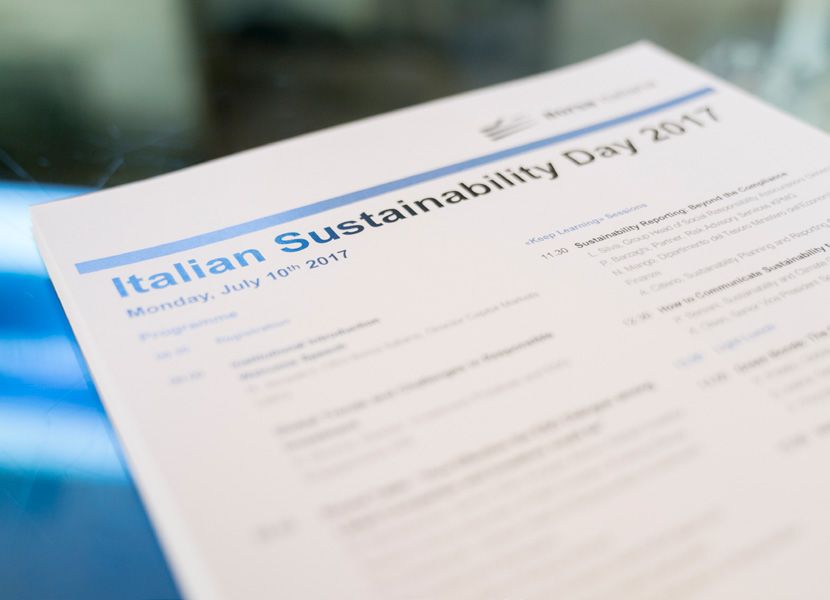
2018 REPORT
                                                                                                                                                                                                                                             ON PROGRESS

CONTENTS

Note  .  .  .  .  .  .  .  .  .  .  .  .  .  .  .  .  .  .  .  .  .  .  .  .  .  .  .  .  .  .  .  .  .  .  .  .  .  .  .  .  .  .  .  .  .  .  .  .  .  .  .  .  .  .  .  .  .  .  .  .  .  .  .  .  .  .  .  .  .  .  .  .  .  .  .  .  .  . 3

Acknowledgements .  .  .  .  .  .  .  .  .  .  .  .  .  .  .  .  .  .  .  .  .  .  .  .  .  .  .  .  .  .  .  .  .  .  .  .  .  .  .  .  .  .  .  .  .  .  .  .  .  .  .  .  .  .  .  .  .  .  .  .  .  .  .  .  .  . 3

About the SSE .  .  .  .  .  .  .  .  .  .  .  .  .  .  .  .  .  .  .  .  .  .  .  .  .  .  .  .  .  .  .  .  .  .  .  .  .  .  .  .  .  .  .  .  .  .  .  .  .  .  .  .  .  .  .  .  .  .  .  .  .  .  .  .  .  .  .  .  .  . 3

Message from AVIVA investors  .  .  .  .  .  .  .  .  .  .  .  .  .  .  .  .  .  .  .  .  .  .  .  .  .  .  .  .  .  .  .  .  .  .  .  .  .  .  .  .  .  .  .  .  .  .  .  .  .  .  .  .  .  .  .  . 4

Message from LSE Group .  .  .  .  .  .  .  .  .  .  .  .  .  .  .  .  .  .  .  .  .  .  .  .  .  .  .  .  .  .  .  .  .  .  .  .  .  .  .  .  .  .  .  .  .  .  .  .  .  .  .  .  .  .  .  .  .  .  .  .  . 5

Executive summary .  .  .  .  .  .  .  .  .  .  .  .  .  .  .  .  .  .  .  .  .  .  .  .  .  .  .  .  .  .  .  .  .  .  .  .  .  .  .  .  .  .  .  .  .  .  .  .  .  .  .  .  .  .  .  .  .  .  .  .  .  .  .  .  .  . 6

Contents .  .  .  .  .  .  .  .  .  .  .  .  .  .  .  .  .  .  .  .  .  .  .  .  .  .  .  .  .  .  .  .  .  .  .  .  .  .  .  .  .  .  .  .  .  .  .  .  .  .  .  .  .  .  .  .  .  .  .  .  .  .  .  .  .  .  .  .  .  .  .  .  .  .  . 9

Figures, tables and boxes .  .  .  .  .  .  .  .  .  .  .  .  .  .  .  .  .  .  .  .  .  .  .  .  .  .  .  .  .  .  .  .  .  .  .  .  .  .  .  .  .  .  .  .  .  .  .  .  .  .  .  .  .  .  .  .  .  .  .  . 10

I. Progress Report .  .  .  .  .  .  .  .  .  .  .  .  .  .  .  .  .  .  .  .  .  .  .  .  .  .  .  .  .  .  .  .  .  .  .  .  .  .  .  .  .  .  .  .  .  .  .  .  .  .  .  .  .  .  .  .  .  .  .  .  .  .  .  .  .  . 11

      1. ESG disclosure: guidance and listing requirements . . . . . . . . . . . . . . . . . . . . . . . . . . . . . . . . . . . . . . . 16

            Listing rules and the role of securities regulators . . . . . . . . . . . . . . . . . . . . . . . . . . . . . . . . . . . . . . . . 16

            Stock exchange sustainability reports  . . . . . . . . . . . . . . . . . . . . . . . . . . . . . . . . . . . . . . . . . . . . . . . . 19

      2. ESG training and awareness raising . . . . . . . . . . . . . . . . . . . . . . . . . . . . . . . . . . . . . . . . . . . . . . . . . . 19

            ESG training  . . . . . . . . . . . . . . . . . . . . . . . . . . . . . . . . . . . . . . . . . . . . . . . . . . . . . . . . . . . . . . . . . . . 20

            Awareness raising  . . . . . . . . . . . . . . . . . . . . . . . . . . . . . . . . . . . . . . . . . . . . . . . . . . . . . . . . . . . . . . . 22

      3. Sustainable finance products . . . . . . . . . . . . . . . . . . . . . . . . . . . . . . . . . . . . . . . . . . . . . . . . . . . . . . . 23

            Sustainability indexes  . . . . . . . . . . . . . . . . . . . . . . . . . . . . . . . . . . . . . . . . . . . . . . . . . . . . . . . . . . . . 23

      4. Concluding remarks . . . . . . . . . . . . . . . . . . . . . . . . . . . . . . . . . . . . . . . . . . . . . . . . . . . . . . . . . . . . . . 28

II. Measuring sustainability disclosure  .  .  .  .  .  .  .  .  .  .  .  .  .  .  .  .  .  .  .  .  .  .  .  .  .  .  .  .  .  .  .  .  .  .  .  .  .  .  .  .  .  .  .  .  .  .  .  .  . 29

      1. Ranking the world’s stock exchanges . . . . . . . . . . . . . . . . . . . . . . . . . . . . . . . . . . . . . . . . . . . . . . . . . 29

            Disclosure performance . . . . . . . . . . . . . . . . . . . . . . . . . . . . . . . . . . . . . . . . . . . . . . . . . . . . . . . . . . . 29

            Disclosure growth performance . . . . . . . . . . . . . . . . . . . . . . . . . . . . . . . . . . . . . . . . . . . . . . . . . . . . . 29

            Disclosure timeliness performance . . . . . . . . . . . . . . . . . . . . . . . . . . . . . . . . . . . . . . . . . . . . . . . . . . . 29

      2. Additional analysis: indicator, sector, size and location . . . . . . . . . . . . . . . . . . . . . . . . . . . . . . . . . . . . 31

            Indicator analysis . . . . . . . . . . . . . . . . . . . . . . . . . . . . . . . . . . . . . . . . . . . . . . . . . . . . . . . . . . . . . . . . 31

            Sector analysis of GHG emissions disclosure . . . . . . . . . . . . . . . . . . . . . . . . . . . . . . . . . . . . . . . . . . . 31

            Location and size analysis . . . . . . . . . . . . . . . . . . . . . . . . . . . . . . . . . . . . . . . . . . . . . . . . . . . . . . . . . 32

      3. Concluding remarks . . . . . . . . . . . . . . . . . . . . . . . . . . . . . . . . . . . . . . . . . . . . . . . . . . . . . . . . . . . . . . 33

Annex 1: S
          tock exchanges’ sustainability activities  .  .  .  .  .  .  .  .  .  .  .  .  .  .  .  .  .  .  .  .  .  .  .  .  .  .  .  .  .  .  .  .  .  .  .  .  .  . 34

Annex 2: D
          isclosure rates (2015–17) and growth rate (2015 to 2016) .  .  .  .  .  .  .  .  .  .  .  .  .  .  .  .  .  .  .  .  .  .  .  .  . 37

Annex 3. Detailed ranking methodology  .  .  .  .  .  .  .  .  .  .  .  .  .  .  .  .  .  .  .  .  .  .  .  .  .  .  .  .  .  .  .  .  .  .  .  .  .  .  .  .  .  .  .  .  .  .  . 44

Endnotes  .  .  .  .  .  .  .  .  .  .  .  .  .  .  .  .  .  .  .  .  .  .  .  .  .  .  .  .  .  .  .  .  .  .  .  .  .  .  .  .  .  .  .  .  .  .  .  .  .  .  .  .  .  .  .  .  .  .  .  .  .  .  .  .  .  .  .  .  .  .  .  .  . 47

                                                                                                         www.SSEinitiative.org
                                                                                                                          9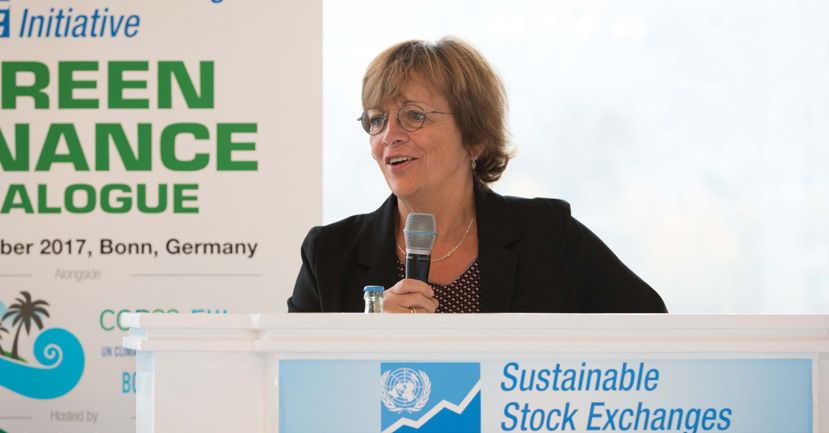
2018 REPORT
ON PROGRESS

      FIGURES, TABLES AND BOXES

      Figures
      Figure I.1:      SSE members around the world .  .  .  .  .  .  .  .  .  .  .  .  .  .  .  .  .  .  .  .  .  .  .  .  .  .  .  .  .  .  .  .  .  .  .  .  .  .  .  . 12

      Figure I.2:      SSE membership continues to grow .  .  .  .  .  .  .  .  .  .  .  .  .  .  .  .  .  .  .  .  .  .  .  .  .  .  .  .  .  .  .  .  .  .  .  .  .  .14

      Figure I.3:      Stock exchange sustainability activities .  .  .  .  .  .  .  .  .  .  .  .  .  .  .  .  .  .  .  .  .  .  .  .  .  .  .  .  .  .  .  .  .  .  .  . 15

      Figure I.4:      ESG disclosure guidance increases  .  .  .  .  .  .  .  .  .  .  .  .  .  .  .  .  .  .  .  .  .  .  .  .  .  .  .  .  .  .  .  .  .  .  .  .  .  .16

      Figure I.5:      Growing number of markets with mandatory listing requirements for ESG disclosure .  .  .  .  .  .  .  .  .17

      Figure I.6: 	Leading by example: stock exchanges reporting on their own sustainability practices  .  .  .  .  .  .  .  . 19

      Figure I.7:      ESG training sees steady growth from 2013  .  .  .  .  .  .  .  .  .  .  .  .  .  .  .  .  .  .  .  .  .  .  .  .  .  .  .  .  .  .  .  .  .20

      Figure I.8:      Stock exchange participation in the SSE Ring the Bell for Gender Equality event .  .  .  .  .  .  .  .  .  .  . 22

      Figure I.9:      More than one third of the world’s markets have a sustainability index .  .  .  .  .  .  .  .  .  .  .  .  .  .  .  .  .  .23

      Figure I.10: United States ESG index versus a traditional broad market index . . . . . . . . . . . . . . . . . . . . 24

      Figure I.11: Green equity indexes’ performance versus their conventional benchmarks, Q3 2012-17  .  .  .  .  .  . 24

      Figure I.12: Total green bond issuance 2013-17  .  .  .  .  .  .  .  .  .  .  .  .  .  .  .  .  .  .  .  .  .  .  .  .  .  .  .  .  .  .  .  .  .  .  .  .  .  .25

      Figure I.13: Growth in green bond and sustainability bond listing segments .  .  .  .  .  .  .  .  .  .  .  .  .  .  .  .  .  .  .  .  .  .26

      Figure II.1: Corporate disclosure rates and growth rates for specific sustainability indicators  .  .  .  .  .  .  .  .  .  .  . 31

      Figure II.2: Disclosure of GHG emissions by industrial sector  .  .  .  .  .  .  .  .  .  .  .  .  .  .  .  .  .  .  .  .  .  .  .  .  .  .  .  .  .  .32

      Figure II.3: Disclosure rates by level of development of home country and size of company .  .  .  .  .  .  .  .  .  .  .  .33

      Tables
      Table II.1:      Ranking the world’s stock exchanges based on ESG disclosure of issuers .  .  .  .  .  .  .  .  .  .  .  .  .  .  .30

      Boxes
      Box I.1:         Climate Disclosure: The TCFD’s recommendations  .  .  .  .  .  .  .  .  .  .  .  .  .  .  .  .  .  .  .  .  .  .  .  .  .  .  .  .  .11

      Box I.2:         WFE sustainability principles .  .  .  .  .  .  .  .  .  .  .  .  .  .  .  .  .  .  .  .  .  .  .  .  .  .  .  .  .  .  .  .  .  .  .  .  .  .  .  .  .  .  .14

      Box I.3:         SSE launches interactive online database .  .  .  .  .  .  .  .  .  .  .  .  .  .  .  .  .  .  .  .  .  .  .  .  .  .  .  .  .  .  .  .  .  .  .15

      Box I.4:         Showing the way: stock exchanges offer ESG disclosure guidance .  .  .  .  .  .  .  .  .  .  .  .  .  .  .  .  .  .  . 16

      Box I.5:         How securities regulators can support the SDGs  .  .  .  .  .  .  .  .  .  .  .  .  .  .  .  .  .  .  .  .  .  .  .  .  .  .  .  .  .  . 18

      Box I.6:         How stock exchanges can advance gender equality .  .  .  .  .  .  .  .  .  .  .  .  .  .  .  .  .  .  .  .  .  .  .  .  .  .  .  . 22

      Box I.7:         Green finance  .  .  .  .  .  .  .  .  .  .  .  .  .  .  .  .  .  .  .  .  .  .  .  .  .  .  .  .  .  .  .  .  .  .  .  .  .  .  .  .  .  .  .  .  .  .  .  .  .  .  . 27

                                                                                   www.SSEinitiative.org
                                                                                               10
2018 REPORT
ON PROGRESS
I. PROGRESS REPORT
In adopting the SDGs3 and the Paris Agreement on Among the advances over the last two years are the
Climate Change,4 UN member states have committed launch of the Financial Stability Board’s Task Force
to reshaping the policy landscape within which the on Climate-related Financial Disclosures (TCFD) (see
financial system, market participants, regulators and Box I.1), the European Commission’s Technical Expert
wider stakeholders operate. Over the past two years, Group on Sustainable Finance and its High-Level
the organisers of the SSE initiative – UNCTAD, the UN Expert Group (HLEG) on Sustainable Finance, and the
Global Compact, UNEP FI and the PRI – together with World Federation of Exchanges (WFE) sustainability
other organisations around the world, have initiated principles (see Box I.2). In addition, the International
projects, convened global gatherings and produced Organization of Securities Commissions (IOSCO)
major reports discussing and analysing the structure, has engaged with the topic of sustainability through
operation and sustainability of today’s financial system. various groups and activities in the last two years.
Box I.1 Climate Disclosure: The TCFD’s recommendations
Given the potential impact from climate change on financial intermediaries and investors, the G20 Finance Ministers and Central
Bank Governors asked the Financial Stability Board (FSB) to review how the financial sector can consider climate-related issues.
As a part of its review, the FSB identified the need for better climate-related disclosure, and established the Task Force on Climate-
related Financial Disclosures to develop voluntary, consistent climate-related financial reporting guidelines for companies and
investors. The TCFD reflected on the principle of materiality and climate-related disclosure, recommending climate-related
information be disclosed in mainstream (i.e. public) financial filings. It highlights stock exchanges as key stakeholders that can
make a valuable contribution towards the adoption of its recommendations.
Despite demand for climate-related information from investors, its supply by listed companies has not yet become widespread.
For example, fewer than half (48%) of the 4,344 companies assessed in Part II of this report are disclosing GHG (scope 1 & 2)
emissions, which are the most frequently disclosed of seven indicators evaluated.
The TCFD recommendations highlight a set of risks and opportunities facing markets today, as well as their potential financial
impact. In addition to the financial risks listed by the TCFD, some other material risks related to the environment include:
disruption to supply chains; loss of access to raw materials; loss of biodiversity; loss of arable land; social upheaval; increased
healthcare costs; mass migration; and extreme weather events. Stock exchanges and other capital market players can help
mitigate these risks by enhancing their work on green finance.
Climate-related opportunities and their financial impact
Climate-related opportunities: Potential financial impact:
• Access to new markets • Increased revenue through access to new and emerging markets (e.g. partnerships
• Use of public-sector incentives with governments, development banks)
• Access to new assets and locations • Increased diversification (e.g. green bonds and infrastructure)
needing insurance coverage
Climate Related Risks and their Financial Impact
Climate-related risks: Potential financial impact:
• Changing customer behaviour • Reduced demand for goods and services due to shifts in consumer preferences
• Uncertainty in market signals • Increased production costs due to changing input prices (e.g. energy, water) and
• Increased cost of raw materials output requirements (e.g. waste treatment)
• Abrupt and unexpected shifts in energy costs
• Changing revenue mix and sources
• Re-pricing of assets and speed of re-pricing (e.g. fossil fuel reserves, land
valuations, securities valuations)
Source: S
SE Green Finance Action Plan.
www.SSEinitiative.org
112018 REPORT
ON PROGRESS
In 2018, for example, the IOSCO Africa and Middle institutional investors (including both asset owners and
East Regional Committee Annual Conference in asset managers) and securities market regulators. The
Morocco and the IOSCO Asia Pacific Hub in Malaysia sustainability practices of stock exchanges can be a
both hosted discussions on green finance, while in useful benchmark of innovation in sustainable finance,
London in 2018 IOSCO announced that it is evaluating given stock exchanges’ position at the intersection of
the feasibility of launching a new IOSCO Sustainability portfolio investors, listed companies and capital market
Network devoted exclusively to this topic. authorities. The SSE initiative, which now includes
most of the world’s stock exchanges (see Figure 1.1),
Alongside these international policy and regulatory illustrates the growing attention that exchanges are
developments, there has been rapid evolution in paying to sustainability in their markets.
market practices and instruments designed to promote
investment in sustainable businesses and support Since 2012, when the four founding SSE Partner
the achievement of the SDGs. Market innovations Exchanges signed a commitment to promote
related to sustainable development continue to sustainable and transparent capital markets,
attract interest from investors, and the positive track the number of stock exchanges committing to
record of sustainability-themed products is reinforcing sustainability has grown rapidly (see Figure I.2). Since
the views of a growing number of asset managers the previous report on progress in 2016, membership
that sustainability issues are material to long-term has grown 26%. As of late 2018, public commitments
investment performance. to advancing sustainability in their markets have
been made by 78 partner exchanges from five
Capital market policies and instruments designed continents, on which over 45,000 companies are
to promote investment in sustainable businesses listed, which represent a market capitalisation of more
and support the achievement of the SDGs are an than US$80trn. This includes nine of the 10 largest
increasingly important feature of the investment exchanges in the world, as well as a number of small
landscape. Stock exchanges are key actors in exchanges from developing countries.
promoting new policies, tools and instruments, as are
Figure I.1 SSE members around the world
Source: SSE database.
www.SSEinitiative.org
122018 REPORT
ON PROGRESS
Argentina – Bolsas y Mercados Argentinos Mauritius – Stock Exchange of Mauritius
and Bolsa de Comercio de Buenos Aires
Mexico – Bolsa Mexicana de Valores
Australia – Australian Securities Exchange
Mongolia – Mongolian Stock Exchange
Australia – Sydney Stock Exchange
Mongolia – Mongol Securities Exchange
Bangladesh – Chittagong Stock Exchange
Morocco – Casablanca Exchange
Bangladesh – Dhaka Stock Exchange
Namibia – Namibia Stock Exchange
Belarus – Belarusian Currency and Stock Exchange
Netherlands – Euronext Amsterdam
Belgium – Euronext Brussels
New Zealand – NZX Limited
Bosnia and Herzegovina (Republic of
Srpska) – Banja Luka Stock Exchange Nigeria – Nigerian Stock Exchange
Botswana – Botswana Stock Exchange Norway – Oslo Børs
Brazil – B3 Panama – Bolsa de Valores de Panamá
Canada – Aequitas NEO Exchange Peru – Bolsa de Valores de Lima
Chile – Bolsa de Comercio de Santiago Poland – Warsaw Stock Exchange
China – Shanghai Stock Exchange Portugal – Euronext Lisbon
China – Shenzhen Stock Exchange Qatar – Qatar Stock Exchange
Colombia – Bolsa de Valores de Colombia Romania – Bucharest Stock Exchange
Costa Rica – Bolsa Nacional de Valores Rwanda – Rwanda Stock Exchange
Denmark – Nasdaq Copenhagen Serbia – Belgrade Stock Exchange
Egypt – Egyptian Exchange Seychelles – Trop-X
Estonia – Nasdaq Tallinn Singapore – Singapore Exchange
Finland – Nasdaq Helsinki Slovenia – Ljubljana Stock Exchange
France – Euronext Paris South Africa – Johannesburg Stock Exchange
Germany – Deutsche Börse Spain – Bolsas y Mercados Españoles
Greece – Athens Stock Exchange Sri Lanka – Colombo Stock Exchange
Hong Kong – Hong Kong Exchanges and Clearing Sweden – Nasdaq Stockholm
Iceland – Nasdaq Iceland Tanzania – Dar es Salaam Stock Exchange
India – BSE India Thailand – Stock Exchange of Thailand
India – National Stock Exchange of India Tunisia – Bourse des Valeurs Mobilières de Tunis
Italy – Borsa Italiana Turkey – Borsa Istanbul
Jamaica – Jamaica Stock Exchange Uganda – Uganda Securities Exchange
Japan – Japan Exchange Group, Inc. United Arab Emirates – Dubai Financial Market
Jordan – Amman Stock Exchange United Kingdom – Euronext London
Kazakhstan – Kazakhstan Stock Exchange United Kingdom – London Stock Exchange
Kenya – Nairobi Securities Exchange USA – Nasdaq
Korea (Republic of) – Korea Exchange USA – NYSE
Kuwait – Boursa Kuwait Vietnam – Hanoi Stock Exchange
Latvia – Nasdaq Riga Vietnam – Ho Chi Minh Stock Exchange
Lithuania – Nasdaq Vilnius Zimbabwe – Zimbabwe Stock Exchange
Luxembourg – Luxembourg Stock Exchange Western Africa – BVRM
Malaysia – Bursa Malaysia
www.SSEinitiative.org
132018 REPORT
ON PROGRESS
Figure I.2 SSE membership continues to grow
Year-end number of SSE partner stock exchanges
SSE(except
initiative members,
2018, for which the figure is for the end of the third quarter)
2012–2018 Q2 (Number of stock exchanges)
78
68
57
47
78 stock
exchanges
45 700
companies
16 $81 trillion
market cap
9
6
2012 2013 2014 2015 2016 2017 2018 Q3
Source: SSE database.
Box I.2 The WFE sustainability principles
At its 58th annual meeting in October 2018, the World Federation of Exchanges launched a set of five principles on sustainability.
These principles mark a major milestone in the evolution of WFE members’ engagement with sustainability. With their launch,
WFE member exchanges formally acknowledge their role in fostering and promoting the development of a sustainable financial
system, ensuring that finance flows are consistent with a pathway towards low greenhouse gas emissions and climate-resilient
development, and promoting the transition towards an inclusive and sustainable economy.
The principles commit WFE members to:
1. Educate participants in the exchange ecosystem about the importance of sustainability issues;
2. Promote the enhanced availability of investor relevant, decision-useful ESG information;
3. Actively engage with stakeholders to advance the sustainable finance agenda;
4. Provide markets and products that support the scaling-up of sustainable finance and the
reorientation of financial flows; and
5. Establish effective internal governance and operational processes and policies to support their
sustainability efforts.
Source: SSE.
The SSE tracks stock exchanges’ sustainability Guidance provides a template for stock exchanges
activities on its freely available online database (see to do this, and a database of published guidance
Box I.3), which covers 93 stock exchanges worldwide.5 documents from stock exchanges can be used as
The six main activities tracked by the SSE are: examples of leading practice.
• Sustainability reporting – Whether the exchange • ESG listing rules – Whether listed companies are
reports on its own sustainability (including ESG required to report ESG factors.
factors), either through a sustainability section on
its website, a stand-alone sustainability report, or • Sustainability training – Whether the exchange
within its main annual report. provides training on ESG factors.
• Sustainability reporting guidance – Whether the • ESG indexes – Whether the exchange’s market has
exchange provides written guidance to its issuers a sustainability index, making it easier for investors
on how to report on ESG factors. The SSE’s Model to locate and invest in sustainable companies.
www.SSEinitiative.org
142018 REPORT
ON PROGRESS
• Sustainability bond listing – Whether the markets. For example, in 2017 the Mongolian Stock
exchange has a listing segment specifically for Exchange introduced a listing discount for companies
sustainability bonds, making it easier for investors supporting the SDGs.
to locate and invest in sustainable fixed income
products. Sustainability activities at stock exchanges have
increased exponentially since the beginning of the
In addition to these six main activities, exchanges are century, and more than 70% of all stock exchanges
increasingly developing new and innovative initiatives tracked by the SSE now engage in at least one of the
to promote sustainable and transparent capital six activities tracked (see Figure I.3).
Box I.3 SSE launches interactive online database
The SSE maintains a database of fact sheets on all of its Partner
Exchanges, as well as members of the World Federation of
Exchanges. These fact sheets are intended to inform capital market
stakeholders on the work stock exchanges are undertaking to
advance sustainability in their respective markets. In response to
growing demand for the data compiled by the SSE on sustainability
activities of stock exchanges, the SSE launched at the 2018
Global Dialogue a new online database allowing users to find all
stock exchanges working on a selection of activities. By using
seven filter options, users can easily identify all stock exchanges
engaged on particular sustainability activities or combinations of
activities. The database, which is freely accessible, can be found
at www.sseinitiative.org/data.
Source: SSE.
Figure I.3 Stock exchange sustainability activities experience strong growth
Number of
Number of exchanges
exchanges
50
40
30
20
10
0
2000 2002 2004 2006 2008 2010 2012 2014 2016 Q3 2018
Exchanges with sustainability reports Exchanges whose markets are covered by an ESG index
Exchanges providing written guidance on ESG reporting Exchanges with mandatory ESG listing requirements
Exchanges training on ESG topics Exchanges with ESG bond segments
Source: SSE database.
www.SSEinitiative.org
156
2018 REPORT4
ON PROGRESS
2
0
1. ESG
2000 DISCLOSURE:
2002 2004 GUIDANCE
2006 2008 2010 Listing
2012 rules and
2014 the role
2016 of securities
Q3 2018 regulators
AND LISTING REQUIREMENTS In addition to voluntary guidance, ESG information
is being increasingly incorporated into exchanges’
Exchanges continue to play an important role in listing rules , either by the exchanges themselves or
helping companies navigate emerging ESG disclosure by securities regulators, depending on the jurisdiction
and management demands. By the end of the third and the respective authorities of each institution. As
quarter of 2018, the number of stock exchanges ESG issues are incorporated into listing rules, and
providing formal guidance to issuers on reporting as the market for ESG-themed investment products
ESG information had reached 39 (see Figure I.4). This grows (see following subsection), securities market
compares with just 13 in 2015, when the SSE launched regulators are taking a greater interest in this area.
Exchanges whose markets are covered by an ESG index
its global campaign and published a guidance IOSCO’s Growth and Emerging Markets committee,
document to
Number of encourage and help exchanges provide for example, undertook a survey of its members in
guidance on sustainability reporting (see Box I.4).
stock exchanges early 2018 to inform discussions at the organisation
40
Box I.4 Showing the way: stock exchanges offer ESG disclosure guidance
35
SDG
30
target 12.6 calls for UN member states to encourage companies to adopt sustainable practices
and integrate sustainability information into their public reporting. In support of this target, the SSE
MODEL GUIDANCE
encourages
25 stock exchanges to provide guidance to their issuers on ESG reporting, and has provided ON REPORTING
ESG INFORMATION
a template that can be adapted to their local market.16 In September 2015, when the SSE launched TO INVESTORS
this
20 Model Guidance, fewer than one-third of stock exchanges around the world were providing
A VOLUNTARY TOOL FOR STOCK
EXCHANGES TO GUIDE ISSUERS
listed companies with guidance on reporting ESG information. This gap in guidance contributed
to15the publication of incomplete corporate information, creating a challenge for investors seeking
a comprehensive view of a company’s material ESG issues. The Model Guidance provides stock
10
exchanges with a model, or template, to develop their own custom guidance. In the last two years, WFE Sustainability Survey May
the number of stock exchanges providing such guidance has increased from 21 to 39.
2018
WFE ESG Guidance
Exchanges Maturing and
5 in TheirMetrics
Sustainability
Efforts
Revised June 2018
The SSE continues to engage with stock exchanges to encourage them to develop their own guidance
on0ESG2000
reporting, using
2002
the Model
2004
Guidance as a starting
2006 2008
template2010
and referencing
2012
the growing
2014
number
2016
of examples
Q3 2018
from their peers. Based on the SSE’s guidance, the WFE has created a set of metrics and recommendations for its
member exchanges on how to implement their own sustainability policies.17 The WFE Guidance & Metrics updated
in June 2018, identifies material ESG metrics that exchanges can incorporate into disclosure guidance to companies
listed on their market, setting out 34 key performance indicators based on the SSE guidance.
Source: SSE.
Exchanges providing written guidance on ESG reporting
Figure I.4 ESG disclosure guidance increases
Number of
stock exchanges
Number of stock exchanges providing written guidance on ESG disclosure for listed companies
40
35
30
25
20
15
10
5
0
2000 2002 2004 2006 2008 2010 2012 2014 2016 Q3 2018
Source: SSE database.
www.SSEinitiative.org
162018 REPORT
ON PROGRESS
(Left to Right) Fiona Reynolds (Executive Director, PRI and Member, SSE Governing Board); Robert Scharfe (CEO,
LuxSE); and Mohamed Farid (Executive Chairman, EGX) at SSE green finance session at COP23
about the role of securities regulators regarding ESG As of the third quarter of 2018, there were 16
issues. In addition, the SSE initiative convened in early stock exchanges with mandatory ESG reporting
2018 a securities regulators advisory group to study requirements on four continents: eight in Asia, three
practices in this area and facilitate the exchange of in both Africa and South America, and two in Europe.
experience. Figure I.5 traces the increase in the number of
exchanges that require ESG reporting by their listed
As mandatory ESG reporting is still a relatively new companies since 2002, when Euronext France and the
sustainability mechanism, the creation of listing Johannesburg Stock Exchange adopted this practice.
requirements is often combined with other activities Throughout the 2000s, there was little progress on
to assist with adoption and implementation. For this front. By the time of the first SSE Global Dialogue
example, to help listed companies comply with ESG in 2010, Borsa de Valores de Colombia was the only
disclosure requirements in Singapore, in 2017 the other stock exchange that had introduced mandatory
Singapore Exchange organised 23 capacity-building sustainability reporting. However, the following year
workshops to train company staff in the production saw six additional exchanges follow suit.
of sustainability reports. The following section further
details such training.
Exchanges with mandatory ESG listing requirements
Figure I.5 Growing number of markets with mandatory listing requirements for ESG disclosure
Number of
stock exchanges
Number of stock exchanges with ESG disclosure mandated by exchange or regulator
18
16
14
12
10
8
6
4
2
0
2000 2002 2004 2006 2008 2010 2012 2014 2016 Q3 2018
Source: SSE database.
www.SSEinitiative.org
172018 REPORT
ON PROGRESS
Mandatory ESG reporting is usually introduced Most ESG reporting requirements are based on a
either at the stock exchange’s initiative or through “comply-or-explain” system, whereby companies
government regulation. For instance, the Namibia have to either disclose their sustainability records
Stock Exchange implemented mandatory reporting as or justify their decision not to do so. Some stock
part of its NamCode, a code of principles and practices exchanges have put in place more comprehensive
on a non-legislated basis, which entered into force in reporting rules. For instance, the Johannesburg Stock
2014. This code is influenced by South Africa’s King Exchange, which initially enforced what it called a
Code of corporate governance practices, illustrating “apply-or-explain” sustainability reporting regime,
the value of sharing best practice and collaboration moved in 2017 to an “apply-and-explain” approach.
between markets. Another example is the regulation
introduced by the Vietnamese government, effective However, these initiatives are not always initiated by
2016, which requires listed firms to disclose their exchange authorities: a number of securities market
corporate responsibility activities. regulators around the world are implementing rules to
promote sustainable finance (see Box I.5).
Box I.5 How securities regulators can support the SDGs
The sustainability objectives enshrined in the SDGs, as well as policy responses to these issues, can The SSE is a UN Partnership Program of:
create financially material risks and opportunities for investors and may affect the resilience of the
financial system as a whole. These impacts and consequences are of direct relevance to securities How securities regulators
can support the
regulators’ three overarching and interrelated objectives: to protect investors; to ensure that markets Sustainable Development Goals
A sharing of experiences
are fair, efficient and transparent; and to reduce systemic risk. To address this, the SSE, along with
an advisory group of more than 70 people from key stakeholder groups, has developed a guidance
document for capital market regulators sharing experience in promoting sustainable finance.
This report examines how, within their existing mandates, securities regulators could act (and are
acting) on sustainability-related risks and opportunities. Based on the examples within, the report
identifies five response areas and five cross-cutting actions that could help securities regulators
contribute to a more stable and resilient financial system that better supports the SDGs.
Facilitate investment Analysis
Aid investment flows towards achieving Analyse the factors that influence the ability
the SDGs via financial products. of market actors to support the SDGs.
Strengthen disclosure Roadmaps
Improve the quality and quantity of Produce or support the
disclosure of environmental and social data. development of national or regional
5 5
plans for sustainable finance.
Clarify duties Sharing
tio n s
Guide investors on the integration of Exchange experiences with other
m ai
sustainability into their decisions. securities regulators, and learn from the
ac experiences and practices of others.
ac
n
ti o n r e a s sup g
a p o rti n
Strengthen governance Standards
Introduce board responsibilities related Work with relevant international or
to environmental and social factors. regional bodies to implement standardised
guidelines or frameworks.
Build capacity Collaboration
Facilitate the training of market Work with other relevant organisations
participants on sustainability topics. to align efforts in support of the SDGs.
Source: SSE.
www.SSEinitiative.org
182018 REPORT
ON PROGRESS
Exchanges with sustainability reports
Figure I.6 Leading by example: stock exchanges reporting on their own sustainability practices
Number of Num
The
stocknumber of stock exchanges publishing sustainability reports
exchanges stock
40 18
16
35
14
30
12
25
10
20
8
15
6
10 4
5 2
0 0
2000 2002 2004 2006 2008 2010 2012 2014 2016 Q3 2018 2
Source: SSE database.
Stock exchange sustainability reports Another example is Borsa de Valores de Colombia,
which has included a GRI-based sustainability
Stock exchanges are setting an example to their
section in its annual reports since 2012. Exchanges
listed companies by publishing their own Exchanges
sustainability
training on ESG topics
disclose ESG information in many other formats, as
reports. In doing so, exchanges are illustrating how
part of annual reports, proxy statements or online
they are including ESG considerations in their own
Number of publications. N
businessstock
models, ranging from staff training on diversity
exchanges st
and equality, participation in charitable events, and While stock exchanges have generally focused
inclusion in sustainability indexes. As important voices primarily on social and corporate governance issues, 40
50
in their local markets, stock exchanges can play an exchanges have been gradually broadening their
important role in showcasing their own practices for ESG reporting practices over time. For instance, the 35
market participants to follow. Botswana Stock Exchange began its reporting with a
40 30
commitment to corporate social investment in its 2013
As of the third quarter of 2018, there were 39 stock
annual report. By 2018, the exchange had published
exchanges on five continents that report annually 25
30 a comprehensive report on the sustainability practices
on their sustainability: 15 in Europe, 11 in Asia, five
of its listed companies. 20
in both Africa and Latin America, and three in North
America Figure I.6 traces the increase in the number
20 15
of exchanges that disclose ESG information. In 2001,
only the Stock Exchange of Thailand was providing
2. E SG TRAINING AND
data on sustainability. By 2010, at the time of the first AWARENESS RAISING 10
10
SSE Global Dialogue, it had been joined by 13 others. 5
This number has climbed to 39 over the following Stock exchanges are increasingly playing an important
eight years. capacity-building role in helping issuers and investors 0
0
2008 2010 2012 to better2014
understand new2016ESG standards, products,
Q3 2018
Exchanges report on their sustainability in various services and practices. This can be done through
ways. Some use internationally recognised frameworks promotional activities such as bell-ringing ceremonies
to publish detailed stand-alone documents or or communication campaigns, or through training
extensive sections integrated into their annual reports. activities including seminars, online courses and
For instance, Bursa Malaysia has been issuing a workshops. These activities include the development
comprehensive sustainability report, based on Global of printed educational materials, workshops, larger
Number of Exchanges with ESG bond segments
Reporting Initiative (GRI) standards, since 2011. conferences and mentorship programmes.
stock exchanges
16
www.SSEinitiative.org
14
192018 REPORT
ON PROGRESS
In addition, some exchanges are also adding training through consistent and well-coordinated strategies to
to listing requirements. For example, Oslo Børs
Exchanges has trainreports
with sustainability and raise awareness among market participants
made ESG training mandatory for board members about sustainable development.
of listed companies as well as for management and
board members of companies that have applied to list As an example of strategic ongoing training, the Stock
Number of Exchange of Thailand (SET) has carried out a series Numb
on thestock
market. The exchange provides this training,
exchanges stock
as well as continuing courses for listed company of sustainability-related workshops every year as part
management and advisors. of its Sustainable Development Forum. These have 18
40
included training on a wide range of topics, such as
35 new sustainable investment opportunities, sustainable 16
ESG training branding strategies, the social investment market
14
As of 2018, at least 48 stock exchanges were providing
30 and climate change. In addition, SET has organised
ESG training to their listed companies, investors or free-of-charge training sessions with listed companies 12
25
other relevant stakeholders: 18 in Europe, 17 in Asia, on, among other things, the specifics of sustainability
reporting, sustainability indexing, evaluation and data 10
eight in Latin America, four in Africa and one in North
20 management, corporate social initiatives, sustainable
America. Figure I.7 illustrates the sharp increase in 8
training activities provided by stock exchanges from development risks and materiality.
15
2014 onwards. One of the first programmes was 6
Another example of strategic ongoing training is
launched
10 in 2010, when Brazil’s B3 stock exchange
Borsa Italiana’s Sustainability Day, launched in 2017 4
launched a partnership with the World Bank to
and repeated the following year with almost twice
organise5 seminars and other education activities to 2
the number of attendees. This annual event brings
increase the participation of public and private sector
together issuers and investors to exchange views 0
actors 0in the carbon2002
market. 2004
In 2014, 2006
the number of
2000 2008 on ESG strategies,
2010 2012 sustainability
2014 2016 data and reporting
Q3 2018 2
exchanges providing training on sustainability nearly
methods. The Johannesburg Stock Exchange holds
tripled, from five to 13 and, over the following four
similar investor-issuer dialogues on sustainability,
years, it has increased nearly four-fold. Some stock
called ESG Investor Briefings.
exchanges have been included in this analysis for
organising one-time specially designated events, The three most common topics addressed by stock
or ESG-related sessions as a component of wider exchanges’ sustainability training are reporting, green
training programmes. Other exchanges stand out bonds, and sustainable finance.
Exchanges training on ESG topics
Figure I.7 ESG training sees steady growth from 2013
Number of Nu
stock
The exchanges
number of stock exchanges providing training on sustainability topics per year sto
40
50
35
40 30
25
30
20
20 15
10
10
5
0
0
2008 2010 2012 2014 2016 Q3 2018
Source: SSE database.
Number of Exchanges with ESG bond segments
stock exchanges
16 www.SSEinitiative.org
20
142018 REPORT
ON PROGRESS
James Zhan, Director of Investment and Enterprise, UNCTAD and Chair, SSE Governing Board addresses WFE annual conference.
• Training issuers on ESG reporting: At least 29 least 15 stock exchanges have organised activities
exchanges have carried out some form of training that educate market participants about investment
on ESG reporting. For instance, in the run-up to approaches that consider ESG factors and their
the 2012 launch of its ESG reporting guide, the impact. For example, in 2017 the National Stock
Hong Kong Stock Exchange conducted a series of Exchange of India worked with the European
workshops and seminars for issuers, which attracted Corporate Governance Institute on a seminar on
over 1,300 participants. Since then, the exchange the long-term impact of institutional ownership on
has continued to train issuers on ESG matters. In governance and sustainable investment. The event
2016, the exchange conducted 12 seminars, with focused on the role that foreign institutional investors
over 1,800 attendees. Similar programmes carried and proxy advisory firms can play in promoting
out in the last 10 years include the Brazilian exchange corporate governance and sustainable investment
B3’s Report or Explain workshops (launched in in India. Another example is the panel organised
2012), Deutsche Borse’s Sustainable Corporate in 2015 by Borsa Istanbul entitled Environmental,
Reporting workshop (2018) and the FTSE-Bursa Social and Corporate Governance Perspective in
Malaysia ESG Reporting seminars (2014-2015). Investments, in collaboration with the Borsa Istanbul
In addition to its work with FTSE Russell, Bursa Sustainability Platform and the Bank of New York.
Malaysia conducted 63 workshops aimed at
improving sustainability reporting practices in 2016, • Sustainable financial products: Increasingly,
training 2,000 participants from listed companies. exchanges are providing training on green or
The reports of participants are evaluated by the sustainable bonds. At least six stock exchanges
exchange before and after training to determine if have organised seminars, workshops or conferences
progress is being made. Exchanges are also using to educate market participants on the subject. For
web-based solutions to increase the reach of their instance, in 2017 the Singapore Exchange partnered
training activities. Following the inauguration of a with the World Bank to launch a programme to
voluntary programme for ESG disclosure in 2017, raise awareness among current and potential
Nasdaq’s Nordic and Baltic exchanges cooperated investors about bonds with social or environmental
to produce a three-part webinar to provide impact. The inaugural forum – Understanding Bond
assistance to listed companies across their markets Investments and Quality Products with a Social
in preparing their ESG disclosures. Purpose – was held in April 2017. ESG indexes
and exchange-traded funds (ETFs) are another
• Training investors on responsible investment: popular subject of training sessions. For instance,
Another popular training topic focuses on Ho Chi Minh Stock Exchange a hosted a workshop
sustainable finance or responsible investment. At in March 2017 to introduce the VN Sustainability
www.SSEinitiative.org
21You can also read


