2020 A JOURNEY THROUGH PCHF - POWERED BY SYBRID(PVT.)LTD - Sybrid.com
←
→
Page content transcription
If your browser does not render page correctly, please read the page content below

A JOURNEY THROUGH PCHF
   POWERED BY SYBRID(PVT.)LTD.

          2020
Table Of Contents

    Vision Statement
      Mission Statement            The Underlying Problem

    Introduction
                                   The Story behind PCHF


      Board of Directors
      Board Members &                Background and Initiatives
      Advisory Board Members

   PCHF Analytics and
      Insights                      How To Donate
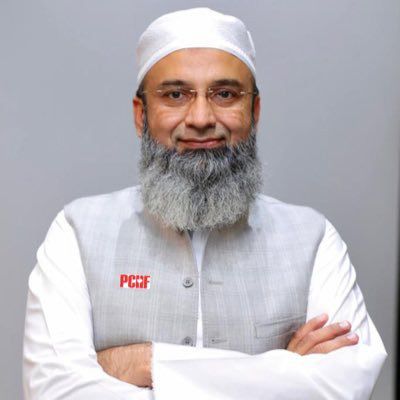
Farhan Ahmad
Volunteer CEO
The first time I came to know what congenital heart defect (CHD) is, it
took me a long time to even spell and pronounce the term properly. This
was my level of awareness about the disease at the time. I personally call
it a disease, and not a defect, because just like any other disease, CHD is
an illness, a curable one. Therefore, I believe that every child born with
CHD has just as much right to life as any other child without it. We, as a
society, need to create awareness and educate ourselves on CHD and
treat it as an illness. It is our wish to serve this cause to the best of our
ability so that one day, no family in Pakistan may have to lose their child to
                                      CHD.

                                                Misbah-Ul-Haq
                                                         Board Member

Back in 2017 during my final days with the Pakistan cricket team, I was
thinking about my home city Minawali, which is deprived of quality health-
care facilities. I wanted to do something about that. During this time, my
friend’s daughter was diagnosed with a heart disease. I witnessed their
struggle and hardship during this ordeal. The fact that alarmingly scarce
facilities are available to deal with this problem, was a revelation for me.
In our search for better healthcare my friend’s daughter needed, I met
with Mr. Farhan who talked about PCHF and their ambition to build a
hospital devoted to curing children’s heart problems and carrying out
research in the field. This cause inspired me to work for this noble cause,
               which I have come to call my life’s 2nd innings.
Vision Statement                                        Mission Statement
Pakistan Children’s Heart Foundation sees a           To establish a state of the art medical facility that
Pakistan in which not a single Congenital Heart       provides the highest quality of care for children with
Defect (CHD) patient remains untreated. Regard-       heart disease, irrespective of their financial means.
less of race, religion, gender, or financial back-     To act as a model institute, for the training of health-
ground we believe every child should be provided      care professionals, education of the public at large
the opportunity to receive world class medical        and promote research into the causes and manage-
treatment for their congenital heart defects (CHD).   ment of congenital heart disease.

Introduction
This report exhibits an introduction of the Pakistan Children’s Heart Foun-
dation (PCHF), all its progress since inception, and detailed analytical
research insights into the work that has been done by the organization.
Through this report, we will delve deep into the heart of the organization
and explore the motivation behind such a significant step taken by a
group of driven people, who aim to rid the people of Pakistan of the pain
caused by the loss of a child due to a heart disease.
As the report progresses, we will shed light on the prevailing sorry state
of affairs with regards to children’s heart problems rampant in Pakistan
and the scarcity of available treatments for such problems. The report will
also share PCHF’s vision of a children’s-heart-problems-free Pakistan,
and how it aims to fulfil this vision one day through perpetual progress
and struggles.
Furthermore, the report will introduce the readers to the men and women
behind this noble struggle i.e. the Board of Directors, Board Members, and
Advisory Board Members. Other than that, a vision for a dedicated hospi-
tal for Congenital Heart Defect (CHD) patients in Pakistan, Children Heart
Hospital and Research Institute (CHHRI), is also shared. The - idea behind
the construction of CHHRI is to provide the best treatment by the best
professionals to all affected children of CHD without financially burdening
parents and guardians alike.

                                       Page 05
Board Of
Directors

 Mr. Farhan Ahmad                          Volunteer CEO

 Mr. Mujtaba Bhatti                        Co-founder Kluchit

 Mr. Muhammad Ihsan                        CEO ‘O’ Consulting

 Mr. Muhammad Haris Naseer                 Director Infotech

Board
Members

 Mr. Misbah-Ul-Haq                         Head Coach, Pakistan Cricket Team

 Mr. Ather Imran                           CEO Sybrid (Pvt.) Ltd.

 Lt. Gen. (R) Syed Afzal Ahmad             Principal CMH Lahore Medical College

 Ms. Ammara Awais                          Director, OSA, The University of Lahore

 Mr. Tariq H. Cheema                       Founder, World Congress of Muslim
                                           Philanthropists
 Mr. Sultan Hamdani                        Partner Maison Consulting & Solutions

 Ms. Ana Tanveer                           Designer & Entrepreneur

 Dr. Narjis Fatima                         DSS Lahore | PESSI

 Maj. Gen. (R) Syed Shahid Mukhtar Shah    Former DG, IT, GHQ

                                           Project Manager Maison Consulting and
 Mr. Hassan Bukhari
                                           Solutions
 Dr. Ajaz Ali Baloch                       Senior Medical Officer

 Mr. Muhammad Sadiq                        Ex. Bank Officer - UBL

                                     Page 06
Advisory
Board Members
                          Medical Advisory Board Members

                                             Pediatric Cardiologist Dean CHIH,
 Prof. Dr. Masood Sadiq
                                             Lahore
                                             Pediatric Cardiac Surgeon CHIH,
 Dr. Asim Khan                               Lahore
                                             Pediatric Cardiac Anesthetist Sidra
 Dr. Saif Ur Rehman                          Medical Center, Qatar
                                             Pediatric Cardiac Surgeon CHIH,
 Dr. Salman A. Shah                          Lahore

 Dr. Syed Najam Hyder                        Pediatric Cardiologist CHIH, Lahore

                                             Pediatric Cardiac Anesthetist CHIH,
 Dr. Saeedah Asaf                            Lahore

                      Medical Research Advisory Board Members

                                           Director, Research and Innovation
 Dr. Faisal Cheema
                                           Baylor College of Medicine, USA

                                           Pediatric Cardiologist Aga Khan
 Dr. Babar Hasan
                                           University Hospital, Karachi

                          Business Advisory Board Members

 Mr. Mazhar Hussain                        CEO RICI

 Mr. Adnan Hafeez                          Head of DRM NOKIA Networks

 Ms. Mahvish Khalil                        Operations Manager NOKIA Networks

 Mr. Naveed Cheema                         Corporate Palnning Saudi ARAMCO

                                   Page 07
The Underlying
                                      Problem
Every developing country is marred with innumerable problems, be they social,
economic, or political, which affect their healthcare system. Men and women
spearheading in any of these spheres come across a multitude of challenges. What
matters most is how people persevere in such circumstances and dig deep in the
mountain to carve a path for the coming generations. Men and women behind
PCHF are playing their role in this regard.
When it comes to children with CHD, it normally takes between two to three
weeks for a family with a relatively stable income to find a suitable treatment in
Pakistan. One can only imagine the pain many Pakistani, mainly the underprivi-
leged, go through to find a similar treatment. Every year around 50,000 and
60,000 children are born with CHD in Pakistan. However, only a lucky few get the
chance to undergo surgery and get treatment. Success rate of the few who do
undergo treatment is another question altogether. Moreover, for every child who
gets heart surgery in Pakistan, thousands of other children are waiting for a similar
operation in government and private hospitals alike. Seeing how CHD requires
quick treatment for the patient to have a greater chance at life, a lot of patients on
the waiting list unfortunately die due to limited resources, professionals, and hospi-
tals providing suitable treatment.
Pakistan’s public health system is overburdened with CHD cases and is equally
underfunded to deal with such a huge challenge. Roughly 3% of the annual budget
is allocated to healthcare. Of this 3%, only a meagre sum gets allocated for specific
CHD requirements. People therefore, usually rely on donations to get the treat-
ment they wish for their wards or children.
There are only a handful of practicing paediatric cardiac surgeons for the entire
burgeoning population of the country. These few doctors see hundreds of children
with CHD every day. Of these hundreds of patients, a significant number require
urgent operation. It is easy to imagine how many patients these doctors are able
to operate on and provide suitable treatment for. The harsh reality of the prevail-
ing situation is that for each child with CHD who gets the required treatment,
hundreds of other children die just waiting for their turn.

                                       Page 08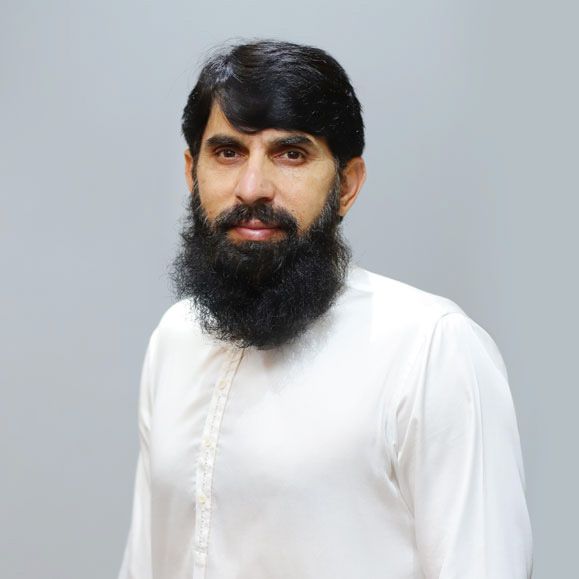
The Story Behind
PCHF
Some of the greatest community-driven initiatives in this world have come at
a great personal cost. The story behind PCHF’s beginnings is no different. The
idea of PCHF would perhaps not have materialized if Mr. Farhan Ahmad,
Volunteer CEO of PCHF, had not witnessed his own daughter Ayesha Farhan
go through the pains of not having timely and proper treatment back in 2011.
Ayesha Farhan was diagnosed with CHD. Despite all the efforts of her family,
it still took three weeks for her to get suitable treatment. Being an insightful
man, Mr. Farhan Ahmad could very clearly see the sorry state of affairs within
Pakistan’s health sector, especially for CHD patients. Having experienced
one of the worst agonies of this world up-close, Mr. Farhan along with his
family and friends decided to develop a Centre of Excellence and Hospital
that would serve the needs of children born with CHD in Pakistan. In essence,
the life of one beautiful soul helped spark a flame that would save the lives of
countless little innocent souls – future patients of CHD.
Building up on a dream to construct a specialized hospital for the treatment
of and research on CHD, a preliminary feasibility for Children’s Heart Hospi-
tal and Research Institute (CHHRI) was done by one of the leading consulting
firms and estimated cost was established at USD 12 million in 2012. Seeing
how it was impractical to arrange for such a huge amount, the PCHF team
decided to run a parallel project by the name of “Mohsin”.
Project Mohsin focuses on providing financial support for surgeries of
children diagnosed with CHD belonging to deserving families. This helped
alleviate the immediate burden from deserving people in the absence of
CHHRI, which required a long term approach to be realized.
Once donations started pouring in for Project Mohsin, the PCHF team
noticed that the major source of donations was via Zakat. This information
helped the PCHF team get in touch with religious scholars to develop guide-
lines and procedures for disseminating funds accordingly among deserving
cases. The entire process began to be monitored on a regular basis.
The next step was to understand the need for capacity building and training to
overcome the disease burden. To this end, Project Danial was initiated. The project
is eponymous to Muhammad Danial Tanveer who passed away from CHD in 2014,
in whose memory the project got its name.

PCHF attained income-tax exempt status from Federal Board of Revenue (FBR) in
2015 and then again in 2018.

In 2016, PCHF applied for certification from Pakistan Centre of Philanthropy (PCP)
and successfully obtained the 3-year certification. The audit by PCP in 2019 again
cleared PCHF for a further 3-year certification.

In the year 2018, PCHF collaborated with the University of Lahore Teaching Hospi-
tal (UoLTH) and started their own Surgical Unit. The unit initially had the capability
to serve mild complexity cases, and by 2020 it upgraded with the capability to oper-
ate on mild to moderate complexity cases.

Although a year of gloom for much of the entire world, the year 2020 had a silver
lining for PCHF, as it witnessed the groundbreaking ceremony for CHHRI. Tenta-
tive date for operationalization of CHHRI’s Phase-1 is November 2021.
Background & Initiatives
PCHF is a not-for-profit company, registered with the Securities
Exchange Commission of Pakistan, as a Section 42 Company. It was
established in the year 2011. PCHF provides fully funded and/or subsi-
dized surgeries through partnerships to impoverished children born with
CHD in Pakistan. PCHF’s value proposition is as follows:

  Project CHHRI(Children’s Heart Hospital and Research Institute):
  Perhaps the most significant goal of PCHF is the establishment of
  Children’s Heart Hospital and Research Institute, a 125-bed building
  based in Lahore, Pakistan. CHHRI is intended to be a state-of-the-art
  hospital which will serve two crucial purposes; a hospital specializing in
  the treatment of CHD and a research centre focused on CHD for excel-
  lence and training in the region.

                                   The dream of building a hospital devot-
                                   ed to CHD was motivated by a desire to
                                   improve the deteriorating pediatric
                                   cardiac healthcare infrastructure of
                                   Pakistan. Once realized, CHHRI will be
                                   Pakistan’s first dedicated Children’s
                                   Heart Hospital and Research Institute.
                                   The ground-breaking of this project was
                                   done in Lahore on 8th of May, 2020. It
                                   was performed by PCHF’s board
                                   member as well as a celebrated cricket
                                   star of Pakistan, Mr. Misbah-Ul-Haq.

CHHRI’s construction plan has been divided into 2 phases, whereby the
hospital will be operational after the completion of Phase I. In that, the
completion of CHHRI’s Phase I will result in a five-level structure, includ-
ing a basement.
The projected timeframe for completion of the project’s Phase I is 18
months from the moment construction begins. The total cost of Phase I
is estimated to be PKR 1.25 billion. Post completion of Phase I of the
project, the hospital will be operational with 75 beds. The following is a
break-down of the hospital’s services after the completion of Phase I:

                               Page 11
Post Phase 1 Completion
CSSD, Lab, Blood Bank, Radiology,
Basement
Diagnostics (CT Scan, MRI)
OPD, 15-bed ER, Echocardiography, & a
Ground Floor
Few Offices
First Floor CATH Lab, Hybrid Lab, 2 OTs
Second Floor 30 ICUs
Third Floor 30 Private Rooms
Project Mohsin: Patient Treatment
Although the ultimate goal of PCHF is to build a state-of-the-art hospi-
tal and research centre devoted to CHD in the long term, the organiza-
tion could not simply turn a blind eye to the plight of parents and guard-
ians watching their children or wards suffering from CHD. To this end,
the PCHF came up with a solution that would alleviate the affected
people’s suffering by arranging funds to finance the required treat-
ments. PCHF did this without letting their work on CHHRI being affect-
ed i.e. both the projects were ongoing concomitantly. The initiative to
alleviate people’s suffering in the short-term was named “Project
Mohsin”.
Since its inception in the year 2011,
PCHF has successfully provided finan-
cial and medical support to over 3,000
CHD patients at a total gross cost of
over PKR 670 million, irrespective of
the financial background of the fami-
lies.
Among this figure of over 3,000
children, over 280 of them had their
cardiac surgeries carried out at PCHF’s
Child Heart Centre, in collaboration
with UoLTH. PCHF is pleased to
announce that it operates this centre
independently, with its own team of
qualified nurses and medical officers.
The idea behind this centre is to offer
the best quality of care to the patients
with the lowest possible costs.
Page 12Another feather in PCHF’s cap is that its Child Health Centre is one of the
only three such centres in Pakistan recognized by the International Quality
Improvement Collaborative (IQIC) for Congenital Heart Diseases. IQIC
provides benchmarking data for healthcare professionals and guides quali-
ty improvement efforts.
In the spirit of offering maximum comfort and convenience to the people
for CHD treatment, PCHF has entered into partnerships with hospitals and
institutions around the country. This has enhanced the outreach of PCHF’s
overall programme. The organization has signed a number of Memoran-
dum of Understanding (MoU) in this regard:
PCHF has signed a MoU with Ittefaq Hospital Trust (IHT), Lahore until the start
of its own specialized children’s heart hospital. PCHF is getting surgeries, it
sponsors, done at IHT at a discounted rate. PCHF has signed similar MoU with
partner hospitals across Pakistan including Aga Khan University Hospital,
Karachi; Rehman Medical Institute, Peshawar; Armed Forces Institute of Cardi-
ology, Rawalpindi.
An MoU is signed with Transparent Hands, an NGO, as per which they will
bear 50% of the cost of a treatment of deserving patients.
An MoU is signed with Hameed Latif Hospital in Lahore with the aim to boost
their cardiac surgery programme.
A partnership agreement was executed with Cleft Hospital, Gujrat and Pakistan
Cleft Lip and Palate Association (PCLAPA) for mutual patient referral.
An MoU is under process with Liaqat National Hospital, Karachi
The concept behind initiating partnerships with all the above healthcare
institutions is to improve the overall situation in terms of providing quali-
ty health services for children suffering from CHD across Pakistan.
Moreover, PCHF offers free Outpatient Department (OPD) services to
all its patients. This encompasses pre-operative and post-operative echo-
cardiography tests and cardiology consultation. In 2019 alone the PCHF
executed a total of 1,122 Echocardiography tests, 762 pre-op ECHOs
and 360 post-op ECHOs.
Project Daniyal: Capacity Building
Improving the local pediatric cardiology and cardiac surgery infrastruc-
ture in Pakistan is at the heart of PCHF’s vision. Therefore, PCHF is
ardently involved in organizing capacity building workshops in collabora-
tion with hospitals and institutions alike in Pakistan, where CHD treat-
ment is available. PCHF organized its 1st and 2nd Annual Interventional
Cardiology Workshop in September, 2018 in Faisalabad, and Septem-
ber, 2019 in Multan respectively in this regard.
Page 13In the spirit of capacity building, PCHF collab-
orated with Taarey Zameen Par (TZP) Trust, a
private non-profitable organization, and orga-
nized an avant-garde interventional cardiolo-
gy training workshop in South Punjab. PCHF
invited a team of senior doctors from Sidra
Medical Centre, Qatar to conduct the work-
shop, which was held over a period of three
days with the involvement of Chaudhry
Pervaiz Elahi Institute of Cardiology (CPEIC)
and Children’s Hospital, Multan. The work-
shop fulfilled its purpose, in that local health-
care professionals worked alongside the team
of international doctors and improved their
technical capabilities in the process. More-
over, a maiden Multi-Functional Occluder
(MFO) procedure was also executed at
Children’s Hospital, Multan.
During the course of the workshop, 21 children received free treatment for
CHDs. PCHF’s involvement with the workshop’s arrangement was appreci-
ated with gratitude by local healthcare professionals, who requested that
PCHF should conduct more workshops in the future.
Moreover, PCHF organized the 1st Annual Capacity Building Workshop in
Lahore in December, 2018. The 2nd Annual Capacity Building Workshop
was held in Lahore and Peshawar in November of 2019.
The 2nd Annual Capacity Building Workshop’s topic was ‘Post-OP PCICU
Care management in children after surgery.’ A team of doctors, consisting of
the Director of Health Quality, Pediatric Intensivists and Respiratory thera-
pists, was invited to come for the workshop. The workshop spanned over a
passage of three days, with the first two days being utilized at Children’s
Hospital and Institute of Child Health, Lahore and the last day at Rehman
Medical Institute, Peshawar.
Page 14The workshop was an impressive success as it received more than one
hundred participants each day. The workshop received an overwhelming
response from the attendees, who were particularly impressed with the work-
shop’s action-oriented training sessions. This was also PCHF’s maiden work-
shop for Peshawar city, giving healthcare professionals in KP region access to
world class information about healthcare standards.
The reason behind arranging such workshops in different cities is to amplify its
reach so that maximal CHD-affected children across Pakistan can get quality
healthcare. To this end, PCHF is working closely with a multitude of major insti-
tutions in Pakistan, depicted in the Analytics section below, involved in the
treatment of CHD. PCHF’s collaboration with all these institutions is to assist
them with enhancing their quality and capacity particularly for CHD treatment.
This collaboration is further intended to build and strengthen a devoted infra-
structure that can meet the currently insurmountable challenges, which CHDs
present in Pakistan. In this respect, PCHF has also provided a complimentary
Surgical Headlight to the pediatric cardiac surgery department at Faisalabad
Institute of Cardiology.
Awareness and Advocacy on CHDS
In order to present a solution to a problem, the most important prerequisite
is for people to understand the existence of the problem. Similarly, one of
the most significant obstacles in improving availability and access of quality
CHD-related healthcare in Pakistan is lack of awareness. As a result, PCHF
has been working tirelessly towards spreading awareness about CHD in
Pakistan on multiple platforms, both national and international. Concurrent-
ly, PCHF is also working towards making people aware of the woeful state
of facilities available for CHD treatment in Pakistan, which result in count-
less deaths year on year.
Page 15Some of PCHF’s efforts for raising awareness of CHDs in Pakistan are exhibited
as follows:
International tours and events with Misbah-Ul-Haq for raising funds & creating
awareness for CHDs in Pakistan.
Talk show segment with Misbah-Ul-Haq on ‘Qutb Online’, SAMAA TV.
Morning talk show segment on Roohi TV channel.
Patient experience and survivor stories on social media channels (Facebook,
Instagram, Twitter).
PCHF Stall at Akhuwat Diabetes Family Festival at Racecourse Park, Lahore.
PCHF Stall at Annual ‘Haryali’ market.
Television infomercial campaign on major national news channels.
Page 16PCHF
Analytics & Insights
This section of the report exhibits detailed analytics regarding PCHF’s
activities since the organization came into existence. It will shed light on
different aspects of when, where, and how it helped the people of Paki-
stan. Here’s a glimpse of the statistics detailing our impact:
Total number of patients who contacted PCHF from different
regions of Pakistan:
Balochistan
The above map demonstrates the total number of patients who reached
out to PCHF to seek help. The statistics exhibited in the map depict the
region-wise segregation of the total number of patients who have
reached out to PCHF since its inception in 2011.
Although PCHF extends its services to every deserving person across Paki-
stan wherever and whenever it can; it is overtly evident from the statistics
that people from Punjab and Khyber Pakhtunkhwa contacted PCHF the
most.
Page 17Annual trend of patients who contacted PCHF:
The graph above shows the trend in terms of the recorded number of
patients who contacted PCHF per year. In the year 2011, only 2 patients
contacted the organization and requested assistance. For the following
three years up to 2014, this figure rose but at a humble rate. Since then,
however, the number of people reaching out to PCHF each year rose
drastically, resulting in a perpetual upward trend with ever greater
number of patients contacting the organization each year.
Distribution of patients’ treatment who contacted PCHF for
CHD:
This pie chart classifies the total number of patients, i.e. 3,358, who
contacted PCHF for assistance regarding CHD treatment into three
groups. PCHF completely funded the treatment of 2,058 patients.
Whereas, 1,273 patients were provided financial assistance on need-ba-
sis who were registered with different hospitals. However, only 27
patients managed to fund their CHD treatment entirely by themselves.
Page 18Number of patients registered and total operations done:
1852
1126
90
203
The above graph exhibits the total number of recorded patients with
the PCHF against patients associated with different age groups. These
age groups have been categorized as follows:
Infant From birth to 1 year of age
Child Between 1 and 12 years of age
Adolescent Between 12 and 18 years of age
Adult Above 18 years of age
Based on the categorization, the total number of recorded patient
entries with PCHF accounts for 1,126 infants, 1,852 children, 203
adolescents, and 90 adults, as exhibited in the graph. Out of this figure,
patients who were operated on were 658 infants, 1,209 children, 135
adolescents, and 55 adults.
Page 19Number of days CHD patients spent in hospital:
This graph displays the number of days CHD patients registered with
PCHF spent in hospitals since its inception. According to the insights
displayed, a great majority of PCHF’s recorded CHD patients i.e. 1,106
and 642 patients, highlighted in red colour, spent between 2-5 days and
6-10 days in hospitals respectively. Whereas 133 patients spent 1 day at
the hospital, 107 patients spent between 11-15 days, and 66 patients
spent more than 15 days in a healthcare facility. However, 4 patients
were not hospitalized at all.
Age-wise distribution of number of days spent in hospitals:
This graph projects data on PCHF’s registered CHD patients from
different age groups, i.e. infant, child, adolescent, and adult, according
to the number of days they spent in hospitals for their treatments. Simi-
larly, patients from each respective age group have been represented
by a designated colour in the chart. In the above chart, infants are repre-
sented by purple colour, children by red colour, adolescent by yellow
colour, and adults by pink colour.
According to the statistics, a great majority of CHD patients from any
age group spent between 2-5 days and 6-10 days at hospitals for their
respective treatments and surgeries.
Page 20Open-Heart vs. Closed-Heart surgeries:
Closed-Heart
12%
Open-Heart
88%
The pie chart above outlines the two broad types of surgeries
performed on recorded CHD patients under PCHF’s care. These are
namely open-heart surgeries and closed-heart surgeries. As per the
statistics, most of the patients required open-heart surgeries whereas
only 12% patients needed closed-heart surgeries.
Distribution of Funding:
Pa�ents Contribu�on
PKR 391,305,606
PCHF Funding
PKR 532,304,853
The chart above projects the total funding PCHF has generated to treat
CHD patients over the years, as well as patients’ own contribution to the
overall funding of those treatments since PCHF’s inception. According to
the statistics available, around PKR 532,304,853 were contributed by
PCHF, whereas patients’ own contribution account for PKR 391,305,606.
Page 21Year-wise PCHF funding and patients’ contribution trends:
The above chart showcase specific year by year contributions by PCHF
and patients registered with the organization towards CHD treatment
from the year 2011. All of the figures are in millions of rupees. The red bars
represent PCHF’s funding and the blue bars represent contributions by
patients.
According to the chart, from 2011 to 2014 PCHF and patients registered
with it contributed almost equally. This is primarily due to PCHF being in its
infancy period. However, the year 2015 witnessed a sharp rise in funding
generated by PCHF. Moreover, apart from the years 2016 and 2017, PCHF
managed to generate more funds to treat CHD patients than the patients’
own contributions. In fact, PCHF funds generation has been witnessing an
upward trend ever since its inception, with the year 2019 witnessing the
highest ever fund generation by PCHF to help treat CHD patients.
Average amount spent on operations against each age
group according to the number of days spent in hospitals:
This chart reveals information about the amount spent on operation on
different age groups and the number of days they spent in hospitals. All
the figures exhibited in the chart are in thousands of rupees.
Page 22It is clear from the chart that the average expense on operations of CHD
patients increased with an increase in the number of days they spent in
hospitals. Hence, average total expense is directly proportional to the
number of days spent in hospitals by patients for their treatment.
Another insight derived from this chart is that the age group incurring the
highest average expense on operations is adults, depicted by the colour red.
Regardless of whether adult patients spent 1 day at the hospital, 2-5 days,
6-10 days, 11-15 days, or more than 15 days, the average amount spent on
their operations is the highest.
Main illnesses:
This chart exhibits total recorded data of patients against a set of 18 different
CHDs since 2011. The figures against each illness represent the total number
of patients diagnosed with the respective illness. Among all these illnesses,
five stand out with the most number of patients having been diagnosed with
them. These are namely VSD, TOF, TGA, PDA, and ASD. They are highlighted
in red colour.
Ventricular septal defect (VSD) is basically a hole in the heart. It is also a very
common CHD. This can also be witnessed in the figures projected in the
chart above, whereby 801 of all the patients’ registered with PCHF were diag-
nosed with it.
Tetralogy of Fallot (TOF) is a cardiac oddity, which, as the name suggests,
refers to a combination of four related heart defects that commonly occur
together. This is the second most common illness found among registered
patients – accounting for 659 patients.
Page 23ASD, short for Atrial septal defect, is a hole in the wall (septum) between the
two upper chambers of the heart (atria). This condition is also congenital. By
far, it is the third most common illness among patients registered with the
PCHF, amounting to 341.
TGA, or Transposition of Great Arteries is another serious CHD, whereby
the two main arteries leaving the heart are reversed (transposed). Accord-
ing to PCHF’s records, 281 patients have been diagnosed with TGA so far.
PDA, short for Patent Ductus Arteriosus is a persistent opening between
the two major blood vessels leading from the heart. The opening is a normal
phenomenon in a baby’s circulatory system before birth, provided it close
shortly after birth. However, if that does not happen, the baby suffers from
PDA. It is also by far the fifth most common illness among recorded
patients with PCHF. They amount to 179.
Frequency of main illnesses in operated patients:
This graph depicts total number of operations funded by the PCHF in terms
of the frequency for all illnesses requiring operations. Among all operating
procedures carried out under the care of PCHF to date, the most frequent
illness doctors came across was VSD, followed by TOF, ASD, TGA, and
PDA. Short explanations of all the mentioned illnesses in the explanation to
the previous graph. The five illnesses have been highlighted in red colour in
the graph in order to distinguish them from the other, less common illness-
es operated on by the doctors as per PCHF’s data.
These five illnesses have been highlighted in red colour in the graph in order
to distinguish them from the other, less common illnesses operated on by
the doctors as per PCHF’s data.
Page 24Average amount spent for treating 5 major illnesses
according to number of days spent in hospital:
This graph here depicts the average amount spent for the treatment of
each of the five major illnesses i.e. ASD, PDA, TGA, TOF, and VSD, under
PCHF’s care. The figures exhibited in the graph are in thousands of rupees.
Segregation has been carried out in terms of the number of days spent at
the hospital for treatment of each of the five stated illnesses. As such, aver-
age expenditure on operations of the mentioned illnesses is exhibited for 1
day spent at the hospital for the treatment, 2-5 days, 6-10 days, 11-15
days, more than 15 days, and 0 days.
For instance, the average amount spent on the treatment of ASD is Rs.
316,000 if the patient spends 1 night at the hospital. On the other hand, if
the patient spends between 6 to 10 days at the hospital for treatment of
ASD, the average amount spent on his/her treatment is Rs. 344,000.
Maximum amount spent on any patient for treating 5 major
illnesses according to number of days spent in hospital:
As the previous graph exhibited average amount spent on any patient for
treating any of the 5 major illnesses conditional to the number of days spent
at the hospital, so this graph exhibits the maximum amount spent on any
patient for treating any of the 5 major illnesses conditional to the number of
days spent at the hospital. The figures exhibited in the graph are in thousands
of rupees. Each of the 5 major illnesses i.e. ASD, PDA, TGA, TOF, and VSD are
depicted by the colours red, blue, green, yellow, and purple respectively.
For instance, the maximum amount spent on the treatment of TGA by PCHF
whereby the patient spent more than 15 days at the hospital is Rs. 2,044,000.
Whereas the average amount spent on the treatment of TGA by PCHF under
the same conditions is Rs. 699,000, as exhibited in the previous graph.
Page 25Success rate of operations:
The following table showcases the success rate of surgical procedures
carried out by the PCHF on CHD patients across all four provinces i.e.
Sindh, Khyber Pakhtunkhwa, Punjab and Balochistan, the Federally
Administered Tribal Areas (FATA), Azad Kashmir, and the overall country.
A graphical representation of this data is exhibited below as well.
Success Rate of operations in Khyber Success Rate of operations in
Pakhtunkhwa Balouchitan
Success Rate of operations in Punjab Success Rate of operations in Sindh
Success Rate of operations in Azad Success Rate of operations in FATA
Kashmir
Overall Success Rate
Page 26Number of surgeries carried out by respective hospitals:
This graph represents all the hospitals which have cooperated with PCHF
over the years with regard to executing surgeries on CHD patients.
Among all the projected 14 hospitals, Ittefaq Hospital; Lahore, and PCHF
– UoLTH Cardiac Care Unit; Lahore offered the greatest support in terms
of carrying out surgeries.
Ittefaq Hospital, to this date, has carried out 1,586 surgeries, whereas
PCHF – UoLTH Cardiac Care Unit has carried out 306 surgeries. Both the
hospitals have been represented with distinguishing red colour.
Top 25 cities in terms of highest number of patients:
Since its inception, the PCHF has extended its services to more than 150
cities across Pakistan. This graph exhibits top 25 cities with the most
number of CHD patients utilizing PCHF’s help. Even among these 25
cities, Lahore is house to 550 PCHF patients, which are more than
patients from the next 4 cities combined. Similarly, Peshawar is ranked
7th and Karachi is ranked 18th in terms of having the most number of
patients utilizing PCHF’s aid.
Page 27Data represented in blue depict patients from each country whose opera-
tional procedures were catered for entirely by the PCHF. Data in orange
depicts registered patients, whereas data in gray depicts patients who
bore all the surgical expenses themselves.
Distribution of 25 cities with most patients of 5 major
illnesses:
The above graph depicts a tabular rundown of the top 25 cities with the
most number of patients of the 5 major CHD illnesses, namely ASD, PDA,
TGA, TOF, and VSD. The illnesses have been distinguished from each
other in the graph through the use of different colours, with ASD in
purple, PDA in yellow, TGA in pink, TOF in blue and VSD depicted in red.
Each of these cities carries the highest number of patients of the top 5
illnesses according to PCHF data. Among them, the most frequent CHD in
patients’ diagnosis of all these cities is VSD.
Names of Major Illnesses
VSD Ventricular Septal Defect
TOF Tetralogy of Fallout
ASD Atrial Septal Defect
TGA Transposition of Great Arteries
PDA Patent Ductus Arteriosus
Page 28How To Donate
Donations
Bank A/C # IBAN Branch
Habib Bank Ltd. 24447106489603 PK93HABB0024447106489603 Liberty Branch, Lahore
Faysal Bank Ltd. 3048301900220666 PK31FAYS3048301900220666 I8 Markaz, Islamabad
Bank Islami 201100154070002 PK47BKIP0201100154070002 PECO Road, Lahore
Sindh Bank Ltd. 06705135501000 PK56SIND0006705135501000 Wapda Town, Lahore
Tameer Bank 151058003636001 PK58TMFB0151058003636001 Garden Town, Lahore
Zakat
Bank A/C # IBAN Branch
Habib Bank Ltd. 24447106489403 PK61HABB0024447106489403 Liberty Branch, Lahore
Faysal Bank Ltd. 3048301900220583 PK41FAYS3048301900220583 I8 Markaz, Islamabad
Bank Islami 201100154070001 PK74BKIP0201100154070001 PECO Road, Lahore
Sindh Bank Ltd. 06705135501002 PK02SIND0006705135501002 Wapda Town, Lahore
Hospital Construction
Bank A/C # IBAN Branch
Habib Bank Ltd. 24447106489703 PK12HABB0024447106489703 Liberty Branch, Lahore
Faysal Bank Ltd. 3048301900220584 PK14FAYS3048301900220584 I8 Markaz, Islamabad
Sindh Bank Ltd. 06705135501001 PK29SIND0006705135501001 Wapda Town, Lahore
Foundation Charity
Bank A/C # IBAN Branch
Meezan Bank Ltd. 02470104470539 PK25MEZN0002470104470539 Johar Town, Lahore
Faysal Bank Ltd. 3048301900228183 PK93FAYS3048301900228183 I8 Markaz, Islamabad
Bank Islami 201100154070003 PK20BKIP0201100154070003 PECO Road, Lahore
Contact Info
info@pchf.org.pk insights@sybrid.com
+92 3177951113 (021) 111 792 743
House# 342, Block D, Johar Town, B-701 702, 7th Floor, Lakson
Lahore Square,Civil Lines, Karachi
Page 29#1LakhPakistani4Misbah
Misbah-ul-haq
Thank you to all my family, friends & well wishers for supporting me
throughout my career. And especially now in my @secondinnings as well.
We need all your support and prayers in building Pakistan’s first Children’s
Heart Hospital.#1LakhPakistani4Misbah @CHDHospital #Donatenow
Zohaib Hussain
I have joined @captainmisbahpk & @CHDHospital’s call to support the construction of
dedicated Children’s Heart Hospital and Research Institute. #1LakhPakistani4Misbah
Request everyone to join this noble cause!
Azhar Ali
Proud to be part of @captainmisbahpk’s second innings, building Pakistan’s first dedicated
Children’s Heart Hospital and Research Institute. We need 100,000 BIG HEARTS to help
these little HEART warriors! Come and join us in this noble cause.
Muhammad Amir
I am proud to be with @captainmisbahpk in the making of Children’s Heart Hospital in
Pakistan.
Muhammad Hafeez
I just joined @captainmisbahpk’s appeal for 100,000 Pakistanis to support his efforts to
build Pakistan’s first dedicated Children’s Heart Hospital and Research Institute. Help us
so that we can help these little heart warriors.
Shadab Khan
Be a HEARTBEAT for all these children being born with congenital heart disease every
year, join me and @captainmisbahpk in this noble cause of building Pakistan’s first dedicat-
ed Children’s Heart Hospital and Research Institute.
Shan Masood
Proud to be part of @captainmisbahpk’s second innings, building Pakistan’s first dedicated
Children’s Heart Hospital and Research Institute. We need 100,000 BIG HEARTS to help
these little HEART warriors! Come and join us in this noble cause.
Sarfaraz Ahmed
I fully support @captainmisbahpk in his efforts to build Pakistan’s first dedicated
Children’s Heart Hospital and Research Institute. We need your support too.#1LakhPaki-
stani4Misbah @CHDHospital
Shoaib Malik
I am proud to be with @captainmisbahpk in the making of Children’s Heart Hospital in
Pakistan.
Page 30You can also read


