2021-2025 Reaching Rural Draft Rural Strategy - The Housing ...
←
→
Page content transcription
If your browser does not render page correctly, please read the page content below

Reaching Rural
                                     Draft Rural Strategy

                    2021-2025

Reaching Rural: Draft Rural Strategy 2021-2025          1
Contents
    1.    Foreword                                             3
                                                                       On the cover: Reaching Rural
    2.    Executive Summary                                    4
    3.    Key achievements from the 2016-2020
          Rural Strategy
                                                              6
    4.    The draft Strategy Framework 2021-2025              8
    5.    Defining Rural                                     10
    6.    Pre-consultation Questionnaire                     12
    7.    Strategic Context                                  13
    8.    Theme 1:
          Supporting our rural customers                     15
    9.    Theme 2:
          Enabling the provision of affordable rural homes   25
    10.   Theme 3:
          Securing the future of our rural communities       34

2                              Reaching Rural: Draft Rural Strategy 2021-2025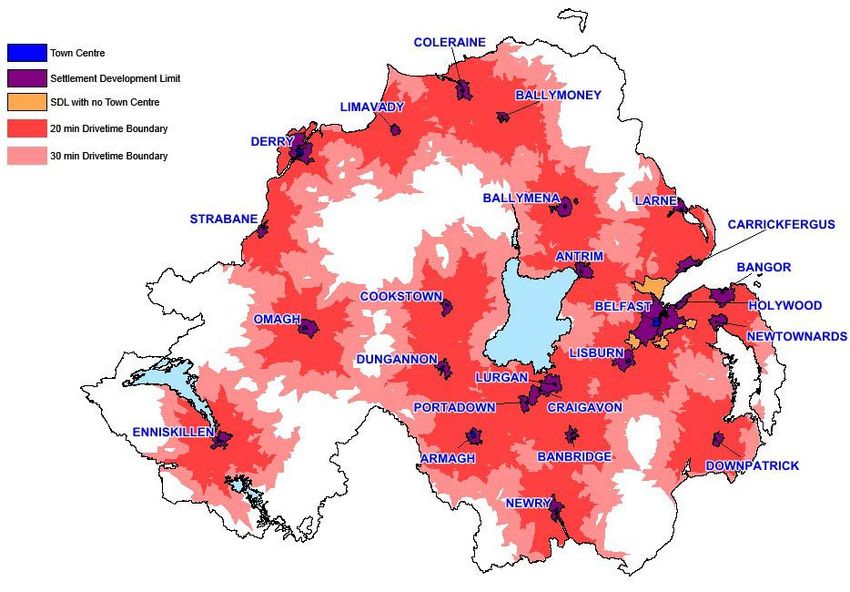
1. Foreword
We are pleased to present for consultation, the               Reflecting on the achievements of the outgoing 2016-
Housing Executive’s draft 2021-25 Rural Strategy              2020 Rural Strategy and reviewing the overall progress
& Action Plan, which sets out in detail our plans to          of our rural agenda since 1991, it is evident that effective
contribute to the sustainable and inclusive growth            communication with those we want to help, is paramount
of our rural communities dispersed across Northern            and the pace of change in how we communicate is
Ireland over the next four years.                             accelerating. This Strategy has been developed in the
                                                              midst of a global pandemic when, like many public
This draft Strategy has been shaped by the growing
                                                              authorities; the Housing Executive has had to rethink
demand and changing policy context for the
                                                              traditional methods of customer interaction in order to
development of new rural homes, the need to consider
                                                              continue to deliver a service that is safe for both staff
the housing requirements of an ageing population,
                                                              and customers. One of the key lessons we can take from
the growing recognition of the requirement for carbon
                                                              this, is the importance of communication in times of
neutral, energy efficient rural homes and the challenges
                                                              change. Making use of video conferencing and social
and opportunities that all of these factors will present.
                                                              media has enabled us to continue to deliver our business
At the heart of the draft Strategy however, is an ambition    objectives, and we hope to build on these newly realised
to address the continuing and emerging needs of our           opportunities in this Strategy, both to broaden our
rural customers. We seek to build on what we currently        customer base and to learn from rural stakeholders in
do well and to identify what we need to do differently to     other jurisdictions.
ensure that we are ‘reaching rural’ communities with the
housing and related support that our customers require
                                                              We would like to take this opportunity to thank all of
to enjoy stable and fulfilled lives.
                                                              the internal and external stakeholders involved in the
                                                              preparation of this draft Strategy and those who took the
                                                              time to respond to the Pre-Consultation Questionnaire.
 The Housing Executive                                        We look forward to receiving feedback in relation to
 recognises the value of a                                    the proposed themes, outcomes, priorities and actions
                                                              set out in this draft Strategy and in identifying new and
 more localised approach                                      strengthening existing partnership working opportunities
                                                              to help us achieve our vision for rural communities:
 based on community                                           ‘Towards vibrant, shared, healthy and sustainable
 engagement and                                               rural communities where everyone has access to
                                                              decent and affordable housing’.
 partnership working.

When investment is only channelled to the areas with the
greatest concentration of need, then rural areas with a
more dispersed population will inevitably be faced with
disadvantage and gradual decline. The Housing Executive
recognises the value of a more localised approach
based on community engagement and partnership
working. Understanding rural needs is interlinked with
understanding rural communities: the demography,
access to employment, infrastructure and basic services,
but also their uniqueness, their local character and their
aspirations.
It is based on this premise that the Housing Executive
developed its first Rural Strategy in 1991 and why 30 years   Professor Peter Roberts,
later and in the sixth iteration of our Rural Strategy, we    Chair
still believe that a ‘different approach’ is often required
to ensure that our tenants, customers and stakeholders                                        Grainia Long,
experience an equitable level of service and support,                                         Chief Executive
regardless of their location.

                                   Reaching Rural: Draft Rural Strategy 2021-2025                                         3
2. Executive Summary
The need for a Rural Strategy:                                    3) We will invest in accessible housing solutions in rural areas;
In accordance with the Rural Needs Act (NI) 2016, the             4) We will support those who are faced with homelessness
Housing Executive has a statutory duty to pay due regard             in rural areas;
to the needs of rural communities in the development of           5) We will facilitate the delivery of community-based
our policies, strategies and plans and in the delivery of our        support programmes which promote inclusion, cohesion
services.                                                            and create opportunities for those living in our rural
                                                                     communities.
We also have a range of statutory duties in relation to the
provision of a housing service to those living in both urban      Theme 2: Enabling the provision of
and rural areas across Northern Ireland. Our first Rural Policy   affordable rural homes
developed in 1991 recognised the need to identify housing
need which was often hidden or ‘latent’ in rural areas and the    Outcome:
requirement for targeted investment and support to increase       We enable the provision of affordable homes to contribute
housing supply and address unfitness.                             to balanced, inclusive and sustainable rural communities.
Background:                                                       Priorities:
The Housing Executive understands that a specific rural           6) We will enable the provision of affordable homes which
approach is required in order to ensure an equitable delivery        address rural housing needs;
of our housing related services in rural communities, to          7) We will work with local councils to help shape planning
address the housing issues faced within these areas and to           policies which will deliver affordable homes and
contribute to sustainable rural communities.                         contribute to balanced and inclusive rural communities;
The sixth Housing Executive Rural Strategy has been               8) We will examine the potential to support the
developed in the midst of the Covid-19 pandemic as the               development of models of community-led housing in
long-term impacts are beginning to be considered. The draft          rural areas.
Strategy considers the changing policy context with the
development of the new Local Development Plans, the plans         Theme 3: Securing the future of our rural
emerging in relation to the Climate Change emergency              communities
and also identifies how we will contribute to the draft           Outcome:
Programme for Government outcomes and indicators.
                                                                  We contribute to the inclusive and sustainable growth and
The aim of this strategy:                                         increased climate resilience of our rural communities.
The draft Rural Strategy considers the various ways in which      Priorities:
the Housing Executive can contribute to our overarching
vision for rural communities:                                     9) We will invest in the improved energy efficiency of our
                                                                      rural housing stock and consider solutions for the future
‘Towards vibrant, shared, healthy and sustainable rural               de-carbonisation of rural household heating systems;
communities where everyone has access to decent and
affordable housing’.                                              10) We will support and encourage the improved energy
                                                                      efficiency of private sector homes in rural areas;
Over the next four years we will focus on the delivery of         11) We will support and encourage the inclusion of planning
high level outcomes, priorities and actions which are set out         policies in Local Development Plans which aim to
under the three cross cutting themes of:                              promote climate change resilience within our rural
                                                                      communities;
Theme 1: Supporting our rural customers                           12) We will work with partners to maximise the use of
Outcome:                                                              existing land and property assets in rural areas.
We ensure that our tenants and customers within our rural
communities feel secure in their environment and can access       How it will be delivered:
additional housing support when it is required.                   The Rural Strategy & associated Action Plan(s) will be
Priorities:                                                       delivered by a cross-divisional implementation panel
                                                                  comprised of departmental leads representing key areas
1) We will consider the particular needs of our rural             of Housing Executive business delivery. The panel will be
   customers in the delivery of our housing solutions and         supported by external partners and rural stakeholders
   support service;                                               including the Rural Residents’ Forum.
2) We will continue to review and improve our housing
   support services to meet the needs of an ageing rural          Updates will be compiled on a quarterly basis and
   population;                                                    published in an annual progress report.

4                                      Reaching Rural: Draft Rural Strategy 2021-2025
Themes, Outcomes, Priorities
                                                                                                 We ensure that our
                                                                                              tenants and customers
                                                                                                  within our rural
                                                                                             communities feel secure
                                                                                             in their environment and
                                                                                               can access additional
                                                                                             housing support when it
                     People                                                                          is required.

  Supporting                                                   Property
   our rural
  customers                                                                                   We enable the provision
                                                                                              of affordable homes to
                                                                    Enabling the              contribute to balanced,
                                                                    provision of             inclusive and sustainable
                                                                                                rural communities.
                                                                     affordable
                                                                    rural homes

             Securing the
               future of                                                                        We contribute to the
               our rural                                                                     inclusive and sustainable
             communities                                                                       growth and increased
                                                                                              climate resilience of our
                                                                                                 rural communities.

                                Place & Planet

People                                   Property                               Place & Planet
We will consider the particular needs    We will enable the provision of        We will invest in the improved
of our rural customers in the delivery   affordable homes which address         energy efficiency of our rural housing
our housing solutions and support        rural housing needs;                   stock and consider solutions for
service;                                                                        the future de-carbonisation of rural
                                         We will work with local councils to    household heating systems;
We will continue to review and           help shape planning policies which
improve our housing support              will deliver affordable homes and      We will support and encourage the
services to meet the needs of an         contribute to balanced and inclusive   improved energy efficiency of private
ageing rural population;                 rural communities;                     sector homes in rural areas;

We will invest in accessible housing     We will examine the potential to       We will support and encourage the
solutions in rural areas;                support the development of models      inclusion of planning policies in Local
                                         of community-led housing in rural      Development Plans which aim to
We will support those who are faced      areas.                                 promote climate change resilience
with homelessness in rural areas;                                               within our rural communities;

We will facilitate the delivery                                                 We will work with partners to
of community-based support                                                      maximise the use of existing land
programmes which promote                                                        and property assets in rural areas.
inclusion, cohesion and create
opportunities for those living in our
rural communities.

                                   Reaching Rural: Draft Rural Strategy 2021-2025                                         5
3. Key achievements from the
   2016-2020 Rural Strategy
During the lifespan of the outgoing Rural Strategy
& Action Plan 2016-2020 the Housing Executive
invested a total of approximately £204.13 million
in our rural communities where just under 18% of
our housing stock is located. We delivered a range
of positive outcomes for our rural customers which
included:
                                                                  Rural Strateg
                                                                               y & Action Pla
•   We revisited our approach to rural housing need                                          n 2016-2020
    testing which resulted in a higher response rate to
    consultations and enabled us to support and enhance
    housing association delivery in rural areas. We helped         Rural Strateg
    rural communities in 36 locations across NI to examine                             y & Action P
    the need for new social and affordable housing in their                                 Final Progress
                                                                                                              lan
                                                                                                             Report
    areas and 12 new housing schemes have so far been
    supported as a result.
                                                                                           2016-20
•   Work commenced on 425 new build social homes in
    rural areas helping to address social housing need and
    support the growth of these communities.
•   Approximately £82.4 million was invested in the
    maintenance and improvement of our rural housing
    stock.
•   Some £26.5 million of Supporting People funding
    was provided for accommodation-based and floating
    support services in rural areas.
•   We invested approximately £1.63 million into Social
    Enterprise projects, Community Grants, Community
    Cohesion funding and capital funding for regeneration
    projects.
•   We worked in partnership with government
    departments, agencies and rural stakeholders to
    support projects which enabled the provision of basic
    services and enhanced the streetscape and built
    heritage of many villages throughout Northern Ireland.
•   We introduced our Rural Community Awards to
    recognise the vital contribution that community
    groups and volunteers make in addressing social
    isolation and loneliness in rural areas and this
    competition has grown in popularity every year,
    extending our presence in rural areas and helping us
    to promote our services.

6                                   Reaching Rural: Draft Rural Strategy 2021-2025
Key achievements from the 2016-2020 Rural Strategy

                                                                   36
                                                                Rural Housing
                                                                 Need Tests

                                                     2,216
                                                      private sector grants
                                                     approved in rural areas

        £26.5m
         Supporting People funding to
                  rural areas
                                                  Online access in local offices
                                                       for UC applications

                                                              4
                                                      Rural "Housing for all"
                                                             schemes

  £1.63m
   Invested in Rural Regeneration
                                                                   24
                                                               Rural Community
                                                                    Awards

           Reaching Rural: Draft Rural Strategy 2021-2025                          7
4. The draft Strategy Framework
   2021-2025
As Strategic Housing Authority for Northern Ireland,          Principles:
the Housing Executive’s role extends beyond that
                                                              •   The Rural Strategy should contribute towards rural
of a landlord for just under 84,700 social rented
                                                                  development objectives, within a framework of
properties and includes a range of statutory duties
                                                                  sustainable development;
in relation to the provision of a housing service
for people living in both urban and rural areas. In           •   A rural approach is necessary, not a revised urban
order to fulfil this duty, we have had to continuously            approach;
develop our understanding of housing needs and                •   Partnership with others is critical for success;
requirements, the external factors that impact
on the spatial variation of housing need and the              •   Tailoring to local circumstances is necessary in
barriers to an equitable distribution of our services.            recognition of the diverse nature and sense of place
                                                                  existing in rural Northern Ireland;
This draft Strategy considers how we can maintain the
momentum achieved over the last 30 years in channelling       •   Working with rural communities is essential for
investment and support into our rural communities                 effective rural development;
and identifies the issues and challenges which must be        •   Affordability and accessibility are at the core of
addressed through local engagement, investment and                potential housing solutions;
collaborative working over the next four years.
                                                              •   Investment and resources must be directed to where
These challenges include:
                                                                  they are most needed and to those who need them
•   The existing shortage of homes which are affordable           most;
    and accessible;
                                                              •   The Rural Strategy should be mindful of Section 75
•   Hidden housing need in rural villages and small               Equality Legislation, with the emphasis on promotion
    settlements;                                                  of equality of opportunity in rural areas; and
•   The often reduced access to basic services, facilities,   •   Opportunities should be availed of to test new
    advice and support; and                                       approaches, learning from policy and best practice
•   A higher occurrence of less energy efficient homes and        elsewhere.
    fuel poverty.
                                                              This draft Rural Strategy sets out three high level
The areas of work borne out of the Housing Executive’s        outcomes and twelve priorities under the three cross
wide range of functions presents many opportunities           cutting themes of:
for us to help address these issues and to achieve our        1. Supporting rural customers;
overarching vision for rural communities:                     2. Enabling the provision of affordable rural homes;
‘Towards vibrant, shared, healthy and sustainable                and
rural communities where everyone has access to                3. Securing the future of our rural communities.
decent and affordable housing’
The principles which were agreed through consultation         The themes are in keeping with the Housing Executive’s
for the first rural policy have been enshrined in the         corporate strategic themes of ‘People’, ‘Property’ and
development of the subsequent rural policies/strategies,      ‘Place and ‘Planet’. Each is considered in the context of our
‘Places for People’ (2000-2006), ‘Rural Homes and People’     corporate high level outcomes:
(2007-2015) and ‘Sustainable Rural Communities’ (2016-        •   Helping People to find a suitable and sustainable
2021). We feel that these principles are still appropriate        housing solution;
and should continue to shape the approach moving
forward.                                                      •   Delivering better homes;
                                                              •   Fostering vibrant sustainable communities;
                                                              •   Helping to sustain the environment for future
                                                                  generations; and
                                                              •   Enabling the delivery of high quality public services for
                                                                  our customers.

8                                     Reaching Rural: Draft Rural Strategy 2021-2025
Throughout the preparation, consultation on and delivery      Equality and good relations are viewed as dynamic factors
of this four year Rural Strategy, we will apply and promote   within this strategy. Equality and good relations issues
the values of our organisation – making a difference;         change constantly and this strategy must remain flexible
fairness; passion; and expertise.                             to address needs as and when they arise. It is proposed
                                                              that equality and good relations will be included as
                                                              standing items on the agenda at future meetings of
Equality Screening and consideration of Rural Needs           the Rural Strategy Implementation Panel and the Rural
The Housing Executive has considered the following in         Residents Forum to ensure that there is an opportunity for
the preparation of the Rural Strategy & Action Plan:          any panel/forum member to introduce issues at any time
                                                              during the lifespan of the strategy.
a) Equality and Human Rights – to assess the potential
   impacts on Section 75 groups, human rights                 The Rural Needs Impact Assessment determined that
   implications and opportunities for promoting good          the draft Rural Strategy has examined the housing needs
   relations; and                                             of rural communities in detail and that the outcomes
                                                              from the proposed priorities and actions will have only a
b) Rural Needs Impact Assessment– to assess the
                                                              positive impact in rural areas.
   potential impacts of this Strategy on people living in
   rural areas.

                                    Reaching Rural: Draft Rural Strategy 2021-2025                                        9
5. Defining Rural
The Housing Executive use the widely accepted Figure 2 shows rural and urban areas of NI as 1defined
urban/rural default definition as recommended by by the review, as well as 20 and 30 minute drive time
the Northern Ireland Statistical Research Agency boundaries to urban settlements, above the 10,000
(NISRA) in the ‘Review of the Statistical Classification population threshold.
and Delineation of Settlements’ which was
In 2018, 41% of the rural population in NI lived further
published in March 2015.
than 20 minutes from a settlement of this size.
NISRA classify every settlement as defined in extant Area
Plans, based on their population size in the 2011 Census.
All settlements included within population bands A-E
(greater than 5,000) are considered to be urban and
all settlements included within population bands F-H
(less than 5,000) are considered to be rural1. Based on
this definition, there are currently 596 adopted rural
settlements located within an extensive rural hinterland
which accounts for more than 80% of the total land mass
of Northern Ireland.
Just over 14,700 of the Housing Executive’s 84,700 homes
(17.7%) are located in rural areas.
Figure 2: Urban and Rural areas with 20 and 30
minute ‘drive time’ boundaries from settlements with
a population of 10,000 or more
In the ‘Key Rural Issues’3 report produced by the
Department of Agriculture, Environment and Rural Affairs
(DAERA) in 2020, a range of data from across Government
Departments was collected in order to highlight key
urban/rural differences and identify those issues and
challenges which should be addressed by public policy
makers.
The report identified the following positive trends for
those residing in rural areas:
Figure 1: Urban/Rural Definition NI: NISRA March 2015 • In 2018/19, people living in rural areas were
Rural (Settlements and open countryside
consistently more likely than those in urban areas
population 5,000) 35% respectively) and high life satisfaction (42%
compared to 34%).
In 2018, just under a third (36%) of the total population of • In 2017/18, school leavers from rural areas were more
Northern Ireland resided in a rural area. Between 2001 and likely than those from urban areas to enter higher
2018, the population of rural areas rose by 16%, compared education. Almost half (48%) of pupils living in rural
to an increase of just 6% for urban areas. Areas with the areas within an hour of Belfast proceeded to higher
fastest growth were those close to urban centres, either education, compared with 43% of those in rural areas
in mixed rural/urban areas (32%) or less than an hour’s more distant from Belfast, and 41% of school leavers
commute from Belfast (21%). from urban areas.
• Rural people of working age are more likely to be in
2
The classification also incorporated measures of distance
full-time employment (74%), and less likely to be
to settlements with a population of 10,000 or more. These
economically inactive, compared with those living in
measures demonstrate accessibility to settlements of this
towns and cities in full-time employment (66%).
size which are recognised as accommodating key services.
1
https://www.nisra.gov.uk/publications/review-statistical-classification-and-delineation-settlements
2
https://www.nisra.gov.uk/sites/nisra.gov.uk/files/publications/MYE18-Bulletin.pdf
3
https://www.daera-ni.gov.uk/sites/default/files/publications/daera/Key%20Rural%20Issues%202020%20-%20Final.pdf
10 Reaching Rural: Draft Rural Strategy 2021-2025• On average, public sector earnings are higher in urban • Access to public transport in rural areas is much
areas, while private sector earnings in rural and urban lower than that in towns and cities. Less than a quarter
workplaces are similar. (20%) of rural dwellers live within a 3 minute walk of
• Workers who live in rural areas tend to be more highly the nearest bus stop compared with 39% of those
skilled, and enjoy higher job satisfaction (84%) than living in urban areas. 9% of rural dwellers live a 44
those who live in towns and cities (78%). minute or longer walk to their nearest stop.
However, in contrast, the following statistics highlight the • Journey times to key services by car are on average
challenges which can face rural dwellers: twice as long for rural dwellers. Those living in rural
areas more than an hour from Belfast are on average
• Workers from rural areas commute for almost one and a 26 minute drive away from an Accident and
a half times longer than urban workers, and travel on Emergency department, compared to an average 13
average over 400 miles more annually to get to work. minute drive time for those living in urban areas.
• Rural workers (91%) are also much more likely to use • Life expectancy is notably higher in rural areas – but
private transport to commute than those from rural dwellers experience longer waiting times for
urban areas (74%). Urban workers are much more likely emergency services than their urban counterparts.
to walk to work (12%) or to travel by bus (7%) than
• The number of recorded crimes with a racist, sectarian
those from rural areas (6% and 1% respectively).
or homophobic motivation has increased in rural areas
• More than half (58%) of NI businesses are in rural from 2018-19, despite a decline in urban areas.
areas, yet rural businesses account for less than a
• Poverty levels in both children and adults of working
quarter (20%) of employees and around a quarter
age are very similar in urban and rural areas as a whole.
(25%) of total business turnover.
However, rural pensioners are almost twice as likely
• Broadband speed and availability, though improving, to be in relative or absolute poverty as their urban
is still much lower in rural than in urban areas. In 2019, counterparts.
19% of internet-enabled rural premises in NI were
• Levels of home ownership are higher in rural than in
still unable to achieve a ‘decent’ broadband speed
urban areas (80% to 63%), with house prices in rural
compared with % in urban properties.
areas higher on average than in towns and cities.
Figure 3: Proportion of Individuals in Poverty (after Housing costs), Urban/Rural Comparison, 2018/19
(DAERA Rural Issues Report 2020)
Reaching Rural: Draft Rural Strategy 2021-2025 116. Pre-consultation Questionnaire
In December 2020, the Housing Executive issued Awareness of Housing Executive role and offer of
a focused pre-consultation questionnaire. The housing and housing support services
aim of which was to gain insight and perspective
• Half of all respondents felt that those in need of
from customers and stakeholders representing
a home in their area would contact the Housing
rural areas on the housing issues facing rural
Executive for support. However this is the case in
communities, awareness in these areas of the
areas where there is existing social housing with
housing services already on offer and to identify
respondents adding that the small number of
how we can improve on this in the future.
remaining tenanted properties rarely become available
We received a total of eight responses which were to let. Five of the eight respondents stated that they
comprehensive and included representation from are aware of people who have had no choice but
customers, community groups, voluntary organisations to relocate to access a home to suit their needs.
and political parties. The feedback reinforced much of This included young people seeking a first home,
what we already understood in relation to the challenges young families and elderly people requiring a smaller,
of accessing a home which is affordable in many rural accessible home. Two further advised that private
areas but also highlighted the scale of the issue and the letting agents are the only option for those who wish
perceived potential impact on the future of many rural to remain within their area. All noted the impact on
communities. It also emphasised the importance of family and social connections and on the support of
communicating information on our services and ensuring schools and other services.
this communication is accessible, understandable and • Questionnaire respondents stated that they are
delivered on an ongoing basis. aware of many of the key services which the Housing
The key points raised through the consultation responses Executive has to offer tenants and customers in rural
are summarised below and have been fully considered in areas including housing and homelessness advice,
the preparation of this draft Strategy. housing benefit, grant support, community support
and maintenance of our housing stock. However, only
Main issues/challenges facing rural communities half of respondents advised that they were aware of
• Respondents were mainly focused on the provision the Housing Executive’s role in enabling new social
of new social housing in rural areas, with two homes in rural areas.
specifically highlighting the need for accommodation • Five of the eight respondents were aware of Housing
for young families, elderly people and those with Executive community funding programmes and are
mobility requirements. Overcoming barriers to the involved with community groups who have received
development of new housing was also discussed funding. All these respondents also commented that
including a reference to identifying alternative funding support could be better promoted by the
solutions to waste water treatment works capacity Housing Executive in rural areas. One person went on
issues and an emphasis on working with local councils to say that poor connectivity has an impact on the
and statutory agencies to identify development knowledge and awareness of the housing support
opportunities. One respondent also stressed the available in some remote rural areas and the distance
need to improve the standard of older and less which some people have to travel to local offices for
energy efficient social housing stock and to identify face-to-face advice.
alternatives to oil and gas heating systems to achieve • Social media was suggested by half of all respondents
carbon neutral targets. as an effective way to communicate information to
• Six of the eight respondents raised the difficulties the community in their area. However, it was stressed
many face in accessing basic services such as health that given there are digital connectivity issues in some
and social care services, schools, shops and post areas, it is also necessary to use local newspapers,
offices. Half of all respondents also stated that their leaflets and newsletters which can be circulated and
rural area lacked public amenity spaces or facilities for pinned to notice boards in community halls or in
health and well-being activities and programmes. Poor local GP surgeries. Three respondents advised that
connectivity was also a recurring answer both in terms face-to-face meetings would help to get the message
of mobile phone and broadband services and also a across and again suggested information events which
reduced availability of public transport and an over could be facilitated with local community groups and
reliance on private transport. networks.
12 Reaching Rural: Draft Rural Strategy 2021-20257. Strategic Context
The strategic context for the Housing Executive’s Through the provision of good quality housing and
Rural Strategy has changed somewhat since 2016. the delivery of supportive housing services, the
The four main strategic elements which have shaped Housing Executive will contribute in varying ways to
the development of this draft Strategy have been all of the draft outcomes and this has been considered
outlined below. Given that the Strategy was drafted throughout this draft Rural Strategy.
during the ongoing Covid-19 pandemic, we have 3. The UK’s exit from the European Union; and in particular
also considered the lessons learned during the the end of major European investment programmes
last 12 months in the preparation of each of the such as the NI Rural Development Programme. DAERA
outcomes, priorities and high level actions. are due to publish their draft ‘Rural Policy Framework’
1. The introduction of the Rural Needs Act (NI) 2016 imminently which will set out their priorities for future
which came into effect for the Housing Executive in rural investment and support, their projected outcomes
June 2018 (as a named public body in the Schedule to and also provide the foundations for partnership working
the Act). Already advanced in terms of our established which can benefit rural communities.
approach to rural proofing and having a dedicated In the interim, we will continue to seek opportunities
Rural Unit, this new statutory duty has been welcomed for partnership enabled activities driven by DAERA’s
by the Housing Executive and has provided us with Tackling Rural Poverty & Social Isolation
an opportunity to reaffirm our commitment to the Framework which is focused on improving the
provision of an equitable service for those living in rural quality of life of rural dwellers across of range of areas
areas. which are impacted by isolation, lack of connectivity,
Since the duty came into effect, we have undertaken poverty and disadvantage.
extensive internal training and communications in 4. Climate change is at the forefront of public concern,
relation to the Rural Needs Act to ensure that our policy and in February 2020 the Northern Ireland Assembly
owners consider the needs of our rural customers from declared a ‘Climate Change Emergency’. The NI
the outset of policy/strategy review and development. Executive’s ‘New Decade, New Approach’ recognises
This has greatly benefitted the development of this the need for a co-ordinated and strategic approach
draft Rural Strategy which includes many cross- within the Programme for Government to the
cutting outcomes and priorities which are mirrored in challenges presented by climate change. Actions and
other Housing Executive strategies to underline our interventions will be required across a wide range
commitment to ‘reaching rural’ communities. of areas in order to address both the immediate
2. The publication of ‘New Decade, New Approach’ in and longer term impacts of climate change in a fair
January 2020, which set out the process and approach and just way. To this end, the Executive has made a
for developing the NI Executive’s Programme for commitment to:
Government (PfG) and the subsequent publication of • Review its strategies to reduce carbon emissions in
the draft Programme for Government outcomes and light of the Paris Climate Change Accord and the
indicators (January 2021) which will support the delivery climate crisis;
of social and affordable housing in NI. • Set ambitious targets and actions for a fair and just
The proposed strategic framework comprises nine strategic transition to a zero-carbon society via an Energy
outcomes which set a clear direction of travel and enable Strategy;
continuous improvement on essential components of • Bring forward a Climate Change Act to give
societal wellbeing. The outcomes are as follows: environmental targets a strong legal underpinning;
• We live and work sustainably – protecting the • Establish an Independent Environmental Protection
environment; Agency to oversee this work and ensure that targets
• We have an equal and inclusive society where are met;
everyone is valued and treated with respect; • Support clean and inclusive growth and create jobs as
• We all enjoy long, healthy active lives; part of a Green New Deal via its Economic Strategy;
• Everyone can reach their potential; • Create a plan to eliminate plastic pollution;
• Our economy is globally competitive, regionally • Close the Renewable Heat Incentive scheme and
balanced and carbon-neutral; replace it with a scheme that effectively cuts carbon
• Everyone feels safe – we all respect the law and each emissions.
other; In Theme 3 of this draft Rural Strategy we have considered
• We have a caring society that supports people the particular measures which can be taken to reduce
throughout their lives; carbon emissions and develop climate resilience within
our rural areas.
• People want to live, work and visit here.
Reaching Rural: Draft Rural Strategy 2021-2025 135. The publication of ‘Building Inclusive 6. Over the Strategy period, we will continuously monitor Communities’, the Department for Communities and assess the potential impact of the Covid-19 (DfC) Strategy (2020-2025) which sets out the pandemic on housing need. We will consider in outcomes and delivery mechanisms to achieve the particular, the impact on the demand for rural housing common purpose of ‘supporting people, building given the increase in remote working and the potential communities and shaping places’. for public and private sector employers to reconsider The strategy focuses on engagement with the requirement for city/town centre office space. An communities, particularly those individuals who increasing demand for rural living will inevitably bring are marginalised and vulnerable, to examine more with it an increased demand for improved connectivity effective ways of working and tackling deprivation. and access to services in rural locations. As Strategic Long term outcomes are considered over the four Housing Authority, it will be important for the Housing cross-cutting themes of Anti-Poverty, Wellbeing & Executive to recognise both the challenges and Inclusion, Sustainability & Inclusive Growth and Agility opportunities which may face rural communities as a & Innovation, and priorities that are aligned to the result of the pandemic and to ensure that we support Executive’s plans for COVID-19 recovery and renewal, and enable the provision of homes in areas where and New Decade, New Approach commitments. need has been identified. 14 Reaching Rural: Draft Rural Strategy 2021-2025
8. Theme 1:
Supporting our rural customers
The strategic theme of ‘Supporting our rural customers’ sets out how the Housing Executive will ensure that
our customers living in rural areas can access the housing support they require in order to live independently
in a home which meets their needs in a stable, safe and inclusive environment.
This has been considered in the context of our corporate high level outcomes ‘helping people to find a
suitable and sustainable housing solution’ and ‘enabling the delivery of high quality public services for
our customers’, the theme of the ‘Anti-poverty’ and ‘Wellbeing & Inclusion’ in DfC’s Building Inclusive
Communities Strategy, and will contribute to the delivery of the draft PfG outcomes ‘Our children and young
people have the best start in life’, ‘We have an equal and inclusive society where everyone is
valued and treated with respect’, ‘Everyone can reach their potential’ and
‘We have a caring society that supports people throughout their lives’.

Our tenants and customers are at the heart of everything        In order to achieve our high level outcome ‘We ensure
we do in the Housing Executive. In line with our corporate      that our tenants and customers within our rural
mission statement, our aim is to ensure that “everyone is       communities feel secure in their environment and can
able to live in an affordable and decent home, appropriate      access additional housing support when it is required’,
to their needs, in a safe and attractive place”. We recognise   we have identified the following priorities:
that the journey to achieve this will be different for every
                                                                 1) We will consider the particular needs of our rural
customer we encounter.
                                                                    customers in the delivery our housing solutions and
Throughout this draft Rural Strategy we have considered             support service;
the particular journey of the rural customer, how it may        2) We will continue to review and improve our housing
differ and what we can change or improve to ensure                  support services to meet the needs of an ageing rural
that we can provide the same level of customer service              population;
regardless of location.
                                                                3) We will invest in accessible housing solutions in rural
The journey usually begins with a visit or a call to one of         areas;
our local offices and a discussion with a Housing Advisor.      4) We will support those who are faced with
This discussion may focus on establishing the customer’s            homelessness in rural areas;
requirements for social housing and the options available
                                                                5) We will facilitate the delivery of community-based
to them within their area(s) of choice. This could result in
                                                                    support programmes which promote inclusion,
the allocation of a home, the individual being added to
                                                                    cohesion and create opportunities for those living in
the waiting list to wait for the appropriate social property
                                                                    our rural communities.
becoming available or advice could be given in relation to
a private rental tenancy.                                       1) We will consider the particular needs of our rural
                                                                    customers in the delivery our housing solutions
However, for many people, the journey will not end                  and support service.
there. There are those who will require additional
                                                                Our Housing Advisors and Patch Managers based in our
support to commence and sustain a tenancy, those
                                                                35 local offices across Northern Ireland, are the first and
with health issues or disabilities who require assistance
                                                                continuing point of contact for new and existing customers.
to live independently and those who are faced with
                                                                They have a crucial role in ensuring that every contact
homelessness and require an emergency housing
                                                                counts and from the outset they gain the trust of the
solution.
                                                                customer in order to help them with their housing journey.
Any individual or household can face challenges for
                                                                We recognise that every customer we engage with will
which they may require additional support to help
                                                                require an approach that is tailored to reflect their unique
them to maintain independence, stability, security and
                                                                circumstances, whether this is due to their age, mobility,
dignity. However, these challenges may be exacerbated
                                                                physical or mental health or their financial circumstances.
for people living in rural locations, particularly the more
                                                                The ongoing interaction with our customers and with
remote areas from which the main service centres are less
                                                                other service and advice providers helps us to continuously
accessible, the referral route for support services may be
                                                                develop our understanding of the range of needs we should
less visible and social isolation and loneliness can be more
                                                                recognise in order to provide a meaningful response.
prevalent.

                                    Reaching Rural: Draft Rural Strategy 2021-2025                                       15
Our housing support response could include (but is not Through our in-house Financial Inclusion service
limited to): ‘Making Your Money Work’, impartial advice is available
on budgeting and debt management or on access
• Providing in-house advice which can assist with tenancy
to benefits, energy saving advice and how to reduce
sustainment;
household costs.
• Referring an individual to a relevant service provider to
access necessary support; Where it is required, our Housing Advisors and Patch
Managers can also refer customers to the relevant health
• Providing support and adaptations for tenants with
and support services for mental health, addiction or other
specific needs;
health or disability related challenges which may impact
• Providing advice and assistance in relation to our private on their well-being and/or put their tenancy at risk.
sector grants;
Housing options discussions are most effective where
• Helping the individual to find an alternative home which
there is stock is available to follow through on the advice
is more suitable for their specific needs.
provided. In rural areas where there is often a limited
In our Customer Support & Tenancy Sustainment Strategy availability or turnover of social housing, our advisors
2019-20224 we have set out a range of actions to encourage explore all alternative solutions which could prevent
tenancy sustainment, recognising that this is the first someone reaching the point of homelessness, including
important step before planning for a better future. private tenancies or remaining where they are with wrap-
We are aware of the increasingly complex range of around support.
challenges that are faced by many of our tenants and We recognise that in rural areas that are located a distance
customers. Tenancy instability or failure is the reason behind from our local offices, it may be more difficult for us to
many initial customer requests for advice and support and reach individual households who are faced with issues
we recognise the importance of providing a service which is which may put their current tenancy at risk. In a recent
holistic and person-centred and which allows customers to Housing Executive Continuous Tenant Omnibus Survey
understand the options available to address their immediate (CTOS) carried out between January and March 2020,
and long-term housing needs. We are committed to making only 24.9% of 650 tenants surveyed stated that they
a lasting difference for both social and private tenants who were aware that they could access a housing advice and
are faced with such difficulties and will act to prevent them options service through their local office.
from leading to homelessness.
Targeted promotion will help us to ensure that our
Financial pressures can put a strain on a tenant’s ability to frontline services are both visible and accessible to those
pay their rent. Between 2016 and 2021, the number of living in rural areas. This could include the provision
rural social housing tenants with rent arrears has fluctuated of leaflets, presentations and regular updates to our
peaking at 3,675 in 2020. Rural Residents’ Forum and stakeholders such as Rural
Arrears in rural areas have increased by 44% over the five year Community Network and also features in our rural
period. Tenants can avail of housing benefit/universal credit publications including our “Rural Matters” magazine which
if they are struggling to pay rent on their property. At March is published on our website and promoted through social
2021 there were more than 11,600 rural tenancies in receipt media.
of housing benefit or universal credit. In order to ensure that our customer-centred approach
Rural tenants in arrears March 2016-March 2021 reaches our rural customers, we will promote the
25000 housing solutions & support service provided through
21579 21491 our local offices with our Rural Residents’ Forum
19797 and rural stakeholders and in our targeted rural
20000
publications.
15623 15622 15617
15000 We will also maximise the platform we are given with
rural communities through consultation events and in
particular those which form part of our rural housing need
10000 testing process. When we engage with rural communities
2470 2493 2532 3503 3675 3567 to examine the need for additional affordable homes
5000 in the area, we invite those in need of a home to come
forward and speak to our frontline staff. This provides
0 an opportunity for us to raise awareness of the housing
2016 2017 2018 2019 2020 2021 support services we have to offer and how they can be
accessed. Over the period of the Strategy we will examine
Urban Rural
the potential to pilot a rural ‘housing health-check’ service
Figure 1: Rural tenants in arrears March 2016 – March 2021 as part of rural housing need test event. This will include
4
https://www.nihe.gov.uk/Documents/Customer-Support-and-Tenancy-Sustainment-Strategy/Customer-Support-Tenancy-Sustainment-Strategy
16 Reaching Rural: Draft Rural Strategy 2021-2025both Housing Advisors and Financial Inclusion Managers geography, particularly rural areas. In response, through
in order to provide advice which could help customers the 2019/20 Supporting People Plan a competitive
sustain existing tenancies, seek alternative more suitable selection exercise was initiated which resulted in new
accommodation and ultimately to help prevent as floating support services for Older and Younger people in
many rural customers as we can from being faced with a range of locations, some with a significant rural element.
homelessness.
The recently developed Strategic Needs Assessment (SNA)
We will pilot rural “housing health-checks” as part of for housing support services in NI has identified a gap of
a rural housing need test event, where we can provide around 14% between the current levels of Supporting
advice on a range of services related to tenancy People funded services and estimated levels of need for
sustainment and homelessness prevention. housing support. Without the necessary interventions,
this gap is also set to increase over time. Older people,
Securing the provision of housing support services
homeless people with drug and alcohol problems, people
The Supporting People Programme, administered by with mental health issues and women who are at risk of
the Housing Executive on behalf of the Department for domestic violence are identified as the client groups with
Communities, provides grant funding to organisations the largest supply gap.
to deliver housing assistance to those who need help to
Through the Supporting People Strategy 2021 –
live more independently. Approximately 850 services are
2024, there is an opportunity to further develop our
delivered through 85 provider organisations, supporting
understanding of where gaps in housing support services
up to 19,000 service users across four thematic groups:
exist and how they can be addressed, particularly in rural
1) Disability & Mental Health; areas where the dispersed location of service users and
2) Homelessness; their distance from service hubs require different models
3) Older People; and to be considered.
4) Young People. We will conduct a geographical analysis of the gaps
of housing support as identified in the Supporting
Supporting People Services are provided through People Strategic Needs Assessment and seek
supported accommodation and through floating support to address these shortages, including those for
delivered directly into the service user’s home. There are disadvantaged and hard to reach groups, through
currently 87 accommodation based services located in additional floating support, accommodation pipelines
rural areas across NI and floating supported is provided to and scheme reconfigurations.
approximately 1,200 people who live in a rural location. 2) We will continue to review and improve our
Housing Related Support provided through Supporting housing support services to meet the needs of an
People funded services can include help in setting up and ageing rural population.
maintaining tenancies, claiming and maximising benefits, The proportion of the population of Northern Ireland
developing key life skills, accessing training/employment, population aged 65 and over is projected to increase
establishing community links and maintaining emotional by 25% between 2016 and 2041 (one in four of
and physical wellbeing. the population). Increases are projected in all Local
Government Districts, ranging from 15.2% in Belfast to
The Supporting People Provider Investment Fund
31.4% in Newry, Mourne and Down and 32% in Mid Ulster.
(PIF) which is a competitive fund that aims to support
By 2041, it is projected that the proportion of those aged 85
improvements to the delivery of Supporting People
or over will grow by over 40%, in five of the 11 LGDs, with
Programme has had positive impacts for services in rural
Mid Ulster set to experience the highest percentage growth
areas.
in this age category (1,200, equating to growth of 48.1%).
In 2019/20, the Fermanagh Women’s Aid ‘Maintaining
Whilst people are living longer, an increasing number of
Tenancies through Empowerment project’, received
older people experience ill health. The 2019/20 NI Health
£7,510 of funding from the Supporting People Provider
Survey: First Findings highlights that the prevalence of
Innovation Fund to deliver personal development
long-standing illness increases with age, with 17 % of
programmes for women who have experienced Domestic
those aged 16-24 reporting a limiting long-term condition
Violence. This project enabled the delivery of peer group
compared with 52% of those aged 75 and over.5
support for women, who have shared experiences, to
improve their life skills, maintaining physical health,
Given the future challenges of a rapidly ageing society
mental wellbeing and their own tenancies.
with increasingly complex needs associated with health
The Supporting People Review 2015 noted that and disability and any potential care gap that could arise,
the Floating Support model ‘plays a key role in early it is more important than ever that wherever possible, we
intervention and prevention’ and highlighted the potential can offer our customers a home within which they feel
to extend Supporting People services across a wider secure and able to manage independently.
5
https://www.health-ni.gov.uk/sites/default/files/publications/health/hsni-first-results-19-20.pdf
Reaching Rural: Draft Rural Strategy 2021-2025 17Housing Support maintenance costs, this technology could minimise
the frequency of support required and have positive
To inform the development of our Older People’s Housing
outcomes for loneliness and isolation.
Strategy6, in 2019 the Housing Executive commissioned
a research study entitled ‘Older People, Housing Issues, To test the effectiveness of this approach, we are currently
Aspirations and Needs’ (Boyle, 2019)14. The report renovating an empty block of 6 maisonettes in the
recognised that for some older people supported Lisnafin estate in Strabane and installing broadband
accommodation based services are necessary, especially enabled Assistive Technology. Once completed, this
for those who are particularly frail or vulnerable. However, scheme will be allocated to over 55s from the local
the research found that where possible, older people waiting list and outcomes will be monitored through our
generally wish to remain in their own home and that local office.
future models of support for older people should focus
We will review the outcomes of the Assisted
on enabling this. Emphasis was given to rural areas,
Technology pilot and seek to mainstream a
where “there is a lack of appropriate and size specific
programme of adaptations which could have
accommodation and reduced choice”.
particular benefits for our elderly and vulnerable
Our Older People’s Housing Strategy highlights the tenants living in rural locations.
particular benefits of floating support services for older
Following an award winning Dementia Friendly Pilot
people in rural areas. It also references the wide range
in the South Down area, we have developed a dementia
of physical and technological aids which can help older
referral process in partnership with local Health Trusts and
people maintain independence in their homes.
Dementia Navigators. This enables our frontline staff to
In line with our Supporting People Strategy 2021- visit tenant’s homes and offer practical advice and support
2024, we will continue to work with providers to as well as providing a ‘Dementia Friendly Pack’ to aid
review and research models of support for older independent living. A large number of frontline staff have
people and consider the particular benefits of these volunteered to become ‘Dementia Champions’ and we are
models for rural customers. on track to ensuring that our network of Area Offices is
fully Dementia Friendly. As part of our Dementia Friendly
As well as sheltered accommodation for older and
service we also offer Dementia friendly design for our
vulnerable people, further consideration will be given
minor adaptations including for example, lever taps and
to Extra Care style specialised housing which enables
contrasting coloured elements for better visibility.
independent living with on-site health and social care
assistance provision. The ‘Hub and Spoke’ model is also We will continue to further develop the ‘Dementia
seen as way of connecting services provided from a Friendly’ approach and increase awareness and our
central point such as a sheltered housing scheme to older understanding of dementia across our network of
people who reside within the surrounding community. local offices to support independence and dignity for
These services could include but are not limited to tenants who are impacted by dementia.
community health, personal and domestic care, housing
3) We will invest in accessible housing solutions in
support, occupational therapy and opportunities for
rural areas.
recreational activities.
Accessible housing is a growing requirement for an
We will develop an approach to adding value to ageing population. Over a third (38%) of all those who
sheltered accommodation schemes for older people registered as a new wheelchair user in 2020, reside in a
through the exploration of floating support and hub rural area (Musgrave Park Hospital).
and spoke to include those service users in rural areas.
Assistive Technology
Assistive technologies such as home environmental
controls will have an important contribution to make in
the future in complementing personal care packages.7
In line with our Older People’s Housing Strategy, the
Housing Executive are giving consideration to how we
can provide elderly and vulnerable tenants with Assistive
Technology in their homes. This could help maintain
or improve their ability to perform everyday activities
and tasks by assisting with difficulties such as memory
and mobility problems. With relatively low set-up and
6
https://www.nihe.gov.uk/About-Us/Corporate-Strategies/Older-People
7
https://www.nihe.gov.uk/Documents/Adaptations-services-review/housing-adaptations-review-final-report
18 Reaching Rural: Draft Rural Strategy 2021-2025Rural Waiting list Applicants with Complex Needs 2016-2021
400
350 Antrim & Newtownabbey
Ards & North Down
300 Armagh, Banbridge & Craigavon
Belfast
250
Causeway Coast & Glens
200 Derry & Strabane
Fermanagh & Omagh
150 Lisburn & Castlereagh
Mid & East Antrim
100
Mid Ulster
50 Newry & Mourne
0
2016 2017 2018 2019 2020 2021
Figure 2: Rural waiting list applicants with complex Between 2016 and 2020 we carried out extensive
needs 2016-2021 adaptations to our homes in rural areas including 199
bathrooms replacements and 20 adaptations extensions.
At March 2021, 99 applicants on the waiting list for a social
Over the same period, we carried out over 9,000 minor
home in a rural area required a wheelchair accessible
adaptations on our rural properties which ranged from
property and 1,396 applicants required a home which
the installation of grab rails and ramps to help prevent
was suitable for a household member with complex
falls and injuries in the home, ramps for wheelchair access
needs. Whilst the proportion of rural applicants requiring a
and accessible kitchen units and sanitary ware.
wheelchair accessible property has fluctuated around 1.5%
since 2016, the proportion of rural applicants assessed as In exceptional circumstances where it is not possible
requiring a property to meet complex needs has more than to adapt an existing house to facilitate the needs of a
doubled from 10.4% in 2016 to 21.5% in 2021. This increase household with someone who has complex needs, we
is particularly evident in Newry, Mourne & Down and will consider a number of alternative options with a
Fermanagh/Omagh LGD’s where complex needs applicants nominated housing association such as:
have risen by 157% and 221% respectively.
• Purchasing a home for sale on the open market or
At March 2021, small family applicants represented the from a new build scheme which is suitable or can be
largest household group of all applicants on the waiting list adapted; or
for a wheelchair accessible property (27%). Singles under • Building a new home to the specified standard of the
the age of 55 represented the largest household group Health Trust Occupational Therapist, within the agreed
on the waiting list for a home which is suitable to meet area of choice.
complex needs (40.5%).
Allocations of rural Housing Executive properties to Accessible Housing Register
applicants who require the use of a wheelchair has
remained steady at around 20 per year since 2016. Rural In conjunction with the Northern Ireland Federation of
allocations to complex needs applicants has risen from 214 Housing Associations (NIFHA) we are currently developing
in 2016 to 383 in 2021. an In-house Accessible Housing Register (AHR) solution
for social housing in Northern Ireland.
One and two bedroom Housing Executive owned
bungalows and ground floor accommodation are excluded The AHR has evolved from being used solely as an
from the House Sales Scheme in order that they are information source, to a feature within our Housing
retained for the growing number of tenants and applicants Prospects Report which can assist frontline staff in
who require this type of accommodation. We currently advising customers on the location and type of available
have tenants in over 6,000 bungalows located in rural areas accessible stock within their area of choice. The Register
across Northern Ireland. will be complimented by a ‘Tenant Incentive Scheme’
offering tenants in an adapted/accessible property which
In addition, every year we carry out a programme of they no longer need a monetary incentive to move to an
planned and response maintenance to our housing stock alternative property. Together, these initiatives will enable
which includes adaptations required by tenants to increase us to assist those with disabilities or mobility issues to
the accessibility of their home, to improve physical and make informed housing choices, helping them to access a
mental health and well-being and to prevent them from social home in which they can maintain independence.
having to move to an alternative property.
Reaching Rural: Draft Rural Strategy 2021-2025 19You can also read


