2021 Water Quality Report: Upper-System Customers City of Hillsboro Water Department
←
→
Page content transcription
If your browser does not render page correctly, please read the page content below
2021
Water Quality Report:
Upper-System Customers
City of Hillsboro
Water Department

Your safe, clean, high-quality

                                     ('J Hillsbo!2
drinking water continues to exceed
all state and federal standards.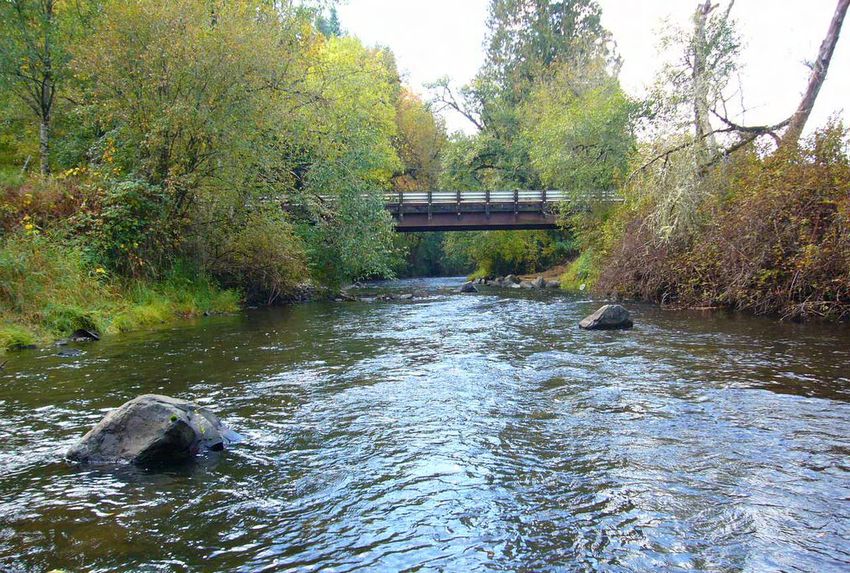
About this Report

The U.S. Environmental Protection Agency
(EPA) requires public water suppliers to
provide water quality reports to their
customers by July 1 of each year.

These annual reports — also referred to as
Consumer Confdence Reports (CCR) —
provide information on the quality of your
drinking water.

This 2021 report includes results of water
quality testing conducted from January 1
through December 31, 2020, on drinking
water served by the Hillsboro Water
                                                  Public Participation
Department to upper system customers.             Opportunities
                                                  Monthly Public Meeting
                                                  The City of Hillsboro Utilities Commission
Questions?                                        – who is responsible for the City’s water
                                                  system operation – meet the second Tuesday
           Call:                                  each month at 1:30 pm.
           503-615-6702                           Public participation is encouraged. Meeting
                                                  details, links, and agenda packets are
           Email:                                 posted in advance at Hillsboro-Oregon.
                                                  gov/CommitteesBoards, under the “Utilities
           Lindsay.McClure@Hillsboro-Oregon.gov
                                                  Commission” section.
           Visit:
           Hillsboro Civic Center, Third Floor    Information and Questions
           150 East Main Street                   For information about public participation
           Hillsboro, OR 97123                    opportunities, contact Public Information
                                                  Offcer Lindsay McClure at 503-615-6702
           Fax:                                   or Lindsay.McClure@Hillsboro-Oregon.gov.
           503-615-6595

2   2021 Water Quality Report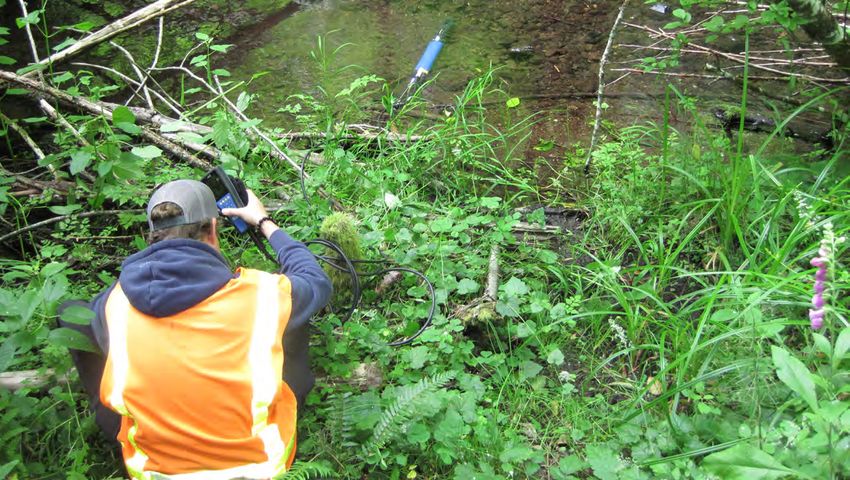
Message from the City of Hillsboro Utilities Commission

To our valued customers:
It is with great pride that Utilities Commissioners          system, then tested to confrm your water
David Judah, Deborah Raber, and I present to our             continues to surpass state and federal water
customers the Hillsboro Water Department 2021                quality standards.
Water Quality Report.                                    • Maintenance: The pipes, reservoirs, valves,
Clean drinking water is an essential resource that         and meters that water travels through to reach
we rely on every day. It is easy to take for granted       your home or business are kept in top working
when we turn on our taps and always get clean,             order. In addition, Hillsboro Water continues
fresh water.                                               to respond to pipe leaks and breaks that could
Knowing where your water comes from, how it is             impact water service, and replaces aging
treated and purifed, what it is tested for, and how        infrastructure, as needed, to ensure safe
it reaches your tap is important to understand.            drinking water is delivered to all members
                                                           of our community.
In 2020, we experienced an unprecedented public
health crisis as a result of the coronavirus global      Water is a key element to staying healthy and safe
pandemic. The Hillsboro Water Department –               during the COVID-19 pandemic. Customers can
which served an average of 15.5 million gallons          rest assured that their water service is reliable
of water each day to customers last year –               and will continue to fow to their tap during this
continues to carefully track the coronavirus, and        pandemic.
take proactive steps to ensure the delivery of high      Please take a moment to learn more about your
quality, reliable drinking water to our Hillsboro        drinking water, and the proactive steps Hillsboro
community, including:                                    Water Department is taking to guarantee customers
• Treatment: Every single drop of Hillsboro’s            will enjoy clean and safe drinking water for years
  water is thoroughly treated to remove particles,       to come.
  viruses, bacteria, and other organisms from the        Cheers!
  drinking water, including COVID-19.
• Testing: Each month, hundreds of water                 John Godsey
  samples are collected throughout the water             Utilities Commission Chair

                John Godsey                David Judah               Deborah Raber
                Utilities Commission       Utilities Commissioner    Utilities Commissioner
                Chair

                                                                                      2021 Water Quality Report   3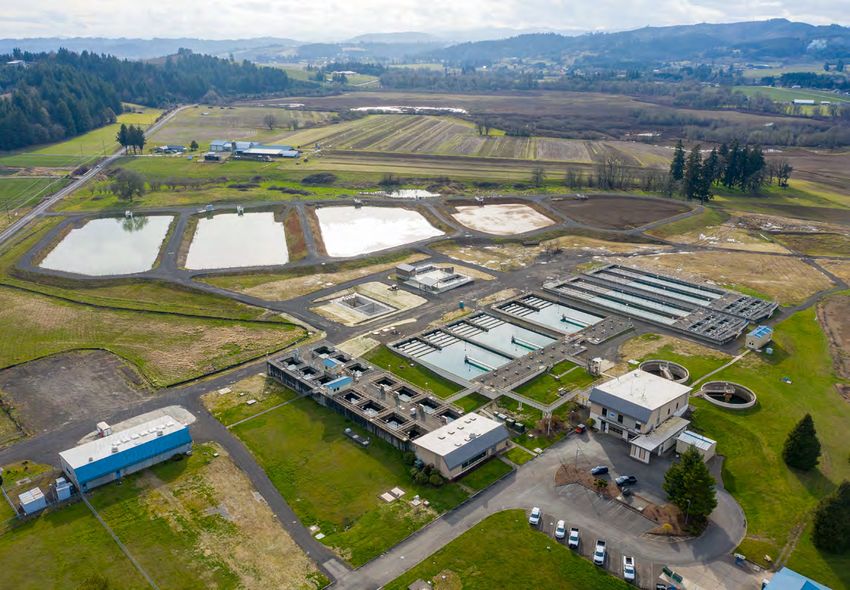
Hillsboro Water Department
Sk
un
kH
oll
Upper-System
ow
Su
nd
ay
Customers
Cr
e ek
Cre
ek
}
Lee
\
Eas
tF
or
kS
og
Sc
ain
gi
ns
Creek
M C
ap re
le ek
Cr
ee
k
M t hi
a
eu
C reek
Cherry Grove
Slow Sand
a y Creek
I
Filter Plant Sain Cre
ek
d
Sun
K
J
Tualati
n River ¼
"
Mid
dle
FK
No
rt
hF
Haines Fall
K Tr a
Intake
K
J
sk
Ri
er
v
Roaring Creek
Middle Fork N
Fork
LEGEND
WATER SYSTEM
K
J
¼
"
+
R
Treatment Plant
Raw Water Intake
Water Reservoir
-- ..
WATER LINES
Transmission Main
High Pressure Main
Water Main
TRANSPORTATION
Arterial
-.
WATER WAY
0
River/Stream
Haag Lake
CITY BOUNDRY
fl City of Forest Grove
Upper System
Tr a sk River Roadway I!] Wholesale Customer
c'.] County
.J
reek
r
yC
Ha
I
4 2021 Water Quality Report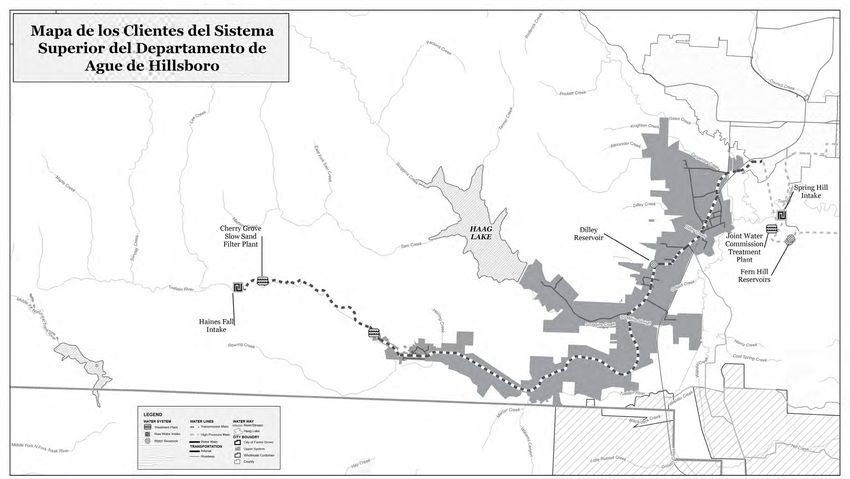
)
k
ee
Cr
ck
deri
Ro
Parson
sC
ree
k
Co
unc
il Cre
ek
P rickett Creek
k
ree
rC
Gales Cre
ek
)
ne
Knighten Creek
n
Ta
nder Creek
Alexa
Ca
r pe
nte
rC
ree
k
Spring Hill
River
Intake
t in
Tua l a
ek
Dilley Cre
¼
"
HAAG Dilley
Dill
ey
C ree K
J
LAKE Reservoir k Joint Water
Commission
+
R
+
R
Treatment
Plant
+
R
Fern Hill
ree k
Reservoirs
e ill C
ON
He
rrin
Scoggin
s Slou
g Cre
gh
Scoggins Cre ek
ek
Ha
rris
Creek
C old Spri
ng Cr
eek
ek
Cr e
Wap ato
Tu alatin River ek
Cre
ato
ap
I
W
er Cre ek
erc
(
k
Cree
M
Black
J a ck
Wi
llia
ms
Canyo
Hill
Creek
n Creek
ssell Creek
n
L ittle Ru
i
Goo d
2021 Water Quality Report 5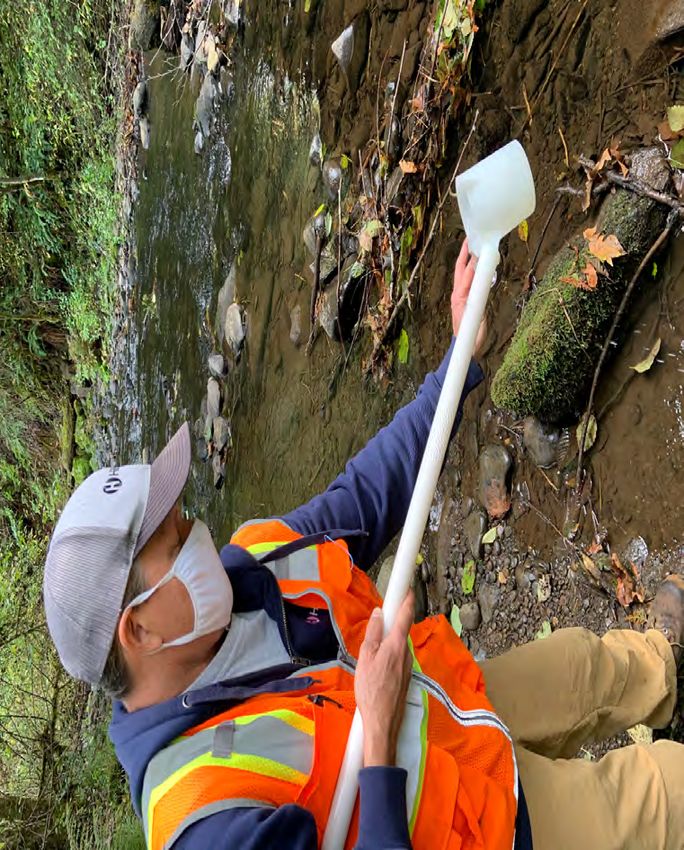
Delivering High-Value, Reliable Water Service
The Hillsboro Water Department delivers high-value, reliable water service to:

• Upper-system customers in          (JWC) Water Treatment Plant        the area to the west between
  western Washington County          located in Forest Grove, and       Hillsboro and Cornelius. In-
  along Hillsboro’s original         the Cherry Grove Slow Sand         town customers are served
  water service line, from the       Filter (SSF) Plant, located        water from the JWC Water
  community of Dilley, along         near the community of Cherry       Treatment Plant.
  Highway 47, then up to the         Grove.                         • Three wholesale customers:
  community Cherry Grove.         • In-town customers located         the cities of Cornelius and
  Upper-system customers are        west of Cornelius Pass Road       Gaston, and the L.A. Water
  served water from both the        and south of Highway 26           Cooperative.
  Joint Water Commission            (Sunset Highway), as well as

6   2021 Water Quality Report
Hillsboro’s Reliable
Water Source:
Upper-Tualatin River
The Hillsboro Water Department
proudly serves high-quality drinking
water to more than 88,000 customers
in the City of Hillsboro (in-town
customers) and in rural Washington
County (upper-system customers).
Every drop of water that runs through
customers’ taps comes out of a river,
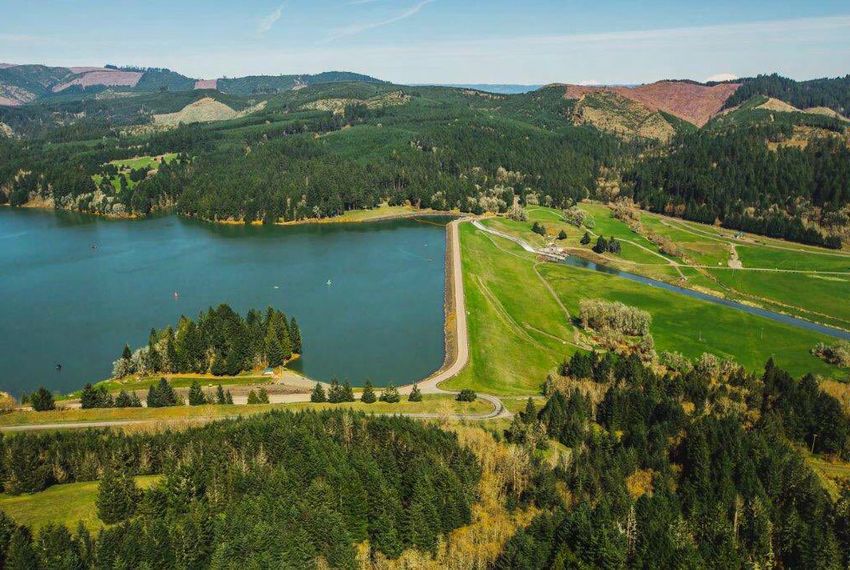
or a dam and reservoir.                                   Hagg Lake
Hillsboro’s winter water source is the
upper-Tualatin River and its tributaries.
The river stretches almost 80 miles
from the Tillamook State Forest in
Washington County to the Willamette
River near West Linn. The Tualatin
River has been Hillsboro’s only winter
water source for almost 80 years.
In the summer, the river level drops
too low for community use, so
Hillsboro customers rely upon water
stored in two reservoirs to meet
demand:
• The Barney Reservoir is located
  in the Trask River Watershed and                 Barney Reservoir
  holds 20,000 acre-feet of water at
  capacity, of which 14,886 acre-feet
  is available for drinking water. (An
  acre-foot is the amount that covers
  an acre with a foot of water, and is
  equal to 325,851 gallons.) Water
  is moved from the reservoir to the
  Tualatin River through a one-mile
  long pipeline.
• The Scoggins Reservoir — also
  known as Hagg Lake — is located
  near Gaston. The reservoir stores
  approximately 59,950 acre-feet of
  water when full, of which 13,500-
  acre feet is available for drinking
  water.                                       Upper-Tualatin River

                                            2021 Water Quality Report   7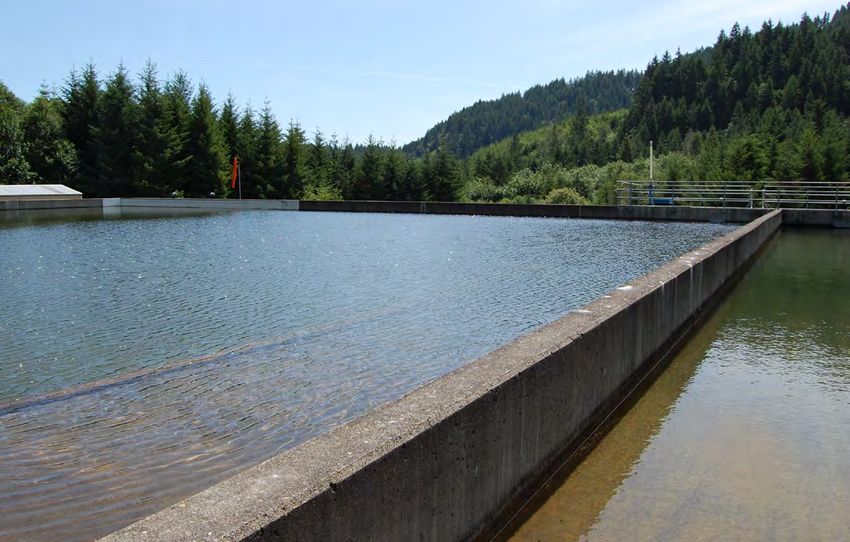
Most of Hillsboro’s tap water begins as
                                                                       rainfall in the Tillamook State Forest,
                                                                      about 50 river miles west of Hillsboro.

                                                                       TILLAMOOK STATE FOREST

                                                                                            Rain water is captured in the Barney
                                                                                            and Scoggins Reservoirs (Hagg Lake)
                                                                                             and supplements the Upper-Tualatin
                                                BARNEY
                                                                                                  River in summer months.
                                               RESERVOIR

                                                                           SCOGGINS RESERVOIR
                                                                                (HAGG LAKE)

                                UPPER-TUALATIN
                                    RIVER

                                   Hillsboro’s current drinking water
                                source is the upper-Tualatin River which
                                  begins in the Tillamook State Forest.

                                                             CHERRY GROVE                                                 FERNHILL
                                                                                                                         RESERVOIR
                                                             SLOW SAND FILTER PLANT

                                     Water travels 56 river
                                                                                   WATER INTAKE
                                   miles before being drawn
                                    out of the upper-Tualatin

                                                                                                       I
                                      River for filtration and
                                     treatment at either the
                                   Cherry Grove Slow Sand
                                     Filter Plant (SSF) or the
                                    Joint Water Commission
                                    (JWC) Water Treatment
                                   Plant. Both plants operate
                                                                                         JOINT WATER COMMISSION
                                         365-days a year,                                 WATER TREATMENT PLANT
                                          24-hours a day.                               Our water distribution system and water
                                                                                      treatment plants are maintained, evaluated,
                                                                                       and upgraded regularly to stay in line with
                                                                                      advancements in technology, health science,
                                                                                             and government regulations.

                                  Hillsboro
                                                           Water

8   2021 Water Quality Report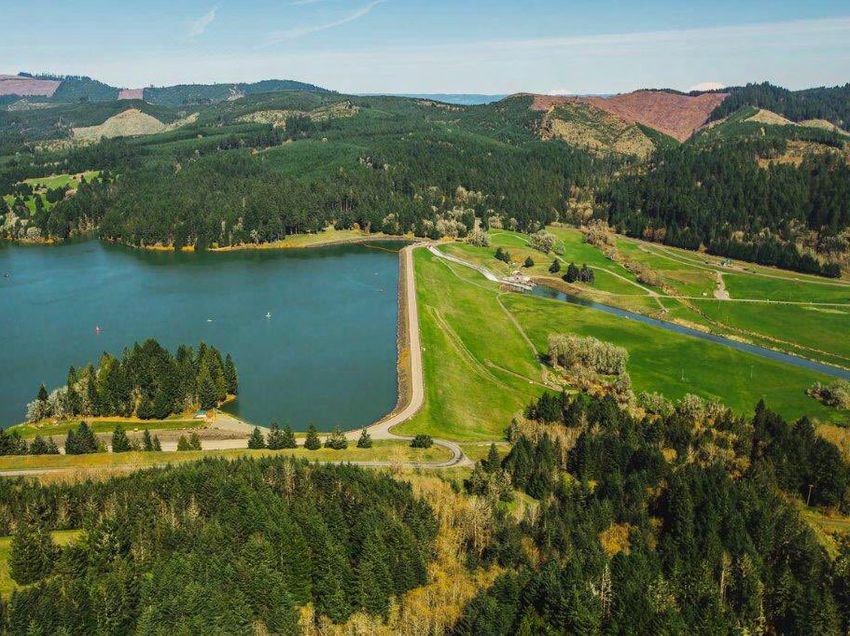
Hillsboro’s Reliable
      Drinking Water
      Source and System

   Water is delivered to Hillsboro                Hillsboro customers use 15.5 million
   by 2 large transmission lines.                 gallons on an average day, and up
                                                    to 25 million on a summer day.

   City of Hillsboro
           320 miles of water
           pipeline ranging in
            size from 4 to 24
          inches deliver water
          straight to your tap.

                    Hillsboro Water maintains
                   more than 2,600 hydrants for
                          fire suppression.

3 in-town reservoirs can store
up to 30.5 million gallons of
        finished water.

                                                                                         2021 Water Quality Report   9
Treatment Process
Protection of public health is the Hillsboro Water Department’s number one priority.
Before reaching customers’ taps, water is fltered and treated in an extensive process
that produces some of the highest quality drinking water in the region.
Water served to the Hillsboro Water Department’s       The JWC Water Treatment Plant:
upper-system customers is drawn out of the upper-      • Is the largest conventional water treatment
Tualatin River for fltration and treatment at either     plant in Oregon, capable of treating up to 85
the JWC Water Treatment Plant, or the Cherry             Million Gallons per Day (MGD) of water.
Grove SSF Plant. Both plants operate 365-days
                                                       • Provides water to the Hillsboro Water
per year, 24-hours per day.
                                                         Department’s in-town, upper-system, and
Before reaching the taps of Hillsboro’s upper-           wholesale customers.
system customers, drinking water undergoes
                                                       • Provides water to JWC partner agencies,
comprehensive treatment overseen by state-
                                                         including the cities of Hillsboro, Forest Grove,
licensed drinking water operators at the JWC
                                                         and Beaverton, and the Tualatin Valley Water
Water Treatment and Cherry Grove SSF plants to
                                                         District (TVWD).
make it safe to drink and use.
                                                       • Wholesales water to the City of North Plains.
Learn more about the JWC treatment process at
JWCWater.org/What-We-Do/Treatment.

                                                          Joint Water Commission Water Treatment Plant

10   2021 Water Quality Report
Cherry Grove Slow Sand Filter Plant
The Cherry Grove SSF Plant: The Cherry Grove SSF Plant treatment process
• Effectively removes turbidity and pathogenic includes:
organisms through various biological, • Untreated river water is drawn from the upper-
physical, and chemical processes through Tualatin River at the Haines Falls Intake, near the
slow sand fltration. community Cherry Grove.
• Is capable of treating up to three MGD of • After going through screens, water travels through
water. a pipe to a settling pond to remove silt, and make
• Provides water to the Hillsboro Water the water clearer.
Department’s upper-system customers, along • Water is then piped to the slow sand flters for
with the JWC Water Treatment Plant. treatment. In the flters, water slowly percolates by
• Provides water to some of the Hillsboro gravity through a bed of fne sand.
Water Department’s wholesale customers, • The top layer of the flters is where most treatment
the City of Gaston and the L.A. Water takes place. It is called the “Schmutzdecke” and is
Cooperative, along with the JWC Water formed by a community of organisms that naturally
Treatment Plant. live in the water. This layer traps contaminants and
The Cherry Grove SSF Plant uses a simple and pathogens that could be in the water— including
highly effective form of treatment called slow silt, bacteria, Cryptosporidium, and Giardia.
sand fltration. This fltration process is one of • After passing through the flters, the water is
the world’s oldest water treatment methods, and chlorinated and fnal pH is adjusted to reduce
employs a biological process to clean the water. pipe corrosion before being sent to customers
through the water distribution system.
2021 Water Quality Report 11Source Water Assessment
Protecting the upper-Tualatin River Watershed is vital to ensure clean,
safe drinking water now and for future generations.
The JWC’s goal of eliminating
pollutants from entering
waterways has benefts beyond
our drinking water. For example,
by reducing erosion and
sediment inputs to the Tualatin
River, salmon beneft with more
available spawning habitat
and lower risk of clogged gills
from sediment suspended in the
water.
In addition to drinking water
quality, fsh and wildlife, and
vegetation benefts, committing
resources to protecting the
Watershed makes sense Tualatin River
fnancially. The U.S. EPA
estimates that every $1 spent on
The assessment identifed The assessment found that
source water protection activities
potential contaminant sources 97% of the streams in the JWC
saves $27 in water treatment
that may affect the supply of drinking water source area
costs.
water. have high soil erosion potential.
The JWC is active in the Stream bank stabilization and
Out of a total of 567 high-risk
Watershed by monitoring best management practices
potential contaminant sources,
water quality, and developing were recommended to mitigate
331 were identifed within the
projects to reduce the risks of the effects of erosion, which
eight-hour time-of-travel in the
contamination. contributes turbidity, nutrients,
JWC Drinking Water Source
In 2019, the JWC was awarded Area. and pathogens in to the streams.
a competitive grant totaling Addressing this risk has been a
Sources of potential watershed
$85,000. This funding will be focus of the JWC’s Source Water
contamination include
used to further assess drinking Protection Program, which
agricultural/forest management
water risks, and implement includes foodplain restoration
applications, commercial land
best management practices to and securing increased stream
uses, residential/municipal land
improve water quality. setbacks in timber harvests.
uses, landslides, and clear-cut
Also in 2019, the Oregon forest areas. To view the updated JWC-Cherry
Health Authority (OHA) Grove Source Water Assessment
These existing potential sources
and Oregon Department Report, call 503-615-6702
of contamination could, if
of Environmental Quality or email Lindsay.McClure@
improperly managed or
conducted an updated source Hillsboro-Oregon.gov.
released, affect water quality in
water assessment for the upper-
the watershed.
Tualatin River Watershed.
12 2021 Water Quality ReportRegional Collaboration
The Hillsboro Water Department is a member of the Regional Water Providers
Consortium. The Consortium provides leadership in the planning, management,
stewardship, and resiliency of drinking water in the Portland metropolitan region.
Visit RegionalH2O.org to fnd out how to start your emergency prep with water, get
information and resources to use water effciently at home, and to learn more about
the region’s drinking water.
Everyday Actions to Protect Our Drinking Water
Community members served water by the Hillsboro Water Department are encouraged to take
an active role in protecting the upper-Tualatin River and watershed from contamination:
• Prevent wildfires. Always • Properly maintain septic the sink, as they could enter
completely dose and smother systems. Malfunctioning rivers and lakes.
campfres and be extra septic systems release • Be good stewards of the
cautious on windy days. bacteria, viruses, and land. When visiting the
• Use and dispose of harmful chemicals to local aquifers Tualatin Watershed, properly
materials properly. Do not and waterways. Each dispose of trash and debris,
pour hazardous waste down household septic system and follow fre protection
the drain, on the ground, should be inspected at least rules and regulations.
or into catch basins. This every three years, and
• Don’t move plants and
could contaminate the soil, typically pumped every three
animals. Invasive species like
groundwater, or nearby to fve years.
Zebra / Quagga Mussels,
surface water. • Dispose of medications New Zealand Mudsnails and
• Think twice about lawn and properly. Take advantage Milfoil are threats to our local
garden chemicals. Limit the of pharmaceutical take- streams and lakes. Carefully
use of pesticides or fertilizers, back collection programs wash and dry boats, motors,
and always follow the label that accept prescription or and recreation equipment to
directions. over-the-counter drugs. Do prevent spreading invasive
not fush or pour them down animals and plants.
For additional ways to protect your drinking water at the source, visit EPA.gov/SourceWaterProtection.
2021 Water Quality
2021 Water Quality Report 13
Repor t 13Collecting and Testing Water Samples
The Hillsboro Water Department is committed to protecting public health and
providing customers with safe drinking water. To ensure your drinking water meets
or exceeds state and federal drinking water standards, each month hundreds of
water samples are collected and tested by a state-certifed laboratory.
Coliform Bacteria Cryptosporidium and Giardia
The Hillsboro Water Department organisms may be present. If The JWC Water Treatment Plant
collects water samples testing indicates that a routine has been periodically required
throughout the service area sample contains coliforms, a set to test for Cryptosporidium and
to test for coliform bacteria. of repeat samples are collected Giardia in the raw water since
Most coliforms are not harmful, and analyzed to determine 1980. Raw water levels are
but they can be an indicator whether any disease-causing extremely low and the water
that other disease-causing organisms are present. treatment process is effective at
removing pathogens.
Cryptosporidium and Giardia
are microscopic organisms
that, when ingested, may cause
gastrointestinal symptoms. There
are no U.S. EPA mandated
Maximum Contaminant Levels
(MCL) required for either
organisms. (MCLs are U.S. EPA
standards that set the legal limit
on the amount of a substance
allowed in public water systems
under the Safe Drinking Water
Act.)
Due to the potential health
effects of these organisms, the
water treatment plant flters
and chlorinates every drop of
drinking water delivered to
Hillsboro Water Department
customers.
While testing of raw (or
pre-treated) source water
has detected small amounts
of harmful organisms, the
treatment process of fltration
and disinfection prevents the
organisms from causing public
health issues.
14 2021 Water Quality ReportContaminant Sources
The sources of drinking water (both tap water and bottled water) include rivers, lakes,
streams, ponds, reservoirs, springs, and wells. As water travels over the surface of the
land or through the ground, it dissolves naturally present minerals and, in some cases,
radioactive material, and can pick up substances resulting from the presence
of animals or from human activity.
Contaminants that may be present in source water include:
• Microbial contaminants,
such as viruses and bacteria
which may come from sewage
treatment plants, septic
systems, agricultural livestock
operations, and wildlife
• Inorganic contaminants, such
as salts and metals, which
can be naturally occurring or
result from urban stormwater
runoff, industrial or domestic
wastewater discharges, oil
and gas production, mining,
or farming
• Pesticides and herbicides,
which may come from a
variety of sources such as Tualatin River
agriculture, urban stormwater
runoff, and residential uses
• Organic chemical contaminants, including synthetic and volatile organic chemicals, which are
byproducts of industrial processes and petroleum production, and can also come from gas stations,
urban stormwater runoff, and septic systems
• Radioactive contaminants, which can be naturally-occurring or be the result of oil and gas
production and mining activities
In order to ensure that tap water is safe to drink, Drinking water, including bottled water, may
the U.S. EPA prescribes regulations, which limit reasonably be expected to contain at least small
the amount of certain contaminants in water amounts of some contaminants. The presence of
provided by public water systems. Food and Drug contaminants does not necessarily indicate that
Administration regulations establish limits for water poses a health risk.
contaminants in bottled water that must provide
the same protection for public health.
More information about contaminants and potential health effects can be obtained by calling
the U.S. EPA’s Safe Drinking Water Hotline at 1-800-426-4791.
2021 Water Quality Report 15Cyanotoxin Monitoring in Drinking Water
Freshwater Harmful Algal Blooms (HABs) are a growing concern in the United States and worldwide.
While the growth of algae in pigments, in addition to visual in accordance with OHA
freshwaters — such as streams, assessments. requirements. The JWC did
lakes, and reservoirs — is Some HABs may contain species not detect any Cyanotoxins in
natural and an important part of Cyanobacteria (also referred the drinking water during the
of maintaining the ecosystem, to as Blue Green Algae), which regulatory season (May through
when water bodies have high have the potential to produce October 2020).
levels of nutrients or higher toxins, known as Cyanotoxins. Based on assessments performed
water temperatures, algae can These toxins can affect the by OHA, the Cherry Grove
grow rapidly and cause a HAB. function of the liver and nervous SSFP is currently not required
HABs can cause harm to system at high enough levels in to sample for Cyanotoxins.
animals, people, and the local humans and animals. However, Hillsboro staff
ecology. A HAB can look like In 2018, the OHA developed voluntarily monitor for HABs in
foam, scum, or mats on the permanent rules requiring the source water for the Cherry
surface of water, and can be drinking water systems in Grove SSFP.
different colors. HABs may Oregon using certain surface Testing for the JWC Water
also be undetectable by visual water sources — such as those Treatment Plant will continue
assessment, which is why water prone to HABs — to routinely in 2021. For more information
agencies regularly monitor test for Cyanotoxins and notify on Cyanotoxins and testing
streams and reservoirs for other the public about the test results. requirements, call 503-615-
indicators, such as nutrients, 6702 or visit JWCWater.org/
The JWC tests for Cyanotoxins
temperature, and algae Water-Quality/Testing-Results.
Water Quality Testing at Barney Reservoir
16 2021 Water Quality ReportDefinitions: Water Quality Terms
Some of the terms and abbreviations contained in this report and table are unique to the water
industry and may not be familiar to customers. They are explained below.
Maximum Residual
Action Level (AL): Disinfectant Level Parts Per Billion (ppb):
The concentration of a (MRDL): Equivalent to micrograms per
contaminant which, if liter. One ppb is comparable
The highest level of a
exceeded, triggers treatment to one drop of water in
disinfectant allowed in
or other requirements which 55,000 gallons.
drinking water. There is
a water system must follow.
convincing evidence that
addition of a disinfectant
is necessary for control of
Parts per Million (ppm)
Contaminant: or Milligrams per Liter
microbial contaminants.
Potentially harmful physical, (mg/L):
biological, chemical, or Equivalent to milligrams per
radiological substance.
Maximum Residual liter. One ppm is comparable
Disinfectant Level Goal to one drop of water in 55
(MRDLG): gallons.
Disinfection Byproducts
(DBP): The level of a drinking
water disinfectant below
Formed when disinfectants
which there is no known
pH:
used in a water treatment Used to indicate the alkalinity
or expected risk to health.
react with bromide and/ or acidity of a substance as
MRDLGs do not refect
or natural organic matter ranked on a scale from 1.0
the benefts of the use of
present in the source water. to 14.0. Acidity increases as
disinfectants to control
microbial contamination. the pH gets lower.
Maximum Contaminant
Level (MCL): Treatment Technique (TT):
mg/L:
The highest level of a A required process intended
contaminant that is allowed Measurement of density.
to reduce the level of a
in drinking water. MCLs contaminant in drinking
are set as close to the water.
MCLGs as feasible using Nephelometric Turbidity
the best available treatment Units (NTU):
technology. Measurement of the clarity, Turbidity:
or turbidity of water. Turbidity
A measure of suspended
in excess of fve (5) NTU is
Maximum Contaminant material in water. In the
just noticeable to the average
Level Goal (MCLG): water feld, a turbidity
person.
measurement — expressed in
The level of a contaminant Nephalometric Turbidity Units
in drinking water below (NTU) — is used to indicate
which there is no known Non-detected (ND): clarity of water.
or expected risk to health.
Not detected at or above the
MCLGs allow for a margin
Maximum Contaminant Level
of safety.
(MCL).
2021 Water Quality Report 17Customers served water by the JWC and
2020 Sampling Results Cherry Grove SSF Water Treatment Plants
REGULATED SUBSTANCES
Substance Unit of Measure Year Sampled MCL MCLG
(MRDL) (MRDLG)
Chlorine ppm 2020 4 4
Nitrate (as Nitrogen) ppm 2020 10 10
Barium ppm 2020 2 2
MICROBIOLOGICAL TESTING & TREATMENT CONSIDERATIONS
E. coli Presence or 2020 0 0
Absence
Total Organic Carbons ppm 2020 TT N/A
Total Organic Carbons Percent Removal 2020 TT N/A
Turbidity NTU 2020 TT N/A
Turbidity Percent 2020 TT N/A
(Lowest monthly percentage of samples meeting limit of 0.3 NTU for JWC and 1 NTU for SSFP)
DISINFECTION BY-PRODUCTS (DBP)
Total Trihalomethanes ppb 2020 80 N/A
Haloacetic Acid ppb 2020 60 N/A
UNREGULATED CONTAMINANTS MONITORING RULE 4
Microcystins (Total) ppb 2020 N/A N/A
Cylindrospermopsin ppb 2020 N/A N/A
Anatoxin-a ppb 2020 N/A N/A
LEAD AND COPPER TESTING
Substance Unit of Measure Year Action Level MCLG
Sampled (AL) (MRDLG)
Lead ppb 2018 15 0
Copper ppm 2018 1.3 1.3
OTHER ITEMS OF INTEREST
Substance Year Range (ppm)
Aluminum 2020 ND
Ammonia 2020 ND - 0.05
Calcium 2020 5.2 - 8.3
Chloride 2020 3.90 - 5.92
Magnesium 2020 1.8 - 2.7
Iron 2020 ND
During the past year, hundreds of water samples have been taken in order to determine the presence of any
biological, inorganic, volatile organic, or synthetic organic contaminants. The table shows only contaminants that
were detected and are considered a risk to health if over the Maximum Contaminant Level (MCL). A more detailed
list of sampling completed in 2020 is available on the Joint Water Commission website at JWCWater.org.
18 2021 Water Quality ReportJWC Water Treatment Plant Slow Sand Filter Plant
Amount Range Amount Range Violation Typical Source
Detected Low-High Detected Low-High
1.81 0.99 - 1.81 1.68 1.04 - 1.68 No Additive controls microbes
0.30 ND - 0.30 0.05 ND - 0.05 No Agricultural runoff
0.0041 0.0038 - 0.0041 0.001 ND - 0.001 No Erosion of natural deposits
Absent Absent Absent Absent No Human and animal fecal
waste
1.10 0.49 - 1.10 0.81 0.39 - 0.81 No Naturally present in
environment
42% 28.1 - 62.1% 28% 4.9 - 38.5% No Naturally present in
environment
0.32 0.02 - 0.32 0.23 0.051 - 0.23 No Soil runoff
97% 97% - 100% 100% 100% No Soil runoff
49.8 21.3 - 54.7 17.3 10.5 - 23.4 No By-product of chlorination
30.7 13.9 - 36.3 20.1 15.4 - 24.4 No By-product of chlorination
ND ND ND ND No Toxin produced by naturally
occurring aquatic bacteria
ND ND ND ND No Toxin produced by naturally
occurring aquatic bacteria
ND ND ND ND No Toxin produced by naturally
occurring aquatic bacteria
Amount Detected Sites Above Amount Detected Sites Above Violation Typical Source
90th Percentile AL 90th Percentile AL
1 0 5 0 No Corrosion of plumbing
0.075 0 0.087 0 No Erosion natural deposits
Substance Year Range (ppm) Range (ppm)
Orthophosphate 2020 ND - 0.01 Fluoride: Hillsboro does not Fluoridate
Silica 2020 13.8 - 16.4 Hardness: Hardness: 20.4 - 24.2
ppm = 1.19 - 1.41 grains per gallon
Sodium 2020 6.2 - 10.2 pH: pH (Normal range): 6.5 - 7.5
Sulfate 2020 3.3 - 15.2
Manganese 2020 ND
Reporting Violation: The JWC completed all required water quality sampling and there were no water quality violations in 2020.
However, the JWC received two reporting violations, one for Surface Water Treatment Rule, chlorine, and turbidity reporting, and
one for Corrosion Control reporting in September 2020. The violations were due to an operator not providing the sample results to
the Oregon Health Authority within the required reporting period. JWC returned to compliance in November 2020, as soon as the
error was identifed. JWC has increased accountability checks to its reporting system, which should prevent this type of reporting
oversight in the future. JWC’s water remains safe to drink, and at no time was the public health at risk due to the violation.
2021 Water Quality Report 19Unregulated Contaminant Monitoring Rule
Every fve years since 1996, the U.S. EPA — through Utilities report their test results to the U.S.
its Unregulated Contaminant Monitoring Rule (UCMR) EPA, which uses the information to learn more
— requires water utilities across the country to test for a about the presence of these substances and
list of substances that are suspected of being in drinking decide whether they should be regulated in
water, but are not currently regulated under the Safe the future to protect public health.
Drinking Water Act. The Hillsboro Water Department has
complied with the fourth round of the U.S.
EPA’s UCMR.
In 2020, the Hillsboro Water Department
sampled for three Cyanotoxins, two of which
are regulated at the State level by the Oregon
Health Authority, but are yet to be federally
regulated. No Cyanotoxins were detected
for Hillsboro’s system during this sampling
period.
A full list of contaminants tested under the
current UCMR and their results are available
upon request.
For more information or to request a full list of
contaminants tested under the current UCMR
and their results, call 503-615-6702 or email
Sarah.Honious@Hillsboro-Oregon.gov.
Vulnerable Populations
Some people may be more vulnerable to
contaminants in drinking water than the general
population.
Immuno-compromised persons such as persons with
cancer undergoing chemotherapy, persons who
have undergone organ transplants, people with
Human Immunodefciency Virus/Acquired Immune
Defciency Syndrome (HIV/AIDS) or other immune
system disorders, some elderly, and infants can be
particularly at risk from infections. These people
should seek advice about drinking water from their
health care providers.
The U.S. EPA and the Centers for Disease Control (CDC) guidelines on appropriate means to lessen
the risk of infection by Cryptosporidium and other microbial contaminants are available from the
Safe Drinking Water Hotline at 1-800-426-4791.
20 202021 Water
2021 Quality
Water Repor
Quality t
ReportKeeping Your Water on During COVID-19
To help keep our community healthy and continue delivering clean and safe
water, the City of Hillsboro paused discontinuing water and utility services for
non-payment, and paused charging late payment fees on past-due utility bills
since April 2020.
As the COVID-19 pandemic continues to impact our community, the City
is committed to helping customers get through this crisis. If you are having
trouble paying your utility bill, you may qualify for a fexible payment plan or
bill relief through City assistance programs.
21
For details, visit Hillsboro-Oregon.gov/UtilityAssistance or call
503-681-6163.
Water is a Smart Investment
The Hillsboro Water Department strives to ensure equity and affordability for all customers
by carefully managing drinking water rates and System Development Charges (SDCs).
Water rates and SDCs are typically
adjusted annually so all customers —
including residential, commercial, and
industrial users — pay their fair share
based on how they use the City’s
water system
and how much water they use.
The Hillsboro Water Department
fnances major water infrastructure
investments over time, so people and
businesses moving to our community
in the future will pay their share of
Water Pipe Leak Detection
costs through water rates and SDCs.
These investments include:
• Upgrading, repairing, and
replacing parts of the current
water system
• Strengthening and expanding
water infrastructure in our current
system and at the
JWC Water Treatment Plant
Learn how water is a smart investment
at Hillsboro-Oregon.gov/Water.
Water System Maintenance Fire Hydrant Installation
2021 Water Quality Report 21Drinking Water and Lead Water served by the Hillsboro Water Department gone through optimized treatment for corrosion is tested regularly to ensure every drop meets all control. A form of soda is used to raise the pH and federal and state safe drinking water standards, reduce the corrosiveness of the water to reduce the including those for lead and copper. potential for lead to leach from private plumbing Household plumbing is the main source of lead fxtures. in drinking water. This is usually from lead solder Water providers, including the Hillsboro Water used in homes built or plumbed with copper pipes Department, test for lead and copper directly before 1985. Lead can also be found in brass at customers’ taps, instead of in the distribution plumbing fxtures and components. Lead can enter system on a required schedule set by the OHA. drinking water when service lines, pipes in the Testing ensures water consumed by customers and home and other plumbing fxtures, or solder that their families meet safe drinking water standards. contain lead corrode. Testing last occurred in 2018. Lead and copper In the Hillsboro Water Department’s water were not detected above the action level – 15 distribution system, there are no known lead parts per billion (ppb) for lead, 1,300 ppb service lines or infrastructure components. In for copper – in either source water or private addition, the Hillsboro Water Department provides households. treatment protection to minimize leaching. All Results from past testing are available on the water delivered to homes and businesses in the State’s website at YourWater.Oregon.gov. Hillsboro Water Department’s service area has 22 2021 Water Quality Report
If present, elevated levels of lead can
cause serious health problems, especially
for pregnant women and young children.
Lead in drinking water is primarily from
materials and components associated with
service lines and home plumbing.

The Hillsboro Water
Department is responsible for
providing high quality drinking
water, but cannot control the
variety of materials used in
plumbing components. When
your water has been sitting for
several hours, you can minimize
the potential for lead exposure by
fushing your tap for 30 seconds
to two minutes before using water
for drinking or cooking, using cold
fltered water for drinking, cooking,
and preparing infant formula, and
regularly cleaning your faucet’s
screen or aerator.

                                                 If you are concerned about lead in your

                                             l
                                                 water, you may wish to have your water
                                                 tested. The Hillsboro Water Department
                                                 provides free lead testing kits to residential
                                                 and non-proft customers, as well as
                                                 childcare facilities. Learn more at

                                     -
                                                 Hillsboro-Oregon.gov/Lead.
                  ~.......;=----

                                                 Information on lead in drinking water, testing
                                   5 -150
               250 ml                            methods, and steps you can take to minimize
                                                 exposure is available from the Safe Drinking
                                         0       Water Hotline at 1-800-426-4791 or at
                                                 EPA.gov/Safewater/Lead.

                                     -
                                                                            2021 Water Quality Report   23
Water Transmission Line Planning
for Resiliency and Reliability
After being treated at the JWC and Cherry Grove The consultant’s assessment will estimate the
SSF plants, drinking water travels about 15-miles condition of the pipe, conduct an alternatives
through an 18-inch diameter water transmission analysis to review options for improvements, and
pipe before being delivered to upper-system, City make recommendations for selected alternatives.
of Gaston, and L.A. Water Cooperative customers. Recommended improvements may include the
The aging steel transmission line was installed rehabilitation or replacement of the existing pipe,
in 1947, and has experienced leaks requiring or a combination of both.
repairs. Based on this and the pipe being 20 to This future water infrastructure upgrade will
30 years beyond its service life, the Hillsboro enable continued delivery of reliable, safe,
Water Department is employing the services of the and high-quality drinking water to upper-system
consultant team, Murraysmith, to perform a pipe and wholesale customers, for many years to
replacement/rehabilitation study. come. Additionally, it will help frst responders
better protect the community in the event of an
emergency.
24 2021 Water Quality ReportWater Quality &
Efficiency Resources
Contact Information
Lead-in-Water Test Kits City of Hillsboro Utility Bill
Testing is a sure way of telling 503-681-6163
whether there are harmful Water quality and pressure
quantities of lead in your
503-615-6702
drinking water. Request a free
lead-in-water testing kit online at: Water conservation and rebates
Hillsboro-Oregon.gov/Lead 503-615-6737
Backflow prevention
503-615-6723
Water Efficiency Rebates
Customers who purchase and Hillsboro’s future additional water source
install water-effcient toilets, 503-941-4563
washing machines, and Lead-in-water information
weather-based irrigation 503-615-6702
controllers can apply for
cash rebates. To learn more, visit: Water emergency
Hillsboro-Oregon.gov/Rebates 503-615-6700
After-hours water emergency (pager)
Home Water Audits 503-615-6775
Free residential home water Not sure?
audits can help customers Call 503-615-6702
identify usage habits, pinpoint or email:
leaks, and implement simple Water-Department@Hillsboro-Oregon.gov
conservation measures to help
cut water usage by as much as
30%. Schedule your free audit at: ('J Hillsbo!2
Hillsboro-Oregon.gov/HomeWaterAudit
Call 503-615-6702 for additional details.
G
(;' \, r'
C! ~ ·cc
c; C
C ,r , C
C , c Report
2021 Water Quality 25 'r
"Hillsboro Water Department
150 East Main Street, Hillsboro, OR 97123
Hillsboro-Oregon.gov/Water
503-615-6702
@HillsboroWater
Facebook.com/HillsboroWater
D
26 2021 Water Quality Report2021
Reporte de la Calidad del
Agua del Departamento
de Agua de la Ciudad de
Hillsboro:
Clientes del Sistema Superior
Su agua potable segura,
limpia y de alta calidad sigue
('J Hillsbo!2
superando todas las normas
estatales y federales.Referente a este Reporte
La Agencia de Protección Ambiental de
los Estados Unidos (EPA, siglas en inglés)
requiere que los proveedores públicos
de agua proporcionan reportes sobre la
calidad del agua a sus clientes antes del 1
de Julio de cada año. Estos reportes anuales
– también conocidos como Reportes de
Confanza del Consumidor (CCR, siglas en
inglés) – dan información sobre la calidad
de su agua potable.
Este reporte del 2021 incluye los resultados
de las pruebas de la calidad del agua Oportunidades de
realizadas desde el 1 de Enero hasta el 31
de Diciembre de 2020, referente al agua Participación Pública
potable distribuida por el Departamento de
Agua de Hillsboro a los clientes del sistema Reunión Mensual Pública
superior.
La Comisión de Servicios Públicos de la
Ciudad de Hillsboro – el cual es responsable
del sistema de operación de la Ciudad – se
¿Preguntas? reúne el segundo martes de cada mes a la
1:30 pm. Se anima a la participación del
Llame: público. Detalles de la reunión, enlaces, y
503-615-6702 paquetes de las agendas están publicadas
con antelación en Hillsboro-Oregon.gov/
Correo electrónico: CommitteesBoards, bajo la sección “Utilities
Commission” (“Comisión de Servicios
Lindsay.McClure@Hillsboro-Oregon.gov Públicos”).
Visite:
Hillsboro Civic Center, Third Floor Información y Preguntas
150 East Main Street Para información acerca de oportunidades
Hillsboro, OR 97123 de participación para el público, contacte
a Lindsay McClure al 503-615-6702 o
Fax: Lindsay.McClure@Hillsboro-Oregon.gov.
503-615-6595
2 2021 Reporte de la Calidad del AguaMensaje de la Comisión de Servicios Públicos
de la Ciudad de Hillsboro
Para nuestros valiosos clientes:
Es con gran orgullo que los Comisionados de los que su agua continúa superando los estándares
Servicios Públicos David Judah, Deborah Raber, y de calidad del agua estatal y federal.
yo presentamos a nuestros clientes el Reporte de la • Mantenimiento: Las tuberías, reservorios,
Calidad del Agua 2021 del Departamento de válvulas, y medidores por los cuales el agua
Agua de la Ciudad de Hillsboro. viaja a través para llegar a su hogar o negocio
El agua potable limpia es un recurso esencial en el están mantenidos en orden prioritario de
que confamos cada día. Es fácil dar por sentado trabajo. Además, Hillsboro Water continúa
cuando abrimos nuestros grifos y siempre tenemos respondiendo a están y roturas de tuberías que
agua limpia y fresca. pueden impactar el servicio del agua, y
Saber de dónde viene su agua, como e trata y reemplazando infraestructura vieja, según sea
purifca, para que se analiza, y como llega a sus necesario, para asegurar que agua potable
grifos es importante de entender. segura es entregada a todos los miembros de
nuestra comunidad.
En 2020, nosotros experimentamos una crisis de
salud sin precedentes como resultado de la El agua es un elemento clave para mantenerse
pandemia global del coronavirus. El Departamento saludable y seguro durante la pandemia del
de Agua de Hillsboro – el cual suministró un COVID-19. Los clientes pueden tener por seguro
promedio de 15.5 millones de galones de agua que su servicio de agua es fable y continuará
cada día a los clientes del año pasado – continúa fuyendo a sus grifos durante la pandemia.
siguiendo cuidadosamente el coronavirus, y toma Por favor tome un momento para descubrir más
pasos preventivos para asegurar la entrega de acerca de su agua potable, y los pasos preventivos
agua potable de alta calidad, fable para nuestra que el Departamento de Agua de Hillsboro está
comunidad de Hillsboro, incluyendo: tomando para garantizar que los clientes
• Tratamiento: Cada gota de agua de Hillsboro disfrutarán de agua potable limpia y segura por
es tratada completamente para remover los años venideros.
partículas, virus, bacteria, y otros organismos
del agua potable, incluyendo COVID-19. ¡Salud!
• Pruebas: Cada mes, cientos de muestras de John Godsey
aagua están colectadas a través del sistema de Presidente de la Comisión de Servicios Públicos
agua, luego están analizadas para confrmar
John Godsey David Judah Deborah Raber
Presidente de la Comisión Comisionado de Comisionado de
de Servicios Públicos Servicios Públicos Servicios Públicos
2021 Reporte de la Calidad del Agua 3-✓
Mapa de los Clientes del Sistema
Superior del Departamento de
Ague de Hillsboro
l oee'I-
?
)
.._,00
1,,~/,
"0.
"'".f
¾~
Cherry"Gi'e'Me
Slow Sand
Filter Plant Sain creek
V TUa/atin River
Roaring Creek
LEGEND
WATER SYSTEM WATER LINES WATERWAY
§ Treatment Plant - , Transmission Main . . . . River/Stream
U Haaglake
li!J Raw Water Intake
Hiyh Pressure M1:1in CITY BOUNDRY
@ Water Reservoir - water Main Q City of Forest Grove
Middle Fork IV f:. TRANSPORTATION
• Upper System
ork rrask River - Arterial
- Roadway ~ Wholesale Customer
~ County
I
4 2021 Reporte de la Calidad del Agua)
-- --· •
\•fSpring Hill
, -----
Intake
Dilley
7
Reservoir oint V:a~er ~ I.,.
Comm1ss10n/ ~T •
Treatment
Plant
Fern Hill
Reservoirs
/
2021 Reporte de la Calidad del Agua 5Entregamos Servicios de Agua Confiable y de Alto Valor El Departamento de Agua de Hillsboro provee un servicio de agua confable y de alto valor a: • Los clientes que viven en de Tratamiento del Agua de al oeste entre Hillsboro y el Sistema Superior en el JWC como de la Planta de Cornelius. Los clientes que lado oeste del Condado Filtración Lenta de Arena viven en la ciudad reciben de Washington junto a la (SSF, siglas en inglés) de agua de la Planta de línea de servicio de agua Cherry Grove, ubicada cerca Tratamiento del Agua de la original del Hillsboro, desde de la comunidad de Cherry Comisión Conjunta del Agua la comunidad de Dilley, a Grove. (JWC, siglas en inglés). lo largo de Highway 47, • Los clientes de la ciudad • Tres clientes mayoristas: luego hasta la comunidad de que viven en el lado oeste las ciudades de Cornelius y Cherry Grove. Estos clientes de Cornelius Pass Road y al Gaston y la Cooperativa de del Sistema Superior reciben sur de Highway 26 (Sunset Agua de L.A. el agua tanto de la Planta Highway), así como el área 6 2021 Reporte de la Calidad del Agua
Fuente Confiable del Agua
de Hillsboro: Sistema
Superior-Río Tualatin
El Departamento de Agua de Hillsboro
proporciona con orgullo agua potable de
alta calidad a más de 88,000 clientes en la
Ciudad de Hillsboro (clientes en la ciudad) y
en el área rural del Condado de Washington
(clientes del Sistema Superior). Cada gota
de agua que corre a través de las llaves de
agua de los clientes proviene del río, o una
represa y reservorio.                           Reservorio Scoggins (Lago Hagg)
La fuente de agua para Hillsboro durante
el invierno es el Sistema Superior del Río
Tualatin y sus afluentes. El río se extiende
casi 80 millas desde el Bosque Estatal de
Tillamook en el Condado de Washington
hasta el Río Willamette cerca de West Linn.
El Río Tualatin ha sido la única fuente de
agua en Hillsboro durante el invierno por
casi 80 años.
Durante el verano, el nivel del rio baja
demasiado para el uso de la comunidad,
y por eso los clientes dependen del agua
almacenada en dos reservorios para
satisfacer la demanda:
• El Reservorio Barney está ubicado en                        Reservorio Barney
  la Cuenca del Río Trask y tiene una
  capacidad de 20,000 acres-pies de
  agua, de los cuales 14,886 acres-pies
  estén disponibles para agua potable.
  (Un acre-pie es la cantidad que cubre un
  acre con 12 pulgadas de agua y es igual
  a 325,851 galones). El agua es movida
  desde el reservorio al Río Tualatin a
  través de una-milla de longitud de tubería
  de agua.
• El Reservorio Scoggins — se conoce
  también como el Lago Hagg, se
  encuentra cerca de Gaston. El reservorio
  almacena aproximadamente 59,950
  acres-pies de agua cuando está llena, de
  los cuales 13,500 acres están disponibles                 Río Superior-Tualatin
  para agua potable.
                                                2021 Reporte de la Calidad del Agua 7
La mayor parte del agua de grifo de Hillsboro comienza como
precipitación en el Bosque Estatal de Tillamook, cerca de 50
millas de río al oeste de Hillsboro.
BOSQUE ESTATAL DE TILLAMOOK
El agua de lluvia es capturada en los
Reservorios Barney y Scoggins (Lago
Hagg) y suplementa el Sistema Superior
RESERVORIO del Río Tualatin en los meses de verano.
BARNEY
RESERVORIO SCOGGINS
(LAGO HAGG)
SISTEMA
SUPERIOR-RÍO
TUALATIN
La actual Fuente de agua potable de Hillsboro
es el Sistema Superior del Río Tualatin el cual
comienza en el Bosque Estatal de Tillamook.
RESERVORIO
PLANTA DE FILTRACION FERNHILL
LENTA DE ARENA CHERRY
GROVE
El agua viaja 56 millas de
TOMA DE AGUA
río antes de ser sacados del
Sistema Superior del Río
Tualatin para filtración y
tratamiento en la Planta de
Filtración Lenta de Arena
(SSF, siglas en inglés)
Cherry Grove o la Planta de
Tratamiento del Agua de la
Comisión Conjunta del
PLANTA DE TRATAMIENTO DEL
Agua (JWC, siglas en AGUA DE LA COMISION
inglés). Ambas plantas CONJUNTA DEL AGUA
operan 365 días del año, 24 Nuestro sistema de distribución del agua y las
horas del día. plantas de tratamiento del agua están
mantenidas, evaluadas y renovadas
regularmente para mantenerse en línea con los
avances en tecnología, ciencia de salud, y
regulaciones gubernamentales.
Hillsboro
Water
8 2021 Reporte de la Calidad del AguaFuente y Sistema de
Agua Potable
Confiable de Hillsboro
El agua es entregada a Hillsboro por medio de Los clientes de Hillsboro usan 15.5
2 largas líneas de transmisión. millones de galones en un día promedio,
cerca de 25 millones en un día de verano.
Ciudad de Hillsboro
===:~;, a,
11
.~ 320 millas de tuberías de
agua que oscilan en
tamaños desde 4 a 24
pulgadas entregan agua
111111 directo a su grifo.
■ El agua de Hillsboro mantiene
I
~
más de 2,600 hidrantes para la
supresión del fuego.
3 reservorios en-la-ciudad
pueden almacenar hasta 30.5
millones de galones de agua
terminada.
2021 Reporte de la Calidad del Agua 9El Proceso del Tratamiento
La protección de la salud pública es la prioridad número uno del Departamento de Recursos
Hidráulicos de Hillsboro. Antes de llegar a su llave del agua, el agua se fltra y trata en un
proceso extenso que produce agua potable de la más alta calidad en la región.
El agua que se distribuye a los clientes del sistema La Planta de Tratamiento del Agua de JWC:
superior del Departamento de Agua de Hillsboro • Es la planta de tratamiento de agua
se extrae del sistema superior del Río Tualatin convencional más grande de Oregón, capaz
para su fltración y tratamiento en ambos la Planta de tratar 85 Millones de Galones por Día
de Tratamiento del Agua de JWC o la Planta SSF (MGD, siglas en inglés) de agua
de Cherry Grove. Ambas plantas operan 365
• Distribuye el agua a los clientes de la
días del año, 24 horas por día.
ciudad, del sistema superior y mayoristas del
Antes de llegar a los grifos del agua de los Departamento de Agua de Hillsboro
clientes del sistema superior de Hillsboro, el
• Proporciona agua a las agencias asociadas
agua potable se somete a un tratamiento integral
de JWC, incluidas las ciudades de Hillsboro,
supervisado por los operadores del agua
Forest Grove y Beaverton, y el Distrito de Agua
potable con licencia del estado en la Planta de
del Valle de Tualatin (TVWD, siglas en inglés)
Tratamiento del Agua de JWC y las plantas SSF
de Cherry Grove para hacerla segura para usar y • Ventas al por mayor de agua a la ciudad de
beber. North Plains.
Descubra más acerca del proceso de tratamiento
del JWC en JWCWater.org/What-We-Do/
Treatment.
Planta de Tratamiento de la Comisión Conjunta del Agua
10 2021 Reporte de la Calidad del AguaPlanta de Filtración Lenta de Arena Cherry Grove
La Planta SSF de Cherry Grove: • El agua no tratada del río es extraída del sistema
• Remueve efectivamente la turbidez y organismos superior del Río Tualatin en la toma de Haines
patógenos a través de varios procesos Falls, cerca de la comunidad de Cherry Grove.
biológicos, físicos, y químicos a través de • Después de pasar a través de fltros, el agua viaja
fltración lenta de arena. a través de una tubería a un lago de sedimento
• Es capaz de tratar hasta tres MGD de agua para remover el cieno y hacer el agua más claro.
• Proporciona agua al sistema superior del • Luego, el agua se canaliza a los fltros lentos de
Departamento de Agua de Hillsboro, junto con arena para el tratamiento. En los fltros, el agua
la Planta de Tratamiento de Agua de JWC. se fltra lentamente por gravedad a través de una
cama de arena fna.
• Proporciona agua a algunos de los
consumidores mayoristas del Departamento de • La capa superior de los fltros es donde se
Agua de Hillsboro, la Ciudad de Gaston y la realiza la mayoría de los tratamientos. Se
Cooperativa de Agua de L.A, junto con la Planta llama el “Schmutzdecke,” y está formado por
de Tratamiento de Agua del JWC. una comunidad de organismos que viven
naturalmente en el agua. Esta capa atrapa los
La Planta SSF de Cherry Grove utiliza una forma
contaminantes y agentes patógenos que podrían
de tratamiento simple y altamente efectiva llamada
estar en el agua—como sedimento, bacterias,
fltración lenta en arena. Este proceso de fltración
Cryptosporidium, y Giardia.
es uno de los métodos de tratamiento de agua más
antiguos del mundo y utiliza un proceso biológico • Después de pasar por los fltros, se le añade
para limpiar el agua. cloro al agua y el pH fnal está ajustado para
reducir la corrosión de la tubería antes de
El proceso de tratamiento de Planta SSF de Cherry
enviarla a los clientes a través del sistema de
Grove incluye:
distribución de agua.
2021 Reporte de la Calidad del Agua 11Evaluación de la Fuente del Agua
Proteger el sistema superior de la Cuenca del Río Tualatin es vital para asegurar agua potable
limpia y segura ahora y en las generaciones futuras.
La meta del JWC de eliminar
contaminantes de entrar a los
canales ha benefciado más allá
de nuestra agua potable. Por
ejemplo, al reducir la erosión y
el ingreso de sedimentos al Río
Tualatin, el salmón se benefcia
con más hábitats disponibles
para desovar y riesgos más
bajos de branquias tapados por
sedimentos suspendidos en el
agua.
En adición a la calidad del agua
potable, peces y vida salvaje, y Río Tualatin
los benefcios de la vegetación,
comprometer recursos a proteger
las Cuencas tiene sentido condujeron una evaluación liberan incorrectamente, afectar la
fnancieramente. El U.S. EPA actualizada de las fuentes del calidad del agua en la cuenca.
estima que cada $1 gastado en agua para el sistema superior de La evaluación encontró que el
actividades para la protección la Cuenca del Río Tualatin. La 97% de los arroyos en el área
de las fuentes del agua ahorra evaluación identifcó potenciales de fuente de agua del JWC tienen
$27 en costos de tratamiento del fuentes de contaminación que alto potencial de erosión de la
agua. pueden afectar el suministro de tierra. Estabilización de bancos
agua. de riachuelos y prácticas de mejor
El JWC es activo en la Cuenca
al monitorear la calidad del Fuera del total de 567 fuentes manejo fueron recomendadas
agua y desarrollar proyectos potenciales de contaminantes para mitigar los efectos de la
para reducir el riesgo de de alto-riesgo, 331 fueron erosión, el cual contribuye a la
contaminación. En 2019, el identifcadas dentro de las ocho turbidez, nutrientes, y patógenos
JWC fue premiado con una horas tiempo de viaje en el Área en los arroyos. Abordar estos
beca competitiva que en total es de Fuentes de Agua Potable de riesgos ha sido un foco del
$85,000. Este fondo será usado JWC. Las fuentes potenciales Programa de Protección de las
para promover evaluaciones de contaminación de las Fuentes del Agua del JWC, el cual
de riesgos de agua potable e cuencas incluyen aplicaciones incluye restauración del terreno
implementar mejores prácticas de manejo agrícola/forestal, inundado y asegurar mayores
de manejo para mejorar la usos comerciales de la reveses de fujo en las cosechas
calidad del agua. tierra, usos residenciales/ de madera.
municipales de la tierra, áreas Para ver el Reporte de Evaluación
Además en 2019, la
de bosque de derrumbe de del Agua de la Fuente de JWC-
Autoridad de Salud de Oregon
tierras y de bosques talados. Cherry Grove actualizado, llame
(OHA, siglas en inglés) y el
Estas potenciales fuentes de al 503-615-6702 o envíe un
Departamento de Calidad del
contaminación existentes correo electrónico a Lindsay.
Medio Ambiente de Oregon
podrían, si se administran o McClure@Hillsboro-Oregon.gov.
12 2021 Reporte de la Calidad del AguaYou can also read


