2022 Annual Spring Conference Proceedings - Marketing Management ...
←
→
Page content transcription
If your browser does not render page correctly, please read the page content below

2022 Annual Spring Conference
                       Proceedings

                                              Editors

                    Debbie DeLong, Chatham University

             Rebecca Hochradel, Transylvania University

              Hannah Walters, Northern State University

                           ISSN 2325-3509 (Print), ISSN 2325-3533 (Online)

Marketing Management Association 2022 Spring Conference Proceedings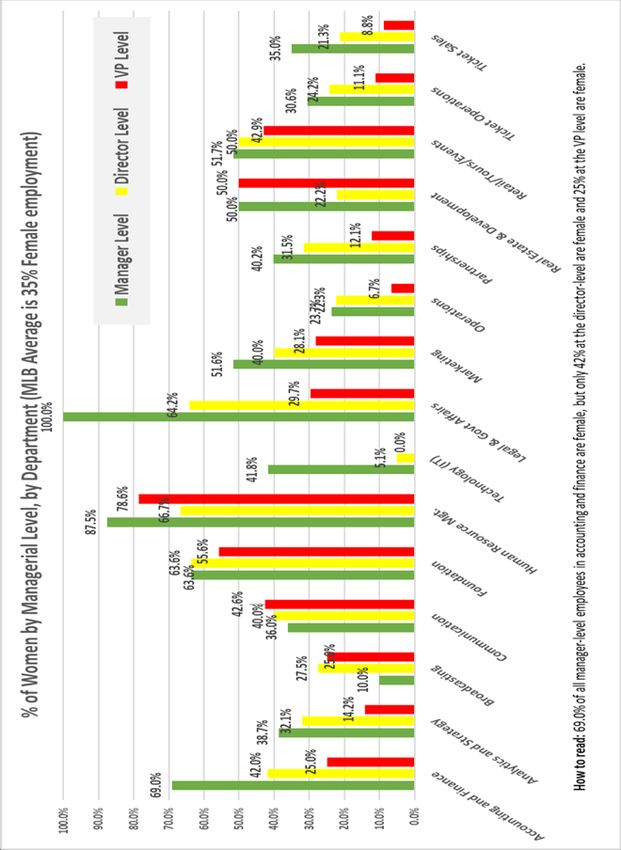
Marketing Management Association Spring Conference
                            March 10-11, 2022, St. Louis, MO

                                 ACKNOWLEDGEMENTS
The Marketing Management Association is proud to present the annual Spring Conference! As in previous years, we
find that the submissions to the conference were quite inspiring! The range and depth of the analysis that were
conducted in submitting competitive, position, and panel papers were beyond our expectations.

We are very thankful to all the scholars who submitted position and competitive papers as well as volunteered for
special sessions and panels. We are ever so grateful to all the reviewers. The reviewers are listed later in the
proceedings. In addition, we could not have the conference without the session chairs, listed separately in this
publication, who help with the smooth coordination of panels and presentations. Special thanks to Becky Hochradel,
Proceedings Editor, for assembling all the material into these conference proceedings, and to Holly Syrdal and Debbie
DeLong, MMA Webmasters, for keeping the website up-to-date.

Please take the opportunity to visit with the exhibitors who support the conference. They help to keep the price of
MMA conferences a tremendous value for everyone, as well as offering attendees many resources that assist with
marketing education.

Interpretive Simulations sponsored the Best Conference Paper Award. Thank you Interpretive Simulations for your
support. The winning paper was selected prior to the conference and the authors are listed in these Proceedings. We
also thank all the other exhibitors noted below who offer us great ideas, tools, and training to improve our effectiveness
in the classroom. Without you we could not put on this conference and so we thank you for your participation and
welcome you again next year!

Many thanks to everyone involved with the conference! We hope you enjoyed lots of stimulating conversation,
learned a few new ideas, and met some fellow scholars who share your passion for the marketing discipline! Mark
your calendars for the 2022 MMA Fall Educators' Conference. It will be held in-person, September 23-25, 2022 at
the Drury Plaza Hotel in San Antonio, TX!

Hannah D. Walters, Conference Program Chair
Debbie DeLong, Conference Chair

Marketing Management Association 2022 Spring Conference Proceedings                                                     ii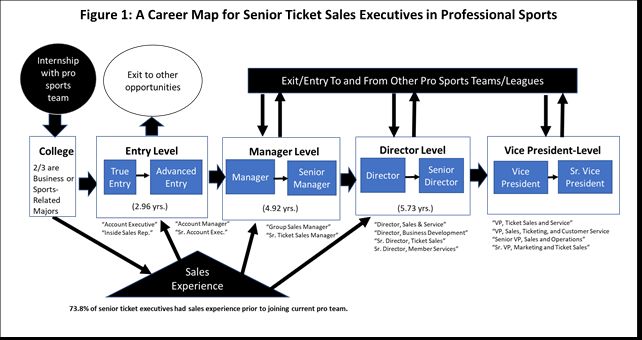
2022 Exhibitors and Sponsors

                                          Gold Sponsor

                                        Silver Sponsors

                                      Bronze Exhibitors

Marketing Management Association 2022 Spring Conference Proceedings   iii
CONFERENCE AWARDS
2022 MMA Spring Conference Best Paper Award Winner
(Sponsored by Interpretive Simulations)
Emoji Marketing: Strengthening the Consumer-Brand Relationship and its Downstream Effects
Tessa Garcia-Collart, University of Missouri - St Louis
Jayati Sinha, Florida International University
Best Social Media & Digital Marketing Track Paper Award Winner
(Sponsored by MBTN Academy)
From FOMO to JOMO: Understanding the Effects of the Fear of Missing Out and Mindfulness on Social Media
Nelson Amaral, Ontario Tech University
Shalini Bahl, University of Massachusetts Amherst
Abbey Bartosiak, The Ohio State University
Murad Canbulut, Altinbas University
Steven Chan, Independent Researcher
Ryan Cruz, Thomas Jefferson University
Smriti Kumar, University of Massachusetts, Amherst
Matthew Philp, Ryerson University
Robert Schindler, Rutgers University
Nuket Serin, Florida International University
Michelle Van Solt, Valparaiso University
Best Marketing Education Track Paper Award
(Sponsored by Marketplace Simulations)
Using Technology-Enabled Team Guidance with Senior Marketing and Introductory Business Students
Demetra Andrews, Indiana University
Tony Stovall, Indiana University
Brian Vander Schee, Indiana University
Marketing Management Association 2022 Spring Conference Proceedings ivMARKETING MANAGEMENT ASSOCIATION 2021-2022 OFFICERS Leila Samii President Southern New Hampshire University Jeanetta Sims Immediate Past-President (2018-2019) University of Central Oklahoma Deborah DeLong President-Elect & Spring 2022 Conference Chair Chatham University Hannah Walters VP Marketing Northern State University Brain Vander Schee Executive Director Indiana University, Indianapolis Gail Zank Treasurer Central Michigan University Deborah DeLong Interim Communications Director Chatham University BOARD OF DIRECTORS Sharmin Attaran, Bryant University, Term Expires Spring 2022 Rebecca Dingus, Central Michigan University, Term Expires Spring 2022 Dawn Edmiston, College of William and Mary, Term Expires Spring 2023 Pam Kennett‐Hensel, University of New Orleans, Term Expires Spring 2024 Sangwon Lee, Ball State University, Term Expires Spring 2023 Michael Messina, Gannon University, Term Expires Spring 2024 Chad Milewicz, University of Southern Indiana, Term Expires Spring 2023 Alex Milovic, Marquette University, Term Expires Spring 2022 Jeananne Nichols, Slippery Rock University, Term Expires Spring 2024 Hank Roehrich, Park University, Term Expires Spring 2022 Don Roy, Middle Tennessee State University, Term Expires Spring 2024 Doreen Sams, Georgia College & State University, Term Expires Spring 2023 Tony Stovall, Indiana University, Term Expires Spring 2024 Ursula Sullivan, Northern Illinois University, Term Expires Spring 2023 Takisha Toler, Stevenson University, Term Expires Spring 2022 PUBLICATIONS OFFICERS Journal for Advancement of Marketing Education - Pallab Paul, Editor Marketing Management Journal - Brian Rutherford, Editor Conference Proceedings - Rebecca Hochradel, Editor Marketing Management Association 2022 Spring Conference Proceedings v
CONFERENCE PROGRAM COMMITTEE
                            Debbie DeLong, Conference Chair, Chatham University
                       Rebecca Hochradel, Proceedings Editor, Transylvania University
                      Hannah Walters, Conference Program Chair, Northern State University

                          CONFERENCE TRACK CHAIRS
Consumer Behavior                                       Cross-Cultural & Global Marketing
Andy Lynch                                              Denise Gochenouer
Southern New Hampshire University                       Southwest Minnesota State University
a.lynch@snhu.edu                                        denise.gochenouer@smsu.edu

Diversity, Equity, & Inclusion in Marketing              Marketing Communications & Promotions
Demetra Andrews                                          Sydney Chinchanachokchai
Indiana University                                       University of Akron
demetra@iu.edu                                           schinchana@uakron.edu

Marketing Data, Analytics, & Artificial Intelligence     Marketing Education
Karen Robson                                             Sarah Mittal
University of Windsor, Canada                            sarah.r.815@gmail.com
krobson@uwindsor.ca

Marketing Ethics, Sustainability, & Public Policy        Marketing Strategy & Brand Management
Sharmin Attaran                                          Cara Peters
Bryant University                                        Winthrop University
sattaran@bryant.edu                                      petersc@winthrop.edu

Personal Selling & Sales Management                      Social Media & Digital Marketing
Kevin McEvoy                                             Michael Messina
University of Connecticut                                Gannon University
kevin.mcevoy@uconn.edu                                   messina@gannon.edu

Sports, Entertainment, & Experiential Marketing
Chad Milewicz
University of Southern Indiana
cmmilewicz@usi.edu

Marketing Management Association 2022 Spring Conference Proceedings                              vi
CONFERENCE PAPER REVIEWERS
Samit Chakravorti, Western Illinois University
Sydney Chinchanachokchai, University of Akron
AnneMarie Dorland, Mount Royal University
John Drea, Illinois College
Tessa Garcia-Collart, University of Missouri - St Louis
Samantha Gibson, Northern Illinois University
Chico Adhibaskara Ekananda Hindarto, Indonesia Banking School
Les Hollingsworth, University of Wisconsin-Platteville
Lei Huang, State University of New York (SUNY) at Fredonia
Gary Kritz, Seton Hall University
Sangwon Lee, Ball State University
C Joy Lin, University of Tennessee Chattanooga
Marilyn Martin Melchiorre, The College of Idaho
Mike Messina, Gannon University
William Neese, Troy University
Singh Nripendra, Clarion University of Pennsylvania
Hemant Patwardhan, Winthrop University
Cara Peters, Winthrop University
Christine Pitt, Vancouver Community College
Wes Pollitte, St. Edward's University
Nisha Ray-Chaudhuri, Webster University
Michelle Rego, Johnson & Wales University
Don Roy, Middle Tennessee State University
Dalila Salazar, Louisiana State University Shreveport
Kurt Schimmel, Slippery Rock University
Sphurti Sewak, Florida International University
Mostofa Wahid Soykoth, Emporia State University
Sewak Sphurti, Florida International University
Chandra Srivastava, St. Edward's University
Jane Thomas, Winthrop University
Takisha Toler, Stevenson University
Brian Vander Schee, Indiana University, Kelley School of Business - Indianapolis
Matthew Wilson, Central Michigan University
Abhishek Yadav, Indian Institute of Management, Kashipur
Gail Zank, Texas State University
CONFERENCE SESSION CHAIRS
David Aron, Dominican University
Subir Bandyopadhyay, Indiana University Northwest
Jean Beaupre, Nichols College
Morgan Bryant Reeder, St. Joseph's University
Sydney Chinchanachokchai, University of Akron
Debbie DeLong, Chatham University
AnneMarie Dorland, Mount Royal University
John Drea, Illinois College
Tessa Garcia-Collart, University of Missouri - St Louis
Samantha C Gibson, Northern Illinois University
Chad Milewicz, University of Southern Indiana
William Neese, Troy University
Jeananne Nicholls, Slippery Rock University
Kristen Regine, Johnson & Wales University
Jen Riley, Kansas State University
Don Roy, Middle Tennessee State University
Dalila Salazar, Louisiana State University Shreveport
Marketing Management Association 2022 Spring Conference Proceedings viiLeila Samii, Southern New Hampshire University
Sphurti Sewak, Florida International University
Ursula Sullivan, Northern Illinois University
Michelle Van Solt, Valparaiso University
Brian Vander Schee, Indiana University
Hannah Walters, Northern State University
CONFERENCE ATTENDEES
Demetra Andrews, demetra@iu.edu, Indiana University Purdue University Indianapolis
David Aron, daron@dom.edu, Dominican University
Subir Bandyopadhyay, sbandyop@iun.edu, Indiana University Northwest
Maria Battistoni, mpbattistoni@gmail.com, Concordia University Chicago
Jean Beaupre, jean.beaupre@nichols.edu, Nichols College
Amita Bhadauria, abhadauria@millikin.edu, Millikin University
Morgan Bryant Reeder, morgan.m.bryant@gmail.com, St. Joseph's University
Sydney Chinchanachokchai, schinchana@uakron.edu, University of Akron
Susan Deege, sdeege@culver.edu, Culver-Stockton College
Deborah DeLong, ddelong@chatham.edu, Chatham University
John Drea, john.drea@ic.edu, Illinois College
Tessa Garcia-Collart, tgarcia-collart@umsl.edu, University of Missouri-St Louis
Samantha Gibson, sgibson@niu.edu, Northern Illinois University
Renee Gravois, renee.gravois@shsu.edu, Sam Houston State University
Lei Huang, huang@fredonia.edu, SUNY at Fredonia
Stu James, stu@mbtn.academy, MBTN Academy
Kostas Karadakis, k.karadakis@snhu.edu, Southern New Hampshire University
Paul Kotter, paul.kotter@stukent.com, Stukent, Inc.
Eric Larson, elarson@culver.edu, Culver-Stockton College
Sangwon Lee, slee20@bsu.edu, Ball State University
Gary Lewis, glewis@ilsworld.com, Marketplace Simulations
James McKelvey, jmckelvey@uakron.edu, The University of Akron
Marilyn Melchiorre, mmelchiorre@collegeofidaho.edu, The College of Idaho
Chad Milewicz, cmmilewicz@usi.edu, The University of Southern Indiana
William Neese, wneese@troy.edu, Troy University, Troy, Alabama
Jeananne Nicholls, jeananne.nicholls@sru.edu, sru
Wesley Pollitte, wpollitt@stedwards.edu, St Edward's University
Joel Poor, Poor@missouri.edu, University of Missouri
Kristen Regine, kregine@jwu.edu, Johnson & Wales University
Michelle Rego, Michelle.Rego@jwu.edu, Johnson & Wales University
Eric Rhiney, rhineeri@webster.edu, Webster University
Jen Riley, jenr@ksu.edu, Kansas State University
Jodi Robinett, robinett@knowledgematters.com, Knowledge Matters
Donald Roy, Don.Roy@mtsu.edu, Middle Tennessee State University
Dalila Salazar, Dalila.Salazar@lsus.edu, Louisiana State University Shreveport
Leila Samii, l.samii@snhu.edu, Southern New Hampshire University
Jean Sampson, jmsampson@mckendree.edu, McKendree University
Tim Sams, thsams@interpretive.com, Interpretive Simulations
Kurt Schimmel, kurt.schimmel@sru.edu, sru
Sphurti Sewak, ssewak@fiu.edu, Florida International University
Sondra Simpson, simpsonso@elmhurst.edu, Elmhurst University
LaCalvince Simpson, ldsimpso@iue.edu, Indiana University East
Nripendra Singh, nsingh@clarion.edu, Clarion University
Mostofa Wahid Soykoth, msoykoth@g.emporia.edu, Emporia State University
Ursula Sullivan, usullivan@niu.edu, Northern Illinois University
Cynthia Tomasch, tomasch@uakron.edu, The University of Akron
Marketing Management Association 2022 Spring Conference Proceedings viiiMichelle Van Solt, michelle.vansolt@valpo.edu, Valparaiso University
Brian Vander Schee, bvanderschee@yahoo.com, Indiana University, Kelley School of Business - Indianapolis
Hannah Walters, hannah.walters@northern.edu, Northern State University
Chi Zhang, czhang2@butler.edu, Butler University
Marketing Management Association 2022 Spring Conference Proceedings ixTABLE OF CONTENTS ACKNOWLEDGEMENTS ......................................................................................................................... ii EXHIBITORS and SPONSORS ................................................................................................................ iii CONFERENCE COMPETITIONS and AWARDS ................................................................................. iv MARKETING MANAGEMENT ASSOCIATION OFFICERS ...............................................................v CONFERENCE PROGRAM COMMITTEE ........................................................................................... vi CONFERENCE PAPER REVIEWERS ................................................................................................... vii CONFERENCE SESSION CHAIRS ........................................................................................................ vii TABLE OF CONTENTS ..............................................................................................................................x REFEREED PAPERS ...................................................................................................................................1 EXTENDED ABSTRACTS ........................................................................................................................31 POSITION PAPERS ...................................................................................................................................51 PANEL POSITION PAPERS .....................................................................................................................68 Marketing Management Association 2022 Spring Conference Proceedings x
TAKING US OUT OF THE BALLGAME: GENDER
       DIVERSITY AND THE BUSINESS OF BASEBALL
                                             John Drea, Illinois College

                                                     ABSTRACT

     The present research examines the gender diversity of Major League Baseball Teams business employees. A
database of 2,280 MLB team business employees was developed from all thirty MLB teams. Names and titles were
collected from team websites, with employment information added from LinkedIn, media guides, and other team
sources.

    The results indicate widely differing levels of gender diversity between functional areas. HRM, Communication,
Foundations, and Retail all provided excellent gender diversity; however, Analytics & Strategy, Operations,
Partnerships, Technology/IT, Ticket Operations, and Ticket Sales showed strong evidence of a “glass ceiling.”
Recommendations include a league wide focus on the issue.

                                                  INTRODUCTION

      In 2001, Jones and Tucker (2001) cited the progress women had made in the corporate world in the previous
decades and posited that the sports world would likely follow. Unfortunately, their optimism has only been partially
realized. There has been considerable attention paid to the issues of diversity and gender bias in sports; however, most
of the attention has focused on diversity issues involving players, coaches, media, and the performance aspects of the
industry (Rosner and Shropshire; Kahn, 2000; Senne 2016).

      The Institute for Diversity and Ethics in Sport (TIDES) at the University of Central Florida produces an annual
“Racial and Gender Score Card” for several major pro sports, including Major League Baseball (MLB) (TIDES 2021).
The well-respected TIDES Reports evaluates racial and gender diversity, including evaluating the MLB Central
Office. At the team level, TIDES evaluates diversity at the level of the player, coach, ownership, executive/president,
general manager/head of baseball operations, VP of senior administration, and a broad category called “professional
administration.” Professional administration, however, is treated as a single pool and issued a single “grade” for all of
Major League Baseball. For all MLB teams, the professional administration category would constitute thousands of
employees spread across a dozen or more different functional areas, ranging from IT to stadium operations to
partnership development to retailing. Since these functions and work environments are likely to be different, it makes
sense to look at individual functional areas to see if gender diversity is uniform or if there are differences between
functional areas and what those differences would be. In addition, it is worth noting that the employees from these
functional areas are the future pipeline of executives and other C-level employees. Maintaining gender diversity at
lower levels is necessary to generate a gender diverse pool of applicants for executive positions later (depending on
the functional area.)

Importance of the Topic

     MLB has a long-standing gender issue in the fan base, dating back to the beginning of the sport. Currently, 31%
of men consider themselves to be avid fans of a MLB team, compared to only 12% of women, while nearly twice as
many women as men are not fans at all (58% to 32%) (Statista 2022). At the same time, MLB TV ratings in 2021
remained 12% below pre-pandemic (2019) levels, with 18 of 30 markets seeing declines in viewership (Johnson 2021).
For MLB to grow the fan base and TV audience, it will need to a better job to attract women as fans and patrons. Past
and current MLB team business performance suggests it is unlikely that the strategies necessary to increase the number
of women as fans and ticket buyers can be best created and executed predominately by men in a business management
team. Rather than focusing initially on external strategies to address the gender issues in the MLB fan base, it would
make sense to address internal team composition first.
     For the present research, gender diversity is narrowly defined as the proportion of women working in managerial

Marketing Management Association 2022 Spring Conference Proceedings                                                    1
roles for MLB teams in a non-player-related capacity. This is consistent with the approach used by Perryman,
Fernando, and Tripathy 2016), who defined gender diversity as “the proportion of females in the top management
team.”
MLB Team Business Departments
In general, there are three broad level of business management positions for MLB teams (positions excluding
player development/team performance positions): Manager level, Director level, and Vice President level (see Table
1). While there is considerable variation in titles from team to team, departments have greater similarity.
Table 1. Management Levels and Sub Strata
Level Sub strata
Manager Manager
Sr. Manager
Director Asst. Director
Director
Sr. or Executive Director
Vice President Asst. Vice President
Vice President
Sr. or Exec. Vice President
Determining which employee is a “manager” begins with the title, but the term manager was defined as someone
who manages people or processes. As an example, a Payroll Manager was included but an Account Manager was not
(the latter is often synonymous with Account Executive).
Some organizations combined Ticket Operations and Ticket Sales into a single area called “Ticket Operations
and Sales.” For the sake of consistency, these individuals were all coded as Ticket Sales. There were a small number
of individuals with titles such as VP of Administration or Director of Business Services and attached to a department
called Executives. They were excluded from analysis.
Table 2 provides a baseline for the number of employees by department for all 30 MLB teams combined, with
Operations (14.8%) and Ticket Sales (13.2%) as the two largest areas. Departments that communicate with various
stakeholder groups – Marketing (8.7%), Communication (10.4%), and Partnerships (10.1%) – combine for 29.2% of
all managerial employment.
Table 2. Departments and Numbers of MLB Employees by Level
Manager Director Vice
(includes Sr. (includes President
Manager but Asst., Sr., (includes
not Account Exec. Asst., Sr., % of
Department Mgr.) Director) Exec. VP) Total Total
Accounting and Finance 61 52 48 161 7.1
Analytics and Strategy 31 28 16 75 3.3
Broadcasting and Scoreboard 20 29 4 53 2.3
Communication 89 100 47 236 10.4
Team Foundations 22 23 9 54 2.4
Human Resource Management 24 26 28 78 3.4
Technology/IT 46 40 21 107 4.7
Legal & Govt. Affairs 4 14 37 55 2.4
Marketing 91 75 32 198 8.7
Operations (stadium, grounds,
158 133 46 337 14.8
security, engineering)
Partnerships 122 74 33 229 10.1
Purchasing 3 3 0 6 0.2
Real Estate/ Development 2 9 2 13 0.5
Marketing Management Association 2022 Spring Conference Proceedings 2Retail (retail stores, facility tours,
120 63 28 211 9.2
and events)
Ticket Operations 62 34 9 105 4.6
Ticket Sales 158 108 34 300 13.2
TOTAL 1025 824 427 2276 100%
Problem
In a study of ticket sales VPs in five major North American sports leagues, Drea (2022) noted that over 90% of
all ticket sales vice presidents are male. In personal exchanges with a MLB and MLS team VPs on this issue, both
VPs stated their belief that the lack of female VPs in ticket sales is likely due to is a lack of qualified female candidates
at the director level, with many women in ticket sales leaving the profession prior to achieving the typical 4-6 years
of experience at the director level needed before becoming an acceptable candidate to become a VP.
Why are their fewer women than men in leadership roles in professional sports? There are several ideas that can
be viewed as complimentary:
• Individuals currently in leadership roles have normative expectations regarding what leadership behavior
looks like, and men currently in leadership roles may be more likely to fit the norms in scenarios that are
primarily designed by men, and vice versa (Place and Vardeman-Winter, 2018). In functional areas of sports
business that have had decades of one male leader after another, this suggests a greater challenge in changing
the normative expectations of what behaviors constitute leadership.
• A related idea is that women are often hired for entry level positions where certain “feminine qualities”
(friendliness, being outgoing, bubbliness) create a “friendliness trap” (Hardin and Whiteside, 2012). The
same qualities attractive for entry level positions become a disadvantage when women apply for leadership
roles – especially using male norms for leadership.
• Most women and many men view a job in sports business as a career with other career options also available
to them, while a core of men enter the field of sports business employment with something closer to an
obsession to be connected to male sports. This sustains some male employees to remain in the field when
others might leave for opportunities elsewhere.
• The “elephant in the room” in any discussion of gender diversity in sports are perceptions of harassing and
inappropriate work environments for women. Activities which may constitute sexual harassment are still all
too common in sports (Taylor, Smith, Welch and Hardin, 2018), forcing women into difficult choices,
including accepting the behavior, reporting the behavior but dealing with career consequences, or leaving the
organization and/or profession (Perez-Rivases, Torregrossa and Viladrich, 2017.)
Research Questions
RQ1: How does the gender diversity for MLB team business VPs compare to the gender diversity at lower levels
of MLB team employment (manager and director)?
RQ2: What is the level of gender diversity within each functional area common to MLB teams (marketing,
communication, accounting and finance, etc.)? Do these functional areas all have relatively similar gaps
between each level (manager to director, director to VP), or is their more gender diversity in some areas?
RQ3: Are there other additional explanatory factors for the gender diversity gap in conjunction with existing
explanations (leadership stereotypes, hostile environments)
METHODOLOGY
A database was constructed of the names of all 2,280 MLB team employees working in a managerial role for a
business (non-team performance) unit between by obtaining names from each team website. A team performance
capacity would mean the team manager, general manager, coaches, trainers, scouts, medical staff, etc. – anyone who
is connected to players and their performance. It also excludes spring training staff. Next, the LinkedIn profile for the
individual was examined (if available) to obtain:
• Photo, used for assigning the employee to a gender category
• Previous employment history with current MLB team, including titles and length of employment,
• Education: degree(s), college or university, majors(s), year of graduation if noted
Marketing Management Association 2022 Spring Conference Proceedings 3• Prior employment by previous MLB and MiLB teams or by teams in other pro sports leagues
When information was incomplete, additional sources such as team press releases, media guides, other photo
sources were consulted and included. Photos were located on 90.9% of all subjects.
Gender was classified by having each subject photo independently reviewed by two student judges without a
name attached. Judges were asked to classify whether the person presented primarily as male or primarily female.
There was agreement between the judges on 94.1% of all photos. When there was disagreement, it was referred to a
third judge for resolution. Subjects for whom no data was available were assigned to a gender category based on the
gender commonly associated with their first name. Names of subjects that had no photo and that also possessed a
name often used by both genders, such as Sam, Chris, Alex, Pat, etc. were removed from analysis.
RESULTS
RQ1: How does the gender diversity for MLB team VPs compare to the gender diversity at lower levels of MLB
team employment (manager and director)?
Table 3. Gender Diversity for Business Management Positions
on MLB Teams, Overall
Manager Director VP
n % n % # %
Females 416 41.1% 270 33.2% 113 26.5%
Males 596 58.9% 544 66.8% 314 73.5%
Total 1,012 814 427
The participation of women in MLB business management roles showed a significant overall decline with each
level of management from 41.1% at the manager level to 26.5% at the VP level, as shown in Table 3. (Chi-square
36.500, sig = .000). The data indicates that gender diversity generally decreases at higher levels of an MLB
organization.
RQ2: What is the level of gender diversity within each functional area common to MLB teams (marketing,
communication, accounting & finance, etc.)? Do these functional areas all have relatively similar gaps between
each level (manager to director, director to VP), or is their more gender diversity in some areas?
Chart 1
Chart 1 shows strong levels of gender diversity in the areas of Communication, Team Foundations, Retail
Marketing Management Association 2022 Spring Conference Proceedings 4Operations, and HRM. In each of these functional areas, women are employed above the industry average of 35% at
the manager, director, and VP levels. These four areas combined constitute 25.4% of MLB team business positions.
the remaining three-fourths of business positions were found in departments with weaker levels of gender diversity.
The “glass ceiling” was most apparent in six functional areas: Analytics and Strategy, Technology/IT, Partnerships,
Operations, Ticket Operations, and Ticket Sales (Table 3). These six areas constitute 50.7% of all business positions
for MLB teams.
Table 3. Summary of Gender Diversity by Functional Area
Positive Gender Diversity (>35% Percentages of Glass Ceiling (less than 20% Percentage of
at manager, director, VP levels) Women as women at the VP level) Women as VPs
Mgr./Dir/VP
Communication 36%/40%/42.6% Analytics & Strategy 14.2%
Foundations 63.6%/63.6%/55.6% Technology/IT 0%
HRM 87.5%/66.7%/78.6% Partnerships 12.1%
Retail/Concessions/Tours/Events 51.7%/50%/42.9% Operations 6.7%
Ticket Operations 11.1%
Ticket Sales 8.8%
Two other functional areas, Marketing and Accounting & Finance, have gender diversity levels above the overall
average of 35% for the manager (51.6% and 69%, respectively) and director levels (40% and 42%, respectively).
Gender diversity at the VP level fell to 28.1% for Marketing and 15% for Accounting & Finance. These two areas
combined represent 15.8% of all MLB team business positions.
RQ3: Are there other additional explanatory factors for the gender diversity gap in conjunction with existing
explanations (besides leadership stereotypes, hostile environments)
Table 4. Length of Time at Current Managerial Level, by Gender
Gender (n) Overall Mean # Current Months in Current Months in Current Months in
of Months in Manager Role Director Role VP Role
Current Role
Females (681) 59.8 months 52.04 months 61.48 months 80.23 months
Males (1210) 75.5 months 61.44 months 77.81 months 95.97 months
N=1907 69.9 months 58.13 months 72.16 months 91.72 months
One additional explanation for why men are promoted more often than women is that men have more experience
at all levels, though this is more relevant at the manager and director levels. When applying for a director-level
position, the average female manager has just under five years of experience as a manager, while the average male
candidate has 6.25 years. For positions at the VP level, the average female candidate has sixteen months less
experience than her male counterpart.
DISCUSSION AND RECOMMENDATIONS
The findings support and extend the findings of TIDES diversity score card by going into more specific detail
regarding where specific problems exist within MLB team business departments. It has been previously suggested
(Barrett 2019) that an appropriate way to address the problems of gender diversity is through a top-down management
commitment. This would be appropriate if the problem of gender diversity was unique to a team or a small number of
teams where a commitment by senior leadership to change the structure and culture of those teams could affect
meaningful change; however, chi-square results show no difference between teams regarding overall gender diversity.
The findings indicate that this is not an isolated problem among a few teams but a systemic issue to Major League
Baseball.
The results are illuminating and troubling, especially for the MLB team functional areas of partnerships, ticket
operations and ticket sales. In each of these functional areas, 30-40% of managers are women, but the percentages of
women have decreased by two-thirds or more at the VP level, to 8.8% to 12.1%. These three areas combine for 27.9%
of all business management employment within MLB teams. It would be difficult to make overall progress without
Marketing Management Association 2022 Spring Conference Proceedings 5addressing the factors which have led to the lack of women being named to director and VP level positions in these
areas. These areas are critical to building the ticket base for MLB teams, a base that clearly needs more women, yet
the efforts to build this base are being led by relatively few women.
Part of the challenge to generating change in this area is that it is first necessary to generate a desire to change,
and there is less pressure on MLB to increase the gender diversity in business positions than elsewhere in the MLB.
The TIDES report helps to focus media attention primarily on racial and gender diversity on other aspects of team
operations: players, coaches, senior leadership, ownership, not on the accountants, ticket managers, stadium operators,
etc.
One of the findings was that women have less experience compared to men across all managerial levels. This is
an area that needs further exploration. Since the data shows that (except for four departments) women are not being
promoted faster than their male counterparts, one possible conclusion is that women with marketable experience are
leaving their organizations, thereby reducing the available pool of applicants for promotion to the next level. Support
for this conclusion is based on a statistically significant age difference (p = .000) between men and women of nearly
three years (40 years, 10 months for men, 38 years for women). Whether women are leaving certain MLB functional
areas for better opportunities, better work environments, a clearer path for the future, personal factors, or some
combination of these or other factors remains to be seen.
Limitations
There are several limitations with the current data collection. Collecting and entering the data was a highly labor-
intensive activity, which always increases the possibility of a data entry error. Errors were mitigated by having data
entered in pairs of data entry technicians (one entering while the other checked) and all work was checked again later.
Nevertheless, the sheer size of this undertaking opens the possibility of some data entry issues. There are also
limitations with how the data was collected. LinkedIn data is entered by individuals, so if someone misstates something
about his/her background, LinkedIn does not correct it. Spot checks of LinkedIn data against media guide data
indicated that most individuals were highly accurate regarding their dates of employment and their employer, but less
accurate regarding their correct occupation title or their correct major in college.
CONCLUSIONS
Progress has been made in diversifying some aspects of sports, but there is a long way to go. Confronting the lack
of gender diversity in MLB managerial positions is not only an issue of fairness and good business practice, but it also
an issue of good strategy. For MLB to thrive in the decades to come, it will need to reach out to women among other
groups as part of the ticket, merchandise, and media audience. An effective way to do that is to start with a gender
diverse organization that more readily understands this critical target market.
REFERENCES
Barrett, J. (2019). An examination of gender equity within professional sports executive communication teams.
Humber College Senior Thesis, https://library.humber.ca/collections/repository/content/examination-gender-
equity-within-professional-sports-executive-communication
Drea, J. (2022 - accepted). An examination of the career paths of professional sports ticket sales executives.
Proceedings of the 2002 Marketing Management Association Spring Conference
Gough, C,. (2021). Level of interest in MLB in the United States as of September 2021, by gender. Statista.
https://www.statista.com/statistics/1100118/interest-level-baseball-gender/
Hardin, M & Whiteside, E. (2012) Consequences of being the ‘team mom’: Women in sports information and the
friendliness trap, Journal of Sport Management, 26(4), 309-321. https://doi.org/10.1123/jsm.26.4.309
Johnson, M. (2021). MLB ratings: 2021 World Series television ratings improve, still long-term concerns for baseball.
Sportsnaut (November 9). https://sportsnaut.com/mlb-ratings-tv-viewership-numbers/
Jones, J.P., & Tucker, S. (2002). Taking a closer look at gender equity in sports. Proceedings of the Academy of
Managerial Communications 7(1) 13-18.
Kahn, L.M. (2000). A level playing field? Sports and discrimination. In W.S. Kern (Ed) The Economics of Sports, 115-
146.
Perryman, A.A., Fernando, G.D., & Tripathy, A.. (2016). Do gender differences persist? An examination of gender
Marketing Management Association 2022 Spring Conference Proceedings 6diversity on firm performance, risk, and executive compensation. Journal of Business Research, (69)2, 579-586.
https://doi.org/10.1016/j.jbusres.2015.05.013
Place, K.R. & Vardeman-Winter, J. (2018). Where are the women? An examination of research on women and
leadership in public relations. Public Relations Review, 44(1) 165-173
https://doi.org/10.1016/j.pubrev.2017.10.005
Rosner, S.R. & Shropshire, K.L. (2018). The Business of Sports, 2nd Ed., Jones and Bartlett Learning.
Senne, J.A. (2016). Examination of gender equity and female participation in sport. The Sport Journal, 19: 1-9.
Taylor, E.A., Smith, A.B., Welch, N.M., & Hardin, R. (2018). “You should be flattered!” Female sport management
faculty experiences of sexual harassment and sexism. Women in Sport and Physical Activity Journal, 26(1), 43-
53. https://doi.org/10.1123/wspaj.2017-0038
The Institute for Diversity and Ethics in Sport-TIDES. (2021) The 2021 Racial and Gender Reports Card: Major
League Baseball, Richard Lapchick, (Ed.) https://43530132-36e9-4f52-811a-
182c7a91933b.filesusr.com/ugd/138a69_0fc7d964273c45938ad7a26f7e638636.pdf
Special thanks to students Anna Beth Batson, Skyler Dees, Emma Newton, Beau Parkevich, Jacob Thaller, and Jacob
Trim for their assistance with data entry and judging, and to former Director of Diversity and Inclusion Valeria Cueto
for helpful ideas and encouragement on this project.
For further information contact:
John Drea
Illinois College
1101 W. College Avenue
Jacksonville, IL 62650
(217) 245-3422
john.drea@ic.edu
Marketing Management Association 2022 Spring Conference Proceedings 7AN EXAMINATION OF THE CAREER PATHS OF
PROFESSIONAL SPORTS TICKET SALES
EXECUTIVES
John Drea, Illinois College
ABSTRACT
The career paths of all 149 senior ticket sales executives from MLB, MLS, NBA, NFL, and NHL were examined.
The results indicate:
• Most organizations have four broad levels of employment within ticket sales: Entry Level, Manager,
Director, and VP. The average length of time to progress through all levels and become a VP is 13.6 years of
ticket sales department experience.
• Only 8.7% of Ticket Sales VPs are female. Women are also underrepresented at the director level
(25.3%).
• Less than 25% of senior ticket sales executives have spent their entire career with their current
employer – most have worked for other teams.
INTRODUCTION
One of the primary sources of revenue for the five major sports leagues in North America (Major League Baseball,
National Basketball Association, National Football League, National Hockey League, and Major League Soccer) is
ticket revenue. Ticket sale revenues make up 15-37% of total league revenues.
• NFL: 15% of total revenue is ticket revenue (Gough, 2020a)
• NBA: 22% of total revenue is ticket revenue (Gough, 2020b)
• MLB 30% of 2017 total revenue was ticket revenue (Gough, 2020c)
• MLS: 31% of 2017 total revenue is ticket revenue1 (Krasny, 2017)
• NHL: 37% of 2018-19 total revenues were from ticket revenues (Gough, 2019)
While these percentages have generally been in slight decline as partnerships and media contracts constitute a
greater share of total revenue, the Covid-19 pandemic emphasized the importance of ticket revenue to team and league
operations. In the MLB, Commissioner Rob Manfred reported that combined team operating losses would be between
$2.8-$3.3 billion for 2020, though this was also attributable to playing only a half-season (Canova, 2020). While the
NFL was able to play an entire season, it still faced a combined $2.7 billion loss for the 2020 season, while the NBA
lost $694 million in fan revenue for the cancelled portion of the 2020 season (Dixon, 2020).
The events of 2020 focused attention back on the ticket sales area within professional team sports. As fans return,
and tickets, ticket packages, boxes, and suites are sold, renewed focus will be on the individuals responsible for ticket
sales.
Leading the ticket sales function is a performance-based assignment. Each season, predictive models are used to
estimate ticket sales and ticket revenue, and ticket sales leadership is evaluated against the ability to meet or surpass
those projections. Most sales managers are primarily evaluated on sales generated, though persuasive arguments have
been made to include residual income streams (Cron and Levy 2013) such as estimated future revenues through
renewals and broadening the fan base. Consequently, leading a pro ticket sales area is largely about assembling,
organizing, motivating, and controlling a sales team.
1MLS revenues in 2017 were estimated at $400 million, with merchandise, media, and sponsorships constituting $276 million
(Krasny 2017). If the remaining $124m revenue comes from ticket sales, then $124m/$400m = 31%
Marketing Management Association 2022 Spring Conference Proceedings 8With the increasing importance of the VP of Ticket Sales role in sports organizations, it is appropriate to examine
this role within pro sports teams. Who are these ticket sales leaders? What are their ages, genders, backgrounds, and
academic and work preparations? Are women participating in this profession comparable to men? Are barriers
present?
The purpose of the present research is two-fold: identify the common career paths for senior ticket executives in
the MLB, MLS, NBA, NFL, and NHL., and to examine what role, if any, that gender plays in the ticket sales
profession. By doing so, the research should help those considering a career in professional sports ticket sales or
already working in the field.
METHODOLOGY
Data was collected in a two-step process. Step one was to identify the senior ticket sales executive within each of
the 149 teams across the five professional leagues. The second step was collecting data on each senior ticket sales
executive’s employment and education history. This was accomplished by accessing the LinkedIn profiles for each of
the senior ticket sales executives, then supplementing this information as needed with publicly available information
from media guides, press releases, and other sources. Data collected included:
• Estimated age
• Gender
• Number of years in the current senior ticket sales executive position
• Previous job titles with the current team and years in each position
• Previous job titles and years of employment with other teams in the same league as the current
employer
• Previous years of experience in other pro major and minor leagues
• Prior sales experience
RESULTS
Levels of employment in ticket sales
There are four levels of employment within professional sports ticket sales (beyond the intern level), with each
level having two sub-strata.
• Entry-Level (primarily sales and customer service roles)
• Manager-Level (combination of functional and managerial duties)
• Director-Level (participating in goal setting and directing activities to achieve goals)
• VP-Level (actively participating in strategy development, monitoring and controlling operations,
and evaluating performance).
Table 1. Four Levels of Ticket Sales Employment
Level Sub-strata/Titles Avg. Yrs. spent by a VP at this level
#1 Entry True Entry (Acct. Exec.)
2.96 yrs.
Adv. Entry (Acct. Manager)
#2 Manager Manager
4.92 yrs.
Senior Manager
#3 Director Director/Asst. Director
5.73 yrs.
Senior Director
#4 VP Vice President/Asst. VP
4.19 yrs.+
Senior Vice President
There were differences noted between leagues in how quickly future ticket sales executives rose from one level
to the next. Ticket sales executives in the MLS (9.22 years) and NBA (11.43 years) moved from the entry level to VP
levels faster than their counterparts in other leagues. The average NFL ticket sales executive spent nearly seventeen
years before reaching VP status, with MLB (15.48) and NHL (14.99) executives not far behind.
Gender
Marketing Management Association 2022 Spring Conference Proceedings 9While considerable public interest has been devoted to the efforts of teams and leagues to increase diversity
among coaches and ownership groups, increasing diversity in the business operation for professional teams is also
important; however, senior ticket sales executives show a lack of gender diversity. As shown in Table 2, 91.3% of
senior ticket sales executives are male, with the total having only modest differences across individual leagues.
Table 2. Percentage of Females in Senior Ticket Sales Executive Positions, by League
(actual number of female ticket execs is in parentheses)
MLB 6.7% (2 female ticket execs.)
MLS 0% (0)
NBA 13.3% (4)
NFL 9.4% (3)
NHL 12.9% (4)
Total 8.7% (13)
A closer examination indicates that little change has occurred regarding the numbers of women in senior ticket
executive positions. Of the thirteen women who hold these top positions, only five were promoted into that position
in the past three years. During the same period, sixty-five men (92.3%) were promoted to a senior ticket executive
position. This suggests a need for more qualified female candidates within the pipeline, especially at the Director and
Senior Director levels across all pro sports leagues.
Age
Age is not reported in LinkedIn profiles. To estimate age, twenty-two years were subtracted from the year the
ticket executive listed as graduating from an undergraduate college/university. 2 This is why age in this research is
described as “estimated age.”
Table 3: Mean Age (estimated) of Senior Ticket Executives, by League
(actual number of female execs is in parentheses)
MLB 44.40 years
MLS 37.68 years
NBA 42.09 years
NFL 44.05 years
NHL 41.04 years
The majority of all senior ticket sales executives are under 45 years of age, with 58.4% of executives between the
estimated ages 30-45. Table 2 indicates that the average age of an executive is relatively consistent across the NFL,
NBA, MLB, and NHL (less than 3.5 years differences); however, senior ticket sales execs in the MLS are significantly
younger at 37.68 years.
Education
The undergraduate majors of senior ticket sales executives were concentrated into one of three general areas:
• Business-related majors (management, accounting, marketing, finance, eco.) = 41.6%
• Sports-related majors (sports management, sports or exercise science, PE) = 24.3%
• Communication = 9.5%
While an undergraduate degree was a near prerequisite for the senior ticket sales executive role (99%), a graduate
degree is not. Less than one-fourth (24.7%) of senior ticket sales executives have completed a graduate degree, with
the heaviest concentrations of ticket sales executives with graduate degree in the NFL and NHL. Those who do have
graduate degrees were primarily in sports or business-related fields (40%).
2
This is admittedly an imprecise measure for age, since some individuals work before attending college, some attend college
while working, etc. The listing of 149 ticket sales executives was manually scanned for these instances, and those cases were
removed from analysis. This likely has the effect of lowering the mean age reported.
Marketing Management Association 2022 Spring Conference Proceedings 10Remaining with one team vs. moving
Twenty three of the 149 senior ticket sales executives (15.4%) spent their entire careers with a single franchise.
Nearly all of these individuals have worked exclusively in ticket sales or ticket operations, as opposed to transferring
from other functional areas (marketing, finance, operations, etc.) Managing the ticket sales function is a specialized
task that requires specialized experience.
Staying with a single team for an entire career, as opposed to moving from team to team (or league to league),
has little impact on how rapidly someone rises to become a senior ticket executive. The average estimated age of a
senior ticket executive was 42.03 years, compared to an average age of 42.29 years for individuals who have spent
their entire career with a single organization.3 There were several instances of individuals entering ticket sales at the
manager or director level with a background in consumer products management, embracing a more customer-focused
approach (as opposed to a sales-oriented approach.)
Years of experience
The data confirms that most ticket sales VPs do not start working with their current teams immediately after
college and rise through the various position before becoming a senior ticket sales executive. In fact, such individuals
are relatively rare in professional sports teams, as indicated in Table 4.
Table 4. Senior Ticket Sales Executive Experience, by League
Ticket VPs who have spent Average years of Avg. yrs. of work experience
Execs their entire career work experience in from other pro sports
from with one team pro team sports leagues
MLB 23% 21.15 years 3.22 years
MLS 0% 11.96 years 7.49 years
NBA 7.7% 15.95 years 3.21 years
NFL 3.3% 21.55 years 6.60 years
NHL 20% 18.38 years 3.81 years
Senior ticket sales executives from the NFL and MLB were found to have more years of experience in professional
sports than similar senior executives in the NBA, NHL, or MLS (Chart 9). The average senior ticket sales executive
in the NFL has 21.55 years of experience working for teams in all pro leagues combined, the MLB ticket executives
at 21.15 years. MLS senior ticket sales executives were the least experienced, with 11.96 years of experience – roughly
half of the experience of their counterparts in the NFL and MLB.
While senior ticket sales executives within the MLS were the youngest of any of the five professional leagues
and had fewer years of pro sports experience, they also bring more of their experience from other professional leagues
to the MLS (7.49 years on average – see Chart 10). NFL senior ticket executives also bring significant experience
from other professional leagues, averaging 6.6 years. By contrast, senior ticket sales executives in the NHL, NBA,
and MLB average less than four years of experience from teams in other professional leagues.
Types of work experiences
The data was also disaggregated to identify where senior ticket sales executives have previously worked (Table
5). The data indicates that NBA team experience is the most common type of experience held by senior ticket sales
executives. Conversely, very few senior ticket executives outside of the MLS have MLS experience. While this is
partially a function of the relatively recent growth in the MLS and smaller staffing levels, the effect has been to create
a pipeline of other leagues preparing individuals for mid-level entry into MLS ticket sales.
3The caveat is there are three senior ticket executives who have spent their entire careers with a single organization and are 55+
but have little information about specific details of their progression. There are also two executives (ages 47 and 61) that have
spent almost but not quite all of their careers with a single organization. If that information had been included, the means for both
groups would increase to approximately 45 years.
Marketing Management Association 2022 Spring Conference Proceedings 11Table 5. Previous Work Experience with Other Teams by Current Senior Ticket Sales Executives
Current League, Senior Ticket Sales Executive
MLB Sr. MLS Sr. NBA Sr. NFL Sr. NHL Sr.
Ticket Ticket Ticket Ticket Ticket
Executives Executives Executives Executives Executives
% with Previous MLB Team
33.3% 23.1% 16.7% 26.7% 20.0%
Experience
% with Previous MLS Team
0.0% 23.1% 3.3% 9.4% 0.0%
Experience
% with Previous NBA Team
23.3% 46.2% 26.7% 34.4% 22.6%
Experience
% with Previous NFL Team
10.0% 38.5% 10.0% 21.9% 9.7%
Experience
% with Previous NHL Team
16.7% 26.9% 16.7% 34.4% 19.4%
Experience
% with Previous Minor League
10.0% 23.1% 20.0% 3.1% 3.2%
Baseball Experience
% with Previous Minor League
3.3% 23.1% 10.0% 0.0% 12.9%
Hockey Experience
% with Previous Auto Racing
0.0% 3.8% 3.3% 6.3% 0.0%
Experience
% with Other Pro League
10.0% 26.9% 6.7% 15.6% 3.2%
Experience
To interpret the table by league, read down the column. For example, for MLB:
o 33.3% of MLB senior ticket sales execs in have previous work experience for a different MLB
team.
o 0% of senior ticket sales execs in MLB have previously worked for an MLS team.
o 23.3% of MLB senior ticket sales execs have previously worked for an NBA team, etc.
Table 5 indicates the importance of experience in other leagues to MLS ticket sales executives. Twenty-two of
twenty-six (84.6%) MLS senior ticket sales executives who had previous experience with another team when they
started with the current MLS employer started at the director-level or higher. The data suggests a pattern in the MLS
of identifying talented younger sales executives from teams in other professional leagues, then hiring them into MLS
teams and into positions of greater responsibility. Combining this with the finding that no MLS ticket sales executives
had spent their entire careers with a single MLS team, it appears that leagues outside the MLS have become the de
facto source of preparation for senior ticket sales executives within the MLS.
The role of previous sales experience
Most senior ticket sales executives (73.6%) have some previous sales experience when they joined their current
employer. Sales managers with little to no sales experience are often perceived as being less effective than those with
experience and internal to an organization (Gordon et. al, 2012). The type of previous sales experience brought to the
job varied – in some cases, it was non-sports related sales experience that occurred immediately after college, while
in many cases, the sales experience occurred when the future ticket sales exec was hired by another team for their first
job as an account executive.
Having sales experience prior to joining a current employer is strongly related to where someone starts within the
organization. 83.1% of individuals with sales experience started with their current employer above an entry level,
while only 16.9% of individuals who had previous sales experience and started at an entry level.
Career map
Figure 1 diagrams the variety of career paths of successful ticket executives. The major challenge in diagraming
the sequence of positions titles and levels followed by senior ticket sales executives is that no two organizations are
the same; therefore, no two paths are the same. At the same time, some generalities do exist across different leagues
Marketing Management Association 2022 Spring Conference Proceedings 12and organizations. These are shown in Figure 1.
DISCUSSION
Two issues identified in the research are the insular nature of the ticket sales field and the lack of gender diversity
within current senior ticket sales executives. These issues appear to be related. The data indicates that experience in
ticket sales is a strong preference in hiring managerial positions, since only three of 149 (2%) current VPs entered the
ticket sales profession at the VP-level. The significance of this observation is that it makes the gender imbalance for
ticket sales VPs difficult to overcome. If the generally accepted belief is that someone must have experience in ticket
sales to manage personnel in ticket sales, the potential supply of qualified female candidates becomes limited to those
already working at the director level.
Table 6. Male and Female % in Ticketing Roles by Managerial Level, MLB Only
Managerial Level Female Male
Manager (n=166) 35.5% 64.5%
Sr. Manager (n=26) 26.9% 73.1%
Director (n=99) 25.3% 74.7%
Sr. Director (n=25) 8.0% 92.0%
Vice President (n=25) 8.0% 92.0%
Sr. Vice President (n=10) 10.0% 90.0%
As an example, Table 6 shows how the declining percentages of women specifically within MLB ticketing as the
level or responsibility rises. The data shows that women generally do not advance in significant numbers beyond the
director level. There are twenty-seven females at the directors/senior director level, compared to 97 men. The
likelihood of a female at the director/senior director level being promoted to a VP level is very low, where only 8.6%
of VPs are female. The lack of gender diversity in ticket sales is a league-level issue, as opposed to a team-level issue.
This is due to the high degree of mobility of ticket sales employees from team-to-team and league -to-league – a team
focused approach would likely result in a handful of teams investing in the identification and preparation of qualified
future female ticket sales executives for other teams.
While there have been increases in participation by women in team sports business positions, much of the
improvement has occurred at lower levels (Lapchick, 2016; Yiamouyiannis and Osborne, 2012.) A factor that
contributes to lower levels of participation in sports business by females (relative to men) is a cloud of perceived
sexism (Fink 2016). One of the effects of perceived sexism has been that it can be difficult to retain qualified women
Marketing Management Association 2022 Spring Conference Proceedings 13You can also read


