70% of Americans View Oil Pipelines Favorably - Association of Oil Pipe ...
←
→
Page content transcription
If your browser does not render page correctly, please read the page content below
2021 Public Polling Results

70% of Americans View
Oil Pipelines Favorably
AMERICAN PUBLIC WANTS TO AVOID ADDRESSING CLIMATE
CHANGE IN WAYS THAT WOULD INCREASE ENERGY COSTS

  Association of Oil Pipe Lines | April 2021 | Contact: John Stoody at jstoody@aopl.org
Introduction

In 2019, Americans consumed over 142 billion gallons of gasoline. At the same time, most
Americans live far away from where their energy is produced or turned into useful
products. Indeed, the 50 million Americans in the Northeast Corridor from Boston to
Washington, DC live over 2,000 miles from major oil producing fields in West Texas and
over 1,700 miles from major refineries along the Gulf Coast.

To deliver millions of Americans the billions of gallons of fuel they need requires a
national network of pipelines. Over 225,000 miles of pipelines crisscross America
delivering over 24 billion barrels of crude oil and refined products per year.

While we have a national network of pipelines, they often go unnoticed by the general
public because they travel underground. The average American doesn’t think about
pipelines on a daily basis, but certain groups have tried to insert pipelines into the
national conversation on energy and climate. AOPL wanted to know what the American
public thinks about pipelines and whether the loudest voices in the pipeline debate truly
represent the feelings of the American public.

About this Research
AOPL commissioned this research to gauge the sentiment of the American public
towards liquids pipelines, climate change, and actions to address climate change.
The independent polling firm Wakefield Research conducted an online quantitative
survey of 3,000 U.S. consumers between February 11 and February 24, 2021 using an
email invitation and online survey. The margin of error for this study is +/- 1.8 percentage
points at the 95% confidence level for the total sample. The survey included at least 200
persons in each of the following eight audiences: Gen Z, Rural Landowners, Urban
Renters, Millennial Moms, Blue-Collar, Seniors, Older Millennials and STEM Professionals.

About the Association of Oil Pipe Lines
The Association of Oil Pipe Lines (AOPL) represents liquids pipeline owners and
operators transporting crude oil, petroleum products like gasoline and diesel, jet fuel,
home heating oil, propane and industry raw materials like propane.

                                       www.aopl.org                                         2
Key Findings
70% of Americans have a positive impression of pipelines with
their intensity of support increasing.
Seven in ten Americans surveyed have a positive impression of pipelines, up from 65% in
2019. In Americans’ own words, they feel positively about pipelines because they are
necessary for their fuel needs and the safest way to transport fuel. Even among more
critically minded groups of Americans, like Gen Z and Urban Renters, the majority of
these groups also have positive impressions. In 2021, 36% of Americans have strong
positive impressions of pipelines, an 11-point jump from 2020.
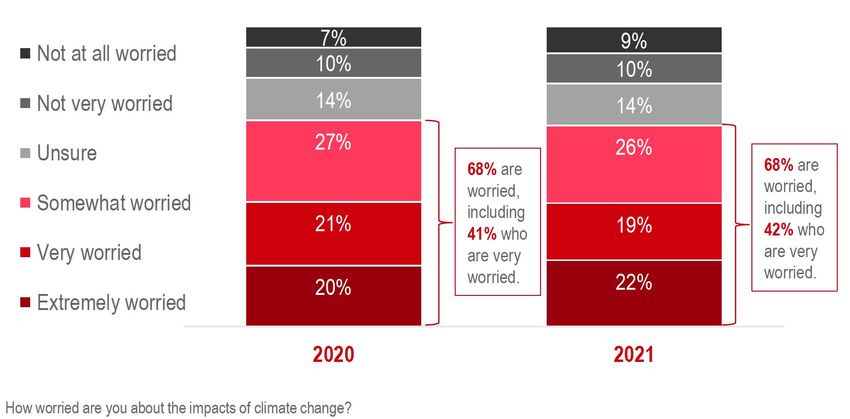
Americans are worried about climate change, with concern
holding steady at 68% in the past year.
Americans are steady in their concern about climate change, with 68% expressing worry
both in 2020 and 2021. Among key sub-audiences, Blue Collar, Seniors and Rural
Landowners are above 60% and Urban Renters, Gen Z and Millennial Moms are above
70%. Over 40% of Americans are very worried about climate change.
Americans want to minimize financial impacts to their energy
bills to combat climate change.
Despite concern about climate change, public support for individual measures to combat
climate change is low when faced with personal financial impacts. Only 39% of
Americans would support a requirement for electricity to come from wind or solar.
Support declines further as the policy proposal becomes a more direct imposition on
convenience or personal expense. Americans want to avoid options to address climate
change that would increase the cost of heating or cooling their home (71%), increase the
cost of gasoline (69%) or make them buy a smaller vehicle (68%).
Americans want to avoid energy industry disruptions when
combating climate change.
The majority of Americans do not want to address climate change in a way that would
disrupt their daily supply of energy or the job security of fellow Americans. Nearly three-
quarters of Americans (74%) oppose options to address climate change that would lead
to temporary delivery disruptions or supply shortages.
www.aopl.org 3Similarly, 74% of Americans oppose forcing oil and gas workers out of work and 71%
oppose forcing oil and gas workers to take a pay cut.
Americans want reliable energy sources that are delivered safely
and affordably.
While Americans express worry over climate change, they prefer the benefits from
conventional fuel sources over cleaner more renewable energy. About 3 in 5 Americans
rank safety, affordability and reliability as their top 3 most important aspects for energy
they consume.
The majority of Americans believe canceling pipelines is not a
good way to combat climate change.
The majority of Americans (53%) think canceling pipelines is not a good way to combat
climate change and 64% feel this way due to the possibility oil and gas will be
transported other ways that result in more greenhouse gas emissions.
www.aopl.org 470% of Americans have a positive
impression of pipelines
POSITIVE IMPRESSIONS OF withPIPELINEStheir INTENSIFIED IN 202
intensity
While generalof support
positive increasing
impressions maintain steady growth, strong positive impressions grew sign
Americans have strong positive impressions, an 11-point jump from 2020. Even among more critic
Seven in Americans,
ten or 70% oflike
Americans surveyed
Gen Z and Urbanhave a positive
Renters, impression
the majority of pipelines,
all have positiveupimpressions.
from 65%
in 2019. In 2021, 36% of Americans have strong positive impressions, an 11-point jump from 2020.
IMPRESSIONS OF OIL PIPELINES % POSITIVE IM
Impressions of oil pipelines
N=3,000 AUDIENCES
5% 5% 4%
6% 6% 6% PRO
Completely negative
23% 22% 20%
Very negative
Somewhat negative 42% 33% LA
39%
Somewhat positive
65% 67% 70%
Very positive 19%
16% 16%
PRESSIONS OFCompletely
S OF PIPELINES PIPELINES
INTENSIFIED
positive INTENSIFIED
2021 IN 2021
IN10% 17%
9% BL
TR
impressions
ntain maintain
steady growth, steady
strong growth,
positive strong positive
impressions grew 2019 impressionsIngrew
significantly. significantly.
2021, 36% of In 2021, 36%
2020 2021of
gions,
positive impressions,
an 11-point jump froman 11-point
2020. Even jumpamong from 2020. more Even among more
critically-minded critically-minded
groups of groups of
and Urban Renters, the majority
what you know all
rs, the majority all have positive impressions.
Based on today, have
what is positive
your current impressions.
impression of oil pipelines?
INTENSIFIED
OF PIPELINESIN
PIPELINES 2021
INTENSIFIED IN 2021
% POSITIVE % POSITIVE
IMPRESSIONS IMPRESSIONS
AMONG KEY SUB- AMONG KEY SUB-
Support for pipelines spans across all regionsAUDIENCES
AUDIENCES of the country and major demographic groups.
g positive
ain steady impressions grew
growth,Pipelines
strong significantly.
positive
have In 2021,
impressions
support from grew36% of of Seniors,
significantly.
a majority In 2021,
Gen 36% of Renters, Rural Landowners and
Z, Urban
4% STEM STEM OLDER OLDER
m5%
ns, 2020.
an5% Even among
11-point jump more
from critically-minded
5% 2020. Even among groups
more 4%
of PROFESSIONALS groupsPROFESSIONALS
critically-minded of
6% 6% Millennial
6% Moms.
6% 6% MILLENNIALS MILLENNIALS
ositive
, 23%
the22% impressions.
majority all have positive
22%20% impressions. 20% 89% 89% 70% 70%
%%Positive RURAL MILLENNIAL
33%impression ofAMONG
pipelines among
SUB- key sub-audiences
RURAL MILLENNIAL
POSITIVE IMPRESSIONS
% POSITIVE KEY
33%IMPRESSIONS AMONG KEY SUB- MOMS
39%42% 42% LANDOWNERS LANDOWNERS MOMS
AUDIENCES AUDIENCES 83% 83% 67% 67%
STEM OLDER
4% 65%67% 4% 67%70% STEM
70% URBAN
OLDER URBAN
6% 5%
SENIORS
6% 6%19% PROFESSIONALS 19% MILLENNIALS
PROFESSIONALS SENIORS
RENTERS
MILLENNIALS RENTERS
20% 16% 89% 76%
70%
89% 76%70%
62%
22%
16% 20%
16% 62%
17% 17%
10% 9%
33% 9%
33%
RURAL MILLENNIAL
BLUE-COLLAR
RURAL MILLENNIAL
BLUE-COLLAR
GEN Z
42% LANDOWNERS MOMS
TRADITIONALS
LANDOWNERS MOMS GEN Z
2020 2021 TRADITIONALS
57%
2019 2020 83% 2021 67%
71%
83% 67%
71% 57%
70% 70% URBAN URBAN
pression of oil pipelines? 67% SENIORS SENIORS
19% 19% RENTERS RENTERS
76% 76%
62% RESEARCH PREPARED FOR AOPL
62%
13
16% RESEARCH PREPARED FOR AOPL 13
17% 17% BLUE-COLLAR
9% BLUE-COLLAR
GEN Z GEN Z
TRADITIONALS TRADITIONALS
2021
2020 2021
71% 57% 57%
71%
www.aopl.org 5
RESEARCH PREPARED FOR AOPL RESEARCH
13 PREPARED FOR AOPL 13In Americans’ own words, they feel positively about pipelines because they are necessary for
their fuel needs and the safest way to transport fuel to Americans. Americans also associate
pipelines with creating jobs, which ranks as the third most frequently cited reason for pipeline
support.
Reason for favorable opinion toward oil pipelines
0% 2% 4% 6% 8% 10% 12% 14% 16% 18%
Necessary / Helpful
Safely Transports Oil
Creates Jobs
Good (non-specific)
Lowers Prices
Provides Energy
U.S. Being Self-Sufficient
Benefits Economy
Environmental Benefits
Oil / Gas Demand
Please explain why you have a favorable opinion toward oil pipelines (among those who have a positive impression of pipelines)?
Americans are worried about climate
change, with concern steady at 68%
Americans are steady in their concern about climate change, with 68% expressing worry in 2021.
This level of concern was unchanged from 2020 despite the presidential election year, pandemic
and economic downturn.
www.aopl.org 6% Worried about the impacts of climate change
27% 26%
POSITIVE IMPRESSIONS
POSITIVE IMPRESSIONS OF
21% PIPELINES
OF PIPELINESINTENSIFIED
19% IN 2021
T AS WORRIED ABOUT CLIMATE CHANGE INTENSIFIED IN 2021
20% 22%
While general positive impressions maintain steady growth, strong positive impressions grew significantly. In 2021, 36% of
2021 While general
ration, Americans
Americans havepositive
have impressions
not shifted
strong maintain
theirimpressions,
positive level steady
of concern growth,
around strongchange.
climate positive impressions
STEM grewcritically-minded
significantly. In 2021,
groups36%
of of
2020 an 11-point jump from 2020.
2021 Even among more
Americans
ate information,
Americans, have
show
like thestrong
Gen positive
strongest
Z and impressions,
Renters, thean
concern.
Urban 11-point
majority all jump
have from 2020.
positive Even among more critically-minded groups of
impressions.
Americans, like Gen
w significantly. In 2021, 36% of Z and Urban Renters, the majority all have positive impressions.
OF PIPELINES
INTENSIFIED
eIMPRESSIONS
critically-minded
IMPRESSIONS
INTENSIFIED IN 2021 INTENSIFIED
INOF
groups
IMPRESSIONS
OF of2021
OIL PIPELINES
PIPELINES
OF OIL
ININTENSIFIED
2021 IN 2021 % POSITIVE IMPRESSIONS AMONG KEY SUB
TE CHANGE N=3,000 A majority of PIPELINES
those in all key % WORRIED
sub-audiencesAMONG areKEY SUB-AUDIENCES
concerned about climate %change.
POSITIVE
AUDIENCES IMPRESSIONS
Urban Renters AMONG KEY SU
N=3,000 AUDIENCES
gnsitive
steady
g positive
growth,
impressions strong
impressions
and Gen
maintainpositive
grewZ,steadyimpressions
significantly.
Millennial Moms
growth, grew
InInstrong
2021, significantly.
and36%
STEM In 2021,grew
ofofProfessionals
positive impressions 36%all
are ofabove 70%.
significantly. Even Rural Landowners,
positive impressions grew significantly.
5% 2021, 36%5% STEM 4%OLDER In 2021, 36% of STEM OLD
ms,
VE an
strong 11-point
2020. Even
IMPRESSIONS
positive
Completely jump
among from
Seniors
AMONGmore
impressions,
negative 2020.
and
KEY
an Even
SUB-
6% among
critically-minded
Blue-Collar
11-point aremore
jump groups
above
from critically-minded
of
60%
6%
2020. concerned
Even groups
among about
more6%ofthe impacts
4% of climate
critically-minded groupschange.
of
STEM
PROFESSIONALS OL
MILLEN
om 2020. Even among more critically-minded
5% groups of
5% PROFESSIONALS
6%
MILLENNIALS PROFESSIONALS
89% MILLE
the Zmajority 9%
all have positive 6% 6% 70
ositive impressions. theimpressions.
CES Completely negative 23% 22% 20%
Gen
ositiveand Urban
impressions.
10%
Very negative Renters, majority all have positive
23%
83%
impressions. 22% 73% 20% 89% 7
Very
STEM negative RURAL MILLEN
14% % Worried among key OLDER RURAL
% sub-audiences
URBAN 33%KEY SUB- MILLE
Somewhat negative % POSITIVE IMPRESSIONS 39% POSITIVE
AMONG42%IMPRESSIONS
KEY SUB- AMONG RURAL
LANDOWNERS MOM
OILPROFESSIONALS
PIPELINES % POSITIVE MILLENNIALS
IMPRESSIONS AMONG KEY
42%
RENTERS %
SUB- POSITIVE
33% LANDOWNERS AMONG KEY SUB-
IMPRESSIONS LANDOWNERS MO
Somewhat
89%26% negative
AUDIENCES 70% AUDIENCES 39%
77% 67% 83% 67%
% are Somewhat positiveAUDIENCES 68% are AUDIENCES 83% 67
ried, Somewhat positive worried, STEM 65% STEM
OLDER 67% OLDER70%
OLDER
URB
5% Very 4%
RURAL 4% STEM
STEM
MILLENNIAL 65% GEN ZZ 67% STEM
19% MILLENNIALS 70%
SENIORS
SENIORS
SENIORS
OLDER UR
RENT
uding 5%4%
6%6%LANDOWNERS positive 6% including PROFESSIONALS
5%PROFESSIONALS 4%GEN
OLDER
PROFESSIONALS
MILLENNIALS MILLENNIALS SENIORS
% 6%
who Very 19%
6% positive 42% who
6% 16%
MOMS
PROFESSIONALS 74%
6% 16% MILLENNIALS
74% 19% PROFESSIONALS
64% 64%76%
MILLENNIALS REN
62%
89%
83% 89% 73%
70% 76%
20% 22% 83% positive 20% are very 16%
20% Completely
very 23% 22% 67% 89% 20% 16% 70% 70% 17% 89% 70% 62
Completely worried.10%
ried. 22%positive RURAL
URBAN
9% RURAL
MILLENNIAL
MILLENNIAL 17% BLUE-COLLAR
MILLENNIAL
BLUE-COLLAR
GEN
33% 33% 10%URBAN
RURAL 9% MILLENNIAL
MILLENNIAL RURAL
RURAL
TRADITIONALS BLUE-COLLAR
MILLENNIAL
TRADITIONALS
BLUE
33%42% SENIORS LANDOWNERS
2019
RENTERS 33%2020 MOMS
LANDOWNERS
MOMS MOMS
2021 LANDOWNERS TRADITIONALS
MOMS
GE
57%
39% 42% RENTERS
LANDOWNERS MOMS
MOMS LANDOWNERS 71%
COLLAR
76% 2021 201983%
62% 2020 83% 74%
67% 2021 67% 60% 57
77%
83% 74%
67% 67%
83% 60% 71%
67%
ased on what you know today, what is your current impression of oil pipelines?
BLUE-COLLAR 70%
67% 70% URBAN URBAN
Based on what you know
19% TRADITIONALS 70% 65%is your
today, what
19%
current impression
GEN Z 67%
of oil pipelines?
SENIORS SENIORS70%
URBAN
RENTERS RENTERS
SENIORS
URBAN
SENIORS 19% RENTERSRESEARCH PREPARED FOR AOPL
19% 76%
57% 76%RENTERS
62% 62%
76%
16% 16%
71% 16% 76% 62% RESEARCH PREPARED FOR AOPL 17 62% RESEARCH PREPARED FOR AOP
17% 17%
17% 9% 10% BLUE-COLLAR 17% BLUE-COLLAR
9% BLUE-COLLAR GEN Z
TRADITIONALS
GEN Z
BLUE-COLLAR
GEN Z
TRADITIONALS GEN Z
57% 57%
TRADITIONALS
Americans want to minimize71% financial
2020
2021 2021 TRADITIONALS
2021 2019 RESEARCH PREPARED2020 FOR AOPL 71% 13 2021 71% 57% 57%
71%
impacts to their energy bills to combat
current impression of oil pipelines?
RESEARCH PREPARED FOR AOPL RESEARCH
13 PREPARED FOR AOPL 13
RESEARCH PREPARED FOR AOPL
climate change
RESEARCH PREPARED FOR AOPL 13 13
Despite concern about climate change, public support for individual measures to combat climate
change is low when faced with personal financial impacts. Fewer than 4 in 10 Americans would
support a requirement for electricity to come from wind or solar. Only 22% support paying energy
or carbon taxes and 21% support requirements to buy electric or alternative fuel vehicles.
www.aopl.org 7Because of additional financial impacts, support for individual measures to combat climate change is low. Less than 2 in 5
Americans would support measures like energy source requirements, requirements for more fuel-efficient vehicles and switching to
electric cars.
ACTIONS PERSONALLY CONSIDER SUPPORTING
AMONG THOSE WHO WOULD PERSONALLY PAY MORE PER MONTH IN HIGHER ENERGY
FEES TO COMBAT CLIMATE CHANGE, n=2,346
Actions personally consider supporting
39%
32%
24% 22% 21% 19%
REQUIREMENTS
REQUIREMENTS FOR
REQUIREMENTS FOR
FOR REQUIREMENTS
REQUIREMENTS TO
REQUIREMENTS TO
TO REQUIREMENTS
REQUIREMENTS TO
REQUIREMENTS TO
TO PAYING ENERGY/
PAYING
PAYING ENERGY/ REQUIREMENTS
REUIREMENTS
REQUIREMENTS TOBUY
TO BUY
TO USE
USE
USEOFPUBLIC
OF PUBLIC
PUBLIC
ELECTRICITY
ELECTRICITY TO COME
ELECTRICITY TO
TO COME
COME BUY MORE
BUY MORE FUEL
FUEL SWITCH
SWITCH FROM GAS
FROM GAS CARBONTAXES
TAXES
ENERGY/CARBON
CARBON ELECTRIC/ALTERNATIVE
ELECTRIC/ALTERNATIVE
BUY ELECTRIC/ TRANSPORTATION
TRANSPORTATION
FROM
FROMWIND/SOLAR
WIND/SOLAR EFFICIENT VEHICLE
EFFICIENT VEHICLE
EFFICIENT TO
TO ELECTRIC
ELECTRIC
ELECTRIC TAXES ALTERNATIVE VEHICLE
FUEL VEHICLE
VEHICLE
Among those who would be willing to pay more per month in higher energy fees to combat climate change: You indicated that you would be willing to pay extra per month to combat climate change. Which of the following actions would you personally
consider supporting?
RESEARCH PREPARED FOR AOPL 20
A E ICA D A ADD E C I A E CHA GE I H
Americans want to avoid options to address climate change that would increase the cost of
INCREASED ENERGY COSTS
heating or cooling their home (71%), increase the cost of gasoline (69%) or make them buy a
Ame ican an main ain hei c en ending f hei ene g need . The d n an he e all c , a -home cost, or gas
smaller vehicle (68%).
prices to be increased. They also want to avoid additional tax burdens to combat climate change.
% Who agree
% WHO AGREEwe should
WE SHOULD avoid
AVOID I options
ADD E to
C Iaddress
A E CHA GEclimate
HA change that...
N=3,000
29% 31% 31% 31% 32% 32%
Disagree (net)
71% 69% 69% 69% 68% 68%
Agree (net) 71% 69% 69% 69% 68% 68%
INCREASE COST
INCREASE COST
COST MAKE ME
MAKE
MAKE ME REPLACE
REPLACE
REPLACE INCREASE
INCREASE INCREASE
INCREASE
INCREASE COST
COST MAKE ME BUY ADD
ADD CARBON
ADD CARBON
CARBON TAX
TAX
MAKE ME BUY
OF
OF HEATING/
OFHEATING/
HEATING/ STOVE, FURNACE,
STOVE,
STOVE, FURNACE,
FURNACE, ENERGY COSTS
ENERGY
ENERGY COSTS
COSTS COST
OF OF
OF GASGAS SMALLER VEHICLE
SMALLER
SMALLER VEHICLE
VEHICLE TOTO
TAX
TO GAS
GAS
GAS PRICE
PRICE
PRICE
COOLING
COOLING HOME
COOLING HOME
HOME WATER HEATER
WATER
WATER HEATER
HEATER
How strongly do you agree or disagree with the following statement?
RESEARCH PREPARED FOR AOPL 26
AMERICANS WANT TO MINIMIZE FINANCIAL IMPACTS TO THEIR ENERGY
BILL TO COMBAT CLIMATE CHANGE
While most Americans say they are willing to pay at least somewhat more to combat climate
While most Americans say they are willing to pay more in energy fees to combat climate change, many are not ready to bear this
change, onlyburden.
financial 23% Most
are(68%)
willing to pay
are only willing quite
to pay upatobit
$50or
perwhatever it takes.
month and 42% will only pay less than 20 per month.
Willingness to TO
WILLINGNESS pay toCOMBAT
PAY TO combat climate
CLIMATE CHANGE change $ AMOUNT WILLING TO PAY TO COMBAT CLIMATE CHANGE
N=3,000 AMONG THOSE WHO ARE WILLING TO PAY MORE PER MONTH
UNDER $20 45% 2020, n=2,288
42%
24% 22% 2021, n=2,346
Nothing at all 22% 30%
$20-$50 26%
Very little 27% 25% $51-$100 12%
AMERICANS WANT TO MINIMIZE
BILL
78%
76% TO COMBAT 12%
CLIMATE CHANGE
25%
FINANCIAL IMPACTS TO THEIR EN
are
are most Americans say they 6%in energy fees to combat climate change, many are not read
Somewhat more While
willing willing $101-$150
to pay up to $50 per Intensity
are willing to pay more
10% month of Support:
31%
financial burden. Most (68%) are only willing and 42% will only pay less than 20 per mon
30% to pay to pay 68% say they are willing to WILLING
pay up to TO PAY TO COMBAT CL
WILLINGNESS
N=3,000
more
31%
TO PAY TO COMBAT CLIMATE CHANGE
more $151-$200 3%
$ AMOUNT
AMONG THOSE WHO ARE WILLING TO PAY M
Quite a bit 4% $50 per month in higher energy fees UNDER $20 45%
per
42%
Nothing at all
per 24% 22%
to combat climate change, with 42%
$20-$50 30%
23% areare
26%
month. 2%
13% 13% willing to
23%
25%
month. $201-$250
Very little 27% $51-$100 12%
willing
he d tol pay quite
than a
$20bit
76% 78% 12%
A great deal / 11% 3% a iorgmore a less
are are 6%
Somewhat more willing $101-$150 10% Intensity of Sup
pay quite a bit
willing 31%
30% to pay to pay 68% say they are
$151-$200 3%
or more per month
Quite a bit more more $50 per month in
4%
whatever it takes 8% 10% 10% per month per month.
per per
to combat climat
2% month. month. $201-$250 2%
13%
OVER $250
A great deal / 11% 3% a i g he d l
whatever it takes 8% 10% 2% per month.
3%
OVER $250 3%
2020 2021
2020 2021
Which of the following best describes how much more you would be willing to pay per month in higher energy fees to combat cli mate change? / Among those who would be willing to pay more per month in higher energy fees t
more per month would you be willing to pay in higher energy fees to combat climate change?
RESEARCH PREPA
Which of the following best describes how much more you would be willing to pay per month in higher energy fees to combat climate change? / Among those who would be willing to pay more per month in higher energy fees to combat climate change: How much
more per month would you be willing to pay in higher energy fees to combat climate change?
RESEARCH PREPARED FOR AOPL 19
www.aopl.org 8The intensity of public desire to pay more personally to address climate change is low. Among
those willing to pay more per month in higher energy fees for climate change, 68% say they are
willing to pay up to $50 per month and 42% say they would only pay less than $20 per month.
$ Amount willing to pay in higher energy fees to combat climate change
0% 10% 20% 30% 40% 50% 60% 70% 80% 90% 100%
Under $20
$20 - $50
$51 - 100
68% are willing to pay up to $50 per month
$101 - $150 in higher energy fees to combat climate
$151 - $200 change, with 42% saying they'd only pay
less than $20 per month
$201 - $250
Over $250
Americans want to avoid energy
industry disruptions when combating
climate change
AMERICANS WANT TO AVOID ENERGY INDUSTRY DISRUPTIONS WHEN
The majority of Americans want to avoid addressing climate change in ways that would disrupt
COMBATING CLIMATE CHANGE
their daily supply of energy or the job security of fellow Americans. Americans also want to avoid
forcedTheswitches to electric
majo i of Ame ican don vehicles
an o add eand the
clima additional
e change in a a costs
ha o ldthat
di come withppl
p hei dail that change.
of ene g o he
job security of fellow Americans. Americans also want to avoid forced to switches to electric vehicles and the additional costs that
come with that change.
% Who agree we should avoid options to address climate change that...
% WHO AGREE WE SHOULD AVOID OP ION O ADD E CLIMA E CHANGE HA
N=3,000
26% 26% 27% 28% 28% 29%
Disagree (net)
74% 74% 73% 72% 72% 71%
Agree (net)
LEAD TO TEMPORARY FORCE OIL/GAS MAKE ME INSTALL RESULT IN ME MAKE ME BUY FORCE OIL/GAS
DELIVERY
INCREASE DISRUPTIONS/
COST WORKERS
MAKE ME OUT OF
REPLACE EXPENSIVE VEHICLE TRAVELING
INCREASE FARTHER
INCREASE TO EXPENSIVE
COST MAKEHYBRID/
ME BUY WORKERS TO TAKE TAX
ADD CARBON
SUPPLY SHORTAGES
OF HEATING/ WORK
STOVE, FURNACE, CHARGING
ENERGY STATION
COSTS RECHARGE OFVEHICLE
GAS ELECTRIC VEHICLE
SMALLER VEHICLE PAY
TO CUT
GAS PRICE
COOLING
How strongly do you agree or disagree HOME
with the following statement? WATER HEATER
RESEARCH PREPARED FOR AOPL 25
www.aopl.org 9When discussing alternatives to constructing pipelines, many of the replacement jobs suggested
by pipeline opponents pay substantially less than pipeline construction work. When asked their
opinion on the subject, nearly three-quarters of Americans want to avoid forcing oil and gas
workers out of work (74%) or forcing oil and gas workers to take a pay cut (71%) to address
climate change. This opposition is consistent across all key sub-audiences.
% of sub-audiences who agree we should avoid options to address the climate that
forcing oil/gas workers out of work or force oil/gas workers to take a pay cut
100%
90%
80% 85%
83% 82% 81% 80% 79%
70% 78% 77%
74% 73% 73% 72%
60%
68% 66% 67% 65%
50%
40%
30%
20%
10%
0%
STEM Professionals Rural Landowners Seniors Older Millennials Millennial Moms Blue Collar Urban Renters Gen Z
STEM RURAL SENIORS OLDER MILLENNIAL BLUE COLLAR URBAN GEN Z
PROFESSIONALS LANDOWNERS MILLENNIALS MOMS RENTERS
Americans want reliable energy
sources that are delivered safely and
affordably
Approximately 3 in 5 Americans rank safety, affordability and reliability as their top 3 most
important aspects for energy they consume. Environmental values such as clean emissions and
renewability rank 4th and 5th respectively.
62% 61% 58%
45%
38% 36%
Safety Affordability Reliability Clean Emissions Renewability Abundance
www.aopl.org 10The majority of Americans believe
canceling pipelines is not a good way
to combat climate change
A majority of Americans (53%) disagree that canceling new pipeline projects is good way to
address climate change. Nearly two-thirds of Americans (64%) disagree with canceling new
THE MAJORITY OF AMERICANS NOW BELIEVE CANCELING PIPELINES IS
pipeline projects when they learn that oil will be delivered by truck or train, which both emit more
NOT A GOOD WAY TO ADDRESS CLIMATE CHANGE
greenhouse gases compared to pipeline delivery.
Shifting from a minority in 2020 (40%) to a majority in 2021, 53% of Americans disagree with the sentiment that canceling
% Whopipelines
disagreeis a good way to address climate change. When providing Americans with more information on the alternative
canceling a new pipeline % Who disagree after learning that
transportation options, over 2 in 3 (64%) disagree (a 12-point upward shift).
oil will
project is a good way to address global instead be delivered by truck, train or ship
% WHO AGREE CANCELING A NEW PIPELINE PROJECT IS % WHO STILL AGREE EVEN IF THIS MEANS THAT OIL
climate change
A GOOD WAY TO ADDRESS GLOBAL CLIMATE CHANGE WILL BE DELIVERED BY TRUCK, TRAIN, OR SHIP
N=3,000 REBASED TO SHOW OVERALL, N=3,000
2020: 40%
disagree (13-ppoint 2020: 52%
shift up this year) disagree (12-ppoint
shift up this year)
Agree (net) Agree (net) 36%
47% 47% 36%
Disagree (net) 53% Disagree (net) 64%
53%
64%
How strongly do you agree or disagree with the following statement? - Canceling a new pipeline project is a good way to address global climate change. / Among those who agree that canceling a new pipeline project is a good way to address global climate
change: Do you still agree that canceling a new pipeline project is a good way to address climate change even if this means that oil will be delivered by truck or train, which both emit more greenhouse gases compared to delivery by pipelines?
RESEARCH PREPARED FOR AOPL 23
The majority of Americans from all walks of life do not want to cancel pipelines. A majority of
SeniorsHE and MAJO
Blue
A Collar I OF F AME
disagree
A E with ICAN F OMpipelines
ICA canceling ALL
A ALK
Aas a OF F LIFE
basic DON
matter.
IFE D A majority AN
A of O Rural
Landowners,
CANCEL HE Gen A Z, Urban
PIPELINES I FRenters,
A E Older ICA Millennials
F A and Millennial
A FMoms IFE Doppose canceling A a
new pipeline project
CANCEL PIPELINES after learning it will result in greater greenhouse gas emissions when
Initially only Seniors and Blue Collar Traditionals had a majority disagreeing with canceling pipelines. However, after informing
delivered instead by train or truck.
Americans of the alternative transportation for transporting fuel, the majority of other Americans, including Older Millennials and
Americans of theSeniors
Initially only alternative
and transportation for transporting
Blue Collar Traditionals fuel, the disagreeing
had a majority majority of other
with Americans, includingHowever,
canceling pipelines. Older Millennials and
after informing
Millennial Moms, disagree with canceling pipelines. STEM Professionals differ from the rest with very few disagreeing.
Americans of the alternative transportation for transporting fuel, the majority of other Americans, including Older Millennials and
% of sub-audiences
Millennial Moms, disagree who withdisagree withSTEM
canceling pipelines. canceling
Professionalsnew pipeline
differ from projects
the rest with very few disagreeing.
% HO
H DI AG EE I H
% H DI AG EE I H Canceling new pipelines
Canceling new pipelines after learning about alternative oil delivery
Canceling new pipelines
74% 76%
66% 65% Canceling new pipelines after learning about alternative oil delivery
76% 55% 60% 56%
74% 53% 54%
66% 65% 48% 46%
60% 42% 42% 41%
55% 56% 53% 54%
48% 46% 42% 42% 41% 25% 30%
25% 30%
1 2 3 7 5 6 42 8
1 2 3 7 5 6 42 8
n=250
n=250 n=205
n=205 n=404
n=404 n=265
n=265 n=276
n=276 n=383
n=383 n=266
n=266 n=213
n=213
SENIORS BLUE COLLAR RURAL GEN Z URBAN OLDER MILLENNIAL STEM
How
How strongly
strongly do
do you
you agree or
or disagree
n=250
agree disagree with
with the
the following statement?
followingn=205 LANDOWNERS
statement? -- Canceling
Canceling aa new pipeline
pipeline project
newn=404 project is
is aa good
good way
way to address
address global
ton=265 RENTERS
global climate
climate change. // Among
n=276
change. thoseMILLENNIALS
Among those who
who agree
agree that canceling
canceling aa new
thatn=383 new pipeline
MOMS
pipeline project is
is aa good
n=266
project PROFESSIONALS
good way
way to
to address
address global climate
n=213
global climate
change:
change: Do
Do you
you still
still agree
agree that
that canceling
canceling aa new
new pipeline
pipeline project
project is
is aa good
good way
way to
to address
address climate
climate change
change even
even ifif this
this means
means that
that oil
oil will
will be
be delivered
delivered by
by truck
truck or
or train,
train, which
which both
both emit
emit more
more greenhouse
greenhouse gases
gases compared
compared to
to delivery
delivery by
by pipelines?
pipelines?
How strongly do you agree or disagree with the following statement? - Canceling a new pipeline project is a good way to address global climate change. / Among those who agree that canceling a new pipeline project is a good way to address global climate
change: Do you still agree that canceling a new pipeline project is a good way to address climate change even if this means that oil will be delivered by truck or train, which both emit more greenhouse RESEARCH
RESEARCH PREPARED
gases compared FOR
FORbyAOPL
to delivery
PREPARED pipelines?
AOPL 24
24
RESEARCH PREPARED FOR AOPL 24
www.aopl.org 112021 Public Polling Results
70% of Americans View Oil Pipelines Favorably
AMERICAN PUBLIC WANTS TO AVOID ADDRESSING CLIMATE CHANGE IN WAYS THAT
WOULD INCREASE ENERGY COSTS
Association of Oil Pipe Lines | April 2021 | Contact: John Stoody at jstoody@aopl.org
www.aopl.org 12You can also read


