A POWERFUL SET OF TOOLS FOR YOUR CELLULAR ASSAY DEVELOPMENT - ACAPELLA
←
→
Page content transcription
If your browser does not render page correctly, please read the page content below
A POWERFUL
                               set of tools
                               for YOUR cellular
                               assay development

Acapella
Image analysis system with
distributed data processing.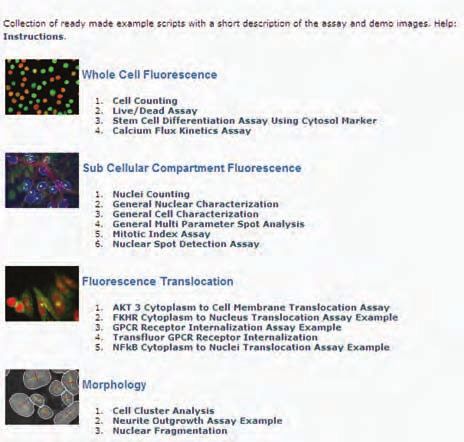
ACAPELLA

               Acapella
               A COMPREHENSIVE
               Toolbox for
               High Content                              Acapella is a highly flexible and
                                                         powerful image data processing
               Image Analysis                            system that can be applied to a broad
                                                        range of applications. It comes with a set of
               ready-made application solutions, or “Scripts”, with instructions to use and modify,
               as well as being fully flexible for new algorithm development. The Acapella Script
               Collection is regularly extended and is available to all Acapella users.

               Acapella is suited to all high throughput, high content cellular assays, and in particular
               to multiplex assays. Its open architecture allows you to develop assays by building on
               essential analysis steps such as nucleus detection, cytoplasm detection, cell compartment
               detection and quantifying events within the detected segments so that you can be
               sure that your new assays are built on firm foundations. You can select and combine
               algorithms by using visual feedback. A comprehensive range of best-fit algorithms
               is included, each optimized for cell type, staining and imaging conditions.

2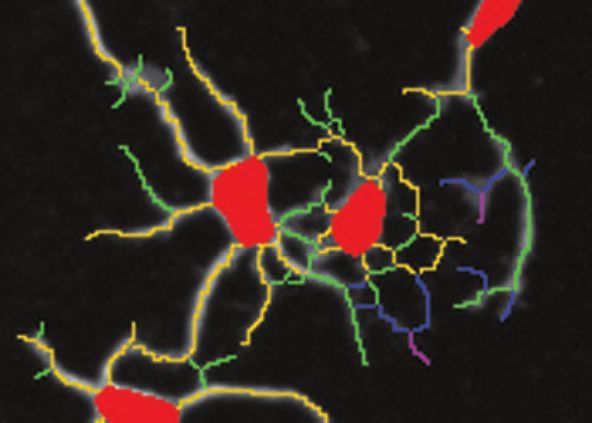
High Speed High Content Screening –
       powered by the Acapella runtime system
                                                                           Key Features
Acapella is a runtime system with the processing power                     • Set of ready-made applications for immediate use, or to
to analyze huge image data loads while all its algorithms                    use as a starting point for new applications.
are optimized for speed. When used with the high                           • Open architecture for creation of new assays – provides
throughput Opera High Content Screening System,                              ultimate flexibility for development of algorithms.
online image analysis can be achieved using a scalable                     • Optimized for high speed online image analysis and for
distributed computing system. By using multiple processors                   processing large data sets.
and parallel processing, results can be obtained online                    • Superior segmentation algorithms for accurate separation
quickly and efficiently from very large High Content                         on even confluent cell layers.
Screening campaigns.                                                       • Unique, comprehensive collection of algorithm sets for nucleus,
                                                                             cell body and spot detection that allows new applications to be
A Linux Edition is also available, offering full support for                 developed by using “choose best-fit and combine” approach.
cluster technology, ultra high speed image analysis and
analysis of even larger data sets.

General Cellular Assay Library – create your own solutions in Acapella
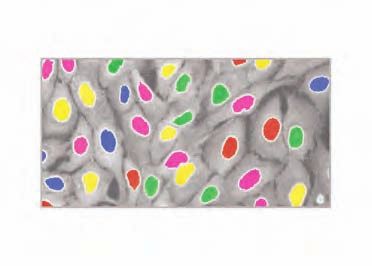
Developing your own customized assays is easy in Acapella. Starting with the Cellular Assay Library, cells can be identified reliably from
nuclear stain.

                Nucleus Detection

                                                                                        Cellular Assay Detection libraries allow
                Cell Detection                                                          the best choice to be selected from a
                                                                                        comprehensive range of algorithms.

                Compartment Detection

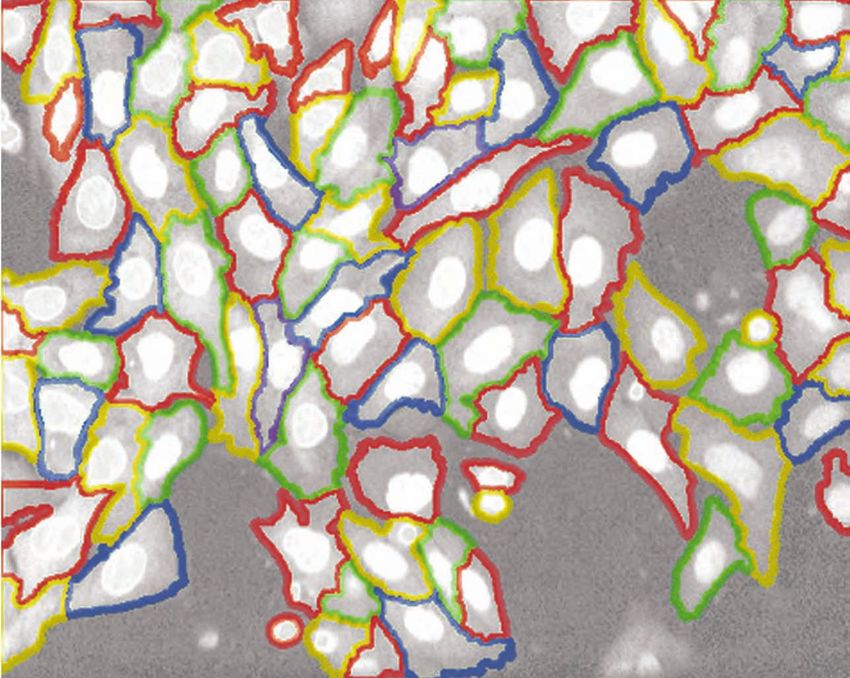
The Region Selection Tools make it very easy to define cellular regions using intuitive commands. Regions of Interest (ROIs)
can be defined on a per-cell basis and the superior segmentation algorithms in Acapella allow accurate region separation, even
for cells in a confluent state and for all types of cell morphology. This means that Acapella can be used successfully for a very
large range of cellular assays.

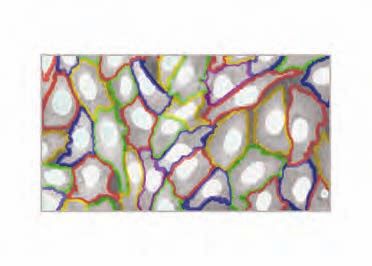
                                 “NucleusRegion” can be used to identify                                  “MembraneRegion” reliably identifies
                                 then count cells in a population, these                                  the plasma membrane areas of cells.
                                 parameters can subsequently be used
                                 for housekeeping assays such as cell
                                 viability in cell proliferation.

                                 “RingRegion” allows the creation of                                      “CytoplasmRegion” identifies the
                                 cytoplasm ROIs with variable areas                                       entire cytoplasm area for any kind of
                                 around the nucleus.                                                      cell shape.

Analysis of translocation assays such as cytoplasm-to-nucleus or cytoplasm-to-membrane can be created easily in a few simple
steps. For more advanced analysis tasks, Acapella has a comprehensive set of image analysis functions (erosion, dilation, masks, filters,
arithmetic functions, etc).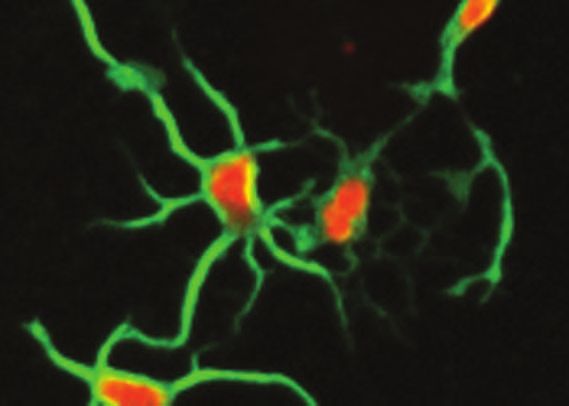
Create your own customized solutions

Take an example from the Acapella Script Collection –                           Add Specific Application Libraries –
and customize!                                                                  Neurite Outgrowth Analysis Library
You can create highly customized analysis solutions using the                   The Neurite Outgrowth Analysis Library can be purchased as
Cellular Assay Library beginning with a suitable example from                   an add-on to your system. It uses best in class algorithms for
the Acapella Script Collection. The example below shows the                     neurite detection, classification and quantification. Individual
quantifying differentiation status of a mixed cell population.                  cell neurites can be identified and allocated to individual cells,
Output parameters can be added as required.                                     for accurate and precise results.

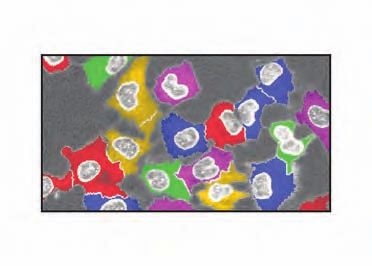
                                             In this example, neuronal          Parameters that can be quantified include:
                                             and glial cells, differentiated
                                                                                • Number of cells                 • Number of root neurites
                                             from embryonal stem cells,
                                             are stained for Tuj1 (red) and     • Individual cell label           • Number of branch points
                                             GFAP (green).
                                                                                • Total length of neurites        • Number of extreme neurites
                                                                                • Longest neurite of a cell

                                                                                                      Primary neurons labeled with
                                                                                                      a neuronal-specific green
                                                                                                      fluorescent antibody and a
                                                                                                      red fluorescent nuclear dye.

                                                                                      Using the Neurite Outgrowth Analysis Library, cells can be
The cytoplasmic regions of all cells are identified using the advanced                analyzed for branch level and number of neurites per cell.
Acapella algorithms, allowing quantification of neuronal and glial cell
marker. From mean marker intensity per cell to detailed information on
a cell-by-cell basis in just a few steps, Acapella provides full control over
output parameters.

www.perkinelmer.com/acapella                                                                                                                         4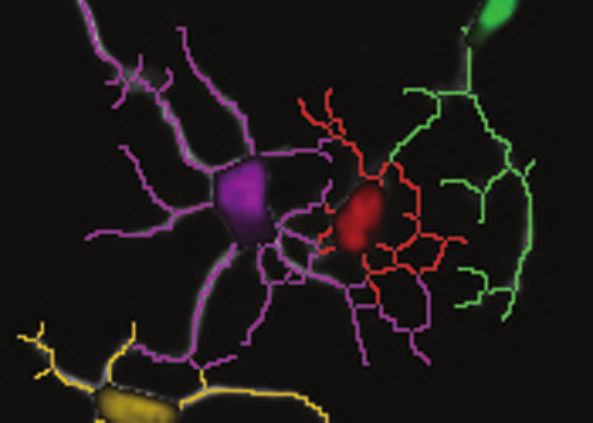
Acapella Range and Options
      Key Functionality                                       Acapella Script Collection
      Editor and player functions                             Included with Detection Libraries
      Image and data manipulation modules for:
         • Data input / output
         • Statistical analysis
         • Arithmetic operations
         • Image processing
         • Feature and object recognition
         • Object filtering
         • Population analysis
         • Data visualization

      Detection Libraries
      Cellular Assay Library
      Set of building blocks for convenient assay
      development comprising:
      • Nucleus Detection
      • Cytoplasm Detection                                   Acapella Script Collection
      • Object Region Selection
      • Spot Quantification
                                                              RMCA Licenses

      Neurite Outgrowth Analysis Library                      Acapella scripts can run on a scalable cluster of the Opera™
                                                              High Throughput Image Analysis PCs for parallel image
      Set of algorithms for analysis of neurites              processing using ReMote Cell Analyzer (RMCA) licenses,
                                                              providing online image analysis during screening.

    Technical Information
    System Requirements                                       Image Formats
    Acapella requires Microsoft® Windows® XP or Vista®        Acapella will accept over 30 standard image formats, such as
    Minimum specification: Pentium III 1 GHz, 512 MB RAM,
                                    ®                         TIFF, JPEG, GIF, etc.
    1 GB free HD
                                                              Data Export
    Recommended specification: Pentium® 4.3 GHz, 1 GB RAM,
    10 GB free HD                                             Data can be exported from Acapella as .xml or .csv format

    Acapella Linux Edition requires OpenSuSE 10.3 64 bit
    Minimum specification: Intel® Core™ 2, 2 GHz, 2 GB RAM,
    1 GB free HD
    Recommended specification: Intel® QuadCore 4.3 GHz,
    4 GB RAM, 10 GB free HD

5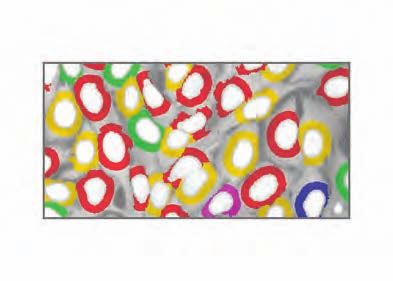
PerkinElmer, Inc.
940 Winter Street
Waltham, MA 02451 USA
P: (800) 762-4000 or
(+1) 203-925-4602
www.perkinelmer.com

For a complete listing of our global offices, visit www.perkinelmer.com/ContactUs

Copyright ©2009, PerkinElmer, Inc. All rights reserved. PerkinElmer® is a registered trademark of PerkinElmer, Inc. All other trademarks are the property of their respective owners.

008076A_02

You can also read


