ACTING RESPONSIBLY - Schwarz Dienstleistungen
←
→
Page content transcription
If your browser does not render page correctly, please read the page content below
ACTING RESPONSIBLY
Contents

     03   SCHWARZ GROUP PROFILE
     04   Our Group and Our Locations
     06   Shaping Change
     08   Analysing our Priority Issues
     10   Managing Sustainability

     12 SUSTAINABLE PRODUCT RANGE
     13 Environmentally Friendly Business with Strong Partners
     14 Bringing Sustainable Consumption to the Society at large

     16 E
         CONOMY– RESPONSIBLE GROWTH
     17 Strong Market Position
     18 Future-Oriented Stores

     20 E
         NVIRONMENT – RESPONSIBLE VALUE
        CREATION
     21 Conserving Resources
     23 Valuing Recyclables
     24 Supporting the Energy and Mobility Transition

     26 SOCIAL COMMITMENT TO EMPLOYEES
        AND COMMUNITY
     27 Our Staff
     28 Raising Awareness
     29 Joining Forces for a Good Cause

     30 Legal Notice

     All information stated relates to the Schwarz Group 2018 fiscal year
     (March 2018 - February 2019). Any information that deviates from this
     is reported separately.

02
SCHWARZ GROUP
PROFILE
The Schwarz Group is one of the largest retailers in the world. We c over
the lion’s share of the food retail value chain in house – from p
roduction
through retailing to recycling. We endeavor to use and increase our
influence to drive forward sustainable development.
429,000
Around
employees
Over
12,100 stores
100
worldwide
billion
Over euros
in turnover
03
Our Group
and Our Locations
GreenCycle Production
GreenCycle, with its PreZero sales brand, is a The production companies Mittel
globally active waste management and recycling deutsche Erfrischungsgetränke (MEG),
company belonging to the Schwarz Group. Bonback, Bon Gelati, and Solent belong to the
GreenCycle uses its recycling expertise to contribute Schwarz Group. They produce own brand products
to Schwarz Group’s plastic strategy. (beverages, chocolate, baked goods and ice cream)
for Kaufland and Lidl. In addition, returned beverage
bottles are recycled to create new ones in the group’s
Kaufland – the Full-range Retailer own recycling and plastic processing plants.
Kaufland operates over 1,300 stores in Germany
and Eastern Europe, and also plans to open
stores soon in Australia. It offers a total of Schwarz Dienstleistungen
around 25,000 products in its large-scale stores, inclu- The Schwarz Group pools a variety
ding 1,700 organic food items. As a full-range retailer, of services and offers them to all
Kaufland offers its customers a wide range of food and its group divisions. These include operational and ad-
non-food products. It also produces a significant part ministrative activities in Administration, IT and Central
of its prepared meat products in its own meat proces- Services.
sing factories.
Lidl – the Discounter
Lidl is present in 30 countries around the world,
and currently operates 10,800 stores and over
160 goods distribution centers. On average,
the assortment of Lidl includes 3,800 different products
per year, of which an average of 250 are organic. As a
discount supermarket, Lidl focuses on good quality for
low prices.
04
Kaufland and Lidl
 Lidl
 Expansion of Kaufland or Lidl
 GreenCycle
 Production plants

represented
in more than
30 countries

                                 China

         USA                                         Australia

                                         Hong Kong

                                                                 05
Shaping Change
As one of the world’s leading retailers, we shape the change neces-
sary in those places we can actively make an impact: in production, in
consumption and in recycling of our products. We are taking bold action
to support the goals of the global agenda for 2030. In pursuit of these
goals we will set new industry standards.
Leveraging our Influence
The Schwarz Group is working together with its group divisons,
customers and partners to drive the transition towards a sustainable
society along its value chain. We make our contribution where we
have the greatest leverage – in production, retail, consumption and
recycling – in order to advance sustainable development in retail.
Our Vision SDG 12 – Ensure sustainable
consumption and production
“Taking bold decisions patterns
for sustainable transformation –
Transitioning to a sustainable economy
together, every day.” and lifestyle can only work if we change
our consumption habits and produc-
tion methods. To achieve this, we have
to reduce our consumption of natural
resources, as well as the quantity of
waste and pollutants we generate along
the entire value chain. As the third
largest sector of the economy, retail
is directly involved in how natural re-
sources are processed and consumed.
It is for this reason that the Schwarz
Group focusses its sustainability efforts
on Sustainable Development Goal
(SDG) 12.
06
Our Commitments
To underpin the strategic focus on SDG12, the Schwarz Group is cooperating
with its different business units and subsidiaries, to achieve the SDG 12 t argets
relevant to the group’s business. It has set the first milestones towards the
ambitious goals as follows:
Sustainable Raw Materials SDG 12.2 Zero Waste SDG 12.5
We are conducting a systematic analysis until 2020 in order to We will reuse, recycle or recover a significant percentage of the
set sustainable goals for our most relevant raw materials. waste generated in the company by 2025.
Food Waste SDG 12.3 Empowerment SDG 12.8
By 2025, we will significantly reduce food waste in our own We will empower and support all of our employees in sustainably
production and retail in all countries and will enable customers performing their jobs by 2022, and continue to do so thereafter.
to do the same.
We will provide our customers with greater transparency on the
We will reduce food waste for selected raw materials along the social, environmental and health-related effects of our product offe-
supply chain. ring, enabling them to make conscious decisions, by 2025.
Chemicals SDG 12.4
We will strive to achieve healthy and environmentally friendly use
of chemicals in production of our own brands by 2030.
07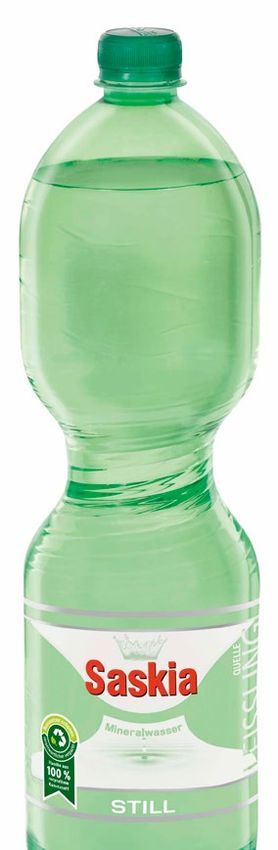
Analysing our Priority Issues
The Schwarz Group surveyed its stakeholders in 2018 on relevant sustainability
issues to serve as the basis for its corporate social responsibility (CSR) focus.
The key issues, that were identified, indicate the aspects on which our stake-
holder groups expect transparency. The materiality assessment thus constitutes
the basis for Schwarz Group reporting.
Materiality Process with an SDG Focus
Step 1: Determining relevant issues Step 3: Surveying stakeholder
The 17 Sustainable Development Goals (SDGs) with 169 targets The Schwarz Group surveyed more than 1,100 individuals from
served as the basis for the materiality assessment the Schwarz Group our relevant stakeholder groups on the materiality of the selected
concluded in 2018. Together with external experts, the Schwarz Group issues, online in May 2018. The survey sample included employees,
initially pared these issues down to 80 company and industry-relevant business partners and banks. With a response rate of 33 percent,
goals divided into 17 categories. Combining these with two expanded the Schwarz Group obtained results that represent the sustainability
categories, animal welfare and product quality/safety, yielded 19 issues that the stakeholders consider the most important.
categories with a total of 45 individual issues available for impact
assessment. Step 4: Identifying key issues
The final step involved superimposing the results of the impact
Step 2: Assessing impact assessment and the stakeholder survey on all stages of the value
In order to analyze the Schwarz Group’s impact on its environment, chain. This step identified six key issues: waste and chemicals,
the group’s SDG achievement status was compared to the group’s climate protection, economic development, water and oceans,
value creation. The Schwarz Group used the Bertelsmann Stiftung resource efficiency and health management. These six issues were
SDG Index to analyze the targets relevant to specific countries, identified as having the greatest need for action in the countries in
based on their implementation status. Those targets with achie- which the Schwarz Group operates.
vement status rated as below average were then compared in a
subsequent step with value creation or Schwarz Group sales in the
countries concerned. Such comparisons enabled determination of
the issues on whose improvement the Schwarz Group potentially
has the greatest influence through its core business.
More than
08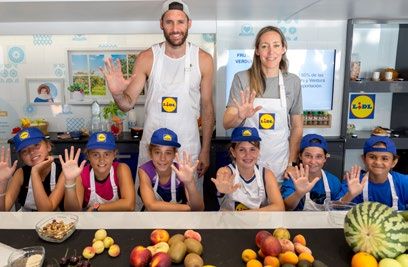
Banks

                  Scientific                   Managers
                 community

    Associations
         and
                               Schwarz Group               Business
                                                           partners
    policymakers
                                stakeholders

                   NGOs                        Customers

                                   Employees

stakeholders participated
in the survey.
                                                                      09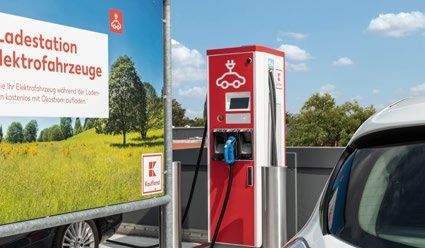
Managing Sustainability
Business success and social responsibility are inseparable principles for the
Schwarz Group. This attitude is firmly rooted throughout the group in our corporate
principles. The implementation of CSR is tailored to the specific environment
of each devision. A joint committee in which all group divisions are represented
ensures a group-wide exchange of ideas.
Our corporate principle on sustainability:
“We assume economic, social and ecological
responsibility in our daily activities.”
Managing Sustainability Effectively KPIs and Measures at a Glance
The requirements for effective CSR management are just as varied Group-wide transparency with regard to CSR measures and KPIs
as the Schwarz Group’s areas of activity – from production, through is essential for comprehensive sustainability management. These
retail, to recycling. The group divisions separately manage their constitute the central elements of reporting for internal and external
sustainability activities in line with their individual environments for stakeholders.
this very reason. The Schwarz Group has set out the CSR ma-
nagement requirements in a central framework in order to ensure The Schwarz Group has introduced a group-wide software solution
common understanding throughout the group. This framework will to ensure a comprehensive view of the measures of each group divi-
be further developed on a continuous basis together with the group sion and country. This software allows employees to customize their
divisions’ CSR managers. view of CSR measures and campaigns from any country to meet
their own specific needs. It enables CSR managers and other emp-
loyees to access best practices and adapt them for their respective
Group-wide Exchange country. Moreover, selected CSR measures serve to demonstrate
the Schwarz Group’s sustainability performance.
Regular exchange of information among the group divisions is
crucial for implementing environmental, social and economic aspects The Schwarz Group also keeps an eye on its sustainability KPIs.
in day-to-day business in the same way throughout the group. To this end, it has defined a group-wide set of CSR KPIs, which it
The Schwarz CSR committee, to which the CSR managers of all group uniformly records and further develops for all countries and group
divisions belong, serves this purpose. It facilitates joint definition divisions. It based its selection of key issues on the internationally
and long-term development of group-wide guidelines and general recognized Global Reporting Initiative (GRI) Standards.
conditions. The committee, headed and coordinated by Schwarz
Dienstleistungen CSR, normally meets once a month.
10Management of group divisions
Responsible for sustainability
inform decide and instruct
Schwarz CSR Committee
GROUP DIVISIONS
CSR CSR CSR CSR CSR
System and
process initiator
COUNTRIES
CSR CSR CSR CSR CSR CSR
Kaufland Kaufland Kaufland Lidl Lidl Lidl
DE PL ... DE ES ...
11PRODUCTS
SUSTAINABLE RANGE
OF GOODS
The Schwarz Group is consciously expanding the share of its
products that are environmentally friendly and fairly traded. Ultimately,
as a visible interface to our customers, they directly promote sustainable
consumption. The quality and sustainability of our products is decisively
thanks to the production processes we develop in house and in close
collaboration with our suppliers.
Around
1,700
Around
250
organic products are available
in the Lidl range on average.
organic products are
available in the Kaufland
range on average.
12Environmentally Friendly
Business with Strong Partners
Making high quality organic food available to large groups of the
population – in cooperation with well-known organic food associa-
tions, Kaufland and Lidl are offering their customers more and more
organic food locally produced to high standards – thereby breaking
it out of its niche status.
Lidl Cooperation with Bioland Demeter Range at Kaufland
Lidl Germany has been cooperating with Bioland, the leading asso- Kaufland focuses on food of excellent organic quality: It has offered
ciation for organic farming in Germany, since October 2018, in order more than 150 Demeter products, largely from the Demeter Campo
to bring top-quality and local organic products to its German stores. Verde brand, since February 2019. The Demeter range includes juices,
Bioland has already certified a total of around 50 items that meet sandwich spreads, dairy products, canned vegetables, cooking oils,
its strict criteria. For example, Bioland quality apples, herbs, wheat pasta, flours, cereals, baked goods, as well as fruit and vegetables.
flour and almost all dairy products of Lidl’s own BioOrganic brand Very strict biodynamic agricultural standards that extend far beyond
are now for sale throughout the country. the minimum EU organic label apply to members certified by
Demeter – Germany’s oldest organic food association.
Lidl and Bioland would like to effectively develop the sustainable
farming and food industry in the long term. The focus is on gradually Kaufland will expand the Demeter offering to include more
transitioning traditional farms and EU organic farms to meet Bioland than 200 products by the end of 2019.
criteria in order to offer a sufficient supply of high-quality organic
food.
13Bringing Sustainable Consumption
to the Society at large
Within the Schwarz Group, Kaufland and Lidl exercise the greatest
influence on sustainable consumption with the composition of their
product range. They assume direct responsibility, with their own brands,
in particular. They are also committed to a sustainable assortment with
other brand-name and supplier products.
Sustainable Clothing on Offer Sustainable Employee Uniforms
The processes for manufacturing textiles and shoes, such as dying, The Schwarz Group also focuses on sustainability under its own
gluing and printing, rely on chemicals. With this in mind, Kaufland roof. Kaufland and Lidl attach great importance to sustainably
and Lidl have joined Greenpeace’s Detox campaign to keep potential produced uniforms. All store employee uniforms worldwide are
dangers to humans and the environment to a minimum. In implemen- produced from organic cotton, in compliance with the strict Global
ting this move, the supermarkets aim to replace potentially hazardous Organic Textile Standard (GOTS) criteria. In addition, some compo-
chemicals with more environmentally friendly ones in the manufacture nents of our store uniforms are also fair-trade certified.
of their own brands of clothing and shoes. They also plan to reduce
the amounts of chemicals used in general. Moreover, some of the old Kaufland employee uniforms in Germany
and six other European countries are not merely disposed of, but
Kaufland and Lidl intend to completely eliminate from their recycled with the support of the group’s own recycling company
global supply chains the use and release of the 11 priority GreenCycle. This produces thermal blankets that Kaufland donates to
groups of hazardous chemicals identified by Greenpeace in the Workers’ Samaritan Federation (Arbeiter-Samariter-Bund – ASB).
their clothing and shoe production.
More detailed information on the current implementation status
of the Detox campaign is available here:
Kaufland Detox Lidl Detox Commitment
Report Interim Report In 2018 Kaufland donated more
than 10,000 blankets made of
recycled employee uniforms.
14Environmentally Friendly Range Raising Consumer Awareness
In order to address consumers’ growing demands for products The retail goods produced by Kaufland and Lidl in line with environ-
manufactured in a responsible and environmentally friendly manner, mental and social standards are clearly labeled with the relevant
the Schwarz Group relies on different types of certification for its product seals. Brochures and packaging include information on
range of goods, including Blue Angel. The ecolabel of the German product sustainability features in order to make consumers more
federal government identifies products that are more environmen- aware of the benefits.
tally friendly and protect people’s health without compromising pro-
duct usage. Examples of such products include sanitary and paper You can find an overview online of all logos and certifications
products made of 100% recycled paper, and garbage bags made of identifying sustainable products sold by Kaufland and Lidl.
recycled plastics. Kaufland and Lidl offer Blue Angel certified items
in their stores across Europe, thus making environmentally friendly
items accessible to a broad range of customers.
The number of items certified by seal offered in
the Kaufland and Lidl ranges*:
Kaufland Lidl
UTZ >120 >280
FSC >70 >180
Rainforest >20 >20
Alliance
www.ra.org/siegel
Fairtrade >180 >70
* refers to the average range in all countries
15ECONOMY
RESPONSIBLE
GROWTH
The Schwarz Group sets standards with its record turnover in 2018, and d emonstrated it
could hold its own in a challenging environment. A large share of our investments goes to
expanding and modernizing Kaufland and Lidl stores. This is our way of addressing the
need for contemporary store design.
2018
2017
2016 104.3
2015
Net turnover in the Schwarz Group 96.9
2014
core business 90.2
85.7
in billions of euros 79.4
+31.4%
This represents an increase
from 2014 to 2018 of
16Strong Market Position
The Schwarz Group posted sales of more than EUR 100 billion for Since 2006, the Schwarz Group has continuously expanded its
the first time in fiscal year 2018. This followed more than a 30 percent portfolio beyond its retail business by adding its own food produc-
increase in net sales in the past five years, with the company thus tion capacities. It currently manufactures its own brand of chocola-
continuing to expand its market position as the largest retailer te, dried fruit, baked goods and ice cream, as well as mineral water
in E urope. The Schwarz Group constantly maintained its total and soft drinks.
investments in 2018 at the same high level of the previous year of
EUR 7.5 billion. A large portion go to expanding and modernizing Moreover the Schwarz Group is also strengthening its waste dis-
Kaufland and Lidl stores. We would like to further increase the current posal and recycling business. With the acquisition of disposal firm
number of K aufland and Lidl stores worldwide (approximately 12,100) Tönsmeier by its own service provider GreenCycle, the Schwarz
after adding close to 400 in 2018. Group has established recyclables management as an additional
business segment, thereby promoting a holistic single-source circu-
Digitalization also plays an increasingly important role as an ad- lar economy.
ditional growth driver. Lidl Online is currently operating in six
countries and has more than 18 million customers. In 2018 alone,
Lidl increased its sales of non-food items in the online area by 56
percent. Kaufland’s customer app, a digital shopping aid and source
of recipe suggestions is becoming increasingly popular.
16
production plants
30
sorting and recycling plants
219
warehouses
12.118
stores
626
new store openings
including replacement locations
17Future-Oriented Stores
Suburban locations, rural areas, heavily built-up city centers – there is a
broad variety of demands depending on the location, sometimes even
challenges in potential construction. We offer the right solution for every
location and develop strategies for the ideal store design with our wide
range of store concepts.
Flexibility Focus on Sustainability
Lidl offers different store concepts for a variety of requirements: Sustainable construction and energy efficiency play an important
• The basic store: open, light and customer-oriented role in Kaufland and Lidl store designs. In their new builds, for
• The metropolitan store: modern and flexible – designed example, the company is increasingly using photovoltaic systems
for urban centers and quick charging stations with green electricity for electric cars.
• The city center store: perfectly integrated Green roofs can help to filter pollutants from the air and support
• The retail park: many offerings at a single site water retention. Waste heat generated by cooling systems enables
• Special stores: customized solutions for unique buildings some stores to heat without the use of fossil fuels.
and locations
Lidl opened its first metropolitan store in Barcelona in 2016. Its For more information on sustainable construction by the Schwarz
compact construction style pays off, particularly in heavily built-up Group, see the Environment section on pages 24/25.
metropolitan areas like Catalonia’s capital.
Kaufland has always practiced flexible construction. Its store types Overview of store types
are adapted to location features based on the size of the property Kaufland Lidl
– from single-story stores with parking lots in front to elevated store
solutions with parking lots on the ground floor and the sales area
above. Underground parking solutions are also an option, parti-
cularly in urban spaces. Location-specific designs with multi-use
enable Kaufland to offer urban solutions for property sizes starting
from 6,000 m².
18+
Climate protection
Kaufland and Lidl can offer carbon-
neutral electricity from solar power
generated by rooftop photovoltaic
systems. Environment protection
Green roofs can help to filter pollutants from
the air and support water retention.
+
Integration into
surrounding buildings
Mobility
Customers can currently charge
their electric cars at the quick
charging stations free of charge
while shopping.
+
+ Energy efficiency
Instead of only heating with combustibles
such as oil, gas, and wood, waste heat
generated by store chillers contributes to
Sustainable architecture heating. The combined cooling/air conditio-
ning systems save energy and conserve
natural resources.
642,000 m
Over
2
90
photovoltaic systems are o perated
by the Schwarz Group. That
corresponds to an area of around soccer fields.
19ENVIRONMENT
RESPONSIBLE
VALUE CREATION
The Schwarz Group has its focus set on the entire value chain, including Kaufland
and Lidl, our production facilities and our waste disposal and recycling service
provider GreenCycle. This set-up enables us to effectively implement resource
efficiency initiatives – from a comprehensive plastic strategy through holistic
energy management to green mobility concepts.
The recycling plants process returnable PET beverage
bottles to make food grade PET granules.
20Conserving Resources
The Schwarz Group was one of the first retailers to include a commitment in
its plastic strategy to significantly reducing plastic consumption in production
and the retail business. We aim to close the loop for materials and generate
tomorrow’s raw materials from today’s waste.
REset Plastic – the Schwarz Group
Plastic Strategy The five Action Areas
The Schwarz Group launched its international REset Plastic REduce REdesign
plastic strategy along its value chain at the start of 2018. Five We reduce plastic – wherever We design recyclable
areas of action serve to complete the circle and reduce con- sustainably possible. packaging and close loops.
sumption of plastic. We avoid plastic where possible, employ
resource-conserving designs, collect, sort and recycle mate- REcycle REmove
rials, remove plastic waste from the environment, look for inno- We collect, sort and We support the removal
vative solutions and raise awareness of resource conservation. recycle plastics to of plastic waste from the
The Schwarz Group has confirmed its commitment in signing close the loop. environment.
up to the Ellen MacArthur Foundation’s Global Commitment. At
REsearch
the heart of the initiative is a vision of a new circular economy We invest in research and development of
in which plastic no longer becomes a waste product. innovative solutions and educate on recycling.
For more information online, see reset-plastic.com
Our aims:
-20% 100%
plastic at Kaufland recyclability of plastic
and Lidl by 2025 packaging for own
brand by 2025
21In the loop
100 %
One example of a closed material loop is the 1.5 liter PET bottle
Recycling-PET
“Saskia” still
mineral water
1.5 L bottle
of Lidl’s own brand “Saskia” still mineral water. The bottle* is
made exclusively of recycled PET collected in stores and sorted
in the group’s own production facilities, where it is then recycled Savings on new PET
and made into new bottles. These are then filled and resold in product: more than
Lidl stores. That means all process steps in the material loop 10,000 tonnes of
are completed by a single source. New plastic is not needed new PET per year
for production. The bottles are currently available in Germany,
Switzerland, Austria and Denmark. Other bottles of own-brand
beverages Sakia and Freeway are made of at least 50 percent Carbon savings of
recycled material on average. approx. 17,000 tonnes
per year
* excluding cap and label
STOP – Stop Ocean Plastics
Plastic waste in the world’s oceans is a global problem. In order to make its own contri-
bution to removing plastic waste, the Schwarz Group has supported Project STOP as a
technical partner – and the first food retailer – since the beginning of 2019. This leading
initiative to prevent plastic waste from entering oceans cooperates with communities in
Indonesia to develop efficient waste disposal systems there.
www.stopoceanplastics.com
22Valuing Recyclables
The group’s own waste disposal and recycling service provider PreZero,
a subsidiary of GreenCycle, plays an important role in Schwarz Group’s circu-
lar economy. The company organizes collection and recycling of all reusable
materials generated by Kaufland and Lidl store and logistics operations as
well as by the production facilities. The close cooperation between the group
divisions in d
ay-to-day business ensures an international knowledge transfer.
The Schwarz Group production facilities that manufacture Kaufland Waste by material
and Lidl’s own brands are also developing their production processes in tonnes 275,396 non-recyclable waste
and packaging in the same environmentally friendly manner.
82,438 other recyclables
3,646 textiles
Raising Employee Awareness 54,143 wood
68,173 plastics
Proper collection of all waste via waste sorting systems is key to 2.5 million
tonnes
163,291 PET
achieving high rates of recycling in the company – and this needs to
be in the very place where the waste is created. GreenCycle conti-
of waste in
nuously analyzes which types of waste are generated where in the
fiscal year 2018
Schwarz Group and how to plan collection and sorting as intuitively
and simply as possible. GreenCycle educates store and logis- 405,643 organic waste
tics staff in its “Valuing recyclables” Campaign involving training
courses, detailed brochures and videos. This enabled the Schwarz
Group to increase its recycling rate.
1,430,150 paper/cardboard
GreenCycle is sharing this experience and advising companies,
such as the Bundesliga soccer club TSG 1899 Hoffenheim, on
recycling management. GreenCycle subsidiary PreZero replaced
styrofoam cups for hot beverages with reusable cups. This saves
around 400 kilograms of plastic per soccer match. Also, the two
tonnes of stadium grass clippings collected each month are used
to make paper for the annual supply of autograph cards.
“Valuing Recyclables”
at the Schwarz Group
23Supporting the Energy and Mobility Transition
The Schwarz Group has set itself the aim of contributing to a sustainable energy
and mobility transition. To this end it constructs energy-efficient buildings and covers
around 30 percent of total electricity consumption exclusively through renewable
energies – including from its own sources. We are increasing our focus on charging
stations for electric cars and bikes, which our customers and employees can currently
use free of charge, to promote climate-friendly mobility.
Energy-efficient and Sustainable Construction Energy Management as the Basis
The Schwarz Group attaches great importance in its expansion to A holistic energy management system based on the
energy-efficient and sustainable construction of its stores, administ- international standard ISO 50001 enables the Schwarz
rative buildings and goods distribution centers. To ensure this objec- Group to improve its energy efficiency and lower the
tive is met it applies renowned national and international sustainable associated carbon emissions. To achieve this objective,
construction standards. Here are some examples: all group divisions had all relevant areas of their store
locations, logistics centers and administrative buildings
certified on the basis of this standard.*
BREEAM: “Building Research Establishment
Environmental Assessment Method” is a UK
sustainability certification scheme for real esta- Award-winning Energy Concept
te. In addition to other locations, the Lidl logis-
tics center in Waddinxveen in the Netherlands The EHI Retail Institute e.V. awarded Lidl’s concept for climate pro-
has been awarded the BREEAM “Outstanding” tection, ECO2NEXT, the EHI Energy Management Award 2018 in the
seal of quality. “Cross-store energy management concept” category. Lidl Germany
reduced its energy consumption in fiscal year 2017 by implementing
EDGE: “Excellence in Design for Greater Effi- effective measures in energy-efficient logistics, biogas extraction,
ciencies” is a system for certifying sustainable alternative mobility solutions and store optimizations. Lidl increased
buildings developed by the World Bank Group’s the self-generated solar energy share of the company’s total energy
International Finance Corporation (IFC). All Lidl consumption tenfold during the same period.
stores and the central warehouse in Lithuania,
for example, as well as Kaufland stores in Bul-
garia have been EDGE certified.
LEED: “Leadership in Energy and Environmental
Design” is an internationally established green
building rating system. Lidl’s US headquarters
in Arlington, Virginia, for example, was LEED
certified with a Gold rating in 2017.
* excluding Poland, Serbia and USA
24Absolute Greenhouse Gas Emissions
Scope 1
879,629 Energy consumption is a key position with emissions of
1,941,816 tonnes of CO2e (in Scope 2). That is why we are
trying to gradually lower this position and reduce our carbon
5,712,969 emissions by using green electricity. Nearly 30 percent of
our current consumption comes exclusively from renewable
tonnes sources.
CO2e in
* The market-oriented approach uses energy providers’ emission factors.
fiscal year 2018
(market-oriented*) Scope 1: Emissions from direct consumption of energy (building, fuel, refrigerant)
Scope 2: Emissions from electric and district heating
Scope 2 Scope 3: Emissions from the upstream and downstream supply chain
1,979,302 (e.g. logistics, reusables, supplies)
Scope 3
2,854,038
Fill up on green electricity at Kaufland and Lidl
Kaufland and Lidl customers can fill up on free electricity w
doing their shopping. The company is actively promoting
hile
climate-friendly electro mobility by expanding its charging station
network. The stations are operated mainly with green electricity
from 100 percent renewable energies.
763 Kaufland and Lidl stores are
equipped with at least one
electric charging station.
25SOCIAL ASPECTS
COMMITMENT TO
EMPLOYEES AND
COMMUNITY
Whether nutrition or circular economy, the Schwarz Group
business operates in various areas of life. The group is not only
committed on behalf of its employees to actively developing
these issues, but also collaborates with its customers on cha-
ritable projects as well, thereby improving living and working
conditions worldwide.
66.9 %
Schwarz Group employees
428,599
Age distribution
Average age 36
< 30 years of age 33 %
≥ 30 < 50 years of age 54 %
employees
≥ 50 years 13 %
of age
33.1 %
26Our Staff
Around 429,000 employees worldwide are the foundation of the
Schwarz Group’s success. We aim to offer our staff a safe and attractive
work environment characterized by mutual appreciation. Regular awards
confirm that we are on track in our human resources work.
Award-winning Employer Climate-friendly Employee Mobility
Our business success is based on a high level of employee A more relaxing commute to work and saving emissions at the same
satisfaction. This is also reflected the awards we receive in this area. time – the Schwarz Group offers its employees at the central loca-
tions around Heilbronn modern solutions for environmentally friendly
mobility via its ready4green program.
Certified Top Employer
Great Place to Work
2019 in Europe ... Smart Carpooling
Commuter traffic is getting ever heavier. We offer our employees the
opportunity to share rides and thus reduce traffic with our carpool
app. The Twogo app automatically finds the right carpool for com-
muters and drivers.
... and in these Bus & Train
Employees receive a subscription of discounted monthly tickets for
countries:
public transport plus an employer subsidy per ticket.
Kaufland
Bulgaria, Germany, Poland, Electric and Hybrid Cars
Romania, Slovakia and the
Electric and hybrid cars have proven themselves most of all in
Czech Republic
the short distances between the main locations in the Heilbronn
Lidl region. Different car models are thus available to Schwarz Group
Belgium, Finland, Greece, Italy, employees for business travel. The Schwarz Group is continuously
Lithuania, Malta, the Nether- adding to the offering of electric and hybrid cars and expanding the
lands, Poland, Romania, Slova-
charging point infrastructure.
kia, Spain, Cyprus
Bicycle Discount
Employees receive a company discount on bicycles from a local
partner company for climate-friendly rides to work.
Further information on
ready4green can be
found online
27Raising Awareness
Raising Awareness of Healthy Eating A Circular Economy Up Close
and Conserving Resources
Creating value from waste – the GreenCycle business model is being
Kaufland and Lidl launch and support campaigns worldwide to presented in a special way at the National Garden Exhibition in Heil-
teach children and adults a responsible approach to food and bronn (BUGA Heilbronn) in 2019. A pavilion was constructed entirely
responsible use of natural resources. The objective is to create and out of recycled materials together with the Ministry of the Environ-
raise awareness of the importance of maintaining a healthy, environ- ment Baden Württemberg, the waste management companies of the
mentally-friendly lifestyle. city of Heilbronn and the Karslruhe Institute of Technology. This crea-
ted a visual expression of a complete circular economy. Information
• Kaufland has offered its own education program on environ- is offered inside the pavilion that introduces visitors to the issues of
mental issues, such as plastic and bees, to children in Germany sustainability and recyclables in a fun way.
since 2004. It has reached around 270,000 children thus far in its
“environment day” campaign. It cooperates with the Association
of German Nature Parks (Verband Deutscher Naturparke e.V.).
Around 150 events were held in schools and daycare centers
around the country from March to November 2018.
• Lidl supports the “5 a Day” campaign through the Lidl Fruit School.
In 2018 for the third year in a row, professional nutrition experts
visited 200 elementary school classes around Germany, playfully
motivating some 5,000 third and fourth-graders to learn more about
balanced nutrition. They prepared simple meals together with the
children and showed them how five portions of fruit and vegetables
a day can be enjoyable. The idea was also implemented in a diffe-
rent form in other countries, such as Greece and Spain.
• Lidl Netherlands has collaborated with the Missing Chapter Foun-
dation since 2015 to actively involve children in decision-making
processes. Elementary school children are introduced to business
challenges relating to a conscious and sustainable lifestyle and
are given a chance to develop their own ideas for solutions.
The main question in 2018 was: How can Lidl help bees?
28Joining Forces
for a Good Cause
Round it up, please! Helping with Donations
Since 2012, Kaufland customers in Germany have been able to Since 2008, Lidl customers in Germany have had the opportunity
round up their shopping bill to the next higher 10-cent amount and to donate their bottle deposit slip amount at all of the 6,100 Lidl
donate the difference to a good cause. The donations benefit the reverse vending machines around the country. Lidl customer de-
“Germany rounds up” initiative, which supports charitable projects posit slip amounts and Lidl Germany’s daily food donations go to
to promote disadvantaged children and adolescents in Germany. more than 940 local food banks. Lidl bottle deposit donations have
Kaufland customers have rounded up their bills more than 47 million generated over EUR 17 million so far, which the food banks have
times so far, generating more than EUR 2 million. This makes been able to use to finance charitable projects. These have focused,
Kaufland one of the initiative’s three biggest partners. Moreover, for instance, on help with homework for children and adolescents,
Kaufland conducted seven campaigns from 2012 to 2018, in which cooking courses for families and cultural programs for people
it doubled the donations from its customers’ rounded up amounts. suffering from loneliness or poverty in old age. Other countries are
This yielded an additional EUR 280,000. also following the bottle deposit donation principle. Lidl Lithuania
47
has supported a national donation project to support child daycare
Kaufland has launched campaigns to support disadvantaged children centers since 2017. The company also matches the customers’
in other countries as well. In Poland, for example, K
aufland suppor- donations.
ted the SOS Children’s Villages from 2016 to 2018, with customers
and employees of Kaufland stores donating a total of EUR 175,500.
Customers in Polish stores can now donate money to the Polish food
bank via donation boxes located at the checkout.
Over
Round it
up, please!
million times since 2012
17
– Germany’s Kaufland
customers have rounded
up their purchase amounts
for a good cause.
million euros have
been raised in Germany
through the Lidl bottle
deposit donation initiative.
Over 29Published by
Schwarz Dienstleistung KG
Stiftsbergstraße 1
74172 Neckarsulm
Germany
CSR/Sustainability Department
csr@mail.schwarz
For further information, see
www.greencycle.de/nachhaltigkeit/nachhaltigkeit-bei-greencycle
www.kaufland.de/machen
www.lidl.de/verantwortung
www.meg-gruppe.de/unsere-umwelt.html
www.jobs.schwarz/wir-als-arbeitgeber/unsere-verantwortung
klimaneutral
natureOffice.com | DE-318-607181
gedruckt
This brochure was printed
on FSC®-certified paper
30You can also read


