Addressing Challenges in Global Supply Chains - Löning ...
←
→
Page content transcription
If your browser does not render page correctly, please read the page content below
Artisanal and Small-Scale Mining:
Addressing Challenges in Global Supply Chains

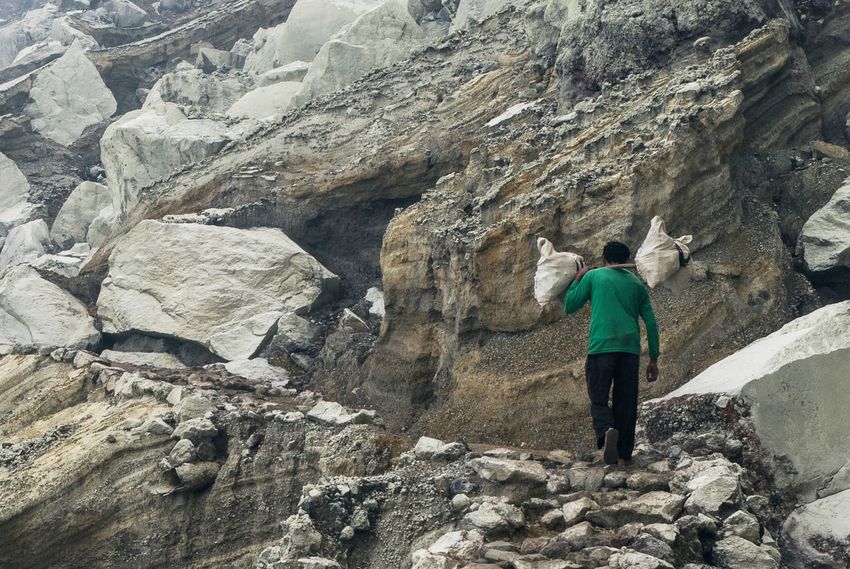
                                                                                            Mineworker, Indonesia

Artisanal and small-scale mining (ASM) produce a wide range of
materials and fuels various industries. This includes jewellery         Authors: Akylai Anarbaeva,
                                                                                Theresa Quiachon,
production as well as the manufacturing of electronic devices, tech-     Raquel Althoff | Contact:
nology and automobiles. However, due to the lack of human rights            info@loening-berlin.de

due diligence processes, the probability that companies that depend
on mining products are involved in salient human rights violations
occurring in ASM is quite high. Therefore, this short paper will shed
light on human rights related gaps and challenges for companies
resulting from ASM. It further provides perspectives on how compa-
nies can address those issues in the framework of the UN Guiding
Principles on Business and Human Rights (UNGPs) and encapsulates
key events that will likely change the legal environment of the
European Union and suggests follow-up actions in that regard.
01 | Artisanal and small-scale mining
in global supply chains
Artisanal and small-scale mining (ASM) is widespread, especially in
so called developing countries within Africa, Asia, Oceana and Central
and South America.01 ASM is extremely diverse and compared to the
capital-intensive large-scale mining, it is broadly defined as mining
activities that are labour intensive and limited in their use of capital,
mechanisation, and technology.02 ASM is a legal activity in many
places, and the political and legal framework guiding it vary from
country to country. However, in many cases it is linked to the infor-
mal economy and is often considered to be an illegal activity. These
conflicting legal states that ASM operates in, lead to complexities in
the overall understanding of ASM for companies.03
The non-profit organisation
Business for Social Responsibilty (BSR)
broadly categorizes ASM activities
as follows:
2
Legal: The legality of ASM activities is determined exclusive mining rights to an LSM company,
by government policy and legislation. When thus necessitating the evacuation (or eviction)
ASM activities are considered legal, they are recog- of all miners.
niszed through the provision of ASM mining
permits on specifically designated land. Trespassing: This category encompasses any ASM
activity that takes place in a restricted area or on
Informal: This category includes any ASM activity private property without proper permission, inclu-
occurring outside the legal framework of the ding ASM miners who are invading the mine pit
country (also referred to as extralegal activities). of large-scale mines. However, mining concessions
Illegal mining may still apply a system of recog- granted to large-scale commercial companies
nized property rights (through customary rights often have many ASM communities living on them.
or tribal authorities), but the country’s national These communities should not be considered to
laws do not recognize these rights. be trespassing per se. Rather, the mining company
is responsible for collaborating with the govern-
Illegal: Illegal ASM is defined as those ASM activi- ment to demarcate restricted areas and communi-
ties that are undertaken without government cate about them to ASM miners.
accord or that the country’s legislation does not
recognize. This category includes ASM activities Criminal activity: ASM is deemed illegal under the
on a concession where the government has ceded laws of the country.
BSR (2014): How Can Business Contribute to the Ethical Mining of Conflict Minerals? → p. 7
01 World Bank Group (2013): Artisanal and small-scale Mining | 02 BSR (2014): How Can Business Contribute to the Ethical
Mining of Conflict Minerals? → p. 7 | 03 ibid. → p. 8The sector is of significant importance for sourcing valuable mine- rals and geological materials that are processed in products we daily use. Germany for example is the one of the worlds largest mineral consumers04 and relies hundred percent on imports when it comes to metallic mineral resources.05 ASM is believed to account for 15 - 20 % of global non-fuel mineral production.06 It is estimated that 20 % of the global gold supply, 80 % of sapphire and 20 % of diamond come from ASM. Manufactures of electronic devices also require a wide range of minerals retrieved by ASM. It is believed that 26 % of global tantalum and 25 % of tin are produced through ASM annually.07 Likewise, ASM is connected to the automotive industry because of the widespread use of cobalt, platin, graphite, iron and copper. Cobalt is esspecially critical in the production of batteries for electric cars.08 Hence, ASM affects any companies whose products or production processes depend on this wide range of materials somewhere in their value chain. ASM is an important source of income for people who are affected by poverty and are looking for (often informal) economic divers sources of income. In fact, ASM generates up to five times the income of other rural poverty-driven activities in agriculture and forestry.09 It ensures the existence for more than 150 million people in more than 120 countries compared to about 7 million people working in industrial mining worldwide.10 70 - 80 % of small-scale miners are informal,11 and approximately 30 % are women.12 In many cases the operations take place in distant or “difficult-to-access locations, 3 and in regions where the institutional presence of the government is weak”.13 In this paper, major human rights issues occurring in the infor- mal mining sites are mostly elucidaded by cases in African countries, since public data and studies of this region are most complete.14 This region is of special importance to the global supply of minerals and gemstones. It is estimated, for example, that 60 % of the world’s cobalt supply comes from the Congolese ASM sector.15 Moreover, many mining sites in Africa are in so called conflict-affected settings, where the likelihood and severity of human rights violations is considerably higher.16 04 BGR (n.y.): Mineral commodities 05 BGR (n.y.): Mining sustainability 06 IGF (2017): Global Trends in Artisanal and Small-Scale Mining (ASM) → p. 3 07 ibid 08 Wirtschaftswoche (2017): Für dein Auto 09 IIED’s sustainbale Markets Group (2013): Responding to the challenge of artisanal and small-scale mining. How can knowledge networks help? 10 IGF (2017): Global Trends in Artisanal and Small-Scale Mining (ASM) → p. iv 11 Ibid → p. v 12 The International Institute for Sustainable Development (2018): Women in Artisanal and Small-Scale Mining: Challenges and opportunities for greater participation → p. iv 13 Alliance for Responsible Mining (2014): Adressing Forced Labour in Artisanal and Small Scale Mining, preface 14 IGF (2017): Global Trends in Artisanal and Small-Scale Mining (ASM) → p. 5 15 RCS Global (2016): The Emerging Cobalt Challenge 16 For further information on Conflict affected settings see International Alert (2018): Human Rights Due Diligence in Conflict Affected Settings
02 | Human rights challenges

In September, 2018, over 500 delegates from more than 70 countries
gathered in Livingstone, Zambia for the International Conference on
Artisanal and Small-Scale Mining and Quarrying (ASM18).17 High-
lighted topics at the conference included ASM’s potential to reduce
poverty, interlock with agricultural livelihoods, and stimulate
jobs through market and wealth creation in rural communities.
Its ability to drive national economic growth through taxation
and exports of raw and value-added minerals was also covered.18
However to realise all this potential, more formalised governance
processes from governments as well as from the private sector
are needed. For instance, many small-scale miners do not have a legal
title, and oftentimes the regulatory frameworks for national mining
policy exclude or restrict ASM practices.19 Due to informal circum-
stances in most places, the sector entails severe human rights risks20
that affect the value chain of many businesses worldwide.

The Organisation                                                                                                                                                4
for Economic
Co-operation and
Development,
                                                      “
                                                      The process of bringing a raw mineral to the consumer market
OECD describes the
                                                      involves multiple actors and generally includes the extraction,
mineral supply
chain as follows:
                                                      transport, handling, trading, processing, smelting, refining
                                                      and alloying, manufacturing and sale of end product. The term
                                                      supply chain refers to the system of all the activities, organi-
                                                      sations, actors, technology, information, resources and services
                                                      involved in moving the mineral from the extraction site
                                                      downstream to its incorporation in the final product for end
                                                      consumers.
                                                      OECD Due Diligence Guidance for Responsible supply Chains of Minerals from Conflict-Affected and High-
                                                      Risk Areas → p. 14

17 For more information see: http://asmconference.org | 18 Pact (2018): ASM18: Placing the voices and visions of women artisanal miners at the heart of
policy discussions | 19 See BSR (2014): How Can Business Contribute to the Ethical Mining of Conflict Minerals? → p. 10 | 20 See IGF (2017): Global Trends in
Artisanal and Small-Scale Mining (ASM) → p. v
Informality
Labor conditions at ASM sites are inextricably fatalities that are common in informal ASM.
linked to complex structural, social and economic Digging, crushing ore, and other extraction tasks
considerations. Because of social unequalities are exhausting and dangerous forms of work,
and poverty people are often forced to accept ad- but nevertheless are primary livelihood for miners
verse working conditions, exposing themselves including millions of women. For instance,
to known health-related risks. The possible infor- women continue to go to mining sites even while
mality of ASM can effectively trap affected miners pregnant or nursing young children.27 Due to
and their communities in a cycle of poverty.21 the frequent absence of working contracts, workers
Without legal registration, workers cannot nego- exposing themselves to health risks and victims
tiate wages, working hours, and health and safety of occupational accidents are not ensured of recei-
concerns. In case of occupational injuries and ving health remediation.28
fatalities, neither workers nor their families have
access to remedy. They are excluded from legal
Forced labour
protection, social benefits and support.22
Due to the complexity of conditions of modern
slavery 29 and the diversity of the ASM sector, world
Health and occupational safety
statics on forced labour lack adequacy, but it is
The health impacts of ASM are well recognised reported to be found in all regions where ASM takes
and continue to present challenges. It includes e.g. place.30 According to the International Labour
the use of hazardous chemicals. Organisation (ILO), forced labour refers to “involun-
tary work performed under menace of any
Mercury for instance is used in the process of gold penalty applied by an employer or a third party.” 31
refining when miners form an amalgam that is Since the ASM sector develops notably in countries
a mixture of mercury and gold, and further eva- where corruption, weak institution and poverty
porate mercury from this substance.23 This process flourish, there have been cases of forced labour 5
of obtaining fine gold from the ore puts workers that are linked to armed rebellion groups – namely
at high risk of developing coarse tremor and muscu- within Rubaya in the Democratic Republic of
lar disabilities, in addition to diseases of their Congo (DRC). The nation remains in a fragile state
internal organs – including the kidneys, heart, liver, of post-conflict transition and ASM acts as a focal
spleen and lungs. Mercury gets into the human point in armed confrontation between police, state
body through the respiratory system and skin 24 agents and the local population. 32
and yet miners that are performing the refining
process are often not aware of the negative side Of special consideration are women, children
effects. and migrants, which are most vulnerable due their
unsecure political and social status in society.33
Each mining material has its own specific extrac- The DRC, for example, is host to over 4 million
tion requirement. For example, gold can be internally displaced people 34 as a result of mass
extracted in open or closed mining pits, while migrations following the Rwandan genocide
cobalt is mined in tunnels. And despite the technical as well as protracted violence, rape and pillage
and geological requirements, underground miners during the Congo Wars from 1996-2006. These
often dig much deeper than is allowed without circumstances lead to an environment where
the necessary protective gear.25 They work in nar- the abuse of power and forced labour situations
row man-made tunnels that are 1.5 metres in are widespread.
diameter and up to 90 metres deep, drilling and
removing rock with hand tools and carrying the 21 See IGF (2017): Global Trends in Artisanal and Small-Scale
Mining (ASM) → p. v
ore to the surface in sacks.26 Consequently, these
22 ibid
unstable tunnels pose a high risk of collapsing. 23 See e.g.: Telmer, K.H. and Veiga, M.M. (2009): ‘World Emissions of Mercury
from Artisanal and Small Scale Gold Mining’ in N. Pirrone and R. Mason (eds)
"Mercury Fate and Transport in the Global Atmosphere." Springer.
The use of toxic chemicals, and failure to comply 24 See: Reuters (n.y.): Gold worth billions smuggled out of Africa; IIED
with technical requirements leads to occupational (2013): Responding to the challenge of artisanal and small-scale miningSystematic violence Child labour
Hazardous mining operations jeopardise local Despite the globally circulated and ratified inter-
communities as rebel groups and political actors national conventions on prohibition of child
extend violence beyond the miners. In many cases, labour, children are still, to a large extent, engaged
dispossession takes place in war or conflict zones in the mining sites.37 The lack of precise data
where the government has less authority or holds on children working in the mining sector is an ob-
mining interests. Communities have become stacle that hinders the possibility of shedding
subject to forced relocation, illegal taxation, threats light on the situation. However, the ILO estimates
and intimidation.35 Human displacement and that almost 73 million children out of the 152
the large-scale violence for example is witnessed million of underage workers are involved in diffe-
in eastern DRC (See also “Forced Labour”). Here, rent hazardous activities.38 Out of these, about
a consequence of the war was the mushrooming one million children work in mines and the number
of a variety of non-state armed groups and is increasing.39 The prevailing and unprecedented
other informal organisations. Due to endemic state scale of child labour in hazardous activities and
failures, these groups have been able to take con- trafficking was encapsulated in the scope of Sustain-
trol of territories in eastern Congo, funding their able Development Goal 8 – End child labour by
operations through illegal taxation and economic 2030.40 Children working in ASM perform the same
activities, including artisanal mining.36 activities as adults, exposing themselves to the
risk of explosions and falling rocks. They dig ores,
25 See Wirtschaftswoche (2017): Für dein Auto
crush mills, carry heavy stones and bags of mud
26 IIED (2013): Responding to the challenge of artisanal and
small-scale mining on their backs and heads, and process the gold ore
27 "Women in Mining-Pact". Exposure. Retrieved 2018-10-26. with mercury.41 Long-term adverse working envi-
28 See IGF (2017): Global Trends in Artisanal and Small-Scale
Mining (ASM) → p. v
ronments and high exposure to toxic chemicals
29 For more information on Modern Slavery in Global supply Chains subsequently deteriorates their health and provokes
see our Knowledge Paper "Tackling Modern Slavery in the Supply Chain" chronic diseases in the respiratory, nervous and
30 See Alliance for Responsible Mining (2014): Adressing Forced Labour
in Artisanal and Small Scale Mining → p. 21
digestive systems as mentioned above. 42 6
31 ILO (2012): Hard to see, harder to count: survey guidelines to estimate
forced labour of children and adults → p. 13
32 Ulula (2018): Assessing the impact of due diligence programmes
in Eastern DRC: A baseline study
33 For more information on forced labour see: Alliance for Responsible Mining Environmental degradation
(2014): Adressing Forced Labour in Artisanal and Small Scale Mining
34 Internal Displacement Monitoring Centre: http://www.internal-displace- Artisanal and small-scale mines usually do not have
ment.org/countries/
licenses to carry out extraction practices and
35 See Kelly J. (2014): “This mine has become our farmland”: Critical
perspectives on the coevolution of artisanal mining and conflict in the hence, their impact on the environment is destruc-
Democratic Republic of the Congo, Resource policy 40 tive. Natural consequences include rock drain-
36 Ulula (2018): Assessing the impact of due diligence programmes in
age, biodiversity loss, air and water pollution, soil
Eastern DRC: A baseline study → p. 8
37 See ILO (n.y.): Mining and quarriying erosion resulting in deforestation as well as loss of
38 ILO (2018): Towards the urgent elimination of hazardous child labour food security regarding the loss of marine species,
39 ILO (n.y.): Mining and quarriying
soil degradation, and pollution.43 The extraction
40 United Nations (n.y.): Sustainable Development Goals Plattform
41 ILO (2006): Child labour in gold mining, 2006 practices destroy thousands of vegetation, animal
42 ibid habitats and topsoil from arable land. Conse-
43 IIED (2013): Responding to the challenge of artisanal and small-scale mining
44 See et al worldatlas (2017): What is the Environmental Impact of the Mining
quently, this exacerbates the poverty and hunger
Industry?; Wirtschaftswoche (2017): Für dein Auto scale.4403 | Why business action is needed
Business are confronted with customer and investor expectations
on the one hand and a lack of political stability and will on the
other hand. They cannot replace state responsibilities to protect
human rights but must make sure human right are respected in
their operations even under difficult circumstances.
Using risks mitigation processes, businesses have a great possibility
to positively affect the livelihoods of many people in the sourcing
societies. The main problem though, is the lack of transparency and
visibility in most companies’ supply chains. Given the informality
and scale of the ASM sector, human rights due diligence and respon-
sible procurement processes are critical for companies that use
mining products anywhere in their value chain.
From extraction of minerals to the entering of companies’ value
chain, it involves various interim actors who do not always act
according to the law. In many cases, minerals and gemstones extrac-
ted in ASM are not registered, and this makes them easy to smuggle
out of the national borders into the international market.45 This
way, unregistered minerals enter the value chain of many companies
that are not aware of their true cost.
7
The Mineral Council of South Africa46
describes the structure of the illegal artisanal
mining market in this five-tier system:
5th Tier:
Finally,
1st Tier: 3rd Tier: before entering
supply chain of
The underground The regional bulk
manufacturers,
workers, mostly buyers, in most 4th Tier: the top interna-
illegal immigrants, cases, have permits
do the physical 2nd Tier: to trade in
The national tional receivers
and sometimes and distributors
mining. They use The buyers on the precious metals.
international usually work
chemical substan- surface around
distributors use through interna-
ces to primitively the mines also
front companies tional refineries
refine the product. organise the first-
or legitimate and intermediary
tier of illegal
exporters. companies.
miners, and sup-
port them with
food, protection
and equipment.
“
45 See et al Institute for Security Studies (n.y.): The true cost of mineral smuggling in the DRC; Mineral Council of South Africa (n.y.): Fact Sheet
46 Mineral Council of South Africa (n.y.): Fact SheetGrowing expectation towards
companies
The expectations towards companies regarding The EU-legislation follows a US-law known as
transparency on the origins of products and re- the Dodd-Frank Act. Its Section 1502 is an example
sources are growing. Today brands, retailers and of increasing regulation in the raw materials
producers are increasingly being held accountable sector. As a consequence of the risk of financing
by authorities, consumers and notably investors armed groups in the African great lakes region,
for the actions of those operating along their value the Act requires listed US companies that manufac-
chains. This responsibility of companies is clearly ture, or are contracted to manufacture, products
set out in the UN Guiding Principles on Business containing gold, tin, tungsten and tantalum
and Human Rights (UNGPs) and has been reflected (so called“conflict minerals”) disclose annually if
in several national legislations.47 Likewise, in- those materials come from the DRC or an adjoin-
ternational governance increasingly requires ing country. If so, it obliges corporations to
companies to address environmental and social perform a robust due diligence and produce public
challenges either voluntarily as e.g. in the form reports that have to be independently audited.
of the 17 Sustainable Development Goals adopted Around 40 dual-listed (EU/US) companies in the EU
by the UN in 2015, or obligatory through legal are subject to the US Dodd-Frank Act. An additio-
developments. nal 150,000-200,000 EU companies are estimated
to be indirectly affected as they are in the supply
With the adoption of the EU Regulation on Conflict chain of US listed companies.53 Under Donald
Minerals (2017/821) 48 49 selected EU importers of Trump's presidency, the US House of Representa-
the respective minerals “need to comply with, and tives Financial Services Committee reported
report on, supply chain due diligence obligations a bill to repeal the Section 1502 of the Dodd-Frank
if the minerals originate (even potentially) from Act on February 20, 2018. After the government
conflict-affected and high-risk areas.” 50 It largely announced its intention to repeal the law, Apple 8
complies with the OECD Due Diligence Guideline and Intel, among others, expressed concern that
for Responsible Supply Chains of Minerals from without legal regulation, regressions could occur
Conflict-affected and High-risk areas, which was that would make it more difficult for them to
created by a multilateral initiative in 2011.51 continue auditing and certifying mines.54 As mat-
As of 2021, approximately 600-1000 EU importers ters stand, it is currently awaiting consideration
will be directly affected as well as 500 smelters by the House and Senate.55
and refiners indirectly.52
47 For further information on legal developments see our publication: 52 European Commission (2017): The regulation explained
Studie 2017 – Unternehmen und Menschenrechte. Welche Faktoren setzen 53 European Commission (2014): Impact Assessment accompanying the
Unternehmen zunehmend unter Druck, Menschenrechte zu achten? ‘Proposal for a Regulation setting up a Union system for supply
48 European Commission: Conflict Minerals Regulation chain due diligence self-certification of responsible importers of tin,
49 European Parliament and the Council of the European Union (2017): tantalum and tungsten, their ores, and gold originating in conflict affected
Regulation (EU) 2017/821 of the European Parliament and of the Council and high-risk areas
50 Deloitte (2018): New conflict minerals regulation – Implications and 54 The Washington Post (2017): Why Appel and Intel don’t want to see the
lessons learned from the Dodd-Frank Act in the US conflict minerals rule rolled back.
51 EUR-Lex (2017): Legislation. 55 Williams, Lee (2019): Conflict Mineral Regulations04 | What companies should do In order to maximize the positive impact of ASM instead of contri- buting to human rights violations and significant adverse impacts, such as financing or fuelling conditions of conflict, it must be formalized, become responsible and well governed.56 The fragemen- ted production process of minerals in the value chain results in complex challenges for companies. Nevertheless, independent from their position or leverage over suppliers, companies do have a responsibility for their value chain and the people affected by their operations. They are not insulated from the risk of cont- ributing to or being associated with “adverse impacts occurring at various points in the mineral supply chain”.57 As we know from our consultancy work, companies can take reasonable steps to prevent and mitigate the adverse impacts associated with the conditions of mineral extraction and the relationships of suppliers operating in their value chain. It may not always be in the DNA of companies but cooperating with others very often is an important part of the solution. The core activity for businesses to avoid contributing to human rights abuses through their procurement or production operations, should be conducting human rights due diligence in line with the UNGPs. A due diligence can be described as “an on-going, proactive 9 and reactive process through which companies can ensure that they respect human rights and do not contribute to conflict”.58 Even though the application and the appropriate extent of a human rights due diligence will depend on each companies’ individual circum- stances,59 the UNGPs set out clear expectations for companies. In addition, the OECD Due Diligence Guideline for Responsible Supply Chains of Minerals from Conflict-affected and High-risk areas is a helpful tool for companies to build up a responsible due diligence process. Establishing human rights due diligence is a major challenge and companies shouldn’t underestimate the effort it takes to make it effective. Our experience shows that the 5 core elements of the UNGPs provide a practical and helpful framework to structure the process of a human rights due diligence: 56 ASM Conference (2018) "International Conference on Artisanal and Small-scale Mining & Quarrying" | 57 OECD (2016): OECD Due Diligence Guidance for Re- sponsible supply Chains of Minerals from Conflict-Affected and High-Risk Areas → p. 14 | 58 OECD (2016): OECD Due Diligence Guidance for Responsible supply Chains of Minerals from Conflict-Affected and High-Risk Areas → p. 13 | 59 Factors can for example be the size of the enterprise, the location of the production activities, the situation in a particular country, the sector and nature of the products or services involved.
1.                                                                                    3.
Establish a strong                                                                    Mitigate and monitor
commitment and manage-                                                                adverse effects on human
ment systems.                                                                         rights
For the implementation of a                                                           To act upon the findings of
human rights due diligence                                                            step 2, companies should
process, appropriate structures                                                       devise, adopt and implement a
need to be established with-                                                          risk management plan for their
in the company. The first step
here is public recognition
                                   2.                                                 own activites as well as with
                                                                                      up- and downstream suppliers
of the responsibility through a    Identify and assess human                          and other stakeholders to
company policy statement           rights impacts in the own                          prevent or mitigate the risk of
on respect for human rights. In                                                       direct or indirect support to
                                   supply and value chain.
this policy statement, the                                                            human rights violations. To this
management should formulate        One of the main difficulties for                   effect they should consult
a clear commitment to human        companies in identifying ad-                       with their suppliers and affected
rights including future targets.   verse human rights impacts is                      stakeholders, including local
On one hand, it serves to          the lack of transparency and                       and central government author-
communicate externally, and        visibility in their supply chain.                  ities, international or civil
on the other hand it repre-        Therefore, companies should                        society organisations and affec-
sents an important instrument      map their supply chain in order                    ted third parties. Following
internally to inform employees     to asses their human rights                        this, measures for a structured
and form a foundation for          risks. We experienced that the                     human rights strategy can
subsequent company-specific        participation in industry-driven                   be determined, including, for       10
planning in the area of human      programs can be very helpful,                      example, adapting manage-
rights. In addition, a so-called   as knowledge, coordination and                     ment processes, setting up a
Code of Conduct can help           costs can be shared in a num-                      code of conduct, trainings
to translate the requirements      ber of ways. This helps identify                   for staff and capacity building
of the various international       any actual or potential adverse                    measures for suppliers, or
human rights frameworks into       human rights impacts in which                      creating pilot projects on speci-
one's own operating environ-       a company may be involved,                         fic challenges. Given our
ment and to make the ex-           either through their own acti-                     expert opinion, new forms of
pectations towards employees       vities or as a result of their                     cooperation as well as inno-
and business partners clear.       business relationships.60 Parti-                   vative solutions are essential in
It contains behavioural guide-     cular focus should be put on                       the field of human rights,
lines that serve as a binding      particularly vulnerable groups,                    because companies often know
orientation framework. Further-    such as children, women,                           too little about the connec-
more, we recommend a               ethnic minorities or indigenous                    tions and reasons for human
supply chain policy should be      groups. In order to achieve                        rights violations in their supply
incorporated into contracts        a holistic approach, the involve-                  chains.
and/or agreements with             ment of the rights holders is
suppliers. The own internal        of major importance. Further-
management for supporting          more, the involvement of
supply chain due diligence         external experts, such as NGOs,
should be structured accor-        trade unions or human rights
dingly.                            experts, can help to ensure an
                                   objective evaluation.
                                   60 For more Information see our Knowledge Pa-
                                   per: Menschenrechtliche Risikoanalyse: Überblick
                                   und Notwendigkeiten
5.
Establish a grievance
mechanism
For the early identification of
4. (actual or potential) adverse
impacts, companies should esta-
Be transparent about what blish a grievance mechanism
the company is doing on company-level or colaborate
to establish an industry-wide
Once a company has identified grievance mechanism as an
its risks and impacts, and “early-warning risk-awareness
measures have been initiated system”.61 Such a grievance
to avert them, it should start mechanism is needed to enable
to communicate the results. affected rightsholders in the
Companies should be transpa- company's value chain to
rent about measures being report on human rights viola-
taken to respect human rights. tions and effectively claim
Reporting should be based their rights. At the operational
on effective risk identifying, level, a grievance mechanism
mitigating, monitoring and is important for making reme-
evaluation processes. diation possible.
11
Being transparent is crucial The following two sections are
for appropriate and audience- giving an overview of existing
oriented communication. organisations and specific
Content should be processed due diligence programmes that
and shared in a way that companies can make use of and
the target group understands highlighting some examples we
the human rights implications consider good practice.
and measures introduced.
61 OECD (2016): OECD Due Diligence Guidance
The target group should include for Responsible supply Chains of Minerals from
the potentially affected people Conflict-Affected and High-Risk Areas → p. 17
or groups and other relevant
stakeholders, including inves-
tors. This may explicitly
include formats that go beyond
the usual formal sustainabi-
lity reporting, e.g. face-to-face
meetings, online dialogues,
consultations with stakehol-
ders concerned.Existing Organisations &
Due Diligence Programms
The Tin Supply Chain Initiative (ITSCI): Established Alliance for Responsible Mining (ARM): Their mis-
by the International Tin Association in 2011. Its sion is to facilitate the empowerment of artisanal
purpose is to create responsible mineral supply and small-scale miners, their organisation and
chains that avoid contributing to conflict, human the adoption of good practices, promoting favorable
rights abuses, or other risks such as bribery. environments for the inclusion of artisanal and
small-scale miners in the formal economy. They
The Responsible Cobalt Initiative (RCI): RCI aims to create voluntary standard systems for production
have downstream and upstream companies recog- and trade, and support the creation of responsible
nize and align their supply chain policies with the supply chains.
OECD Due Diligence Guidance for Responsible 12
Supply Chains of Minerals from Conflict-Affected The Artisanal Gold Council (AGC): The AGC envi-
and High-Risk Areas in order to increase transpar- sions a formalised, environmentally sound, and
ency in the cobalt supply chain and improve socially responsible Artisanal and Small Scale Gold
supply chain governance. It calls on companies of Mining Sector that supplies Responsible Artisanal
the cobalt value chain to face the challenges and Gold™ to markets, attracts socially responsible
shoulder responsibilities together, as well as take investors and buyers, and encourages ethical consu-
joint actions. mer behaviours.
Tetra Tech: This organisation is working to esta- Pact Mines to Markets (M2M): M2M uses an inte-
blish links with the private sector to transform grated, holistic approach to help resource-depen-
the region’s mineral wealth into a foundation for dent communities improve their lives. They
economic growth and development. bring together government, industry and miners
themselves to make ASM formal, safer and
IMPACT’s Just Gold: They trace conflict-free and more productive.
legal artisanal gold from mine site to export while
applying regional and international standards The Kimberley Process (KP): KP is an international
applicable to conflict-affected and high-risk areas. certification scheme for rough diamonds created
in 2000 by the United Nations General Assembly.
BGR: A project funded by the German government. It was initiated to disable so called conflict dia-
It supports the certification of raw materials and monds from the global supply chain and currently
traceability along mineral supply chains and cont- involves 55 participants from 82 countries.
ributes to the development and implementation of
international requirements and recommendations,
for example of the OECD.The use of blockchain in participate in a third party audit has been working with direct
the jewellery industry by from their supply chain. As noted suppliers as well as their sub-
in Apple’s supplier sustainabili- suppliers to achieve supply chain
De Beers Group
ty report and conflict minerals transparency and drives the de-
An example of the use of innova- report, in the process of supply velopment and implementation
tive technology, namely artificial chain due diligence it is impor- of standardised auditing for co-
intelligence in the diamond in- tant for companies to ensure balt smelters and refineries as
dustry, is the Tracr project. This that maintaining a conflict-free part of its activities in the Res-
blockchain traceability platform supply chain does not inadver- ponsible Cobalt Initiative (RCI)
was initiated and developed by tently contribute to exclusion and the Responsible Minerals
the global jewellery brand De Initiative (RMI). Furthermore, the
Beers Group.62 Tracr is an end-to- BMW Group is investigating how
end tracking platform pursuing the working and living condi-
Examples of
provenance, authenticity and tions of artisanal miners in the
traceability of a diamond along good practice surrounding communities in the
the entire value chain. Conse- DRC can be improved. To this
quently, the platform verifies end the company has, in colla-
each diamond’s origin, quality of vulnerable populations by boration with partner companies
and all processes it has passed. further limiting ASM miners’ from their supply chain, commis-
This way, companies can ensure access to markets. The company sioned the German development
their customers that their jewel- concludes that an improved un- agency Gesellschaft für Interna-
lery was produced in fair and derstanding of the ASM sector is tionale Zusammenarbeit (GIZ).
adequate working conditions. needed and that ASM operations If the pilot project is success-
have to improve their sustainabi- ful, those mines will qualify for
More and more companies wi- lity performance in general and supplying cobalt directly to the
thin the diamond industry are continue to be included into the BMWGroup.64
joining the Tracr project. The global economy. As part of its 13
initiative was enhanced by the commitment to help safeguard
involvement of a second global the well-being of people involved Fairphone on its way to
diamond producer, the Russian in its supply chain, Apple has a transparent supply chain
company Alrosa. This collabora- integrated human rights impact
tion of leading jewellery manu- measurements into its overall Fairphone started in 2010 as a
facturers serves as a role model minerals due diligence program campaign to increase awareness
for other industries and positi- and joined the Responsible Co- for the use of conflict minerals
vely affects the global supply and balt Initiative (RCI). in consumer electronics. In 2016
production of gemstones. the Dutch company announced
BMW Group: Complying that it has successfully mana-
ged to transparently source all
Apple inc. due diligence efforts with due diligence in supplier
four of the conflict minerals (tin,
Apple inc. states that it is “deeply
selection
tantalum, tungsten and gold).65
committed to upholding human Even though the BMW Group By partnering with programs
rights across its global network is not presently being supplied such as the Conflict Free Tin
of suppliers”.63 For that, the com- with cobalt directly, the company Initiative (CFTI) and Solutions for
pany mapped their supply chain adopted due diligence standards Hope, Fairphone began sourcing
as far as possible and performs based on the OECD Guideline. tin and tantalum from validated
third party audit of its suppliers Cobalt is one of the key compo- conflict-free mines in the DRC.
on a regular basis. As a result, nents in production of electrified For their latest production it ex-
the company audited 253 iden- vehicles and is used in signifi- panded its activities, becoming
tified smelters and refineries by cant quantities in high-voltage the first consumer electronics
the end of 2018. In 2015 they batteries for electric vehicles and manufacturer to integrate Fair-
removed 35 actors not willing to plug-in hybrids. The company trade gold into its supply chain.
62 De Beers Group (n.y.): Tracr | 63 Apple inc. (2018): Conflict Minerals Report | 64 BMW Group (2019): Sustainability in Procurement and the Supplier
Network | 65 Fairphone Press Release (2016): Fairphone establishes a transparent supply chain for all four conflict mineralsAbout us
We are a Berlin-based management consultancy and think tank
with an international team specialised in business and human
rights. Our clients are listed companies, family owned businesses
and international non-profit organisations with global operations.
We help clients establish effective human rights due diligence
processes. Working with our clients, we create strategies that
strengthen overall compliance with human rights requirements, Please 14
contributing to the sustainability of the business.
contact us for
Akylai Anarbaeva was an intern in our firm. She is currently follo-
wing a MSc course in Local Development at the University of Padova, any enquiries.
Italy and an Erasmus Exchange programme at the Rijksuniversiteit
Groningen, Netherlands. She has been working as an economist in
different sectors and holds a BS/MS (Honours) in International Econo-
mics from the Kyrgyz-Russian Slavic University, Bishkek, Kyrgyztan.
Theresa Quiachon is our research & solution expert, specialised in
qualitative research methods. She holds a Master in social- and cultural
anthropology. Theresa has expertise in the consideration of different
societies and cultures while assessing risks in value chains and in
stakeholder dialogues. She has been working on the assessment of
human rights due diligence processes for NGOs and businesses from
various sectors.
Raquel Althoff is our mining sector expert. For more than 10 years
she has worked in the sector, where she successfully led several Löning – Human Rights &
initiatives to implement the Guiding Principles on Business and Human Responsible Business
Rights, engaging stake-holders from areas as diverse as Procurement, Naunynstr. 40, 10999 Berlin
Legal, Operations, HSEC, Risk Management, Security, Investors Rela- T +49 30 61 65 31 50
tions, Finance and Community Relations. info@loening-berlin.deYou can also read


