An unusual case of adenoid cystic carcinoma of nasal septum mimicking as chronic sinusitis
←
→
Page content transcription
If your browser does not render page correctly, please read the page content below
Otorhinolaryngology-Head and Neck Surgery

    Case Report                                                                                                                           ISSN: 2398-4937

An unusual case of adenoid cystic carcinoma of nasal
septum mimicking as chronic sinusitis
Shama Shishodia1*, Udit Narayan2 and Srijan Sharma3
1
 Wrexham Maelor Hospital, UK
2
 Amandeep Hospital, Amritsar, Punjab, India
3
 Pennine acute NHS trust, UK

Abstract
Adenoid cystic carcinoma of the nasal septum is rarely reported. Therefore, we are reporting a case in 56 years old female. Endoscopic endonasal surgical excision was
done. Histology confirmed the diagnosis of adenoid cystic carcinoma of cribriform pattern. The patient has been disease-free for the last 3 years. .

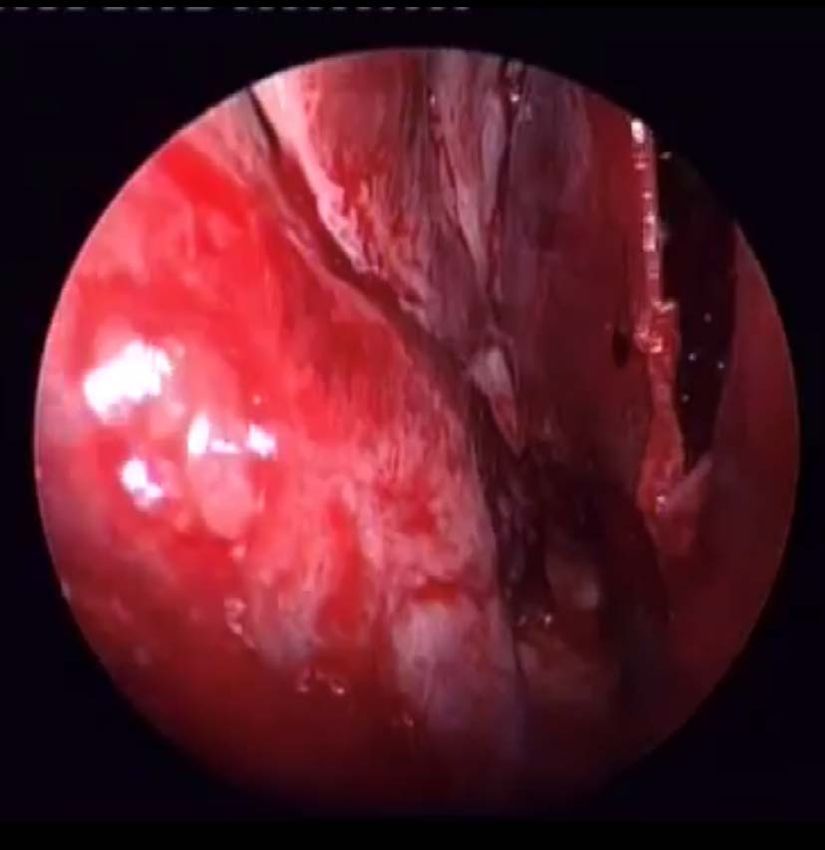
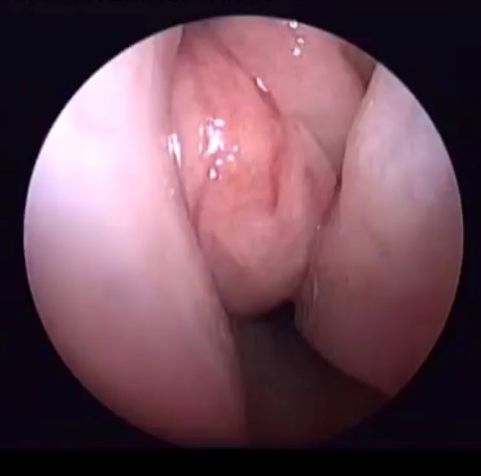
Introduction                                                                         endoscopy, a bilateral reddish-pink fleshy mass was seen arising from
                                                                                     the posterior part of nasal septum occupying the lateral wall and the
    Adenoid cystic carcinomas (ACC) are malignant tumors that most                   floor of the nasal cavity (Figure 1). Osteomeatal units were normal
commonly arise from major and minor salivary glands and accounts                     on both sides. Eye examination and neck examination were non-
for approximately 3-5 % of all the head and neck carcinomas [1]. In                  significant.
the nasal cavity, it is exceedingly occasional but if it arises, the most
common part of origin is the lateral wall of the nasal cavity. Adenoid                    A provisional diagnosis of a tumour of vascular origin was made
cystic cancers are slow growing with a high propensity of local                      therefore biopsy was not attempted in the outpatient department. For
recurrence through perineural and perivascular invasion along with                   radiological evaluation, contrast-enhanced computed tomography
distant metastasis [2]. Histologically, it has been classified into three            scan of nose and paranasal sinus of coronal, axial and sagittal views
types: solid, cribriform and tubular. Surgery is the first line of treatment         were requested which revealed homogenous mass originating
with radiotherapy being held in reserve for positive margin cases [1].               from the posterior half of the nasal septum extending into the nasal
We are describing this case of adenoid cystic carcinoma in the nasal                 cavity bilaterally (Figures 2 and 3). Anteriorly nasal septum could
septum, with its clinical and radiological findings in consort with its              be appreciated. Bony boundaries of bilateral maxillary, sphenoid,
treatment.                                                                           ethmoid and frontal sinus along with lamina papyracea seemed to be
                                                                                     intact. Incidental finding of left concha bullosa was found. Magnetic
Case report                                                                          resonance imaging showed no intracranial extension or any other soft
                                                                                     tissue abnormality.
    A 56 years old woman presented to the otorhinolaryngology
outpatient department with the complaint of nasal blockage and                           The surgical options of endoscopic, open approaches and radiation
congestion for the last 18 months which was insidious in onset, initially            therapy were discussed with the patient and her relatives. She gave the
started on the left side of the nose and then gradually progressed to                informed consent for endonasal endoscopic excision of nasal mass fully
both the sides. She was being treated as a case of chronic sinusitis by              aware of the fact that she might need radiotherapy in case of positive
the physician and was only referred to otorhinolaryngology when she                  margins.
did not have any relief from nasal sprays, antihistamines, and frequent                  Risks and complications were explained to the patient including
course of antibiotics. She also complained of difficulty in breathing,               nasal septal perforation, recurrence, epistaxis, loss of smell sense, pain,
facial pain, and tenderness associated with a decreased sense of smell               infection, general anaesthetic risks, cerebrospinal fluid leak, vision
and recurrent episodes of epistaxis from both sides but more common                  problems, and nasal deformity. After getting the routine investigations
on the left side. There was no history of nasal trauma, nasal discharge,             and general anaesthetic fitness, the patient underwent endonasal
postnasal drip, atopy, recurrent sinusitis, vision complaints, and                   endoscopic nasal mass excision with microdebrider under general
nasal surgery. She had a past medical history of diabetes mellitus and
hypertension. No history of asthma. She was a non-smoker and doesn’t
take any alcohol.
                                                                                     *Correspondence to: Shama Shishodia, Wrexham Maelor Hospital, UK, Tel: +91
    On clinical examination, bilateral nasal airway patency was                      7982487592; E-mail: drshamashishodia@gmail.com
decreased on both sides. Oral cavity and ear examination were normal.
On anterior rhinoscopy, a firm to hard mass was visible in the posterior             Key words: malignant tumors, adenoid cystic carcinoma
part of the nasal cavity on both sides. Mucosa over the mass appeared                Received: March 06, 2020; Accepted: March 20, 2020; Published: March 23,
normal with no crusting, bleeding, or ulceration. On diagnostic nasal                2020

Otorhinolaryngol Head Neck Surg, 2020       doi: 10.15761/OHNS.1000233                                                                               Volume 5: 1-3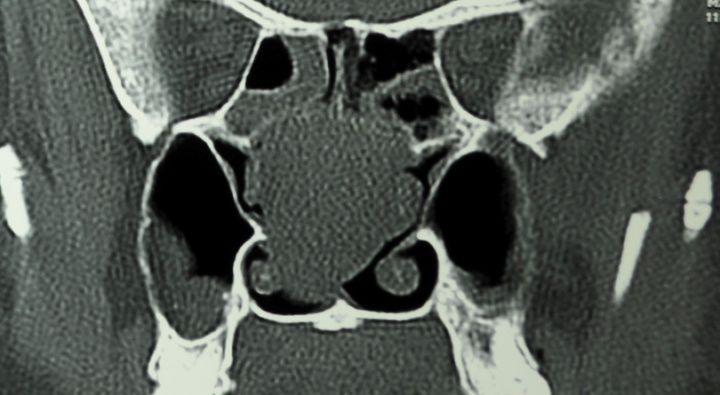
Shishodia S (2020) An unusual case of adenoid cystic carcinoma of nasal septum mimicking as chronic sinusitis

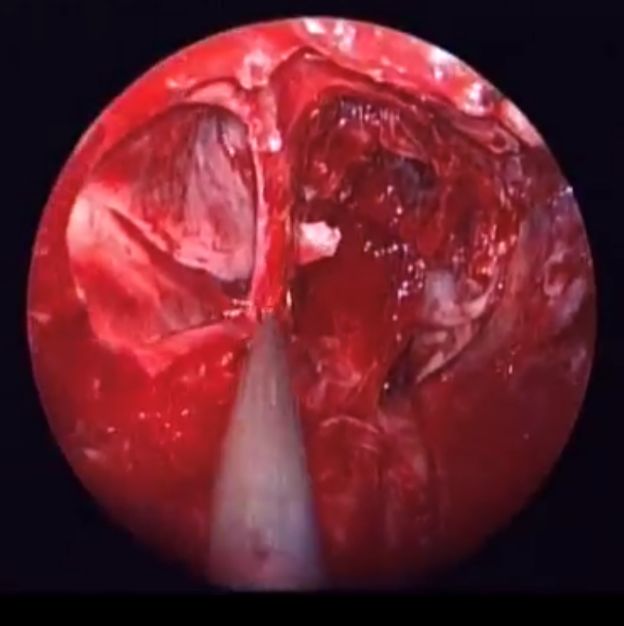
anaesthesia. Mass was removed completely leaving the perforation in
the posterior part of the nasal septum (Figures 4-6). Excised mass was
sent for histopathological examination which gave the final diagnosis
of adenoid cystic carcinoma (ACC) of cribriform pattern with no local
and distant metastasis. Excision was complete with adequate margins.
     Postoperatively she had complaints of crusting and episodes of
epistaxis which were relieved when she was prescribed with alkaline
nasal douche and constant lubrication with Vaseline jelly. Initially, we
followed up the patient monthly for 6 months with nasal endoscopy on
each visit, then given her a good recovery and no signs of recurrence,
we followed her up after every 2-3 months for another year. She has not

                                                                                                 Figure 4. Endoscopic excision of nasal septal tumour

          Figure 1. Endoscopic view of the nasal adenoid cystic carcinoma

                                                                                                      Figure 5. Posterior nasal septal perforation

              Figure 2. CT - nose and paranasal sinus (Coronal view)

              Figure 3. CT - nose and paranasal sinus (sagittal view).                                    Figure 6. Nasal septal perforation

Otorhinolaryngol Head Neck Surg, 2020         doi: 10.15761/OHNS.1000233                                                                                Volume 5: 2-3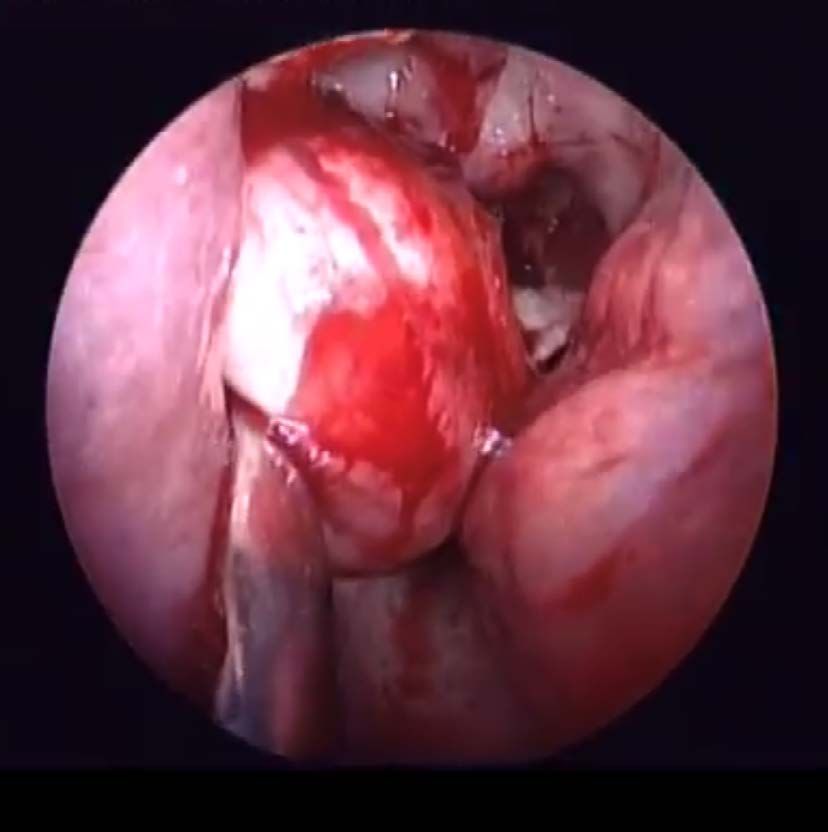
Shishodia S (2020) An unusual case of adenoid cystic carcinoma of nasal septum mimicking as chronic sinusitis

had any symptoms and is disease-free for the last 3 years. We will be             appropriate [6]. ACC is considered to be radiosensitive and a total dose
following up on the patient for 2 more years.                                     of 70 to 80 Gy could help in achieving local control [4]. Chemotherapy
                                                                                  is not a standard treatment option offered to patients with limited
Discussion                                                                        evidence showing the role of mitoxantrone or vinorelbine alone or
   Primary sinonasal tumors are rare and comprise only 3% of all                  cisplatin and anthracycline in combination [8].
head and neck cancers. They can be broadly classified into benign
                                                                                  Conclusion
and malignant tumors. Benign neoplasms mainly include inverted
papilloma, glomangiopericytoma, osteoma, and nerve sheath                              Even though Adenoid cystic tumors in the nasal septum is a rare
tumors while malignant tumors include squamous cell carcinoma,                    entity but regardless of this fact it should be considered as one of the
adenocarcinomas and adenoid cystic carcinomas [3].                                differential diagnosis of the nasal tumour. Also given its notorious
                                                                                  nature of local and distant recurrence, we recommend following up a
    ACC is of epithelial origin and has a high tendency of local
                                                                                  patient for a long time. Complete surgical excision should be the aim
recurrence and distant hematogenous metastatic spread to lungs,
                                                                                  of treatment with negative margins and in case of positive and close
bone, and liver however lymphatic spread is rare. Histologically, the
                                                                                  margins, we recommend adjuvant radiotherapy.
cribriform pattern observed in our patient is the most common type and
solid type is known for its worst prognosis. Prognostic factors include           References
tumor site, age, clinical stage, perineural invasion, histological grade,         1. Amit M, Binenbaum Y, Sharma K, Naomi R, Ilana R, et al. (2013) Adenoid cystic
positive surgical margins, and nodal involvement. It has been reported               carcinoma of the nasal cavity and paranasal sinuses: A meta-analysis. J Neurol Surg B
that ACC originating from the nose and maxillary sinus are associated                Skull Base 74: 118-125. [Crossref]
with poor prognosis [4]. For low-grade tumors, five-year survival rates           2. Gill KS, Frattali MA (2015) An Unusual Presentation of Adenoid Cystic Carcinoma. J
of 85 % have been seen while 10-year survival rates irrespective of the              Oral Maxillofac Pathol 18: 286-290. [Crossref]
grades of 50 % have been reported [5].                                            3. Szewczyk-Bieda MJ, White RD, Budak MJ, Ananthakrishnan G, Brunton JN, et al.
                                                                                     (2014) A whiff of trouble: Tumours of the nasal cavity and their mimics. Clin Radiol
     ACC is more common in females of age fifty to eighty year’s                     69: 519-528. [Crossref]
corresponding to the age and sex of our patient [6]. The most common
                                                                                  4. Ko YH, Lee MA, Hong YS, Lee SK, Jung CK, et al. (2007) Prognostic ractors affecting
symptoms include nasal obstruction, nasal congestion, facial pains,                  the clinical outcome of adenoid cystic carcinoma of the head and neck. Jpn J Clin
difficulty in breathing, epistaxis whereas less common symptoms include              Oncol 37: 805-811. [Crossref]
exophthalmos, visual disturbances, facial paralysis and intellectual              5. Priya S, Chaukar DA, Cruz AK (2011) Adenoid Cystic Carcinoma of Nasal Septum:
deficit [7]. Anosmia or dysosmia is usually a late presentation but an               Report of Two Cases. Int J Head Neck Surg 2:151-153.
indirect sign of tumour invasion of olfactory nerve fibers [6]. Patients          6. Akiyama K, Karaki M, Hosikawa H, Mori N (2013) A massive adenoid cystic
usually dismiss these symptoms as they are common in other chronic                   carcinoma of nasal septum progressed into the skull base. Auris Nasus Larynx 40: 239-
conditions like chronic rhinitis, sinusitis and seek medical help at a very          242.
late stage, consequently leading to delayed management.                           7. Tummidi S, Kothari K, Patil R, Singhal SS, Shah V (2018) Sinonasal adenoid cystic
                                                                                     carcinoma-role of on-site FNAC: A case report. BMC Ear Nose Throat Disord doi:
     The surgical excision is the first modality of treatment for nasal              18: 6. [Crossref]
septal malignancies. For anterior nasal septal tumors, lateral rhinotomy
                                                                                  8. Ouyang DQ, Liang L, Zheng G, Ke Z, Weng G, et al. (2017) Risk factors and prognosis
is the preferred surgical approach whereas, for posterior nasal tumors,              for salivary gland adenoid cystic carcinoma in southern china. Medicine (Baltimore)
sublabial incision with Denkers’s approach is considered to be more                  96: e5964. [Crossref]

Copyright: ©2020 Shishodia S. This is an open-access article distributed under the terms of the Creative Commons Attribution License, which permits unrestricted
use, distribution, and reproduction in any medium, provided the original author and source are credited.

Otorhinolaryngol Head Neck Surg, 2020     doi: 10.15761/OHNS.1000233                                                                                    Volume 5: 3-3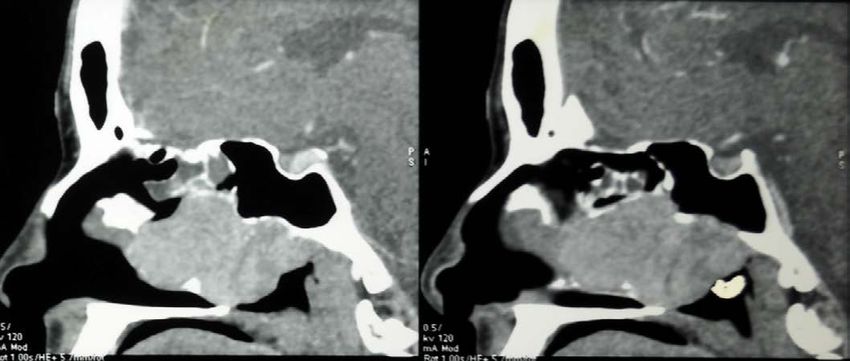
You can also read


