AUCKLAND, NEW ZEALAND'S HOSTING OF THE 36TH AMERICA'S CUP
←
→
Page content transcription
If your browser does not render page correctly, please read the page content below
AUCKLAND,
NEW ZEALAND’S
HOSTING OF THE
36TH AMERICA’S CUP

          1
AUC K L A N D, N E W Z E A L AND’S H OST I NG OF T H E 3 6T H A MERIC A’S CU P

                                                                    2
CONTENTS
INTRO. ................................................................................................................................. 4
EXECUTIVE SUMMARY . ................................................................................................. . 5
VISION AND PRINCIPLES. .............................................................................................. 8
THE 36TH AMERICA’S CUP OVERVIEW. . ................................................................... 10
    COVID-19....................................................................................................................... 10
    The Lead Up to AC36. .................................................................................................. . 11
    The Challengers. ........................................................................................................... 12
    Race Courses................................................................................................................. 13
    The Race Results. .......................................................................................................... 14
    Sharing Auckland and New Zealand’s story. . ............................................................ 15
      Broadcast . . ................................................................................................................. 15
      Dressing the City........................................................................................................ 16

EVENT DELIVERY............................................................................................................ 17
    Building the stage – event infrastructure.................................................................. 17
    Superyachts. .................................................................................................................. 18
    America’s Cup Village .................................................................................................. 19
    City Operations. ........................................................................................................... 20
      Event Operations....................................................................................................... 20
      City Activations........................................................................................................... 21
    Volunteers...................................................................................................................... 23
    Transport Services........................................................................................................ 24

ECONOMIC IMPACT. ..................................................................................................... 25
    Local and Central Government Investment. ............................................................ 25
    Cost Benefit Analysis. .................................................................................................. 25

CULTURAL IMPACT......................................................................................................... 27
ENVIRONMENTAL AND SOCIAL IMPACT.................................................................. 29
    Operational Sustainability. ......................................................................................... 30

LEVERAGE AND LEGACY.............................................................................................. 32

                                                                    3
AUC K L A N D, N E W Z E A L AND’S H OST I NG OF T H E 3 6T H A MERIC A’S CU P

   INTRO
   The America’s Cup is the oldest trophy in                            Emergency services support was provided
   international sport. It attracts some of the                         by Fire and Emergency New Zealand (FENZ)
   best sailors in the world and is the pinnacle                        and St John.
   of innovation, technology, and skill in the sport
                                                                        Along with the Auckland Council entity,
   of sailing.
                                                                        Council-controlled organisations (CCOs)
   Following Emirates Team New Zealand’s                                included Auckland Tourism, Events and
   successful challenge for the 35th America’s                          Economic Development (from 1 December
   Cup (AC35) in Bermuda in 2017, the 36th                              2020, part of Auckland Unlimited), Auckland
   America’s Cup (AC36) was scheduled to                                Transport (including AT Metro and
   take place in Tāmaki Makaurau Auckland in                            Harbourmaster), Eke Panuku Development
   Aotearoa New Zealand.                                                Auckland, and Ports of Auckland were all
                                                                        involved in supporting ACE with the delivery
   Over a four-year period, a mammoth multi-
                                                                        of AC36.
   agency effort was required to deliver AC36.
   Representatives from
   across the Crown,
   Auckland Council, and
   mana whenua worked
   alongside America’s
   Cup Event Ltd (ACE),
   defender Emirates
   Team New Zealand
   (ETNZ) and the
   Challenger of Record
   (COR) Luna Rossa
   Prada Pirelli.

   Crown agencies
   involved included the
   Ministry of Business,
   Innovation and
   Employment (MBIE),
   New Zealand Police,
   the Department of
   the Prime Minister
   and Cabinet (DPMC), Maritime New Zealand,
                                                                        AC36 comprised three regattas with 21 days
   Tourism New Zealand, Civil Aviation Authority
                                                                        of racing in a three-month event period and
   (CAA), Ministry of Transport, Ministry of
                                                                        used a variety of on-water courses around
   Foreign Affairs and Trade, Ministry for Primary
                                                                        the Waitematā Harbour.
   Industries (MPI), New Zealand Defence Force,
   Customs, Department of Conservation (DOC)                            Despite the impacts of the COVID-19 global
   and Ministry of Health.                                              pandemic and the uncertainty of shifting Alert

                                                                    4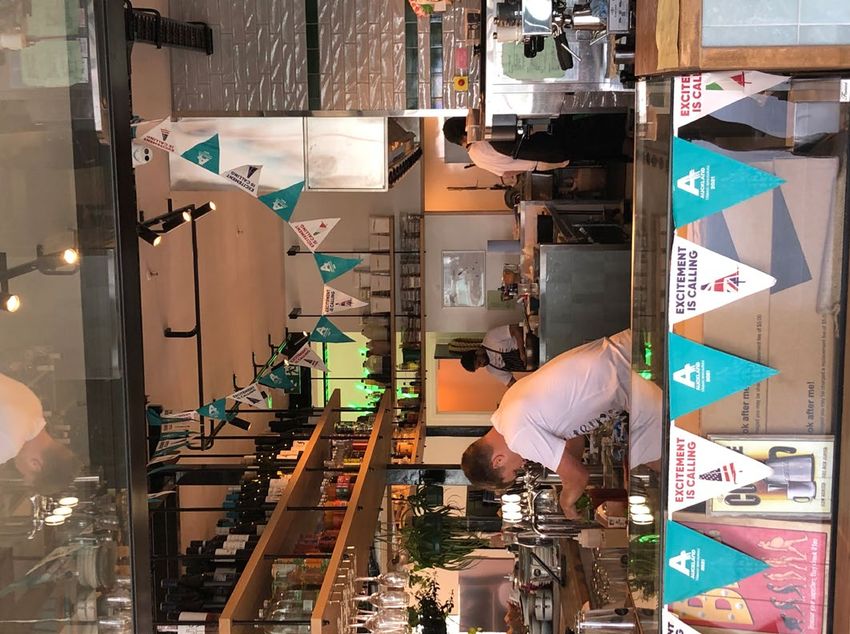
Levels – including two Alert Level 3 lockdowns       While hosting the America’s Cup has delivered
in Auckland (spanning nine days total) during        fewer economic benefits than originally
the actual event period – AC36 took place            forecast, the event has still left its mark on
between December 2020 and March 2021. It             Auckland and New Zealand for years to come.
was the only major global sporting event at          This includes a reinvigorated waterfront with
the time able to be delivered with spectators.       access to new public spaces, new sheltered
                                                     water space in Jellicoe Harbour to match the
Record numbers of people tuned in from
                                                     iconic Viaduct Harbour, additional superyacht
around the world to watch the gravity-
                                                     infrastructure, enhanced event spaces, public
defying AC75s fly across the Hauraki Gulf,
                                                     artworks, new events and festivals, new
and New Zealanders came out in the tens of
                                                     environmental initiatives, increased global
thousands to show their support for not only
                                                     profile and strong reinforcement of Auckland
ETNZ but the visiting syndicates.
                                                     and New Zealand’s capabilities as a world
                                                     class major events host.

EXECUTIVE SUMMARY
A range of post event reporting has been             While ultimately Tāmaki Makaurau Auckland
undertaken by the agencies involved with             and Aotearoa New Zealand were fortunate
AC36 providing a fulsome overview of                 to be able to stage a safe and successful
what was achieved as well as a summary               event during a global pandemic, it became
of ‘lessons learned’ to assist future events.        clear early on that the event would be
This report provides an overview of the              unlikely to return the investment made. Fewer
entire programme of work, representing the           international challengers than originally
combined efforts of America’s Cup Event              forecast and the subsequent impacts from
Ltd (ACE), the Crown and Council agencies            COVID-19, including international border
(Hosts).                                             restrictions, has contributed to the event
                                                     being not able to realise the expected return.
Fresh Information Limited (Fresh Info) was
contracted by MBIE, on behalf of Crown,
and Auckland Council to evaluate the
costs and benefits to Auckland and New
Zealand of hosting AC36. This includes a
cost-benefit analysis (CBA) of the economic,
social, cultural, and environmental impacts
generated by the event.

                                                 5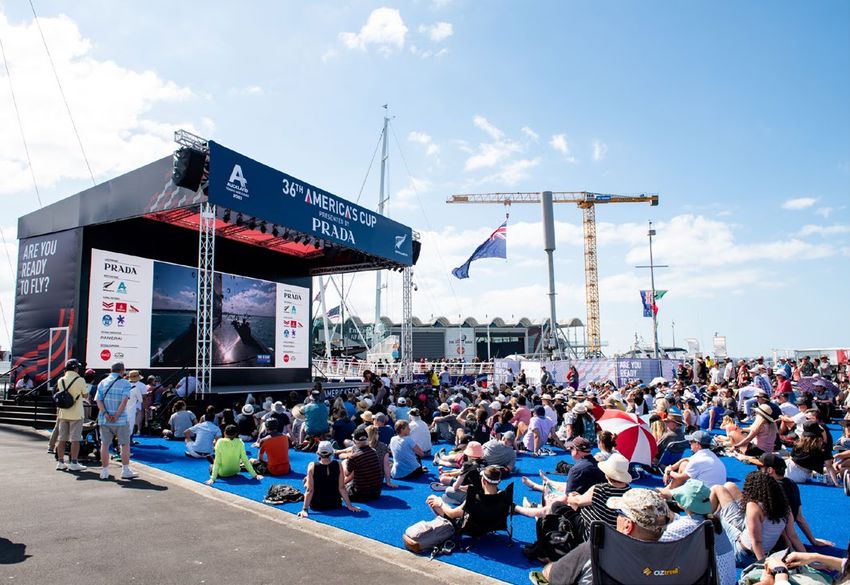
AUC K L A N D, N E W Z E A L AND’S H OST I NG OF T H E 3 6T H A MERIC A’S CU P

   BY THE NUMBERS

                 279,280
                 members of                                                      The costs-benefit analysis
                                                                                 (CBA) for Auckland has

                 the public                                                      identified overall costs of
                                                                                 $629.4m against benefits
                 attended AC36 in person at                                      of $537.8m. This is a net
                 least once, at the Cup Village,                                 cost of $91.6m and a
                 watching a race live from a
                 boat (charter or private), or
                                                                                 benefit-cost
                 from a land-based viewing area.1                                ratio of 0.85.
                                                                                 In other words, for every
                                                                                 dollar put in Auckland
   For Auckland, AC36 attracted                                                  got 85 cents back. When

   38,754 visitors,
                                                                                 considering financial
                                                                                 returns only, Auckland got
                                                                                 72 cents back for every
   generating                                                                    dollar put in.4

   377,765
   visitor nights,                                                               For New Zealand the
                                                                                 CBA has identified costs
   with an average stay of 9.8 nights.2                                          of $744.2m and benefits
                                                                                 of $588.1m. This is a net
                                                                                 cost of $156.1m and a
   AC36 created an additional
                                                                                 benefit-cost
   $284.6 million                                                                ratio of 0.79
   of expenditure
                                                                                 for both financial and
                                                                                 non-financial impacts.
                                                                                 When considering financial
   in Auckland through the costs of event
                                                                                 returns only, New Zealand
   operations (incl ACE, COR, govt),
   purchases of tourism goods and services,                                      got 48    cents back for
   and other goods and services.3                                                every dollar put in.5

                                                                    6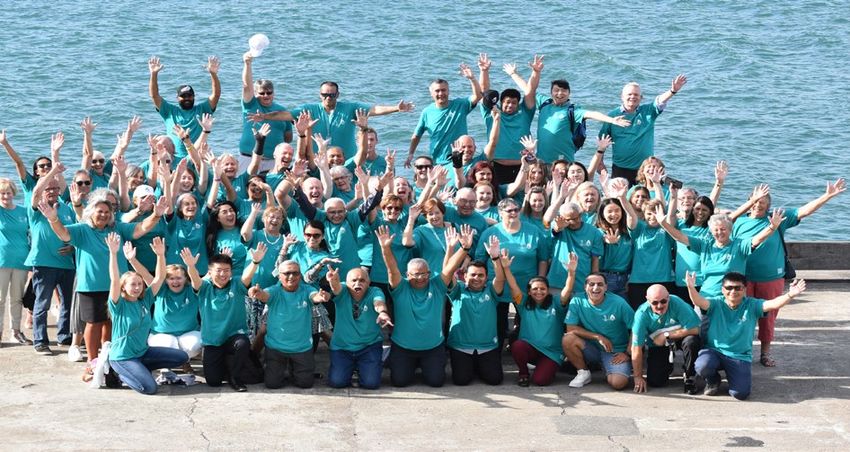
The most watched America’s Cup with
                                           Total $348.4
a dedicated                                million spent
audience of                                by Crown ($133.2m) and
                                           Council ($215.2m) on AC36

68.2 million
(incl live, re-runs and highlights
                                           related capital and operating
                                           expenditure over four years.6

on TV and online).
                     7

26
new Coastguard boats
                                           14,000 students from
                                           150 schools across

6
                                           New Zealand 10 involved
                                           in Yachting NZ’s

new Sea Cleaners boats11 helping to
                                           Kōkōkaha
make New Zealand’s coastal waters          education
safer and cleaner.                         programme.
23 supporting events and activations
were held throughout Auckland as
part of Summernova Festival Series,        1029
attracting more than
                                           volunteers
70,000
unique attendees, separate from
                                           assisted at the event: 644 in
                                           the Cup Village, 127 on water 8
                                           and 258 as part of Auckland’s
the America’s Cup events.11                City Skipper programme.9

                                       7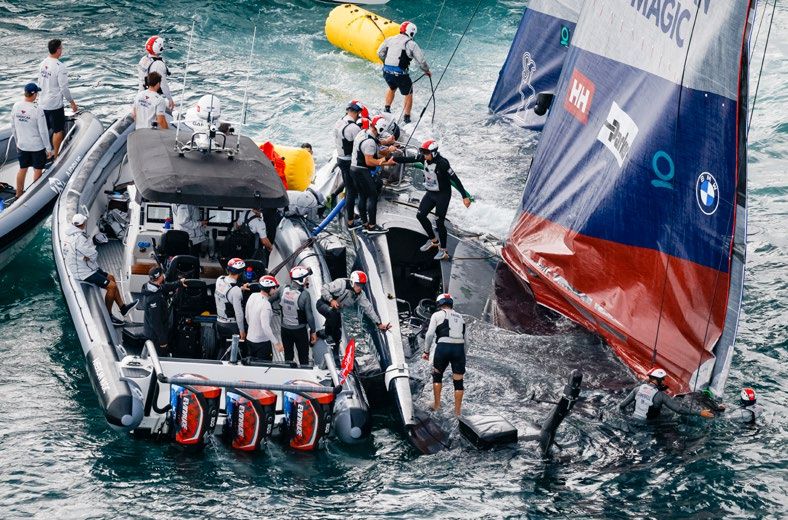
AUC K L A N D, N E W Z E A L AND’S H OST I NG OF T H E 3 6T H A MERIC A’S CU P

   VISION AND
   PRINCIPLES
   A wide range of stakeholders and
   partners from multiple entities
   were involved in the planning and
   delivery of AC36. Therefore, it was
   important to have a shared vision,
   with principles and goals that all
   parties could work towards and
   align projects to.
   The overarching mission for the event was
   to provide an inclusive, sustainable and
   welcoming world-class event. The place
   was to be transformed; economic wellbeing
   generated through connection, innovation
   and trade; everyone given an opportunity
   to participate on
   land, on water, or
   via the live stream
   digital or free-to-
   air TV broadcast;
   and the event
   would provide an
   opportunity to tell
   the stories of both
   Tāmaki Makaurau
   Auckland and
   Aotearoa New
   Zealand.

   Collectively, this
   was summed up
   in a vision that
   aimed to ignite
   the passion of all
   New Zealanders.

                                                                    8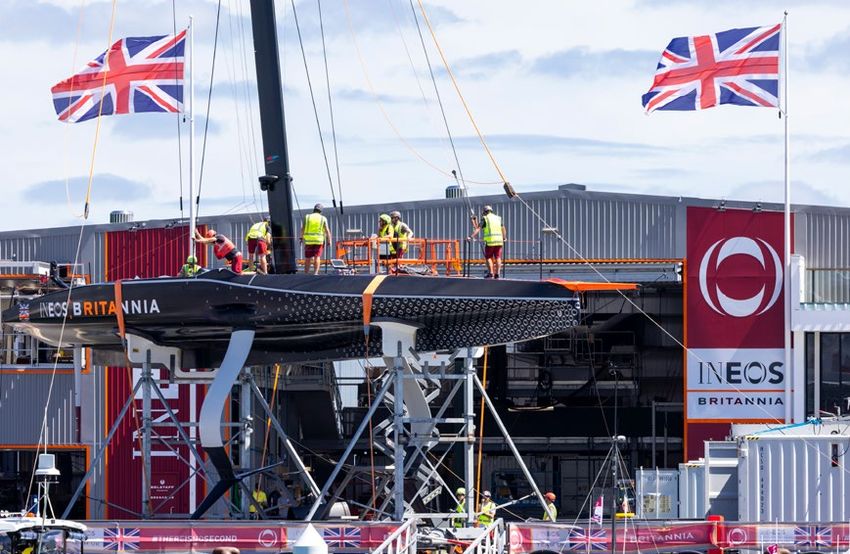
VISION AND MISSION FOR
           THE 36TH AMERICA’S CUP
    VISION: Ignite the passion – celebrate our voyages

                                   WHAKATAUKĪ
                                  He Waka Eke Noa
                           Kia Eke Panuku, Kia Eke Tangaroa
                             We’re in this waka together
                     Through all our efforts, we will succeed

INFRASTRUCTURE MISSION:                EVENT MISSION:
Creating a stage for the               To provide Auckland and New Zealand with
America’s Cup and a waterfront         an inclusive, sustainable and welcoming
destination that Kiwis and             world-class international sporting event that
visitors love.                         delivers increased promotional and economic
                                       benefits to the Hosts, Sponsors and Teams.

                                    PRINCIPLES
Manaakitanga                  Kaitiakitanga                Kotahitanga
A Warm Welcome                Guardianship                 Collaboration
We share the abundance        Guided by mana whenua,       We will work together in
and spirit of generosity      we will actively care for    unity
with our visitors             our place, our environment
                              and our people

Place                       o accelerate the sustainable transformation of our
                           T
                           communities, our water and our whenua
Economic Wellbeing         Creating shared benefit through connection, innovation
                            and trade
Participation               Every New Zealander has an opportunity to participate
                           in and celebrate the America’s Cup
Storytelling                 The rich cultural and voyaging stories of Tāmaki
                           Makaurau and Aotearoa are shared and valued
                                          9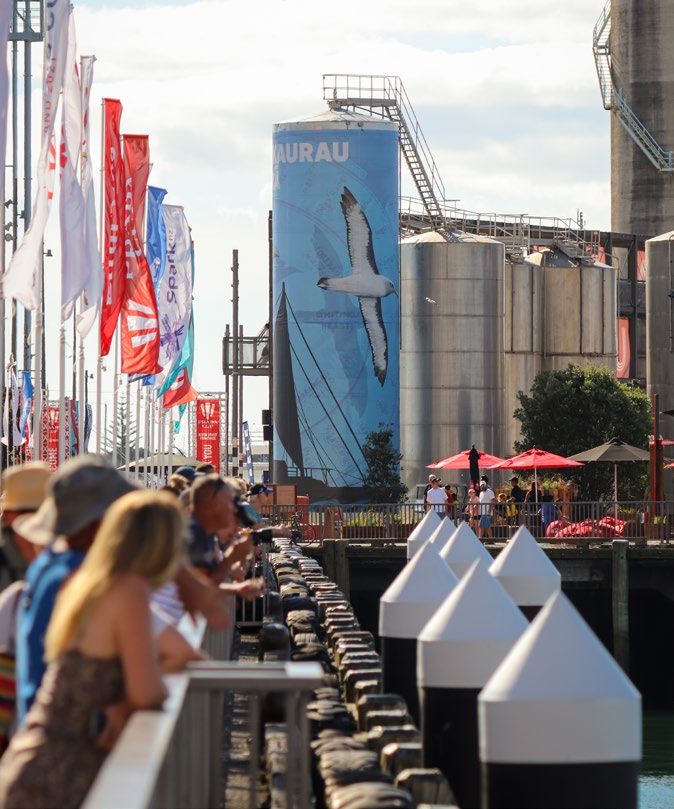
AUC K L A N D, N E W Z E A L AND’S H OST I NG OF T H E 3 6T H A MERIC A’S CU P

   THE 36TH AMERICA’S CUP
   OVERVIEW
   COVID-19                                                              infrastructure projects, delayed boat builds,
   The first case of Coronavirus disease                                 halted the events and hospitality industries
   2019 (COVID-19), also known as the                                    and drove large numbers of the population
   coronavirus, was identified in Wuhan,                                 into working remotely.
   China in December 2019.
                                                                         Between May 2020 and the end of AC36,
   Aotearoa New Zealand reported its first                               most of the country remained at Level 1
   case of COVID-19 on 28 February 2020. On                              with Level 2 and 3 introduced in response to
   14 March 2020, the Government announced                               occasional cases in Auckland.
   that anyone entering the country would
                                                                         COVID-19 had a material impact on AC36 in
   need to isolate for 14 days. Less than a week
                                                                         terms of planning, attendance and delivery.
   later, on 19 March,
                                                                                                The aspirations and
   the Government
                                                                                                expectations of all
   closed its borders to
                                                                                                involved in the hosting
   all but returning New
                                                                                                of AC36, from teams
   Zealand citizens and
                                                                                                to ACE, to Hosts and
   permanent residents.
                                                                                                mana whenua, had to
   On 21 March 2020                                                                             be recalibrated.
   the Government
                                                                                                The World Series
   introduced a four-
                                                                                                events due to take
   tiered Alert Level
                                                                                                place in Cagliari and
   system to help
                                                                                                Portsmouth were
   manage and minimise
                                                                                                cancelled, and the
   the risk of COVID-19.
                                                                                                financial woes of the
   The system was
                                                                                                fourth challenger,
   designed to help
                                                                                                Stars & Stripes, were
   people understand
                                                                                                further compounded
   the Government’s
                                                                                                by the effects of
   plan for managing
                                                                                                COVID-19, leading to
   the pandemic and
                                                                                                its withdrawal from
   what that meant for
                                                                                                AC36.
   how people could
   live their lives. Alert                                                                      The border restrictions
   Levels can be applied to a town, city, region                         remained in place in New Zealand to keep
   or the whole country and range from minor                             COVID-19 out of the community, impacting
   restrictions to ‘lockdown’ style measures.                            the opportunity of hosting international
                                                                         visitors and the subsequent economic
   The initial Alert Level 4 lockdown in New
                                                                         returns they would have brought with
   Zealand, in March 2020 shut borders
                                                                         them. Superyachts and their crews were
   and businesses, stopped work on key
                                                                         only allowed into the country under strict

                                                                    10
conditions and with a commitment to
undertake valuable refit work while here.
Cruise ships were stopped completely.
Visits by international media were
severely impacted, with only the key
international broadcast personnel
granted border exceptions.
Auxiliary events such as the Youth
America’s Cup and a regatta for the
classic America’s Cup J Class fleet were
cancelled.
A special multi-agency COVID-19 proceeded, with international participants,
expert working group was established to spectator engagement and quality
support ACE in developing robust COVID-19 broadcast coverage at a time when much
preparedness and management plans to of the world was still in highly restricted
support the operational delivery of the event lockdowns. It demonstrated to the world New
within the different Alert Levels and to ensure Zealand’s ability to safely host an event of
ACE was able to get an event permit. this scale, during a global pandemic.
While good progress was made in New
Zealand to keep COVID-19 under control, The Lead Up To AC36
there were still further shifts in Alert Levels From the moment ETNZ crossed the finish line
and lockdowns experienced in Tāmaki of AC35 in Bermuda in 2017, planning for a
Makaurau Auckland during the event successful defence in New Zealand began.
period which had a continuous impact on
The AC36 Protocol was released by ETNZ
AC36. All activations in the Cup Village and
and COR Luna Rossa Prada Pirelli less than
Summernova events in the city were put on
three months after the win in Bermuda. The
hold at Alert Level 2 and 3 and volunteers
Protocol saw the return to monohulls and the
stood down. Racing at Alert Level 2 could
concept of the flying AC75s and established
only take place on courses farthest away
the rules around hosting a multi-challenger
from shore that minimised the risk of crowds
event.
gathering to watch the racing.
ETNZ established America’s Cup Event
Operationally, COVID-19 QR codes were
Ltd (ACE), to undertake the event delivery
displayed throughout the Cup Village and
responsibilities for the AC36 events and
at the various Summernova events sites,
work alongside COR for its event delivery
along with hand sanitiser stations. Security
responsibilities in Auckland.
and volunteers were briefed to encourage
members of the public to scan in as they COR was to oversee organising the
entered the Cup Village and other preliminary America’s Cup World Series
relevant sites. regattas in Europe (which ended up being
cancelled due to COVID-19), the America’s
It is easy to look at this long list of impacts
Cup World Series and Christmas Race in
and see the challenges faced and the
Auckland and the Prada Cup Challenger
uncertainties that COVID-19 presented. It
Selection Series. The AC36 Match would be
is important to remember that the event
overseen by the defender ETNZ.
11AUC K L A N D, N E W Z E A L AND’S H OST I NG OF T H E 3 6T H A MERIC A’S CU P
In March 2018, a Host City Appointment
Agreement (HCAA) was signed between
ACE, ETNZ, MBIE (for the Crown) and
Auckland Council confirming Tāmaki
Makaurau Auckland as the location of
AC36. This was followed with a Host
Venue Agreement (HVA) signed in April
2019 which set out the rights and delivery
obligations of each of the parties in
relation to the event.
Auckland last hosted an America’s Cup
in 2003. At the time the Cup had served
as a catalyst for the transformation
of the Viaduct Harbour and Wynyard
Quarter. With the sport’s evolution the event, both on land and amidst a busy
and the increased requirements to host working harbour. The Council group also had
a global major event of this scale, further obligations to develop a programme to bring
infrastructure was required to support AC36. other parts of Auckland to life with events
Auckland Council and the Crown agreed and city dressing to maximise the benefits
to contribute to the costs of hosting AC36 of being the host city and promote what
which included developing the supporting was taking place to residents and potential
infrastructure. The Wynyard Edge Alliance visitors.
(WEA) was established to design and
construct the infrastructure in and around The Challengers
the Wynyard Quarter. While early expressions of interest to
compete in AC36 were high, with initial
Throughout the WEA construction phase, projections based on six to 10 challengers
planning for the event delivery was also participating, only three challengers – Luna
underway. ACE had responsibility for Rossa Prada Pirelli, INEOS Team UK and
delivering the on-water event, Cup Village American Magic – made it to the starting
and international broadcast. The Hosts line to compete for the right to take on the
(Crown and Council) had responsibilities to defender, ETNZ.
ensure the city could still function around
Most of the teams and families of the three
challengers started arriving in Auckland
from October 2020 after being granted
the relevant border exceptions required
in a COVID-19 environment, along with
completing a two week stay in managed
isolation.
The syndicates constructed their team
headquarters on the new bases created
through the WEA build on Auckland’s
waterfront and launched the second
generation AC75s.
12All the syndicates expressed their
gratitude at being able to be here
for the event and congratulated
Auckland and New Zealand for the
efforts that went into hosting AC36
amid the global pandemic.
“We would particularly like to
offer our heartfelt thanks to
the people of New Zealand
who have welcomed us
to their beautiful country
and put on an event of
unparalleled professionalism
in the midst of a global ACE designed five race courses (A-E)
for AC36 in the Waitematā Harbour to
pandemic. We have memories accommodate a range of wind directions
that will stay with us forever.” and sea conditions depending on the day.
– Sir Jim Ratcliffe, INEOS Team UK. The Regatta Director determined which
course was to be used on the day of racing,
Race Courses following approval from the Harbourmaster.
AC36 began on the water in December 2020, Hybrid courses were sometimes used to
culminating in the thrilling final Match on enable racing within the day’s wind and sea
March 17, 2021 between ETNZ and Luna Rossa conditions.
Prada Pirelli. Courses B and C were considered to provide
AC36 comprised three regattas: The the best vantage spots for land-based
America’s Cup World Series Auckland (ACWS) spectators and were generally favoured
and Christmas Race, 17 – 20 December; The when Auckland was in Alert Level 1. At
Prada Cup, 15 January – 21 February 2021; Alert Level 2, Courses A and E were used
and The 36th America’s Cup Match, 10 – 17 to minimise the risk of crowds gathering
March 2021. to watch the racing. Transit Lanes were
established for courses B, C and D due to the
proximity to the coastline and the restricted
ability for vessels to navigate past these
courses when racing was on.
Racing took place between 3pm and 6pm
during the ACWS and Prada Cup round
robin, then 4pm and 6pm during the Prada
Cup finals and the Match.
Managing the spectator fleet took a team
effort. ACE had responsibility for all on-
water event delivery and management
including establishing the race boundaries,
13AUC K L A N D, N E W Z E A L AND’S H OST I NG OF T H E 3 6T H A MERIC A’S CU P
communicating and managing spectator The Race Results
boats, controlling the race corridors and The America’s Cup World Series Auckland
ensuring safety on water. The Harbourmaster, and Christmas Race
New Zealand Police, Coastguard, St John
The America’s Cup World Series Auckland
and Maritime New Zealand had to provide
(ACWS) was a double round robin match
significantly more support to ACE than would
race competition between ETNZ and the
be normal to ensure the event was safely
three challengers. The event was held over
delivered.
three days (17 – 19 December) with each
team racing twice a day. The winner of each
O N WAT E R match received one point. ETNZ won the
ACWS after recording five wins and one loss.
• A total of around 10,500 The Christmas Race was scheduled to be a
spectator boats one-day event on 20 December with a semi-
final round, followed by a placing round. The
watched the racing.12
race was eventually abandoned due to lack
• 35,000 people used of wind.
the Live GPS viewing The Prada Cup Challenger Selection Series
platform introduced following
The Prada Cup saw the three challengers
the December regattas so compete against each other for the right
boats could see where they to go up against ETNZ in the America’s Cup
were in relation to the course Match. The first stage of the Prada Cup
boundaries.13 consisted of four round robins of three
races each.
• 160 people trained
through the Royal New Zealand
Yacht Squadron’s Course Marshal
Training Programme.14
• 21
course marshal
vessels were used during
the event, along with additional
Harbourmaster and Police boats
deployed on race days to ensure
the event was safely delivered.15
• 5 knot speed restrictions were
put in place to safely manage The challenger with the highest score at
the spectator fleet and to the end of the round robins qualified for the
minimise potential Prada Cup Final, while the remaining two
harm to marine life. teams raced again in a seven-race semi-
final (first to win four races) to determine who
would go up against the winner of the round
robins, INEOS Team UK.
14American Magic never fully recovered after
a spectacular capsize which left a large
hole in Patriot causing it to nearly sink during
the round robin. Despite making it to the
semi-finals, American Magic went on to lose
to Luna Rossa. Then Luna Rossa ended up
beating INEOS Team UK in the finals of the
Challenger Series to claim the Prada Cup
(first to win seven out of the 13 races) and the
right to take on ETNZ in the Match.
In the years leading up to, and during AC36,
The 36th America’s Cup Match
a multi-agency effort saw hundreds of stories
The Match was a 13-race series (first to win shared around the world and a coordinated
seven races) between the defender, ETNZ approach to how key information relating to
and challenger Luna Rossa. Racing was the event was communicated and promoted.
scheduled to start on 6 March 2021 but was
While the border restrictions in place, due to
delayed due to Auckland being in COVID-19
COVID-19, severely impacted the opportunity
Alert Level 3 lockdown. Racing was able
to host international media during the event,
to resume on 10 March under Alert Level 2
Auckland and New Zealand stories still
conditions which meant no public viewing,
featured in the likes of the New York Times,
and activations were stood down, along with
BBC, CNN, The Guardian, The Times, and
volunteers. Auckland shifted to Alert Level 1
The Telegraph, as well as the additional
in time for the planned weekend of racing
coverage included in the broadcast shared
on 13 March which continued until 17 March,
by 55 major networks.16
with ETNZ winning seven to three to retain the
America’s Cup. Along with sports reporting, coverage
included acclaim for New Zealand’s ability to
Sharing Auckland and New host AC36 in a relatively COVID-free country.
Zealand’s story World-leading innovation and technology
An event on the scale of AC36 presents was also highlighted, as were examples
opportunities beyond the sporting spectacle of sustainability initiatives to support the
and is a platform to share what makes Hauraki Gulf. Coverage also noted how
Auckland and New Zealand unique with a the country embraced Māori culture and
global audience. ingrained the principles of manaakitanga,
kaitiakitanga and kotahitanga throughout its
hosting of a safe and successful event.
Broadcast
ACE delivered high-quality broadcast
coverage which included the use of world-
leading aerial broadcast technology and
innovation, and Virtual Eye graphics to
showcase the sport’s best sailors competing
on arguably the world’s most attractive
natural backdrop. The broadcast operation
was complemented by talent from the world
of sailing to anchor a series of live studio
15AUC K L A N D, N E W Z E A L AND’S H OST I NG OF T H E 3 6T H A MERIC A’S CU P
broadcasts and highlights packages for
distribution worldwide.
Wherever possible, the AC36 racing was
shown free-to-air on television and via
social media to make AC36 the most
accessible and watched America’s Cup
of all time.
The record numbers of people who
tuned in to watch the AC75s race saw
stunning images of Auckland, lifting the
city’s profile as a destination to visit, host
international events and do business.
Dressing the City
and other branding applications in the Cup
Adding to the vibrancy throughout AC36
Village and around the city showcased a
and to help enliven the event experience
mix of the imagery of the boats and utilised
for spectators, visitors and residents, large
Auckland’s own unique creative identity
parts of the Auckland region were dressed in
developed specially for 2021.
branding relating to the Cup and Auckland.
City dressing (e.g street flags and banners) Auckland Unlimited led the development of
the city and business dressing programme
which included street flags and banners,
venue branding, public artworks and assets
like bunting and decals for businesses
and the community to use to show their
support without breaching the Major
Events Management Act 2007 (MEMA)
requirements. This work also included
extensive creative development, including
a host city brand expression and creative
concept designed in partnership with
mana whenua of a digital tomokanga and
supporting Māori motifs.
Highlights
• A dedicated audience of 68.2 million
watched the event live, delayed or as
highlights on TV or online.18
• Nearly 2.7m people in NZ watched the
America’s Cup series on broadcast TV.17
• 11,480 media stories and 119,480 mentions
of the Americas Cup in online news
globally.18
• AC36 social media audience has grown to
161m+ followers from around the world. • The street flags were so popular with the
This has tripled from the last America’s public that the majority were able to be
Cup in Bermuda.19 gifted to the fans who had requested
• 34m viewing sessions from 6m unique them at the event’s conclusion.
‘viewers’ on America’s Cup YouTube
channels, equating to 7.2m hours of
watching America’s Cup footage.20
EVENT DELIVERY
The 36th America’s Cup was a collaborative • The flow on effect of the course location
work programme for the Hosts between and race timing had implications on-land
Crown, Auckland Council and mana whenua and on water across many services – e.g.
to support event deliverer, ACE. public transport, emergency services.
AC36 was declared a Major Event under the • It was impossible to guarantee start
Major Events Management Act 2007 (MEMA) times, locations or if the event would go
and a ‘Major Maritime Event’ was declared ahead on any given day to volunteers,
under the Maritime Transport Act 1994. An Air security providers and other partners (e.g.
Space Licence was granted by CAA giving catering, activations).
ACE authority over relevant airspace areas • It was unknown how many people would
and restricting aircraft, including drones come to the event, where or how they
within the designated areas. would watch it (on-land, on-water, online,
AC36 was not just another ‘major’ event; it television etc).
was seen as a once in a decade event for • Racing might start and then get
Tāmaki Makaurau Auckland requiring a full abandoned due to weather conditions or
Council-wide collaborative effort to deliver. unforeseen circumstances (e.g. American
Magic capsize).
Unlike a ticketed event at a contained venue
with gates and known crowd attendance, • Uncertainty about when the finals would
AC36 was full of variables which created be held or on what day an event winner is
many challenges for delivery planning. determined.
These unknown quantities included • Awareness that changes to COVID-19
examples such as: Alert Levels could occur at any time.
• Ensuring Auckland could still function with
a major event taking place in the middle Building the stage – event
of a working harbour and bustling city. infrastructure
Delivering AC36 required extensive off-water
• The event venue was on-land, on water
and on-water infrastructure to support the
and in the air.
teams, broadcast and media operations
• Race days, start times and which and spectators.
course used could not be confirmed until
the day.
17AUC K L A N D, N E W Z E A L AND’S H OST I NG OF T H E 3 6T H A MERIC A’S CU P
Wynyard Edge Alliance
Auckland Council and the Crown agreed to
share the costs to develop the supporting
infrastructure required, establishing the
Wynyard Edge Alliance (WEA) to create the
stage for the America’s Cup and a waterfront
that Kiwis would love.
WEA was a public and private sector alliance
The construction project launched from a
involving Auckland Council and MBIE, on
standing start in April 2018 - when nobody
behalf of the Crown, Downer, McConnell
knew how many teams were coming,
Dowell, Tonkin + Taylor and Beca. This was
where they would be located, or how the
the first time that Council and Central
bases would be configured. Two years
Government worked alongside the private
later in December 2020, WEA delivered its
sector in an alliance model to deliver a
project on time, under budget and with
complex infrastructure project outside of a
zero harm to people or the environment.
major transport project.
WEA achieved more than one million work
WEA was responsible for the design and hours with no Lost Time Injuries, well above
construction of seven bases around the the industry standard. A fully integrated
Viaduct Harbour and Wynyard Quarter, as project team, dealing with planning, design
well as other essential event infrastructure and construction helped to enable best-
such as an extension to the Hobson and for-project solutions to be delivered more
Halsey wharves, marina berths and the efficiently – including an award-winning
installation of breakwaters. While these engineering approach. Beyond the standard
areas were under construction, with WEA construction focus, WEA formed early and
already established, Auckland Council took enduring partnerships with local stakeholders
the opportunity to bring forward already and mana whenua, undertook additional
planned works to reduce future disruption work to support mental health outcomes
and duplication of effort. This included the for its team, and supported coaching
relocation of the SeaLink Vehicle Ferry facility, to develop staff including a literacy and
the Daldy Street Outfall extension and Silo communication programme.21
Park extension, some of which were rescoped
to meet America’s Cup requirements. In Superyachts
total, the works undertaken by WEA were Eke Panuku owns and operates several water
budgeted at approximately $267 million but space areas including the marinas and
are expected to come in at closer to $250 berths in the Auckland waterfront area. Part
million (December 2020 estimate). of the WEA project included the upgrade
to some of the existing berths as well as
additional infrastructure to support an
increased number of superyachts expected
during AC36 and in future summer seasons.
ETNZ and Eke Panuku worked together to
manage a superyacht programme which
had 77 berths available during AC36 which
were all occupied by the time the Match took
place in March 2021.
18Border restrictions impacted the ability to The Cup Village was open every day
host as many international superyachts as (excluding Christmas Day) that Auckland was
intended, however rates for berthages were at Alert Level 1 until 17 March 2021.
reduced and a two-tiered pricing system put
All team bases were located within the Cup
in place to allow for more local boat users to
Village. ETNZ’s base was at the Viaduct Events
fill those spots. About 25 boats from overseas
Centre, and Luna Rossa Prada Pirelli’s base
were berthed during the event period.
was situated at the end of Hobson Wharf on
Some of these were those granted border
the newly constructed platform that was part
exceptions to come into New Zealand due to
of the WEA works. American Magic and INEOS
the refit work they would undertake here, and
Team UK were located on Wynyard Point
others were already in the country prior to
within the area formerly known as the ‘tank
AC36 commencing.
farm’ on bases developed by WEA.
America’s Cup Village The Cup Village ‘look’ and ‘feel’ was
The Cup Village was spread across the designed primarily by the event title sponsor,
Viaduct Harbour and Wynyard Quarter, Prada, and managed by COR which worked
beginning at Hobson Wharf and continuing with ACE and the Hosts (Crown and Council)
westwards through Eastern Viaduct, Te Wero in relation to Auckland and New Zealand
Island, North Wharf and Silo Park. In line with branding and design applications.
the aim to make AC36 the most inclusive and
The Cup Village comprised of a main
accessible America’s Cup ever, access to the
stage, hospitality venues (Te Pou New
village was free throughout the event period.
Zealand House and MUMM Yacht Club),
This was a porous venue with multiple access
official merchandise stores, AC75 simulator
points, although it had three official gates –
activation, Prada Media Centre and COR
with Gate 1 on Quay Street, Gate 2 on Halsey
hospitality and food vendors.
Street and Gate 3 on Beaumont Street.
COR was responsible for delivering the
activations withing the Cup Village during
the December regattas and the Prada Cup,
with ACE taking over this programming for
the Match.
ACE enhanced the programming during
the Match to include more main stage
entertainment such as music, Air Force
flyover, face painters and roaming acts, an
additional big screen and food vendors.
The Hosts further added to the programming
with the Tourism New Zealand-led Rock the
Dock with Rod Stewart activation, and the
The Cup Village opened on 16 December Silo Park activations developed by mana
2020, with an opening ceremony led by whenua and Auckland Unlimited.
COR and involved all four syndicates,
Minister Stuart Nash, Mayor Phil Goff, the A closing ceremony was held on 17 March
ambassadors from each participating 2021 which brought significant crowds,
nation, and Ngāti Whātua Ōrākei. eventually resulting in the Cup Village
gates being shut due to reaching crowd
capacity limits.
19AUC K L A N D, N E W Z E A L AND’S H OST I NG OF T H E 3 6T H A MERIC A’S CU P
City Operations
E V E N T AT T E N D A N C E Event planning for city operations for
AC36 was led by Auckland Unlimited
Across the three months (formerly Auckland Tourism, Events and
Economic Development) on behalf of
the Hosts (Crown and Council). City
•2
79,280unique members of Operations focused on the planning
the public visited the AC36 Cup and integration requirements outside of
Village, watched a race live from a the Cup Village, as well as bringing other
boat, or watched a race live from a parts of Auckland to life to maximise the
land-based viewing area.22 benefits of being the host city.
- Village – 206,700 unique attendees The city’s operations were divided
- Charter and private boats into four areas: Event Operations,
attendees – 109,500 City Activations (Events, Race Day
- On-land viewing – 79,300 Activations, and Accessibility),
Volunteers and Transport Services.
•7
7.3%of attendees were from
Auckland, 20.2% from elsewhere in Event Operations
New Zealand and remaining 2.4% were The overall event delivery set up was
international visitors.23 complex – not just with the involvement
of several Council organisations,
• 94% of attendees were satisfied or (including Eke Panuku, Auckland
very satisfied with their overall AC36 Unlimited, Auckland Transport and
Auckland Council), but also with the
experience.24
event partner which comprised ACE,
•7
8% enjoyed the on-land COR and ETNZ.
viewing experience, 88% were Due to the complex structure of the
satisfied by their on-water experience event, its scale and duration, multiple
and 89% were satisfied with the operation centres were required to
communication and information they ensure the safe and successful delivery
of the events.
received about the events.25
Given the range of Crown and Council
•5
3% were satisfied with the agencies involved with AC36, an
sustainability/green initiatives in operational hub was created as a Major
the village. Event Operations Centre (MEOC) in the
city centre outside of the Cup Village
•8
9% of attendees living in Auckland for use on race days. The location (Level
said that hosting AC36 increased 1 of the Ferry Building on Queens Wharf)
their pride in Auckland and was a perfect MEOC premise due to
85% thought it made Auckland a more its proximity to the key transport hubs
(primarily Britomart), commuter ferries,
enjoyable place to live.26
the Cup Village, ETNZ and syndicate
•2
5,000 visitors went through team bases, Ports of Auckland, Eke
Panuku, Auckland Transport, MBIE
the AC75 simulator.27
(Auckland Office), Harbourmaster’s
20Office, plus several key business stakeholders ACE ran the command centres in the village
including Britomart and Precinct Groups, and on the water. Existing operations centres
Tramco and the Downtown Programme.28 were also used at the Auckland Transport
Operations Centre at Smales Farm and the
Police Command Centre College Hill.
City Activations
Summernova Festival Series
Launched by Auckland Unlimited as a new
addition to Auckland’s summer events
calendar, Summernova Festival Series was
designed to wrap around the activity of
AC36 to create an even stronger reason for
residents to either stay local or visitors to
travel to Auckland for a break.
A core part of the Auckland Council
group’s host city activations programme,
Security for the event was a multi-agency Summernova provided a funding and
exercise across several organisations – ACE marketing platform for event organisers,
as the event deliverer contracted P4G as its business and community associations,
security provider for the Cup Village; and for tourism attractions and performers to host
the Host City, Red Badge was utilised. Security events throughout the region during the
processes, including crowd management and summer – a much-needed and welcomed
C4 (Command, Control, Communication and opportunity following the impacts of
Co-ordination) was a co-ordinated delivery COVID-19.
on-land and on-water between ACE and
the Hosts alongside New Zealand Police and In the wake of public feedback from the
national security agencies. City operations limited programming and activity in the Cup
aligned with the Crowded Places: NZ Strategy Village during the America’s Cup World Series
fulfilling safety obligations around hostile and Christmas Race in December, the Hosts
vehicle mitigation with the installation of stepped in to enhance the fan experience
robust vehicle safety management barriers in the surrounding environment of the Cup
at the Quay St entrance to the Cup Village, Village (known as ‘the Last Mile’) with special
which was strongly endorsed by the New activations including music performances,
Zealand Police and DPMC. magicians, face painting, roving performers
and bubble making. Auckland Unlimited
Queens Wharf was also the crowd
management contingency location which
proved valuable on finals day. Had the event
not been affected by COVID-19 which kept
out cruise ships and international visitors,
this would have been even more key to
managing crowds given the construction
work still underway along Quay St and the
Cup Village capacity.
21AUC K L A N D, N E W Z E A L AND’S H OST I NG OF T H E 3 6T H A MERIC A’S CU P
2020-2021 Events
EVENT LOCATION DATES
119th Helensville Show Helensville Show Grounds 27 February 2021
Auckland Arts Festival Aotea Square 25 March 2021
Faraday Festival Faraday Street, Parnell 26 February 2021
Summernova at Howick Historical Village Howick 1 December 2020 – 31 March 2021
Island Time Motutapu Island 27 - 28 March 2021
L.A.B Concert Mount Smart 27 March 2021
Livefit Festival Trusts Arena 10 - 1 1 April 2021
Love Your Maunga Ki Maungauika 2021 Maungauika North Head December 2020 - March 2021
Ngāti Whātua Ōrākei Takaparawhau Bastion Point March 2021
Race Days By The Sea Devonport Waterfront 5 - 14 March 2021
RNZYS 150th Anniversary Various December 2020 - March 2021
Satellite Show of Toi Tu Ora Britomart September 2020 - March 2021
Seaport Festival Captain Cook Wharf 31 January 2021
Morning People Waiheke Island February - April 2021
Social Ritual Fitness Series Various February - March 2021
Summer in the Square Aotea Square 11 December - 27 February
Sunsetter Food Wine and Music Festival Smales Farm 13 February 2021
Sustainable Coastlines Various locations around 13 - 27 March 2021
Tāmaki Makaurau harbour
The Food Truck Collective Britomart 12 February 2021
Waterbourne Takapuna Beach Reserve 27 February - 21 March 2021
Young at Art Various 21 March - 12 April 2021
also partnered with ACE to produce the an audience of 13.4 million across radio
New Year’s Eve celebration at the Cup and Spotify. The summer campaign hero
Village which included music and other video, which utilised the backing track of In
performances at Silo Park and on the main the Air by L.A.B, one of the concerts within
stage at Te Wero Island. Summernova, was viewed more than 4 million
times and ran as a commercial during the
Summernova ended up comprising 23 events
TVNZ America’s Cup broadcast period.
and activations all over Auckland spanning
art, culture, sports, sustainability, music, street Summernova was successful in supporting the
performance, food and more and attracted events industry hit hard by COVID-19 and the
more than 70,000 people to at least one of emergence of several new events for Auckland,
the events in the festival. as well as helping drive record ticket sales to
some of the more established events.28
A six-month, multi-channel marketing
communications campaign was developed Accessibility
to promote the festival series and encourage
Auckland Unlimited formed a partnership
attendance at the various events. The
with Be.Lab which set out to ensure the
campaign gained more than 24 million digital
America’s Cup events in Auckland and
impressions across the activity, 138,000
other activations taking place throughout
views of the content created, and reached
22the summer were as accessible
as possible and that everyone,
regardless of age or ability, could
get involved.
Auckland Unlimited and Be. Lab
worked together with the community
and various agencies involved
with AC36 to design a programme
that exceeded the requirements
of people with access needs, such
as physical impairments, vision or
hearing loss, learning impairments,
short-term injuries or age-related
disabilities. Volunteers
Volunteers played a critical role to support
With racing taking place closer to shore than the AC36 event on land and on water. There
in any previous campaigns, the partnership were three volunteer programmes across the
included assessments of key viewing areas, event period.
plus new, existing and temporary facilities. Key
information and resources were developed Two were managed by ACE (Kaihāpai Village
for businesses, event partners and the wider Team and On-Water Marshals through the
community to ensure they had the information RNZYS).29
needed to provide a positive accessible
The other programme was managed by
experience for people with access needs.
Auckland Unlimited (City Skippers).
It is unusual to have separate volunteer
Based on visitor surveys programmes across a single event. Whilst
conducted during, and after the complexities and breadth of America’s
the event, 6% of those surveyed Cup delivery required a range of expertise,
identified as having an access a single volunteer programme is considered
need, with 77% saying preferable.
they felt their needs All up more than 1000 people volunteered
had been met. throughout the event period, providing
a range of support including public
information, wayfinding, crowd
counting, crowd management, host
city activations support, and on-
water course and spectator fleet
management.
23AUC K L A N D, N E W Z E A L AND’S H OST I NG OF T H E 3 6T H A MERIC A’S CU P
Transport Services
VO L U N T E E R S A key part of the city operations during
AC36 was ensuring delivery of a world
• 9
4% of volunteers were class transport experience for Aucklanders,
satisfied or very satisfied volunteers and visitors.
with their overall volunteering Auckland Transport (AT) in collaboration with
the key partners developed a range of traffic
experience.30
management plans to maintain a safe and
• 89% of Aucklanders who effective network and minimise the potential
volunteered felt that hosting disruption caused by hosting an event in an
uncontained stadium, on-land and on-water.
AC36 increased their pride in
A range of transport initiatives were
Auckland and 81% thought it
introduced including agency-wide
made a more enjoyable messaging encouraging the use of public
place to live.31 transport for fans and the on-water
navigation safety requirements for the
• Inside the village, 640+ spectator fleet; a special edition America’s
Kaihāpai volunteers Cup AT Hop card; free transport for
worked 7600 shifts, equating to volunteers; additional transport services and
53,000 hours and operated free valet parking for bikes and e-scooters
used by 1500 people during the event period.
in the village seven days week
(outside COVID-19 alert level
changes impacts).32
• Auckland’s City
Skipper
Volunteer programme
had more than 250 people
volunteer who worked a total of
4900 hours, across 18 race days.33
The original planned transport support
for AC36 was significantly scaled back as
a greater understanding of actual crowd
numbers became more apparent and as a
result public transport services were largely
returned to ‘business as usual’ services for the
Prada Cup and the Match. An agile response
to traffic management was deployed when
crowd numbers had reached capacity, which
saw elements of the plan such as managed
pedestrian crossings and a small number of
road closures put in place.
24ECONOMIC
Wharf wave panels, utilities and services,
superyacht berthing facility, Silo and
IMPACT
playground toilets, Bascule Bridge toilets,
extension of CCTV, fishing fleet relocation),
and other costs such as the SeaLink and
fishing fleet relocation. Some of these
projects were also rescoped to meet AC36
Local and Central Government requirements.
Investment
Planning and delivering AC36 required • Projected savings of $9.28m for Council’s
a considerable investment of time and/ share of the works undertaken by WEA.
or money from a wide range of local and The final savings will be confirmed when
central government agencies. the project concludes in December 2021.
The Crown and Auckland Council (Hosts) • $14.3m to cover the city integration and
agreed to jointly fund the infrastructure activation costs including transport
required to host AC36, and the Crown also services and city operations costs to
paid $40 million to support the delivery and ensure safe delivery of the event, crowd
management of the event. management and security, marketing
and promotion, supporting events and
This decision was informed by an economic activations.
assessment that estimated a benefit-cost
ratio of between 0.997 and 1.14.34 • $0.9m (Council share) of programme-wide
administrative management and support
In total, the host agencies invested $348.4 across multiple agencies and years.
million in AC36-related capital and operating
expenditure initiatives over four years. • $1.7m on leverage activities such as an
Central government agencies contributed environmental and biosecurity programme
$133.2m and local government contributed (along with DOC and MPI), a Māori
$215.2m, noting that part of this Council outcomes programme and business
contribution included work that would have leverage, funded from existing baselines.
been spent regardless of the event taking
place but was brought forward to be ready/ Cost-Benefit Analysis
or rescoped in time for AC36.35 Fresh Information Limited (Fresh Info) was
contracted by MBIE on behalf of Crown and
Auckland Council’s contribution (of $215.2m)
Council to evaluate the costs and benefits
was made up of:36
to Tāmaki Makaurau Auckland and Aotearoa
• $113m as its share of all the works required New Zealand of hosting AC36. This includes
to consent, plan, and build or upgrade a cost-benefit analysis (CBA) of the impacts
wharves, bases and water space generated by the event.
required for AC36, together with related
CBA was chosen as the appropriate
commercial and base costs (such as the
evaluation framework because any type of
use of the Viaduct Events Centre
cost or benefit can be included if it can be
by ETNZ).
given a monetary value. This allowed social,
• $95m for planned works which were cultural and environmental impacts to be
brought forward to reduce future featured alongside the economic impacts.
disruption and duplication of effort (such
The CBA for Auckland identified a gross
as Wynyard Wharf rehabilitation, Hobson
monetised cost of $629.4m and a gross
25AUC K L A N D, N E W Z E A L AND’S H OST I NG OF T H E 3 6T H A MERIC A’S CU P
for AC36, or previous evaluations of
America’s Cup events held in New
Zealand, because these studies (a) used
a different methodology called Economic
Impact Assessment (EIA) and (b) focused
primarily on financial outcomes. However,
given the high likelihood that comparisons
will be made with previous studies
despite this caveat, the most valid (but
still imperfect) comparator with previous
studies is the financial impact reported
for New Zealand of -$292.7m and the
associated benefit-cost ratio of 0.48.
monetised benefit of $537.8m. The net The net benefits for Auckland and New
monetised benefit is therefore -$91.6m and Zealand are materially lower than those used
the benefit-cost ratio (gross benefit divided in the original investment cases developed
by gross cost) is 0.85. by MBIE and Auckland Council in 2018. This is
primarily attributed to:
These costs and benefits can be divided
into financial impacts (where the costs 1. L ower-than-projected levels of
and benefits are represented by actual or expenditure by foreign entities and
expected financial transactions) and non- visitors which resulted in lower overall
financial impacts (where the costs and benefits for Auckland and New Zealand.
benefits are unpriced or of a social, cultural, This was caused by two main factors:
or environmental nature). This segmentation a. Only having three challengers rather
reveals a financial impact of -$145.8m than the six to 10 that were assumed
(benefit-cost ratio of 0.72) and a non- in the business case. This reduced
financial impact of $54.3 million (benefit-cost team-related expenditure in New
ratio of 1.51). Zealand which was expected to be a
The CBA for New Zealand (including major contributor to economic impact.
Auckland) identified a gross monetised cost b. The subsequent impact of COVID-19
of $744.2m and a gross monetised benefit on international visitation. Despite
of $588.1m. The net monetised benefit is the lower-than-expected number
therefore -$156.1m and the benefit-cost ratio of challengers (which happened
(gross benefit divided by gross cost) is 0.79. before the COVID-19 pandemic),
The financial impact of -$292.7m (benefit- there was a high level of interest
cost ratio of 0.48) and a non-financial in the event among international
impact of $136.6 million (benefit-cost ratio sailing enthusiasts and high net
of 1.75). worth individuals. However, COVID-19
border restrictions prevented most
The CBA for AC36 charted new territory as it of these people from visiting New
included substantial consideration of non- Zealand. More generally, the absence
financial social, cultural and environmental of international visitors in and around
impacts as well as financial impacts. It is Auckland’s central city reduced the
therefore not valid to compare the results of vibrancy and commercial success of
this evaluation with the pre-event evaluation the Cup Village.
26CULTURAL
2. H
igher-than-projected public investment
which resulted in higher overall hosting
IMPACT
costs for Auckland and New Zealand. The
original investment case was based on
a $200m investment by local and central
government while the actual investment
was $348.4m, plus the public funds cost of From the outset of AC36, all parties
$74.2m. This variance was mainly caused embraced Māori principles throughout the
by planned capital projects being brought relevant programmes of work. Mana whenua
forward by Auckland Council to align with (represented through the Tāmaki Makaurau
AC36 projects (to reduce future disruption Mana Whenua Forum) were also integral to
and duplication of effort), which also the development of the overarching event
required some rescoping. The final cost vision referenced earlier in the report.
has also incorporated operational and
leverage expenses that were not included Hosting a major event of this scale provided
in the original business case (the original a platform to showcase Aotearoa New
business case only included core AC36 Zealand’s unique cultural identity. Central
infrastructure and the hosting fee). to mana whenua was a desire to reflect
Te Ao Māori (world view) and use of te reo,
These effects have combined to generate especially to affect a shift from Auckland to
significant deficits for both Auckland (for Tāmaki Makaurau, and ensure the stories of
both Auckland of $91.6m and New Zealand Tāmaki Makaurau were central to everything
of $156.1m).37 that was done.
This took the form of ensuring there was
a strong Māori visual identity and cultural
themes running across all the major AC36
touchpoints starting with the build of the
infrastructure to the global broadcast. This
ranged from the use of Māori designs in
city and venue dressing and
branding, new public artworks
utilising Māori artists, the use
of Tāmaki Makaurau and te
reo in wayfinding and in the
broadcast, cultural inductions
and ceremonies, activations
within the Cup Village such
as a cultural marketplace, to
food trucks and entertainment
involving Māori businesses.
27You can also read


