BECOMING JOSHUA A Path to Economic Freedom - by the Rev. Damon Lynch III - Restore Commons
←
→
Page content transcription
If your browser does not render page correctly, please read the page content below
BECOMING
 JOSHUA
 A Path to Economic Freedom

      by the Rev. Damon Lynch III
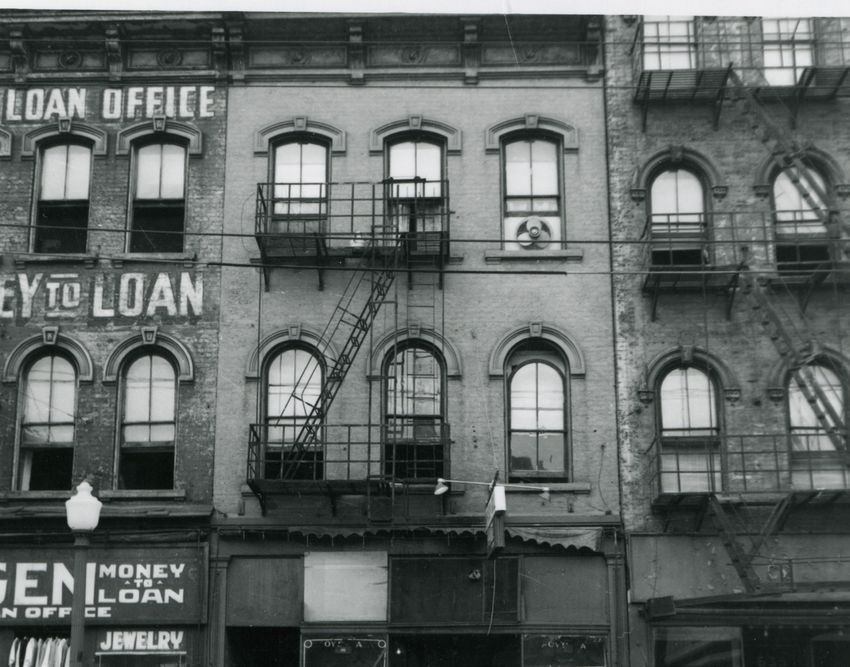
Cover image: Detail of 633 Central. 1959. Structure at 633 Central. Kenyon Barr project # 16-1760. First floor occupied by Roy’s Bar and Grill. Kenyon Barr Collection (SC#115-494). Cincinnati Museum Center History Library and Archives. All other images, except for the author’s photo on page 32, are courtesy of the Cincinnati Museum Center History Library and Archives. See individual citations with each image.
BECOMING JOSHUA:
 A Path to Economic Freedom
  by the Rev. Damon Lynch III

Published by Restore Commons
         Winter 2021
   © 2021, Damon Lynch III.
CONTENTS
Acknowledgements
Introduction
I. Building on Scripture
1 The Truth Will Set Us Free
3 Repairing the Damage
II. Slavery by Another Name
4 “Too Prosperous to Be a Negro”
7 A Stolen History
10 The Disappearing Black Neighborhood
12 A Debt Past Due
14 “What Can We Do to Help?”
III. The Promised Land
17 Raising Consciousness, Building Wealth
20 Sinking Roots Deep
22 Self-Determination
24 True Emancipation
IV. The Road Map
27 Community Education Plan
27 Community Health Plan
27 Community Safety Plan
28 Community Energy Plan
28 Conclusion
29 Resources
30 Notes
32 About the AuthorACKNOWLEDGEMENTS I wish to acknowledge the ancestors whose blood, sweat and tears “brought us thus far on the way,” as well as my mom and dad, who gave me a heart for people; my wife Regina, who gives me stability; and my three beautiful children, Damon IV, Eric Charles and British Cristal, who are my inspiration to never give up. I also wish to acknowledge my New Prospect Baptist Church family, who loves me unconditionally; Myki Bobo, my trusted assistant; and Iris Roley, my partner in all things “Black.” Peter Block and Barbara Lyghtel Rohrer deserve my thanks for believing that I had something worth hearing. And I thank my Community Economic Advancement Initiative (CEAI) family and my Collective Empowerment Group (CEG) family. Both are vehicles for substantive change. And a big thank you goes to the publisher, Restore Commons. I also want to thank the Cincinnati Museum Center for use of the images published here. The photos are from Cincinnati’s Kenyon Barr neighborhood in the 1950s, a thriving Black community of 26,000 people until the city took the land for an industrial complex that never materialized. Before the people were scattered and their homes and businesses torn down, the city photographed it all. The photos on these pages are from that collection. Finally, thank you to my mentor and friend John McKnight, who taught me about the importance of “gifts” and their power to unleash community transformation. This booklet is an edited collection of my thoughts, sermons, speeches and writings that reflect my more than 40 years of community experience and activism. I doubt if anything you read will be particularly groundbreaking, but I hope it will be motivating and actionable. The work of community building is second only to “soul saving.” True community is made up of loving, affirming families, thriving economic opportunities and a deep sense of justice and equity for all. May God Bless You All. Damon Lynch III
INTRODUCTION

I first met the Rev. Damon Lynch III when I interviewed him for a church publication. That was in
2016. Since then our paths have crossed a couple of other times. And each time I heard him speak,
I became all the more impressed with the man. So when Peter Block, a citizen of Cincinnati whose
focus is community building and civic engagement, asked me to collect and then edit the words
from Lynch’s talks of recent years into a single document, I was more than pleased to take up the task.

Block has been working with Lynch for years, primarily for economic justice. Economic injustice can
be found at the heart of much racial injustice. Block wanted a formal document that could be easily
circulated to serve as an additional catalyst for a movement to change such systemic inequity.
Through this work, Lynch has come to see his role within the Black community shifting from that of
a Moses to a Joshua. He calls for African Americans to claim their destiny, much in the way that God
commanded Joshua to take the Promised Land: “Be strong and brave. You will lead these people
[to] take the land as their very own. It is the land I promised … long ago.” (Joshua 1:6)

This shift in roles for Lynch is not so much a change as it is an extension of what he has always done.
He shares a story of how a childhood friend told his mother that he and Lynch had reconnected.

“Damon was your protector,” she said to her son. “He always watched out for you at school.”

When the friend relayed this conversation to his old friend, Lynch was surprised.

“I didn't know anybody knew that,” he said, “but that’s what I have always done. I didn't like seeing
other people bullied. I've always stood up for people who needed somebody to stand with them
or for them. I don’t know why.”

I suspect the reason is deeply rooted in his faith and a clear call from God. Lynch answered that
call by becoming a minister. But he is equally a visionary activist, a biblical scholar and a prophetic
voice in a time crying for such a voice.

In the following pages, Lynch outlines what he sees as the way forward for the Black community
to become thriving, successful, healthy and whole.

This is his road map.

Barbara Lyghtel Rohrer
Editor | Winter 2021
I.            BUILDING ON SCRIPTURE

                           The Truth Will Set Us Free
                           When I read the Bible, I read it as the living Word of God. I
                           see it as a launching pad for what the God of Israel has done
                           and can still do. In Genesis 15:13-14, we find God talking to
                           Abraham: “Know for certain that your descendants will live
 “And you shall know       as strangers in a land that is not theirs, and they will be enslaved
the truth, and the truth   and mistreated for 400 years. But I will judge the nation that
 shall make you free.”     they serve, and afterward they will come out with
                           great possessions.”
       John 8:32
                           It has now been just more than 400 years since the first
                           Africans were brought as slaves to our North American
                           shores. I believe that as 2019 closed, we ushered in the time
                           of “true emancipation” for the descendants of those slaves
                           and the millions who followed. We have asked God for what
                           theologians call “a dual fulfillment of prophecy,” for God to
                           do for African Americans as God has done for the children
                           of Abraham, Isaac and Jacob, and that is to end 400 years of
                           oppression. It is now a time for great possessions.

                           I pray this may be so. I preach this may be so. I believe
                           this will be so.

                           I think too often in the Black community, we’re stuck in
                           the Moses narrative with people thinking they need to be
                           delivered. Indeed, I spent most of my life believing that I was
                           to be a Moses to my people, delivering African Americans
                           from bondage just as Moses led his people out of bondage.

                                                    Becoming Joshua: A Path to Economic Freedom | 1
Because of the work of a twentieth century again, there is a voice crying in the wilderness.
crop of courageous individuals such as the My Black brothers and sisters, it is the voice of
Rev. Dr. Martin Luther King Jr., Malcolm X, our ancestors. It is the voice of the enslaved
Fannie Lou Hamer, Ella Baker, Rosa Parks, and oppressed. And the wilderness that is this
Medgar Evers, the Rev. Fred Shuttlesworth country is crying for a voice. The voice that our
and Kwame Ture (Stokely Carmichael), that nation is crying for is our own.
work is now complete. Joshua is the one we
need now. Joshua became the leader of the So, I ask God to do for us and with us what
Israelites following the death of Moses. He is God did for the children of Israel. In order for
the one who led his people into the Promised God to answer this prayer, we need to step
Land, following God’s command to take the forward. And the time to do so is now.
land as their own. Joshua is the man who
challenges us to possess the land, to possess This is actually a lesson I learned from my
the promises. We African Americans need to Jewish friends. They once asked me if I knew
step into the Joshua narrative where there why there was a Jewish Hospital in Cincinnati.
are opportunities to build wealth, to build I did not know.
sustainability for our Black community and
to rebuild our Black families. To do this, “We built Jewish Hospital because there was a
we need fortitude and courage. time when other hospitals would not allow our
Jewish doctors to practice,” they said.
To those who say, “I don’t know, Damon. I don’t Once built, they did not call it the Burnet
know,” I say, “No.” We don’t have another 40 Avenue Hospital. Nor did they call it the
years to walk in circles. God has brought us to Avondale Hospital, either of which was
the edge of the Promised Land. We need now something the Black community may have
to possess this promise. We need to claim the been tempted to do, criticized as they would
blessings of the God that we say we believe have been if they called it the Black Hospital.
in. We are to cross the River Jordan and, as a No, the Jews that built that hospital proudly
people, possess the land. named it after their community. They called
it Jewish Hospital with a sense of pride and
The Bible said that John the Baptist was a a sense of ownership.
voice crying in the wilderness. I heard a great
preacher once say, “It was a voice crying in Too often, when African Americans try to gain
the wilderness at a time when the wilderness the same advantages offered to white people,
was crying for a voice.” Jesus was the voice we are accused of reverse racism. My Jewish
the wilderness was crying for then. And now, friends answer to that: “Damon, forget what
they say. Build your community.”
2 | Building on ScriptureRepairing the Damage in this land more than 150 years ago. But
reparations are still needed, both from the
The parallel between the biblical text and the legacy of slavery and the wrongs that continue
plight of African Americans is striking. And to be done to African Americans today.
just as God made a promise to the Israelites
in ancient times to repair the breach — repair In the Bible we find God’s promise to
the damage — the same promise is to be true repair the damage. Yet, to bring about this
for the Black community if we believe we reparation, we need to believe this is a work
deserve it. that we truly deserve. We can demonstrate
this belief by repairing the damage done
There is a very real and very serious effect from in recent generations. We can repair our
more than 350 years of slavery and Jim Crow, families, establish our financial security and
and that is the negative impact on the psyche build our community.
of most African Americans. It is an overriding
sense of inferiority that maybe not all but This is God’s vision for us. This is God’s
most African Americans live with. We wake up promise to us.
with it every day, while white Americans wake
up to white privilege that most don’t even
acknowledge. White Americans never doubt
their place in our society, while we who are
Black are continually trying to fit in, trying to
belong — asking what do we deserve?
“Revolution is based on land.
That is the damage that needs to be repaired. Land is the basis of all
It is the damage done to an enslaved and independence. Land is the
mistreated race of people for hundreds of basis of freedom,
years. Following slavery and Jim Crow (as justice and equality.”
close to another name for slavery as you can
get), we had 50 years of mass incarceration, MALCOLM X
which has devastated our Black community.
And more. Our nation has been devastated.
And such devastation calls for reparations.
How do we reply to those who say since
slavery no longer exists, there is no need for
reparations? It is true that slavery was abolished
Becoming Joshua: A Path to Economic Freedom | 3II. SLAVERY BY ANOTHER NAME
“Too Prosperous to Be a Negro”
The period following the Civil War was one of economic terror.
One story that I tell is of Elmore Bolling, a successful
small businessman who lived in Alabama in the middle of
“I would like the last century.
to be known as a
person who is Bolling leased a plantation where he had a general store, a gas
concerned about station and a catering business. He was a one-man economy.
freedom and equality He grew cotton, corn and sugarcane. He also operated a small
and justice fleet of trucks that ran livestock and made deliveries between
and prosperity Lowndesboro and Montgomery. At his peak, he employed as
for all people.” many as 40 people, all of them Black.
Rosa Parks One December day in 1947, a group of white men showed up
along a stretch of Highway 80 that Bolling helped lay. There,
near his store and home, where he lived with his wife Bertha
Mae and their seven children, the men shot him eight times.
His family rushed from the store to find him lying dead in a ditch.
The shooters did not even cover their faces; they didn’t need
to. Everyone knew who had done it and why.
“He was too prosperous to be a Negro,” someone who knew
Bolling at the time told a newspaper.
When Bolling was killed, his family estimates he had as much
as $40,000 in the bank and more than $5,000 in assets, about
$500,000 in today’s dollars. But within months of his murder
4 | Slavery by Another Name1025 Freeman Avenue. 02/28/1959. Structure at
1025 Freeman Avenue. Mac’s Home Bakery.
Kenyon Barr project # 1-U2. Kenyon Barr Collection
(SC#115-901). Cincinnati Museum Center History
Library and Archives.
Banks and insurance companies “fenced off”
areas where they could avoid investments
based on demographics. This practice left far
too many Black communities underdeveloped
and in disrepair. It also hindered African
Americans from the wealth building
prospects of home ownership and business
development.2 In fact, while African Americans
were fighting for freedom and basic human
nearly all of it would be gone. White creditors rights, white Americans were building
and people posing as creditors took the generational wealth, industries and institutions.
money the family got from the sale of their
trucks and cattle. They even staked claims on Today, the typical white family has a net worth
what was left of the family’s savings. Overnight ten times higher than the typical Black family.3
the Bollings went from prosperity to poverty. The median family wealth for white people
Bertha Mae found work at a dry cleaner. The is $175,000, compared with just $17,000 for
older children dropped out of school to help Black individuals. According to the Economic
support the family. Within two years, all the Policy Institute, more than one quarter of Black
Bollings fled the county, fearing for their lives. households have zero or negative worth.
Left behind were Bolling’s employees who Even worse, Black wealth in America is not
had also lost their livelihood and the means to going up; it’s going down.4 If this trajectory
support their own families.1 continues, by the year 2053 Black median
wealth in America will be zero.
Such wealth-stripping has left African
Americans at a lasting economic disadvantage. According to Forbes, the top 400 richest
Americans have more wealth than the entire
Redlining, which began with the National Black population and a quarter of the Latino
Housing Act of 1934 and continues to this day, population combined.5
is a form of lending discrimination.
Becoming Joshua: A Path to Economic Freedom | 5We people of color have been part of this The first three Gospels, the books of Matthew,
land of the free for more than 400 years now. Mark and Luke, are called the Synoptic
Our experience as Black Americans is not the Gospels. Synoptic comes from the Greek
same as that of white Americans. for “stands with vision” or “together view,”
meaning that in order to see the same things,
White people who want to join the struggle we need to be looking through the same
for justice for all Americans say they don’t lens. I grew up immersed in the white culture,
know what it is like to be Black. I find that so I can see “just lie down,” “he is guilty” and
interesting because, as a Black man, I do “don’t run.” But I know white people do not
understand white people. I have what W. E. B. have my lens and cannot see what I see.
Du Bois called a dual stream of consciousness.
I have an Afrocentric stream, and I have a Likewise, when white people come forward
Eurocentric stream. Upon seeing Rodney to help in the struggle, they don’t understand
King being beaten by police on television, that any effort they contribute is not just to
Black America asked, “Why did they just keep help Black people. It is to help our nation.
beating him?” while white America asked, It is to heal our nation.
“Why didn’t he just lie down?” We’re looking
at the same thing but seeing different things.
When the verdict was announced following
the O. J. Simpson trial, white America was Today, the typical white family
dumbfounded and said, he is guilty, while has a net worth ten times higher
Black America said, yes, he got off. When than the typical Black family.
Timothy Thomas was shot in Cincinnati, the
majority of Black Cincinnati asked, “Why did
they shoot him?” White Cincinnati asked,
“Why did he run?”
1019-1021 Freeman Avenue.
02/28/1959. Structure at 1019-1021
Freeman Avenue. Bryant’s Tavern.
Kenyon Barr project # 1-U4. Kenyon Barr
Collection (SC#115-894). Cincinnati
Museum Center History Library
and Archives.
6 | Slavery by Another NameA Stolen History
The Debt: What America Owes to Blacks, by Randall Robinson,
traces the lineage of a Black male living in contemporary
America, a representative individual. I summarize
Robinson’s illustration.6 “A people without the
knowledge of their
The great, great grandfather of today’s Black male was born past history, origin and
a slave and died a slave. His labors enriched both his white culture is like a tree
Southern owners and the owners of Northern businesses who without roots.”
depended on the cotton trade. He was taken from his mother
and father and sold as a little boy to a slave holder who lived in Marcus Garvey
another state — can you imagine the cruelty of that? He never
knew where his people in Africa came from. He was illiterate,
by law. Backbreaking work and abuse marked his days.
His son, also born in slavery, was also taken — sold, stolen —
from his parents at a young age. This son was a teen when the
Civil War ended. The new Black codes that followed, passed
throughout the South, meant that his life as a freed man was little
different from his days in slavery — Black men who quit their jobs
could be jailed. And because he was illiterate, this son had little
means to make a fresh start. He picked up work as he could.
His son, born at the turn of the century, did learn to read, but
that ability changed little in his life. Facing ongoing racial
discrimination, he became a sharecropper, working for white
men who once owned his grandfather. He was not able to vote.
When he had a son, he wanted more for him, but Southern
segregation and its punishing Black codes left little for his family
in terms of education, income or freedom. He sank into despair.
His son, the father of today’s Black male, never finished high
school. He made his way in the world as a laborer, as did
anyone who looked like him. He worked for white people
Becoming Joshua: A Path to Economic Freedom | 7who lived in nice neighborhoods, unlike So how do I reply when asked, “Who are those
his neighborhood. He drank away his angry Black males in the streets of Ferguson
hopelessness as his father before him and and Baltimore and elsewhere?” I say, “They are
died of heart disease when he was barely the great, great grandsons of that Black man
out of middle age. on the plantation who never learned to read.
They are the great grandsons of that Black
This is the lineage that has birthed today’s man forced to continue to work as a slave even
Black male, who is far more likely than his though he was free. They are the grandsons
white counterpart to be undereducated, of that Black man who was denied the right to
unemployed, imprisoned, in poor health, vote.” It’s damage that probably every Black
even murdered. person in this country feels on a daily basis.
When four million slaves were freed, nothing The first Black people who landed on the
was given to them as compensation for shores of this country did not come here
their years of brutal labor forced upon them of their own free will. Instead, they were
and their families — let alone any kind of brought here in 1619 for slave labor — 20
national apology. Africans, stolen from their homeland. Their
descendants, bought and sold as property,
Robinson goes on to ask what have been the spent the next 244 years fighting to be free.
greatest human rights offenses in the last 500 The Emancipation Proclamation, which
years. Some mention the Holocaust. Others outlawed slavery in the Confederate States,
mention Pol Pot, or what happened in Rwanda. was signed by President Abraham Lincoln in
Unfortunately, the second half of the past 1863. But it was not evenly enforced until 1865
millennium has seen plenty of human rights when the Union General Gordon Granger
violations and human massacres. But rarely arrived in Galveston, Texas, the most western
mentioned is what happened to the Native of the slave states, at the end of the Civil
Americans. And more rare is the person who War. (The enforcement of the Emancipation
speaks of the horrors of the slave trade of Proclamation was dependent upon the arrival
Africans stolen from their homes and shipped of Union troops.)
like cargo to the United States for 244 years.7
Add another 100 years of systemic racism on From 1619 to 1863, our Black ancestors were
top of that and it is hard to understand why the simply fighting to be free — and producing
desecration of the Black body and spirit is not some of the most courageous people the
decried as other genocides through history are. world has seen, such as Nat Turner, Denmark
8 | Slavery by Another NameVesey, Harriet Tubman and Sojourner Truth to name a few. The
next 101 years were spent fighting for their God-given rights as
human beings with all the respect and dignity that entails. From
1863 to 1964, these former slaves and their descendants were
fighting not only to be equal in the sight of the law, but in the The first Black
hearts of our white brothers and sisters. The struggle continued people who landed
with the War on Drugs, mass incarceration and ongoing on the shores of
redlining. Racism, discrimination, police brutality, hatred and this country did
fear continue to this day. We African Americans can see it. not come here
We feel the impact. of their own free
will. Instead, they
A few years ago, my wife and I had dinner at a friend’s house. were brought here
My friend is Italian and so was the dinner. I loved it — I loved the in 1619 for slave
food. I love that my friend had this great Italian family. I loved labor — 20 Africans,
that they knew where they came from. And I sat there wishing stolen from their
I knew the same. homeland.
It’s not that I don’t have a Black family rooted in the South. No,
my longing went deeper than that. Until I started receiving
advertisements in the mail encouraging me to buy Irish-themed
products, I had no idea that the name Lynch was Irish. How in
the world am I Irish? I have no clue as to the African lands my
ancestors came from. And I am stuck with this
Irish last name that means nothing to me.
733 West Court Street. 1959. Structure
at 733 West Court Street. Dress makers
sign in front window.
Kenyon Barr project # 18-1581. Kenyon
Barr Collection (SC#115-604). Cincinnati
Museum Center History Library
and Archives.
Becoming Joshua: A Path to Economic Freedom | 9The Disappearing Black Neighborhood
Have you ever heard of Kenyon Barr? Perhaps not. But those
living in Cincinnati know Queensgate, part of the city’s West End.
That is where Kenyon Barr was.
“The problem occurs
when poorly managed Kenyon Barr was a vibrant Black community until the city
gentrification leads to decided to take the land for light industrial development.
rocketing price inflation, They cleared the houses. They cleared the shops. Two thousand
social disruption and a buildings were destroyed. Twenty-six thousand people were
loss in cultural diversity.” forced to move away, their community destroyed. Before the
destruction began, the city went into the neighborhood and
Alfredo Triff took photographs of what they were about to tear down. The
photos show people outside their homes and shops engaged
in their lives. They had no idea what was about to happen.
As for the light industrial development the city envisioned,
it never took off.8
When I tell this story, people are surprised and shocked over
what the city did to that community. What saddens me is that
the people speaking their outrage don’t see that that kind of
displacement is still happening. It even happened on my watch.
That time it was in the Over-the-Rhine (OTR) neighborhood.
That’s where New Prospect Baptist Church, where I serve as
senior pastor, was before we outgrew our building and moved
into a larger complex, the former Jewish Community Center,
in the neighborhood of Roselawn.
In the 26 years that I was in Over-the-Rhine, I watched it
transform. I watched it die. We went from 15,700 people to
7,000 people. Then the crime rate rose. Since then, the area has
been reborn. Articles in The New York Times and Forbes say that
what happened in Over-the-Rhine is a great rebirth, “a grand
tale of urban revival.”9 I don’t share that same feeling.
10 | Slavery by Another NameThat’s because the people who made their rate, the highest infant mortality rate. So the
home in OTR were driven out, displaced by idea of servicing people, making them whole,
the gentry, the people who see something obviously does not hold true. You can’t service
they want and who have the power, money people and make them whole. But my fear is
and connection to take it, to make it into a that people who run the social service system
place for themselves without consideration will just want to try it again elsewhere. Social
of those who may already be living there. services provide a necessary safety net, but
We have a history of that in this country. they cannot provide a community with the
economic vitality it needs to thrive.
I watched every local bar shut down, every
laundromat close, in Over-the-Rhine. It was Over-the-Rhine is not the only place where
surgical. It was by design. And now the OTR I have seen this happen. In my lifetime, the
community that so many African Americans entire Reading Road corridor died. When I was
called home is gone. How did that happen? a kid, I thought Reading Road had everything —
movie theaters, bowling alleys, Perkins House
Once the most serviced community in the pancakes, a big panther overlooking the road.
state of Ohio, OTR had the highest crime When my family drove down Reading Road,
1119 Budd Street. 1959.
Structure at 1119 Budd Street,
also corner of St. Anthony
Roman Catholic Church.
Kenyon Barr project # 10-1333.
Kenyon Barr Collection (SC#115-
254). Cincinnati Museum Center
History Library and Archives.
Becoming Joshua: A Path to Economic Freedom | 11I thought this must be what Las Vegas was like.
Years later, the mayor and city manager came
to my church to talk about developing parts of
“Freeing yourself was one thing,
Reading Road. And with that — in my lifetime —
claiming ownership of that freed
the entire corridor died.
self was another.”
People continue to be displaced as
Alfredo Triff
neighborhoods of families of lower incomes are
gobbled up. I look around and see that streets
I used to know are gone, as are the people that
used to have homes on those streets.
It’s painful anytime, but when it happens on
my watch, I take it seriously. It’s personal. A Debt Past Due
“Well, that was my great, great grandfather
And we keep losing ground with local
who did that, not me. Why should I have
Cincinnati institutions cutting into
to pay?” say those who oppose anything
neighborhoods. Xavier University expanded
connected to reparations. And I say, “That was
its campus to where homes of friends once
my great, great grandfather who it was done
were.10 Cincinnati Children’s Hospital and
to. And we should be paid.”
Medical Center has taken homes for its
expansion in Avondale.11 A sports team has
taken a chunk of the West End with its Actually, I rarely use the word “reparations.”
building of a new soccer stadium.12 I prefer to say, “repair the damage.”
Such development efforts are called progress, Then there are those who say to me, “Damon,
but too often the progress that we see is haven’t you caught up by now?” And I reply,
also the destruction of a community. And “How do you catch up to others who had
each time, the community being destroyed a 350-year head start?”
is coming from the same demographic:
African Americans. As I outlined in a preceding section, African
Americans spent roughly 100 years following
When the Greater Cincinnati Redevelopment the Civil War fighting legal and illegal
Authority wants to gobble up Roselawn and apartheid in this country known as “Jim Crow.”
nearby Bond Hill, are we to just sit there and Jim Crow mandated segregation in public
eat chicken? Not again on my watch.
12 | Slavery by Another Namefacilities, armed services, housing, transit, damage done to African Americans in this
workplace preferences and public country is deeper than any monetary debt,
accommodations. As a body of law and because the damage is mental. The damage
practice, Jim Crow institutionalized economic, is damage to the soul. Repairing this soul
educational and social disadvantages for the damage involves forgiveness, but it is hard
Black community, enshrining into the law the to forgive when those who need to be forgiven
racism of plantations. Redlining, as previously won’t even acknowledge the pain they
noted, fueled a growing wealth inequality. have caused.
And now we have the school to prison Actually, there was a time when America
pipeline. In 1970, there were 250,000 people acknowledged that it owed a debt to Black
in American prisons. Now there are over people for 244 years of servitude and
2.2 million and too many of them — 38% — slavery. The plan to pay that debt was Union
look like my Black brothers and sisters, yet
African Americans only make up 13% of the
U.S. population.13 Such mass incarceration
is the result of the failed War on Drugs, a
term coined by President Richard Nixon in
1971. This “war” was designed to curb illegal
drug use. While many will not recognize
the name Harry Anslinger, marijuana is now
illegal at the federal level because of him.
He was a commissioner of the U.S. Treasury
Department’s Federal Bureau of Narcotics —
our country’s first drug czar. What eventually
made marijuana illegal was his one simple
message: Black men were smoking weed and
having sex with white women.14 That was all
that was needed. 1020 Gest Street. 05/11/1959. Structure at 1020
Gest Street. An African-American woman looks down
from her second floor apartment at two African-
This history has left much damage that needs
American men, possibly employees of Sam Miller
to be repaired — the debt clock never stops. and Sons Junk Dealer, standing at a pile of junk.
Kenyon Barr project # 1-758. Kenyon Barr Collection
America owes a tremendous debt that has
(SC#115-977). Cincinnati Museum Center History
never been acknowledged, let alone paid. Library and Archives.
The psychological pain and the psychological
Becoming Joshua: A Path to Economic Freedom | 13General William Tecumseh Sherman’s Special Racism in America is real, and the damage
Order 15, which was issued on January 16, from racism is real. Yet when we ask that the
1865. The order called for the massive land damage be repaired, we are told no. Why?
redistribution, some 400,000 acres stretching Our Jewish brothers and sisters sought
the coastline from Charleston, South Carolina, reparations and got it. Our fellow Japanese
to St. John’s River in Florida. Each family Americans won reparations. Even Native
was to receive 40 acres of tillable ground to Americans, whose land was stolen from them,
“maintain [themselves] and have something to have been given some form of restitution—
spare.” The plan was developed by Sherman though hardly what they deserve. It is time
and the Secretary of War, Edwin M. Stanton, now that African Americans receive their
in consultation with 20 Black ministers. Once compensation.
announced, the plan was quickly acted upon,
with one Baptist minister, the Rev. Ulysses L.
What Can We Do to Help?
Houston, leading a thousand former slaves to
Skidaway Island, part of the state of Georgia, In July of 2000, when the Jazz Festival came
to set up their own self-governing community. to Cincinnati, restaurants across downtown
closed their doors so patrons had few choices
What happened to Special Order 15? of where to eat. These business owners gave
President Lincoln went to Ford’s Theater on up what would have been an economic
the evening of Good Friday to see a play with boom so as to not serve African Americans.
his wife. We know what followed. John Wilkes Understand, this was July of 2000. This was not
Booth, one of the actors, silently made his way July of 1953. This was not Mississippi. This was
up to the balcony where Lincoln was sitting Cincinnati, and restaurants were closing
and shot him in the back of the head. The their doors to African Americans. That’s when
President died the next day. His vice president, I and others formed the Cincinnati Black
Andrew Johnson, a Confederate sympathizer, United Front. I became its first president.
became President and rescinded Special
Order 15. The land that some of the former Interestingly enough, I happened to be
slaves had already claimed was taken from downtown with my wife that first night of the
them and given back to Confederate land Jazz Festival. We were one of the couples
holders, the very people who rebelled against pulling on restaurant doors that turned out to
the United States.15 be locked. When the first door didn’t open,
we thought nothing of it. By the third locked
Imagine how different race relations in this restaurant door, we thought differently.
country would be today if Special Order 15 Only later did we find out that 13 restaurants
would have been left standing? locked their doors that weekend.
14 | Slavery by Another Name417 Cutter Street. 1959. Structure at
417 Cutter Street.
Kenyon Barr project # 6-1856. Kenyon Barr Collection
(SC#115-734). Cincinnati Museum Center History
Library and Archives.
been tried in the past to change Cincinnati
from business as usual. In effect, we were
responding to the call of Jesus who said,
“This time you’ve got to do it differently.”
We started with a boycott of the restaurants.
When the local restaurant association asked
to meet with us to resolve the issue,
We who formed the Cincinnati Black United I found it interesting that all the people there
Front understood that this fight fit into the representing the restaurants were white.
category that Jesus called “this kind.” In Mark I wonder if it ever occurred to them that
9:14-29, we find the story of how Jesus healed perhaps that was part of the problem.
a young boy possessed by an impure spirit. His
disciples tried to heal the boy first but could Then in November, within a 24-hour period,
not. Later the disciples asked Jesus privately, two Black men — Roger Owensby and Jeffrey
“Why couldn’t we drive [the impure spirit] Irons — were killed by Cincinnati police. From
out?” And Jesus replied, “This kind can come 1995 to 2001, the only men killed by police
out only by prayer and fasting.” in an altercation were Black.16 Since we had
already formed the Cincinnati Black United
I had experience with this kind of healing. Front, we took up this issue as well. We called
In the early 1990s, I led my congregation the American Civil Liberties Union, and with
through a period of prayer and fasting to the help of Ken Lawson, Al Gerhardstein and
break the hold that crack cocaine had on our Scott Greenwood, we filed a class action
Black community. lawsuit in federal court against the city of
Cincinnati for racially biased policing.
Now, not quite a decade later, we knew we
had to do something different from what had
Becoming Joshua: A Path to Economic Freedom | 15Following the lawsuit, we called for a boycott of Cincinnati.
Entertainers and conference organizers began to cancel plans
to come to the city. Eventually, even the Jazz Festival
left Cincinnati and went to Detroit. Our effort had a major
economic impact.
Fast forward. We ended up with the collaborative agreement,
“If you are free, you
an effort at police reform that has been nationally acclaimed. It
need to free somebody
was hard fought. Many people were against us — including
else. If you have some
those on city council, as well as other ministers. Certainly, many
power, then your job
white people were against us. Still, we sat at the table and
is to empower
we negotiated. We had pulled every tool that we had out of the
somebody else.”
Civil Rights toolbox — boycott, lawsuit, protests. We did all
three simultaneously.
Toni Morrison
People often think that we filed the lawsuit in response to the
death of another Black man, this one Timothy Thomas, who
died on April 7, 2001, after also being fatally shot by Cincinnati
police. But we had filed the suit earlier that year.
As much as I am an advocate of nonviolent social change,
I understand that were it not for the civil unrest that followed
Thomas’ death, it would have been even harder to accomplish
what we did. After the three nights of protests, I began receiving
phone calls from white people I had never met, people from
Cincinnati’s wealthiest neighborhood. “Damon, what can we
do to help?” they asked.
I welcome their support, but I say to my Black brothers and
sisters, we need to take the lead. Our 400-year journey is over,
and it is time for “true emancipation,” that is, self-determination,
justice and equity to repair the damage that’s been done.
I don’t want our story stolen anymore nor told by
anyone but ourselves.
16 | Slavery by Another NameIII. THE PROMISED LAND
Raising Consciousness,
Building Wealth
In 2015, I joined a group of city leaders at a “The philosophy of Black
press conference that was held at my church. Consciousness therefore expresses
We rolled out a crime prevention plan by group pride and the determination
calling for community economic development of the Black to rise and attain the
with a $50 million price tag. Why $50 million? envisaged self … At the heart of this
That is the amount given to the Cincinnati kind of thinking is the realization by
Center City Development Corporation Blacks that the most potent weapon
(3CDC) to create The Banks (a mixed use in the hands of the oppressor is the
development district on the Ohio River) and mind of the oppressed.”
for renovations to the downtown area and
the Over-The-Rhine neighborhood.17 Steve Biko
“We need the same thing to rebuild the
Black community,” we said.
Puzzled, the local media said, “We thought
you were laying out a crime prevention plan.”
“We have,” we said.
Economics and building community wealth
have been my focus of recent years, that is,
community economic development (CED).
This is a process that engages a community
in its own economic vitality. In that sense,
Becoming Joshua: A Path to Economic Freedom | 17CED is different from economic development. When economic development becomes
How does it differ? The renovation of Findlay separate from community development,
Market in Over-the-Rhine is a good developers are able to come in, buy the land
example of economic development that and make renovations with no understanding
lacked a crucial component — community. or appreciation of what it may mean to the
community. Economic development builds
In 2004, the city of Cincinnati completed wealth for the developers. If a community is
a $16 million face lift of its historic Findlay engaged in its own economic vitality, which is
Market.18 The result was beautiful. But for what the CED process is all about, there is no
the people who live in the neighborhood way that a government agency can put $16
surrounding Findlay Market, these renovations million in an enterprise, as we saw with Findlay
meant nothing. The people who live in the Market, and not uplift the people who live there.
community did not do the construction work.
They did not have stalls in the market. Instead, Community economic development is
they just saw $16 million being poured a key component in Asset-Based Community
into their community while they still lived in Development (ABCD). ABCD builds community
poverty. That is economic development. wealth by recognizing that surrounding people
Community economic development with social services does not make them whole.
says if $16 million is being poured into a It if did, Over-the-Rhine would have been the
community, then those dollars need to uplift best community in America, instead of being
the people who live here. Those who live in ripe picking for developers.
the community actually need to do the work
and receive the benefits. Otherwise it is just One aspect of ABCD is Individual
economic development for the benefit of Development Accounts (IDA). IDAs are a
someone outside the neighborhood. type of savings account to help individuals
of low income achieve financial stability and
Traditionally, in this country, the effort has long-term self-sufficiency by building up their
been toward community and economic assets. IDAs are used to save money to start
development. We need to remove the “and.” a business, pay for education or buy a home.
It simply needs to be community economic
development. With the “and” in place, Another aspect of ABCD is community funds.
the community is serviced to the point where A community fund is, quite simply, one in
it becomes a service community, that is, which the community has invested. It is a type
a community dependent upon the services of investment fund where those most affected
provided by others. It focuses on what are the first contributors.
a community lacks.
18 | The Promised LandEffective organizing is key to the success in
establishing a community fund. But there is
Black residents need to reclaim another component that is equally important.
their own community. People have to believe that they have the
power to own, possess and develop their
own community. That is the core challenge
in building wealth in a Black community.
In order to be a member of the fund, you We African Americans need to believe in
have to be a resident of the community or ourselves. We need to use the gifts and assets
own a local business in the community. You and resources that we already have and build
have to be a stakeholder. Those outside upon those. Then we need the courage to
the community are welcome to contribute move forward, to possess and redevelop the
to the fund, but they do not have a vote on land for the benefit of our community.
how the money is to be used. Only residents
and local business owners have that right. In This is all about building a strong, healthy
other words, any interest from investors living Black community. We can do this by raising
outside the community must be secondary to consciousness and building capital — we must
the life and dreams of a community. Outside do both. If we build Black wealth without
resources are needed and necessary — hence consciousness, there is no benefit to the
our request for the same amount of money community. If we build Black consciousness
given to the developers of Cincinnati’s city without wealth, we are just talking a good
center. But the sources of these outside game — and we don’t have time for that.
resources need to be the second investors.19
I see the Black community setting a table for
In order for community development to itself. We African Americans are having
be successful, everyone in the community a dinner. There are some extra seats to which
needs to contribute something (or, at the we can invite our white brothers and sisters,
very least, needs to be encouraged to but they don’t get to tell us what to cook.
contribute). That is because everyone has
something to give. Everyone has a gift. And Black residents need to reclaim their
it is imperative, not only to our own lives and own community.
the lives of our families, but for the life of the
Black community, that residents and business
owners each try in their own way to make
things better.
Becoming Joshua: A Path to Economic Freedom | 19Sinking Roots Deep
One of the things that hampers poor communities, a Black
community in particular, is that every 20 to 25 years the people
are uprooted. True community economic development is
not possible with such displacement. A long-term, stable,
local community is absolutely essential for wealth building.
“Not everything Displacing people every generation, scattering them to
can be changed, but different parts of a city, destroys the relationships that make for
nothing can a strong, healthy community.
be changed until
it is faced.” Displacement happens when suddenly a community, their
streets, businesses and homes, become “the new thing.” Those
James Baldwin who were not part of the community move in and replace
those who lived there. We saw that happen in Over-the-Rhine.
We don’t want that to happen again. So where do we start?
Ownership. Black ownership of the land where Black homes
and businesses sit, followed by taking ownership of
an economic sector — a co-created, co-produced enterprise.
The critical factor for individuals who are trying to advance
themselves is to find a niche where they can fit in, belong
and succeed. The same is true for a community. The Black
community needs an economic sector to claim as its own,
much as Americans of other minority groups have done.
Other minority groups, smaller than the Black community, are
doing well, relatively speaking, because they control certain
sectors of the economy. And they work together. White
Americans often speak of rugged individualism, pulling oneself
up by one’s bootstraps, but that is not how it works. It is certainly
not how Asian Americans or Arab Americans do it. They work
together, supporting one another and, as a result, wind up
controlling different segments of the economy.
20 | The Promised LandKorean Americans control the Black hair care come to my church with a financial need,
market in America.20 Arab Americans own it is because they have fallen behind in rent
the corner stores and gas stations. Indian
21
or cannot pay their electric bill. If the Black
Americans own motels throughout the South.22 community begins to control even part of the
African Americans don’t have that same claim solar power industry, we African Americans
to a particular economic sector. Certainly will have made a giant step forward.
we have our own barber shops and funeral
homes — as well as churches. That’s because Part of this work is to create a narrative that is
most Black men want their hair cut by another conceivable, believable, achievable — what
Black man. And Blacks want to be buried by I call CBA. It is a story that says a strong Black
other Blacks. And if Black people go to church, community must take root and lift up the lives
they usually attend a church where of all African Americans. It is a story where
the membership is predominantly Black. education is valued and where there is a deep
But none of these are enterprises that serve sense of and respect for community. When a
other racial groups. community is destroyed, those values are lost.
In other words, there are smaller groups The uprooting needs to stop.
than the Black community who control major
economic sectors in our national economy.
African Americans cannot point to one
economic sector that it has any major control
of. That needs to change.
We have installed 352 solar panels on
the grounds of our church with the aim of
reducing our energy costs. We are now able
to provide cleanly-sourced energy throughout
the facility. In the process, we learned. We look
to share our knowledge with our community
toward the end that solar power could
become a niche the Black community can own.
I believe that every home in the Black
507 W. 7th Street. 05/05/1959. Structure at
community surrounding Roselawn needs to 507 West Seventh Street.
have solar energy. Think of the savings in the Kenyon Barr project # 16-X537. Kenyon Barr Collection
(SC#115-2204). Cincinnati Museum Center History
long term for those households. When people Library and Archives.
Becoming Joshua: A Path to Economic Freedom | 21Self-Determination servicing a community to nurturing the
inherent intelligence of a community. We
In the late 1990s, there was initial excitement need to acknowledge, affirm and activate the
in Cincinnati over the success of an inherent resources and gifts of people and the
application for federal Empowerment Zones. 23
opportunities that can be found within their
Empowerment Zones are designated areas community. It is activating versus organizing.
where employers and other taxpayers It is cultivating. There is where the salvation of
qualify for special tax incentives to reduce African Americans lies.
unemployment and generate economic
development. These initiatives met with We who identify as Black can make things
limited success, in part, because the better for our community. We can do this
community component of these efforts had through what Marshall Ganz calls a “stream
limited input from the community and its of effective strategy” in his book Why David
major stakeholders. When initiatives are Sometimes Wins: Leadership, Organization
institutionally owned, and not community and Strategy in the California Farm
owned, there is no empowerment of the Worker Movement, where motivated and
community, and therein lies the problem. knowledgeable individuals create venues for
learning by others.24
The Empowerment Zones did nothing
to create a strong sense of community,
particularly in Black neighborhoods. As when
a social service agency receives a grant, its
leaders see solutions on the horizon. But
without community, there is no solution.
Such programs are supposed to serve the
needs of a community, yet the leaders of these
efforts have nothing to do with the community
they are trying to serve.
Agencies are not going to be the salvation
of poor people in Cincinnati — or any city
for that matter. What is needed first is a
strong community. We need to shift from 1014 Richmond Street. 05/11/1959. Structure
at 1014 Richmond Street.
Kenyon Barr project # 1-779. Kenyon Barr Collection
(SC#115-1692). Cincinnati Museum Center History
Library and Archives.
22 | The Promised LandBuilding a sense of community is the “first
intimate circle” where the focus needs to be. It
doesn’t mean that in the outer circles there’s not
government support and institutional support — “If you’re always trying to be normal,
because that is needed too. But first, we African you will never know how amazing
Americans have to build that inner circle of self- you can be.”
determination that says we’re going to do this
against all odds, that says we’re going to do this Maya Angelou
with or without help. Yes, we have to tackle and
fight the oppressive nature of the system, but
if we don’t bring the community together, if we
don’t build a sense of community, which is lost As land becomes available, I look for us to
right now, none of the rest of that matters. buy it. “Take the land,” God told Joshua. In
today’s terms, that means African Americans
That’s what the earlier efforts to help the Black need to take the economic future of their
community showed me. Failure was the result community into their own hands. The time
when we did not build community first. for waiting for it to happen by any other
I am working with a group now toward that means is over.
end — the Community Economic Advancement
Initiative (CEAI). The focus of CEAI is to It is all about self-determination.
develop small businesses to build wealth
and to create sustainable housing within I wrote earlier how African Americans wrestle
the Black community. with an overriding sense of inferiority. We
wake up to it. But I say it is time to wake up
As noted, the key to building wealth in the from it. It’s time to rise up.
Black community is through home and land
ownership and the creation of small businesses. While there have been and continue to be
It’s about passing wealth down to future grave injustices in the lives of Black people
generations to build a strong Black economy. living in this country, we cannot stay focused
This is different from job training. It is different there. It is time for African Americans to control
from increasing the numbers of people going their own economies, not for themselves but
to college. And it certainly is different from for their community, which in turn will provide
feeding and clothing people. Our organization ongoing support to their own lives.
has purchased four acres of land where we will
build houses that are solar powered — it’s time
to get these things done.
Becoming Joshua: A Path to Economic Freedom | 23True Emancipation
At my church, we followed a program developed by
D. L. Williams that involved 40 days of no frivolous spending.25
Those who participated learned that there are things that they
really don’t need in life, and they were able to start saving
money. The testimonies at the end of the first year of the
program were amazing. People who never had any savings had
$500 put away — and they felt good about it. People were paying
off credit cards. They were beginning to release themselves from
“If the Emancipation
toxic debt. The program calls for people to work together in
Proclamation was
small groups in support of each other. Some of our groups have
authentic, you wouldn’t
been together for years and have built strong bonds with one
have a race problem.”
another. My vision is to build something similar on a community
level. We will invite anyone in the community to be a part of it.
Malcolm X
It is a way to build the will in the Black community to do for
itself. It will be a way to begin the reconstruction of common
relationships. Added to real economic justice, these two
components can go a long way toward improving race relations.
Today in America we are seeing a resegregation. This change
is happening not by law but by choice. Resegregating does not
mean that desegregation was not necessary — it was. Barriers
needed to be broken down. Laws needed to be changed.
That was the work of desegregation. But integration is totally
different from desegregation, and African Americans have
paid a price for that. Resegregation is what is needed now
and is something that the Black community can accomplish
by leading the way in repairing the breach.
1015-1017 Freeman Avenue. 02/28/1959. Structure at 1015-1017
Freeman Avenue. View shows four pedestrians waiting in front of
Kyle’s Pharmacy at the corner of Gest Street and Freeman Avenue
and two crossing Freeman Avenue to Gest Street.
Kenyon Barr project # 1-U9. Kenyon Barr Collection (SC#115-891).
Cincinnati Museum Center History Library and Archives.
24 | The Promised LandThis does not mean the Black community sense of a recommendation for a course of
resegregate to the point of exclusion of those action to follow. I want to know what skills
of a different race or ethnicity. It just means and abilities — and wisdom — young people
that resegregation is something that our Black see themselves possessing to help others
community needs to do for itself right now make a difference. I want to ask them if they
to build for the future. And while we need to collectively see themselves as actors with a
listen to the older generation to understand major role to play in building up the Black
what has been lost in just a lifetime, we community. My only charge to them would be
absolutely need the voice and drive and to use those skills and ability and do their
energy of the younger generation in this best not to leave anybody behind.
effort. So part of the work is to create a mutual
connection between these two generations. Historically when African Americans did build
a strong, viable community, it was destroyed.
The older generation has the vision of a strong We cannot let that happen anymore. There
Black community because they lived it. But needs to be a movement of people, made
the younger generation is going to be on the of African Americans and white Americans
forefront of rebuilding what once was and who care, people who are fighters for social
re-imagining what could be. Both generations and economic justice. This new work is about
need to embrace the communal history equity. And because African Americans have
of African American people. Both need to been the most damaged from 400 years of
recognize that the work is more than landing a injustice, they are the ones who need to lead
job. It is about restoring, rebuilding the whole, the way. It’s that simple.
which is the hearts and minds of a people.
It is about forging a connection that honors, I have told friends if resegregation is the
respects and holds all of us responsible. direction we are headed, then let’s make it
work through economic empowerment and
When I went to Over-the-Rhine thirty years self-determination. Making resegregation
ago, four older, primarily African-American work is essentially about the task of reparation.
women — Linda Brock, Julie Fay, Marva Royal
and Fatimah Shabazz — took me under their Let us be role models for our children,
wing. They were the organizers. Just as these showing them how a Black community can
older women mentored me, I look to serve in be strong and healthy and whole. Let’s make
a similar capacity to members of the younger resegregation work. Let’s get to it.
generation. I don’t want to proscribe— to set
limits or prohibit —but rather prescribe in the
Becoming Joshua: A Path to Economic Freedom | 25You can also read


