Black Friday: Evolution Beyond the Doorbuster - Market Track
←
→
Page content transcription
If your browser does not render page correctly, please read the page content below

Black Friday:
                              Evolution Beyond
                               the Doorbuster

There is no doubt that the Black Friday event has been             expectations and set records, with Adobe reporting that Black
transformed. What used to be a single-day, in-store event now      Friday online sales alone brought in $3.34 billion, with $1.2
starts in early November and stretches through the end of          billion in mobile revenue. Yet in-store deals are still attracting
Cyber Week. While on the surface it would appear that Black        consumers to brick and mortar shops. Although the number of
Friday has potentially lost some ground (if you are only looking   people who shopped in store fell from 101 million in 2015 to
at single-day sales numbers), it’s important to examine the        99.1 million this year, the NRF reports that 40% of the holiday
total timeframe rather than one single day to gauge outcomes.      weekend’s consumers shopped in-store, with 50% indicating
Retailers are becoming more strategic in maximizing the longer     that the deals were too good to pass up.
time period to entice consumers and take advantage of the
flexibility of planning multiple sales.                            What were the strategic shifts that retailers used to adapt
                                                                   to changing shopping patterns? How have retailers made
This year the National Retail Federation reported 154 million      holiday shopping more “frictionless” for consumers? What
people shopped over the holiday weekend – an increase from         tactics have they used to differentiate their value? We will
the 151 million last year. And while the average consumer          address these questions and many more in our review of
spent $289.19 each compared to last year’s $299.60, the decline    holiday advertising, promotions, and pricing leading up to
in sales reflects on the considerable discounts offered by         Black Friday weekend 2016, and give practical advice on how
retailers, not a decline in participation. Online sales exceeded   to capitalize on the rest of the season.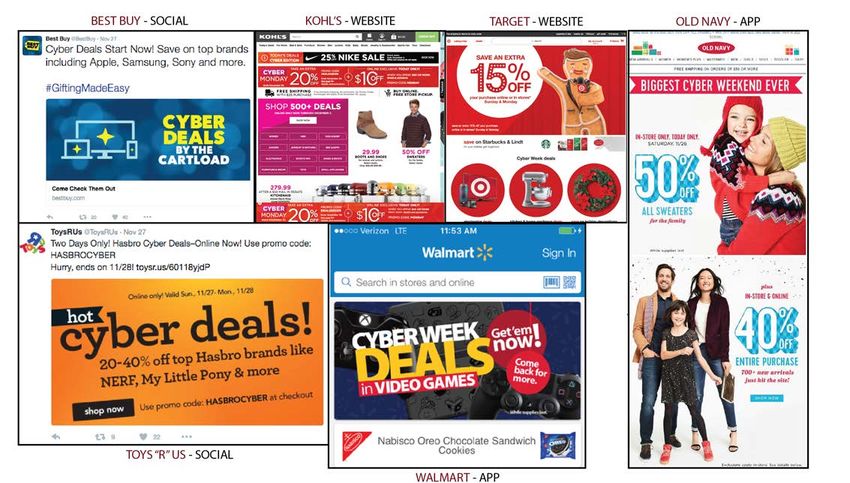
The early bird gets the... shopper
                                                                                             Early Black Friday Ad
    Early Black Friday messaging                                                          Release Dates (first half of Nov.)
    Retailers did not allow any room for surprises when it came to their 2016
    Black Friday circular deals. In years’ past, Black Friday circulars have been
    leaked online through third-party websites well before retailers confirmed
    the circular and deals were real. While the leaked deals were more often
    than not still accurate, retailers decided to skip the wait this year. Black
    Friday circulars were released nearly three days earlier this year compared
    to last on average, as shown in figure 1.
       The early release served a few purposes. In addition to informing
    shoppers about their deals early, several retailers released their ad
    exclusively on their mobile app. This tactic surely helped drive adoption of
    mobile just as the season was getting started.
       Beyond the circular, early Black Friday advertising was seen regularly
    in email and social media (see Figure 2 below). On November 2, Best Buy
    advertised "Black Friday Prices Now" in an email, and both hhgregg and
    Kohl's sent similar promotions on the same day. In social media, Sears                                              Early release via app
    encouraged shoppers not to "wait three weeks for the best deals. Online-            Figure 1) Early releases came through mobile app, social
    only Black Friday prices are going on now!" Black Friday started in earnest         media, and email. Noted above are the early app releases,
    on November 1st this year, and retailers reminded shoppers frequently               which incentivizes adoption in mobile.
    through multiple channels.                                                          Source: Market Track's Promotional Data

                                   Early Black Friday Messaging in Email and Social

                                  49%
                                  of shoppers planned
                                  to do the majority of
                                  their holiday shopping
                                  before Thanksgiving

                                  Figure 2) Sources: Market Track's Promotional Data & Market Track's 2016 Shopper Insight Series Survey

2   Market Track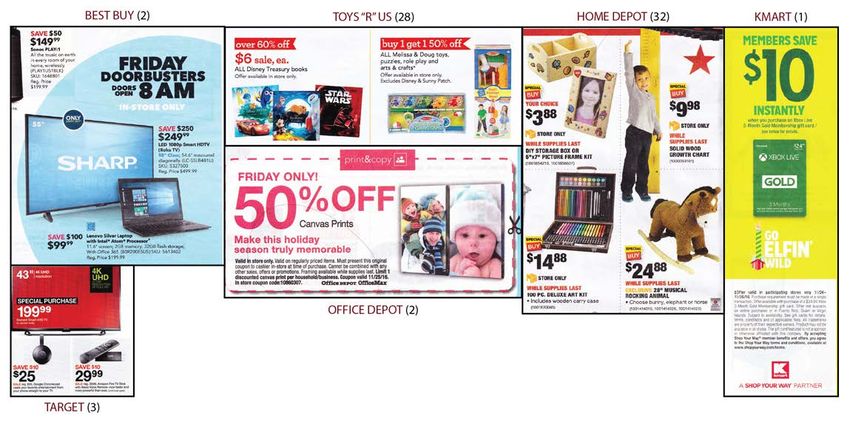
How low did they go?

                     Black Friday Circular Depth of Discount by Retailer (Average)
                                                            2015 vs. 2016

                                                                                       Figure 3) Source: Market Track's Promotional Data

It (still) comes down to price                                         pressure brick and mortar stores are feeling from eCommerce
Our 2016 Shopper Insight Series Survey found that nearly 70%           competitors. Namely, Amazon.
of shoppers cited price as the most influential factor in deciding        In Figure 4 below, we monitored daily online prices for over
where to shop this holiday. A review of Black Friday circular deals    800 product listings on Amazon from the beginning of October.
shows just how low retailers went with their discounts this year.      The study found that, for headphones, home theater, and
  The average discount in Black Friday circulars improved              small appliance products, pricing reached its lowest point of
to 45% from 42% last year (see Figure 3 above). Discounts at           the season to date on Black Friday, but this wasn't the case for
Best Buy and Macy's improved by a full six percentage points.          all categories. In the next two pages, we will dig deeper into
Offering deeper discounts shows retailers upped the ante again         Amazon's pricing on top holiday products versus some of their
to drive traffic to their stores, yet it also highlights the growing   largest competitors.

                               Amazon Pricing by Category, Online Price Index
                                          (Average Listing Price = 100% on 10/1/16)

                   The average listing price on
                   Amazon for Headphones, Home
                   Theater, Small Appliances, and
                   Tablets reached its lowest on
                   Black Friday, 11/25

                                                      Figure 4) Source: Market Track's eCommerce Pricing Data

                                                                                            The Power of Market Intelligence               3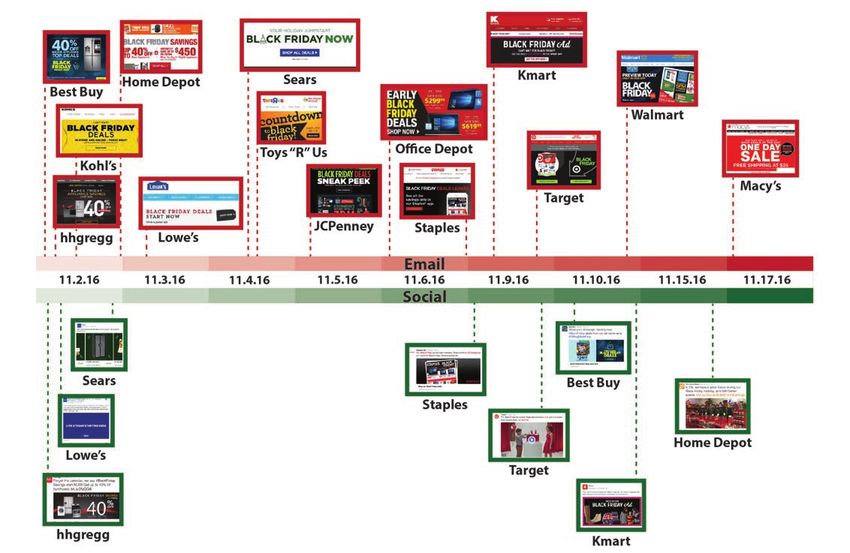
Amazon price comparison

            62%
                                                 Amazon differentiates on timing
                                                  Amazon does a lot well. From being consistently competitive on price, to providing a
                                                  seamless purchase experience, they have won the hearts (and wallets) of millions. Still,
                                                  81% of shoppers planned to compare prices at two or more retailers before making a
                                                  purchase online this holiday, so we wanted to dig in deeper to Amazon's pricing leading
            say the top reason                    up to Black Friday to see how it stacked up versus other leading retailers.
            they shop on                             We created a basket (“Holiday Basket") of over 100 best selling and featured
                                                  products on Amazon, Best Buy, Target, and Walmart's online holiday shops and
            Amazon is low prices                  tracked daily online prices at Amazon, Best Buy, Target, and Walmart from 10/1/2016
                                                  – 11/27/2016. Figure 5 below shows that the timing of Amazon's Holiday Basket
    discounts varied from their competitors, particularly on the week of Black Friday. While on 11/20 (Sunday prior to Black Friday), Best
    Buy, Target, and Walmart discounted their baskets by an average of 5.2%, Amazon only discounted by 2.1%. However, between
    11/23 and 11/25 (Black Friday), Amazon discounted their basket by 8.1% compared to their counterparts’ average of 4.4%.
      Another key differentiator is that Amazon’s basket price is still dropping. Amazon’s basket was priced 3% lower on 11/27, the
    Sunday after Black Friday, than on Black Friday. By comparison, Target’s Sunday prices were 4% higher than Black Friday, Best
    Buy’s 2.7% higher, and Walmart’s 0.8% higher. It should be noted this study does not include Cyber Monday pricing, so additional
    discounts may have happened across the retailers included in this comparison.

                Holiday Basket Online Price Trend Index (Average Basket Price = 100% on 10/1/16)
                                                                        October 1 - November 27

                                   November 19 - November 27

                                                                  From 11/23 to Black
                                                                  Friday, Amazon
                                                                  discounted basket 8.1%,
                                                                  compared to Best Buy,
                                                                  Target, and Walmart’s
                                                                  4.4%, on average

            On 11/20, Best Buy, Target, and
            Walmart discounted baskets by
            an average of 5.2%, compared to
            Amazon’s 2.1%

                                                                  Figure 5) Source: Market Track's Holiday Basket eCommerce Pricing Data

4   Market Track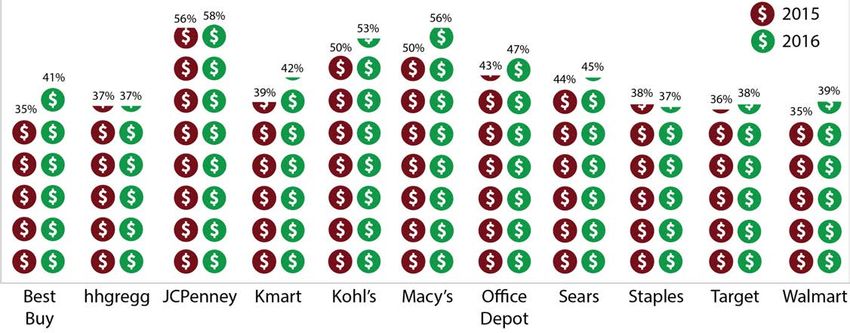
Competitive online pricing

 We asked shoppers: On which websites do                                Competing with Amazon on price
 you plan to shop during holiday this year?                             Even though we may have yet to see Amazon's lowest prices
                                                                        of the season (Cyber Monday pricing results have not been
                                                                        calculated), the eCommerce giant had the lowest average
                                                                        listing price on 72 of the 105 (69%) basket items between 10/1
                                                                        and 11/27. Their total basket price was 5.9% lower than Best
                                                                        Buy, 4.4% lower than Target, and 3.3% lower than Walmart.
                                                                        Additionally, Amazon was priced highest on only 2% of
                                                                        products, compared to Best Buy’s 34%, Walmart’s 30%, and
                                                                        Target’s 26% (Note: in the case of a price tie, retailers were
                                                                        awarded the same ranking). See a summary of this study below.
                                                                           Brick and mortar stores have some inherent advantages
                                                                        in that they can provide in-person subject matter
                                                                        expertise, immediacy of fulfillment, and unique shopping
                                                                        experiences—all aspects of Best Buy, Target, and Walmart’s
                                                                        store locations across the country. Lacking physical store
                                                                        locations, Amazon must find other tactics and incentives
                                                                        to combat brick and mortar advantages and draw holiday
                                                                        shoppers to their eCommerce site. Central to their strategy
                                                                        to compete with the likes of Best Buy, Target, and Walmart
                                                                        are their Prime membership program, assortment, and
                                                                        being consistently competitive on price.
                                                                           If there is one takeaway from our Holiday Basket analysis, it is
                                                                        that Amazon is as much a competitive price threat this holiday
                                                                        as they are a threat on convenience or product assortment.
 Figure 6) Source: Market Track's 2016 Shopper Insight Series Survey

 Holiday Basket Pricing Summary

                                                                                                of shoppers
                                                                                                plan to               81%
                                                                                                compare
                                                                                                prices at
                                                                                                two or more retailers
 Percentage of Listings by Price Rank, Holiday Basket                                           before making a purchase
                                                                                                online this holiday

       Figure 7) Sources: Market Track's Holiday Basket eCommerce Pricing Data & Market Track's 2016 Shopper Insight Series Survey Data

                                                                                            The Power of Market Intelligence                  5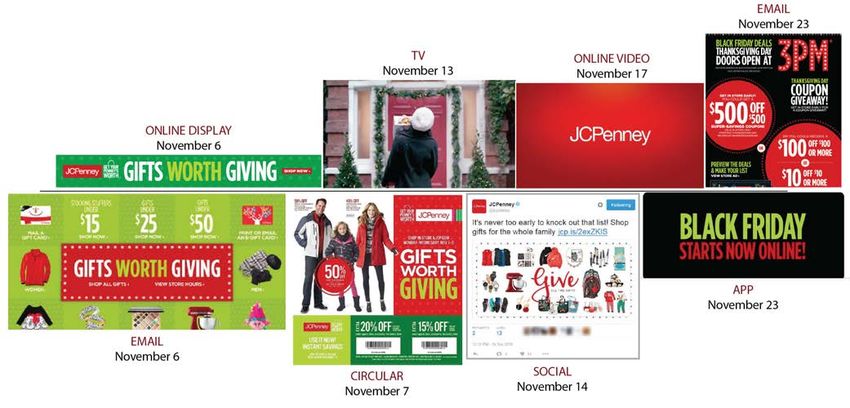
Driving traffic to the store

                         In-Store Only Offers in Black Friday Circulars (total ad count)

                                Figure 8) Circular promotions designated as "In-store only" - number of offers are
                                noted in parenthesis
                                Source: Market Track's promotional data

    We asked shoppers: When do you                                 In-store traffic is still important
    plan to shop during BF weekend?                                Where are consumers planning to shop during Black Friday weekend
                                                                   this year? According to the 2016 Shopper Insight Series Survey,
                                                                   shoppers have differing preferences for in-store vs. online shopping
                                                                   depending on the day. Consumer attitudes favor online shopping on
                                                                   Cyber Monday, with 61% reporting they will make purchases online
                                                                   that day. However, in-store shopping wins out on Thanksgiving day,
                                                                   with 50% of those surveyed saying they will head to the stores, while
                                                                   only 38% reported that they plan to shop online. Black Friday is more
                                                                   of a mixed bag with 52% of shoppers opting for online while 45%
                                                                   indicated a preference for in-store.
                                                                      Online may be gaining traction, but the demand for in-store deals
                                                                   remains strong. Retailers across the U.S. featured in-store exclusives to
                                                                   encourage shoppers to log off of their computers and head to brick-
                                                                   and-mortar locations. In a review of Black Friday circulars from various
                                                                   retailers, we were able to get a better picture of the type of promotions
                                                                   and messaging used to drive traffic to stores. Best Buy featured a
                                                                   special callout for their “Friday Doorbusters” –the retailer’s in-store
                                                                   exclusives, which started at 8am on Black Friday. Home Depot took a
                                                                   slightly different approach, putting a special “Store Only” icon next to
                                                                   specific products in their circular.
                                                                      While the in-store message was present throughout Black Friday
                                                                   circulars, not all retailers represented it equally. For instance, Home
                                                                   Depot used the phrase “in-store” 32 times in their circular for Black
                                                                   Friday. Toys “R” Us had a similar outlook, with 28 mentions of these
                                                                   offers in their circular. Meanwhile, retailers like Target, Kmart, and Office
    Figure 9) Source: Market Track's 2016 Shopper Insight          Depot all featured three or fewer instances of “in-store” messaging as
    Series Survey                                                  they promoted their Black Friday circular deals.

6   Market Track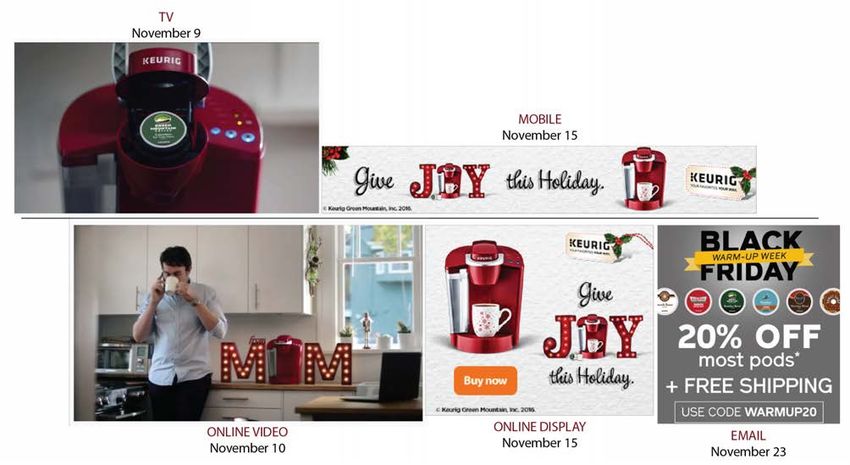
Message amplification through 360° messaging

     JCPenney Omni-Channel
        Holiday Campaign

                                                                                                   Figure 10) Source: Market Track's
                                                                                                  Advertising and Promotional Data

 Cross campaign messaging is critical                               campaign on November 13th this year. 27% of respondents
 Our 2016 Shopper Insight Series Survey gives us an idea of         say they use email to find deals, as well as messaging on social
 how today’s shoppers are looking for holiday deals, and which      media at a rate of 14%, and mobile app 12% of the time. It's
 media types they’re leveraging. The data shows that circulars      clear that consumers are using multiple inputs.
 are still the most-commonly used, with 69% of consumers              Brands are also showing they are privy to the deal-seeking
 reporting that they reference them when seeking holiday            behaviors of holiday shoppers. In the figure below, Keurig
 sales. This is more or less in line with JCPenney’s strategy, as   advertised their “Give Joy this Holiday” campaign in a TV spot
 the retailer debuted holiday deals via circular earlier than       beginning on November 9th. They reinforced that messaging
 most other media types. Other popular channels used by deal        in online video, online display, and mobile ad campaigns
 seekers include website ads (35%) and TV commercials (31%).        throughout the middle of the month, all culminating with
 Again, JCPenney used messaging in these formats early, with        a Black Friday promotional offer delivered via email the day
 an online display ad running on November 6th and their TV          before Thanksgiving.

                                                          Keurig Omni-Channel Holiday Campaign

Figure 11) Source: Market Track's Advertising Data

                                                                                         The Power of Market Intelligence              7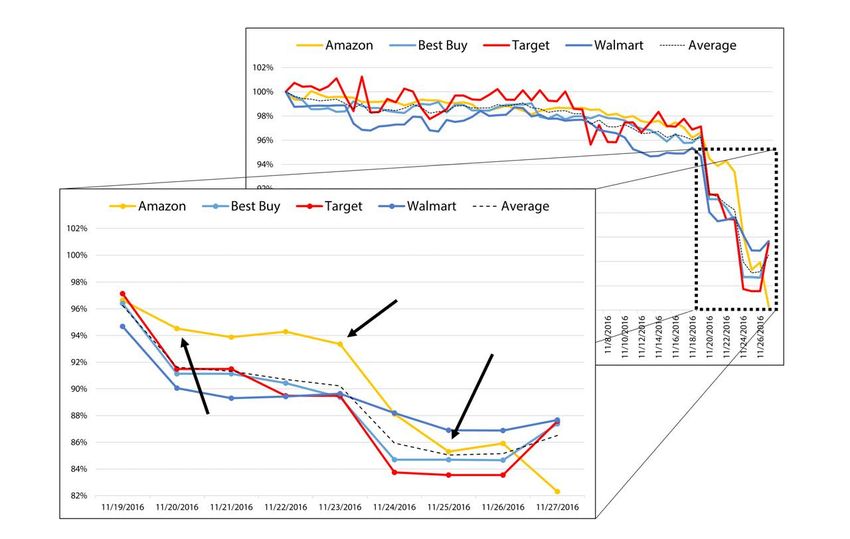
Building loyalty and enhancing the experience

    Experiences in-store AND online
    It’s no mystery that the eCommerce space has
    reshaped consumer behaviors during Black
    Friday and the entire holiday shopping season.
    The convenience of online shopping has enabled
    consumers to stay home and complete their gift
    purchases earlier than ever. Retailers are rethinking
    the experiences they’re offering, both as a means to
    drive shoppers in-store, and to enhance the online
    shopping experience.
        The traditional experiences, like holiday
    sweepstakes or photos with Santa, are no longer
    the only tactics being used to pull consumers away
    from the ease of online shopping. For example, in
    October 2016, Best Buy offered in-store demos of
    the Oculus Rift Virtual Reality Headset before the
    holiday season started. This gave shoppers a one-
    of-a-kind experience they couldn’t get online, and
    positioned Best Buy as a destination for VR products
    come November.
        This year, certain retailers are providing these
    experiences online. As Walmart continues to build       that syncs with Facebook profiles. The Careculator brings gamification
    their online presence during holiday 2016, they         to the online shopping experience by assigning a holiday gift budget to
    are offering Walmart Live!, a new streaming video       friends based on "Likes" and posts, then suggesting Jet.com gifts that fit
    experience for shoppers visiting the retailer’s         the price range.
    website on Cyber Monday. Walmart will use this             With eCommerce accounting for a larger portion of holiday sales with each
    platform to broadcast live demos of products at         passing year, retailers like Jet and Walmart sought to differentiate their online
    “prices you’ll love” on November 28 from 9am to         shopping experience this year. Given that 74% of shoppers planned to shop
    1pm ET.                                                 on Amazon this holiday--nearly 30% more than the next closest eCommerce
        Jet.com, acquired by Walmart in August,             site--these experiential tactics will continue to gain momentum among
    launched the “Careculator,” an online gifting tool      competing retailers.

8   Market Track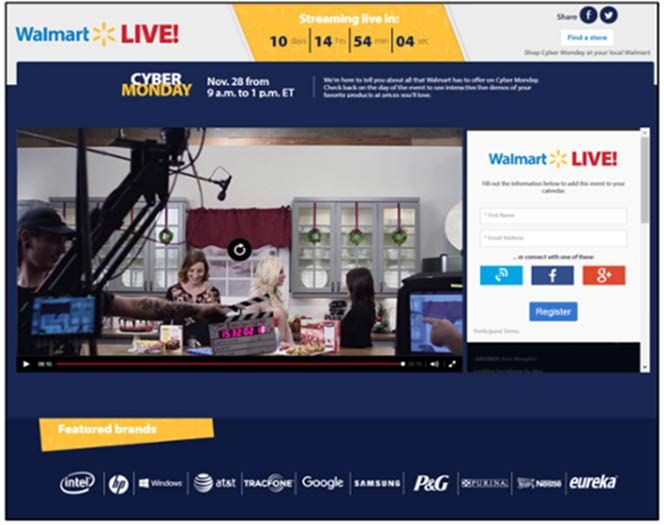
Manufacturers going direct

 Brands get in on Black Friday
 Brands are getting in on the Black Friday action. Another
 byproduct of the growth in online shopping is the emergence of
 Black Friday events on direct-to-consumer (DTC) brand websites.
 Popular holiday brands like Fitbit, Samsung, and Dell advertised
 their online Black Friday sale events in emails, social media, and
 on their websites regularly throughout November.
     Fitbit kicked off their holiday campaign by publishing a 2016
 Holiday Gift Guide, which they advertised through their social
 media outlets on November 14th. Then, on Thanksgiving, they
 advertised their 5-day "Bright Lights Big Deals" Black Friday event
 in an email to opt-in subscribers, promoting up to $30 in savings
 on fitness trackers.
    Dell and Samsung also engaged in Black Friday eCommerce
 events this year, as shown in the figures below. Dell got started
 early by promoting "Get Black Friday Deals Today" on November
 1, pushing early-season shoppers to their eCommerce site.

                                                                         Consumers are changing the way they shop. Our survey
                                                                       found that 30% of millennials intend to make a purchase
                                                                       directly from a social media site this holiday season. Behavioral
                                                                       changes like this have unlocked new opportunities for brands
                                                                       to win transactions themselves, rather than solely relying on
                                                                       retail sales during the holidays.

   30%         of millennials plan
               to make purchases
   directly from social media sites
   this holiday season

Figure 12) Sources: Market Track's Advertising Data, Market Track's 2016 Shopper Insight Series Survey Data

                                                                                             The Power of Market Intelligence              9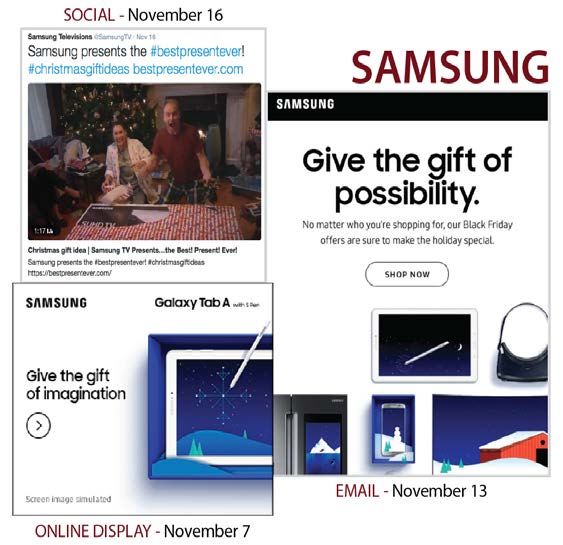
Strategic shifts: Changing focus

                                        Opt-in Email Volume (percent change)
                                                        10/1 - 11/24, 2015 Vs. 2016

   Figure 13) Source: Market Track's Promotional Data

                                                                                        Top Advertising Retailers by
   Shifting advertising investments                                               Opt-in Email Volume (10/1/16 - 11/24/16)
   Though consumers saw Black Friday circulars earlier this year,
   retailers continue to scale back on print volume. Total Black                      1. Sears            6. Gap
   Friday circular pages decreased by 11% compared to 2015.                           2. Walmart          7. Staples
   This decline in print coincides with a considerable increase in                    3. Best Buy         8. Amazon
   opt-in email volume, which is up nearly 16% this year. The figure                  4. Kmart            9. Target
   above shows the percentage increase of opt-in emails by retailer
   from the beginning of October through November 24th, 2015                          5. Home Depot       10. Kohl's
   to 2016. Lowe's, Old Navy, and Walmart each sent about 70%
   more emails than last year in October and November, showing
   that email, despite being a comparatively old advertising
   vehicle to other new, digital channels, is still a staple of holiday        Walmart and JCPenney Emails
   promotional strategy.                                                             Cyber Monday
     As of Monday morning, it appears the shift in email volume
   will continue through Cyber Week. Already retailers are active
   in the email channel promoting their Cyber Monday events to
   the masses. Interestingly, in an email Monday morning, Walmart
   advertised that their Cyber Monday will feature “Our Best Deals
   of the Season”—a claim they did not make for their Black Friday
   event. Additionally, a JCPenney email from Monday morning
   alerted shoppers that over 50,000 deals can be had on their
   eCommerce site on 11/28 only.

10 Market Track
Cyber Monday - More than just Monday
Starting early, ending later Us both promoted early Cyber deals for specific brands
Though we are already half way through Cyber Monday, on their social media sites on Sunday 11/27. Best Buy ran
advertisers did not wait to get the word out on their online a promotion for savings on “top brands including Apple,
offers to close out Black Friday weekend. Much like the early Samsung, Sony, and more” in social channels, while Toys “R”
Black Friday messaging that flooded email inboxes, social Us provided a promo code for savings on Hasbro products
media feeds, and website homepages in early November, starting on 11/27.
retailers engaged shoppers with early Cyber Week offers Retailer websites from all channels also underwent a
before the calendar turned to Monday. facelift on Monday morning, as weekend sales shifted to
On Saturday, 11/26, shoppers could take advantage of early Cyber sales. Kohl’s homepage is filled with layered offers for
Cyber Week deals on video games and home items through Cyber Monday shoppers, including taking an additional 20%
Walmart’s mobile app. The advertisement also encouraged off all purchases using a promo code, with an additional $10
shoppers to “come back for more” deals in the lead up to off online purchases of $50 or more.
Monday. More early Cyber Week messaging was delivered Target’s website has transitioned to the final offers in their
to Old Navy’s opt-in email subscribers in an email on 11/26. “Ten Days of Deals” campaign. Shoppers can save an extra
The subject line secretively introduced their Cyber Weekend 15% on all purchases, both online and in-store, through the
event, stating, “Shhh…Cyber Weekend starts now,” alongside end of the day Monday. By all accounts, retailers are treating
a promotion for their Saturday-only in-store sale event. Cyber Week as an extension of Black Friday and the countless
Social media was a hotbed for Cyber Week promotional early-November online sale events created to drive purchases
activity over the weekend as well. Best Buy and Toys “R” throughout the season.
Cyber Monday Advertisements
Figure 14) Source: Market Track's Promotional Data
The Power of Market Intelligence 11Actionable advice for the HSS
With the passing of this year’s Black Friday weekend, the Holiday Shopping Season (HSS) is now in full swing. The insights in the
previous pages are meant to identify trends in advertising, promotions, and pricing that will help prepare you for a successful second
half of the season. We’ve reviewed many of the tactics that retailers and brands used to differentiate their execution of both Black
Friday weekend, and the weeks leading up to the event. There is still ample time to impact the outcomes of HSS 2016—the key
takeaways below should be kept top-of-mind as you execute against your plan for the rest of the season:
Early holiday messaging The continued importance of pricing
Retailers left little room for confusion in their While there are a variety of tactics used to capture
holiday ad messages this year. Overall, we saw shopper attention, pricing remains among the
fewer leaked ads and less speculation over deals. important. Retailers sweetened their Black Friday
As the 2016 Holiday Shopping Season continues, circular discounts this year, and are sure to price
lookout for more early, event-centric promotions competitively online through the rest of the season. Be
that give shoppers the chance to prepare. sure you can identify discount periods and online price
decreases throughout December.
Enhancing the online experience Maintain vigilance in eComm
For pre-Black Friday and Black Friday weekend, With the fluid nature of online pricing, keeping a
online shoppers enjoyed new experiences when constant eye on the competitive landscape is critical.
navigating to sites like Jet.com and Walmart.com. When it comes to offering low prices for holiday,
These experiences will help differentiate retailers Amazon led the pack on many top holiday 2016
in the eyes of consumers, which is especially products over the course of November. The online
critical given the popularity of shopping on retailer is often setting the pricing benchmark, so
Amazon. As holiday shopping continues to trend monitoring theirs and other competitive activity
more toward eCommerce, retailers will need to should be a central part of your competitive outlook.
consider how their eCommerce experience stacks
up to the competition.
Manufacturers going direct Email is tried and true
As more and more consumers head online to While email marketing may at this point be
do their holiday shopping, manufacturers are considered “traditional”, it continues to be a staple of
gaining opportunities to reach consumers holiday promotional strategies across all channels.
independently of retailers. Brands are actively Brands and retailers alike recognize email as a proven
promoting online more than ever before via way to capture consumers in-the-moment. We tracked
email and social channels. Keep an eye on a 16% increase in email volume this year compared to
brand advertising in digital throughout the 2015 and expect the trend to continue through the
season to see how they’re disrupting the retail rest of the season.
space.
Stay up to date on the latest news throughout the HSS by subscribing to our
blog at blog.markettrack.com/subscribe
Contact your account representative for more information or email us:
insights@markettrack.com
12 Market TrackYou can also read


