Blood-based next-generation sequencing analysis of neuroendocrine neoplasms - Oncotarget
←
→
Page content transcription
If your browser does not render page correctly, please read the page content below
www.oncotarget.com                                       Oncotarget, 2020, Vol. 11, (No. 19), pp: 1749-1757
                                                                                                              Research Paper
  Blood-based next-generation sequencing analysis of neuroendocrine
  neoplasms
  Katerina Zakka1, Rebecca Nagy2, Leylah Drusbosky2, Mehmet Akce1, Christina
  Wu1, Olatunji B. Alese1, Bassel F. El-Rayes1, Pashtoon Murtaza Kasi3, Kabir Mody4,
  Jason Starr4 and Walid L. Shaib1
  1
      Department of Hematology and Medical Oncology, Winship Cancer Institute, Emory University, Atlanta, GA, USA
  2
      Guardant Health, Redwood City, CA, USA
  3
      Department of Hematology and Medical Oncology, University of Iowa, Iowa City, IA, USA
  4
      Department of Hematology and Medical Oncology, Mayo Clinic, Jacksonville, FL, USA
  Correspondence to: Walid L. Shaib, email: wshaib@emory.edu
  Keywords: neuroendocrine neoplasm; neuroendocrine tumor; neuroendocrine carcinoma; next-generation sequencing;
  circulating tumor DNA
  Received: February 21, 2020    Accepted: April 10, 2020    Published: May 12, 2020
  Copyright: Zakka et al. This is an open-access article distributed under the terms of the Creative Commons Attribution License 3.0
  (CC BY 3.0), which permits unrestricted use, distribution, and reproduction in any medium, provided the original author and source
  are credited.

  ABSTRACT

                   Background: Neuroendocrine neoplasms (NENs) are a heterogeneous group of
             neoplasms that span from well-differentiated neuroendocrine tumors (NETs) to highly
             aggressive neoplasms classified as neuroendocrine carcinomas (NECs). The genomic
             landscape of NENs has not been well studied. The aim of this study is to confirm the
             feasibility of next generation sequencing (NGS) testing circulating tumor DNA (ctDNA)
             in patients with NENs and characterize common alterations in the genomic landscape.
                  Results: Of the 320 NEN patients, 182 (57%) were male with a median age of
             63 years (range: 8-93) years. Tumor type included pancreatic NET (N = 165, 52%),
             gastrointestinal NEC (N = 52, 16%), large cell lung NEC (N = 21, 7%), nasopharyngeal
             NEC (N = 16, 5%) and NEC/NET not otherwise specified (N = 64, 20%). ctDNA NGS
             testing was performed on 338 plasma samples; 14 patients had testing performed
             twice and 2 patients had testing performed three times. Genomic alterations were
             defined in 280 (87.5%) samples with a total of 1,012 alterations identified after
             excluding variants of uncertain significance (VUSs) and synonymous mutations. Of
             the 280 samples with alterations, TP53 associated genes were most commonly altered
             (N = 145, 52%), followed by KRAS (N = 61, 22%), EGFR (N = 33, 12%), PIK3CA
             (N = 30, 11%), BRAF (N = 28, 10%), MYC (N = 28, 10%), CCNE1 (N = 28, 10%),
             CDK6 (N = 22, 8%), RB1 (N = 19, 7%), NF1 (N = 19, 7%), MET (N = 19, 7%), FGFR1
             (N = 19, 7%), APC (N = 19, 7%), ERBB2 (N = 16, 6%) and PTEN (N = 14, 5%).
                  Conclusions: Evaluation of ctDNA was feasible among individuals with NEN.
             Liquid biopsies are non-invasive methods that can provide personalized options for
             targeted therapies in NEN patients.
                  Patients and Methods: Molecular alterations in 338 plasma samples from 320
             patients with NEN were evaluated using clinical-grade NGS of ctDNA (Guardant360®)
             across multiple institutions. The test detects single nucleotide variants in 54-73 genes,
             copy number amplifications, fusions, and indels in selected genes.

www.oncotarget.com                                              1749                                                  Oncotarget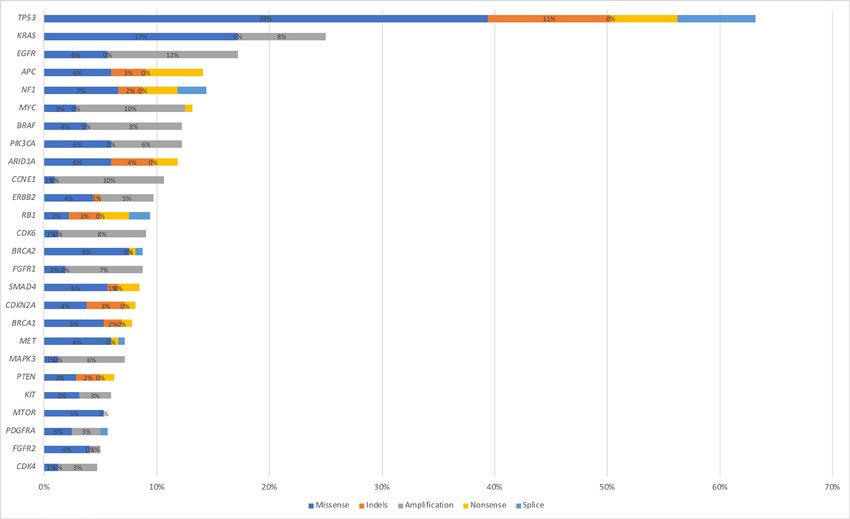
INTRODUCTION                                                          chromatin remodeling genes and mammalian target of
                                                                        rapamycin (mTOR) pathway genes were found to be the
        NETs are a rare and diverse group of tumors with                most frequent molecular events identified in pancreatic
  variable survival outcomes and behaviors [1], defined                 NET, but it remains unclear whether these biomarkers
  by tissue-based characteristics that include Ki67 index,              and other less frequently observed alterations possess
  grade, and morphology [2]. The annual incidence of NET                predictive value [24]. In this report, analysis of ctDNA
  has been reported to be around 3.65 per 100,000 people,               through blood-based Guardant360® NGS from patients
  however, due to better diagnostic tools and increased                 with a diagnosis of NEN across various histologies is
  lifespan, the incidence and prevalence of these tumors is             evaluated. The aim was to confirm the feasibility of NGS
  on the rise [3, 4]. Although there have been substantial              using ctDNA in NEN and characterize common alterations
  advances in the treatment of NET over the past decade                 in the genomic profile. Furthermore, we aimed to identify
  [5], challenges still exist with regard to patient selection          whether the molecular alterations lead to the identification
  and prediction of response. The classification of these               of potential actionable targets.
  tumors is based on tumor grade (assessed by mitotic rate
  and Ki-67 index) and differentiation: well-differentiated             RESULTS
  NETs, which are mostly low or intermediate grade, poorly
  differentiated NECs, which are high grade and aggressive,             Patient demographics
  and the discordant tumors (well differentiated with high
  tumor grades) [6]. Poorly differentiated NECs often                         Between the years 2016 and 2019, a total of 320
  involve multiple sites of metastases, and rarely produce              NEN patients underwent Guardant360® testing using
  symptoms related to secretion of bioactive substances.                clinical-grade NGS of ctDNA across multiple institutions,
  Accurate distinction of well-differentiated, indolent                 and 280 (87.5%) patients had at least one sample with
  tumors from poorly differentiated, aggressive tumors is               alterations. The median age was 63 years (range: 8-93),
  important since treatment approaches are different with               with a male preponderance (57%). Tumor type included
  substantial difference in prognosis [7]. The majority of              pancreatic NET (N = 165, 52%), NEC/NET not otherwise
  NET are diagnosed at a late stage with around 60–80%                  specified (NOS) (N = 64, 20%), gastrointestinal NEC
  presenting with distant metastasis at diagnosis [8]. The              (N = 52, 16%), large cell lung NEC (N = 21, 7%) and
  5-year overall survival of patients with NET ranges                   nasopharyngeal NEC (N = 16, 5%) (Figure 1). ctDNA
  between 35–82% in well-to moderately differentiated NET               NGS testing was performed on 338 plasma samples; 14
  and between 4–38% in poorly differentiated NET [3, 9].                patients had testing performed twice and 2 patients had
        With the complexity of the classification, novel                testing performed three times. A total of 1,012 genomic
  biomarkers are required to assist in clinical decision                alterations were identified after excluding variants
  making and ultimately improve patient outcomes [10].                  of uncertain significance (VUSs) and synonymous
  Identification of biomarkers that could be used to guide              mutations. Chemotherapy was documented in 48 patients
  targets for therapy is an unmet need [11]. Mutational                 (Supplementary Table 1). The sequence of testing to
  alterations have changed the landscape of treatment in                treatment is unknown. Pathology was obtained in 144
  multiple cancers and improved the survival of cancer                  patients and KI-67 score was obtained in 71 patients. KI-
  patients [12–18]. Recently, there has been an increasing              67 scores ranged from < 1% to > 99%. Of the 144 patients
  interest in circulating tumor DNA (ctDNA) on the basis                with documented pathology, 43 patients (30%) were high
  of studies performed in a range of other cancers [2]. As              grade, 8 were intermediate grade (6%), and 3 were low
  opposed to traditional tissue biopsies, liquid biopsies               grade.
  are faster, less invasive, have the potential to reflect all
  metastatic sites (ie tumor heterogeneity), and can indicate           Molecular alterations
  therapeutic response or progression through serial
  sampling [2]. Furthermore, considering the potential                        In the total cohort of NEN patients, TP53 associated
  of genomic analysis, liquid biopsies offer a facilitated              genes were most commonly altered (N = 145, 52%),
  means of detecting genomic alterations and can be                     followed by KRAS (N = 61, 22%), EGFR (N = 33, 12%),
  easily repeated over time [19–22]. ctDNA testing is now               PIK3CA (N = 30, 11%), BRAF (N = 28, 10%), MYC (N
  recommended to guide the treatment of lung cancer [23].               = 28, 10%), CCNE1 (N = 28, 10%), CDK6 (N = 22, 8%),
  A potential challenge that exists with the application of             RB1 (N = 19, 7%), NF1 (N = 19, 7%), MET (N = 19,
  ctDNA in the NEN field is the relative lack of recurrent              7%), FGFR1 (N = 19, 7%), APC (N = 19, 7%), ERBB2
  and/or actionable mutations [2] and this is reported in               (N = 16, 6%) and PTEN (N = 14, 5%) (Figure 2).
  multiple small studies [2]. Novel technologies such                   Alteration frequency by gene and alteration type are shown
  as next generation sequencing (NGS) revealed new                      in Figure 3. Of the 28 patients with BRAF mutations, 3
  molecular aspects of NET over the last years [1, 24]. In              patients had the V600E alteration. For PNET patients,
  a study conducted by Gleeson et al, alterations in MEN1               TP53 was the most commonly altered mutation (N = 125),

www.oncotarget.com                                               1750                                                 Oncotarget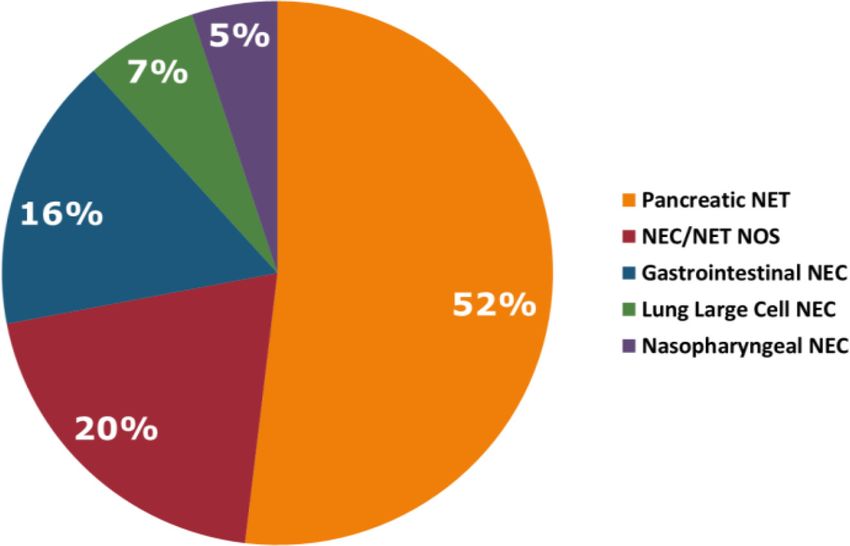
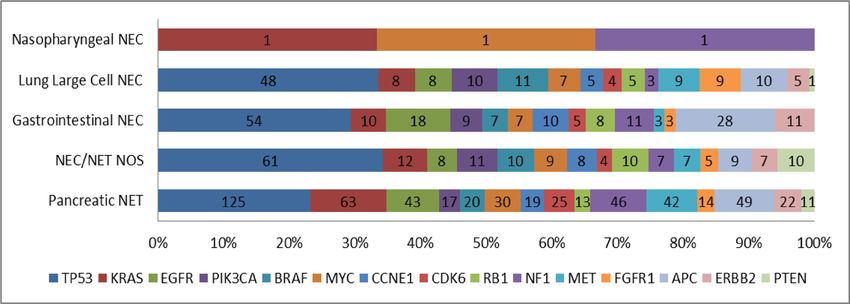
followed by KRAS (N = 63), APC (N = 49), NF1 (N = 46),          (N = 10), CCNE1 (N = 10), BRCA2 (N = 10), BRCA1
  EGFR (N = 43), MET (N = 42), BRCA1 (N = 32), MYC                (N = 9), PIK3CA (N = 9), RB1 (N = 8), MYC (N = 7), BRAF
  (N = 30), BRCA2 (N = 29), CDK6 (N = 25), ERBB2                  (N = 7), CDK6 (N = 5), MTOR (N = 4), MET (N = 3),
  (N = 22), BRAF (N = 20), CCNE1 (N = 19), PIK3CA                 and FGFR1 (N = 3). For large cell lung NEC patients,
  (N = 17), MTOR (N = 15), FGFR1 (N = 14), RB1                    TP53 mutation was most commonly altered (N = 48),
  (N = 13) and PTEN (N = 11). For gastrointestinal NEC            followed by BRAF (N = 11), PIK3CA (N = 10), APC
  patients, TP53 associated genes were most commonly              (N = 10), MET (N = 9), FGFR1 (N = 9), EGFR (N = 8),
  altered (N = 54), followed by APC (N = 28), EGFR                KRAS (N = 8), MYC (N = 7), BRCA2 (N = 5), ERBB2
  (N = 18), ERBB2 (N = 11), NF1 (N = 11), KRAS                    (N = 5), CCNE1 (N = 5), RB1 (N = 5), CDK6 (N = 4),

  Figure 1: Tumor types.

  Figure 2: Prevalence of genomic alterations (SM and VUSs excluded) with therapeutic implications (*).

www.oncotarget.com                                         1751                                              Oncotarget
NF1 (N = 3), MTOR (N = 2), BRCA1 (N = 1) and PTEN                    blood samples, we found that new mutations can be
  (N = 1). Genomic alterations stratified by tumor type are            gained over time that could potentially be targeted in 11
  shown in Figure 4.                                                   patients. With serial testing, we identified 1 patient that
                                                                       gained a mutation in FGFR2, 1 patient that gained a
  Relationship between age and gender                                  mutation in ATM and 1 patient that gained a mutation in
                                                                       BRCA1, which could all be targeted. Loss of mutations
        KRAS mutations occurred more commonly among                    was identified in 6 of the 11 patients. These include TP53,
  males (66%) with a mean age of 59.3 years. Prevalence                KIT, RAF1, ERBB2, CDK6, PIK3CA, DDR2, CCNE1,
  of BRAF mutations occurred more frequently in males                  NF1, BRCA2, PDGFRA, and NOTCH1 (Supplementary
  (60%) with a mean age of 61.5 years. Seven ATM                       Table 3).
  mutations were detected and occurred more frequently in
  males (57%) with a mean age of 67.1 years. In this study,            DISCUSSION
  BRCA1 and BRCA2 mutations were seen in males more
  frequently (82% and 65%) with a mean age of 54.7 years                      NEN represent a heterogeneous group of
  and 58.9 years, respectively. MTOR mutations occurred                malignancies varying in biology and behavior. In the
  more commonly in females (56%) with a mean age of 63.4               era of next generation sequencing the characterization
  years and 47 PIK3CA mutations were detected, of which                of NEN has led to a better understanding of the
  51% were male and mean age was 58.4 years (Table 1).                 molecular underpinnings of these neoplasms [25–28].
  These results need to be validated by a larger sample                As a result, research can be geared towards exploring
  size in future studies to reach a statistically significant          new pathways to target with both research-based and
  correlation.                                                         existing therapies. The current selection of therapies for
                                                                       NETs include somatostatin analogs [29], peptide receptor
  Plasma-Derived ctDNA for longitudinal disease                        radionuclide therapy [30], mTOR inhibitors (everolimus),
  monitoring                                                           chemotherapy combinations [31] (ie capecitabine/
                                                                       temozolomide) and multi-kinase inhibitors [32] (ie
        Among the 320 patients studied, 14 patients                    sunitinib, pazopanib, cabozantinib). None of these agents
  had testing performed twice and 2 patients had testing               are tailored to select patients on the basis of the presence
  performed three times. By analyzing these longitudinal               or absence of molecular alterations, and limited predictive

  Figure 3: Alteration frequency by gene and alteration type (synonymous alterations excluded).

www.oncotarget.com                                              1752                                                 Oncotarget
or prognostic biomarkers have been identified other than blood of 9 tissue samples from 3 pancreatic NET patients
the location of the primary tumor and the Ki67%. Several had variable concordance with tissue somatic variants [the
translational studies have provided convincing data that same tissue somatic variants were detected in ctDNA from
epigenetic profiling can identify potential prognostic cases 1 (NEBL) and 3 (DAXX)] [39], while Beltran et al.
biomarkers, and some of these have demonstrated demonstrated that ctDNA and matched tissue biopsies
preliminary success as serum biomarkers that can be used from 64 patients with prostate NET showed approximately
clinically [33]. 80% concordance [40].
With current technology the genome of a tumor can The analysis of ctDNA may be useful for multiple
be analyzed by studying the tumor tissue as well as the purposes including early detection of residual or
DNA shed by the tumor (ctDNA). A significant challenge recurrent disease, monitoring tumor burden, assessing
for the use of ctDNA in the NEN field is the relative lack molecular heterogeneity targeted treatments, prognostic
of recurrent mutations in comparison with other tumors. and predictive implications [41]. Recently, Wang et al.
Requirements for accurate ctDNA analysis include demonstrated an ALK translocation revealed by ctDNA
adequate tumor DNA being shed into the blood stream analysis in a patient with metastatic atypical carcinoid
and a PCR primer based assay that detects the mutations tumor of the lung [42]. The patient was treated with the
of interest [34]. Unfortunately, these conditions are only second-generation ALK inhibitor alectinib with rapid and
present in a small subset of NET patients population [34]. lasting shrinkage of his disease, supporting the hypothesis
In small bowel NET, tissue-based genomic sequencing that the ALK translocation was the driver mutation. In
revealed that the majority of recurrent mutations were in another case report, a patient with high-grade, large cell
cyclin-dependent kinase inhibitor CDKN1B (8% of cases) neuroendocrine cervical carcinoma was successfully
[35]. Pancreatic NET also exhibit recurrent mutations in treated with nivolumab combined with stereotactic body
a relatively limited number of genes, including the tumor radiation therapy, based on blood ctDNA results targetting
suppressor gene MEN1, as well as ATRX and DAXX, genes alterations suspicious for high tumor burden [43].
implicated in chromatin remodeling [36]. Interestingly, The present analysis is the first and largest
mutations in MEN1, DAXX/ATRX or the combination population-based study exploring the genetic mutations in
of both MEN1 and DAXX/ATRX were associated with patients with NEN utilizing ctDNA derived from liquid
prolonged survival in a study conducted by Jiao et al. biopsy. Some of the alterations reported here are in clinical
relative to those patients whose tumors lacked these development as potential targets. In our population of
mutations [36]. The mutational status of DAXX, ATRX NEN patients, alterations were identified with therapeutic
and mTOR pathway genes could be used to stratify the implications that could potentially be targeted by drugs
prognosis of pancreatic NETs [37]. However, Chan et al. approved for other cancers. Examples of these mutations
demonstrated contradictory results, whereby mutations in with their respective frequency of alterations include with
DAXX, ATRX, and MEN1 were associated with adverse possible drug examples: EGFR (12%, erlotinib), PIK3CA
clinical outcome in comparison to those without these (11%, alpelisib), BRAF (10%, vermurafenib), CDK6
mutations [38]. This discrepancy between the data could (8%, palbociclib), MET (7%, cabozantinib), FGFR1
be attributed to a different composition of the tumors. Use (7%, pazopanib, erdafitinib), ERBB2 (6%, trastuzumab,
of ctDNA analysis in this disease has been inconsistent. pertuzumab), and BRCA1/2 (15%, olaparib). Repeat
Pipinikas et al. established that the ctDNA detected in the sampling is a unique advantage of liquid biopsies over
Figure 4: Genomic alterations stratified by tumor type.
www.oncotarget.com 1753 OncotargetTable 1: Correlation between age and gender with respect to KRAS/BRAF/ATM/BRCA/MTOR/PIK3CA
Gene Count of Gene Male Female Mean Age (Years)
KRAS 94 62/94 (66%) 32/94 (34%) 59.3
BRAF 48 29/48 (60%) 19/48 (40%) 61.5
ATM 7 4/7 (57%) 3/7 (43%) 67.1
BRCA 1 45 37/45 (82%) 8/45 (18%) 54.7
BRCA 2 48 31/48 (65%) 17/48 (35%) 58.9
MTOR 27 12/27 (44%) 15/27 (56%) 63.4
PIK3CA 47 24/47 (51%) 23/47 (49%) 58.4
tissue based assays. In this series, 16 patients had serial patients who had a diagnosis of NEN and underwent
profiling of ctDNA. Analysis showed gain and loss of Guardant360® clinical-grade NGS across multiple
mutations with time. Some of the gained mutations are institutions. The test detects single nucleotide variants
targetable including FGFR2, ATM and BRCA1. in 54–73 genes, copy number amplifications, fusions,
There are several limitations to our study inherent and indels in selected genes. Samples from NEN patients
to all retrospective analyses. First, genomics data were between the years 2016 and 2019 were analyzed. Patient-
obtained from a de-identified database and, hence, only specific covariates included gender and age. Ethical
limited clinical information was available. There was no approval was not required for the study; patient identity
data available regarding whether samples were obtained protection was maintained throughout the study in a de-
prior to or after medical treatment/surgery, which limits identified database through a data transfer agreement
the interpretation of the analysis. Furthermore, the gene between Guardant Health and Emory University, and
panel is restricted to 73 genes failing to test for MEN1, existing data was collected in accordance with the Emory
ATRX or DAXX, which are clinically important in University Institutional Review Board (IRB) guidelines.
pancreatic NET (Supplementary Table 2). In addition,
no survival data was available and the data was limited Next generation sequencing
by the coding of physicians at the different institutions.
KI67% and pathology data was lacking in around 50% of NGS of plasma cfDNA (liquid biopsy) was done
patients. It worth noting that our subset of patients did not by Guardant Health (Guardant360®), a College of
include specifically small intestinal NETs, which represent American Pathologists (CAP)-accredited and Clinical
the most common NET. It is likely that the majority of Laboratory Improvement Amendments (CLIA)-certified
the gastrointestinal and the “not otherwise specified” laboratory. The Guardant360® assay detects single-
NETs are small intestinal in origin. There is no data to nucleotide variants (SNV), indels, fusions, and copy
compare tissue genomics to liquid testing in this analysis. number alterations in 73 genes, including the most
Despite these limitations, our findings have important prevalent tumor suppressor genes in human cancers,
implications. Our study demonstrated that evaluation with a reportable range of ≥ 0.04%, ≥ 0.02%, ≥ 0.04%,
of ctDNA is feasible among individuals with NEN. and ≥ 2.12 copies, respectively, as well as microsatellite
Theoretically, as more oncogenic pathways are discovered instability. It does not report tumor mutation burden
and more targeted therapies are approved, personalized (TMB). This is a highly analytically/clinically sensitive
treatments based on identified unique molecular mutations and specific test, able to detect single molecules of tumor
could lead to improved patient outcomes [44]. DNA in 10 mL blood samples with an analytic specificity
Despite the identification of ctDNA as circulating of > 99.9999% [45].
biomarkers capable of providing prognostic information cfDNA was extracted from plasma using the
and personalized treatment options in patients with NEN, QIAmp Circulating Nucleic Acid Kit (Qiagen, Inc.).
they have not yet been incorporated into routine clinical Hybrid-capture sequencing libraries were prepared
practice. More prospective evaluations are required to from up to 30ng cfDNA and labeled with nonrandom
better understand the role of these biomarkers in NEN, oligonucleotide barcodes (IDT, Inc.), followed by
therefore incorporation of ctDNA analysis into clinical library preparation, hybrid capture enrichment (Agilent
trials is highly recommended. Technologies, Inc.), and sequencing at 15,000 × read
depth of the critical exons in the targeted panel by paired-
MATERIALS AND METHODS end synthesis (NextSeq 500 and/or HiSeq 2500, Illumina,
Inc.). Bioinformatics analysis and variant detection were
This is a retrospective review evaluating the performed as previously described [46]. NGS data were
molecular alterations in 338 ctDNA samples from 320 interpreted by N-of-One, Inc. (Lexington, MA, USA).
www.oncotarget.com 1754 OncotargetAbbreviations 2. Rizzo FM, Meyer T. Liquid Biopsies for Neuroendocrine
Tumors: Circulating Tumor Cells, DNA, and MicroRNAs.
NENs: Neuroendocrine neoplasms; NETs: Endocrinol Metab Clin North Am. 2018; 47:471–83. https://
Neuroendocrine tumors; NECs: Neuroendocrine carcinomas; doi.org/10.1016/j.ecl.2018.04.002. [PubMed]
NGS: Next generation sequencing; DNA: Circulating 3. Yao JC, Hassan M, Phan A, Dagohoy C, Leary C, Mares
tumor; VUSs: Variants of uncertain significance; mTOR: JE, Abdalla EK, Fleming JB, Vauthey JN, Rashid A, Evans
Mammalian target of rapamycin; IRB: Institutional Review DB. One hundred years after “carcinoid”: epidemiology of
Board; SNV: Single-nucleotide variants. and prognostic factors for neuroendocrine tumors in 35,825
cases in the United States. J Clin Oncol. 2008; 26:3063–72.
Author contributions https://doi.org/10.1200/JCO.2007.15.4377. [PubMed]
4. Lawrence B, Gustafsson BI, Chan A, Svejda B, Kidd M,
Katerina Zakka: Conceptualization, data curation, Modlin IM. The epidemiology of gastroenteropancreatic
formal analysis, investigation, project administration, neuroendocrine tumors. Endocrinol Metab Clin North Am.
validation and writing - review and editing; Rebecca 2011; 40:1–18, vii. https://doi.org/10.1016/j.ecl.2010.12.005.
Nagy: Data curation, formal analysis, investigation, [PubMed]
project administration, review and editing; Leylah 5. Cives M, Strosberg J. Treatment Strategies for Metastatic
Drusbosky: Data curation, formal analysis, investigation, Neuroendocrine Tumors of the Gastrointestinal Tract. Curr
project administration, review and editing; Mehmet Treat Options Oncol. 2017; 18:14. https://doi.org/10.1007/
Akce: Methodology, investigation, original draft, and s11864-017-0461-5. [PubMed]
writing - review and editing; Christina Wu: Methodology, 6. Kim JY, Hong SM. Recent Updates on Neuroendocrine
investigation, original draft, and writing - review and Tumors From the Gastrointestinal and Pancreatobiliary
editing; Olatunji B. Alese: Methodology, investigation, Tracts. Arch Pathol Lab Med. 2016; 140:437–48. https://
original draft, and writing - review and editing; Bassel doi.org/10.5858/arpa.2015-0314-RA. [PubMed]
F. El-Rayes: Methodology, investigation, original draft, 7. Oronsky B, Ma PC, Morgensztern D, Carter CA. Nothing
and writing - review and editing; Pashtoon Kasi: Writing But NET: A Review of Neuroendocrine Tumors and
- review and editing; Kabir Mody: Writing - review and Carcinomas. Neoplasia. 2017; 19:991–1002. https://doi.
editing; Jason Starr: Writing - review and editing; Walid L. org/10.1016/j.neo.2017.09.002. [PubMed]
Shaib: Conceptualization, data curation, formal analysis, 8. Modlin IM, Gustafsson BI, Moss SF, Pavel M, Tsolakis AV,
investigation, project administration, validation and Kidd M. Chromogranin A—biological function and clinical
writing - review and editing. utility in neuro endocrine tumor disease. Ann Surg Oncol.
2010; 17:2427–43. https://doi.org/10.1245/s10434-010-
ACKNOWLEDGMENTS 1006-3. [PubMed]
9. Pape UF, Böhmig M, Berndt U, Tiling N, Wiedenmann B,
Part of data presented in this study was presented Plöckinger U. Survival and clinical outcome of patients
at the 2019 American Society of Clinical Oncology in with neuroendocrine tumors of the gastroenteropancreatic
Chicago, Illinois. The manuscript’s abstract was published tract in a german referral center. Ann N Y Acad Sci. 2004;
in “Abstracts” in Journal of Clinical Oncology: Shaib 1014:222–33. https://doi.org/10.1196/annals.1294.025.
et al. Journal of Clinical Oncology. May 20, 2019; 37(15_ [PubMed]
suppl):4110. DOI: 10.1200/JCO.2019.37.15_suppl.4110 10. Oberg K, Modlin IM, De Herder W, Pavel M, Klimstra D,
Frilling A, Metz DC, Heaney A, Kwekkeboom D, Strosberg
CONFLICTS OF INTEREST J, Meyer T, Moss SF, Washington K, et al. Consensus on
biomarkers for neuroendocrine tumour disease. Lancet
The authors declare no potential conflicts of interest. Oncol. 2015; 16:e435–46. https://doi.org/10.1016/S1470-
2045(15)00186-2. [PubMed]
FUNDING 11. Shaw A, Bradley MD, Elyan S, Kurian KM. Tumour
biomarkers: diagnostic, prognostic, and predictive. BMJ. 2015;
There was no specific funding for this study and 351:h3449. https://doi.org/10.1136/bmj.h3449. [PubMed]
there are no competing financial disclosures. 12. Overman MJ, Lonardi S, Wong KY, Lenz HJ, Gelsomino
F, Aglietta M, Morse MA, Van Cutsem E, McDermott R,
REFERENCES Hill A, Sawyer MB, Hendlisz A, Neyns B, et al. Durable
Clinical Benefit With Nivolumab Plus Ipilimumab
1. Di Domenico A, Wiedmer T, Marinoni I, Perren A. Genetic in DNA Mismatch Repair-Deficient/Microsatellite
and epigenetic drivers of neuroendocrine tumours (NET). Instability-High Metastatic Colorectal Cancer. J Clin
Endocr Relat Cancer. 2017; 24:R315–34. https://doi. Oncol. 2018; 36:773–79. https://doi.org/10.1200/
org/10.1530/ERC-17-0012. [PubMed] JCO.2017.76.9901. [PubMed]
www.oncotarget.com 1755 Oncotarget13. Le DT, Kim TW, Van Cutsem E, Geva R, Jäger D, Hara cells and cell-free DNA as tools for managing breast
H, Burge M, O’Neil B, Kavan P, Yoshino T, Guimbaud cancer. Nat Rev Clin Oncol. 2013; 10:377–89. https://doi.
R, Taniguchi H, Elez E, et al. Phase II Open-Label Study org/10.1038/nrclinonc.2013.80. [PubMed]
of Pembrolizumab in Treatment-Refractory, Microsatellite 23. Wang W, Song Z, Zhang Y. A Comparison of ddPCR
Instability-High/Mismatch Repair-Deficient Metastatic and ARMS for detecting EGFR T790M status in ctDNA
Colorectal Cancer: KEYNOTE-164. J Clin Oncol. from advanced NSCLC patients with acquired EGFR-
2020; 38:11–19. https://doi.org/10.1200/JCO.19.02107. TKI resistance. Cancer Med. 2017; 6:154–62. https://doi.
[PubMed] org/10.1002/cam4.978. [PubMed]
14. Bang YJ, Kang YK, Catenacci DV, Muro K, Fuchs CS, 24. Gleeson FC, Voss JS, Kipp BR, Kerr SE, Van Arnam JS,
Geva R, Hara H, Golan T, Garrido M, Jalal SI, Borg Mills JR, Marcou CA, Schneider AR, Tu ZJ, Henry MR,
C, Doi T, Yoon HH, et al. Pembrolizumab alone or in Levy MJ. Assessment of pancreatic neuroendocrine tumor
combination with chemotherapy as first-line therapy cytologic genotype diversity to guide personalized medicine
for patients with advanced gastric or gastroesophageal using a custom gastroenteropancreatic next-generation
junction adenocarcinoma: results from the phase II sequencing panel. Oncotarget. 2017; 8:93464–75. https://
nonrandomized KEYNOTE-059 study. Gastric Cancer. doi.org/10.18632/oncotarget.18750. [PubMed]
2019; 22:828–37. https://doi.org/10.1007/s10120-018- 25. Mafficini A, Scarpa A. Genetics and Epigenetics of
00909-5. [PubMed] Gastroenteropancreatic Neuroendocrine Neoplasms. Endocr
15. Soria JC, Ohe Y, Vansteenkiste J, Reungwetwattana T, Rev. 2019; 40:506–36. https://doi.org/10.1210/er.2018-
Chewaskulyong B, Lee KH, Dechaphunkul A, Imamura 00160. [PubMed]
F, Nogami N, Kurata T, Okamoto I, Zhou C, Cho BC, et 26. Raj N, Shah R, Stadler Z, Mukherjee S, Chou J, Untch B, Li
al, and FLAURA Investigators. Osimertinib in Untreated J, Kelly V, Saltz LB, Mandelker D, Ladanyi M, Berger MF,
EGFR-Mutated Advanced Non-Small-Cell Lung Cancer. Klimstra DS, et al. Real-Time Genomic Characterization
N Engl J Med. 2018; 378:113–25. https://doi.org/10.1056/ of Metastatic Pancreatic Neuroendocrine Tumors Has
NEJMoa1713137. [PubMed] Prognostic Implications and Identifies Potential Germline
16. Zhou Y, Lin Z, Zhang X, Chen C, Zhao H, Hong S, Zhang Actionability. JCO Precis Oncol. 2018; 2018:1–18. https://
L. First-line treatment for patients with advanced non- doi.org/10.1200/PO.17.00267. [PubMed]
small cell lung carcinoma and high PD-L1 expression: 27. Pipinikas CP, Dibra H, Karpathakis A, Feber A, Novelli
pembrolizumab or pembrolizumab plus chemotherapy. J M, Oukrif D, Fusai G, Valente R, Caplin M, Meyer T,
Immunother Cancer. 2019; 7:120. https://doi.org/10.1186/ Teschendorff A, Bell C, Morris TJ, et al. Epigenetic
s40425-019-0600-6. [PubMed] dysregulation and poorer prognosis in DAXX-deficient
17. Amatu A, Sartore-Bianchi A, Siena S. NTRK gene pancreatic neuroendocrine tumours. Endocr Relat Cancer.
fusions as novel targets of cancer therapy across multiple 2015; 22:L13–18. https://doi.org/10.1530/ERC-15-0108.
tumour types. ESMO Open. 2016; 1:e000023. https://doi. [PubMed]
org/10.1136/esmoopen-2015-000023. [PubMed] 28. Vijayvergia N, Boland PM, Handorf E, Gustafson KS, Gong
18. Cheng L, Lopez-Beltran A, Massari F, MacLennan GT, Y, Cooper HS, Sheriff F, Astsaturov I, Cohen SJ, Engstrom
Montironi R. Molecular testing for BRAF mutations to PF. Molecular profiling of neuroendocrine malignancies to
inform melanoma treatment decisions: a move toward identify prognostic and therapeutic markers: a Fox Chase
precision medicine. Mod Pathol. 2018; 31:24–38. https:// Cancer Center Pilot Study. Br J Cancer. 2016; 115:564–70.
doi.org/10.1038/modpathol.2017.104. [PubMed] https://doi.org/10.1038/bjc.2016.229. [PubMed]
19. Gerlinger M, Rowan AJ, Horswell S, Math M, Larkin 29. Igaz P. [Efficacy of somatostatin analogues in the treatment of
J, Endesfelder D, Gronroos E, Martinez P, Matthews N, neuroendocrine tumours based on the results of recent clinical
Stewart A, Tarpey P, Varela I, Phillimore B, et al. Intratumor trials]. [Article in Hungarian]. Orv Hetil. 2014; 155:1908–12.
heterogeneity and branched evolution revealed by https://doi.org/10.1556/OH.2014.30048. [PubMed]
multiregion sequencing. N Engl J Med. 2012; 366:883–92. 30. Zhang J, Kulkarni HR, Singh A, Baum RP. Delayed
https://doi.org/10.1056/NEJMoa1113205. [PubMed] Response (Partial Remission) 3 Years After Peptide
20. Martelotto LG, Ng CK, Piscuoglio S, Weigelt B, Reis- Receptor Radionuclide Therapy in a Patient Participating
Filho JS. Breast cancer intra-tumor heterogeneity. Breast in the NETTER-1 Trial. Clin Nucl Med. 2019; 44:223–26.
Cancer Res. 2014; 16:210. https://doi.org/10.1186/bcr3658. https://doi.org/10.1097/RLU.0000000000002456. [PubMed]
[PubMed] 31. Ramirez RA, Beyer DT, Chauhan A, Boudreaux JP,
21. Bidard FC, Weigelt B, Reis-Filho JS. Going with the flow: Wang YZ, Woltering EA. The Role of Capecitabine/
from circulating tumor cells to DNA. Sci Transl Med. 2013; Temozolomide in Metastatic Neuroendocrine Tumors.
5:207ps14. https://doi.org/10.1126/scitranslmed.3006305. Oncologist. 2016; 21:671–75. https://doi.org/10.1634/
[PubMed] theoncologist.2015-0470. [PubMed]
22. De Mattos-Arruda L, Cortes J, Santarpia L, Vivancos A, 32. Imbulgoda A, Heng DY, Kollmannsberger C. Sunitinib in
Tabernero J, Reis-Filho JS, Seoane J. Circulating tumour the treatment of advanced solid tumors. Recent Results
www.oncotarget.com 1756 OncotargetCancer Res. 2014; 201:165–84. https://doi.org/10.1007/978- 40. Beltran H, Romanel A, Casiraghi N, Sigouros M, Benelli
3-642-54490-3_9. [PubMed] M, Xiang J, Demichelis F. Whole exome sequencing
33. Finnerty BM, Gray KD, Moore MD, Zarnegar R, (WES) of circulating tumor DNA (ctDNA) in patients with
Fahey Iii TJ. Epigenetics of gastroenteropancreatic neuroendocrine prostate cancer (NEPC) informs tumor
neuroendocrine tumors: A clinicopathologic perspective. heterogeneity. Journal of Clinical Oncology. 2017; 35:5011.
World J Gastrointest Oncol. 2017; 9:341–53. https://doi. https://doi.org/10.1200/JCO.2017.35.15_suppl.5011.
org/10.4251/wjgo.v9.i9.341. [PubMed] 41. Francis G, Stein S. Circulating Cell-Free Tumour DNA in the
34. Herrera-Martínez AD, Hofland LJ, Gálvez Moreno MA, Management of Cancer. Int J Mol Sci. 2015; 16:14122–42.
Castaño JP, de Herder WW, Feelders RA. Neuroendocrine https://doi.org/10.3390/ijms160614122. [PubMed]
neoplasms: current and potential diagnostic, predictive and 42. Wang VE, Young L, Ali S, Miller VA, Urisman A,
prognostic markers. Endocr Relat Cancer. 2019; 26:R157–79. Wolfe J, Bivona TG, Damato B, Fogh S, Bergsland EK.
https://doi.org/10.1530/ERC-18-0354. [PubMed] A Case of Metastatic Atypical Neuroendocrine Tumor
35. Francis JM, Kiezun A, Ramos AH, Serra S, Pedamallu CS, with ALK Translocation and Diffuse Brain Metastases.
Qian ZR, Banck MS, Kanwar R, Kulkarni AA, Karpathakis Oncologist. 2017; 22:768–73. https://doi.org/10.1634/
A, Manzo V, Contractor T, Philips J, et al. Somatic mutation theoncologist.2017-0054. [PubMed]
of CDKN1B in small intestine neuroendocrine tumors. Nat 43. Sharabi A, Kim SS, Kato S, Sanders PD, Patel SP,
Genet. 2013; 45:1483–86. https://doi.org/10.1038/ng.2821. Sanghvi P, Weihe E, Kurzrock R. Exceptional Response
[PubMed] to Nivolumab and Stereotactic Body Radiation Therapy
36. Jiao Y, Shi C, Edil BH, de Wilde RF, Klimstra DS, Maitra (SBRT) in Neuroendocrine Cervical Carcinoma with High
A, Schulick RD, Tang LH, Wolfgang CL, Choti MA, Tumor Mutational Burden: Management Considerations
Velculescu VE, Diaz LA Jr, Vogelstein B, et al. DAXX/ from the Center For Personalized Cancer Therapy at UC San
ATRX, MEN1, and mTOR pathway genes are frequently Diego Moores Cancer Center. Oncologist. 2017; 22:631–37.
altered in pancreatic neuroendocrine tumors. Science. 2011; https://doi.org/10.1634/theoncologist.2016-0517. [PubMed]
331:1199–203. https://doi.org/10.1126/science.1200609. 44. Borazanci E, Millis SZ, Kimbrough J, Doll N, Von Hoff D,
[PubMed] Ramanathan RK. Potential actionable targets in appendiceal
37. Scarpa A, Chang DK, Nones K, Corbo V, Patch AM, Bailey cancer detected by immunohistochemistry, fluorescent in
P, Lawlor RT, Johns AL, Miller DK, Mafficini A, Rusev B, situ hybridization, and mutational analysis. J Gastrointest
Scardoni M, Antonello D, et al, and Australian Pancreatic Oncol. 2017; 8:164–72. https://doi.org/10.21037/
Cancer Genome Initiative. Whole-genome landscape of jgo.2017.01.14. [PubMed]
pancreatic neuroendocrine tumours. Nature. 2017; 543:65–71. 45. Lanman RB, Mortimer SA, Zill OA, Sebisanovic D, Lopez
https://doi.org/10.1038/nature21063. [PubMed] R, Blau S, Collisson EA, Divers SG, Hoon DS, Kopetz
38. Chan CS, Laddha SV, Lewis PW, Koletsky MS, Robzyk ES, Lee J, Nikolinakos PG, Baca AM, et al. Analytical
K, Da Silva E, Torres PJ, Untch BR, Li J, Bose P, Chan and Clinical Validation of a Digital Sequencing Panel for
TA, Klimstra DS, Allis CD, Tang LH. ATRX, DAXX Quantitative, Highly Accurate Evaluation of Cell-Free
or MEN1 mutant pancreatic neuroendocrine tumors are Circulating Tumor DNA. PLoS One. 2015; 10:e0140712.
a distinct alpha-cell signature subgroup. Nat Commun. https://doi.org/10.1371/journal.pone.0140712. [PubMed]
2018; 9:4158. https://doi.org/10.1038/s41467-018-06498- 46. Odegaard JI, Vincent JJ, Mortimer S, Vowles JV, Ulrich BC,
2. [PubMed] Banks KC, Fairclough SR, Zill OA, Sikora M, Mokhtari
39. Abstracts of the 13th Annual ENETS Conference for R, Abdueva D, Nagy RJ, Lee CE, et al. Validation of
the Diagnosis and Treatment of Neuroendocrine Tumor a Plasma-Based Comprehensive Cancer Genotyping
Disease. March 9-11, 2016, Barcelona, Spain: abstracts. Assay Utilizing Orthogonal Tissue- and Plasma-Based
Neuroendocrinology. 2016; 103:1–128. https://doi.org/10. Methodologies. Clin Cancer Res. 2018; 24:3539–49. https://
1159/000448725. [PubMed] doi.org/10.1158/1078-0432.CCR-17-3831. [PubMed]
www.oncotarget.com 1757 OncotargetYou can also read


