Cardiovascular Disease Fellowship Program 2020 -2021 - Our mission: To Serve. To Heal. To Educate - CooperHealth ...
←
→
Page content transcription
If your browser does not render page correctly, please read the page content below
2020- 2021
Cardiovascular Disease
Fellowship Program
Our mission:
To Serve.
To Heal.
To Educate.
Welcome

                                           Thank you for your interest in the Cardiovascular Disease Fellowship Program
                                           at Cooper University Hospital. Our program is three years in length and
                                           accepts five fellows per year. The Cardiovascular Disease Fellowship functions
                                           as an integral component of the internal medicine residency program and
                                           both programs are currently accredited for the maximum ACGME cycle
                                           lengths. The cardiology division has extensive teaching programs in
                                           interventional cardiology and electrophysiology, and fourth-year fellowship
                                           positions are available in those subspecialties.
                                           The Department of Medicine at Cooper University Hospital, of which the
                                           division is an integral part, comprises 11 divisions and employs 193 full-time
                                           faculty members committed to providing the best education for our next
                                           generation of physicians along with state of the art, cutting edge health care.
      Perry J. Weinstock, MD               The Cardiovascular Disease Fellowship is designed to provide outstanding
Head, Division of Cardiovascular Disease   clinical training in an academic environment. The program consists of three
                                           years of broad-based training in clinical cardiology with ample opportunities
                                           to participate in research. First- and second-year rotations include the coronary
                                           care unit and consultation services, heart failure, cardiac catheterization,
                                           electrophysiology, echocardiography and nuclear cardiology. The third year
                                           typically consists of a more focused experience in either noninvasive or
                                           invasive cardiology. Fellows participate in regular continuity clinic sessions,
                                           following their own panel of patients throughout the three years of training.
                                           Research experience is also emphasized.
                                           The Cardiovascular Disease Fellowship has an active conference schedule
                                           with at least one clinical or didactic conference daily. In addition to a core
                                           curriculum, attention is paid to research. The strength of the Cooper program
                                           is teaching, and emphasis is placed on education and the promotion of
                                           collegial relationships between faculty and fellows. Cardiology faculty hold
                                           academic appointments at Cooper Medical School of Rowan University
         Zoltan G. Turi, MD                (CMSRU) and are actively involved in medical student education programs
Program Director, Cardiovascular Disease   at the medical school. There is a high faculty-to-fellow ratio with 33 full time
         Fellowship Program                cardiologists employed by the faculty practice plan involved in the education
                                           of 15 cardiology fellows. The program offers access to faculty with expertise
                                           in cardiac surgery, imaging, cardio-oncology, pharmacology, congenital heart
                                           disease, women’s health, intensive care, and cardiac research.
                                           The following pages provide specific information about cardiovascular disease
                                           training at Cooper. We invite you to take the time to explore our program.

                                           Perry J. Weinstock, MD                      Zoltan G. Turi, MD
                                           Head, Division of Cardiovascular Disease
                                                                                     Program Director, Cardiovascular Disease
                                           Cooper University Health Care             Fellowship Program
                                           Professor of Medicine,                    Cooper University Health Care
                                           Cooper Medical School of Rowan University Professor of Medicine,
                                                                                     Cooper Medical School of Rowan University

                                                              1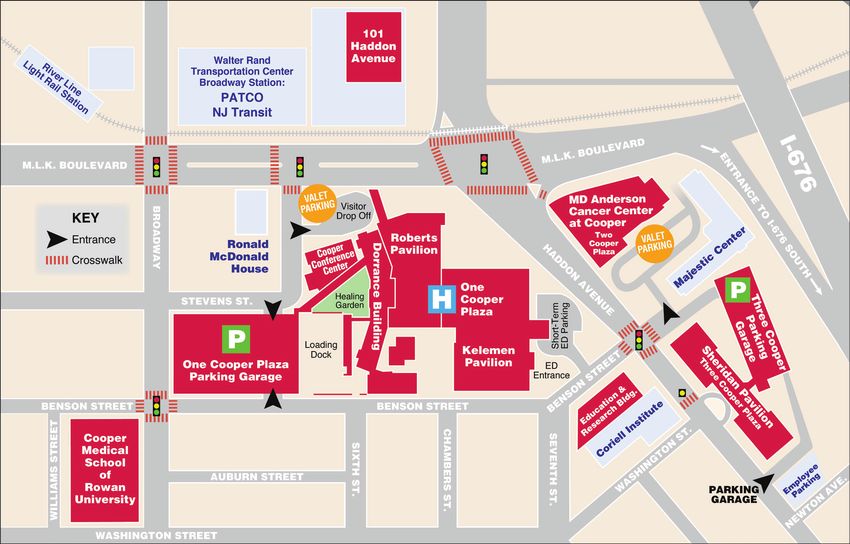
Cardiovascular Disease Fellowship Program

                               General Information
                               Cooper University Hospital is the leading tertiary-level provider serving the southern
                               New Jersey region and its population of approximately 1.5 million. The medical center
                               serves the needs of a broad patient mix and delivers primary, secondary and tertiary
                               medical care. As such, other institutions in the region refer their most complex patients
                               to our full-time faculty in all subspecialties of internal medicine. Cooper physicians
                               treat diverse urban, suburban and rural populations from different socioeconomic and
                               cultural backgrounds.
                               Our clinical campus is renowned for a world-class ICU, Level 1 Trauma Center and
                               Cooper Heart Institute. In annual surveys assessing the region’s medical care, Cooper’s
                               physicians are prominently recognized as “Top Doctors” in their fields. Physicians with
                               a broad and long-standing commitment to resident and fellow education compose a
                               large faculty of full time teachers and practitioners.
                               Cooper University Hospital is the major clinical site of Cooper Medical School of Rowan
                               University (CMSRU), which opened its doors to its first class of medical students in
                               August 2012.
  Cooper University Hospital

     is one of the largest
                               Cardiovascular Programs
                               With 24,500 inpatient admissions and 49,250 outpatient visits annually, the cardiology
  academic medical centers     division sees the gamut – from patients needing routine cardiac care to the most
                               complex of cardiac diseases. Cooper has a 24-bed same day procedure unit for
   in the Philadelphia area    monitoring of patients who have had outpatient procedures or interventions. There
                               is a 12-bed coronary care unit and 75-bed telemetry unit; the latter houses a special
     and the only Level I      area for inpatient angioplasty patients. More than 28,000 echoes (9,100 inpatient) and
                               6,500 nuclear studies (3,000 inpatient) are performed annually in the Cooper system,
      Trauma Center in
                               providing fellows with a wealth of educational opportunities.
    southern New Jersey.       The Cooper Interventional Cardiology Program offers cutting-edge percutaneous
                               therapies for coronary, valve and vascular interventions. There are six dedicated
                               laboratories where more than 7,000 procedures (6,600 coronary, 450 peripheral) are
                               performed each year. Another 1,200 peripheral cases are done in the interventional
                               radiology suites.
                               The Cooper Electrophysiology and Arrhythmia Management Program is one of the
                               most innovative in the Philadelphia area. Cooper electrophysiology is at the leading
                               edge of ablation therapy, device implantation, and arrhythmia detection. There are two
                               dedicated electrophysiology laboratories that last year performed 924 implants and
                               337 ablations.
                               A robust program to treat acute myocardial infarctions is supported by a
                               comprehensive transfer center that features a dedicated helicopter program.
                               Specialized diagnostic and therapeutic modalities, in conjunction with renowned
                               faculty, provide the foundation for an active vascular program, and the Cooper Valve
                               Center is a regional leader in percutaneous valve interventions.

                                                   2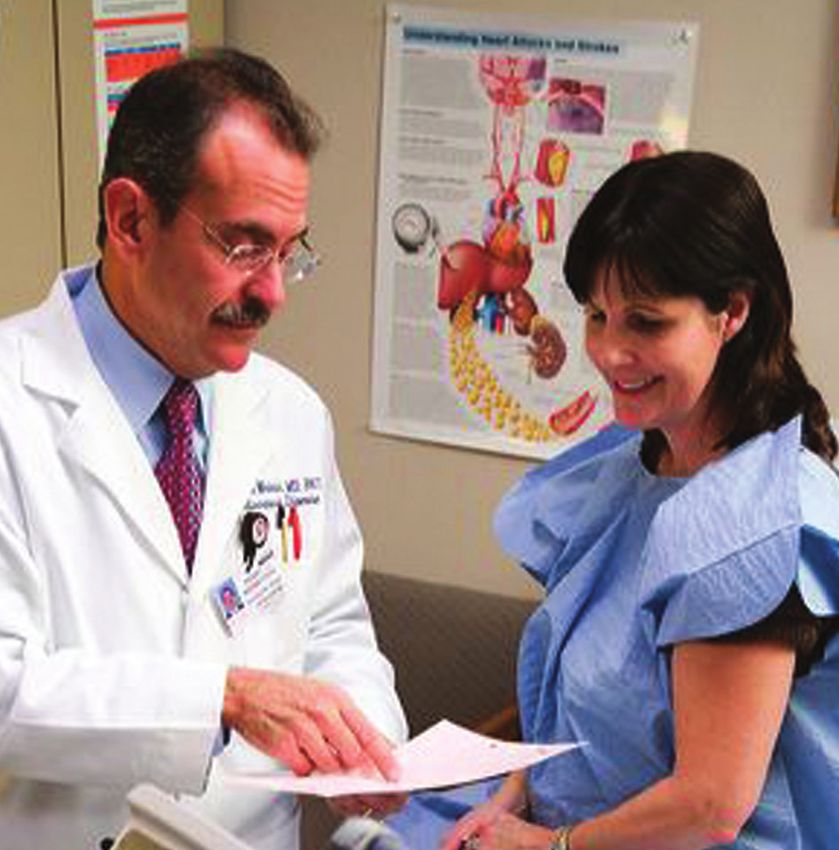
Cardiovascular Disease Fellowship Program, continued

                      Cooper also has nationally recognized critical care medicine and cardiothoracic surgery
                      (550-600 open heart surgeries per year), both closely affiliated with the cardiology
                      division.
                      Fellows rotate through an integrated three-year program, allowing exposure to
                      all faculty cardiologists and division activities. There are clinical rotations as well
                      as rotations dedicated to specific laboratories such as cardiac catheterization,
                      echocardiography and electrophysiology. The trainee’s experiences and specific
                      rotations will depend upon individual needs and career goals, especially in the second
                      and third years when specific career planning has begun. The goal of the program
                      is to train board-eligible internists in the subspecialty of cardiovascular disease and
                      prepare those who are interested in further subspecialty training.
                      The Cardiology Fellowship curriculum is structured to provide well-rounded training
                      in all aspects of cardiovascular disease. Fellows are scheduled for clinical rotations
                      for a minimum of 24 of the 36 months of the fellowship. These rotations include
                      cardiac catheterization, electrophysiology, coronary care unit, clinical consult service,
                      echocardiography, advanced heart failure, and nuclear cardiology. Elective time
                      is flexible, allowing the fellow the opportunity to complete a research project, to
                      acquire specialized skills in non-invasive cardiology such as CT/MR, echocardiography,
                      electrophysiology or nuclear medicine, or to further develop skills in invasive
                      cardiology.

                      Educational Experience
                      First Year:
                      The first year of training consists of introductory rotations including clinical, consult
                      service, cardiac catheterization, echocardiography, electrophysiology and nuclear
                      cardiology. Experiences in exercise testing, outpatient preventive cardiology and
                      the research process also integral. At the beginning of the year, first year fellows are
                      assisted in the transition from internist to cardiologist by a “boot camp” in which
                      faculty introduce them to the basics and subtleties of becoming cardiologists in
                      each of the areas through which they will be rotating.

                      Second and Third Year:
                      The second and third years provide advanced clinical rotations including the coronary
                      care unit and progressive care unit with more autonomy and further time for electives
                      and research. Exposure is provided to higher levels of subspecialty training.
                      Graduating fellows can and do typically achieve level II certification in specialty areas

                                                 to serve
                      depending on their interest including cardiac catheterization, echocardiography, and
                      nuclear cardiology.

                                           3
Teaching Services

                          On the cardiology consult service, fellows have the opportunity to provide consultation
                          for a wide variety of patients admitted across both medical and surgical services. The
                          fellow is provided appropriate autonomy in recommending diagnostic and therapeutic
                          measures.
                          On the cardiac catheterization service, fellows perform procedures and learn
                          hemodynamics, angiography and a variety of diagnostic techniques. A majority of
                          coronary cases performed at Cooper are via the transradial approach. Cooper’s dynamic
                          structural heart program was a pioneer in transcatheter aortic valve replacement, the
                          first PARTNER site in NJ, the first in Philadelphia, and one of the first sites to perform
                          left atrial appendage occlusion in the US.
                          During non-invasive rotations, fellows are involved in both the basics of performing and
                          interpreting echocardiographic procedures as well as basic stress ECG. Senior fellows
                          master more advanced skills, independent performance of echocardiography, trans-
                          esophageal echocardiograms, and nuclear cardiology.
                          On the electrophysiology service, fellows perform arrhythmia consults, review
                          EP studies and are introduced into the EP lab. Interested senior fellows have the
                          opportunity to receive advanced instruction in radiofrequency ablation, event recorder
                          and permanent pacemaker follow-up.
                          On the progressive care (PCU) and Coronary Care (CCU) services, the cardiology fellow
    Fellows are active    performs as a junior attending under the direct supervision of the PCU or CCU teaching
                          attending developing the knowledge base, interactive skills, technical skills and learning
    in medical student    attitudes to provide high-level care to adult patients with both common as well as
                          the most complex forms of heart disease. Fellows are responsible for supervising and
   and medical resident   teaching medical residents and students, and learn to develop the professional skills
                          necessary to interact effectively with patients, families and other health care providers.
        teaching.
                          All trainees are expected to participate actively in research, and protected time is
                          provided for this purpose. Participation in ongoing projects is invited, but the trainee is
                          encouraged to plan and implement at least one project of his or her own design under
                          faculty guidance. Completion of at least one research report is expected and abstracts
                          and/or publication submission is supported.
                          Fellows are assigned to the outpatient clinic one half day per week throughout the 36
                          months. On average, the fellow will be on call less often than one night per week and
                          one weekend every two months. One month of vacation is scheduled each year.

                                               4
                                                              to heal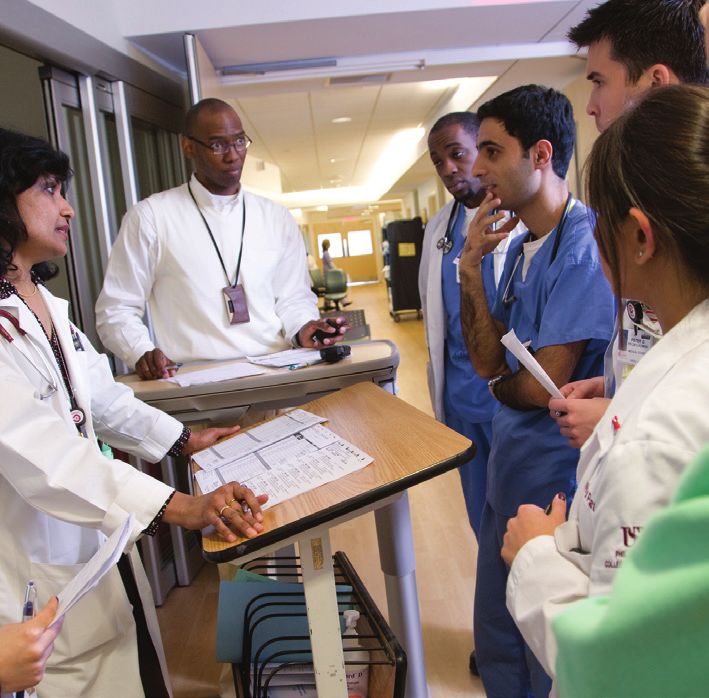
Didactic Conferences

                          Throughout the fellowship, trainees are encouraged to increase their teaching and
                          administrative capabilities, assuming responsibility for various activities such as case
                          presentations, journal clubs, research conference, and assigned didactic lectures.
                          Faculty supervision and assistance is provided in each of these activities. Fellows are
                          active in medical resident and student teaching.
                          Cardiology teaching conferences are held on a daily basis, and the fellows attend
                          all lectures and conferences. Conferences include didactic lectures, journal clubs,
                          electrophysiology, electrocardiography, echocardiography, catheterization, vascular
                          medicine, nuclear cardiology and research conferences, as well as professor’s rounds
                          and cardiovascular grand rounds. Whenever applicable, conference time is divided
                          between lecture material and case presentation.
                          Fellows will be supported to attend at least one national conference or extramural
                          course each year. In addition, meetings at which the fellow presents a paper will be
                          supported.

                          Conference Schedule
                          Monday:           1st and 3rd weeks: Electrophysiology Conference
                          			               2nd week: Fellow Meeting
                          			               4th week: JACC Review
   Cardiology teaching    Tuesday:          AM

   conferences are held   			               1st week: Research
                          			               2nd week: Journal Club
     on a daily basis,
                          			               3rd week: Vascular
    and the fellow will   			               4th week: Statistics, pediatrics, and hemodynamics
                          			               PM
    attend all lectures
                          			               Cath Conference
    and conferences.
                          Wednesday:        1st and 3rd weeks: Echo Conference
                          			               2nd and 4th weeks: Board Review
                          Thursday:         Cardiology Clinical Conference
                          Friday: 		        1st week: Nuclear
                          			               2nd week: EKG
                          			               3rd week: Cardiology Grand Rounds

                               to educate
                          			               4th week: Nuclear

                                               5
How to Apply

                                      The Cardiovascular Disease Fellowship Program at Cooper University Hospital
                                      participates in the Electronic Residency Application Service (ERAS), and all information
                                      is processed through this system without exception. Information regarding the ERAS
                                      application process and timeline is available on the websites listed below

                                      Association of American Medical Colleges
                                      www.aamc.org/eras

                                      ERAS Fellowship Document Office
                                      aamc.org/students/medstudents/eras/fellowship_applicants
                                      ERAS applications must contain of the following information in order for your
                                      application to be considered:
                                          · Common application form
                                          · Curriculum vitae
                                          · Medical school transcript
                                          · Three original letters of recommendation, one of which must be from your
                                            current or most recent training director
                                          · Personal statement describing your training goals and future career plans

     Contact Information                  · USLME reports (1, 2 and 3)
                                          · ECFMG certification if applicable
               Director:
 Zoltan G. Turi MD, MSCAI, FACC
                                      The program director and additional faculty members will review applicant
               Contact:
                                      files. Invitation for interview will be based upon their recommendations.
 Yvonne Soto, Program Administrator
               Phone:                 Program Eligibility
    856.342.2000 ext.1009734          Eligibility for the cardiovascular disease fellowship program requires a
                 Fax:                 minimum of three years of ACGME-accredited training in internal medicine.
           856.968.9587               Individuals accepted for a position in the fellowship program must be U.S.
               E-mail:                citizens, classified as a resident alien or hold a J-1 visa.
  Soto-Yvonne-F @ cooperhealth.edu
              Website:
    cooperhealth.edu/fellowships/
       cardiovascular-disease
              Address:
    Cooper University Hospital
      Division of Cardiology
         One Cooper Plaza
    Dorrance Building, 3rd Floor
        Camden, NJ 08103

                                                          6
The Cooper Campus and Surrounding Area

                             Cooper University Health Care is the leading academic health system in South Jersey.
                             Since 1887, Cooper has been providing quality health care to the people of Camden
                             County and South Jersey. When it comes to care, Cooper’s experts treat minor
                             problems, critical illnesses, and major traumas with the same level of excellence.
                             These experts will train you – the medical professionals of the future – while together
                             as colleagues providing our patients with comprehensive, compassionate care today.
                             It’s more than just medicine, it’s our mission.

                             Located across the Delaware River from Philadelphia, Cooper University Health Care
                             has more than 7,500 employees, including more than 1,250 nurses and 630 physicians
                             in more than 75 specialties. As one of the most trusted health systems in the region,
                             Cooper offers patients quality health care from primary care to specialty care in one
                             or more of its premier Institutes and Centers of Excellence. In 2018, Cooper received
                             28,716 hospital admissions, 80,802 Emergency Department visits, 46,511 visits to
                             our Urgent Care Centers, and more than 1.6 million outpatient visits. Our teams saw
                             23,110 surgical cases, 3,766 trauma cases, and more than 123,000 combined inpatient
                             and outpatient cancer visits.
   The expansion project
                             Cooper University Hospital is the center of a growing Camden Health Sciences
   at Cooper is a direct     Campus that includes MD Anderson Cancer Center at Cooper, Sheridan Pavilion at
                             Three Cooper Plaza medical offices, Cooper Medical School of Rowan University
  reflection of the growth   (CMSRU), internationally acclaimed Coriell Institute for Medical Research, and the
                             Ronald McDonald House of Southern New Jersey. Cooper is proud to be a catalyst
  in services that Cooper    working to transform our community for the better.

   has experienced over      The hospital’s 312,000-square-foot, 10-story Roberts Pavilion features technologically
                             advanced operating room suites with hybrid imaging capabilities, an advanced
  the past several years.    laboratory automation facility, and the 25,000-square-foot Dr. Edward D. Viner
                             Intensive Care Unit—featuring 30 private patient rooms equipped with the latest in
                             advanced technology, and allowing 360-degree patient access. Five patient rooms
                             are capable of negative pressure isolation, and five rooms have chambered isolation
                             alcoves. In addition, an enlarged room with operating room-caliber lighting is outfitted
                             to perform bedside exploratory laparotomy in patients considered too medically
                             unstable for transport to the operating room. We are proud to be the first in the nation
                             to provide advanced surgical trauma training to the United States Army Elite Forward
                             Resuscitation Surgical Team.

                             As South Jersey’s only Level 1 Trauma Center and Level II Pediatric Trauma Center,
                             Cooper provides critically ill patients with life-saving care. Cooper’s two medical
                             transport helicopters have 24/7 access to a helipad with the latest lighting, snow-
                             melting capabilities, and automatic drainage to prevent icing. Our recently-expanded
                             Emergency Department includes state-of-the-art exam rooms and an iTrack system to
                             improve the flow of patients through the ED, reducing patient wait times. Additionally,
                             designated floors within the hospital serve specific patient populations, including those
                             needing advanced surgical and heart care, along with South Jersey’s only dedicated
                             30-bed inpatient cancer unit.

                                                 7
The Cooper Campus and Surrounding Area,                            continued

                   Cooper University Health Care and MD Anderson Cancer Center in Houston, Texas,
                   partnered in 2013 to create MD Anderson Cancer Center at Cooper. Our partnership
                   is a full clinical integration between the two programs. MD Anderson at Cooper
                   physicians adhere to the same philosophy, protocols, and guidelines set by MD
                   Anderson in Houston, and patients receive the same proven practice standards and
                   treatment plans provided at MD Anderson. Today at MD Anderson at Cooper, patients
                   have access to more clinical trials for more types of cancer than ever before, as well
                   as a full range of supportive care services. Additionally, Cooper’s Center for Special
                   Diagnostics, located in our Education and Research Building, includes molecular
                   pathology, flow cytometry, and cytogenetics, enhancing Cooper’s ability to provide
                   genomic testing for cancer patients at Cooper.

                   CMSRU’s Medical Education Building is located on the Cooper Health Sciences
                   Campus on South Broadway, between Benson and Washington Streets. The medical
                   school, which opened in July 2012, was designed to support an innovative curriculum
                   that integrates knowledge of basic science concepts, early clinical experience and
                   patient care, self-directed learning, teamwork, and medical and non-medical activities
                   for the greater community’s benefit. It was featured in U.S. News and World Report’s
                   ranking of the 10 U.S. medical schools with the lowest acceptance rates in fall 2018. It
                   received 6,708 applications and admitted only 203 students, for an acceptance rate of
                   3%. In 2019, 100% of medical students matched with a residency program.

                   The Cooper Health Sciences Campus is located in the heart of Camden’s business
                   district. The academic medical center campus is easily accessible by car or public
                   transportation via the PATCO and bus terminal adjacent to the hospital. Public
                   transportation options offer convenient access to Philadelphia’s cultural, culinary, and
                   historic venues, as well as a range of living and entertainment options in South Jersey,
                   including walkable communities such as Haddonfield and Collingswood.

                   Cooper is a short walk or drive from the exciting Camden waterfront, which includes
                   a magnificent waterfront park and marina; the Adventure Aquarium; and the BB&T
                   Pavilion, which hosts nationally renowned entertainment throughout the year. Nearby
                   are the 76ers Training Complex, L3 Communications complex, Rutgers University
                   Camden Campus, Rowan University, and Camden County College. There are expected
                   to be $350M in transportation and infrastructure improvements within the next four to
                   five years to handle the influx of thousands of new employees to the area and students
                   at nearby growing academic campuses.

                   Cooper is proud to be part of the transformation of our community. Employment in the
                   city of Camden has increased 24.7% in the past few years, with 55.4% of those jobs in
                   the health care and education sectors. And our neighborhoods are safer: the crime rate
                   is at a 50-year low, thanks to an aggressive community policing program.

                   Cooper University Health Care is growing and changing lives. We invite you to be part
                   of our mission: To serve. To heal. To educate.

                                       8
Cooper Camden Campus Map

         The most up-to-date directions to Cooper University Hospital are available at:
                               CooperHealth.org/Locations

                                               9
One Cooper Plaza · Camden, NJ 08103-1489 · CooperHealth.edu Hospital Main Number: 856.342.2000 Graduate Medical Education: 856.342.2922
You can also read


