CDP US Report 2017 - Rackcdn.com
←
→
Page content transcription
If your browser does not render page correctly, please read the page content below

DISCLOSURE INSIGHT ACTION

CDP US Report 2017
Key Findings on Governance, ESG and the Role of the Board of Directors

CDP Report | December 2017

S&P 500 companies are disclosing their environmental
     data to investors via CDP information requests.
     In 2017:

     70 %
     responded to   Climate Change

     51%
     responded to   Water

     41%
     responded to   Forests

02
Contents

04   CEO foreword

05   President foreword

06   Guest foreword

08   Key findings on governance, ESG and the role of the board of directors

18   Corporate overview

46   Corporate scores

78   Investor signatories and members

     Important Notice

     The contents of this report may be used by anyone providing acknowledgement is given to CDP. This does not represent a license to repack¬age or resell any of
     the data reported to CDP or the contributing authors and presented in this report. If you intend to repackage or resell any of the contents of this report, you need
     to obtain express permission from CDP before doing so.

     CDP has prepared the data and analysis in this report based on responses to the CDP 2017 information request. No representation or warranty (express or
     implied) is given by CDP as to the accuracy or completeness of the information and opinions contained in this report. You should not act upon the informa-
     tion contained in this publication without obtaining specific professional advice. To the extent permitted by law, CDP does not accept or assume any liability,
     responsibility or duty of care for any consequences of you or anyone else acting, or refraining to act, in reliance on the information contained in this report or for
     any decision based on it. All information and views expressed herein by CDP are based on their judgment at the time of this report and are subject to change
     without notice due to economic, political, industry and firm-specific factors. Guest commentaries where included in this report reflect the views of their respective
     authors; their inclusion is not an endorsement of them.

     CDP, their affiliated member firms or companies, or their respective shareholders, members, partners, principals, directors, officers and/or employees, may have
     a position in the securities of the companies discussed herein. The securities of the companies mentioned in this document may not be eligible for sale in some
     states or countries, nor suitable for all types of investors; their value and the income they produce may fluctuate and/or be adversely affected by exchange rates.

     ‘CDP’ refers to CDP North America, Inc, a not–for-profit organization with 501(c)3 charitable status in the US and CDP Worldwide, a registered charity number
     1122330 and a company limited by guarantee, registered in England number 05013650.

     © 2017 CDP. All rights reserved.
                                                                                                                                                                              03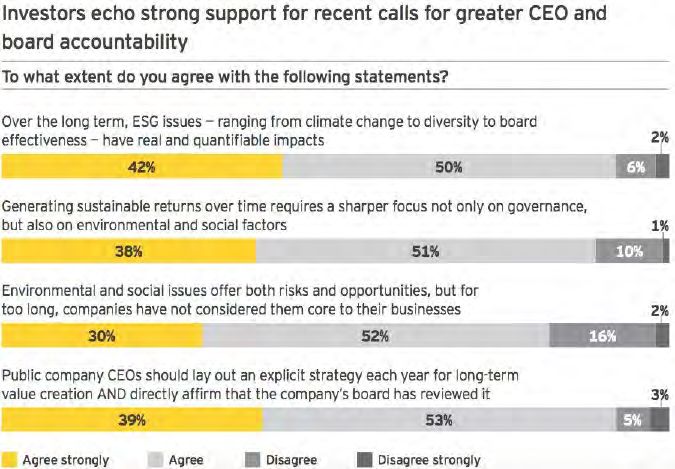
CEO foreword

                              A changing climate is becoming more evident. This year       water and deforestation through our reporting
                              has brought intense Atlantic hurricanes, severe wild fires   platform. This request from CDP was made on
                              in California, an exceptional monsoon across South           behalf of more than 800 investors with assets of
                              Asia, a stifling heatwave across Europe, and record-low      US$100 trillion.
                              wintertime sea ice in the Arctic. These changes threaten
                              ecosystems, communities and our economic well-being,         To meet the growing needs of these investors, we
                                                                                           are evolving our disclosure platform to introduce
                              with significant assets at risk from climate change.
                                                                                           sector-based reporting and align our information
                                                                                           request with the recommendations of the Task
                              This evidence is not going unnoticed. Public concern         Force for 2018. This will help to further illuminate
                              is growing; and policy makers and regulators are             to company boards and their shareholders the
                              responding. The Chinese government, for example,             risks and opportunities presented by the low-
                              is set to launch a national carbon emissions trading         carbon transition, so they can act swiftly to shift
                              scheme by the end of this year. Companies around the         their business models accordingly.
                              world, from all sectors, have begun transitioning their
                              business models away from a dependence on fossil             The environmental disclosures that leading
     The transition to a      fuels and towards the low-carbon economy of the future.      companies are making through CDP are providing
     low-carbon economy                                                                    data across capital markets to inform better
                                                                                           decisions and drive action. Companies are reporting
     will create winners      In this year’s CDP analysis, which is based on the
                                                                                           how science-based carbon emission reduction
     and losers within        climate data disclosed to us by over 1,000 of the world’s
                                                                                           targets can drive business and sustainability
     and across sectors.      largest, highest-emitting companies, we reveal that          improvements. They are showing how renewable
                              a growing number are setting longer-term emissions
     As new businesses                                                                     energy purchases are helping companies to cut
                              reduction targets, planning for low-carbon into their        emissions and how setting an internal carbon price
     and technologies         business models out to 2030 and beyond. The number           can drive efficiency and shift investment decisions.
     emerge and scale up,     of companies in our sample that have committed to set        They are revealing how their products and services
     billions of dollars of   emissions reduction targets in line with or well below a 2   directly enable third parties to avoid greenhouse gas
     value are waiting to     degrees Celsius pathway, via the Science Based Targets       emissions. They are collaborating with cities, states,
     be unlocked, even as     initiative, has increased from 94 to 151 in the space of     regions and other companies to drive positive
                              a year. Continuing this momentum, an additional 317          impact in their own operations and through value
     many more are at risk.                                                                chains.
                              companies plan to commit to a science-based target
                              within two years. EDP and Unilever are two of those
                                                                                           This report tracks the progress of corporate action
                              companies sharing their story of how and why they
                                                                                           on climate change. Last year, in the wake of the
                              decided to set a science-based target in our analysis.       Paris Agreement, we established a baseline for
                              Aligned to these targets, the significant increase in        corporate climate action. This year, we measure
                              companies from our sample that are setting targets to        progress to date. As we show, there are some
                              consume renewable energy including through the RE100         encouraging trends emerging, with more companies
                              initiative, or produce their own, shows how companies        setting further reaching carbon emissions reduction
                              are embracing the cheaper, more secure supply of clean       targets, and greater accountability for climate
                              energy to meet their low-carbon goals.                       change issues within the boardroom. But, there is
                                                                                           no doubt that more companies need to act quickly
                              Regulators have begun to respond to the risks, notably       and the pace of change needs to accelerate if we
                              with the Task Force on Climate-related Financial             are to meet the goals of the Paris Agreement and
                                                                                           ensure long term financial and climate stability.
                              Disclosures. Established by the Financial Stability Board,
                              the Task Force has moved the climate disclosure agenda
                                                                                           Disclosure of quality data is crucial to support
                              forward by emphasizing the link between climate risk         this progress. It leads to smarter decisions and
                              and financial stability. The Task Force has recommended      informs companies and governments of the actions
                              that both companies and investors disclose climate           they need to take. It’s encouraging to see more
                              change information, including conducting scenario            companies setting longer-term targets; data will be
                              analysis in line with a 2 degrees Celsius pathway and        key to seeing how they are performing against these
                              setting out the impacts on their strategy of those           over time.
                              scenarios. This amplifies the longstanding call from
                              CDP’s investor signatories for companies to disclose         Make no mistake: we are at a tipping point in
                              comprehensive, comparable environmental data in their        the low-carbon transition. There are enormous
                              mainstream reports, driving climate risk management          opportunities to be had for the companies that are
                                                                                           positioning themselves at the leading edge of this
                              further into the boardroom.
                                                                                           tipping point; and enormous risks for those that
                                                                                           haven’t yet taken action.
                              This year, more than 6,300 companies, accounting for
                              around 55% of the total value of global listed equity
                                                                                           Paul Simpson
                              markets, have disclosed information on climate change,
                                                                                           CEO, CDP
04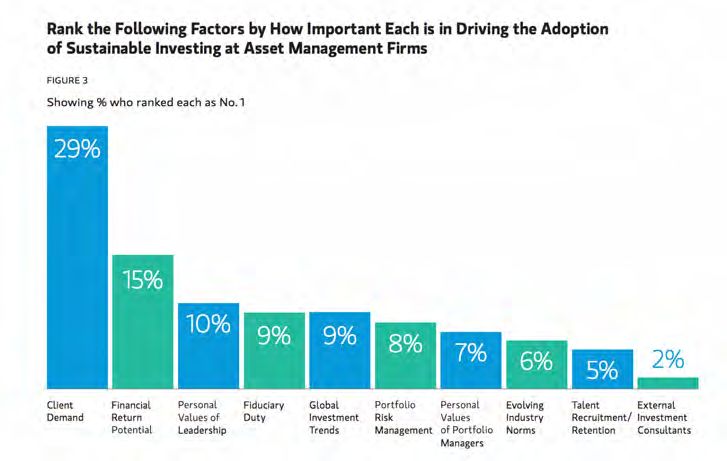
President foreword
                         From America’s City Halls to
                         Corporate Boardrooms: “We Are Still In”

                       Just a few short weeks ago, as we landed on the             States delegation pavilion this year, the group created
                       tarmac in Bonn, Germany preparing for CDP’s annual          their own US Climate Action Center, featuring events,
                       participation in the United Nations climate talks           speakers and corporations from around the country.
                       (COP23) in November, no one knew what to expect             The US Climate Action Center hosted the single largest
                       from this year’s proceedings.                               side event ever held at COP, including an 800-person
                                                                                   standing room only rally in support of “non-state
                       The year leading up to COP23 had been nothing short
                                                                                   actors,” in UN parlance, working toward the goals
                       of tumultuous, especially here in the United States.
                                                                                   of the Paris Climate Agreement with or without the
                       In the past year, we have seen every corner of our          politicians.
                       country battered by record-setting extreme weather
                                                                                   So, while policymakers dally, businesses, investors
                       events and a terrible loss of life in a devastating and
                                                                                   and cities are getting to work. From the backrooms at
                       costly series of hurricanes, floods, droughts and
                                                                                   climate negotiations, to the boardrooms of America’s
                       wildfires, representing a dangerous new norm for
                                                                                   companies, the US is keeping climate action at the
                       Americans.
                                                                                   top of the agenda. Despite a year of public opposition
                       Despite the very real climate change impacts on our         that surely tested the commitment of US companies
While policymakers     nation, the Federal Government announced its intent to      to sustainability, CDP found that American disclosure
dally, businesses,     withdraw from the landmark Paris Climate Agreement,         numbers have increased across the board, and 70
                       which up to that time only Syria and Nicaragua had          percent of the Standard & Poor’s 500 (S&P 500)
investors and cities
                       abstained from signing. Now even those countries have       remains committed to disclosure via CDP’s climate
are getting to work.   signed on, leaving the US as the sole country in the        change questionnaire. In addition, US companies
                       world abstaining from the historic climate accord forged    are outperforming their global peers on a number
                       at COP21 in 2015 in which nearly 200 countries joined.      of indicators when it comes to climate action. There
                                                                                   are more US companies on CDP’s A List and more
                       But while the US Government steps back from global          companies increasing their internal pricing of carbon
                       leadership on this critical issue, the US business sector   than in any other region. Climate change, water and
                       and grassroots step up.                                     deforestation risks are increasingly recognized as
                       American businesses leaders have a message to               material, and their management critical to the overall
                       send the international community, “We Are Still In”,        performance of the business.
                       when it comes to the Paris Climate Agreement.               Climate change poses risks, yes, but it also can present
                       Immediately following the Administration’s pulling out      opportunity. According to State Street Global Advisors
                       of the Agreement earlier this year, the “We Are Still In”   — a CDP signatory requesting increased corporate
                       coalition came together literally over a single weekend     disclosure on climate risk and one of the world’s largest
                       with a pledge to fight climate change and to meet the       asset managers — a majority of asset owners say that
                       US’s greenhouse gas reduction commitments under             the request for and integration of environmental, social
                       the Agreement. The act of hundreds of institutions,         and corporate governance have significantly improved
                       organizations, and sub national governments —               businesses' bottom lines. Perhaps it is no surprise
                       cities, states, companies and universities — coming         then to learn that CDP’s analysis also reveals a clear
                       together to publicly rebuke a policy decision by a          trend in US companies prioritizing climate change at
                       sitting President in a matter of days has never before      the highest levels of their organizations. In 2017, 71%
                       happened in American political history. This was also       of responding companies in the S&P 500 reported
                       the big American success story at COP23 in Bonn.            board level oversight of climate change issues, up from
                       “We Are Still In,” and its companion effort to measure      just under half of companies in 2011. This direction in
                       progress against the goals of Paris, “America’s Pledge,”    governance is another signal that the trends supporting
                       were out in full force at COP23. The group is non-          the transition to a sustainable economy are continuing
                       partisan, with visible participation from Republicans,      to accelerate in corporate America.
                       Democrats, and Independents, and features more              The stakes have never been higher regarding our
                       than 2,600 US CEOs, mayors, governors, university           future and urgent action is needed. US companies
                       presidents, and executive leaders from both red and         are increasingly focusing on critical environmental risk
                       blue states, representing some 130 million Americans        and natural capital issues like climate change, water
                       and half of the US economy. The group presented             and deforestation, as well as on better governance to
                       a united front to fill the void left by the retreating US   manage for and capitalize on the opportunities at hand.
                       negotiators with a pro-business, pro-climate action         For those of us at CDP North America, this means
                       American agenda and voice projected to the world.           actively facilitating corporate environmental disclosure
                       At COP23, America’s true and committed climate              to provide the entire world with the data and insights
                       leaders sent an unwavering signal that businesses           it needs to make progress and be “still in” the climate
                       and the American people are fighting for a secure,          fight.
                       prosperous world free from the worst impacts of a           Lance Pierce
                       changing climate. In absence of the official United         President, CDP North America
                                                                                                                                               05
Investor foreword
                                           The role of boards in the new age of
                                           sustainable investing

                                                                                 modernising company – and            half FTSE250 companies had
                                                                                 disastrous to be on the other side   all-male boards. The discussion
                                                                                 of that equation.                    up until that point had put
                                                                                                                      this issue firmly in the ‘special
                                         ...By now it should be                  But it’s far too soon to relax       interest’ camp, a women’s issue
                                         clear that there is no                  and simply expect the trend to       rather than everyone’s issue. I
                                         such thing as 'non-                     continue. We have some way to        suddenly realised that women
                                         financial' information.                 go before ESG considerations         talking to women about women’s
                                                                                 are truly and permanently            issues was never going to get
                                                                                 integrated into both investment      us very far – and when I started
                                                                                 and corporate thinking. Any          approaching the FTSE100
                                                                                 era of great change encounters       chairmen (and at that point, 99 of
     Welcome to the age of               accompanies this year’s CDP             setbacks and skepticism – they       the 100 were men) things began
     sustainable investing! A new era    North America’s annual disclosure       are part of the process. We          to change. Many were hostile
     is dawning, where successful        report. I’d like to thank CDP for       know that there remains a wide       but an enlightened, powerful
     companies are those that            compiling the evidence, so we           range of views on the importance     minority got behind the initiative
     combine profit with purpose. An     don’t have to rely on intuition or      of action on climate change,         and transformed the thinking –
     era where, as my good friend Sir    anecdotes. The key findings from        of board and leadership team         this suddenly became seen as a
     Win Bischoff, Chairman of the       the survey highlight an increasing      diversity and over what makes        business issue. The results were
     Financial Reporting Council, the    realisation amongst investors           for good governance. Those           transformative too – within five
     UK’s official guardian of good      and boards that environmental,          debates are healthy; we need to      years, the percentage of female
     corporate governance, put it        social and governance                   keep drawing attention to those      FTSE100 directors had more
     recently in public remarks in       considerations are central to a         cases where companies have           than doubled, there were no all-
     Asia, smart boards are the ones     business’s long-term prospects.         either been punished or rewarded     male FTSE100 boards and just
     putting the overall health of a     This is entirely welcome – and          for taking thoughtless or            15 all-male FTSE250 boards.
     company ahead of the wealth         utterly logical, given the litany of    thoughtful positions respectively.
     of its shareholders. Importantly,   examples across the globe in            In particular, we should highlight   Now, the effort is around the
     it’s not a matter of choosing one   recent years where shareholder          the financial success stories,       female executive pipeline – and
     over the other; instead, there’s    value has been destroyed as a           where companies earning more         broadening the talent pool of
     a growing understanding that        consequence of lax employee             green revenues, creating inclusive   potential boardroom candidates
     the creation of shareholder value   safety, inadequate responses to         workplaces and aligning their        to include all dimensions of
     ultimately depends on broader       climate change, cavalier attitudes      behaviours with the strong           diversity, particularly ethnicity.
     considerations than earnings in     to corporate culture or reputation,     values of the next generation of     In all honesty investor pressure
     the next quarter or two.            egregious executive pay or              customers are recognised for         has played only a partial role in
                                         simply poor decisions taken             their efforts through the share      this shift – with few investors
     It’s an exciting time for those     by complacent, old-fashioned            price.                               prepared to use their voting to
     of us who’ve long held this         boards.                                                                      insist on substantial change – so
     view, as the evidence grows                                                 In the meantime, we can all play     just think how much more we can
     that this forward of thinking is    By now it should be clear that          a part in continuing to progress     achieve if we used our power to
     no longer the preserve of a few     there is no such thing as ‘non-         company analysis and the             the full. If we believe that diverse
     campaigners but becoming the        financial’ information. And -           creation of top quality boards.      thinking adds value, if action to
     norm amongst both investors         happily - the impact is not just felt   This is not an issue to delegate     help preserve the planet is not
     and board directors. The reality    on the downside; forward-looking        or simply assume it is someone       just right but financially beneficial,
     is that a more holistic, as well    companies, attuned to this              else’s responsibility – we can all   we should put ourselves and
     as longer-term approach to          sweeping trend, are the ones with       influence the rate as well as the    the assets of our clients to work
     company strategy is in tune with    better more sustained financial         degree of progress. I’ve seen        accordingly. Everything points in
     the way our world is evolving.      performance and, on occasion, a         how change is perfectly possible,    that direction!
     Values, reputation and trust are    “winner takes all” share price leap     that even the skeptics will come
     now quite obviously integral to     as they disrupt outdated models.        around to a new way of thinking      I hope you find the survey results
     sustained corporate success and     This is good news for customers,        if they can genuinely see the        interesting and encouraging.
     key determinants of a business’s    for a more positive relationship        merits of the idea and we all
     licence to operate.                 between business and society,           start moving forwards together.      Dame Helena Louise Morrissey, DBE
                                         and a necessary evolution of            I founded the 30% Club in the        Head of Personal Investing,
     That this view is becoming          capitalism. It’s an exciting time       UK in 2010, when just 12.5%          Legal & General Investment Management

     mainstream is confirmed             to be a responsible investor,           of FTSE100 board directorships
     by the research survey that         and a director of a modern or           were held by women and over
06
Evolution of governance in ESG issues

                        In a world where data cascades upon us         In addition, results from various other
                        like rainfall, it has become common to say     CDP initiatives also suggest questions
                        “what gets measured, gets managed,”            Board members may wish to consider.
                        implying that the process of seeking           For example, does a company use an
                        measurement data triggers management           internal carbon price for planning or other
                        involvement. True enough. But also, by         operational guidance? This is quite relevant
                        extension, what gets managed must be           for Board members to know, since it is
                        governed. For governance, by definition,       increasingly recognized that setting an
                        is intended to ensure responsible              internal carbon price is a useful planning
                        management focus and effective                 and operational tool, even for companies
                        prioritization on behalf of shareholders and   not yet covered by mandatory emissions
                        consumers, all the more important given        reductions programs.
                        increasingly unpredictable external forces,
                        such as climate change.                        Or, at a more broad level, how does
                                                                       implementing the landmark Paris
...what is the moral    This year, to accompany our annual             agreement in 2015--which calls for gradual
and practical           disclosure results, we have synthesized        ratcheting up of emission reduction
responsibility of       key research findings on governance,           ambition, a five year-review of progress
Boards in the flux of   especially the role of Boards of Directors     in 2020, and a leveling off of emissions
today's world?          in highlighting and overseeing corporate       growth by mid-century—align with
                        response to short and long-term                individual Board responsibility? What
                        environmental risks.                           segment of the objectives ahead fall within
                                                                       the arc of any given Board member’s
                        We present these findings and                  tenure? Other questions of governance
                        observations here because climate change       relevance include whether a company’s
                        related financial and operational risks are    sustainability effort is adequately
                        increasingly recognized as core to overall     integrated to core financial considerations
                        business staying power and therefore the       and investor relations, especially given
                        purview of Boards. Likewise, focus on          broadening of the definition of fiduciary
                        environmental performance appears to           duty.
                        be increasingly correlated with admirable
                        financial return, as are other so-called       In short what is the moral and practical
                        non-financial parameters such as board         responsibility of Boards in the flux of
                        diversity of thought, expertise and            today’s world? This is the question we
                        gender. Studies of these relationships are     hope to illuminate here.
                        multiplying and complement disclosure.
                                                                       Paula DiPerna
                                                                       CDP Special Advisor

                                                                                                                      07
Key findings on governance, ESG and
                                  the role of the board of directors

     CDP Governance Data

            The number of S&P 500 companies reporting board level oversight on
            climate issues has steadily increased from 50% in 2011, to 71% in 2017.

            US companies are lagging significantly behind the rest of the world when it
            comes to board-level oversight on water issues, with 52% of US companies
            reporting this versus the global average of 78%.

            Similarly, board oversight of deforestation risks lags in the US compared
            to the global picture, as 36% of US companies report board level oversight
            versus the global average of 67%.

      In addition to what was found in CDP responses regarding board oversight of climate issues, we undertook a
      review of the current literature surrounding the role of the board in governance and ESG issues. Below are the key
      findings, and some of the excerpts of that literature review.

         KEY FINDINGS:

         In a 2017 survey of 130 board members from BDO USA, 54% believe sustainability disclosures are important
         to inform investors. Last year the percentage was 24%.
         In a 2015 survey by the Massachusetts Institute of Technology (MIT) and Boston Consulting Group (BCG),
         60% of investment firm board members say they are willing to divest from companies that have poor
         sustainability performance.
         In the same 2015 study by MIT and BCG, 75% of executives in investment firms agreed that a company’s
         sustainability performance is materially important to their firms when making investment decisions.
         Forum for Sustainable and Responsible Investment (US SIF): as of year-end 2015, more than one out of every
         five dollars under professional management in the United States—$8.72 trillion or more—was invested
         according to SRI strategies, up from $3.74 trillion in 2012.

08
Board oversight:
How many US companies report that their Board of Directors have direct responsibility for each
environmental risk factor?
Climate                                                        Water                                    Deforestation
Year          # of companies                                    Year   # of companies                   Year   # of companies
2017 331                                                        2017 96                                 2017 20
2016 317                                                        2016 89                                 2016 15
2015 293                                                        2015 73                                 2015 12
2014 275                                                        2014 61
2013 259
2012 225
2011 195
1

                                            Climate
                                            US companies have lagged significantly behind the rest
                                            of the world when it comes to Board-level oversight on
                                            climate issues.
                                            Companies who reported board-level
                                            oversight on climate change:

                                                            67%                    90%
                                                    US                  rest of the world
                                                                       (excluding the US)

Water                                                                           Deforestation
US companies have lagged significantly behind the rest                           US companies have lagged significantly behind the rest
of the world when it comes to Board-level oversight on                           of the world when it comes to Board-level oversight on
water issues.                                                                    deforestation issues.

Companies who reported board-level                                               Companies who reported board-level
oversight on water:                                                              oversight on deforestation:

                            52%                    78%
                                                                                                 36%                    67%
                   US                   rest of the world
                                       (excluding the US)                                   US             rest of the world
1
    includes self-selected companies
                                                                                                          (excluding the US)
                                                                                                                                          09
Investors demanding ESG management
Driving forces of investor interest
Journal of Sustainable Finance & A third, related factor behind the emergence of the
Investment (2015) sustainability oriented investor is a shift in attitude
Roughly 90% of studies find a nonnegative ESG–CFP within the investor community about the connection
(Corporate Financial Performance) relation. More im- between strong sustainability performance, value
portantly, the large majority of studies reports positive creation, and risk reduction.
findings. We highlight that the positive ESG impact on Morgan Stanley Institute for Sustainable
CFP appears stable over time. Promising results are Investing (2016)
obtained when differentiating for portfolio and
Several factors are behind the rapid mainstream
nonportfolio studies, regions, and young asset classes
adoption of sustainable investing. First and foremost
for ESG investing such as emerging markets, corpo-
comes client demand, cited by almost one-third of
rate bonds, and green real estate.
respondents surveyed. But respondents also
MIT Sloan Management Review and BCG study indicated that financial return potential, the personal
(2015) values of company leaders, fiduciary duty and global
At least three factors are driving investor interest investment trends are key drivers. In addition,
in sustainability. One is the growth of analytics and interviewees singled out the fossil fuel divestment
sophisticated modeling that shows how and when movement in response to climate change as a major
sustainability investments create shareholder value. catalyst for recent conversations with both
institutional and high net worth clients and as an issue
Another factor is research from academic institutions
that has raised overall awareness of the field.
and investment firms that links effective management
of material sustainability issues to strong financial
performance.
Source: Morgan Stanley
10Investor demand & client interest
Blackrock (2017) Corporate governance (G) –including board com-
2017-2018 engagement priorities: Governance, position and its role in shaping and overseeing
corporate strategy; compensation, climate risk strategy –is another signal of the quality of lead-
disclosure; human capital. ership and management. Examining ESG factors
can therefore support and enhance traditional
It is the responsibility of BlackRock’s Investment financial analysis.
Stewardship team to engage with portfolio com-
panies to understand their approach to corporate EY and Institutional Investor (2017)
governance, including the management of rel- More than 80% of the survey respondents [in-
evant environmental and social factors…Where vestors] agreed with four statements related to
reporting requirements are silent on an emerging Fink’s points: that CEOs should lay out long-term
issue, we believe it is important for companies board-reviewed strategies each year; that com-
and investors to develop disclosure guidelines. panies have not considered environmental and
social issues as core to their business for far too
How a company manages the environmental (E)
long; that generating sustainable returns over
and social (S) aspects of its business –those that
time requires a sharper focus on ESG factors;
are relevant to performance and value creation –
and that ESG issues have real and quantifiable
is a signal of how well the company is run and its
impacts over the long term.
long-term financial sustainability.
Source: EY
11Short Termism vs Long-Term Value Creation
Trends and Stats
Harvard Business Review (2015) Principles of Responsible Investment
Almost 80% of [400 CFOs interviewed] said (2017)
that they would sacrifice economic value for In just two years, investment has risen among
the firm in order to meet that quarter’s earnings the PRI’s signatories in environmental and so-
expectations. cial themed investing from 267 signatories with
US$808m in AUM in 2014 to 465 signatories
Blackrock (2016) with US$1.29trn in AUM in 2016.
Analysis of more than 160 academic studies
demonstrates that companies with high ratings State Street (2017)
on ESG factors have a lower cost of In 2017 we will be increasingly focused on
capital, while separate research finds that board oversight of environmental and social
greater transparency of public companies in sustainability in areas such as climate change,
disclosing non-financial (ESG) data results in water management, supply chain management,
lower volatility. safety issues, workplace diversity and talent
management, some or all of which may impact
Harvard Law School Forum on long-term value.
Corporate Governance and Financial
Regulation (2016) We also believe that boards can play an
important role in strengthening a company’s
In 2015 and 2016, less than 10% of board approach to sustainability and that it is for the
seats conceded in an activist campaign result- board, as part of its oversight of strategy, to
ed from a proxy contest, versus 34% in 2014. ensure that management consider, and
The average time it takes companies to reach a communicate, how these issues affect
settlement with activists threatening a proxy long-term strategy, if at all. We have developed
contest is currently 56 days from the time of a series of questions to help guide boards in
disclosure of the activist’s position, down from undertaking this process.
83 days in 2010.
Goldman Sachs (2017)
Our analysis shows that by focusing on a
selective suite of key ESG metrics,
mainstream investors can add a differentiated
and alpha-additive complement of risk analysis
to their toolkit…Where robust data is available,
[environmental and social] metrics make a
tangible difference to performance.
12Recent surge in pressure from institutional investors to balance
short-term activism with long-term value creation strategies
State Street:
Our mission is to invest responsibly to promote economic prosperity and social progress. We
do that by helping clients achieve investment goals, whether it is saving for retirement, funding
research and innovation or building the infrastructure of tomorrow. Most, if not all, of these
desired outcomes are long term in nature. Indeed, our fiduciary responsibility is to ensure that
we are maximizing the probability of attractive, long-term returns on our clients’ behalf.
BlackRock:
Environmental, social, and governance (ESG) factors relevant to a company’s business can
provide essential insights into management effectiveness and thus a company’s long-term
prospects. We look to see that a company is attuned to the key factors that contribute to
long-term growth: sustainability of the business model and its operations, attention to external
and environmental factors that could impact the company, and recognition of the company’s
role as a member of the communities in which it operates. A global company needs to be local
in every single one of its markets.
Vanguard:
In the past, some have mistakenly assumed that our predominantly passive management style
suggests a passive attitude with respect to corporate governance. Nothing could be further from
the truth. We will be investors in your company during good times and bad. We want to see our
clients’ investments grow over the long term, and good governance is a key to helping companies
maximize their returns to shareholders.
13Fiduciary duty inclusion of ESG issues
Best practices
Marsh & McLennan Companies (2017) Heidrick and Struggles (2017)
Given their potential impact on the organization, There are three leadership and talent levers a board
climate-related risks must be integrated into the can pull to help ensure that the company it oversees
company’s ongoing risk assessment and quantifi- is best equipped to address ESG factors:
cation processes and the board’s oversight of risk Establish an ESG early-warning system: In a
management. In describing the board’s oversight of study of 1,200 leaders conducted by Whar-
climate-related issues, the TCFD recommends that ton, 60% of senior executives admitted that
directors consider the following to support their organizations had been blindsided by
disclosure: three or more high-impact events within a
Processes and frequency by which the five-year period.
board and/or board committees (such as Make sure the top team has the right capa-
audit, risk, or other committees) are bilities to drive exemplary ESG performance:
informed about climate-related issues. All leaders in the C-suite—not just the chief
sustainability officer, chief risk officer, or
Whether the board and/or board commit-
chief diversity officer—should be aware of
tees consider climate-related issues when
today’s higher ESG stakes.
reviewing and guiding strategy, major plans
of action, risk-management policies, Make sure the organization has the ability
annual budgets, and business plans, as well to accelerate ESG performance: Instead
as when they are setting the organization’s of acting only as wise overseers of ESG,
performance objectives, monitoring boards will also act as catalysts of speed,
implementation and performance, and making sure that management has in place
overseeing major capital expenditures, the ability to accelerate ESG performance
acquisitions, and divestitures. as needed.
How the board monitors and oversees PWC (2014)
progress against goals and targets for If ESG is a fiduciary duty [it is] then board members
addressing climate-related issues. are not prepared: three-quarters of directors say they
have not had substantial discussions about human
rights, climate change, carbon emissions, and
resource scarcity.
14Evidence that ESG factors are a fiduciary responsibility
Glass Lewis (2016) Organization for Economic
Companies such as Tokyo Electric Power Co-operation and
Company, Walmart, BP and Massey Energy Development (2017)
have suffered massive blows to shareholder Pension funds, insurers and asset manag-
wealth as a result of significant environmental, ers should be equipped to understand and
social and/or governance related issues. respond to potential risks and opportunities
arising from ESG-related factors in order to
State Street (2017) safeguard the assets that they invest on behalf
Of the top 10 global risks the World Economic of their beneficiaries and clients.
Forum has identified in terms of their likelihood
and impact, 70% were associated with
environmental and social risks
Source: Pearl Meyer and NACD
15Board composition effects on ESG management
Evidence for board composition and diversity effects on
ESG management
Heidrick and Struggles (2017) Journal of Business Ethics (2015)
While discussing best ESG practices of corporate boards: Using seven different measures of board diversity across
consider the composition of the board and its ability to foresee 1,489 U.S. firms from 1999 to 2011, the study finds that board
threats and opportunities. Make sure the top team has the right diversity is positively associated with CSR performance. Board
capabilities for driving exemplary ESG performance. Make sure diversity is associated with a greater number of areas in which
the organization has the ability to accelerate ESG performance. CSR is strong and a fewer number of areas in which CSR is a
concern.
If the board’s capability is weak, then it might want to consider
ESG expertise as one of the attributes required of new appoin- Credit Suisse
tees. If the need for such expertise is particularly pressing, the
board can also temporarily expand to meet the need for some- (2014) Share price outperformance has been sustained: Since
one who can advise on the material implications of ESG issues. the start of 2012, there has been a 5% outperformance on
a sector neutral basis by those companies with at least one
State Street (2017) woman on the board. A longer trend analysis shows a com-
pound annual excess return since 2005 of 3.7%.
Attributes of Effective Independent Board Leadership
(2015) Where there is one female in the boardroom, companies
A skilled independent leader of the board
have seen an average ROE of 14.1 percent (sector adjusted)
Effective board processes since 2005 compared to 11.2 percent for all male boards.
Rich mix of board skills and experiences, including (2016) Data shows a linear relationship as we see for the
deep industry expertise dividend payout ratio, 15% lower for companies with 25%
Clear delineation of roles/accountability between women, 18% for those with 33% and 26% for those with 50%.
board and management. While we still do not argue causality, there is a consistency in
our findings that demonstrates that greater gender diversity at
Governance Structures That Enhance Effectiveness senior levels leads to greater returns for a company and alpha
Robust Selection Process generation for investors. And alpha generation at lower risk.
The Position Should Be Sufficiently Tenured (three- State Street (2017)
year minimum) Boards that embrace a broader range of perspectives are
Performance Evaluation of the Board Leader more likely to avoid groupthink and achieve better outcomes.
A quarter of Russell 3000 companies still don’t have a single
Planning for Succession. woman on their boards — and for nearly 6-in-10 that do, less
than 15% of their board members are women.
Journal of Global Responsibility
US Government Accountability Office (GAO) (2017)
Multiple regressions state that female members in the manage-
ment board do have a positive impact on ESG performance, GAO identified various factors that may hinder women's in-
measured by the AssetFour database by Thomson Reuters. creased representation among board directors. These include
boards not prioritizing recruiting diverse candidates; few
Thomson Reuters (2016) women in the traditional pipeline to board service—with Chief
Based on the current Thomson Reuters Diversity & Inclusion In- Executive Officer (CEO) or board experience; and low turnover
dex scoring methodology, the 100 highest ranked D&I compa- of board seats.
nies have over time outperformed the Thomson Reuters Global
Developed Index benchmark since 2011. Characteristics Forbes (2016)
shown by the top 100 companies include but are not limited Companies in the MSCI All Country World Index (ACWI) with a
to: better return on equity, better profit margins, higher dividend higher percentage of women on the board had fewer instances
yields and lower beta. of bribery, fraud and corruption, and companies with at least
one female director had a higher Return on Equity.
16Efforts to increase board diversity and best practices
The 30% Club A diverse board boosts decision-making quality. As
Scott Anderson, chairman, president, and CEO of
A group of Board Chairs and CEO’s who have committed to Patterson Companies, states, “The quality of
meeting the voluntary goal of at least 30% women on FTSE discussions goes up dramatically when you have
100 Boards and S&P 500 companies by 2020. a more diverse group in the boardroom.” Rodney
McMullen, chairman and CEO of Kroger, adds that
Women's Forum of New York
“you get questions from perspectives that you hadn’t
The pre-eminent organization of business, cultural and civic thought of before, and I think this helps you avoid
leaders promotes the goal of gender parity of 40% on Boards more blind spots.”
by 2025 through its database and honoring companies that
have prioritized gender diversity.
The Conference Board, Committee on Economic
Development
If prominent corporations adopt a target of recruiting women
in one of every two board seat openings due to normal retire-
ments and existing female seats are retained, CED believes
that 30 percent participation would likely occur by 2018.
McKinsey (2017)
Make a visible commitment to diversity with sustained
action throughout the organization;
Set new principles for decision making (eg, include
women on every candidate slate);
Look beyond current CEOs and other members of the
C-suite;
Consider candidates with the right expertise, not just
those with prior board experience;
Expand your network to include more women and
explicitly ask search -firms for female candidates;
Cultivate long-term relationships with prospective
candidates.
Board diversity helps to draw in and motivate talented
employees. As Genpact’s Tiger Tyagarajan explains,
“To attract the best talent into the company, you
need to appeal to 100 percent of the top talent, not
50 percent. To do that, you need strong female role
models.”
Boards that represent the customer base have better
intuition. For retailers in particular, the reality is that
women make up more than half of global purchasers.
Board diversity is simply better business.
17Corporate
Overview
18Corporate synopsis
USA A List 2017
The Climate A List was Company Climate change Water Forests
established in 2011 and was Adobe Systems, Inc. A
introduced for Water and
Alphabet, Inc. A
Forests in 2015 and 2016
respectively. Companies Altria Group, Inc. A
who achieve the Climate A Apple Inc. A
List have shown a thorough
understanding of risks and Bank of America A
opportunities related to climate Best Buy Co., Inc. A
change, and have formulated Biogen Inc. A A
and implemented strategies to
mitigate or capitalize on these BNY Mellon A
risks and opportunities. Those Caesars Entertainment A
who achieve the Water A List
Cisco Systems, Inc. A
have robust procedures to
assess water-related risks, and Colgate Palmolive Company A A
their impacts on the business’ Conagra Brands Inc A
growth strategy. They have
integrated water management Ecolab Inc. A
into their business strategy with Farmer Brothers A
clear company-wide targets
Ford Motor Company A
and goals.
General Motors Company A
Goldman Sachs Group Inc. A
Key: Hewlett Packard Enterprise Company A
HP Inc A A
Company was not
requested to disclose Intel Corporation A
for this program International Flavors & Fragrances Inc. A
Kellogg Company A
Company disclosed Las Vegas Sands Corporation A
voluntarily for this Lockheed Martin Corporation A
program (i.e. was not
requested) Microsoft Corporation A
NRG Energy Inc A
Oracle Corporation A
Owens Corning A A
Philip Morris International A A
The Mosaic Company A
Waste Management, Inc. A
19Corporate synopsis
Disclosure Summary
51% 49% 25%
462
345
883
222
449 169 56
US companies responded to at least Climate Change Water Forests
one of the three investor-led programs
in 2017.
Climate-related disclosure on governance is a core component of the recommendations from the Task Force on Climate-related
Financial Disclosures (TCFD). TCFD specifically recommends companies describe the board’s oversight of climate-related risks
and opportunities. While many companies in 2017 reported having Board-level oversight on climate change, water and forests
issues, it continues to be an area for growth.
% respondents with Board-level oversight
67% 52% 36%
Response Rate by Sector
Calculation based on the number of companies responding
to at least one of the three investor-led programs.
Consumer Consumer
Discretionary Staples Energy Financials Health Care Industrials
39% 60% 15% 58% 54% 58%
72 out of 187 52 out of 87 16 out of 108 52 out of 89 44 out of 81 68 out of 117
Information Telecommunications
Technology Materials Real Estate Services Utilities
63% 52% 32% 70% 38%
71 out of 112 43 out of 82 14 out of 44 7 out of 10 23 out of 60
20Public Commitments
The US private sector is continuing to step up on climate action with major corporations across the country doing their part to keep global
temperature rise well below 2 degrees Celsius, understanding the risks it poses to their customers and bottom lines.
Companies are increasingly looking to demonstrate along with hundreds of businesses globally, their commitment to building a low-carbon
economy through bold initiatives on the Take Action Platform, which brings together leadership initiatives led by the We Mean Business
coalition partners.
121 US companies are leading the way, making 168 climate committments.
They include:
59 companies committed to set science-
based emissions reductions targets
40 companies committed to source
100% renewable power
Companies are also taking ambitious action by 1:
Committing to double energy productivity (EP100)
Committing to electric vehicles and charging infrastructure (EV100)
Growing the market for sustainable fuels (below50)
For more info on the full platform of initiatives and companies taking action, visit www.cdp.net/commit or www.wemeanbusinesscoalition.org.
Businesses have the opportunity to lead
Emissions Targets the way on solving climate change. The
transition to a low-carbon economy is underway and
362 At least one target
accelerating globally. Hundreds of companies in the
US are already responding to investor and customer
314 At least one
relevant target demands by setting targets to cut greenhouse gas
emissions. These targets, however, often don’t go fast
252 At least one relevant
target beyond 2020
or far enough to ensure companies are adequately
prepared for a low-carbon world.
59 Committed to
setting an SBT Science-based targets (SBTs) provide a
clear pathway to reduce carbon footprint
21 An approved
SBT
and future-proof business growth. SBTs
specify how much and how quickly a company needs
to reduce its greenhouse gas emissions, in line with the
Paris Agreement goals to limit global warming to well
below 2°C.
The Science Based Targets initiative (SBTi) is an NGO partnership
that provides a clear framework for science-based target setting and
supports companies by providing tools, best practice guidance and
resources, as well as independently reviewing and approving targets.
Learn more at sciencebasedtargets.org.
1
Other initiatives not listed include: Putting a price on carbon, removing commodity-driven deforestation from all supply chains, improving water security, reducing short-lived
climate pollutant emissions (SLCPs), engaging in climate policy, implementing the TCFD recommendations in corporate financial reports, and joining the low-carbon technology
partnerships initiative (LCTPi).
21Consumer Discretionary
39 %
128
52% 33% 18%
72
113
(72 out of 187)
66 24 20
US companies in the
Consumer Discretionary sector Climate Change Water Forests
responded to at least one
investor-led program in 2017.
While many companies in 2017
reported having Board-level oversight on 61% 46% 30%
climate change, water, and forests issues,
it continues to be an area for growth.
% respondents with Board-level oversight
A List Key Industries
Companies responding to at least one program
Best Buy Co., Inc.
Retailing (21)
Caesars Entertainment
Ford Motor Company
Hotels, Restaurants & (13)
General Motors Company Leisure, and Tourism Services
Las Vegas Sands Corporation
Media (12)
New Responders
Bed Bath & Beyond Inc., CBS Corp.,
GameStop Corp., Lear, Mohawk
Consumer Durables, Household (9)
Industries, Inc., Tenneco
and Personal Products
BorgWarner, Lear, Newell Rubbermaid Inc.,
Wyndham Worldwide Corporation
Automobiles and Components (8)
Columbia Sportswear, Hilton Worldwide, Inc.,
Lowe's Companies, Inc., Target Corporation,
Time Inc., VF Corporation, Wyndham Textiles, Apparel, Footwear and Luxury Goods (7)
Worldwide Corporation, Yum! Brands, Inc.
Non-responders Tires (1)
Amazon.com Inc, AutoZone, Inc., Netflix, Inc., Tesla
Motors, Inc., Ulta Beauty Inc. Home Building (1)
22Companies taking action
Due to the potentially catastrophic
The TCFD recommends disclosure on how organizations effects of climate change, governments
identify, assess, and manage climate-related risks. Many US around the world have or are likely to
companies are already taking action by implementing enact policies and regulations that
long-term risk assessments and management could impact our operations and
products. Because it may take 3-5
strategies to ensure that the most pertinent climate-related years to design and develop a vehicle
risks and opportunities are evaluated and disclosed on. before it is launched in the market and
then remain competitive and compliant
for another 4-7 years, GM must have a
% with long-term approach to regulatory risks.
any risk
assessment
92% 79% 75% - General Motors Company
process
Climate Water Forests
Change
% considering
risks more
than 6 years
into the future 47% 53% 13%
We are committed to sourcing
deforestation free, peat free, and
exploitation free palm oil. This
approach is consistent with our
Companies are engaging with suppliers on key
Coffee and Farmer Equity (C.A.F.E.)
sustainability issues. Within the Consumer Discretionary and Cocoa Practices programs…
sector, companies reported engaging with an average of As members of the RSPO we are
more than 900 suppliers on GHG emissions and climate committed to working with other
change strategies, representing roughly 60% of their spend. members and industry stakeholders
to increase sustainable production
practices and support innovation.
- Starbucks Corporation
% engaging
with suppliers
directly
64% 58% 90%
Every year, more companies make public commitments
to building a low-carbon economy through a variety of bold American casino and resort Las
initiatives led by the We Mean Business coalition partners. Vegas Sands Corp. commits to
reduce absolute Scope 1 and 2
26 public commitments have been announced by companies GHG emissions for resort operations
in the Consumer Discretionary sector. 9% by 2021 from a 2015 base-year.
They also commit to reduce absolute
7 committed to 100% renewable
power
Scope 1 GHG emissions of the
company’s ferry operations 19% by
2030 from a 2015 base-year.
10 committed to adopt a science-based
emissions reduction target
23Consumer Staples
60 %
68
72% 75% 40%
48
68
(52 out of 87)
49 36 27
US companies in the
Consumer Staples sector Climate Change Water Forests
responded to at least one
investor-led program in 2017.
While many companies in 2017
reported having Board-level oversight 73% 66% 37%
on climate change, water, and forests
issues, it continues to be an area for
% respondents with Board-level oversight
growth.
A List Key Industries
Altria Group, Inc. Companies responding to at least one program
Farmer Brothers Food and Beverage Processing (29)
Colgate Palmolive Company
Conagra Brands Inc.
Kellogg Company
Consumer Durables, Household and (8)
Philip Morris International Personal Products
New Responders
Food and Staples Retailing (7)
TreeHouse Foods Inc, UNFI
Pilgrims Pride, Procter & Gamble Company
Campbell Soup Company, Conagra Brands Forest and Paper Products - Forestry, (5)
Inc, Flowers Foods Inc, Procter & Gamble Timber, Pulp and Paper, Rubber
Company, Sanderson Farms Inc, Tyson
Foods, Inc.
Non-responders Tobacco (3)
Monster Beverage Corporation, Coty Beauty, Rite Aid
Corp, Whole Foods Market, Inc.
24Companies taking action
[Our] Sr. Director of Global Sustainability
The TCFD recommends disclosure on how organizations reports formally to Kimberly-Clark's
identify, assess, and manage climate-related risks. Many US Nominating and Corporate Governance
companies are already taking action by implementing Sub-Committee of the Board of Directors
long-term risk assessments and management the results of the risk management
processes addressing concerns and
strategies to ensure that the most pertinent climate-related suggested action plans related to
risks and opportunities are evaluated and disclosed on. risks and opportunities with regard
climate change and other sustainability
and environmental high impact areas
% with (i.e., water scarcity, water quality, air
any risk
assessment
94% 94% 78% emissions, fiber/forest management, etc.)
- Kimberly-Clark Corporation
process
Climate Water Forests
Change
% considering
risks more
than 6 years
into the future 65% 61% 32% PepsiCo is working to realize our goal
of zero deforestation in our company-
owned and -operated activities and
global supply chains from direct supplier
to source by the end of 2020. ...PepsiCo
Companies are engaging with suppliers on key sourced 100% certified sustainable
palm oil in 2015 primarily through the
sustainability issues. Within the Consumer Staples sector,
use of Green Palm Credits. To support
companies reported engaging with an average of more the RSPO, we encouraged our direct
than 800 suppliers on GHG emissions and climate change suppliers to be RSPO members, and
strategies, representing roughly 49% of their spend. 93% of our suppliers (supplying 98% of
all palm oil procured by PepsiCo) were
members by the end of 2016.
- PepsiCo, Inc.
% engaging
with suppliers
directly
82% 43% 85%
Colgate Palmolive, Farmer Brothers,
Every year, more companies make public commitments General Mills, Kellogg, Mars,
PepsiCo, Philip Morris International,
to building a low-carbon economy through a variety of bold Procter & Gamble, and Wal-Mart
initiatives led by the We Mean Business coalition partners. have all had their emissions targets
approved by the SBTi.
37 public commitments have been announced by companies
in the Consumer Staples sector. Global food and beverage manufacturer
Mars commits to reduce absolute Scope
1,2 and 3 GHG emissions 27% by 2025
14 committed to adopt a science-based
emissions reduction target
and 67% by 2050 from a 2015 base-year.
Within that goal the company commits to
reduce Scope 1 and 2 emissions 40% by
committed to remove commodity-driven 2025 and 100% by 2040.
6 deforestation from all supply chains by
2020
25Energy
15 %
108
15% 15%
None
40
Requested
(16 out of 108)
16 6
US companies in the Energy
sector responded to at least one Climate Change Water Forests
investor-led program in 2017.
While many companies in 2017
reported having Board-level oversight
on climate change, water, and forests
69% 33%
issues, it continues to be an area for
% respondents with Board-level oversight
growth.
The highest level of direct responsibility for climate change is the Hess Executive Leadership Team which comprises the
company’s most senior executives and is chaired by our CEO, who sits on the Board. The Hess Executive Leadership
Team focuses on operational, strategic, environmental and financial issues and is the highest approval body before the
Board of Directors.
- Hess Corporation
Oxy’s Environmental, Health and Safety Committee of the Board of Directors is briefed annually (and more frequently
as needed) on water-related matters. This Committee provides oversight on health, environmental and safety issues of
importance to the Company, including water management.
- Occidental Petroleum Corporation
Key Industries
New Responders
Companies responding to at least one program
Westmoreland Coal Company
Oil and Gas (14)
Non-responders
Apache Corporation, Continental Resources Inc,
Kinder Morgan Inc., Marathon Petroleum, Phillips 66,
Schlumberger Limited, Valero Energy Corporation Mining - Coal (2)
26You can also read


