Claiming and Making Muslim Worlds: Across and Between the Local and the Global - Zentrum Moderner Orient
←
→
Page content transcription
If your browser does not render page correctly, please read the page content below
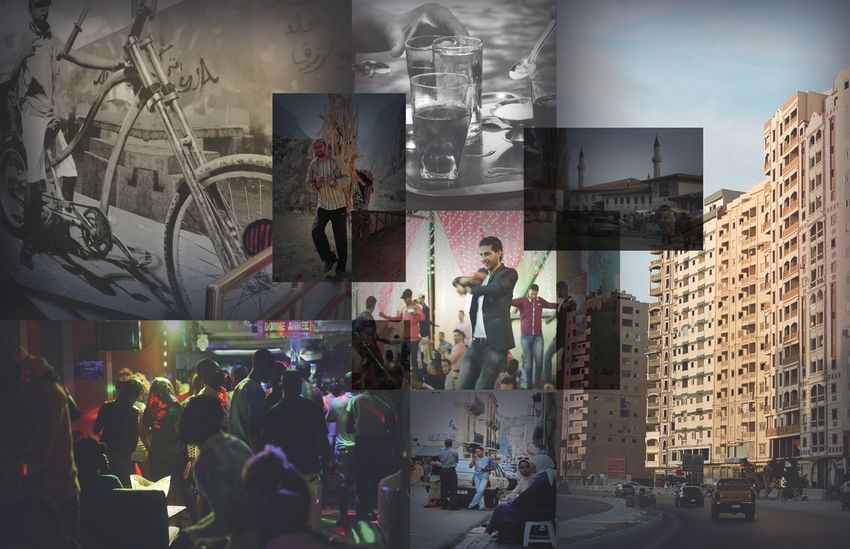
PROGRAMME

Sponsored by 	Federal Ministry of Education and Research (BMBF)   Claiming and Making Muslim Worlds:
                         Leibniz-Zentrum Moderner Orient (ZMO)
                                                                   Across and Between the Local and the Global

                                                                                         3–5 April 2019
                                                                                         Leibniz-Zentrum Moderner Orient
                                                                                         Kirchweg 33
                                                                                         14129 Berlin

                                                                   Contact & Enquiries   MuslimWorlds2019@zmo.de
Claiming and Making Muslim Worlds:
Across and Between the Local and the Global
Conference Programme, 3–5 April 2019, ZMO
Convenors Jeanine Dağyeli (Nazarbayev University, Astana)
Ulrike Freitag (ZMO)
Paolo Gaibazzi (ZMO)
Claudia Ghrawi (ZMO)
Norman Saadi Nikro (ZMO)
Dietrich Reetz (ZMO)
Our conference marks the completion of ZMO’s twelve-year research programme The conference reflects ZMO’s ongoing interdisciplinary research interest in
Muslim Worlds – Worlds of Islam? Conceptions, Practices, and Crises of the translocal and globalizing processes from the perspective of the “Global South”.
Global. Conducted over three days in April 2019, the conference consists of eight It therefore goes against the grain of predominating conceptual, historical, and
panels, a keynote lecture by Professor Seema Alavi, and a roundtable discussion, geographical research repertoires that assume the centrality of the global north.
titled Was sind muslimische Welten? Fragen an den globalen Norden, mod- Such repertoires have tended to portray Islam and the Muslim world as singular
erated by ZMO’s Director Professor Ulrike Freitag. and homogeneous. Accordingly, panel presentations strive to complicate any
neat compartmentalizing of historiographical and geographical categories.
Panellists at the conference present their perspectives on the study of predom-
inantly Muslim societies of Asia and Africa, as well as regional interconnec- In her Keynote, “Muslim Cosmopolitanism and the Writing of World History”,
tions. Scholars specifically address the notion of Claiming and Making Muslim Seema Alavi adds a historical perspective on how Muslim scholars and thinkers
Worlds, exploring religious affiliations and practices, extending to social, eco- contributed to projects of modernity. Focusing on a Muslim scholar from colonial
nomic and cultural modalities of life. From a variety of disciplines, panellists dis- India, Imdadullah Makki (1817-99), she discusses the imperial rivalries through
cuss pluralities of actors, institutions, locations and world making – for Muslim which he established his own institution and discourse of Muslim cosmopolitan-
subjects and non-Muslims alike. ism.
Our plural notion of worlds encompasses local and global, or translocal, inter- The roundtable, “What Are Muslim Worlds? Talking Back to the Global North”,
sections. Worlds refers to varying traditions, institutions, and media, by which takes place in the late afternoon of the second day, and is conducted in German.
people go about shaping their sense of self and place, claim their connections Participants discuss how scholarship on and in Muslim worlds relate to public
and affiliations, religious and otherwise. Place and environment are increasingly debates in Europe about Muslims and Islam, and further address possible links
mediatized by varying technological applications, symbolic transactions, social between their research frameworks and the social forces shaping scholarly ori-
imaginaries, and differentiated circulations of resources. In addition, they are entations, such as media reports and discussions in political and social forums.
crisscrossed by movements of migration. While there are hardly any localities
not impacted by globalizing interactions, by the same token, the global is un-
thinkable without a sense of the local.Day I – 3 April 2019
12.00 –13.00 Registration 15.45–17.15 Governing the Sahel-Sahara:
Bad Islam and Good Muslims
Convenors: Britta Frede (ZMO), Judith Scheele (ZMO),
13.00–13.45 Opening and Introduction Abdoulaye Sounaye (ZMO)
Ulrike Freitag (ZMO) Discussant: Baz Lecocq (Humboldt University, Berlin)
Britta Frede (ZMO):
The Islamic Republic of Mauritania and its Governance of
(Trans)local Islamic Heritage
Judith Scheele (ZMO):
Thematic Section: Religious Worlds Islam as World Religion in Northern Mali
13.45–15.15 Religion and Ideas of World Order: Abdoulaye Sounaye (ZMO):
Claims, Engagements and Transformations Treating Muslim Subjects: Deradicalizing the Sahel
Convenor: Antía Mato Bouzas (ZMO)
Antía Mato Bouzas (ZMO): 18.00 –19.30 Keynote Lecture
Religion in the Making of Transnational Spaces
Seema Alavi (Delhi University):
Dietrich Reetz (ZMO): Muslim Cosmopolitanism and the Writing of World History
Amir or Shura: How to lead a global missionary movement of
Islam like the Tablighi Jama’at Introduction: Heike Liebau (ZMO)
Moderators: Paolo Gaibazzi (ZMO), Claudia Ghrawi (ZMO)
Lorenzo Casini (University of Messina):
Ordering Islam within the Bounds of the Novel: Religion,
Modernity and the Nation 19.30 ReceptionDay II – 4 April 2019
Thematic Section: Values in Circulation
9.30 –11.00 Making Muslim Spaces in the Indian Ocean 14.30 –16.00 The Moral Economies of Resource Valuation and Extraction
Convenor: Sebastian Prange (University of British Columbia) Convenors: Katharina Lange (ZMO), Jeanine Dağyeli
Chair and Discussant: Ulrike Freitag (ZMO) (Nazarbayev University, Astana)
Discussant: Jeanine Dağyeli (Nazarbayev University, Astana)
Sebastian Prange (University of British Columbia):
The Hindu King who loves the Muslims: Expanding the Dar Patrick Schukalla (ZMO):
al-Islam on the Sixteenth-Century Malabar Coast Becoming the Nuclear Front-End – On the Uranium Frontier
in Tanzania
Scott Reese (University of Northern Arizona):
“The Ink of Understanding”: The complicated relationship be- Erdem Evren (ZMO):
tween manuscripts and print within the Islamic written tradi- Negotiating Extraction
tion of East Africa and the Horn
Julien Brachet (Université Paris I, IRD):
Tika Ramadhini (ZMO): The (Im)moral Economy of Natron Mining in Northern Chad
Jawah Women’s Learning Activities in Mecca, Nineteenth to
Twentieth Century
18.00 –19.30 Roundtable Discussion: Was sind muslimische Welten?
11.30 –13.00 Challenging the North/South Divide: Fragen an den globalen Norden
Multicentric Flows in Muslim Worlds
Convenor and Discussant: Stefan B. Kirmse (ZMO) Venue: Leibniz-Gemeinschaft, Raum Hannover, 5th Floor,
Chair: Jeanine Dağyeli (Nazarbayev University, Astana) Chausseestraße 111, 10115 Berlin
Rebecca Gould (University of Birmingham): Word of Welcome: Matthias Kleiner (Leibniz Association)
The Obligation to Migrate: Hijra and Cultural Memory in the Moderator: Ulrike Freitag (ZMO)
Soviet Caucasus Literatures
Participants:
Manja Stephan-Emmrich (Humboldt University, Berlin): Charlotte Wiedemann (Journalist, Berlin)
Bourgeois Islam and Other Post-national Sensibilities: Tracing Mamadou Diawara (Goethe University, Frankfurt)
Im/-material Flows Across Central Asia and the Gulf Claudia Derichs (Humboldt University, Berlin)
Bekim Agai (Goethe University, Frankfurt)
Sumit Mandal (University of Nottingham):
Music, Faith, and Commerce: The Nature, Reach, and Impact The event will be held in German.
of Islamic Devotional Music in Southeast AsiaDay III – 5 April 2019
Thematic Section: Unmaking and Remaking Muslim Worlds Thematic Section: Rethinking Muslim Worlds
9.30–11.00 Overcoming Division: 14.30 –16.00 Intellectual Cultures, Philosophy, and Critical Thinkers:
Religious and Non-Religious Norms in Global Transitional Challenges, Pathways and Reservoirs for Decolonization
Justice Processes Convenors: Kai Kresse (ZMO), Nils Riecken (ZMO)
Convenor: Sonja Hegasy (ZMO)
Nils Riecken (ZMO):
Susanne Buckley-Zistel (University of Marburg): Abdallah Laroui’s Situated Universalism: Conceptual Trans-
Transnational Memorialisation of Past Atrocities lation and the Re-Working of the Historicity of Concepts
Brahim El Guabli (Williams College): Anaheed Al-Hardan (American University of Beirut):
Islamizing Memory: Islamist Prison Literature and Moroccan On South-South Circulations, Histories and Possibilities in the
Cultural Memory Arab World
Farzana Haniffa (University of Colombo): Abdulkader Tayob (University of Cape Town):
Transitional Justice in Sri Lanka: Muslim Engagement with the Nativizing Religion between Muslim Intellectuals and the
National Discourse Enlightenment Project
11.30 –13.00 Muslim Liminality in Migrant Spaces: 16.30 –18.00 Closing Discussion
Berlin During the Era of the World Wars
Convenor: Peter Wien (University of Maryland) Moderators: Jeanine Dağyeli (Nazarbayev University, Astana),
Chair: Katrin Bromber (ZMO) Norman Saadi Nikro (ZMO), Dietrich Reetz (ZMO)
Peter Wien (University of Maryland):
Survival Strategies in Nazi Berlin: Husni al-’Urabi’s 89 Months
in Exile
Jan Brauburger (ZMO):
Imperial Anticolonialism: The Camp Newspaper ‘El Dschihad’
and the Propaganda to Muslim Prisoners of war in Germany,
1915-1918
David Motadel (LSE, London):
Anti-Colonial Revolutionaries in Wartime BerlinYou can also read


