Compendium January 2021 - K+S Group
←
→
Page content transcription
If your browser does not render page correctly, please read the page content below
K+S Group

Compendium
January 2021
K+S Group
K+S at a Glance
                                                     K+S Group financials 2019
     Revenues                                   EBITDA                         EBITDA-Margin              Earnings after taxes, adj.
    € 4.07 billion                            € 640 million                         16%                         € 78 million

                               OU Europe+: Revenues: € 2.54 billion; EBITDA: € 437 million; Margin: 17%

                                   OU Americas: € 1.53 billion; EBITDA: € 230 million; Margin: 15%

                                                         Customer Segments

    Agriculture                               Industry                         Consumers                      Communities

                                                                                                            18%
    42%       Revenues                                 Revenues          12%           Revenues                         Revenues
              € 1.72 billion            28%            € 1.15 billion                  € 0.48 billion                   € 0.72 billion

                                                                                                            15%
              EBITDA                                   EBITDA                         EBITDA                            EBITDA
    46%                                                                  9%
              € 295 million                            € 218 million                  € 60 million                      € 94 million
                                        34%
              Margin 17%                               Margin 19%                     Margin 12%                        Margin 13%

3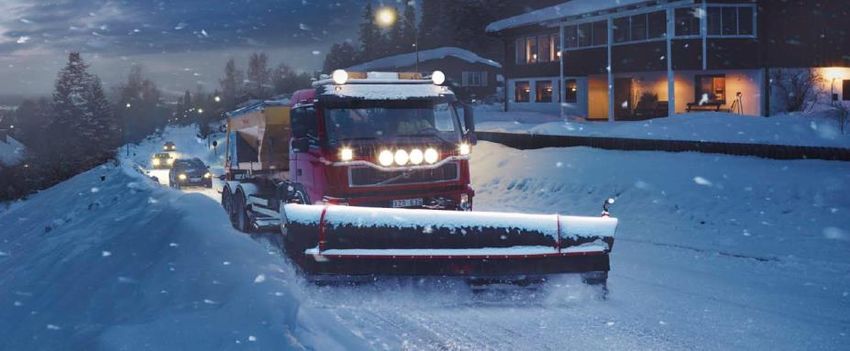
Global Presence¹
1 Revenues   by regions 2019

                                                                    40 %

                                                             36 %

                                                                    3%
                                                                           9%

                                                      13 %

    Employees by region 2019

       69%        22 %
                               5%     3%       1%

     Germany     North      South    Rest of   Asia
                America    America   Europe

4
Customer Segments - Overview

                                                                   2019        EBITDA
                                                               Revenue share   margin

                 • Potassium chloride (MOP)
                 • Fertilizer specialities                         ~42%         17%
   Agriculture

                 • Chemical               • Oil and Gas
                 • Pharma                 • Water Softening                    19%
                                                                   ~28%
                 • Food                   • other Industrial
     Industry    • Animal Nutrition         products

                 • Culinary
                 • Water and Pool                                  ~12%         12%
                 • Ice Melt
   Consumers

                 • De-icing bulk
                 • De-icing packaged
                                                                   ~18%         13%
   Communities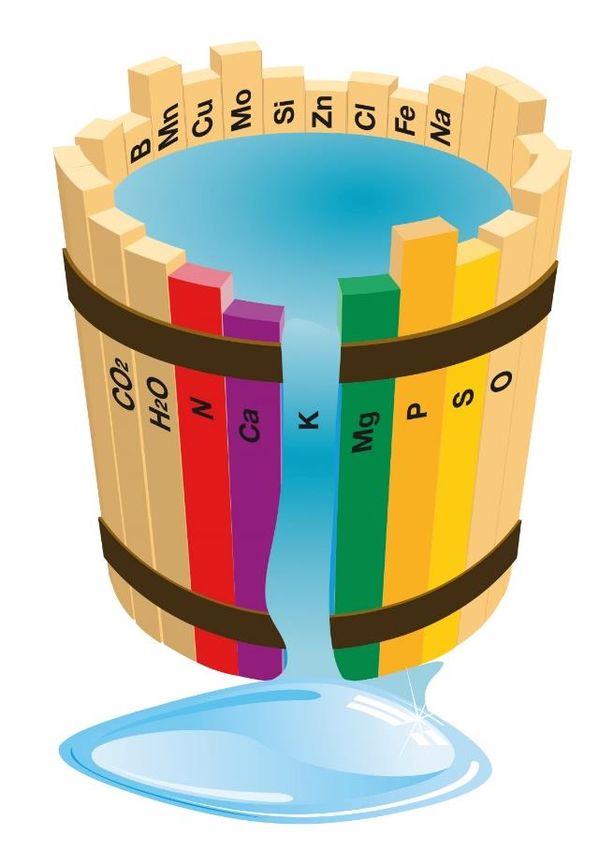
Adding value along our entire supply chain

        Exploration
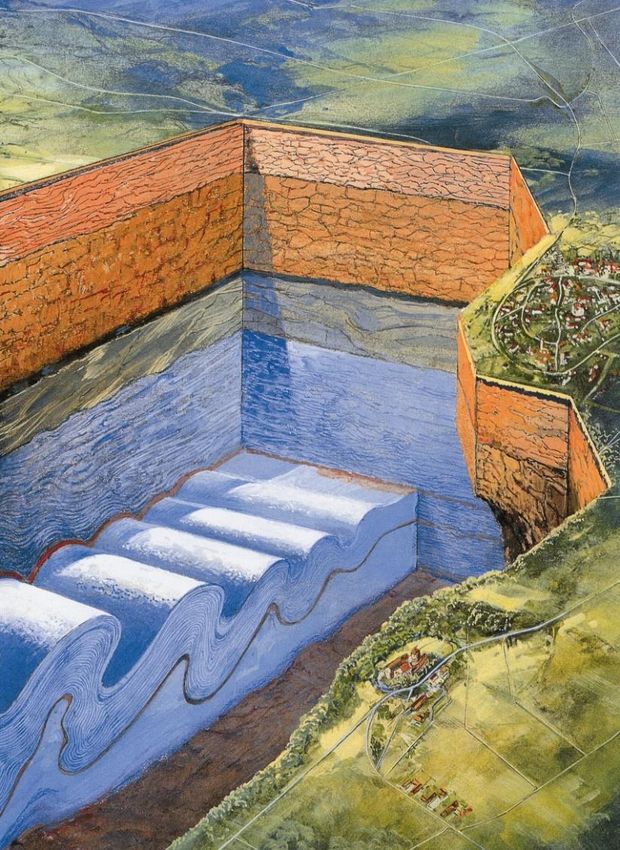
        Our potash and salt deposits came into being millions of years ago. They are either our property or we have corresponding rights or
        approvals that allow the extraction or solution mining of the raw material reserves.

        Mining
        We extract raw materials in conventional mining above and below ground as well as through solution mining. We also use the power of
        the sun and extract salt by evaporating sea water or saline water.

        Production
        The refining of raw materials is one of our core competencies. Above ground, the crude salt is processed in complex, multi-phase,
        mechanical or physical processes, with the natural properties of the mineral remaining unchanged.

        Logistics
        The long-term securing of freight capacity is of strategic importance to us. A large part of our international transport volume is forwarded
        by service providers with which we maintain long-standing partnerships.

        Sales/Marketing
        The K+S Group wants to be its customers’ preferred partner in the market. High product quality and reliability are decisive preconditions
        for this. K+S offers a comprehensive range of goods and services for agriculture, industry and private consumers.

        Application
        Our customers apply our products, use our raw materials in their processes or process them in their products. We make extensive
        product information available and advise our customers on the application of our products.

6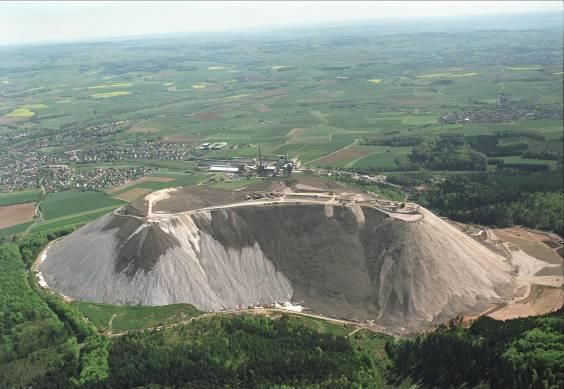
Board of Executive Directors

       Dr. Burkhard Lohr   Thorsten Boeckers   Mark Roberts
       CEO                 CFO                 Member of the Board

7
Active Portfolio Management
                     Salt             Salt         Salt          Salt                         Salt              Salt

                  Acquisition      Foundation   Acquisition   Acquisition                  Acquisition     Acquisition

                                                                                                            Ashburton
                                                                                                              Salt

      1999             2000            2002         2006          2009          2011           2012          2016          2017

     Fertilizer       Fertilizer                                Fertilizer    Fertilizer      Fertilizer    Fertilizer    Fertilizer

    Acquisition     Acquisition                               Acquisition    Divestment      Divestment    Acquisition   Acquisition

8
Signing achieved for complete OU Americas sale

                         Key data of the
                         signed agreement:
                         •   Buyer:               Stone Canyon Industries
         POINTE-CLAIRE                            Holdings LLC, Mark Demetree and
                                                  affiliates

      CHICAGO            •   Gross proceeds:      USD 3.2 bn

     1                   •   EV/EBITDA:           12.5x 2019 EBITDA of USD 257m
                         •   Closing timeline:    Summer 2021
                         •   Exp. net proceeds:   €~2.5bn after tax (currency risk fully
         SANTIAGO DE
                                                  hedged)
         CHILE

9
Key Financials

Revenues    (€ billion)                        EBITDA (€ million)

     4,2                                        1.058
                                 4,0    4,1
            3,5           3,6

                                                                           606     640
                                                                    577
                                                          519

     2015   2016          2017   2018   2019    2015      2016      2017   2018   2019

EBITDA-Margin         (%)                      FCF vs Net Financial Debt/EBITDA
                                                                    5.2
                                                                                   4.9
                                                          4.6
                                                                            5.3
      25                                                                          +140
                                                                           -206
                                                                    -390
             15             16    15     16     -636
                                                         -777
                                                 1.3

     2015   2016          2017   2018   2019    2015     2016       2017   2018   2019

10
Important megatrends
8.5bn 0,2
Global population in Average global warming (ºC)
2030 ▪ Arable land shrinking
▪ Yield needs to be improved
Today: 7.3bn Per decade ▪ Higher efficiency of fertilization and
irrigation needed
Implications for K+S ▪ Plants have to be more stress resistent
▪ Infrastructure needs to be
40 % 5.4bn improved → focus on renewable
of population suffer from people belonging to energy
water shortage by 2030 the middle class by
2030
▪ Growing population, especially in Asia,
needs more salt for various purposes
70% of water used 2015: 3.0bn
for agriculture
11Growth Areas
K+S Growth Landscape
Geo-expansion Fertilizer Industry
Africa Increase of fertilizer specialties Expand Pharma & Food portfolio
Asia Ramp of low-cost commodities Chemical applications
Growth areas and ideas cover core and adjacent businesses
12K+S sustainability KPIs and targets 2030
Environment
Target by 2030 at
Goal KPI 2018 2019
the latest
Deep-well injection of saline waste water in
1.2 1.5 0 starting January 2022
Germany (m³ p.a.)
Water
Additional reduction of saline process water -500,000 excluding
+400,000 +800,000 reduction by KCF facility and
from potash production in Germany (m³ p.a.)* end of production SI
Environment
Amount of residues used for other purposes
than tailings or increased amount of raw 1.0 1.5 3
Waste material yield (million tons p.a.)
Additional area of tailings piles covered (ha) 5.9 8.7 155
Carbon footprint for power consumed (kg
-1.5 % -1.7 % -20 %
Energy & CO2/MWh)
Climate Specific greenhouse gas emissions (CO2) in
-2.0 % -11.1 % -10 %
logistics
* LTI relevant
13K+S sustainability KPIs and targets 2030
People
Target by 2030 at
Goal KPI 2018 2019
the latest
Health & 0
Lost time incident rate (LTIR)* 8.5 10.3
Safety Vision 2030
People
Diversity & Employees’ favorable perception of 68 %
54 % >90 %
Inclusion inclusive work environment (2015)
Human Sites covered by a human rights due
0% 8% 100 %
Rights diligence process
Business Ethics
Critical suppliers aligned with the K+S 100 %
Business Ethics
Sustainable 14.7 % 23.3 %
Group Supplier Code of Conduct (SCoC)* by end of 2025
Supply
Chains > 90 %
Spend coverage of the K+S Group SCoC* 29.4 % 44.9 %
by end of 2025
Compliance All employees reached by communication
100
& Anti- measures and trained appropriately in 70.9 100
by end of 2019
Corruption compliance matters (percent)
14
* LTI relevantCustomer Segments ▪ Agriculture ▪ Industry ▪ Consumers ▪ Communities
Long-term dynamics in demand for our Customer Segments
Customer Segments
                       Demand driven by …

                            Arable land shrinking

                               Water shortage

                         Increasing standard of living

     Agriculture                                             Consumer
                             Population growth

                    Economic growth and industrialization

                                Urbanization

                         Winter weather conditions

                         Infrastructure development
       Industry                                             Communities
                               Global warming

16
Customer Segment Agriculture at a Glance
Customer Segment Agriculture
Characteristics
▪ Close proximity to our main customers provide logistical
in € million 9M/2019 9M/2020 advantages
Revenues 1,326.1 1,231.3 ▪ Shipments to overseas customers at competitive costs
from Hamburg harbor
Sales volume (mt) 4.77 5.31
▪ Strong and long-standing customer relationships
EBITDA 265.6 147.8 ▪ Broad specialty portfolio provides flexibility and stability,
partly following different trends and seasons
Revenue Split by Region 2019 (%) Revenue Split by Products 2019 (%)
Others
5 Fertilizer specialities
42
Asia
19
Europe
50
thereof Germany 1 2 Potassium chloride
12 58
South
America
22
North America
4
17Why use fertilizers?
Customer Segment Agriculture
▪ For plants to thrive they need sunlight, water and
minerals
▪ There are only few soils on earth which have a
sufficient content and availability of plant nutrients
to achieve high yields over a longer period without
fertilization
▪ Potash is an indispensable supplement to the
natural nutrient content of soils
▪ Compensation of the nutrient losses by harvest
and other losses is necessary
“The growth and yield of plants are limited by the
nutrient which is in shortest supply”1
1 Justus von Liebig, 'The Natural Laws of Husbandry', 1863
18Long-term key drivers for our fertilizer business
Customer Segment Agriculture
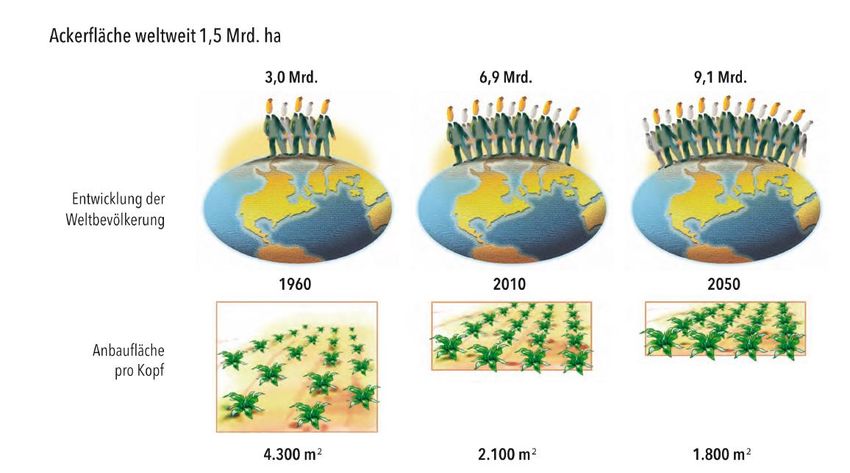
Less arable land – but more protein consumption per capita
Jahr 1960 2010 2050
Global population
Each year an additional 80 million
development people need to be fed – this equals to
6.9 billion 9.7 billion
the population of Germany
3.0 billion
Arable land Available arable land per capita will
per capita
decrease at the same time
4.300 m² 2.100 m² 1.800 m1
By 2050 an expanded world population
Protein
per capita
will be consuming two thirds more
animal protein than it does today
60 g/ day 80 g/ day 130 g/ day1
In 2050, only roughly a quarter of a soccer field will be available to feed one person year round - 80 percent of future
growth in crop production will come from yield advancements
driven by balanced use of fertilizers
Sources: UN, World Population Prospects, 2012 Revision, UNDP, 2013; FAOStat 2014
1 FAO 2014 - forecasts based on the expected increase in animal protein
19What makes us different?
Customer Segment Agriculture
Fertilizer Specialties ▪ mainly used for special applications
(e.g. chloride-sensitive crops)
▪ products containing a broad range of nutrients
(e.g. potash, magnesium, sulphur)
▪ premium products used for high-value crops
Potassium Chloride ▪ can be applied universally to all crops not sensitive
(MOP) to chloride and to all types of soil
▪ standard product used for commodity crops
20Potash Price Development
Customer Segment Agriculture
Pricing (Source: FMB Argus Potash)
USD/t EUR/t
400 500
Potassium
Sulfate
375 (SOP)
Europe 450
350
400
325 Potassium
Chloride
(MOP) Brazil Potassium
300 350
Chloride
(MOP) Europe
275
300
250
250
225
200 200
MOP gran. Brazil USD/t, cfr (left scale) SOP Europe EUR/t, cfr (right scale)
MOP gran. Europe EUR/t, cfr (right scale)
21World potash production and sales by region
Customer Segment Agriculture 24
in million tonnes
22
32
5
6 6
10
17
14
1
2
Basis: year 2019 World potash production: World potash sales volume:
Incl. sulphate of potash
and low-grade potash
2019: 71.0 million tonnes 2019: 68.5 million tonnes
Sources: IFA, K+S 2018: 72.3 million tonnes 2018: 71.8 million tonnes
22Supplier structure on the world potash market
Customer Segment Agriculture
29% World Potash Sales Volumes:
2019: 68.5 million tonnes
2018: 71.8 million tonnes
16%
15% 15 %
9%
7%
4% 3%
2% 1%
Canpotex BPC Uralkali K+S ICL APC EuroChem SQM China Other
Nutrien Belaruskali DSW Participation Participation > 20 Intrepid
(prev. Potash Corp. & Agrium) CPL of Nutrien of Nutrien producers Vale
(prev. Potash Corp.) (prev. Potash Corp.)
Mosaic Iberpotash Compass
Usbekistan
Laos
Basis: 2019
Source: IFA, K+S Incl. potassium sulphate and potash grades with lower K2O content
23World potash supply and demand
Customer Segment Agriculture
Production is driven by demand despite continuous excess capacity
100.000
90.000
Capacity by producer
80.000
Others Canpotex
70.000
32%
1,000 t (product)
25%
60.000
50.000 ICL
6%
40.000
K+S
30.000 9% Uralkali
Belaruskali 14%
20.000
14%
10.000
0
'60 '65 '70 '75 '80 '85 '90 '95 '00 '05 '10 '15 Basis: year 2019
Technically available capacity Sales volumes Production
Source: IFA, K+S; incl. sulphate of potash and low grade potash of about 5 million tonnes eff. (product)
24Customer Segment Agriculture
Between plan and Reality: Potash projects announced since 2006 (Greenfield)
Projects with a high
Announced projects or in early
probability of Projects in ramp-up
development phases
implementation by phase
2025
2
160 6
25Customer Segment Agriculture
What is behind the greatly feared oversupply?
thousand tons
140.000
▪ Only 5 years ago, the technically
120.000 available capacity in 2025 was
estimated to be 12 million tons higher
100.000 than today
+3% (Scenario 2)
80.000 +1.3% (IFA prognosis) ▪ Even now, greenfield projects by potash
+/-0% (Scenario 1) newcomers will still account for a
60.000 significant share of the total until 2025
40.000 ▪ Non-utilization of capacity by existing
producers not taken into account
20.000
▪ Global capacity load should level off at
0 the long-term average by 2025
'05 '10 '15 '20v '25v
Technical available capacity of
World sales volume
existing producers
revised forecast
Greenfield potash newcomers
technical available capacity from 2015
Source: IFA, K+S; including potassium sulfate and potash varieties with a lower K2O content of about 5 million tonnes eff.
26Potash use by crop in selected countries
Customer Segment Agriculture
100%
Wheat 2% Corn 8%
Wheat 16% Corn 16%
Rice 11% Soybean
Rice 2% 2%
Corn 13%
Rice 1%
Oilseeds 11%
Soybean 40%
Sugar crops 5%
Fruits & Vegetables 12% Oilpalm 62%
Sugar crops 18%
Other crops 42%
Fruits & Vegetables 7%
Sugar crops 5%
Fruits & Vegetables 7%
Other crops 15%
Other crops 7%
0%
EU-28 Brazil Indonesia
Source: IFA , Estimates of Fertilizer Use by Crop in Selected Countries in 2010-2010/11, published 2013
27Farmer profitability of US corn
Customer Segment Agriculture
in % of revenues
100%
▪ Expenditure on potash products only amounting
17% to approx. 4% of the total costs
thereof costs for potash: ~ 4 %
16%
▪ Earnings prospects should give the agricultural
industry sufficient incentive to increase yield per
Operating profit hectare by using plant nutrients
Fertilizer costs
Other costs
67%
0%
Wheat (USA)
28World potash sales volume by region
Customer Segment Agriculture
million tons 2011 2012 2013 2014 2015 2016 2017 2018 2019
Western Europe 5.9 5.6 5.8 6.2 6.0 5.9 6.2 6.2 6.0
Central Europe / FSU 4.4 5.1 4.7 4.4 4.8 4.8 5.2 5.4 5.5
Africa 0.7 0.7 0.8 1.0 1.0 1.1 1.4 1.6 1.4
North America 10.2 9.1 9.7 11.8 9.5 10.9 11.2 11.5 9.8
Latin America 10.5 10.5 11.0 11.9 11.5 12.2 12.7 13.7 13.5
Asia 28.0 23.4 26.2 32.4 32.3 30.1 32.5 32.6 31.6
- thereof China 12.7 12.0 13.8 16.7 18.5 16.2 16.2 16.3 17.8
- thereof India 5.0 2.8 3.5 4.5 4.1 4.0 5.0 4.5 4.5
Oceania 0.5 0.4 0.5 0.7 0.6 0.6 0.7 0.8 0.7
World total 60.2 54.8 58.7 68.4 65.7 65.6 69.9 71.8 68.5
Incl. potassium sulphate and potash grades with lower K2O content of around 5 million tonnes eff.
Sources: IFA, K+S
29Customer Segment Industry at a Glance
Customer Segment Industry
Characteristics
in € million 9M/2019 9M/2020 ▪ Emerging markets: Footprint in rising markets such as
Asia as industrialization drives demand for electrolysis
Revenues 857.2 845.4 ▪ Electrolysis and specialties: High product quality,
Sales volume (mt) 7.57 7.38 service and customer proximity
EBITDA 159.1 216.7
▪ Pharma: High quality standards, certificates,
innovation and superior customer services as well as
reliability
Revenue Split by Region 2019 (%) Revenue Split by Products 2019 (%)
Asia Others
2 1 Chemical
South America Pharma 23
11 5
Europe
Animal Nutrition
50
Food 5
thereof
Germany 22 1 2 Oil and Gas
25 1
Water Softening
North America 4 Other
35 30
Complementary
10
30Broad variety of application areas (1)
Customer Segment Industry
Chemical Food processing Pharma Oil and Gas
▪ Main applications: Main applications: Main applications: Main applications:
▪ Chemical industry ▪ Food processing ▪ Infusion, dialysis ▪ Drilling fluidas
▪ Chlor-Alkali industry solutions
processes (→ PVC) ▪ Baking industry ▪ Pharmaceuticals
▪ Polycarbonates , ▪ Condiment and
MDI (Isocyanat) preservative agent
(→ plastics, ▪ Preserving of fish
synthetic resin)
▪ Synthetic Soda Ash
(→ glass)
31Broad variety of application areas (2)
Customer Segment Industry
Animal Nutrition Water softening Complementary Other
Main applications: Main applications: Main services: Main services:
▪ Animal feed ▪ Water softening ▪ Waste Management ▪ Dyeing works
▪ Lickstones ▪ Water treatment and Recycling ▪ Leather treatment
▪ Granulation of
Catsan® for Mars
GmbH
▪ K+S Transport GmbH
▪ CFK (Trading)
32Customer Segment Consumer at a Glance
Customer Segment Consumer
Characteristics
▪ Our brands – and particularly MORTON SALT – can
in € million 9M/2019 9M/2020
be found on shelves around the world. Every child
Revenues 228.0 373.8 in the United States knows our “Umbrella Girl”.
Sales volume (mt) 1.31 1.26
EBITDA 39.3 58.2
Revenue Split by Region 2019 (%) Revenue Split by Products 2019 (%)
Other
South America Europe Ice Melt 2
5 14 thereof Germany 8
4
2
Culinary 38
Water and Pool 1
North America 52
81
33Customer Segment Communities at a Glance
Customer Segment Communities
Characteristics
in € million 9M/2019 9M/2020 ▪ Unrivalled global production and logistics network:
Geographical diversification of production facilities
Revenues 515.8 298.0 within a region and across continents
Sales volume (mt) 9.24 5.09
EBITDA 55.4 9.2
▪ Diverse regional portfolio of de-icing salt markets
Revenue Split by Region 2019 (%) Revenue Split by Products 2019 (%)
Europe
18 thereof De-icing bulk
Germany 98
9
De-icing packaged 1
North America 2
82
1 Commodities
34Presence in attractive de-icing markets
Customer Segment Communities
Eastern Canada
Scandinavia
US East Coast Central Europe
Great Lakes
Indicative regional strength of winter
2012/13 2013/14 2014/15 2015/16 2016/17 2017/18 2018/19 2019/20
Europe North America
35Main salt suppliers worldwide
Customer Segments Industry, Consumers, Communities
Capacity in million tonnes (crystallized salt and salt in brine; excl. captive use)
21
~4
15
14 14
China National Salt
9 8
7
Artyomsol
5
Compass
5
4
American
Rock Salt
Akzo
Süd-
Cargill
salz
Sal-
ins
8
ESSA
10
9
Dampier
4
Mitsui
Source: Roskill 2016, K+S
361
Development of salt consumption and production
Customer Segment Industry, Consumers, Commodities
in million tonnes
Consumption Production
CAGR: 2,0 % CAGR CAGR: 2,1 % CAGR
295 295
268 1,2 % 264 2,5 %
220 217
Other 3,3 % Other 4,0 %
Asia Asia
1,0 %
Europe Europe 1,3 %
North- North-
1,5 % America 0,4 %
America
2000 2009 2015 2000 2009 2015
1 excl. captive use; Source: K+S, Roskill 2011, 2014, 2016
37Production
Potash sites in Germany
Potash Production
                                                          Potash mining in the Werra-Fulda region

                           6    4

          Kassel
                          1
                            2
                          3
                      5
                                                                               Potash seam
                                                                                  Hesse

       Share of annual production capacity (in %)
1.   Wintershall
2.   Unterbreizbach         Integrated Werra Plant ~ 50
3.   Hattorf
4.   Zielitz                                       ~ 25
5.   Neuhof-Ellers                                 ~ 20                        Potash seam
6.   Bergmannssegen-Hugo                             ~5                         Thuringia
     (production site only, no mining)

39
Underground mining production cycle
Potash Production
1 2 3 4
Cleaning
Blasting after Muck pile load and dump Roof scaling
shift end
9 5
Roof bolting
Charging with explosives
8 7 6
Drilling Face cleaning Auger drilling
40Potash processing above ground
Potash Production
Thermal Electrostatic
Flotation separation
dissolution
(ESTA®)
heating flotation finely ground
25 °C 110 °C brine crude salt
mother brine finely finely
grosund ground
undissolved crude salt flotation crude salt conditioning
residue agent
+ dissolved
KCl triboelectric
filtering air charging
bubbles - +
95 °C
cooling
separation
filtering filtering in a free
and fall separator
drying
Potassium chloride Residue (NaCl) Residue Potassium chloride Residue Potassium chloride
(KCl) and Kieserite (NaCl) (KCl) or Kieserite (NaCl) (KCl) and Kieserite
41Management of residues
Potash Production
▪ The mined rock salt only contains a limited share of usable material (max. 30%), therefore a residue accumulation is unavoidable.
▪ This challenge is shared among all potash producing companies in the world!
▪ The reutilization of residues is performed as effective as possible.
▪ The techniques and the technology of constructing tailings piles (heaps) are proved and tested.
▪ In total, 4 different ways of disposing solid and liquid residues are used world wide:
Tailings piles Underground disposal River injection* Deep well injection
(for K+S in the Hessian-Thuringian
Ø share of residue disposed via this way of disposing in the Hessian-Thuringian potash district: potash district until the year 2021)
~80% ~9% ~8% ~3%
▪ These ways of disposal – depending on the corresponding site – are used also in combination. They currently
represent the best available technique.
* With low river water levels in the Werra, there are possibilities for K+S in the Hessian-Thuringian potash district to temporarily store liquid residues
in water basins or suitable mine spaces on site or temporary ways of disposal by flooding decommissioned mines or gas caverns in Lower Saxony or
Saxony-Anhalt.
42Current environmental investments create long-term
planning security
Tailings pile extensions
Hattorf • Completed by end of 2022 / beginning of 2023
• Next permit and significant investments in
Wintershall tailings pile extensions will not be necessary
again until the end of the 2020s
Zielitz
Liquid residues
• Deep-well Injection ends 2021
• As of 2022: permanent storage underground (subject
to approval)
• As of 2028: higher utilization of storage underground
Werra with additional processing of saline waters
• Discharge Werra: as of 2028: only tailings pile waters
with lower concentration
43Development Saline Wastewater River Werra
Potash Production
20
Utlization/Avoidance
million cbm (CapEx: almost € 500 million)
6.0
4.0
3.0 5.5
1.5 million cbm
Tailings pile waters
4.0
Process waters
1.5
Saline Waste-water from 1998: until 2012: K+S until 2015: ESTA 1- until 2018: avg. saline Disposal until Disposal as of
1997 Underground package of facility, cold preli- kainite crys- wastewater from 2027 2028
disposal in measures minary decomposi- tallization and 2018
Unterbreizbach (Optimization tion and high con- flotation facility;
of production sistency facility, advantage:
and manufac- kainite crystalliza- additional product
turing processes) tion and MgCl2
facilitiy
With low Werra river flows:
On-site:
• Temporary storage possibility of up to 1.0 million cbm (basins and temporary storage underground)
Off-site:
• Flooding of decommissioned mines or gas caverns for their restoration
44Bethune – Solution mining (example: primary mining)
Potash Production
Mining technique Solution mining
Reserves / Resources 160 / 982 million t KCl product
Depth 1,500 meters
Thickness 33 meters
Patience Lake
K2O / KCl content 18% / 29%
Belle Plaine
Environmental approved for up to
Esterhazy
impact statement 4 million t KCl/a
▪ In solution mining, freshwater is brought into solvent (salt) rock through a drill hole, therefore creating chambers, or caverns, filled with a
water-salt solution. In a subsequent step, the saturated brine is brought to the surface through an additional pipeline.
▪ During the primary mining process, the cavern expands to create an ideal form for commencing secondary mining (see next page).
45Bethune – Primary versus Secondary Mining
Potash Production
Secondary Mining [NaCl brine mining / crystallisation pond]
Operates at 50% lower
production costs than
Primary Mining
▪ Secondary mining exclusively uses a NaCl-saturated brine in order to dissolve selectively KCl from the
existing caverns.
▪ Advantages (in comparison to primary mining):
▪ lower energy intensity (e.g. injection brine is heated via waste heat from evaporators and KCl is
crystalized in the cooling pond via natural cooling)
▪ substantially more efficient with the use of water
▪ reduces salt to tailings up to 30 %
46Bethune – strengthening our global presence
Potash Production
▪ Expanding our current production portfolio in
Germany with a North American production site
→ Second-source supplier
▪ Securing a good asset base with competitive
production costs
China
India North America ▪ Sales and distribution through existing
South East Asia distribution structures of the K+S Group
▪ Regional growth projects in China and
Southeast Asia
South America
▪ Flexible multi-product strategy
47Main production methods
Rock salt Sea-/Solar salt Evaporated salt Brine
Conventional Crystallization Recrystallization Controlled
mining from sea water of purified brine borehole-brining
▪ Around 70 % of worldwide salt production (more than 290 million tonnes including brine) is obtained from rock salt mining and
solution mining.
▪ Approximately 30 % of production is obtained from seawater and salt lakes.
▪ Salt is produced in almost every country in the world. Due to the high share of transportation costs in production costs, markets
are generally regionally limited to the area around the production locations.
48Unrivalled global production network
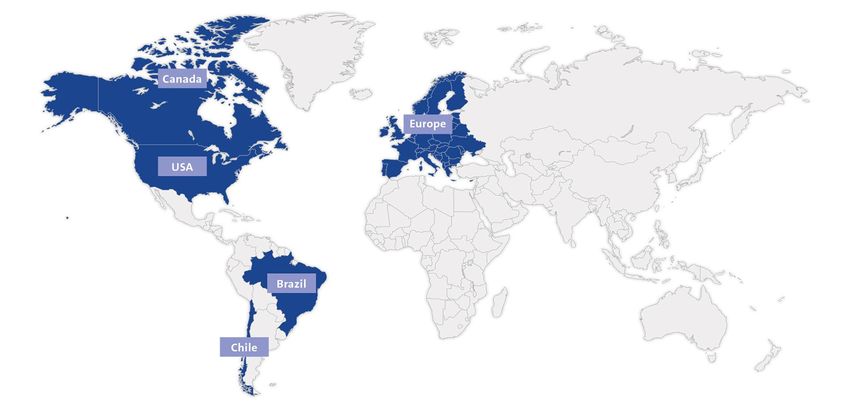
Canada
Europe
USA
Potential
Expansion into
Asia-Pacific
Brazil
Chile
Competitive edge: ▪ More than 30 assets on 3 continents allow close proximity to customers in a
business that is highly freight-cost sensitive
Unrivalled global ▪ Broad range of products due to variety of production methods
production network ▪ Best in class supply chain assets and competence
▪ Industry best-cost production in Chile
49Our strengths
Salt Production
Production ▪ Geographical diversification of production facilities within a region and across
network and continents
know-how ▪ Access to a multitude of technical and geological experts within the K+S Group
▪ Mixture of own cargo ships, medium-term sea freight contracts and
Logistics freight hedging
network ▪ Utilization of global logistics knowledge of K+S Group
▪ Close supply chain cooperation for most efficient group-wide sourcing
Product ▪ Balanced and less cyclical product portfolio
portfolio ▪ Product innovations through access to group-wide R&D network
50Financials
Debt profile (schuldschein and bonds)
                                                        Financing instruments
     €m                                 Amount outstanding            Coupon                  Maturity

     Schuldschein and loans             600

     Senior unsecured notes due 2021    500                           4.125%                  Dec-21

     Senior unsecured notes due 2022    500                           3.000%                  Jun-22

     Senior unsecured notes due 2023    625                           2.625%                  Apr-23

     Senior unsecured notes due 2024    600                           3.250%                  Jul-24

                                                        Debt maturity profile
                   835
                                                                                                         760
                                                                                665
                  335                            565                                                     160
                                                                                 40
                                                 65

                                                                                625                      600
                  500                            500

                  2021                           2022                           2023                     2024
                                              Bonds              Schuldschein          Loan

                               + Syndicated credit facility of up to € 800 million (available until 2024)
     + additional KfW-credit facility of up to € 350 million (available until August 2021, with option for extension)
                                   + commercial paper program as an additional source of liquidity
52
Cash flow and balance sheet
€ million H1/18 9M/18 FY/18 H1/19 9M/19 FY/19 H1/20 9M/20
Operating cash flow 292 276 309 518 510 640 323 328
- Investing cash flow
-198 -336 -515 -183 -306 -500 -157 -283
(pre sale/ purchase of securities)
Adjusted free cash flow 94 -60 -206 335 204 140 166 45
CapEx 154 278 443 166 310 493 207 343
Net financial debt 2,944 3,100 3,242 2,894 3,031 3,117 2,979 3,109
Net financial debt/ EBITDA (LTM) 4.9 5.5 5.3 4.4 4.3 4.9 5.6 5.7
Equity ratio 43% 41% 41% 42% 43% 42% 43% 26%
53Operating and free cash flow (adjusted)
(€ million)
756 719 669 640
445
307 309 328
140
49 45
-206
-306
-390
-636
-777
2013 2014 2015 2016 2017 2018 2019 9M/20
Operating Cash Flow Free Cash Flow (adjusted)
54Investor Relations
IR Contact Details
                                                                   K+S Aktiengesellschaft
                                                                   Bertha-von-Suttner-Str. 7
                                                                   34131 Kassel (Germany)

                                                                   e-mail:       investor-relations@k-plus-s.com
                                                                   homepage:     www.kpluss.com
                                                                   IR-website:   www.kpluss.com/ir
                                                                   Newsletter:   https://www.kpluss.com/newsletter
 Dirk Neumann
 Head of Investor Relations
 Phone:+49 561 / 9301-1460
 Fax: +49 561 / 9301-2425
 d.neumann@k-plus-s.com

 Julia Bock, CFA                     Janina Rochell
 Senior Investor Relations Manager   Investor Relations Manager
 Phone: +49 561 / 9301-1009          Phone: +49 561 / 9301-1403
 Fax:     +49 561 / 9301-2425        Fax:    +49 561 / 9301-2425
 julia.bock@k-plus-s.com             Janina.rochell@k-plus-s.com

5
K+S Share
Key Data Quoted in the following indices
WKN: KSAG88 ▪ MDAX ▪ Prime Sector Chemicals
ISIN: DE000KSAG888 ▪ DJ EURO STOXX ▪ Industry Group Chemicals / Commodity
▪ HDAX ▪ DJ STOXX TMI
Registered shares of no-par
Type of shares: ▪ CDAX ▪ ECPI Ethical Index Global
value
▪ Prime Allshare Index
Total number of ▪ Classic Allshare Index
191,400,000
shares:
Trading segment: Prime Standard
Bloomberg SDF / Reuters
Ticker symbols:
SDFG
Covered by
▪ AlphaValue ▪ Deutsche Bank ▪ M.M. Warburg
▪ Baader Helvea Equity Research ▪ DZ Bank AG ▪ MainFirst Bank AG
▪ Bankhaus Lampe ▪ Pareto Securities AS ▪ Morningstar
▪ Bank of America Merrill Lynch ▪ Exane BNP Paribas ▪ Nord/LB
▪ BMO Capital Markets ▪ Independent Research ▪ Scotia Capital
▪ Citi Research ▪ J.P. Morgan Cazenove ▪ Société Générale
▪ Commerzbank ▪ Kepler Cheuvreux ▪ Solventis
▪ Credit Suisse ▪ LBBW ▪ UBS
57Shareholder structure
Retail shareholders 50% Institutional shareholders 50%
Free float
100 %
As of 31.12.2019
58K+S ADR Program
The K+S ADR Program offers North American investors the opportunity to take stock in K+S. Since the ADRs
are quoted in US dollars and dividends are also distributed in US dollars, this financial instrument closely
resembles an American share. Two ADRs represent one K+S ordinary share. The K+S ADRs are traded in the
United States under a level 1 ADR Program in the over-the-counter market (OTC).
Trade on OTCQX Benefits to North American investors
▪ Symbol: KPLUY ▪ Clear and settle according to normal U.S.
▪ CUSIP: 48265W108 standards
▪ Ratio: 2 ADRs = 1 Share ▪ Stock quotes and dividend payments in
▪ Country: Germany U.S. dollars
▪ ISIN: DE000KSAG888 ▪ Can be purchased/sold in the same way
▪ Depositary: The Bank of New York Mellon as other U.S. stocks via a U.S. broker
▪ Cost-effective means of international
portfolio diversification
Further information:
www.kpluss.com/en-us/investor-relations/shares-bonds/key-data
59K+S Bonds and Issuer Rating
Bond 12/2021 Bond 06/2022 Bond 04/2023 Bond 07/2024
WKN A1Y CR5 A1P GZ8 A2E 4U9 A2N BE7
ISIN XS0997941355 DE000A1PGZ82 XS1591416679 XS1854830889
Listing Luxembourg SE Luxembourg SE Luxembourg SE Luxembourg SE
Volume EUR 500 million EUR 500 million EUR 625 million EUR 600 million
Issue price 99.539% 99.422% 100.000% 100.000%
Coupon payment 4.125% 3.000% 2.625% 3.25%
Maturity 06.12.2021 20.06.2022 06.04.2023 18.07.2024
Face value 1,000 EUR 100,000 EUR 1,000 EUR 100,000 EUR
Issuer Rating (S&P): B (outlook: negative), May 2020
60Additional information
Financial calendar 2020/2021
Annual Report 2020 11 March 2021
Quarterly Report; 31 March 2021 11 May 2021
Annual Shareholders’ Meeting 12 May 2021
Dividend payment (subject to resolution of the AGM) 17 June 2021
Half-yearly Financial Report, 30 June 2021 12 August 2021
Quarterly Report, 30 September 2021 11 November 2021
More content available online
▪ K+S Website: www.kpluss.com
▪ Annual reports: www.kpluss.com/ar2019
▪ Newsletter subscription: www.kpluss.com/en-us/investor-relations/service/newsletter
▪ Social Media:
61Disclaimer No reliance may be placed for any purpose whatsoever on the information or opinions contained in the Presentation or on its completeness, accuracy of fairness. No representation or warranty, express or implied, is made or given by or on behalf of the Company or any of its respective directors, officers, employees, agents or advisers as to the accuracy, completeness or fairness of the information or opinions contained in the Presentation and no responsibility or liability is accepted by any of them for any such information or opinions. In particular, no representation or warranty, express or implied, is given as to the achievement or reasonableness of, and no reliance should be placed on any projections, targets, ambitions, estimates or forecasts contained in this Presentation and nothing in this Presentation is or should be relied on as a promise or representation as to the future. This Presentation contains facts and forecasts that relate to the future development of the K+S Group and its companies. The forecasts are estimates that we have made on the basis of all the information available to us at this moment in time. Should the assumptions underlying these forecasts prove not to be correct or should certain risks – such as those referred to in the Annual Report – materialize, actual developments and events may deviate from current expectations. Given these risks, uncertainties and other factors, recipients of this document are cautioned not to place undue reliance on these forecasts. This Presentation is subject to change. In particular, certain financial results presented herein are unaudited, and may still be undergoing review by the Company’s accountants. The Company may not notify you of changes and disclaims any obligation to update or revise any statements, in particular forward-looking statements, to reflect future events or developments, save for the making of such disclosures as are required by the provisions of statue. Thus statements contained in this Presentation should not be unduly relied upon and past events or performance should not be taken as a guarantee or indication of future events or performance. This Presentation has been prepared for information purposes only. It does not constitute an offer, an invitation or a recommendation to purchase or sell securities issued by K+S Aktiengesellschaft or any company of the K+S Group in any jurisdiction. 62
You can also read


