CORPORATE PLAN 2019 / 2020 - Saldanha Bay IDZ Licencing Company www.sbidz.co.za +27 (0) 87 095 0261 - Saldanha Bay Industrial ...
←
→
Page content transcription
If your browser does not render page correctly, please read the page content below
CORPORATE
PLAN
2019 / 2020
Saldanha Bay IDZ
Licencing Company

www.sbidz.co.za
+27 (0) 87 095 0261
servicing the needs of africa’s oil and gas sector

50   Annexure A: Technical Indicator Definitions - Saldanha Bay Idz Licencing Company (SOC) Ltd
servicing the needs of africa’s oil and gas sector

     foreword

The Saldanha Bay Industrial Development Zone            marine repair, fabrication, logistics and related
Licencing Company SOC Ltd (SBIDZ-LC) is a               services industry in South Africa.
Schedule 3D Provincial Government Business
Enterprise operating the Saldanha Bay Industrial        In South Africa, SEZ legislation does not
Development Zone (SBIDZ) as part of the South           supersede the mandates of other legislated
African government’s strategic initiative to            entities, thus all SEZs must partner to fulfil their
promote and foster new areas of economic                mandates. The SBIDZ is unique as the first SEZ
growth and development in order to fulfil the           to be designated in a sea port, and so can utilise
vision of the National Development Plan (NDP).          its industrial promotion mandate and enabling
The SBIDZ-LC is responsible for the provision           legislation to partner with the Transnet National
of infrastructure, promotion, management and            Ports Authority to offer a unique value offering to
marketing of the SBIDZ.                                 the market. The SBIDZ further utilises enabling
                                                        tax and SEZ programme legislation to partner
The SBIDZ will be a new open space for upstream         with the National Department of Trade and
oil, gas and marine repair, fabrication, logistics      Industry (the dti) and the South African Revenue
and related servicing. Situated on the West             Service (SARS) to enhance the value offering.
Coast of South Africa, in the largest and deepest
natural port in the Southern Hemisphere, it             In addition to these legislative mandates, the
will operate as a Free Port offering streamlined        SBIDZ is linked to broader national and provincial
customs processes and bespoke facilities and            strategies and policies, including:
services to its tenants and operators.                  •   The National Development Plan and
                                                            National Infrastructure Plan;
The legislative mandate at the highest level            •   The Presidential Infrastructure Coordinating
is derived from the “Industrial Promotion’                  Commission (PICC) rollout programme and
functional area of the Constitution of the                  the National Infrastructure Plan Strategic
Republic of South Africa, 1996 and the ambits of            Infrastructure Project 5 (SIP5);
the Operator Licence conferred to the SBIDZ-LC
                                                        •   The Industrial Policy Action Plan;
in 2013 by the National Government of South
                                                        •   The Medium Term Strategic Framework
Africa. Operationally, the SBIDZ-LC is governed
                                                            2014-2019;
by the Saldanha Bay Industrial Development
Zone Licencing Company Act, 2016 (Western               •   Operation Phakisa: Oceans Economy;
Cape Provincial Act No. 1 of 2016) and regulated        •   The Western Cape Strategic Plan;
by the Special Economic Zone Act (National Act          •   Project Khulisa: Oil and Gas
No. 16 of 2014).
                                                        The SBIDZ Strategic Plan 2015/16 – 2019/20
The mandate of the SBIDZ-LC is to promote and           focuses on strategic outcomes and goals for the
facilitate economic activity and sustainable job        SBIDZ as a whole, within the broader national and
creation in South Africa, and more specifically         provincial strategic context, and is a guideline
at the port of Saldanha Bay. The mandate is             for the first 5 years of the nascent entity since
also sector specific, in accordance with the            it began operating during 2014. The Corporate
conferred Operator Licence: the SBIDZ-LC is             Plan 2019/2020 represents the culmination of
mandated to grow the upstream oil, gas and              the entities’ first 5 years of operations.

                                                                                 Corporate Plan 2019/20        1
servicing the needs of africa’s oil and gas sector

        official sign-off

    It is hereby certified that this Corporate Plan:

    •   Was developed by the management of the SBIDZ-LC, under the guidance of Minister Beverley
        Schäfer, MEC for Economic Opportunities.

    •   Was prepared in line with the current Strategic Plan of the SBIDZ-LC.

    •   Accurately reflects the performance targets, which the SBIDZ-LC will endeavour to achieve, given
        the resources made available in the budget for 2019/2020.

    Herman Boneschans

    Chief Financial Officer                                                Signature:

    Kaashifah Beukes

    Chief Executive Officer (Acting)                                       Signature:

    Johann Stegmann

    Chairperson: Accounting Authority                                      Signature:

    Approved by:

    Beverley Schäfer

    Executive Authority                                                    Signature:

2   Saldanha Bay Idz Licencing Company (SOC) Ltd
servicing the needs of africa’s oil and gas sector

        contents

List of abreviations / acronyms ............................................................................................................                  4

PART A: STRATEGIC OVERVIEW............................................................                                                                       6
1 Vision .................................................................................................................................................    8
2 Mission ..............................................................................................................................................      8
3 Values ................................................................................................................................................     8
4 Revisions to Legislative and Other Mandates ................................................................................                                8
5 Updated Situational Analysis ..........................................................................................................                     9
     Service Delivery Environment                                                                                                                             9
     5.1 The Performance Delivery Environment ..................................................................................                             15
     5.2 Organisational Environment .....................................................................................................                    18
6 Strategic Outcome Oriented Goals .................................................................................................                         20
  Budget Overview                                                                                                                                            21
7 Overview of 2019/20 Budget ...........................................................................................................                     21
  7.1 Income and Expenditure Estimates .........................................................................................                             21

PART B: PROGRAMME AND SUB-PROGRAMME PLANS ...................... 22
8 Programme 1: Administration ........................................................................................................                       24
  8.1 Strategic Objectives and Annual Targets .................................................................................                              29
  8.2 Performance Indicators and Annual Targets ..........................................................................                                   29
  8.3 Quarterly Targets .......................................................................................................................              29
  8.4 Reconciling Performance Targets with the Budget .................................................................                                      30
9 Programme 2: Operations ...............................................................................................................                    31
  9.1 Strategic Objectives and Annual Targets .................................................................................                              37
  9.2 Performance Indicators and Annual Targets ..........................................................................                                   37
  9.3 Quarterly Targets .......................................................................................................................              38
  9.4 Reconciling Performance Targets with the Budget .................................................................                                      39

PART C: LINKS TO OTHER PLANS ........................................................ 40

ANNEXURE A: Technical Indicator Definitions ................................. 44

                                                                                                                           Corporate Plan 2019/20                 3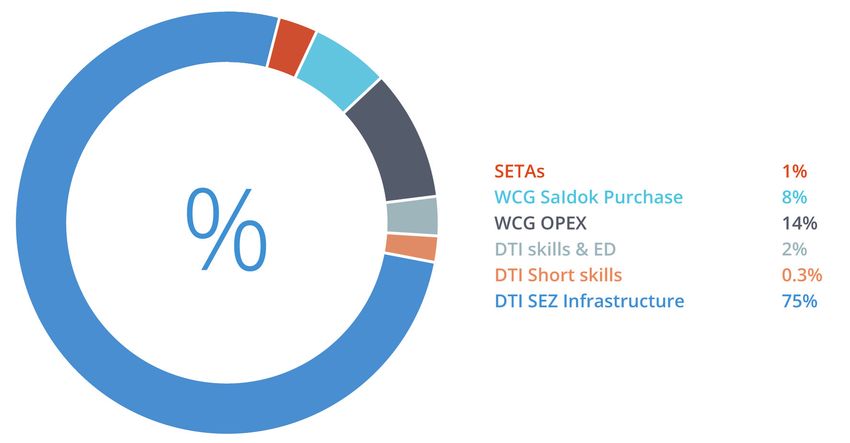
servicing the needs of africa’s oil and gas sector

           List of
           Abbreviations/
           Acronyms

    AGSA           Auditor-General of South Africa
    CCA            Customs Control Area
    CHIETA         Chemical Industries Education and Training Authority
    CSIR           Council for Scientific and Industrial Research
    DEADP          Department of Environmental Affairs and Development Planning
    DEDAT          Department of Economic Development and Tourism
    DLG            Department of Local Government
    DOE            Department of Energy
    DST            Department of Science and Technology
    DTI            Department of Trade and Industry
    EIA            Environmental Impact Assessment
    EIR            Environmental Impact Report
    EoDB           Ease of Doing Business
    E&P            Exploration & Production
    EPZ            Export Processing Zone
    ESSA           Employment Services System of South Africa
    FID            Final Investment Decision
    GCIS           Government Communication and Information System
    GDP            Gross Domestic Product
    IDC            Industrial Development Corporation
    IDP            Industrial Development Plan
    IDZ            Industrial Development Zone
    KPI            Key Performance Indicator
    LNG            Liquefied Natural Gas

General Information
    MDA            Manufacturing Development Act
    MEC            Member of Executive Council
    MERSETA        Manufacturing, Engineering and Related Services Sector Education and Training Authority
    MOA            Memorandum of Agreement
    MOU            Memorandum of Understanding
    MPRDA          Mining & Petroleum Resources Development Amendment
    MTEF           Medium Term Expenditure Framework

4   Saldanha Bay Idz Licencing Company (SOC) Ltd
servicing the needs of africa’s oil and gas sector

NDA         Non-Disclosure Agreement
O&G         Oil & Gas
OGFZ Onne   Oil & Gas Free Zone Onne
OSSB        Offshore Supply Base
PASA        Petroleum Agency South Africa
PFMA        Public Finance Management Act
PICC        Presidential Infrastructure Coordinating Commission
PPP         Public-Private Partnership
PT          Provincial Treasury
PwC         Pricewaterhouse Coopers
RoFR        Right of First Refusal
RPL         Recognition of Prior Learning
SAIMI       South African International Maritime Institute
SAMREF      South African Marine Research and Exploration Forum
SAOGA       South African Oil and Gas Alliance
SAPS        South African Police Service
SARS        South African Revenue Services
SBIDZ       Saldanha Bay Industrial Development Zone
SBIDZ-LC    Saldanha Bay Industrial Development Zone Licencing Company SOC Ltd
SBM         Saldanha Bay Municipality
SCM         Supply Chain Management
SEZ         Special Economic Zone
SIP5        Strategic Integrated Project 5: Saldanha-Northern Cape Development Corridor
SOC         State Owned Company
TCP         Transnet Capital Projects
TETA        Transport Education and Training Authority
TNPA        Transnet National Ports Authority
TPT         Transnet Ports Terminal
WCDEDAT     Western Cape Department of Economic Development and Tourism
WCDM        West Coast District Municipality
WCG         Western Cape Government

                                                                       Corporate Plan 2019/20   5
servicing the needs of africa’s oil and gas sector 6 Saldanha Bay Idz Licencing Company (SOC) Ltd
servicing the needs of africa’s oil and gas sector

A        STRATEGIC
         OVERVIEW

                        Corporate Plan 2019/20   7
servicing the needs of africa’s oil and gas sector
PART A:
STRATEGIC
OVERVIEW
1 Vision 4 Revisions to Legislative
and Other Mandates
To create an enabling environment to promote
sustainable economic growth and job creation. Legal Framework
The IDZ is a component of the “Industrial
2 Mission Promotion” functional area of concurrent
National and Provincial legislative competence,
To make use of the enabling legislation to as indicated in Schedule 4 of the Constitution
attract foreign and domestic investment, of the Republic of South Africa, 1996. The
initially through four key levers that support IDZ is governed by the following legislation,
the development of the upstream oil, gas and regulations, standards and policy documents:
marine repair, fabrication, logistics and related
servicing cluster: National
• The ease of doing business
• A competitive environment The IDZ programme was gazetted in 1999
• Supporting Infrastructure as an incentive programme under the
• A free-zone, customs efficiency and reduced Manufacturing Development Act (Act 187 of
admin 1993). The regulations for the IDZ programme
were promulgated in 2000. It was published
in Gazette number 1224 of 1 December 2000,
3 Values as amended by government notice number
R1065, published in Gazette number 29320
The SBIDZ will implement its mandate with a of 27 October 2006. The overall regulatory
focus on the following values: framework for the IDZ programme comprises of
Pioneering: We have a shared vision where we the following legislation:
believe we shape our own opportunities with The Manufacturing Development Act as
what we believe is possible and relentlessly amended.
overcoming what others see as not. The IDZ Regulations and subsequent
Partnership: We work together to grow, amendments.
showing mutual respect. The Special Economic Zones Act (Act 16 of
2014).
Accountability: We take ownership, keeping Section 21A of the Customs and Excise Act (Act
ourselves accountable to make the right 91 of 1964), and relevant provisions of the Value-
decision, taking the right action to deliver to our Added Tax Act (Act 89 of 1991).
fellow people, communities, organisations and Report No. 14 promulgated by the International
country. Trade Administration Commission in accordance
with the Customs and Excise Act.
Sustainability: We want to create an open space
for empowerment and self-development that In addition to the legislative mandates, the
transforms lives, businesses and economies for SBIDZ is linked to broader national strategies
the long run. and policies, including:
8 Part A: Strategic Overview - Saldanha Bay Idz Licencing Company (SOC) Ltdservicing the needs of africa’s oil and gas sector
The National Development Plan and National (DLG) Infrastructure and Growth Plan working
Infrastructure Plan. group for the Saldanha Bay Municipality and
The Presidential Infrastructure Coordinating Department of Environmental Affairs and
Commission (PICC) Rollout Programme. Development Planning’s (DEADP) Saldanha Bay
The Industrial Policy Action Plan. Municipality IDP Support Group.
Medium Term Strategic Framework of 2014-
2019. Based on the above frameworks, the SBIDZ is
Operation Phakisa. responsible for implementing the Strategic Plan
National Infrastructure Plan (SIP5). for the Saldanha Bay IDZ within the Medium
Term Strategic Framework of 2014-2019,
supported by the National IDZ/SEZ strategy and
Provincial Western Cape Provincial Infrastructure strategic
The SBIDZ in line with the IDZ Regulations is planning.
operated by the SBIDZ-LC as designated in the
Government Gazette No. 26988 of 2013, and is Other
jointly funded and supported by the National Basic Conditions of Employment Act, 1997 (Act
Department of Trade and Industry (DTI) and 75 of 1997)
the Western Cape Provincial Department of Employment Equity Act, 1998 (Act 55 of 1998)
Economic Development and Tourism (WCDEDAT) Labour Relations Act, 1995 (Act 66 of 1995)
The SBIDZ-LC successfully applied to National Occupational Health and Safety Act, 1993 (Act
Treasury to be listed as a Schedule 3D Provincial 85 of 1993)
Government Business Enterprise, making it Promotion of Access to Information Act, 2000
further subject to the following legislative (Act 2 of 2000)
mandates: Promotion of Administrative Justice Act, 2000
(Act 3 of 2000)
Income Tax Act (Act 58 of 1962). The Constitution of South Africa
Preferential Procurement Policy Framework Act Skills Development Act, 1998 (Act 97 of 1998)
(Act (Act 5 of 2000). Skills Development Levy Act, 1999 (Act 9 of
Public Finance Management Act (Act 1 of 1999) 1999)
and its Regulations. National Treasury Regulation, 2005
Companies Act (Act 71 of 2008) and its Provincial Treasury Instruction, 2012
Regulations. National Environmental Management Act, 1998
Saldanha Bay Industrial Development Zone (Act 107 of 1998)
Licencing Company Act (Act 1 of 2016). National Ports Act, 2005 (Act 12 of 2005)
Value-Added Tax Act.
Customs and Excise Act.
Customs Duty Act (Act 30 of 2014). 5 Updated Situational
Customs Control Act (Act 31 of 2014). Analysis
In addition, by virtue of the provincial
Department of Economic Development and Service Delivery Environment
Tourism being the overseeing governing With the focus indelibly linked to the oil and
body, the SBIDZ is linked to broader provincial gas commodity markets, it is also necessary
strategies and policies, including the Western to reflect on how the market has changed and
Cape Infrastructure Framework. Specifically, the what trends have emerged since the SBIDZ’s
SBIDZ links to Project Khulisa which falls under inception, and how this has resulted in a shift in
the Provincial Strategic Goal 1, focusing on job timing and investment focus in the sub-sectors.
creation and opportunities to help improve the
province’s economy. The 2011 Commercial Feasibility Study drew the
following conclusions:
The SBIDZ has furthermore been brought on • Logistics and rig repair was considered a
Board the Department of Local Government’s short-term investment attraction market
Part A: Strategic Overview - Corporate Plan 2019/20 9servicing the needs of africa’s oil and gas sector
because these sectors had existing of the world’s oil with an estimated 8% of global
operations in South Africa. untapped proven reserves.
• An estimated 40% by type (not volume)
of oil, gas and maritime fabrication Africa holds natural gas reserves of 513 trillion
components could be produced in South cubic feet (Tcf) with most production occurring
Africa. in regions with established infrastructure. Large
• In the medium-term, additional investment gas finds and oil potential in East Africa, have
was expected to be attracted in the areas of sparked a flurry of exploration activity; it has
small-scale fabrication and support services been earmarked as a growth region.
for offshore exploration activities.
While logistics continues to be a consistent
• In the long-term, new investment was
targeted market, the majority of the tenants who
expected to be attracted in fabrication
have signalled interest in the SBIDZ are based in
of components/equipment with higher
the manufacturing and fabrication sector, with
technology and capital requirements,
an emerging market focus on vessel fabrication.
together with longer-term onshore support
activities for offshore production. There has been a decline in the number of rigs
• And lastly, throughout the short, medium undergoing repairs and maintenance due to the
and long-term investment attraction decline in offshore exploration and production.
analyses, the ancillary services market was The key market trends driving the evolving
expected to continue to grow and develop investment types are explained in more detail
in response to demand from the operations below and are contextualised for both African and
within the zone. South African oil, gas and maritime markets.
However, the global energy market has evolved
over time, and with that has the timing and types Market Shifts
of investors the zone attracts within its sector-
specific focus. The SBIDZ continuously stays Long-term demographic shifts
abreast of developments; tracking associated
Increased population growth in Africa, a rising
risks to maintain the sustainability of the zone.
number of middle class with high urbanisation
Oil prices are expected to hover around $60- rates have resulted in more disposable incomes.
70 per barrel for the foreseeable future. The This has led to growing demand for imported
international “Lower for longer” effect exerts its products. Multi-Purpose Vessels (MPVs) play an
influence on Africa as much as the rest of the important role in providing capacity to transport
world. The continent is still considered the next these goods to customers.
frontier market in terms of untapped proven
A mix of cargo (containerised, oil and gas, project
reserves. In 2016, Africa supplied about 12%
and conventional cargo) can be transported on
the same vessel under a single bill-of- lading.
“Lower for longer” is the catch- Many of the oil and gas logistics specialists play
phrase currently used to describe a key role in the value chain for specialised cargo
the indications that crude oil prices solutions in the oil, gas, energy and project
sectors. This also includes supply of fuel, refit
will remain lower than expected for
containers and water. One of the biggest target
an extended period of time. A 2017 markets in terms of focus for these types of MPVs
Wood Mackenzie report based on are the river ports in West Africa.
an industry survey indicated a clear
consensus that oil prices will remain Ship and vessel repair - moving from
in the US$50-60/bbl range in 2017, rigs to smaller vessels & sustainability
while more than 75% think it will be
Overall rig count in Africa has declined from an
in US$ 60-80/bbl range by 2020.
annual average of 145 in 2014 to 85 in 2016 - an
10 Part A: Strategic Overview - Saldanha Bay Idz Licencing Company (SOC) Ltdservicing the needs of africa’s oil and gas sector
indication of a drop in Exploration & Production Africa is no different from its neighbours. In
(E&P) activities due to oil price declines since 2016, Pricewaterhouse Coopers (PwC) reported
March 2011. Consequently, the number of drilling an increase from 10% to 25% in the expatriate
vessels requiring services and maintenance percentage of the workforce. This was partly
in ports across the continent, including South due to increasing market opportunities and
Africa, has reduced. In many of the traditional developments in countries such as Uganda,
service and maintenance ports across Africa, Ghana and Tanzania where skills shortage was
drilling rigs have been cold-stacked. highest. The majority (35%) of expatriates hold
senior and middle management positions,
Rig repair has historically been a high-value,
followed by specialist technical roles (25%) such
high-economic impact activity to the South
as drilling supervisors.
African maritime industry. However, the more
reliable growth market is in smaller vessel South Africa has spent much time and resources
maintenance repair and servicing, such as: on skills and training programmes focused on
offshore supply vessels; offshore construction the maritime sector. An increasing number of
vessels; anchor handling tugs; offshore platform investments by the private sector are including
vessels; military patrol vessels; multi-purpose skills and training programmes, particularly
vessels (MPVs); and offshore mining vessels. a focus on providing skilled workforce in
Such projects are typically lower in value than manufacturing and fabrication activities. As a
drilling rigs, however they are more consistent. result, less than 10% of the workforce in oil and
gas projects in South Africa are expatriates.
This could ensure the sustainability of the South
However, the challenge will be in locating those
African ship repair and vessel fabrication sector.
skills in Saldanha Bay.
To grow further, the South African market
requires more dedicated infrastructure such
as floating docks, ship-lifts and quaysides for
Stronger demand for localised
vessel servicing.
fabrication and manufacturing
facilities
Key areas of South African expertise in the
sector include: fabrication of military patrol Traditionally the South African oil, gas and
vessels; servicing and repair to all offshore maritime sector has seen investments from
support vessels; and fabrication of tugboats multinationals in the logistics sector, followed by
and specialist vessels such as barges. cyclical demand for rig repair and maintenance
activities.
Investment trends by major offshore fabrication
specialists globally have focused on this vessel Over the past five years, many companies
serving, repair and fabrication market, with investing in the South African market have
proposals for floating docks, new infrastructure focused on establishing a centralised fabrication
and technologies that support this market. and manufacturing base to support their activities
In the short-term, opportunities to consider on the African continent. This is partly driven by
projects around the decommissioning of older the growth in the East African market (European
generation drilling rigs, and re-certification of companies need a localised base for both West
rigs that have been cold-stacked still exist in and East Africa), and partly because of recognised
South Africa. and long-standing relationships with reputable
South African suppliers and service providers.
Skills supply South Africa has many potential competitors
One consequence of rising consumer spending on the African continent, a few being Namibia,
in developing economies is managing an ageing Mozambique, Tanzania and Kenya. However,
workforce, and replacing or training specialist South Africa provides a good location for both
skill-sets. Many developing markets in Africa the West and East African markets, and is still
have seen a bottleneck in the skills supply in considered relatively politically and economically
the oil, gas and maritime sector, and South stable to most African countries. Despite the
Part A: Strategic Overview - Corporate Plan 2019/20 11servicing the needs of africa’s oil and gas sector
recent downgrades by international ratings the resources to market – resulting in a number
agencies, South Africa remains an attractive of viable crude oil pipeline projects. An example
investment destination within the context for is the East Africa Crude Oil Pipeline – a 1448km
the upstream oil, gas and marine industries due 24” diameter pipeline from Hoima to Tanga with
to the strong financial and business services $3.5bn committed capital from Total (Total’s
sector; existing physical infrastructure in terms second priority project in Africa after Angola).
of utilities and roads and ports networks;
recognised strong regulatory environment for Mozambique’s Area 4 and Area 1 could increase
doing business; and protection of intellectual the country’s GDP by 375%, with Final Investment
property. Decision (FID) for Area 1 (Anadarko-operated)
planned for 2018, and FID for Area 4 (ENI-
Many of the companies in the oil and gas services operated) for 2020/21. In addition, Standard
sector operates in difficult environments across Bank estimates that if all regulatory and policy
the African continent. They look to South Africa delays are dealt with in East Africa, there are 19
as a place from which to service their African projects around natural gas and pipelines that
operations. In comparison, the decline in oil could have a combined investment value of
prices has resulted in reduced infrastructure $77bn.
investments and constraints on investments
(e.g. in terms of finances and movement of Projects such as these will create a demand for
capital) on behalf of governments in countries services industries, and many South African
such as Angola and Nigeria. These place further companies already contract to major players
restrictions on the operating environment who are certified suppliers to companies such
where supply constraints in basic services to as Anadarko and ENI.
large-scale utilities already exist.
Sustainable South African maritime
While the decline in the oil price has resulted in companies
investments with reduced capital expenditure
in the fabrication sector in South Africa over the In any downturn, there are those who survive
past two years, the trend still shows an overall and those who do not. The South African oil,
increase in the number of companies looking to gas and maritime market has been no different
establish their facilities here. in the current commodity price cycle. While
some companies have been unable to diversify
LNG and crude oil pipelines will drive and meet the challenges of lower oil prices,
services demand others have ensured that their businesses have
remained sustainable.
BP’s 2017 Energy Outlook Report stated that the
energy demand for refined crude oil products Traditionally, South African companies have
was expected to grow by 30% until 2035 – been dependent on the international market or
despite global GDP expected to double in the value chain for project or contract opportunities
same outlook period. This demand is expected in rig repair, logistics, fabrication, and support
to result in an additional 700,000 bpd of refined services markets throughout the continent.
crude which is already under construction or These companies normally wait for sub-
in advanced development, though countries contracting opportunities to come to them,
should not be considering building new crude oil rather than actively seeking out projects. Now,
refineries unless they are in a low cost refinery as a result of the price pressures and reduced
area. capital expenditure from lower oil prices,
many South African companies have pro-
However, this presents a number of challenges
actively sought out new business opportunities,
for regions such as West and East Africa where
partnerships and joint ventures to sustain their
there are significant proven reserves of crude
businesses.
oil, but the business justification and capital
requirements for a new refinery are too high. This will result in more sustainable companies
Many countries require crude oil pipelines to get that are better able to ride out the challenges
12 Part A: Strategic Overview - Saldanha Bay Idz Licencing Company (SOC) Ltdservicing the needs of africa’s oil and gas sector
that a cyclical commodity-based services terms of infrastructure and services for the oil,
industry creates. gas and maritime industry, however very few
ports in sub-Saharan Africa have purpose-built,
Development policies that spur new dedicated oil and gas infrastructure. South Africa
entrants and opportunities has also established a reputation as a capable
services base despite having minimal domestic
The South African Government has embarked Exploration & Production (E&P) activities.
on a number of developmental policies that
address unemployment, poverty and equality to Descriptions on the primary port competitors
promote inclusivity and shared economic growth. in the oil and gas landscape are included
For example, the Black Industrialists Policy here for information purposes. Smaller port
is an instrument to enhance transformation developments and countries in sub-Saharan
and ensure meaningful participation of black Africa have not been discussed in this report.
people in the mainstream of the South African
economy (BI Policy, 2015). A black industrialist Namibia
includes co-operatives, incorporated in terms
Namibia is South Africa’s and Saldanha Bay’s
of the Companies Act (2008), owned by Black
closest competitor in terms of an operational
South Africans, as defined by the B-BBEE Act,
services industry for the offshore oil and gas
who: creates and owns value-adding industrial
industry, particularly the ports of Walvis Bay
capacity; and provides long-term strategic and
and Luderitz. The Port of Walvis Bay forms
operational leadership to a business. A Black
part of the city’s larger export processing zone
industrialist can also be a natural person.
(EPZ) and Namports has established it as an
investor-friendly business destination. While
Competitive Landscape Walvis Bay has invested in a number of floating
The African oil, gas and maritime market is docks to service vessels, the main focus of the
complex and there are many determining factors port remains container volumes and there is no
as to why companies would consider Saldanha dedicated deep-water repair quay. Proposed
Bay over and above other operational ports on legislation introduced in 2017 around local
the continent. content and labour laws has also given investors
pause until the compliance requirements
New developments in the Saldanha Bay become clearer.
infrastructure space, particularly those related
to the port infrastructure have the ability to Nigeria
place the port as a recognised global oil and gas
services hub. These include the development Nigeria has 12 active export processing zones,
and appointment of an Operator for TNPA’s 20 as well as the Oil & Gas Free Zone Onne (OGFZ
year Offshore Supply Base (OSSB) concession in Onne), which is a dedicated hub for oil and
April 2018. The OSSB includes 294m of quayside gas operations and a logistics centre for West
and 20ha or back-of-quay development land. and Central Africa. OGFZ Onne has established
Future new-build developments such as a new a sound reputation over the last few years
380m deep-water repair quay (Berth 205) and and has worked hard to address issues of
a 1,000m finger terminal for marine repair and corruption and inefficiencies in customs and
fabrication projects (Jetty at Mossgas) in the port logistics, attracting over 200 companies from 45
will also be relooked by TNPA and the SBIDZ-LC, countries. Infrastructure includes almost 3km
in response to the market shifts noted above of quayside space, warehousing, laydown areas
since the advent of the projects in Operation and office space. Nigeria’s demand for port
Phakisa in 2014. infrastructure and hinterland support for the oil
and gas sector was established over a number
There are a number of ports across sub- of years based on demand from domestic
Saharan Africa that have the ability to compete offshore E&P activities, as opposed to servicing
with the Port of Saldanha Bay and the SBIDZ in the region as an oil and gas hub.
Part A: Strategic Overview - Corporate Plan 2019/20 13servicing the needs of africa’s oil and gas sector
Despite this, the biggest challenge is that the decline in the oil price, have resulted in the
depth alongside the quay is only 10-12m, which majority of these projects being cancelled or
means that the newer generation drilling rigs suspended.
are still required to berth at alternative facilities.
A number of projects to expand the deep-water The Luanda and Lobito Ports are small and often
facilities in various ports across Nigeria have saturated with cargo coming into the country
either focused on container capacity (e.g. Lagos waiting to clear customs. The Port of Cabinda
Free Trade Zone Container Terminal project) or currently has limited oil and gas activity. Recent
have been suspended (e.g. Lekki deepsea port construction on the public-private partnership
project). (PPP) on the Port of Caio in Cabinda province
will add some capacity to Angola’s ability to
service the domestic oil and gas industry, and
Ghana
is expected to come online in the first quarter
Ghana’s Port of Takoradi has been part of of 2019. Despite the intention of servicing
the country’s backbone infrastructure with a the domestic oil and gas industry, the ports
dedicated oil berth and vessel repair facilities in main focus will be centred on mining exports,
a dry dock (798m). The ship repair industry has commodities and trade. There are no planned
also seen strong activity over the last decade, deep-water repair quays for now, despite the
with main activities such as docking of vessels up port having deep-water multipurpose terminals.
to 450 tons, steel works, sand blasting, painting, Other port infrastructure related to oil, gas and
machinery, mechanical, hydraulics, propulsion maritime include dry docks, fabrication yards
systems, electrical equipment, propeller and fabrication of offshore platforms and decks.
repairs and preparing the vessels for class Local content is also significant, however, the
certification. ease of doing business factor is a challenge to
many companies.
However, possibly the biggest project in West
Africa to date, is the current construction of Mozambique
Tema Port in Ghana. While the port facility will be
multi-purpose and service a number of different Mozambique’s domestic natural gas discoveries
industries and sectors, there are planned dry have seen the development of the countries ports
docking facilities and services for offshore oil expand exponentially to meet the infrastructure
and gas projects – including those of the Jubilee demands in previously undeveloped areas. The
and TEN drilling projects. ports of Pemba and Nacala are continuously
undergoing development to meet the needs
Ghana has also established a strong reputation
of the offshore industry. In 2015, construction
for attracting private sector investment into
commenced on the Pemba Logistics Base. There
the economy, and is expected to become a
are also numerous gas pipeline projects planned
competitor to South Africa in servicing drilling
across the country. The Coral FLNG project
rigs in West African waters in the next few years.
is one of the biggest natural gas discoveries
For now however, the demand of services from
globally – considered a mega-project for 2018
the domestic drilling programme is sufficient
in oil and gas.
to keep the new developments in Tema Port
occupied. The biggest challenge in Mozambique is the
continuously changing environment and
Angola legislation by the national government and the
Empresa Nacional de Hidrocarbonetos (ENH).
Angola is the second biggest producer of oil and
gas in Africa after Nigeria. Despite numerous South Africa has the potential to subcontract
intentions to invest substantial capex into in the logistics, construction, fabrication and
port infrastructure, new refinery capacity service support across the many planned oil
and pipelines, and the recent changes in the and gas projects in Mozambique, including the
political landscape in Angola coupled with the port developments and Coral FLNG project.
14 Part A: Strategic Overview - Saldanha Bay Idz Licencing Company (SOC) Ltdservicing the needs of africa’s oil and gas sector
Tanzania in the future will also supply services to the
domestic oil and gas market once the discussions
Tanzania is one of the few countries in East Africa and legislation around the Mining & Petroleum
(apart from Mozambique with a number of proven Resources Development Amendment (MPRDA)
gas discoveries) that had active Exploration Bill, 2002 (Act No. 28 of 2002) is finalised.
activities in the past 12 months. Further, the
government in Tanzania has embarked on an The SBIDZ-LC’s main value proposition in
aggressive investment strategy to build capacity positioning the SBIDZ in the regional market, is
in the country’s ports infrastructure. The the ease-of-doing business for investors.
majority of this investment is focused on four
new container and multi-purpose terminals in
Mtwara Port, but there will be added capacity
5.1 The Performance
to service the regional oil and gas activities Delivery Environment
even though construction is yet to commence.
Mtwara Port has an oil terminal (Kurasani) with
Our “go-to market” Value
76,500 m3 storage capacity which is managed by
Proposition Considerations
Oilcom Tanzania. The aim of this complex is to The success of the SBIDZ depends to a very
become the destination of choice for companies large degree on its ability to provide services
seeking storage and distribution of petroleum and a business environment to the end-user
products in the region. in a manner that exceeds the current available
offering in the market.
Market Positioning
Customers in the oil and gas industry are highly
The SBIDZ’s market positioning is a collective sensitive to quality of services and products,
response to meeting the needs of companies and the speed and reliability of delivery; but
operating in the sub-sectors in projects across a significantly less sensitive to price.
number of regions. It is also driven by positioning
Therefore, the SBIDZ must specifically offer
SBIDZ-LC as an easy-to-do business port
certainty of delivery of a product or service
coupled with a number of natural and developed
within set timeframes, and certainty that the
competitive advantages.
product and service meets the high quality
From a regional target market perspective, the standards needed for this health, safety and
focus of the SBIDZ has shifted along with the environmentally conscious industry.
demand in the offshore and onshore oil, gas This means that a key strategic driver of the
and maritime projects. In 2011, the only market SBIDZ is the ‘Ease of Doing Business’ approach,
the SBIDZ found feasible was the West African which ensures that meeting the customer
oil, gas and maritime market. This has shifted needs is central to all services being offered.
substantially since 2011, with the recent high- Ultimately, it is this approach which will enable
value upstream and downstream oil and gas the SBIDZ-LC to migrate to a position of self-
projects in East Africa, the repair and maintenance sustained commercial viability and leverage that
on passing vessels from regions such as South business acumen towards achieving sustainable
East Asia to the Gulf of Mexico and North Sea, economic growth and job creation.
and the key shifts discussed previously.
Projects such as the Hoima-Tanga Crude Oil Local Macro Economic
Pipeline (Uganda-Tanzania) and the Coral FLNG Considerations
projects have reached FID. In the case of the
Saldanha Bay is a critical resource for the
Coral FLNG project, estimates state that the
sustainable growth and development of the
project could see Mozambique’s GDP grow by
Western Cape. Contributing 30.7% to GDPR in
over 300% over the next 10 years.
2015 (Provincial Treasury, MERO 2017), the
The SBIDZ will continue to provide a value municipality is the largest contributor to the
proposition to the West African market, and West Coast region’s economy.
Part A: Strategic Overview - Corporate Plan 2019/20 15servicing the needs of africa’s oil and gas sector
Saldanha Bay GDPR performance per sector, 2006 - 2017
Contribution R million Trend Real GDPR growth (%)
to GDPR (%) value
Sector 2016 2016 2006 - 2016 2013 - 2017 2013 2014 2015 2016 2017e
Primary sector 17.4 1 448.4 2.3 5.7 5.2 5.1 0.0 -0.7 18.8
Agriculture, forestry
& fishing 16.9 1 403.0 2.5 5.8 5.4 5.2 0.1 -0.7 19.3
Mining & quarrying 0.5 45.4 -1.8 1.2 0.7 4.4 -2.4 -1.9 5.0
Secondary sector 27.8 2 313.8 0.7 0.4 1.0 1.0 -0.3 -0.6 0.8
Manufacturing 21.5 1 790.0 0.3 0.0 0.3 0.4 -0.6 -1.1 1.1
Electricity, gas & water 1.2 102.0 -0.8 -0.7 -1.5 -1.2 -1.4 -1.1 1.7
Construction 5.1 421.8 4.1 2.6 5.4 4.6 1.8 2.2 -1.0
Tertiary sector 54.8 4 559.4 3.0 2.2 3.3 2.9 2.0 2.0 1.1
Wholesale & retail trade,
catering & accommodation 14.7 1 222.0 3.3 2.2 3.2 2.4 2.7 2.8 -0.2
Transport, storage &
communication 8.8 734.0 -0.6 -0.8 0.2 1.2 -2.6 -2.1 -0.5
Finance, insurance, real
estate & business services 14.8 1 230.0 4.2 3.5 3.7 3.7 3.9 3.3 2.9
General government 10.4 863.2 3.6 2.2 4.4 3.6 1.3 1.3 0.3
Community, social &
personal services 6.1 510.2 3.3 2.9 4.8 2.4 2.2 2.6 2.3
Total Saldanha Bay 100.0 8 321.7 2.2 2.3 3.0 2.7 1.1 0.9 3.8
Source: Quantec Research, 2017 (e denotes estimate)
Looking at the 10-year trend between 2006 territory in 2016 due to the severe drought,
and 2016, manufacturing albeit the largest the estimated growth rate for 2017 is a healthy
contributor to the local economy (21.5%), 19.3%.
saw near negligible growth (0.3%), whilst the
majority of the tertiary sector and construction Considering the job market, agriculture, forestry
saw the highest average growth rates over and fishing sector contributed the most jobs
this period, with agriculture, forestry and (2016: 17 972; 36.3%), followed by the wholesale
fishing seeing a good but lower 2.5% over the and retail trade, catering and accommodation
period. (Provincial Treasury, Draft 2018 Socio- sector (7 864; 15.9%) and the finance and
economic Profile: Saldanha Bay Municipality). businesses (5 370; 10.8%) sector. Combined,
However, though growth in the agriculture, these three sectors contributed 31 206 or 63.0%
forestry and fishing sector shrunk into negative of the 49 564 jobs in 2016.
16 Part A: Strategic Overview - Saldanha Bay Idz Licencing Company (SOC) Ltdservicing the needs of africa’s oil and gas sector
Saldanha Bay employment growth per sector, 2006 - 2017
Contribution Number Trend Employment (net change)
to GDPR (%) of jobs
Sector 2016 2016 2006 - 2016 2013 - 2017e 2013 2014 2015 2016 2017e
Primary sector 36.4 18 028 -4 117 1 989 1 806 -413 1 440 -624 -220
Agriculture, forestry & fishing 36.3 17 972 -4 107 1 990 1 807 -412 1 437 -623 -219
Mining & quarrying 0.1 56 -10 -1 -1 -1 3 -1 -1
Secondary sector 14.1 7 009 -701 361 108 127 132 61 -67
Manufacturing 10.0 4 968 -896 100 72 29 115 -50 -66
Electricity, gas & water 0.1 72 26 10 2 1 1 3 3
Construction 4.0 1 969 169 251 34 97 16 108 -4
Tertiary sector 49.5 24 527 6 515 3 327 707 696 802 409 713
Wholesale & retail trade,
catering & accommodation 15.9 7 864 2 070 1 382 212 170 384 177 439
Transport, storage &
communication 2.7 1 331 179 -17 28 -47 51 -61 12
Finance, insurance, real estate
& business services 10.8 5 370 1 570 821 180 149 232 127 133
General government 9.9 4 912 1 331 172 -3 275 -65 102 -137
Community, social &
personal services 10.2 5 050 1 365 969 290 149 200 64 266
Total Saldanha Bay 100.0 49 564 1 697 5 677 2 621 410 2 374 -154 426
Source: Quantec Research, 2018 (e denotes estimate)
Only the agriculture, forestry and fishing (-4 107) Cape’s Outeniqua basin, and concerted efforts
and manufacturing (-896) sectors in the Saldanha by National Government to address investor
Bay municipal area reported an average decrease certainty in legislation pertaining to offshore
in jobs between 2006 and 2016. There were job exploration and production, the local economy
losses reported in the agriculture, forestry and has a further impetus to address systemic
fishing sector in 2014, 2016 and 2017 due to challenges in their structure, productivity and
the severe drought. This is a major cause for competiveness.
concern considering the significant contribution
of this sector to the Saldanha Bay economy. However, there are clear socio-economic needs,
The sector which reported the largest increase as reported in the Provincial Treasury’s draft
in jobs between 2006 and 2016 was wholesale, 2018 Socio-economic Profile of the Saldanha
retail and trade (2 070), followed by financial Bay Municipality, which will impact on the SBIDZ
and business services (1 570), and community vision for an industry cluster supported by local,
and social services (1 365). competitive, competent content. The SBIDZ
initiative is therefore strongly focused on local
Manufacturing, being the largest contributor skills development and enterprise development
to the economy, with 10% of the labour market initiatives, in order to support the sustainability
presenting an opportunity to the West Coast of the SBIDZ in the longer-term.
to transform its economic positioning with the
SBIDZ. Research indicates stronger correlations Local and provincial government have
to successful SEZ programmes when they are established a “Whole of Society Approach”
supported by mature and growing tertiary (WOSA) that seeks to institutionalise and
sectors in the local economy (Farole, Sharp, embed a collaborative approach to service
2017). Further, with the recent announcement of delivery within Saldanha. We are part of this
a “game-changing” gas deposit in the Southern process and its first forays into dealing with
Part A: Strategic Overview - Corporate Plan 2019/20 17servicing the needs of africa’s oil and gas sector
the complex challenges in Saldanha have born and they have distinctive focuses which together
some fruit. We have also institutionalised create a robust management approach.
this approach through an innovative socio-
economic cooperative agreement with the By using the vehicle of an IDZ to facilitate
local authority during the previous year in sustainable economic growth in the Saldanha
the pursuit of WOSA. It is imperative that we Bay Area, the SBIDZ-LC will enable the required
develop strategic partnerships, such as this, with level of infrastructure development and support
relevant institutions or organisations, because to capitalise on the uniqueCORPORATE
value proposition
PLAN 2019/20
SALDANHA BAY IDZ LICENCING COMPANY
of an upstream oil, gas and marine repair, SOC LTD
if broader social issues are not addressed it
will directly impact on the long-term success fabrication, logistics and related servicing
5.2 Organisational Environment cluster to support the African continent, thus
and sustainability of the zone. We will leverage
existing infrastructure and resources ensuring sustainable economic development
to facilitateto ensure
The SBIDZ-LC’s specialist team is structured the unique
for demands
the area,of butsetting
forupathesizeable
SBIDZ
design and effectively
are met delivery ofand
these projects.Each business not
efficiently.
only
unit has an executive assigned, and they have
contribution to the national GDP of the
distinctive focuses which together create a robust management approach.
country.
5.2 Organisational
By using the vehicle of an IDZ to facilitate sustainable economic growth in the Saldanha Bay Area,
The SBIDZ designated areas includes a
the SBIDZ-LC will enable the required level of infrastructure development and support to capitalise on
Environment
the unique value proposition of an upstream oil, gas component of repair,
and marine the Transnet National
fabrication, logisticsPorts
and
Authority (TNPA)
related servicing cluster to support the African continent, Land for
thus ensuring direct access
sustainable and
economic
The SBIDZ-LC’s specialist team is structured usage, governed by a Heads of Agreement (HoA)
development not only for the area, but for a sizeable contribution to the national GDP of the country.
to ensure the unique demands of setting up between the SBIDZ and TNPA, which will enable
The SBIDZ designated areas includes a
the SBIDZ are met effectively and efficiently.component of the
the Transnet
creation National
of the first Ports Authority
Freeport within(TNPA)
South
Land for direct access and usage, governed
Each business unit has an executive assigned, by a Heads of
Africa. Agreement (HoA) between the SBIDZ and
TNPA, which will enable the creation of the first Freeport within South Africa.
The
The SBIDZ-LC
SBIDZ-LC is responsible
is responsible for for implementingthe
implementing theStrategic
StrategicPlan
Planfor
forthe
theSBIDZ
SBIDZwithin
within the
the Medium
Medium
Term Strategic Framework of 2014-2019, supported by the National IDZ/SEZ strategy and
Term Strategic Framework of 2014-2019, supported by the National IDZ/SEZ strategy and Western
Western
Cape Provincial Infrastructure strategic planning
Cape Provincial Infrastructure strategic planning.
18 Part A: Strategic Overview - Saldanha Bay Idz Licencing Company (SOC) Ltdservicing the needs of africa’s oil and gas sector
Organogram
Board & Committees
CEO
Executive
Assistant
COO CFO
Programme
Scheduler
Executive: Executive: Executive: Executive: Executive: Executive:
Development Stakeholder Ease of Doing Transaction & Business Infrastructure
Programmes Management Business Investor Support Development
Researcher Associate: Associate: Infrastructure: Finance Team (4)
Associate: Associate: Transaction & Business Project Engineer (3)
Enterprise Stakeholder
Associate: Investor Support Development Reporting
Development Management
Ease of Doing Infrastructure
Business Associate: $GPLQLVWUDWRU SCM
Estate & Client
Liason $VVRFLDWH
Corporate
Receptionist & Communications
Events
Coordinator HR & Payroll
Associate:
Contractor 2ɝFH$VVLVWDQW(2) 'DWD$GPLQ:HE
Development
&RQWHQW$GPLQ
Receptionist
2ɝFH$VVLVWDQW
&OHUN2I:RUNV
/HJDO$GYLVRU
Associate:
Skills
IT – Outsourced
Development
Project Skills
2ɝFHU
Skills
$GPLQLVWUDWRU
Part A: Strategic Overview - Corporate Plan 2019/20 19servicing the needs of africa’s oil and gas sector
6 Strategic Outcome Oriented Goals
Strategic Outcome Promote sustainable economic growth and job creation
Oriented Goal
Goal Statement To create an enabling environment to promote sustainable
economic growth and job creation by:
• Facilitating a cumulative contribution to National GDP by
investors within the SBIDZ of R16.133 billion by the end of
the FY 2019/2020
• Facilitating a cumulative contribution to the Western Cape
GDP of investors in the Zone of R13.7 billion by the end of
the FY 2019/2020
Budget Overview
High Level Budget: Total
Description Audited Estimated 2019/20 2020/21 2021/22
2017/18 outcome
2018/19
R’000 R’000 R’000 R’000 R’000
Operational expenditure 46 451 69 615 90 182 100 514 130 527
Capital expenditure 138 289 156 265 201 169 108 190 773
TOTAL EXPENDITURE 184 740 225 880 291 351 208 704 131 300
Staff Compliment
High Level Budge: Administration
Description Audited Estimated 2019/20 2020/21 2021/22
2017/18 outcome
2018/19
R’000 R’000 R’000 R’000 R’000
Operational expenditure 17 051 24 612 24 537 26 157 27 603
Capital expenditure 87 784 24 647 650 686 773
TOTAL EXPENDITURE 104 835 49 259 25 187 26 843 28 376
Staff Compliment
High Level Budget: Operations
Description Audited Estimated 2019/20 2020/21 2021/22
2017/18 outcome
2018/19
R’000 R’000 R’000 R’000 R’000
Operational expenditure 29 400 45 003 65 645 74 357 102 924
Capital expenditure 50 505 131 618 200 519 107 504 -
TOTAL EXPENDITURE 79 905 176 621 266 164 181 861 102 924
Staff Compliment
20 Part A: Strategic Overview - Saldanha Bay Idz Licencing Company (SOC) Ltdservicing the needs of africa’s oil and gas sector
7 Overview of 2019/20 Budget
7.1 Income and Expenditure Estimates
Summary of provincial payments and estimates by economic classification:
Saldanha Bay IDZ Licencing Company (SOC) Ltd
Outcome Estimate Medium-term estimate
Economic classification Audited Outcome
2019/20 2020/21 2021/22
R0’000 2017/18 2018/19
Revenue
Revenue and interest 1 227 1 039 3 217 23 600 69 000
Rental revenue - 199 3 217 23 600 69 000
Interest 1 227 840 - - -
Transfers received 193 102 224 841 301 706 198 642 91 792
Department of Economic Development and Tourism 48 156 55 632 74 187 77 566 78 254
Earmarked conditional grants 7 275 12 594 - - -
Working capital - - 27 000 13 572 13 538
Department of Trade and Industry 50 505 131 618 200 519 107 504 -
Other funds 53 1 000 - - -
Special projects 87 113 23 997 - - -
Total revenue 194 329 225 880 304 923 222 242 160 792
Expenditure
Current expenditure 46 451 69 615 90 182 100 514 130 527
Compensation of employees 21 525 29 116 33 168 34 993 36 918
Salary & Wages 21 525 29 116 33 168 34 993 36 918
Goods and services 24 926 40 499 57 014 65 521 93 609
Administrative fees 9 935 2 021 2 288 2 414 2 547
Advertising 3 136 991 3 019 3 185 3 359
Minor Assets 80 10 20 21 22
Audit cost: External 772 1 300 1 500 1 853 1 955
Catering: Departmental activities 73 296 383 404 426
Communication (G&S) 112 267 170 179 188
Computer services 799 1 077 1 320 1 393 1 469
Consultants and professional services 3 476 2 165 2 065 2 179 2 299
Legal services - 123 180 189 200
Entertainment 7 81 91 96 102
Fleet services 38 84 84 88 93
Consumable supplies 15 26 24 26 27
Consumable: Stationery,printing and office supplies 309 509 508 536 565
Operating leases 3 446 9 832 31 467 38 448 63 638
Property payments 354 7 308 5 336 5 496 7 209
Travel and subsistence 2 008 4 056 5 357 5 636 5 946
Training and development 291 2 284 2 889 3 048 3 216
Operating payments - 7 859 - - -
Venues and facilities 75 210 313 330 348
Rental and hiring - - - - -
Capital Expenditure 138 289 156 265 201 169 108 190 773
Machinery and equipment 671 650 650 686 773
Land 87 113 23 997 - - -
Bulk Infrastructure 50 505 131 618 200 519 107 504 -
Total expenditure 184 740 225 880 291 351 208 704 131 300
Part A: Strategic Overview - Corporate Plan 2019/20 21servicing the needs of africa’s oil and gas sector 22 Part A: Strategic Overview - Saldanha Bay Idz Licencing Company (SOC) Ltd
servicing the needs of africa’s oil and gas sector

B          PROGRAMME
           AND SUB-
           PROGRAMME
           PLANS
Part A: Strategic Overview - Corporate Plan 2019/20   23
servicing the needs of africa’s oil and gas sector
PART B:
PROGRAMME AND
SUB-PROGRAMME
PLANS
The SBIDZ initiative is comprised of the following Programme Structure
2 programmes:
The programme is structured to include the
• Administration
following functions:
• Operations • Governance
• Legal
• Financial Management
8 Programme 1: • Human Resource
Administration • Supply Chain Management
• Information Technology
Purpose • Corporate Communications
Administration has the overarching objective
of implementing best practice governance in Funding
support of the operations.
Operations are funded by the Western Cape
The programme has a complex role due to Government, whilst Infrastructure is funded by
its need to balance the business needs and the National Government by way of the Special
requirements of the operations, whilst at the Economic Zone (SEZ) Fund.
same time undertaking a crucial governance
Western Cape Government has also funded the
function within the Entity, providing a treasury
purchase of the Saldok land from the IDC.
function to ensure optimum spending and
utilisation of financial resources within the Skills and Enterprise Development are funded
Entity. from various sources as it does not form part of
the formal funding programme.
Further, the Administration Programme is
required to be agile and support a world class
approach to doing business, whilst at the same
time balancing the legislative requirements of a
public entity. It is a skill to achieve this balance,
which is vital to the optimal performance of the
overall programme.
24 Part B: Programme and Sub-Programme Plans - Saldanha Bay Idz Licencing Company (SOC) LtdYou can also read


