Covid-19 Stimulus Package: OJK's Countercyclical Policy to Relieve Financially Distressed Debtors Affected by the Pandemic
←
→
Page content transcription
If your browser does not render page correctly, please read the page content below
Client Update: Indonesia
2 April 2020

Covid-19 Stimulus Package: OJK’s
Countercyclical Policy to Relieve
Financially Distressed Debtors Affected by
the Pandemic
Since its emergence at the end of last year, the novel coronavirus disease, Covid-19, has rapidly spread
throughout the world and as of 29 March 2020, over 200 countries, areas and territories (including
Indonesia), have reported cases of Covid-19, 1 with the death toll steadily climbing. The dramatic
disruption has impeded cash flow and upset daily operations to the point that some business owners
and debtors may not be able to continue fulfilling their payment obligations to their lenders. The startling
rate of Covid-19 spread has pushed the Indonesian government to take steps to deal with the potential
effect of the pandemic to the nation’s economy.

In light of the above background, on 16 March 2020, the OJK, Indonesia’s financial services authority,
issued OJK Regulation No. 11/POJK.03/2020 on the National Economic Stimulus as Countercyclical
Policy on the Impact of the COVID-19 Spread (“Regulation”). The Regulation is the government’s
attempt to push the banking industries’ intermediary function, stabilise the financial system and support
the nation’s economic growth2 amidst the outbreak.

Key Points
The Regulation applies to all types of banks, including:

    1. conventional banks (bank umum konvensional, including branch offices of foreign banks in
       Indonesia – “BUK”);
    2. sharia banks (bank umum syariah – “BUS”);
    3. sharia business units (unit usaha syariah – “UUS”);
    4. rural banks (bank perkreditan rakyat – “BPR”); and
    5. sharia rural banks (bank perkreditan rakyat syariah – “BPRS”).

In general, the Regulation purports to give guidance and regulatory framework for banks to prepare and
implement their internal policy and procedure (“SOP”), specifically for their debtors, including micro,
small and middle enterprise borrowers, that are affected directly or indirectly by Covid-19.

1 Coronavirus Disease (COVID-19) Outbreak Situation (https://www.who.int/emergencies/diseases/novel-coronavirus-2019,
accessed on 29 March 2020).
2 Consideration item c of the Regulation.

© Assegaf Hamzah & Partners | 1
Client Update: Indonesia
2 April 2020
A bank’s SOP should cover determination of assets collectability (penetapan kualitas aset) policy and
credit or financing restructuring (restrukturisasi kredit atau pembiayaan) policy, while concurrently
implementing the risk management provision based on OJK’s prevailing regulation on banks’ risk
management implementation (penerapan manajemen resiko bank).3
Further, if a bank decides to implement the SOP, such bank must prepare internal guidance to determine
the affected debtors, which must cover the criteria for affected debtors and the business sectors
impacted by Covid-19.
The above stimulus to support the affected debtors is granted for approximately one year as of the
issuance of the Regulation and will be valid until 31 March 2021.4
Affected Debtors
Under the Regulation, affected debtors are debtors (including micro, small and medium enterprise
debtors) that experience difficulties in fulfilling its obligations to lenders/banks due to direct or indirect
impact of Covid-19 on the debtor or its business sector. The Regulation specifically states tourism,
transportation, hotel, trading, processing (pengolahan), agriculture and mining as affected sectors.5
We note that the above definition of affected debtors is not limited to a certain type of borrower or loan
and therefore any type of debtor (whether individual, business entity or corporate borrower) and any
type of loan (whether working capital loans, investment credits, etc.) can benefit from the economic
stimulus policy under the Regulation. However, it remains to be seen whether banks can limit the types
of borrowers and loans under the Regulation based on its own SOP or internal guidance. As the
Regulation requires banks to self-regulate, there is no requirement for banks to submit or obtain approval
from OJK on either its SOP or internal guidance.
Further, the Regulation gave examples of situations where the relevant borrower (conducting business
in the affected sectors) can be deemed as an affected debtor:6
1. debtors affected by the closing down of a transportation line and tourism from and to China or
other countries afflicted by Covid-19 and travel warning;
2. debtors affected by a significant decrease of import-export volume due to the connectivity of
supply chains and trading with China or other countries affected by Covid-19; and
3. debtors affected by the delay in infrastructure project development due to the cessation of raw
material, labour and machinery supplied from China or other countries affected by Covid-19.
Although it is not clearly regulated under the Regulation, OJK has further circulated confirmation that
debtors outside the affected sectors who are nevertheless affected by Covid-19 can still seek benefit
3
Articles 2 and 3 of the Regulation.
4
Article 10 of the Regulation.
5 Elucidation of Article 2(1) of the Regulation.
6 Idem.
© Assegaf Hamzah & Partners | 2Client Update: Indonesia
2 April 2020
from the stimulus policy under the Regulation as long as the debtor falls within the criteria of affected
debtors based on the bank’s assessment pursuant to its SOP and internal guidance.7
Credit Collectability Assessment: 3 Pillars Principles Curtailed to 1
Pillar
The Regulation stipulates that banks may provide new credit/financing or other funding (such as the
issuance of bank guarantee and letter of credit) to affected debtors and the determination of collectability
of such new credit/financing or other funding will be separated from existing credit/financing or other
funding granted to such debtor prior to it being affected by Covid-19. Please note that the granting of a
new credit/facility or other funding must still observe the prudential principle in granting loans by banks. 8
The Regulation also provides certain relief for affected debtors by curtailing the so-called three pillars of
credit collectability principles (namely: (i) punctuality of payments, (ii) financial conditions, and (ii)
business prospects) to become one pillar on the punctuality of payments. This relief is available for any
existing and/or new credit/financing or other funding given to an affected debtor up to a limit of IDR 10
billion. Credits/financings or other funding of more than IDR 10 billion will still be subject to the three
pillar principles under the prevailing OJK regulations.
Comparison with Provisions under Normal Conditions
Other than the key provisions set out above, we provide a brief list of the stimulus under the Regulation,
in comparison with the provisions applicable under normal conditions.
Recent Development
It is interesting to note that the provisions of the Regulation are leaning towards voluntary actions of
each bank in respect of affected debtors, meaning that bank are not required to take the initiative but if
requested by their affected customer the bank may (but are not obliged to) provide such credit relaxation.
However, recent development shows that most banks in Indonesia have proactively issued
announcements to their customers informing of possible credit relaxation and inform the affected
customers to reach out to the banks. These announcements state that such relaxation will be provided
after the bank and the affected debtors have reached an agreement on the terms and conditions.
7 OJK’s Frequently Asked Question of the Regulation.
8
Elucidation Chapter I (General) paragraph 3 of the Regulation.
© Assegaf Hamzah & Partners | 3Client Update: Indonesia 2 April 2020 Conclusion While the Regulation is very much welcomed, there is still uncertainty. For example, banks’ implementation may be significantly different from the intended purpose of the Regulation9 as banks are free to adopt their own SOP and internal guidance. Another issue is the credit collectability status of a restructured credit based on the provisions of the Regulation and the stimulus afforded therein is only valid for one year. After the lapse of this period, banks can go back to their usual policies, including the strict three pillar principles for determining credit collectability status (which may, in turn, drop the credit collectability of an affected debtor back to the original status). The question that may be lurking in the debtor’s mind is whether they will need to amend their credit/facility agreement again or undergo another restructuring process if their credit collectability basis is no longer valid. 9 as provided pursuant to the President’s statement on 24 March 2020 (https://www.presidenri.go.id/transkrip/keterangan-pers- presiden-republik-indonesia-mengenai-kebijakan-pemerintah-dalam-penanganan-pandemi-covid-19/, accessed on 30 March 2020). © Assegaf Hamzah & Partners | 4
Client Update: Indonesia
2 April 2020

                                   Appendix
     Comparison of Provisions under the Regulation against Normal Conditions

                                           Provisions Under the                  Provisions Under Normal
               Issue
                                                Regulation                              Conditions
 Determination of                   For credits to affected debtors of     a. For a BUK, the credit quality of a
 asset quality                      up to IDR 10 billion, the                 credit of up to IDR 5 billion will be
 (kualitas aset)                    determination of credit quality may       based only on timely/punctuality of
                                    only    be     based       on    the      payments of the principal and/or
                                    timely/punctuality payments of            interest (OJK Regulation No.
                                    principal and/or interest.10              40/POJK.03/2019                    on
                                                                              Determination of BUK's Assets
                                                                              Quality – “OJK Regulation No.
                                                                              40/2019”);

                                                                           b. For BUS & UUS, the credit quality
                                                                              of a financing of up to IDR 1 billion
                                                                              will be based only on the
                                                                              assessment of payment ability
                                                                              (OJK         Regulation          No.
                                                                              16/POJK.03/2014                    on
                                                                              Determination of BUS' and UUS’
                                                                              Assets Quality – “OJK Regulation
                                                                              No. 16/2014”); and

                                                                           c.   For BPR & BPRS, the credit quality
                                                                                of a credit of up to IDR 5 billion will
                                                                                be based only on timely/punctuality
                                                                                of payments of the principal and/or
                                                                                interest is for credit of up to IDR 5
                                                                                billion (OJK Regulations No.
                                                                                33/POJK.03/2018 (for BPR – “OJK
                                                                                Regulation No. 33/2018”) and No.
                                                                                29/POJK.03/2019 (for BPRS –
                                                                                “OJK Regulation No. 29/2019”).

 Determination of the               The quality of the credit or           a. Under OJK Regulation No.
 collectability of a                financing (granted to an affected         40/2019 and OJK Regulation No.
 restructured                       debtor) that is restructured after        16/2014, for BUK, BUS & UUS:
 credit/financing                   the relevant debtor is affected by
                                    Covid-19 will be determined as

10   Articles 3 and 4 of the Regulation.

© Assegaf Hamzah & Partners | 5
Client Update: Indonesia
2 April 2020
Provisions Under the Provisions Under Normal
Issue
Regulation Conditions
‘current’ (lancar) as of the (i). the highest level will be the
restructuring process.11 same level as before
restructuring, so long as the
debtor has not fulfilled its
payment obligations (principal
and/or interest) for three
consecutive periods within an
agreed period; and
may be increased by one level
as before restructuring,
provided that the debtor has
fulfilled its payment obligations
(principal and/or interest) for
three consecutive periods within
an agreed period.
b. Under OJK Regulations No.
33/2018 and No. 29/2019, for BPR
& BPRS:
(i). the highest level will be
‘substandard’ (kurang lancar)
for credits ranked as ‘doubtful’
(diragukan) or ‘bad’ (macet)
prior to restructuring;
(ii). there will be no change for
credits ranked as ‘current’
(lancar), ‘special mention’
(dalam perhatian khusus) or
‘substandard’ (kurang lancar)
prior to restructuring.
Granting of new Banks may provide new a. Under OJK Regulation No.
credits/financings or credit/financing or other funding to 40/2019, for BUK, the bank must
other funding affected debtors and the stipulate the same collectability
determination of collectability of rating for credits granted to one
such new credit/financing or other
11 Articles 5 and 6 of the Regulation.
© Assegaf Hamzah & Partners | 6Client Update: Indonesia
2 April 2020
Provisions Under the Provisions Under Normal
Issue
Regulation Conditions
funding will be separated from the borrower and for credits granted to
existing credit/financing of such finance the same project;
debtor.12
b. Under OJK Regulation No.
16/2014, for BUS & UUS, the bank
must determine the quality of
several productive asset accounts
which are used to finance one
customer on one bank, with the
same collectability quality. The
same provisions will apply to
productive assets granted by more
than one bank pursuant to a club
deal and/or syndicated loan;
c. OJK Regulations No. 33/2018 and
No. 29/2019, for BPR & BPRS, the
bank must determine the quality of
productive asset in the form of a
same credit for several credit to
finance one debtor or one project
on the same BPR/BPRS and/or
granted by more than one
BPR/BPRS collectively to finance
one debtor or one same project
pursuant to a collective loan
agreement.
12
Article 7 of the Regulation.
© Assegaf Hamzah & Partners | 7Client Update: Indonesia
2 April 2020
Contacts
Ibrahim Sjarief Assegaf Yanu Wiriasmoko
Partner Partner
D +62 21 2555 7825 D +62 21 2555 7801
F +62 21 2555 7899 F +62 21 2555 7899
ibrahim.assegaf@ahp.id yanu.wiriasmoko@ahp.id
Wildan Lukman N. Harun Wailan Ngantung
Senior Associate Senior Associate
D +62 21 2555 9981 D +62 21 2555 7875
F +62 21 2555 7899 F +62 21 2555 7899
wildan.lukman@ahp.id harun.ngantung@ahp.id
Tracy Tania
Senior Associate
D +62 21 2555 7836
F +62 21 2555 7899
tracy.tania@ahp.id
.
© Assegaf Hamzah & Partners | 8Client Update: Indonesia
2 April 2020
Our Regional Contacts
Rajah & Tann Singapore LLP Christopher & Lee Ong
T +65 6535 3600 T +60 3 2273 1919
sg.rajahtannasia.com F +60 3 2273 8310
www.christopherleeong.com
R&T Sok & Heng Law Office Rajah & Tann Myanmar Company Limited
T +855 23 963 112 / 113 T +95 1 9345 343 / +95 1 9345 346
F +855 23 963 116 F +95 1 9345 348
kh.rajahtannasia.com mm.rajahtannasia.com
Rajah & Tann Singapore LLP Gatmaytan Yap Patacsil Gutierrez & Protacio (C&G Law)
Shanghai Representative Office T +632 8894 0377 to 79 / +632 8894 4931 to 32
T +86 21 6120 8818 F +632 8552 1977 to 78
F +86 21 6120 8820 www.cagatlaw.com
cn.rajahtannasia.com
Assegaf Hamzah & Partners R&T Asia (Thailand) Limited
T +66 2 656 1991
Jakarta Office F +66 2 656 0833
T +62 21 2555 7800 th.rajahtannasia.com
F +62 21 2555 7899
Surabaya Office Rajah & Tann LCT Lawyers
T +62 31 5116 4550
F +62 31 5116 4560 Ho Chi Minh City Office
www.ahp.co.id T +84 28 3821 2382 / +84 28 3821 2673
F +84 28 3520 8206
Rajah & Tann (Laos) Co., Ltd. Hanoi Office
T +856 21 454 239 T +84 24 3267 6127
F +856 21 285 261 F +84 24 3267 6128
la.rajahtannasia.com www.rajahtannlct.com
Rajah & Tann Asia is a network of legal practices based in South-East Asia. Member firms are independently constituted and regulated
in accordance with relevant local legal requirements. Services provided by a member firm are governed by the terms of engagement
between the member firm and the client.
This Update is solely intended to provide general information and does not provide any advice or create any relationship, whether legally
binding or otherwise. Rajah & Tann Asia and its member firms do not accept, and fully disclaim, responsibility for any loss or damage
which may result from accessing or relying on this Update.
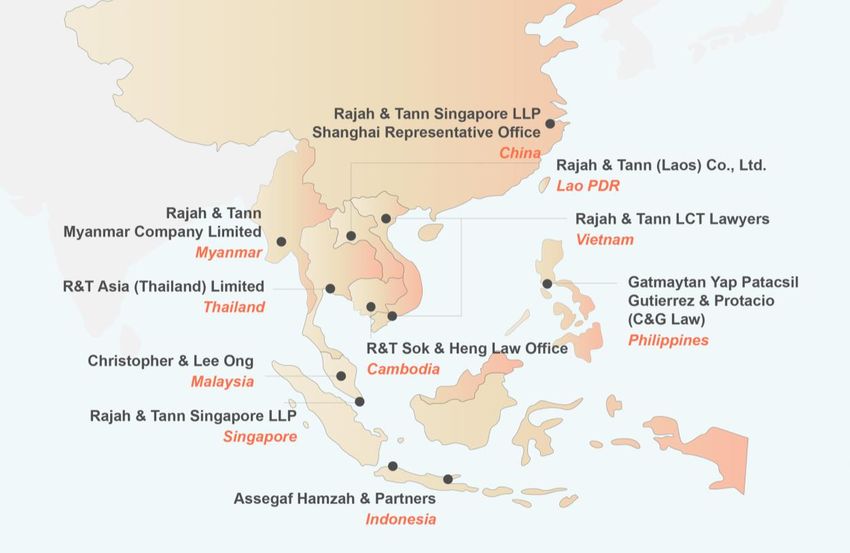
© Assegaf Hamzah & Partners | 9Client Update: Indonesia 2 April 2020 Our Regional Presence Based in Indonesia, and consistently gaining recognition from independent observers, Assegaf Hamzah & Partners has established itself as a major force locally and regionally and is ranked as a top-tier firm in many practice areas. Founded in 2001, it has a reputation for providing advice of the highest quality to a wide variety of blue-chip corporate clients, high net worth individuals, and government institutions. Assegaf Hamzah & Partners is part of Rajah & Tann Asia, a network of local law firms in Singapore, Cambodia, China, Indonesia, Lao PDR, Malaysia, Myanmar, the Philippines, Thailand and Vietnam. Our Asian network also includes regional desks focused on Brunei, Japan and South Asia. The contents of this Update are owned by Assegaf Hamzah & Partners and subject to copyright protection under the laws of Indonesia and, through international treaties, other countries. No part of this Update may be reproduced, licensed, sold, published, transmitted, modified, adapted, publicly displayed, broadcast (including storage in any medium by electronic means whether or not transiently for any purpose save as permitted herein) without the prior written permission of Assegaf Hamzah & Partners. Please note also that whilst the information in this Update is correct to the best of our knowledge and belief at the time of writing, it is only intended to provide a general guide to the subject matter and should not be treated as a substitute for specific professional advice for any particular course of action as such information may not suit your specific business and operational requirements. It is to your advantage to seek legal advice for your specific situation. In this regard, you may call the lawyer you normally deal with in Assegaf Hamzah & Partners. © Assegaf Hamzah & Partners | 10
You can also read


