Data Accessibility Stakeholder Forum - Michigan Public Service Commission March 5, 2019
←
→
Page content transcription
If your browser does not render page correctly, please read the page content below

Data Accessibility Stakeholder
                        Forum
     Michigan Public Service Commission
                           March 5, 2019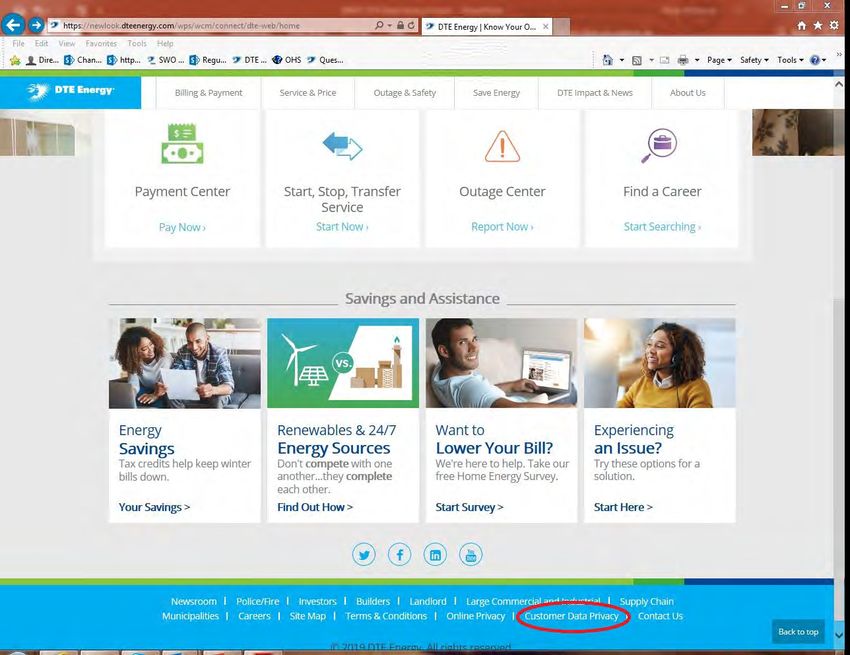
Meeting Agenda
– Welcome
     •   Pat Poli, Director, MPSC Energy Operations

– Overview of Data Privacy Tariffs, Billing Rule Amendments, U-18485
     •   Patrick Hudson, Manager, MPSC Smart Grid Section

– Michigan Utility Data Privacy/Accessibility Overview
     • Phil Dennis, DTE Energy – Matt McRitchie & Shawn Hurd, Consumers Energy

– Green Button Overview
     • Jeremy Roberts, Executive Director, Green Button Alliance

– Best Practices: Customer Data Accessibility in Illinois
     • Kristin Munsch, Deputy Director, Citizens Utility Board of Illinois

– Data Portability: Timely Manner and Readily Accessible Format
     • Mission:data presentation from Patrick Hudson

– Next Steps Discussion and Wrap Up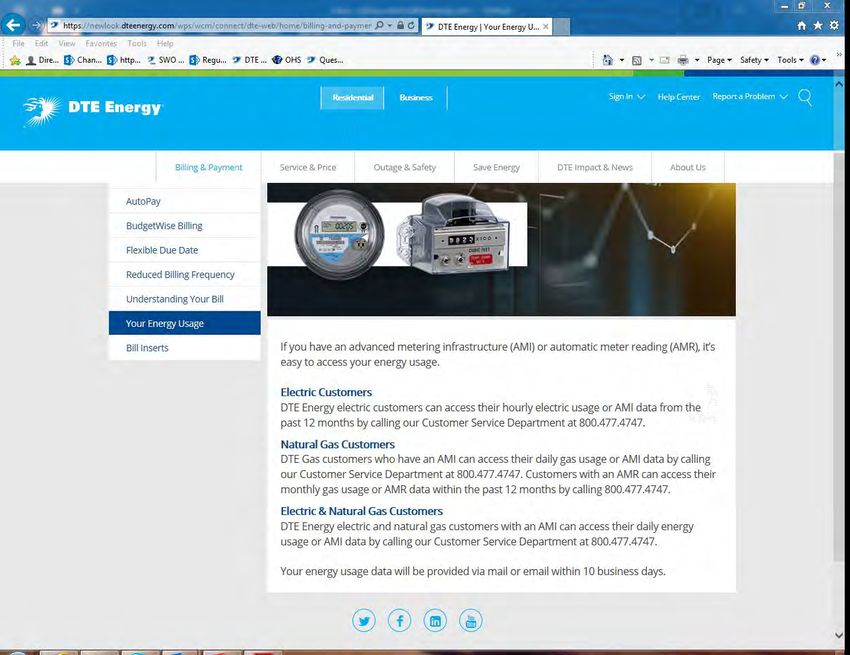
Today’s Focus
• What we will not be           • What we will be
  covering                        covering
  – Starting data privacy and     – Clarification of the
    data accessibility              revised billing rules
    provisions from scratch         language
  – Revamping the data            – Customer benefits of
    privacy aspects of U-           having easy access to
    17102 & U-18485                 usage data
  – Mandates for “readily         – Ways we can collectively
    accessible format” of           interpret the billing rules
    usage data                      and subsequent tariffs
                                    that benefit everyone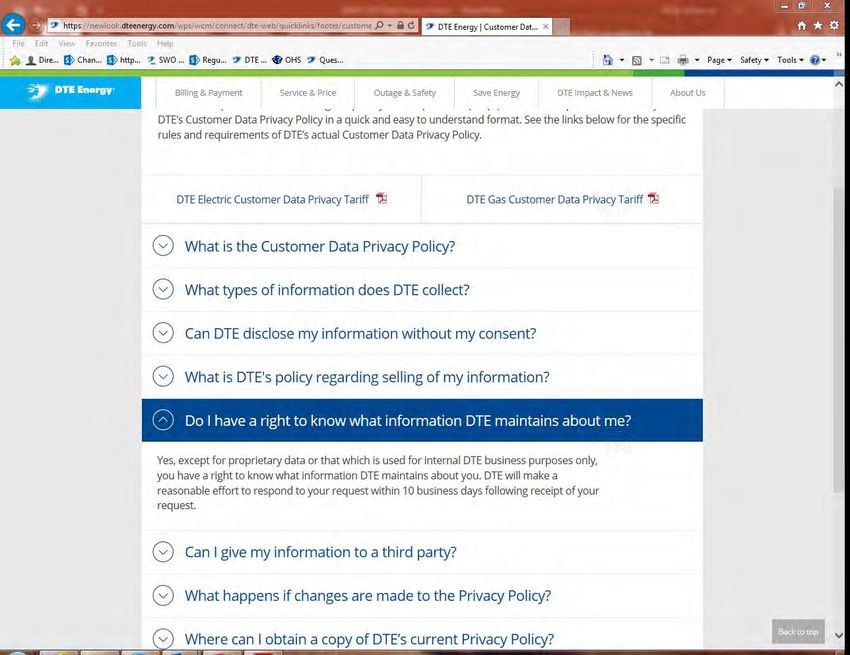
Background

Case U-17102
 – 2012 - Data privacy tariffs required from DTE
    and Consumers Energy
 – Vermont Law School assisted the
    Commission and stakeholders with
    education and a model data privacy format
 – DTE and Consumers Energy filed their data
    privacy tariffs, including provisions for
    customer usage data accessibility
 – This marked the beginning of utility data
    privacy (and accessibility) policies available
    for Michigan utility customers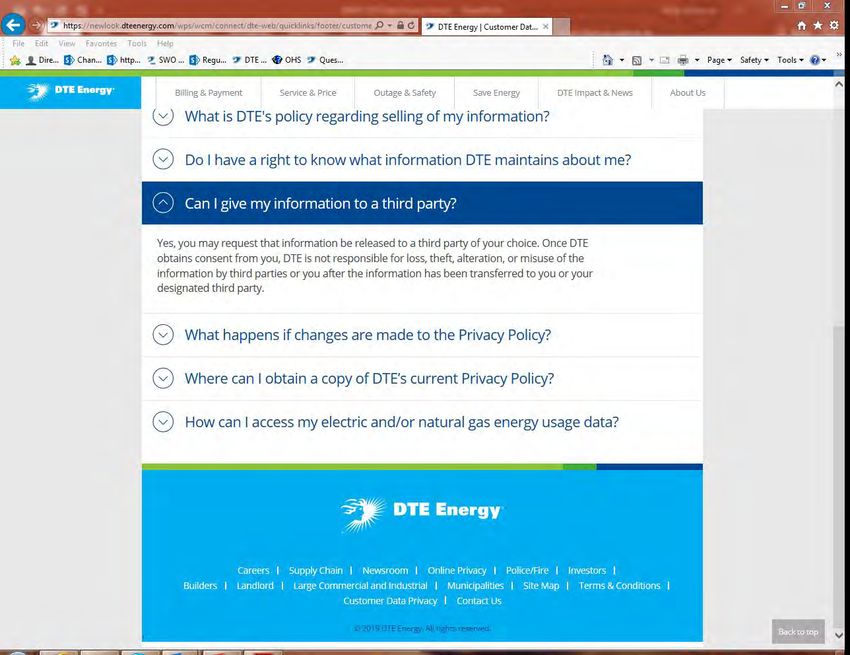
Background (cont.)
Billing Rule Modifications: Data
Privacy Tariff Requirements for
All Regulated Utilities
  – 2017 - Consumer Standards
       and Billing Practices for
       Electric and Natural Gas
       Service were modified
  – Required all regulated
       utilities to file new or
       revised data privacy tariffs
  – R 460.153(2)(g): “Provide
       clear instructions regarding
       the method by which a
       customer and a third party,
       authorized by the customer,
       may obtain customer usage
       data in a timely manner
       and a readily accessible
       format from the utility.”
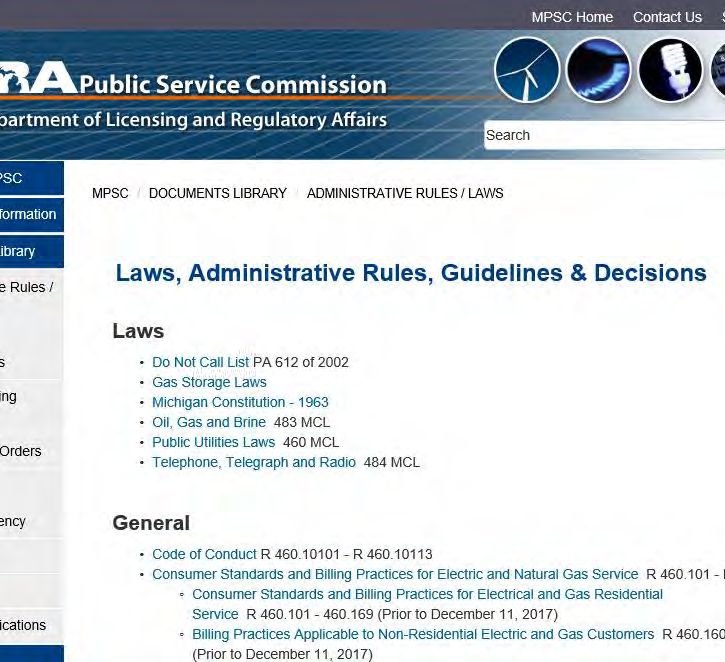
  – https://www.michigan.gov/
       mpsc/0,4639,7-159-
       16370_52012---,00.html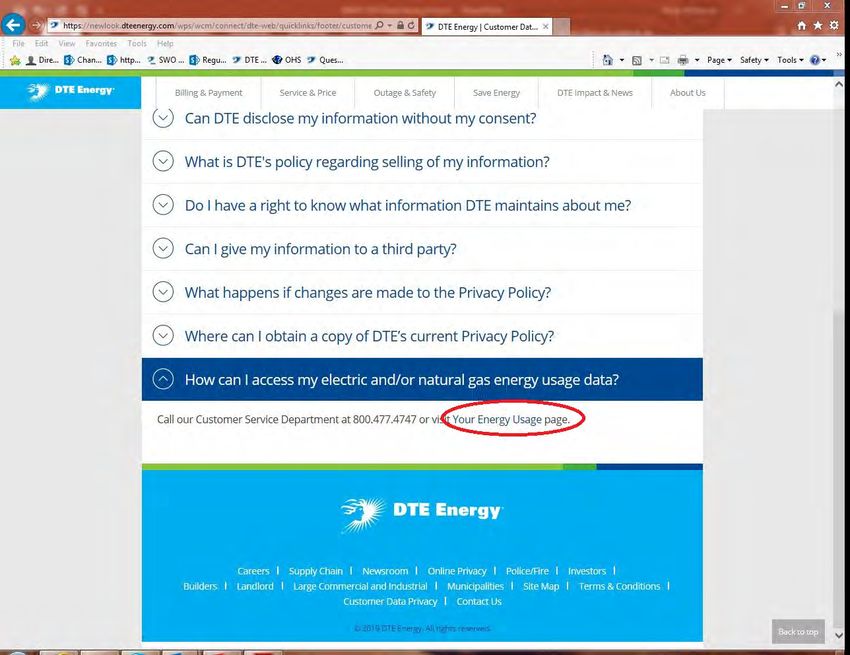
Background (cont.)
Docket U-18485
 – Order released on 12/20/17
 – 2018 – The Commission directed regulated utilities to file either new or revised
    data privacy tariffs, including provisions for customer data accessibility
 – Utilities filed tariffs
 – Order released on 10/24/18 accepting most filed tariffs and directing staff to
    conduct a stakeholder forum to further discuss data accessibility issues and provide
    a report to Commissioners by 4/15/19
 – Order released on 1/18/19 accepting the final utility filed tariff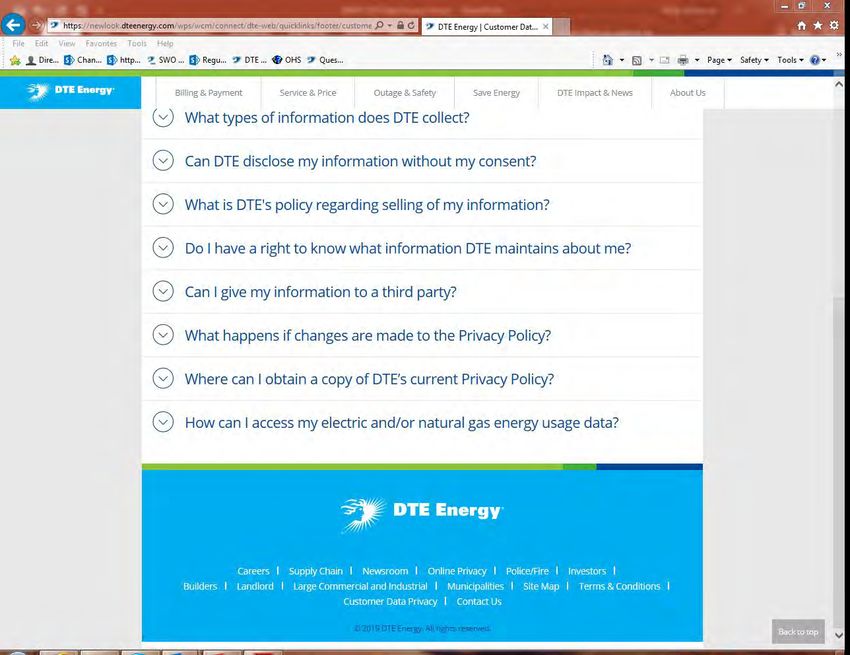
Michigan Utilities Filed Tariffs
• DTE (revised from U-17102 filing)
• Consumers Energy (revised from U-17102
  filing)
• Alpena Power Company
• Indiana Michigan Power Company
• Michigan Gas Utilities Corp
• Northern States Power
• Presque Isle Electric & Gas
Michigan Utilities Filed Tariffs (cont.)

•   SEMCO Energy Gas Company
•   Upper Michigan Energy Resources Corp
•   Upper Peninsula Power Company (UPPCO)
•   Wisconsin Electric Power Company
Regarding customer data accessibility, the
               Commission seeks to create a general
               understanding with utilities, customers and other
               stakeholders of the terms referenced in R 460.153
               (2)(g):

                    1.   “Clear instructions” (when customers
Goals of the             read the utility tariff or inquire with the
                         utility’s customer service
Stakeholder              representatives, is it clear about how to
                         obtain their usage data?)
   Forum            2.   “Timely manner” (what is considered
                         timely response to customer usage data
                         requests?)
                    3.   “Readily accessible format” (what format
                         works best for customers and their
                         authorized third parties?)
Also seeking clarification
                     on the role of electronic
                     signatures with customers
                     who authorize third parties
                     to have access to their
                     customer data

      Goals of the
Stakeholder Forum
Provide information including:
1. Overview of the data privacy/accessibility
tariffs from the State’s two largest investor
owned utilities;
2. Information about a data accessibility
standard tool, “Green Button” (both
Goals of the “Connect” and “Download my data”
formats;
Stakeholder
3. Data accessibility information from our
neighboring Midwest state Illinois;
4. A national perspective of the Michigan
Forum billing rule language - “clear instructions”
“timely manner” and “readily accessible
format”; and
5. Identify the best path going forward for
providing customers and their authorized
third parties with energy usage data per
the utilities’ tariffs that have been filed.With all that said………..
• We have only scratched the surface of the
large topic called “data accessibility”
• Data aggregation
• Anonymized data
• On-going data protection
• Beyond data format: implementation
details (avoiding piecemeal solutions
and a patchwork of data portals)
• Single platform solution option for data
accessibilityData Accessibility – Let’s Get
Started!
Michigan Public Service Commission
March 5, 2019Data Accessibility Provisions in the Data Privacy Tariff Phil Dennis Manager, Regulatory Economics March 5, 2019
The MPSC issued an order in December 2017 that
   required utilities to file data privacy tariffs in
   compliance with new Billing Practice Rules (BPR)

• Since November 2013, DTE Electric and DTE Gas have had in place tariff language associated
  with customer data privacy

• For the most part, DTE Electric and Gas privacy tariffs already complied with the BPR’s

• However, Rule 53 (R 460.153) of the BPR did require DTE to make a few tariff modifications:

     – (1) …Provide to each customer, upon request, a clear and concise statement of the
       customer’s actual energy usage…..for each billing period during the last 12 months. A utility
       shall notify its customers at least once each year that a customer may request usage data

     – (g) Provide clear instructions regarding the method by which a customer and a third party,
       authorized by the customer, may obtain customer usage data in a timely manner and a readily
       accessible format from the utility

• DTE Electric and DTE Gas updated privacy tariffs were approved by the Commission on January
  18, 2019

                                                                                                       16
Side by side comparison shows the specific tariff
language that was added or modified
BRP Requirement “Old” Tariff Revised Tariff
Provide to each customer, upon request, a The customer has a right to know what The Company will provide to customers
clear and concise statement of the Customer Account Information the upon request, a clear and concise
customer’s actual energy usage…..for each Company maintains about the Customer. statement or the customer’s actual energy
billing period during the last 12 months. usage…..for each billing period during the
last 12 months.
A utility shall notify its customers at least N/A The Company will notify customers at least
once each year that a customer may once each year that customers may request
request usage data energy usage
Provide clear instructions regarding the Customers have the right to share their own The Company’s website (customer data
method by which a customer and a third Customer Account Information with third privacy link at bottom of homepage) will
party, authorized by the customer, may parties of their choice to obtain services or provide clear instructions for customers on
obtain customer usage data products provided by those third parties how to access 12 months of usage data
and how to share usage data with third
parties
Customer to obtain customer usage data in Company will make effort to respond in 30 Company will make effort to respond in 10
a timely manner business days of being contacted by the business days of being contacted by the
customer customer
Customer usage data provided in a readily N/A Customer usage data will be delivered in
accessible format comma delimited (csv), or xml format
17While a few snap shots of DTE’s web site provides
customers information on data
privacy…improvements are coming
18Data privacy tariff available for view or download,
FAQ’s provide high level answers to data privacy
questions
19More FAQ’s
20Each FAQ provides information regarding our
privacy rules
21Consent form will make it easier for customer data
to be shared with a trusted third party
Note: Online consent form to
be available in 2019
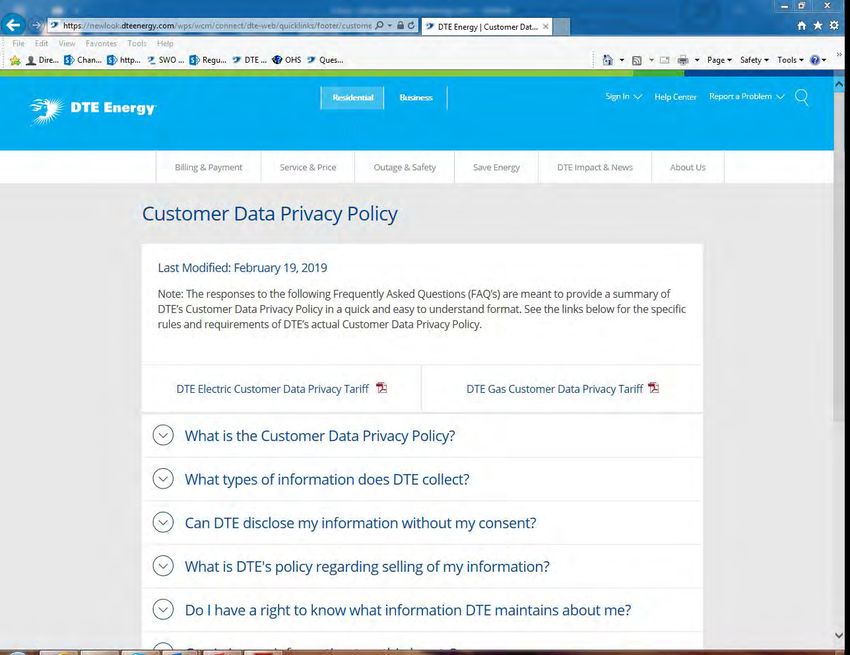
22This link will provide customer more information
on how to obtain their energy usage
23Beginning June 1, 2019, customers will have
option to download usage data and set up
ongoing sharing of data with others they trust
Note: Customer ability
to download usage data
available in June 2019
24DTE will have a Green Button Download my Data
solution as part of its self-service portal, which will
provide data in either .csv or .xml format, and a formal
certification
Download Third Party
Access DTE Ongoing
Data sharing Receives
Web Portal
Data
Certified Customer can
produce a link
for any third
party email One time
using via the share
Customer
web portal
accesses the web Customers
portal using their downloads data in
account login a .csv or .xml file Customer send
information data to a third
party via email
Customer
view data
25Key Takeaways and Future Enhancements
• Clear instructions for customer access to usage data:
– Current State: Customers call 1-800 number
– Future State: Green Button Download my data available June, 2019
• Customers sharing usage data with those they trust:
– Current State: Customers call 1-800 number
– Future State: Customer option to create link for on-going sharing, or provide to third party for one-
time share
• Third party consent form:
– Current State: Form not available online
– Future State: Consent form available online
• A utility shall notify its customers at least once each year that a customer may request usage data:
– Current State: Not provided
– Future State: Will be provided along with annual description of available rates (R 460.149) expected
in 3rd quarter 2019
26Data Accessibility Provisions
in the Data Privacy Tariff
March 2019Key Objectives - Tariffs 29
Objective 1: Provide clear and precise instructions for customers to access their data
The tariff explicitly discloses that the customer can either obtain their data via our
online portal, or contact us directly via telephone.
Objective 2: Obtain authorization via Written Consent for secondary purposes
The tariff states written consent is a requirement for disclosing any information
to a Third-party. The Company’s website contains instructions for both
Residential and Non-Residential customers on how to release their information to
Third-parties at the following hyperlink:
https://www.consumersenergy.com/privacy.
The form indicates what level of access a Third-party can have on the account.
Objective 3: Provide clear and precise instructions for customers to relinquish their
information to third-parties
The tariff discloses the process that a customer can use to authorize Third-
parties to access data and the response time for information to reach a third
party was shortened from 15 business days to 10 business days.Customer Data Requests 30
Protection of Customer Data is our paramount priority
Consumers Energy Privacy Policy updated in Oct. 2018
URL https://www.consumersenergy.com/privacy
Customer Assistance
Customers always have the option of calling our contact centers (residential & small
business 800-477-5050; business center 800-805-0490) with questions or for
assistance
Access the customer portal at www.consumersenergy.com and logging in to your
account (or creating a new one)
Self service from website: URL https://www.consumersenergy.com/privacy
Mechanics
Timely
Data Format
Instructions included in the Consumers Energy Privacy Policy
URL https://www.consumersenergy.com/privacyGreen Button Timeline 31
2018 2019
Jul Aug Sep Oct Nov Dec Jan Feb Mar Apr May Jun Jul Aug Sep Oct Nov Dec
Tariff Approved
Current IWP
New IWP
Green Button Download
Green Button Connect
Presently, customers access their usage data via Green Button Download
In Sep 2019, new Interval Web Portal will add Green Button Connect
functionality for customers
- Green Button Connect is in development, working with our vendor and
using Green Button standard as guidanceGreen Button Alliance
Green Button®
05 March 2019
Michigan Public Service Commission
Lansing, MichiganStandards compared to others
Standards: Others:
● Allow a market to grow without ● Immediate solution to a problem but
technical barriers or discrimination. may require ‘unequitable’ agreements.
● Allow anyone to suggest enhancements ● Enhancements are controlled by
for the future. particular vendor(s).
● Prevent lock-in from lack of vendor ● Changing vendors later may entail great
options. costs and human resources.
● Provide transparency to the ● Code escrows may be needed to ensure
innerworkings. longevity.
● Implementing the same standard allows ● Pressure on platform pricing may need
for more app-provider competition. to be jurisdiction mandated.Green Button® standard
NAESB ESPI REQ.21 (aka “Green Button”)
North American Energy Standards Board,
Energy Services Provider Interface,
Retail Electric Quadrant, book 21
● Green Button provides two methods for data transfer…
○ Connect My Data®
■ A way for a customer to authorize a Third Party to obtain Utility data
for them.
○ Download My Data®
■ A way for a customer to login and download their data from a Utility.What are GB CMD and GB DMD? Green Button Connect M y Data ® (‘GB CMD’ or ‘GBC’) provides a set of standards for allowing the secure , interoperable communications of energy-usage (including billing energy data) and account information between business entities—utilities and third parties—quickly, repetitively, and in a standardized way. Green Button Dow nload M y Data ® (‘GB DMD’ or ‘GB’) provides a set of standards for allowing the interoperable communications of energy-usage and -billing information through the use of files obtained and shared by a
What are GB CMD and GB DMD?
1. Models (CMD & DMD): data formats/schemas for electricity, natural gas,
   and water data
    a. “Energy Usage Information” (EUI) or “Customer Usage Data” (CUD)
        ■ kW, kWh, …
    b. “Retail Customer Information” or “Personally Identifiable Information”
       (PII)
        ■ account number, addresses, meter numbers, …
2. Architecture (CMD only): service-oriented, including message transfer
3. Assurance (CMD & some DMD): authentication, privacy, & security
What are GB CMD and GB DMD?
1. Models (CMD & DMD): data formats/schemas for electricity, natural gas,
& water data
2. Architecture (CMD only): service-oriented, including message transfer
a. R egistration of Third-Parties with “Data Custodians” (i.e., Utilities).
b. Creation , m odification , and revocation of authorization for access.
c. Access by Third Parties to data they’ve been authorized to access.
3. Assurance (CMD & some DMD): authentication, privacy, & securityWhat are GB CMD and GB DMD?
1. Models (CMD & DMD): data formats/schemas for electricity, natural gas,
& water data
2. Architecture (CMD only): service-oriented, including message transfer
3. Assurance (CMD & some DMD): authentication, privacy, & security
a. Mechanisms to protect custom er privacy (CMD & DMD).
b. Mechanisms to secure inform ation in transit (mostly CMD).
c. Mechanisms to keep the custom er in control …
■ of their authorization (CMD) or their account (DMD).What do CMD and DMD do for us? CMD allows a third-party company to analyze continual (daily) data on behalf of a m utual custom er of the utility and the third-party company without the customer needing to manually and continually obtain the data. With DMD, the utility customer must login, download data, and then upload (to a third party) or otherwise handle the data for analysis. It’s great for one-off or occasional data acquisition (for sizing a solar array or determining historical usage).
Green Button & existing utility systems
CMD APIs                   Real Time              Flexibility
Utilities simply create    Data only need be      Specifics and technical
systems that reformat      reformatted at the     implementations of data
their current data into    moment they are        storage are dependent
Green Button formats       requested by a Third   on the back-end utility
and make the data          Party; on-the-fly.     systems managing
available through the                             customer and metering
Green Button application                          data at a utility
programming interfaces                            company; not dependent
(APIs).                                           on Green Button itself.
Differences between CMD and others
                           Standardized data formats reduce the cost and time to
1. Data formats            implement and support solutions for both utilities and Third
                           Parties.
2. Authorizations
                           Green Button formats are based on XML, their fields and
3. Transfer of data        categories are designed to be universal, and there is a
                           testing program to ensure adherence to the standard.
4. Security of Transfers
                           Customized data formats (specific to one vendor or specific
                           to one state’s or jurisdiction’s requirements) require Third
                           Parties do additional work to understand/read each format
                           and each implementation in a different jurisdiction.
Differences between CMD and others
Green Button data requests require proof of authorization using unique,
1. Data formats OAuth 2.0 “access tokens,” which convey no Personally Identifiable
Information. Each utility controls the duration that an OAuth Access
2. Authorizations Token is viable.
3. Transfer of data
4. Security of TransfersDifferences between CMD and others
EDI, for example, is great for sharing bulk data with vetted companies
1. Data formats with a single ‘key’ because the companies are regulated or they must
meet other strong requirements.
2. Authorizations Green Button maintains separate ‘keys’ for each customer
authorization—even during bulk transfers—reducing ‘breach risk.’
3. Transfer of data
4. Security of TransfersDifferences between CMD and others
Other data-exchange formats allow transmission in multiple ways,
1. Data formats including via Value Added Networks (VAN), File Transfer Protocol,
AS2, etc. CMD uses only HTTPS, just like browsers, for
2. Authorizations nationwide and off-the-shelf interoperability.
3. Transfer of data GB CMD has defined methods of transfer, a defined verifiable
format for the data, and defined methods for expansions (to carry
additional information alongside the energy data). Since most other
4. Security of Transfers formats have no compliance testing available, implementers are able to
make custom, non-interoperable formats and contents. Expansion
Other formats Green Button within GB are standard XML.
XYZ CEUD PII
Many formats provide CEUD and PII information; however, by placing
1001011011010 9182746547283 9182746547283
0100110100110 1001011011010 0101101101001 CEUD & PII into separate streams, GB CMD delivers both of them
0110010100100 0100110100110 0010010110110
101 0110010100100 1001001101001 with greater security and privacy. The data are mapped by the Third
0101101101001 101 1001100
0010010110110 Party through the unique identifiers in the separate streams/files.
1001001101001 4572648394885 4572648394885
1001100 0110100110011 1010010010010
00101 0110100110011
0110100110011 011
00101
1010010010010
0110100110011
011Differences between CMD and others
With GB, the transfer of data is required to be encrypted to
1. Data formats meet TLS 1.2 and TLS 1.3 cybersecurity standards while
data are in transit; with NIST -approved, FIPS 140-2, L1
2. Authorizations cybersecurity suites.
3. Transfer of data
4. Security of Transfers Utilities must have strong public key, HTTPS certificates
from Certificate Authorities that have been successfully
audited according to the criteria of ETSI or WebTrust (no
self-signed SSL certificates) for GB CMD.
Most other formats have no specific rules set by any
authority and therefore, not-only is the data format custom,
the transfer security is also custom.Is it ‘safe’?
Data in Transit… Data at Rest…
CMD - data are secured in transit by: CMD - data are secured at rest by:
● OAuth 2.0 authorization. ● the agreements/regulations of the
utility and/or MPSC.
● TLS 1.2+ end-to-end encryption.
● Other models, like the U.S. DOE’s
● HTTPS Web Certificates.
DataGuard Energy Privacy Program.
DMD - data are secured in transit by:
DMD - data are secured at rest by:
● the login-system requirements
● Whatever protections the individual
defined by the utility.
customers have chosen to protect
any other information on their PCs.Is it ‘safe’? For Green Button data in transit: For Green Button data at rest: … between the utility and the Third Party, … at the Third Party, “the utility would it meets the Rule 53 secondary purposes not be responsible for any because “explicit customer consent is unauthorized release of such required for the utility to release such information by the third party.” data to any third party” and the data can be shared “in a timely manner and a readily accessible format from the utility.” (Case No. U-18485; emphasis added)
Associated security and cyber risks
1. OAuth 2.0 insecure methods   OAuth 2.0 Implicit and Resource Owner
2. Authenticating a customer    methods of creating OAuth tokens are
3. Data storage & protection    insecure. Hence, CMD does NOT allow:
4. Multiple server functions     ● I m plicit , which has enabled several
                                    Cyber Security breaches.
                                 ● R esource Ow ner , which allows the
                                    use of User ID and Password for
                                    authorization of tokens.
Associated security and cyber risks
1. OAuth 2.0 insecure methods GB CMD does NOT define how a utility
2. Authenticating a customer authenticates a Customer.
3. Data storage & protection However, the OAuth 2.0 method defined
4. Multiple server functions by CMD does require the utility to
authenticate both the content of the
OAuth 2.0 request data elements as
well as their Retail Customer prior to the
creation of an OAuth 2.0 token.Associated security and cyber risks
1. OAuth 2.0 insecure methods CMD does not define how data are stored
2. Authenticating a customer or protected when not being transferred.
3. Data storage & protection However, the GBA highly recommends the
4. Multiple server functions implementation of the U.S. DOE’s…
DataGuard
Energy Data P rivacy P rogram
…as a template for addressing protection
www.DataGuardPrivacyProgram.org
of data ‘at rest’ for Third Parties and
Utilities.Associated security and cyber risks
1. OAuth 2.0 insecure methods OAuth 2.0 requires utilities to implement
2. Authenticating a customer both OAuth Authorization Server (AS) and
3. Data storage & protection Resource Server (RS) functions.
4. Multiple server functions However, those two functions can be
combined or be physically separated
from each other.
…Associated security and cyber risks
1. OAuth 2.0 insecure methods AS: There are several commercially
available products that can perform
2. Authenticating a customer
both Customer authentication
3. Data storage & protection and/or OAuth 2.0 Authorization;
4. Multiple server functions enabling utilities to perform a “buy vs.
build” cost analysis.
RS: The RS represents the utility’s current
data storage and does not add any
additional data-storage requirements.Who created the initial effort?
The Green Button effort was created with the
support of
● the U.S. Department of Energy (DOE),
The North American Energy Standards Board’s
● the National Institute of Standards & Energy Services Provider Interface (NAESB ESPI
Technology (NIST), REQ.21 standard) serves as the basis for Green
Button technology by providing a model for
● the Smart Grid Interoperability Panel
business practices, use cases, and an XML
(SGIP),
schema for the standard.
● the Utility Communications Architecture
International Users Group (UCAIug), and
● the White House.Timeline of the Green Button Initiative
Green Button & the PSCs…
                           Considering
                           solutions

                            Ontario, Canada
Chosen GB or
legislation/docket           South Korea
in-progress for GB
Utilities in the Green Button Alliance
Who’s on the 2019 Board of Directors?
    1. London Hydro (Chair)
    2. UtilityAPI [elected] (Vice Chair)
    3. Southern California Edison (Secretary, interim)
    4. ENGIE (Treasurer)
    5. Consolidated Edison Company of New York
    6. Edison Electric Institute [elected]
    7. Exelon Corporation
    8. North American Energy Standards Board
    9. OhmConnect [elected]
    10.Ontario Ministry of Energy [invited, ex officio]
    11.Pacific Gas & Electric
    12.Union Gas Limited
    13.U.S. Department of Energy [ex officio]
    14.U.S. National Institute of Standards and Technology [ex officio]
Jeremy J. Roberts
Ex ecutive Director & General M anager
MPSC
Data Accessibility
Stakeholder Meeting Green Button Alliance
https://www.GreenButtonAlliance.org
Thanks for Having Us /
info@greenbuttonalliance.org
+1 (215) 918-1026CUSTOMER USAGE DATA:
CHALLENGES AND OPPORTUNITIES
Kristin Munsch, Deputy Director
Jeff Zethmayr, Research Director
Citizens Utility Board
March 2019The Balancing Act
The Value Proposition for Customers
Basic Customer Needs
Explaining the Utility Bill
Energy Usage
New Opportunities from Utility Investments
Dynamic Pricing
Research
Energy Efficiency and Demand Response
Where Customers Worry
Customer Privacy
Retail Choice Experience
Costs of Providing Data
Utility Information Technology SystemsThe Illinois Regulatory Landscape
Statutory Constraints
PUA 16-122: Municipal Aggregation Data Sharing
CFA 505/2FFF: Natural Gas Customer Data
PUA 16-108.5: AMI Investment Mandates (Cost/Benefit Requirement)
PUA 16-108.6: Security of Data from AMI
Regulatory Discussions
2009 ComEd AMI and Customer Applications Pilot
2012 EIMA AMI Implementation Plans
Data Discussions:
Types of Data
Value of Data
Protection of Data
Informed Customer ConsentData Access Dockets
Anonymous Data Protocol
CUB/EDF Anonymous Data Protocol
30 Minute Household at ZIP+4 Level
Identification of PTR/NEM Customers
RES Access to Prospective Customer Data
ICC Docket No. 13-0506, Investigation of Applicability of Sections 16-122 and 16-108.6 of the Public Utilities Act (Jan. 2014)
RES Access to Current Customer Data for Non-billing Purposes
Language and Uses
ICC Docket No. 14-0701, Investigation of Standard Terms for Customer Authorization of Access to Interval Usage
Data for Non-Billing Purposes (Apr. 2015)
Customer Authorization Language
Specific Language
Format
Purpose of Disclosure
Length of Time
ICC Docket No. 15-0073, Investigation into the Customer Authorization Required for Access by Third Parties Other than RES to
AMI Interval Meter Data (March 2016)Open Data Access Framework
ICC Docket No. 14-0507, CUB/EDF Petition for Proceeding to Adopt the
Illinois Open Data Access Framework (July 2017)
Purpose
Organizing Principles
Definitions
Types of Data
Data Format
Method of Delivery
TimelinessUse of Usage Data
New Data for Old Questions
Energy Usage and Data Set Matching
Modeling Rate Designs and Price Impacts
Confirming Intuitions (Price Effects)
Challenging Intuitions (Economic Actions)
CUB/EDF Big Energy Data Project
Costs and Benefits of Real Time Pricing (Nov. 2017)
TOU Design and Impacts
Weather-normalized RTP
Electrical Vehicle ImpactsKristin Munsch
Deputy Director
Illinois Citizens Utility Board
309 West Washington Street, Suite 800
Chicago, Illinois 60606
(312) 263-4282
kmunsch@citizensutilityboard.orgEnergy Data Portability:
“Timely manner”
&
“Readily accessible format”
Michael Murray, President
Mission:data CoalitionConsumers should have
convenient access to the best
available information about
their energy usage and costs –
and the ability to easily share
that information directly with
providers of their choice.
missiondata.i
o2014 2019
Data access policy in place
Under consideration
36+ million meters and growing…“In a timely manner”
• In the modern digital world, “timely” =
immediate
• Many utilities provide energy data to
authorized third parties immediately
upon request (example: PG&E) Transfer within
60-90 seconds
• Human processing is costly and inefficient“Readily accessible format” • Most consumers will not interact with their energy data directly. Instead, they will have service providers analyze it for them and provide value. • To be readily accessible, data formats must be consistent and standardized across utilities. Inconsistent formats will break software tools, making them inaccessible. • Green Button Connect is a standardized, machine-readable format and contains two elements: (i) energy usage data and (ii) customer data, such as account number and service address. Both should be available. • Example: A multi-site commercial customer gives its facility managers a smartphone app to manage energy use. The user must have easy access to usage data for their specific site (i.e., address information must be provided).
Green Button Data Model                                                   retailcustomer.xsd
                                                    Customer
                                                                                                  Service
espiDerived.xs                                                        Customer
                                                                                                  Supplier
                                                                      Account
d   Time Period
                         Authorization                                                Customer
                                                                                      Agreement

   Consumptio             LocalTime                                                                Pricing
      nTier               Parameters                                                              Structure
                                         1

       tou
                            Service                                                   Service     End Device
                                                 Usage Point                          Location      Asset
                           Category
                                         1
       cpp

                                                                                                   Position
                                                        0..*
      value                                                                                         Point
                           Reading                 Meter                 Usage
                            Type             1    Reading      0..*
                                                                        Summary
     Reading
     Quality      0..*
                                                        0..*
                                                                       ElectricPowe
                           Interval               Interval                   r
       Cost                                                               Quality
                           Reading       0..*      Block       0..*      Summary
Thank You!
Michael Murray, President
michael@missiondata.io
(510) 910-2281
www.missiondata.ioData Accessibility Stakeholder
Forum
Discussion / Next StepsYou can also read


