Development of ASICs for particle physics and more. - Mridula Prathapan ASIC and Detector Laboratory (ADL) Institute of data Processing and ...
←
→
Page content transcription
If your browser does not render page correctly, please read the page content below
Development of ASICs for particle physics and more..

                                                  Mridula Prathapan
                                        ASIC and Detector Laboratory (ADL)
                                 Institute of data Processing and Electronics (IPE)

KIT – The Research University in the Helmholtz Association                            www.kit.edu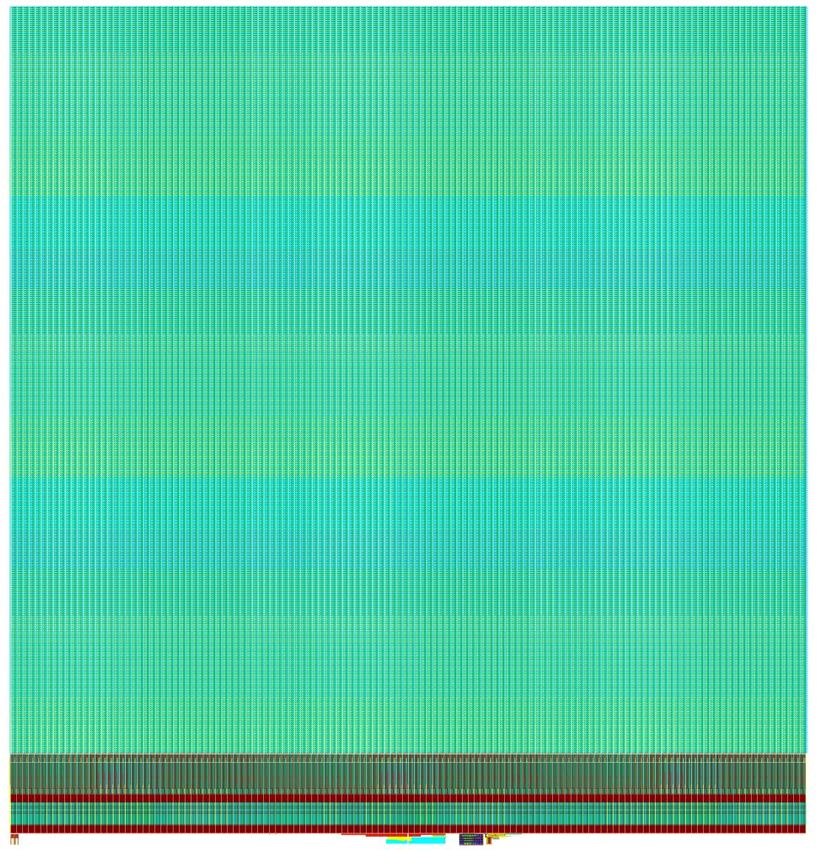
What are ASICs ?

      ASIC stands for “Application Specific Integrated Circuits”

                  Microcontroller          DSP                     FPGA       ASIC

                                    Signal Processing/Converter performance

                                           Development Cost / Time

                                                Power efficiency

                                            Flexibility/Ease of design

2    25.02.2019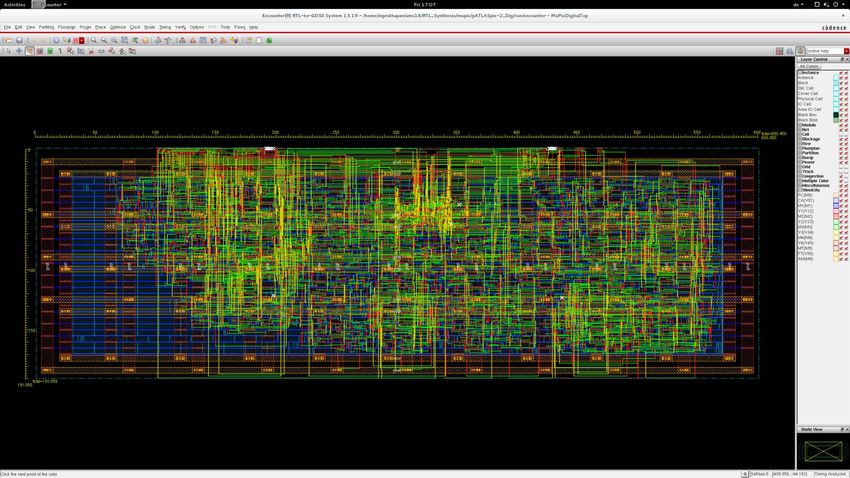
Demand for ASICs in HEP experiments

      The LHC upgrade is by far the single largest ASIC demand for HEP
      this decade

                  CMS Collaboration, ”CMS technical proposal: Upgrade of CMS detector through 2020,”
                  CERNLHCC-2011-06 (2013).

                  ATLAS Collaboration, ”Letter of Intent for the Phase-II Upgrade of the ATLAS
                  Experiment,” CERNLHCC-2012-022. (2013)

                  F. Anghinolfi, et. al., ”R&D Activities in Electronics for future HEP Experiments,”
                  submitted contribution to European Strategy Group, see CERN-ESG-005 (2013).

                  RD53 Collaboration, ”RD Collaboration Proposal: Development of pixel readout
                  integrated circuits for extreme rate and radiation,” CERN-LHCC-2013-008 (2013).

3    25.02.2019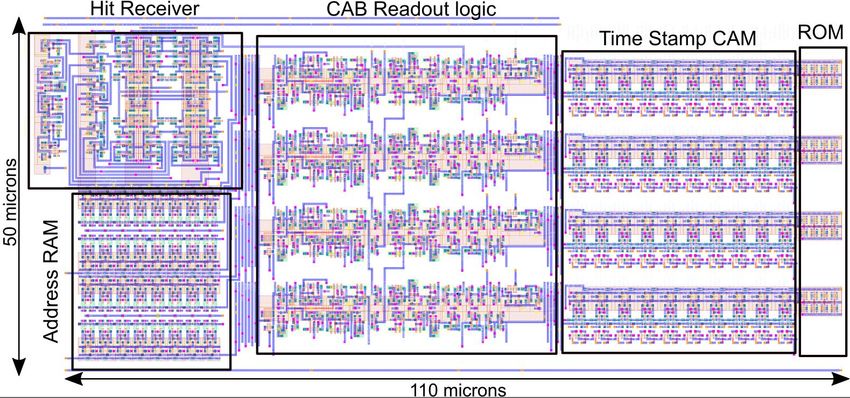
Challenges in ASIC design for HEP

      Technical challenges arise when
              the performance needs to be significantly improved
              when operating conditions lie well outside of industrial applications.
      Modern ASIC design relies heavily on the accuracy simulation models
      Power, Performance, Area trade off
              High-bandwidth transmission
              In-detector digitization, data reduction, processing
              High dynamic range
              Fast timing
      Low cost and Reliability
      Long development cycle with increase in complexity

4    25.02.2019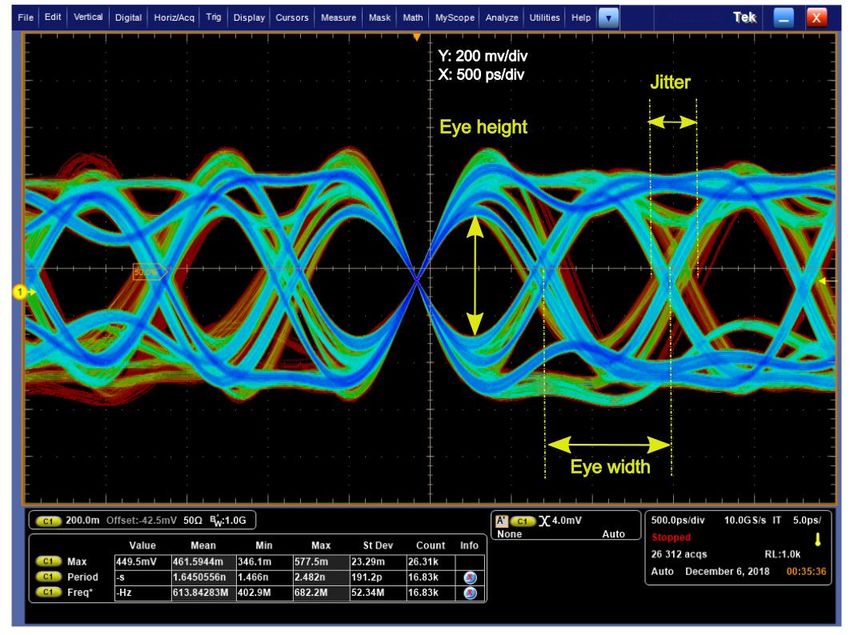
Outline of this talk

      ASIC design at ADL
      Chip design flow
      ATLASpix chip design and testing

5    25.02.2019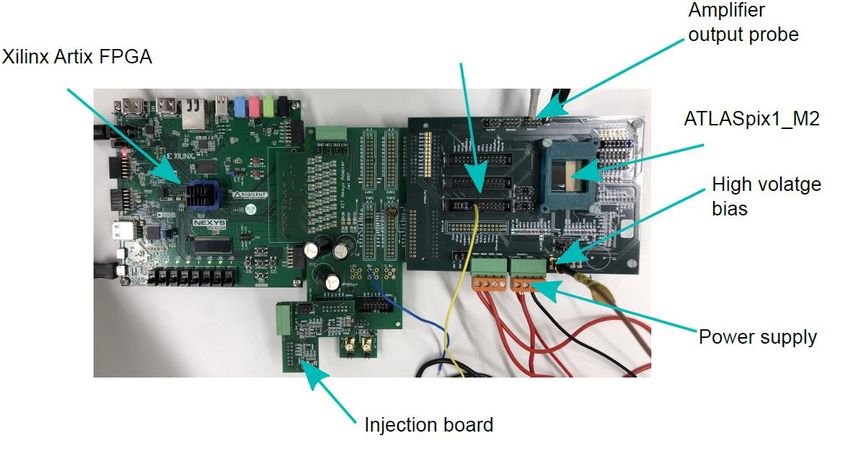
ADL lab at IPE
                                                                   Inside view of DCD chip

    ADL Lab inauguration in
    2016 at KIT Campus Nord

                              ATLASpix1
                              Chip Photograph
                              Tape in : January 2017

                                                       ATLASpix2 TSI
                                                       Chip Micrograph
                                                       Tape in: September 2018

6     25.02.2019
Applications

       Semiconductor detectors for high energy physics
                  HVCMOS sensors are proposed cost-effective alternative to the
                  hybrid sensors for ATLAS Inner Tracker layer 4

                                         Belle-II            Mu3e

      ATLAS                    CLIC       Sensors for medical /
                                          electron microscopy

7    25.02.2019
Simple chip design flow

      “Specify” your idea , Split it into blocks
      Design the circuit
      Make the chip testable
      Ensure the design will work
      Layout the chip
      Double check the layout
      Turn your design into silicon

8    25.02.2019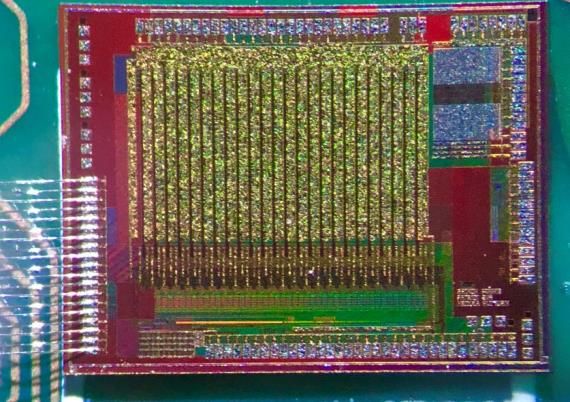
Simple chip design flow

      “Specify” your idea , Split it into blocks
      Design the circuit                        Design Implementation
      Make the chip testable                            Logic
      Ensure the design will work
      Layout the chip
      Double check the layout
      Turn your design into silicon

9    25.02.2019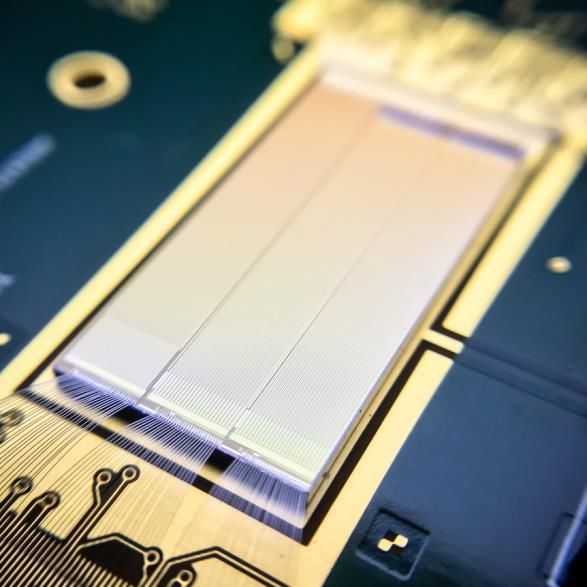
Simple chip design flow

       “Specify” your idea , Split it into blocks
       Design the circuit                        Design Implementation
       Make the chip testable                            Logic
       Ensure the design will work                     Verification
       Layout the chip
       Double check the layout
       Turn your design into silicon

10    25.02.2019
Simple chip design flow
“Specify” your idea , Split it into blocks
Design the circuit Design Implementation
Make the chip testable Logic
Ensure the design will work Verification
Layout the chip Design implementation
Double check the layout Physical design
Turn your design into silicon Design for Manufacturing
11 25.02.2019Step 1. “Specify” your idea
Today’s complex chip designs can have
a million lines of behavioral code.
Come up with a model of the chip
behaviour in a Hardware description
Language such as VHDL , Verilog,
System Verilog
Analog blocks such as pixels, amplifier,
comparator, DAC, PLL be modelled in
Verilog A or Verilog AMS
12 25.02.2019Aim: Design an monolithic active pixel sensor chip in a
commercial CMOS process for ATLAS ITk pixel layer 4
2024/25: Phase 2 ATLAS will
completely replace its trackers
~ 160 m2 silicon strips
~10 m2 silicon pixel
Advantages over hybrid sensors:
Monolithic sensors saves bump bonding
for ~45% of outer barrel system
Substantial cost reduction and reduced
module assembly time
13 25.02.2019Arrive at the design specifications
Harsh environment of
HL-LHC Required on-chip design features
HL/LHC Feature Specifications
Outer Pixel
Matrix size (row , col) 372 x 132
NIEL[neq/c 1015
m2] Pixel size (x , y) µm2 150 x 50
TID 80 Mrad Readout scheme Column drain readout
Hit rate 100-200 with trigger
[MHz/cm2] SEU SEU tolerant global
BC 25ns memory
SEU 100 / hour / Data encoding Aurora 64b/66b
affecting chip
pixel
Output data rate 1.28 Gbps
Detection > 99% CMD decoder On-chip CMD decoder
efficiency Serial powering On-chip
14 25.02.2019Split the specification into design blocks
Sensor
Pixel electronics
Readout electronics
Readout Control Unit
Design for configurability/
testability
Bias blocks, clock recovery,
POR etc (Analog Chip
Bottom (ACB))
15 25.02.2019Behavioral model of the system eg: ATLASpix1_M2 chip
models the dynamic behavior of
the chip as it works
Binary hit pattern/
Command
ATLASpix
Verilog Model
Readout data
Receiver/Decoder
used for design verification
receiver block can be re-used in
firmware Behavioral simulation of ATLASpix1 M2 chip
saves the number of iteration cycles
16 25.02.2019Step 2, 3 & 4 : Design, simulation, verification
Example : ATLASpix design
17 25.02.2019Design the circuit (Analog)
Sensor design
Pixel electronics
18 25.02.2019Sensor operation
The HVCMOS sensors allow construction of radiation hard particle
pixel detectors in standard CMOS technologies
+1.8 V +1.8 V
0V
Deep n-well Deep n-well
P substrate
19 25.02.2019High resistivity substrates have been used (80Ωcm,200Ωcm,1kΩcm)
Induce space charge region by applying high voltage
+1.8 V +1.8 V
-50 V
Deep n-well Deep n-well
depletion region
20 25.02.2019Faster charge collection by drift
Electronics are placed inside the charge collection well
+1.8 V +1.8 V
-50 V
Deep n-well Deep n-well
-
depletion region
21 25.02.2019Advantages:
High radiation tolerance (fast charge collection, short drift path,
vertical depletion, no low field regions)
Biasing from front side (no need for backside contact)
Large depletion layer can be induced
Possibility to thin sensors to ~50µm
Disadvantages:
Detector capacitance (due to DNW-PW junction and DNW-P substrate)
22 25.02.2019ATLASpix1 – Large area prototype
Substrate resistivity
range
Pixel has only CSA
50Ωcm – 1kΩcm
and comparator
RO cells at the chip
periphery
Three design variants
Advantages:
based on
No TS propagated
Readout scheme 2.3 cm
inside matrix-
The in-pixel
smaller digital
comparator design
power consumption
No digital crosstalk
AMS ah18 Engineering Disadvantage:
run Larger periphery
January 2017
1 cm
23 25.02.2019Design the circuit (Digital (Full custom)) 24 25.02.2019
25 25.02.2019
Design the circuit (Digital(semi custom))

26    25.02.2019
Design the circuit (Digital(semi custom))

                   Cadence soft IP   Open source (based A pipelined 8b/10b
                                     on IBM IP)         encoder ( KIT)
Power              5.5 mW            1.5 mW              5 mW
Performance        4.8 Gbps          5.8 Gbps            6.2 Gbps
Area               0.045 mm2         0.02 mm2            0.045 mm2

27    25.02.2019
Step 5 : Design for manufacturing /
physical design
28 25.02.2019Trigger buffer (full custom) eg: ATLASpix1 M2
Stores the following hit data until “on-chip programmable latency”
Time stamp – 10bits
Address – 8 bits
Group address - 6 bits
29 25.02.2019Readout control unit (semi custom) eg: ATLASpix2 30 25.02.2019
Chip integration of ATLASpix3

                     Pixels

                                           Config. reg

                   Hit Buffers

                                             EoC1
                    Trigger
                    Buffers
                                             EoC2
                                     RCU

31    25.02.2019
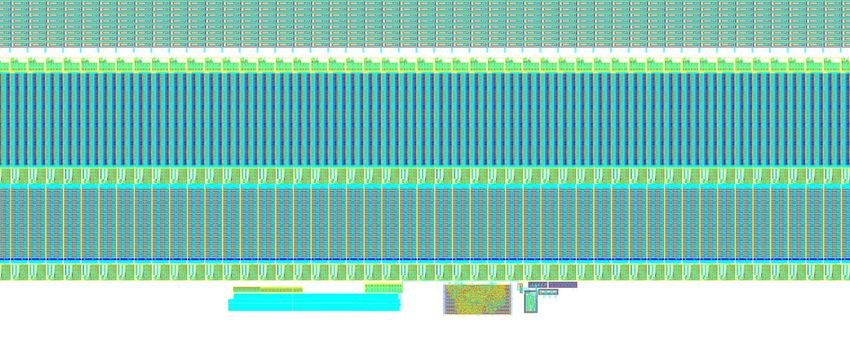
Full chip layout
ATLASpix 3
Dimensions : 2 cm x 2 cm
Chip periphery occupying
10% of the total area Pixel Matrix
1.8 cm
To be used for HVCMOS
quad module construction
Planned submission:
March 1st 2019
Periphery
0.2 cm
2 cm
32 25.02.2019Post silicon testing of ATLASpix1_M2 33 25.02.2019
Test system

                   (developed by Felix Ehrler, see
                   talk on Wednesday)

34    25.02.2019
ATLASpix1_M2 measurements
Threshold tuning
35 25.02.2019ATLASpix1_M2 measurements
Eye diagram at 1.28 Gbps
eye height ~ 504 mV,
eye width ~ 580 ps
jitter ~ 100 ps
36 25.02.2019ATLASpix design summary
ATLASpix (1,2,3) series in AMS/TSI 180nm CMOS process
Full chip Verilog model for verification
novel design concepts such as the Parallel
Design of hit data memory (SRAM array)
Trigger buffer design that holds the hit data until readout
Analysing memory design in order to efficiently use bandwidth, low
power and area
Design of Readout Control Unit to schedule the entire readout operation
Novel MUX based serializer architecture and data encoder designs
Command decoder that receives command words and clock recovery
from Clk/CMD 160MHz
37 25.02.2019ATLASpix1_M2 Testing Summary
SNR of about 64 was measured
The power consumption of ATLASPix_M2 is about 300mW/cm2
The 2/3 of the power is from comparators, buffers, digital block. 1/3 from
pixel amplifiers
The serial data link works at the required data rate of 1.28 Gbps
The time walk for signals from 1500e (20% MIP) to 9000e (130% MIP)
is typically 35ns.
Test beam and irradiation studies on ATLASpix1 prototypes are being
conducted within the collaboration of six different institutions
ATLASpix1 series is fully functional
38 25.02.2019Thank you for your attention 39 25.02.2019
Back up

40   25.02.2019
41

             Standard- and annular NMOS transistors

         Field oxide Leakage current

                       D           D
                                                                    G
                   G           G
                                                          D
                       S           S

                                                  N+      S
             Standard NMOS

                                             P+        Guard ring

                                                                    G

                                                          D

                                                          S

 41   25.02.2019                          Annular gate NMOS
We can measure the trigger window characteristics by varying the
trigger vs injection time distance. It the distance is too small the hits
are not triggered and deleted. An S-curve is the result
In this way the time resolution and time walk can be measured
The time walk for signals from 1500e (20% MIP) to 9000e (130% MIP)
is typically 35ns.
Trigger vs injection
distance where 50% of
the hits are detected
42 25.02.2019There is the skew of the hit-timing (time walk) that depends on the row
of the pixel in matrix.
The time skew is about 45ns from row 0 to maximum row 319
The reason for skew is different length and different capacitive load of
the long lines. It will be fixed in next large submission. All lines will
have the same length. Digital correction is also possible
Column dependence of timing is smaller – about 10ns. It is probably
caused by voltage drops
Trigger vs injection
distance where 50% of
43 25.02.2019 the hits are detected… Achievements:
Time resolution ~ 25ns, radiation hardness of 100MRad and 5x10¹⁵
neq/cm2. Fast readout on sensor chip with high bandwidth amplifiers.
Possibility to thin sensors to ~50µm.
Low resistivity
M. Benoit et al.,
“Testbeam results of irradiated AMS H18 HV-CMOS pixel sensor prototypes” Absolute efficiency measured
arXiv:1611.02669 [physics.ins-det]
>99%
Whole matrix used (full readout)
44 25.02.2019 2 bins 95%You can also read


