Disclosure Guidelines - Influencer Marketing Steering Committee - Updated: January 2019 - Ad Standards - Canada
←
→
Page content transcription
If your browser does not render page correctly, please read the page content below
Influencer Marketing
Steering Committee

Disclosure
Guidelines
Updated: January 2019
Ad Standards, in collaboration with an industry                              From the Committee
panel of influencer marketing companies,                                     The members of the Ad Standards Influencer Marketing Committee have
presents these Disclosure Guidelines to                                      come together from across the industry to set out a practical set of
                                                                             guidelines and tools to provide clarity on how, when, and what to disclose
illustrate industry best practices. The guidelines                           when engaging in influencer marketing on any social media channel.
that follow are meant to educate the influencer
marketing industry about their disclosure                                    Please encourage members of your team, from the inception of any
obligations and to provide a practical framework                             influencer marketing campaign, to use these Disclosure Guidelines as
                                                                             a roadmap for providing truthful, fair, and accurate influencer
for providing disclosure.                                                    marketing content.

Application
                                                                             With rapidly evolving technology and marketing trends, it is impossible
The Disclosure Guidelines apply to anyone involved in influencer marketing   to predict every possible scenario. This is intended to be a living
practices.                                                                   document that will be regularly updated. We invite your comments and
                                                                             feedback at info@adstandards.ca.

                                                                             These guidelines do not replace or supersede regulatory
The Disclosure Guidelines cover three main groups of social media            requirements on influencer marketing that exist in certain sectors.
channels:
• Blogs and Microblogs;                                                      Further, the disclosure best practices that follow in this document do
                                                                             not constitute legal advice nor do they ensure compliance with the
• Social Media Networks; and                                                 Canadian Code of Advertising Standards or the Competition Act on
• Video Content.                                                             material connection disclosure; product performance representation
                                                                             not based on adequate and proper tests; nor false or misleading
                                                                             representations. The full context of any communication must always
                                                                             be considered to determine what may be required.

2   INFLUENCER MARKETING STEERING COMMITTEE - DISCLOSURE GUIDELINE
                                                         GUIDELINESS
Considerations                                                         Regulatory Landscape
                                                                       In Canada, the Competition Bureau is the primary government body
                                                                       responsible for enforcing laws about misleading marketing practices.
                                                                       An arm of the federal government, the Competition Bureau oversees the
While social media has no borders, laws and                            Competition Act with the goal of preventing fraud and eliminating deceptive
regulations are created and enforced by                                marketing practices.

governments operating within their own                                 In the U.S., the Competition Bureau’s counterpart is the Federal Trade
defined jurisdictions. With this in mind, the Ad                       Commission (FTC).
Standards Influencer Marketing Committee has                           FTC Endorsement Guide - What People Are Asking:
aimed to present best practices that are                               https://www.ftc.gov/tips-advice/business-center/guidance/ftcs-endorsement-
consistent with the legal, regulatory, and self-                       guides-what-people-are-asking

regulatory environments of other organizations
and regulators around the world.                                       Self-Regulatory Framework
                                                                       Ad Standards, the Canadian advertising industry’s self-regulatory body in
                                                                       Canada, administers The Canadian Code of Advertising Standards (The
                                                                       Code). The Code requires disclosure of material connection under Clause 7,
Why Disclose                                                           Interpretation Guideline #5 - Testimonials, Endorsements, Reviews.

Disclosing a material connection between the                           For further guidelines regarding Accuracy and Clarity and Disguised
                                                                       Advertising Techniques, please refer to Clauses 1(F) and 2 of the Code:
brand and the influencer is necessary to comply
                                                                       http://www.adstandards.com/en/Standards/thecode.aspx
with laws and regulations. It is also important for
establishing viewer trust by ensuring that online                      For additional resources, see Further Reading section.
advertising is truthful, fair and accurate. Brands
and influencers should remain cognizant of the
viewer, and whether a material connection
                                                                       Shared Responsibility for Compliance
between the brand and the influencer would
change the viewer’s perception of the content.                         The onus for mandatory disclosure compliance is on all parties involved in
                                                                       the influencer marketing collaboration. There is a shared burden on any
                                                                       agency, PR firm or company responsible for facilitating the sponsorship - in
                                                                       addition to the brand advertiser and influencers involved.

3   INFLUENCER MARKETING STEERING COMMITTEE - DISCLOSURE GUIDELINE S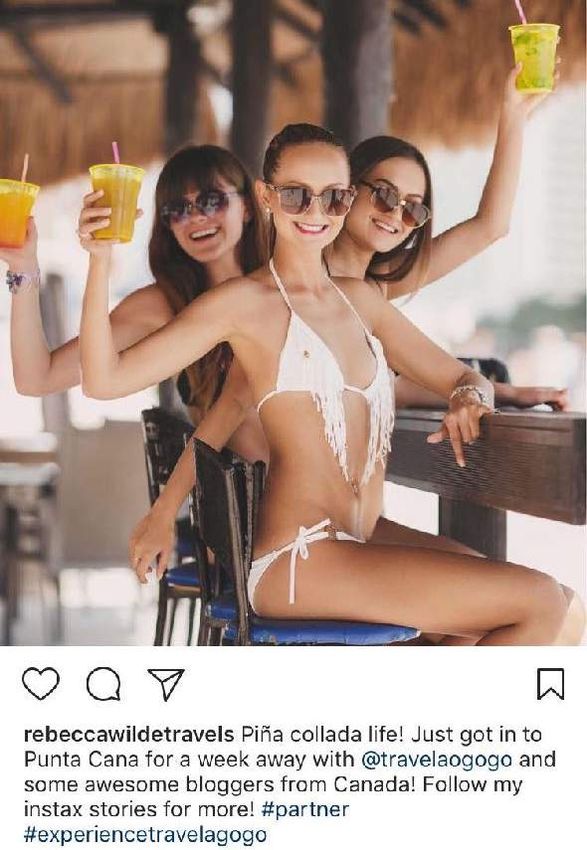
Recent Regulatory                                                             The FTC:

Action
                                                                              In the United States, the FTC conducts investigations and pursues cases
                                                                              involving endorsements made on behalf of an advertiser under Section 5 of the
                                                                              FTC Act, which generally prohibits deceptive advertising.
                                                                              https://www.federalreserve.gov/boarddocs/supmanual/cch/ftca.pdf
The Competition Bureau
                                                                              For any U.S. cases involving deceptive or misleading marketing practice,
In Canada, The Competition Act prohibits misleading advertising and
                                                                              including influencer marketing, testimonials and endorsements, go to:
deceptive marketing practices, and The Competition Bureau has taken
action against and published cases about deceptive marketing practices.       https://www.ftc.gov/news-events/press-releases
One such case involved Bell Canada and astroturfing, which is the
publishing of recommendations without disclosing a paid relationship
between the author of the recommendation and the brand or product that
is being recommended. In 2015, Bell Canada was fined $1.25 million for        Letters sent by the FTC:
astroturfing practices, after its employees wrote favourable reviews of
Bell Canada products online without disclosing their relationship with the    In addition to legal action, another approach the FTC has taken recently is to issue
company.                                                                      letters directly to influencers and brands with inquiries about their marketing
                                                                              practices.

Breaching the Competition Act can result in civil or criminal action by the   Influencers: https://www.ftc.gov/system/files/attachments/press-releases/ftc-staff-
Competition Bureau (see Sections 52 and 74.01 of the Competition Act).        reminds-influencers-brands-clearly-disclose-relationship/influencer_template.pdf

                                                                              Brands: https://www.ftc.gov/system/files/attachments/press-releases/ftc-staff-
                                                                              reminds-influencers-brands-clearly-disclose-relationship/brand_template.pdf

The misleading advertising and deceptive marketing provisions apply to
influencer marketing just as they do to any other form of marketing.
While nothing is wrong with advertisers compensating influencers, or
with influencers accepting compensation, both parties to these
relationships need to remember that they are making marketing
representations to consumers.

The Competition Bureau recently issued their perspective on Influencer
Marketing in their Deceptive Marketing Practices Digest - Volume 4:
http://www.competitionbureau.gc.ca/eic/site/cb-bc.nsf/eng/04372.html

4   INFLUENCER MARKETING STEERING COMMITTEE - DISCLOSURE GUIDELINE S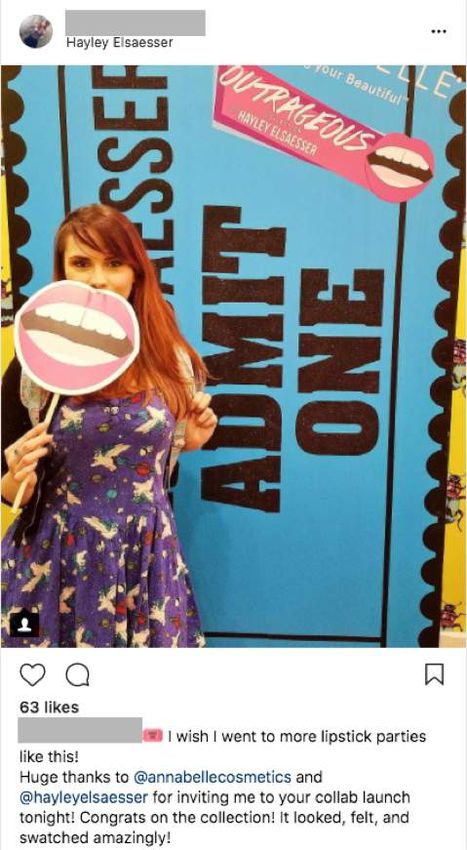
Definitions
    Term                                Definitions

                                        Any connection between an entity providing a product or service and an endorser, reviewer, influencer or person making a representation that may affect the weight
    Material Connection                 or credibility of the representation, and includes: benefits and incentives, such as monetary or other compensation, free products with or without any conditions
                                        attached, discounts, gifts, contest and sweepstakes entries, and any employment relationship.

                                        Payment means any form of consideration, including financial compensation or other arrangements, such as provision of free products (see definition of Material
    Payment                             Connection).

    Brand Ambassadorship or             A material relationship for a long-term engagement, including employment, often with both defined and undefined content production and distribution expectations.
    Exclusivity                         This typically includes roles, responsibilities, deliverables, and a set time period outlined in a contract.

                                        The disclosure guidelines apply to all exchanges of value between an advertiser—or a party working on behalf of an advertiser—and an influencer. This may
                                        include free products, monetary exchange, or other perks with the expectation—explicit or implied—that a promotion or inclusion of the advertiser’s products in a
    Advertising                         post occurs.
                                        "Advertising" and "advertisement(s)" are defined as any message where the content is controlled directly or indirectly by the advertiser and which is communicated
                                        in any medium to viewers with the intent to influence their choice, opinion, or behaviour.

                                        Someone who possesses the potential to influence others, regardless of the number of followers or viewers they may have. The people whom influencers affect are
                                        defined as a person or group who take action or change opinion/behaviour as the result of exposure to information provided by an influencer. This may occur on a
    Influencer                          blog, social media website, or other media publications. Influencers may also be known as ‘Talent’ or ‘Content Creators’.

                                        This includes the professionals who work with the advertisers and their affiliated parties, which may include media agencies, PR agencies, creative agencies, or
    Brand                               influencer marketing companies that work with them.

5    INFLUENCER MARKETING STEERING COMMITTEE - DISCLOSURE GUIDELINE S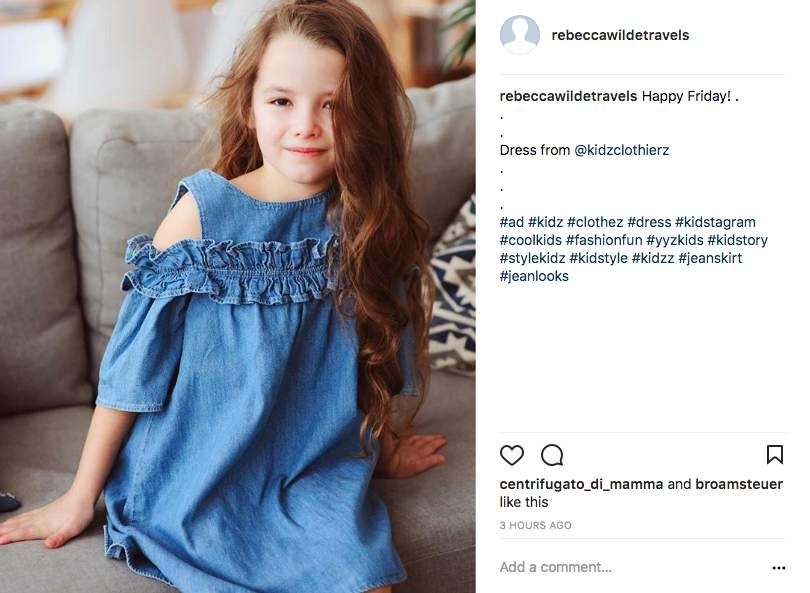
The Do’s and Don’ts
    of Disclosure

6   INFLUENCER MARKETING STEERING COMMITTEE - DISCLOSURE GUIDELINE S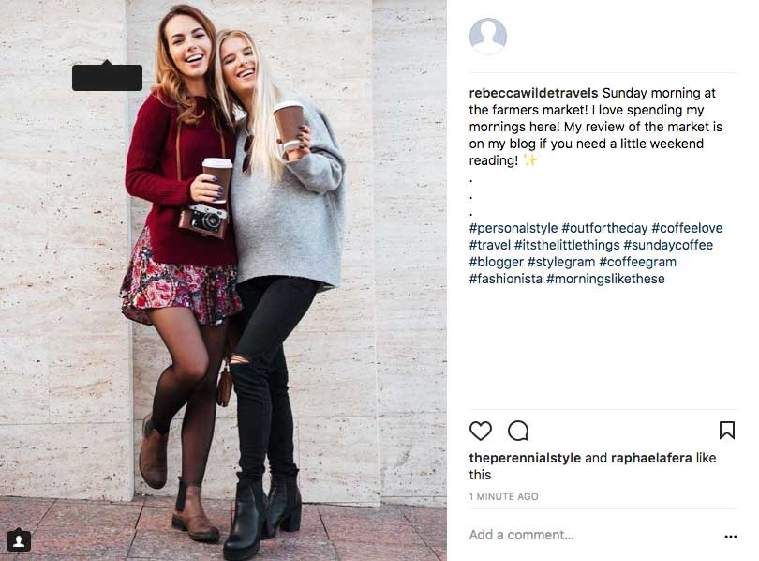
Upfront                                                                When in doubt,
is best.                                                               spell it out.
Disclosures are meant to provide                                       The Disclosure Guidelines are not intended to be
transparency and honesty of all viewers                                prescriptive, as it is difficult to keep up with rapidly
                                                                       changing social media platforms and viewer habits.
of the sponsored post.
                                                                       Should you be using a platform not mentioned in these
Each of these best practices are                                       guidelines, or encounter a situation outside its current
intended to catch the viewer’s attention                               scope, please continue to apply the principles that
                                                                       disclose is necessary and must be clear, conspicuous,
and ensure the disclosure is clear,
                                                                       and broadly understood.
conspicuous, and broadly understood.

7   INFLUENCER MARKETING STEERING COMMITTEE - DISCLOSURE GUIDELINE
                                                         GUIDELINESS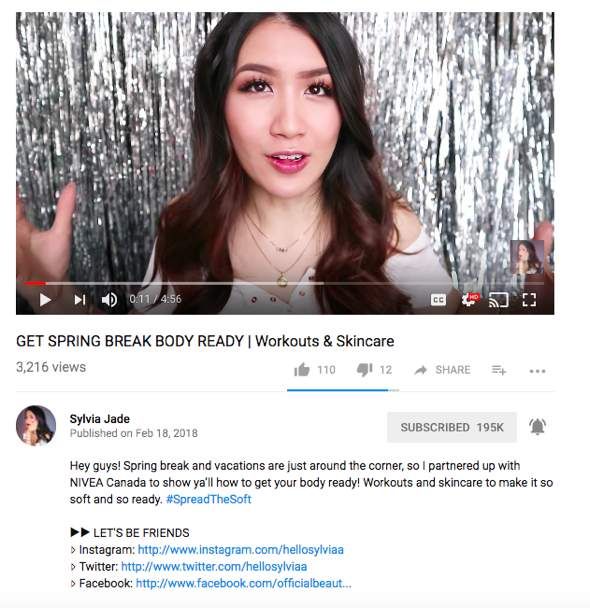
Do:                                                                   Hashtags that have been recognized as
                                                                      clear and widely accepted include:

Disclosures                                                           EN: #ad, #sponsored, #XYZ_Ambassador,
                                                                      #XYZ_Partner (where “XYZ” is the brand name)

should be clear
and use
widely accepted                                                       In contrast, if a team combined a company
                                                                      name, such as “Cool Stylle” with “ad” to
hashtags                                                              make “#coolstyllead”, there is a good
                                                                      chance that viewers will not notice and
                                                                      understand the significance of the word
                                                                      “ad” at the end of a hashtag, especially

#
                                                                      one made up of several words combined
                                                                      like “#coolstyllead.”

                                                                      Other unclear hashtags include:
                                                                      #Ambassador, #Partner, #Spon, #PR, #Promo,
                                                                      #PRHaul, #Brand, #Collab, #sp.

                                                                      The nature of the material connection is
                                                                      not clear, and these terms are subjective.

8   INFLUENCER MARKETING STEERING COMMITTEE - DISCLOSURE GUIDELINES
Don’t:
Hidden Disclosure
Effective Disclosure Tips

• If a creator uses a lot of hashtags/mentions at the end
  their content, then the disclosure should always be
  prior to those hashtags/mentions.

• If disclosures are buried in a hashtag list; or are in               z   z
  overlays that are too small or faint, they could be
  considered hidden.

• Disclosures need to be clear and conspicuous.

Highlights
in the Example

•   While this endorsement included the disclosure #ad, it
    was buried below the main message of the post and
    included in a hashtag list that does not make the
    disclosure clear and conspicuous.

9    INFLUENCER MARKETING STEERING COMMITTEE - DISCLOSURE GUIDELINES
Do:                                                                    Many social media platforms offer a
                                                                       feature to disclose an advertising
Disclosures should                                                     relationship, but there is no guarantee it
                                                                       is an effective way for influencers to
be independent                                                         disclose their material connection to a
                                                                       brand. It still depends on an evaluation
of social media                                                        of whether the tool clearly and
                                                                       conspicuously discloses the relevant
network or channel-                                                    connection.

specific settings                                                      The disclosure should catch viewers’
                                                                       attention and be placed where they are
                                                                       not likely to miss it. A key consideration
                                                                       is how viewers see the screen when
                                                                       using a particular platform.

                                                                       Social networks may require the use of
                                                                       their disclosure features, but those
                                                                       features should be used together with
                                                                       other disclosure best practices.

10   INFLUENCER MARKETING STEERING COMMITTEE - DISCLOSURE GUIDELINES
Do:
There is no guarantee that viewers
will read, hear or see a message
In videos, unless it is presented prominently at
the beginning of a piece.
disclosures
should be upfront It is more likely that a disclosure at
the end of the video will be missed,
and identifiable especially if someone does not
watch the whole thing. Having it at
the beginning is a more effective
disclosure method. Having multiple
disclosures during the video is most
effective.
Disclose before the viewer needs to
click for more (i.e. in the first couple
lines of the post).
11 INFLUENCER MARKETING STEERING COMMITTEE - DISCLOSURE GUIDELINESDo:
The connection between an endorser
and a marketer should be disclosed in
Disclosures whatever language or languages the
endorsement is made, consistent with
should be made in the viewer’s interpretation. If the
content and captions are in French,
the language of disclosures should be made in
French. Likewise, if the content is in
the endorsement English, disclosures should be made
in English.
12 INFLUENCER MARKETING STEERING COMMITTEE - DISCLOSURE GUIDELINESDon’t:
Blanket Disclosure
Effective Disclosure Tips
• Blanket disclosures in a profile/bio/about section may
fall below the recommended standards for disclosures
“
Where I have received
because people visiting the site might read individual merchandise from a company, I
reviews or watch individual videos without seeing the
disclosure on another page. make that clear in the copy of the
• Many readers may not see this blanket disclosure
post or in the outfit details by
clause and may not clearly understand the relationship marking it “c/o”. Where I have
between the advertiser and influencer.
received monetary compensation
in return for promotion, I disclose
Example Highlights
that the post was sponsored in the
This blanket disclosure does not meet the standard of
•
mandatory disclosures because each individually
body of the post. While I attempt to
sponsored post is not connected to a specific brand or make this as clear as possible on
product , and does not describe the nature of the
material connection. my social media channels, the
abbreviated nature of a medium
may impact my ability to do so.”
13 INFLUENCER MARKETING STEERING COMMITTEE - DISCLOSURE GUIDELINESDo: The disclosure should be as close as
possible to each message and placed in
Disclosures such a way that it travels with the
message. This means including a
should be in close disclosure before a URL (clickable or
non-clickable), ensuring that sponsored
proximity to the brand mentions are seen with the
specific disclosure, and ensuring it
endorsement makes contextual sense. Include the
disclosure in each post, in the video
(where applicable) and not just in the
comments.
Conversely, a single blanket disclosure
in a separate profile/bio/about section,
such as “many of the products I discuss
on this site are provided to me free by
their manufacturers” does not meet
mandatory disclosure criteria because
people visiting the site might read
individual reviews or watch individual
videos without seeing the disclosure on
another page.
14 INFLUENCER MARKETING STEERING COMMITTEE - DISCLOSURE GUIDELINESDo:
Influencers should state the nature of
the material connection (i.e. free
Disclosures products, monetary compensation,
exclusive invite to an event), name the
should be specific brand, and list the specific products
they are promoting. Blanket
about the brand, statements that are not product and
brand-specific are not transparent for
product, and the viewers.
what was given
15 INFLUENCER MARKETING STEERING COMMITTEE - DISCLOSURE GUIDELINESDon’t:
Simply “tag the brand”
Effective Disclosure Tips
• Some influencers only tag their sponsors, some tag
brands with which they have no relationships, and
some do a bit of both. Viewers cannot be sure that hihicoffee
simply tagging a brand indicates material connection.
• If there is a material connection between the brand
and influencer, it needs to be specifically mentioned.
Example Highlights
• Tagging a brand may not be viewed and interpreted by xyz_creations
viewers as clearly indicative of a material connection
between the band and the influencer.
• Even if no monetary exchange occurred, an exchange
of goods, services, or experiences may constitute as
material connection.
16 INFLUENCER MARKETING STEERING COMMITTEE - DISCLOSURE GUIDELINESDo:
Context matters. Viewers should be
able to see or hear the disclosure in
Disclosures context with the brand mention.
Some mediums may require both
should be visual and audio disclosures.
clearly Disclosures should be written, said,
and/or displayed somewhere it can
communicated be easily read, heard, or seen.
• For example, Facebook/Instagram videos
often play without sound, so a visual
disclosure would be required. For
Instagram photo posts, inclusion in the
caption should suffice.
• If a creator uses a lot of hashtags/
mentions at the end their content, then
the disclosure should always be prior to
those hashtags/mentions.
• If disclosures are buried in hashtag lists,
or are displayed in overlays too small or
faint, they could be considered hidden.
17 INFLUENCER MARKETING STEERING COMMITTEE - DISCLOSURE GUIDELINESDon’t:
Ambiguous Hashtags
Effective Disclosure Tips
• The use of ambiguous phrases or hashtags does not
make it clear to the viewer that there is a material
connection. Examples include using: #Ambassador,
#Partner, #Spon, #PR, #Promo, #PRHaul, #Brand,
#Collab.
• If disclosures are buried in hashtag lists, or are
displayed in overlays that are too small or faint, they
could be considered hidden.
Example Highlights
• Usage of hashtags like “#collab” are not clear
indicators that this was a sponsored post or the
product was gifted.
• The disclosure attempt was also buried in a list of
hashtags, which is not be considered a clear indicator
for viewers.
18 INFLUENCER MARKETING STEERING COMMITTEE - DISCLOSURE GUIDELINESDon’t:
Fabricated Hashtags
Effective Disclosure Tips
• Knowing that influencers received access to a private
event, or free experience—sometimes including travel
and accommodations—could affect how much weight
readers give to influencers’ thoughts about the product.
• Inclusions like “thanks to X brand for inviting me” or
“I’m at X event with X brand" would suffice.
• A brand that were to create their own disclosure
hashtag needs to ensure that the material connection
is obvious.
Example Highlights
• Influencers should be transparent with their viewers
about free trips they are gifted from brands.
• Fabricated disclosure hashtags from brands may not
be clear about the nature of the material connection.
19 INFLUENCER MARKETING STEERING COMMITTEE - DISCLOSURE GUIDELINESDon’t:
Ambiguous Phrases
Effective Disclosure Tips
• When creating disclosures (notices, hashtags, etc.), it is
important to use clear and commonly understood
language. Influencers and brands should not assume that
viewers will understand industry-specific terms and
jargon. Disclosures should be simple, straightforward, and
easy to understand.
• Treating “Thank Company Name” as mandatory
disclosures is not advisable. A “thank you” to a company
or a brand does not necessarily communicate that the
endorser got something for free or that they were given
something in exchange for an endorsement.
• Simple disclosures like “Company X gave me this product
to try . . .”, “XYZ Resort paid for my trip”, or “Thanks to
XYZ Resort for the free trip” are just as accurate as
“sponsored by XYZ Resort” and will usually be effective.
Example Highlights
• Usage of “a week away with @travelagogo” does not
make the material connection clear to the followers of
this influencer.
• The “#partner” disclosure attempt does not clear that
there is a material connection between the influencer
and brand.
20 INFLUENCER MARKETING STEERING COMMITTEE - DISCLOSURE GUIDELINESDo: Influencers and brands should not make
any assumptions that the viewer will
interpret language as a disclosure of a
Disclosures material connection.
should be written Treating “Thank Company Name” as an
with unambiguous effective disclosure is not advisable. A
“thank you” to a company or a brand does
language not necessarily communicate that the
endorser received something for free or
that they were given something in
exchange for an endorsement.
The person posting could just be thanking
a company or brand for providing a great
product or service. But “Thanks XYZ for
the free product” or “Thanks XYZ for the
gift of ABC product” would be good
enough – if that is all you got from XYZ.
21 INFLUENCER MARKETING STEERING COMMITTEE - DISCLOSURE GUIDELINESDo I Need to Disclose?
Example Do I still need Guidance
to disclose?
Gifted items:
“I was gifted an item from a brand for me to try out, but there wasn’t Viewers may assess the review differently if they knew the product was gifted or discounted, so it is advised that disclosure be included.
an agreement or obligation for me to post about the brand or product.”
Tagging brands: Some influencers only tag their sponsors, some tag brands with which they have no relationship, and some do a bit of both.
“I received products from a brand, so I’ll tag the brand in my
Instagram post and assume my audience knows it was given to me.” If there is a material connection between the brand and influencer, it needs to be specifically mentioned.
Experiences/Events: Knowing that influencers received access to a private event, or free experience—sometimes including travel and accommodations—could
“I got invited to a private event by a brand to see some of their new affect how much weight readers give to influencers’ thoughts about the product.
products.” Inclusions like ‘thanks to X brand for inviting me’ or ‘I’m at X event with X brand’ would suffice.
Non-contractual brand mentions: If the influencer is working in a material relationship with the brand and creates content, even if it was not the contractually obligated post,
“I’m doing a photoshoot with a brand and want to show my audience a they are obligated to disclose.
sneak peek of me on set with the brand.”
Paid, but genuine endorsements: The viewer has the right to know that there is a material connection between the brand and the influencer, even if the influencer genuinely
“I’m getting free products from the brand but I REALLY like them and loves and endorses the brand.
would post about them even if I wasn’t paid.”
Automated network disclosures:
Disclosures should be independent of social media network or channel-specific settings.
“Do I need to disclose if the platform offers a feature to disclose an
advertising relationship?”
Replies or Direct Messages to a “follower”: When responding to someone’s questions about a specific endorsement via email, text, or direct message, that person should already have
”One of my followers asks me questions about the brand I just posted seen the disclosure on the post—thus, a disclosure is not necessary (this is context dependent).
about. Do I need to include disclosures in my reply?”
Testimonials with no material connection:
If no material connection exists between a brand and the influencer, no disclosure is needed.
“I didn’t receive any product, compensation, or experience from the
brand, but I want to endorse a product.”
Code Exception: When the material connection is one that viewers reasonably expect to exist due to widespread exposure in other media, such as when a
“I’m a professional athlete with a high-profile partnership with a brand. celebrity endorses a product or service, then a disclosure may not be necessary. It depends on whether his/her followers understand that
My audience and the public knows about my ambassadorship, do I mentions about products are paid endorsements. This can be difficult to determine, so when in doubt, spell it out.
need to disclose every mention?”
Posting beyond contractual obligations: There is currently no legal standard for the duration of time in which disclosures are necessary and will be looked at on a case-by-case
’“What if I post beyond the contract range, do I need to disclose every basis. However, just because someone goes outside of the bounds of the contract (e.g. 5 posts rather than 3), he/she still needs to disclose.
mention.”
22 INFLUENCER MARKETING STEERING COMMITTEE - DISCLOSURE GUIDELINE SSpecific Media Channel
Disclosure Examples
23 INFLUENCER MARKETING STEERING COMMITTEE - DISCLOSURE GUIDELINEYouTube Best Practices: YouTube Disclosures • Disclosure should appear at the beginning of the video and be verbally mentioned or displayed visually in the video itself (within the first 30 seconds). • Disclosure should also be included in the video description. • Having multiple disclosures throughout the video is most effective. • Disclosures should indicate that a brand paid for a collaboration and helped shaped the content (i.e. Thank you to X for sponsoring and collaborating with me on this video). • Do not just rely on platform disclosures like “Paid Promotion”, include your own disclosures. Example Highlights • Disclosures are made through both audio (in the first 30 seconds) and visual cues (above the fold, in the description) in both natural language and an explicit call out in the description. 24 INFLUENCER MARKETING STEERING COMMITTEE - DISCLOSURE GUIDELINES
YouTube
Best Practices: YouTube Disclosures

• Disclosure should appear at the beginning of the video and
  be verbally mentioned or displayed visually in the video
  itself (within the first 30 seconds).

• Disclosure should also be included in the video description.

• Having multiple disclosure throughout the video is most
  effective.

• Disclosures should indicate that a brand paid for a
  collaboration and had a hand in shaping the content (i.e.
  Thank you to X for sponsoring and collaborating with me on
  this video).

• Do not just rely on platform disclosures like “Paid
  Promotion”, include your own disclosures.

Example Highlights

• Usage of YouTube’s “Paid Promotion” feature.

25   INFLUENCER MARKETING STEERING COMMITTEE - DISCLOSURE GUIDELINES
YouTube
Best Practices: YouTube Disclosures

• Disclosure should appear at the beginning of the video
  and be verbally mentioned or displayed visually in the
  video itself (within the first 30 seconds).

• Disclosure should also be included in the video
  description.

• Having multiple disclosure throughout the video is most
  effective.

• Disclosures should indicate that a brand paid for a
  collaboration and had a hand in shaping the content (i.e.
  Thank you to X for sponsoring and collaborating with me
  on this video).

• Do not just rely on platform disclosures like “Paid
  Promotion”, include your own disclosures.

Example Highlights

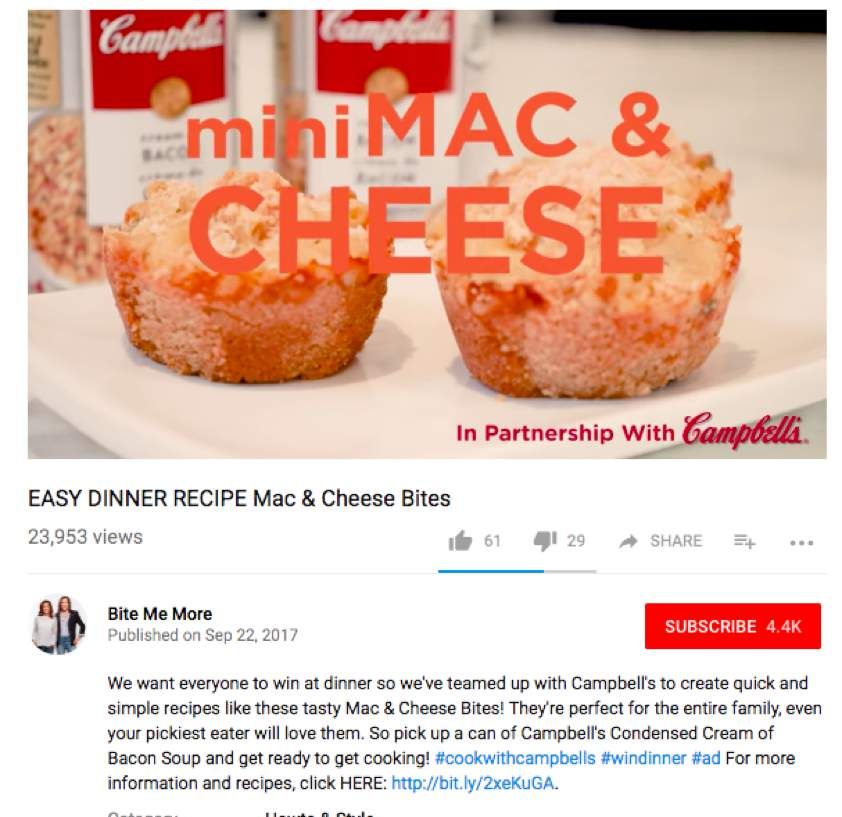
• Disclosures are both superimposed during the video
  and in the description.

• Video description includes written notice “we’ve
  teamed up with Campbell’s” and includes #ad.

26   INFLUENCER MARKETING STEERING COMMITTEE - DISCLOSURE GUIDELINES
Instagram:
Gifted Product
Best Practices for Disclosing Gifted
Products

• Disclosures should be made, even if the exchange is
  gifted products and no monetary compensation is
  provided.

• Disclosure should appear in the caption as part of the
  main message. Disclosure should not be buried amongst
  hashtags.

• Hashtags are not mandatory; clearly communicated
  written or audio disclosure may suffice.

• A recommended disclosure hashtag: #giftedproduct,
  #productreçu.

Example Highlights

• Clearly articulates the material connection to the
  viewer.

• For free products, a clear hashtag indicating the nature
  of the material connection, can be used.

27   INFLUENCER MARKETING STEERING COMMITTEE - DISCLOSURE GUIDELINES
Instagram:
Gifted Product
Best Practices for Brands
Sending Free Products

• Often, free product comes with a product information
  card or note from the party who sent it. In this copy,
  encourage the recipients of gifted product to disclose
  that they have received the product for free.

• Disclosure is a shared responsibility—brands can
  take the initiative to recommend that influencers
  disclose the material connection.

Example Highlights

• The brand card includes a reminder for influencers to
  disclose that they have received the products as a gift.

• Using the following copy is best practice when
  encouraging disclosure: “Please disclose you received
  these products as a gift.”

28   INFLUENCER MARKETING STEERING COMMITTEE - DISCLOSURE GUIDELINES
Instagram:
Events
Best Practices for Events
and Experiences on Instagram

• Disclosures should be included, even if the post is
  about a gifted experience or private event, and no
  monetary compensation was provided.

• Recommended hashtags are not mandatory;
  clearly written or audio communication may suffice.

Example Highlights

• The influencer clearly indicates that she was invited by
  the two brands hosting this event.

• Disclosures are made in the main message and not
  buried in the comments or buried amongst hashtags.

29   INFLUENCER MARKETING STEERING COMMITTEE - DISCLOSURE GUIDELINES
Instagram:
Paid Collaborations
Best Practices for Disclosing Paid
Collaborations

• Disclosure should appear in the caption as part of the
  main message. Disclosure should not be buried
  amongst hashtags.

• The brand with the material connection should be
  clearly indicated.

• Usage of the “Paid partnership” tool is recommended if
  the influencer has access to that feature. It should be
  used in addition to, not instead of, disclosing in the
  caption.

• Recommended hashtags are not mandatory; clearly
  written or audio communication may suffice.

Example Highlights

• The influencer utilizes Instagram’s built-in “Paid
  partnership” tool to indicate the material connection.

• Disclosures are made in the main message and not
  buried in the comments or buried amongst hashtags.

30   INFLUENCER MARKETING STEERING COMMITTEE - DISCLOSURE GUIDELINES
Instagram:
Stories
Best Practices for
Disclosures in Instagram Stories

• Disclosure should appear at the beginning of the story
  and be verbally mentioned or displayed visually.

• If an Instagram Story has a set of Stories meant to be
  consumed consecutively, disclosure is necessary at the
  beginning of the series. For multiple Stories posted
  independently, each story should have its own
  disclosure.

• Disclosures should indicate that a brand paid for a
  collaboration and helped shape the content (e.g. Thank
  you to X for sponsoring and collaborating with me on
  this video) or include one of the recommended
  hashtags.

Example Highlights

•    Brand and disclosure are clearly visible in the Story with
     proper contrast between the text and the background.

•    Disclosures are mentioned consistently throughout the Story.

•    Usage of #ad makes it clear that this is sponsored content.

31    INFLUENCER MARKETING STEERING COMMITTEE - DISCLOSURE GUIDELINES
Instagram:
Stories
Best Practices for
Disclosures in Instagram Stories
• Disclosure should appear at the beginning of the story
and be verbally mentioned or displayed visually.
• If an Instagram Story has a set of Stories meant to be
consumed consecutively, disclosure is necessary at
the beginning of the series. For multiple Stories posted
independently, each story should have its own
disclosure.
• Disclosures should indicate that a brand paid for a
collaboration and helped shape the content (e.g.
Thank you to X for sponsoring and collaborating with
me on this video) or include one of the recommended
hashtags.
Example Highlights
• Relationship with the specific brand was verbally
stated at the beginning of the Story.
• Verbal disclosure is made upfront at the beginning of
the Story.
32 INFLUENCER MARKETING STEERING COMMITTEE - DISCLOSURE GUIDELINESSnapchat
Best Practices:
Snapchat Disclosures
• Disclosure should appear at the beginning of the story
and be verbally mentioned or displayed visually.
• If a Snapchat Story has a set of Stories meant to be
consumed consecutively, disclosure is necessary at
the beginning of the series. For multiple Stories posted
independently, each story should have its own
disclosure.
• Disclosures should indicate that a brand paid for a
collaboration and helped shape the content (e.g.
Thank you to X for sponsoring and collaborating with
me on this video) or include one of the recommended
hashtags.
Example Highlights
• Brand and disclosure are clearly visible in the Story
with proper contrast between the text and the
background.
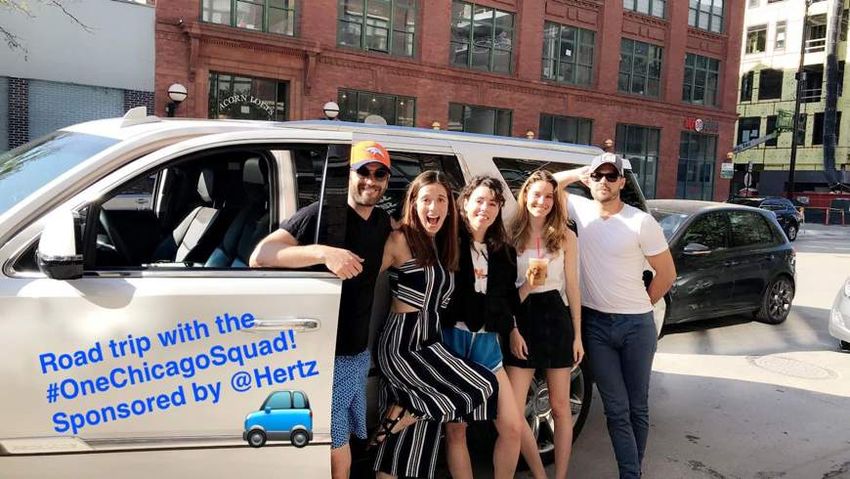
• Use of “Sponsored by” makes it clear that this is
sponsored content.
33 INFLUENCER MARKETING STEERING COMMITTEE - DISCLOSURE GUIDELINESTwitter
Best Practices:
Twitter Disclosures
• Given character limitations, recommended hashtags
are most commonly used: #ad, #sponsored.
• Each tweet should have its own disclosure, as they
can be consumed independently.
• The sponsoring brand must be clear in the tweet.
Example Highlights
• Brand and disclosure are clearly visible
in the text of the tweet.
• While the tweet may link to another piece of content,
the disclosure can be consumed independent of the
linked content.
34 INFLUENCER MARKETING STEERING COMMITTEE - DISCLOSURE GUIDELINESBlog
Best Practices: Disclosing Paid
Collaborations on Blogs
• Disclosures should be made before a URL
(clickable or non-clickable).
• The description of the material connection can be written
out, as hashtags do not have functionality on a blog.
• The brand with the material connection should be clearly
indicated.
Example Highlights
• The influencer clearly outlines the material connection
in the main body of the blog post.
• Disclosures are made before any links to sponsoring
brands.
35 INFLUENCER MARKETING STEERING COMMITTEE - DISCLOSURE GUIDELINESMembers of the Influencer Marketing Steering Committee Ad Standards’ mandate is to support the advertising industry and we are proud to work with the influencer marketing sector to support this project. 36 INFLUENCER MARKETING STEERING COMMITTEE - DISCLOSURE GUIDELINE S
Learn More
For further reading, please see:
The Canadian Code of Advertising Standards:
http://adstandards.com/en/Standards/theCode.aspx

The Competition Bureau Deceptive Marketing Practices Digest, Volume 1 (2015)
http://www.competitionbureau.gc.ca/eic/site/cb-bc.nsf/eng/03946.html

Word of Mouth Marketing Association Influencer Marketing Guide to Influencer Marketing
https://womma.org/wp-content/uploads/2017/08/The-WOMMA-Guide-to-Influencer-Marketing-2017.compressed.pdf

Federal Trade Commission Enforcement Guide
https://www.ftc.gov/tips-advice/business-center/guidance/ftcs-endorsement-guides-what-people-are-asking

ICAS (International Council for Ad Self-Regulation)
https://icas.global/advertising-self-regulation/influencer-guidelines/

International Consumer Protection and Enforcement Network (ICPEN)
https://www.icpen.org/

Global Influencer Guidelines
Australia - Ad Standards guidelines for influencers and AANA Clearly Distinguishable Advertising Industry Practice Note
Belgium - Advertising Council Recommendations for online influencers (FR)
France - ARPP Recommendation on Digital Communication Ads (EN)
Ireland - ASAI Guidance Note on the Recognisability of marketing communications
Italy - Social Network and Content Sharing
New Zealand - ASA Guidance Note on Identification of Advertisements
Philippines - ASC Digital Guidelines for Regulated and Non-Regulated Categories
Romania - Code of Advertising Practice (definition of influencer & Art. 4) (EN)
Sweden - Swedish Consumer Agency Guidance on marketing in blogs and other social media (SE)
The Netherlands - Rules for vloggers in the Dutch Advertising Code (EN pag. 61)
UK - An Influencer ’s Guide to making clear that ads are ads

37   INFLUENCER MARKETING STEERING COMMITTEE - DISCLOSURE GUIDELINES
You can also read


