Effect of Almond Consumption on Metabolic Risk Factors-Glucose Metabolism, Hyperinsulinemia, Selected Markers of Inflammation: A Randomized ...
←
→
Page content transcription
If your browser does not render page correctly, please read the page content below
CLINICAL TRIAL
                                                                                                                                                 published: 24 June 2021
                                                                                                                                          doi: 10.3389/fnut.2021.668622

                                               Effect of Almond Consumption on
                                               Metabolic Risk Factors—Glucose
                                               Metabolism, Hyperinsulinemia,
                                               Selected Markers of Inflammation:
                                               A Randomized Controlled Trial in
                                               Adolescents and Young Adults
                                               Jagmeet Madan 1 , Sharvari Desai 1 , Panchali Moitra 1 , Sheryl Salis 2 , Shubhada Agashe 3 ,
                                               Rekha Battalwar 1 , Anushree Mehta 4 , Rachana Kamble 4 , Soumik Kalita 5*,
                                               Ajay Gajanan Phatak 6 , Shobha A. Udipi 4,7 , Rama A. Vaidya 8 and Ashok B. Vaidya 4
                                               1
                                                 Sir Vithaldas Thackersey College of Home Science (Autonomous), Shreemati Nathibai Damodar Thackersey (SNDT)
                                               Women’s University, Mumbai, India, 2 Nurture Health Solutions, Mumbai, India, 3 Clinical and Endocrine Laboratory, Kasturba
                             Edited by:        Health Society Medical Research Centre, Mumbai, India, 4 Kasturba Health Society Medical Research Centre, Mumbai, India,
                                               5
                     Maria Hassapidou,           FamPhy, Gurgaon, India, 6 Charutar Arogya Mandal, Karamsad, India, 7 Department of Food Science and Nutrition,
                   International Hellenic      Shreemati Nathibai Damodar Thackersey (SNDT) Women’s University, Mumbai, India, 8 Division of Endocrine and Metabolic
                      University, Greece       Disorders, Kasturba Health Society Medical Research Centre, Mumbai, India

                      Reviewed by:
               Costas A. Anastasiou,           A large percentage of the Indian population has diabetes or is at risk of pre-diabetes.
        Harokopio University, Greece
            Vibeke H. Telle-Hansen,
                                               Almond consumption has shown benefits on cardiometabolic risk factors in adults.
 Oslo Metropolitan University, Norway          This study explored the effect of almond consumption on determinants of metabolic
                  *Correspondence:             dysfunction—blood glucose, lipids, insulin and selected inflammatory markers in
                         Soumik Kalita         adolescents and young adults aged 16–25 years from Mumbai city. This randomized
            soumik.kalita@famphy.com
                                               controlled trial was conducted for a period of 90 days on individuals with impaired levels of
                    Specialty section:         fasting glucose levels between 100–125 mg/dL (5.6–6.9 mmol/L) and 2-h post-glucose
          This article was submitted to        value 140–199 mg/dL (7.8–11.0 mmol/L) and/or fasting insulin (≥15 mIU/ml)/stimulated
             Nutrition and Metabolism,
                a section of the journal       insulin (≥80 mIU/ml). Of 1,313 individuals screened, 421 met the inclusion criteria, of
                    Frontiers in Nutrition     which 275 consented to participate and 219 completed the trial. The trial was registered
         Received: 16 February 2021            with Clinical Trials Registry India (CTRI) CTRI/2018/02/011927. The almonds group (n
            Accepted: 31 May 2021
                                               = 107) consumed 56 g almonds daily, the control group (n = 112) was provided an
           Published: 24 June 2021
                                               iso-caloric cereal-pulse based snack. At baseline and endline, blood glucose, insulin,
                              Citation:
  Madan J, Desai S, Moitra P, Salis S,         HbA1 c, LDL-c, HDL-c, total and ox-cholesterol, triglycerides, hs-CRP, IL-6, TNF-α,
    Agashe S, Battalwar R, Mehta A,            adiponectin, leptin were measured and HOMA-IR and FG:FI ratios were calculated.
      Kamble R, Kalita S, Phatak AG,
  Udipi SA, Vaidya RA and Vaidya AB
                                               Dietary intakes were assessed. The anthropometric measurements, biochemical markers
(2021) Effect of Almond Consumption            as well as macronutrient intakes did not differ significantly between the two groups
 on Metabolic Risk Factors—Glucose
                                               at baseline. Almond consumption significantly decreased HbA1 c, total cholesterol and
       Metabolism, Hyperinsulinemia,
   Selected Markers of Inflammation:           LDL-c. Stimulated insulin decreased post-intervention in both groups, but the decrease
     A Randomized Controlled Trial in          was greater in the almonds group. Fasting glucose was reduced post intervention
      Adolescents and Young Adults.
                Front. Nutr. 8:668622.
                                               in the controls with no change in the almonds group. FG:FI ratio decreased in the
      doi: 10.3389/fnut.2021.668622            almonds group. TNF-α and IL-6 decreased in the almonds group, while it increased

Frontiers in Nutrition | www.frontiersin.org                                         1                                              June 2021 | Volume 8 | Article 668622
Madan et al. Almonds and Pre-diabetes in Young Adults
in the control group. Our results showed that almonds reduced HbA1c, LDL-c and total
cholesterol levels in just 12 weeks of consumption in these adolescents and young
adults who were at risk for developing diabetes. Almonds can be considered as part
of food-based strategies for preventing pre-diabetes.
Clinical Trial Registration: ClinicalTrials.gov, identifier: CTRI/2018/02/011927.
Keywords: almonds, prediabetes, IL-6, LDL-C, HbA1c, hyperinsulinemia
INTRODUCTION insulin sensitivity, reduced inflammation, and lipid profile (16).
Almonds alone or in combination with carbohydrate rich foods
The International Diabetes Federation (1) estimates that the have been found to significantly reduce postprandial glucose,
number of people with diabetes is likely to be 153 million in insulin response, fasting glucose, and glycosylated hemoglobin
the next two decades (1). According to a large study done on in adults (16–20). Most of the studies looking at the effect of
57,117 individuals above 20 years of age in 14 states of India, almonds on glucose metabolism have been done in the western
the prevalence of diabetes in India was 7.3% whereas that of population, few studies have been conducted in Asian Indians
prediabetes was 10.3% (2). India presently ranks, fourth in the and none have been conducted on adolescents and young Indian
world for the number of adults (20–79 years of age) with impaired adults who have a proclivity for insulin resistance and Type 2
glucose tolerance and by 2,045 it is predicted that it will rank third diabetes. In this context, the present randomized controlled trial
in the world (1). In a large study comprising 1,519 boys and girls was undertaken to examine the effect of almond consumption
in the age group of 6–19 years in an urban center in South India, on glucose metabolism, hyperinsulinemia, selected markers of
the prevalence of glucose intolerance was found to be 3.7% with inflammation, and lipid profile in young adults and adolescents
an increase from 4.2 to 12.7% in girls who were found to have residing in urban Mumbai, India.
abdominal obesity (3). The fact that India has a young population
and children in the age group of 6–19 years comprising nearly
30% of the 1.3 billion Indians, the number of children with
MATERIALS AND METHODS
glucose intolerance is expected to be very large. Indians have Study Design
the highest per annum progression from pre-diabetes to type 2 This was a randomized controlled, open-label, parallel arm study
diabetes which is around 14–18% (4–8). conducted on community living adolescents and young adults
Indians in comparison to their Caucasian counterparts have (16–25 years of age) in Mumbai, India. The inclusion criteria
higher body fat as well as visceral fat percentages at similar were participants in the age group of 16–25 years of age, with
BMIs which is characterized by the “thin-fat” Indian diabetes impaired fasting glucose levels between 100 and 125 mg/dL
phenotype. This particular phenotype may lead to an early (5.6–6.9 mmol/L) and 2-h post-glucose value 140–199 mg/dL
onset of diabetes mellitus and metabolic syndrome in Indians in (7.8–11.0 mmol/L) (21) and/or fasting hyperinsulinemia (≥15
comparison to their Caucasian counterparts (9). Lack of physical mIU/ml) or glucose challenge hyperinsulinemia (≥80 m IU/ml)
activity and unhealthy dietary choices are the major drivers for (22, 23). The exclusion criteria included the presence of any
pre-diabetes. Lifestyle intervention which includes nutritional known chronic disease, known history of food allergies with
interventions and physical activity targeted at adolescents as well nuts, on prescribed medications like steroids, state of pregnancy
as young adults is important to help halt the progression from and/or lactation.
pre-diabetes to type 2 diabetes. The study was conducted from September 2017 to
The nutrition transition in India and the replacement of February 2019.
whole grains and traditional wholesome diets with refined The study was approved by the Intersystem Biomedical Ethics
carbohydrate, sugar, energy dense, and nutrient poor foods Committee, Mumbai, India (ISBEC version 2 dated 12th August,
has contributed considerably to this problem (10–12). In a 2017) and conducted according to Good Clinical Practices and
study conducted among 1,026 adolescents, it was found that the Declaration of Helsinki. Informed written consent was taken
70% of the participants reported the consumption of 3 or from each institution, each participant and each guardian/parent
more servings of energy-dense snacks and 47% reported the for participants who were between 16 and 18 years of age; both
consumption of 3 or more servings of energy-dense drinks in before screening and prior to participant enrolment for the trial.
a single day (13). There are no studies that have looked at The trial was registered with Clinical Trials Registry
targeted nutritional interventions for adolescents or young adults India (CTRI) CTRI/2018/02/011927 (24) and therefore has
in India, where snacking is a very common phenomenon and been registered in the International Clinical Trials Registry
therefore there is a need to explore the same to help them Platform (ICTRP) (25).
have healthy snacking choices. Tree nuts with their unique Sample size estimation: Fasting blood glucose was considered
composition offer a natural choice as a whole food that can be a primary outcome for sample size calculations. In the absence
included by persons prone to poor metabolic health (14, 15). of reliable regional data, an effect size of 0.4 was assumed. With
They represent one of the healthiest snacking options as a this effect size, a sample of about 112 participants per group
food-based strategy to achieve better metabolic health in terms of was required allowing for 5% alpha (type I) error and to achieve
Frontiers in Nutrition | www.frontiersin.org 2 June 2021 | Volume 8 | Article 668622Madan et al. Almonds and Pre-diabetes in Young Adults
85% power. Assuming 20% dropouts, an evaluable sample size and lifestyle including exercise patterns. Weekly monitoring was
of about 270 participants was required. The design of the trial is done for each participant by the supervising physician for any
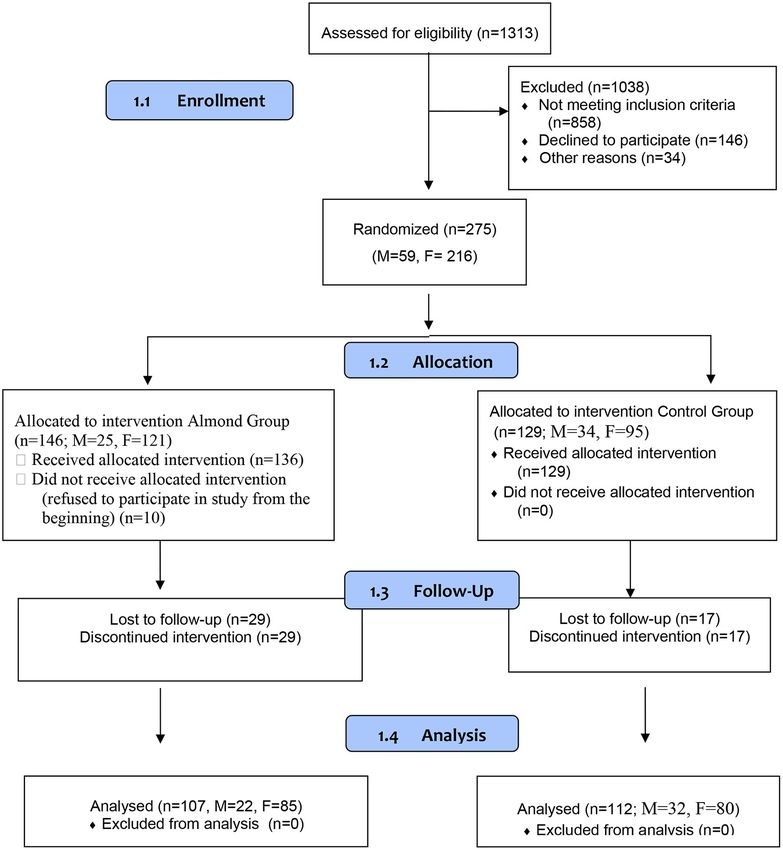
illustrated in Figure 1. adverse effects.
Participants were those attending various academic
institutions in Mumbai city. Twenty-four academic institutions Measurements
in Mumbai city were contacted and the study objectives and Each participant underwent a clinical examination that was
protocol were explained to the administration/authorities. Of conducted by a physician to assess the general health status
these, 11 provided their consent to recruit and conduct the study. at screening, baseline as well as at the end of the study.
All consenting participants (n = 1,313) gave blood samples for Anthropometric measurements i.e., weight, height, waist
measurement of fasting glucose as well as stimulated glucose circumference, and hip circumference were assessed by trained
(2 h after consumption of 75 g of glucose) and fasting, stimulated research assistants using valid and established procedures
insulin. Anthropometric measurements were also recorded for ensuring that they wore light clothing and no shoes. Body
each participant during this time. composition was measured using a TANITA body composition
analyzer (Model MC 780 MA).
Randomization and Treatment
Among the 1,313 participants who were screened, 421 Biological Samples, Collection, Storage,
participants (males 88, females 333) were eligible because and Biochemical Measurements
they had elevated fasting/stimulated blood glucose [fasting Participants were asked to report after fasting overnight for
glucose (100–125 mg/dl), 2h post-glucose (140–199 mg/dl)] at least 12 h. At time points indicated under methodology, a
and/or insulin [fasting insulin (≥15mIU/ml)/stimulated insulin trained phlebotomist collected fasting blood samples at each
(≥80mIU/ml)]. Among these 421 individuals, 146 did not individual site/institute. Whole blood was analyzed for complete
provide consent to participate in the intervention. Thus, 275 blood count including hemoglobin, White Blood Cells (WBC),
consenting individuals (males 59, females 216) participated in the Red Blood Cells (RBC), platelets, Mean Corpuscular Volume
study. Baseline assessment was done for fasting blood glucose, (MCV), Mean Corpuscular Hemoglobin (MCH), and Mean
fasting insulin, stimulated (2-h post 75 g glucose administration) Corpuscular Hemoglobin Concentration (MCHC). Serum was
blood glucose, stimulated insulin, glycosylated hemoglobin separated by centrifugation, divided into aliquots and stored at
(HbA1c), lipid profile, oxidized LDL, adiponectin, leptin, −70◦ C until analyses.
inflammatory markers -IL-6 and TNF-α. Cluster randomization Glucose tolerance test (2-h post 75-g glucose administration)
within each institution was used to then assign the individuals was conducted at screening, at baseline and at the end of
either to the almonds group or the control group. Almonds the study; glucose was measured spectrophotometrically by the
were supplied by the Almonds Board of California, USA. They Glucose oxidase (GOD), Peroxidase (POD), method (Accurex
were stored at 10–15◦ C in sealed polyethylene bags which were Biomedical Pvt Ltd.).
then hygienically packaged and sealed in cardboard cartons. The Insulin was measured by radioimmunoassay using a Beckman
participation by females was higher as compared to males in Coulter Counter. Glycosylated hemoglobin (HbA1c) was
the study. measured using Nycocard reader (Alere Technologies, Norway).
HOMA-IR was calculated according to the formula: fasting
Intervention serum insulin (µU/ml) × fasting plasma glucose (mmol/l)/22.5.
Participants in the almonds group received 56 g of raw almonds The fasting glucose to fasting insulin ratio (FG:FI) was
daily (providing ∼20% of the daily energy intake i.e., 340 kcals/d) also calculated.
which was distributed in 2 packets that were to be consumed as Lipid profile was also measured at baseline and end of
snacks in a day. Each day’s supply was packaged individually in the study using kits: cholesterol (Accurex Biomedical Pvt
polyethylene re-sealable bags. Ltd.), triglycerides (Accurex Biomedical Pvt Ltd.), High density
Participants in the control group received commonly lipoprotein cholesterol (HDL-c) (Coral Clinical Systems) were
consumed isocaloric (as provided by 56 g of raw almonds) Indian measured. Low density lipoprotein cholesterol (LDL-c) was
savory snacks of 2 varieties to prevent taste fatigue. The control calculated using the Friedewald formula (26) in those subjects
snack was prepared using whole wheat flour, chickpea flour, whose triglyceride levels wereMadan et al. Almonds and Pre-diabetes in Young Adults FIGURE 1 | Study design. Dietary Assessment (ITT) and per-protocol (PP) approaches were used for statistical At baseline and the end of the intervention, dietary intakes analysis. ITT analysis included all randomized participants for were estimated by trained research assistants using 1 day 24-h whom baseline data were available. The PP analysis excluded diet recall. Standard measuring cups, glasses, spoons, as well as those participants who did not attend the last visit and for whom food models, were used to improve the accuracy of estimation. endline data were not available or who consumed
Madan et al.                                                                                               Almonds and Pre-diabetes in Young Adults

for any of the anthropometric and biochemical measurements.                the risk for the development of obesity as well as obesity
There was no significant change observed post-intervention in              associated non-communicable diseases (NCDs). One of the
anthropometric measurements as well as body composition,                   possible ways to improve metabolic health and reduce the risk
within each group in comparison to baseline.                               of NCDs is by introducing healthy snacks (30). Snacking is a
   Table 1 shows the changes after intervention in the                     common phenomenon in India especially in the young. This
anthropometry and biochemical parameters in comparison                     study looked at a healthy alternative snack that can help replace
to baseline in both groups.                                                unhealthy snacks, particularly in the Indian market. Hectic
                                                                           lifestyle especially in the young population makes them reach
Effect of Intervention on Glucose                                          out for snacks and therefore it is important to find healthy
Metabolism                                                                 alternatives to popular snacks. The present study looked at
The mean glycosylated hemoglobin levels (HbA1c) levels showed              whether almonds could influence glycemic and lipid markers if
a significant reduction in the almond group in comparison to the           it is consumed as a replacement for popular snacks, in this part of
control group (Table 1). There was no significant difference in            the world.
HOMA-IR at the end of the study compared to baseline between                   Almonds have the potential not only to replace unhealthy
the two groups and within each group. There was a decrease                 snacks but have been shown to improve several metabolic
in the fasting blood glucose to fasting insulin ratio (FG:FI) in           parameters. Several researchers have studied the effect of almond
the almond group in comparison to the control group but was                intake on blood glucose and insulin levels (31–35). There has
not statistically significant. The fasting blood glucose levels were       been no study done to look for the effects of almond consumption
significantly reduced in the control as compared to the almond             on different parameters of metabolic health in adolescents and
group. The other biomarkers for glucose metabolism showed no               young adults who are predisposed to diabetes. This study has
significant difference between the almond and the control groups           been able to demonstrate the effect of almonds on reducing
at the end of the study in comparison to baseline (Table 1).               important parameters of glucose metabolism like HbA1c which
                                                                           is a measure of the average blood glucose levels over the
Effect of Intervention on Lipid Profile                                    past 2–3 months. The results of this randomized controlled
There was a significant reduction in the total cholesterol and             clinical trial showed that almonds have the potential to reduce
LDL-c levels in the almond group in comparison to the control              hyperinsulinemia to help improve insulin resistance prior to pre-
group. There was an increase in the HDL-c levels, a decrease in            diabetes stage. Almonds have been shown to influence insulin
the triglyceride levels as well as a decrease in the VLDL-c levels         and HOMA IR. The monounsaturated fatty acid content of
in the almond group in comparison to the control group but was             almonds may play a favorable role in insulin resistance (34, 36).
not statistically significant (Table 1).                                       Although fasting glucose is used in clinical settings to assess
                                                                           metabolic health, it has limitations as a biomarker. HbA1c
Effect of Intervention on Inflammatory                                     measurement is a more reliable marker than either fasting or post
Markers                                                                    prandial blood glucose levels. It not only equals the assessment
There was a decrease in the inflammatory marker, IL-6 in the               of hundreds (virtually thousands) of fasting glucose levels but
almond group in comparison the control group which was not                 also captures postprandial glucose peak which is an important
statistically significant (p = 0.07) (Table 1).                            marker for insulin resistance (37). Most of the participants in
                                                                           the present study did not have either impaired fasting or high
Tolerability                                                               post prandial glucose levels and were included in the study as
The participants were monitored by the supervising physicians              they were found to be insulin resistant. This may be regarded
to observe if they had any gastro-intestinal disturbances during           as one of the strengths of the present study, where participants
the study. In the almonds group, one participant complained                were studied at an earlier stage of disturbance in metabolic health,
of transient gastric irritation and one had diarrhea, another              much before blood glucose levels became elevated.
participant had skin eruptions and both were withdrawn from                    Several studies in literature have reported that almonds
the study. There was another participant who complained about a            reduced LDL-c, non HDL-c, and central adiposity while
rash on cheeks, itching and a sense of heaviness. This participant         maintaining HDL-c concentrations (38–44). A similar trend was
was also withdrawn from the study and was treated with an anti-            observed in the present study with this young age group wherein,
allergic medication for 5 days which managed his symptoms.                 LDL-c levels were significantly reduced in the almonds group.
His blood sample was tested for IgE level which was 159 IU/ml              The total cholesterol levels were also reduced significantly in
which confirmed it was an allergic reaction. The participant was           the almond group. In a recent systematic review on tree nut,
followed up for a month and was observed to be asymptomatic.               Altamimi et al. (45) reported that almonds lowered LDL- c
All the adverse events were reported to the Ethics Committee.              and that effects were observed with the consumption of even
                                                                           20 g of the nut. The beneficial effects of almonds could be
DISCUSSION                                                                 attributed to the fact that our participants were asked to consume
                                                                           raw almonds with skin. Also, almonds contain a significant
Consumption of unhealthy snacks made from refined foods                    amount of monounsaturated fatty acids (46). A study reported
has increased in India, often replacing meals and traditional              that flow-mediated dilation and soluble vascular cell adhesion
whole foods, resulting in compromised nutrient intakes (29).               molecules were reduced in overweight persons with the intake of
This may unfavorably influence metabolic health and increase               almonds wherein, the almond diet provided 7.6% of energy from

Frontiers in Nutrition | www.frontiersin.org                           5                                       June 2021 | Volume 8 | Article 668622
Frontiers in Nutrition | www.frontiersin.org
Madan et al.
TABLE 1 | Mean baseline and change in anthropometric indices, glucose, insulin, lipid profile, inflammatory markers, and oxidized LDL in control and almonds groups.
Characteristics Almond group (n = 107) Control group (n = 112) Treatment effect P
Mean ± SD (95% CI) Mean ± SD (95% CI)
Baseline Change Baseline Change
Weight (kg) 59.6 ± 15.1 (56.7, 62.5) 0.92 ± 1.65 (0.60, 1.24) 56.6 ± 13.6 (54.0, 59.1) 0.52 ± 4.17 (−0.25, 1.30) 0.35
BMI (kg/m2 ) 23.7 ± 5.4 (22.67, 24.72) 0.35 ± 0.66 (0.22, 0.47) 22.4 ± 4.8 (21.55, 23.34) 0.19 ± 1.77 (−0.13, 0.53) 0.40
Waist-to-hip ratio 0.79 ± 0.08 (0.78, 0.81) 0.01 ± 0.05 (0.00, 0.02) 0.80 ± 0.06 (0.78, 0.81) 0.00 ± 0.0 (−0.00, 0.10) 0.11
Waist-to-height ratio 0.47 ± 0.08 (0.46, 0.49) 0.01 ± 0.03 (0.00, 0.01) 0.46 ± 0.07 (0.45–0.47) 0.01 ± 0.03 (0.00, 0.01) 0.94
Percent body fat (%) 30.3 ± 8.7 (29.3, 32.6) 0.87 ± 2.12 (0.46, 1.27) 27.5 ± 8.5 (26.3, 29.6) 3.26 ± 18.07 (−0.12, 6.64) 0.17
Visceral fat 5.02 ± 3.45 (4.34, 5.70) 0.11 ± 0.94 (−0.07, 0.29) 4.29 ± 3.24 (3.66, 4.93) 0.12 ± 1.08 (−0.08, 0.34) 0.91
Fasting glucose (mg/dL) 80.62 ± 7.14 (79.16, 81.93) 0.02 ± 12.0 (−2.27, 2.31) 84.90 ± 11.16 (82.60, 86.68) −5.5 ± 14.6 (−8.24, −2.75) 0.01
2 h glucose (mg/dL) 102.97 ± 21.41 (98.54, 106.72) −8.3 ± 22.3 (−12.59, −4.03) 106.84 ± 23.17 (102.14, 110.77) −12.1 ± 26.5 (−17.05, −7.12) 0.25
Fasting insulin (mIU/L) 11.24 ± 6.34 (10.03, 12.46) 1.6 ± 13.4 (−0.93, 4.18) 11.60 ± 5.36 (10.60, 12.63) −0.3 ± 5.5 (−1.35, 0.68) 0.15
Stimulated insulin (mIU/L) 138.42 ± 78.60 (124.46, 154.50) −29.7 ± 83.7 (−45.7, −13.6) 121.77 ± 52.91 (111.82, 131.73) −20.3 ± 78.3 (−35, −5.6) 0.39
HbA1c (%) 5.38 ± 0.35 (5.35, 5.55) −0.04 ± 0.44 (−0.12, 0.04) 5.33 ± 0.27 (5.27, 5.38) 0.09 ± 0.40 (0.01, 0.16) 0.02
6
HOMA-IR 2.25 ± 1.34 (1.99, 2.51) 0.61 ± 5.53 (−0.44, 1.67) 2.45 ± 1.25 (2.21, 2.68) −0.19 ± 1.29 (−0.43, 0.04) 0.13
FG:FI 9.04 ± 4.22 (8.22, 9.85) −0.55 ± 4.22 (−1.35, 0.26) 9.00 ± 4.82 (8.09, 9.90) 0.22 ± 5.49 (−0.80, 1.25) 0.24
Total cholesterol (mg/dL) 151.40 ± 31.19 (145.76, 157.74) −5.70 ± 24.63 (−10.42, −0.98) 138.46 ± 23.73 (134.05, 142.93) 13.35 ± 94.74 (−4.38, 31.09) 0.04
Triglycerides (mg/dL) 75.54 ± 37.99 (68.37, 83.06) −2.74 ± 34.87 (−9.42, 3.94) 75.12 ± 35.53 (68.47, 81.77) 1.7 ± 31.81 (−4.25, 7.65) 0.32
HDL-c (mg/dL) 43.60 ± 14.39 (40.84, 46.37) −1.07 ± 13.25 (−3.61, 1.46) 42.66 ± 9.58 (40.91, 44.50) −0.55 ± 9.07 (−2.25, 1.13) 0.73
LDL-c (mg/dL) 93.33 ± 28.04 (87.93, 98.73) −4.27 ± 24.85 (−9.05, 0.51) 80.68 ± 21.10 (76.74, 84.64) 5.93 ± 21.26 (1.95, 9.91) 0.01
VLDL-c (mg/dL) 15.27 ± 7.81 (13.77, 16.79) −0.70 ± 7.21 (−2.08, 0.68) 15.01 ± 7.12 (13.67, 16.34) 0.35 ± 6.38 (−0.84, 1.54) 0.25
hs-CRP (mg/L) 3.94 ± 6.52 (2.69, 5.19) 0.17 ± 6.16 (−1.01, 1.35) 2.75 ± 4.11 (1.98, 3.52) 0.04 ± 4.73 (−0.84, 0.92) 0.85
Adiponectin (µg/mL) 7.23 ± 4.06 (6.43, 8.00) −0.04 ± 1.93 (−0.41, 0.32) 7.90 ± 4.06 (7.14, 8.66) 0.03 ± 2.28 (−0.39, 0.45) 0.78
Leptin (ng/mL) 13.17 ± 7.86 (11.50, 14.43) 1.28 ± 4.21 (0.47, 2.09) 11.22 ± 7.93 (9.74, 12.71) 0.67 ± 3.47 (0.02, 1.33) 0.24
Almonds and Pre-diabetes in Young Adults
IL-6 (pg/ml) 61.54 ± 192.87 (24.81, 99.42) −36.12 ± 188.60 (−72.27, 0.02) 35.34 ± 62.34 (23.68, 47.02) −2.25 ± 58.59 (−13.22, 8.71) 0.07
TNF Alpha (pg/ml) 22.17 ± 30.68 (16.28, 28.15) −0.28 ± 38.06 (−7.57, 7.01) 17.21 ± 22.52 (13.00, 21.44) 2.64 ± 41.09 (−5.04, 10.34) 0.58
June 2021 | Volume 8 | Article 668622
Ox LDL (pg/ml) 249,076 ± 72,406 (235,139, 12218.9 ± 57935.7 (1,115, 234,870 ± 66,163 (222,481, 7012.6 ± 46855.5 (−1,760, 0.46
262,768) 23,323) 247,258) 15,786)
All values are means (95% CI). Intragroup analysis was assessed by the paired Student t-test. Significant difference (p, 0.05) between baseline and end of an intervention period.Madan et al. Almonds and Pre-diabetes in Young Adults
polyunsaturated fatty acids that have a beneficial effect in terms total cholesterol in the same population. Almonds can be a
of reducing LDL-c and either maintaining or increasing HDL- good healthy snack that can replace regular snacks and can be
c (47). Almonds have also been found to have good antioxidant considered as a part of the food-based strategy to help prevent
capacity and to protect DNA from oxidative damage (48). Studies prediabetes especially in the young.
have shown that the consumption of almonds helped reduce
inflammatory markers like IL-6 (49, 50). In the present study DATA AVAILABILITY STATEMENT
there was a reduction in inflammatory markers like IL-6, but it
did not attain the statistical level of significance (p = 0.07). The original contributions presented in the study are included
Snacks like cookies, muffins, bars etc. that are popular in this in the article/Supplementary Materials, further inquiries can be
age group could lead to a significant increase in blood glucose directed to the corresponding author.
and insulin, followed by a rapid drop in blood glucose because
of the increase in insulin levels, leading to the individual feeling ETHICS STATEMENT
hungry again (35, 38, 43, 51). The snack given to the control
group in the present study was carefully planned to ensure that it The studies involving human participants were reviewed
contained complex carbohydrates and no added sugar. One of the and approved by Intersystem Biomedical Ethics Committee,
strengths of the present investigation is that a younger age group Mumbai, India (ISBEC version 2 dated 12th August, 2017).
was studied without a change in their lifestyle or diet, indicating Written informed consent to participate in this study was
the potential for preventing progression into further metabolic provided by the participants’ legal guardian/next of kin.
dysfunction precipitating them to risk of prediabetes and further
into the development of Type 2 diabetes. The intervention was AUTHOR’S NOTE
the inclusion of almonds versus the control snack eaten in two
divided doses rather than the substitution of a snack in their An abstract of this article was selected as an oral communication
daily meals. We believe therefore that the intervention effected at the Nutrition 2020 Live Online—a symposium of American
the quality of the diet through addition of almonds in a defined Society of Nutrition 2020 held on June 1st to June 4th 2020, USA.
amount per day. Thus, the inclusion of almonds in a balanced diet
has the potential to be a nutritious natural food- based strategy
AUTHOR CONTRIBUTIONS
rather than use of a nutraceutical to help reverse the risk for
prediabetes. However, it may be worthwhile to conduct a long- JM, RV, SU, and AV were responsible for the design of this clinical
term study that would examine the effect of almonds along with trial, obtaining funding, and executing it. JM was a PI, RV and
dietary counseling and/or physical exercise. SU were co PI’s who contributed to writing of paper. SK oversaw
A limitation of this study similar to many food-based the execution of study and critically revised the manuscript for
trials is that participants could not be blinded, although important content. SD was the data manager and SA did all
clustered randomization was done to overcome this and to the laboratory analysis. PM, SS, and RB were coordinators for
avoid contamination between groups. Further, a nutritional day to day implementation, data collection, and recruitment
intervention study can also trigger behavioral changes both in the of subjects from different institutions. AM and RK were the
intervention group as well as in the control group as participants physicians responsible for supervising and monitoring health of
are made aware of aware of their risk during the recruitment the participants throughout the trial. AP was the statistician and
process, therefore became more conscious about their health and analyzed the data. All authors provided administrative, technical,
the lifestyle modification to be made. or material support. JM, RV, SU, AV, and SK had full access to all
Extraneous variables such as culturally relevant periodic the data in the study and take responsibility for the integrity of
fasting which is not uncommon may have also had some the data and the accuracy of the data analysis.
influence on the outcome of the trial.
In an incidental finding, participants who had reported having FUNDING
acne at the start of the trial reported better skin texture after
the trial, especially in the almond group. Although acne was not This study was done with a research grant from the Almond
studied as an outcome in this study, it can be a subject of a future Board of California.
trial in adolescents and young adults as it has been shown to
correlate with metabolic syndrome (52). There is a close interplay ACKNOWLEDGMENTS
between metabolic and hemodynamic derangements that include
oxidative stress, inflammation and advanced glycation end The authors thank the investigators, coordinators, and young
products that are involved in the etiopathogenesis of poor participants who participated in this trial.
metabolic health, prediabetes and finally Type 2 diabetes.
Overall, in the present study, almonds were shown to have SUPPLEMENTARY MATERIAL
an effect on glucose metabolism by reducing HbA1c levels in
just 12 weeks of consumption in adolescents and young adults. The Supplementary Material for this article can be found
The study has also shown that almonds when included as a online at: https://www.frontiersin.org/articles/10.3389/fnut.2021.
snack can help manage dyslipidemia by reducing LDL-c and 668622/full#supplementary-material
Frontiers in Nutrition | www.frontiersin.org 7 June 2021 | Volume 8 | Article 668622Madan et al. Almonds and Pre-diabetes in Young Adults
REFERENCES and meta-analysis of randomized controlled dietary trials. PLoS ONE. (2014)
9:e103376. doi: 10.1371/journal.pone.0103376
1. International Diabetes Federation. Prevalence of Diabetes (20–79 Years), 2019. 21. American Diabetes Association (ADA). American Diabetic Association
Diabetes Atlas. 9th ed (2019). Available online at: https://www.diabetesatlas. standards of medical care in diabetes. Diabetes Care. (2017) 40.
org/upload/resources/material/20191218_144626_sea_factsheet_en.pdf 22. Shringi M, Vaidya RA, Vaidya AB. Insulin resistance in polycystic ovarian
2. Anjana RM, Mohan D, Rajendra P, Mahanta J, Narain K, Das HK, et al. syndrome: a study of 90 patients. J Endocrinol Metab. (2003) 1:19–23.
Prevalence of diabetes and prediabetes in 15 states of India: results from 23. Sujith KR, Kiran RH. A cross sectional study of fasting and post prandial
the ICMR–INDIAB population-based cross-sectional study. Lancet Diabetes insulin level as a predictor of insulin resistance with hyperinsulinemia with
Endocrinol. (2017) 5:585–96. doi: 10.1016/S2213-8587(17)30174-2 HOMA-IR >2.5 among overweight and obese prepubertal children in a
3. Ranjani H, Sonya J, Anjana RM, Mohan V. Prevalence of glucose intolerance tertiary care Hospital of Bangalore, India. Int J Contemporary Pediatrics.
among children and adolescents in urban South India (ORANGE-2). Diabetes (2018) 5:1382–7. doi: 10.18203/2349-3291.ijcp20182532
Technol Ther. (2013) 15:13–9. doi: 10.1089/dia.2012.0236 24. Clinical Trials Registry-India (CTRI) (2018). Available online at: http://
4. Dutta D, Mondal SA, Kumar M, Hasanoor Reza AH, Biswas D, Singh P, ctri.nic.in/Clinicaltrials/showallp.php?mid1=22407&EncHid=&userName=
et al. Serum fetuin-A concentration predicts glycaemic outcomes in people CTRI/2018/02/011927
with prediabetes: a prospective study from Eastern India. Diabet Med. (2014) 25. WHO, International Clinical Trials Registry Platform (ICTRP) (2018).
12:1594–9. doi: 10.1111/dme.12539 Available online at: https://apps.who.int/trialsearch/Trial2.aspx?TrialID=
5. Anjana RM, Shanthi Rani CS, Deepa M, Pradeepa R, Sudha V, Nair HD, et CTRI/2018/02/011927
al. Incidence of diabetes and prediabetes and predictors of progression among 26. Krishnaveni P, Gowda VM. Assessing the validity of friedewald’s formula and
Asian Indians: 10-year follow-up of the Chennai urban rural epidemiology anandraja’s formula for serum LDL-cholesterol calculation. J Clin Diagn Res.
study (CURES). Diabetes Care. (2015) 38:1441–8. doi: 10.2337/dc14-2814 (2015) 9:BC01–4. doi: 10.7860/JCDR/2015/16850.6870
6. Dutta D, Mukhopadhyay S. Intervening at prediabetes stage is critical to 27. ‘DietCal’ Version 8.0. Profound Tech Solutions. (2015). Available online
controlling the diabetes epidemic among Asian Indians. Indian J Med Res. at: http://dietcal.in
(2016) 143:401–4. doi: 10.4103/0971-5916.184281 28. Norman G. Likert scales, levels of measurement and the “laws” of statistics.
7. Unnikrishnan R, Gupta PK, Mohan V. Diabetes in South Asians: phenotype, Adv Health Sci Educ. (2010) 15:625–32. doi: 10.1007/s10459-010-9222-y
clinical presentation and natural history. Curr Diabetes Rep. (2018) 29. Mithra P, Unnikrishnan B, Thapar R, Kumar N, Hegde S, Kamat AM, et al.
18:30. doi: 10.1007/s11892-018-1002-8 Snacking behaviour and its determinants among college-going students in
8. Dutta D, Ghosh S. Young-onset diabetes: an Indian perspective. Indian J Med coastal South India. J Nutr Metab. (2018) 1:1–6. doi: 10.1155/2018/6785741
Res. (2019) 149:441–2. doi: 10.4103/ijmr.IJMR_1938_18 30. Njike VY, Smith TM, Shuval O, Shuval K, Edshteyn I, Kalantari
9. Yajnik CS. Early life origins of insulin resistance and type 2 V, et al. Snack food, satiety, and weight. Adv Nutr. (2016) 7:866–
diabetes in India and other Asian countries. J Nutr. (2004) 78. doi: 10.3945/an.115.009340
134:205–10. doi: 10.1093/jn/134.1.205 31. Wien M, Bleich D, Raghuwanshi M, Gould-Forgerite S, Gomes J,
10. Popkin BM. The nutrition transition and obesity in the developing world. J Monahan-Couch L, et al. Almond consumption and cardiovascular risk
Nutr. (2001) 131:871S−3. doi: 10.1093/jn/131.3.871S factors in adults with prediabetes. J Am Coll Nutr. (2010) 29:189–
11. Gupta N, Shah P, Goel K, Misra A, Rastogi K, Vikram NK, et al. 97. doi: 10.1080/07315724.2010.10719833
Imbalanced dietary profile, anthropometry, and lipids in urban Asian 32. Martins IM, Chen Q, Oliver Chen CY. Emerging functional foods derived
Indian adolescents and young adults. J Am Coll Nutr. (2010) 29:81– from almonds. In: Ferreira ICFR, Morales P, Barros L, editors. Wild Plants,
91. doi: 10.1080/07315724.2010.10719820 Mushrooms and Nuts: Functional Food Properties and Applications. Wiley
12. Misra A, Singhal N, Sivakumar B, Bhagat N, Jaiswal A, Khurana L. (2016). doi: 10.1002/9781118944653.ch14
Nutrition transition in India: secular trends in dietary intake and their 33. Tindall AM, Johnston EA, Kris-Etherton PM, Petersen KS. The effect
relationship to diet-related non-communicable diseases. J Diabetes. (2011) of nuts on markers of glycemic control: a systematic review and meta-
3:278–92. doi: 10.1111/j.1753-0407.2011.00139.x analysis of randomized controlled trials. Am J Clin Nutr. (2019) 109:297–
13. Rathi N, Riddell L, Worsley A. Food consumption patterns of 314. doi: 10.1093/ajcn/nqy236
adolescents aged 14–16 years in Kolkata, India. Nutr J. (2017) 34. Palacios OM, Maki KC, Xiao D, Wilcox ML, Dicklin MR, Kramer M,
16:50. doi: 10.1186/s12937-017-0272-3 et al. Effects of consuming almonds on insulin sensitivity and other
14. Blanco Mejia S, Kendall CWC, Viguiliouk E, Augustin LS, Ha V, Cozma cardiometabolic health markers in adults with prediabetes. J Am Coll Nutr.
AI, et al. Effect of tree nuts on metabolic syndrome criteria: a systematic (2020) 39:397–406. doi: 10.1080/07315724.2019.1660929
review and meta-analysis of randomised controlled trials. BMJ Open. (2014) 35. Coates AM, Morgillo S, Yandell C, Scholey A, Buckley JD, Dyer KA, et al. Effect
4:e004660. doi: 10.1136/bmjopen-2013-004660 of a 12-week almond-enriched diet on biomarkers of cognitive performance,
15. O’Neil CE, Fulgoni VL, Nicklas TA. Tree nut consumption is associated mood, and cardiometabolic health in older overweight adults. Nutrients.
with better adiposity measures and cardiovascular and metabolic syndrome (2020) 12:1180. doi: 10.3390/nu12041180
health risk factors in U.S. Adults: NHANES 2005–2010. Nutr J. (2015) 36. Rajaram S, Connell KM, Sabaté J. Effect of almond-enriched high-
14:64. doi: 10.1186/s12937-015-0052-x monounsaturated fat diet on selected markers of inflammation:
16. Jenkins DJA, Kendall CWC, Lamarche B, Banach MS, Srichaikul K, Vidgen a randomised, controlled, crossover study. Br J Nutr. (2010)
E, et al. Nuts as a replacement for carbohydrates in the diabetic diet: a 103:907–12. doi: 10.1017/S0007114509992480
reanalysis of a randomised controlled trial. Diabetologia. (2018) 61:1734– 37. Bonora E, Tuomilehto J. The pros and cons of diagnosing diabetes with A1c.
47. doi: 10.1007/s00125-018-4628-9 Diabetes Care. (2011) 34:S184–90. doi: 10.2337/dc11-s216
17. Kendall CWC, Esfahani A, Truan J, Srichaikul K, Jenkins DJA. Health benefits 38. Berryman CE, West SG, Fleming JA, Bordi PL, Kris-Etherton PM. Effects
of nuts in prevention and management of diabetes. Asia Pacific J ClinNutr. of daily almond consumption on cardiometabolic risk and abdominal
(2010) 19:110–6. doi: 10.3390/nu2070652 adiposity in healthy adults with elevated LDL-cholesterol: a randomized
18. Cohen AE, Johnston CS. Almond ingestion at mealtime reduces postprandial controlled trial. J Am Heart Assoc. (2015) 4:e000993. doi: 10.1161/JAHA.114.0
glycemia and chronic ingestion reduces hemoglobin A(1c) in individuals 00993
with well controlled type 2 diabetes mellitus. Metabolism. (2011) 60:1312– 39. Lopes LL, Peluzio MCG, Hermsdorff HHM. Monounsaturated
7. doi: 10.1016/j.metabol.2011.01.017 fatty acid intake and lipid metabolism. J Vasc Bras. (2016)
19. Tan SY, Mattes RD. Appetitive, dietary and health effects of almonds 15:52–60. doi: 10.1590/1677-5449.008515
consumed with meals or as snacks: a randomized, controlled trial. Eur J 40. Musa-Veloso K, Paulionis L, Poon T, Lee HY. The effects of almond
ClinNutr. (2013) 67:1205–14. doi: 10.1038/ejcn.2013.184 consumption on fasting blood lipid levels: a systematic review and
20. Viguiliouk E, Kendall CW, Blanco Mejia S, Cozma AI, Ha V, Mirrahimi A, meta-analysis of randomised controlled trials. J Nutr Sci. (2016)
et al. Effect of tree nuts on glycemic control in diabetes: a systematic review 5:e34. doi: 10.1017/jns.2016.19
Frontiers in Nutrition | www.frontiersin.org 8 June 2021 | Volume 8 | Article 668622Madan et al. Almonds and Pre-diabetes in Young Adults
41. Kalita S, Khandelwal S, Madan J, Pandya H, Sesikeran B, Krishnaswamy J Clin Nutr. (2010) 19:117–23. doi: 10.6133/APJCN.2010.
K. Almonds and cardiovascular health: a review. Nutrients. (2018) 19.1.16
10:468. doi: 10.3390/nu10040468 49. Liu JF, Liu YH, Chen CM, Chang WH, Chen CY. The effect of
42. Lee-Bravatti MA, Wang J, Avendano EE, King L, Johnson EJ, Raman G. almonds on inflammation and oxidative stress in Chinese patients
Almond consumption and risk factors for cardiovascular disease: a systematic with type 2 diabetes mellitus: a randomized crossover controlled
review and meta-analysis of randomized controlled trials. Adv Nutr. (2019) feeding trial. Eur J. (2013) 52:927–35. doi: 10.1007/s00394-012-
10:1076–88. doi: 10.1093/advances/nmz043 0400-y
43. Liu Y, Hwang HJ, Kim HS, Park H. Time and intervention effects 50. Jung H, Chen CO, Blumberg JB, Kwak HK. The effect of almonds on vitamin E
of daily almond intake on the changes of lipid profile and body status and cardiovascular risk factors in Korean adults: a randomized clinical
composition among free-living healthy adults. J Med Food. (2018) 21:340– trial. Eur J Nutr. (2018) 57:2069–79. doi: 10.1007/s00394-017-1480-5
7. doi: 10.1089/jmf.2017.3976 51. Bowen J, Luscombe-Marsh ND, Stonehouse W, Tran C, Rogers GB,
44. Dikariyanto V, Smith L, Francis L, Robertson M, Kusaslan E, O’Callaghan- Johnson N, et al. Effects of almond consumption on metabolic function
Latham M, et al. Snacking on whole almonds for 6 weeks improves and liver fat in overweight and obese adults with elevated fasting blood
endothelial function and lowers LDL cholesterol but does not affect liver glucose: a randomised controlled trial. Clin Nutr ESPEN. (2019) 30:10–
fat and other cardiometabolic risk factors in healthy adults: the ATTIS 8. doi: 10.1016/j.clnesp.2018.12.088
study, a randomized controlled trial. Am J Clin Nutr. (2020) 111:1178–89. 52. Biagi LG, Sañudo A, Bagatin E. Severe acne and metabolic syndrome: a
doi: 10.1093/ajcn/nqaa100 possible correlation. Dermatology. (2019) 235:456–62. doi: 10.1159/000501986
45. Altamimi M, Zidan S, Badrasawi M. Effect of tree nuts consumption
on serum lipid profile in hyperlipidemic individuals: a systematic review. Conflict of Interest: The authors declare that the research was conducted in the
Nutr Metab Insights. (2020) 13:1178638820926521. doi: 10.1177/11786388209 absence of any commercial or financial relationships that could be construed as a
26521 potential conflict of interest.
46. Hyson DA, Schneeman BO, Davis PA. Almonds and almond oil have similar
effects on plasma lipids and LDL oxidation in healthy men and women. J Nutr. Copyright © 2021 Madan, Desai, Moitra, Salis, Agashe, Battalwar, Mehta, Kamble,
(2002) 132:703–7. doi: 10.1093/jn/132.4.703 Kalita, Phatak, Udipi, Vaidya and Vaidya. This is an open-access article distributed
47. Bhardwaj R, Dod H, Sandhu MS, Bedi R, Dod S, Konat G, et al. Acute effects under the terms of the Creative Commons Attribution License (CC BY). The use,
of diets rich in almonds and walnuts on endothelial function. Indian Heart J. distribution or reproduction in other forums is permitted, provided the original
(2018) 70:497–501. doi: 10.1016/j.ihj.2018.01.030 author(s) and the copyright owner(s) are credited and that the original publication
48. Bolling BW, Chen CY, McKay DL, Blumberg JB. The phytochemical in this journal is cited, in accordance with accepted academic practice. No use,
composition and antioxidant action of tree nuts. Asia Pacific distribution or reproduction is permitted which does not comply with these terms.
Frontiers in Nutrition | www.frontiersin.org 9 June 2021 | Volume 8 | Article 668622You can also read


