Environmental Improvement Plan - WAGERUP
←
→
Page content transcription
If your browser does not render page correctly, please read the page content below

WAGERUP
Environmental
Improvement Plan
2017-2021

Contents
Overview and acknowledgements			                             3

Overview of Alcoa of Australia’s operations		                4

Air quality management					 6

Noise management 				                                        9

Water conservation and management		                          11

Land stewardship and visual amenity		                        13

Waste management			                                          16

How aluminium is made				                                    18

From dirt to aluminium		                                     19

For more information on Alcoa of Australia’s Environmental
Improvement Plans please visit www.alcoa.com.au.

2017 – 2021 Environmental
Improvement Plan for Wagerup
Overview and acknowledgements

In April 2006, Alcoa of Australia (Alcoa) released for the first time    Alcoa is committed to the communities surrounding Wagerup
an Environmental Improvement Plan (EIP) for each of its sites in         refinery and acknowledges that initiatives based on ideas from key
Western Australia. EIPs are a voluntary initiative by Alcoa and were     stakeholders help to maintain continuous improvement. It is also
a first for industry in this state. Subsequent plans were released for   the intention that this EIP will give the local communities a much
2008 – 2009, 2011 – 2013 and 2014 - 2016.                                better understanding of Alcoa’s activities.

This EIP outlines Alcoa’s commitment to continuously improve             External involvement and review is integral to the success of this
Wagerup refinery’s environmental performance, reduce                     EIP and the information on the following pages will be useful to
environmental impacts and develop more sustainable operating             measure progress in meeting set targets.
practices. This EIP also forms part of the refinery’s operational plan
for 2017 – 2021.                                                         Sincere thanks are extended to everyone involved in producing
                                                                         this EIP, particularly members of the Wagerup EIP Stakeholder
Alcoa recognises that input from stakeholders is vital, which is why     Reference Group who have given their personal time to help
several sectors of the community assisted in the development             Alcoa progress environmentally. The EIP consultation process is a
of this EIP. New environmental targets, aims and actions have            working example of community, government and business coming
been established thanks largely to the Wagerup EIP Stakeholder           together for a common purpose.
Reference Group which included community members, Alcoa
employees and local government representatives.

Simon Pascoe                                                             Mark Hodgson

General Manager                                                          Manager
Western Australian Refining Operations                                   Wagerup Alumina Refinery

Wagerup Environmental Improvement Plan 2017-2021
                                                                                                                                         3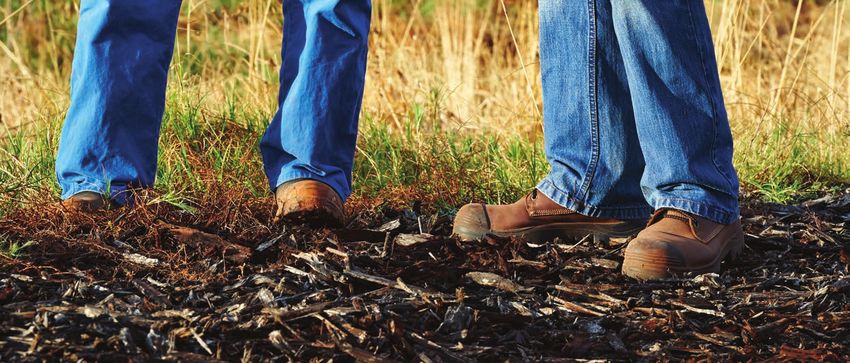
Overview of
Alcoa of Australia’s
operations
Alcoa of Australia (Alcoa) has been sustainably
mining, refining and smelting in Australia since
1963 and is active in all major aspects of the
aluminium industry. The company employs
approximately 4,300 people, predominantly in
regional Australia.
PRINCIPAL OPERATIONS IN WA
Huntly Bauxite Mine
Willowdale Bauxite Mine
Kwinana Alumina Refinery
Pinjara Alumina Refinery
Wagerup Alumina Refinery
Bunbury Port
PRINCIPAL OPERATIONS IN VIC
Portland Aluminium Smelter
Wagerup Environmental Improvement Plan 2017-2021
4
Australian operations overview
                The Huntly and Willowdale bauxite mines in the Darling      between Alcoa of Australia Limited (45 per cent), which
                Range south of Perth supply bauxite to Alcoa’s three        manages the day to day operations; Eastern Aluminium
                alumina refineries at Kwinana, Pinjarra and Wagerup.        Portland Pty Ltd (10%) (a wholly owned subsidiary
                These refineries extract alumina from the bauxite. The      of Alcoa of Australia); CITIC Nominees Pty Ltd (22.5
                Huntly mine is the world’s second largest bauxite mine.     per cent); and Marubeni Aluminium Australia Pty Ltd
                                                                            (22.5 per cent).
                Alcoa’s aluminium smelter is located at Portland in
                Victoria. Portland Aluminium Smelter is a joint venture

Wagerup refinery overview
                Wagerup refinery has been part of the Western Australian    4km north of Yarloop and 13km south of Waroona. It is
                community and economy since operations commenced            in close proximity to the Willowdale Bauxite Mine and
                in 1983.                                                    is 70km from the Bunbury Port. Wagerup refinery and
                                                                            Willowdale mine employ more than 800 people and
                The refinery, which is surrounded by private agricultural   of those, around 30 per cent live in the local shires of
                land, is located on the border of Western Australia’s       Waroona and Harvey. Wagerup refinery is one of the
                Peel and South West regions, 130km south of Perth,          most environmentally advanced refineries in the world.

Wagerup Environmental Improvement Plan 2017-2021
                                                                                                                                 5
Air quality
management

Committed to ongoing improvement
                The management of air quality from Wagerup refinery        Diffuse source emissions originate over a broader area
                receives close community and government scrutiny;          where there is little or no redirection of the vapours or
                Alcoa is committed to ongoing improvement in this area.    particulates. Emissions from various parts of the Residue
                                                                           Storage Area (RSA) and bauxite stockpiles are considered
                Extensive investigations of refinery emissions have been   diffuse source emissions.
                conducted and Alcoa’s detailed knowledge of the range
                and concentration of chemical compounds present            The primary air emissions from the refinery include:
                is the outcome of years of detailed study by experts,
                                                                           ▪ Particulate matter – total suspended particulates and
                including the Commonwealth Scientific and Industrial
                                                                             various sizes of dust.
                Research Organisation (CSIRO).
                                                                           ▪ Volatile organic compounds (VOCs) – such as
                Air emissions from the refinery are usually grouped into     aldehydes, ketones and aromatic compounds.
                two categories, point source emissions and diffuse
                                                                           ▪ Combustion gases – such as nitrogen oxide (NOx)
                source emissions.
                                                                             and carbon monoxide (CO).

                The primary emissions associated with the refinery         ▪ Trace metals.
                processing area are considered point source emissions.     ▪ Odour.
                They arise where refinery gases or particulates are
                emitted to the atmosphere through identified points such
                as stacks and vents.

Understanding and reducing air emissions
                In previous years Alcoa has worked with scientists         ▪ Calciner 3 formaldehyde emissions reduced by 75
                                                                             per cent in 2004.
                from the Department of Environment Regulation (DER),
                Chemistry Centre of Western Australia, the CSIRO and       ▪ Liquor burner odour and VOC emissions
                community representatives to better understand and           reduced by >90 per cent following the installation
                manage air quality at Wagerup refinery.                      of the regenerative thermal oxidiser in 2006.

                This work has contributed to a number of successful        Outcomes of detailed monitoring and modelling
                emission reduction projects which have resulted in         work conducted in 2005 and 2006 show the air
                significant improvements in odour, VOC and combustion      quality around Wagerup refinery is typical of a rural
                gas impacts including:                                     Australian environment in terms of the nature and
                                                                           quantity of chemicals found. It also found the refinery
                ▪ Odour emissions reduced by 60 per cent since 2000.       contributes only a small amount of chemical
                                                                           compounds to local air.
                ▪ VOCs emissions reduced by 30 per cent in 2002.
                ▪ Powerhouse NOx emissions reduced by 60 per cent.

Wagerup Environmental Improvement Plan 2017-2021
                                                                                                                                  6
CSIRO air quality review

                In 2004 Alcoa commissioned CSIRO Atmospheric                    knowledge about emissions to the atmosphere from
                Research to undertake an independent Air Quality                alumina refineries”.
                Review at Wagerup refinery.
                                                                                As part of the review the CSIRO made 18 recommendations
                The review documented the air quality knowledge                 aimed at further understanding air quality around the refinery.
                and information concerning Wagerup refinery and the
                surrounding region at the time and assessed various             Each of these recommendations has been acted upon
                scientific studies undertaken to date.                          by Alcoa with reports presented to the Community
                                                                                Consultative Network (CCN)
                In the review the CSIRO recognised the work undertaken
                at the refinery represented “a substantial advance in

Residue dust management
                Residue dust management is of significant importance            Specific dust control strategies with a focus on
                to both Alcoa and the local community. The potential            minimising water use include:
                for residue dust to have off-site impacts during dry
                and adverse weather conditions means Alcoa has                  ▪ Use of wood chips and blue metal instead of water to
                progressively introduced new technology to improve                cover areas which can generate dust.
                monitoring and management of residue dust.
                                                                                ▪ RSA bank stabilisation with mulch, bitumen or grass.
                Wagerup refinery has five dust monitors located around
                the refinery for compliance monitoring. In addition to          ▪ Revegetation of external embankments with
                these, the refinery has four continuous dust monitors             native vegetation.
                for internal residue dust management purposes. The
                continuous monitors are used as an early warning                ▪ Ripping of residue drying areas during summer to
                system and trigger a management response to prevent               expose wet mud to lower the water usage required for
                dust generation.                                                  dust suppression of the mud surfaces.

                The dust management systems in place are complex and            ▪ Shallow pouring of mud, which allows previously
                consist of a range of both proactive and reactive strategies.     poured mud to be covered with fresh mud before
                Alcoa uses online weather forecasting systems to predict          completely drying, thereby reducing the need
                adverse weather conditions and allow preparation time for         for sprinklers.
                forecast winds. Experience has shown that pre-wetting the
                residue areas in anticipation of forecast winds significantly
                reduces the potential for dust generation.

Wagerup Environmental Improvement Plan 2017-2021
                                                                                                                                        7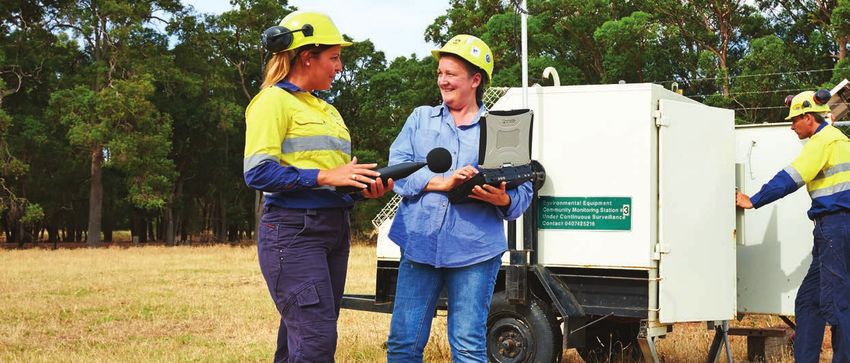
Air quality improvement targets
Particulates

Objective                                            Action

Minimise risk of dust generation from operations.    Increase the use of green alternatives for dust control (e.g. pasture and mulch) and
                                                     rehabilitate where practical and reasonable.

                                                     Identify opportunities to further improve dust management systems, including sprinkler
                                                     system and weather forecasting data methods, and implement where practicable.

                                                     Provide annual updates to the CCN on dust management data and compliance with
                                                     internal dust management standards.

Odour

Objective                                            Action

Continue to investigate options to reduce refinery   Review and update the refinery emissions inventory, investigate opportunities for
air emissions.                                       reductions and prioritise according to practicality and environmental benefit.

                                                     Utilise the emissions inventory work to gain an understanding of the composition of
                                                     typical refinery odours.

                                                     Provide annual updates to the CCN on air emission management, trends and
                                                     improvements.

                                                     Investigate options for reducing greenhouse gas emission intensity.

Wagerup Environmental Improvement Plan 2017-2021
                                                                                                                                            8
Noise
management

                  Noise from Wagerup refinery is recognised as a potential        ▪ Steam and electric power generation plant and calciners.
                  impact on residents living close to the refinery and is
                  therefore a priority area of environmental management.          Noise reductions were achieved as part of a program
                                                                                  implemented from 1999 to 2001. The program reduced
                  Refinery equipment significantly contributing to noise          night-time noise levels at Boundary Road, to the south of
                  emissions includes:                                             the refinery, by approximately 5 decibels (db(A)). Despite
                                                                                  achieving this reduction, noise monitoring and modelling
                  ▪ Ore and alumina conveyors.                                    confirmed that refinery noise emissions still exceeded
                                                                                  night-time assigned noise levels at some private residences
                  ▪ Ore stacking, reclaiming and milling equipment.               under worst case weather conditions.

                  ▪ Pipe work, pumps, fans and blowers involved in liquid,        In 2002 Alcoa submitted an application as allowed by
                    steam, air and solids movement.                               Regulation 17 of the Environmental Protection (Noise)
                                                                                  Regulations to increase the assigned refinery noise levels to
                  ▪ Liquor, steam and air flow control valves and                 those achieved by the noise reduction program.
                    associated equipment.
                                                                                  Alcoa has committed to ensuring ongoing noise emissions
                  ▪ Fans and pumps associated with pollution control              are managed by a noise management strategy.
                    equipment.

Variation to assigned levels
                  In 2012 the Environmental Protection (Wagerup Alumina           levels prescribed in the regulations. It does not allow
                  Refinery Noise Emissions) Approval was granted by               increased noise, but rather brings current noise levels
                  the Minister for Environment. This varies the assigned          within the regulations.
                  noise limit levels for the refinery from the standard

Noise improvement targets
Monitoring

Objective                                                  Action

Maintain compliance with the Environmental Protection      Provide annual updates to the CCN on compliance with the noise approval.
(Noise) Regulations 1997.

Wagerup Environmental Improvement Plan 2017-2021
                                                                                                                                         9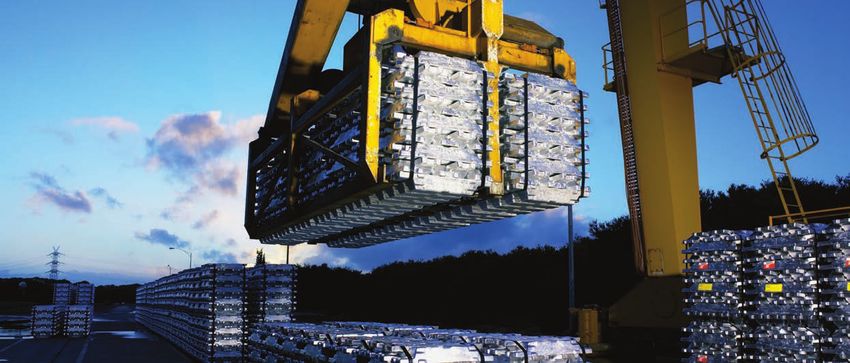
Water
conservation and
management

Water resource
                Water is a valuable community resource and Alcoa has         This enables a volume of fit for purpose water, equal to
                a strong commitment to water conservation and using          or greater than Alcoa’s industrial water requirements, to
                fit for purpose water. This means where possible, Alcoa      be transferred from Wellington Dam to Harvey Dam and
                deliberately sources and uses lower quality water, which     then on supplied to Wagerup refinery. This water is part of
                has less value to other water users.                         the licensed industrial allocation held by Harvey Water for
                                                                             Wellington Dam. Delivery of this water is planned for early
                Wagerup refinery is located adjacent to one of the           spring and autumn to minimise disruption to the delivery of
                largest irrigation regions in Western Australia (WA),        irrigation water during summer.
                bringing with it additional responsibility to minimise
                potential impact on irrigator allocations. As part of its    Wagerup refinery is focused on effective water recycling
                commitment to have secure water available for irrigators     and does not discharge any water off site. Water losses
                during any prolonged drought period, Wagerup refinery        occur through steam from the process, evaporation from
                has a contractual commitment with the farmer-owned           water storage and residue surfaces and water bound
                irrigation cooperative Harvey Water. The financial           within residue mud and sand.
                certainty provided by this agreement has enabled
                Harvey Water to develop infrastructure to support the        The reduction of residue sprinkler spacing has resulted in
                transfer of water from Wellington Dam (the largest fit for   more efficient water use and dust reduction.
                purpose water storage dam in south-west WA) to the
                Harvey-Waroona Irrigation District.

Groundwater management
                A business objective for Wagerup refinery is to have zero    Monitor bores installed near refinery process buildings
                loss of containment incidents and in recent years there      have shown some low level groundwater contamination.
                has been good progress towards achieving this goal.          This is due to past operational practices and meeting
                Loss of containment incidents are reported in line with      the regulations and standards of the time which
                Alcoa’s internal reporting systems.                          are no longer acceptable due to a greater focus on
                                                                             environmental management. To assist with remediation,
                A comprehensive groundwater monitoring program is            groundwater recovery bores have been installed within
                in place to identify and manage groundwater quality          the refinery. Water recovered is directed into the refinery
                impacts with results reported annually to the DER and        process and included in annual water use calculations
                Department of Water.                                         reported to the CCN and authorities.

Wagerup Environmental Improvement Plan 2017-2021
                                                                                                                              10
Water use improvement targets
Water use
Objective Action
Increase efficiency of water use. Continue to improve water efficiency and implement projects where feasible.
Provide annual updates to the CCN on the refinery’s water balance, water use and
water strategies.
Ground water
Objective Action
Minimise potential off site groundwater impacts. Continue to improve secondary and tertiary containment to reduce the risk of spills to
open ground.
Management
Objective Action
Actively manage contaminated sites investigations Implement requirements of Contaminated Sites Act 2003 in line with DER contaminated
and reporting requirements for the refinery and sites guidelines.
residue areas.
Provide an annual update to the CCN on contaminated sites investigations.
Wagerup Environmental Improvement Plan 2017-2021
11Land stewardship
and visual amenity
Alcoa is responsible for the management of land covered ▪ Participation in the Harvey River Restoration Taskforce
by Wagerup refinery’s operational areas and Alcoa owned Bancell Brook Project.
farmlands surrounding the refinery. Each area has its own
unique set of environmental and land management needs. ▪ Weed control, planting and feral animal control in the
South West Ecological Corridor.
Wagerup refinery has a land use management plan which
specifically addresses land use planning and the successful ▪ Screen planting on McClure Road.
integration and interaction between heavy industry, farming
and conservation. It addresses land management issues ▪ Planting native flora in the Bancell Road Rail Loop.
for wetlands, vegetation, fauna, heritage and visual amenity.
▪ Refinery planting and landscaping.
The refinery’s land management program protects areas
of remnant vegetation and progressively enhances and ▪ Development of Dan’s Block, located alongside Bremar
links these areas with ecological corridors for native fauna. Road, a vital connection in the Peel Biolink Project.
Natural or realigned watercourses on Alcoa’s property have
been rehabilitated to create corridors for fauna movement. Future tree planting is designed to complement the
extensive planting already undertaken around the residue
Work undertaken to enhance the existing flora and area and along the ecological corridors being established.
fauna features of the land surrounding the refinery include:
▪ Extensive earth works, planting and infill planting along
Somers Road, Waroona, bordering the Residue
Storage Areas.
Wagerup Environmental Improvement Plan 2017-2021
12Land stewardship improvement targets
Biodiversity
Objective Action
Positively contribute to the biodiversity of the region. Provide an annual update to the CCN on Greening Australia partnership activities.
Implement feral animal control programs in and around the refinery and communicate
strategies to neighbours.
Conduct triennial flora and fauna surveys.
Implement management plan for Bancell Loop paddock and wetland project.
Continue to investigate options for more environmentally friendly weed control practices
and implement where practicable.
Improve visual amenity around the residue storage Progress development of a long term visual amenity plan taking into account life of mine
areas. footprint, refinery expansion and future surrounding land uses.
Provide an annual update to the CCN on land management activities.
Actively manage Alcoa landholdings to enhance and Manage bushfire risks on landholdings.
conserve natural ecological attributes while
maintaining a commercial enterprise. Maintain and enhance the environmental value of Alcoa landholdings (wetlands, streams
and environmental corridors) where feasible and practical.
Provide an annual update to the CCN on mining activities within the local area.
Wagerup Environmental Improvement Plan 2017-2021
13Waste
management
From waste to resource
For more than 30 years Alcoa has been investigating The resulting product is known as Red Sand™, which has
opportunities to produce economically viable products a nominal particle size of +100 micron and is physically
from bauxite residue. By identifying and demonstrating a similar to crushed bauxite.
range of alternative uses, bauxite residue may become a
resource rather than a waste in the future. Red Sand™ is a well-structured material and exhibits
beneficial phosphate retention properties. Red Sand™ has
Alcoa’s residue sand is currently used for the construction been successfully trialled in various applications, including
of residue storage areas, with excess being stored turf top dressing, road base construction and industrial
within these storage areas. Alcoa has also developed a land development. It has also been successfully trialled as
process to wash and carbonate the sand so that it can an alternative material for golf course bunker sand.
be considered for alternative value-adding applications.
Wagerup Environmental Improvement Plan 2017-2021
14Waste management improvement targets
Residue re-use
Objective Action
Continue to investigate options to use refinery generated Provide an annual update to the CCN on the status of residue
waste (e.g. Red Sand™). re-use strategies.
Oxalate
Objective Action
Progress with the oxalate management strategy. Progress with the design and implementation of further oxalate treatment at the refinery.
Investigate options for alternative oxalate use.
Litter
Objective Action
Maintain a proactive approach to litter. Periodic litter collection along refinery access road.
Reduce waste going to landfill. Continue to improve the refinery recycling program.
Promote recycling programs to the refinery workforce.
Investigate options for alternative use/reuse of waste streams.
Provide an annual update to the CCN on waste management and recycling performance.
Wagerup Environmental Improvement Plan 2017-2021
15How aluminium
is made
From bauxite ore to versatile metal
The aluminium making process starts with a chemically By mixing bauxite with caustic soda, and then pressure
altered and weathered rock known as bauxite. Its heating, Alcoa extracts alumina in a fine white powder
colour and texture looks little more than ordinary gravel. form. Alumina is shipped to Portland Aluminium smelter
However, its careful extraction from mines in the Darling in Victoria and exported around the world. The alumina
Range of Western Australia starts a process which since is then smelted at very high temperatures and an electric
the beginning of the 20th century has revolutionised the current passed through it to form aluminium – one of the
transport, building and other high technology industries. world’s most versatile metals.
Darling Range Bauxite
7 tonnes bauxite
Energy
Export alumina
Caustic soda Alumina Refinery Bayer Process
Chemical feed stock
Lime
2 tonnes alumina (al2o3)
Energy
Coke, Pitch
Aluminium Smelter
Export ingot
Aluminium Fluoride
Hall-heroult Process
1 tonne aluminium (molten al)
Wagerup Environmental Improvement Plan 2017-2021
16From dirt to aluminium
Mining and Rehabilitation Refining Process
Preparation of Bauxite mining Crushing plant Ore conveyors Rehabilitation Digestion
mining area A 4-5 m layer of Ore is taken to a The ore is then After mining, topsoil Finely ground bauxite is
After clearing of timber caprock and bauxite crusher where it transported by and overburden are mixed with hot caustic soda
and other material, is removed using is crushed into conveyor belt and returned to the area solution to dissolve the
topsoil and overburden large excavators smaller pieces. rail to the refineries and the site is prepared alumina from the bauxite.
are carefully removed or loaders and for processing. for revegetation. Every seven tonnes of bauxite
and returned after haul trucks. makes two tonnes of alumina.
mining when the areas Smelting Process
are being rehabilitated.
Dissolving alumina Chemical process Calcination Precipitation Clarification
Alumina is dissolved Alumina is made up of The alumina hydrate is The liquid containing Insolubles, such as sand
in an electrolytic aluminium and oxygen, washed, then heated to alumina hydrate is then and mud, are settled
bath of molten cryolite which need to be remove water, leaving cooled in large open and filtered out, leaving
within a large lined separated to produce a pure dry alumina in tanks and seed crystals a solution of dissolved
furnace known as the metal. Every two the form of a fine white added, causing the alumina hydrate.
a “pot”. There are tonnes of alumina powder. This is cooled alumina to crystalise
hundreds of pots at makes one tonne of and stored, then shipped out of solution.
a typical smelter. aluminium. to smelters for processing.
Rolling Process
Reduction process Forming aluminium Casting Hot rolling Coiling
A high electric current is Electricity maintains The molten aluminium Aluminium ingot is The aluminium strip
passed through pots via the temperature of is cast at a temperature reheated to around from the hot rolling mill
carbon blocks. The current the process at about of just over 700°C to 600°C, then passed is coiled and cooled
flows continuously from 950°C and enables form ingots. through a hot finishing before being sent to
the carbon block (positive) the alumina to split mill where it is reduced the cold rolling mill.
through the alumina/ into aluminium and in thickness to 3-6mm.
cryolite mix to the lining oxygen, with aluminium
of the pot (negative), and settling to the bottom
then on to the next pot. of the pot.
Recycling Process
Final processing Initial processing Classification Preparation Sheet finishing Cold rolling
and casting Coated aluminium Upon receipt, the Recycling aluminium Most sheet products The aluminium coil is
(painted or lacquered) starts with preparation require a finishing step further reduced (to as
Molten aluminium is recycled aluminium is
is processed through for transporting, which such as cleaning, thin as 0.24 mm) by
transferred to a classified so the
a gas fired rotary furnace involves compaction to coating and slitting. three passes through
holding furnace and before being sent to optimal end use and improve the density of All products are a cold rolling mill. Exit
then cast into ingots. a “melter” where it is processing path can the aluminium and to trimmed to customer speeds of cold rolling
Recycling aluminium mixed with uncoated be determined. reduce freight, storage specified widths. mills are as high as
consumes or new aluminium. and handling costs. 1000 metres per minute.
approximately five per .
cent of the energy
.
required to make new
aluminium, with no
loss in quality.
Wagerup Environmental Improvement Plan 2017-2021
17You can also read


