EXHIBIT 99.1 Hydro-Québec - RNS Submit
←
→
Page content transcription
If your browser does not render page correctly, please read the page content below
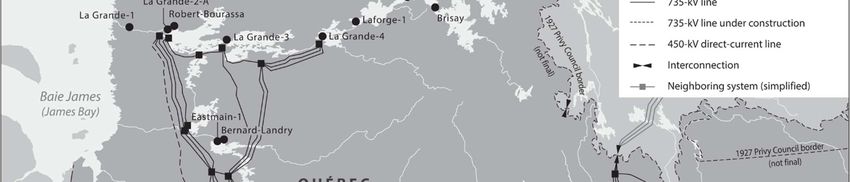
EXHIBIT 99.1

                                            Hydro-Québec

                     This description of Hydro-Québec is dated as of March 27, 2020 and
                     appears as Exhibit 99.1 to Hydro-Québec’s annual report on Form 18-K
                     to the U.S. Securities and Exchange Commission for the fiscal year
                     ended December 31, 2019.

This document may be delivered to you at any time but you should assume that the information herein is
accurate only as of March 27, 2020, unless otherwise indicated. Hydro-Québec’s business, financial
condition, results of operations and prospects may have changed since that date.

This document does not constitute an offer to sell or the solicitation of an offer to buy any securities of
Hydro-Québec, unless it is included in a registration statement filed under the Securities Act of 1933, as
amended.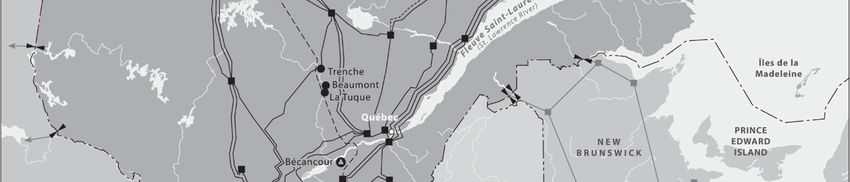
TABLE OF CONTENTS

                                                              Page
Where You Can Find More Information                             3
Forward-Looking Statements                                      3
Foreign Exchange                                                3
Map of Hydro-Québec’s Major Facilities                          4
Five-Year Review                                                5
Hydro-Québec                                                    8
   General                                                      8
   Generation                                                   9
      Generation Operations                                     10
      Wholesale and Energy Marketing Operations                 11
   Transmission                                                 14
      Transmission System                                       14
   Distribution                                                 15
      Electricity Rates                                         17
      Electricity Sales and Revenue                             17
   Construction                                                 18
   Corporate and Other Activities                               18
   Corporate Outlook                                            19
      Strategic Plan 2020-2024                                  19
      Development Strategy                                      19
      Water-Power Royalties                                     20
      Capital Investment Program                                20
      Regulatory Framework                                      23
      Litigation                                                25
      Employees                                                 26
      Impacts of COVID-19                                       26
   Management’s Discussion and Analysis                         27
      Overview                                                  27
      Consolidated Results                                      29
      Cash and Capital Management                               31
      Segmented Results                                         32
      Integrated Business Risk Management                       40
Independent Auditors’ Report                                    45
Consolidated Financial Statements                               47
Supplementary Information                                       84

                                                  -2-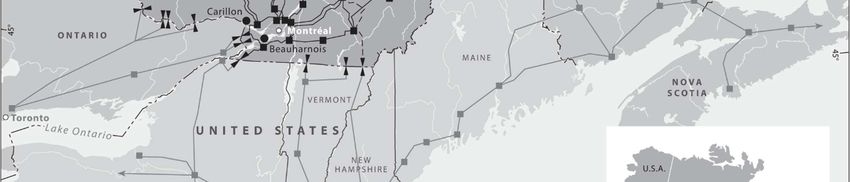
WHERE YOU CAN FIND MORE INFORMATION
This document appears as an exhibit to Hydro-Québec’s annual report filed with the U.S. Securities and Exchange
Commission (the “SEC”) on Form 18-K for the fiscal year ended December 31, 2019. Additional information with
respect to Hydro-Québec is available in the annual report or in other exhibits or amendments to the annual report.

You may access any document we file with the SEC through the SEC’s Electronic Data Gathering, Analysis, and
Retrieval system, which is commonly known by the acronym EDGAR, on the SEC’s website at http://www.sec.gov.

You may request a copy of these filings at no cost by calling Hydro-Québec at (514) 289-2518. This document is also
available on our website at www.hydroquebec.com; however, any other information available on our website shall not
be deemed to form a part of this document or the annual report to which it appears as an exhibit.

FORWARD-LOOKING STATEMENTS
Various statements made throughout this document are forward looking and contain information about financial
results, economic conditions and trends, including, without limitation, the statements under the captions Corporate
Outlook and Management’s Discussion and Analysis. The words “estimate,” “believe,” “expect,” “forecast,”
“anticipate,” “intend” and “plan” and similar expressions identify forward-looking statements. You are cautioned that
any such forward-looking statements are not guarantees of future performance. Forward-looking statements involve
risks and uncertainties, and actual results may differ materially from those in the forward-looking statements as a
result of various factors. Such factors may include, among others, business risks, such as variations in runoff that
affect hydroelectric plant performance, and general levels of economic activity which affect demand for electricity,
and risks related to economic parameters, such as changes in interest and exchange rates or the effects of
phenomena such as the COVID-19 pandemic. You are cautioned not to place undue reliance on these
forward-looking statements which speak only as of the date of this document. We undertake no obligation to publicly
release the result of any revisions to these forward-looking statements which may be made to reflect events or
circumstances after the date hereof or to reflect the occurrence of unanticipated events.

FOREIGN EXCHANGE
Canada maintains a floating exchange rate for the Canadian dollar in order to permit the rate to be determined by
fundamental forces without intervention except as required to maintain orderly conditions. Annual average spot
exchange rates for the U.S. dollar, in which some debt of Hydro-Québec is denominated, expressed in Canadian
dollars, are shown below.

Foreign Currency                                                         2015      2016      2017      2018      2019      2020a
United States Dollar                                                  $1.2788   $1.3256   $1.2984   $1.2962   $1.3270   $1.3177

a) Monthly average through the end of February 2020.
Sources: Bank of Canada (through April 21, 2017) and Bloomberg L.P.

In this document, unless otherwise specified or the context otherwise requires, all dollar amounts are
expressed in Canadian dollars.

                                                                      -3-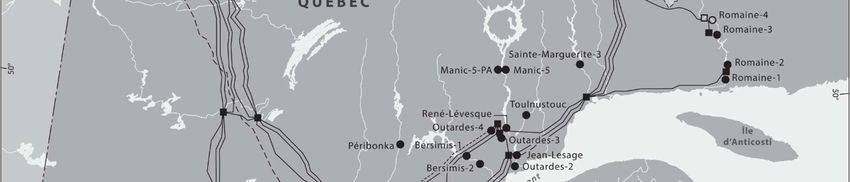
MAP OF HYDRO-QUÉBEC’S MAJOR FACILITIES

                  -4-
FIVE-YEAR REVIEW
CONSOLIDATED AND SELECTED FINANCIAL INFORMATION
Years ended December 31
2015 2016 2017 2018 2019
(in millions of dollars)
OPERATIONS
Revenue $ 13,754 $ 13,339 $ 13,468 $ 14,370 $ 14,021
Expenditure
Operations 2,559 2,675 2,680 2,859 2,835
Other components of employee future benefit cost (32) (233) (322) (340) (557)
Electricity and fuel purchases 1,938 1,862 1,989 2,151 2,210
Depreciation and amortization 2,713 2,597 2,686 2,685 2,782
Taxes 980 1,045 1,076 1,111 1,133
8,158 7,946 8,109 8,466 8,403
Income before financial expenses 5,596 5,393 5,359 5,904 5,618
Financial expenses 2,449 2,532 2,513 2,712 2,695
Net income $ 3,147 $ 2,861 $ 2,846 $ 3,192 $ 2,923
DIVIDEND $ 2,360 $ 2,146 $ 2,135 $ 2,394 $ 2,192
BALANCE SHEET SUMMARY
Total assets $ 75,199 $ 75,167 $ 75,769 $ 76,989 $ 78,563
Long-term debt, including current portion and perpetual debt $ 45,983 $ 45,909 $ 45,259 $ 46,335 $ 45,767
Equity $ 19,475 $ 19,704 $ 19,755 $ 21,209 $ 21,448
INVESTMENTS AFFECTING CASH
Property, plant and equipment and intangible assets $ 3,440 $ 3,460 $ 3,754 $ 3,402 $ 3,614
FINANCIAL RATIOS
Return on equitya 15.3% 13.4% 12.9% 14.0% 12.4%
Capitalizationb 30.1% 30.5% 30.7% 31.8% 32.3%
Profit marginc 22.9% 21.4% 21.1% 22.2% 20.8%
Interest coveraged 2.20 2.16 2.13 2.18 2.07
Self-financinge 82.8% 58.8% 66.6% 63.9% 48.6%
a) Net income divided by average equity for the year less average accumulated other comprehensive income for the year.
b) Equity divided by the sum of equity, long-term debt, current portion of long-term debt, perpetual debt, borrowings and derivative instrument
liabilities, less derivative instrument assets and sinking fund.
c) Net income divided by revenue.
d) Sum of income before financial expenses and net investment income divided by interest on debt securities.
e) Cash flows from operating activities less dividend paid, divided by the sum of cash flows from investing activities, excluding net change in
short-term investments and sinking fund, and repayment of long-term debt.
Note: Certain comparative figures in the Five-Year Review have been reclassified to conform to the presentation adopted in the current year.FIVE-YEAR REVIEW (CONTINUED)
OPERATING STATISTICS
Years ended December 31
2015 2016 2017 2018 2019
(in GWh)
Electricity sales
In Québec, by segment
Residential 66,558 65,065 66,111 69,566 70,688
Commercial, institutional and small industrial 45,335 45,483 45,816 47,659 47,894
Large industrial 54,200 53,635 53,699 50,252 50,358
Other 5,170 5,062 5,077 5,337 5,640
171,263 169,245 170,703 172,814 174,580
Outside Québec
Canada/U.S. 29,864 32,744 34,935 36,524 34,789
Total electricity sales 201,127 201,989 205,638 209,338 209,369
(in millions of dollars)
Revenue from electricity sales
In Québec, by segment
Residential $ 5,222 $ 5,155 $ 5,285 $ 5,591 $ 5,752
Commercial, institutional and small industrial 3,774 3,842 3,873 4,016 4,056
Large industrial 2,350 2,265 2,288 2,196 2,279
Other 316 311 317 331 342
11,662 11,573 11,763 12,134 12,429
Outside Québec
Canada/U.S. 1,700 1,626 1,651 1,731 1,510
Total revenue from electricity sales $ 13,362 $ 13,199 $ 13,414 $ 13,865 $ 13,939
(as at December 31)
Number of customer accounts
In Québec, by segment
Residential 3,890,956 3,924,992 3,958,300 3,994,491 4,032,426
Commercial, institutional and small industrial 319,294 314,816 316,430 317,608 319,225
Large industrial 181 183 184 185 186
Other 4,290 4,550 4,582 4,630 4,705
Total customer accounts 4,214,721 4,244,541 4,279,496 4,316,914 4,356,542
-6-FIVE-YEAR REVIEW (CONTINUED)
OPERATING STATISTICS (CONTINUED)
Years ended December 31
2015 2016 2017 2018 2019
(in MW)
Installed capacity
Hydroelectric 36,370 36,366 36,767 36,767 36,700
Thermal 542 542 542 543 543
Total installed capacity 36,912 36,908 37,309 37,310 37,243a
(in GWh)
Total energy requirementsb 222,172 223,143 226,824 230,795 229,959
(in MW)
Peak power demand in Québecc 37,349 36,797 38,204 38,319 36,159
(in km *)
Lines (overhead and underground)
Transmission 34,272 34,292 34,479 34,361 34,802d
Distribution 220,920 221,843 224,033 224,659 225,304
Total lines (overhead and underground) 255,192 256,135 258,512 259,020 260,106
a) In addition to the generating capacity of our own facilities, we have access to almost all the output from Churchill Falls generating station
(5,428 MW) under a contract with Churchill Falls (Labrador) Corporation Limited that will remain in effect until 2041. We also purchase all the
output from 41 wind farms (3,876 MW) and 7 small hydropower plants (107 MW) and almost all the output from 9 biomass and 4 biogas
cogeneration plants (303 MW) operated by independent power producers. Moreover, 969 MW are available under long-term contracts with
other suppliers.
b) Total energy requirements consist of kilowatthours delivered within Québec and to neighboring systems.
c) The values indicated reflect demand at the annual domestic peak for the winter beginning in December, including interruptible power.
The 2019–2020 winter peak occurred at 7:00 p.m. on December 19, 2019. The 2019 figure was valid on February 14, 2020.
d) 34,530 km of lines operated by Hydro-Québec TransÉnergie and 272 km by Hydro-Québec Distribution.
* 1 km = 0.62 miles
OTHER INFORMATION
2015 2016 2017 2018 2019
Rate increase as at April 1a 2.9% 0.7% 0.7% 0.3% 0.9%
As at December 31
Total number of employeesb
Permanent 17,475 17,282 17,338 16,960 16,977
Temporary 2,319 2,270 2,448 2,944 2,500
19,794 19,552 19,786 19,904 19,477
Representation of target groups
Women 29.0% 28.7% 28.9% 28.8% 29.2%
Otherc 7.4% 7.7% 8.1% 8.9% 10.4%
a) Excluding Rate L (“Rate L”). Rate L applies to an annual contract whose minimum billing demand is 5,000 kW or more and which is
principally related to an industrial activity.
b) Excluding employees of subsidiaries and joint ventures.
c) Self-reported members (men and women) of the following groups: Indigenous peoples, ethnic minorities, visible minorities and people with
disabilities.
UNITS OF MEASURE
V: volt (a unit for measuring voltage)
kV: kilovolt (one thousand volts)
W: watt (a unit for measuring power) Wh: watthour (a unit for measuring electric energy)
kW: kilowatt (one thousand watts) kWh: kilowatthour (one thousand watthours)
MW: megawatt (one million watts) MWh: megawatthour (one million watthours)
GW: gigawatt (one billion watts) GWh: gigawatthour (one billion watthours)
TWh: terawatthour (one trillion watthours)
-7-HYDRO-QUÉBEC
GENERAL
We operate one of the major systems in Canada for the generation, transmission and distribution of electric power.
We supply virtually all electric power distributed in Québec, the largest province in Canada in land area and the
second largest in population.
Hydro-Québec was created in 1944 by the Hydro-Québec Act of the Parliament of Québec and is an agent of
Québec. All capital stock of Hydro-Québec is held by the Minister of Finance on behalf of the Government of Québec
(the “Government”).
Our head office is located at 75 René-Lévesque Boulevard West, Montréal, Québec, Canada.
We carry on our activities in the four reportable business segments defined below. The other business segments and
activities are grouped together under Corporate and Other Activities for reporting purposes.
• Generation: Hydro-Québec Production operates and develops our generating facilities in Québec.
Hydro-Québec Production provides Hydro-Québec Distribution with a base volume of up to 165 TWh of heritage
pool electricity annually (“Heritage Pool Electricity”). Beginning in 2014, the Heritage Pool Electricity is subject to
a yearly indexation (see “Regulatory Framework – Energy Board Act”). The authorized average price was
2.92¢/kWh for 2018 and 2.96¢/kWh for 2019. In addition, Hydro-Québec Production can participate in
Hydro-Québec Distribution’s calls for tenders in a context of free market competition. It also sells electricity in
markets outside Québec and engages in energy-related arbitrage transactions;
• Transmission: Hydro-Québec TransÉnergie operates and develops our power transmission system. It markets
system capacity and manages power flows throughout Québec;
• Distribution: Hydro-Québec Distribution operates and develops our distribution system and supplies electricity
to the Québec market. It also carries out activities related to electricity sales in Québec as well as customer
services and promotes energy efficiency;
• Construction: Hydro-Québec Innovation, équipement et services partagés and our wholly-owned subsidiary,
Société d’énergie de la Baie James (“SEBJ”), design, build and refurbish generating and transmission facilities,
mainly for Hydro-Québec Production and Hydro-Québec TransÉnergie. Hydro-Québec Innovation, équipement
et services partagés is responsible for projects throughout Québec, except in the territory governed by the
James Bay and Northern Québec Agreement (the “JBNQA”). SEBJ builds generating facilities in the territory
governed by the JBNQA (north of the 49th parallel) and may also carry out certain projects elsewhere in Québec
and outside the province; and
• Corporate and Other Activities: The corporate units support our divisions in the achievement of their business
objectives. As at December 31, 2019, Corporate and Other Activities included corporate activities, as well as the
Vice-présidence – Technologies de l’information et des communications (Information and Communication
Technologies Vice Presidency), Vice-présidence – Stratégies d’entreprise et développement des affaires
(Corporate Strategy and Business Development Vice Presidency), Vice-présidence – Transformation
d’entreprise (Corporate Transformation Vice Presidency), Direction principale – Centre de services partagés
(Shared Services Center Unit), Direction principale – Approvisionnement stratégique (Strategic Procurement
Unit), Direction principale – Centre de recherche d’Hydro-Québec (Hydro-Québec Research Center Unit),
Direction principale – Filiales d’Hydro-Québec (Hydro-Québec Subsidiaries Unit) and Center of Excellence in
Transportation Electrification and Energy Storage (“CETEES”), as well as intersegment eliminations and
adjustments.GENERATION
Hydro-Québec Production generates power to supply the Québec market and sells power on wholesale markets.
The following subsidiaries, affiliates and interests are also part of this segment:
• Churchill Falls (Labrador) Corporation Limited (“CF(L)Co”) (34.2% interest; hydroelectric generation activities);
• HQ Manicouagan inc. (wholly-owned; holds a 60% interest in Manicouagan Power Limited Partnership, which
owns and operates a generating station (McCormick) located on the Rivière Manicouagan);
• Marketing d’énergie HQ inc. (HQ Energy Marketing Inc.) (“HQEM”) (wholly-owned; conducts energy transactions
in other Canadian provinces and holds shares in energy trading companies in Canada and the United States);
• H.Q. Energy Services (U.S.) Inc. (“HQUS”) (wholly-owned subsidiary of HQEM; power marketer in the
United States); and
• Hydro Renewable Energy Inc. (“HRE”) (wholly-owned subsidiary of HQEM; participates in the development of
new projects in the United States).
-9-GENERATION OPERATIONS
Facilities
In Québec, our electric generation system comprises 86 generating stations currently in service, of which 62 are
hydroelectric and 24 are thermal; with a total installed capacity of 37,243 MW as of December 31, 2019.
The following table lists the generating stations in service as of such date.
GENERATING STATIONS IN SERVICE IN QUÉBEC
Name of Facility Year(s) Commissioneda Capacity
(MW)
Hydroelectricb
Robert-Bourassa 1979-1981 5,616
La Grande-4 1984-1986 2,779
La Grande-3 1982-1984 2,417
La Grande-2-A 1991-1992 2,106
Beauharnois 1932-1961 1,900
Manic-5 1970-1971 1,596
La Grande-1 1994-1995 1,436
René-Lévesque (Manic-3) 1975-1976 1,326
Jean-Lesage (Manic-2) 1965-1967 1,229
Bersimis-1 1956-1959 1,178
Manic-5-PA 1989-1990 1,064
Outardes-3 1969 1,026
Sainte-Marguerite-3 2003-2004 882
Laforge-1 1993-1994 878
Bersimis-2 1959-1960 845
Outardes-4 1969 785
Bernard-Landry (Eastmain-1-A) 2011-2012 768
Carillon 1962-1964 753
Romaine-2 2014 640
Toulnustouc 2005 526
Outardes-2 1978 523
Eastmain-1 2006 480
Brisay 1993 469
Romaine-3 2017 395
Péribonka 2007-2008 385
Laforge-2 1996 319
Trenche 1950-1955 302
La Tuque 1940-1955 294
Romaine-1 2015 270
Beaumont 1958-1959 270
McCormick 1951-1965 235
Rocher-de-Grand-Mère 2004 230
Paugan 1928-1956 226
Rapide-Blanc 1934-1955 204
Shawinigan-2 1911-1929 200
Shawinigan-3 1948-1949 194
Manic-1 1966-1967 184
Rapides-des-Îles 1966-1973 176
Chelsea 1927-1939 152
Sarcelle 2013 150
La Gabelle 1924-1931 131
Première-Chute 1968-1975 131
Les Cèdres 1914-1924 113
Rapides-des-Quinze 1923-1955 109
Rapides-Farmer 1927-1947 104
Other (17 generating stations rated less than 100 MW) 1915-2009 704
Total 36,700
Thermal
Bécancour (gas turbine) 1992-1993 411
Other (23 diesel plants on off-grid systems)c 1967-2015 132
Total 543
a) Indicates year(s) when facilities began commercial operation.
b) 61 facilities are managed by Hydro-Québec Production and one facility is managed by Hydro-Québec Distribution.
c) Managed by Hydro-Québec Distribution.
- 10 -Electricity Purchases
We purchase energy and capacity from the Churchill Falls generating station in Labrador through agreements with
CF(L)Co. Under an initial power contract signed in 1969 with CF(L)Co, we agreed to purchase annually, through the
year 2041, 4,083 MW of power (the “1969 Power Contract”). In June 1999, we signed another agreement with
CF(L)Co to guarantee us the availability of 682 MW of additional power until 2041 for each November 1 to March 31
period. In 2019, the energy received totaled 30.2 TWh at a cost of $100 million as compared to 31.0 TWh in 2018.
We have a power purchase agreement with Rio Tinto Alcan Inc. (“RTA”), that was amended in 2006, for the
purchase of 365 MW of peak power and 375 MW of additional peak power until December 31, 2045. Under this 2006
amendment, we also agreed to purchase from RTA an additional 150 MW of peak power until December 31, 2045.
In addition, we purchase energy and capacity under 57 long-term contracts with independent producers located in
Québec. During 2019, 2.5 TWh were purchased under these contracts, at a total cost of $197 million. For 2020, we
expect to purchase approximately 3.0 TWh. Hydro-Québec Distribution also has long-term contracts with
independent producers (see “Distribution”).
We also purchase energy and capacity in connection with our energy marketing operations (see “Wholesale and
Energy Marketing Operations”).
Peak
We use energy purchased from our neighboring systems, which experience different demand patterns, to meet a
portion of our peak power needs in Québec (see “Wholesale and Energy Marketing Operations”). The following table
summarizes our peak power demand in Québec and installed capacity as at December 31 for the years 2015
through 2019.
Peak Power Demanda Installed Capacity Total Average Loadc
(MW)
2015 37,349 36,912 25,362
2016 36,797 36,908 25,403
2017 38,204 37,309 25,893
2018 38,319 37,310 26,346
2019 36,159 37,243b 26,251
a) The values indicated reflect demand at the annual domestic peak for the winter beginning in December, including interruptible power. The
2019-2020 winter peak was 36,159 MW and occurred at 7:00 p.m. on December 19, 2019. The 2019 figure was valid on February 14, 2020.
b) In addition to the generating capacity of our own facilities, we have access to almost all the output from Churchill Falls generating station
(5,428 MW) under a contract with Churchill Falls (Labrador) Corporation Limited that will remain in effect until 2041. We also purchase all
the output from 41 wind farms (3,876 MW) and 7 small hydropower plants (107 MW) and almost all the output from 9 biomass and 4 biogas
cogeneration plants (303 MW) operated by independent power producers. Moreover, 969 MW are available under long-term contracts with
other suppliers.
c) Total energy requirements consist of kilowatthours delivered within Québec and to neighboring systems, divided by the number of hours in
the year.
W HOLESALE AND ENERGY MARKETING OPERATIONS
Québec Wholesale Market
The Québec wholesale electricity market has been open since May 1, 1997. This market is comprised of
11 distributors: Hydro-Québec Distribution, nine distributors operating municipal systems and one regional electricity
cooperative. As a result of the opening of the wholesale market, the municipal systems can, subject to the
Government’s authorization, purchase electricity from suppliers other than Hydro-Québec Distribution, and
independent generators in Québec can sell their electricity on the wholesale market using Hydro-Québec
TransÉnergie’s transmission facilities.
In addition to the Heritage Pool Electricity, Hydro-Québec Production provides other power supplies and products to
Hydro-Québec Distribution, including a call for tenders issued in 2002 for the supply of 600 MW over a 20-year
period starting in March 2007 and a 20-year capacity supply of 500 MW resulting from a call for tenders issued in
2015, which began in December 2018.
- 11 -Markets Outside Québec
Our main markets outside Québec consist of neighboring networks located in Canada and the United States.
HQUS is a member of New York ISO, ISO New England (which includes all or parts of Connecticut, Maine,
Massachusetts, New Hampshire, Rhode Island and Vermont), Midcontinent ISO (which includes all or parts of
Arkansas, Illinois, Indiana, Iowa, Kentucky, Louisiana, Michigan, Minnesota, Mississippi, Missouri, Montana,
North Dakota, South Dakota, Texas, Wisconsin and Manitoba (Canada)) and PJM Interconnection (which includes all
or parts of Delaware, Illinois, Indiana, Kentucky, Maryland, Michigan, New Jersey, North Carolina, Ohio,
Pennsylvania, Tennessee, Virginia, West Virginia and the District of Columbia). HQUS is also a participant in the
electricity markets operated by Southwest Power Pool Inc. (which includes all or parts of Arkansas, Iowa, Kansas,
Louisiana, Minnesota, Missouri, Montana, Nebraska, New Mexico, North Dakota, Oklahoma, South Dakota, Texas
and Wyoming) and by ERCOT (which includes parts of Texas). ISOs, or Independent Systems Operators, and
RTOs, or Regional Transmission Organizations, enable participants to buy and sell energy, schedule bilateral
transactions and reserve transmission service. HQUS holds a permit from the U.S. Federal Energy Regulatory
Commission to sell at market-based rates.
HQEM is a participant of the Ontario Independent Electricity System Operator (the “Ontario IESO”). HQEM sells and
buys energy in Manitoba, Ontario, New Brunswick and Nova Scotia, and has transmission service agreements with
Manitoba Hydro and New Brunswick Power Corporation to reserve transmission service on their respective systems.
We have long-term export contracts for the sale of electricity. The following table summarizes our principal energy
export agreements.
PRINCIPAL ENERGY EXPORT AGREEMENTS
Maximum Annual
Counterparties Expiry Date Maximum Capacity Deliveries
(MW) (TWh)
Cornwall Electric – Canadaa 2019 45 0.2
Cornwall Electric – Canadaa 2019 100 0.4b
Vermont Joint Owners 2020 335 2.1
Ontario IESO 2023 N/A 2.0
Vermont power distributorsc 2038 225 1.3
a) In addition to these contracts, in October 2016, HQEM signed a power supply contract with Cornwall Electric – Canada. This contract will be
in effect from 2020 to 2030 and we anticipate power sales totaling up to approximately 145 MW.
b) Based on historical data.
c) Green Mountain Power Corporation, Vermont Electric Cooperative, Inc., Vermont Public Power Supply Authority, the Town of Stowe Electric
Department and City of Burlington, Vermont Electric Department.
We are continuing talks regarding participation in projects to build transmission lines between Québec and certain
states in the northeastern United States. These interconnections would enable us to increase our exports to these
markets.
In February 2018, Massachusetts Electric Distribution Companies (“EDC”) selected a transmission line project, the
New England Clean Energy Connect (“NECEC”) led by Central Maine Power, in which we are a partner to supply
9.45 TWh of clean hydroelectricity power over a 20-year period.
The NECEC project involves the construction of a new 1,200-MW transmission line from the Québec-Maine border to
the City of Lewiston, Maine. All relevant contracts were executed in June 2018. Subject to regulatory approval of the
contracts and NECEC obtaining the required permits, we expect this transmission line to begin operation in
December 2022.
On January 10, 2020, we announced the signature of an agreement with NB Power. Under this agreement, we
expect to export a total of 47 TWh of electricity to New Brunswick between now and 2040. These exports are
expected to be transmitted over existing interconnections.
- 12 -Electricity Sales and Revenue
The following table summarizes electricity sales and revenue outside Québec, for the years 2015 through 2019.
ELECTRICITY SALES AND REVENUE OUTSIDE QUÉBEC
Years ended December 31
2015 2016 2017 2018 2019
Electricity Sales (GWh) 29,864 32,744 34,935 36,524 34,789
Revenue from Electricity Sales ($M) 1,700 1,626 1,651 1,731 1,510
- 13 -TRANSMISSION
Hydro-Québec TransÉnergie provides the following services:
• transmission of electricity to supply Québec’s native load; the native load is made up of the total transmission
requirements of the Québec wholesale market (see “Generation – Québec Wholesale Market”) but excludes
customers in remote communities; Hydro-Québec Distribution is Hydro-Québec TransÉnergie’s largest customer;
• point-to-point transmission service; as of the end of 2019, Hydro-Québec TransÉnergie had signed transmission
service agreements with 24 customers, including Hydro-Québec Production, the largest customer for this
service; and
• connection of privately-owned generating facilities to Hydro-Québec TransÉnergie’s transmission system;
Hydro-Québec TransÉnergie currently serves 67 of these generating stations.
This segment includes our holding in Cedars Rapids Transmission Company, Limited, a transmission provider that
owns and operates a 325 MW interconnection line linking Hydro-Québec TransÉnergie’s grid at Les Cèdres and
Langlois substations in Québec with the Cornwall Electric system in Ontario and the National Grid system in New
York State.
TRANSMISSION SYSTEM
Most generating complexes in Québec are located at substantial distances from consumer centers. As a result,
Hydro-Québec TransÉnergie’s transmission system is one of the most extensive in North America, totaling
approximately 22,000 miles of lines. The system includes the following facilities as at December 31, 2019.
Voltage Substations Lines (miles)a
765 kV and 735 kV 41 7,655
450 kV DC 2 757
315 kV 81 3,416
230 kV 53 2,021
161 kV 43 1,330
120 kV 220 4,354
69 kV or less 94b 2,092c
TOTAL 534 21,625
a) Miles covered by the transmission system. Many facilities carry two circuits on the same infrastructure.
b) 83 substations operated by Hydro-Québec TransÉnergie and 11 by Hydro-Québec Distribution.
c) 1,923 miles of lines operated by Hydro-Québec TransÉnergie and 169 miles by Hydro-Québec Distribution.
Hydro-Québec TransÉnergie provides open access to its transmission grid in accordance with the Hydro-Québec
Open Access Transmission Tariff. Consequently, electricity distributors, producers and marketers in and outside
Québec have the option to enter into transactions with distributors, producers and marketers to buy or sell electricity
and to wheel in, wheel out or wheel through Hydro-Québec TransÉnergie’s transmission grid at specified rates.
Hydro-Québec TransÉnergie’s Direction – Contrôle des mouvements d’énergie (System Control Unit) is responsible
for energy dispatching, power flow supervision and system security monitoring. It also acts as Reliability Coordinator
for transmission systems in Québec. Hydro-Québec TransÉnergie’s transmission system is linked through
interconnections with other major power systems in Canada (Ontario, New Brunswick and Newfoundland and
Labrador) and the northeastern United States (New York and New England).
The following table shows existing interconnection capacity with neighboring systems outside Québec as at
December 31, 2019. Available transfer capacities are posted on the OASIS (Open Access Same-Time Information
System) website.
INTERCONNECTIONS WITH NEIGHBORING SYSTEMS OUTSIDE QUÉBEC
Maximum Export Capacity Maximum Import Capacity Voltage
(MW) (MW) (kV)
CANADA Ontario 2,705 1,970 120, 230 and 240
New Brunswick 1,029 785 230, 315 and 345
Newfoundland and Labrador – 5,150 735
UNITED STATES New York 1,999 1,100 120 and 765
New England 2,275 2,170 120 and ±450 DC
- 14 -DISTRIBUTION Hydro-Québec Distribution provides a secure, reliable supply of electricity and related services to the Québec market. To fulfill this responsibility, Hydro-Québec Distribution relies primarily on the Heritage Pool Electricity supplied by Hydro-Québec Production. Hydro-Québec Distribution also purchases additional electricity under market conditions by issuing calls for tenders from suppliers in the market (see “Regulatory Framework – Energy Board Act”). Our distribution system is comprised of 73,646 miles of medium voltage lines (almost exclusively 25 kV), as well as 66,351 miles of low voltage lines. Approximately 10% of all such lines are underground. Hydro-Québec Distribution sells to a wide range of customers, from large industrial users, which accounted for 28.8% of sales volume in 2019, to residential customers, which represented 40.5% of sales volume in the same period. Revenues are also derived from sales to commercial, institutional and small industrial customers as well as distributors operating municipal electric systems. Hydro-Québec Distribution has developed some flexibility in the management of our system and currently has 938 MW of interruptible power, 290 MW of demand-side management and 510 MW of concurrent peak-saving capacity in our residential dual-energy market. Hydro-Québec Distribution has entered into special agreements with eight industrial customers for whom electricity costs represent a substantial proportion of total production costs. Some of these agreements provide for the sale, on a long-term basis, of firm energy at prices that vary in accordance with a formula based on the market price of aluminum. We manage the exposure to fluctuations in aluminum prices resulting from these contracts by entering into financial transactions, such as futures or swaps (see “Note 15 to the 2019 Consolidated Financial Statements”). In 2019, deliveries under these agreements accounted for 45% of the total energy deliveries to large industrial users. Hydro-Québec Distribution relies on various sources to supply the Québec market. Hydro-Québec Distribution relies primarily on the Heritage Pool Electricity of 165 TWh, which it purchases from Hydro-Québec Production, and also issues short- and long-term calls for tenders. For requirements of less than three months, it may also buy electricity directly on the market, without tendering, under an authorization granted by the Régie de l’énergie (the “Energy Board”). For unforeseen needs that cannot be met otherwise, it relies on a framework agreement with Hydro-Québec Production, approved by the Energy Board on December 10, 2019, that covers the period from January 1, 2020, to December 31, 2022 and replaces the former agreement which expired on December 31, 2019. Further to calls for tenders issued since 2002, Hydro-Québec Distribution signed five contracts with Hydro-Québec Production for the supply of 1,100 MW (two contracts totaling 600 MW over a 20-year period beginning in March 2007 and three contracts totaling 500 MW over a 20-year period beginning in December 2018) and 74 contracts with independent producers for the supply of 4,730 MW (including 3,722 MW of wind-generated electricity) for deliveries beginning between 2006 and 2024. Hydro-Québec Production also has long-term contracts with independent producers (see “Generation – Electricity Purchases”).
The following table summarizes these contracts as at December 31, 2019.
                                                      LONG-TERM CONTRACTS AWARDED
                                      Number of
Type of power                         Contracts                                     Capacity             Starting Date   Expiry Date
                                                                                     (MW)
Hydroelectric                             12         In service                     1,203                 2007-2018      2027-2038
                                           4a        Under development                 48                 2022-2024      2042-2062

Natural gas cogeneration                   1         Mothballed                       507                    2006           2026

Wind                                      36         In service                     3,668                 2006-2018      2026-2043
                                           3a        Under development                 54                 2020-2021      2040-2041

Forest biomass cogeneration               12         In service                       236                 2007-2017      2023-2040
                                           7         Under development                 89                 2020-2021      2045-2046

Biomass cogeneration                       4         In service                        25                 2012-2017      2032-2042
TOTAL                                     79                                         5,830

a)     One hydroelectric contract and one wind-generated electricity contract are on off-grid systems.

Hydro-Québec Distribution manages its flexible and diversified energy portfolio to deal with fluctuations in demand.
Every three years, Hydro-Québec Distribution prepares a supply plan covering the next 10 years. This supply plan
presents forecasts of Hydro-Québec Distribution’s customers’ electricity requirements, taking into account energy
efficiency measures, along with the various means that Hydro-Québec Distribution intends to use to ensure a secure
supply of electricity for Québec. The Electricity Supply Plan 2020–2029 was filed with the Energy Board in
November 2019 and a final decision is expected at the end of 2020 or the beginning of 2021.

Hydro-Québec Distribution has taken various measures to ensure a balance between supply and demand in Québec,
including:

•      A three-year contract for wind integration services beginning on September 1, 2016 was signed with
       Hydro-Québec Production and then extended for an additional year, until August 31, 2020. A new call for
       tenders for wind integration services for a five-year period (from September 1, 2020 until August 31, 2025) has
       been launched in February 2020 following the January 28, 2020 approval of the service characteristics by the
       Energy Board.

•      On October 29, 2015, the Energy Board agreed to exempt us from filing each year to obtain an annual extension
       of the suspension period for TransCanada Energy’s Bécancour generating station (“TCE”). Thus, this
       suspension is now in place until 2026 (or until the end of the Electricity Supply Contract with TCE), unless
       Hydro-Québec Distribution requires TCE as a base resource, in which case a demand must be made three
       years prior to its use (the accounting for this agreement is described in “Note 3 to the 2019 Consolidated
       Financial Statements” under “Regulatory Assets – Costs related to a suspension agreement”); and

•      Further to a request for proposal, Hydro-Québec Distribution acquired 675 MW of Unforced Capacity (UCAP) for
       January 2020 and 650 MW of UCAP for February 2020; and

•      1.8 TWh of short-term transactions in 2019.

Additional calls for tenders could be made in the coming years in order to maintain this balance (see “Regulatory
Framework – Energy Board Act”).

                                                                        - 16 -
ELECTRICITY RATES
Prior to the rate year beginning April 1, 2020, rates were fixed or modified by the Energy Board on an annual basis
pursuant to the Act respecting the Régie de l’énergie (the “Energy Board Act”) (see “Regulatory Framework – Energy
Board Act”). Rates were fixed to allow recovery of authorized service costs, including estimated supply costs, and a
reasonable rate of return on shareholder’s equity.
In March 2019, the Energy Board authorized an electricity rate increase of 0.9% applicable to all customers except
for Rate L customers, for which the increase is 0.3%. The new rates were effective as of April 1, 2019.
With the adoption of the Act to simplify the process for establishing electricity distribution rates (“Bill 34”) in December
2019 (see “Regulatory Framework – Energy Board Act”), electricity distribution rates are to be set or modified by the
Energy Board every five years as of April 1, 2025, and indexed annually in the interim, based on the annual change
in the average Québec Consumer Price Index. Bill 34 also provides for a freeze on distribution rates for the rate year
beginning April 1, 2020, followed by their annual indexation for the next four years.
The following table shows the rate change which took effect in each year and the average yearly rate increase, from
2015 to 2020, as well as annual inflation rates:
2015 2016 2017 2018 2019 2020
Rate increase as of April 1 2.86%a 0.7%a 0.7%a 0.3%a 0.9%a 0%
Average rate increase from January 1 to December 31b 3.2% 1.2% 0.7% 0.4% 0.8% 0.2%
Inflation Ratec 1.1% 1.4% 1.6% 2.3% 1.7% 2.0%d
a) Excluding Rate L, for which the increase is 2.49% in 2015, 0% in 2016, 0.2% in 2017, 0% in 2018 and 0.3% in 2019.
b) Excluding Rate L.
c) Canadian Consumer Price Index for the calendar year.
d) Estimate.
ELECTRICITY SALES AND REVENUE
The following table summarizes consolidated electricity sales and revenue in Québec, by customer segments, for the
years 2015 through 2019.
OPERATING STATISTICS
Years ended December 31
2015 2016 2017 2018 2019
(in GWh)
Electricity Sales
In Québec, by segment
Residential 66,558 65,065 66,111 69,566 70,688
Commercial, institutional and small industrial 45,335 45,483 45,816 47,659 47,894
Large industrial 54,200 53,635 53,699 50,252 50,358
Other 5,170 5,062 5,077 5,337 5,640
Total Electricity Sales 171,263 169,245 170,703 172,814 174,580
(in millions of dollars)
Revenue from Electricity Sales
In Québec, by segment
Residential $ 5,222 $ 5,155 $ 5,285 $ 5,591 $ 5,752
Commercial, institutional and small industrial 3,774 3,842 3,873 4,016 4,056
Large industrial 2,350 2,265 2,288 2,196 2,279
Other 316 311 317 331 342
Total Revenue from Electricity Sales $ 11,662 $ 11,573 $ 11,763 $ 12,134 $ 12,429
(as at December 31)
Number of Customer Accounts
In Québec, by segment
Residential 3,890,956 3,924,992 3,958,300 3,994,491 4,032,426
Commercial, institutional and small industrial 319,294 314,816 316,430 317,608 319,225
Large industrial 181 183 184 185 186
Other 4,290 4,550 4,582 4,630 4,705
Total Customer Accounts 4,214,721 4,244,541 4,279,496 4,316,914 4,356,542
- 17 -CONSTRUCTION
The Construction segment consists of activities related to projects carried out by Hydro-Québec Innovation,
équipement et services partagés and SEBJ.
Hydro-Québec Innovation, équipement et services partagés is responsible for construction and refurbishment
projects throughout Québec, except in the territory governed by the JBNQA. SEBJ builds generating facilities in the
territory governed by the JBNQA (north of the 49th parallel) and may also carry out certain projects elsewhere in
Québec and outside the province.
As engineering, construction and environmental specialists, Hydro-Québec Innovation, équipement et services
partagés and SEBJ offer Hydro-Québec Production and Hydro-Québec TransÉnergie a variety of services needed
for draft-design studies, impact assessments and other undertakings in the context of energy-related projects. These
services include technical and scientific surveys, planning, cost estimates and cost control, design, architecture,
geomatics and quality control.
CORPORATE AND OTHER ACTIVITIES
Corporate activities consist of the Financial and Risk Management Group, the Corporate and Legal Affairs and
Governance Group, the Communications, Governmental and Indigenous Affairs Vice Presidency, the Human
Resources Vice Presidency and the Health and Safety and Environment Unit. Other activities include Information and
Communication Technologies Vice Presidency, Corporate Strategy and Business Development Vice Presidency,
Corporate Transformation Vice Presidency, Shared Services Center Unit, Strategic Procurement Unit, Hydro-Québec
Research Center Unit, Hydro-Québec Subsidiaries Unit and CETEES, as well as intersegment eliminations and
adjustments.
The following are included under Corporate and Other Activities:
• Hydro-Québec CapiTech inc. (“Hydro-Québec CapiTech”) (wholly-owned; a venture capital company investing
in businesses that provide energy-related high-technology products and services);
• Hydro-Québec IndusTech inc. (“Hydro-Québec IndusTech”) (wholly-owned; the corporation’s mission is to
partner with the private sector in industrializing and marketing technologies resulting from our research
activities); and
• Institut de recherche d’Hydro-Québec (“IREQ”) (our energy-technology research and development unit).
On February 6, 2020, through a private placement, we acquired 19.9% of the issued and outstanding common
shares (on a non-diluted basis) of Innergex Renewable Energy inc. (TSX: INE) (“Innergex”), a renewable power
producer that develops, acquires, owns and operates hydroelectric facilities, wind farms and solar farms.
The purchase price was $661 million. In addition, we have committed $500 million to a strategic alliance
(the “Strategic Alliance”) dedicated to co-investment projects with Innergex. The Strategic Alliance will pursue
opportunities to invest, acquire, develop or operate projects or assets related to wind or solar projects including
battery storage or transmission, distributed generation, off-grid renewable energy networks, and other renewable
energy sectors as may be agreed by the parties. Each party must present investment opportunities in targeted
sectors outside of Québec to the other on an exclusive basis for an initial 3-year period.
On March 11, 2020, our President and Chief Executive Officer announced that he would be leaving Hydro-Québec.
The next day, the Board of Directors appointed our Executive Vice President and Chief Financial and Risk Officer as
Acting President and CEO, effective immediately. The Board of Directors has started the process to find the next
Chief Executive Officer with the support of a recruitment firm.CORPORATE OUTLOOK
STRATEGIC PLAN 2020–2024
Hydro-Québec’s Strategic Plan 2020–2024 (the “Plan”) was tabled with the legislature in the last quarter of 2019.
Building on our previous plan, it goes even further by factoring in the global energy transition towards a decarbonized
economy, which is causing rapid change in the energy sector.
The green, renewable electricity we produce accounts for 35% of the energy consumed in Québec. We intend to
utilize its full potential to decarbonize Québec and northeastern North America and drive Québec’s economic
development. In addition, the advent of new digital technologies gives us the opportunity to diversify our offerings and
improve the customer experience.
The Plan is based on four major objectives:
• Contribute to the reduction of greenhouse gas emissions in all our markets.
• Power Québec’s economic development.
• Be a benchmark in customer experience.
• Increase our net income.
To achieve our objectives, we will focus on four strategies:
• Increase the share of energy provided by electricity in Québec and be a leader of the energy transition.
• Seize growth opportunities in Québec and beyond our borders.
• Further develop a culture focused on customers and occupational health and safety.
• Continuously improve our operating performance.
DEVELOPMENT STRATEGY
In 2020, we plan to invest approximately $3.9 billion, most of which would be allocated to the operations of
Hydro-Québec TransÉnergie ($1.7 billion), Hydro-Québec Production ($1.0 billion) and Hydro-Québec
Distribution ($0.9 billion). More than 65% of the total amount is expected to be earmarked for facility maintenance
and improvements. The remainder is expected to go toward growth and development activities.
The 2020 borrowing program is expected to be $4.0 billion. The funds raised are intended to be used to repay
maturing debt and to finance a part of the investment program.
Hydro-Québec Production intends to continue its work on the Romaine complex jobsites in the course of developing
Québec’s hydroelectric potential. Three of the four generating stations in this major project, namely Romaine-2,
Romaine-1 and Romaine-3, were commissioned in 2014, 2015 and 2017, respectively, and Romaine-4 should follow
in 2021. In line with the energy transition, Hydro-Québec Production also plans to build two solar generating stations.
At the same time, it plans to continue investing to ensure the long-term operability of its facilities and optimize their
output. For instance, refurbishment is under way at Robert-Bourassa, Rapide-Blanc and Beauharnois generating
stations.
Hydro-Québec TransÉnergie intends to devote a large part of its investments to erecting transmission lines, in
particular the 735 kV line that should extend some 250 km between Micoua substation, in the Côte-Nord region, and
Saguenay substation, in the Saguenay–Lac-Saint-Jean region, as well as the approximately 100 km 320-kV direct
current interconnection line between Appalaches substation, located near Thetford Mines, and a connection point on
the Québec–Maine border. In addition, it plans to continue connecting the Romaine complex, in the Minganie region,
and building 315/25 kV Patriotes substation, in the Basses-Laurentides region. The division also intends to continue
upgrading and modernizing its facilities to enhance the reliability and long-term operability of its transmission assets
and maintain service quality. This includes the projects to replace the grid control systems, special protection
systems, and substation protections and controls, as well as work stemming from the architecture development plan
for the 315-kV system on the island of Montréal.
- 19 -Hydro-Québec Distribution intends to continue delivering reliable power and high-quality services to all Québec
customers. It plans to make additional investments to better meet customer needs, including connecting the
Côte-Nord region communities of La Romaine and Unamen Shipu, currently served by an off-grid system. The
division also plans to pursue projects to maintain and improve the quality of its facilities, such as replacing the
distribution grid control system. Finally, in the context of the energy transition, development projects such as the
deployment of a microgrid in Lac-Mégantic are expected to enhance the division’s expertise in new technologies so
that it can subsequently apply them to other localities, particularly the off-grid systems in the Nord-du-Québec region.
With regards to distribution rates, in December 2019, Québec’s National Assembly passed and enacted the Act to
simplify the process for establishing electricity distribution rates (“Bill 34”) which amends certain provisions of the
Energy Board Act and the Hydro-Québec Act. In particular, it provides for a freeze on distribution rates for the rate
year beginning April 1, 2020, as well as a refund to customers, in 2020, of an amount equivalent to the unamortized
balances of the variance and deferral accounts of Hydro-Québec Distribution as at December 31, 2019. The amount
to be refunded totals $535 million.
W ATER-POWER ROYALTIES
As stipulated in the Watercourses Act (Québec), Hydro-Québec Production pays the same statutory royalties as
those paid by private producers of hydro-electricity in Québec. These water-power royalties, earmarked for the
Government’s Generations Fund, consist of a statutory royalty for the electricity delivered during the year and a
contractual royalty payable pursuant to the contract awarded for the operation of a generating station.
For 2020, these royalties, indexed annually to the Consumer Price Index, consist of:
• a statutory royalty of $3.38 ($3.32, $3.25 and $3.20, for 2019, 2018 and 2017, respectively) per thousand
kilowatthours of electricity produced; and
• a contractual royalty of $0.80 ($0.78, $0.76 and $0.75, for 2019, 2018 and 2017, respectively) per thousand
kilowatthours of electricity produced.
These royalties totaled $714 million in 2019, $699 million in 2018 and $695 million in 2017.
CAPITAL INVESTMENT PROGRAM
The capital investment program includes capital expenditure for fixed and intangible assets. The following table is a
summary of our capital investments affecting cash for the years 2015 through 2019. Over the 2020–2024 period, we
plan to invest approximately $4.0 billion in fixed and intangible assets per year, including an estimated $3.9 billion in
2020, as stated in the table below.
CAPITAL INVESTMENTS AFFECTING CASH
Estimated
2015 2016 2017 2018 2019 2020
(in millions of dollars)
Fixed and Intangible Assets
Generation $ 957 $ 906 $ 963 $ 792 $ 1,110 $ 1,041
Transmissiona 1,587 1,757 1,971 1,782 1,563 1,719
Distribution 756 657 650 664 737 865
Construction 1 8 13 10 4 6
Corporate and Other Activities 139 132 157 154 200 234
Total Investments $ 3,440 $ 3,460 $ 3,754 $ 3,402 $ 3,614 $ 3,865
a) Including sub-transmission facilities.
Our investments totaled $3,614 million in 2019. Most of this amount was allocated to large-scale development
projects in the generation and transmission segments, as well as to major refurbishment projects to maintain and
improve the quality of our assets.
In 2019, we continued working on the Romaine complex jobsites in the course of developing Québec’s hydroelectric
potential. On the last jobsite, Romaine-4 (245 MW), construction of the dam is nearly complete and should be
followed by reservoir impoundment in 2020. The first three of the four generating stations in this 1,550-MW project—
Romaine-2 (640 MW), Romaine-1 (270 MW) and Romaine-3 (395 MW)—were brought on stream in 2014, 2015 and
2017, respectively. Work is proceeding on Romaine-4 (245 MW), which is slated for commissioning in 2021.In 2019, we commissioned the facilities built as part of the Chamouchouane–Bout-de-l’Île project, the largest north- south 735-kV transmission project carried out in the last 25 years. This project had a number of components: first, the construction of a 400-km, 735-kV line between Chamouchouane substation in Saguenay–Lac-Saint-Jean and the Montréal metropolitan loop; second, the construction of Judith-Jasmin substation (735/120/25 kV) in Terrebonne; and third, the relocation of a 19-km segment of an existing 735-kV line connected to Bout-de-l’Île substation in Montréal. The new facilities should enhance the reliability of the main transmission system, strengthen energy supply to the Montréal region, and enable us to meet demand growth in the city’s north shore suburbs. We also carried out several projects in all our business segments to ensure the long-term operability of our facilities and optimize their performance.
Allocation of Capital Expenditure for the Generation, Transmission and Distribution Business Segments

The following tables summarize the allocation of estimated capital expenditure for 2020 among our three major
business segments:
                                                          GENERATION BUSINESS SEGMENT
                                                                              Available        Planned Date              Estimated Capital Expenditure
                                                                               Power           of Operation                          2020
                                                                                 (MW)                                        (in millions of dollars)
ASSET SUSTAINMENT AND OPTIMIZATION
  Refurbishment and refitting of generating stations                                 –     Continuous program        $                   607

DEVELOPMENT PROJECTS
  Romaine complex                                                               1,550           2014–2021                                401
  Other generation projects                                                         –               –                                     33
                                                                                                                                         434

Total                                                                                                                $                1,041

                                                         TRANSMISSION BUSINESS SEGMENTa
                                                                                               Planned Date              Estimated Capital Expenditure
                                                                                               of Operation                          2020
                                                                                                                             (in millions of dollars)

ASSET SUSTAINMENT AND OPTIMIZATION
  Reliability and long-term operability                                                    Continuous program        $                1,314

SYSTEM GROWTH PROJECTS
  Appalaches–Maine interconnection line                                                            2022                                   78
  Patriotes substation                                                                             2020                                   24
  Expansion of transmission system in Minganie                                                  2014–2021                                 15
  Other                                                                                                                                  288
                                                                                                                                         405

Total                                                                                                                $                1,719

a)      Including sub-transmission facilities.

                                                         DISTRIBUTION BUSINESS SEGMENTa
                                                                                                                         Estimated Capital Expenditure
                                                                                                                                     2020
                                                                                                                             (in millions of dollars)
ASSET SUSTAINMENT AND OPTIMIZATION
  Reliability and long-term operability                                                                              $                   418

DEVELOPMENT PROJECTS                                                                                                                     447

Total                                                                                                                $                   865

a)      Including investments in distribution facilities as well as in generating and transmission facilities in our off-grid systems.

Cash Requirements

The total estimated cash requirements for 2020 are approximately $9.2 billion, including approximately $3.9 billion for
capital investments, approximately $2.6 billion for long-term debt repayment and approximately $2.2 billion for the
payment of the dividend declared for 2019. Our self-financing ratio (defined as cash flows from operating activities
less dividend paid, divided by the sum of cash flows from investing activities, excluding net change in short-term
investments and sinking fund, and repayment of long-term debt) is expected to be 45.2% in 2020, compared
to 48.6% in 2019.

                                                                            - 22 -
REGULATORY FRAMEWORK
Hydro-Québec Act
Under the provisions of the Hydro-Québec Act, we are mandated to supply power and to pursue endeavors in
energy-related research and promotion, energy conversion and conservation, and any field connected with or related
to power or energy.
Under the Hydro-Québec Act, the Government is entitled to declare a dividend from Hydro-Québec when certain
financial criteria are met (see “Note 16 to the 2019 Consolidated Financial Statements”). Our dividend policy is to
distribute 75% of our net income.
Energy Board Act
The Energy Board Act, enacted in 1996, grants the Energy Board exclusive authority to fix or modify our rates and
conditions for the transmission and distribution of electric power in Québec. Hydro-Québec TransÉnergie and
Hydro-Québec Distribution’s activities in Québec are therefore regulated. Under this legislation, rates are set by
reasoned decision of three commissioners after public hearings. Moreover, the Energy Board Act stipulates that rates
are determined on a basis that allows for recovery of the cost of service including a reasonable return on the rate
base.
The Energy Board consists of twelve full-time members appointed by the Government and, in the exercise of its
functions, is charged with reconciling the public interest, consumer protection and the fair treatment of the electric
power carrier and of distributors.
Under the Energy Board Act, we have been granted exclusive rights for the distribution of electric power throughout
Québec, excluding the territories served by distributors operating a municipal or private electric system as of May 13,
1997.
On December 8, 2019, Bill 34 (see “Electricity Rates”) came into force amending the Hydro-Québec Act and the
Energy Board Act. In particular, Bill 34 specifies that electricity distribution rates are to be set or modified by the
Energy Board every five years as of April 1, 2025, and that they will be indexed annually in the interim based on the
annual change in the average Québec Consumer Price Index. Bill 34 also provides for a distribution rate freeze for
the rate year beginning April 1, 2020 followed by an annual indexation for the next four years. Notwithstanding the
foregoing, Bill 34 authorizes us to ask the Energy Board to modify our distribution rates before the scheduled date if
they do not allow for recovery of the cost of service.
Also, as of December 8, 2019, the Energy Board ceased to have authority to authorize distribution investment
projects and to approve distribution commercial programs.
Specifically, the Energy Board has the authority to:
• fix, or modify, after holding public hearings, our rates and conditions for the transmission of electric power;
• starting in 2025 and then every 5 years thereafter, fix, or modify, after holding public hearings, our rates and
conditions for the distribution of electric power;
• approve our electric power supply plan;
• designate a reliability coordinator for Québec and adopt the reliability standards submitted by the designated
reliability coordinator;
• authorize our transmission investment projects; and
• rule upon complaints from customers concerning application of rates or conditions of services.
In addition, the Energy Board Act was amended in 2010 to allow a gradual increase of the cost of the Heritage Pool
Electricity starting in 2014. The Energy Board Act was subsequently amended by replacing the gradual increases of
the average cost of the Heritage Pool Electricity with the indexation of the average cost of the Heritage Pool
Electricity.
In accordance with its authority relating to rate determination, the Energy Board implemented a performance-based
regulation mechanism for Hydro-Québec TransÉnergie, effective in 2019.You can also read


