Force / Sensor 2019 Owner's Manual Supplement - GT Bicycles
←
→
Page content transcription
If your browser does not render page correctly, please read the page content below
2019

         Force / Sensor
         Owner’s Manual Supplement

READ THIS SUPPLEMENT AND YOUR
GT BICYCLE OWNER’S MANUAL. Both
contain important safety information. Keep
both for future reference.
Safety Messages
In this supplement, particularly important information
is presented in the following ways:
Indicates a hazardous situation
which, if not avoided, may result in
death or serious injury.
NOTICE
Indicates special precautions that
must be taken to avoid damage.
The following symbols are used in this manual:
Symbol Name Description
NG
LI
-2 NGLI-2 synthetic grease Apply NGLI-2 synthetic grease.
CR
B-
GE
L Carbon gel Apply carbon gel (friction paste) KF115/
Medium-strength
2 Apply Loctite® 242 (blue) or equivalent.
removable thread lockEnglish
GT Supplements
This manual is a “supplement” to your
CONTENTS
GT Bicycle Owner’s Manual.
Safety Information.....................................2-6
This supplement provides additional
and important model specific Technical Information........................... 7-19
safety, maintenance, and technical
information. It may be one of several Replacement Parts..............................20-21
important manuals/supplements
Tightening Torques.....................................22
for your bike; obtain and read all of
them. Maintenance.................................................... 23
Please contact your Authorized GT Notes......................................................................24
Dealer immediately if you need a
manual or supplement, or have a
question about your bike. You may
also contact us using the appropriate
country/region/location information.
You can download Adobe Acrobat
PDF versions of any manual/
supplement from our website:
http://www.gtbikes.com. Your GT Dealer
To make sure your bike is serviced
Contacting GT and maintained correctly, and that
GT USA you protect applicable warranties,
Cycling Sports Group, Inc. please coordinate all service
1 Cannondale Way, Wilton CT, and maintenance through your
06897, USA Authorized GT Dealer.
1-800-726-BIKE (2453)
NOTICE
Cycling Sports Group Europe B.V
Mail: Postbus 5100 Unauthorized service,
Visits: Hanzepoort 27 maintenance, or repair parts can
7570 GC, OLDENZAAL, Netherlands result in serious damage and void
Tel: +41 61 551 14 80 your warranty.
Fax:+31 54 151 42 40
International Distributors
Consult the following websIte to
identify the appropriate GT Dealer for
your region.
134937 Rev 1. 1Force / Sensor - Owners Manual Supplement
SAFETY INFORMATION
Important Composites Inspection & Crash
Message Damage Of Carbon
Frames/Forks
Your bike (frame and components)
is made from composite materials
After A Crash Or Impact:
also known as “carbon fiber.”
Inspect frame carefully for
All riders must understand a
damage (See PART II, Section D.
fundamental reality of composites.
Inspect For Safety in your
Composite materials constructed
GT Bicycle Owner’s Manual. )
of carbon fibers are strong and
light, but when crashed or Do not ride your bike if you see any
overloaded, carbon fibers do not sign of damage, such as broken,
bend, they break. splintered, or delaminated carbon
fiber.
For your safety, as you own and
use the bike, you must follow Any of the following may indicate
proper service, maintenance, and a delamination or damage:
inspection of all the composites
· An unusual or strange feel to
(frame, stem, fork, handlebar, seat
the frame
post, etc.) Ask your GT Dealer for
· Carbon which has a soft feel or
help.
altered shape
We urge you to read PART II, · Creaking or other unexplained
Section D. “Inspect For Safety” in noises,
your GT Bicycle Owner’s Manual · Visible cracks, a white or milky
BEFORE you ride. color present in carbon fiber
section
You can be severely injured,
paralyzed or killed in an accident
Continuing to ride a damaged
if you ignore this warning.
frame increases the chances of
frame failure, with the possibility
of injury or death of the rider.
134937 Rev 1. 2English
Intended Use Servicing
The intended use of
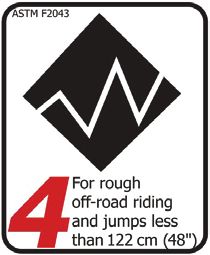
all models is ASTM
CONDITION 4, This supplement may include
All-Mountain. procedures beyond the scope of
general mechanical aptitude.
Special tools, skills, and knowledge
may be required. Improper
mechanical work increases the
risk of an accident. Any bicycle
Understand your bike and its accident has risk of serious injury,
intended use. Using your bike the paralysis or death.
wrong way is dangerous. To minimize risk we strongly
Please read your GT Bicycle recommend that owners always
Owner’s Manual for more have mechanical work done by
information about Intended Use an Authorized GT Dealer.
and Conditions 1-5.
134937 Rev 1. 3Force / Sensor - Owners Manual Supplement
Maximum Fork Length
Maximum Fork Length is an important frame safety testing specification for front
suspension mountain bikes. You must observe the measurement when installing
headset parts, headset adapters, installing and adjusting a fork, and selecting
replacement forks.
From
Bottom Of Frame
Head Tube
Maximum
Fork
Length
To Center Of
The Fork Axle
You must select a replacement fork not only based on head tube diameter but the
critical factor of frame maximum fork length
Do not exceed maximum fork length. Exceeding the MAXIMUM FORK LENGTH limit
can overload the frame causing it to break while riding.
Your retailer MUST follow and observe this specification for your bike. For Maximum Fork
Length specifications for GT bicycles, see www.gtbikes.com.
You can be severely injured, paralyzed or killed in an accident if you ignore this
warning.
134937 Rev 1. 4English Tire Size x Maximum Width Observe the Tire Size x Maximum Width for your bike found in the “Specifications” page of this manual. Mounting the wrong size tires can result in the tires hitting the fork or frame when riding. If this happens, you can lose control of your bike and you can be thrown off, a moving tire can be stopped because it touches the fork or frame. Do not mount oversized tires, ones that rub or hit the fork or frame, ones that result in too little clearance, or ones that can hit the fork or frame when the suspension is fully compressed or when riding. Take care that the tires you select are compatible with your bike’s fork or frame design. Also, be sure to follow the manufacturer’s recommendations of your front fork and rear shocks. When you are considering tires for your bike consider... The actual measured size of a tire may be different than its sidewall marking. Each time you mount a new tire, take the time to inspect the actual clearance between the rotating tire and all parts of the frame. The U.S. Consumer Product Safety Commission (CPSC) requires at least 1/16” (1.6 mm) tire clearance from any part of the bike. Allowing for lateral rim flex and a wheel or rim that is out-of-true will likely mean choosing a rear tire that provides even more clearance than the CPSC recommends. Ask your dealer for the right tires for your bike and its particular components! You can be severely injured, paralyzed or killed in an accident if you ignore this warning. 134937 Rev 1. 5
Force / Sensor - Owners Manual Supplement

 Rear Shocks                                  Minimum Seat Post Insert

   Select only compatible shocks              Make sure at least 100 mm of
   and forks for your bike. Do not            the seat post is inserted into the
   modify your bike in any way to             frame at all times.
   mount one.
                                              Failure to insert the seat post at
   Have your shock or fork installed          least 100 mm can place a very
   by a professional bike mechanic            high stress on the seat tube top
                                              tube junction causing the frame to
   Riding with the wrong rear shock
                                              fail while riding.
   can damage the frame. You
   could have a serious accident.             Remove the seat post. Measure
   Make sure the total travel, eye-           100 mm from the bottom of
   to-eye length, and stroke length           the seat post. Use a permanent
   of the rear shock you select meet          marker to mark the post at 100
   the “Specifications” listed in this        mm.
   manual.
                                              When adjusting the seat post
   When selecting different shocks            height in the seat tube, never
   or forks for your bike, make sure          adjust the seat post so that the
   that the shock or fork you select is       line you mark is above the top
   compatible with your bike’s design         edge of the seat tube.
   and how you will use your bike.
                                              You must also be aware that
   You can be severely injured,               bicycle seat posts are permanently
   paralyzed or killed in an accident         marked by the manufacturer with
   if you ignore this warning.                a “minimum insert” line on the
                                              seat post itself. You must not rely
                                              on this marking as an indication
                                              of the proper minimum seat post
                                              insertion depth.
                                              You can be severely injured,
                                              paralyzed or killed in an accident
                                              if you ignore this warning.

134937 Rev 1.                             6
English
TECHNICAL INFORMATION
Specifications
Item Specification
Model Force Sensor
Wheel Size 27.5 in 29 in
Rear Travel 150 mm 130 mm
Head Tube UPR: 1-1/8 in, LWR: 1-1/2 in
Headset Integrated, 1-1/8 in - 1-1/2 in
Bottom Bracket: Type/ Width BSA / 73 mm
Front Derailleur N/A
Seat Post: Dia./Binder 31.6 mm/ 34.9 mm
Min. Seat Post Insert 100 mm
Tire Size x Max. Width
27.5 in x 2.5 in 29 in x 2.35 in
(measured)
Max. Fork Length 550 mm 540 mm
Rear Shock: Eye-To-Eye / Stroke / 185 mm x 55 mm 185 mm x 50 mm
Bushing Width Metric Trunnion Metric Trunnion
Sag (measured at shock) 12.5 mm 12 mm
Chain Guide ISCG 05
Rear Brake: Mount Type / Post Mount / 180 mm
Min/Max Rotor Dia. / 203 mm
Maxle TA / 148 x 12mm,
Rear Axle: Type/Length
180 mm Length
ASTM CONDITION 4,
Intended Use
All-Mountain
Max. Weight Limit
305 lbs / 138 kg
Total (rider+all equipment):
134937 Rev 1. 7Force / Sensor - Owners Manual Supplement
C
P
UP
H
O
D
I
B
G
A
L(+)
K
E M J
GROUND
F
Dimensions = millimeter
Geometry - Force 27.5
Frame Size S M L XL
Flip Chip Orientation
D Seat Tube Length 400 400 430 430 480 480 520 520
C Top Tube Horizontal 566.46 568 593.27 595 620.09 621 646.9 648
A Head Tube Angle 65.5° 65° 65.5° 65° 65.5° 65° 65.5° 65°
B Seat Tube Angle 76° 75.5° 76° 75.5° 76° 75.5° 76° 75.5°
G Standover 740.4 740.4 750.3 750.3 760.2 760.2 795.1 795.1
H Head Tube Length 102 102 110 110 118 118 126 126
F Wheelbase 116.28 164 1190.60 1192 1218.91 1221 1247.23 1249
M Front Center 730 730 758 758 787 787 815 815
E Chainstay Length 432.4 435 434.4 435 434.4 435 434.5 435
L Bottom Bracket Drop 13.7 20 13.7 20 13.7 20 13.7 20
K Bottom Bracket Height 345.3 339 345.3 339 345.3 339 345.3 339
J Fork Rake 44 44 44 44 44 44 44 44
L Stack 587.41 591 594.68 599 601.97 606 609.25 613
M Reach 420 415 445 440 470 465 495 490
All Specifications subject to change without notice.
134937 Rev 1. 8English
C
P
UP
H
O
D
I
B
G
A
L(+)
K
E M J
GROUND
F
Dimensions = millimeter
Geometry - Sensor 29
Frame Size S M L XL
Flip Chip Orientation
D Seat Tube Length 392 392 400 400 430 430 480 480
C Top Tube Horizontal 565 567 592 593 619 620 647 647
A Head Tube Angle 65.98° 65.5° 65.97° 65.5° 65.96° 65.5° 65.95° 65.5°
B Seat Tube Angle 76.48° 76° 76.47° 76° 76.46° 76° 76.45 76°
G Standover 750 740 760 760 770 770 805 805
H Head Tube Length 102 102 110 110 118 118 126 126
F Wheelbase 1164.76 1166 1193.07 1194 1121.39 1222 1249.71 1251
M Front Center 731.94 732 760.24 760 788.54 789 816.84 817
E Chainstay Length 433.62 435 433.62 435 433.62 435 433.62 435
L Bottom Bracket Drop 20.86 27 20.78 27 20.7 27 20.62 27
K Bottom Bracket Height 356.56 349 356.72 349 356.8 349 356.9 349
J Fork Rake 51 51 51 51 51 51 51 51
L Stack 583.86 587 591.97 595 598.54 602 605.36 609
M Reach 424.91 420 449.86 445 474.8 470 499.75 495
All Specifications subject to change without notice.
134937 Rev 1. 9Force / Sensor - Owners Manual Supplement
Rear Shock
Consult the rear shock’s owner’s manual in order to set the recommended SAG.
The orientation of the Flip Chip does not influence SAG.
25% Force Sensor
SAG 12.5 mm 12 mm
Link
Rear Shock
O-Ring SAG
Flip Chip
NOTICE
Mount shocks in orientation shown:
reservoir/controls forward and facing up
as shown. Consult your GT Dealer.
134937 Rev 1. 10English
Flip Chip Orientation
The orientation of the Flip Chip will change the bottom bracket height, head
tube angle, seat tube angle. Resulting changes to the values can be found in the
“Geometry“ section.
Shock Bolt
Shock Bolt
2
Socket
8 N·m
Chip
marking
faces out
UP
Lo position Hi position
Setting
1. Place the bike in a workstand. 4. Change the Flip Chip orientation in
the frame sockets. See inset.
2. Support the rear wheel to prevent
swingarm dropping when shock is 5. Install and tighten the shock bolts to
disconnected. the specified torque.
3. Remove the lower shock mounting
bolts.
134937 Rev 1. 11Force / Sensor - Owners Manual Supplement
Link Assembly
Spacers
smooth side
small end
2
5 N·m
2
5 N·m
Bearings
2 small end
5 N·m
Connecting the Link
To prevent mis-alignment and/or potential damage, follow this assembly order
routine:
1. Connect link to frame with the LockR pivot.
2. Connect the rear shock, make sure the smooth side of the spacers face the
shock. Only finger tighten the bolts.
3. Connect the seat stay, make sure the small end of the spacers face the bea-
rings. Only finger tighten the bolts.
4. In a cross-pattern, tighten all bolts to the specified torque in increments.
134937 Rev 1. 12English
Bearings
grooves
inner lip
Circlip
Bearings
Circlip
Inspection
• The condition of the bearings, should be inspected periodically. These are
normal wear parts so plan to have them replaced as they wear-out.
• To inspect the bearings, disconnect the link to expose the bearings. Rotate the
inner race of each bearing with your finger. The rotation should feel smooth
without binding. Each bearing should be fixed securely in the opening. Check
to make sure each circlip is seated in the grooves. The front bearings should be
seated against the inner lip.
• Inspection frequency should be based upon how and where you ride.
Evidence of damage would be excessive play, visible wear, or corrosion of
bearings.
• If you find any damage to the parts, discontinue riding until all the parts
(bearings, pivot axles, spacers) can be replaced. This will help prevent damage
elsewhere.
• Do not re-use removed bearings; if removed replace all bearings with new
ones.
134937 Rev 1. 13Force / Sensor - Owners Manual Supplement
Dropouts
Chain Stay
2
7 N·m
Seat Stay
small end
Pivot Axles
Spacers
Bearings
• When connecting the seat stays to the chain stay, make sure the small end
of spacers face the bearings . The flat side of the spacers should face out, as
shown.
• When tightening the axles, insert the 5 mm hex key completely into the
axle to prevent damage when turning the bolt.
• Always clean and re-apply the specified thread lock to the bolt threads.
• Tighten with a torque wrench to the specified torque.
134937 Rev 1. 14English
Circlip Bearing
Bearing
NGLI-2 grooves
NGLI-2 Circlip
• The condition of the bearings, pivot axles, and spacers should be inspected
periodically. These are normal wear parts so plan to have them replaced as
they wear-out.
• To inspect the bearings, remove the pivot to expose the bearings. There are
two bearings in each dropout. Rotate each bearing with your finger. The
rotation should feel smooth without binding. Each bearing should be fixed
securely in the opening. Check to make sure each circlip is seated in the
groove.s
• Inspection frequency should be based upon how and where you ride.
Evidence of damage would be excessive play, visible wear, or corrosion of
bearings.
• If you find any damage to the parts, discontinue riding until all the parts
(bearings, pivot axles, spacers) can be replaced. This will help prevent
damage elsewhere.
• Do not re-use removed bearings; if removed replace all bearings with new
ones.
134937 Rev 1. 15Force / Sensor - Owners Manual Supplement
LockR
Be sure to support the bike or swingarm to prevent personal injury or bike
damage when removing/disconnecting linkages of an axle.
To remove the LockR from the frame:
1. Loosen the screw 4-6 turns using a T25 Torx key.
2. Tap head of screw with a rubber mallet to un-seat the wedge bolt located on
the opposite side..
3. Remove the screw and wedge bolt from the still installed axle.
4. If it did not come out with the screw, insert a 5 mm hex key and turn to free
and remove it. If wedge still sticks insert a wooden or plastic dowel into the
drive side and drive it out.
5. To remove the axle itself, on non-drive side, insert a 6 mm hex key into the
axle on the non-drive side and and turn counter-clockwise until it can be
removed.
To install the LockR from the frame:
1. Disassemble and clean all parts of the LockR axle. Do not install it assembled.
Inspect the parts for damage (burrs, scratches, deformity, wear). Replace the
entire LockR assembly if any damage is found.
2. Apply a light coating of a high-quality bicycle bearing grease to all parts.
3. Align the linkage and bearing and insert the threaded end of the pivot axle (1)
into the non-drive side.
4. Tighten the inserted pivot axle to 1 Nm using a 6 mm hex key fitted torque
wrench from the non-drive side.
NOTICE
Use a calibrated torque wrench. Exceeding 1 N·m will result in permanent
damage to the LockR pivot system.
134937 Rev 1. 16English
DO NOT INSTALL ASSEMBLED NGLI-2
1 N·m
NGLI-2
5 N·m
NGLI-2
1 N·m
NGLI-2
5 N·m
Unthread & dislodged & Insert 5mm & Unthread
tap mallet remove turn to free Remove Remove
3
1
m m
5m
3
6m
T25 4
134937 Rev 1. 17Force / Sensor - Owners Manual Supplement
Hanger Replacement
2
2 N·m
KG0007N02 - (Direct Mount)
Bolts
I-2
NGL
Hangers
KG0006N02 (Standard)
• Before installing a new hanger, be sure to clean any dirt or debris on the
dropout with a nylon brush (old toothbrush).
• Inspect the area for any damage.
• Lightly grease the dropout surface.
• Always clean and re-apply the specified thread lock to the bolt threads.
• Tighten with a torque wrench to the specified torque.
134937 Rev 1. 18English
ISCG Tab Instructions
BB Cup
s
ine
spl
K22059
ISCG Bracket
• On alloy frame models, the ISCG mounting tabs are fixed permanently to
the frame and cannot be removed
• On carbon frames, the ISCG mount fits onto a spline. Correct positioning
is certain due to the splines alignment. The tab is secured by the threaded
cup of the bottom bracket bearing cup.
• You should periodically check both the bottom bracket parts to make sure
they are tightened according to the specification.
• When replacing or servicing the removable ISCG guide, be sure to clean the
frame splines and the guide parts. Lightly grease before reinstallation.
134937 Rev 1. 19Force / Sensor - Owners Manual Supplement
REPLACEMENT PARTS
No. QTY Bearing Dimension (mm)
10 4 10 ID x 22 OD x 6 H
24 2 15 ID x 24 OD x 5 H
25 4 15 ID x 28 OD x 7 H
33 2 17 ID x 30 OD x 7 H
E 18 5
1.5N·m
1.5 N·m
H
B
30
24
9
5
6
17
27
A 24
B C
3
33
33
C
11
17
31
D 7
19
F A
G 2
8 N·m
ID Part Number Description FORCE SENSOR
Force/Sensor Shock Bolts and Flip
A K36038 ✔ ✔
Chips
B K36008 Force/Sensor Pivot Link CS Bearings ✔ ✔
Expanding Axle Hardware 79mm and
C K36009 ✔ ✔
87mm
D K34009 Force/Sensor DT Protector ✔ ✔
E K32008 GT Mountain Cable Guide x4 ✔ ✔
F K22059 GT ISCG Mount 3 Bolt ✔ ✔
G CK3187U00OS Grommets ✔ ✔
134937 Rev 1. 20English
J
Standard K
Direct Mount
N 4
26 I 2
8
2 8 N·m
14 32
16 M 2 N·m
2 10
5 N·m
34
29
21
B
15
H
22
N
35
27 1
2 B
25
34
34
2 28
I B
2 L
5 N·m
A 2 I
7 N·m
20
C O
N
G
LI
-2
23
13
5 N·m
1 N·m
ID Part Number Description FORCE SENSOR
K36069 Force Suspension Link 27.5 BLK ✔
H
K36059 Sensor Suspension Link 29/27.5+ BLK ✔
I K36028 Force/Sensor Link CS Hardware ✔ ✔
J KG0006N02 Derailleur Hanger TA ST SS 056 ✔ ✔
K KG0007N02 Derailleur Hanger TA DM SS 057 ✔ ✔
L K34019 Force/Sensor CS Protector ✔ ✔
M K34029 Force/Sensor SS Protector ✔ ✔
N K34039 Force/Sensor SS Heel Rub Guard ✔ ✔
O K34049 Force/Sensor CS Heel Rub Guard ✔ ✔
Force/Sensor Shock and ST Rub
-- K34279 ✔ ✔
Protectors
-- K34269 Force/Sensor Link CS Pivot Covers ✔ ✔
134937 Rev 1. 21Force / Sensor - Owners Manual Supplement
Tightening Torques
Correct tightening torque for the fasteners (bolts, screws, nuts) on your bicycle is
very important to your safety, durability, and performance of your bicycle.
We urge you to have your dealer correctly torque all fasteners using a torque
wrench. If you decide to tighten fasteners yourself always use a calibrated torque
wrench!
5X
1.5 N·m
2X
2
2X 5 N·m
2
See “LockR”
5 N·m
2
8 N·m
2 2X See “LockR”
8 N·m
2 2
2X
2X 7 N·m
2 N·m
134937 Rev 1. 22English
MAINTENANCE
The following table lists only supplemental maintenance items. Please
consult your GT Bicycle Owner’s Manual for more information on basic bike
maintenance.
Item Frequency
Cable Routing - Make sure control cables are in place,
undamaged and attached securely. Before first ride
Frame Protection - Check the various frame protectors
(downtube, headtube, chainstay, swingarm on your bike.
Make sure they are in place and in good condition.
Damage Inspection - Clean and visually inspect entire
bike frame/swing arm/linkage assembly for cracks or Before and after each ride
damage.
Check Tightening Torques - In addition to other
component specific tightening torques for your bike.
Every few rides
tighten according to the “Tightening Torques” information
listed in this supplement.
Disassemble, clean, inspect, re-grease, replace worn or
damaged parts in the following assemblies: In wet, muddy, sandy
conditions every 25 hrs.
• SHOCK LINK • PIVOT AXLES • FRAME PIVOT In dry, conditions
BEARINGS every 50 hrs.
Fork and Shock- Consult the manufacturer’s owner’s manual for maintenance
requirements.
Any part of a poorly maintained bike can break or malfunction leading to an
accident where you can be killed, severely injured or paralyzed.
Frequent checks are necessary to identify the problems that can lead to an
accident. See “Inspect For Safety” in your GT Bicycle Owners Manual.
134937 Rev 1. 23Force / Sensor - Owners Manual Supplement
NOTES
Use this page to write /record important information about your bike : (e.g.
maintenance history, dealer contact information, settings, etc.)
134937 Rev 1. 24WWW.GTBICYCLES.COM © 2018 Cycling Sports Group Force /Sensor Owner’s Manual Supplement 134937 Rev. 1 GT USA GT EUROPE GT UK Cycling Sports Group, Inc. Cycling Sports Group Europe, B.V. Cycling Sports Group 1 Cannondale Way, Hanzepoort 27, 7570 GC, Oldenzaal, Vantage Way, The Fulcrum, Wilton CT, 06897, USA Netherlands +41 61 4879380 Poole, Dorset, BH12 4NU 1-800-726-BIKE (2453) servicedeskeurope@cyclingsportsgroup.com +44 (0)1202732288 www.gtbicycles.com sales@cyclingsportsgroup.co.uk
You can also read


