Future Transport Technology - Roadmap 2021-2024
←
→
Page content transcription
If your browser does not render page correctly, please read the page content below

Future Transport Technology
Roadmap 2021–2024

                         30 March 2021
Contents
    1.           Summary ..........................................................................................................................................................6

    2.           Our vision ........................................................................................................................................................ 8

    3.           Progress and lessons learnt.................................................................................................................. 10
                 3.1      Customer technologies ................................................................................................................ 10
                 3.2 Vehicle technologies and new services .............................................................................. 14
                 3.3 Intelligent systems and sensor technologies .....................................................................15
                 3.4 Lessons learnt.............................................................................................................................16

    4.           Transport outcomes ................................................................................................................................ 18
                 4.1      Connecting our customers’ whole lives .............................................................................. 18
                 4.2 Successful places for communities ....................................................................................... 21
                 4.3 Enabling economic activity....................................................................................................... 24
                 4.4 Thriving people doing meaningful work............................................................................. 27

    5.           Technology toolkit .................................................................................................................................. 28
                 5.1      Personalised customer journeys ............................................................................................ 29
                 5.2 Connected journeys ..................................................................................................................... 29
                 5.3 Emerging transport modes .......................................................................................................30
                 5.4 Intelligent systems - decision engines ................................................................................. 31
                 5.5 Real-time digital twin .................................................................................................................. 32
                 5.6 Intelligent sensors ......................................................................................................................... 32

    6.           Our Roadmap to 2024............................................................................................................................ 34
                 6.1      Statewide technology programs............................................................................................ 35
                 6.2 Greater Sydney technology programs................................................................................. 38
                 6.3 Regional and outer metropolitan technology programs.............................................40
                 6.4 Freight technology programs ................................................................................................. 42

    7.           Measuring success .................................................................................................................................. 44

    8.           Partner with us .......................................................................................................................................... 46

    9.           Supporting documents ........................................................................................................................ 48

    Glossary of terms .................................................................................................................................................... 49

2
Ministers’ message
NSW is globally recognised for its innovative use of transport
technologies, which have improved the lives of people across the
State. From COVID Safe travel notifications to our contactless public
transport ticketing, we have been at the forefront of meeting the needs
of passenger and freight customers, creating better communities,
enhancing customer experience and unlocking economic opportunity.
We have achieved this level of success by working       By utilising these lessons and prioritising the
closely with partners – an approach we will             advancement of transport in NSW, we are well
strengthen and expand. By working collaboratively       positioned to undertake this uplift – which
with local and international businesses, technology     leverages internationally recognised capabilities
providers, communities, research partners, councils     and experience, rich and open data sets and
and other jurisdictions, we all benefit by leveraging   intelligent systems using the latest analytics to
expertise and sharing success.                          better manage transport networks and services.
Our Future Transport Technology Roadmap                 This Roadmap is part of our commitment to
2021-2024 reveals a major uplift in the NSW             elevate technology solutions alongside the building
Government’s ambition to strengthen our global          of transport infrastructure and the delivering of
leadership in transport innovation and to create        services to improve customer experience.
new uses of technology and data analytics for the
                                                        It’s an exciting time for our passenger and freight
safe and efficient movement of passengers and
                                                        customers in Greater Sydney and regional and
freight. Significantly, this Roadmap’s foundations
                                                        outer metropolitan NSW as the technological
are built on the important lessons we have learnt
                                                        improvements to our transport networks and our
since the release of our first Roadmap in 2016. It
                                                        systems will enhance customer services and lift
is pleasing to reflect on how far we have come
                                                        productivity to new levels.
since then and to contemplate the opportunity and
benefits that lie ahead.                                And it’s an exciting time for Transport for NSW
                                                        and our partners as this Roadmap is delivered. We
                                                        invite you to join in and help to create the best
                                                        connected communities and freight networks in
                                                        the world.

The Hon. Andrew Constance MP,                                            The Hon. Paul Toole MP,
Minister for Transport and Roads                                         Minister for Regional Transport and Roads
                                                                                                                     3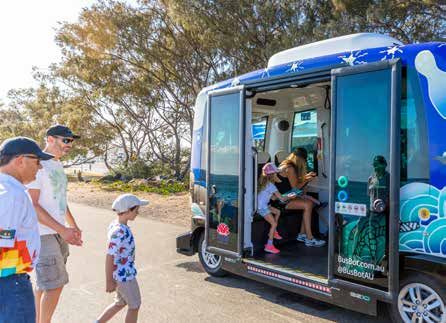
4

                                                    Deputy Secretary’s
                                                    message
                                                    Transport for NSW is in a period of immense transition and
                                                    technological change. We are rapidly adapting our services
                                                    and leveraging new technologies and data analytics to
                                                    transition to transport of the future, and accelerate the
                                                    benefits across our passenger transport and freight networks.

                                                                                                        from a major uplift with more data, analytics
                                                                                                        and new vehicle technologies. And this will
                                                                                                        all be underpinned by intelligent systems that
                                                                                                        use rich real-time data from smart sensors.

                                                                                                        We do this to serve our passengers and
                                                                                                        freight industry customers better, across
                                                                                                        Greater Sydney and regional and outer
                                                                                                        metropolitan NSW. As an organisation, our
                                                                                                        focus is across four transport outcomes:
                                                                                                        connecting our customers’ whole lives;
                                                                                                        creating successful places for communities;
                                                                                                        enabling economic activity; and developing
                                                                                                        thriving people doing meaningful work.

                                                                                                        Successful partnerships are at the core of our
                                                                                                        vision. We want to build on our successful
                                                                                                        track record of partnerships with industry
                                                    Transport for NSW is in a period of immense         at all stages – in early stage pilots, proofs of
                                                    transition and technological change. We             concept and scaled-up service procurement.
                                                    are rapidly adapting our services and               We are also investing in our teams’ skills and
                                                    leveraging new technologies and data                capabilities and our technology innovation
                                                    analytics to transition to transport of the         agenda offers exciting and fulfilling careers.
                                                    future, and accelerate the benefits across our
                                                    passenger transport and freight networks.           In 2016, we co-designed our first Technology
                                                                                                        Roadmap, now we’re refreshing our vision
                                                    Part of this work includes accelerating progress    and expanding our ambitions. The Transport
                                                    on the most significant transformation in           Technology Roadmap 2021–2024 is a major
                                                    decades - with the emergence of electric,
Future Transport Technology Roadmap 2021–2024

                                                                                                        strategy and aligns with Future Transport
                                                    connected and automated vehicles - and              2056 and Transport’s 10 Year Blueprint
                                                    upgrades to the road network system to              and Strategy on a page 2020-24.
                                                    support them. We’re running trials of driverless
                                                    vehicles across NSW, and working towards            By leveraging each other’s strengths, we
                                                    net zero emissions by transitioning to zero-        are reinforcing NSW as a global transport
                                                    emissions electric buses, rolling out more          technology leader in creating world-class
                                                    charging points for electric vehicles and           mobility solutions for the people and
                                                    investigating greener sources of energy.            communities of NSW. We invite you to
                                                                                                        partner with us on this journey, to help us
                                                    Customers will have more options to personalise     imagine and deliver innovative solutions and
                                                    their journeys, and to use real-time data to        experiences that our customers will love.
                                                    make informed decisions about when and
Transport for NSW

                                                    how to travel. Customers will have a more
                                                    connected and seamless end-to-end journey,          Joost de Kock
                                                    with more options for how they plan, book and       Deputy Secretary, Customer
                                                    pay for travel. Freight productivity will benefit   Strategy and Technology
Future Transport Technology Roadmap 2021–2024

Our customers’ use of technology is vast

                                              750
                          3.5
                         million
                                              million
                                               Trips made using Opal in 2019, including
                                               trips using Contactless.
                          Installations of
                    the Opal Travel App.

                                                                         60
                                                                                          Trips made with
                                                                                          Opal Contactless

                  169
                                                                                          in 2020.

                                                                         million
                                  Trip plans made
                                  on transportnsw.info,
                                  Opal Travel app, and

               million            the Transport Bot
                                  in 2019/20.

                                                                   8
                                 55                                billion
1.8                              thousand                           Data requests via Transport’s
                                                                    Open Data Hub to inform

million                           Sydney Coordinated Adaptive
                                  Traffic System is installed
                                                                    customer information channels.

Regional TrainLink train          in 28 countries and over

                                                                   165
and coach trips booked via        55,000 intersections globally,
TfNSW channels in 2019.           including 12,800 in Australia.

                                                                   thousand
                                  1.6                              Freight customer visits to
                                                                   Restricted Access Mapping tools.

                                  million
                                  Customers now benefit from
                                  the NSW Digital Drivers
                                  Licence program.

                                                                                                               5
6

                                                1.   Summary
                                                     Future Transport Technology Roadmap 2021-2024 is NSW’s
                                                     headline customer-focused transport technology strategy.
                                                     It showcases Transport for NSW’s ambitions, our strong track
                                                     record, our technology toolkit and our six priority programs
                                                     to transform and deliver a world-class customer experience.

                                                     NSW’s first Technology Roadmap was                 This Roadmap will be regularly updated to
                                                     released in 2016 and since then, we have           ensure that the document keeps pace with
                                                     successfully delivered many award winning          technology developments and includes
                                                     projects that have provided a significantly        input from partners. We will measure
                                                     improved customer experience.                      our success against transport outcomes
                                                                                                        and track progress in delivery, with
                                                     We have developed this new Technology
                                                                                                        projects mapped and updated online.
                                                     Roadmap to share our priorities and to
                                                     reflect our stronger ambitions to leverage         Partnerships are critical to success. We welcome
                                                     new technology innovations and Transport           businesses, communities and research groups
                                                     for NSW’s new operating model to benefit           to contact us and develop collaborative
                                                     customers in Greater Sydney, regional and outer    partnerships that bring the Roadmap to life and
                                                     metropolitan areas, and in the freight industry.   transform customers’ transport experience.

                                                     This Roadmap demonstrates how Transport’s          We are also investing in our teams’ skills and
                                                     technology capabilities work together to           capabilities and we offer attractive careers
                                                     deliver integrated solutions that align with       to those who are excited to work with us.
                                                     its long-term outcomes for the people
                                                     of NSW. It also reflects on our progress
                                                     since 2016 and the key lessons learnt.
Future Transport Technology Roadmap 2021-2024
Transport for NSW
Future Transport Technology Roadmap 2021–2024

By 2024, we will deliver six priority programs
that will transform the customer journey

 Mobility as Service (MaaS)         NSW will be a world-leading                 Rapid transition to ZEB and
 will deliver seamless and          adopter of connected and                    EV will help NSW to reach
 personalised journeys              automated vehicles                          net zero emissions by 2050
 across all modes
                                    >   Trials will show how                    >    NSW’s bus fleet will transition
 >   Opal Connect will become           autonomous ride                              to zero emission buses (ZEBs)
     a single account for travel        share services can
                                                                                >    Industry will be encouraged
     in all modes across NSW            integrate with MaaS
                                                                                     to adapt and supply EVs
 >   More partnerships              >   The Future Mobility Test
                                                                                >    Our EV charging network
     with on-demand and                 Centre at Cudal will test
                                                                                     will expand across NSW
     rideshare providers to             integration of vehicles
     expand MaaS offering               sensors and infrastructure              >    We will explore use of
                                                                                     hydrogen technology to
 >   Digital ticketing will         >   Government will apply
                                                                                     support zero emissions target
     expand to regional NSW             policies needed for mass
                                        adoption of CAVs

 Technology will transform          More efficient freight                     Sensors and intelligent
 mobility in regional NSW           through technology                         systems will create smart
                                                                               transport networks
 >   Regional NSW will have         >   We will capture and share
     real-time information and          data to enable a more holistic         >    Smart sensors will be deployed
     digital ticketing for all          view of the supply chain                    across the network for
     public transport services                                                      richer customer information,
                                    >   Automated and sustainable
                                                                                    service performance,
 >   Cutting edge technology            last mile freight vehicles will
                                                                                    and incident response
     will be deployed to create         be trialled and rolled out
     smart regional cities                                                     >    Intelligent systems powered
                                    >   Investigate the development
                                                                                    by AI will dynamically optimise
 >   Digital connectivity will be       of a Freight Community
                                                                                    network and predict events
     provided at transport hubs         System to follow the container
     and on major services              supply chain from port to              >    New data sources in Open
                                        intermodal terminals and                    Data and data exchange
 >   New mobility technologies
                                        distribution centres                        will enable integrated
     will be tested and deployed
                                                                                    mobility solutions
     first in Regional areas

                                                        Figure 1-1 – Transport for NSW’s six technology priority programs

                                                                                                                            7
8

                                                2.   Our vision
                                                     As new technologies transform transport, we must
                                                     innovate and update our transport services to maximise
                                                     opportunities for all customers. To do this, we have
                                                     an ambitious vision to expand and accelerate the
                                                     use of technology and innovation across NSW.

                                                     Vision

                                                     To be a top-three global
                                                     leader in the use of
                                                     innovative and transformative
                                                     technologies to enable
                                                     convenient, personalised
                                                     and sustainable transport
                                                     and mobility solutions
                                                     for our customers.
Future Transport Technology Roadmap 2021-2024
Transport for NSW
Future Transport Technology Roadmap 2021–2024

In order to realise our vision for NSW, we are      This vision includes NSW being a leading
putting the needs of our diverse customer           adopter in the major transition to electric,
groups at the centre of our innovations. We         connected and automated vehicles, by
are analysing data and insights on customers’       trialling new mobility services using cutting-
different needs and preferences and using           edge vehicle technologies. We will test the
human-centred design to develop solutions           integration of vehicles, sensors and road
that suit passenger and freight customers,          infrastructure readiness at our new regional
people with disability and communities              testing facility, with newer mobility services and
right across NSW. We are also personalising         more MaaS information and payment options.
services and offering choices that are better
                                                    We will also transform the sustainability of
tailored to different customers’ needs.
                                                    the transport sector and drive a shift towards
As part of our vision, we are delivering world-     net zero emissions with our goal to transition
leading Mobility as a Service (MaaS) choices        all 8,000 buses in NSW to a zero-emissions
and convenience by offering customers               fleet. We will also support electric passenger
tailored information and travel alerts, payment     and freight vehicles, and explore hydrogen
options and a range of mobility options             technologies, particularly for long haul freight.
that are brought together seamlessly. Fully
                                                    Our use of smart sensors and intelligent systems
integrated information and ticketing will help
                                                    powered by artificial intelligence and machine
customers to plan, book, pay and provide
                                                    learning will result in rich real-time customer
feedback on a channel of their choice.
                                                    information, service management, dynamic
                                                    prioritisation and incident management.

                                                    Likewise, our work on technology
                                                    transformations will be supported by
                                                    modernising our regulatory frameworks
                                                    to enable effective implementation in
                                                    line with strategic policy objectives.

                                                    Freight productivity, safety and sustainability
                                                    will be supported with a major technology
                                                    uplift that captures and integrates real-time
                                                    data along the freight industry supply chain,
                                                    and applies intelligent analytics for the benefit
                                                    of the sector and network optimisation.

                                                    As part of delivering our vision in regional
                                                    NSW, we will also create new options for
                                                    connecting regional communities and the
                                                    effective movement of goods, with more real-
                                                    time service information and digital ticketing
                                                    options, better digital connectivity on major
                                                    transport services and smart regional cities.

                                                    Our experience has shown that our vision
                                                    can only be achieved by our continued
                                                    investment in our peoples’ expertise and skills
                                                    and by leveraging innovative best practice
                                                    from successful partnerships. We welcome
                                                    new partnerships with businesses at all
                                                    scales, researchers and communities to
                                                    help bring this ambitious vision to life.

                                                                                                         9
10

                                                3.   Progress and
                                                     lessons learnt
                                                     Transport for NSW (Transport) has a strong track record of
                                                     successful delivery, often in partnership with organisations
                                                     ranging from local start-ups to global companies. We have
                                                     introduced world-leading customer, vehicle and systems
                                                     technologies since our first Technology Roadmap was released
                                                     in 2016 and, along the way, we have learnt valuable lessons
                                                     and insights that we have applied to guide our progress.

                                                     Since the release of our first Technology        This new Roadmap builds on the strong foundation
                                                     Roadmap in 2016, we have delivered               provided by the 2016 Roadmap to extend new
                                                     programs under each of the 2016                  opportunities with technologies, including
                                                     Roadmap’s five major strategies to:              greater use of intelligent sensors, AI, digital
                                                                                                      twins, electric and other zero emissions vehicles
                                                     >   Personalise customer interactions
                                                                                                      and ways to personalise customer journeys.
                                                         by developing digital platforms that
                                                         provide rich, contextual information,
                                                         frictionless payment, easy navigation
                                                         and two-way engagement to                    3.1
                                                         customise transport experiences,

                                                     >   Transform mass transit networks by           Customer technologies
                                                         applying technologies to automated
                                                         mass transit solutions, improving their      Transport has been internationally recognised
                                                         efficiency, delivering better service        for the progress that has been made involving
                                                         frequency and reducing transit times,        world-leading technologies that integrate,
                                                                                                      simplify and streamline customer information and
                                                     >   Foster shared demand-responsive              payments. The following case studies demonstrate
                                                         services by developing flexible              how technology solutions help connect and
                                                         and shared-use transport service             personalise customers’ end-to-end journeys in
                                                         models based on aggregated                   ways that were not previously possible, making it
                                                         demand to meet market needs and              much easier to plan, book and pay for transport
                                                         extending transport access,                  services with convenience and confidence.
                                                     >   Enable connected and automated
                                                         vehicle platforms by supporting adoption     Transforming the customer experience
                                                         of vehicles and infrastructure that deploy   together through Mobility as a Service
Future Transport Technology Roadmap 2021–2024

                                                         automation to efficiently, reliably and
                                                                                                      Mobility as a Service (MaaS) is a framework
                                                         safely move people, goods and services,
                                                                                                      for offering a full range of multimodal
                                                     >   Create intelligent transport networks        mobility services that enables customers
                                                         managed with data by installing              to plan, book, pay and provide feedback
                                                         technologies and building networks that      for many types of mobility services, using
                                                         actively gather data and using AI and        integrated digital channels, enabling flexible,
                                                         real-time analytics to manage demand,        seamless and personalised services.
                                                         optimise capacity, improve flows and
                                                                                                      Our NSW MaaS platform is transforming
                                                         enable better customer outcomes.
                                                                                                      customer experience by bringing together
                                                     These five strategies have provided a strong     the trip planning, booking and payment
                                                     basis for delivery and remain important. This    options provided to customers for end-to-end
Transport for NSW

                                                     section summarises some of the key programs      journeys on a range of modes of public and
                                                     achieved as part of the 2016 Roadmap and         privately operated transport. This integration
                                                     lessons we have acted on, and included,          gives customers seamlessly connected and
                                                     as part of the delivery of this Roadmap.         personalised choices for how they travel.
Future Transport Technology Roadmap 2021–2024
The innovative Opal Connect MaaS platform Enhancing planning and booking
helps customers link trips together, including of travel through integrated
public transport, rideshare, taxis, and commuter information for seamless travel
parking. It extends the convenience of Opal
fares to flexible new On-Demand transport Transport’s two main customer information
services, including travel credits to reward channels – transportnsw.info and the Opal
customers using On-Demand services to Travel app – have been significantly upgraded
connect with public transport. It also enables to help more customers easily plan and book
the Opal Park&Ride program, which helps services on a wider range of transport modes
public transport customers to access free and across more locations, including through
parking at train stations. Opal Connect won more personalised and real-time information.
iTnews’ 2020 Benchmark Awards for Best Mass Transportnsw.info now offers more help for
Market Project and Best Australian IT Project. regional customers, with information on
The integrated MaaS, transportnsw.info and regional bus and school bus services, and digital
Opal Travel app capability uses sophisticated bookings for NSW TrainLink trains and coaches.
algorithms to offer personalised information This information connects journeys between
and bookings across a range of modes. This trains and other modes and includes trip
includes trip planning for taxis, rideshare, planning for point-to-point, walking and cycling
walking and more direct, moderate and trips, to help customers make informed choices.
easier routes for cycling, to help customers Transportnsw.info also provides real-time
make informed choices. For example, our passenger capacity information for all
automated shuttle service trial in Armidale modes of transport, a feature that won
has its service information integrated on the 2019 global Real Time Passenger
the transportnsw.info trip planner, while Implementation Award in London and the
the Busbot On Demand automated shuttle 2020 ITS Australian Excellence in Transport
trialling in Coffs Harbour had bookings Data Award. In a world first, estimated and
integration with the local service operator. predicted passenger capacity have also
We have also integrated with Uber to launch been added for all modes to help customers
an Uber and Transit feature so customers can travel on services with adequate capacity.
select the best combination of Uber X rideshare The Opal Travel app also streamlines
and public transport to reach their destination. trip planning, with a departure board for
Sydney and Chicago launched the first next services and in-trip tracking. The
integration of such real-time public transport app offers personalised notifications
data with Uber’s services to provide better first- and alerts across all modes of transport
and last-mile connections to public transport. for trackwork, delays or incidents.
In another world first, the Opal Travel app’s
This collaboration is so great, because it
COVID Safe travel notifications inform
will help people make better decisions
customers if physical distancing is possible,
about getting around our city and as a
based on predicted capacity on their regular
result help to reduce congestion, which is
train, metro, bus or ferry service. The app
a win for our transport commuters and a
sends personalised proactive notifications on
win for our drivers. The journey is no longer
whether the transport service is COVID safe
about a single mode of transport, it’s about
for travel, and won the 2020 ITS Australia
a combination of modes to get to your
Excellence in Transport Data Award.
destination in the most convenient way.
Andrew Constance,
Minister for Transport and Roads
3.5
MaaS integration is underpinned by
a growing range of data from third-
party mobility providers.
Our Open Data MaaS Data Specification
enables sharing of planned and real- million
time information for a range of services, Over 3.5 million customers have
including bikesharing. Our Car Park API installed the Opal Travel App.
provides real-time occupancy status for Together with transportnsw.info,
Opal Park&Ride and Sydney Metro car parks. more than 169 million trip plans
We also share a growing set of council kerb have been executed (2019/20).
use data, including for parking, carsharing,
and for bus, taxi and loading zones.
1112
The Transport Connected Bus program, which is Simplifying Opal payment
being rolled out in regional NSW, provides real-time choices for customers
tracking and customer information for regional
bus services, so customers can track the location Opal ticketing has built on its foundation of
of their bus, its estimated arrival time and how full providing simplified fare payments for public
the service is, which means less time waiting at the transport in metropolitan areas. Over time, we
stop and more time at the customer’s destination. have added Opal ticketing for more service
modes and more locations across NSW, so
For customers, this will mean better trip planning that more customers can share the benefits
as they will have access to data showing the bus of convenient multimodal fare payments. We
location on its route and an indication of the are now adding more options for customers
capacity. The NSW Government is committed to to integrate Opal fares with different payment
delivering quality public transport and transport technologies, for further convenience and choice.
infrastructure and technology to regional NSW.Paul
Toole, Minister for Regional Transport and Roads Opal Contactless is the world’s geographically-
largest contactless public transport ticketing
We have also delivered valuable customer system, and is a quick and easy way to pay
technologies to help specific customer groups for public transport. If you have an American
in planning and booking travel across NSW. For Express, Mastercard or Visa credit or debit card
example, we have made it easier for customers or a linked device, you can pay for travel by
with disability and mobility impairments to access tapping on and off at Opal readers. Contactless
trip planning services and plan for more accessible payments are available on public transport in the
journeys through transportnsw.info and transport Opal network and already, more than 23 per cent
accessibility apps. We have also developed a of adult customers are using it. Opal Contactless
voice command service via the Transport Bot payments won the Committee for Sydney Smart
virtual assistant powered by artificial intelligence City Awards 2019 for Best Mobility Outcome.
that can answer many common questions
through Facebook Messenger, Amazon Alexa and The Opal Connect Mobility as a Service
Google Assistant. This delivers real-time service platform extends the convenience of Opal
information, route maps, and information on fares to flexible, new privately-operated
mobility aids and travelling with assistance animals. mobility services and helps customers
link their journeys from end to end.
To further help people with disability, we are
introducing a smartcard to replace the paper For further convenience, students in regional
docket system for the Taxi Transport Subsidy areas and South West Sydney are trialling
Scheme and delivering a new centralised new Opal student bag tags that eliminate
booking service for wheelchair accessible the need to tap on and off the bus with an
taxis with an associated app for taxi drivers to Opal card. The Opal tag attaches to students’
receive bookings. The booking service already school bags and is automatically picked up
accepts phone and online bookings and will by an RFID reader as they board the bus.
soon offer more options with voice activated This is easier for students, saves travel time
bookings, digital assistants and apps to assist as students walk straight on, and provides
customers save preferences and track their taxi. accurate data for planning school bus services.
To assist our boating customers, we have supported
development of boating apps like Boatable
10
and Deckee that log trips, track other vessels,
map locations of boating facilities and provide 10,000 users are registered for
Future Transport Technology Roadmap 2021-2024
information on weather, safety, navigation and Opal Connect and have made
fishing spots. We have also launched an interactive over 40,000 connected trips.
thousand
mooring finder map that helps boat owners easily
find and apply for private moorings across NSW.
750
Over 750 million trips were made using
Opal in 2019 (pre COVID-19), including
over 24 million trips using Opal Contactless,
million
Transport for NSW
growing to more than 60 million
Contactless trips in 2020.Future Transport Technology Roadmap 2021–2024
Improving connectivity for regional The Live Traffic NSW service and app
communities with new technologies continues to provide real-time information on
traffic conditions and incidents across NSW,
Regional customers and communities face assisting motorists and freight operators to
different opportunities, challenges and choices plan their journeys, and contributing to the
to those in metropolitan areas. That is why we safe and efficient management of our roads.
have ensured that our technology solutions
are made available across NSW and are tested We have expanded the network of electric
locally in a range of regional communities. vehicle charging stations to ensure local and
visiting drivers are able to access more regional
We have delivered real-time tracking and communities, and we have conducted trials of
passenger counts for over 300 regional bus automated passenger shuttles in Armidale, Coffs
services, with more to follow, and over 40 rail Harbour and Newcastle to demonstrate new
and coach service information screens have ways to connect communities within regional
been provided at regional stations to advise cities, including for retirement village residents.
customers of exactly when their train, bus
or coach is due to arrive. We have deployed More recently, we have established our new
CCTV and customer help points at 40 vehicle testing facility at Cudal in Central
regional stations to improve safety and have Western NSW as a regional facility for testing
improved digital connectivity with increased connected and automated vehicles and related
network bandwidth at 32 regional stations. technologies. In addition, our goal to transition
NSW’s 8,000 buses to zero emissions will
We have successfully trialled contactless bring local benefits for regional customers
RFID bag tags for school students to board and communities, and is already bringing
buses more quickly and provide operational valuable new jobs and investment to regional
data to bus operators, and the trial will be centres for electric bus manufacturing.
expanded to more regional communities.
Bookings for TrainLink train and coach services
have been simplified with a better online
booking system, and a digital Discovery Pass
provides more flexibility by combining adult
and children’s fares in a single purchase.
1314
3.2
Vehicle technologies and new services Electric vehicles will be the first major
wave of transformation in the vehicle fleet
We have achieved major progress in the single
and NSW is committed to supporting their
most significant transition facing transport
environmental and economic sustainability
in many generations, with the arrival of
benefits. A total of $3 million has been co-
automated, connected, electric and shared
invested to deliver 20 fast chargers in regional
(ACES) vehicles. These vehicles bring major
NSW and $2 million has been co-invested
opportunities for the community with safer,
in charge points for commuter car parks
cleaner and quieter transport, and will help to
in Sydney. An interactive cost calculator
facilitate the transition to a more sustainable
and digital customer information platform
future with net zero emissions by 2050.
now helps buyers choose a suitable electric
vehicle, locate charging points, and calculate
Transforming mobility through cost savings and environmental benefits.
automated, connected, electric
and shared vehicles This $3 million investment in additional
The emergence of electric, connected and charging stations will help create the
automated vehicles will be the most significant most comprehensive regional charging
technology transformation in many decades network in the country, opening regional
to benefit passenger and freight transport NSW up to electric vehicle owners.
and customer mobility. Electric vehicles offer The extended network will help further
significantly lower operating costs, with clean support the regional tourism economy
and quiet operation, while connected and and promote local investment in regional
automated vehicles also offer many benefits, centres along the Newell, Barrier, New
including improved mobility and network England, and Kamilaroi highways.
efficiency, freight productivity, congestion
Paul Toole,
mitigation and improved road safety. NSW
Minister for Regional Transport and Roads
has been actively exploring these vehicle
technologies with new shared service models.
Significantly, NSW has a major goal to transition
Our Smart Innovation Centre has been its fleet of 8,000 buses to zero-emissions
trialling new vehicle technologies and technology, delivering a cleaner, greener,
shared mobility solutions, including highly quieter and healthier future, and supporting
automated and connected Smart Shuttles NSW’s goal of reaching net zero emissions
at Sydney Olympic Park, integrated with by 2050. In the first tranche, over 50 new
traffic lights and digital bus stops to provide electric buses will operate in Sydney, with
a regular turn-up-and-go shuttle service. operators choosing vehicles from a range of
suppliers, including local manufacturers.
Two regional trials of highly automated shuttles
in Armidale and Coffs Harbour have informed
the use of automated vehicles on NSW roads, Making the switch to an entirely electric
with the Armidale trial also integrating with trip bus fleet will deliver huge benefits to the
planner and the Coffs Harbour trial operating community in terms of reducing air and noise
with On Demand bookings capability. These pollution, as well as to our incredible drivers.
trials have provided insights into the safety case As part of this process, we will challenge the
for adopting automated vehicle technologies, industry to begin an ambitious transformation
and customers’ use and attitudes towards them. of our bus fleet from particulate emitting
Future Transport Technology Roadmap 2021-2024
diesel to zero-emission buses.
The Sydney Orbital Automated Vehicle Initiative
conducted on-road trials of automated features Andrew Constance,
with seven major car manufacturers to analyse Minister for Transport and Roads
interactions between vehicles and road
infrastructure. We have also established a major
new vehicle testing facility in Central Western
NSW that will test automated safety features
and connectivity with road infrastructure. These
actions help us prepare for the safe adoption
of automated vehicles and the development
of new intellectual property in NSW.
Transport for NSWFuture Transport Technology Roadmap 2021–2024
3.3
Intelligent systems and more quickly to congestion and incidents.
sensor technologies Smart sensors, data analytics and intelligent
systems are also critical for the future operation
As a further element to the integrated of connected and automated vehicles.
technology framework with our customer and
vehicle technologies, we have delivered major We have been transforming our systems
intelligent systems and sensor technologies technology to benefit all customers using
across transport networks. Smart sensors our transport networks, by managing
gather a growing range of rich and real-time the networks more dynamically and to
data which is consumed by intelligent systems. prioritise different modes of transport at
different times and locations, according to
These systems use advanced computing, local movement and place objectives and
artificial intelligence and machine learning changing needs. The systems described
to process large volumes of data quickly and below have been transforming our road,
reliably to manage and optimise road, rail, rail, public transport and freight services.
cycleways and waterway networks, so they
are safer, more efficient and we can respond
1516
Optimising our networks and informing For the rail system, Automatic Train Protection
customers through smart systems (ATP) technology is being installed on train
fleets across the electrified rail network,
Transport has invested in major systems providing safer and more reliable services.
that optimise the operation of the road and With transponders installed in the rail corridor
rail networks. The multimodal Intelligent and on the suburban and intercity train
Congestion Management Program (ICMP) is fleet, ATP provides critical speed monitoring
an adaptive intelligent transport system that and signal information to the driver.
delivers real-time road status data for traffic,
public transport, private motorways, emergency As part of the More Trains, More Services
services, field crews, and traffic alerts to our program, the Digital Systems Program replaces
Transport Management Centre. ICMP consumes trackside signalling with the latest train control
real-time data to quickly detect traffic patterns, technology, and implements Automatic Train
share live customer information with passenger Operation to help drivers provide reduced and
and freight road users, and applies machine more consistent journey times. It also introduces a
learning to automatically generate congestion traffic management system to help train services
alerts. This enables the Transport Management to recover quickly from disruption. More Trains,
Centre to make informed management More Services will increase network capacity to
decisions much faster, resulting in more meet future demand, provide faster and more
reliable journeys with minimised congestion. reliable journeys, and real-time information.
ICMP is complemented by the Sydney A growing set of freight data is available on the
Coordinated Adaptive Traffic System (SCATS) Freight Data Hub and Open Data Hub, including
signal control system which optimises traffic flow. telematics data from heavy vehicles enrolled in the
Intelligent algorithms process real-time data to Intelligent Access Program. The Heavy Vehicle
make intelligent signalling decisions and adapt Interactive Telematics Map provides an interactive
to real-time changes. SCATS provides major time visualisation tool and valuable insights into where,
and cost savings with a 25 per cent reduction when and how heavy freight vehicles are operated,
in vehicle stops, 28 per cent reduction in travel to assist freight operators to optimise supply chain
times, 15 per cent reduction in emissions and 12 efficiency and to better inform freight planning.
per cent less fuel consumed, adding up to $24
million in economic benefits each day in Sydney.
SCATS Cornerstone is a new spatial data and 3.4
integration platform that ensures consistent
intersection data for future ITS technologies,
Lessons learnt
providing better visibility of the transport
network and adaptive traffic management While we have successfully delivered many
using C-ITS connected vehicle technology customer, vehicles and systems technologies
and real-time spatial data analysis. with strong customer benefits, we have
also learnt some important lessons that
Linked with SCATS, the Public Transport
we are applying to the development and
Information and Priority System (PTIPS) is
delivery of future projects, including:
an intelligent transport system used to track,
predict and prioritise public transport movements 1. Technology solutions must be developed
through intersections. It uses machine learning with evolving customer needs in mind to
to analyse and predict movements and prioritise achieve the best outcomes. For example, we
high-capacity public transport, to improve were able to successfully use our customer-
customers’ travel times and reliability. The SCATS centred approach to respond quickly to
Future Transport Technology Roadmap 2021-2024
Priority Engine is scalable and can be activated changing needs and travel patterns due to
for freight and emergency services vehicles COVID-19. That is why we will continue to
so they can reach incidents more quickly and analyse customer insights, voice-of-the-
save lives. PTIPS won the Overall Best Smart customer data, apply human-centred design
City Project at the 2017 Smart City Awards. thinking and user testing to keep our projects
agile and responsive to customers’ needs.
55 18
SCATS is installed in over ICMP connects over 18,000
55,000 intersections in kilometres of NSW’s State
Transport for NSW
28 countries globally roads network
thousand thousandFuture Transport Technology Roadmap 2021–2024
2. Regional communities present unique 7. We have world-leading local start-
opportunities and challenges, with ups, businesses and researchers that
significant potential for local jobs can accelerate and trial emerging
and investment linked to technology technologies, including in high-definition
development, and for locating start-ups mapping, LiDAR and the use of open
in regional locations with lower operating data. We are developing more local
costs and contained testing environments. partnerships to create rapid, tailored
This regional innovation ecosystem is being and cost-effective customer solutions,
expanded with our technology trials and and support local economic growth.
automated vehicle testing, which explore the
8. Multi-disciplinary collaboration within
value of technology to more isolated, less
Transport, across government and with
mobile communities. We are also addressing
industry partners delivers quick and
challenges like the different levels of digital
decisive action, such as our role in the
connectivity, and tailoring services to meet
COVID-19 response, with shared insights
regional customers’ travel patterns which
and actions able to keep people and
differ from those in metropolitan areas.
freight moving safely, and recognised
3. Artificial intelligence (AI) has been highly as global best practice. We will expand
successful for key uses, such as with mobile our Transport, inter-agency and business
phone detection cameras. We are trialling partnerships to achieve effective outcomes.
additional uses for AI, machine learning
9. Policy and legislation need to remain
and edge computing to generate real-
fit for purpose, outcomes-focused,
time data and predictive analytics. These
technology-neutral and responsive to
detailed insights will be used on road and
customer needs, which is why we are
rail networks to improve safety, manage
continuing to review and update our
congestion and predict performance.
regulatory and policy frameworks.
4. There have been challenges trialling
10. Challenges commercialising Mobility as
and scaling the use of automated
a Service (MaaS) have meant fewer MaaS
vehicles, where industry leaders are not
providers entering the local market. We
yet based in Australia and travel is now
support providers by further developing
restricted by COVID-19. We will reduce
the Opal Connect MaaS platform and
these barriers to build local capability
in partnerships with private mobility
through strategic partnerships, thought
operators offering personalised and
leadership, data sharing, co-investment,
connected journeys. We also hold regular
supportive policy, digital and physical
innovation challenges to quickly deliver
infrastructure, testing facilities and
solutions with developers and have
community engagement. We will also
established open data sharing standards.
collaborate with other states and national
organisations on trials and the development 11. Intellectual property is valuable and
of a national regulatory framework. must be managed as an asset as part of
our technology program, so we have the
5. Increased diversity of mobility providers
ability to maintain and enhance solutions
and services has delivered many customer
we commission or co-build with partners.
benefits and opportunities. We will continue
to expand and integrate the range of 12. Digital programs often progress faster than
service modes and mobility providers in infrastructure and service developments
our information and payment systems, and need more flexibility to allow for
to offer customers seamless end-to-end project learnings, which is why we are
journey choices, and to improve transport establishing smaller-scale innovation
system safety, performance and efficiency. funds that are more agile and responsive
to opportunities to improve outcomes.
6. Data protection, governance and
management are more important than These lessons offer important insights for the
ever, so we are updating our enterprise successful delivery of customer and community
data governance across Transport and outcomes. Accordingly, we have built these
considering data privacy, full lifecycle cost lessons into the exploration, design and delivery
and resource implications, and investing in stages of all our programs, which contribute to
cyber security and staff awareness training. Transport achieving its strategic outcomes for
In addition, we will need to manage and the people of NSW. We have also applied these
maintain technology over its lifetime to lessons to our six priority programs contained
ensure good quality data continues to be within this Roadmap to ensure that we can
provided to inform decision making. leverage prior learnings to deliver and maximise
the benefits for our customers across NSW.
1718
4. Transport outcomes
Transport for NSW is working to make NSW a better place to
live, work and visit by connecting people and communities,
and making journeys safer, easier and more reliable.
Our transport strategies - Future Transport 2056, 10 Year
Blueprint and Strategy on a page 2021-24 - identify the
outcomes we want to achieve for our customers, the
community, to enable economic activity and to support our
workforce. Smart use of data analytics, new technologies
and strong partnerships will help us get there.
4.1
Connecting our customers’ > Transforming customer experience:
whole lives delighting customers at every
touchpoint through excellent service
We will focus on customers’ needs and and technology, every day.
preferences, and apply technology and
data analytics to deliver for our diverse > Introducing future mobility
customers and better connect their lives by: solutions: adopting new mobility
solutions and vehicles.
> Making transport safe for all: developing
innovative data, technology, infrastructure,
Making transport safe for all
regulatory and policy solutions to become
the safest transport network in the world. We are developing innovative, data,
technology, infrastructure, regulatory
> Understanding our customers: using
and policy solutions to become the
technology and data to build deeper
safest transport network in the world.
insights about our customers’ journeys
For example, we are continuing to
and their diverse needs and expectation.
focus on our ‘Towards Zero’ goal of
> Managing demand: proactively no fatalities on our roads, and NSW’s
managing how and when people and Road Safety Plan prioritises the uptake
goods are using transport networks. of new safety technologies in the
vehicle fleet, including automated and
> Providing end-to-end journey solutions:
connected safety features. We have also
enabling effective mobility across the
Future Transport Technology Roadmap 2021-2024
implemented innovative technologies like
networks through integrated options
our world-first mobile phone detection
for moving people and goods.
cameras to reduce driver distraction.
Connecting our Successful places
customers’ whole lives for communities
Transport for NSW
Figure 4.1 – Transport for NSW’s four transport outcomesFuture Transport Technology Roadmap 2021–2024
A robust safe systems approach also applies convenient information and payments to
to rail and maritime operations and all aspects help them to travel more easily and with
of freight, with Automatic Train Protection confidence. These customer technologies
technology providing rail safety benefits. help improve services by providing planners
Our Maritime Safety Plan 2017-2021 aims and network managers with data on
to reduce the rate of fatalities and serious transport use and insights about customers’
injuries on NSW waterways to achieve zero preferences. Trialling technologies, with
fatalities and zero serious injuries by 2056. trials often first occurring in regional areas,
also provides valuable customer feedback
Safe transport also delivers broader
for further project design and delivery.
safety benefits, as recognised in Sydney’s
24- hour Economy Strategy which
identifies the need for frequent, reliable Managing demand
and safe transport after hours as critical to As well as adding network capacity with major
developing a vibrant night-time economy. investments in infrastructure and services,
Our technology programs are valuable tools Transport helps customers make optimal
for supporting late-night transport choices travel choices that suit their needs and save
and safety, mobility planning, parking options time and money with off-peak fares. Travel
and safe end-of-trip connections. We will demand management programs enable us
continue to develop solutions such as our to spread customer demand more efficiently
Safety After Dark program, which includes across the day by encouraging customers to
work with the University of Wollongong to use alternative modes of travel or to reducing
develop an artificial intelligence algorithm to their need to make trips, which results in less
detect threatening behaviours on the network. pressure on the network during peak periods.
We have also worked to manage demand on
Understanding our customers transport services in response to COVID-19.
The pandemic has demonstrated the ability
Customers are at the centre of everything we
for travel demand patterns to significantly
do. We are investing in technology and data
change. To help manage those changes to
analytics to build deeper insights about our
demand, Transport’s COVIDSafe Travel Choices
customers’ journeys and their diverse needs. We
team works with organisations to help their
know that our customer groups have different
staff decide on when and how best to travel,
experiences, expectations and requirements
which redistributes journeys more efficiently
from those in metropolitan, outer metropolitan
and sustainably. Technology solutions help to
and regional areas, to people with disability,
facilitate these choices, with more convenient
and freight customers. It is important that
connections for walking, cycling and first- and
we offer value for all key customer groups
last-mile connections to public transport.
and have clear insights of their needs, across
regional and metropolitan communities and
across all modes – whether they are driving, Providing end-to-end journey solutions
using public transport or moving freight. We understand that customers’ end-to-
When developing our new technologies, end journeys often combine multiple trips,
we engage with customers and use human- like walking to the bus or train, or using
centred design to make sure their needs are rideshare or taxi services at other times. We
addressed. Through voice-of-the-customer are working to enable effective movement
data and regular customer satisfaction for people and goods across the network
surveys, we also track how customers value through better integrated options.
Thriving people doing
Enabling economic activity
meaningful work
1920
In focusing on seamless, connected journeys, use of new information and payment services
we are using technology and data for improved has demonstrated the utility of, interest in
customer information and payment options to and satisfaction with those solutions.
help customers understand all their transport
We are also adding more technology
options for completing their journeys in
solutions to help people with disability
the most convenient way. Our real-time
and mobility impairments, such as the
information for transport services and live
new smart card to make trips easier for
traffic information enable customers to plan
members of the NSW Taxi Transport
their journeys and adapt their travel to avoid
Subsidy Scheme and a new wheelchair taxi
incidents. We also be investigating further
booking service with an associated app for
opportunities to improve customer experience
taxi drivers to receive such bookings.
through improved delivery of public transport.
Further, we are providing a major uplift for Introducing future mobility solutions
regional customers to access more services,
for more transport modes in more areas. A further way we connect customers’ whole
Our freight technology trials will also look lives is with new mobility solutions and vehicles.
at ways to capture data on freight trips Electric, connected and highly automated
across modes, and to share the data with vehicles are already transforming the way
freight businesses so these businesses we build infrastructure, deliver mobility
can plan a more seamless supply chain. services and regulate service providers to
deliver safer, cleaner, more efficient and
sustainable passenger and freight journeys.
Transforming customer experience
In two priority programs, Transport is taking
We recognise that customers and communities
action to be a world-leading adopter of
rely on transport each day and that there are
connected and automated vehicle (CAV)
many ways we can transform that experience
technologies with further automated vehicles
to be more positive. By taking a customer-first
tested, trialled and used in passenger and
approach, we deliver priority programs that
freight services. We are also preparing for the
address key customer needs and preferences
rapid transition to electric and zero-emissions
and delight customers at every touchpoint.
vehicles by investing in charging points,
In the first of our priority programs, we will providing information to vehicle purchasers,
deliver seamless and personalised journeys and transitioning to a zero emissions bus fleet
across all modes, with a comprehensive Mobility to help NSW reach net zero emissions by 2050.
as a Service capability. It is also a major priority
CAVs offer many benefits to road services
for Transport to provide more ways customers
and users, including improved mobility and
can opt in for personalised notifications
network efficiency, freight productivity,
so they receive targeted information that
congestion mitigation and improved road
is relevant to their individual needs.
safety. Transport is delivering additional
For example, the COVID Safe travel trials and larger scaled pilots of CAVs, and
notifications on the Opal Travel app that aims to develop a ridesharing pilot using
use advanced algorithms to inform users if automated vehicles integrated with digital
physical distancing is possible on their regular customer information, booking and payment
Future Transport Technology Roadmap 2021–2024
service, with over 1.2 million notifications systems as part of a MaaS offering.
sent to subscribers in the two months from
Transport is also exploring the integration
November 20201. We will develop further
of newer mobility services like ridesharing,
ways to personalise information and service
car sharing, micro-mobility services
choices to suit customers’ preferences.
and MaaS. Using Opal Connect as a
We are piloting the Opal digital card to foundation, we can integrate customer
make Opal payments even easier and more information and payment technologies
convenient. Our customers’ strong uptake and to streamline future mobility services.
1 As at 17 January 2021.
Transport for NSWYou can also read


