Gemologist Can we adapt to the new climate normal? - Q2 2020 - Hermes Investment Management
←
→
Page content transcription
If your browser does not render page correctly, please read the page content below
Gemologist
Can we adapt to the new climate normal?

Q2 2020

Gary Greenberg, CFA
Head of Emerging Markets

                                   www.hermes-investment.com
                                          For professional investors only
1   Gemologist
    Q2 2020

    “Oh a storm is
    threat’ning
    my very life today.
    If I don’t get some
    shelter,
    Ooh yeah, I’m gonna
    fade away”
    ‘Gimme Shelter’, by The Rolling
    Stones, released in 1969
Federated Hermes Emerging Markets                    2
                                                                                                                                      Q2 2020

Released at the rough end of the 1960s,                                           an eye, the human race exploded in size from perhaps 1m
                                                                                  to hundreds of millions by the late middle ages. We
‘Gimme Shelter’ painted a picture of society on
                                                                                  advanced, our civilisation and exploration of scientific and
the edge of chaos: war was just a shot away.                                      humanitarian enquiries fueled by self-sustaining food-
Now, more than 50 years since it hit the                                          production techniques. With the early 19th century discovery
airwaves, the ominous mood of The Rolling                                         of vast energy sources in the form of coal and oil, our global
Stones’ classic hasn’t faded away.                                                population grew exponentially.

Yet again, a storm has come. People have sheltered, and                           Over the past 200 years, we have tamed nature and
continue to do so, at home as a virus that emerged rapidly                        seemingly secured our survival through fossil-fuel powered
from Wuhan claims lives across the planet and ravages                             industrialisation. Despite the fact that we retain vestigial
businesses, economies and social norms. At this stage of the                      flight-or-fight reflexes and attendant anxieties, we have
crisis, the human, social and financial costs of the coronavirus                  subdued virtually all the wild threats that terrified us, apart
pandemic remain incalculable. It will have both short- and                        from bacteria, viruses and, of course, each other.
long-term consequences for individuals, families, business,
                                                                                  Especially in the developed world, we live at historically
politics and finance globally. But humanity has weathered
                                                                                  luxurious comfort levels. Millions reside in well-constructed,
severe crises before, and is doing so again.
                                                                                  temperature-controlled homes that are fed by complex
As a species, we are survivors. We adapt.                                         plumbing and electrical systems that attest to human mastery
                                                                                  of scientific principles. Child mortality has plummeted while
However, humanity will have to summon all of its adaptive                         average longevity has increased almost everywhere. Before
ingenuity to combat the bigger threat coming our way.                             the current pandemic, leisure had become one of the world’s
A crisis of our own making, climate change, threatens the                         biggest industries.
entire sheltering capacity of the earth itself.
                                                                                  But over time, another human characteristic has become
The coronavirus lockdowns have at least had positive                              clear: holistic knowledge lags our inventiveness.
environmental side effects. Falling industrial production has
                                                                                  For example, replacing the horse with the internal-
cleared the air in even the most polluted regions, helped
                                                                                  combustion engine boosted economic productivity and
further by stay-at-home orders that have kept many cars off
                                                                                  emptied our streets and waterways of manure, but created
the road, airplanes grounded and their noxious fumes and
                                                                                  a new problem. CO2 levels in the atmosphere have, well,
carbon dioxide (CO2) emissions out of the atmosphere.
                                                                                  skyrocketed to levels never before evidenced in ice cores
Waterways, rivers and seas in urban centres normally flooded
                                                                                  dating back to the dawn of humanity and through many cycles
with tourists have become clearer. The canals in Venice, for
                                                                                  of planetary cooling and warming.
example, are now reportedly the cleanest in living memory1.

    Efforts by governments, companies                                             Gimme shelter
    and individuals to mitigate climate                                           Before continuing, let me confirm that in this issue of
    change are essential to our survival.                                         Gemologist I do not aim not to recreate the fear in Bill
                                                                                  McKibben’s Falter or trace the ground covered by David
These signs of nature’s apparently quick recovery during this
                                                                                  Wallace-Wells in The Uninhabitable Earth2. I have no desire to
pause in full-speed modern living offer some encouragement
                                                                                  update Hieronymous Bosch’s vision of hell. Like many others,
that humans can help rewind the environmental clock given
                                                                                  I've had my fill of dystopian fiction, TV, films, commentary and
the significant increase in average global temperatures since
                                                                                  social-media angst.
the mid-20th century (see figure 1). But they should not blind
us to the scale of the task of climate-change mitigation (if                      And yet, the evidence of planetary warming is overwhelming –
you’re optimistic about our ability to prevent or substantially                   as seen in the melting of the Arctic and Greenlandic ice
limit further temperature rises), or adaptation (if you believe                   sheets or the accelerating erosion of the Thwaites and Pine
we need to brace ourselves for what’s coming), nor the short                      Island Glaciers in Western Antarctic. Worryingly, the gathering
timeframe in which we must achieve either outcome.                                body of climate-change data has not yet been matched by
                                                                                  many plausible solutions to counter the implied catastrophic
In fact, we have been accelerating ever-faster towards this
                                                                                  environmental effects.
moment since the last ice age ended about 10,000 years ago.
This was when humans, many of whom had left Africa eons                           Efforts by governments, companies and individuals to mitigate
before, progressed from hunting-and-gathering food to                             climate change are essential to our survival. Unfortunately,
growing crops and managing livestock.                                             even after accounting for such momentous moves to cut
                                                                                  carbon emissions, the accepted paradigm of continuous
Agriculture could only take root in environments of relatively
                                                                                  economic growth appears to be sentencing the world to
constant temperatures. Then, in the geological blink of
                                                                                  a much warmer, and scarier, environment in the future.

1
   ‘The virus brought something… beautiful’: clear water flows through Venice amid Coronavirus lockdown,” by Shawn Langlois, published by MarketWatch on
  “
  18 March 2020.
2
  “Falter,” by Bill McKibben, published by Henry Holt & Company in 2019; and “The Uninhabitable Earth,” by David Wallace-Wells, published by Penguin Books Ltd
   in 2019.
3   Gemologist
    Q2 2020

    Today, long-term bond yields signal that the world probably                          Figure 2. The declining volume of Arctic sea ice
    faces decades of sub-par growth, regardless of the looming
                                                                                              Arctic sea ice volume**
    economic damage from pandemic-fighting measures.                                                                   35
    In economies that are already slowing, citizens are unlikely
    to support the further growth-suppressing measures                                                                 30
    necessary to drive emissions down to safer levels. There

                                                                                          Thousand cubic kilometers
                                                                                                                       25
    are green industries and policies that will generate activity,
    to be sure, but they appear far too small to compensate                                                            20
    for the volume of output recorded previously.
                                                                                                                       15
    Before the coronavirus locked down populations, CO2
                                                                                                                       10
    emission rates were guiding us beyond 1.5°C and 2°C
    temperature-rise scenarios in the next 12 and 25 years,                                                             5
    respectively, according to a study by Ricard Millar3. These
    estimates may even be optimistic given they exclude                                                                 0
                                                                                                                            1979          90          2000   10        2019
    feedback loops like the melting Arctic permafrost.                                                                Observations   Smoothed trend

    Figure 1. The earth has warmed by roughly 1.1oC since the                            ** Periodicity in the data is because sea ice volume follows a periodic cycle with
    late 1800s                                                                               the Earth’s seasonal cycle: sea ice traditionally reaches annual low volumes in
                                                                                             September and maximum volumes in late Northern Hemisphere spring.
    Global average temperature anomaly relative to 1880-1900 average*                    Source: McKinsey Global Insistute as at 2020, citing: NASA Goddard Institute
           1.4                                                                           for Space Studies, GISTEMP 2019; University of Washington Pan-Arctic Ice
                                                                                         Ocean Modeling and Assimilation System, PIOMAS 2019.
           1.2

           1.0
                                                                                         With humanity inexorably stirring the cauldron of activity
           0.8
                                                                                         that is heating up this planet, we think adaptation deserves
           0.6                                                                           equal prominence alongside mitigation in the lexicon of
    ºC

           0.4                                                                           environmental sustainability. It is also a topic deserving of
           0.2                                                                           in‑depth research by investment managers with long-term
                                                                                         perspectives. To us, adaptation can be defined as: the
            0
                                                                                         measures nations, cities, companies and individuals must take
          -0.2                                                                           in order to prepare for living in a degraded environment.
          -0.4                                                                           Adaptation may include large-scale capital projects or even
                 1880 90 1900 10   20   30   40   50   60   70   80   90 2000 10 2020
                                                                                         the relocation of essential infrastructure and populations,
          Observations       Smoothed trend
                                                                                         and we need to consider the implications of these now.
    * Temperature anomaly is defined as increase in average global temperature (ie,
       average of all daily mean temperatures across all locations [both land and sea]                                A crisis of our own making, climate
       for all days in a given year).
    Source: McKinsey Global Insistute as at 2020, citing: NASA Goddard Institute
                                                                                                                      change, threatens the entire sheltering
    for Space Studies, GISTEMP 2019; University of Washington Pan-Arctic Ice                                          capacity of the earth itself.
    Ocean Modeling and Assimilation System, PIOMAS 2019.

                                                                                         Here we discuss ways investors can begin to grapple with
                                                                                         climate-change adaptation. After all, we need to get some
                                                                                         shelter, not fade away.

    3
         Emission budgets and pathways consistent with limiting warming to 1.5 degrees C,” by Ricard J. Millar et al.,
        “
        published by Nature Geoscience, volume 10, in 2017. Quoted in “Climate risk and response: physical hazards and
        socioeconomic impacts,” published by McKinsey Global Institute in January 2020, on p.35.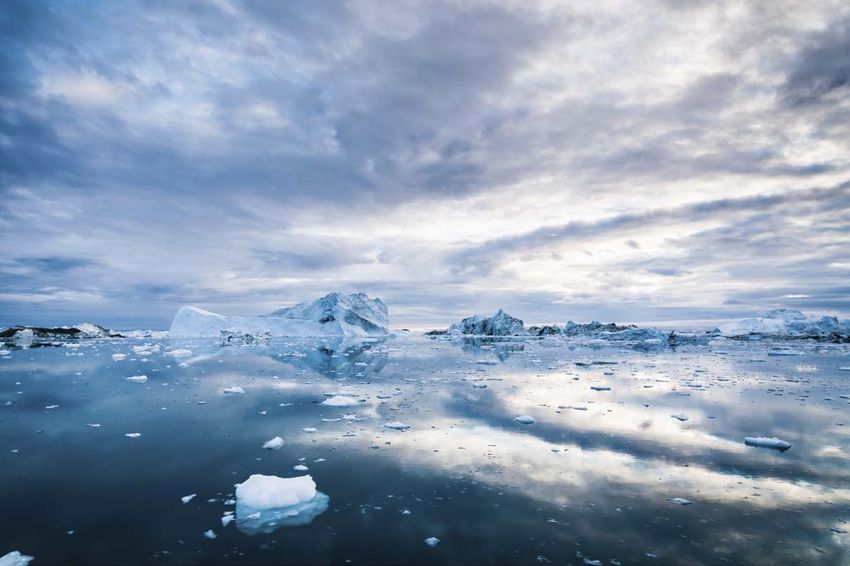
Federated Hermes Emerging Markets                    4
                                                                                                                                       Q2 2020

              With humanity inexorably stirring the cauldron
              of activity that is heating up this planet, we
              think adaptation deserves equal prominence
              alongside mitigation in the lexicon of
              environmental sustainability.

Climate calibrations                                                              The body is a sensitive instrument which operates well only if
After turning the last page of The Uninhabitable Earth                            it maintains a core temperature that is very close to 37°C. An
eight months ago, I had the first of two recent climate-                          increase of core body heat by only 0.2°C can compromise our
change revelations.                                                               multi-tasking abilities; a rise of 0.9°C and our neuromuscular
                                                                                  coordination falters; at 1.3°C above optimum, simple mental
As the title suggests, David Wallace-Wells’ analysis conjures                     performance sags; heatstroke risk kicks in with a 3°C rise; and
up a bleak future for humanity under global warming. His                          death threatens us at 5°C above normal5.
first sentence sets the tone: “It is worse, much worse,
than you think.”                                                                    An increase of core body heat by only

                                                                                  0.2°C
How much worse can it be? The evidence marshalled by
Wallace-Wells suggests most of the climate change damage
will accrue in the developing world – at least for the next
decade or so. Perhaps, I thought, global warming won’t affect                       can compromise our
my life here in London? But of course, even in that unlikely                        multi-tasking abilities
outcome, my career is inextricably linked to emerging
markets. There is no escaping it, then.

    To us, adaptation can be defined as: the
    measures nations, cities, companies and
    individuals must take in order to prepare
    for living in a degraded environment.
My second major climate-change insight came half-way
through reading the 2020 McKinsey Global Institute (MGI)
report, “Climate risk and response: physical hazards and
socioeconomic impacts,” which includes a scenario analysis
of the world warmed-up by 2°C4. Just 2°C? That’s not so
much, I thought. The temperature changes more than that in
a few hours every day, and we all cope. Then I reflected more
deeply on how adversely our bodies react as they warm
by even 1°C. And now the evidence from the coronavirus
pandemic serves as a grim reminder of our limited capacity
in handling rising heat levels.

4
    Falter,” by Bill McKibben, published by Henry Holt & Company in 2019; and “The Uninhabitable Earth,” by David Wallace-Wells, published by Penguin Books Ltd
   “
   in 2019.
5
  “Climate risk and response: physical hazards and socioeconomic impacts,” published by McKinsey Global Institute in January 2020, p 64.
5   Gemologist
    Q2 2020

    Core temperature is determined primarily by a combination                               Even for people lucky enough to live in a place that will heat
    of activity level and ‘wet-bulb’ temperature (a measure of air                          up by only 1°C in the next 20 years, the likely expense of soy
    temperature and relative humidity) that regulates how                                   and corn livestock feed will make that steak a rare luxury. And
    much heat the body can exhaust by evaporating sweat. In                                 since the fish may have starved to death in an oxygen-
    environments where air temperature is higher than core body                             depleted ocean, those of us not already vegan may be
    temperature, the body quickly loses its ability to dissipate                            seriously warming up to the idea. (Such lifestyle changes, of
    heat through radiation and convection. At a wet-bulb                                    course, will be minor impacts relative to other disruptions.)
    temperature of 35°C, the core temperatures of healthy, well-
    hydrated human beings resting in the shade would rise to                                Modern science and technology could help defray some of
    lethal levels after just four to five hours of exposure.                                the worst impacts of climate change on the planetary food
                                                                                            supply, as exhibited by the viability of lab-grown food,
    Heat problems, of course, are not limited to humans. Warmer                             enabling us to achieve better living through chemistry.
    oceans kill coral and plankton, making life unviable for fish.                          Potentially, we could also turn some of the side-effects of
    Farm animals are also heat-sensitive, as is their feedstock.                            climate change to our advantage, for example, by trapping
    Corn has a physiological threshold at about 20°C, beyond                                the locust swarms blackening the sky above Sudan and
    which yields decline dramatically6.                                                     processing them into burgers.

    Clearly, life is fragile and sensitive to changes in temperature.                       Regardless of any ingenious technological responses to
    We can’t combat an increase of 2°C, as outlined in the MGI                              global warming, humans will have to clear plenty of other
    report, simply by taking off our jackets. Remember, too, that                           hurdles in the Anthropocene era.
    the 2°C projected increase represents a global average: the
    Arctic has already heated up by 5°C.

           Carbon dioxide levels in the atmosphere
           have skyrocketed to levels never before
           evidenced in ice cores dating back to the
           dawn of humanity and through many cycles
           of planetary cooling and warming.

    Photo: Mark Grosvenor.

    7
    6
        “The
          Climate
              Uninhabitable
                  risk and response:
                             Earth,” by
                                     physical
                                        David hazards
                                              Wallace-Wells,
                                                      and socioeconomic
                                                             published byimpacts,”
                                                                          Penguin Books
                                                                                   published
                                                                                         Ltd in
                                                                                              by2019,
                                                                                                 McKinsey
                                                                                                      pp 12-13.
                                                                                                           Global Institute in January 2020, p 64.
Federated Hermes Emerging Markets               6
                                                                                                                                   Q2 2020

                                                                                                                                 Photo: Mark Grosvenor.

Two degrees of separation                                                           If we can’t reduce the current level of CO2 in the atmosphere
We should not be fooled by the seemingly small numbers                              soon, the global temperature increase could hit 3°C,
cited in the science: 1°C of warming since the 19th century                         condemning Southern Europe, Central America, the
and a 2°C increase by the end of this century. These figures                        Caribbean and Northern Africa to permanent drought. Under
are not trivial. As the effects of tiny variations in our body                      this warming level, wildfires – such as the late-2019 blazes in
temperature show, incremental rises can make a big                                  Australia – would be more frequent, searing twice the current
difference.                                                                         annual average land area burned in the Mediterranean and
                                                                                    six-times the amount in North America.
At a 2°C rise, the already fast-melting ice sheets will collapse.
Other projected consequences include:                                               If we can’t reduce the current level of
A Water scarcity threatening 400m more people                                       CO2 in the atmosphere soon, the global
A Major cities in the equatorial band of the planet                                 temperature increase could hit
      becoming unlivable

                                                                                    3oC
A Heat waves killing thousands each summer, even in
      northern latitudes

In a world of 2°C warming, India, for instance, could see 32-
times as many extreme heat waves, each lasting five-times as
long and exposing 93-times more people to temperature-                              At 4°C, damage from river flooding would grow 20-fold in
related physiological risks.                                                        India, 30-fold in Bangladesh and as much as 60-fold in the UK.
                                                                                    Estimates of flood damage costs in this global warming
                                                                                    extreme have gone as high as $600tn – or twice the current
       High levels of CO2 emitted into the                                          level of global wealth7.
       atmosphere now will steadily heat the
       planet well into future centuries.

7
    “The Uninhabitable Earth,” by David Wallace-Wells, published by Penguin Books Ltd in 2019, pp 12-13
7   Gemologist
    Q2 2020

    On the optimistic assumption that we succeed in limiting                           If the big picture is too overwhelming, it can help to dissect
    warming this century to 2°C, the atmosphere will still have                        the problem into discrete categories. For example, MGI has
    amassed CO2 at around 500 parts per million, harking back to                       made an interesting attempt at framing the various theatres of
    a level not seen since the Middle Miocene era 16m years ago,                       risk arising from global warming, classifying the effects of the
    when our ancestors were apes. During this epoch, the earth’s                       climatic disequilibrium into five areas:
    average global temperature ranged from 5°C to 8°C above
    the readings we observe today, resulting in sea levels that                                Livability and workability
    were some 40 metres or more higher – not the 0.5-metre
    increase the 2013 Intergovernmental Panel on Climate                               Because the human body naturally limits its efforts to prevent
    Change report forecasted for the end of this century8.                             overexertion, heat stress will reduce labour capacity as
                                                                                       workers must take breaks to avoid heatstroke. Looking
    High levels of CO2 emitted into the atmosphere now will                            beyond the workplace, about 470m people in rural areas
    steadily heat the planet well into future centuries. Some                          today lack access to safe food and medicines due to
    models, including ones by economists Professors Gernot                             inadequate electricity and refrigeration, and an estimated
    Wagner and Martin Weitzman9, see an 11% chance we                                  630m living in urban slums have little or no access to cooling
    overshoot to 6°C. Wallace-Wells cites data from Nobel                              due to inadequate power supplies10. Climate change is
    laureate William Nordhaus suggesting that better-than-                             regressive: those dependent on outdoor work in areas of
    anticipated economic growth increases the odds to one-                             increasing heat duress are the most exposed – and they are
    in‑three that emissions exceed the UN’s worst-case                                 also often the most vulnerable, lacking savings or adequate
    business-as-usual scenario, causing a temperature rise of                          income. Furthermore, increased temperatures will influence
    5°C or more.                                                                       disease vectors, potentially undermining the progress made
                                                                                       in combating them in the current climate.
    Wallace-Wells also examines the peak of the UN climate
    change probability curve, which reaches 8°C of warming.
    Thankfully, this scenario remains highly unlikely with the
    resulting environment so horrifying that we will skip over it                          The countries with the most to lose can
    for now. Few of us are stoic enough to seriously consider                              be classified as ‘significantly hotter and
    living through the Book of Revelation just yet.                                        more humid countries’, including India,
                                                                                           Bangladesh, Nigeria, Pakistan, Thailand
    How can investors adapt?                                                               and Vietnam.
    Global warming is a universal issue whose enormity seems to
    increase every year as new records for temperature, storm
    severity and species extinction are set, before being broken
    again – and the challenge of containing rising temperatures                                Food systems
    becomes more daunting.
                                                                                       Floods, drought conditions and extreme temperatures impact
                                                                                       land and crops. It is difficult to grow corn at 35°C, given the
                                                                                       plant’s physiological threshold of about 20°C11. There are five
                                                                                       major grain-growing areas in the world: the US Midwest and
        Heat, wind and flooding can disrupt                                            Canadian Prairies, north-west Europe, southern Russia and the
        power lines, water systems and                                                 Ukraine, northern India and eastern China. In the case of
        transportation links.                                                          breadbasket failures, a yield collapse in one or more key
                                                                                       production regions for rice, wheat, corn or soy could cause
                                                                                       prices to spike by 100% or more in the short term.

    8
       What happened the last time it was as warm as its going to get by the end of this century?” by Howard Lee, published by Ars Technica on 18 June 2018.
      “
    9
      “Climate shock: the economic consequences of a hotter planet,” by Gernot Wagner and Martin Weitzman. Published by Princeton University Press in 2015.
    10
        EIU p22.
    11
         “Climate risk and response: physical hazards and socioeconomic impacts,” published by McKinsey Global Institute in January 2020, p.64 and p.15.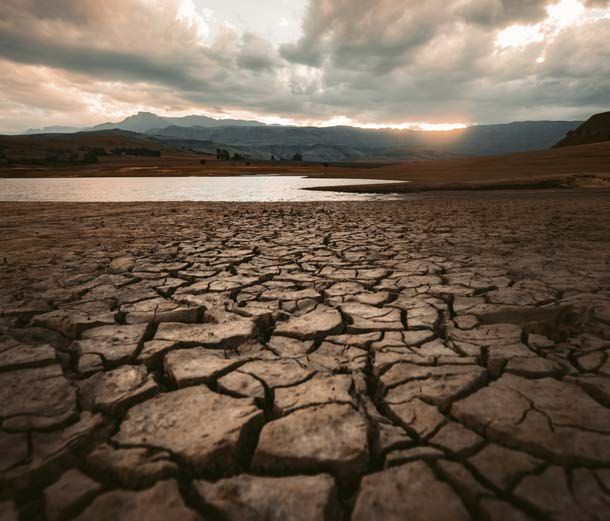
Federated Hermes Emerging Markets     8
                                                                                                                                           Q2 2020

       Climate change is regressive:                                                           Natural capital
       those dependent on outdoor
       work in areas of increasing heat                                               Glaciers, forests and ocean ecosystems are being disrupted
                                                                                      or destroyed, endangering food chains, human habitats and
       duress are the most exposed –
                                                                                      economic activity.
       and they are also often the most
       vulnerable, lacking savings or                                                 For our purposes as emerging market investors, MGI's five
       adequate income.                                                               categories represent key threats to economic prosperity.
                                                                                      The countries with the most to lose can be classified as
                                                                                      ‘significantly hotter and more humid countries’, including
           Physical assets                                                            India, Bangladesh, Nigeria, Pakistan, Thailand and Vietnam.

Homes, buildings and entire networks of real-estate assets                            Next, the ‘hotter and more humid countries’ include
and infrastructure in central business districts are at risk of                       Indonesia, The Philippines, Saudi Arabia and Japan. While
being damaged or destroyed by tidal or riverine flooding,                             the latter is not part of the emerging markets benchmark, it
extreme precipitation and forest fires.                                               remains economically important to the Asian region. China,
                                                                                      Brazil, Chile and the US are classified as ‘diverse climate
           Infrastructure services                                                    countries’ with various levels of risk. Some are severe but due
                                                                                      to the diversity of their geographies (or economies), they may
Heat, wind and flooding can disrupt power lines, water                                cope better with climate change.
systems and transportation links. Power generation can
become less productive under very hot conditions, and roads                           Up to

                                                                                      185,000
can buckle12. This can obviously disrupt other sectors relying
on this infrastructure. For instance, in 2018 Hurricane Maria
generated winds of up to 280 km/hr, felling more than 90%
of mobile phone towers in Puerto Rico. Up to 185,000 airline
                                                                                      airline passengers each year could
passengers each year could be grounded by 2050 due to
flight cancellations caused by extreme heat.
                                                                                      be grounded by 2050 due to flight
                                                                                      cancellations caused by extreme heat.

                      Glaciers, forests and ocean ecosystems are
                      being disrupted or destroyed, endangering food
                      chains, human habitats and economic activity.

12
     “Climate risk and response: physical hazards and socioeconomic impacts,” published by McKinsey Global Institute in January 2020, p.64 and p.15.
9   Gemologist
    Q2 2020

    Figure 3. The direct impacts of climate change can become nonlinear when thresholds are crossed

      System           Example                 Nonlinear behavior
                                                                              100
                       Impact of               Share of
                       heat and                labour
                                                                               80
                       humidity on             capacity in a
                       outdoor labour          given hour*
                                                                               60

                                                                  %
      Human                                                                    40

                                                                               20                                                                               Wet-bulb
                                                                                                                                                                globe
                                                                                0                                                                               temperature**
                                                                                    20   22         24        26   28        30    32        34    36     38
                                                                                                                        °C

                       Floodwater              Asset                          120
                       impacts on              impact***                      100
                       an exemplary
                       UK train                                                80
                                                                  $ million

                       station
                                                                               60
                                                                               40
                                                                               20
                                                                                0                                                                               Flood depth
                                                                                    0    0.5       1.0    1.5 2.0    2.5 3.0           3.5   4.0    4.5   5.0
                                                                                                                    Metres
      Physical
                                                                              1.0
                       Effects of              Probability of
                       line over-              line tripping
                                                                              0.8
                       loading
                       (eg, sagging
                                                                              0.6
                       due to heat)
                       in an electrical
                                                                              0.4
                       grid****
                                                                              0.2
                                                                                                                                                                Line
                                                                                0                                                                               loading
                                                                                    60        80         100    120   140     160                 180     200
                                                                                                           % of nominal capacity

                       Temperature             Corn                           100
                       impact on               reproductive
                       crop yield              growth rate                     80

                                                                               60
                                                                  %

      Natural                                                                  40

                                                                               20

                                                                                0                                                                               Air temperature
                                                                                    10   12        14    16    18 20 22           24    26    28    30    32
                                                                                                                    °C
     * Immediate effect; longer exposure will cause rapidly worsening health impacts. Humans can survive exposure to 35C wet-bulb temperatures for
       between four to five hours. During this period, it is possible for a small amount of work to be performed, which is why the working hours curve does not
       approach zero at 35C WBGT (which, in the shade, is approximately equivalent to 35C wet-bulb).
     ** Based on in-shade wet-bulb globe temperature (WBGT). WBGT is defined as a type of apparent temperature which usually takes into account the effect
        of temperature, humidity, wind speed, and visible and infrared radiation on humans.
     *** Average cost of a new build train station globally used for asset impact/cost on UK train station; salvageable value is assumed zero once asset passes
         destruction threshold.
     **** Both acute events (for example, flooding, fires, storms) and chronic changes in climatic conditions (such as heat) can affect the grid and may lead to outages.

    Source: McKinsey Global Institute as at January 2020, citing Dunne et al., 2013, adjusted according to Foster et al., 2018; Henneaux, 2015; Korres et al., 2016;
    CATDAT global database on historic flooding events; McKinsey infrastructure benchmark costs; EU Commission Joint Research Centre damage functions database;
    historical insurance data and expert engineer interviews on failure thresholds; McKinsey Global Institute analysis.
Federated Hermes Emerging Markets 10
Q2 2020
Another perspective on global-warming vulnerability focuses
on ‘increased water stress countries’. This sub-group includes
Mexico, Turkey, Egypt, Iran, South Africa and all of Southern
Europe. Russia and Poland as well as most of Northern
and Central Europe are classed as lower risk countries
in this respect.
Global-warming risk varies from country to country but for
those in the ‘significantly hotter and more humid countries’,
India: in the line of fire
the most significant danger centres on the ability to work and
even live in extreme heat. India is a case in point: in 2017, Emerging markets face greater climate
heat-exposed work produced about 50% of the nation’s change risks than developed countries.
economic output, drove about 30% of its GDP growth and Among them, the hottest and poorest
employed about 75% of the labour force, or 380m people13. are most under threat.
Globally, the number of people living in areas with an annual Countries with large populations whose jobs are
likelihood of experiencing lethal heat waves – defined as outdoors, like India – where 42% of the workforce are
three-day surges in temperatures that exceed the threshold employed the agricultural sector17 and 3.8% in
of survivability for a healthy human being in the shade – is construction18 – stand to lose the most as the number of
projected to rise from near zero today to 250m-360m by the days with insufferable heat spikes. Among labourers, the
end of this decade. This figure could triple over the ensuing effective number of outdoor daylight work hours lost in
20 years if current fossil-fuel use and emission levels persist, an average year would increase by 15% in 203019, leading
a scenario known as RCP 8.514. Greater air-conditioning usage, to a 2.5-4.5% drag on GDP.
estimated at 10% penetration in India and 60% across China
today, will probably lower these future estimates, although at
By 2050, the number of Indian people
what could be a sizable cost to the atmosphere and, since
warming affects the sea level, storm severity and food chains15.
expected to fall into the lethal-heat-wave
danger zone is forecast to range between
Global-warming risk varies from
country to country but for those
in the ‘significantly hotter and
310m 480m and
About 10% of Indians, or 120m people, already live in areas
more humid countries’, the most with a non-zero annual probability of lethal heat waves –
significant danger centres on the defined as three-day surges in temperatures that exceed
ability to work and even live in the threshold of survivability for a healthy human being in
extreme heat. the shade – and this proportion is expected to increase by
5%-10% by 205020. By 2030, between 160m-200m of the
The bottom line is that by 2050, there is an estimated 80% Indian population will be exposed to this danger, and
cumulative average likelihood that a person living in an at-risk among them an estimated 80m-120m don’t have air-
area will experience a lethal heat wave at least once over a conditioned homes. The number of people expected to fall
10‑year period16. This projection indicates that dissecting the into the lethal-heat-wave danger zone is forecast to range
threats caused by climate change into discrete problems does between 310m and 480m by 2050 – although most of the
not produce less-scary statistics! population is expected to live in air-conditioned
accommodation by then (which, absent technological
However, this granular analysis offers a much clearer guide to innovations, will contribute to further heating up the
emerging-market investors who want to factor likely scenarios environment outside their homes). Looking farther out,
into their long-term analysis. (Later in this piece, we will in the last 20 years of this century India is projected to
comment on our efforts to do so.) experience 181 days a year with temperatures in excess
of 35°C21. For context, the country’s average annual
temperature in 2018 was 25.9°C22. This would not only
be hazardous to the health of the people and natural
environment of India but render plenty of outside work,
as it is currently done, obsolete.
13,14,15
Climate risk and response: physical hazards and socioeconomic impacts,” published by McKinsey Global Institute in January 2020, p.64-67, p. 93. The
“
Representative Concentration Pathway (RCP) scenarios are used by the Intergovernmental Panel on Climate Change. RCP 8.5 is the most aggressive, in which
emissions continue to rise throughout the century.
16
“Climate risk and response: physical hazards and socioeconomic impacts,” published by McKinsey Global Institute in January 2020, p. 93.
17
“World Bank Open Data,” accessed at data.worldbank.org in April 2020.
18
“Construction,” published by investindia.gov.in in 2020.
19,20
“Climate risk and response: physical hazards and socioeconomic impacts,” published by McKinsey Global Institute in January 2020, pp. 64-67, p.69, p.93.
21
The Climate Impact Lab, quoted in “The cooling imperative,” published by the Economist Intelligence Unit in 2019, on p 12.
22
“Annual average temperature across India, 2012-2018,” by Madhumitha Jaganmohan, published by Statista on 23 September 2019.11 Gemologist
Q2 2020
Figure 4. The projected number of working hours lost due to
greater heat and humidity in India and South Asia
Urbanisation, a great driver of productivity gains historically,
Today
may mitigate the loss of outdoor employment to some extent,
but comes with its own problems. Cities raise temperatures
by trapping heat and preventing its dissipation into the lower
atmosphere, and paving over undeveloped land and erecting
buildings obstructs the natural processes of ventilation and
heat dispersion known as evaporative cooling. The resulting
microclimates, known as urban heat islands, can make cities
1°C-3°C warmer than in surrounding areas. This phenomenon
has been measured in London, New York, Paris and Las Vegas.
A 2007-2010 study showed that urban heat-island effects
increased winter temperatures in Delhi by up to 4°C-7°C23.
Heat also presents challenges to logistics businesses. India
2030 has a dearth of integrated cold storage and transport.
Estimates suggest that the country has less than 15% of the
refrigerated trucks that it needs and less than 1% of the pack-
houses, where produce is sorted and processed and field
heat is removed, that it requires. As a result, just 4% of India’s
food is moved through cold-chain logistics to ensure that it is
exposed to consistent temperatures – compared with 70% in
the UK and 10% worldwide – while 40% of certain harvested
crops are dumped before reaching consumers24. Indeed, up
to 40% of post-harvest losses can occur by the first mile of
transit25. Meanwhile, long-distance truck drivers face a higher
risk of road accidents or health problems if they don’t have
air-conditioned cabs. In India, drivers routinely become
2050
dehydrated because they do not stop regularly enough
for refreshments26.
Government action
Government and civil authorities, at many levels, are aware of
the problem. One project in the Punjab and Bangalore found
that introducing better cold-chain logistics – which enable
wider and coordinated access to cooling facilities for producers
– reduced citrus food waste by 75% and raised farm-gate
profits tenfold. Preserving produce can also provide farmers
with additional benefits: they can sell produce further afield or
wait to sell it at better prices, particularly during a supply glut.
For fishermen, cold storage and transport can dramatically
Share of lost working hours* % improve profits: fresh fish last only a few hours in the heat but
≤5 6-10 11-15 16-20 21-25 26-30 can last for up to 10 days if stored at 0°C.27
31-35 36-40 >40
At the national level, the India Cooling Action Plan (ICAP),
*Lost working hours include loss in worker productivity as well as breaks, based
on an average year that is an ensemble average of climate models. finalised in 2019, targets the following reductions by 203828:
Note: See the Technical Appendix for why we chose RCP 8.5. All projections
based on RCP 8.5, CMIP 5 multi model ensemble. Heat data bias corrected. A 20-25% in overall cooling demand
Following standard practice, we define current and future (2030, 2050) states as
the average climatic behavior over multidecade periods. Climate state today is A 25-40% in cooling energy requirements
defined as average conditions between 1998 and 2017, in 2030 as average
between 2021 and 2040, and in 2050 as average between 2041 and 2060. A 25-30% in refrigerant demand by 2038
Note: See the Technical Appendix for why we chose RCP 8.5. All
projections based on RCP 8.5, CMIP 5 multi model ensemble. Heat data
bias corrected. Following standard practice, we define current and future
(2030, 2050) states as the average climatic behavior over multidecade
periods. Climate state today is defined as average conditions between
1998 and 2017, in 2030 as average between 2021 and 2040, and in 2050 as
average between 2041 and 2060.
Source: McKinsey Global Institute as at 2020, based on data from the
Woods Hole Research Center.
23
A study of urban heat island and its association with particulate matter during the winter months over Delhi,” by Puneeta Pandey et al, published in Science of
“
the Total Environment, vol 414, on 1 January 2012.
24,25,26
“The cooling imperative,” published by the Economist Intelligence Unit in 2019, p.23, p.42 and p.24.
27
Irish Seas Fisheries Board, quoted in “The cooling imperative,” published by the Economist Intelligence Unit in 2019, on p. 23.
28
“India Cooling Action Plan (ICAP)”, published by Drishti IAS on 13 April 2019 at drishtiias.com.Federated Hermes Emerging Markets 12
Q2 2020
The ICAP aims to achieve these goals through a wide variety
of measures: Other solutions include
A The use of emerging technologies that don’t require
restoring mangroves and
cooling gases creating sponge cities
A The introduction of variable-speed air conditioning
A Re-using cold energy, as in Japan, and waste heat
A ‘Cooling as a service’, where third parties own the cooling
infrastructure and charge user fees for access
A Green roofs and white-painted roofs
A Shaded-street infrastructure, including positioning
buildings so they shade each other
A Restoring green spaces
A Passive cooling: optimising building design to capture
natural wind flows, use airtight doors, triple-glazed
windows and insulated concrete panels.
The ICAP also aims to train and certify 100,000 technicians
while investing more in cooling research.
By 2050, large sections of Mumbai and
Kolkata will be prone to coastal flooding
Action is being taken at the local-government level as well. Ahmedabad has implemented a
33°C
Ahmedabad, the state capital of Gujarat in India’s north, Heat Action Plan to address
has implemented a Heat Action Plan to address expected expected average July
average July temperatures of 33°C (and the extremes temperatures of
concealed by averages). It includes establishing early-warning
systems and cooling shelters to protect those without air
At the corporate level, examples are currently scarce. Among
conditioning. The city government has also reduced
them is Mahindra & Mahindra – a large car manufacturer and
employees’ working hours during the hottest parts of the day.
parent of our Mahindra Logistics’ portfolio holding – which is
Other solutions include restoring mangroves and creating experimenting with techniques such as tri-generation, a heat
‘sponge cities’ – a term coined in Hyderabad, when the city recovery system, and radiant cooling, where cool surfaces are
authorities started collecting storm water to lessen the used to absorb heat. Ecozen, a start-up based in Pune, has
impacts of seasonal floods on vulnerable urban areas. Sponge developed a portable cold-storage box which runs on solar
cities may replace concrete pavement with wetlands, create power and has a maximum capacity of 15ft x 10ft x 10ft. The
green rooftops and rain gardens, allowing storm water to be boxes can be rented to other farmers when not being used
absorbed back to the land. Rain can also be collected for by their owners.
use in irrigation or the home29.
Rising sea levels also pose a planning challenge. Satellite Sponge cities may replace concrete
images show that stretches of Mumbai’s coastline have pavement with wetlands, create
eroded by as much as 18 meters since 2000, which is partly green rooftops and rain gardens,
due to slum dwellers and developers paving over mangroves
allowing storm water to be absorbed
in addition to global warming. By 2050, large sections of
Mumbai and Kolkata will be prone to coastal flooding,
back to the land.
according to a new study that corrects land height
estimates from previous research30.
Ultimately, a hotter environment with concomitant droughts,
storm surges and supercharged cyclones could force Indian
Just 4% of India’s food is moved through authorities to implement more extreme measures to help the
cold-chain logistics to ensure that it is population adapt. They might have to relocate people and
exposed to consistent temperatures – climate-sensitive industries from high-risk areas, incurring much
compared with 70% in the UK. expense and enormous disruption.
29
In 2014, China launched its own sponge-city initiative, covering more than 30 cities including Shanghai, with another 600 cities expected to join in the coming
“
decade.
30
“New elevation data triple estimates of global vulnerability to sea-level rise and coastal flooding,” by Scott Kulp and Benjamin Strauss. Published in Nature
Communications on 29 October 2019.13 Gemologist
Q2 2020
Adaptation within our portfolio To date, our survey results have in general been
Recently, we surveyed the companies in our global emerging disappointing. To summarise:
market portfolios to assess their levels of preparedness for a A While the majority of the companies we surveyed are aware
2°C change in average global temperature and their readiness of the climate-change risks we sought to examine in the
to adapt to the perils of a hotter planet. This complements our survey, only half were able to address the questions in a
efforts to engage with companies on mitigating climate detailed way.
change in their operations, as well as boosting the quality and A Among the more advanced, Mexican retailer Walmex,
extent of their disclosures and actions towards environmental, Indian two-wheel vehicle maker Hero MotoCorp and
social and governance (ESG) matters. Brazilian furniture and civil-construction supplier Duratex
had all launched concrete initiatives to safeguard their
However, given the increasing frequency of severe storms, long-term futures against global-warming risks.
heat waves, droughts, and riverine flooding – not to mention
A Only one company in the portfolio, Indian property and
the longer-term threat of rising seas – we are increasingly
casualty insurer ICICI Lombard, met our full expectations
concerned that the management teams of our portfolio for preparedness – which is not surprising given that its
companies could be underestimating climate-change risks business is focused on pricing risk.
that could threaten the viability of their businesses.
A Others, including China Mengniu Dairy, manufacturer
Granted, while we are in the midst of a pandemic, ongoing Bharat Forge and power-tool firm Techtronics have begun
trade tensions and technological disruption, company to study the issue.
management teams already have a lot to deal with. For the rest, given the many other challenges they face,
Moreover, newly greened investment analysts sending long perhaps highlighting the importance of climate-change
questionnaires about dozens of (other) ESG issues have mitigation and long-term adaptation, and encouraging them
created an enormous demand for sustainability data for many to start making plans, is the most we can expect at this point
companies. Efforts to satisfy this, let alone take action, might in time31.
even be untenable.
Mitigation at the policy level
Globally, at the national and municipal levels, awareness is
growing quickly, sparking numerous initiatives ranging from
sponge cities to innovative insurance programs like the UK’s
Flood Re – a joint public-industry funded mechanism to
provide flood cover at a reasonable cost to owners of homes
that were built before 2009 and are located in flood zones.
The authorities governing Singapore, Shanghai and
Rotterdam have advanced projects to defend against rising
seas and other climatic threats. Others in Denmark, New York
and Boston are in various stages of study and planning.
Wilder ideas are also gaining currency as the reality of global
warming dawns, including a proposed dam between Orkney,
part of an archipelago off the north coast of Scotland, and
Bergen in Norway to provide a bulwark for Denmark against
an incursion by the North Sea. Another dam has been
proposed from a point on the south coast of England to the
west coast of France; together, these would protect coastlines
along the entire English Channel and Baltic Sea from rising
waters. Airborne climate-change solutions, like spraying sulfur
into the atmosphere (call this ‘Bosch’s rain’) and other, even
more extreme, suggestions are doing the rounds.
31
he conversations spurred by our survey are taking place in the context of engagements on corporate-governance and social issues, in addition to other
T
environmental concerns. We also discuss the strategic, operational and financial dimensions of their businesses in the course of corporate engagements.Federated Hermes Emerging Markets 14
Q2 2020
Then there is the ‘Half Earth’ idea put forward by Pulitzer We encourage all investors to make
Prize winner E.O. Wilson. The biologist’s plan involves climate change a core theme of their
letting nature run its rehabilitative course on half the
planet, sequestering humanity in the remaining, habitable
interactions with businesses: all
hemisphere32. Finally, energy giants Chevron, Equinor, Total companies, not only those we invest
and ADNOC have built or are in the planning stages of in, must begin to focus on adapting
constructing carbon capture and storage facilities. This for the rougher weather ahead.
expensive technology is typically trotted out by fossil-fuel
proponents to justify continuing business as usual, but with
Sadly, despite our knowledge and better instincts, the slow
massive subsidies for a number of years it could possibly, at
onset of climate change, the high cost of combating or
some stage, become economic.
mitigating it, and its less immediately tangible impacts have
Eventually, all companies must become aware of the made deferring action the default human response. There is
economic and political threats approaching their business still time to act, but the longer we delay, the higher the costs
operations, and responsible management teams will will be and the slimmer our chances of achieving success.
respond to the climate-change storm. The rapid, if globally
disjointed, response to the coronavirus outbreak proves that
the world can summon immense resources to counteract
existential challenges.
There is still time to act, but the
longer we delay, the higher the costs
will be and the slimmer our chances
of achieving success.
32
“Half earth: our planet’s fight for life,” by Edward O. Wilson. Published by WW Norton & Co in 2017.15 Gemologist
Q2 2020
Anthropogenic adaptation: can we survive But the anthropogenic phenomenon of climate change will
our success? test our ability to avoid mortal danger more than ever before.
Humanity’s ability to adapt, something we have excelled at,
Humanity in its current form emerged up to 300 millennia
must again come to the fore.
ago. In the eons since, our species has reached spectacular
scientific, cultural and philosophic heights that have arguably Science, technology and behavioural changes (regulated or
been matched by our capacity for destruction – of each other, not) can help take the edge off global warming. As investors,
animals and the natural environment. Sometimes this damage we know that mitigation is one vital aspect of addressing the
has been inflicted intentionally, sometimes not. problem. Perhaps more importantly, we can help businesses
prepare for the inevitable, albeit, in some cases, longer term
To our credit, we have adapted to withstand a wide range of
environmental changes coming their way. Our engagements
threats – war, disease, famine, natural disasters, economic
show that few companies we know first-hand take the glaring
depression and terrorism – and have often used the
risk of global warming into account. As long-term investors,
experience and knowledge gained in order to improve the
it’s our duty to emphasise the biggest long-term risk of our
lives of future generations. Through bitter experience,
time and support their efforts to adapt.
humans have learnt some valuable lessons in crisis
management and even prevention. Some months before the coronavirus crisis hit, we initiated
discussions on climate-change adaptation with about half of
the companies in our portfolio. These conversations will now
As long-term investors, it’s our duty to include the rest of our holdings and continue throughout the
emphasise the biggest long-term risk of pandemic. We encourage all investors to make climate
our time and support companies’ efforts change a core theme of their interactions with businesses: all
companies, not only those we invest in, must begin to focus
to adapt.
on adapting for the rougher weather ahead.
We all need to get some shelter, so we don't fade away.
32
“Half earth: our planet’s fight for life,” by Edward O. Wilson. Published by WW Norton & Co in 2017.Federated Hermes Emerging Markets 16
Q2 2020
Bibliography
I would like to extend special thanks to the following people: A “In the long run, we must live,” by Hardayal Singh.
Published by The Economic Times on 16 November 2019.
John Englander, Oceanographer and Founder of the Rising
Seas Institute; Robert Corell, a Director of the Global A “Macroeconomic impact of stranded fossil-fuel assets,” by
Environment & Technology Foundation; Dr Nina Seega, a Jean-Francoise Mercure et al. Published by Nature Climate
Research Director for Sustainable Finance at the Cambridge Change, volume, on 8 July 2018.
Institute for Sustainability Leadership; Andy Bord, Chief A “New elevation data triple estimates of global vulnerability
Executive of Flood Re; and Mark Grosvenor. to sea-level rise and coastal flooding,” by Scott Kulp and
Benjamin Strauss. Published in Nature Communications on
A “A study of urban heat island and its association with 29 October 2019.
particulate matter during the winter months over Delhi,”
A “On the future: prospects for humanity,” by Martin Rees.
by Puneeta Pandey et al, published in Science of the Total
Published by Princeton University Press in 2018.
Environment, vol 414, on 1 January 2012.
A “Risky business: the climate and the macroeconomy,” by
A “As fire ravages California, our infrastructure is still not
David Mackie and Jessica Murray. Published by JP Morgan
equipped to handle climate change,” by Joseph Kane
on 14 January 2020.
and Adie Tomer. Published by the Brookings Institute on
6 November 2019. A “Silent Spring,” by Rachel Carson. Published by Penguin
in 2000.
A “Atmosphere of hope: solutions to the climate crisis,”
by Tim Flannery. Published by Penguin Books in 2015. A “Sunny Days,” published by The Economist on 23 Nov 2019.
A “China’s ‘sponge cities’ aim to re-use 70% of rainwater,” A “The cooling imperative,” published by the Economist
by Asit Biswas and Kris Hartley. Published by CNN on Intelligence Unit in 2019.
17 September 2017 (updated 15 October 2018). A “The cost of climate change: Steve Keen dismantles
A “Climate risk and response: physical hazards and William Nordhaus,” by Lambert Strether. Published by
socioeconomic impacts,” published by McKinsey Global Naked Capitalism on 21 July 2019.
Institute in January 2020. A “The high cost of stranded assets,” by Alan Livsey.
A “Climate shock: the economic consequences of a hotter Published by the Financial Times on 5 February 2020.
planet,” by Gernot Wagner and Martin Weitzman. A “The inevitable policy response: policy forecasts.”
Published by Princeton University Press in 2015. Published by the Principles for Responsible Investment in
A “Deep economy: economics as if the world mattered,” December 2019.
by Bill McKibben. Published by Henry Holt and Company A “The myth of green growth,” by Simon Kuper. Published
in 2007. by the FT Magazine on 24 October 2019.
A “Falter,” by Bill McKibben, published by Henry Holt & A “The oceans we know won’t survive climate change,”
Company in 2019. by Robinson Meyer. Published by The Atlantic on
A “Global trends in climate change litigation: 2019 25 September 2019.
snapshot,” by Joana Setzer and Rebecca Byrnes. Published A “The race of our lives revisited,” by Jeremy Grantham.
by the Grantham Research Institute on Climate Change Published by GMO on 8 August 2018.
and the Environment at the London School of Economics;
the Sabin Center for Climate Change Law at Columbia Law A “The rising oceans,” published by The Economist on
School; University of Leeds; and the Centre for Climate 17 August 2019.
Change Economics and Policy in July 2019. A “The Uninhabitable Earth,” by David Wallace-Wells,
A “Half earth: our planet’s fight for life,” by Edward O. published by Penguin Books Ltd in 2019.
Wilson. Published by WW Norton & Co in 2017. A “Worldwide decline of the entomofauna: a review of its
A “High tide on Main Street: rising sea level and the coming drivers,” by Francisco Sanchez-Bayo and Kris Wyckhuys.
coastal crisis,” by John Englander. Published by The Published in Biological Conservation, vol 232, in April 2019.
Science Bookshelf in 2013. A “Climate risk and response: physical hazards and
socioeconomic impacts,” McKinsey Global Institute
January 2020Federated Hermes
Federated Hermes is a global leader in active, responsible investing.
Guided by our conviction that responsible investing is the best way to create long-term wealth, we provide
specialised capabilities across equity, fixed income and private markets, multi-asset and liquidity management
strategies, and world-leading stewardship.
Our goals are to help people invest and retire better, to help clients achieve better risk-adjusted returns, and to
contribute to positive outcomes that benefit the wider world.
All activities previously carried out by Hermes now form the international business of Federated Hermes.
Our brand has evolved, but we still offer the same distinct investment propositions and pioneering responsible
investment and stewardship services for which we are renowned – in addition to important new strategies from
the entire group.
Our investment and stewardship
capabilities:
Active equities: global and regional
Fixed income: across regions, sectors and the yield curve
Liquidity: solutions driven by four decades of experience
Private markets: real estate, infrastructure, private equity
and debt
Stewardship: corporate engagement, proxy voting,
policy advocacy
For more information, visit www.hermes-investment.com or connect with us on social media:
The value of investments and income from them may go down as well as up, and you may not get back the original amount invested. Past performance
is not a reliable indicator of future results. Investments in emerging markets tend to be more volatile than those in mature markets and the value of an
investment can move sharply down or up.
For professional investors only. This is a marketing communication. The views and opinions contained herein are those of Gary Greenberg, CFA, Head of
Emerging Markets, and may not necessarily represent views expressed or reflected in other communications, strategies or products. The information herein is
believed to be reliable, but Federated Hermes does not warrant its completeness or accuracy. No responsibility can be accepted for errors of fact or opinion. This
material is not intended to provide and should not be relied on for accounting, legal or tax advice, or investment recommendations. This document has no regard
to the specific investment objectives, financial situation or particular needs of any specific recipient. This document is published solely for informational purposes
and is not to be construed as a solicitation or an offer to buy or sell any securities or related financial instruments. Figures, unless otherwise indicated, are sourced
from Federated Hermes. This document is not investment research and is available to any investment firm wishing to receive it. The distribution of the information
contained in this document in certain jurisdictions may be restricted and, accordingly, persons into whose possession this document comes are required to make
themselves aware of and to observe such restrictions.
Issued and approved by Hermes Investment Management Limited (“HIML”) which is authorised and regulated by the Financial Conduct Authority. Registered
address: Sixth Floor, 150 Cheapside, London EC2V 6ET. HIML is a registered investment adviser with the United States Securities and Exchange Commission (“SEC”).
BD005504 00008747 04/20You can also read


