General Departmental Assets and Liabilities
←
→
Page content transcription
If your browser does not render page correctly, please read the page content below
ACCOUNTING MANUAL
FOR DEPARTMENTS

CHAPTER 9
General
Departmental
Assets and
Liabilities

   Issued December 2019
Chapter 9: General Departmental Assets and Liabilities

Chapter Content
1       Overview ....................................................................................................................................... 3
2       Key Learning Objectives ............................................................................................................... 3
3       Scope ............................................................................................................................................ 4
4       Definitions ..................................................................................................................................... 4
        4.1      Financial instruments .......................................................................................................... 4
        4.2      Non-financial assets and liabilities...................................................................................... 5
        4.3      Statutory receivables and payables.................................................................................... 6
5       Accounting for financial assets / liabilities and prepayments / advances for the purpose of
        primary financial information ......................................................................................................... 6
        5.1      Recognition ......................................................................................................................... 6
        5.2      Initial measurement ............................................................................................................ 7
5.2.1 Financial assets and financial liabilities ........................................................................................ 7
5.2.2 Prepayments and advances ......................................................................................................... 8
5.2.3 Exchequer grant account ............................................................................................................ 10
        5.3      Measurement at reporting date ........................................................................................ 11
6       Accounting for financial assets / liabilities for the purpose of secondary financial information .. 11
        6.1      Recording ......................................................................................................................... 11
6.1.1 Accrued revenue receivable ....................................................................................................... 11
6.1.2 Accruals and payables not recognised ....................................................................................... 14
        6.2      Specific types of accruals ................................................................................................. 15
                 6.2.1 Annual Leave Entitlements..................................................................................... 15
        6.3      Initial measurement .......................................................................................................... 17
        6.4      Impairment ........................................................................................................................ 18
        6.5      Derecognition and removal ............................................................................................... 20
        6.6      Offsetting Financial Assets and Financial Liabilities......................................................... 25
7       Summary of Key Principles ......................................................................................................... 26
        7.1      Identification...................................................................................................................... 26
        7.2      Recognition / recording ..................................................................................................... 26
        7.3      Measurement .................................................................................................................... 26
        7.4      Derecognition.................................................................................................................... 27
        7.5      Presentation...................................................................................................................... 27

Issued February 2021                                                                                                                            Page 2
Chapter 9: General Departmental Assets and Liabilities
1 Overview
The purpose of this Chapter is to provide guidance on the recognition / recording and measurement of
certain (financial and non-financial) assets and liabilities of a department.
The Office of the Accountant-General compiles a Modified Cash Standard (MCS), this manual serves
as an application guide to the MCS which should be used by departments in the compilation of their
financial statements.
Any reference to a “Chapter” in this document refers to the relevant chapter in the MCS and / or the
corresponding chapter of the Accounting Manual.
Explanation of images used in manual:
Definition
Take note
Management process and decision making
Example
2 Key Learning Objectives
• Understanding the different types of assets and liabilities (financial and non-financial) not
covered elsewhere in the MCS/ covered in this Chapter / in the scope of this Chapter;
• Understanding the accounting requirements to be applied for these assets and liabilities;
Issued February 2021 Page 3Chapter 9: General Departmental Assets and Liabilities
3 Scope
A department applies this chapter in accounting for the following assets and liabilities for the purpose
of primary and secondary information:
a) bank overdraft, cash and cash equivalents, investments, loans, other financial assets, payables
and receivables;
b) voted funds and departmental revenue to be surrendered to the revenue fund;
c) prepayments and advances; and
d) unauthorised, irregular and fruitless and wasteful expenditure.
This Chapter thus deals with financial instruments, contractual non-financial assets and liabilities as
well as statutory receivables and payables. These different categories are not specifically outlined in
the MCS because the accounting principles in the modified cash environment are much the same.
This guide does however provide some explanation on the definitions for different categories along
with the discussion on the recognition / recording and measurement thereof.
4 Definitions
4.1 Financial instruments
A financial instrument is any contract that gives rise to a financial asset of one entity and a
financial liability or a residual interest of another entity.
Illustrating the definition of a financial instrument:
For the purpose of this Chapter, “contract” and “contractual” refer to an arrangement between two or
more parties that have clear economic consequences that the parties have little, if any, discretion to
avoid, usually because the agreement is enforceable by law. Contracts, and thus financial
instruments, may take a variety of forms and need not be in writing.
Issued February 2021 Page 4Chapter 9: General Departmental Assets and Liabilities
A financial asset is:
(a) cash;
(b) a residual interest of another entity [i.e. investments]; or
(c) a contractual right to:
(i) receive cash or another financial asset from another entity; or
(ii) exchange financial assets or financial liabilities with another entity under conditions
that are potentially favourable to the entity.
Examples of financial assets included in the primary financial information, specifically the statement
of financial position, are as follows:
✓ cash, or cash equivalents under the control of the department;
✓ receivables (such staff debt, supplier overpayments, claims recoverable);
✓ loans; and
✓ investments in public entities.
Examples of financial assets included in the secondary financial information are as follows:
✓ accrued departmental revenue.
A financial liability is any liability that is a contractual obligation to:
(a) deliver cash or another financial asset to another entity; or
(b) exchange financial assets or financial liabilities under conditions that are potentially
unfavourable to the entity.
Examples of financial liabilities included in the primary financial information, specifically the
statement of financial position, are as follows:
✓ payables (such as deposits, salary deduction payments);
Examples of financial liabilities included in the secondary financial information are as follows:
✓ accruals;
✓ payables not recognised
4.2 Non-financial assets and liabilities
As discussed above, financial instruments represent contractual rights or obligations to receive or pay
cash or other financial assets. Non-financial items have a more indirect relationship to future cash
flows. Non-financial assets for example, create an opportunity to generate an inflow of cash or
another financial asset, but does not give rise to a present right to receive cash or another financial
asset. Typical examples include inventories and capital assets.
Non-financial assets and liabilities included in the scope of this Chapter are prepayments and
advances because the future economic benefit is the receipt of goods or services rather than the right
to receive cash or another financial asset.
Issued February 2021 Page 5Chapter 9: General Departmental Assets and Liabilities
An advance paid comprises of funds paid in advance of goods, services or capital assets that
are yet to be delivered to the department, and in the case of transfers and subsidies cash is
yet to be earned by the recipient, in accordance with the agreement under which the advance
is paid. An allocation to advances paid is only made when the agreement involves one or
more government entities and/or when advances are paid to staff.
A prepayment is a payment made in advance of the goods, services or capital assets that are
yet to be received and in the case of transfers and subsidies cash is yet to be earned by the
recipient, in accordance with the agreement under which the payment is made. An allocation
to prepayments is made when the agreement involves the department with non-governmental
entity.
Separate accounting principles have not been established in the MCS for the
recognition and measurement of financial and non-financial assets and liabilities. This
is because in the modified cash environment the timing of recognition is the same.
4.3 Statutory receivables and payables
Certain departmental receivables and payables arise out of legislation and are sometimes not
“contractual” for the following reasons:
a) they are compulsory in nature (i.e. willing parties do not necessarily enter into the arrangement);
b) rights and or obligations may only arise for one party to the arrangement.
Examples of such are:
✓ collected departmental revenue due to the revenue fund;
✓ unspent annual appropriations due to the revenue fund; and
✓ appropriated funds not received from the revenue fund;
5 Accounting for financial assets / liabilities and prepayments / advances for the
purpose of primary financial information
5.1 Recognition
A department recognises a financial asset, or a financial liability, a prepayment or an advance when
and only when, the department becomes a party to the provisions of the arrangements, and one of
the following additional recognition criteria are met:
a) the instrument is cash, or a cash equivalent under the control of the department;
Cash in a bank account (under the control of a department) represents a contractual
right of the department to obtain cash for the payment of creditors from the institution
holding the funds. A department therefore accounts for such cash balances (positive
and negative) in its statement of financial position.
b) the financial asset or liability, prepayment or advance initially arose from a cash transaction; or
Issued February 2021 Page 6Chapter 9: General Departmental Assets and Liabilities
The purpose of this additional criterion is to exclude the recognition, in the statement
of financial position, of receivables and payables for the delivery of goods / services
for which payment is deferred to a later date.
Staff receivables are included here due to the fact that they arise out of a past cash
transaction, i.e. a department utilised cash on an employee or otherwise which is now
due back to the department.
Example: Staff receivables
An official owes the department R145 for private calls made from the department’s land line.
The department recognises a receivable because:
✓ it has a right (in terms of its internal policies and employment contract) to recover such
funds from the official; and
✓ the department is recovering an expense already incurred (i.e. it is a consequence of a
cash transaction).
Refer also to Chapter 8 on Expenditure for guidance on the accounting for loans advanced.
c) the financial asset is a capital investment.
Departments mainly hold investments in public entities which are either in the form of
shares or owner’s contributions.
When a department invests in a public entity by way of an equity / capital injection, the
transaction must first be expensed to reflect the actual cash outflow and as required in
a modified cash environment. The expense will be reflected as “transactions in
financial assets – purchase of equity” in the statement of financial performance.
For the investment to be reflected in the statement of financial position, the
department will pass an additional transaction as follows:
Debit: Investments (non-current assets)
Credit: Capitalisation reserve (net assets)
In this way the payment is reflected in the statement of financial performance (as
budgeted) and the investment is recognised in the statement of financial position.
5.2 Initial measurement
5.2.1 Financial assets and financial liabilities
When a financial asset or financial liability is initially recognised, a department measures it at its cost
plus transaction costs that are directly attributable to the acquisition or issue of the financial asset or
financial liability.
Transaction costs are incremental costs that are directly attributable to the acquisition, issue
or disposal of a financial asset or financial liability. An incremental cost is one that would not
have been incurred if the entity had not acquired, issued or disposed of the instrument.
Issued February 2021 Page 7Chapter 9: General Departmental Assets and Liabilities
Transaction costs include fees and commissions paid to agents, advisors, brokers and dealers, levies
by regulatory agencies and security exchanges, and transfer taxes and duties. It does not include
debt premiums or discounts, financing costs or internal administrative or holding costs.
Refer also to the Guide on managing departmental debt for further guidance on the accounting for
staff debt.
5.2.2 Prepayments and advances
Prepayments arise where for example the department paid for goods and or services in advance of
receipt of such due to a contractual obligation. Accordingly, prepayments and advances are initially
measured at cost.
Prepayments and advances include advances made to and due from officials who are
required to perform his/her duties from his/her headquarters. The types of advances
are:
Normal advance: a normal advance is paid to officials before expenses are incurred.
An advance is usually granted to an official to cover travel and subsistence costs
while away from the office.
Standing advances: a standing advance is paid to officials who have travel and
subsistence on a regular basis and where use of a normal advance would cause
unnecessary administration.
Prepayments are made if required by the contractual arrangements with the supplier.
The distinction between prepayments and advances is that prepayments relate to payments made in
advance to non-governmental entities, whereas advances relates to payments made in advance to
other government entities. Therefore, payments to other departments, public entities, municipalities
and any other government institution should be classified as advances. If these payments were
previously classified as prepayments, the department should reclassify them as advances. This is a
change in classification and not a change in accounting policy. Therefore, the recognition and
measurement criteria remain the same.
As a general rule prepayment are recognised in the statement of financial position when the payment
to the supplier is made. The department should consider materiality of the amount prepaid before the
department elect to immediately expense the payment in accordance with the Chapter 8 on
Expenditure. This is usually the case when the recognition in the statement of financial position will
have a negative impact on the Appropriation Statement and actual cash flows of the department.
Departments are encouraged to take the necessary steps to match the timing of the spending to the
budget through contract management which will lessen possibilities of negative cash flows.
Example: Prepayment made for the purchase of capital goods received in the
subsequent financial year
The department has a capital budget of R10 million for the 2013/14 financial year. On 20
February 2014 the department places an order with a supplier for the purchase of a capital
asset with a cost of R500 000. The supplier requires a 50% deposit and will deliver the asset
within 3 months of the order date. The payment is made on 25 February 2014.
The department records the prepayment as follows:
Dr Prepayments and advances 250 000
Cr Bank 250 000
Assume that the department spent (and expensed) R9.5 million of the capital budget during
the financial year. It subsequently makes an application to the relevant treasury to “roll-over”
the saving, and specifically R250000, into the new financial year. If approved, the department
will have the funds available in the vote against which the prepayment will be expensed.
Issued February 2021 Page 8Chapter 9: General Departmental Assets and Liabilities
Upon receipt of the asset in May 2014, the department:
Dr Payments for capital assets 500 000
Cr Prepayments and advances 250 000
Cr Bank 250 000
Example: Prepayment made for the purchase of capital goods/services received over
multiple periods
A department plans to host a conference in June 2014 and booked the venue in January 2014.
The conference facility requires an upfront deposit of R250 000 to secure the venue. The
payment is made by the end of January 2014.
The department elects to expense the R250 000 on date of payment as follows:
Dr Venues and facilities
Cr Bank
The department however discloses the fact that actual expenditure includes fees for the
securing of a conference venue paid in advance of the actual event.
National Skills Fund (NSF) or a Sector Education Training Authority (SETA) may
transfer funds to a department in order for the department to carry out some skills
training. There shall be an agreement or similar document stating the relationship and
the responsibilities of the two entities. Funds received from NSF or SETA shall be
treated as current advances received if such funds will be utilised within 12 months
from financial year end date. Funds that are going to be utilised after 12 months from
period of financial year end date shall be allocated to non-current payables. Note that
the difference between this amount and the statutory appropriations of NSF or SETA’s
is that the latter are amounts budgeted for as a separate line item in the published
budget and covered under paragraph 4.3 on Statutory receivables and payables above.
Prepayments and advances are not encouraged. However, in instance where a department is legally
bound to provide money up front to a contracted party it must ensure that additional controls are in
place to monitor the performance and utilisation of the funds by the contracted party.
The following examples are used for illustrative purposes only and do not reflect the exact
processes that take place in all departments. Departments must consider their specific
arrangements in recognising prepayments and advances.
Example: Transfer that meets the definition of an advance
A department of Social Development makes funds available in advance to its public entity in
order to distribute grants to eligible beneficiaries. This is in line with legislative requirements.
Recognition and disclosure
Payment to the public entity is a Transfer that meets the definition of advances. It should be
raised as an Advance in the Statement of Financial Position and be disclosed as SOCPEN
Advances in Note 14 on Prepayments and Advances.
Example: Transfer that does not meet the definition of an advance
A National Department has to make funds available to its public entity for the public entity to
conduct its operations. The allocation to the public entity was approved and National Treasury
reflected it in the Estimates for National Expenditure (ENE).
Issued February 2021 Page 9Chapter 9: General Departmental Assets and Liabilities
Recognition and disclosure
Payment to the public entity in line with the allocation letter will be expensed as Transfers and
Subsidies in the Statement of Financial Performance and be disclosed in Note 9 on Transfers
and Subsidies.
Example: Subsidy that meets the definition of a prepayment
The relevant authority in a department responsible for transport and roads decided to add a
new bus route. The normal process to obtain the subsidy is the bus company claims the
subsidy after the trips are undertaken and not before the trips are undertaken. In this
arrangement specifically approved by the relevant authority, an agreement is reached that the
bus company that receives a subsidy from the department receives the subsidy in advance for
the first month based on projected trips for the first month.
Recognition and disclosure
Payment to the bus company is a Subsidy that meets the definition of prepayments. It should
be raised as a Prepayment in the Statement of Financial Position and be disclosed as
Prepayments (not expensed) in Note 14.2 on Prepayments and Advances.
In the event that the Subsidy which is also a prepayment was expensed in the Statement of
Financial Performance, it will be disclosed in Note 9 on Transfers and Subsidies and as a
Prepayments (expensed) in Note 14.3 on Prepayments and Advances.
5.2.3 Exchequer grant account
The difference between the voted amount and the amount actually expended during a financial year
(surplus)/underspending per the appropriation statement) is repayable to the revenue fund and is
included in the statement of financial position item with the heading Voted funds to be surrendered.
The actual amount paid over to the relevant fund excludes any voted funds not requested or received
during the financial year. The amount due to the relevant revenue fund is calculated in the “exchequer
grant account” as shown below:
Exchequer grant account
Opening journal entry (appropriated amount available to a Requisition of funds made during the year credited to this
department) account (the balance on this account during the year will
indicate the drawings still available to the department)
Total expenditure incurred during the year (all Closing journal entry of the general account of the vote
expenditure accounts are closed-off to this account) (representing total final appropriation)
XXX XXX
DEBIT balance in this account means that the CREDIT balance in this account means that the
department’s expenditure was more than the department’s expenditure was less than the Appropriation
Appropriation Act (refer to note 11 – unauthorised Act (refer to note 20 – voted funds to be surrendered to
expenditure). This amount must be journalised to the the revenue fund). This amount must be paid to the
unauthorised expenditure asset account. relevant revenue fund.
The credit balance in the exchequer grant account is presented as “voted funds to be surrendered to
the revenue fund” in the statement of financial position.
Issued February 2021 Page 10Chapter 9: General Departmental Assets and Liabilities
5.3 Measurement at reporting date
At the reporting date, a department shall measure its financial assets and financial liabilities at cost,
less amounts already settled or written-off, except for recognised loans and receivables, which are
measured at cost plus accrued interest, where interest is charged, less amounts already settled or
written-off.
The measurement at reporting date also applies to transactions in foreign currency. It does not take
the foreign currency exchange rate fluctuations into consideration.
Must interest be charged on inter-departmental debt?
For interest to be charged, the debt must be payable to the National/Provincial Revenue Fund
and owed by a person to an institution to which the Act applies. Inter-departmental debts are
not debts owed by a person and therefore excluded from the application of section 80 of the
PFMA and Treasury Regulation 11..
6 Accounting for financial assets / liabilities for the purpose of secondary
financial information
6.1 Recording
A department records a financial asset or financial liability for the purpose of secondary financial
information, when and only when, the department becomes a party to the contractual provisions of the
arrangement (prior to the actual receipt or payment of the cash).
Information provided in the secondary financial information arises from accrued revenue and or
expenditure.
What are the reporting requirements for unauthorised, irregular and fruitless and
wasteful expenditure?
Disclosure of unauthorised, irregular and fruitless expenditure is based on statutory
requirements. Departments are required to use the guidance issued separately by the
Governance, Monitoring and Compliance unit of the OAG for the reporting
requirements.
6.1.1 Accrued revenue receivable
A department records and discloses accruals in respect of departmental revenue (excluding taxation
revenue), when:
a) It is probable that the economic benefits or service potential associated with the transaction will
flow to the department; and
b) The amount of revenue can be measured reliably.
Furthermore, to the extent that revenue is related to the sale of goods or the rendering of services the
following additional criteria must be met:
Issued February 2021 Page 11Chapter 9: General Departmental Assets and Liabilities
Sale of goods
a) The department has transferred to the purchaser the significant risks and rewards of ownership of
the goods;
b) The department retains neither continuing managerial involvement to the degree usually
associated with ownership nor effective control over the goods sold; and
c) The costs incurred or to be incurred in respect of the transaction can be measured reliably.
Example: Sale of goods
A department sells a pair of crutches to a patient for R800 and allows the patient to pay for the
crutches within 30 days. The department recognises the accrual when the crutches are issued
to the patient.
Application of criteria for the recording of accrued revenue for the purpose of secondary information:
Seller Seller Point at which
(department) has (department) has revenue should be
transferred risks relinquished recorded
& rewards managerial
involvement
Title transferred with delivery of Y Y On transfer of goods
goods in an unconditional sale
arrangement
Goods are transferred, but seller Y Y On transfer of goods.
retains title for credit protection Credit risk is not a
purposes significant risk of
(protection against non-payment) ownership
Goods transferred, sale is Y Y On transfer of goods
unconditional; however, sale
price is not fixed until buyer takes
delivery of goods
Buyer and seller enter in a N N When buyer takes
layaway sales arrangement delivery of goods
Buyer takes delivery of goods, N N When installation and
payment to be made subject to inspection is complete
satisfactory installation
Buyer takes delivery of goods, Y Y When buyer takes
seller guarantees product delivery of goods
performance within normal
warranty provisions
Buyer takes delivery of goods; Will depend on Will depend on When seller has
seller continues to share in facts and facts and relinquished right to
certain benefits. circumstances circumstances significant benefits
Seller transfers goods to the N N No sale is recorded, as
buyer, seller has an obligation to substantially all the
repurchase goods risks and rewards are
retained by the seller
Seller transfers goods to the N N When seller
buyer, seller has an option to relinquishes purchase
repurchase goods at an amount option
below their fair value
Issued February 2021 Page 12Chapter 9: General Departmental Assets and Liabilities
The retention of credit risk should not prevent the recognition of revenue. Credit risk
is not a risk of ownership of goods but a risk of the collection of an amount due.
Rendering of services
a) The stage of completion of the transaction at the reporting date can be measured reliably; and
b) The costs incurred for the transaction and the costs to complete the transaction can be measured
reliably.
A department should assess the degree of certainty attached to the flow of future economic benefits
or service potential on the basis of the available evidence. Revenue should only be recorded once
evidence of the probability of the flow becomes available, for example the signing of an agreement.
One of the important things to remember for receivables for departmental revenue is
that, regardless of the fact that these are not recognised, there should be proper
controls in place to recover the amounts owed to the department.
Furthermore, proper approval for any write-off of irrecoverable amounts must be
obtained from the Accounting Officer or delegated official.
Taxation revenue
Departments are exempt from recording an accrual for taxation revenue. By implication, a department
need not accrue for any receivables or payables such as interest or other charges that are directly
related to the levying and or collection of the tax receipt. However any amounts collected by third
parties (i.e. public entities) and which are due to the department at the reporting date are not
exempted and should be recorded as an accrual.
The different categories of taxation revenue, as catered for in the Standard Chart of Accounts are:
✓ Casino taxes;
✓ Horse racing taxes;
✓ Liquor license taxes; and
✓ Motor vehicle license taxes;
According to the MCS departments are not required to estimate the amount of taxation revenue due
to government, but must include amounts already collected from agencies which are due to the
department / relevant revenue fund.
Example: Motor vehicle license taxes
A municipality collects money from the issuance of motor vehicle licenses on behalf of a
provincial department.
By year-end the municipality had collected R17 million, of which R3 million is yet to be paid
over to the department. According to the e-natis system the total value of expired motor
vehicle licenses is R5,5 million.
The amount to be disclosed as an accrual in the notes to the financial statements is R3 million.
Issued February 2021 Page 13Chapter 9: General Departmental Assets and Liabilities
Similar to taxation revenue fines, penalties and forfeits are a form of non-exchange revenue but arise
due to a breach in law or contract. There is inherently more certainty with regard to the identification
and thus the recognition and measurement of fines, penalties and forfeits than for taxation revenue.
The exemption from recording an accrual was consequently not extended to fines, penalties and
forfeits.
The recognition criteria of fines, penalties and forfeits specified in Chapter 7 on Revenue should be
met before these are recognised as revenue. Revenue expected to be collected pertaining to fines,
penalties and forfeits is accrued for and recorded as receivables for departmental revenue in the
notes to the financial statements. Such receivables should be assessed for impairment at every
reporting date.
The entity responsible for reporting traffic fines should initially raise a receivable.
Depending on the prevailing legislative requirements and also the terms and
conditions of the Service Level Agreement (SLA) entered between different levels of
government, the department may need to use estimates to determine the amount
receivable in respect of the traffic fines at the reporting date that it is likely collect if the
department is the appropriate entity to raise the receivable. For example, the
department may offer early settlement discounts, or may offer reductions in the
amount payable by the debtor in certain circumstances. Where these exist, the
department should consider past history in assessing the likelihood of these discounts
or reductions being taken up by debtors. Such receivables should be assessed for
impairment every reporting date. A receivable is only written off when identified as
irrecoverable and approved by the Accounting Officer. If the amount is irrecoverable,
the Accounting Officer may write the debt off after following the necessary
requirements and processes.
6.1.2 Accruals and payables not recognised
As mentioned previously, accruals represent goods or services that have been delivered prior to year-
end, but no invoice has been received from the supplier at year-end, and has not been approved for
payment at year-end. The ageing of accruals therefore starts when the accruals are recorded thereby
acknowledging receipt of the goods or services.
It is required that ALL invoices that have not been approved for payment (but relate to the current
financial year) at year-end must be disclosed, even if payment was made subsequent to year-end.
Where goods or services have been delivered and no invoice has been received at year-end, an
estimate of the invoice amount should be made based on the order, quote, progress certificate, copy
of invoice or goods received note.
A department must record its accruals, at cost, as at the reporting date.
Example: Accruals
Department X ordered stationery to the value of R100 000 on 29 March 20x2. The stationery
was delivered on 20 March 20x2 and the department recorded them in their goods received
records. The invoice was received on 3 April 20x2 and approved payment of R100 000 was
made on 5 April 20x2.
The department should thus update the accrual register with an amount of R100 000 and
disclose an amount of R100 000 in the financial statements under the accruals note to the
financial statements for the 20x2 financial year.
Ageing of these accruals commenced on 20 March 20x2. The department received the invoice
on 3 April 20x2. Thus, accruals would have been reclassified to payables not recognised.
Issued February 2021 Page 14Chapter 9: General Departmental Assets and Liabilities
One of the important things to remember for accruals is that, regardless of the fact that these
are not recognised, there should be proper controls in place to ensure that all accruals are
disclosed in the financial statements.
Payables not recognised are liabilities to pay for goods or services that have been received or
supplied and have been invoiced or formally agreed with the supplier (and include payments in
respect of social benefits where formal agreements for specified amounts exist). In the case of
transfers and subsidies accruals are recorded when they are due and payable.
In the MCS environment, the key difference between accruals and payables not recognised is receipt
of invoice.
Example: Payables not recognised
Department X ordered stationery to the value of R100 000 on 29 March 20x2. The stationery
was delivered on 30 March 20x2. The invoice was received on 31 March 20x2 and approved
payment of R100 000 was made on 5 April 20x2.
The department should thus update disclose an amount of R100 000 in the financial
statements under the payables not recognised note to the financial statements for the 20x2
financial year.
6.2 Specific types of accruals
Leave and bonus accruals
The following guidance relates to leave and bonus is based on the requirements
specified by DPSA and PERSAL as at time of publication of this Accounting Manual.
Departments should visit the DPSA website and the PERSAL website for any new
developments on compensation of employees.
www.dpsa.gov.za
http://persal.pwv.gov.za/
6.2.1 Annual Leave Entitlements
The annual leave dispensation is illustrated below:
Issued February 2021 Page 15Chapter 9: General Departmental Assets and Liabilities
Unused annual leave is paid out only in the following circumstances:
• an employee terminates his or her services; or
• if the application for annual leave was declined due to operational requirements, and could not be
rescheduled in the course of the leave cycle.
For this purpose, at the end of the 18-month period a written request, supported by written proof of
refusal of the annual leave, and that it could not be rescheduled, by the Head of Department or
delegated authority must be submitted.
Example: Calculating annual leave entitlements
An employee resigns with effect from 1 June 20x0. The employee’s total
remuneration on the last day of duty is R102 750. The employee is entitled to
22 working days leave per year and has taken at least 10 working days leave
in the prior year’s leave cycle.
In accordance with the Department of Public Service and Administration
(DPSA) guide Determination on Leave of Absence in the Public Service,
2008, the cash value in respect of the unused leave credits should be
computed in the following manner:
[{(A - B) + (C - D)} x E3] / 260.714
Where:
A = represents the full annual or pro rata leave entitlement in the previous
leave cycle (Pro rata leave entitlement calculated as (number of completed
months in leave cycle) x (annual leave entitlement) / 12
B = represents the leave taken in the previous leave cycle
C = represents the pro rata leave entitlement in the current leave cycle
(Calculated according to the formula in A above)
D = Leave taken in the current leave cycle
E = Represents the employee’s remuneration (i.e. annual basic salary plus
37% in respect of employees at level 1 – 11, or the all-inclusive remuneration
package in respect of middle management).
Step 1
Use the given information on the employee’s leave category to determine A.
In the event of a full annual leave entitlement, use Annexure A of the DPSA
guide Determination on Leave of Absence in the Public Service and in the
event of a pro rata leave entitlement (in the previous leave cycle), use the
formula in STEP 3 below.
Step 2
Use the given information to determine B (Leave taken in the previous leave
cycle) and D (Leave taken in the current leave cycle).
Step 3
Use the formula in STEP 1 above to determine C (Pro rata leave entitlement
calculated as (number of completed months in leave cycle) x (annual leave
entitlement) / 12).
In other words: = 5 x 22 / 12 = 9.17 days
Step 4
Use the given information to determine E
Issued February 2021 Page 16Chapter 9: General Departmental Assets and Liabilities
Step 5
Compute the cash value of leave credits available in the following manner:
[{(A - B) + (C - D)} x E] / 260.714
Cash value = [{(22 - 10) + (9.17 - 0)} x R102,750] / 260.714
= {(12 + 9.17) x R102,750} / 260.714
= 21.17 x R102,750 / 260.714
= R8,343.31
Note:
The pro rata leave credits in this example derive from the leave credits in the
current leave cycle beginning from 1 January 20x0 to 31 May 20x0.
Unused leave credits brought forward from a previous cycle are forfeited if
not used within 6 months from the expiry of the relevant leave cycle. After 6
months, the value of A-B should therefore theoretically be zero.
For further examples of leave calculations in different scenarios, please refer
to the DPSA guide on Determination on Leave of Absence in the Public
Service.
6.3 Initial measurement
All accrued revenue must be measured at the fair value of the consideration receivable.
The fair value of the accrual is the transaction price, which is the value agreed in the
contract between the two parties (discounting does not apply)
Example: Measurement of accrued revenue
A department charges R40 000 to a group of hikers for the issuance of hiking trail license at
one of its nature reserves. Payment is due latest 45 days after hiking. The hikers pay R40 000
to the department on 10 April 20x3 for the hike that took place on 28 February 20x3.
At year-end on 31 March 20x3 the department will record R40 000 as accrued revenue without
discounting it.
A department records its accruals, at cost, as at the reporting date.
For the purposes of recording accruals, a department should maintain an accruals register that will
enable it to implement proper internal control and to ensure that the disclosure requirements of the
MCS are adhered to.
Issued February 2021 Page 17Chapter 9: General Departmental Assets and Liabilities
Example: Measurement of accrued expenditure
A department receives an invoice of R8 000 for minor repair work done at the premises. The
invoice is received on 30 March. Facilities management confirms that work was done
satisfactorily and payment can be made. Payment to the service provider is made on 22 April
20x3.
At year-end on 31 March 20x3 the department will record R8 000 as accrued expenditure at
the cost of R8 000.
6.4 Impairment
Impairment is a loss in the future economic benefits or service potential of an asset.
At the end of each reporting period, a department should assess whether there is any objective
evidence that a financial asset recognised or recorded, in the primary or secondary financial
information respectively, is impaired.
If there is objective evidence that impairment on a financial asset has occurred, the loss must be
recorded in the notes to the financial statements.
Objective evidence that a financial asset is impaired can be as a result of the occurrence of one or
more of the following events:
• Significant financial difficulty experienced by the borrower / debtor;
• Delays in payments (including interest payments) or failure to pay / defaults; or
• It is probable that the borrower / debtor will enter sequestration (bankruptcy) or other financial
reorganisation.
The amount for impairment should be included in the secondary financial information to show the
estimated reduction in the recognised or recorded carrying value, to reflect the best estimate of the
amount of the future economic benefits expected to be received from that asset.
Impairment estimates could be determined by estimating the present value of the expected future
inflow of cash that is expected in settlement of the recorded financial asset. The present value is
determined by using an appropriate interest rate to discount the future expected cash flow. For
practical purposes, departments are encouraged to consider the prevailing prime rate of interest.
Further adjustments to the rate that may better reflect the credit risk associated with the instrument
may be made.
A department should apply an appropriate impairment method for each class of financial
assets. It is advised that the appropriate methodology be included in the department’s policy
that addresses impairment considerations and calculations.
Issued February 2021 Page 18Chapter 9: General Departmental Assets and Liabilities
The impairment loss on financial assets (as discussed above), is therefore determined as follows:
Example: Impairment of a financial asset
Department X rendered services to Entity Y to the value of R100 000 on 15 December 20x2.
Initial measurement: Receivables for departmental revenue R100 000 for the year ending 31
March 20x3
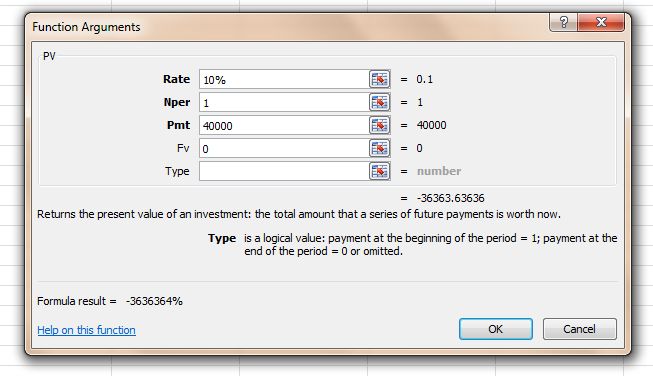
If the receivable becomes impaired at the end of 20x3, the impairment loss is
calculated as the difference between the carrying amount (R100,000) and the present
value of estimated future cash flows (R40,000) discounted at the prevailing prime rate
of interest (10%).
Carrying amount R100,000
Estimated future cash flows R40,000
Prevailing prime interest rate 10%
The department assessed R63 636 as being irrecoverable. Department X therefore
determines that only R36 364 is recoverable in future (see calculations above). Approval for
write off has however not been provided by the accounting officer at year end.
Impairment recorded at year-end on 31 March 20x3 is R100 000 less R36 364 which
amounts to R63 636
Issued February 2021 Page 19Chapter 9: General Departmental Assets and Liabilities
In the MCS environment, impairment loss is calculated on all financial assets reported
in the primary and secondary financial information, and not on capital assets. The
amount is recorded in the relevant note to the financial statements. Some notes, for
example receivables, investments, loans have sub-notes where impairment can be
recorded, whereas there is also a note for other financial assets’ impairment.
Since all impairment is recorded and not recognised, it does not reduce the carrying
value of the recognised financial asset.
6.5 Derecognition and removal
A department must derecognise and/or remove a financial asset only when:
• the contractual rights to the cash flows from the financial asset expire, are settled, or waived
(written-off); or
• the department transfers to another party substantially all of the risks and rewards of ownership
of the financial asset.
When is it an impairment and when is it a write off?
Impairment Write-off
Recognition or Never recognised only recorded. The asset is Can be recognised (for a recognised asset
recording therefore not “derecognised”. written off) or recorded (for a recorded asset
written off). The asset is derecognised in the
case of a primary financial information asset.
There is a possibility that the full amount owed (or Know for certain that the full amount owed (or
partially owed) will not be recoverable; or partially owed) will not be recoverable; and
Recoverability Know for certain that the amount owed will not be approval for write-off has been obtained
recoverable, however approval for write-off has
not been obtained at year end
Example: Impairment vs. write-off of financial asset
Scenario 1:
Department X accidently overpaid one of its suppliers. The department consequently raised a
receivable for the overpayment and started the process of recovering the debt.
Date that the receivable was raised: 31 July for R172 000.
During March the supplier notified the department that they are experiencing financial difficulties
and they will not be able to pay back the debt.
After assessing the situation and taking every reasonable step in trying to recover the debt, the
department concluded that it would not be in the interest of the state to continue trying to recover
the debt and therefore decided to write it off. Approval for the write off was however no obtained
by the accounting officer at year end.
Initial measurement by Department X: Receivables: Recoverable expenditure R172 000
Impairment recorded at year-end by Department X: Impairment R172 000
Issued February 2021 Page 20Chapter 9: General Departmental Assets and Liabilities
Scenario 2:
Assume the same information as above however approval for the write off was obtained at year
end.
Since approval was obtained the department can recognise the write-off and will therefore
derecognise the receivable of R172 000.
The following journal entry will be processed to write-off the receivable.
Debit Credit
R R
Payments for financial assets: Debts written off 172 000
Receivables: Recoverable expenditure 172 000
A department must derecognise and / or remove a financial liability (or a part of a financial liability)
from its statement of financial position when, and only when, it is extinguished. A financial liability (or
part of it) is extinguished when the debtor either:
• Discharges the liability (or part thereof) by paying the creditor, normally with cash, other financial
liabilities, goods or services;
• Is legally released from primary responsibility for the liability (or part of it) either by process of law
(expires) or by the creditor (cancelled). If the debtor has given a guarantee, this condition may
still be met; or
• Waives the debt (written-off).
Below are examples of the treatment of a write off which occurred in different period and where the
amount due was only partially recovered.
Issued February 2021 Page 21Chapter 9: General Departmental Assets and Liabilities
Example: Debt write-off in the same financial year (with partial recovery)
Department B provides bursaries to certain of its employees which it then recovers from the
employees. During the financial year it gave R10 000 to employee X. Employee X only paid
back R9 000 during the same financial year. After department B exhausted all options of trying
to recover the outstanding R1 000 it decided to write it off as it would be uneconomical to
recover it from the employee.
The accounting entries will be as follows:
Debit Credit
R R
Expenditure (bursaries to employees) 10 000
PMG Bank Account 10 000
Recording of bursary paid to an employee
Debit Credit
R R
Debt Account 10 000
Expenditure (bursaries to employees) 10 000
Amount to be recovered from employee
Debit Credit
R R
PMG Bank Account 9 000
Debt Account 9 000
Recovery of funds from employee
Debit Credit
R R
Thefts and losses 1 000
Debt Account 1 000
Write-off of debts not recovered
Example: Debt write-off in the subsequent financial year (with partial recovery)
Department B provides bursaries to certain of its employees which it then recovers from the
employees. During year 1 it gave R10 000 to employee X. Employee X only paid back R9 000
during year 1. After department B exhausted all options of trying to recover the outstanding R1
000 it decided to write it off (in year 2) as it would be uneconomical to recover it from the
employee.
Issued February 2021 Page 22Chapter 9: General Departmental Assets and Liabilities
The accounting entries will be as follows:
Year 1 Debit Credit
R R
Expenditure (bursaries to employees) 10 000
PMG Bank Account 10 000
Recording of bursary paid to an employee
Year 1 Debit Credit
R R
Debt Account 10 000
Expenditure (bursaries to employees) 10 000
Amount to be recovered from employee
Year 1 Debit Credit
R R
PMG Bank Account 9 000
Debt Account 9 000
Recovery of funds from employee
Year 2 Debit Credit
R R
Thefts and losses 1 000
Debt Account 1 000
Write-off of debts not recovered
Issued February 2021 Page 23Chapter 9: General Departmental Assets and Liabilities
Example: Debt only recoverable in the subsequent financial year and write off in
that year (with partial recovery)
Department B provides bursaries to certain of its employees which it then recovers from the
employees. During year 1 it gave R10 000 to employee X, which only became recoverable in
year 2. Employee X only paid back R9 000 during year 2. After department B exhausted all
options of trying to recover the outstanding R1 000 it decided to write it off (in year 2) as it
would be uneconomical to recover it from the employee.
The accounting entries will be as follows:
Year 1 Debit Credit
R R
Expenditure (bursaries to employees) 10 000
PMG Bank Account 10 000
Recording of bursary paid to an employee
Year 2 Debit Credit
R R
Debt Account 10 000
Recoverable Revenue 10 000
Amount to be recovered from employee (credited against statement of financial position
account as current year's expenditure cannot be affected)
Year 2 Debit Credit
R R
PMG Bank Account 9 000
Debt Account 9 000
Recovery of funds from employee
Year 2 Debit Credit
R R
Thefts and losses 1 000
Debt Account 1 000
Write-off of debts not recovered
Year 2 Debit Credit
R R
Recoverable Revenue 10 000
Departmental Revenue 10 000
Write-off of recoverable revenue
Issued February 2021 Page 24Chapter 9: General Departmental Assets and Liabilities
6.6 Offsetting Financial Assets and Financial Liabilities
A financial asset and a financial liability should be offset and the net amount presented in the
statement of financial position when, and only when, the department satisfies both the following
conditions:
• Currently has a legally enforceable right to set off the recognised amounts; and
• Intends either to settle on a net basis, or to realise the asset and settle the liability
simultaneously.
Financial assets and financial liabilities are presented on a net basis when, in doing so, it reflects a
department’s expected future cash flows from settling two or more separate financial instruments.
When a department has the right to receive or pay a single net amount and intends to do so, it has, in
effect, only a single financial asset or financial liability. In all other circumstances, financial assets and
financial liabilities are presented separately from each other, consistently with their characteristics as
resources (assets) or obligations (liabilities) of the department.
Offsetting a recognised financial asset and a recognised financial liability and
presenting the net amount in the statement of financial position is not the same as
derecognition of a financial asset or a financial liability.
With derecognition, a financial instrument previously recognised is removed from the
statement of financial position and may also result in a gain or loss.
A right of set-off is a debtor’s legal right, by contract or otherwise, to settle or otherwise eliminate all or
a portion of an amount due to a creditor by applying against that amount an amount due from the
creditor. In unusual circumstances, a debtor may have a legal right to apply an amount due from a
third party against the amount due to a creditor provided that there is an agreement between the three
parties that clearly establishes the debtor’s right of set-off. Since the right of set-off is a legal right, the
laws applicable to the relationships between the parties need to be considered.
A department’s intentions with respect to settlement of particular assets and liabilities may be
influenced by its normal operating practices, the requirements of the financial markets and other
circumstances that may limit the ability to settle net or to settle simultaneously. When a department
has a right of set-off, but does not intend to settle net or to realise the asset and settle the liability
simultaneously, the department should not offset the financial asset and financial liability.
Offsetting cash and cash equivalents
A department should not offset bank accounts in overdraft against other bank
balances, unless it has a legally enforceable right to do so.
Therefore, bank accounts in overdraft should be disclosed separately under current
liabilities and not offset against other cash and equivalents (which are disclosed
under current assets).
Issued February 2021 Page 25Chapter 9: General Departmental Assets and Liabilities
7 Summary of Key Principles
This chapter provides guidance on how to identify and account for different types of departmental
financial instruments.
7.1 Identification
A financial instrument is any contract that gives rise to a financial asset of one entity and a financial
liability or residual interest of another entity.
Financial asset Financial liability
A financial asset is: A financial liability is any liability that is a
• cash; contractual obligation to:
• a residual interest of another entity; or • deliver cash or another financial asset to
another entity; or
• a contractual right to:
• exchange financial assets or financial
o receive cash or another financial asset liabilities under conditions that are
from another entity; or potentially unfavourable to the entity.
o exchange financial assets or financial
liabilities with another entity under
conditions that are potentially favourable
to the entity.
7.2 Recognition / recording
A financial instrument is initially recognised when the entity becomes a party to the contractual
provisions.
Accrued revenue and accrued expenditure fall under secondary financial information which is only
disclosed which may undermine the importance thereof. In order to prevent this, a department should
exercise proper control over such information, such as steps to recover amounts owed to the
department, ensuring the completeness and accuracy of accruals, etc.
7.3 Measurement
A financial instrument is measured at its cost plus transaction costs that are directly attributable to the
acquisition or issue of the financial asset or financial liability.
At the end of each reporting period, a department assesses whether there is any objective evidence
that a financial asset recognised or recorded, in the primary or secondary financial information
respectively, is impaired.
The impairment is the difference between the carrying amount and the present value of estimated
future cash flows discounted at an appropriate interest rate, normally prime rate.
An impairment is only recorded never recognised.
A write off can be recognised or recorded depending on whether the related asset was recognised or
only recorded.
If an amount is irrecoverable, but approval for the write off thereof has not been obtained at year end,
the department should rather record an impairment than recognise or record a write off.
Issued February 2021 Page 26You can also read


