GLASS Reviews on ICOM Glass
←
→
Page content transcription
If your browser does not render page correctly, please read the page content below
Reviews on              Nº 7   2019

    GLASS
                             ICOM Glass
                             Lectures: ICOM Glass Annual Meeting
                             in Sars-Poteries (France) 2017

0_review_on_glass_7.indd 1                                         22/7/19 15:11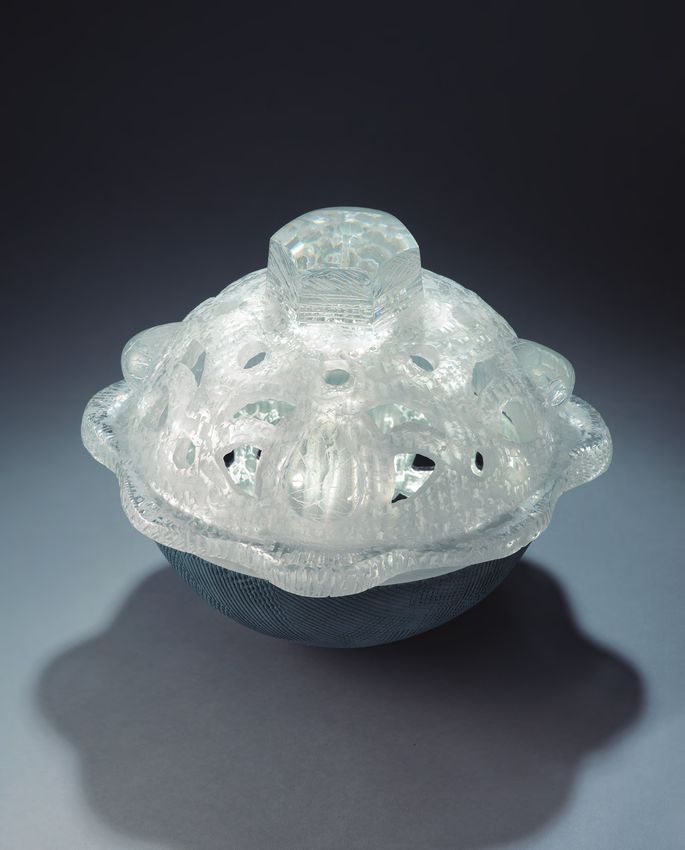
Edit

                                                                                                          GLASS
                                                                                                                                     ICOM
                                                                                                                                     international committee
                                                                                                                                     for museums
                                                                                                                                     and collections of glass

                                                                                                 ICOM INTERNATIONAL COMMITTEE
                                                                                                 FOR MUSEUMS AND COLLECTIONS OF GLASS
                                                                                                 http://network.icom.museum/glass

                                                                                                 Editorial and Board Members
                                                                                                 Reino Liefkes. Chair
                                                                                                 Teresa Medici. Secretary
                                                                                                 Sven Hauschke. Treasurer
                                                                                                 Katarina Benova
                                                                                                 Elvira Schuartz
                                                                                                 Paloma Pastor
                                                                                                 María Luisa Martínez

                                                                                                 English text correction
                                                                                                 Amy McHugh

                                                                                                 Coordinator of this journal
                                                                                                 Paloma Pastor

                                                                                                 Cover illustration
                                                                                                 Harvey K. Líttleton, Sculpture, 1968.
                                                                                                 © Paul Louis

                                                                                                 Back cover Illustration
                                                                                                 Les mascottes. © Musée Lalique

                                                                                                 Layout
                                                                                                 Cyan, Proyectos Editoriales, S.A.

                                                                                                 © 2019 ICOM Glass and authors

                                                                                                 ISSN: 2227-1317

                                                                                                 Journal sponsored by
                                                                                                 ICOM. International Council of Museums

                                                                                                 No part of this magazine may be used or reproduced
                                                                                                 without the written permission of the publisher.
                                                                                                 ICOM Glass can not accept any responsibility for
                                                                                                 errors or inaccuracies in the information.

  Vase en verre soufflé, avec projection d’émaux, inv. 2017.2.3. Don Barlach Heuer. © Musée du
  verre, Conches / Paul Louis.

0_review_on_glass_7.indd 2                                                                                                                            22/7/19 15:11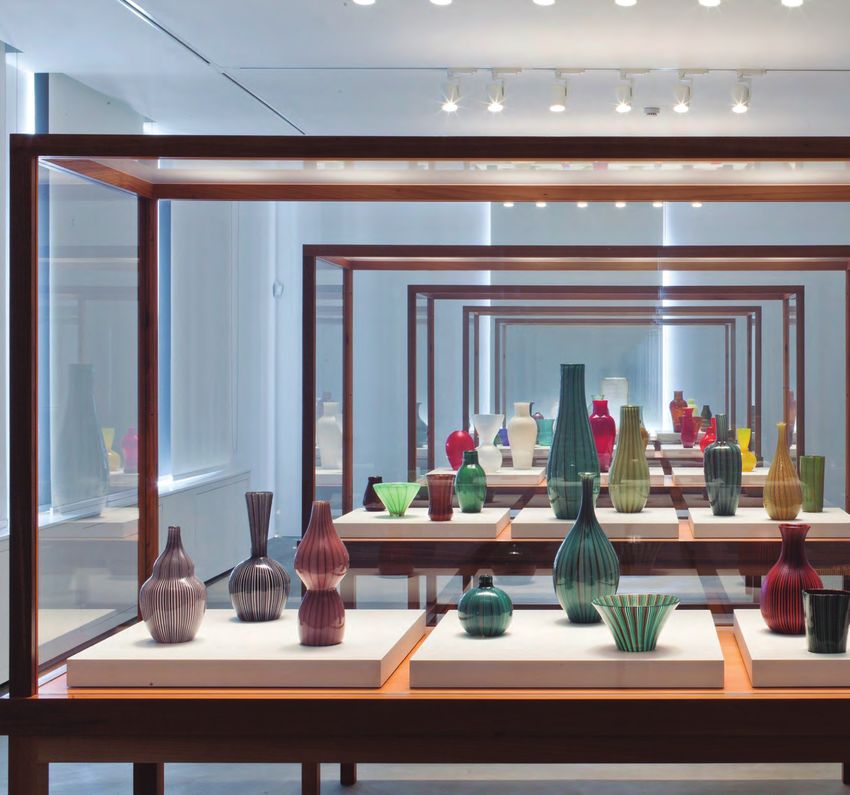
SUMMARY
     4
     Lectures         4 Le Stanze del Vetro 12 Glass, why not? 16 Momignies, Beauwelz,
     Macquenoise: du verre au rêve 24 Glass in the Celje Region from the 18th Century to the
     Present 33 Georges Despret (1862-1952), l’aventure artistique d’un industriel verrier 39 The
     history and highlights of the glass collection in the State Pushkin Museum of Fine Arts,
     Moscow, Russian Federation 47 Le Musée du Verre de Charleroi: une histoire, un musée, une
     collection 56 The Conches Glass Museum: its creation, collections and future 63 Le musée
     Lalique 70 Museum/Center of Glass art, Carmaux, South of France

      74                                             80
      Interview              Vice VERsa,             News     80 Congresses & Exhibitions
      Sally Fawkes                                   81 Book review 82 News

      84                                              86
      Memories                                       Members

0_review_on_glass_7.indd 1                                                                          22/7/19 15:11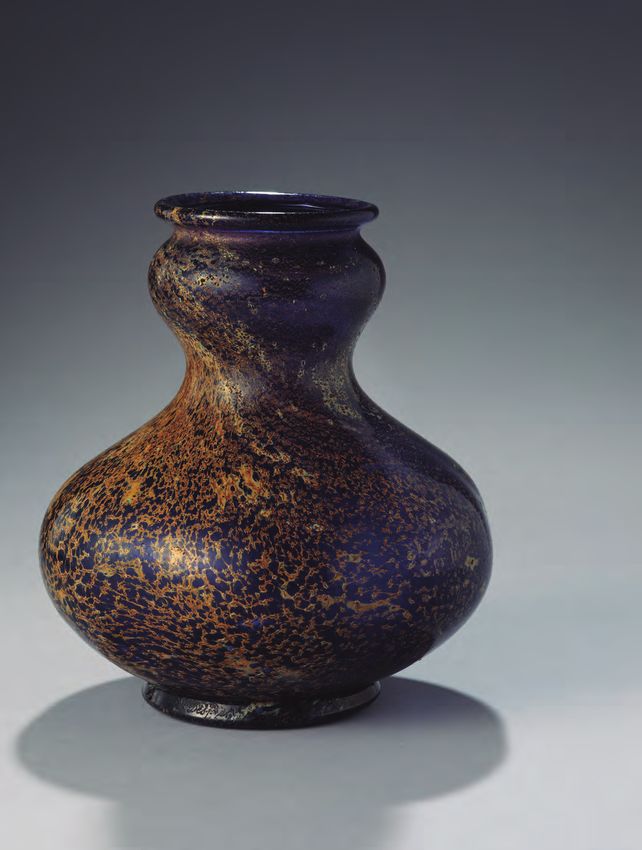
Converging Connections. © Paul Louis.

0_review_on_glass_7.indd 2                22/7/19 15:11
FOREWORD

               The ICOM International Glass Committee is proud to present the seventh issue of its official
               publication Reviews on Glass. In this publication we present news of the activities of our
               Committee and provide a forum for our members to share common issues and remain up to date
               with the latest developments in our field.

               In 2018, the ICOM Glass Committee held its annual meeting in St. Petersburg in Russia, hosted by
               the State Hermitage Museum and organized by Curator Elena Anisimova. The meeting with the
               theme ‘Glass museums and collections in Russia’, attracted an ICOM Glass record number of 74
               participants. 29 of these were from Russia. This was the first time ICOM Glass organized a meeting
               in Russia and the opportunity to interact with so many Russian colleagues has made this very
               successful annual meeting into one of our most fruitful and memorable ones.

               Our successful meeting has reflected positively on our membership, which increased by an
               impressive 23 % from 2017 to 2018, to a total of 143 voting members! Within this total our
               number of institutional members rose from 20 to 23. Our diversity profile has also increased, and
               we now represent 30 different countries, up from 24. Over 80 % of our members is still from
               Europe, but we were pleased to see the number from the Asia/Pacific region double, from 4 to 8.

               During 2018 we continued develop our Website. http://network.icom.museum/glass, where we
               publish our yearly newsletter http://network.icom.museum/glass/our-publications/annual-newsletter/.
               For the historic part of our Website, we are still looking for any issues of our Newsletter, programme
               or list of participants of our meetings before 1985. Please let us know if you have any! Please join
               us on Facebook (International Committee for Museums and Collections of Glass) or follow us on
               Instagram (icom_glasscommittee).

               In this issue of Reviews on Glass we publish a selection of the papers presented at the ICOM
               GLASS annual meeting 2017, organized by the MusVerre in Sars-Poteries, France. The theme of
               our meeting was: New museums: documenting the past and reviving glass-making traditions and
               focussed on the industrial glassmaking area in Northern France and Belgium. I am pleased to
               include an interview with Anne Vanlatum, Artistic Director of the MusVerre as well as articles about
               glass and glass museums in France and Belgium and beyond.

               I would like to thank those speakers who have taken the effort to turn their spoken papers into
               wonderfully illustrated published text. Finally, I would like to take the opportunity to thank Paloma
               Pastor – supported by Amy McHugh and Teresa Medici – for editing and putting together this issue.

               Reino Liefkes, outgoing Chairperson ICOM International Glass Committee

0_review_on_glass_7.indd 3                                                                                              22/7/19 15:11
LECTURES

               Carlo Scarpa, Rigati e Tessuti. Installation view. © Ettore Bellini.

                                                     4

0_review_on_glass_7.indd 4                                                            22/7/19 15:11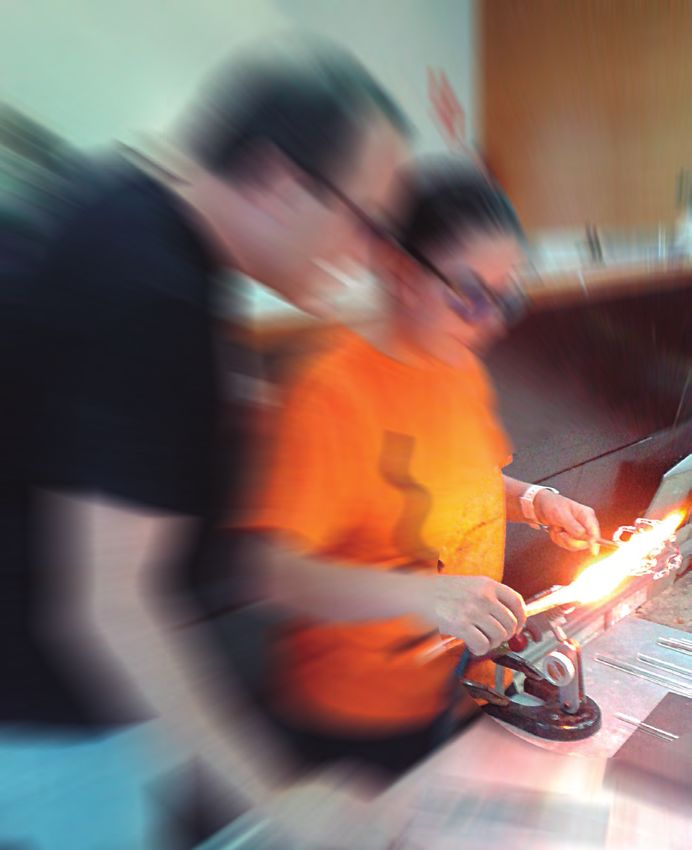
LECTURES
                                ICOM International Committee for Museums and
                                Collections of Glass annual meeting 2017 was held
                                in Sars-Poteries, (France), and organized by the
                                MusVerre from 16th to 20th of October.

                                The paper sessions explored the theme: New
                                museums: documenting and reviving glass-making
                                traditions. In this new issue we present a selection
                                of lectures given at this meeting thanks to Mrs. Aude
                                Cordonnier, director of the MusVerre and Mrs. Anne
                                Vanlatum artistic director of the museum and member
                                of ICOM Glass Committee.

                             Le Stanze
                                                        del Vetro
                                Manuela Divari. LE STANZE DEL VETRO

                                LE STANZE DEL VETRO (Rooms          contemporary forms of
                                for Glass) is a cultural project    glassmaking.
                                and a permanent exhibition
                                space located on the Island of      LE STANZE DEL VETRO is
                                San Giorgio Maggiore in Venice.     located in a former boarding
                                                                    school on the island. With 650
                                Founded in the summer of 2012       square metres of exhibition
                                from the collaboration between      space, the exhibition centre
                                the Swiss nonprofit Pentagram       hosts not only exhibitions but
                                Stiftung and Fondazione Giorgio     also conferences, workshops
                                Cini it is dedicated to the study   and other events dedicated
                                and display of modern and           to glass.

                                                                    5

0_review_on_glass_7.indd 5                                                                           22/7/19 15:11
LECTURES

               The restoration was carried out         contemporary artists, who             For this reason, every year until
               by New York based architect             have used glass as an original        2021, two exhibitions will be
               Annabelle Selldorf.                     means of expression, and to           staged on the island.
                                                       highlight and study the
               The cultural initiatives                leading producers and major           The first in spring, dedicated to
               of LE STANZE DEL VETRO are              collections of glass                  the use of glass in the fields of
               dedicated both to promote               worldwide.                            art and design of the 20th and
                                                                                             21st century; the second, in
                                                                                             autumn, dedicated to the
                                                                                             talented designers who created
                                                                                             objects for the Venini glassware
                                                                                             company in the 20th century.

                                                                                             Parallel to the exhibition
                                                                                             program, LE STANZE DEL
                                                                                             VETRO holds a series of special
                                                                                             projects, often site-specific,
                                                                                             where contemporary artists
                                                                                             (Swiss artist Not Vital in 2013,
                                                                                             Japanese photographer Hiroshi
                                                                                             Sugimoto in 2014 and American
                                                                                             artist Pae White in 2017) are
                                                                                             invited to consider and create a
                                                                                             work using glass as an artistic
                                                                                             medium.

                                                                                             In addition to their installation,
                                                                                             the artists are offered the
                                                                                             opportunity to create a unique
                                                                                             art object made of glass from
                                                                                             Murano.

                                                                                             The concept of these temporary
                                                                                             installations is to allow an
                                                                                             internationally acclaimed artist
                                                                                             to work on a large scale, and to
                                                                                             engage with the space between
                                                                                             sculpture and architecture.

                                                                                             Each project will be presented
                                                                                             over two years, during Venice’s
                                                                                             Art and Architecture Biennales,
                                                                                             aiming to address both of their
                                                                                             respective audiences as well as
                 This slide sums up the exhibitions held until now at LE STANZE DEL VETRO.
                                                                                             the public at large.

                                                  6

0_review_on_glass_7.indd 6                                                                                                        22/7/19 15:11
REVIEWS ON GLASS Nº 7 2019

                                                                                             flow of the Gualala river in
                                                                                             Northern California, which the
                                                                                             work echoes in both its structure
                                                                                             and layout.

                                                                                             As part of LE STANZE DEL
                                                                                             VETRO project, the Fondazione
                                                                                             Cini, with the support of
                                                                                             Pentagram Stiftung, has set up
                                                                                             a Glass Study Centre within its
                                                                                             Institute of Art History. The
                                                                                             centre aims at becoming a
                                                                                             reference point for the
                                                                                             international scientific
                                                                                             community, for the study of the
                                                                                             glass medium as a living and
                 Pae White, Qwalala. ® Ph. Enrico Fiorese.
                                                                                             topical material.

                                                                                             The Glass Study Centre is
                                                                                             promoting the creation of a
                                                                                             comprehensive Archive on
                                                                                             Venetian Glass, in order to
                                                                                             gradually incorporate the
                                                                                             historical archives of Murano-
                                                                                             based furnaces, which include
                                                                                             drawings, plans, letters and
                                                                                             photos.

                                                                                             Furthermore, the Glass Study
                                                                                             Centre aims to set up a
                                                                                             specialized library, at organize
                                                                                             seminars, conferences and
                                                                                             workshops for scholars and
                                                                                             artists interested in the history,
                 Paolo Venini and his furnace. Installation view. ® Ph. Enrico Fiorese.      technology and developments in
                                                                                             glassmaking.

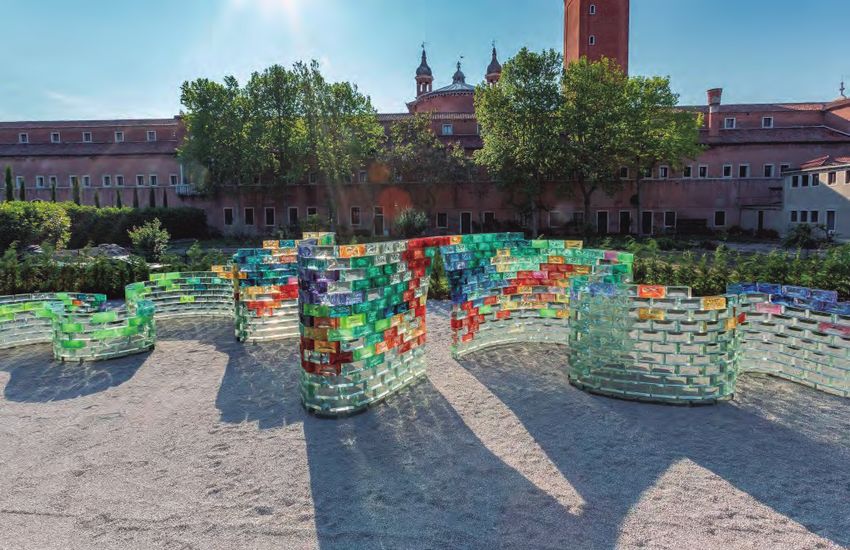
               This image refers to the running           75 metres long and up to 2.4       The first exhibition that
               installation Qwalala by Pae                metres high, it occupies the       inaugurated the space was ‘Carlo
               White. It is the second outdoor            entire area opposite LE STANZE     Scarpa. Venini 1932-1947’.
               installation commissioned by Le            DEL VETRO.
               Stanze del Vetro and consists of a                                            The show reconstructed his
               curving wall made of thousands             The title of the piece, Qwalala,   creative development as artistic
               of solid glass-bricks, each hand-          is a Native American Pomo word     director of the Venini
               cast in the Veneto region.                 and references the meandering      Glassworks.

                                                                                             7

0_review_on_glass_7.indd 7                                                                                                        22/7/19 15:11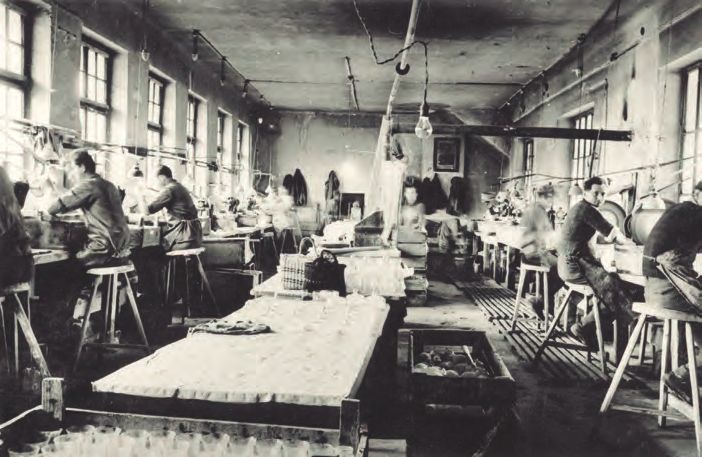
LECTURES

               It was organised around a
               selection of over 300 works.
               Some of them shown for the first
               time.

               The works displayed were
               divided into approximately 30
               types that varied according to
               technique and glass types from
               sommerso, to pennelate.

               The exhibition explored the
               significance and importance of
               Scarpa’s glass design within his
               overall work, which involved
               continuous research into
               materials, colours and
               techniques, both traditional and       Vasi-fazzoletto vetro-incamiciato 1949-50.
               new, and which he carried out
               daily with the best master
               glassblowers.                         exhibition ever entirely                 glass techniques, the Macchie
                                                     dedicated to glass in the                series, with recognizable opaque
               From the series a bollicine that      Metropolitan.                            abstract decorations that stand
               fills the glass with tiny                                                      out on the thick transparent
               bubbles, to murrine romane,           The above images refer to the            glass and bring to the artworks a
               with the variation murrine            exhibition of ‘Fulvio Bianconi at        distinctive pictorial value, the
               opache, proceeding with the           Venini’ that aimed to give a             Sirene and the Nudi made in
               variegati zigrinati, the vetri a      comprehensive description of the         monochrome crystal glass.
               macchie, and the laccati neri         fruitful, longlasting collaboration
               e rossi.                              between the artist and the famous        The Pezzati series of 1950-51
                                                     Murano glassware company.                was received with great success,
               The show also included (as in                                                  they were created using a
               every exhibition), prototypes,        Bianconi focussed on pieces              patchwork of multicolored and
               one-offs, original drawings and       with sophisticated shapes, strong        transparent tesserae arranged
               designs, as well as period            colours, designing striking works,       like a chessboard, toghether with
               photographs and archive               some of which sum up the                 the A Spicchi series, those with
               documents.                            enthusiasm of the “fabulous”             horizontal and vertical stripes,
                                                     Fifties, and later became true           and the Scozzesi, which show an
               The Carlo Scarpa exhibition was       icons of Murano glassmaking.             exciting weave of crossed canes,
               received with great success and                                                shaped into an irregularly square
               enthusiasm by the public, the         Among them the series entitled           mould.
               press and critics, and then           Maschere italiane, the famous
               travelled onto the Metropolitan       Fazzoletto vase, of which there          In the same period Bianconi
               Museum of Art, New York, in           are several versions, with               made several glass animals,
               2013 which was the first              different dimensions, styles and         where the virtuosity of the

                                                 8

0_review_on_glass_7.indd 8                                                                                                        22/7/19 15:11
REVIEWS ON GLASS Nº 7 2019
well as glasses from the 30s,
including the Trinkservice n.
248, the only glass service
designed by Adolf Loos still in
production today.
The show also presented the
‘Boudoir d’une grande vedette’,
the glass room designed by
Josef Hoffmann for the Austrian
Pavilion at the 1937 Paris
World Exhibition, reconstructed
by the MAK.
The glass building, which
resembled a monumental
showcase, was the definition of
LE STANZE DEL VETRO. a clichéd modern room: with
mirrors on the walls, on the
floor and sumptuous luxury
techniques mastered in Murano pioneering developments of furniture.
was combined with his modern decorative and
playfulness and irony. functional glass, working in close J. & L. Lobmeyr delivered the
connection with the furnaces. glass for the room and a
In 2016 LE STANZE DEL chandelier designed by Haerdtl
VETRO realized a very fruitful The cooperation between the and Hoffmann. The wall
collaboration with the Museum designers and the manufacturers paneling was made of carved
MAK in Vienna offering for the led to new projects like the wood with a silver layering to
first time a comprehensive ‘Wiener Werkstätte’ and the support the glassy, bright,
overview of the period from the ‘Werkbund’ aiming to glorify the shimmering effect within the
final decades of the Austro- production process and foster room.
Hungarian Monarchy up to the the collaboration between art,
end of the First Republic. craft and industry. After its successful showing in
Venice, this impressive
It was our second exhibition - The show was complemented exhibition was presented in the
after the ‘Glass from Finland in with a layout featuring examples MAK itself at the beginning of
the Bischofberger Collection’- of the Wiener Werkstätte’s 2017 and will be travelling to
that focused on the international wallpapers and textile designs New York next year.
developments of glass in the and presented the war and
20th century. classicist glasses shown at the This slide refers to the
Werkbund exhibition in Cologne exhibition devoted to the
The protagonists of the Viennese in 1914, the glass works shown creative entrepreneur Paolo
Modernism, such as Hoffmann, at the Exposition Internationale Venini exhibiting 300 works that
Moser, Olbrich, Prutscher, and des Arts décoratifs et industriels recount his vision as well as
Loos, launched the first modernes in Paris, in 1925, as that of the artists who
9
0_review_on_glass_7.indd 9 22/7/19 15:11LECTURES
We are able to
offer most of
our exhibitions
to fellow
institutions
around the
world
Ettore Sottsass: The glass exhibition View.
collaborated with him over the a white lace-like pattern that Tobia Scarpa, the son of Carlo
years. stands out against the coloured Scarpa.
surface, and the stunning
Milanese by birth and Muranese mosaico tessuto multicolore. To coincide with every exhibition
by choice, Paolo Venini was a a scholarly catalogue, edited by
great protagonist of 20th century Venini himself designed the some of the most important
glass, and made a decisive Diamante series in the 1930s, scholars in the field, is
contribution to keeping it alive and the important series of published by Skira for LE
with his enthusiastic work over incisi glass that reflect the STANZE DEL VETRO.
the course of almost forty years. influence of Nordic design
orientated towards delicate On the occasion of the 100th
Paolo Venini, was a skilled monochromes. anniversary of the birth of Italian
businessman, sensitive to the architect Ettore Sottsass, LE
trends of contemporary art as The exhibition also features the STANZE DEL VETRO celebrated
well as the demands of the creations of those who his glass and crystal production
international market. collaborated with him between with the spring exhibition ‘Ettore
the Thirties and Fifties: Tyra Sottsass: the Glass’.
Several of his glass works Lundgren, Gio Ponti, Piero
stemmed from a refined and Fornasetti, Eugène Berman, Ken Curated by Luca Massimo
innovative reinterpretation of Scott who created the colourful Barbero, Director of the Institute
traditional Murano techniques, series of 18 stylised fish of Art History of Fondazione
such as the zanfirico a reticello, produced for the American Giorgio Cini, the show feautured
in monochrome and sometimes department store Macy’s, 200 works – mostly from the
richly coloured, together with the Charles Lin Tissot, Riccardo Ernest Mourmans collection –
mosaico zanfirico, decorated with Licata, Massimo Vignelli and many of which on show for the
10
0_review_on_glass_7.indd 10 22/7/19 15:11REVIEWS ON GLASS Nº 7 2019
first time with an innovative by the Native American Among the classical-shaped ones
exhibition set-up design by ceremonial dolls. is the well-known Veronese vase
Annabelle Selldorf Studio. that was inspired by the one
Many pieces had never been depicted in the sixteenth-century
Rather than following a exhibited before, such as the 22 Annunciation painting at the
chronological exploration, the glass sculptures of different Galleria dell’ Accademia in
show began with works from the dimensions, some over a meter Venice.
1980s, belonging to Sottsass’s tall, produced at the Cenedese
Memphis series. glassworks in Murano that The Cappellin Venini glass
Sottsass originally designed for production was immediately
The Memphis room made for a the foyer of the “Millennium distinguishable from the
dazzling opener: on a plinth in House” in Doha, a vanity project Murano craftsmanship of the
the center, eight whimsical yet by the Emir of Qatar that was time, both for its classical
elegant vases in vivid colors face never realized. proportions and rigorous
a wall of backlit shelves, each shapes, as well as for its
holding a piece from the 1986 The currently running exhibition remarkable colours, mostly
series that highlight Sottsass’s ‘Vittorio Zecchin: Transparent delicate but at times intense
departure from functionality in Glass for Cappellin and Venini’ and bright shades of yellow,
his work with glass. features 250 fine hand-blown green, blue and amethyst.
mostly monochrome works
These works also mark his designed by the artist and painter The exhibition ran until the 7th
unorthodox experimentation with in the 1920s, when he was of January 2018.
the medium where, for the first appointed Artistic Director first at
time in 1986, he introduced the the V.S.M. Cappellin Venini & Co. We are able to offer most of our
use of chemical gluing glassware company and then at exhibitions to fellow institutions
techniques, breaking with the the M.V.M. Cappellin & Co. around the world. They can be
centuries-old Murano glass tailored to the size required,
tradition of joint heating. Vittorio Zecchin was a from say a 100 to 350 works.
revolutionary figure of twentieth- The fact that catalogues are all
The following rooms featured century glass, which he produced also in English and
pieces produced with different contributed to revive with the that they comprise in each case
craftsmen testing the boundaries support of two enlightened all the works by each designer
of the medium, among other entrepreneurs – Giacomo or school, would enable the
things through combinations Cappellin and Paolo Venini – hosting museum to readily use
with materials such as marble producing elegant glass works our catalogue as their own, if
and clay. which introduced modernism to necessary changing the
Murano, though drawing frontmatter to suit their
The glass works gradually inspiration from Venetian needs.
become more geometrically renaissance glass or paintings.
coherent such as in the ironic We’d love to collaborate with
piece Asparagi sacri (sacred The exhibition features his any of you, and are ready to
asparagus), created in 1994 for rigorous bowls and vases, some start today. Please get in touch
Galerie Bruno Bischofberger, and with a flat base, others with with me at the following
then more earnestly, as in the folds or pinches in the body or address:
2004 series Kachinas, inspired the neck. exhibitions@estanzedelvetro.
11
0_review_on_glass_7.indd 11 22/7/19 15:11LECTURES
Esther Pizarro and Emilio Elvira, MAVA Summer 2015.
12
0_review_on_glass_7.indd 12 22/7/19 15:11REVIEWS ON GLASS Nº 7 2019
Glass,
why not?
María Luisa Martínez García. Contemporary Art Glass
Museum in Alcorcón-MAVA
The boom of the Studio Glass spontaneous work with a great Tony Cragg, Jaume Plensa, Javier
movement took place between conceptual load. Pérez and many others were
the 1960s and 1990s; a new available to the general public
type of artist emerged dedicated In the last ten years, since the in exhibitions.
exclusively to glass, while the beginning of the new
rest of the artists watched with millennium, there has been a They do not only present their
curiosity and amazement at the change in the trend. There is work in specialized glass
technical sophistication that they increasingly a frequent presence museums, but also in important
were developing. of glass in exhibitions, prizes, centers of contemporary art,
museums, galleries, and such as Reina Sofía Museum,
For several decades they lived publications. There has been a Guggenheim Museum in Bilbao,
estranged. The first group proliferation of glass teaching the Tate Modern and the Center
focused on the material, getting centers with students of all Georges Pompidou, just to
caught-up in the technical nationalities, who move quickly mention a few.
difficulties and challenges. They and comfortably through our
made the object itself the global village. These In “The Art of not making. The
ultimate objective of their developments have heightened new artist / artisan relationship,”
activity, turning “the medium its growth and the general Michael Petry writes about this
in the message.” interest in glass. new taste, this return to the
recognition of the artisanal part
General contemporary artists, The largest push occurred the of the contemporary artist.
showed some contempt towards glass art of international artists
an activity that requires so much with enormous media impact like Unfortunately, most of the new
effort and time in its production, Kiki Smith, Mona Hatoum, Ai artists who want to work with
and were in favor of a more Weiwei, Fred Wilson, Jean Fabre, glass, are not willing to devote
13
0_review_on_glass_7.indd 13 22/7/19 15:11LECTURES
workshop that covers the three I believe we can finally say that
phases of creativity: research, glass is a present element in the
experimentation and production. mind of any artist when facing
how to materialize their creative
For more than thirty years, it has impulse.
retained a magnificent collection
of works produced in its But precisely for this reason,
facilities. This is due to the our work must be perseverant
highly qualified multi-lingual and we, the museums whose
technical team who are very main function is to expose and
receptive and open to the educate, must also promote and
Thinking in Glass exhibition in exchanging of ideas and visions. look to help substantiate this
MAVA, 2016 March. © Phtoto,
concern of a growing number of
Markus Schroll.
In addition, the Glasstress artists who wish to use glass
phenomenon is something that in their works.
deserves to be studied in depth
five, ten, or fifteen years of their because of its media impact and Most of our museums have
life to learn how to execute and its international recognition realized this and, some with
produce the pieces themselves. more modest means and others
Created in 2011 by the Berengo with large and complete
In the 1980s and 1990s many Foundation, the organization is facilities, have a Studio or
training centers emerged for all directed by Adriano Berengo, an Workshop to offer artists.
levels of education, from small audacious businessman with
craft workshops to university many high-level, global contacts, The artist must find in our
departments at major schools including artists, gallerists and institutions a welcoming place
and national centers. They were museums. The Glasstress beyond the exhibition of great
endowed with important exhibitions means only the last works on which to be inspired.
technical facilities and great reflection of a whole set of an We must open our museums to
teachers, mostly artists incredible work, that includes accompany and stimulate them
themselves, some were communication, production, to overcome the technical,
mentioned earlier. exhibition, collecting and the art training and economic brake that
market. involves the use of glass in their
Besides, there are some works.
landmarks places as CIRVA in This portfolio of very diverse
Marseille, as an example, with a activities, some more MAVA launched two projects in
rigorous trajectory, but with an commercial and others of a recent the years, the first was
elitist and minority impact. In more institutional nature, have called Think in glass (2016) and
1983, the Center Internationel borne fruit, bringing a great the second Working Glass
de Recherche sur le Verre e les legacy and an enormous amount (2018).
Arts Plastiques was inaugurated, of possibilities. The artist of
a center for contemporary art today, as soon as he enters the The goal of these projects is to
that includes a residence for world of glass, immediately stimulate the use of glass as a
artists, designers and architects. perceives that he/she has many medium among artists who have
It is a place for experimentation possibilities at his disposal to never used it in their works and
and creation; it contains a glass use it. who probably would not have
14
0_review_on_glass_7.indd 14 22/7/19 15:11REVIEWS ON GLASS Nº 7 2019
The museum offers its facilities
and its technicians to new
artists, and the non-glass artist,
in return the museum receives
attention and pieces for the
collection. Attention is important
to the development of the
collection because we always use
the collection to explain the
possibilities offered by glass.
The creation of a piece is equally
important because, although the
Working Glass. final piece is owned by the
artist, many end up donating
some works to MAVA. At the
done it if it were not for a The second project, Working conclusion of the collaboration,
proposal like ours. Glass, was with a group of the works produced are shown in
sixteen talented young artists, the galleries and later
In the first project, nine mid- some of them awarded with exhibitions.
career Spanish artists were Spanish Academy in Rome,
brought together for Think in French Academy, or Fulbright However, I must confess that for
glass. The artists come from scholarships. The galleries me the true objective of these
different fields: video, painting, display their work at projects, which are often
photography, sculpture, and international fairs like ARCO, difficult, complex and involve a
installation. They are artists with ESTAMPA, MACO and at lot of work, is to have that the
successful careers whose works Spanish contemporary art artist become infatuated by
can be seen in national and museums. Among them there are glass. Sylva Petrova told us in
international museums. We street artists like E1000 and her great book Czech Glass
proposed them to produce their Pelucas, installers like Andrea published in 2001:
projects at the MAVA’s workshop, Canepa, painters like Ana H. del
getting involved in the process as Amo, artists who work with “It is well known that most of
much as each of them would like. objects such as Jorge Perianes, the people who have developed
etc. their lives in artistic glass, have
Some artists provided drawings or come to it by accident. Glass
models of their works, others Working together for months at has the special magic of
made the molds for the the MAVA’s workshop, they attracting people who come
thermoformed. A third group was showed enormous enthusiasm across it. A relationship between
involved in a much more active and interest in glass, a new them is established for life, no
way. They learned to make their material that they had never matter how much you are an
own pieces, like the Madrid artist worked with before. artist, a researcher or a
Esther Pizarro who molded collector.”
borosilicate glass with torch Finally, I would like to
assisted by Emilio Elvira, a emphasize the importance Today’s artists should wonder
scientific blower from the of the synergies that this kind about the use of glass,
Complutense University in Madrid. of projects brings with them. and think: why not?
15
0_review_on_glass_7.indd 15 22/7/19 15:11LECTURES
Itinéraire de Momignies. Musée Royal de Mariemont. © IRPA-KIK.
16
0_review_on_glass_7.indd 16 22/7/19 15:11REVIEWS ON GLASS Nº 7 2019
Momignies,
Beauwelz,
Macquenoise:
du verre
au rêve
Retour sur 35 années de mystifications
Janette Lefrancq. Musées Royaux d’Art et d’Histoire,
Bruxelles
L’actuelle commune de verre en raison des découvertes 1950, bien des professionnels de
Momignies, constituée des — extraordinaires — qui y étaient l’archéologie et de l’histoire
anciennes localités de Beauwelz, faites et qui étaient toutes nationale n’avaient pas manqué
Macquenoise et Momignies, est publiées par Raymond Chambon. de dénoncer le caractère
située dans le sud de la province Doué d’un sens remarquable de la invraisemblable des découvertes
de Hainaut en Belgique, et publicité, ce dernier était parvenu, faites sur ce territoire.
distante d’une vingtaine de Km au en se créant un réseau
Sud-est de Sars-Poteries. international de correspondants, La verrerie de Momignies
à faire reconnaître l’existence
Depuis la Deuxième Guerre d’hypothétiques verreries des Il existe bien une verrerie à
mondiale, ces trois villages ont époques romaine, mérovingienne, Momignies, spécialisée dans le
bénéficié d’une notoriété médiévale et Renaissance flaconnage pour la parfumerie et
particulière dans le domaine de prétendument établies en ces les cosmétiques. Fondée de
l’archéologie et de l’histoire du lieux. Pourtant, depuis les années manière indépendante en 1898
17
0_review_on_glass_7.indd 17 22/7/19 15:11LECTURES
par Justin Gillet, elle a prospéré Genappe en Brabant ; Robert pour la première fois des
de manière exponentielle pendant Colnet et Philippe Ferry documents originaux mettant en
plus d’un siècle en se rattachant à demeurant près de Namur ; lumière l’existence jusqu’alors
de grands groupes industriels1. Robert de Liège, Jean Ferry et insoupçonnée, dans la région de
François Colnet demeurant à Chimay, d’une fabrication de verre
Depuis sa fondation en 1898, la Fontaine-l’évêque, tous maîtres à la façon de Venise, trente ans
verrerie de Momignies compte verriers ». avant l’établissement des premiers
dans son personnel plusieurs verriers italiens à Anvers. Ces
collaborateurs répondant au nom Au XVIIIe siècle, cette appellation documents, ignorés de tous les
de Chambon : Achille, chef potier, douteuse avait été décryptée historiens, auraient selon lui
ensuite ses fils Robert et Roland, « Maumigne » et assimilée au appartenu à des archives privées
et bientôt Raymond Chambon né XIXE siècle au village de ou seraient issus de ses propres
en 1922, habitant la verrerie au Momignies, à l’Ouest de Chimay. fouilles. Il a ensuite publié une
moins jusqu’en 1947 et devenu soixantaine d’articles relatifs à
agent commercial des Verreries A partir de ces deux éléments : différents sujets touchant au
mécaniques de Belgique. — l’existence d’une verrerie verre, de l’époque romaine au XXe
fondée en 1898 et un texte siècle.
Il est probable qu’Achille énonçant la probabilité d’une
Chambon, déjà intéressé par verrerie de forêt au XVIe siècle —, Chambon fut également parmi les
l’histoire locale, ait raconté à ses Raymond Chambon a bâti une initiateurs de l’exposition Trois
fils une histoire romancée de cette véritable légende faisant de millénaires d’art verrier et des
verrerie qui les nourrissait, en lui Momignies le centre du monde premières Journées internationales
inventant des origines très verrier nord-occidental, sans du Verre, tenues à Liège en 1958,
anciennes et quasi-mythiques que discontinuité depuis l’époque à l’origine de l’AIHV, et sera
Raymond s’est ensuite employé romaine jusqu’au XXe siècle. encore dans les années 1970, le
sans relâche à documenter. fondateur et premier conservateur
Raymond Chambon de Musée du Verre de Charleroi,
Il se basait pour cela sur des issu de sa propre collection, et le
documents d’archives publiés dès Né en 1922 et mort en 1976 à conseiller de Louis Mairiaux
18822, concernant les verreries de 54 ans, Chambon a le mérite lorsque ce dernier s’engageait
forêt de la famille Colnet ou d’avoir publié en 1955 le premier dans la fondation du musée du
Colinet établies dans le Sud du ouvrage de synthèse intitulé verre de Sars-Poteries.
Hainaut avant 1559 : « Nicolas et l’Histoire de la verrerie en
Adrien Colnet, demeurant à Belgique du IIe siècle à nos jours, Il faut aussi citer son activité de
Barbanson ; Paul Ferry et Jean un livre monumental qui a fait marchand : fournisseur attitré du
Colnet demeurant à autorité pendant un demi-siècle, château-fort d’Ecaussinnes-Lalaing
Froidchapelle ; Enguerrand et tant à l’étranger qu’en Belgique. où sont réunies les anciennes
François Colnet, demeurant à industries d’art du Hainaut, il y a
Ma……..ge (ou Ma……..gne) en Dans cette excellente synthèse vendu une importante collection de
Hainaut ; Nicolas Colnet et des écrits de ses prédécesseurs, verrerie s’échelonnant du XVIe au
Guillaume Ferry demeurant à Chambon prétend aussi révéler XXe siècle.
1 Verreries réunies du Val-Saint-Lambert en 1953, Verlica (Empain-Schneider), Verlipack, Bouteilleries belges réunies vers
1960, Nouvelles verreries de Momignies (Heinz) en 1985 ; elle dépend depuis 1997 du groupe Gerresheimer.
2 A. Pinchart, Bulletin des Commissions Royales d’Art et d’Archéologie, 21, 1882, pp. 383-388, n. 3.
18
0_review_on_glass_7.indd 18 22/7/19 15:11REVIEWS ON GLASS Nº 7 2019
Raymond Chambon a surtout Schuermans y écrit en 1883 gallo-romains et les verres anciens
accumulé un impressionnant une phrase inspirante pour le à la façon de Venise, alors
fonds de documentation relatif à futur faussaire3 : « un moyen partiellement exposés dans
toute espèce de verre de Belgique, de reconnaître la fabrication quelques vitrines.
fonds acheté à prix d’or à sa veuve des Pays-Bas serait la
par le Corning Museum of Glass, découverte de quelque album La Monstrance de Beauwelz
vers 1980. des profils ayant servi en nos
anciennes verreries… on Toujours est-il qu’en 1943, en
Raymond Chambon s’est intéressé pourra[it] s’édifier de plus près pleine guerre, alors qu’il n’a que
très jeune à l’histoire locale ainsi sur les types qui ont servi de 21 ans, il publie Deux verres
qu’à l’histoire de la verrerie et modèles à nos anciens offerts à Charles Quint et à
possédait une connaissance verriers ». Philippe II en 1549 6 . Il y dévoile
approfondie des deux domaines ; pour la première fois un manuscrit
on décèle dans ses écrits qu’il a • La verrerie et ses artistes au qu’il prétend avoir découvert par
lu tous les grands classiques, Pays de Liège, de Florent hasard en 1941 : La Monstrance
notamment : Pholien, 1899. des biaux verres qui se font aux
verries des franches villes de
• Histoire du Pays de Chimay de • Les deux articles d’Armand Mommiegnies et de Biaulwelz,
Gustave Hagemans, publié en Baar : Evolution de la paroisse dudit Mommiegnies, terre
1866 ; un ouvrage fantaisiste fabrication du verre en de Chimay en Hainault, plus
où l’auteur décrit de façon très Belgique, particulièrement à connue sous les appellations de
lyrique une visite fictive de Anvers et à Liège du XVIe au Monstrance de Beauwelz ou de
Charles-Quint à Chimay en XVIIIe siècle4 et Verrerie des Catalogue Colinet.
1549, et sa découverte des Flandres, Fabrication
forges, un élément détourné anversoise5. Ces trois derniers Ce manuscrit est alors présenté
par Chambon au profit de la ayant l’avantage d’être comme un catalogue de la
visite de la verrerie de abondamment illustrés mais production des Colnet ou Colinet
Beauwelz. faisant, comme ceux de dans leur fournaise de Beauwelz
Schuermans, la part trop belle au XVIe s. Celui-ci multiplie les
• Les 12 Lettres au Bulletin des aux verreries d’Anvers et de avantages d’illustrer un certain
Commissions royales d’Art et Liège. nombre de modèles de verres de
d’Archéologie publiées par luxe à la vénitienne, de verres
Henri Schuermans, de 1879 à Il a aussi utilisé de vieux manuels ordinaires à l’allemande et de
1893 : un gros millier de comme ceux de Sauzay (1884) ou bouteilles ; d’indiquer leur
pages qui constituent encore de Gerspach (1885). appellation et les techniques
aujourd’hui la base de toute utilisées, de livrer une liste de
recherche sur le verre à la Il a certainement visité, avant la clients, mais surtout d’entrer en
façon de Venise de Belgique, guerre de 1940-1945, les Musées matière par l’illustration et la
mais qui sont totalement Royaux d’Art et d’Histoire dont il description de deux pièces
dépourvues d’illustrations. connaissait parfaitement les verres extraordinaires offertes
3 Bulletin des Commissions Royales d’Art et d’Archéologie, 22, 1883, p. 159.
4 Annales de la Fédération Historique de Belgique, 29, 1932, pp. 264-272.
5 Revue Belge d’Archéologie et d’Histoire de l’Art, 8, 1938, pp. 211-240.
6 Apollo Chronique des Arts, (Bruxelles), 21, pp. 14-16.
19
0_review_on_glass_7.indd 19 22/7/19 15:11LECTURES
personnellement à Charles-Quint de l’ancienneté de la Monstrance lors du 17e colloque de l’AIHV à
et au futur Philippe II lors de leur est A.-E. Theuerkauff-Liederwald, Anvers en 200611.
prétendue visite au four de en 1968 : la Monstrance, censée
Beauwelz en 1549. Relevons dater du XVIe siècle illustre un Chantal Fontaine avait remarqué
principalement une nef en verre roemer qui ne peut pas être que les dessins illustrant la
longue de 1,25 m, remplie de antérieur à l’extrême fin du Monstrance de Beauwelz et la
personnages et d’animaux, dont XVIIIe s.9. Copie (en 4e main) du Journal
on trouve la source d’inspiration d’Amandt Colinet étaient si
dans la Nef de Charles-Quint, une Il faut néanmoins attendre la fin ressemblants qu’ils ne
pièce d’orfèvrerie automate d’un des années 1990 pour que le pouvaient avoir été exécutés
mètre de long7. Musée de Corning, entame une que par une même main, donc
recherche scientifique visant à que monstrance et copie du
La plupart des historiens du verre déterminer la falsification du journal étaient contemporains.
les plus réputés ont cru à manuscrit. C’est Jutta Page, alors J’ai ensuite pu démontrer que,
l’authenticité de ce document et y conservatrice des verres bien que volontairement
ont souvent eu recours pour européens, qui se charge de déformée, l’écriture de la Copie
appuyer l’une ou l’autre thèse, l’étude ; ses résultats sont du Journal était exactement la
argumenter une terminologie ou présentés en 1998 à Anvers et même que celle d’une lettre
une chronologie8. Il semble publiés en 200210. J. Page autographe écrite par Chambon
cependant qu’en Belgique, la conclut que le manuscrit est une en 1947. Raymond Chambon
Monstrance ait assez tôt rencontré copie maladroite ou un montage était donc l’auteur et le
des détracteurs puisque Chambon d’antiquaire du XIXe siècle car, réalisateur de la Monstrance, de
s’est empressé de découvrir des selon les échos recueillis auprès la Copie du Journal d’Amand
soi-disant preuves de son de ses correspondants américains, Colinet et de la Requête au
authenticité dans la copie de deux Chambon serait un homme Prince de Chimay !
autres manuscrits : le Journal parfaitement intègre, charmant et
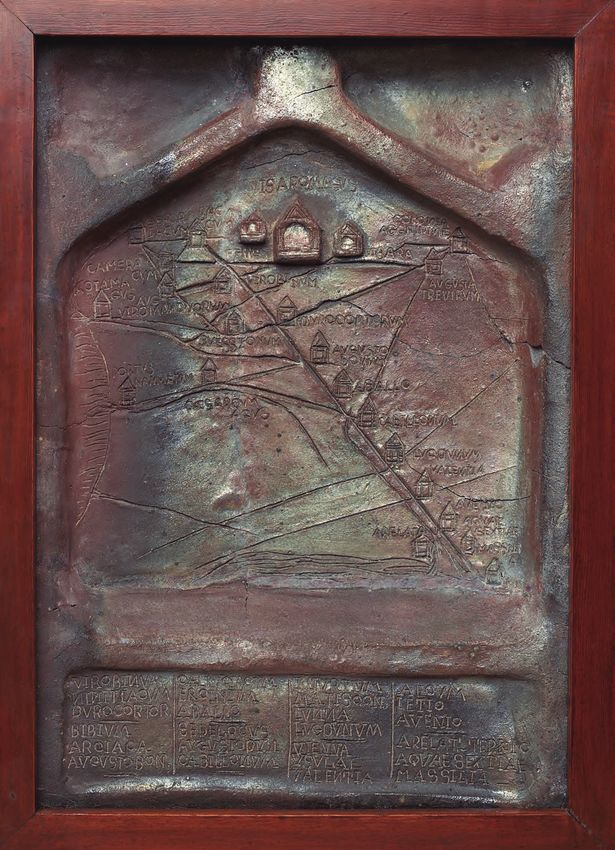
d’Amandt Colinet et la Requête au totalement incapable de la L’Itinéraire de Momignies
prince de Chimay, signalés dès moindre malhonnêteté ; il se
1955 dans son Histoire de la serait donc laissé abuser. En 1947, Chambon annonce la
Verrerie en Belgique. Mais, afin de découverte d’une dalle de terre
compliquer les choses, il les La perception qu’on en a en cuite reproduisant le tracé des
présente comme des copies Belgique est cependant assez voies romaines de Marseille à
en 4e main. différente puisqu’on le sait lié à la Bavay et de Boulogne à Trêves
découverte d’un certain nombre avec les noms des principales
La première personne qui émette d’autres documents des plus villes de Gaule connues par la
publiquement des doutes à propos douteux que j’ai passés en revue Tabula Peutingeriana et l’Itinéraire
7 Musée National de la Renaissance à Ecouen, Inv. E.Cl. 2739.
8 Notamment : J. Barrelet, 1954 ; B. Klesse, 1963 ; D. Harden, e.a., 1968 ; R. Charleston, 1977 ; H. Tait, 1979 ; O.
Drahotová, 1983 ; L. Engen, e.a., 1989, etc.
9 A.-E. Theuerkauff-Liederwald, Der Römer, Studien zu einer Glasform, Journal of Glass Studies, 10, 1968, pp. 121-123.
10 J.-A. Page, The ‘Catalogue Colinet’: a mid-16th century manuscript? dans J. Veeckmann, dir., Majolica and Glass from Italy
to Antwerp and Beyond, Anvers, 2002, pp. 243-262.
11 J. Lefrancq, Apports et incidences de l’œuvre de Raymond Chambon sur l’histoire de la verrerie en Belgique, Annales du
17e congrès de l’Association Internationale d’Histoire du Verre, Anvers, 2009, pp. 339-343.
20
0_review_on_glass_7.indd 20 22/7/19 15:11REVIEWS ON GLASS Nº 7 2019
raisin, considérées comme des
chefs-d’œuvre de la verrerie
antique15. Cet objet à la cavité
trop réduite pour constituer un
élément de moule bivalve, et
pourvu de canaux semblables à
ceux des moules de fonte oppose
rapidement Chambon aux milieux
de l’archéologie professionnelle.
Après sa mort, une analyse par
thermoluminescence commandée
Itinéraire de Momignies. Musée Royal de Mariemont. Détail des chaussées par le Musée de Charleroi à
Bavay-Cologne et Bavay-Trêves. © IRPA-KIK. l’université de Bordeaux-Talence
établit la modernité du prétendu
d’Antonin. Il s’agirait, selon lui, de voire à une mystification pure et moule en situant sa fabrication
la copie d’une pierre antique, simple et est suivi en cela par dans les années 1890-1930. Les
destinée aux rouliers transportant plusieurs archéologues belges. nouvelles analyses menées à
de Méditerranée jusqu’en l’Institut Royal du Patrimoine
Thiérache la soude indispensable Une analyse par Artistique établissent aujourd’hui
à la fabrication du verre. thermoluminescence effectuée à qu’il s’agit d’un faux absolu16.
Oxford à la demande d’Albert
Bien qu’ayant aussitôt exprimé Deman situe la cuisson entre Les verreries forestières du Pays
ses doutes parce que l’Itinéraire 1500 et 1650, une date de Chimay
respecte l’orientation et les difficilement crédible selon
proportions géographiques, l’auteur14. Confronté aux critiques du monde
ignorées dans l’Antiquité, archéologique, Chambon publie,
Germaine Faider-Feytmans achète Le moule de grappe de en 1959, Les verreries forestières
la pièce pour le Musée de Macquenoise du Pays de Chimay du XIIe au
Mariemont12. XVIIIe siècle d’après les
En 1950, Chambon déclare avoir documents d’archives17.
Paul Lebel en fait ensuite une trouvé vers 1942-43, dans la forêt
violente critique, basée sur la de Macquenoise, un objet en terre Il y présente une série de
réalisation, la cuisson et cuite qu’il interprète comme un documents, textes et plans,
l’épigraphie de la dalle13. Il moule ayant servi à souffler les attestant selon lui de l’existence
conclut à une blague d’étudiants, fioles en forme de grappe de ininterrompue de fours de verriers
12 G. F[aider]-F[eytmans], Archéologie, l’Antiquité Classique, 18, 1949, pp. 135-136.
13 P. Lebel, La carte routière de Momignies (Belgique), un original antique ou un faux moderne ? Revue Archéologique de l’Est
et du Centre-Est, 3, 1952, pp. 43-51.
14 A. Deman, M.-Th. Raepsaet-charlier, Les Inscriptions Latines de Belgique (ILB) 1985.
15 Cf. les exemplaires trouvés en fouille dans des tumuli romains à Fresin/Vorsen (MRAH, Bruxelles) et à Heerlen (Musée de Leyde).
16 Ch. Fontaine-Hodiamont, R. Margos, M. Van Bos, L. Fontaine, Du vrai au faux, Pour en finir avec le moule à grappe « gallo-
romain » de Macquenoise, Bulletin de l’Association Française pour l’Archéologie du Verre, 2020 à paraître.
17 Publications de la Société d’Histoire régionale de Rance, 4, 1959-60, pp. 111-180.
21
0_review_on_glass_7.indd 21 22/7/19 15:11LECTURES
dans cette zone géographique. Il 1594 et gravé des armes et d’une
prétend avoir vu ces documents devise des Croÿ, princes de
aux Archives de l’Etat à Mons Chimay et propriétaires du
avant le bombardement qui a Château d’Ecaussinnes au XVIe s.
anéanti une partie du bâtiment et Le but mercantile est ici évident :
des fonds en mai 194018. verre façon de Venise à la potasse
Ailleurs, il annonce qu’il de fougère, armoiries liées à
argumentera sa démonstration Chimay et à Ecaussinnes ; on peut
dans un second article … qui s’interroger sur le prix alors exigé
n’est jamais paru ! pour un monument d’apparence
tellement probante !
Maintenant que les Archives de
Mons sont à nouveau accessibles, Chambon fait donc très tôt figure
Benoît Painchart, a de cas d’école : amoureux de son
systématiquement vérifié toute Pays de Chimay dont il cherche à
l’histoire des Colnet. L’ensemble dorer l’image, selon les uns il
de son étude fait apparaître passe pour un mythomane qui,
qu’aucun des documents afin de servir sa cause, se Petit roemer en verre clair. Château
présentés par Chambon n’a jamais d’Écaussinnes-Lalaing. Détail de la
existé19 ! Toute l’histoire des devise « OV QVE SOIT CROŸ
verreries anciennes de la région de 1594 ». © IRPA-KIK.
Chimay est donc le fruit de son
imagination !
Les gravures récentes sur verres
anciens
Lorsque vers 2000, j’étudiais les
verres anciens du Château
d’Ecaussinnes, pour la plupart
vendus par Chambon dans les
années 1960, j’y avais dénombré
9 verres anciens, d’époques et
d’origines différentes,
médiocrement gravés au XXe
siècle dans le but de faire croire à
une fabrication de Beauwelz. Le
Petit roemer en verre clair, fin XVIIe- Petit roemer en verre clair. Château
plus significatif est un petit d’Écaussinnes-Lalaing. Détail des
XVIIIe s. Château d’Écaussinnes-
roemer en verre clair d’une forme Lalaing. © IRPA-KIK. armoiries Croÿ. © IRPA-KIK.
tardive (fin XVIIe-XVIIIe s.), daté
18 Alors qu’il n’avait pas 18 ans !
19 B. Painchart, L’activité verrière des Colinet au Sart de Chimay, XIIIe-XVIIIe siècles, Eclats de Verre, 21, 2013, pp. 60-67 ;
22, 2013, pp. 34-46 ; 23, 2014, pp. 8-16 ; 24, 2014, pp. 19-31 ; 25, 2015, pp. 18-27 ; 26, 2015, pp. 8-18 ;
particulièrement 22, 2013, pp. 34-46.
22
0_review_on_glass_7.indd 22 22/7/19 15:11REVIEWS ON GLASS Nº 7 2019
transforme en faussaire ; pour disculpent complètement de toute
d’autres, type même de l’amateur malversation, avançant
local, il se laisse naïvement uniquement sa naïveté.
tromper par les plus grossières
falsifications pour peu qu’elles Les verres falsifiés conservés au
intéressent sa région. En raison de Musée de Charleroi
sa gentillesse, de son travail
acharné et de ses qualités Le plus aberrent est que même le
d’historien local, le bénéfice du Musée du Verre de Charleroi, dont
doute lui est accordé par d’aucuns il est l’initiateur, et qui recèle des
et il finit par être considéré pièces tout à fait remarquables,
comme un aimable benêt. conserve aussi des pièces
dénaturées conçues pour
Depuis les années 2000, de démontrer l’existence de verreries
nouvelles études démontrent anciennes dans la région de Gobelet romain du Ier siècle.
cependant que les nombreux faux Chimay, mais aussi de Charleroi. Musée du Verre de Charleroi. Fond
présents dans sa collection ne se gravé d’un chrisme. © IRPA-KIK.
rapportent pas uniquement à la Des verres antiques falsifiés y ont
région de Chimay. notamment été repérés, comme ce
gobelet découvert et publié par
Le catalogue de la verrerie Zoude Chantal Fontaine : un verre du Ier
de Namur siècle, grossièrement gravé de
scènes chrétiennes copiées de la
Cet autre catalogue manuscrit Coupe d’Homblières, célèbre objet
datant prétendument de 1762, paléochrétien du IVe siècle
également arrivé à Corning avec découvert dans la région de l’Aisne
l’ensemble du fonds documentaire et conservé au Musée du Louvre21.
de Chambon, présentait une
origine assez obscure pour être Conclusion
analysé. Publiées en 2007 par
Watts et Tait, les conclusions sont Un esprit régionaliste poussé à
sans appel : il s’agit d’un faux l’extrême, dit esprit de clocher, la
grossièrement réalisé, en 2 recherche de satisfaction d’une
exemplaires suivant le même vanité personnelle, un certain
processus que la Monstrance de mercantilisme, ont poussé
Beauwelz et le Journal d’Amandt Chambon à donner à ses rêves
Colinet20. Mais en raison de la Gobelet romain du Ier siècle. une apparence de réalité ; malgré
Musée du Verre de Charleroi.
relation de confiance que son aspect matériel, celle-ci ne
Gravure inspirée de la coupe
Chambon avait anciennement d’Homblières. © IRPA-KIK. résiste plus aujourd’hui à une
établie avec Tait, les auteurs le analyse sérieuse.
20 D. C. Watts, H. Tait, Assessing the Authenticity of the Putative Sebastien Zoude Catalogue of 1762, Journal of Glass
Studies, 49, 2007, pp. 153-178.
21 Ch. Fontaine-Hodiamont, H. Wouters, Deux verres d’époque romaine, falsifiés par une gravure moderne. Un héritage de
Raymond Chambon, Bulletin de l’Institut Royal du Patrimoine Artistique, 33, 2009-2012, pp. 29-50.
23
0_review_on_glass_7.indd 23 22/7/19 15:11LECTURES
Glass in the Celje
Region from the 18 Century th
to the Present
Jože Rataj. Celje Regional Research into the glassmaking but they were not writing
tradition in our part of the world specifically about glassmaking.
Museum did not begin until the Instead, they touched on glass in
nineteenth century, with the connection with forestry, through
development of the domestic accounts of their travels or
glassmaking industry. Numerous geographical sketches of the
authors addressed the subject, area. One example is the diary
Postcard Loka pri Žusmu, around 1900. © Archive Celje Regional Museum.
24
0_review_on_glass_7.indd 24 22/7/19 15:11REVIEWS ON GLASS Nº 7 2019
kept by Archduke Johann of
Styria from 1810-1812, who got
to know the glassworks in the
surrounding forests during his
visits to the spa at Rogaška
Slatina.1 This was followed by a
series of articles by Rudolf
Gustav Puff, Johann Gabriel
Seidl and Gustav Mally withthe
first encyclopaedic editions that
mention our lands. One of these
was Topographical Lexicon of
Styria by Carl Schmutz,2 the first
work of its kind since the
completion of the Josephinian
Land Survey in the second half
of the eighteenth century.3 After Man cutters at work in the Rogaška glassworks, mid-20th century. © Archive
Celje Regional Museum.
this Georg Göth published an
extensive questionnaire that
collected data through a series
of special forms.4 A number of
contemporary newspapers also
began publishing news on
economic activity and local
events, where information about
glassworks and glassworkers is
recorded. Some notable
newspapers included the
Steiermärkische Zeitschrift,
Carinthia and Industrie- und
Gewerbeblatt. These were joined
in the second half of the
nineteenth century by Slovene-
language newspapers such as
Slovenski gospodar, and Slovenec.
Another important source are
Children at work in the Hrastnik glassworks, 1920. © Archive Celje Regional
reports on the provincial Museum.
exhibitions that began to be held
1 Schlossar, Anton, Erzherzog Johanns Tagesbuchaufzeichnungen von seinem Aufenthalte im Kurorte Rohitsch Sauerbrunn
und über seine Reisen in Untersteiermark aus den Jahren 1810, 1811 und 1812, Graz, Leykam, 1912.
2 Schmutz, Carl, Historisch-Topographisches Lexikon von Steiermark mit historischen Notizen und Anmerkungen, Graz, 1823.
3 Josephinische Landesaufnahme 1763-1787 für das Gebiet der Republik Slowenien, Landesbeschreibung, 5. zvezek, ZRC
SAZU in Arhiv Republike Slovenije, Ljubljana, 1999.
4 Kuret, Niko, Slovensko Štajersko pred marčno revolucijo 1848.
25
0_review_on_glass_7.indd 25 22/7/19 15:11You can also read


