Global Warming: A Science Overview
←
→
Page content transcription
If your browser does not render page correctly, please read the page content below
MacCracken            1

                                          Global Warming: A Science
                                                          Overview

By Michael C. MacCracken

          ossil fuels (i.e., coal, oil, and natural   Human Activities are Changing
          gas) provide about 85% of the world’s       Atmospheric Composition by
          energy,    sustaining      the   world’s    Increasing the Concentrations of
          standard-of-living and providing much       Radiatively Active (Greenhouse)
of the power for transportation, generation of
                                                      Gases and Particles
electricity, home heating, and food production.
Compared to other sources of energy, fossil           Observations from global measurement stations
fuels are relatively inexpensive, transportable,      and reconstructions of the composition of the
safe, and abundant. At the same time, their use       atmosphere in the past clearly indicate that
contributes to environmental problems such as         human activities are increasing the atmospheric
air pollution and acid rain, which are being          concentrations of carbon dioxide (CO2),
addressed through various control efforts, and to     methane (CH4), nitrous oxide (N2O), and of
long-term climate change, which governments           various halocarbons (HCFCs and, until very
have begun to address through adoption of the         recently, CFCs). These gases are collectively
UN Framework Convention on Climate Change             referred to as greenhouse gases because of their
negotiated in 1992.                                   warming influence on the climate.
    Drawing primarily from international                   While these gases occur naturally, records
assessment reports (see references for reports by     going back many thousands of years indicate
the Intergovernmental Panel on Climate Change         that the present concentrations are well above
(IPCC)), this paper summarizes six key elements       natural levels. The history of emissions versus
of the science of climate change (often referred      concentrations, analyses of carbon isotopes, and
to simply as “global warming” although the            other scientific results all confirm that these
projected changes involve changes in many             changes are occurring as a result of human
variables in addition to a rise in global average     activities rather than because of natural
temperature). These results are presented as          processes. For example, the CO2 concentration
context for considering the challenges of both        is currently about 370 parts per million by
limiting long-term warming and adapting to the        volume (ppmv), which is about 30% above its
warming that will occur as a result of past use of    preindustrial value of about 280 ppmv (see
fossil fuels and the inevitable future use over       Figure 1b). This increase has been due primarily
coming decades.                                       to the combustion of fossil fuels and secondarily
                                                      to the release of carbon occurring in the clearing

                                                      The Potential Impacts of Climate Change on Transportation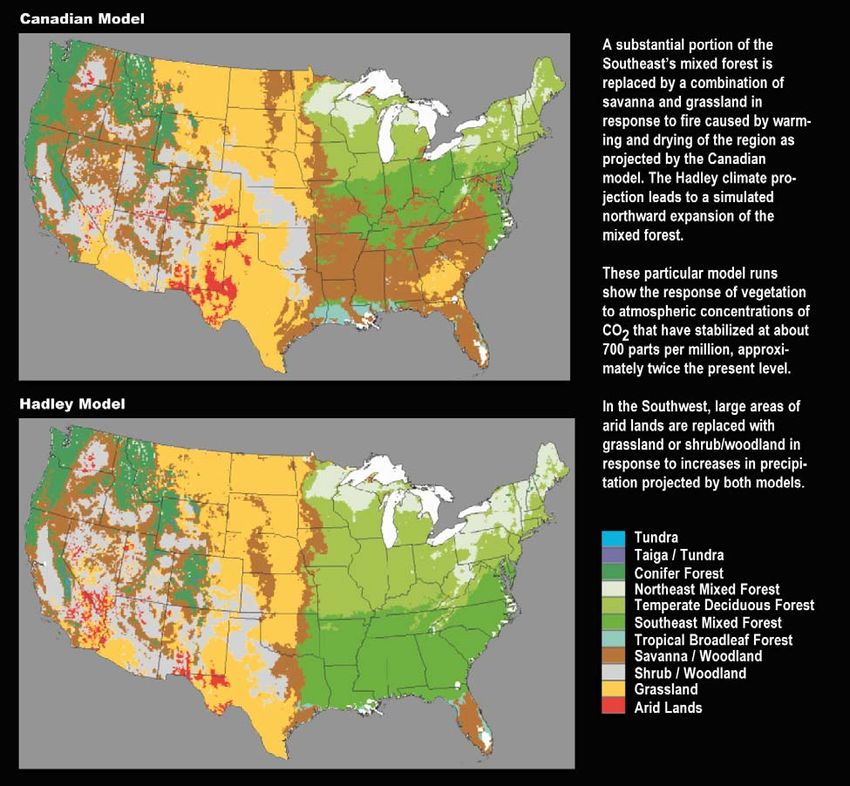
2           Global Warming: A Science Overview

Figure 1. Carbon emissions, CO2 concentrations, and temperature change over the past millennium. (a) Over the
past 1000 years, but especially since 1850, the emissions of carbon dioxide (expressed in terms of carbon emitted)
have grown from near zero to over 7 GtC/year (billions of tonnes of carbon per year); of this total, approximately 6
GtC/yr are from combustion of coal, oil, and natural gas and approximately 1 GtC/yr are from net changes in land
use. (b) As a result of the CO2 emissions, its concentration has increased from about 280 ppmv to about 370 ppmv
over the past 1000 years, especially since 1850. (c) Reconstruction of the global-scale record of temperature
departures from the 1961-90 average (primarily from proxy records from the Northern Hemisphere) suggests a
relatively slow and steady cooling of about 0.2ºC (0.4ºF) that extended over most of the last 1000 years; beginning
in the late 19th century and continuing through the 20th century, an unusually rapid warming of about 0.6ºC (1.0ºF)
has taken place (from NAST, 2000, which contains primary references).

The Potential Impacts of Climate Change on Transportation
MacCracken            3

of forested land and the plowing of soils for         acidification of precipitation known popularly
agriculture (see Figure 1a). The CH4                  as “acid rain”). Because of their relatively short
concentration is up over 150%. Its increase is        lifetime in the atmosphere, emissions must be
due primarily to emissions from rice agriculture,     quite substantial for global concentrations to
ruminant livestock, biomass burning, landfills,       build up to the level that will have a long-term
and fossil fuel development, transmission, and        climatic influence that is as great as for the
combustion. The concentrations of many                greenhouse gases with their longer atmospheric
halocarbons are entirely new to the                   lifetimes. However, concentrations can become
atmosphere—many of these compounds are                quite high in particular regions, and the
solely a result of human activities. The              pollution effects that result can cause regional
persistence (or lifetimes) of the excess              disturbances of the climate. For example,
contributions of these gases in the atmosphere        aerosols lofted in southern Asia are suspected to
range from decades (for CH4) to centuries (for        be contributing to the diminishment of the
CO2 and some halocarbons) to thousands of             monsoon.
years (for some perfluorocarbons). Thus, with
ongoing emissions, the excesses of their                  Although natural processes can also affect
concentrations above natural levels are likely to     the atmospheric concentrations of gases and
persist for many centuries.                           aerosols, observations indicate that this has not
                                                      been an important cause of changes over the
    Human activities are also contributing to an      past 10,000 years. Thus, it is well-established
increase in the atmospheric concentrations of         that human activities are the major cause of the
small particles (called aerosols), primarily as a     dramatic changes in atmospheric composition
result of emissions of sulfur dioxide (SO2), soot,    since the start of the Industrial Revolution about
and some various organic compounds. The               200 years ago.
emissions of these human-induced aerosols
result primarily from use of fossil fuels             Increasing the Concentrations of
(primarily from coal combustion and diesel and        Greenhouse Gases will Warm the
2-stroke engines) and from biomass burning.           Planet and Change the Climate
Once in the atmosphere, these compounds can
be transformed or combined in various ways.           From laboratory experiments, from study of the
For example, SO2 is transformed into sulfate          atmospheres of Mars and Venus, from
aerosols that create the whitish haze common          observations and study of energy fluxes in the
over and downwind of many industrialized              atmosphere and from space, and from
areas. This haze tends to exert a cooling             reconstructions of past climatic changes and
influence on the climate by reflecting away solar     their likely causes, it is very clear that the
radiation. Soot aerosols can combine with             atmospheric concentrations and distributions of
organics and form mixed aerosols that can exert       radiatively active gases play a very important
warming or cooling influences. Changes in land        role in determining the surface temperature of
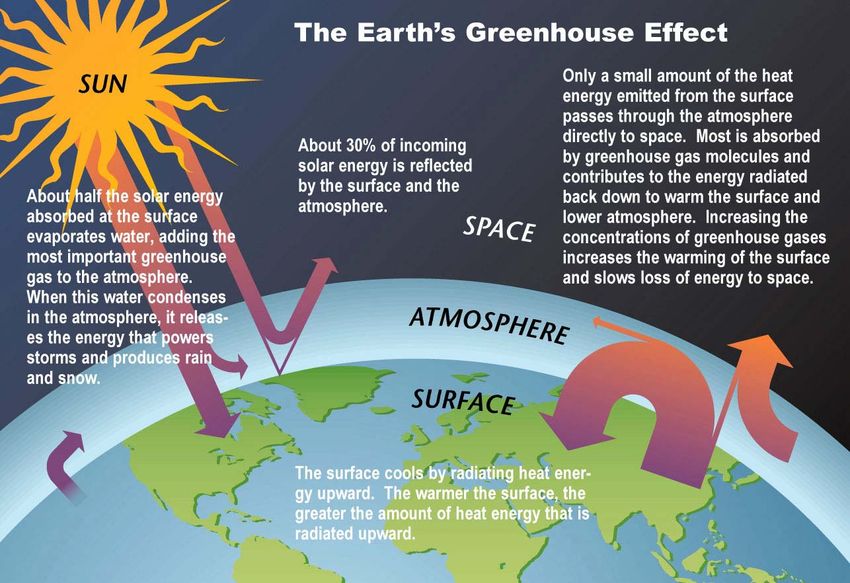
cover, especially where this leads to                 the Earth and other planets. Figure 2 provides a
desertification, can also lead to increased lofting   schematic diagram of the energy fluxes that
of particles into the atmosphere. Dust lofted in      determine the Earth’s temperature (and climate).
this way generally has a cooling influence on
the climate while also decreasing visibility; dust        Of the solar radiation reaching the top of the
can also be carried to intercontinental scales as a   atmosphere, about 30% is reflected back to
result of long-distance transport.                    space by the atmosphere (primarily by clouds)
                                                      and the surface; about 20% is absorbed in the
     Of critical importance is that the typical       atmosphere (primarily by water vapor, clouds,
lifetime of aerosols in the atmosphere is less
than 10 days (for example, sulfate and nitrate
compounds are often rained out, causing the

                                                      The Potential Impacts of Climate Change on Transportation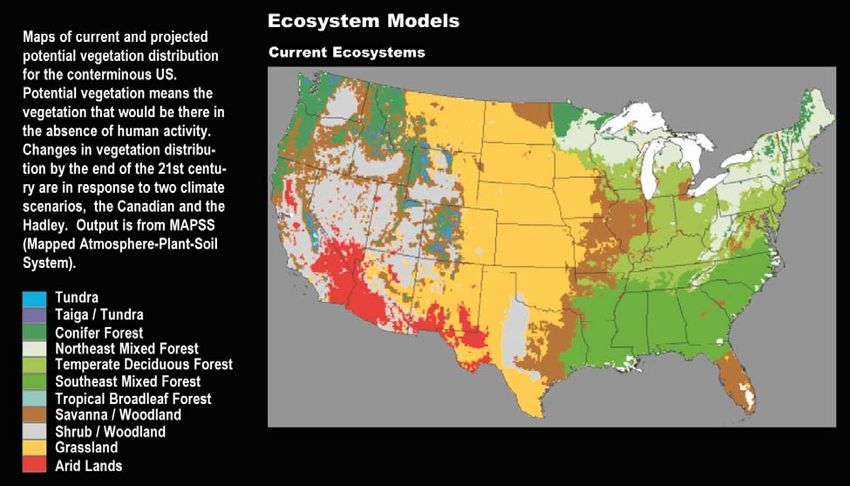
4           Global Warming: A Science Overview

Figure 2. Schematic diagram of the Earth’s greenhouse effect, with arrows proportional in size to the fluxes of
energy by the particular process (NAST, 2000). Of incoming solar radiation, about 30% is reflected back into space
by clouds and the surface, about 20% is absorbed in the atmosphere, and about 50% is absorbed at the surface.
Most of the infrared (heat) radiation emitted by the surface is absorbed in the atmosphere and the atmosphere in
turn then emits about 90% of this amount back to the surface, adding to its heat gain from the Sun. The extra energy
at the surface is used to evaporate water or heat the near surface atmosphere. In the atmosphere, the extra energy it
receives from the Sun, from absorbed infrared radiation, from latent heating released during precipitation, and
from sensible heating, is emitted to space to balance the net solar radiation absorbed by the surface and
atmosphere.

and aerosols), and about 50% is absorbed at the                   However, the Earth’s atmosphere is not
surface. For a system to come to a steady state               transparent to infrared radiation, being able to
temperature, the energy absorbed must be                      recycle some of it in a way that creates a
balanced by radiation that is emitted away as                 warming influence. This warming effect occurs
infrared (or heat) radiation. Were the Earth’s                because much of the infrared radiation emitted
atmosphere transparent and its surface a simple               by the surface and by the greenhouse gases and
radiator of energy to space, the Earth’s average              low clouds in the atmosphere is absorbed by
surface temperature would equilibrate at close to             various radiatively active gases in the
0oF (-18ºC), given the current reflectivity of the            atmosphere. For example, less than 10% of the
Earth-atmosphere system. Such a temperature                   infrared radiation emitted by the surface gets
would be much too cold to sustain life as we                  through directly to space without being
know it.                                                      absorbed. A significant fraction of the absorbed
                                                              energy is radiated back to the surface by the
                                                              atmosphere’s greenhouse gases and clouds,

The Potential Impacts of Climate Change on Transportation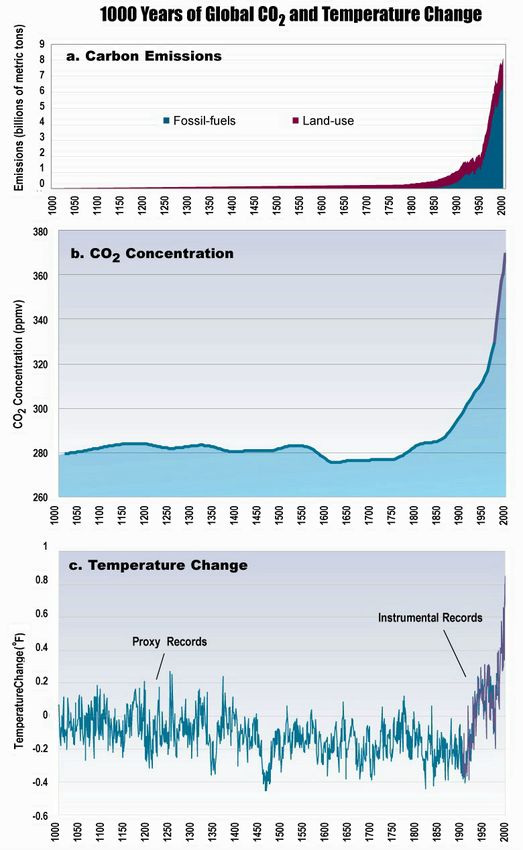
MacCracken            5

providing additional energy to warm the surface.     vapor, other greenhouse gases in the atmosphere
This radiation in turn causes the surface to         that are present in significant concentrations
warm, which raises its temperature and causes        include CO2, CH4, N2O, and many
more radiation to be emitted upward, where           chlorofluorocarbons, the concentrations of all of
much of it is again absorbed, providing more         which are being directly affected by human
energy to be radiated back to the surface. This      activities, and O3, the tropospheric and
emission-absorption-reemission      process     is   stratospheric concentrations of which are being
popularly called the greenhouse effect, even         indirectly affected through chemical reactions
though the processes involved are different than     caused by the emissions of other gases. Because
keep a greenhouse warm and humid. The effect         of their connection to human activities, these
of this natural greenhouse effect is to raise the    greenhouse gases are usually referred to as the
average surface temperature of the Earth from        anthropogenic greenhouse gases (strictly
about 0oF (-18ºC) to almost 60oF (15ºC).             speaking, their concentrations are being
                                                     anthropogenically modified).
     An additional warming influence results
because the atmospheric temperature decreases             Observations from space-based instruments
with altitude up to the tropopause (about 8-10       clearly indicate that the rising concentrations of
miles up) before temperatures start to rise again    the anthropogenic greenhouse gases are tending
in the stratosphere, which is warmed by the          to enhance the natural greenhouse effect. Even
solar absorption by ozone (O3) molecules. As a       though the greenhouse effect of the
result of this temperature structure, when the       anthropogenic greenhouse gases is exceeded by
concentrations of greenhouse gases are               the positive greenhouse effect of atmospheric
increased and the atmosphere becomes more            water vapor, their effect is not overwhelmed by
opaque to infrared radiation, the absorption and     it. Instead, the warming caused by the increases
reemission of infrared radiation to the surface      in concentrations of CO2, CH4 and other
comes from lower and warmer layers in the            anthropogenic greenhouse gases is significantly
atmosphere. Because the emission of infrared         amplified by a positive water-vapor feedback
energy is proportional to the fourth power of        mechanism. This positive feedback occurs
temperature, this has the effect of increasing the   because more water vapor can be present in a
downward emitted radiation, tending to enhance       warmer atmosphere, so that warming leads to an
the natural greenhouse effect. Similarly,            increase in atmospheric water vapor and a
emission outward to space occurs from higher         further warming. At the same time, however,
and colder layers when the concentrations of         changes in atmospheric water vapor and in
greenhouse gases are increased. As a result, the     atmospheric circulation can change the extent
surface-atmosphere system has to warm even           and distribution of clouds, and this can in turn
more to achieve a planetary energy balance with      affect the extent of the absorption and scattering
the incoming solar radiation.                        of solar radiation and the absorption and
                                                     reemission of infrared radiation through
    The most important radiatively active (or        relatively complex and uncertain cloud feedback
greenhouse) gas is water vapor (to be radiatively    mechanisms.
active, molecules need to have at least 3 atoms
so that various rotational and vibrational bands         Overall, there is no scientific disagreement
can be activated by the radiation). Not only does    that increases in the atmospheric concentrations
water vapor absorb infrared radiation emitted by     of the anthropogenic greenhouse gases will tend
the Earth’s surface, but it also absorbs infrared    to raise the Earth’s average surface
radiation from the Sun. In addition, under           temperature—the key questions are by how
appropriate conditions, water vapor can              much and how rapidly.
condense and form clouds that absorb and emit
infrared radiation as well as absorbing and
scattering solar radiation. In addition to water

                                                     The Potential Impacts of Climate Change on Transportation
6 Global Warming: A Science Overview
Increases in the Concentrations of likely caused by the inherent natural variability
Greenhouse Gases Since the Start of of the ocean-atmosphere system (i.e., internal
the Industrial Revolution are Already variability) and the natural variations in solar
Changing the Climate, Causing radiation and the occasional eruption of
volcanoes (i.e., external variability). That
Global Warming
warming is occurring is also confirmed by rising
The evidence is clear-cut that the concentrations temperatures measured in boreholes (i.e., dry
of greenhouse gases have risen significantly wells), retreating mountain glaciers and sea ice,
since the start of the Industrial Revolution and increasing concentrations of atmospheric water
that increasing the concentrations of greenhouse vapor, rising sea level due to melting of
gases will induce a warming influence on the mountain glaciers and thermal expansion in
Earth’s climate. A key test of scientific response to recent warming (augmenting the
understanding is to determine if the time history natural rise due to the long-term melting of parts
and magnitude of climatic changes that are of Antarctica), and related changes in other
occurring match those expected to be occurring, variables.
based on theoretical and numerical analyses, as
a result of past emissions and the resulting The key question is whether these changes
changes in atmospheric composition. might be a natural fluctuation or whether human
Complications in this analysis arise because activity is playing a significant role. Among the
other influences on the Earth’s radiation balance reasons that the effect is being attributed largely
(referred to as radiative forcings) also can be to human activities is the coincidence in timing
affecting the climate. These radiative forcings with the changes in greenhouse gas
include natural influences, such as changes in concentrations, the very large and unusual
the output of solar radiation or in stratospheric magnitude of the changes compared to past
particle loadings caused by volcanic eruptions, natural fluctuations, the warming of the lower
and human-induced changes, such as depletion atmosphere and cooling of the upper atmosphere
of stratospheric ozone, enhancement of (a sign of a change in greenhouse gas
tropospheric ozone, changes in land cover, and concentrations rather than in solar radiation),
changes in the amount of aerosols in the and the global pattern of warming. Some
atmosphere. uncertainty is introduced because some of the
warming occurred before the sharpest rise in
To have the best chance of identifying the greenhouse gas concentrations during the
human influence, it is most useful to look at the second half of the 20th century. Some analyses
longest records of the climatic state. indicate that as much as 20-40% of the overall
Instrumental records of average temperature for warming may be due to a coincidental increase
large areas of the Earth go back to the mid-19th in solar radiation, although other factors, such as
century. These records indicate a warming of changes in land cover or in soot emissions, may
over 1oF (about 0.6ºC) over this period. also have had an influence. In addition, some
Extensive proxy records (i.e., records derived uncertainty has been introduced because the rise
from tree rings, ice cores, coral growth, etc.) for in tropospheric temperatures over the past two
the Northern Hemisphere going back about 1000 decades may have been a bit slower than the rise
years also indicate very significant warming in surface temperature. Whether this difference
during the 20th century compared to the natural is real or arises from, for example, calibration
variations apparent over earlier centuries. As issues with the satellite instrumentation, natural
shown in Figure 1c, a sharp rise in the variations in Earth-surface temperatures, the
temperature began during the late 19th century confounding influences of ozone depletion,
and continued through the 20th century. This volcanic eruptions, and atmosphere-ocean
warming appears to be much more persistent interactions, or other factors is not yet clear.
than the earlier natural fluctuations that were
The Potential Impacts of Climate Change on TransportationMacCracken 7
Taking all of the scientific results into If global emissions of CO2 gradually
consideration, the Intergovernmental Panel on increase to about 20 billion tonnes of carbon per
Climate Change (IPCC, 1996a) concluded in its year by 2100, models of the Earth’s carbon
Second Assessment Report in 1995 that “The cycle that are verified against observations of
balance of evidence suggests a discernible past increases in concentration, project that the
human influence on the global climate.” This atmospheric CO2 concentration would rise to
conclusion, in essence, is equivalent to the just over 700 ppmv. This would be almost
criterion for a civil rather than a criminal double its present concentration, and over 250%
conviction. In its Third Assessment Report above its preindustrial value. Scenarios of future
(IPCC, 2001), the IPCC indicated even more concentrations based on consideration of ranges
clearly that the magnitude and timing of the in global population, energy technologies,
warming during the 20th century, especially economic development, and other factors
during the last 50 years, quite closely matches project that the atmospheric CO2 concentration
what would be expected from the combined could range from about 500 to over 900 ppmv in
influences of human and known natural 2100, with concentrations rising even further in
influences. the next century. Depending on various control
measures, this rise in the CO2 concentration
Future Emissions of Greenhouse could also be accompanied by increases in the
Gases and Aerosols Will Lead to concentrations of CH4 and N2O, as well as of
Significant Further Climate Change, sulfate and soot aerosols, although it would take
Including Much More Warming and an unrealistically large (and unhealthy) amount
Sea Level Rise than Occurred During of aerosols to limit radiative forcing to the
extent that it is projected to rise as a result of the
the 20th Century
increases in the concentrations of the
With the global population of 6 billion and anthropogenic greenhouse gases.
current average fossil fuel usage, each person on
Earth is responsible, on average, for emissions Projections of the climatic effects of such
of about 1 metric ton (tonne) of carbon per year. changes in atmospheric composition are often
Per capita use varies widely across the world, based on use of computer-based climate models
reaching nearly 6 tonnes per year in the US and that are constructed based on the application of
about 3 tonnes per year in Western Europe, but fundamental physical laws and results of
amounting to only about 0.5 tonne per person extensive field investigations of how
per year in developing countries such as China atmospheric processes work. To gain a level of
and India. Projections for the year 2100 are that confidence in the models, they are tested by
the global population may increase to 8 to 10 comparing their simulations to the observed
billion. As a result of the rising standard-of- behavior of the climate from recent decades,
living and the necessary energy required to recent centuries, and for geological periods in
sustain it, average per capita emissions across the past. Based on the model results and
the globe may double as fossil fuel use grows theoretical analyses, as well as on extrapolation
significantly in the highly populated, but of recent trends, the global average temperature
currently underdeveloped, emerging economies. is projected to rise by about 2.5 to 10ºF (about
If this happens, total annual emissions would 1.4 to 5.8ºC) by 2100 (IPCC, 2001a). Such a
more than triple from about 6 billion tonnes of warming would lead to temperatures that would
carbon per year to about 20 billion tonnes of far exceed those existing during the period in
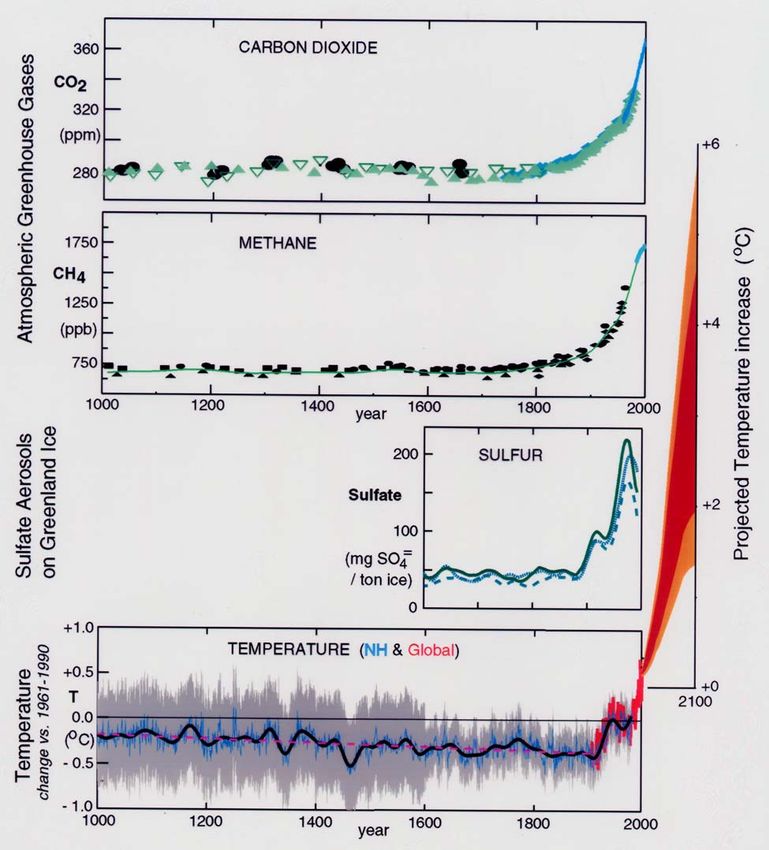
carbon per year. New estimates by the IPCC which society developed (see Figure 3). In
suggest emissions in 2100 could range from addition to the warming influence of the rise in
about 6 to over 30 billion tonnes of carbon per the CO2 concentration, reduction in the
year (IPCC, 2000).
The Potential Impacts of Climate Change on Transportation8 Global Warming: A Science Overview Figure 3. Projection of the increase in global average surface temperature during the 21st century in comparison to conditions that have existed during the past 1000 years. Concentrations of carbon dioxide, methane, and sulfate aerosols increased significantly during the industrial age. A sharp rise in temperature has been occurring since the late 19th century. Based on model simulations reinforced by theoretical and paleoclimatic analyses, global average temperatures are projected to rise 1.4 to 5.8 ºC by 2100 (from IPCC, 2001a). The Potential Impacts of Climate Change on Transportation
MacCracken            9

emissions of SO2 in order to reduce acid              cope and adapt are also quite significant.
precipitation and enhance air quality and public      Several types of consequences for the US have
health could contribute to the warming, although      been identified (NAST, 2000; NAST, 2001;
an associated reduction in soot aerosol               Department of State, 2002). A similar
emissions might counteract this effect.               summarization of scientific findings has been
                                                      made for the world by the Intergovernmental
    Based on these longer-range projections, it       Panel on Climate Change (IPCC, 1996b, 1996c,
is very likely that the warming over the next         2001b). The following sections summarize
several decades will be greater than the warming      broad categories of impacts, particularly in
over the whole 20th century, even were there to       terms of impacts for the US, recognizing that
be sharp reductions in CO2 emissions.                 those in the US may be able to more readily
Associated with this warming would be shifts in       adapt to these changes than those in developing
precipitation zones and an intensification of         nations.
evaporation and precipitation cycles, creating
conditions more conducive to extremes of              Human Health
floods, droughts, and storms. In addition,
projections are that the rate of sea level rise       Sharp increases in summertime heat index
would increase from 4 to 8 inches/century (0.1        would be likely to increase mortality rates in the
to 0.2 m/century) over the 20th century to a rate     US were it not for the expected offset of these
of 4 to 36 inches/century (0.1 to 0.9 m/century)      conditions by the more extensive availability of
during the 21st century. As was the case for the      air-conditioning. The poleward spread of
sudden appearance of the Antarctic ozone hole,        mosquitoes and other disease vectors has the
there are likely to be surprises as well, given the   potential to increase the incidence of infectious
presence of potential thresholds and non-             diseases, but is likely to be offset by more
linearities. One of the possibilities is the          attention to public health and enhancing
potential disruption of the Gulf Stream and the       building     and    community      design     and
global scale deep ocean circulation of which it is    maintenance standards. The increased intensity
a part. The recurrence of a weakening such as         of extreme events may injure or kill more people
apparently occurred as the world emerged from         (and disrupt communities) unless steps are taken
the last glacial about 11,000 years ago would be      to enhance risk-adverse planning and
expected to cause a strong cooling centered over      construction.
Europe (were this to happen during the 21st
                                                      Food Supplies
century, the cooling would likely only moderate
somewhat the influence of global warming) and
                                                      Higher CO2 concentrations are very likely to
an acceleration in the rate of sea level rise (due
                                                      enhance the growth of many types of crops and
to reduced sinking of cold water into the deep
                                                      to improve their water use efficiency. If this
ocean).
                                                      happens widely (i.e., if other constraints on
                                                      agriculture do not arise), agricultural
The Environmental and Societal                        productivity would be expected to rise,
Consequences of Climate Change are                    increasing overall food availability, and
Likely to be Diverse and Distributed,                 reducing food costs for the public. For farmers
With Benefits for Some and Damages                    in some areas, the lower commodity prices that
for Others                                            would be likely to result would reduce farm
                                                      income, and farmers in marginal areas, even
With fossil fuels providing important benefits to     though benefiting from some gain in
society, contemplating changes in the ways in         productivity, are unlikely to remain competitive.
which most of the world’s energy is generated         This could cause economic problems in nearby
would seem appropriate only if the types of           rural communities unless other profitable crops
consequences with which societies will need to        are identified.

                                                      The Potential Impacts of Climate Change on Transportation
10 Global Warming: A Science Overview
Water Supplies more vegetation (which may, however, increase
fire risk in dry seasons). What is most important
Changes in the location and timing of storms to understand is that the notion of ecosystem
will alter the timing and amount of precipitation migration is a misconception—particular
and runoff and warmer conditions will change species will become dominant in different
snow to rain, requiring changes in how water locations. However, this will likely mean the
management systems are operated. This will be deterioration of existing ecosystems and the
especially the case in the western US because creation of new ones, albeit likely not with the
there is likely to be less snow and more rain in complexity and resilience of current systems
winter coupled with more rapid and earlier because there will not be sufficient time for
melting of the snowpack. These changes are adjustment and evolution to take place. If the
likely to require a lowering of reservoir levels in climate changes at the rates projected, stresses
winter and spring to provide a greater flood on ecosystems over the next 100 years may be
safety margin, even though this would risk as great as over the last 10,000 years.
reducing water availability in summer when
demand will be rising. Across much of the US, Coastal Endangerment
the intensity of convective rainfall (e.g., from
thunderstorms) is projected to increase, creating Mid-range projections suggest that the relatively
the potential for enhanced flooding in slow rate of rise of sea level this century (about
watersheds that experience frequent rainfall. 4 to 8 inches, reduced or amplified by regional
Conversely, increased summertime evaporation changes) may increase by a factor of 3 during
may also reduce groundwater recharge in the the 21st century. For regions currently
Great Plains, and cause lower levels in the Great experiencing subsidence of their coastlines (e.g.
Lakes and in rivers such as the Mississippi, Louisiana, the Chesapeake Bay, etc.), there
reducing opportunities for shipping and could be a significant acceleration in inundation
recreation. and loss of coastal lands, especially of natural
areas such as wetlands and other breeding
Fiber and Ecosystem Services from Forests grounds where protective measures such as
and Grasslands diking cannot be afforded. The rate of loss will
be greatest during coastal storms when storm
While winter precipitation may increase in some surges (and therefore damage) will reach further
areas, temperatures are likely to significantly inland and further up rivers and estuaries. For
increase in most areas. The increase in developed areas, strengthening of coastal
evaporation rates is likely to reduce summertime protection is needed, not just to protect against
soil moisture. Some, but not all, of these effects sea level rise, but also to reduce current
may be offset by the increased CO2 vulnerability to coastal storms and hurricanes.
concentration that will help many types of plants
grow better (if other factors such as nutrients are Transportation
not limiting). As seasonal temperatures and soil
moisture change, ecosystems will be affected, While the US transportation system is very
causing changes in prevailing tree and grass reliable and quite robust, impacts from severe
types and then associated changes in wildlife. weather and floods currently cause disruptive
As regions accumulate carbon in vegetation and economic impacts and inconvenience that
dry out during persistent warm episodes, fire sometimes become quite important for particular
risk is likely to increase in many regions. Some regions. While information is only starting to
climate model projections suggest a much drier emerge about how climate change might lead to
southeastern US, stressing the current forests or changes in weather extremes, a range of
even leading to their transformation into possible types of impacts seem possible,
savanna (see Figure 4). At the same time, the including some that are location dependent and
southwestern deserts may get wetter and sprout some that are event specific. Location-
The Potential Impacts of Climate Change on TransportationMacCracken 11
dependent consequences might, for example, infrastructure, especially because waves would
include: lower levels in the Great Lakes and the be expected to be larger and cause more erosion.
St. Lawrence River, and, particularly during the In addition, sea level rise could endanger barrier
summer, in the Mississippi-Missouri-Ohio River islands and coastal infrastructure while shifting
systems. Lower levels could significantly inhibit sediments and channels in ways that might
shipping, even though reduction in the thickness affect coastal shipping and require more
and duration of lake ice in the Great Lakes frequent dredging and remapping. In the Arctic,
during winter could lengthen the shipping warming is already reducing the extent of sea
season. ice, and further warming could lead to the
opening of Arctic waters for shipping while also
Along coastlines, reduction in ice cover causing more rapid melting of permafrost that
could lead to more damage to coastal could destabilize roads, pipelines, and other
infrastructure.
Figure 4a. Computer-based ecosystem models that associate the most likely type of ecosystem with the prevailing
and future climatic conditions have been used to estimate the potential for changes in the predominant vegetation as
a result of climate change. (a) Map of the prevailing vegetation of the conterminous US using vegetation models
calibrated for the climatic conditions of the late 20th century.
The Potential Impacts of Climate Change on Transportation12 Global Warming: A Science Overview Figure 4b. (b) Maps of projected vegetation for the conterminous US based on two projections of climatic conditions for the latter part of the 21st century. The Canadian model scenario projects that the prevailing climatic conditions are likely to be relatively hotter and drier than present conditions, especially in the southeastern US and during the warm months, whereas the Hadley (U.K.) model projects that climatic conditions will tend to be warmer and moister. In both models, increased precipitation in the southwestern US tends to reduce the extent of arid lands. In the southeastern US the Hadley scenario projects continued coverage by a mixed forest, whereas the Canadian model projects that savanna and woodland conditions are likely to become predominant. The Potential Impacts of Climate Change on Transportation
MacCracken           13

    Event-specific consequences could include:         International Coupling
more frequent occurrence of heavy and extreme
rains (a trend already evident during the 20th         While it is natural to look most intently at
century); reduced or shifted occurrence of             consequences within the US, our Nation is
winter snow cover that might reduce winter             intimately coupled to the world in many ways.
trucking and air traffic delays; altered               For example, what happens outside the US will
frequency, location, or intensity of hurricanes        affect economic markets, overseas investments,
accompanied by an increase in flooding rains;          the availability of imported food and other
and warmer summertime temperatures that raise          resources, and the global environment that all
the heat index and may increase the need for air       countries share. Health-related impacts overseas
pollution controls. Early model projections            are likely to be of importance to US citizens
suggest that the return period of severe flooding      both because US citizens travel abroad for
could also be significantly reduced (e.g., the         business and pleasure and because foreign
baseline 100-year flood might occur as often, on       travelers come to visit the US. Many resources,
average, as every 30 years by 2100). By                from water and hydropower-derived electricity
reducing the density of the air, warmer                to fisheries and migrating species, are shared
temperatures will also cause reductions in             across borders, or move and are transferred
combustion efficiency, which would both                internationally. Finally, the US is largely a
increase costs and require longer runways or a         nation of immigrants, and when disaster strikes
lower load for aircraft. Starting to consider          overseas, its citizens respond with resources and
climate variability and change now in the design       our borders are often opened to refugees.
of transportation systems could be a very cost-        Clearly, all countries are connected to what
effective means of enhancing both short- and           happens outside their borders, and those of us in
long-term resilience.                                  the US will be affected by what the societal and
                                                       environmental consequences experienced by
Air Quality                                            others.

Warmer temperatures generally tend to                  Summary of Impacts
accelerate the formation of photochemical smog.
The rising temperature and rising absolute             It is very difficult to accurately quantify the risk
(although perhaps not relative) humidity are           and importance of such a wide variety of
projected to raise the urban heat index                impacts in a way that allows comparison with
significantly, contributing to factors that lead to    taking actions to change energy systems (IPCC,
breathing problems. Meeting air quality                1996c; IPCC, 2001c). At the international level,
standards in the future is likely to require further   this is particularly difficult because issues of
reductions in pollutant emissions (although, of        equity and cultural values more forcefully enter
course, a move away from the combustion                into consideration (e.g., what is the present
engine might make this change much easier).            economic value of the risk of the Marshall
Increasing amounts of photochemical pollution          Islands being flooded over in 50 to 100 years?).
could also have greater impacts on stressed            Overall, there will likely be important
ecosystems,       although       the     increasing    consequences, some negative and some positive,
concentration of CO2 may help to alleviate some        that we are only starting to understand. Quite
types of impacts as the leaf’s stomata close           clearly, the present tendency to average across
somewhat. Summertime dryness in some regions           large domains is very likely to obscure rather
could exacerbate the potential for fire, creating      large consequences for localized groups.
the potential for increased amounts of smoke,
while in other regions dust may become more of
a problem.

                                                       The Potential Impacts of Climate Change on Transportation
14 Global Warming: A Science Overview
Reducing the Rate of Change of most of the world’s energy needs using
Atmospheric Composition to Slow renewables and nuclear, and if there is also
Climate Change Will Require significant effort to improve the efficiency of
Significant and Long-Lasting energy end uses.
Cutbacks in Emissions
The Kyoto Protocol was negotiated as a first
In recognition of the potential for significant step toward achieving the UNFCCC objective.
climatic and environmental change, the nations Even though its goal is relatively modest (i.e.,
of the world in 1992 agreed to the United cutting developed country emissions to about
Nations Framework Convention on Climate 7% below their 1990 levels) and would only
Change (UNFCCC), which set as its objective begin to limit the rate of increase in the global
the “stabilization of the greenhouse gas CO2 concentration, it has been especially
concentrations in the atmosphere at a level that controversial in the US. Even if fully
would prevent dangerous anthropogenic implemented by all the developed nations
interference with the climate system.” At the through the 21st century (including the US,
same time, the Convention called for doing this which has rejected it), the increase in the CO2
in a way that would “allow ecosystems to adapt concentration by the year 2100 would be only
naturally to climate change, … ensure that food about 15-20% less than the currently projected
production is not threatened, and … enable rise to about 710 ppmv, and much less than the
economic development to proceed in a 50% cutback in emissions needed to move
sustainable manner.” Defining the meanings of toward stabilization at 550 ppmv. Such analyses
these terms and accomplishing the objective are make it clear that reducing CO2 emissions to
both formidable challenges. For example, achieve stabilization at 550 ppmv would thus
stabilizing the atmospheric concentration at require a multi-faceted approach around the
double the preindustrial level (about 550 ppmv) world as well as in the US, including significant
would require international stabilization of the introduction of non-fossil energy technologies,
present per capita CO2 emission level at about 1 improvement in energy generation and end-use
tonne of carbon per person per year throughout efficiencies, and switching to natural gas from
the 21st century rather than allowing per capita coal.
emissions to double over this period, as is
projected to occur in the absence of controls Absent such efforts on a global basis, the
(recall that the typical US citizen is now CO2 concentration could rise to about 800-1100
responsible for emission of 5-6 tonnes of carbon ppmv (about 3-4 times the preindustrial level).
per year and Europeans are responsible for Were this to occur, projections indicate that the
about 3 tonnes of carbon per year). Limiting the resulting warming would be likely to induce
CO2 concentration to 550 ppmv would also such potentially dangerous long-term, global-
require that global emissions for the 22nd scale impacts as the initiation of the eventual
century would need to drop by at least a factor melting of the Greenland and the West Antarctic
of 2 below current global average levels (i.e., to ice sheets (each capable of inducing a sea level
about half of the 6 billion tonnes of carbon now rise of up to about 15-20 feet, or 5-7 meters,
emitted each year), meaning that per capita over the next several centuries), the loss of coral
emissions of carbon would have to be about reef ecosystems due to warming and rapid sea
one-third the level of developing countries level rise, the disruption of the global oceanic
today. This would not mean that per capita circulation (which would disrupt the nutrient
energy use would need to be this low, only that cycle sustaining ocean ecosystems), and
net per capita use of fossil fuels (so emissions extensive loss or displacement of critical
minus sequestration) would need to be this low. ecosystems that societies depend on for many
The IPCC (IPCC, 2001c) suggests that such ecological services.
reductions could be accomplished by meeting
The Potential Impacts of Climate Change on TransportationMacCracken 15
What is clear from present-day energy Acknowledgments
analyses is that there is no “silver bullet” that
could easily accomplish a major emissions The views expressed are those of the author and
reduction (e.g., see Hoffert et al., 2002). do not necessarily represent those of his former
Achieving the UNFCCC objective over the 21st employer (the University of California) or those
century is therefore likely to require a much agencies supporting the Office of the US Global
more aggressive (although not unprecedented) Change Research Program (now, the Climate
rate of improvement in energy efficiency, broad- Change Science Program Office) where he was
based use of non-fossil technologies (often on assignment. This paper was prepared with
selecting energy sources based on local support from the University Corporation for
resources and climatic conditions), and Atmospheric Research, which is also not
accelerated technology development and responsible for its content.
implementation.
References
Conclusion
Hoffert, M. et al., 2002, Advanced technology
A major reason for controversy about dealing paths to global climate stability: Energy for a
with this issue results from differing greenhouse planet, Science, 298, 981-987.
perspectives about how to weigh the need for
scientific certainty, about ensuring a reliable IPCC (Intergovernmental Panel on Climate
source of energy to sustain and improve the Change), 1996a, Climate Change 1995: The
national and global standard-of-living, about Science of Climate Change, edited by J. T.
capabilities for improving efficiency and Houghton, L. G. Meira Filho, B. A. Callander,
developing new technologies, about the N. Harris, A. Kattenberg, and K. Maskell,
potential risk to “Spaceship Earth” that is being Cambridge University Press, Cambridge, United
imposed by this inadvertent and virtually Kingdom, 572 pp.
irreversible geophysical experiment, about the
economic costs and benefits of taking early IPCC (Intergovernmental Panel on Climate
actions to reduce emissions (including what Change), 1996b, Climate Change 1995:
factors to consider in the analysis and how to Impacts, Adaptations, and Mitigation of Climate
weigh the importance of long-term potential Change: Scientific-Technical Analyses, edited
impacts versus better defined near-term costs), by R. T. Watson, M. C. Zinyowera, and R. H.
and about the weight to give matters of equity Moss, Cambridge University Press, Cambridge,
involving relative impacts for rich versus poor United Kingdom, 879 pp.
within a nation, the developed versus
developing nations, and current generations IPCC (Intergovernmental Panel on Climate
versus future generations. Change), 1996c, Climate Change 1995:
Economic and Social Dimensions of Climate
Moving toward a consensus on these issues Change, edited by E. J. Bruce, Hoesung Lee,
will require that everyone become better and E. Haites, Cambridge University Press,
informed about the science of climate change, Cambridge, United Kingdom, 464 pp.
about potential impacts, and about potential
options for reducing emissions. Moving toward IPCC (Intergovernmental Panel on Climate
collective action will require that the political Change), 2000, Special Report on Emissions
system focus on finding approaches that tend to Scenarios, N. Nakicenovic (lead author),
balance and reconcile these (and additional) Cambridge University Press, Cambridge, United
diverse, yet simultaneously legitimate, concerns Kingdom, 599 pp.
about how best to proceed.
The Potential Impacts of Climate Change on Transportation16 Global Warming: A Science Overview
IPCC (Intergovernmental Panel on Climate NAST (National Assessment Synthesis Team),
Change), 2001a, Climate Change 2001: The 2000, Climate Change Impacts on the United
Scientific Basis, edited by J. T. Houghton, Y. States: The Potential Consequences of Climate
Ding, D. J. Griggs, M. Noguer, P. J. van der Variability and Change, Overview Report, U. S.
Linden, X. Dai, K. Maskell, and C. A. Johnson, Global Change Research Program, Cambridge
Cambridge University Press, Cambridge, United University Press, Cambridge, United Kingdom,
Kingdom, 881 pp. 154 pp. (Also see http://www.nacc.usgcrp.gov).
IPCC (Intergovernmental Panel on Climate NAST (National Assessment Synthesis Team),
Change), 2001b, Climate Change 2001: 2001, Climate Change Impacts on the United
Impacts, Adaptation, and Vulnerability, edited States: The Potential Consequences of Climate
by J. J. McCarthy, O. F. Canziani, N. A. Leary, Variability and Change, Foundation Report, U.
D. J. Dokken, K. S. White, Cambridge S. Global Change Research Program,
University Press, Cambridge, United Kingdom, Cambridge University Press, Cambridge, United
1032 pp. Kingdom, 612 pp. (Also see
http://www.nacc.usgcrp.gov).
IPCC (Intergovernmental Panel on Climate
Change), 2001c, Climate Change 2001: U. S. Department of State (DOS), 2002, U. S.
Mitigation, edited by b. Metz, O. Davidson, R. Climate Action Report—2002, U. S.
Swart, and J. Pan, Cambridge University Press, Government Printing Office, Washington DC,
Cambridge, United Kingdom, 752 pp. 263 pp. (see especially Chapter 6 on Impacts).
Mann, M. E., R. S. Bradley, and M. K. Hughes,
1999, Northern Hemisphere temperatures during
the past millennium: Inferences, uncertainties,
and limitations, Geophysical Research Letters,
26, 759-762.
This paper is updated from MacCracken, M. C., 2001, Global Warming: A Science Overview, pp. 151-
159 in Global Warming and Energy Policy, Kluwer Academic/Plenum Publishers, New York, 220 pp.
Michael MacCracken retired from the University of California’s Lawrence Livermore National
Laboratory in the fall of 2002. His research there for the past 34 years had focused on numerical
modeling of various causes of climate change (including study of the potential climatic effects of
greenhouse gases, volcanic aerosols, land cover change, and nuclear war) and of factors affecting air
quality (including photochemical pollution in the San Francisco Bay Area and sulfate air pollution in the
northeastern United States). Most recently, he had been on assignment as senior global change scientist
to the interagency Office of the U.S. Global Change Research Program (USGCRP) in Washington DC.
From 1993 to 1997, he served as executive director of the Office, which is charged with helping to
coordinate the combined research efforts of eleven federal agencies to understand and improve
predictions of climate variability and change, depletion of stratospheric ozone, and the long-term, global-
scale impacts of humans on the environment and society. From 1997-2001, Mike served as executive
director of the National Assessment Coordination Office, a USGCRP-sponsored activity to facilitate
regional, sectoral, and national assessments of the potential consequences of climate variability and
change for the United States.
The Potential Impacts of Climate Change on TransportationYou can also read


