Guidance for Care Homes in Northern Ireland: Supporting Visitor self-testing for COVID-19 using Lateral Flow Devices (LFDs) - June 2021
←
→
Page content transcription
If your browser does not render page correctly, please read the page content below
https://ulsterherald.com/wp-content/uploads/2014/01/HSCB-logo-460x111.jpg

Guidance for Care Homes in Northern
Ireland: Supporting Visitor self- testing
for COVID-19 using Lateral Flow
Devices (LFDs)

June 2021

                                                                            1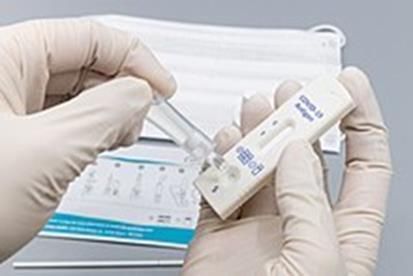
Contents
                                                              Page

   1    Introduction                                          3
   2    Information about LFD tests                           4
   3    Scope of LFD testing protocol                         6
   4    Drawing down and replenishing stocks of LFD tests     6
   5    Frequency of testing                                  7
   6    Raising awareness and encouraging uptake              8
   7    Consent to participate                                9
   8    Supporting familiarisation with the testing process   10
   9    Test results                                          11
   10   Registration of LFD tests                             13
   11   Record keeping                                        11
   12   Links to further information and support              12
        Appendices                                            15

                                                               2
1 Introduction
Many people with coronavirus (COVID-19) have mild, or even no symptoms,
but can still spread the virus. With regular self-testing we can slow the spread
and help protect the most vulnerable in care homes and communities.
Lateral Flow Device (LFD) tests are widely used to check for transmissible
coronavirus (COVID-19).
Lateral flow testing is currently being offered to people who do not have symptoms in
a range of different settings in Northern Ireland including universities, schools and
some health care settings.
Whilst it is not mandatory, asymptomatic1 visitors to care homes should be
encouraged to test twice weekly using a Lateral Flow Device (LFD) test.
Rationale for visitors to Care Homes taking a LFD test:
Regular self-testing using LFDs can slow the spread of COVID-19
Testing may pick up the virus even if the visitor does not have any symptoms
of COVID-19
A positive test will allow visitor to take steps to isolate and protect others
Whilst not fool proof, testing offers another safety measure to keep our care
homes safe and COVID-19 free
The tests are voluntary however, the more people who participate in the
testing programme the more likely we are to identify those who may be
unknowingly carrying the virus
In the event of an outbreak, visiting will be stopped in line with
Health Protection policy and guidance other than in exceptional
circumstances.
1
Visitors with symptoms should follow the guidance below, arrange to get a test at a Local test site and self-
isolate immediately. Do not visit the Care Home.
Regional guidance on staying safe: https://www.nidirect.gov.uk/articles/coronavirus-covid-19-staying-safe-
outside-your-home
What to do if you have COVID-19 symptoms: https://www.publichealth.hscni.net/covid-19-coronavirus/covid-
19-information-public/frequently-asked-questions#if-i-have-symptoms-of-covid-19-what-should-i-do
What isolating means: https://www.publichealth.hscni.net/covid-19-coronavirus/covid-19-information-
public/frequently-asked-questions#what-does-self-isolation-mean
Safe travel guidance https://www.nidirect.gov.uk/articles/safer-travel-guidance-public-transport-users-
walkers-cyclists-drivers
32 About LFD tests
Lateral flow testing is a fast and simple way to test people who do not have
symptoms of COVID-19, but who may still be spreading the virus.
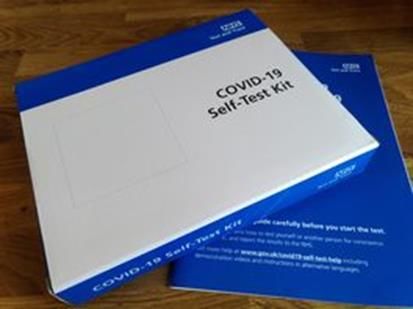
The INNOVA pack of 7 tests used in this programme are licensed for self-testing
outside of a care environment. This means that the tests can be used by a
member of the public with no previous experience of testing, in their own home or
another community setting such as a place of work. These particular tests
(INNOVA 7’s) tests are licensed for self-use only i.e. should not be assisted.
Guidance, support and oversight should be offered where required.
The tests are easy to use and give results in 30 minutes. They can find positive
cases with high levels of virus that are easy to transmit to others, helping to
intercept and reduce further infections. Those who test positive must immediately
self-isolate to avoid passing the virus on to others.
Lateral flow is an established technology, adapted to detect proteins (antigens)
that are present when a person has COVID-19. The best-known example of a
lateral flow test is the home pregnancy test kit.
The Lateral Flow tests used by the UK government go through a rigorous
evaluation by the country’s leading scientists.
Lateral Flow tests are not offered in isolation, but alongside a range of other
measures to drive down cases and break chains of transmission.
Clinical evaluation by Public Health England (PHE) and Oxford University shows
that the LFD tests perform best when levels of virus are at their highest. When a
person has low levels of virus in their system, lateral flow tests are less sensitive
than some of the other tests, such as PCR tests. However, when levels of virus
are at their highest and people are most likely to pass on the disease, lateral flow
tests can detect the vast majority of cases.
Lateral flow tests are useful for finding out if a person is infectious now, and able
to transmit the virus to others. The tests are accurate enough to detect the vast
majority of these cases. The accuracy is improved further by testing more than
once per week. The Northern Ireland Expert Advisory Group on testing in
Northern Ireland has advised that Visitors to Care Homes in Northern Ireland
should be asked to use LFD tests twice each week.
PCR and lateral flow have different roles to play in controlling the virus, so it isn’t
helpful to directly compare them.
o Polymerase chain reaction (PCR) tests check for the genetic material
(RNA) of the virus in the sample. This is done in a laboratory. PCR tests
may still be positive even after the individual is no longer infectious as it
can identify small fragments (genetic material) of dead virus. This is why
individuals with a positive PCR test should not be tested again for 90 days.
o Lateral Flow Device (LFD) tests detect proteins called ‘antigens’ produced
by the virus. They give the results within 30 minutes after taking the test.
LFDs are a fast and effective way of testing people who do not have
4symptoms, but may be infectious. They are most accurate in individuals
with a high viral load (level of infectiousness) who are at higher risk of
spreading the virus.
More information is available at the following links.
https://www.gov.uk/guidance/understanding-lateral-flow-antigen-testing-for-people-without-symptoms
https://www.gov.uk/government/publications/how-tests-and-testing-kits-for-coronavirus-covid-19-
work/for-patients-the-public-and-professional-users-a-guide-to-covid-19-tests-and-testing-kits
53 Scope of Visitors to Care Homes LFD testing protocol
All visitors to Care Homes in Northern Ireland over the age of 16 years
Visiting chaplains, hairdressers or other visitors who may attend care homes
regularly to provide services and support for residents. These individuals
should identify a single care home to collect tests from. Two LFD tests should
be completed within each week. Proof of negative results within the timeframe
should facilitate them being able to visit more than one care home within the
same seven day period without further testing.
Exclusions:
Children under age of 16
Children already using twice weekly tests as part of the school LFD testing
programme may provide evidence of their negative tests prior to visiting a
care home
Care partners - In view of the enhanced roles that Care Partners may
undertake in providing more close contact care for residents, existing testing
arrangements for Care Partners should continue with weekly PCR tests being
offered alongside Care Home staff. This approach will be kept under review.
Health and Social Care professionals - separate arrangements for regular
testing of health care professionals are under review.
4 Drawing down and replenishing stocks of LFD tests
Care Homes will be able to draw down tests based on the number registered beds in
their care home. This information along with current care home visiting policy on the
number of visitors to care homes will determine how many tests will be available for
visitors to each care home. This information has been uploaded centrally to DHSC
who will be co-ordinating the dissemination of tests.
Please use the following link to initiate the process. You will need your Care
Home’s Unique Organisation Number (UON) which is an 8 digit number.
Apply for coronavirus test kits - GOV.UK (test-for-coronavirus.service.gov.uk)
You will receive confirmation of your order by return email. If you have any
issues with the process, please use the 119 helpline.
The tests will be delivered free of charge to your Care home by Sales Force
and you should receive them within 7 to 10 days. If you do not get a delivery
within this time period, please contact 119.
6 Care Homes will be supplied with enough tests for 1 month. Estimates have
been informed by assumptions that all visitors to a care home (in line with NI
Visiting to Care Homes guidance) will avail of the offer of LFD testing. This will
be kept under review.
Care Homes cannot reorder tests within a 21 day period. When reordering
tests, please use an email which will be monitored regularly so that
confirmation of the order may be received.
Tests should be stored in a clean, dry, secure environment.
Once the test kits are received – please keep a record of the lot numbers
(also be referred to as batch numbers) on the test kits received in your
care home.
It is important that visitors are asked to remember to register the results of
every test on line https://www.gov.uk/report-covid19-result or by calling 119.
If tests are not registered as being used, it will impact on the ability of
the Care Home to refresh supplies of tests. THIS STEP IS VITAL
5 Frequency of testing
Visitors should complete 2 LFD tests per week. These tests may be undertaken in
the VISITOR’S OWN HOME.
For visitors only planning to make 1 visit during the week, they should complete
the first test 3 days before the planned visit and the second test on the day of the
visit.
Where more than one visit is planned the tests should be carried out on two
separate days which are three days apart. For example Monday & Thursday,
Tuesday & Friday, etc. Tests would ideally coincide with visits to the home.
Visitors MUST REGISTER THE RESULT OF THEIR TEST online via the web portal
at https://www.gov.uk/report-covid19-result. Test results may also be registered by
phoning 119 (see section 10).
Visitors will be asked to share the results of their tests with the Care Home at the
time of their visit.
The number of packs of LFD tests given to each visitor will be at the Care Home
manager’s discretion based on the frequency of visits to the care home. Please
provide no more than two week’s supply to visitors in the first instance. Once the
Visitor is comfortable with the process, Care Home managers may revisit this,
however no more than a month’s supply should be issued at the time.
7Remember that Care Homes will not be able to reorder LFD tests for 21 days and
subsequent orders may be affected if visitors do not register the results of their tests.
Visitors should be reminded that the tests are provided for their sole use and should
not be shared with or used by others.
If the visitor is coming from the Republic of Ireland to visit a resident in Northern
Ireland, they should be asked to register their Test result using the Care Home post
code.
NOTE: individuals who have previously tested positive for COVID-19 (PCR
test) should be exempt from lateral flow testing for 90 days
6 Raising awareness and encouraging uptake
Once the Care Home makes an application to draw down LFT tests, all
opportunities should be taken to encourage visitors to take up the offer of
testing using LFDs. Please discuss the advantages of using LFD tests with
visitors when they are making bookings to visit their loved ones in the Care
Home.
Share written information on testing using LFDs with all visitors. This can be
done by e-mail where appropriate. Please provide a hard copy of the
information for those visitors who cannot access e-mail correspondence. All
information is available on the PHA website at the following link
Testing for visitors to care homes.
Encourage visitors to share information about LFD testing with other family
members or friends who may be planning to book a visit to the Care Home
Remind visitors that regular testing does not replace the need to maintain
regular handwashing, wearing of masks and adhering to all IPC measures in
the Care Home visiting policy.
Remind visitors that the tests should only be used if they do not have
symptoms of COVID-19. If they DO have symptoms they should isolate,
arrange to have a PCR test at a local test centre and follow guidance on NI
Direct2.
2
Regional guidance on staying safe: https://www.nidirect.gov.uk/articles/coronavirus-covid-19-staying-safe-
outside-your-home
What to do if you have COVID-19 symptoms: https://www.publichealth.hscni.net/covid-19-coronavirus/covid-
19-information-public/frequently-asked-questions#if-i-have-symptoms-of-covid-19-what-should-i-do
What isolating means: https://www.publichealth.hscni.net/covid-19-coronavirus/covid-19-information-
public/frequently-asked-questions#what-does-self-isolation-mean
8 Whilst the test is simple to use - care must be taken to ensure that visitors are
confident that they can self-test and can report their result either on line or by
calling 119 (sections 7-10). Everything the visitor needs to know is detailed
within the information leaflet in the pack of tests. Actions that Care Homes
should take to support Visitors are outlined in section 8.
7 Consent to participate
Each visitor using the LFDs will need to sign a consent form (appendix 1) . To
enable the Care Home to comply with obligations under General Data
Protection Regulation, each visitor participating in the programme must
provide express consent for the use of their personal information in the NI
Lateral Flow COVID-19 Testing Programme for Visitors to Care Homes.
A copy of each completed consent form should be retained by the care home
and a copy offered to the visitor (scan and e-mail, photograph on smart phone
or provide a hard copy if requested).
Safe travel guidance https://www.nidirect.gov.uk/articles/safer-travel-guidance-public-transport-users-
walkers-cyclists-drivers
98 Supporting familiarisation with the testing process
Documents and resources to support self-testing are available on the PHA website
using the link below. Testing for visitors to care homes.
Visitors may also access a video explaining the testing process using the QR link
below.
How to do a Covid-19 self- test
Scan the QR code above to be taken to an instructional video on how to self-test.
Alternatively follow the link for the video:
www.youtube.com/watch?v=S9XR8RZxKNo
Care Homes should:
Demonstrate contents of the testing box to each visitor and explain the
process of preparing to take the test, swabbing and using the test and
registering the result. The steps are briefly summarised in the box overleaf.
Offer to answer any questions that visitors may have. Full instructions are
provided in the box. Ensure that demonstration kits are easily available for this
purpose and ensure there are enough staff on duty that are familiar with the
process and test kits.
Care Homes should confirm with each visitor that they have had the process
satisfactorily explained to them and that they are content to proceed. Visitors
should be asked to complete and sign the consent form (appendix 1)
10Brief summary of LFD testing steps
o Store tests in cool dry place (20C -300C)
o Prepare testing area – clean, dry, flat surface. Access to a mirror and
good lighting.
o Wash hands thoroughly before starting
o Check you are familiar with the contents of the kit and everything you
need is close by
o Set up the test, take the swab and process the swab
o Wait for 30 minutes and read the result
o Report the result. The first time this is done – it takes a little longer as
all of the personal details need to be entered.
o Dispose of the test and make a note of the result (space at the back of
the instruction booklet to do this).
o Do 2 tests per week as the tests are more accurate at picking up
infection if done regularly
Visitors needing further guidance or assistance:
For those visitors who are not able to manage testing using the self-test kits please
use one of the following options:
1 Explore with the visitor if there is a family member or friend within their
household or ‘bubble’ that may be able to assist them with testing and/or
registering the results OR
2 Care Homes may offer to supervise the tests and assist with registering the
results.
9 Results
Images of results are provided in the ‘Guidance for Visitors’ document which may be
used for reference.
Negative result
If the test result is negative (one line next to C), the visitor may continue with their
visit as planned. If there is a coloured smudge next to C this should also be
interpreted as a negative result.
11Visitors should be reminded that no test is fool proof and they must continue to follow
national and local rules and guidelines including regular handwashing, social
distancing and wearing face coverings, where required.
Positive result
If a positive result is returned from these self-tests (two lines, one next to C and one
next to T), it is extremely likely that the individual is currently infected with COVID-19
and at risk of infecting others.
The individual should follow the 5 steps below:
1 isolate in line COVID-19 guidance (links in box below);
2 arrange to take a PCR test to confirm the result at a local test centre. Instructions
on how to do this are included in appendix 2;
a. If the confirmatory PCR is positive, the visitor should be asked to
continue to isolate with their household for 10 days from the date of the
LFD test.
b. If the confirmatory PCR is negative, the visitor may continue with
planned visits and resume the twice weekly LFD testing protocol.
3 inform the Care Home of test results to support risk assessment and contact
tracing;
4 report their positive result at https://www.gov.uk/report-covid19-result or by
calling 119;
5 put their positive test in the bag provided in the kit and place in a second plastic
bag (for example a small food bag), seal the bag and keep it for 48 hours before
disposing in household waste.
Regional guidance on staying safe: https://www.nidirect.gov.uk/articles/coronavirus-
covid-19-staying-safe-outside-your-home
What to do if you have COVID-19 symptoms:
https://www.publichealth.hscni.net/covid-19-coronavirus/covid-19-information-
public/frequently-asked-questions#if-i-have-symptoms-of-covid-19-what-should-i-do
What isolating means: https://www.publichealth.hscni.net/covid-19-
coronavirus/covid-19-information-public/frequently-asked-questions#what-does-self-
isolation-mean
Safe travel guidance https://www.nidirect.gov.uk/articles/safer-travel-guidance-
public-transport-users-walkers-cyclists-drivers
12 Void result
A void result (no lines or one line next to T) means the test did not run correctly. The
visitor should do a further test.
If the second test is also void, the visitor should be asked to contact the care home
for advice. The care home should supervise a third test to check technique.
More than one void test from the same visitor should be reported as it may indicate
that there is a problem with the batch of tests. Please contact 119 to report any
issues with the tests.
10 Registration of LFD tests
All results, including negatives, positives and voids, MUST be reported
Linking test results to the Care Home enables public health teams to better support
reducing the transmission of coronavirus and prevent outbreaks.
You must ensure that all visitors using the LFD self-test kits are provided with the
Care Home’s unique organisation number (UON). The UON is used to link the test
result to the Care Home when the result is reported. A template is provided in
Appendix 3.
Registration should happen as soon as the test result is determined (and no later
than one day after testing). Visitors will need the ID number on the test device to
register the result or they can scan the QR code if they have a smart phone.
Step-by-step result reporting instructions
Visitors should report their rapid lateral flow test result at home, before beginning
their visit to the Care Home.
Please ask visitors to follow these steps to report their result. A printable summary of
how to do this is provided as appendix 3 and screen shots of the steps may be
accessed on the PHA website at Testing for visitors to care homes
1. Report online https://www.gov.uk/report-covid19-result or call 119.
2. Select ‘Myself’ when asked who you are reporting a result for.
3. You can choose to continue ‘without an account’ or ‘create an account’.
Creating an account will save your details each time you report a test result.
Creating an account only takes 2 minutes and you’ll save 5 minutes when
reporting each test result.
4. If continuing without an account, select ‘A social care service’ when asked
who the test was for.
5. Select ‘I’m visiting someone who gets care or support’.
6. Enter the UON of the care setting you are intending to visit. This should
already have been provided to you by the setting manager.
137. Check the details of the organisation are correct.
8. Enter ‘Today’ when asked when the test was taken – please test on the day of
your visit.
9. Enter the ID number printed on the plastic test strip. You can also scan the
QR code on the test strip if you are using a mobile device.
10. Follow the remaining steps entering your personal details to complete your
report.
Visitors will receive a text message and email from NHS Test and Trace confirming
their test result has been reported. This should be shown to the Care Home on
arrival for their visit.
11 Record keeping
LFD Kit lot A record of the lot numbers from all of the LFT kits received
numbers should be retained by the care home. This will support any
potential requirements for batch recall.
Consent forms Keep a copy of all signed consent forms in line with data
protection laws
Positive results Keep copies of contact details of visitors returning a positive
test result (LFT and any PCR tests undertaken to confirm the
result). This information may be used to assist in contact tracing
and/or risk assessment.
Void results The Care Home should also call 119 if a visitor has reported
more than one void test
12 Further information
Copies of all documents are available on the PHA website at:
Testing for visitors to care homes
All questions or queries should be directed to the LFD testing team by calling 119
in the first instance.
14Appendix 1
NI Lateral Flow COVID-19 Self-Testing Programme for Visitors to Care Homes
Consent form
Rapid testing has been identified as an appropriate non-clinical intervention (NCI) to
identify cases of COVID-19 which may be asymptomatic.
This initiative which is supported by the Department of Health is being led by the
Public Health Agency.
The programme involves offering visitors to Care Homes the opportunity to self-test
in their own home using a Lateral Flow Device (LFD) test twice a week. Lateral Flow
Device (LFD) testing is a fast and simple way to test people who do not have
symptoms of COVID-19, but who still may be positive and be spreading the virus.
You will be given a leaflet to explain how the test will work and you can find out more
about the tests at the following link or by asking your Care Home manager.
Testing for visitors to care homes
This letter outlines how and why the care home will record your consent to
participate in the programme as the process involves processing personal data
under data protection laws.
To enable us to comply with our obligations under General Data Protection
Regulation, we are required to obtain express consent for the use of your personal
information for participation in NI Lateral Flow COVID-19 Testing Programme for
Visitors to Care Homes.
Without your consent we will not include you in the programme and will not issue you
with Lateral Flow Device Testing Kits.
Taking part in testing is voluntary. There is no expectation or obligation to participate.
Nobody should be required to undergo testing without consent and nobody will be
excluded from visiting if they do not wish to test.
Whilst testing is voluntary the more people who participate in the testing programme
the more likely we are to identify those who may be positive but not have symptoms.
Regular self-testing using LFDs can help us slow the spread of COVID-19 by
identifying those who are infectious so that they can isolate promptly. Testing visitors
offers another safety measure to keep residents and staff in our care homes safe
and COVID-19 free.
Please complete the form on page 2 of this letter and return it to your Care Home.
15Visitor Consent for NI Lateral Flow COVID-19 Self-Testing
Programme for Visitors to Care Homes
Care Home Name:
Please read the following conditions carefully and provide your consent as
appropriate by circling either ‘yes’ or ‘no’ for each criterion.
Consent
I consent to participating in this testing programme YES NO
I understand that my data will be held and shared in accordance with YES NO
data protection laws.
I agree that if my LFD test results are confirmed to be positive, I will YES NO
isolate at home and inform the Care Home to support risk assessment
and contact tracing
I agree that if my LFD test results are confirmed to be positive, I will YES NO
also take a PCR test to confirm my result and inform the Care Home of
the result of the PCR test to support risk assessment and contact
tracing
I agree to accurately record all of my test results at YES NO
www.gov.uk/report-covid19-result or by calling 119 where staff will
register test results on my behalf.
I understand that by participating, I am agreeing to use the test kits YES NO
according to the instructions included.
I have had the opportunity to consider the information provided to me YES NO
by the Care Home about the LFD testing programme and am content
to proceed
Name of Visitor (please print) ________________________________________
Signature ________________________________________
Date ________________________________________
Contact telephone number ________________________________________
Staff Name (please print) ________________________________________
Staff Signature ________________________________________
Date ________________________________________
16Appendix 2
How to access a confirmatory PCR test if visitor has a positive LFD test result
Testing is available across a number of testing sites. Information on testing site
locations is available at the following link:
https://www.publichealth.hscni.net/covid-19-coronavirus/testing-and-tracing-covid-
19/testing-covid-19
Fixed drive through centres:
Belfast: SSE Test Centre, Odyssey Car park
Derry/Londonderry: The LYCRA Company Car Park
Craigavon: Central Sports Arena
Enniskillen: St Angelo Airport
Walk through test sites:
Ulster University (Car Park 4), Coleraine
Magee Ulster University, Londonderry
Ballymena Showgrounds, Ballymena
Car Park at Queen’s Sports Club (PEC), Belfast
Longstone Car Park, Lisburn
Testing at one of 8 mobile testing units. PLEASE NOTE: The mobile testing units
provide a temporary testing site that is set up in response to local demand.
Individuals should therefore arrange to check the locations of the mobile testing units
available at the following link: https://www.publichealth.hscni.net/covid-19-
coronavirus/testing-and-tracing-covid-19/testing-covid-19
In advance of attending a test centre, it will be important for you to have watched the
videos on how to perform the test (nose and throat swab). This is available at the
following link: https://www.publichealth.hscni.net/covid-19-coronavirus/testing-and-
tracing-covid-19/testing-covid-19
PLEASE REMEMBER to register your test kit on the website (https://test-for-
coronavirus.service.gov.uk/register-kit) so that your test result can be sent to you.
This registration is completed after the test with the unique number you have on your
test sample. The unique number will look like this example “AAA12345678”
If you do not have access to a computer, ask a family member or friend to assist you.
If that is not possible, please contact the Care Home for advice.
When will I get my test result?
Once your test kit is registered (where you are asked to provide a mobile phone
number and an email address) and you have completed your swab, you should
normally receive your results within 24 hours by text and email.
17Will having a negative test mean that visiting is safe?
No test is 100% accurate all the time. All visitors should continue to follow all
instructions from the care home to make each visit as safe as possible. This includes
washing your hands thoroughly, wearing PPE as required and staying within
designated parts of the care home.
18Appendix 3
Visitors to adult social care
settings: reporting rapid lateral
flow tests at home
This leaflet is provided for visitors to adult social care settings, on how to report rapid
lateral flow tests, if self-testing at home.
Introduction
We have shared our Unique Organisation Number (UON) with you in the box
below.
The UON is used to link your test result to us when you report your result to NHS
Test & Trace. All results, including negatives, positives and voids, must be reported.
Linking your test result to us enables public health teams to better support us to
reduce the transmission of coronavirus and prevent outbreaks.
Visitor self-test for a visit to a Care Home
Please conduct a rapid lateral flow test twice every week to help keep us safe,
reduce the spread of coronavirus and prevent outbreaks.
We are now able to provide you with a box of rapid lateral flow tests to take at
home.
To ensure that your test is linked to our care home when you visit, please ensure
all tests are reported to our Unique Organisation Number (UON). How to do this
is detailed on the next page.
Proof of a negative result may include an e-mail or text from NHS Test and
Trace or a date stamped photo of the test cartridge itself.
Please remember that you must continue to adhere to all other infection
prevention control measures including regular hand washing and wearing PPE
Our Unique Organisation Number (UON) is:
19Step-by-step reporting instructions for visitors to adult
social care settings self-testing at home.
Go to www.gov.uk/report-covid19-result or call 119.
Select ‘Myself’ when asked who you are reporting a result for.
You can choose to continue 'without an account', or, 'create an account’.
Creating an account will save your details each time you report a test result.
Creating an account only takes 2 minutes and you'll save 5 minutes when
reporting each test result
If continuing without an account, select, ‘A social care service’, when
asked who the test was for.
Select, ‘I’m visiting someone who gets care or support’.
Enter the Unique Organisation Number (UON) of the care setting you
are intending to visit.
The UON should already have been provided to you by the setting manager.
Check the details of the organisation are correct.
Enter ‘Today’ when asked when the test was taken –please test on the
day of your visit.
Enter the ID number printed on the plastic test strip. You can also scan
the QR code on the test strip if you are using a mobile device.
Enter your personal details and follow the remaining steps to complete
the process.
If you have any questions, call our 119 helpline
2021
You can also read


