H2 Taranaki Roadmap Update - HOW HYDROGEN WILL PLAY A KEY ROLE IN OUR NEW ENERGY FUTURE
←
→
Page content transcription
If your browser does not render page correctly, please read the page content below
H2 Taranaki
Roadmap Update
HOW HYDROGEN WILL PLAY A KEY ROLE IN
OUR NEW ENERGY FUTURE
Spring 2021

                                       A TAPUAE ROA PROJECT

                                                                     TARANAKI

                                                          H2 Taranaki Roadmap Update   1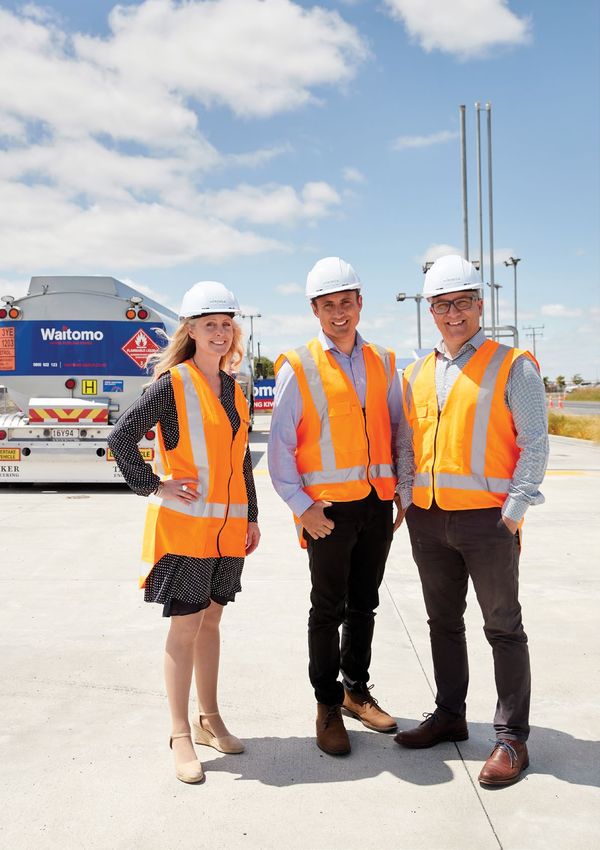
Possibility in
                                                                                                                                                          H2 Export Ship
                                                                                                                          progress

                                               NEW PLYMOUTH                          Wastewater Pump Station
                                                                                     Powered by H2 fuel cell
                                                                                     (24/7)
                                                Port Taranaki                                                                      Waste Water
                                                Possible site                                                                      Treatment
                                                for H2                                                                             H2 thermal drier
                                                production                                                                         and fuel cell backup

                                                                                                                               H2 Refuelling

                                                                                Refuse Collection &                    Solar

                                           H2 Powered Car                       Long Haul Transport

                                                                                                                                     Water Treatment
                                                                                                                                     Plant
                                                                                                                                     Fuel cell backup

                                                        Hospital                   NPDC Civic Building
                                                        Fuel cell backup           Fuel cell electricity and heating

                                            Test-driven
                                                                                                                H2 Powered
                                                                                                                Milk Tanker

                                                                                                                         Gas Pipelines

                                                                                                                               Gas Production Station

                                                                                                                                                    Power
                                                                                                                                                    Transmission

                                                                                                                                            Green H2
                                                                                                                                            Production

                                                                                                  Offshore Platform
                                                                                                  Green hydrogen
                                                                                                  production

                                                       Floating Offshore Wind

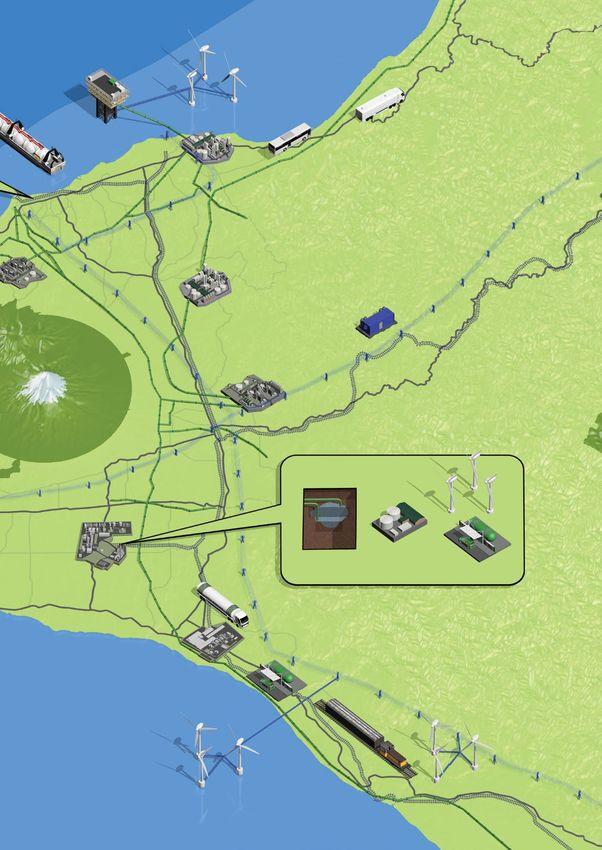
    POTENTIAL INTEGRATION OF
    HYDROGEN INFRASTRUCTURE: UPDATE
    THE MAP SHOWS HOW FUTURE HYDROGEN AND RENEWABLE ELECTRICITY DEVELOPMENTS
    WOULD INTEGRATE WITH TARANAKI’S EXISTING ENERGY INFRASTRUCTURE.

                        In addition to the above, a study into CCUS led by Ara Ake, and undertaken by Elemental Group and ARUP, is underway.
2
Offshore Gas Platform

                                                              Fixed Offshore Wind
                                                              and Wave Generation                                   H2 Powered
                                                                                                                    Heavy Transport

                                                                              H2 Powered Bus
                                                      H2 Production
                                                      Green methanol
NEW PLYMOUTH
                                                      production                                           Underway

                                                                                   Feasibility and
                                                    Gas Pipelines
                                                                                 planning underway

Gas                                                        Blue H2 Production
Peaker                                                                                             Remote Stationary
Plant                                                                                              Power for Farms

    Mount Taranaki

                                                                      Gas Peaker Plant

                                     STRATFORD

                                                                                  KAPUNI
                                                                                                                  Onshore Wind

    KAPUNI

                                                                                                          Green H2 Production
                                                                                                          Synthetic fuels
                                                                                  Underground             H2 gas storage
                                                     H2 Powered                   Storage                 Green ammonia           H2 Refuelling Depot
                                                     Milk Tanker

                                 HAWERA
                                                                                                                           Planning
                                      Dairy
                                      Factory

                                                H2 Refuelling Depot

                                                                                                        H2 Powered Train

                                                                                         Under investigation
                                                               Fixed Offshore
                                                               Wind                                                              Onshore Wind
                                                               and Wave Gener-                                                              WAVERLEY
                                                               ation                            PATEA

                                                                                                                                 H2 Taranaki Roadmap Update   3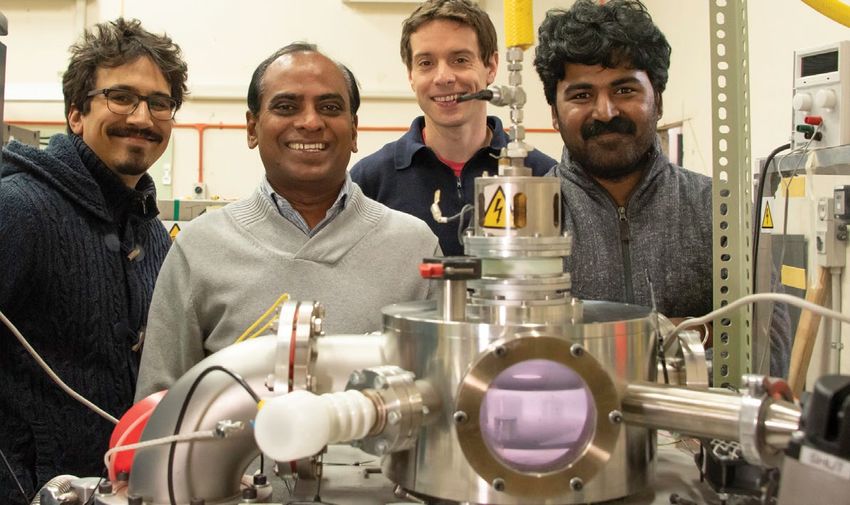
H2 Taranaki Roadmap –
    the update
                                                               is provided in the context of an update on hydrogen
      In March 2019 the Prime Minister, Rt Hon.                developments across New Zealand and internationally.
      Jacinda Ardern, launched the H2 Taranaki                 Taranaki was one of the global leaders in developing
      Roadmap.                                                 a regional hydrogen roadmap. Since March 2019 there
                                                               have been numerous regional and national hydrogen
                                                               development plans and large-scale investment in
    The Roadmap presented the case for hydrogen to play        commercial hydrogen projects has occurred.
    a major role in New Zealand’s transition to a net zero
    economy by 2050. It envisaged a series of Taranaki-based   The hydrogen sector is set for significant international
    projects that would lay the groundwork for nationwide      growth. It is widely seen as a key part of global
    development of the hydrogen sector.                        decarbonisation efforts.

    This H2 Taranaki Roadmap Update provides an overview       To retain the leadership position gained by development of
    of developments since the Roadmap was released. The        the H2 Taranaki Roadmap it is vital that local commitment
    progress of Taranaki-based projects is summarised. This    is maintained and investment encouraged.

4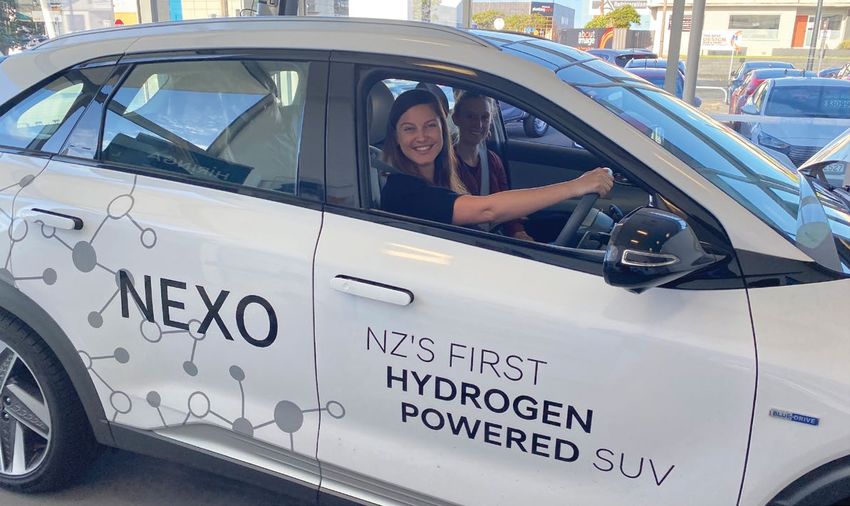
The H2 Taranaki
Roadmap
There are two H2 Taranaki Roadmap documents – a full- H2 TARANAKI
length version and a summary. Both documents can be
found on the Venture Taranaki website:
ROADMAP
SUMMARY
www.venture.org.nz/projects/h2-taranaki-road-map/
HOW HYDROGEN WILL PLAY A KEY ROLE IN OUR
NEW ENERGY FUTURE
The H2 Taranaki Roadmap was prepared with support from
the Provincial Growth Fund, New Plymouth District Council
and Hiringa Energy.
Venture Taranaki was the Project Manager for
development of the H2 Taranaki Roadmap.
A series of integrated and mutually-supportive actions
were proposed in the Roadmap in transport, refuelling and
distribution, industrial, large-scale storage, stationary and
remote energy and export.
These actions are summarised in this graphic from the
Roadmap: A TAPUAE ROA PROJECT
TARANAKI
THE H2 TARANAKI ROADMAP ENVISAGES A SERIES OF PROJECTS THROUGH TO 2030:
2020 2025 2030
TRANSPORT Forklift pilots Scale up forklift fleets
Light vehicle public refueling
Carshare pilots Scale up light fleets
access and fleet expansion
Bus pilot Intercity bus pilots / expand regional fleet Scale up light fleets
Medium truck pilot (Waste truck & civil contractor) Full waste fleet adoption Scale up medium truck fleets
Heavy truck pilot Heavy long haul and short haul fleet trials Fleet conversion and expansion to dairy, forestry
400-600 kg/day supply capacity (NP) 800-2000 kg/day supply & expansion outside region. Scale up existing refueling stations, additional stations in
REFUELLING & DISTRIBUTION
3 x refueling stations (2 external to region) Light vehicle public refueling access Taranaki and across NZ
Liquid Organic Hydrogen Carrier (LOHC)
LOHC full commercial LOHC for domestic & export
distribution pilot
INDUSTRIAL Hiringa/Ballance Kapuni ammonia project New-build green ammonia production Green ammonia export
Carbon capture and synfuel pilot Scale up of synfuel
Synthesised methanol pilot Scale up methanol
LARGE SCALESTORAGE H₂ pipeline injection trial H₂ pipeline injection blending/storage 100% H₂ pipeline conversion
Blended H2 peaker plant trials 100% H2 peaker plant trials 100% H₂ peaker plant conversion
10MW methanation plant pilot 100MW methanation plant Multiple distributed methanation plants
Trial large backup fuel cell Large scale integration of fuel cells with district
STATIONARY & REMOTE ENERGY Council ammonia fuel cell project trials
applications for infrastructure infrastructure for backup and grid stabilisations
Large FC system suitable for all
Implement fuel cells in all applicable remote applications
council remote applications
Grid stabilisation
EXPORT Pilot export technology (LOHC or Liquid) 500-1000 MW export facility
PRODUCTION (TARANAKI) 2000-3500 kg/day production 12,000 kg/day production 700-2,000 T/day production
(8 MW installed renewable generation) (50 MW installed renewable generation) (3-8GW installed renewable generation)
H2 Taranaki Roadmap Update 5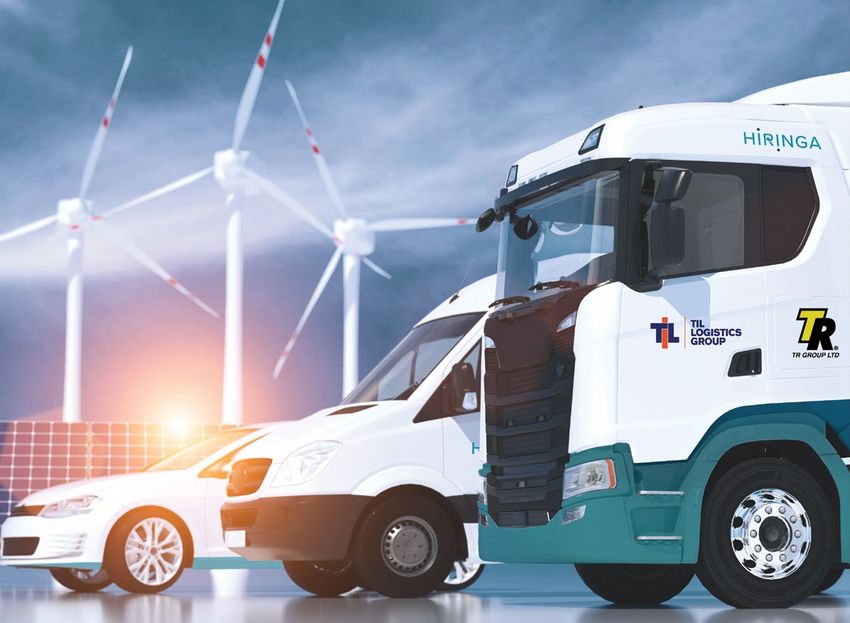
Hiringa team members with a mobile hydrogen refueller

    Progress on Taranaki                                         260,000 tonnes of urea per year using hydrogen produced
                                                                 from natural gas as a key feedstock. This is combined with

    hydrogen projects                                            nitrogen extracted from the air to produce ammonia and
                                                                 then urea fertiliser.
                                                                 In June 2019 Hiringa Energy and Ballance Agri-
    Several projects suggested in the Roadmap have               Nutrients signed a Joint Development Agreement for an
    progressed and are summarised below. Underpinning            integrated wind to green hydrogen and ammonia project.
    these projects is the development of significant-scale       The two companies plan to build up to four wind turbines
    green hydrogen production at Kapuni.                         producing up to 24MW of renewable electricity. This will
                                                                 provide power to the existing plant with excess electricity
                                                                 being used to power an electrolyser capable of producing
      GREEN HYDROGEN                                             up to two tonnes of green hydrogen per day.
      Green hydrogen is produced by using renewable              The green hydrogen will enable up to 7,000 tonnes of urea
      electricity to electrolyse (or split) water into           to be produced per year and will displace imported urea
      hydrogen and oxygen. There are no greenhouse               produced from fossil fuels. It will also create significant
      gas emissions from this process. This contrasts            volumes of green hydrogen for use in the transport sector
      with most of the hydrogen currently produced               which performs an important role in the agricultural
      around the world which is made from fossil fuel            supply chain.
      hydrocarbons with the production process also
                                                                 The overall cost of the project is expected to be around
      releasing CO2. This is known as brown hydrogen,
                                                                 $60m.
      if produced from coal, or grey hydrogen, if
      produced from natural gas.                                 Planning and design for the project is well underway with
                                                                 consultation occurring with local hapu, communities,
      Blue hydrogen also produces no emissions and is
                                                                 neighbouring properties as well as business owners.
      the term used when the CO2 produced from gas
                                                                 Construction is expected to commence in 2021 with
      or coal production of hydrogen is captured and
                                                                 completion in 2022.
      either used in another product or stored.
      The H2 Taranaki Roadmap was primarily focused              DECARBONISATION OF THE GAS NETWORK
      on developing a green hydrogen industry
      in Taranaki though the opportunity for blue
                                                                 H2 Pipeline trial – Firstgas
      hydrogen from natural gas was also highlighted.            New Plymouth-based Firstgas Group provides the
                                                                 national natural gas transmission network (around
      All the Taranaki projects reported on in this
                                                                 2,500km) and also provides the gas distribution network
      update involve the production of green hydrogen.
                                                                 in several centres (around 4,800km).
                                                                 Green hydrogen has the potential to be distributed in the
                                                                 gas network displacing the use of a portion of natural gas.
    INDUSTRIAL                                                   This would reduce the carbon intensity of the gas used.
                                                                 Several similar international trials are underway.
    Green hydrogen and ammonia project – Hiringa-
    Ballance                                                     In March 2020 Firstgas launched a study on the feasibility
                                                                 of converting its networks to hydrogen. This work was
    Ballance Agri-Nutrients owns and operates the ammonia-
                                                                 supported by government funding managed by the
    urea plant at Kapuni in South Taranaki. It produces around

6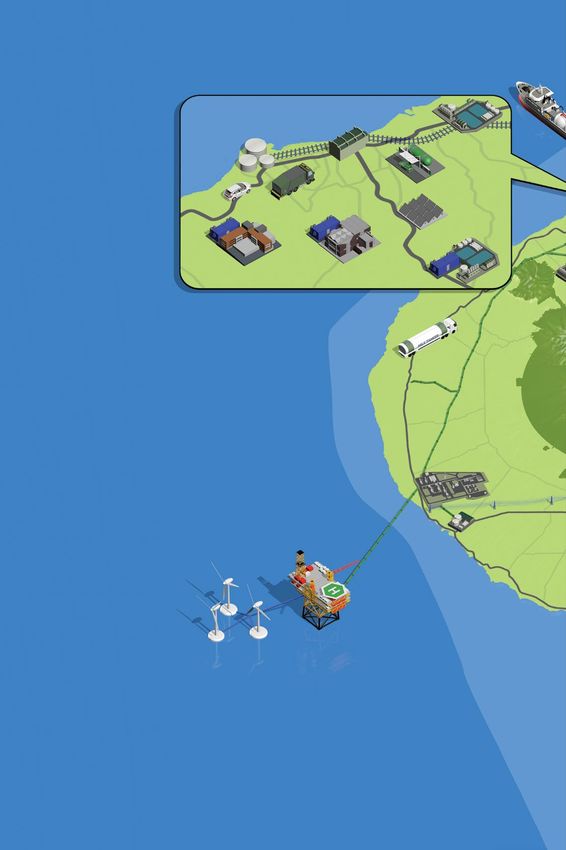
Firstgas: indicative hydrogen conversion strategy timeline

Provincial Development Unit. This work was completed in      sites to come online in Q1 2022. In January 2020 Hiringa
March 2020 with the following key findings:                  Energy and Waitomo Group announced a partnership to
                                                             co-locate Hiringa’s hydrogen production and refuelling
• Firstgas has sufficient pipeline capacity to transport
                                                             stations on existing Waitomo truck stops. The refuelling
  projected hydrogen demand and a viable plan for
                                                             network project has three phases:
  converting gas networks to 100% hydrogen by 2050
  has been developed                                         1 An initial group of eight refuelling stations in Tauranga,
                                                               Hamilton, New Plymouth, Auckland, Palmerston North,
• Initially, a 20% hydrogen blend could be used from
                                                               Christchurch, Taupō and Wellington
  2030 to 2035
                                                             2 A further 16 stations by 2025
• There will be no need to change most appliances with a
  blend of up to 20% hydrogen                                3 Over 100 stations by 2030.
• The use of hydrogen could reduce total emissions from      The hydrogen available through this network will
  the energy sector by 25 per cent by 2050                   come from a combination of onsite production using
                                                             electrolysers and offsite production delivered to the
TRANSPORT                                                    station by tube trailer. Hydrogen from Kapuni will be
                                                             available to supply the network.
Hydrogen fuel cell electric vehicles (FCEV) have several
advantages over battery electric vehicles for heavy and/     In August 2020 it was announced that funding of $20m
or high use commercial vehicles – their refuelling time is   had been provisionally approved by the Infrastructure
quicker, their weight is lower and their range is longer.    Reference Group to support the establishment of the
                                                             refuelling network. The initial network will provide
There are three key actions for hydrogen to fulfil that
                                                             coverage for about 95% of heavy freight routes in the
promise:
                                                             North Island and 82% of the South Island.
• Suitable hydrogen-powered vehicles need to be
                                                             Introducing FCEV Trucks and Buses to
  available
                                                             New Zealand – Hiringa Energy
• Companies need to be willing to use them
                                                             Hiringa Energy is also working closely with hydrogen fuel
• A refuelling network needs to be available.                cell electric vehicle truck and bus manufacturers to secure
                                                             cost effective and compliant transport platforms for the
Hydrogen refuelling network – Hiringa Energy
                                                             New Zealand market.
Hiringa Energy is advancing its plans to roll out a
nationwide hydrogen refuelling network with the first

                                                                                                 H2 Taranaki Roadmap Update      7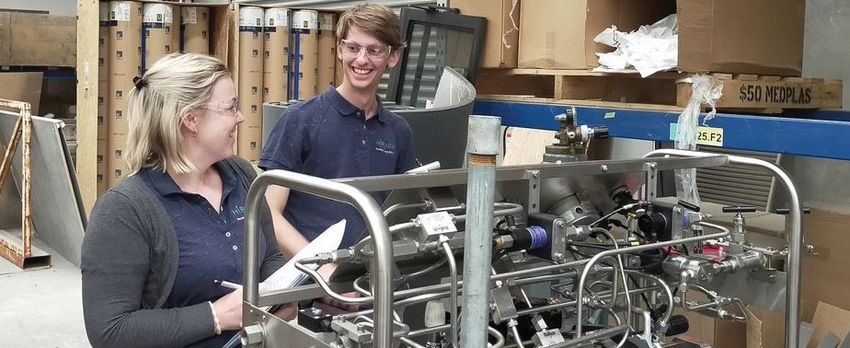
• FCEV Trucks – Hiringa Energy has been working with                               hydrogen. It is proposed that the hydrogen will initially be
      Hyzon Motors, TIL Group and TR Group to develop a                                supplied by Hiringa Energy from Kapuni.
      New Zealand suitable 50MAX1 class truck for the line
                                                                                       The project will significantly reduce the Council’s total
      haul market. This has resulted in the signing of a HOA
                                                                                       carbon emissions.
      with Hyzon Motors for the supply of 20 trucks and
      line of sight to a further 1,500 trucks over the next 5
      years. Hiringa and Hyundai have also begun working
                                                                                       RENEWABLE ENERGY GENERATION
      on a market entry strategy for Hyundai’s Xcient FCEV                             While not directly defined as an action in the H2 Taranaki
      medium duty vehicle which was released in Switzerland                            Roadmap, the development of the green hydrogen sector
      mid-2020.                                                                        will encourage renewable energy generation in Taranaki.
                                                                                       The regional map in the H2 Taranaki Roadmap documents
    • FCEV Buses – Hiringa Energy has been working with the
                                                                                       suggests the potential for several onshore and offshore
      regional councils across New Zealand to understand
                                                                                       wind farms to be developed in the region.
      the role which FCEV buses will play in the zero emission
      bus fleets of the future. The expectation based on                               The go-ahead for the first onshore wind farm in the region
      conversations with regional councils and precedents set                          was given in late 2019. Tilt Renewables are constructing
      internationally is for FCEV buses to make up between                             the 130MW Waipipi Wind farm between Patea and
      30% and 70% of the total bus fleet with battery and                              Waverley which is being commissioned in early 2021.
      bio-diesel being the remainder. To this end Hiringa has                          While not specifically connected to any hydrogen projects,
      engaged the national and international bus building                              it does show the potential of Taranaki for wind generation.
      market with an expression of interest (EOI) for 200
                                                                                       As noted above, Hiringa Energy and Ballance Agri-
      FCEV buses for New Zealand over a 5-year program to
                                                                                       Nutrients are developing up to 24MW of onshore wind
      2026. Results of this EOI are currently being evaluated.
                                                                                       generation near Kapuni.
    Hydrogen for public buses in Taranaki – TRC
                                                                                       In April 2020, Venture Taranaki released an Offshore Wind
    The Taranaki Regional Council is intending to explore                              Discussion Paper. This addressed the potential for offshore
    alternative fuel options for the region’s public bus fleet                         wind generation in the waters of both South and North
    including both hydrogen fuel cell and battery electric                             Taranaki, including potential for powering large-scale green
    options. This investigation is expected to occur in 2022.                          hydrogen production.
    This will be able to leverage the work which Hiringa
                                                                                       Significant international and domestic commercial interest
    Energy is doing in developing a broader nationwide fleet
                                                                                       in offshore wind in Taranaki has ensued. A sold-out New
    procurement as outlined above.
                                                                                       Zealand Offshore Wind Forum was held in New Plymouth
    Light Vehicles – Hyundai/Toyota                                                    in December 2020.
    The development of a public refuelling network also makes                          The potential for wave energy generation continues to be
    it feasible for hydrogen fuel cell light vehicles to enter the                     explored by New Plymouth company EHL, while there is
    New Zealand market.                                                                also potential for solar and possibly geothermal generation
                                                                                       in Taranaki. If developed, these other sources of renewable
    • Since mid-2019 Hyundai has been trialling the Hyundai
                                                                                       electricity could also be utilised for green hydrogen
      Nexo SUV in New Zealand. The Nexo is an FCEV which
                                                                                       production.
      made its first visit to Taranaki in November 2020. It is
      expected to be available for sale once the hydrogen
      refuelling network is established.                                               ENERGY STORAGE
    • Toyota have three Mirai FCEVs in New Zealand for                                 The H2 Taranaki Roadmap addressed the potential for
      evaluation and training purposes, and have Toyota                                green hydrogen as a store of energy from renewable
      Japan’s support to introduce this model once the                                 electricity. It could be used when required to generate
      country’s infrastructure is ready.                                               electricity in existing but modified natural-gas fired power
                                                                                       stations. Mitsubishi Corporation has carried out an initial
    New Plymouth District Council Thermal Dryer                                        investigation of this option which shows promise.
    The New Plymouth District Council’s wastewater                                     Central Government has committed to the NZ Battery
    treatment plant has operated a natural gas-powered                                 project, which is a major investigation of the technical,
    thermal dryer. This equipment turned wastewater into                               environmental and commercial feasibility of potential
    Bioboost fertiliser but was turned off in February 2020 as                         energy storage projects. While the NZ Battery project has
    it was in urgent need of replacement. In July 2020 it was                          a focus on the Lake Onslow pumped hydro project (near
    announced that Government “shovel-ready” funding of                                Cromwell), alternative technology approaches will also be
    $37m will enable the replacement of the dryer with a new                           considered. Green hydrogen-based energy storage options
    one which will run on a blend of natural gas and up to 25%                         are expected to form part of the NZ Battery investigation2.

    1   50MAX | Waka Kotahi NZ Transport Agency (nzta.govt.nz)
    2   NZ Battery Project | Ministry of Business, Innovation & Employment (mbie.govt.nz)

8
Sophie Kelly of Venture Taranaki at the wheel of the Hydrogen powered Hyundai Nexo

ADDITIONAL PARTNERSHIPS                                                      TR Group will support these vehicles via its heavy
                                                                             fleet, lease, rental and maintenance expertise. Several
Hiringa-Mitsui Strategic Alliance                                            configurations and weight classes of vehicles will be
In June 2020 Hiringa Energy signed a Strategic Alliance                      available from 2021.
agreement with Japanese company Mitsui & Co to                               Hiringa-TIL Logistics MoU
jointly pursue hydrogen-related commercial projects in
New Zealand3.                                                                In November 2018 Hiringa Energy signed a Memorandum
                                                                             of Understanding with New Plymouth-based transport
Through this agreement the two companies will:                               company TIL Logistics to develop and deliver transport
• Work towards a common goal of creating a viable                            solutions using hydrogen fuel cell technology in New
  domestic hydrogen economy and export opportunities                         Zealand. TIL Logistics is a customer of TR Group and
  in New Zealand                                                             currently has over 2,300 vehicles in its fleet.

• Provide Mitsui & Co with access to participate in                          Hiringa-AB Equipment MoU
  multiple Hiringa Energy hydrogen projects including:                       In September 2020 Hiringa Energy and AB Equipment
    – JV project with Ballance Agri-nutrients                                entered into an MOU to introduce material handling
    – Hiringa’s nationwide refuelling network.                               equipment powered by fuel cells into the New Zealand
                                                                             market. AB equipment is one of New Zealand’s largest
Hiringa-TR Group MoU
                                                                             material handling equipment providers and under the
In July 2018 Hiringa Energy signed a Memorandum of                           agreement the two companies plan to trial the technology
Understanding with heavy vehicle rental and leasing                          with different customers around New Zealand along with
company TR Group, under which TR Group will provide                          supporting the establishment of onsite hydrogen refuelling
heavy trucks powered with hydrogen fuel cells for the                        infrastructure.
New Zealand market and Hiringa will develop a nationwide
refuelling network.

3   The New Zealand and Japanese Governments had earlier signed a Memorandum of Cooperation on hydrogen in October 2018

                                                                                                                     H2 Taranaki Roadmap Update   9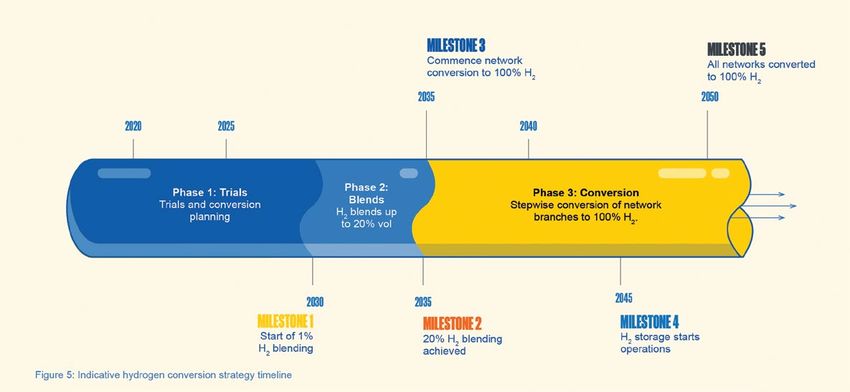
Appendix 1 New Zealand
     hydrogen developments
     The New Zealand Government has committed to the                                  exporter, importer or producer for domestic production will
     development of a New Zealand Hydrogen Roadmap. This                              depend on relative electricity prices in possible competitor
     multi-stage process is being carried out by MBIE.                                countries such as Australia.”
     “A Vision for Hydrogen in New Zealand”                                           A New Zealand Roadmap
     Public workshops began the process of preparing this                             As part of its election campaign the Labour Party
     New Zealand Government green paper, including one                                committed to further support for hydrogen. During the
     held in New Plymouth in March 2019 by consultants Arup                           campaign the Minister of Energy and Resources Megan
     and MBIE.                                                                        Woods stated:
     The resulting document “A Vision for Hydrogen in                                 “A great example of work we can do to become a world
     New Zealand”4 was released in September 2019 and was                             leader is the development of a green hydrogen industry.
     followed by a public consultation process. 78 submissions                        We can produce some of the cleanest green hydrogen
     were received. MBIE have prepared a summary of those                             in the world, and potentially receive a premium for it
     submissions5.                                                                    in international markets. We are already working with
                                                                                      other countries including Japan and have invested in a
     The Green Paper noted:
                                                                                      nationwide fuelling network and will invest $10 million in a
     “The establishment of a strong low emissions economy,                            roadmap and further opportunities”.7
     to which hydrogen contributes, is a very real opportunity
                                                                                      The details on preparation of this national roadmap,
     and within reaching distance. Private sector investment,
                                                                                      including the timeline, are yet to be announced.
     facilitated by appropriate Government policies, will allow
     New Zealand to benefit from significant decarbonisation                          Ministry of Transport’s Green Freight Project
     across the entire energy system.
                                                                                      One of the key opportunities for hydrogen is as a fuel for
     Green hydrogen is a platform that will help reduce global                        heavy and/or high-use commercial vehicles.
     emissions. New Zealand has an abundance of renewable
                                                                                      The Ministry of Transport is carrying out a Green Freight
     energy that could be used to produce hydrogen as a next
                                                                                      Project8 exploring the roles of alternative green fuels –
     generation fuel in a sustainable way. With green hydrogen
                                                                                      electricity, biofuels and hydrogen – in the heavy road
     we have opportunities to create new jobs, convert heavy
                                                                                      transport industry. A Green Freight Background Paper was
     transport away from fossil fuels, enhance our security
                                                                                      released in September 2019 and a strategic working paper
     of electricity supply and even create significant export
                                                                                      “Green Freight: 2020” was released in May 2020. The two
     revenue. In combination, electricity and hydrogen provide
                                                                                      papers note a range of challenges and opportunities for
     a robust energy system platform to decarbonize New
                                                                                      these alternative fuels.
     Zealand. Their complementary characteristics can deliver
     benefits that neither can deliver in isolation.”                                 The Green Freight 2020 paper included a Case
                                                                                      Study on Hiringa Energy and its work with the heavy
     Modelling Project
                                                                                      transport sector.
     MBIE subsequently commissioned consultants Castalia to
                                                                                      Ports of Auckland
     prepare a modelling tool6 that identifies the key drivers for
     the future of New Zealand’s hydrogen economy. MBIE have                          In 2018 Ports of Auckland announced it was committed to
     noted that:                                                                      building a hydrogen production and refuelling facility at its
                                                                                      Waitemata port. Auckland Council, Auckland Transport and
     “The model shows that the major drivers of whether
                                                                                      Kiwirail are project partners.
     economic production of hydrogen is possible in
     New Zealand will be the cost of electricity and the                              In January 2019 the project received support from the
     capacity and scale of electrolysers. New Zealand’s role as                       Energy Efficiency and Conservation Authority’s (EECA) Low

     4   A vision for hydrogen in New Zealand | Ministry of Business, Innovation & Employment (mbie.govt.nz)
     5   Analysis of Hydrogen Vision submissions (mbie.govt.nz)
     6   A roadmap for hydrogen in New Zealand | Ministry of Business, Innovation & Employment (mbie.govt.nz)
     7   100% renewable electricity generation by 2030 - NZ Labour Party
     8   Green freight project | Ministry of Transport

10
Scientists involved in the green hydrogen project at GNS Science. Photo: Margaret Low, GNS Science
Emissions Vehicles Contestable Fund. This funding will be In December 2020 Meridian Energy and Contact Energy
used to support the procurement of a hydrogen fuel cell announced they were co-funding a $2 million feasibility
bus and three hydrogen fuel cell cars. study into large-scale green hydrogen production in the
lower South Island. If this occurs it would have a major
Christchurch company Global Bus Ventures has been
impact on the development of the green hydrogen sector
contracted to build the bus.
in New Zealand. Subsequently, in January 2021, it was
Tuaropaki Trust – Obayashi announced that a deal had been reached between Rio
Tinto, Meridian Energy and Contact Energy which will
The Tuaropaki Trust owns the Mokai Geothermal Plant
keep the smelter operating until at least the end of
located about 30km northwest of Taupo. The Trust has
2024. Options past this date, including green hydrogen
established Halcyon Power as a hydrogen production joint
production, remain on the table.
venture with Obayashi Corporation of Japan. A hydrogen
production plant is currently under construction and will GNS Research
use a 1.5MW electrolyser to produce around 100 tonnes of
Crown Research Institute GNS was awarded $8,450,000
hydrogen annually.
through the MBIE 2020 Endeavour fund to advance its
Tiwai Point research programme: Powering NZ’s Green-Hydrogen
economy: Next-generation electrocatalytic systems for
The closure of the Tiwai Point Aluminium Smelter was
energy production and storage. This programme focuses
announced by Rio Tinto in July 2020 with the intention of
on utilising renewable electricity as an energy source
this taking effect from August 2021. The smelter consumes
to generate hydrogen by water splitting (electrolysis)
around 13% of New Zealand’s electricity with much of it
– producing a clean, emission-free variant of this key
supplied from the Manapouri Power Scheme. After the
industrial feedstock for stationary power and transport.
closure was announced there was considerable discussion
While electrolysis is not new, it relies on high-cost,
on the best options for the future use of this supply of
inefficient materials to make it work, making hydrogen
electricity. While grid upgrades are being advanced to get
production in this manner uncompetitive with the
the power further northwards in the South Island there
conventional fossil-fuel reforming. The GNS research aims
was widespread speculation that the Manapouri electricity
to stimulate the creation of next-generation technologies
supply could be used to power a green hydrogen
with an order-of-magnitude improvement in performance
production facility.
relative to existing water electrolysis-based hydrogen
production systems, along with new capabilities in
hydrogen storage and distribution.
H2 Taranaki Roadmap Update 11Appendix 2 International
hydrogen developments
There has been significant and increasing global interest International Energy Agency
in the green hydrogen sector in recent years. This interest
The IEA released “The Future of Hydrogen: Seizing today’s
was developing before the H2 Taranaki Roadmap was
opportunities” in June 201911. It noted:
prepared but has stepped up to another level since it was
launched. “The report finds that clean hydrogen is currently enjoying
unprecedented political and business momentum, with
World Energy Council
the number of policies and projects around the world
The WEC and consultants Ludwig-Bölkow-Systemtechnik expanding rapidly. It concludes that now is the time to
released a summary document “International Hydrogen scale up technologies and bring down costs to allow
Strategies” in September 20209. It reviewed government hydrogen to become widely used.”
actions supporting the hydrogen sector in 16 countries or
International Renewable Energy Agency
states and in the European Union. Key points noted were:
IRENA has had a long interest in hydrogen. It released
• Quickly emerging hydrogen strategies indicate a
“Hydrogen: a renewable energy perspective” in September
dynamically growing market
2019. The report noted:
• Hydrogen is clearly recognized as an essential element
“Two key developments have contributed to the growth
of a decarbonized energy system
of hydrogen in recent years: the cost of hydrogen supply
• Scaling demand expectations for 2050 indicates a from renewables has come down and continues to fall,
global hydrogen potential of up to 9000 TWh per while the urgency of greenhouse gas emission mitigation
annum (about 270 million tonnes of hydrogen) has increased, and many countries have begun to take
action to decarbonise their economies, notably energy
• In countries with high energy needs, a substantial share
supply and demand. The hydrogen debate has evolved
of the H2 demand will be served by imports, initially on
over the past two decades, with a shift in attention from
the basis of bilateral agreements
applications for the auto industry to hard-to-decarbonise
• Initial applications focus on the transport and industry sectors such as energy-intensive industries, trucks,
sectors aviation, shipping and heating applications.”
• Green hydrogen is central to all strategies Green Hydrogen Catapult
• Refineries and chemical industry to become the first Seven significant green hydrogen project developers and
important large-scale hydrogen markets in the mid-term their partners launched the Green Hydrogen Catapult
• Large industrial partnerships will be formed for initiative in December 2020. This initiative aims to deploy
production and export/import 25GW of green hydrogen production and drive costs of
green hydrogen below US$2 per kilogram by 2026.
• Road transport and fuel cell market is currently stronger
in Asia than in Europe The seven key developers are ACWA Power, CWP
Renewables, Envision, Iberdrola, Ørsted, Snam and Yara.
• Green synthetic liquid e-fuels (PtL10) can grow into an They suggest the initiative will require investment of
interesting opportunity, particularly in the aviation and/ US$110 billion.
or maritime sector
Australia
• New policies needed to achieve strategic aims –
policies should focus on commercialisation The opportunities for green hydrogen production have
been attracting considerable attention in Australia.
• A green hydrogen certification needs to be put in place Following the preparation of a National Hydrogen
• Infrastructure development requires central Roadmap12 by the CSIRO in 2018, Australia’s National
coordination and financial support
• Public acceptance is key.
9 LBST Report H2-strategies (weltenergierat.de)
10 Power to Liquid – a subset of the broader Power to X concept where renewable energy is used to manufacture products such as green hydrogen, ammonia
or methanol.
11 The Future of Hydrogen – Analysis - IEA
12 National Hydrogen Roadmap - CSIRO
12Hydrogen Strategy13 was released by the Department hydrogen and then transform it to ammonia for export.
of Industry, Science, Energy and Resources in November It is being developed by InterContinental Energy, CWP
2019. Energy Asia, Vestas and a Macquarie Group fund.
State hydrogen plans have also been released for South Europe
Australia, Tasmania, Queensland and for the Northern
Many European countries have also released Hydrogen
Territory while Victoria released a Green Hydrogen
strategies and roadmaps in the past couple of years
Discussion Paper in 2019.
including Germany, The Netherlands, France, Finland,
The Australian Renewable Energy Agency (ARENA) is Portugal and Spain. Italy is about to prepare its hydrogen
helping seed the hydrogen sector with a $70m Renewable strategy. A European Strategy was released in July 202017.
Hydrogen Deployment Funding Round supporting
The EU has invested in hydrogen projects over the past 20
several electrolyser projects14. The Clean Energy Finance
years via the Fuel Cell and Hydrogen Joint Undertaking18.
Corporation (CEFC) has up to $300m available via the
This is focused on increasing efficiency and reducing
Advancing Hydrogen Fund “to support the growth of
costs of green hydrogen production, encouraging clean
a clean, innovative, safe and competitive Australian
transport, demonstrating the use of hydrogen for enabling
hydrogen industry.”15 State funding support totalling
renewable electricity production by grid balancing and
$230m is also available.
minimising use of critical raw materials. From 2014 to 2020
There are several small-scale hydrogen development and the FCH JU invested over €1.33b in hydrogen projects.
trial projects underway in Australia including Hydrogen
In Europe the hydrogen sector is increasingly linked with
Park in the Tonsley Innovation District in Adelaide, South
offshore wind as the source of renewable energy. Major
Australia16. It will produce green hydrogen using wind and
electricity and oil and gas companies are collaborating
solar and a 1.25MW electrolyser. The hydrogen will be
and competing to ramp up production of offshore wind,
blended at 5% in the local natural gas network and will
green hydrogen production and projects which will use the
also be used for local industry and as a transport fuel.
hydrogen produced. Green hydrogen lies at the core of
Some large commercial hydrogen projects have also been European decarbonisation efforts and at the transition of
announced in Australia. energy companies.
Infinite Blue Energy has announced the Arrowsmith As in Australia, very large projects involving companies
Hydrogen Project in Western Australia which, from 2022, is from throughout the green hydrogen value chain are
intended to produce 25 tonnes of green hydrogen per day being put together in Europe. For example, Danish energy
powered by 85MW solar and 75MW of onshore wind. The company Ørsted (the world’s leading offshore wind
company has secured AUS$300m of investment funding generator) is developing an offshore wind and green
for the project. They have plans for a subsequent project hydrogen project with Maersk, Copenhagen Airports and
three times as large. the City of Copenhagen starting with a 10MW electrolyser
by 2023, scaled up to 250MW by 2027 and to 1.3GW
Infinite Blue Energy has also announced plans for Project
by 203019. Another example is Equinor, RWE, Shell,
Neo which is a much larger project involving 1GW of
Gasunie and Groningen Seaports which have launched
capacity. This project is designed to produce green
the NortH2 project to create green hydrogen capacity of
hydrogen using variable renewable electricity from
4GW by 2030 and 10GW by 2040. NortH2 links offshore
wind and solar which is then used to produce baseload
wind electricity generation with hydrogen production,
electricity or on demand. Their plan is to have the project
distribution and storage and hydrogen use for electricity
up and running by 2027.
generation and production of industrial chemicals.
In October 2020 the Australian Federal Government
OMV, the international oil and gas company, with
awarded “major project status” to the Asian Renewable
extensive operations in Taranaki, has recently announced
Energy Hub. This is a massive $36b project starting with
their investment in the construction of a 10 MW
15GW of electricity generation and eventually expanding
electrolyser, at a refinery outside Vienna. Costing an
to 26GW. It will be one of the world’s largest power
estimated 25 million euros (NZ$41.57 million), the plant
generation projects and will be located in 6,500km2 of
will make biofuels and petroleum-based fuels substituting
land in the remote Pilbara region of Western Australia.
‘grey’ hydrogen made with gas, but there will be no
When developed it would increase Australia’s current
capturing of excess CO2. OMV expects the unit to be
total electricity supply by more than 30%. The project is
completed in 2023.
however, designed to use this electricity to produce green
13 Australia’s National Hydrogen Strategy | Department of Industry, Science, Energy and Resources
14 Seven shortlisted for $70 million hydrogen funding round – Australian Renewable Energy Agency (ARENA)
15 Hydrogen – Clean Energy Finance Corporation (cefc.com.au)
16 Hydrogen Park South Australia - Renewables SA
17 Powering a climate-neutral economy (europa.eu)
18 www.fch.europa.eu
19 www.climatechangenews.com/2020/08/24/orsted-backs-danish-offshore-wind-powered-hydrogen-project/
H2 Taranaki Roadmap Update 13UK Saudi Arabia
Prime Minister Boris Johnson released his Government’s The Saudi Government is developing Neom, a new city
“10 Point Plan for a Green Industrial Revolution”20 in near the country’s borders with Egypt and Jordan. Its
November 2020. Point 2 was “Driving the Growth of Low ambition is for Neom to become a global centre for
Carbon Hydrogen”. renewable energy and green hydrogen production. While
Saudi Arabia is a leading oil producer it also has excellent
The Plan notes:
solar and wind resources and the ability to produce cheap
“Working alongside partners in industry, our aim is for the renewable energy.
UK to develop 5GW of low carbon hydrogen production
In July 2020 it was announced that a US company Air
capacity by 2030 that could see the UK benefit from
Products & Chemicals will be building a green hydrogen
around 8,000 jobs across our industrial heartlands and
plant at Neom powered by 4GW of wind and solar power.
beyond. This will be supported by a range of measures,
This will produce 650 tonnes of green hydrogen daily
including a £240 million Net Zero Hydrogen Fund”.
which will be converted to ammonia for export. Green
In its definition of “low carbon” hydrogen the UK includes Hydrogen will also form a core part of Neom’s overall
hydrogen produced from natural gas where the CO2 energy system.
produced is captured and stored underground. It views
USA
this “blue hydrogen” as an initially cheaper form of
hydrogen that will aid the sector’s development and Under President Trump the USA lagged in addressing
ultimate transition to green hydrogen from renewable greenhouse gas emissions at a federal level. Nevertheless,
energy. many US states and companies are exploring options
including green hydrogen production and technologies for
The UK is launching its hydrogen strategy in the first
using hydrogen.
quarter of 2021.
President Joe Biden has proposed a US$2 trillion green
Asia
investment plan to enable the country to meet its
Japan, South Korea and China continue to place decarbonisation targets. The plan includes investment in
considerable emphasis on hydrogen – as potential innovation to “Drive dramatic reductions in clean energy
customers for green hydrogen, as potential investors in technologies” including renewable hydrogen22.
green hydrogen projects and as suppliers of plant and
US support will help the global green hydrogen sector
equipment to the sector. Japan was set to showcase
grow even more rapidly than it has since the H2 Taranaki
hydrogen at the 2020 Olympics, now delayed by Covid-19
Roadmap was launched in March 2019.
until 2021. Mitsubishi Corp and its subsidiary Chiyoda
have trialled the international transport of hydrogen
from Brunei to Japan using their SPERA technology21. This
combines hydrogen with toluene for shipping at ambient
temperature and pressure. A trial of this technology in
New Zealand is suggested as an action in the H2 Taranaki
Roadmap.
20 The ten point plan for a green industrial revolution - GOV.UK (www.gov.uk)
21 SPERA Hydrogen® Chiyoda’s Hydrogen Supply Chain Business | CHIYODA CORPORATION
22 The Biden Plan to Build a Modern, Sustainable Infrastructure and an Equitable Clean Energy Future | Joe Biden for President: Official Campaign WebsitePictured: Cathy Clennett, Dan Kahn, and Andrew Clennett of Hiringa
Taranaki’s Regional Development Agency
25 Dawson Street, PO Box 670
New Plymouth 4340, New Zealand
T+64 6 759 5150
E info@venture.org.nz
www.taranaki.info

First published in April 2021
You can also read


