How Does Household Spending Respond to an Epidemic? Consumption During the 2020 COVID-19 Pandemic - Earn
←
→
Page content transcription
If your browser does not render page correctly, please read the page content below
How Does Household Spending Respond to an Epidemic?
                   Consumption During the 2020 COVID-19 Pandemic∗

                       Scott R. Baker† Robert A. Farrokhnia‡ Steffen Meyer§
                                Michaela Pagel¶ Constantine Yannelisk
                                                          March 2020

                                                              Abstract

                     We explore how household consumption responds to epidemics, utilizing transaction-level
                 household financial data to investigate the impact of the COVID-19 virus. As the number of
                 cases grew, households began to radically alter their typical spending across a number of major
                 categories. Initially spending increased sharply, particularly in retail, credit card spending
                 and food items. This was followed by a sharp decrease in overall spending. Households
                 responded most strongly in states with shelter-in-place orders in place by March 29th. We
                 explore heterogeneity across partisan affiliation, demographics and income. Greater levels of
                 social distancing are associated with drops in spending, particularly in restaurants and retail.

                 JEL Classification: D14, E21, G51
                 Keywords: Consumption, Coronavirus, COVID-19, Household Finance, Transaction Data

             ∗
                The authors wish to thank Sylvain Catherine, Caroline Hoxby, Ralph Koijen, Jonathan Parker, Amir Sufi, Pietro
          Veronesi, Rob Vishny and Neil Ning Yu for helpful discussions and comments. Constantine Yannelis is grateful to
          the Fama Miller Center for generous financial support. R.A. Farrokhnia is grateful to Advanced Projects and Applied
          Research in Fintech at Columbia Business School for support. We are grateful to Suwen Ge, Sypros Kypraios, Sharada
          Sridhar, George Voulgaris and Jun Xu for excellent research assistance. This draft is preliminary and comments are
          welcome.
              †
                Northwestern University, Kellogg, NBER; s-baker@kellogg.northwestern.edu
              ‡
                Columbia Business School, Columbia Engineering School; farrokhnia@gsb.columbia.edu
              §
                University of Southern Denmark (SDU) and Danish Finance Institute (DFI); stme@sam.sdu.dk
             ¶
                Columbia Business School, NBER, and CPER; mpagel@columbia.edu
             k
                University of Chicago Booth School of Business, NBER; constantine.yannelis@chicagobooth.edu

                                                                  1

This preprint research paper has not been peer reviewed. Electronic copy available at: https://ssrn.com/abstract=3565521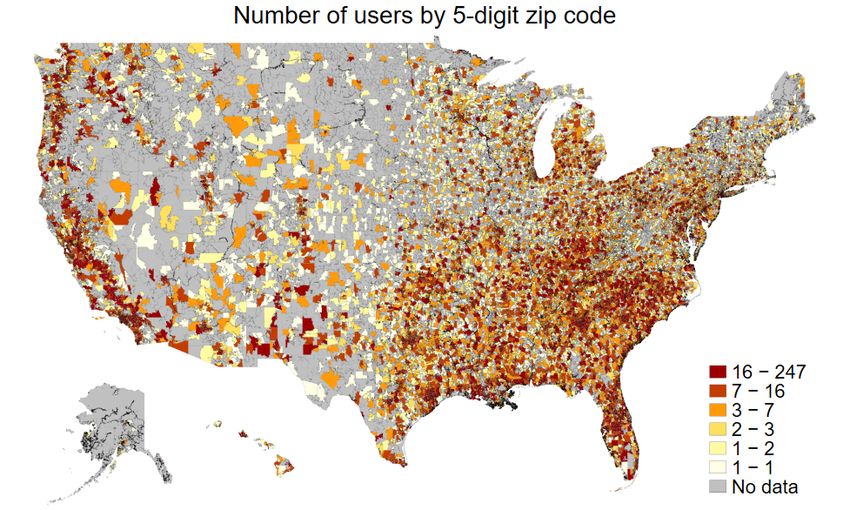
1     Introduction
          Disease epidemics have plagued human societies since at least the earliest days of recorded his-
          tory. This paper presents the first study of how households’ consumption and debt respond to an
          outbreak using transaction-level household data. As COVID-19 began to spread across the United
          States in March 2020, households across the country were faced with drastic changes in many as-
          pects of their lives. Large numbers of businesses were closed by government decree and in many
          cities and states, Americans were required to limit trips outside and exposure to others following
          shelter-in-place orders.
              While Americans adjusted how they lived and worked in response to uncertainty about how
          the future would play out, they also rapidly altered how and where they spent their money. This
          paper works to deploy transaction-level household financial data to provide a better and more
          comprehensive understanding of how households shifted spending as news about the virus spread
          and the impact in a given geographic area became more severe and far-reaching.
              The extent to which both individual households as well as the economy at large have been
          upended is without recent precedent. Entire industries and cities were largely shut down, with
          estimates of the decline in economic activity hitting all-time records. Policymakers at all levels of
          government and across a wide range of institutions have worked to mitigate the economic harm
          on households and small businesses. However, the speed at which the economic dislocation is
          occurring has made it difficult for policymakers to properly target fiscal stimuli to households
          and credit provision to businesses. After all, little is known about how households respond in
          their spending to a pandemic on a scientific basis and across a larger number of households and
          geographies.
              This paper aims to close this gap by utilizing transaction-level household financial data to an-
          alyze the impact of the COVID-19 outbreak on the spending behavior of tens of thousands of
          Americans. We use transaction-level data from linked bank-accounts from SaverLife that works
          with individuals to sustain savings habits. Transaction-level financial data of this type is a useful
          tool for understanding household financial behavior in great detail. In the context of the current
          COVID-19 outbreak, it can allow for a high speed, dynamic and timely diagnosis of how house-
          holds have adjusted their spending, when they began to respond, and what the characteristics are

                                                             2

This preprint research paper has not been peer reviewed. Electronic copy available at: https://ssrn.com/abstract=3565521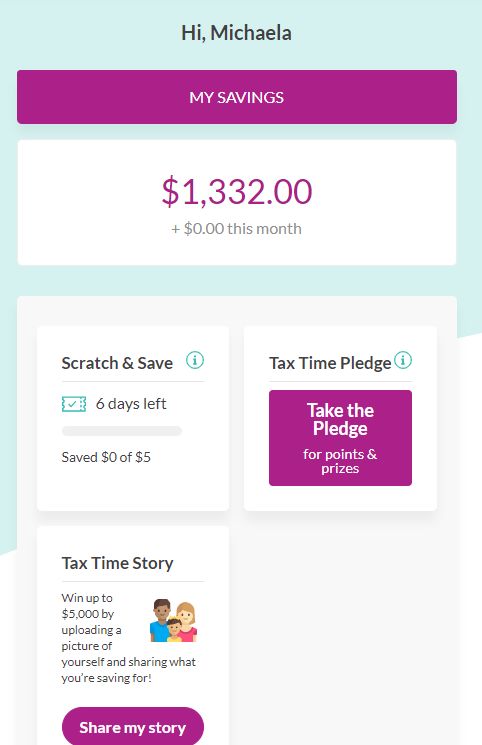
of the households who have responded the fastest and strongest.1
                 News media reported that customers emptied supermarket shelves in an effort to stock-pile
          durable goods.2 Furthermore, as advice flowed from federal and state governments to households,
          one common refrain was that households should prepare to mostly stay inside their homes for
          multiple weeks with minimal trips outside. Home production is thus a source of savings that
          households can engage in which should also increase their spending at certain stores as opposed to
          others.
                 We find that households substantially changed their spending as news about the COVID-19’s
          impact in their area spread. Overall, spending increased dramatically in an attempt to stockpile
          needed home goods and also in anticipation of the inability to patronize retailers. Household
          spending increases by approximately 50% overall between February 26 and March 11. Grocery
          spending remains elevated through March 27, with a 7.5% increase relative to earlier in the year.
          We also see an increase in card spending, which is consistent with households borrowing to stock-
          pile goods. As the virus spread and more households stayed home, we see sharp drops in restau-
          rants, retail, air travel and public transport in mid to late March.
                 Restaurant spending declined by approximately one third. The speed and timing of these in-
          creases in spending varied significantly across individuals depending on their geographic location
          as state and local governments reacted to outbreaks of different sizes and with different levels of
          urgency. The overall drop in spending is approximately twice as large in states that issued shelter-
          in-place orders, however the increase in grocery spending is three times as large for states with
          shelter-in-place orders.
                 We explore heterogeneity among partisan affiliations and demographics, which are closely tied
          to stated beliefs about the impacts of the new virus. Republicans generally reported less concern
          about the new virus. For example, an Axios Poll between March 5 and 9 found that 62% of
          Republicans thought that the COVID-19 threat was greatly exagerated, while 31% of Democrats
          and 35% of Independents thought the same. A Quinnipac poll between March 5 and 8 also found
          that 68% of Democrats were concerned, while only 35% of Republicans were concerned. Barrios
             1
               Researchers have previously utilized a range of transaction-level household financial datasets to answer questions
          about household consumption, liquidity, savings, and investment decisions. See Baker (2018), Baker and Yannelis
          (2017), Olafsson and Pagel (2018), Baker, Kueng, Meyer and Pagel (2020), and Meyer and Pagel (2019).
             2
               For example, see USA Today, CNN, and FoxNews.

                                                                    3

This preprint research paper has not been peer reviewed. Electronic copy available at: https://ssrn.com/abstract=3565521
and Hochberg (2020) find that partisanship played a significant role in shaping risk perceptions
to the new pandemic. Contrary to much of what was seen in the press, and despite lower levels
of observed social distancing, Republicans actually spent more than Democrats in the early days
of the epidemic. We see some significant differences in categorical responses, with Republicans
spending more at restaurants and in retail shops, which is consistent with lower levels of concern
about the virus or differential risk exposure.
We see significant heterogeneity along demographic characteristics, but little along household
income. Households with children stockpiled more, and men stockpiled less in early days as the
virus was spreading. We find more spending in later periods by the young. We see little hetero-
geneity across income, which is largely consistent with work by Kaplan, Violante and Weidner
(2014) and Kaplan and Violante (2014) and the “wealthy-hand-to-mouth."
This paper joins a large literature on household consumption. Early empirical work, such as
Zeldes (1989), Souleles (1999), Pistaferri (2001), Johnson, Parker and Souleles (2006), Blundell,
Pistaferri and Preston (2006) and Agarwal, Liu and Souleles (2007) used survey data or studied
tax rebates. Gourinchas and Parker (2002), Kaplan and Violante (2010) and Kaplan and Violante
(2014) provide theoretical models of household consumption responses. Recent work uses admin-
istrative data (Fuster, Kaplan and Zafar, 2018; Di Maggio, Kermani, Keys, Piskorski, Ramcharan,
Seru and Yao, 2017) and Baker (forthcoming), Pagel and Vardardottir (forthcoming) and Baker
and Yannelis (2017) have studied income shocks and consumption using financial aggregator data.
Jappelli and Pistaferri (2010) provide a review of this literature.
This paper is the first to study how household spending reacts in an epidemic, where there are
anticipated income shocks as well as the threat of supply chain disruption, but all combined with
significant uncertainty. In early March, there was little direct effect of COVID-19 in the United
States, but significant awareness of potential damage in the future. We see significant stockpiling
and spending reactions, which is consistent with expectations playing a large role in household
consumption decisions.
This paper also relates to a literature on how crises impact the economy, and policy responses to
those crises. In the aftermath of the 2008 Great Recession, a large body of work studied how credit
supply shocks (Mian and Sufi, 2009, 2011; Mian, Rao and Sufi, 2013) and securitization (Keys,
Mukherjee, Seru and Vig, 2008; Keys, Seru and Vig, 2012) led to the financial crisis. Several
4
This preprint research paper has not been peer reviewed. Electronic copy available at: https://ssrn.com/abstract=3565521papers also study the effect of government policies aimed at mitigating the effects of the financial
crisis. (Bhutta and Keys, 2016; Di Maggio, Kermani, Keys, Piskorski, Ramcharan, Seru and Yao,
2017; Ganong and Noel, 2018). This paper provides a first look at the impacts of the new epidemic
on households, which will be key in evaluating any future policy response.
Additionally, the paper joins a growing literature in finance on the impacts of how belief het-
erogeneity shaped by partisan politics affects real economic decisions. Malmendier and Nagel
(2011) show the individuals growing up in the Great Depression exhibited more risk averse behav-
ior relative to others. The literature on how partisanship affects economic decisions has had mixed
findings. Some papers have found large effects of partisanship on economic decision-making.
For example, Kempf and Tsoutsoura (2018) explore how partisanship affects financial analysts
decisions and Meeuwis, Parker, Schoar and Simester (2018) find large effects of the 2016 US
Presidential election on portfolio rebalancing. Mian, Sufi and Khoshkhou (2018) study how US
presidential elections affect consumption and savings patterns, and find little effect. Baldauf, Gar-
lappi and Yannelis (2020) study how beliefs about climate change impact home prices, and find
large differences between political groups. This paper studies differences in partisan behavior
in the face of a major crisis where survey evidence indicates large differences in beliefs among
people belonging to different political parties, which have been attributed to statements made by
policymakers.3
Finally this paper joins a rapidly growing body of work studying the impact of the COVID-19
epidemic on the economy. Eichenbaum, Rebelo and Trabandt (2020), Barro, Ursua and Weng
(2020) and Jones, Philippon and Venkateswaran (2020) provide macroeconomic frameworks for
studying epidemics. Coibion, Gorodnichenko and Weber (2020) document a strong impact of the
epidemic on labor markets. Gormsen and Koijen (2020) study the stock price and dividend future
reactions to the epidemic, and use these to back out growth expectations for a potential recession
caused by the virus. In a related paper, Barrios and Hochberg (2020) find the political partisan-
ship played a large role in shaping risk perceptions towards COVID-19. Our paper is the first to
study the household spending and debt responses to COVID-19, or any major epidemic, given that
detailed high-frequency household financial data did not exist during previous pandemics.
3
A NBC/Wall Street Journal Poll found more Democrats than Republicans were worried about family members
catching the virus, while 40% of Republicans were worried, and that twice as many Democrats thought the virus would
change their lives.
5
This preprint research paper has not been peer reviewed. Electronic copy available at: https://ssrn.com/abstract=3565521The remainder of this paper is organized as follows. Section 2 describes the main transaction
data used in the paper, as well as ancillary datasets. Section 3 discusses the spread of the novel
coronavirus in the United States. Section 4 presents the main results, new facts about household
spending during an epidemic. Section 5 discusses heterogeneity in spending responses, particularly
by partisan affiliation. Section 6 concludes.
2 Data
2.1 Transaction Data
We analyze de-identified transaction-level data from a non-profit Fintech company called Saver-
Life. SaverLife encourages households to increase savings through targeted information and re-
wards. Users can use the platform to sign up for an account with SaverLife and link their main
bank account including their checking, savings, and credit card accounts. Users have two main
incentives for linking accounts. First, SaverLife can provide them with information, provides tools
to aid personal financial decision making and offers financial advice. Second, SaverLife offers
targeted rewards and lotteries to individuals who link their accounts to achieve savings goals.
Figure 1 shows two screenshots of the SaverLife online interface. It shows the screenshots of
the main linked account as well as a screenshot of the savings and financial advice resources that
the website provides.
The primary data used in this paper consists of de-identified daily data on each user’s spending
and income transactions from all linked checking, savings, and credit card accounts. In addition,
for a large number of users, we are able to link financial transactions to demographic and geo-
graphic information. For instance, for most users, we are able to map them to a particular 5-digit
zip code. Many users self-report demographic information such as age, education, family size, and
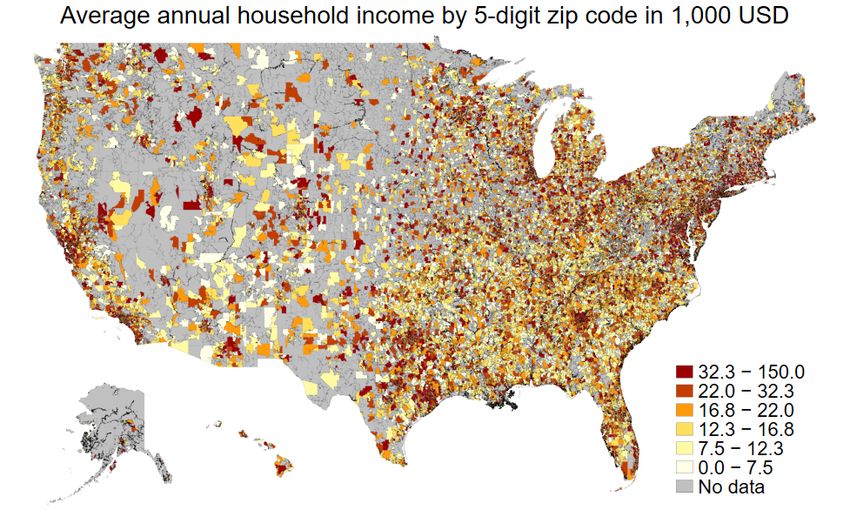
the number of children they have. In Panel A of Figure 2, we can see how many users we observe
in each US zip code. In Panel B of Figure 2, we show the users’ average annual household income
by zip code that they report upon signing up with SaverLife.
Using data from August 2016 to March 2020, we observe bank-account transactions for a total
sample of 44,660 users. For each transaction in the data, we observe a category (such as Groceries
and Supermarkets or Pharmacies), parent category names (such as ATM), and grandparent category
6
This preprint research paper has not been peer reviewed. Electronic copy available at: https://ssrn.com/abstract=3565521names (such as Shopping and Food). Looking only at the sample of users who have updated their
accounts reliably in March of 2020, we have complete data for 4,735 users. These users each
are required to have several transactions per month in 2020 and have transacted at $1,000 in total
during these three months of the year.
Table 1 shows summary statistics for users spending in a few select categories as well as their
income at a monthly level. We can see that payroll income is relatively low for the median user of
SaverLife, though many users get income from a range of other non-payroll sources. Additionally,
we can see the number of linked accounts and number of monthly transactions of users in all
linked accounts. The number of total transactions and weekly observations are also noted. We run
regressions at a weekly level to examine more precisely the high frequency changes in behavior
brought about by the fast-moving news about the COVID-19 outbreak and the policy responses to
the outbreak.
Spending transactions are categorized into a large number of categories and subcategories. For
instance, the parent category of ‘Shops’ is broken down into 53 unique sub-categories including
‘Convenience Stores’, ‘Bookstores’, ‘Beauty Products’, ‘Pets’, and ‘Pharmacies’. For most of our
analysis, we examine spending across a majority of categories, excluding spending on things like
bills, mortgages, and rent. We also separately focus on a number of individual categories including
‘Grocery Stores and Supermarkets’ as well as ‘Restaurants’.
2.2 Gallup Daily Tracker Data
We predict partisanship from 2018 Gallup Daily Tracker Data. Gallup randomly samples 1,000
Americans daily each year via landlines and cellphones. Individuals are asked questions about
their political beliefs, expectations about the economy, and demographics. The sample is restricted
to individuals 18 and over. We estimate a linear probability model, predicting whether a respon-
dent identifies as a Republican using variables common to both datasets: (i) county (ii) income
(iii) gender (iv) marital status (v) presence of children in the household (vi) education and (vii)
age. Older people, men, married individuals and individuals with children are more likely to be
Republicans. Identifying as a Republican is monotonically increasing in income bins.4 The rela-
4
The Gallup data provides income in bins, rather than in a continuous fashion. We observe self-reported continuous
income for the majority of the individuals in the transaction data, for those for whom income is observed in a range we
take the midpoint. We standardized the income and education bins in the transaction data to match Gallup to construct
7
This preprint research paper has not been peer reviewed. Electronic copy available at: https://ssrn.com/abstract=3565521tionship between education and partisan affiliation is non-monotonic, with individuals without a
high school diploma strongly leaning Democrat, and individuals with only a high school degree, a
vocational degree, or an associates degree being most likely to identify as Republicans.
For each individual we construct a predicted coefficient of partisan leaning, using the coeffi-
cients estimated from the Gallup data, and predicting partisan learning using demographics in the
transaction data. In cases where demographics are missing in the transaction data, we replace the
predicted Republican political affiliation with the 2016 Republican vote share, using data from
the MIT Election Lab. We classify individuals predicted to be in the top quartile of the highest
propensity to be Republicans, and those in the bottom quartile to be Democrats. The remaining
individuals in between are classified as Independents.
2.3 Social distancing data
We also collect data on the effectiveness of social distancing from unacast.com Unacast social
distancing-scoreboard. Unacast provides a daily updated social distancing scoreboard. The score-
board describes the daily changes in average mobility, measured by change in average distance
travelled and the change in non-essential visits using data from tracking smartphones using their
GPS signals. The data is available on a daily basis and by county on their website. We use the
data of average mobility, because the data on non-essential visits is less reliable as many people
have re-located and moved to areas out of a city or kids have moved to parents’ homes or vice
versa. Therefore, unacast reports the average distance travelled (difference in movement) as the
most accurate measure in times of the pandemic. We downloaded the data from their website by
day and county and merged it to our consumption data.
3 Geographic Spread of COVID-19
COVID-19 was first identified in Wuhan, China before spreading worldwide. This new coronavirus
spread very rapidly, and had a mortality rate approximately ten times higher than the seasonal
flu and at least twice its infection rates.5 The first case in the United States was identified on
out measure of predicted partisanship.
5
See the ADB study referenced by WHO
8
This preprint research paper has not been peer reviewed. Electronic copy available at: https://ssrn.com/abstract=3565521January 21, 2020 in Washington State, and was quickly followed by cases in Chicago and Orange
County, California. All these early cases were linked to travel in Wuhan. Throughout January
and February, several cases arose which were all linked to travel abroad. Community transmission
was first identified in late February in California. The first COVID-19 linked death occurred on
February 29, in Kirkland, Washington. In early March, the first case was identified in New York,
which by the end of the month would account for approximately half of all identified cases in the
United States. In early and mid-March the virus began to spread rapidly.
The federal and many state governments responded to the COVID-19 pandemic in a number
of ways. The first state to declare a state of emergency was Washington, which did so on January
30. The following day the US restricted travel from China. Initially, the President made many
statements suggesting that the COVID-19 virus was under control. For example, on January 22
President Trump said that the virus was “totally under control” and on February 2nd the President
noted that “We pretty much shut it down coming in from China.” Statements that the virus was
under control continued throughout February, and on February 24 the President said that “The
Coronavirus is very much under control in the USA.”
This pattern even continued into early March, with the President saying on March 6 that “in
terms of cases, it’s very, very few.” On February 24, President Trump asked Congress for $1.25
billion in response to the pandemic. General concern and statements from policymakers changed
sharply in mid-March as new cases increased rapidly. On March 11, following major outbreaks
in Italy and much of Europe, President Trump announced a travel ban on most of Europe. Two
days later on March 13, President Trump declared a national emergency. Many states followed by
closing schools, restaurants, and bars or issuing shelter-in-place orders.
The fact that the initial public messages about the COVID-19 pandemic were relatively mild
and suggested that the panic was under control led to suggestions of a partisan divide on the
dangers of the new virus. For example, a NBC/Wall Street Journal Poll between March 11 and
13 found that 68% of Democrats were worried that someone in their family could catch the virus,
while 40% of Republicans were worried. The same poll found that 56% of Democrats thought
their day-to-day lives would change due the virus, while 26% of Republicans held the same view.
A Pew Research Center Poll between March 10 and 16 found that 59% of Democrats and 33% of
Republicans called the virus a major threat to US health.
9
This preprint research paper has not been peer reviewed. Electronic copy available at: https://ssrn.com/abstract=3565521We also worked to obtain data that might predict the extent to which locations are affected by
the COVID-19 outbreak as the timing of any household response may differ substantially across
geographic regions. As the outbreak has progressed, numerous governments have enacted orders,
begun testing regimes, closed schools, and made other statements regarding the extent to which
residents of an area should adjust their expectations and behavior. Rather than construct a timeline
of explicit events, we construct a proxy for the extent to which COVID-19 has impacted a given
location at a point in time.
In particular, we gather counts of articles that discuss COVID-19 (or several other related terms
like ’corona’ or ’coronavirus’) across approximately 3,000 US newspapers at a daily level using
the Access World News’s Newsbank service. We aggregate this data at a state level and look at the
ratio of articles related to COVID-19 to the total number of newspaper articles in that state on a
given day. This data is displayed for a subset of states in Figure 7. Figure 7 illustrates differential
intensity in reporting on COVID-19 over time across different states. In particular, we see notable
increases in reporting in states like Washington prior to other states yet to see major outbreaks.
4 Household Financial Response to Coronavirus
While there were media reports of stockpiling, it was not ex ante clear whether consumption would
go up or down in the early days of the COVID-19 outbreak. As James Stock notes: “For the week
ended March 14, there were two countervailing effects. Consumer confidence plummeted and new
claims for unemployment insurance jumped sharply, but same-store sales surged as a result of the
run on groceries and supplies.”
Figure 3 shows the aggregate response in terms of all daily spending, and grocery spending.
The left panel shows average daily spending each week, while the right panel shows average daily
grocery spending. After an initial seasonal increase in the first week of the new year, spending is
largely flat for most of January and February. There is a sharp spike in spending between February
26 and March 10, as COVID-19 cases begin to spike in the United States. This initial spike in
spending is followed by depressed levels of general spending by approximately 50%, but higher
levels of grocery spending followed by a sharp drop. This is consistent with stockpiling behavior
as it increasingly became clear that there would be a significant number of virus cases in the US.
10
This preprint research paper has not been peer reviewed. Electronic copy available at: https://ssrn.com/abstract=3565521This large and persistent drop is also in line with estimates from surveys conducted by the French
Statistical Service, which found a 35% drop in total consumption.
Figure 4 shows that this initial spike in spending is large and consistent across all categories,
however later on there is significant heterogeneity across categories. For some categories, like
restaurants, retail, air travel, public transport and card spending. The initial sharp increase in credit
card spending is consistent with households borrowing to smooth consumption. Food delivery
spending increases and remains elevated, not dropping as sharply as other categories.
Figure 5 provides a visualization of the changes in spending between three time periods. The
figure shows the percentage change in daily spending across categories, relative to a baseline of
January 1 through February 26, 2020. The top panel shows evidence of stockpiling and an increase
in consumer spending during the time period when it became clearer that the virus was spreading in
the United States. The middle panel shows the change in spending between March 11 and March
17, when a national emergency was initially declared. During this time period, there is a sharp
decrease in public transit spending, and continued high levels of elevated spending on groceries
and retail.
The bottom panel shows spending between March 18 and March 27, well into shelter-in-place
orders in many states. The bottom panel indicates very sharp declines in restaurant spending, air
travel, and public transport. There is a significant increase in food delivery spending, consistent
with households substituting meals at restaurant with meals at home.
4.1 Response Across States
In Table 2, we examine the pattern of user spending in a regression framework, concentrating on
the periods of highest interest surrounding the periods between February 26 and March 10, before
a national emergency was declared, the period between March 11 and march 17 following the
imposition of a national emergency and the period between March 18 and March 27 when states
and cities issued shelter-in-place orders. That is, when users seemed to be increasing spending in
advance of a ‘shelter-in-place’ order and when those orders began to take effect.
In each column, we regress users’ spending on indicators for the weekly periods indicated:
February 26th to March 10, March 11 to March 17, and March 18 to March 27. These periods
roughly coincide with observed patterns of behavior among households across the country. In the
11
This preprint research paper has not been peer reviewed. Electronic copy available at: https://ssrn.com/abstract=3565521first period, households tended to be stocking up on goods across a number of categories and also
still patronizing entertainment venues and restaurants. The third period, in late March, corresponds
to a period in which many cities and states were under ‘shelter-in-place’ advisories or orders, often
with schools closed, non-essential businesses closed, and restaurants forced to only serve take-out
food.
In each column, we present results on user spending with differing samples and types of spend-
ing. In columns (1)-(3), we measure user spending using a wide metric that includes services, food
and restaurants, entertainment, pharmacies, personal care and transportation. Columns (4)-(6) in-
clude only spending on restaurants, while the final set of columns include spending only at grocery
stores and supermarkets. In addition, we vary the sample across each column. ‘All’ represents
all users in our sample. ‘Shelter’ indicates that the sample is limited to users in states that, as of
March 27th, had a shelter-in-place order in place. ‘No Shelter’ restricts to users in states without
such an order. All regressions utilize user-level fixed effects and all standard errors are clustered at
the user level.
Several clear patterns emerge from this analysis. Overall, we see a stark pattern consistent with
the figures presented above. Households tended to stock up substantially at the end of February
into the beginning of March, then begin to cut spending dramatically. We also note that the number
of transactions followed a similar though less extreme pattern. That is, the number of transactions
in the stocking up period increased by about 15% while spending soared by around 50%. Thus, the
size of transactions in the stocking up period was substantially higher than a household’s average
transaction size.
Comparing users that live in states that have had shelter-in-place orders put in place, we tend to
see more negative coefficients in the third row for non-grocery spending (eg. comparing columns
(2) and (3) as well as (5) and (6). That is, users in these states tended to decrease spending across
categories at a much more rapid pace. This is especially seen within restaurant spending, with
users in shelter-in-place states decreasing restaurant spending by about 31.8%, while users in other
states decreased restaurant spending by only an insignificant 12.3%.6
In addition, we see more evidence for stocking up on groceries in states that have been put
6
This decline in restaurant spending is much more muted if we restrict to Fast Food restaurants. Coefficients for
these stores are approximately half the size as for non-Fast Food restaurants. This is likely driven by the fact that Fast
Food restaurants serve a large portion of their customers via drive through and take out.
12
This preprint research paper has not been peer reviewed. Electronic copy available at: https://ssrn.com/abstract=3565521under a shelter-in-place order. Looking at columns (8) and (9), we see that grocery spending has
been consistently higher among users in shelter-in-place states, likely reflecting a shift away from
eating at restaurants or at office cafeterias and towards eating at home.
4.2 Response by Social Distancing
We also link the spending decisions of households to the Unacast data on social distancing, which
comes from cell phone records. We create bin scatters (Figure 6) relating the difference in move-
ments to the different spending categories. On the horizontal axis we plot the difference in move-
ment and on the vertical axis we show the log-spending by different categories. In general, we find
that across all spending categories a reduction in movement is related to a reduction in spending.
The effect size, however, varies by spending category. The less people move the less they spend
in restaurants, groceries or on buying at retailers. For public transport we also observe a reduction
as less people travel and if they travel they are presumably more likely to use the car. The least
reduction is observed for credit card spending. We conjecture this is because the credit card can
still be used for online shopping or paying for subscriptions services like Netflix or Apple TV. The
data on social distancing underscores the robustness of our findings and clearly relates them to the
shelter-in-place orders.
5 Heterogeneity in Response by Political Views, Demograph-
ics, and Financial Indicators
In Table 3, we split users according to their predicted political orientation and examine how users’
spending adjusted during these same periods. In particular, we utilize the Gallup polling data to
map demographic and geographic characteristics of these households to form a predicted political
score. We split users into the highest and lowest quartiles that are most likely to be Republicans and
Democrats, respectively. The specifications mirror those in Table 2, looking at overall spending,
restaurant spending, and grocery spending across these different groups.
We noted previously that some categories did see differences in spending changes according
to political leanings. Indeed, Figure 9 shows that there was significant heterogeneity in social
13
This preprint research paper has not been peer reviewed. Electronic copy available at: https://ssrn.com/abstract=3565521distancing between more Republican and Democrat leaning states. The figure shows, for each
state and the District of Columbia, the overall drop in movement as measured from Unacast cell
phone records by the share of the electorate voting for Donald J. Trump in the 2016 US Presidential
Election. The figure shows a sharp negative relationship between social distancing and the share of
Trump voters. States with more Trump voters indicate lower levels of staying at home and social
distancing.
We see sharp increases in spending, for both predicted Republicans and Democrats. Con-
trary to much of the discussion in the popular press and evidence from surveys suggesting that
Democrats were more concerned with the virus, we actually see slightly more overall spending
between February 26 and March 10 among Republicans relative to Democrats. This is particu-
larly true for grocery spending, which is shown in Figure 10. While we see significant evidence
of stockpiling for both groups, the percentage increase in grocery spending by Republicans is
approximately twice as large as the increase among Democrats.
The observed differences between predicted Republican and Democrats could be both due to
differences in beliefs, and differences in risk exposure. The differences in risk exposure between
different partisan groups are not obvious. For example, Republicans are more likely to live in
rural areas, while Democrats are more likely to live in urban areas which are at higher risk in a
contagion. On the other hand, Republicans also tend to be older, and older individuals are at higher
mortality risk from COVID-19.
Figure 3 shows additional categorical spending, broken down by predicted political affiliation.
We see a large rise in spending across most categories in early to mid-March, consistent with
stockpiling. Republicans are more likely to continue to spend at shops, and while this difference
persists, it may be driven by differential geographic patterns if Republicans live in more rural
areas that offer fewer home delivery services, and more drive-up options. Consistent with some
differential spending patterns being driven by geographic and urbanization patterns, the drop in
public transportation and air travel is driven almost entirely by Democrats, as Republicans are
much less likely to use public transportation ex ante. All groups increase their utilization of food
delivery services.
In Table 4, we examine how user spending responses differed across some key demographic
and financial characteristics. We again perform a similar regression analysis, here interacting the
14
This preprint research paper has not been peer reviewed. Electronic copy available at: https://ssrn.com/abstract=3565521weekly indicators with indicators of whether a household possessed a demographic or financial
characteristic. Notably, we include interactions for whether the user is under 30 years old, whether
they have children, whether they are male, and whether they have an annual income above $40,000.
Across the three panels, we again turn to looking at a wide measure of users’ spending, just restau-
rant spending, and just spending at grocery stores and supermarkets.
In the first column, we see that younger users tended to cut back on spending by a smaller
amount than older users. This coincides with reports that younger individuals were obeying the
shelter-in-place orders less strictly than older Americans. We see the same pattern in restaurant
spending, though the interaction is not significantly different than zero.
In the second column, we find that households with children tended to have the largest declines
in spending in recent days, with overall spending falling around twice as fast as among households
without children. We also note that, in Panel C, we find that households with children tended to
increase grocery spending in the earlier weeks of the outbreak by significantly more than users
with no children.
In column (3), we see that male users tended to have more muted responses in most categories.
That is, men generally ‘stocked up’ less than women in the early weeks of March, and also cut
back spending less than women did in the later weeks. Finally, the last column looks at differential
behavior among users with higher income. In general, here we see few differences. Users with high
income tended to behave quite similarly in their patterns of spending behavior to users with lower
income. This is largely consistent with work by Kaplan, Violante and Weidner (2014) and Kaplan
and Violante (2014) and there being a significant number of “wealthy-hand-to-mouth" consumers.
Finally, in Table 5 we also split by pre-corona liquidity of households and find more pro-
nounced effects in the first week of the pandemic. We do not find a reversal pattern in the second
week for more liquid households. The split by the log number of reported corona cases by county
in which a household lives in Table 6 shows that patterns depend on the number of reported cases.
In the first week the stockpiling effects are larger, while in the second and third week the reduction
in expenditures is stronger in the log number of cases.
15
This preprint research paper has not been peer reviewed. Electronic copy available at: https://ssrn.com/abstract=35655216 Conclusion
This paper provides a first view of household spending during the recent weeks of the COVID-19
outbreak in the United States. Using transaction-level household financial data from a personal fi-
nancial website, SaverLife, we illustrate how Americans’ spending responded to the rise in disease
cases as well as to the policy responses put in place by many city and state governments, namely
shelter-in-place orders. We show that users’ spending was radically altered by these events across
a wide range of categories, and that the strength of the response partly depended on how severe
the outbreak was in a user’s state. Demographic characteristics such as age and family structure
provoked larger levels of heterogeneity in spending responses to COVID-19, while income did
not. Moreover, we demonstrate users of all political orientation increased spending prior to the
epidemic, and at the same time there were some differences across political orientation in some
categories indicative of differential beliefs or risk exposure.
We caution that these are very short term responses, meant to illustrate as close to a real-time
view of consumer spending as possible. In part, this paper demonstrates the utility of household
transaction level data in providing a window into not just household finance, but also aggregate
trends, as well. Additionally, we caution that our data are skewed towards younger users, who have
lower risk exposure. Older individuals with very high risk exposure may have behave differently,
and cut consumption more substantially.
The COVID-19 outbreak has upended economies around the world and we are surely just at the
beginning of understanding the full impact at both a household and national level. We anticipate
large amounts of future work examining the impact of COVID-19 using household transaction data.
Questions about how households went about rearranging spending, shifted from brick and mortar
to online retailers, and utilized liquidity and credit are all at the forefront. Moreover, the ability to
observe household-level income and the sources of this income may be fruitful in analyzing how
households who faced sudden unemployment were able to substitute to new types of work and new
employers. For example, disemployed retail workers might find fast employment in sectors with
newly elevated demand, such as home delivery services.
16
This preprint research paper has not been peer reviewed. Electronic copy available at: https://ssrn.com/abstract=3565521References
Agarwal, Sumit, Chunlin Liu, and Nicholas S Souleles, “The Reaction of Consumer Spending
and Debt to Tax Rebates– Evidence from Consumer Credit Data,” Journal of Political Economy,
2007, 115 (6), 986–1019.
Baker, Scott R., “Debt and the Response to Household Income Shocks: Validation and Applica-
tion of Linked Financial Account Data,” Journal of Political Economy, 2018.
, “Debt and the Consumption Response to Household Income Shocks,” Journal of Political
Economy, forthcoming.
and Constantine Yannelis, “Income Changes and Consumption: Evidence from the 2013
Federal Government Shutdown,” Review of Economic Dynamics, 2017, 23, 99–124.
, Lorenz Kueng, Steffen Meyer, and Michaela Pagel, “Measurement Error in Imputed Con-
sumption,” Working Paper, 2020.
Baldauf, Markus, Lorenzo Garlappi, and Constantine Yannelis, “Does Climate Change Affect
Real Estate Prices? Only If You Believe In It,” The Review of Financial Studies, 2020, 33 (3),
1256–1295.
Barrios, John and Yael Hochberg, “Risk Perception Through the Lens Of Politics in the Time of
the COVID-19 Pandemic,” Working Paper, 2020.
Barro, Robert J, José F Ursua, and Joanna Weng, “The Coronavirus and the Great Influenza
Epidemic,” 2020.
Bhutta, Neila and Ben Keys, “Household Credit and Employment in the Great Recession,” Amer-
ican Economic Review, 2016, 106 (7), 1742–74.
Blundell, Richard, Luigi Pistaferri, and Ian Preston, “Consumption Inequality and Partial In-
surance,” American Economic Review, 2006, 98 (5), 1887–1921.
Coibion, Olivier, Yuriy Gorodnichenko, and Michael Weber, “Labor Markets During the
COVID-19 Crisis: A Preliminary View,” Fama-Miller Working Paper, 2020.
Eichenbaum, Martin S, Sergio Rebelo, and Mathias Trabandt, “The Macroeconomics of Epi-
demics,” Technical Report, National Bureau of Economic Research 2020.
17
This preprint research paper has not been peer reviewed. Electronic copy available at: https://ssrn.com/abstract=3565521Fuster, Andreas, Greg Kaplan, and Basit Zafar, “What Would You Do With $500? Spending
Responses to Gains, Losses, News and Loans,” Technical Report, National Bureau of Economic
Research 2018.
Ganong, Peter and Pascal Noel, “Liquidity vs. Wealth in Household Debt Obligations: Evidence
from Housing Policy in the Great Recession,” Technical Report, National Bureau of Economic
Research 2018.
Gormsen, Niels Joachim and Ralph SJ Koijen, “Coronavirus: Impact on Stock Prices and
Growth Expectations,” University of Chicago, Becker Friedman Institute for Economics Work-
ing Paper, 2020, (2020-22).
Gourinchas, Pierre-Olivier and Jonathan A. Parker, “Consumption Risk Over the Life-Cycle,”
Econometrica, 2002, 70 (1), 47–89.
Jappelli, Tullio and Luigi Pistaferri, “The Consumption Response to Income Changes,” Annual
Review of Economics, 2010, 2, 479–506.
Johnson, David S., Jonathan A. Parker, and Nicholas Souleles, “Household Expenditure and
the Income Tax Rebates of 2001,” American Economic Review, 2006, 96 (5), 1589–1610.
Jones, Callum, Thomas Philippon, and Venky Venkateswaran, “Optimal Mitigation Policies in
a Pandemic,” Working Paper, 2020.
Kaplan, Greg and Gianluca Violante, “How Much Consumption Insurance beyond Self-
Insurance?,” American Economic Journal: Macroeconomics, 2010, 2 (4), 53–87.
and , “A Model of the Consumption Response to Fiscal Stimulus Payments,” Econometrica,
2014, 82 (4), 1199–1239.
, Giovanni L Violante, and Justin Weidner, “The Wealthy Hand-to-Mouth,” Brookings Papers
on Economic Activity, 2014, p. 77.
Kempf, Elisabeth and Margarita Tsoutsoura, “Partisan Professionals: Evidence from Credit
Rating Analysts,” Technical Report, National Bureau of Economic Research 2018.
Keys, Benjamin, Amit Seru, and Vikrant Vig, “Lender Screening and the Role of Securitization:
Evidence from Prime and Subprime Mortgage Markets,” Review of Financial Studies, 2012, 25
(7), 2071–2108.
, Tanmoy Mukherjee, Amit Seru, and Vikrant Vig, “Did Securitization Lead to Lax Screen-
ing? Evidence from Subprime Loans,” Quarterly Journal of Economics, 2008, 125 (1), 307–362.
18
This preprint research paper has not been peer reviewed. Electronic copy available at: https://ssrn.com/abstract=3565521Maggio, Marco Di, Amir Kermani, Benjamin J Keys, Tomasz Piskorski, Rodney Ramcharan,
Amit Seru, and Vincent Yao, “Interest Rate Pass-through: Mortgage Rates, Household Con-
sumption, and Voluntary Deleveraging,” American Economic Review, 2017, 107 (11), 3550–88.
Malmendier, Ulrike and Stefan Nagel, “Depression Babies: Do Macroeconomic Experiences
Affect Risk Taking?,” The Quarterly Journal of Economics, 2011, 126 (1), 373–416.
Meeuwis, Maarten, Jonathan A Parker, Antoinette Schoar, and Duncan I Simester, “Belief
Disagreement and Portfolio Choice,” Technical Report, National Bureau of Economic Research
2018.
Meyer, Steffen and Michaela Pagel, “Fully Closed: Individual Responses to Realized Gains and
Losses,” Working Paper, 2019.
Mian, Atif and Amir Sufi, “The Consequences of Mortgage Credit Expansion: Evidence from
the US Mortgage Default Crisis,” The Quarterly Journal of Economics, 2009, 124 (4), 9–49.
and , “House Prices, Home Equity-Based Borrowing and the US Household Leverage Crisis,”
American Economic Review, 2011, 101 (5), 2132–56.
, Kamalesh Rao, and Amir Sufi, “Household Balance Sheets, Consumption and the Economic
Slump,” The Quarterly Journal of Economics, 2013, 128 (4), 1687–1726.
Mian, Atif R, Amir Sufi, and Nasim Khoshkhou, “Partisan Bias, Economic Expectations, and
Household Spending,” Fama-Miller Working Paper, 2018.
Olafsson, Arna and Michaela Pagel, “The Liquid Hand-to-Mouth: Evidence from Personal Fi-
nance Management Software,” Review of Financial Studies, 2018.
Pagel, Michaela and Arna Vardardottir, “The Liquid Hand-to-Mouth: Evidence from a Personal
Finance Management Software,” Review of Financial Studies, forthcoming.
Pistaferri, Luigi, “Superior Information, Income Shocks and the Permanent Income Hypothesis,”
Review of Economics and Statistics, 2001, 83 (3), 465–476.
Souleles, Nicholas, “The Response of Household Consumption to Income Tax Refunds,” Ameri-
can Economic Review, 1999, 89 (4), 947–958.
Zeldes, Stephen, “Consumption and Liquidity Constraints: An Empirical Investigation,” Journal
of Political Economy, 1989, 97 (2), 1469–1513.
19
This preprint research paper has not been peer reviewed. Electronic copy available at: https://ssrn.com/abstract=3565521Figure 1: Example of Platform
Notes: Screenshots of the SaverLife-app and its financial advice page. Source: SaverLife.
20
This preprint research paper has not been peer reviewed. Electronic copy available at: https://ssrn.com/abstract=3565521Figure 2: SaverLife Users
Notes: Panel A displays the number of SaverLife users by 5-digit zip code in the US. Panel B shows the average
annual self-reported income of users by 5-digit zip code in the US (in 1,000 USD). Source: SaverLife.
Panel A: Number of Users
Panel B: Average User Income
21
This preprint research paper has not been peer reviewed. Electronic copy available at: https://ssrn.com/abstract=3565521This preprint research paper has not been peer reviewed. Electronic copy available at: https://ssrn.com/abstract=3565521
Figure 3: Household Grocery Spending Response
Notes: This graph displays how household spending changed by week in 2020. Spending is measured in daily dollars. Months are split into four periods equal in size across
months. Individual fixed effects are removed prior to collapsing across individuals. Source: SaverLife.
All Spending Grocery Spending
10
100
8
80
Mean Spending
22
Groceries
6
60
4
40
2
20
Jan 10 2020 Feb 10 2020 Mar 10 2020
Jan 10 2020 Feb 10 2020 Mar 10 2020This preprint research paper has not been peer reviewed. Electronic copy available at: https://ssrn.com/abstract=3565521
Figure 4: Household Spending Response Across Categories
Notes: This graph displays the response of household spending across a number of categories of spending. Spending is measured in daily dollars. Estimates are taken as the
change in household spending from the first week of February to the first week of March. Source: SaverLife.
Retail Spending Restaurant Spending Air Travel Spending
20
8
.4
15
.3
6
Restaurants
Air Travel
Retail
.2
10
4
.1
5
2
0
23
Jan 10 2020 Feb 10 2020 Mar 10 2020 Jan 10 2020 Feb 10 2020 Mar 10 2020 Jan 10 2020 Feb 10 2020 Mar 10 2020
Food Delivery Spending Public Transit Spending Credit Card Spending
.15
.7
8
.6
Credit Card Spending
.1
6
Food Delivery
Public Transit
.5
.05
4
.4
.3
0
2
Jan 10 2020 Feb 10 2020 Mar 10 2020 Jan 10 2020 Feb 10 2020 Mar 10 2020 Jan 10 2020 Feb 10 2020 Mar 10 2020Figure 5: Household Spending Response Across Categories
Notes: This figure displays the percentage change in mean daily spending, across different categories relative to
spending pre-February 26. Source: SaverLife.
February 26 - March 10
AirTravel
FoodDeliveryServices
FoodandBeverageStore
PublicTransit
Restaurants
Shops
0 .5 1 1.5
Percentage Change in Spending Relative to Jan 1- Feb 26
March 11 - March 17
AirTravel
FoodDeliveryServices
FoodandBeverageStore
PublicTransit
Restaurants
Shops
-.4 -.2 0 .2 .4
Percentage Change in Spending Relative to Jan 1- Feb 26
March 18 - March 27
AirTravel
FoodDeliveryServices
FoodandBeverageStore
PublicTransit
Restaurants
24
Shops
-.6 -.4 -.2 0 .2
Percentage Change in Spending Relative to Jan 1- Feb 26
This preprint research paper has not been peer reviewed. Electronic copy available at: https://ssrn.com/abstract=3565521Figure 6: Household Spending and Social Distancing
Notes: This graph displaysf household spending across a number of categories of spending in bins of the daily differ-
ence in movement. Spending is measured in daily dollars. Source: SaverLife and Unacast.
Total Spending Grocery Spending
18
180
160
16
Total Spending
140
Grocery
14
120
12
100
80
-.6 -.4 -.2 0 .2 10 -.6 -.4 -.2 0 .2
Difference in Movement Difference in Movement
Retail Spending Restaurant Spending
16
40
14
Log(Restaurant Spending)
35
Retail Spending
12
30
10
25
8
20
6
-.6 -.4 -.2 0 .2 -.6 -.4 -.2 0 .2
Difference in Movement Difference in Movement
Credit Card Public Transport
14
.5
12
.4
Public Transport
10
.3
Credit Card
.2
8
.1
6
0
4
-.6 -.4 -.2 0 .2 -.6 -.4 -.2 0 .2
Difference in Movement Difference in Movement
25
This preprint research paper has not been peer reviewed. Electronic copy available at: https://ssrn.com/abstract=3565521This preprint research paper has not been peer reviewed. Electronic copy available at: https://ssrn.com/abstract=3565521
Figure 7: Newspaper Coverage of COVID-19, by State
Notes: This graph displays the fraction of newspaper articles in US newspapers that mentions a term related to COVID-19. Data shown for selected states. Nationwide, over
3,000 newspapers are utilized.
26This preprint research paper has not been peer reviewed. Electronic copy available at: https://ssrn.com/abstract=3565521
Figure 8: Map of Average Partisanship, by County
Notes: This figure shows the average predicted partisan scores in US counties. Darker red shapes indicates more Republican countries, while darker blue shades indicate
more Democrat counties. Source: Gallup
27
(.5,.75]
(.25,.5]
(0,.25]
(-.25,0]
(-.5,-.25]
[-.75,-.5]This preprint research paper has not been peer reviewed. Electronic copy available at: https://ssrn.com/abstract=3565521
Figure 9: Vote Shares and Social Distancing Efforts
Notes: This figure shows a binned scatter plot of the drop in movement in all 50 US states and the District of Columbia, and the fraction of individuals who voted for Donald
Trump in the 2016 US Presidential election. Source: MIT Election Data Lab and Unacast Social Distancing Scoreboard.
.6 .4
Drop in Movement
28
.2 0
0 .2 .4 .6 .8
Share of Trump 2016 VoteThis preprint research paper has not been peer reviewed. Electronic copy available at: https://ssrn.com/abstract=3565521
Figure 10: Grocery Spending and Political Scores in 2020
Notes: This figure displays the response of average household daily spending for groceries. Estimates are taken as the change in household spending from
the first week of February to the first week of March. For each category, average response is plotted for three groups: the quartile of the sample with the
highest predicted ‘democrat’ lean and the quartile of the sample with the highest predicted ‘republican’ lean and ‘independents’ who are in the middle two
quartiles. Spending is measured in daily dollars. Source: SaverLife.
10
8
Groceries
6
29
4
2
Jan 10 2020 Feb 10 2020 Mar 10 2020
Republicans Democrats
IndependentsThis preprint research paper has not been peer reviewed. Electronic copy available at: https://ssrn.com/abstract=3565521
Figure 11: Household Spending Response Across Categories, by Predicted Partisanship
Notes: This figure displays the response of average household daily spending across a number of categories of spending. Estimates are taken as the change in household
spending from the first week of February to the first week of March. For each category, average response is plotted for three groups: the quartile of the sample with
the highest predicted ‘democrat’ lean and the quartile of the sample with the highest predicted ‘republican’ lean and ‘independents’ who are in the middle two quartiles.
Spending is measured in daily dollars. Source: SaverLife.
Retail Spending Restaurant Spending Air Travel Spending
.8
20
8
.6
15
6
Air Travel
Air Travel
Retail
.4
10
4
.2
5
2
0
Jan 10 2020 Feb 10 2020 Mar 10 2020 Jan 10 2020 Feb 10 2020 Mar 10 2020 Jan 10 2020 Feb 10 2020 Mar 10 2020
30
Republicans Democrats Republicans Democrats Republicans Democrats
Independents Independents Independents
Food Delivery Spending Public Transit Spending Credit Card Spending
.25
10
.8
.2
8
Credit Card Spending
.6
Food Delivery
Public Transit
.15
6
.1
.4
4
.05
.2
2
0
Jan 10 2020 Feb 10 2020 Mar 10 2020 Jan 10 2020 Feb 10 2020 Mar 10 2020
Jan 10 2020 Feb 10 2020 Mar 10 2020
Republicans Democrats Republicans Democrats Republicans Democrats
Independents Independents IndependentsYou can also read


