Introduction to Khronos Group and OpenXR - June 2, 2020
←
→
Page content transcription
If your browser does not render page correctly, please read the page content below
Introduction to
Khronos Group and
      OpenXR

      June 2, 2020
Agenda
         Item
         Overview about the AREA and
5 mins
           the Interoperability and Standards Program
10 min   Paul Davies, The Boeing Company

10 min   Neil Trevett, President Khronos Group

25 mins Brent Insko, Khronos Group OpenXR and Intel

10 mins Questions from Participants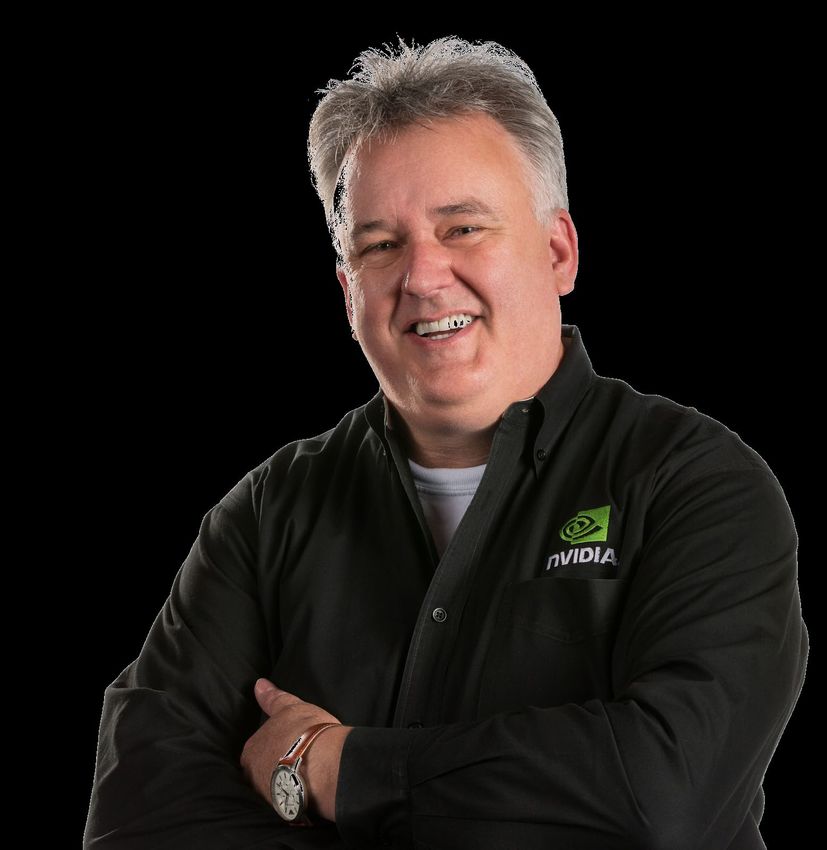
SPEAKERS

           Paul Davies          Neil Trevett, NVIDIA   Brent Insko, Intel
           The Boeing Company   Khronos Group          Khronos Open XR WG

6/5/2020                                                                    3
The Comprehensive Ecosystem

          Enterprises     Becoming aware of the benefits of AR through
                           research, piloting or implementing projects

     Providers                       Non-commercial
 Developing services,                   Universities, public
software and hardware                 research institutes and
products/technology for                agencies who deliver
   the AR ecosystem                   research and push the
                                          boundaries of
                                          AR technology
                                                                         4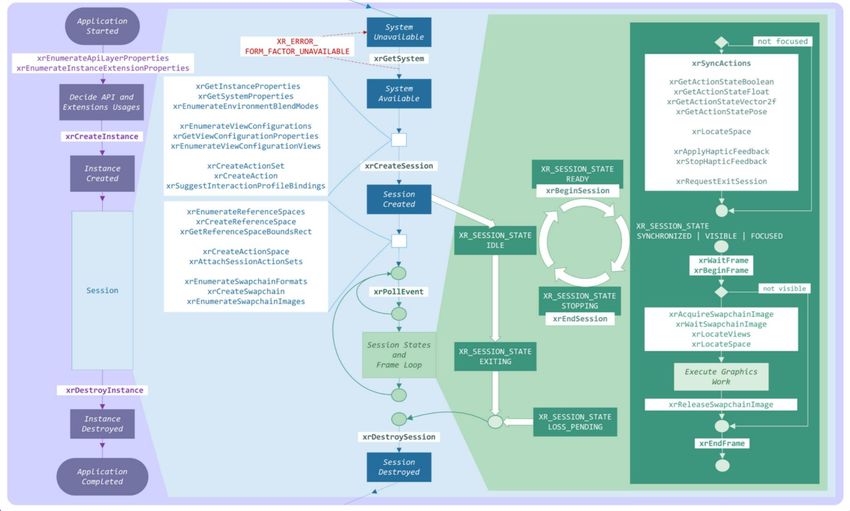
Interoperability
and Standards
Program
Automotive
                                                                                               Aerospace

            AREA                                                      Industries               Industrial equipment
                                                                                               Smart cities
                                                                                               Medical

            Schema of AR                                                                       Engineering Development
                                                                                               Factory

                                                                           Settings
            Customer Needs
                                                                                               Field Operations
                                                                                               User Operation
                                                                                               Sales & marketing

                                                                                               Field service operation                    Statements of
                                                                      Scenarios
                                                                                               Engineering review
                                                                                               Interactive user manuals                    Pain Points/
                                                                                               Manufacturing assembly
                                                                       (business processes)    Inspection                                 Problems that
                                                                                               Remote assistance                          AR can Address
                                                                                               Step by step instructions

                                                                      Use cases                Visual compare (inspection)
                                                                                               Multi-participant collaboration
                                                                                               Product status documentation

       Build, operate/manage, use                                                                               Integration with existing
                                                                    Requirements/
       multi-vendor solutions                                           needs                                            IT for enterprise
       without special engineering                                                                         and operational management
                                                                           Solutions
                                                                     (hardware and software)

                                                                               Security &
  Connectivity     Performance     Experience      Practicality   Safety                           Authoring                       Apps     Toolkits       Data        Integration
                                                                                Privacy
Bluetooth        Graphics        Field of view   Battery                                        App creation              Interaction     API needs    Formats       Business systems
Sensors          CPU             Mono/stereo     Ergonomics                                     Scripting                 UX              Languages    Content       PLM
Audio            Tracking        Resolution      Wearability                                    UI creation               Tracking                     Compression   ERP
Video                            Audio           Durability                                                               Sensor usage                 Encryption    SLM
RFID                             Touch           Environmental                                                            Analytics                    Conversion
                                                                                                                          IoT
Program Goals
To increase knowledge about benefits and approaches to achieving
interoperability
To advance the development of standards or other approaches to
interoperability through a set of AREA policies, procedures and programs
6/5/2020 7
Tactics
           … to target specific barriers to interoperability and/or promote increased
           awareness and use of existing (and/or development of new) standards for
           open, interoperable and safe AR solutions by
           1. Develop/share thought leadership content
           2. Support standards development
           3. Review draft specifications
           4. Co-organize/conduct events focusing on interoperability
           5. Test/build reference implementations

6/5/2020                                                                                8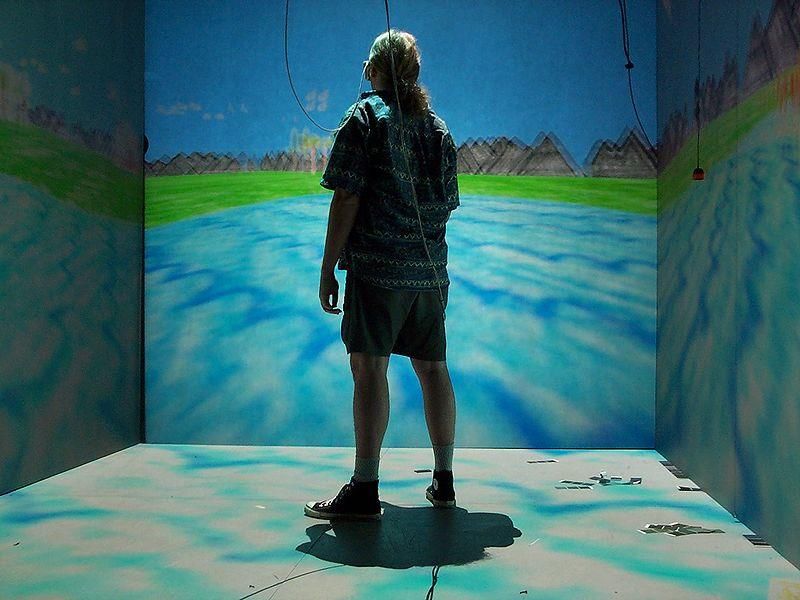
Role of Standards in AR at Boeing
Future-proofing
Standardization across internal Boeing teams
Supportability
Interoperability
Avoiding reliance on one particular vendor
6/5/2020 9
Open Standards for
                 Augmented and
                  Virtual Reality
                                                       Neil Trevett
                                                 Khronos President
                                    NVIDIA VP Developer Ecosystems
                                     ntrevett@nvidia.com| @neilt3d

© Khronos® Group 2020
        This work is licensed under a Creative Commons Attribution 4.0 International License   © The Khronos® Group Inc. 2020 - Page 10
What is An Open Standard?
An INTEROPERABILITY STANDARD
enables two entities to COMMUNICATE
E.g. Software Hardware
Standards Grow Markets Standards Reduce Costs
By reducing consumer confusion and increasing By sharing development between many companies
capabilities and usability and driving volume
Standards Speed Time to Market Standards Do Not Stifle Innovation
With well-proven testing Companies can compete on implementation
and interoperability quality, performance, power etc. etc.
True OPEN Standards
Are not controlled by a single company – but HMD Connectivity Wireless and 5G Verticals and Security
by the industry – typically through an SDO
Well defined participation, governance and
intellectual property frameworks VR Video Formats 3D and XR Hardware XR in the Browser
Widespread XR will take a constellation of industry standards
This work is licensed under a Creative Commons Attribution 4.0 International License © The Khronos® Group Inc. 2020 - Page 11Khronos Connects Software to Silicon
Open interoperability standards to enable software to effectively
harness the power of multiprocessors and accelerator silicon
3D graphics, XR, parallel
programming, vision acceleration
and machine learning
Non-profit, member-driven
standards-defining industry
consortium
Open to any
interested company
All Khronos standards
are royalty-free
Well-defined IP Framework protects
participant’s intellectual property
>150 Members ~ 40% US, 30% Europe, 30% Asia
This work is licensed under a Creative Commons Attribution 4.0 International License © The Khronos® Group Inc. 2020 - Page 12Khronos Standards for XR
Create 3D Assets
Download 3D object
Vision and sensor processing - and scene data
including neural network
inferencing for machine learning
High-performance,
low-latency 3D Graphics
Portable interaction with
VR/AR sensor, haptic and
display devices
This work is licensed under a Creative Commons Attribution 4.0 International License © The Khronos® Group Inc. 2020 - Page 13OpenXR is used with a 3D API
Application or Engine
Display,
High-performance, low-latency composition and Cross-platform access to XR
3D rendering and composition* optical correction HMDs and sensors
Multiview parameters XR application lifecycle
Context priority Input device discovery and events
Front buffer rendering Sensor tracking and pose calculation
Tiled rendering (beam racing) Frame timing and display composition
Variable rate rendering Haptics Control
* OpenXR can be used with other 3D APIs
such as Direct3D, OpenGL and OpenGL ES
This work is licensed under a Creative Commons Attribution 4.0 International License © The Khronos® Group Inc. 2020 - Page 14The Metaverse will be the Web!
https://xkcd.com/1367/
This work is licensed under a Creative Commons Attribution 4.0 International License © The Khronos® Group Inc. 2020 - Page 15Bringing XR to the Web
The Web will Evolve
Native XR Apps into the Metaverse Web XR Apps
Lifting OpenXR
functionality into
the Web stack
Native 3D Web 3D
Engines Close cooperation Engines
between WebXR
and OpenXR
Khronos provides the
foundation for native
and Web-based 3D/XR
This work is licensed under a Creative Commons Attribution 4.0 International License © The Khronos® Group Inc. 2020 - Page 16OpenXR and Edge Server Applications with 5G
Low latency
Sensor Data
Location–aware
Content Requests
OpenXR APIs hide
the 5G round trip
from applications MEC (Multi-access Edge
Sensor handling
Computing) Server
1. Processes sensor data,
including machine learning for
environmental lighting, occlusion,
scene semantics, object Needed assets
Display composition reconstruction and UI loaded to
2. Generates imagery from 3D edge server
models, including stereo, foveal
Wireless mobile device with rendering, ray-tracing, optics pre-
distortion, varifocal processing
display and sensors
Apps and
3D Assets
Generated
Augmentations &
Scenes
This work is licensed under a Creative Commons Attribution 4.0 International License © The Khronos® Group Inc. 2020 - Page 17glTF 2.0 Scene Description Structure
.gltf (JSON)
Node hierarchy, PBR material textures, cameras
.bin .png
Geometry: vertices and indices .jpg
Animation: key-frames .ktx2
Skins: inverse-bind matrices Textures
Mandatory Metallic-Roughness Materials
Optional Specular-Glossiness Materials
Geometry Texture based
PBR materials
This work is licensed under a Creative Commons Attribution 4.0 International License © The Khronos® Group Inc. 2020 - Page 18Modo
Paint 3D
Titania
Discover Game Engines
VoxEdit Repositories Ashes
Creature
Web Engines
3D Authoring Tools
Oculus Create Experience 3D Builder
3D printing
Tools Apps / Engines
3D Asset Format for Efficient
VR / AR Authoring Tools Transmission and Processing
http://github.khronos.org/glTF-Project-Explorer/
Sony 3D
Creator
Drive Demand Apps and Engines
Users
3D Live Object
3D Scanning Tools
Mixed
gltfpack Reality
Viewer
Collada2gltf OBJ2GLTF FBX2glTF
Windows Mixed
Convertors, Optimizers and Loaders Reality Home
glTF Sample Viewer glTF-validator VR / AR Apps and Engines
gltf-vscode glTF-asset-generator
glTF-Toolkit
Validation and Reference Tools
Productivity and Social Apps
This work is licensed under a Creative Commons Attribution 4.0 International License © The Khronos® Group Inc. 2020 - Page 193D Commerce - Four Initial Areas of Focus
Asset Creation Guidelines Product Configuration
For tools and product designers to Universal product configurability
create assets with consistent data to be data and guidelines on how to drive
used through the 3D Commerce pipeline consistent product display
First Goals
Helping evolve glTF to meet the
needs of 3D Commerce
- Next generation PBR
- Advanced metadata
Industry cooperation to
urgently develop guidelines and
tools to address priority
problem areas
Metadata Viewer Validation and Certification
Structured metadata definitions and Test models, reference viewer, display analysis
examples to consistently carry product tools and capability specifications to guarantee
information through the retail pipeline a consistent and accurate end user experience
This work is licensed under a Creative Commons Attribution 4.0 International License © The Khronos® Group Inc. 2020 - Page 20How May Standards Help Your Business?
• Seek friction points in your industry caused by lack of agreed communication protocols
- Between people, companies, products, subsystems, components …
• Find or create a safe space for industry cooperation to define interoperability standards
- With well defined governance model, IP framework, and proven processes
• Neil Trevett
- ntrevett@nvidia.com | @neilt3d
Gain early insights Influence the design and direction Accelerate your time-to-
into industry trends of key open standards that will market with early access to
and directions drive your business specification drafts
Gather industry Draft Specifications Publicly Release
requirements for future Confidential to Khronos Specifications and
open standards members Conformance Tests
Network with domain experts State-of-the-art IP Framework Enhance your company reputation
from diverse companies in your protects your Intellectual as an industry leader through
industry Property Khronos participation
Benefits of Khronos membership www.khronos.org
This work is licensed under a Creative Commons Attribution 4.0 International License © The Khronos® Group Inc. 2020 - Page 216/5/2020
22
SPEAKERS
Paul Davies Neil Trevett, NVIDIA Brent Insko, Intel
The Boeing Company Khronos Group Khronos Open XR WG
This work is licensed under a Creative Commons Attribution 4.0 International License © The Khronos® Group Inc. 2020 - Page 22© Khronos® Group Inc. 2020 - Page 1
Unifying Reality

OpenXR in Depth
     (in 30 min or less)

    Brent E. Insko, PhD
 Lead XR Architect at Intel &
 OpenXR Working Group Chair
                                     © Khronos® Group Inc. 2020 - Page 2
Agenda
• What is OpenXR?
• A Brief History of the Standard
• What are the Problems we are trying to Solve
• OpenXR Timeline of Development
• Brief Overview
• What’s Next?
• Recap
© Khronos® Group Inc. 2020 - Page 3What is OpenXR?
OpenXR is a royalty-free, open standard that provides
high-performance access to Augmented Reality (AR) and
Virtual Reality (VR)—collectively known as XR—platforms
and devices.
© Khronos® Group Inc. 2020 - Page 4A Brief History of OpenXR
• Among the first VR hardware available 2016
• Need applications…
- Each platform provided an SDK to interface with the hardware
- Each was different from the other
© Khronos® Group Inc. 2020 - Page 5XR Ecosystem Fragmentation
• Increased development time and therefore cost.
• Increased validation overhead and therefore cost.
• Time and resources spent developing one title, impacts
developers’ ability to create more titles.
© Khronos® Group Inc. 2020 - Page 6Major XR Runtimes
© Khronos® Group Inc. 2020 - Page 7OpenXR
• Recognizing the problem, several companies got together in late 2016 /
early 2017 and formed the OpenXR working group in Khronos.
Virtual Reality
V
A
Augmented Reality
© Khronos® Group Inc. 2020 - Page 8OpenXR – Solving XR Fragmentation
Monado
© Khronos® Group Inc. 2020 - Page 9OpenXR – Solving XR Fragmentation
Monado
Monado
© Khronos® Group Inc. 2020 - Page 10VR Software Stack (Example)
Game
VR Application Engine Browser WebXR
VR APIs
• Application interface
• Driver(HW) interface
Server Compositor
VR Runtime
Vulkan | Direct3D | OpenGL (+ other system APIs) VR
Hardware
Windows | Linux | Android
© Khronos® Group Inc. 2020 - Page 11OpenXR Architecture
OpenXR does not replace XR Runtime Systems!
It enables any XR Runtime to expose CROSS-VENDOR APIs to access their functionality
XR
Apps and Engines
Current Device State
Outgoing Requests
Controller/Peripheral State OpenXR Pre-distortion image to display
Normalized Poses API Haptics
Input Events
XR Vendor
Runtime System
Distortion Correction and Display Output
Coordinate System Unification and Prediction
Current Device State OpenXR Device Outgoing Requests
Controller/Peripheral State Plugin Extension Post-distortion image to display
Raw Poses (Optional - Coming soon) Haptics
Vendor-supplied
Device Drivers
XR
Devices
© Khronos® Group Inc. 2020 - Page 12The Structure
Application
OpenXR Application Layer
Runtime B
Runtime A
OpenXR Device Plugin Extension
VR / AR Hardware VR / AR VR / AR
Hardware Hardware
© Khronos® Group Inc. 2020 - Page 13OpenXR Philosophies
1
Enable both VR and AR applications
The OpenXR standard will unify common VR and AR functionality to streamline
software and hardware development for a wide variety of products and platforms
Be future-proof
2 While OpenXR 1.0 is focused on enabling the current state-of-the-art, the standard is
built around a flexible architecture and extensibility to support rapid innovation in
the software and hardware spaces for years to come
Do not try to predict the future of XR technology
3 While trying to predict the future details of XR would be foolhardy, OpenXR uses
forward-looking API design techniques to enable engineers to easily harness new and
emerging technologies
4
Unify performance-critical concepts in XR application development
Developers can optimize to a single, predictable, universal target rather than add
application complexity to handle a variety of target platforms
© Khronos® Group Inc. 2020 - Page 14Where are we on the timeline?
Call for Participation / Exploratory Group Formation
Fall F2F, October 2016: Korea
Statement of Work / Working Group Formation
Winter F2F, January 2017: Vancouver
Defining the MVP
Fall F2F, September 2017: Chicago
First Public Information
GDC, March 2018 Unifying Reality
First Public Demonstrations
SIGGRAPH, August 2018
Release Provisional Specification!
GDC, March 2019
Resolving Issues / Incorporating feedback
Spring F2F, April 2019: Singapore
Summer F2F, July 2019: Bellevue
Release 1.0 Specification!
SIGGRAPH, July 2019
Conformance Tests Finalize
and Adopters Program
Feedback
Implementations OpenXR 1.0 Conformance Tests and Adopters
Program Development
Enable Conformant Implementations to Ship
© Khronos® Group Inc. 2020 - Page 15OpenXR API High Level Concepts
© Khronos® Group Inc. 2020 - Page 16OpenXR Application Flow Diagram
© Khronos® Group Inc. 2020 - Page 17Form Factors
• Currently two XrFormFactors in the specification:
- XR_FORM_FACTOR_HANDHELD_DISPLAY
- XR_FORM_FACTOR_HEAD_MOUNTED_DISPLAY
Camera Passthrough AR Stereoscopic VR / AR Projection CAVE-like
Photo Credit: Dave Pape
One View Two View (one per eye) Twelve Views (six per eye)
XR_FORM_FACTOR_HANDHELD_DISPLAY XR_FORM_FACTOR_HEAD_MOUNTED_DISPLAY (future support)
© Khronos® Group Inc. 2020 - Page 18View Configurations
• Currently two XrViewConfigurations in the specification:
- XR_VIEW_CONFIGURATION_TYPE_PRIMARY_MONO
- XR_VIEW_CONFIGURATION_TYPE_PRIMARY_STEREO
Camera Passthrough AR Stereoscopic VR / AR Projection CAVE-like
Photo Credit: Dave Pape
One View Two View (one per eye) Twelve Views (six per eye)
XR_FORM_FACTOR_HANDHELD_DISPLAY XR_FORM_FACTOR_HEAD_MOUNTED_DISPLAY (future support)
XR_VIEW_CONFIGURATION_TYPE_PRIMARY_MONO XR_VIEW_CONFIGURATION_TYPE_PRIMARY_STEREO (future support)
© Khronos® Group Inc. 2020 - Page 19Input and Haptics
© Khronos® Group Inc. 2020 - Page 20Input and Haptics
When user clicks button “a” it results in the user teleporting
© Khronos® Group Inc. 2020 - Page 21Input and Haptics
Input in OpenXR goes through a layer of /user/hand/left/input/a/click
abstraction built around Input Actions (/interaction_profile/ControllerCorp/fancy_controller
/input/a/click)
(XrActions). These allow application
developers to define input based on resulting
OpenXR Runtime
action (e.g. “Grab”, “Jump,” “Teleport”) .../input/trigger/click Explode
rather than explicitly binding controls .../input/a/click Teleport
While the application can suggest recommended
bindings, it is ultimately up to the runtime to XrAction: “Teleport”
bind input sources to actions as it sees fit
(application’s recommendation, user settings in
the runtime’s UI, etc)
© Khronos® Group Inc. 2020 - Page 22Input and Haptics - Interaction Profiles
• Collections of input and output sources on physical devices
• Runtimes can support multiple interaction profiles
ControllerCorp’s Fancy_Controller:
- /user/hand/left
- /user/hand/right
- /input/a/click
- /input/b/click
- /input/c/click
- /input/d/click
- /input/trigger/click
- /input/trigger/touch
- /input/trigger/value
- /output/haptic example
© Khronos® Group Inc. 2020 - Page 23Input and Haptics - Predefined Interaction Profiles
• Interaction profiles for many current
products are predefined in the OpenXR
specification including:
- Google Daydream* controller
- HTC Vive and Vive Pro* controllers
- Microsoft* Mixed reality motion
controllers
- Microsoft* Xbox controller
- Oculus Go* controller
- Oculus Touch* controllers
- Valve Index* controllers
© Khronos® Group Inc. 2020 - Page 24Input and Haptics - Runtime Binding Decision – Why?
• Runtime ultimately decides the bindings
- “dev teams are ephermal, games last forever”
- More likely the runtime is updated than individual games
• Reasons for selecting different bindings:
- 1. this runtime does not have ControllerCorp’s fancy_controller currently
attached, but it knows how to map the inputs and outputs to the controllers
that *are* attached
- 2. Some runtimes can support user mapping of inputs such that the controls
per game can be customized by the user, such as swapping trigger and
button ‘a’, this enables customization without the original application
knowing about it
- 3. Some future controller is developed but the application is not updated
for it, a new interaction profile can help map the actions to the new inputs
- 4. Accessibility devices can be used and input mapped appropriately
© Khronos® Group Inc. 2020 - Page 25Input and Haptics
/user/hand/left/input/a/click
(/interaction_profile/ControllerCorp/fancy_controller
/input/a/click)
OpenXR Runtime
.../input/trigger/click Explode
.../input/a/click Teleport
XrAction: “Teleport”
© Khronos® Group Inc. 2020 - Page 26Input and Haptics
Haptics build upon the same XrAction system, and have their own Action Type:
XR_HAPTIC_VIBRATION. Just like other XrActions, they can be used with XrActionSets, but
unlike inputs, they are activated with xrApplyHapticFeedback
Currently, only XrHapticVibration is supported:
• Start Time
• Duration (s)
• Frequency (Hz)
• Amplitude (0.0 – 1.0)
xrStopHapticFeedback can also be called to immediately end haptic feedback
We expect that many more haptic types will be added through extensions as the technology
develops
© Khronos® Group Inc. 2020 - Page 27Frame Timing Deeply Pipelined Multithreaded Example
(Unreal Engine 4 with Vulkan, DX12, Metal)
Frame 100 Frame 101 Frame 102 Frame 103
Simulation Thread
Render Thread
Render Workers
RHI Thread
Render Workers
GPU
xrWaitFrame xrEndFrame
Render Thread Fence
xrBeginFrame Compositor Frame Hook
© Khronos® Group Inc. 2020 - Page 28Extensions
Core concepts that are fundamental to the
Core Standard specification for all use cases
Examples: Instance management, tracking, frame timing
Functionality that a large class of runtimes will
KHR Extensions likely implement
Examples: Platform support , Graphic API Extensions
Functionality that a few runtimes might implement
EXT Extensions Examples: Performance Settings, Thermals, Debug Utils
Functionality that is limited to a specific vendor
Vendor Extensions Examples: Device specific functionality
© Khronos® Group Inc. 2020 - Page 29Current KHR Extensions
• Platform-specific support: • Support for specific XR layer types:
- KHR_android_create_instance - KHR_composition_layer_cube
- KHR_android_surface_swapchain - KHR_composition_layer_cylinder
- KHR_android_thread_settings - KHR_composition_layer_depth
- KHR_composition_layer_equirect
• Performance improvement by masking non-visible
portions of the display:
- KHR_visibility_mask
• Graphics API support:
- KHR_D3D11_enable
- KHR_D3D12_enable • Time Conversion functions:
- KHR_opengl_enable - KHR_convert_timespec_time
- KHR_opengl_es_enable - KHR_win32_convert_performance_counter_time
- KHR_vulkan_enable
- KHR_vulkan_swapchain_format_list
© Khronos® Group Inc. 2020 - Page 30Eye Tracking Extension
• Foveated rendering
• Gaze selection/feedback/Aiming
• Social interaction
• Headset position guidance
© Khronos® Group Inc. 2020 - Page 31Hand Tracking Extension
• Standardize the definition of a common set of hand joints, e.g. naming,
location and orientations.
• Five fingers are named as: thumb, index, middle, ring and little.
• Each finger has 5 joints: tip, distal, intermediate, proximal, metacarpal, except
thumb lacks intermediate joint. -
• Wrist joint is added as the pivot point of hand motion.
• Palm joint is added as the center of hand and easy access to palm orientation.
• This extension fits both VR and AR experiences.
© Khronos® Group Inc. 2020 - Page 32There are a list of things to consider for 1.1
and for additional extensions
• Many of the items on the list are obvious next steps in the progress of AR and VR
development
• Won’t list them here ☺
• But feel free to send us you list of requests in via the feedback channels we’ll
provide in a sec
© Khronos® Group Inc. 2020 - Page 33OpenXR 1.0 Release is Here!
https://www.engadget.com/2019/07/30/openxr-1-launch/
https://www.roadtovr.com/openxr-1-0-release-microsoft-hololens-vr-oculus-rift-quest/
https://uploadvr.com/openxr-specification-standard/
https://pcper.com/2019/07/the-khronos-group-ratifies-and-releases-openxr-1-0/
© Khronos® Group Inc. 2020 - Page 34“OpenXR 1.0 release is a huge milestone and AMD is proud to have been a member in its creation. The expanding XR industry and ecosystem continues to be a key focus for AMD and we are excited
by the potential for market growth that OpenXR 1.0 enables. As always, AMD is a proponent of open industry standards,” said Daryl Sartain, Director of XR at AMD.
“Arm is focused on developing technology innovations that power the next generation of untethered, standalone AR/VR devices. The release of the OpenXR 1.0 specification will further enable us
Industry Support
to break barriers for cross-platform XR applications, while bringing the performance and efficiency required to support these complex, immersive use cases,” said Roger Barker, director of IP
solutions, Immersive Experience Group, Arm.
“As part of its unwavering commitment to open source and open standards, Collabora is proud to be part of bringing OpenXR 1.0 to life. We are pioneering the Monado open source runtime for
OpenXR to ensure the future of XR is truly open and accessible to all hardware vendors. As the OpenXR specification editor, I am grateful for the diligent efforts of the working group, as well as the
community feedback that shaped this release,” said Ryan Pavlik, OpenXR Specification Editor, XR Principal Software Engineer at Collabora.
“OpenXR 1.0 steers us toward an alignment of many crucial emerging interface platforms. CTRL-labs is excited to contribute to this important step forward and to give developers the tools they
need to explore neural interfaces.” said Attila Maczak, Software Architect at CTRL-labs.
"We're thrilled to support the OpenXR 1.0 release, along with all of the Khronos Group members who have worked tirelessly to create the standard. Unreal Engine led the way with support for the
OpenXR 0.9 provisional specification, and we're excited to move the 1.0 revision forward in collaboration with our hardware partners releasing at the same time. Epic believes that open standards
are essential to driving technology and bridging the gaps between digital ecosystems,” said Jules Blok, Epic Games.
“Facebook and Oculus continue to believe in the value the OpenXR standard delivers to users and developers. We plan to provide runtime support for apps built on OpenXR 1.0 on the Rift and Quest
platforms,” said Nate Mitchell, Oculus Co-founder and head of VR product, Facebook.
"WebXR relies on APIs like OpenXR to provide the communication layer between browsers and virtual reality or augmented reality devices. The Immersive Web Working Group is excited for OpenXR
support to become widely available because it has the potential to reduce the development and maintenance burden for WebXR implementers while increasing the range of supported hardware,”
said Brandon Jones, WebXR Spec Editor.
“HTC VIVE is committed to creating a viable ecosystem for the XR industry which is why we are proud to support OpenXR,” said Vinay Narayan, vice president, platform strategy, HTC. “Bringing
the community together to help define standards and best practices, allows all of us to move forward, together.”
“The mobile era of computing was defined and ultimately constrained by closed ecosystems. With mixed reality, the next wave of computing must be and will be open,” said Don Box, Technical
Fellow at Microsoft. “Today, Microsoft is proud to release the first OpenXR 1.0 runtime that supports mixed reality, for all Windows Mixed Reality and HoloLens 2 users. We are excited to now
work with the OpenXR community to design the key extensions that will bring mixed reality to life, with full support by end of year for HoloLens 2 hand tracking, eye tracking, spatial mapping and
spatial anchors.”
“Congratulations to the OpenXR team on this important 1.0 release. The flexible, extensible design of OpenXR 1.0 will support innovative, next-generation graphics technologies that accelerate XR
applications and even enable new XR use-cases,” said David Weinstein, Director of Virtual Reality at NVIDIA.
“OpenXR provides a solid foundation for developers to more easily support a broader range of platforms and devices. 1.0 is an exciting milestone and it is just the beginning. This release will open
new doors for developers to experiment and extend the capabilities, pushing the VR and AR industry into the future.” said Jared Cheshier, CTO at Pluto VR.
“It’s great to see this important milestone finally completed and we are excited by the promise OpenXR holds for lowering the barrier for creating XR applications across a wide array of devices.
Now that the stable 1.0 release of OpenXR is out and we are beginning to see industry adoption, Tobii will work diligently to unlock support for eye tracking through OpenXR extensions for eye gaze
interaction and foveated rendering.” said Denny Rönngren, architect at Tobii.
"Unity is committed to being an open and accessible platform and we remain supportive of open standards for XR applications and devices," said Ralph Hauwert, vice president of platforms at
Unity Technologies. "To that end, we're excited about OpenXR and believe this is a significant step towards a more open ecosystem."
“OpenXR is an important milestone for VR. This API will allow games and other applications to work easily across a variety of hardware platforms without proprietary SDKs. Valve is happy to have
worked closely with other VR industry leaders to create this open standard, and looks forward to supporting it in SteamVR,” said Joe Ludwig, programmer at Valve.
“Varjo is creating the world’s most groundbreaking VR/AR/XR hardware and software by merging the real and digital worlds seamlessly together in human-eye resolution. We're excited for the
release of the OpenXR 1.0 specification because it ensures the enterprise community has compatible, easy access to the best XR technology on the market today while removing barriers to future
innovation,” said Rémi Arnaud, principal architect at Varjo. © Khronos® Group Inc. 2020 - Page 35What Resources Are Available?
© Khronos® Group Inc. 2020 - Page 36What Resources Are Available?
200+ page specification
© Khronos® Group Inc. 2020 - Page 37What Resources Are Available?
200+ page specification Reference Pages
© Khronos® Group Inc. 2020 - Page 38What Resources Are Available?
200+ page specification Reference Pages Overview Guide
© Khronos® Group Inc. 2020 - Page 39What Resources Are Available?
• https://github.com/KhronosGroup/OpenXR-Docs
• Contains the source for
generating the
specification document
and reference pages,
scripts to be added soon
• Contains the openxr
header files
© Khronos® Group Inc. 2020 - Page 40What Resources Are Available?
• https://github.com/KhronosGroup/OpenXR-Registry
• Contains the specification, reference pages, and overview
guide
© Khronos® Group Inc. 2020 - Page 41What Resources Are Available?
• https://github.com/KhronosGroup/OpenXR-SDK-Source
• Contains the source for:
- Loader
- Some basic API layers
- Test sample
• For the current best
example code, see:
src/tests/hello_xr
© Khronos® Group Inc. 2020 - Page 42What Resources Are Available?
• https://github.com/KhronosGroup/OpenXR-SDK
• Contains Generated Files
• Use for building on
Windows and Linux
• Embed this in your projects
© Khronos® Group Inc. 2020 - Page 43Primary Resources
• OpenXR Landing Page - Specification, Reference Pages, Sample Code, Overview
- https://www.khronos.org/openxr
• OpenXR Forum and Slack Channel
- Forum: https://khr.io/openxrfeedback
- Discussion: https://khr.io/slack
• Vendor preview implementations and integration
- Collabora: open source implementation
http://monado.dev
- Microsoft: OpenXR runtime for Windows Mixed Reality headsets
https://aka.ms/openxr
- Oculus: Prototype OpenXR implementation
https://developer.oculus.com/blog/prototype-openxr-for-oculus/
- Epic Games: Unreal Engine 4.24 with OpenXR 1.0 plugin
https://www.unrealengine.com
• Khronos SIGGRAPH Sessions – including OpenXR Presentation and demos
- https://www.khronos.org/events/2019-siggraph © Khronos
® Group Inc. 2020 - Page 44Additional Resources
• OpenXR Software Development Kit • Microsoft: Getting stated with OpenXR
(SDK) Project • Microsoft: OpenXR Samples for Mixed
• OpenXR Software Development Kit Reality Developers
(SDK) Sources Project • Oculus: OpenXR Mobile SDK
• OpenXR API Documentation Project • Monado: A free, open-source XR platform
• OpenXR sample code for simple VR - Collabora: What's new in OpenXR 1.0
application & Monado?
• OpenXR Registry (links to • Collabora: OpenXR Masterclass from
specification, documentation, Laval-Virtual 2020
reference guide and more…) • OpenXR Youtube Playlist
• Microsoft: Getting started with • Varjo: OpenXR Developer Site
OpenXR • Video: A Look at OpenXR - SIGGRAPH 2019
• Microsoft: OpenXR app best practices BOF Sessions
• Microsoft: OpenXR performance • Video: OpenXR – State of the Union -
• Microsoft: OpenXR troubleshooting Khronos GDC 2019 © Khronos Group Inc. 2020 - Page 45
®What’s Next?
© Khronos® Group Inc. 2020 - Page 46What’s Next?
Call for Participation / Exploratory Group Formation
Fall F2F, October 2016: Korea
Statement of Work / Working Group Formation
Winter F2F, January 2017: Vancouver
Defining the MVP
Fall F2F, September 2017: Chicago
First Public Information Unifying Reality
GDC, March 2018
First Public Demonstrations
SIGGRAPH, August 2018
Release Provisional Specification!
GDC, March 2019
Resolving Issues / Incorporating feedback
Spring F2F, April 2019: Singapore
Summer F2F, July 2019: Bellevue
Release 1.0 Specification!
SIGGRAPH, July 2019
Conformance Tests Feedback
Finalize Finish Conformance Suite and
and Adopters Program Implementations
Release Conformant Implementations
Enable Conformant Implementations to Ship
© Khronos® Group Inc. 2020 - Page 47Open Source Adoption
Chromium – browser project Blender – 3D creation suite
• Google Chrome and Microsoft Edge • Upcoming 2.83 release will include
support WebXR through OpenXR native VR support through OpenXR
by default
© Khronos® Group Inc. 2020 - Page 48Thanks!
• To these companies for enabling their engineers to dedicate time to OpenXR!
© Khronos® Group Inc. 2020 - Page 49Thanks to the Engineers!
Adam Gousetis, Google | Alex Turner, Microsoft | Andreas Loeve Selvik, Arm | Andres Rodriguez, Valve
Software | Armelle Laine, Qualcomm Technologies, Inc | Blake Taylor, Magic Leap | Brad Grantham,
Google | Brandon Jones, Google | Brent E. Insko, Intel | Brent Wilson, Microsoft | Bryce Hutchings,
Microsoft | Cass Everitt, Facebook | Charles Egenbacher, Epic Games | Christoph Haag, Collabora | Craig
Donner, Google | Dan Ginsburg, Valve Software | Dave Houlton, LunarG | Dave Shreiner, Unity
Technologies | Denny Rönngren, Tobii | Dmitriy Vasilev, Samsung | Doug Twileager, ZSpace | Ed
Hutchins, Facebook | Gloria Kennickell, Facebook | Gregory Greeby, AMD | Guodong Chen, Huawei |
Jakob Bornecrantz, Collabora | Jared Cheshier, PlutoVR | Javier Martinez, Intel | Jeff Bellinghausen,
Valve Software | Jiehua Guo, Huawei | Joe Ludwig, Valve Software | Johannes van Waveren, Facebook |
Jon Leech, Khronos | Jonathan Wright, Facebook | Juan Wee, Samsung | Jules Blok, Epic Games | Karl
Schultz, LunarG | Kaye Mason, Google | Krzysztof Kosiński, Google | Lachlan Ford, Microsoft | Lubosz
Sarnecki, Collabora | Mark Young, LunarG | Martin Renschler, Qualcomm Technologies, Inc. | Matias
Koskela, Tampere University of Technology | Matt Wash, Arm | Mattias Brand, Tobii | Mattias O.
Karlsson, Tobii | Michael Gatson, Dell | Minmin Gong, Microsoft | Mitch Singer, AMD | Nell Waliczek,
Microsoft | Nick Whiting, Epic Games | Nigel Williams, Sony | Paul Pedriana, Facebook | Peter Kuhn,
Unity Technologies | Peter Peterson, HP Inc. | Pierre-Loup Griffais, Valve Software | Rajeev Gupta, Sony
| Remi Arnaud, Starbreeze | Remy Zimmerman, Logitech | River Gillis, Google | Robert Memmott,
Facebook | Robert Menzel, NVIDIA | Robert Simpson, Qualcomm Technologies, Inc. | Robin Bourianes,
Starbreeze | Ryan Pavlik, Collabora | Ryan Vance, Epic Games | Sam Martin, Arm | Satish Salian, NVIDIA
| Scott Flynn, Unity Technologies | Sophia Baldonado, PlutoVR | Sungye Kim, Intel | Tom Flynn, Samsung
| Trevor F. Smith, Mozilla | Vivek Viswanathan, Dell | Yin Li, Microsoft | Yuval Boger, Sensics
© Khronos Group Inc. 2020 - Page 50
®Recap
• What is OpenXR?
• A Brief History of the Standard
• What are the Problems we are trying to Solve
• OpenXR Timeline of Development
• Brief Overview
• What’s Next?
• Recap
© Khronos® Group Inc. 2020 - Page 51OpenXR Win-Win-Win XR End-Users
Can run the apps they want on their system
– reducing market confusion and increasing
consumer confidence
XR Vendors
Can bring more
applications onto their
platform by leveraging
the OpenXR content
ecosystem
XR ISVs
Can easily ship on more
platforms for increased
market reach
© Khronos® Group Inc. 2020 - Page 52Khronos APIs for XR
Application or Engine
Display,
High-performance, low-latency composition and
Cross-platform access to XR
3D rendering and composition* optical correction HMDs and sensors
Multiview parameters XR application lifecycle
Context priority Frame timing and display composition
Front buffer rendering Sensor tracking and pose calculation
Tiled rendering (beam racing) Input device discovery and events
Variable rate rendering Haptics Control
* OpenXR can be used with other 3D APIs
such as Direct3D, OpenGL and OpenGL ES
© Khronos® Group Inc. 2020 - Page 53Before we go…
© Khronos® Group Inc. 2020 - Page 54Before we go… as always give us Feedback!
• Tell us:
- What should be in the spec
- What shouldn’t be in the spec
- How things need to be added for your
application/runtime/hardware/OS/…
© Khronos® Group Inc. 2020 - Page 55Join Khronos!
• Get more involved
• Have direct impact on the direction of the API
• Be part of the effort to deliver OpenXR 1.1!
© Khronos® Group Inc. 2020 - Page 56Thank You!
© Khronos® Group Inc. 2020 - Page 576/1/2020
58
SPEAKERS
Paul Davies Neil Trevett, NVIDIA Brent Insko, Intel
The Boeing Company Khronos Group Khronos Open XR WG
© Khronos® Group Inc. 2020 - Page 58You can also read


